Luke 12:21
So is he that layeth up treasure for himself, and is not rich toward God.
Translations
So is he that lays up treasure for himself, and is not rich toward God.
King James Version, Revised Version, American Standard Version
So is he that layeth up treasure for himself, and is not rich toward God.
KJV Cambridge Paragraph Bible, Webster Bible, Douay-Rheims (Challoner revision)
So is he that layeth up treasure for himself, and is not rich towards God.
so [is] he who is treasuring up to himself, and is not rich toward God.'
Thus is he who lays up treasure for himself, and is not rich toward God.
[So, is he that is laying up treasure for himself, and is not rich, towards God.]
Berean Standard Bible, Majority Standard Bible
This is how it will be for anyone who stores up treasure for himself but is not rich toward God.”
So is he who lays up treasure for himself, and is not rich toward God.”
So that is what comes to the man who gets wealth for himself, and has not wealth in the eyes of God.
So is he that gathereth riches to himselfe, and is not riche in God.
Pictures

Cross-references 20 of 71
- Matthew 6:19-21
Lay not up for yourselves treasures upon earth, where moth and rust doth corrupt, and where thieves break through and steal:
Contrasts earthly hoarding with heavenly treasure and links treasure to the heart.
- 1 Timothy 6:18-19
That they do good, that they be rich in good works, ready to distribute, willing to communicate;
Urges the rich to do good and lay up lasting treasure for the future.
- Luke 12:33
Sell that ye have, and give alms; provide yourselves bags which wax not old, a treasure in the heavens that faileth not, where no thief approacheth, neither moth corrupteth.
Giving to the needy is presented as storing treasure in heaven.
- Luke 12:15
And he said unto them, Take heed, and beware of covetousness: for a man’s life consisteth not in the abundance of the things which he possesseth.
Warns that life does not consist in possessions.
- Matthew 6:33
But seek ye first the kingdom of God, and his righteousness; and all these things shall be added unto you.
Seeking God’s kingdom first defines being rich toward God rather than hoarding for self.
- Matthew 16:26
For what is a man profited, if he shall gain the whole world, and lose his own soul? or what shall a man give in exchange for his soul?
Worldly gain cannot compensate for losing one’s soul.
- Matthew 6:24
No man can serve two masters: for either he will hate the one, and love the other; or else he will hold to the one, and despise the other. Ye cannot serve God and mammon.
Serving wealth is incompatible with serving God.
- James 2:5
Hearken, my beloved brethren, Hath not God chosen the poor of this world rich in faith, and heirs of the kingdom which he hath promised to them that love him?
True riches are found in faith and inheriting the kingdom.
- James 5:1-3
Go to now, ye rich men, weep and howl for your miseries that shall come upon you.
Listed as a warning concerning accumulated wealth.
- Mark 8:36
For what shall it profit a man, if he shall gain the whole world, and lose his own soul?
Worldly gain cannot make up for losing the soul.
- 2 Corinthians 8:9
For ye know the grace of our Lord Jesus Christ, that, though he was rich, yet for your sakes he became poor, that ye through his poverty might be rich.
Christ became poor so others might become rich.
- 1 Timothy 6:9-10
But they that will be rich fall into temptation and a snare, and into many foolish and hurtful lusts, which drown men in destruction and perdition.
The desire for riches brings temptation, destruction, and many sorrows.
- Deuteronomy 8:17-18
And thou say in thine heart, My power and the might of mine hand hath gotten me this wealth.
Wealth comes from God, but the rich man fails to acknowledge its giver.
- Matthew 25:24-30
Then he which had received the one talent came and said, Lord, I knew thee that thou art an hard man, reaping where thou hast not sown, and gathering where thou hast not strawed:
The unfaithful servant hides what was entrusted to him and answers to his master.
- Revelation 3:18
I counsel thee to buy of me gold tried in the fire, that thou mayest be rich; and white raiment, that thou mayest be clothed, and that the shame of thy nakedness do not appear; and anoint thine eyes with eyesalve, that thou mayest see.
Christ counsels the spiritually poor to receive true riches and be rich toward God.
- Colossians 3:5
Mortify therefore your members which are upon the earth; fornication, uncleanness, inordinate affection, evil concupiscence, and covetousness, which is idolatry:
Covetousness is identified as idolatry.
- Matthew 6:21
For where your treasure is, there will your heart be also.
Where treasure is laid up, there the heart is also.
- Luke 16:13
No servant can serve two masters: for either he will hate the one, and love the other; or else he will hold to the one, and despise the other. Ye cannot serve God and mammon.
Serving God is incompatible with serving mammon.
- Luke 16:19-25
There was a certain rich man, which was clothed in purple and fine linen, and fared sumptuously every day:
The rich man’s fate illustrates the warning about failing to be rich toward God.
- Matthew 19:21-22
Jesus said unto him, If thou wilt be perfect, go and sell that thou hast, and give to the poor, and thou shalt have treasure in heaven: and come and follow me.
Giving to the poor and following Jesus contrasts heavenly treasure with attachment to possessions.
Commentary part 1 of 2
Each commentary is drawn from primary sources: the writings of Ellen G. White and Adventist pioneers and periodicals. Each commentary is separate. Its own words are not a quotation; follow the references to read the source passages.
Ellen G. White
74 sources
The verse closes the parable of a man blessed with a rich harvest who planned to store it in larger barns for years of ease, only to die that night with all he had prepared passing to others.ST Jul 1, 190815MR 97.2–3COL 254.3–255.1 God calls such a person a fool, and the same verdict falls on everyone who stores earthly plenty for personal ease while not rich toward God.Ms 73, 1893, par. 1–3FE 39.13T 154.1 No amount of possessions can make life secure, valuable, long or happy, and hoarded goods are lost at death without profit to the soul.ST Jul 1, 1908ST May 25, 1915Ms 65, 1902, par. 8Lt 89, 1898, par. 23–2515MR 97.2–3 To be rich toward God is to love, trust and serve Him rather than self, to follow Christ, seek first His kingdom and righteousness, and let His love flow out in mercy to others.3T 545.2Ms 77, 1903, par. 16–19Lt 15, 1899, par. 1–315MR 97.2–3Ms 65, 1902, par. 11–12 That life is shown by holding all things as His entrusted stewardship and using them to relieve the poor, suffering and afflicted and to advance His cause, instead of hoarding from covetousness and unbelief for selfish comfort and display.3T 545.2Lt 15, 1899, par. 1–3Lt 15, 1899, par. 4–6Ms 44, 1900, par. 8
Parable Setting and Verdict
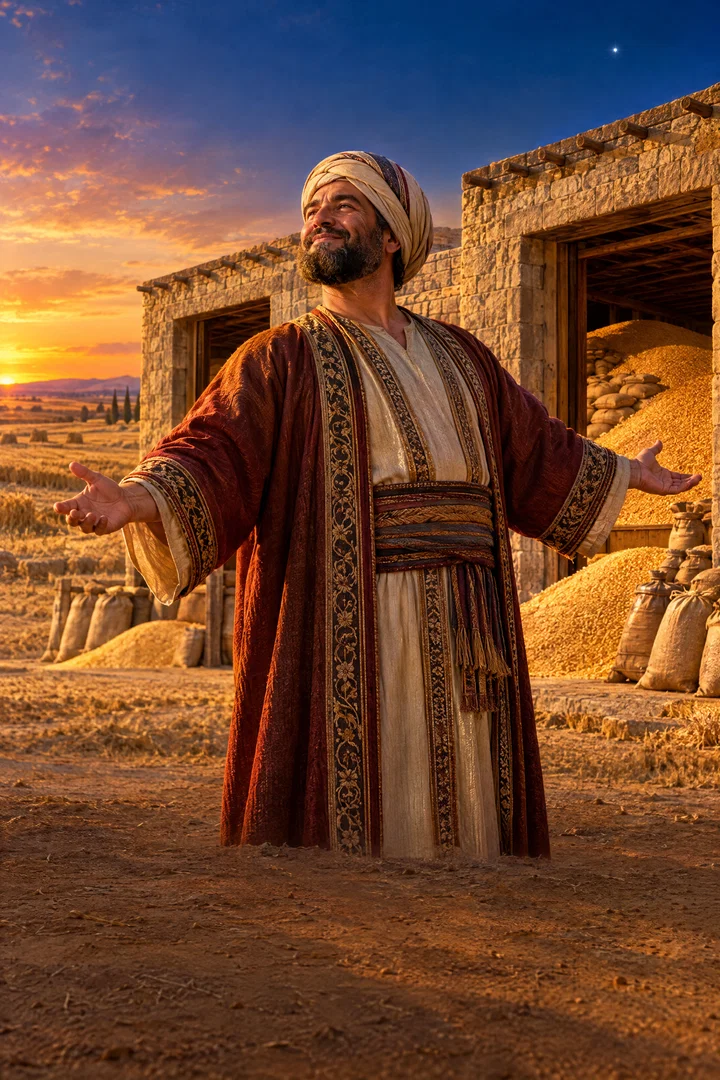
Luke 12:21 is the conclusion to the parable of the rich man whose abundant harvest and full barns led him to plan larger storehouses and years of ease and pleasure, yet he died that very night and could not keep or use what he had gathered, so that what he had prepared passed to others and his earthly accumulation proved no true gain.ST Jul 1, 190815MR 97.2–3COL 254.3–255.15T 259.2–260.12T 198.1 Material abundance does not make life secure, valuable, long, or happy, and to store wealth only for personal security while withholding what is due to God is spiritual poverty ending in a cut-short, unprofitable life.COL 254.3–255.15T 259.2–260.12T 198.1 The rich farmer had received his crops from God, which gave him both reason for gratitude and responsibility to help others, but he hoarded the gifts and planned only personal ease.5T 259.2–260.1
God judges such a person to be a fool, and everyone who stores earthly plenty for his own ease, eating, drinking, and merriment while not rich toward God meets the same end, with his soul required of him and his provided goods passing to another.Ms 73, 1893, par. 1–3FE 39.13T 154.1 Earthly fortune, however great, cannot secure life or God's favor, and having great wealth, status, or worldly success does not make anyone rich, great, or favored toward God.FE 39.13T 154.1FE 39.23T 154.2 Those who do not diligently seek heavenly treasure and divine wisdom are counted fools by their Creator, and their example is not to be followed.FE 39.23T 154.2Ms 43, 1896, par. 6–8 True wisdom is the opposite course, revealed in following Jesus Christ, believing in Him for everlasting life, and seeking first the kingdom of God and His righteousness, which is what it means to be rich toward God.Ms 73, 1893, par. 1–3Ms 43, 1896, par. 6–8
The teaching stands against seeking heavenly grace and power for selfish worldly benefit, calling followers instead to bear witness to truth and not to use gifts for personal advantage.COL 252.1–2 The rich man's failure was to forget God as source and owner of his possessions, to give no thanks and no glory to his Maker, and to use wealth for himself rather than to bless others.FE 39.13T 154.1 His abundant harvest came through blessings God gives to both the just and the unjust in sunshine and rain and watchcare over fields and goods, entrusting him as a steward with opportunity to help the needy.ST Jul 1, 1908COL 256.1–2Ms 44, 1900, par. 11
Being rich toward God meant recognizing that the wealth of goods came directly from God's hand and recounting His goodness by dividing goods in benevolence, relieving those in suffering need, including the poor, orphaned, widowed, suffering, and afflicted.COL 256.1–2Ms 44, 1900, par. 11 Instead he ignored God altogether in the year of plenty, showed no gratitude, calculated to hold the gift and consume it upon himself, and planned only for his own comfort, so the Lord's poor were not relieved.ST Jul 1, 19085T 259.2–260.1COL 256.1–2Ms 44, 1900, par. 11
Great possessions and strong defenses give no lasting security against judgment, death, or ruin for one who stores wealth for selfish ends and lives for self.ST Jul 1, 1908 Belshazzar's feast, worship of material gods, and sudden death and downfall illustrate this truth, warning every age that selfish living and covetousness cut the soul off from life while life is found in God and expressed by giving and sacrificing for others.ST Jul 1, 1908
Earthly Wealth Cannot Secure Life
Material abundance does not make life secure or valuable, and length and happiness of life are not secured by earthly possessions, for true riches are measured by relation to God rather than by accumulated goods.ST Jul 1, 1908ST May 25, 19152T 662.1–33T 401.3–402.1 The one who stores wealth for personal security, comfort and pleasure while not rich toward God is like the foolish rich man with abundant harvest and full barns who dies that night, so that what was prepared passes to others who inherit it.ST Jul 1, 1908Ms 65, 1902, par. 8ST Dec 17, 1896 Hoarded wealth cannot be kept or used when life ends but is lost, and earthly riches cannot secure lasting good or secure the soul, leaving the hoarder with no true gain and no religious profit.ST Jul 1, 1908Lt 89, 1898, par. 23–2515MR 97.2–33T 401.3–402.1ST Dec 17, 1896
To rely on abundance for ease, pleasure, eating, drinking and merriment mistakes borrowed goods for personal possessions and mistakes possessions for what gives life, thereby misplacing the purpose of life and possessions.Ms 65, 1902, par. 8Ms 107, 1908, par. 33–36Lt 15, 1899, par. 1–3 Covetous desire to gain for self cuts the soul off from life, so that living for self leads to perishing, in contrast to being rich toward God by recognizing God as owner and faithfully using entrusted resources and abilities in His service rather than for selfishness and self-glory.Ms 107, 1908, par. 33–36Lt 15, 1899, par. 1–3 Storing for self in this way includes gaining fortunes through covetousness and exploitation, using resources meant to help others to extort the poor, living selfishly without mercy or love, and exploiting the vulnerable and defrauding others, and such wealth brings judgment rather than blessing and cannot be retained when life is required.Lt 89, 1898, par. 23–253T 401.3–402.1
Gaining earthly riches at the cost of the soul is a terrible failure, for wealth and status cannot measure a person's worth before God, and those who gather wealth for themselves while not rich toward God are poor in the light of eternity.ST Jul 3, 1884Ms 95, 1898, par. 1 Those who store treasure for themselves by breaking God's law, neglecting the hungry and naked, refusing justice and mercy, and seeking their own elevation instead of honoring God have put earthly treasure before their Maker.GC 654.1GC88 653.4–654.14SP 470.2 When their riches, possessions and status are swept away and taken away, their lives are exposed as failures: earthly gain becomes corruption, pleasures turn bitter, and treasures perish and are lost.GC 654.1GC88 653.4–654.14SP 470.2
Meaning of Rich Toward God
Being rich toward God means loving and serving God rather than self, giving faithfully what belongs to Him, and using wealth to meet the needs of others and do good, for storing wealth for personal use while neglecting Him is spiritual foolishness.3T 545.2Lt 15, 1899, par. 1–315MR 97.2–3 It means recognizing God as owner and using entrusted resources and abilities faithfully in His service rather than for selfishness, self-glory, ease and pleasure, and trusting in possessions.3T 545.2Lt 15, 1899, par. 1–315MR 97.2–3 To be rich toward God is to follow Jesus Christ, to believe in Him for everlasting life, and to seek first the kingdom of God and His righteousness, which is true wisdom and the opposite of the rich fool's course.Ms 73, 1893, par. 1–3Ms 43, 1896, par. 6–8 By contrast, to turn away from God, refuse Christ, and give oneself as a willing subject to the great leader of apostasy leaves one with no religious inclination and laying up treasure only for self.Ms 73, 1893, par. 1–3 Loving one's neighbor belongs to this richness, for it means recognizing that the neighbor has claims that cannot be ignored while obeying God.ST Mar 11, 1889
A poor person with little who trusts God's love and care and wisely uses what he has to bless others is rich toward God, abounding in good works.ST Mar 11, 18892T 681.1ST Nov 5, 1894 Being rich toward God is not measured by how much a person owns, and accumulating wealth, status or worldly success does not make anyone rich, great or favored toward God.2T 681.1ST Jun 21, 1899Ms 170, 1897, par. 8–11Ms 22, 1898, par. 33 Love of riches can lead the wealthy to selfish indulgence, to indulge every desire, to look down on the poor, and to be left spiritually wanting, while a poor person who depends on God may inherit eternal riches.ST Jun 21, 1899Ms 170, 1897, par. 8–11Ms 22, 1898, par. 33 Hoarding wealth, gaining it through deceit or oppression, and refusing to help people in need show a selfish heart that is not rich toward God, for wealth belongs to God and is entrusted as stewardship to relieve the poor and advance His kingdom.Ms 170, 1897, par. 8–11
Being rich toward God means receiving divine love and letting it flow out in mercy to others, in the spirit of Christ who gives and sacrifices self for the good of others.Ms 107, 1908, par. 33–36Ms 65, 1902, par. 11–12COL 258.3 Living for self through covetousness — the desire to gain for oneself — cuts the soul off from life, so that living for self leads to perishing and ruin.Ms 77, 1903, par. 16–19Ms 107, 1908, par. 33–36Ms 65, 1902, par. 11–12 The spirit of selfishly taking is opposed to Christ's spirit of giving and sacrificing, and belongs to the spirit of Satan.Ms 77, 1903, par. 16–19Ms 65, 1902, par. 11–12 To store earthly wealth for self without becoming rich toward God is therefore to choose earthly rather than spiritual life, to reject that love and thus to reject life itself, a false security that cannot keep death or ruin away.COL 258.3 This warning applies in every age, as shown by sudden downfall amid wealth and earthly defenses.
Being rich toward God involves being united with Christ and the Father and with fellow believers in a life shaped by the divine nature.Ms 156, 1904, par. 2 That unity is shown in escaping the world's corruption through lust and in living at peace with one another, speaking in unity and love.Ms 156, 1904, par. 2 Being rich toward God means valuing eternal life and heavenly riches above perishable possessions, and using God's gifts to bless others and glorify Him.5T 259.2–260.12T 246.1 It means counting the salvation of others and the worth of souls for whom Christ died as greater than all gold and silver, wealth being insignificant beside them.ST Mar 11, 18892T 681.12T 246.1ST Nov 5, 1894 Such an estimate is shown by willingness to sacrifice earthly riches to gain heaven and to bring souls to the knowledge of Christ, feeling their worth with earnest Christian zeal that does something rather than much talking and professed love, for talk is cheap.2T 246.12T 233.1ST Nov 5, 1894
Having a large treasure in heaven by being rich toward God calls for an advance move, for all to work for themselves, and when Jesus is in the heart He will be confessed to others with a force that cannot be hindered, as the waters of Niagara cannot be stopped from flowing over the falls.2T 233.1 Being rich toward God means diligently and earnestly seeking heavenly treasure and divine wisdom as wisely as temporal things are pursued, thereby becoming rich for eternity.FE 39.23T 154.219MR 307.1 Those who do not seek heavenly treasure and divine wisdom, though they have great earthly wealth, are counted fools by their Creator.FE 39.23T 154.2
Stewardship and Faithful Use
Life, possessions, abilities, time and influence belong to God and are only lent to people to be used faithfully in His service rather than mistaken for personal treasure to be stored for ease and self-glory.Lt 15, 1899, par. 1–3Lt 15, 1899, par. 4–6ST Nov 5, 1894 The steward must give account to the Giver for how entrusted wealth is used, and all that is held adds to true value only as wise stewardship for the Lord is shown instead of binding the heart up with treasure and measuring worth by increase of ability and wealth.Lt 15, 1899, par. 1–3Lt 15, 1899, par. 4–6Ms 44, 1900, par. 8 Wealth and status do not make anyone great, rich or favored in God's sight, for goods are entrusted to relieve the poor and advance His work, and hoarding them while neglecting the suffering poor leaves the account wrong before God.ST Nov 5, 1894Ms 170, 1897, par. 8–11ST Jun 1, 1915 At death everything must be left behind and probation ends, and worldly standing cannot supply the righteousness that keeps the life right with God.ST Jun 1, 1915
Being rich toward God requires recognizing Him as source and owner of goods, giving thanks and glory to the Maker, and recounting His goodness by dividing goods in benevolence to bless others.FE 39.13T 154.15T 259.2–260.1Ms 44, 1900, par. 11 The rich fool's failure was to forget God altogether in the year of plenty, though sunshine and rain and watchcare over fields and goods had brought abundance directly from God's hand giving both reason for gratitude and responsibility to help.3T 154.15T 259.2–260.1Ms 44, 1900, par. 11 He gave no thanks, ignored God, calculated to hold the gift and consume it upon himself for personal ease, and did not relieve those in suffering need.FE 39.15T 259.2–260.1Ms 44, 1900, par. 11 However great an earthly fortune may be, it cannot secure life or God's favor.FE 39.15T 259.2–260.1
Faithful stewardship means using entrusted means to meet others' needs and do good, loving and serving God rather than self and giving faithfully what belongs to God.3T 545.2ST Jun 25, 1894 The abundant harvest was a test that exposed unfitness to be trusted with eternal riches, because instead of using goods to help those in need the plan was to store them up and live at ease, neglecting both God and others.ST Jun 25, 1894COL 256.1–2 That stewardship embraces the poor, hungry, naked, orphaned, widowed, suffering and afflicted, acting justly and mercifully and helping to save souls.COL 256.1–2GC 654.1GC88 653.4–654.1 Those who gain wealth by breaking God's law, neglecting the hungry and naked, refusing justice and mercy, and seeking their own elevation have stored treasure for themselves rather than sought what matters to God, and their lives stand exposed as failures.3T 545.2GC 654.1GC88 653.4–654.1
Being rich toward God means acknowledging God's claims first by faithfully paying tithes and offerings, honoring Him with substance and firstfruits, giving liberal returns for His bounties, and supporting His cause and work.3T 546.13T 546.23T 401.1–2RH Dec 15, 1874 Withholding the tenth owed to God and failing to help needy neighbors shows self-serving use that disregards love for God and others and robs both God and self, while wealth used for good and given to those in need in Christ's name lays up treasure in heaven.3T 546.13T 546.22T 279.3 Such giving to advance present truth and aid the salvation of others is a safe investment that shifts affection from earthly wealth to the eternal inheritance and leads toward eternal life, bringing peace and assurance of God's care to those who give freely what was entrusted to them.3T 546.22T 279.3ST Mar 11, 1889 Earthly wealth is to be measured by treasure secured in God's kingdom, not by possessions accumulated or spent to please self, for a life's worth is not measured by how much it gathers.3T 546.23T 401.1–2RH Dec 15, 1874
Means are not to be wasted on self-pleasing and self-glory, needless display, luxury, appetite, pride and amusement, nor spent on show that encourages vanity, benefits no one, feeds no one, clothes no one, and helps no soul turn to Christ and live, bringing only remorse and shame.Lt 17, 1899, par. 9–102T 279.33T 401.1–2RH Dec 15, 1874 They are not to be tied up in unneeded houses and land, nor spent on cathedrals and needless adornment and interest on avoidable debt, nor used to glorify and indulge self while leaving God's work uninvested.Lt 20, 1897, par. 5–716MR 46.1Lt 17, 1899, par. 9–10Lt 147, 1899, par. 2 God's money should instead be given freely and sacrificially to the necessities of His cause without ostentation, supporting plain, neat, tasteful houses of worship dedicated to God free from debt and advancing the message to others.Lt 20, 1897, par. 5–716MR 46.1 Wealth spent on unnecessary things does not amount to heavenly treasure.Lt 17, 1899, par. 9–10Lt 147, 1899, par. 2
God's gifts test and develop character, and blessings themselves do not make anyone better or worse but their effect depends on the character developed in receiving them, on dependence on God when self is tested, and on gratitude shown by helping those in need.FE 39.13T 154.1Ms 44, 1900, par. 9 Wealth increases responsibility and accountability, and one who shares abundantly with those who need abundantly shows faithful stewardship and may be entrusted with more.Ms 44, 1900, par. 8Ms 44, 1900, par. 9
Covetousness and Selfish Hoarding
Covetousness, the desire to gain for oneself, cuts the soul off from life, so that to live for self is to perish.Ms 77, 1903, par. 16–19Ms 107, 1908, par. 33–36Ms 65, 1902, par. 11–12 Being rich toward God stands in contrast to this self-seeking, for it reflects the spirit of Christ who gives and sacrifices self for the good of others.Ms 77, 1903, par. 16–19Ms 107, 1908, par. 33–36Ms 65, 1902, par. 11–12 The spirit of selfishly taking is opposed to that giving spirit and belongs to the spirit of Satan.Ms 65, 1902, par. 11–12 One who accumulates wealth for personal benefit but is not rich toward God is therefore spiritually poor, having mistaken possessions for what gives life.Ms 77, 1903, par. 16–19Ms 107, 1908, par. 33–36
The one who is poor toward God hoards means for the future, grows close and selfish, and fears coming to want.ST Mar 11, 1889ST Nov 5, 18942T 680.3–4 He fears God will not provide and puts trust in accumulating riches instead of faith in God and His promises.ST Mar 11, 1889ST Nov 5, 18942T 680.3–4 Growing riches can deepen that fear of future need and the desire to accumulate, encouraging selfish hoarding and trust in possessions.ST Mar 11, 18892T 680.3–4 Such a person loves riches more than neighbor and God and fails to realize possessions are not his own but lent to be used for God's glory.ST Nov 5, 1894
Storing treasure for self includes gaining fortunes through covetousness and exploitation, using resources meant to help others to extort the poor.Lt 89, 1898, par. 23–253T 401.3–402.1RH Dec 15, 1874 It includes defrauding others, deceit, oppression, breaking God's law, living selfishly without mercy or love, neglecting the hungry and naked, and refusing justice and mercy while seeking personal elevation.3T 401.3–402.1RH Dec 15, 1874GC 654.1GC88 653.4–654.1Ms 170, 1897, par. 8–11 Such wealth brings judgment rather than blessing and cannot secure the soul when life ends.Lt 89, 1898, par. 23–253T 401.3–402.1 Earthly possessions do not determine the length or happiness of life, and covetous selfishness that exploits others loses both this world and the next.RH Dec 15, 1874
The self-centered life plans only personal ease, eating, drinking, merriment, comfort, indulgence and self-glory.Ms 65, 1902, par. 815MR 97.2–3Ms 73, 1893, par. 1–3 It binds itself up with its treasure and measures personal value by increase of ability and wealth.Ms 44, 1900, par. 8 To rely on abundance for ease and pleasure misplaces the purpose of life and possessions, for earthly goods cannot secure life and at death pass to someone else.Ms 65, 1902, par. 815MR 97.2–3 The love of riches can lead the wealthy to indulge every desire and look down on the poor, revealing that abundance has not made them rich in what matters to God.Ms 22, 1898, par. 33
Earthly riches can bind affections to possessions and intensify the desire for more, so that pursuit of wealth absorbs the heart and becomes idolatry.ST Nov 5, 18943T 402.3–403.1 Having greater possessions does not ensure greater generosity.3T 402.3–403.1 The greater the treasure stored on earth the harder it is to see it as lent to be used for God's glory, and those whose works testify of love for riches prove unprepared for heaven.ST Nov 5, 1894 Pursuing money-making projects and success in business while neglecting duties to God reveals failure to live faithfully and to prepare for the Lord's return.ST Feb 24, 18875T 270.2 Such pursuit can leave people with neither time nor willingness to use time, influence, abilities, means and energy in God's work to serve others and help save souls.ST Feb 24, 18875T 270.2 To turn away from God, refuse Christ, and give oneself as a willing subject to the great leader of apostasy leaves one with no religious inclination and laying up treasure only for self.Ms 73, 1893, par. 1–3
Watchfulness and Present Application
To be rich toward God is to live as pilgrims and strangers whose lasting citizenship is above, in a waiting, watching position believing that time is short, the end of all things is at hand, and Christ is at the door.Lt 20, 1897, par. 5–716MR 46.12T 196.2–197.1 That faith is acted out by selling off earthly possessions, freeing oneself from cumbersome things of earth, and transferring treasure to heaven so that interest and heart are there.Lt 20, 1897, par. 5–716MR 46.12T 196.2–197.1 It is shown by giving freely and sacrificially to the necessities of His cause without ostentation or display, moving out by faith to build plain, neat, tasteful houses of worship dedicated to God free from debt instead of spending the Lord's money on cathedrals and needless adornment or interest on avoidable debt.Lt 20, 1897, par. 5–716MR 46.1 It requires educating not only older church members but children and youth not to live to please themselves or to court praise and human honor but to guard their hearts with perpetual vigilance and jealousy lest they be estranged from God, to hunger and thirst after righteousness, and to walk in self-abasement, lowliness and humility through the inward spiritual perception of the truth as it is in Jesus, which never exalts the human agent in his own estimate of self.Lt 20, 1897, par. 5–7
To lay up treasure for oneself is to increase in riches, lay up treasures upon the earth, add house to house and land to land, prepare to remain in this world as its citizens, and make preserving and adding to treasure the study of life.2T 196.2–197.1 Such works prove unbelief that Christ will come in this generation, show that what is valued most is in this world, and take little stock in heavenly treasure.2T 196.2–197.1 Earthly investments draw the mind down from the heavenly and imperishable to the earthly and corruptible.2T 196.2–197.1
Being rich toward God requires putting the whole heart into Christ's service with daily prayer and watchfulness instead of tame, listless striving without religious interest.Ms 185, 1898, par. 7–10Lt 20, 1897, par. 5–7 This applies especially to those blessed with great light, including students.Ms 185, 1898, par. 7–10 It means guarding the heart with perpetual vigilance, hungering and thirsting after righteousness, and walking in self-abasement, lowliness and humility.Lt 20, 1897, par. 5–7
Being rich toward God means using entrusted life, means, influence and abilities in faithful service without selfish interest, putting the kingdom of heaven first and valuing eternal things rightly.4T 385.2–386.15T 262.25T 351.1 A person is not rich toward God when professing to serve Christ but neglecting responsibilities, failing to use abilities and opportunities, withholding means and self from God's work, and bringing no souls to Christ, which leaves them fruitless and accountable to God.4T 385.2–386.1 It calls for an advance move and manifest earnest Christian zeal by feeling the worth of souls and being willing to sacrifice to bring souls to the knowledge of Christ.2T 233.15T 262.2 It is not much talking and professed love for perishing souls, for talk is cheap, but zeal shown by doing something, for all must work and when Jesus is in the heart He will be confessed to others with a force that cannot be hindered, as the waters of Niagara cannot be stopped from flowing over the falls.2T 233.1 Such faithful service, including seeking the salvation of others, brings the hope of eternal life and glory.5T 351.1
The warning applies in every age to all who worship farms and money and neglect God-given responsibility to help save people nearby, including through warning and teaching in large cities.Lt 70, 1886, par. 13COL 258.3 Earthly wealth, possessions, and skill and success in business have no lasting value when set against service to God, and those who receive light and counsel are accountable for acting on it, not merely hearing it.Lt 70, 1886, par. 13ST Feb 24, 1887 Self-focused attachment to wealth reveals failure to live faithfully and to prepare for the Lord's return.ST Feb 24, 1887 Selfish living and covetousness cut the soul off from life, while life is found in God and expressed by giving and sacrificing for others, and to live selfishly for gain is to choose earthly rather than spiritual life and to reject divine love flowing out in mercy and therefore to reject life itself.COL 258.3 Wealth and earthly defenses cannot keep death or ruin away, as Belshazzar's sudden downfall illustrates, and earthly riches cannot protect anyone from death or prevent possessions from passing to someone else.COL 258.3
Selfish interests and devotion to worldly wealth consume true godliness, turn the heart from God, and leave a person alienated from Him and spiritually bankrupt.2T 228.25T 351.1 Even the humblest and poorest disciples who are rich in good works are more blessed and precious to God, and more honorable in heaven, than wealthy rulers and nobles who are not rich toward God.2T 682.2 Material prosperity and the favor of the world do not make a church rich toward God.5T 190.4–191.1 For a church to regard those outward advantages as proof of its standing while it has turned from God's commandments and lost its spiritual strength is a fatal delusion.5T 190.4–191.1
The verse calls for repentance while there is still time rather than allowing worldly pursuits to consume one's life.5T 351.1 At death everything must be left behind and probation ends, and worldly status and wealth cannot provide Christ's righteousness or keep one's account right with God.5T 351.1ST Jun 1, 1915 The rich man’s possessions were not truly his to use selfishly, for he was a steward who neglected God’s call and the needs of the suffering poor.ST Jun 1, 1915 The verse warns wealthy parents who fail as stewards by neglecting to arrange the disposition of their property while alive, so that death or loss of reason leaves affairs unsettled and property distributed against their wishes.TCBMP 148.1
Sources