Matthew 25:24
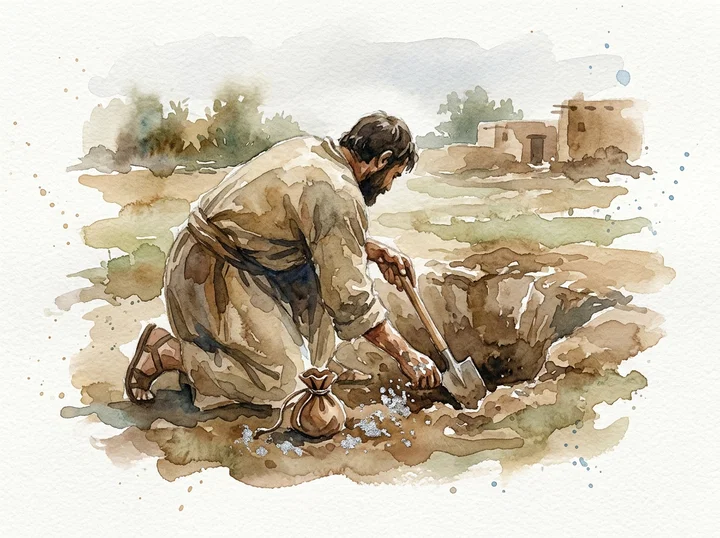
Then he which had received the one talent came and said, Lord, I knew thee that thou art an hard man, reaping where thou hast not sown, and gathering where thou hast not strawed:
Translations
Then he which had received the one talent came and said, Lord, I knew you that you are an hard man, reaping where you have not sown, and gathering where you have not strewed:
Then he which had received the one talent came and said, Lord, I knew thee that thou art an hard man, reaping where thou hast not sown, and gathering where thou hast not strawed:
Then he which had received the one talent came and said, Lord, I knew thee that thou art a hard man, reaping where thou hast not sown, and gathering where thou hast not strawed:
Then he who had received the one talent came, and said, Lord, I knew thee that thou art a hard man, reaping where thou hast not sown, and gathering where thou hast not strewed:
And he also that had received the one talent came and said, Lord, I knew thee that thou art a hard man, reaping where thou didst not sow, and gathering where thou didst not scatter:
And he also that had received the one talent came and said, Lord, I knew thee that thou art a hard man, reaping where thou didst not sow, and gathering where thou didst not scatter;
'And he also who hath received the one talent having come, said, Sir, I knew thee, that thou art a hard man, reaping where thou didst not sow, and gathering from whence thou didst not scatter;
And he also that had received the one talent coming to [ him] said, [ My] lord, I knew thee that thou art a hard man, reaping where thou hadst not sowed, and gathering from where thou hadst not scattered,
But he also who, the one talent, had received, coming forward, said—Lord I knew thee, that thou art a, hard, man, reaping, where thou hast not sown,—and gathering, whence thou hast not winnowed;
Berean Standard Bible, Majority Standard Bible
Finally, the servant who had received the one talent came and said, ‘ Master, I knew that you are a hard man, reaping where you have not sown and gathering where you have not scattered seed.
“ He also who had received the one talent came and said, ‘ Lord, I knew you that you are a hard man, reaping where you didn’ t sow, and gathering where you didn’ t scatter.
And he who had had the one talent came and said, Lord, I had knowledge that you are a hard man, getting in grain where you have not put seed, and making profits for which you have done no work:
Then he which had receiued the one talent, came, and said, Master, I knewe that thou wast an hard man, which reapest where thou sowedst not, and gatherest where thou strawedst not:
Douay-Rheims (Challoner revision)
But he that had received the one talent, came and said: Lord, I know that thou art a hard man; thou reapest where thou hast not sown, and gatherest where thou hast not strewed.
Pictures

Cross-references 20 of 38
- Luke 19:20-22
And another came, saying, Lord, behold, here is thy pound, which I have kept laid up in a napkin:
A servant accuses his master of harshness after failing to use what was entrusted.
- Matthew 25:15
And unto one he gave five talents, to another two, and to another one; to every man according to his several ability; and straightway took his journey.
The master entrusts each servant with goods according to ability.
- Matthew 25:30
And cast ye the unprofitable servant into outer darkness: there shall be weeping and gnashing of teeth.
The unfaithful servant is sentenced to outer darkness.
- Revelation 22:12
And, behold, I come quickly; and my reward is with me, to give every man according as his work shall be.
Christ brings each person’s reward according to their work.
- Luke 12:48
But he that knew not, and did commit things worthy of stripes, shall be beaten with few stripes. For unto whomsoever much is given, of him shall be much required: and to whom men have committed much, of him they will ask the more.
Both teach that greater gifts bring greater accountability and require a greater return.
- 2 Corinthians 5:10
For we must all appear before the judgment seat of Christ; that every one may receive the things done in his body, according to that he hath done, whether it be good or bad.
Both connect judgment with answering for deeds done in life.
- Mark 13:34
For the Son of man is as a man taking a far journey, who left his house, and gave authority to his servants, and to every man his work, and commanded the porter to watch.
Both describe servants entrusted with work and responsibility.
- Matthew 25:18
But he that had received one went and digged in the earth, and hid his lord’s money.
The servant buries the talent entrusted to him.
- Romans 14:12
So then every one of us shall give account of himself to God.
Each person must give an account to God.
- 1 Corinthians 4:2
Moreover it is required in stewards, that a man be found faithful.
Stewards must be found faithful with what is entrusted to them.
- Luke 16:10
He that is faithful in that which is least is faithful also in much: and he that is unjust in the least is unjust also in much.
Faithfulness in what is least shows faithfulness in greater responsibilities.
- Galatians 6:7
Be not deceived; God is not mocked: for whatsoever a man soweth, that shall he also reap.
Both connect sowing faithfully or neglecting duty with the certain harvest that follows.
- Matthew 25:19
After a long time the lord of those servants cometh, and reckoneth with them.
The returning master calls his servants to account for what he entrusted.
- 1 Peter 4:10
As every man hath received the gift, even so minister the same one to another, as good stewards of the manifold grace of God.
Both describe people as stewards of what they have received, accountable to use it.
- Luke 19:20-23
And another came, saying, Lord, behold, here is thy pound, which I have kept laid up in a napkin:
Both servants hide entrusted money and are judged for failing to put it to use.
- Matthew 25:29
For unto every one that hath shall be given, and he shall have abundance: but from him that hath not shall be taken away even that which he hath.
States the rule applied to the one-talent man: faithful use brings increase, while neglect brings loss.
- Matthew 25:1-13
Then shall the kingdom of heaven be likened unto ten virgins, which took their lamps, and went forth to meet the bridegroom.
Both parables teach accountability and readiness for the bridegroom’s coming.
- Matthew 12:30
He that is not with me is against me; and he that gathereth not with me scattereth abroad.
Gathering with Christ contrasts with hiding talents and scattering souls.
- Luke 12:47
And that servant, which knew his lord’s will, and prepared not himself, neither did according to his will, shall be beaten with many stripes.
Knowing the master’s will brings responsibility to act; failure brings punishment.
- Romans 2:6
Who will render to every man according to his deeds:
God renders to each person according to their deeds.
Commentary part 1 of 4
Each commentary is drawn from primary sources: the writings of Ellen G. White and Adventist pioneers and periodicals. Each commentary is separate. Its own words are not a quotation; follow the references to read the source passages.
Ellen G. White
187 sources
The verse shows the one-talent servant at the reckoning excusing his failure by calling his master a hard and exacting man who takes profit from labor he did not perform.RH Jun 27, 1907ST Apr 22, 1875ST Nov 20, 1884Ms 73, 1900, par. 3–4Ms 151, 1897, par. 28–29 The charge is false and does not excuse him, but exposes distrust and unfaithfulness that blames God for the servant's own sloth and projects his own ungenerous and covetous character onto a merciful master.Ms 81, 1899, par. 1–7Ms 184, 1907, par. 1–5Ms 9, 1898, par. 1–6Ms 9, 1891, par. 1–3 In truth God is good, compassionate and liberal, the owner of all by creation and redemption who gives advantages for faithful work and does not demand what He has not given.Ms 9, 1891, par. 1–3ST Jul 2, 1902Ms 86, 1901, par. 30–32Ms 150, 1899, par. 57–59 Even by the servant's own claim he should have put the money to use for increase, so hiding gifts through fear, selfishness and love of gain brings condemnation and loss of the talent, while humble diligent trading to bless others and save souls increases ability and receives approval and reward.Lt 11, 1865, par. 2–3ST Oct 23, 1901Ms 81, 1899, par. 1–7Ms 7, 1866, par. 3–5Lt 110, 1899, par. 12–14
Parable Setting and Context
This saying belongs to the parable of the talents spoken on the Mount of Olives concerning the second advent to the world.COL 325.1–2 It follows teaching about signs of His near coming and warning to watch and be ready because no one knows the day nor the hour when the Son of man comes.COL 325.1–2 Watching for His coming means spending the time before He comes not in idle waiting but in diligent working.COL 325.1–2 It was delivered shortly before entering Gethsemane.ST Nov 20, 1884 Read alongside the parable of the ten virgins, it teaches unselfish, watchful labor in God's cause while awaiting Christ, so that readiness requires more than quiet prayer and meditation, with personal piety cultivated while serving diligently and not activity alone.ST Nov 20, 1884
The parable shows accountability in the judgment for use of what God entrusts, with reward proportionate to work done and improvement made, though eternal rewards are purchased by Christ and not merited by human beings.GW92 450.3 Mere profession of faith has no value apart from love shown through works, and actions done from love are accepted and rewarded.GC 487.2 The talents include abilities and resources such as life, time, money, influence, speech, and the light of God's word.GC 487.2 The slothful servant with one talent hoarded his Lord's goods and did nothing with them, and by that neglect lost his soul and eternal life.Ms 81, 1893, par. 69–72 The one talent is not his own but the Master's entrusted capital, given in solemn trust to every person from the lowliest to the highest, proportioned to varied capabilities, to be invested, traded, and increased to return to God with usury, so that no one is excused and none can be idle, trifle with time, privileges, and opportunities, or fail to improve in character and ability and in the use of the light of truth and all spiritual advantages.Ms 81, 1893, par. 69–72
The parable is of the kingdom of heaven as a man traveling into a far country who gave his own goods to his servants according to ability.STB 685.1–5 After a long time the lord returned to reckon with them, and those who traded doubled theirs while the servant who hid his lord's money in the earth came to excuse himself by charging his lord with being hard and reaping and gathering where he had not sown and strawed, saying he was afraid and hid the talent and now returned only what belonged to his lord.STB 685.1–5 The servants who put theirs to work doubled them.COL 329.1 The talents belong to the Lord, and each person is expected to work faithfully according to light, ability, and opportunity received, rather than neglecting them.ST2 31.1–2 God gives each person responsibilities according to abilities and expects the trust to be put to use, with faithfulness tested in present duties even small ones, so that those who do them willingly and well may be entrusted with greater responsibilities, while wasted talents bring no increase.RH Mar 12, 1872
These gifts differ: they may include money, influence, wisdom, or, among the poor, simplicity, humility, tested virtue, and trust in God, and patient work and dependence on God can make life and testimony point others to Jesus, with those who use gifts for God seeking eternal life as reward.GW 330.2–3 The servant with one talent accusing his master of harshness belongs to the lesson that entrusted talents are the Lord's and servants are accountable for using them faithfully rather than burying or misusing them.2T 243.2–244.1 The one-talent servant stands among the professed followers represented as Christ's servants.COL 325.3–326.2 Like all people, he belongs to the Lord, having been bought at infinite cost, and is accountable for how he responds to the Lord's claim and uses what has been entrusted to him.COL 325.3–326.2 The Master is Christ and present believers are His servants bound by the same definite instruction preparing disciples for their work.RH Oct 2, 1900
Servants must work earnestly and vigilantly to prepare the way for the second coming by waiting, watching, praying, and working, with personal consecration through cultivated heart-holiness, requiring faithfulness with no spiritual declension and striving to increase capabilities to do continually better work intelligently with every facility provided instead of leaving what was entrusted unused.RH Oct 2, 1900 Even one talent is a trust from God, and no human being is without a talent, without a work for the Lord, or excused from labor, idleness, or ignorance, since Christ paid the wages of sin and shed His precious blood to redeem the world from eternal ruin.Ms 13, 1895, par. 12–15 Every member of God's family from the humblest to the most exalted must do his best in consecrated service in the salvation of sinners, using practice, capabilities, opportunities and gifts to donate to and carry forward His work and to make investments that accomplish the greatest good and increase the revenue of the treasury.Ms 13, 1895, par. 12–15 A strict account of entrusted talents is required with the improvement they are sure to make if put to use, returns proportionate to ability are expected with the amount doubled by intelligent, faithful use, and while justification is by faith, judgment is by the character of works, with the fidelity of every agent tested and the destiny of the worker determined by faithful improvement or lack of improvement according to the amount returned.Ms 13, 1895, par. 12–15 The servant with one talent represents the humblest and poorest responsible persons, not only a favored few with remarkable gifts for large things or men of superior genius and intellect, because the parable includes all responsible human agents from the humblest and poorest in worldly goods to those entrusted with talents of means and intellect.SBAWP 68.4
Christ has entrusted His goods to the church, and the trust and its responsibilities have passed from generation to generation, with even the humblest service accepted when done for His glory.GW92 304.1–2 Each person is individually responsible to God for gifts and resources entrusted and must not transfer that stewardship to others.7T 176.4–177.4 This instruction in Matthew 25:14-46 is to be studied and compared with the life record.Lt 214, 1906, par. 13Ms 166, 1905, par. 9–10 Every man is called to put away boasting, for self-sufficiency is fearfully dangerous and makes the words of Christ of no effect.Lt 214, 1906, par. 13Ms 166, 1905, par. 9–10 The parable represents the kingdom of heaven and calls for serious personal reflection on how it applies personally in the accurate use of abilities and gifts God has entrusted to each person.Ms 92a, 1898, par. 20 Faithfulness in small duties brings blessing, while neglecting the work one can do in order to seek a higher position makes one a burden to oneself and others.Lt 3, 1870, par. 7
What is entrusted — including material means — is to be used in Christ's service and returned to Him, and faithful effort for Christ is rewarded.4T 19.1 A servant must answer for what was entrusted, for God gives abilities and opportunities for His service and will require an account of how they were used.17MR 197.2–4 In these places the emphasis is on improving what is entrusted and serving Christ rather than burying abilities, with the servant's description of his master as harsh left unexplained.4T 19.117MR 197.2–4 The principles illustrated are of the day of final account when the Lord reckons with His servants who are justified by faith and judged by their works, faith working by love and purifying the soul from moral defilement to become a temple for the Lord.Ms 81, 1893, par. 69–72
Servant's Accusation Stated
The verse records the coming to account of the servant who had received the one talent, saying he knew his lord to be a hard, harsh, austere, severe, unjust and exacting man, reaping where he had not sown and gathering where he had not strawed, demanding and taking gain from labor he had not performed.RH Jun 27, 1907ST Apr 22, 1875Ms 73, 1900, par. 3–4Lt 11, 1865, par. 2–3Ms 19, 1899, par. 5–7 He had not appreciated the gift entrusted to him and had done no good with what his lord gave him, but had bound it up and hidden his lord's money in the earth, and then came complaining to excuse his slothfulness.RH Jun 27, 1907Ms 73, 1900, par. 3–4Lt 11, 1865, par. 2–3 He claimed he was afraid, regarded any improvement as something that would only be gathered by God with no benefit to himself, and therefore was afraid to make any use of the talent and did nothing with it.RH Jun 27, 1907Lt 11, 1865, par. 2–3Ms 19, 1899, par. 5–7 His complaint was that his lord was unfair and would require the use of means to advance his work, and though he knew his master's purpose he deliberately thwarted it.ST Apr 22, 1875Lt 11, 1865, par. 2–3 The plea of having only one talent was living for self instead of improving abilities for God, for if used for God that one talent would have accomplished much and by careful use could have been doubled, even by speaking helpful, uplifting words, while failure to improve it brings great loss and the talent is taken away.RH Jun 27, 1907ST Oct 23, 1901
The accusation is the servant's excuse for failing to use what was given, introduced as he returns only what belongs to his lord.ST Nov 20, 1884ST Jul 24, 1901MYP 70.1 It belongs to the parable of the talents delivered shortly before entering Gethsemane, in which the talent represents an entrusted ability and opportunity for service, and burying it instead of putting it to use makes the servant an example of idleness, unfaithfulness, slothfulness and neglect.ST Nov 20, 1884Ms 151, 1897, par. 28–29Ms 2, 1867, par. 4–5 By it he blames God for his own failure and tries to make the Lord responsible for it.5T 271.1Ms 2, 1867, par. 4–5 It is applied to church members who neglect their duty to make Christ known and minister to others, leaving entrusted gifts unused rather than developing and employing them in God's work, and to people who withhold their means from work for the salvation of others and thereby charge God with expecting a harvest He did not sow.Ms 151, 1897, par. 28–295T 271.1 His selfish withholding of his master's goods leaves others without intended help and brings loss to his master, yet the charge does not excuse him, for entrusted talents are not to be buried but used in Christ's service.ST Jul 24, 1901MYP 70.1Ms 2, 1867, par. 4–5
Even by the servant's own account he should have put the money with the exchangers so it could earn a return and bring increase, even double.ST Oct 23, 1901Lt 110, 1899, par. 12–14Ms 150, 1899, par. 57–59 If he believed he could not use the talent himself, he should have entrusted it to someone faithful to use.Ms 81, 1899, par. 1–7 The master repeats the servant's charge not to agree with it but to expose the excuse according to the servant's own estimate, asking why, if the terms were thought so exacting, the talent was not put to use.Lt 110, 1899, par. 12–14ST Jan 23, 1893 The complaint exposes selfishness and unwillingness to know God, for the talent was God's property entrusted for God's service, and failure to use it for His glory makes the servant unfaithful, unprofitable, wicked and slothful.ST Oct 23, 1901Ms 81, 1899, par. 1–7 He hid because he did not want his lord to have the use of it, thinking from selfish anxiety to benefit himself that any increase would have to be given back to the owner, so he remained only a consumer when he might have been a provider, and he would have failed the test just as surely with five or ten talents by binding up his means so his lord could gain nothing.Lt 110, 1899, par. 12–14Ms 150, 1899, par. 57–59 Faithful use of the one talent from interest in the work would have doubled it under God's supervision and led to a larger trust, and the abuse of the trust reveals the texture of his character.Lt 110, 1899, par. 12–14 The verse thus rebukes inventing places to hide or bind up unneeded money instead of investing it in saving souls, for one soul saved is worth more than the whole world, and means should be used to advance God's work and cause the gospel to be heard in new places among all tongues and nations rather than tied up in buildings.Lt 110, 1899, par. 12–14
False View of Master
The charge that the master is hard, reaping where he has not sown and gathering where he has not strawed, is false, a lie against God.Ms 81, 1899, par. 1–7Ms 184, 1907, par. 1–5Lt 12, 1893, par. 22–27Ms 53, 1894, par. 39–41 The servant who makes it does not truly know his lord, but distrusts Him, and through unfaithfulness deceives himself into thinking he knows God and his own heart when he knows neither as he ought.Ms 184, 1907, par. 1–5Ms 9, 1891, par. 1–3Lt 12, 1893, par. 22–27 Misrepresenting the Lord's character in this way brings judgment upon the speaker by precept and example, and it is no valid excuse for failing to use what has been entrusted.Ms 184, 1907, par. 1–5Lt 12, 1893, par. 22–27 If he believed he could not use the talent himself, he should have entrusted it to one faithful to use it, for fear that kept him from laying his gifts at his Master's feet only gave their use to the enemy.Ms 81, 1899, par. 1–7Ms 9, 1891, par. 1–3
In making the accusation the servant attributes his own ungenerous, unjust, covetous and avaricious character to a merciful and loving master who entrusted him with the talent in mercy and love.Ms 9, 1898, par. 1–6Lt 12, 1893, par. 22–27Ms 62, 1890, par. 36–38Ms 40, 1890, par. 25–30 He judges God to be altogether such an one as himself, from selfish hoarding of God's goods, alienation from God, and ignorance of God and of self.Lt 12, 1893, par. 22–27 Distrust of those serving God and jealousy toward God lead him to withhold improvement of what was lent him, and his words expose a spirit that covets what is not his.Ms 9, 1898, par. 1–6 He lacked simplicity of heart and experiential knowledge of God that genuine religion gives, and therefore did not believe in God's free mercy and the rich gift of His grace.Ms 62, 1890, par. 36–38Ms 40, 1890, par. 25–30
The words, I knew thee that thou art an hard man, reveal lack of faith and love for God and are inspired by Satan, who pours supposed grievances against God into hearts and minds.Lt 21, 1897, par. 10–13 Those who speak them become channels of darkness and hindrances to others, arraigning the God of heaven at their bar of justice and condemning Him while claiming great acuteness and discrimination.Lt 21, 1897, par. 10–13 They work on the same line Satan worked when he tempted Adam and Eve to part with faith in God and accept his false version of the Creator's character, and as disobedient transgressors they show ignorance and foolishness like blind men who have put out their own eyes.Lt 21, 1897, par. 10–13 Burying talents in this spirit means refusing the trust, siding with the apostate, doing the deeds of God's enemy, and resisting with stubborn will Christ crucified, the pleading of the Spirit, and Christ uplifted to draw sinners to Himself, so that all good left undone will be charged against the steward with no excuse when weighed and found wanting.Ms 65a, 1898, par. 31–32
God is in truth good and compassionate, forgiving sin though He does not clear the guilty, a rich giver and provider and fountain of inexpressible love, not a harsh judge and exacting creditor.Ms 9, 1891, par. 1–3Ms 150, 1899, par. 57–59 He does not demand gains from what He has not provided or require what He has not given, for everything already belongs to Him by creation and redemption and life's blessings bear the stamp of Calvary.Ms 86, 1901, par. 30–32COL 362.1–4 He devises liberal things and provides advantages for faithful work, entrusting gifts according to ability to be traded upon in His vineyard by returning fruit in season and relieving the needs of suffering people bought with blood, and He gives increased talents to those who wisely improve what was lent and is pleased to acknowledge service done in Christ through whose grace and strength they worked.Ms 150, 1899, par. 57–59COL 362.1–4ST Apr 7, 1909 The man with one talent made no use of his gift because selfish anxiety to benefit himself made him think any increase would have to be given back to the owner, so he hid it and remained only a consumer when he might have been a provider.Ms 150, 1899, par. 57–59
Complaints that God is unjust, unreasonable or hard expose querulous unbelief, envy and evil-thinking toward the Master, and reveal a stubborn, rebellious, unrepentant heart.RH Jan 27, 1903Ms 9, 1898, par. 12 Spiritual idleness is spiritual unfaithfulness, and the accusations people bring against God measure their own sentence.Ms 9, 1898, par. 12 Claiming weakness, murmuring over burdens, or refusing a responsibility God calls a person to bear expresses the same accusation that God requires what He has not given power to do, which is distrust of God and denial of His word, and it represents professed believers who reduce piety to the lowest standard while seeking only to escape perdition.Lt 14, 1885, par. 20COL 363.1–2MYP 309.4 The same false charge is extended to His ministers when they give plain, close reproof, which must not be held in mind and heart, because reproof must come and faithful ministers will give it.Lt 12, 1893, par. 28–30
Believers must not treat Christ as though the demand-without-labor charge were true nor calculate how little they can do.Ms 14, 1891, par. 14Lt 13, 1878, par. 8 The cross shows how to work for the Master, who has done everything and withheld nothing of Himself, so duty is not to do as little as possible but to earnestly inquire how much can be done for Him.Ms 14, 1891, par. 14Lt 13, 1878, par. 8 The servant with one talent portrays one who fails to put entrusted ability or means to work and blames failure on a harsh master, warning against neglecting stewardship and misrepresenting God's character instead of using talents faithfully for His work.Lt 34a, 1886, par. 30–31
Talents Entrusted Defined
What is entrusted in the verse is more than earthly wealth or ordinary work, for the talents are gifts and responsibilities and moral and spiritual capital held in trust as a loan from the Master to be invested for His glory.19MR 389.2–4Lt 108, 1896, par. 13–15Ms 34, 1901, par. 12–13Lt 305, 1904, par. 10–11STMW9 40.2 Christ secured that trust with His own blood and sufferings, making men stewards of His grace for a sacred higher trust, so that even the humblest service becomes consecrated when done in doing His bidding.Lt 108, 1896, par. 13–15RH Sep 4, 1900 Ability, wisdom and success are not made by men themselves but are sacred capital received from the Source of wisdom, and to be faithfully improved because their use bears on eternal destiny, leaving no place for self-exaltation or strife for supremacy.RH Sep 4, 1900STMW9 40.2
The talents include life itself, health, strength, time, intellect, mind, reasoning powers, speech, voice, pen, influence, opportunities, privileges, position, possessions, affections, sympathy, conscience, and physical, mental and moral powers.ST Jan 23, 1893GW92 434.2RH Apr 9, 1901ST Jun 3, 1889 They are all the Lord's property, bought with a price and lent to test character and faithfulness, to be diligently used, guarded and improved for Christ and the good of others.ST Jan 23, 1893GC88 487.2–3RH Apr 9, 1901 Influence is to draw souls to Christ, pen and voice and means are to serve Christ in the poor, afflicted, orphan, fatherless, sick, hungry and destitute, and intellect is to be put to its highest use in careful thought for that reckoning.ST Jan 23, 1893ST Jun 3, 1889
They also include spiritual gifts: light, sacred truth, heaven's precious truths, every ray of light from the written word, knowledge of Bible truth, justification by faith and Christ's righteousness, the Sabbath and the third angel's message.Ms 6, 1895, par. 9–10Lt 86, 1895, par. 7–8Ms 66, 1894, par. 9–10Ms 9, 1891, par. 42Ms 81, 1899, par. 10 The talent is every entrusted capability and every such ray, lent to its uttermost to be understood, appropriated, practiced and shared rather than buried.Ms 6, 1895, par. 9–10Ms 81, 1899, par. 10Ms 9, 1891, par. 17–20 Trading upon it means putting God's goods out to others at once, calling attention to the value of truth by precept and example, searching the Scriptures, presenting truth wisely with careful planning to every class, and warning brethren against making everything of the world.Lt 86, 1895, par. 7–8Ms 66, 1894, par. 9–10Ms 9, 1891, par. 17–20
The talents include temporal possessions, money, means, houses, lands, property, prosperity, business, brain power to write books and royalties from them, lent by God as His goods and capital.RH Aug 25, 1874Ms 6, 1878, par. 2–31T 197.1ST Jul 23, 18942T 658.1–659.1 They are to be wisely improved and multiplied for God's cause and the salvation of others rather than claimed as one's own, selfishly kept back, or used for pleasure.1T 197.1ST Jul 23, 18942T 658.1–659.1 Even a small amount of means is a full trust, and love of gain that ties it up in earthly investments, worldly organizations and pleasures while withholding help from God's work repeats the failure of hiding the talent in the earth.RH Aug 25, 1874Ms 6, 1878, par. 2–3Ms 53, 1894, par. 39–41ST Jul 23, 18942T 658.1–659.1 Its faithful or unfaithful use tests whether men are fit to receive eternal riches.Ms 53, 1894, par. 39–41
God distributes according to known powers and capacities to use them, not capriciously, giving to every man according to his several ability with his special place and work in the plan for saving souls.ST Jul 2, 1902ST Oct 22, 1894STMW9 43.2RH Jun 27, 1907 There is diversity and never equality in distribution or returns, greater endowment requires greater returns, yet God expects returns according to what a man has and not according to what he has not, and is equally honored by faithful improvement of a small trust as of a great one.ST Jul 2, 1902ST Oct 22, 1894CT 512.4–513.1 Day by day He tests whether men acknowledge Him as giver and prove worthy, dealing with each personally, scrutinizing every talent returning to Him, with reward proportionate to improvement.ST Oct 22, 1894CT 512.4–513.1
The earth and all its treasures, the cattle upon a thousand hills, and all the gold and silver are the Lord's, entrusted to stewards to prove whether they will acknowledge Him in His gifts and advance His cause and glorify His name rather than exalt and glorify themselves and oppress the poor.ST Jun 11, 1894 He requires offerings and the improvement of time and talents not because He needs them and cannot have glory and riches without them, but because it is for the interest of His servants to render to God the things which are His.ST Jun 11, 1894 The freewill offerings of the humble, contrite heart He receives as the sacrifice of grateful obedience and rewards with richest blessings, accepting gold and silver as evidence that all we have and are belongs to Him and accepting improved time and talents as fruits of love in the heart, for to obey is better than sacrifice and without pure love the most expensive offering is too poor to accept.ST Jun 11, 1894
The talent is also a person's own God-given appointed work according to ability, even the humblest employment and small pioneer labor.Lt 122, 1902, par. 23–25Ms 8, 1904, par. 22–23Lt 30, 1875, par. 6Ms 36, 1906, par. 8–11 It is to be done in the best way one knows how in cooperation with Christ, trusting in God alone and staying at the faithful line where success has been given, while Christ as Educator constantly helps the worker become better fitted, giving victory after victory with angels going before him.Lt 122, 1902, par. 23–25Ms 8, 1904, par. 22–23 Under His blessing a small beginning grows, teaching others to do the same and uniting them to open new fields and erect humble buildings, and its faithful use prepares gifts for wider and nobler service, whereas despising small work or reaching for the most difficult work and greatest service leads to failure.Lt 122, 1902, par. 23–25Ms 8, 1904, par. 22–23Ms 36, 1906, par. 8–11
Duty to Trade Faithfully
Trading is putting what has been received to humble, diligent, unselfish use in service to bless fellow men and save souls, imparting to others what was received, letting light shine, relieving sufferers, and putting means into circulation for missions, meetinghouses, sanitariums and schools, which keeps the worker a channel through which light and grace are transmitted and who receives grace in proportion to the capability to diffuse it.Lt 21, 1897, par. 10–13Lt 35, 1898, par. 6–8FE 338.2–3STE 114.2–115.1Ms 66, 1894, par. 9–10 Trading is to begin at once upon the very first endowment rather than waiting idle, by calling the attention of others to the value of the truth, presenting it by precept and example, seeking wisdom from God daily, searching the Scriptures diligently, and realizing co-partnership with God.FE 338.2–3STE 114.2–115.1Lt 86, 1895, par. 7–8 That work educates the worker and develops executive ability, making the gospel the power and wisdom of God to the trader and making life and character a living epistle through constant transformation into the character of Christ by the Holy Spirit as the worker senses weakness and unworthiness and casts the helpless soul upon Christ, growing from strength to strength with God's approval instead of becoming clogged with crowded, unused knowledge.Lt 21, 1897, par. 10–13FE 338.2–3Lt 86, 1895, par. 7–8 Instruction is meant to equip such practical service under the Spirit of God, not to accumulate knowledge for its own sake, and heaven's precious truths are to be presented wisely and with careful planning to win people of every class, including those often overlooked.FE 338.2–3STE 114.2–115.1Ms 66, 1894, par. 9–10
Faithful, diligent and wise use increases the talent, even doubling one to two, growing knowledge, power, tact, influence and efficiency, leading to greater trust, the Master's approval as well done good and faithful servant, reward in exact proportion to fidelity, and everlasting life and entrance into His joy.RH Mar 12, 1872ST Jun 15, 1882MYP 301.2Lt 171, 1897, par. 124T 51.1–2 Faithfulness is tested in present duties even when small, for those who do them willingly, cheerfully and well may be entrusted with greater responsibilities, while wasted and neglected talents bring no increase and no greater trust.RH Mar 12, 1872ST Jun 15, 1882MYP 301.2 The talent is to be used fully for its appointed purpose, and the final commendation is given only to those who have done well, with perseverance and earnest effort returning principal and interest doubled.ST Jun 15, 1882MYP 301.24T 51.1–2
Even one talent or a small gift faithfully consecrated and employed is needed, accomplishes work greater gifts cannot, and will be multiplied and approved, for living faith and love for Christ can make daily work promote Christian growth and God can multiply the results of faithful service.Ms 9, 1891, par. 45–46ST Jan 23, 1893COL 360.1–2CT 234.2–235.1 That one talent, if used for God, would accomplish much and by careful use could have been doubled, even by speaking helpful, uplifting words, in temporal or spiritual acts of mercy, in house-to-house ministry, and in bringing one soul to heaven who may in turn bring others, while failure to improve it brings great loss and its taking away.RH Jun 27, 1907Ms 9, 1891, par. 45–46CT 234.2–235.1Lt 171, 1897, par. 12 Faithfully using even a small ability brings increase and can reach and influence people whom those with greater abilities cannot reach, while hiding what was received and murmuring against God instead of using it leaves it unmultiplied.ST Jan 23, 1893CT 234.2–235.1Lt 171, 1897, par. 12
Using what one has leads God to strengthen and increase abilities, for wholehearted service, faith, perseverance and co-operation with the Holy Spirit awaken dormant powers, arouse dormant energies, give new life to palsied powers, form better habits, add greater light, power, peace and joy, and fit for larger responsibility.ST Nov 20, 1884COL 353.1ST Jul 23, 18945T 457.2–459.1CT 506.1–2 While one exerts the ability possessed in close connection with the Source of light and power, God works with the worker to increase and strengthen every faculty, but He will not supernaturally endow qualifications that are left unused.COL 353.15T 457.2–459.1CT 506.1–2 Inability to work for others is not made by God but is produced by personal inactivity, perpetuated by deliberate choice, and increased by devotion to trades, farms, houses, merchandise, dress, tables and other worldly pursuits, by which love, judgment, memory, foresight, tact, energy and every other faculty are perverted, disabled and crippled for His cause, and responsibility is measured not by present resources but by powers originally bestowed and possibilities for improvement.ST Jul 23, 18945T 457.2–459.13T 534.1–2
Faithful stewardship requires watching unto prayer, refusing any proposition that would call away from duty, remaining where placed, and inquiring at every step whether the course is the way of the Lord.Lt 189, 1905, par. 10–12 The one talent is sacred entrusted capability lent by God to be improved and increased by wise use in the appointed post of duty, and to be used in imparting the grace and knowledge that come with its improvement, so that the grace of God is manifested through the worker.Lt 21, 1897, par. 10–13Lt 35, 1898, par. 6–8Lt 189, 1905, par. 10–12
Burying Talent Explained
Hiding or burying means leaving entrusted gifts unused, wasted and idle through inaction, indifference, sloth and unfaithfulness, merely keeping what was received while letting idleness take the place of sincere labor.RH Oct 26, 1911SBAWP 21.2ST Aug 1, 19114T 468.23T 57.3 Such neglect leaves undone the good of serving God's glory and the salvation of souls, so the Master receives no return, and the crown of life and reward is forfeited.RH Oct 26, 1911SBAWP 21.2FE 83.2 God gives abilities and claims service, and each person must accept and discharge responsibility faithfully and conscientiously, answering at the last day for refusal of allegiance to Christ.FE 83.2ST Aug 1, 1911 The servant with the least gift felt little responsibility and made no use of it, and ability increases through use while God tests and proves His people, so unused ability deteriorates like rusting tools and religious life declines.4T 468.23T 57.3
Burying in the earth means hiding means in the world by letting love of gain rule, withholding the Lord's money from His work and from emergencies where His cause could be benefited.RH Aug 25, 1874Ms 6, 1878, par. 2–3SG4 196.11T 197.1 It ties up resources in earthly investments, farms, buildings, mining stock, uncertain enterprises and worldly pleasures, even risking them with sharpers rather than letting God's treasury be helped.RH Aug 25, 1874Lt 110, 1899, par. 12–14Ms 6, 1878, par. 2–3 It spends on selfish indulgence, display and family demands while neglecting soul-winning, keeping possessions from doing good, claiming them as one's own with a right to do as one pleases, murmuring at expense for God's work and putting self-interest first with a miser's grasp.Ms 6, 1878, par. 2–3SG4 196.11T 197.1 The complaint of fear is not innocent ignorance but deliberate frustration of the Master's purpose by one who knows what is expected, and the use of temporal possessions tests fitness for eternal riches.RH Aug 25, 1874Ms 53, 1894, par. 39–41 In judgment the work is faithfully recorded by angels, what was committed is taken away, earthly treasure is swept away and lost, and crowns that might have been worn are put on faithful servants whose means were constantly in use.SG4 196.11T 197.1
Burying also means keeping received light and truth without presenting it, not pointing sinners to pardon and the antidote for sin while men sicken and die without saving light.Ms 9, 1891, par. 17–2012MR 331.3–332.1 The talent is knowledge of Bible truth, the preciousness of the promise, justification by faith and the righteousness of Christ, the Sabbath and the third angel's message, to be brought into character, glorified with every ray of light, and set before those in darkness and brought home personally to hearts.Ms 9, 1891, par. 17–20Ms 16, 1902, par. 17–18 Hiding light allows worldly cares and business matters to keep it from being proclaimed, using all influence and ability only to plan money-making and lay up treasure on earth.Ms 9, 1891, par. 17–20Ms 16, 1902, par. 17–18 Waiting for multiplied opportunities, spending time and money on further privilege while not improving present light, hindering others from going forth, and leaving present work undone while waiting for greater opportunities and more training leaves work undone and souls lost.Lt 47, 1895, par. 87–88Ms 6, 1895, par. 5–6 This duty belongs not to a few ordained ministers alone but to every Christian young or old, rich or poor, bought with a price, to go to work at once in vineyard and highways and hedges, for it is by using ability that ability is learned and by communicating light that pity is cultivated.12MR 331.3–332.1Lt 47, 1895, par. 87–88
The servant hid because he feared the master would require all the improvement, thinking any increase would have to be given back with no benefit to himself.Lt 11, 1865, par. 2–3Lt 29, 1868, par. 4–5Ms 150, 1899, par. 57–59 Centered on self and moved by selfish anxiety to benefit himself, he withheld from God what was lent for good and did not want his lord to have the use of it, becoming only a consumer when he might have been a provider by putting it out to the exchangers.Lt 11, 1865, par. 2–3Lt 110, 1899, par. 12–14Ms 150, 1899, par. 57–59 His fear kept him from placing gifts at his Master's feet, and lacking knowledge of God and trust in Him he gave their use to the enemy instead of trading in the vineyard by relieving suffering bought with blood.Ms 9, 1891, par. 1–3Ms 150, 1899, par. 57–59 He would have failed just as surely with five or ten talents by binding up his means so his lord could gain nothing, for abuse of trust reveals character while faithful use from interest in the work would have doubled it under God's supervision and led to larger trust.Lt 110, 1899, par. 12–14
Shifting stewardship to another follows the same course as hiding and does not ease or lessen accountability.Ms 7, 1866, par. 3–5Ms 28, 1896, par. 9–11Lt 43, 1899, par. 34–36 Handing control of gifts to another mind, conference, committee, council, institution or leader, merging individuality, selling stewardship, letting others do the trading and thinking, transferring the talent to another, or letting another serve and be mind or judgment, leaves the giver standing no better than the man with the one hidden talent in judgment.Ms 7, 1866, par. 3–5Lt 55, 1895, par. 35–41Ms 28, 1896, par. 9–11Lt 54, 1895, par. 34–37 Ability to write a book is like every other talent, a gift for which the possessor is individually accountable, which no man can buy or sell without great and dangerous responsibility, and no man or council is to weigh another's talents in human balances, make little of them, or take control of writers and turn all profits into hands of conference or publishing house.Lt 55, 1895, par. 35–41Lt 54, 1895, par. 34–37 Every man's special work is appointed by God according to ability, including mind, judgment, tact, wisdom and influence, to be managed, prayed and worked and studied and planned by himself to gain other talents, and account is given to God not to man.SPBC 184.3–4Ms 28, 1896, par. 9–11Lt 43, 1899, par. 34–36 The one-talent servant also represents those whose abundance of means has spoiled them for faithful stewardship, losing incentive to cultivate abilities and share what they have.Ms 65a, 1898, par. 19
Reckoning and Judgment
The use of every entrusted talent is examined when the Lord comes to receive an account, and that reckoning decides each case according to faithfulness in the work entrusted.4SP 311.2ST Nov 20, 1884GW92 450.3GC 487.2ST Nov 20, 1884 Day by day and hour by hour responsible beings trade on the Lord's money and build their record for time and eternity, each called by name and closely scrutinized, with no second probation and no other chance afterward.Ms 81, 1893, par. 69–7221MR 354.5–7 Readiness for that coming requires more than quiet prayer and meditation, for personal piety must be cultivated while serving diligently in unselfish, watchful labor.ST Nov 20, 1884 The one talent is not the servant's own but the Master's entrusted capital, given in solemn trust from the lowliest to the highest proportioned to varied capabilities to be invested, traded, increased and returned with usury, and no one is excused from improving character and ability and using the light of truth and all spiritual advantages.Ms 81, 1893, par. 69–72
Reward is proportionate to improvement and punishment according as talents were abused, for every talent returning to the Master is scrutinized and every individual dealt with personally on whether he improved or abused his trust.ST Oct 22, 1894STMW9 43.2GW92 450.3 Justification is by faith but judgment is by works, faith working by love and purifying the soul, and mere profession has no value apart from love shown through works.4SP 311.2GC 487.2Ms 81, 1893, par. 69–72ST Nov 20, 1884 The amount of gifts does not determine faithfulness, for each is to make the best use of what was received and that responsibility cannot be transferred to another, and faithfulness tested in present small duties willingly and well leads to greater trust and everlasting life while wasted talents bring no increase.SPBC 183.1–2RH Mar 12, 1872ST Jun 15, 1882 As owner of every entrusted gift the Lord has the right to examine how it was used and to approve, condemn, rebuke, encourage, counsel or reject.ST Nov 20, 1884Lt 180, 1907, par. 6 That examination concerns whether time, abilities, money, words, influence and spiritual knowledge were used to advance His cause and help the needy rather than to hoard wealth, favor self, or seek prominence and self-advancement.ST Nov 20, 1884Lt 180, 1907, par. 6Lt 7, 1896, par. 29–31Lt 109, 1896, par. 23–25
God alone can judge the capabilities of His servants and discern the time and talents employed for Him, so human estimates of who accomplished most are serious mistakes, and the humble worker faithful with few talents doing his work as unto God may receive just as large a reward as one entrusted with many while showy self-display proves a dead failure interposing self between the people and God.Lt 7, 1896, par. 29–31 In the great day He inquires what profit has been brought from what He lent at the cost of His precious life, and each must answer for deeds done in the body, for influence over others, for whether required work was done, for good that might have been done had warnings, reproofs and encouragement been heeded, and for being a hindrance instead of a blessing, with all excuses for serving self vanishing and giving nothing in return grieving infinite love.Lt 109, 1896, par. 23–25Ms 25a, 1895, par. 5Lt 199, 1901, par. 7–10 Neglect brings eternal loss, for the slothful servant hoarding his Lord's goods and doing nothing loses his soul and eternal life and the talent is taken away and given to users.RH Jun 27, 1907Ms 81, 1893, par. 69–72 Withheld means pass into the enemy's ranks, and judgment counts not only what was done but what might have been done, condemning and excluding the unfaithful at the reckoning.Ms 25a, 1895, par. 5Lt 199, 1901, par. 7–10
The negligent must repent before it is forever too late, redeem the time, come with entire surrender without losing one day, take up neglected work in humble faith with earnest prayer for pardon and help, and will find the Lord to strengthen and bless those who seek Him with the whole heart.RH Jan 27, 1903 Neglect and failure to make the best use of talents is backsliding calling for confession with a heart softened and subdued by the Spirit, for failing to do entrusted work works against Christ and puts the soul at risk through wasting goods by idleness rather than enriching self.6T 439.46T 297.4Lt 47, 1898, par. 7 Buried powers left of no use while a world is to be saved must be dug up and put out to the exchangers through the self-denying grace of Christ, building character for time and eternity, and those seeking an easy time must arise and shine to work in wisdom and grace and the love of Christ for those nigh and afar off.RH Aug 21, 190021MR 354.5–7 Talents of importance are not to remain just as given but to be improved, and when judgment sits with books opened every person will be judged according to what is written, testing whether he tries to maintain dignity and fasten attention on self or seeks to follow Jesus by improving what God gave.9MR 42.1 Turning the talent to wrong use stands for every hateful practice by which men subvert talents given for God's glory, which God fully knows with no covering hiding inmost thoughts, schemes, plans and purposes, and at judgment secret thoughts and transactions are set in the light of His countenance so men realize how hateful their practice has been.Lt 66, 1897, par. 22
Faithfulness Measured Proportionately
God gives every man his special place and work in the plan for saving souls, entrusting gifts, capital and responsibilities according to each person's known powers and ability to use them wisely, not capriciously, and He expects improvement and returns according to what each has and not according to what he has not.ST Jul 2, 1902ST Oct 22, 1894STMW9 43.2RH Jun 27, 1907 He does not require ten talents' increase from the man given only one, nor expect small vessels to hold what large vessels hold, but accepts the one talent used to the best account and is equally honored by faithful improvement of a small trust as of a great one, so there is no cause to lament a smaller gift or aspire to work beyond one's measure.ST Jul 2, 19026MR 262.1ST Oct 22, 1894Ms 53, 1899, par. 15 The talent is lent capital belonging to the Lord, not personal property, to be worked in cooperation with Christ; hoarding His goods, letting capital lie dormant, or burying it in the earth displeases Him and brings the servant to personal account, where every talent returning to the Master is closely scrutinized as to whether it was improved or abused, with reward proportionate to improvement and punishment according as talents were abused.ST Jul 2, 1902ST Oct 22, 1894STMW9 43.2RH Jun 27, 1907 Gifts grow through diligent use in keeping with God's Word to advance truth and glorify Him, and the lesson of the accounting is to seek His expressed will and use entrusted abilities diligently to gain more.6MR 262.1STMW9 43.2RH Jun 27, 1907
Even one entrusted talent must be used, not left dormant or buried, and having only one does not remove responsibility to serve the Master.2T 665.1–32T 667.3–668.2ST Oct 1, 18942T 666.1–2 The servant's fear that his harsh master would claim the gains was an excuse for failing to put the money to use, and those given only a small trust who excuse unfaithfulness because others received more, who are afraid to render to God what He entrusted and to trust Him with what they have, follow the same course when they put effort into worldly enterprises while investing little or nothing in God's cause and expecting those with large talents to bear the burden as if those with little carry no responsibility.2T 665.1–35T 282.2ST Oct 1, 18942T 666.1–2 Caution is useful but must not become indolence or cowardice that avoids responsibility, for personal responsibility cannot be set aside; hiding the talent rather than using it to benefit God's work, withholding self-denial and due service through covetousness and unbelief, robs God and robs the hider of heavenly treasure.ST Oct 1, 18942T 666.1–2 Such neglect must answer to the Master for how what was lent was used or abused, with reward or punishment corresponding to stewardship.ST Oct 22, 18942T 667.3–668.2
Faithfulness in small present duties, done with care, thoroughness and depth in one's own sphere and humble way, prepares a person for greater responsibility and fits him to bear heavier burdens, while self-inflated estimates of ability, skimming the surface, and grasping for the highest place bring defective work that cannot receive approval.HPMMW 32.13T 455.1Lt 54, 1895, par. 31–33 Every man, woman and child has varied, peculiar gifts of mind and body to be sanctified to the Master's use, each given work and place from lowest and most obscure to highest, each responsible to the Donor and bound to render an account that cannot be transferred, merged into another, or weighed by human judgment.RCOC 19.217MR 201.3–202.2Lt 54, 1895, par. 31–33 One talent well used will gain other talents, and the man with a few pence who serves faithfully is judged as faithful as one who improved pounds; value in God's sight comes not from number but from how gifts are appreciated, consecrated and employed in humble dependence, which brings wisdom, blessing and increase.17MR 201.3–202.2Lt 54, 1895, par. 31–33 The one-talent man must act his part as best he can, for great and small alike are chosen vessels and men with one talent may reach a class those with two or five cannot approach, so those with larger trusts must not silence, condemn, discourage or control the humbler worker, bring his mind or talent under human control, or urge him to make another his steward, but must keep hands off, strengthen his hands and let God work through whom He will.RCOC 19.25T 461.217MR 201.3–202.2Lt 54, 1895, par. 31–33
Amount does not determine faithfulness, and each is to make the best use of what was entrusted without transferring responsibility to another.SPBC 183.1–217MR 204.1–205.1Ms 173, 1907, par. 6Ms 53, 1899, par. 15 If those entrusted with few talents are faithful in work done humbly as unto God and not unto man, their work counts for more than bustle and show that interposes self and proves a dead failure, and they receive just as large a reward as one entrusted with many; indeed those of ordinary talents who have striven more earnestly in self-denial and self-sacrifice will be seen in the judgment, when books are opened, to have done more than those committed with larger trusts.SPBC 183.1–217MR 204.1–205.1Ms 173, 1907, par. 6 Those highly gifted carry a weight of responsibility to meet in the judgment for improvement or abuse, and if unfaithful will be challenged and condemned for corrupting power and dishonoring God; faithfulness requires presenting Christ in character by the Holy Spirit, with no harsh, stinging, condemnatory words or guile, holy in all manner of conversation, which prepares for a pleasant reckoning when He who bestowed the gift scrutinizes returns from every talent and rewards each according to what he has done with the commendation of well done.ST Oct 22, 189417MR 204.1–205.1
Claiming weakness or inability, murmuring over burdens, or refusing a responsibility God calls a person to bear expresses the same accusation as the one-talent servant, that God is harsh and demands what He has not given power to do, which is distrust of God and denial of His word.5T 457.2–459.1COL 363.1–2MYP 309.4 Inability to work for others is not made by God but is produced by personal inactivity, perpetuated by deliberate choice and increased by devotion to trades, farms, houses, merchandise, dress, tables and other worldly pursuits, perverting and crippling love, judgment, memory, foresight, tact and energy for His cause while greater wisdom is shown in service of self and evil; to plead present inexperience and unfitness while absorbed in the world is mockery.5T 457.2–459.1Ms 26, 1886, par. 9 Responsibility is measured not by present resources but by powers originally bestowed and possibilities for improvement, and God holds men accountable for work negligently done or left undone and for all they might have had but failed to obtain; the right question is not whether one is now unfit but how he became so and how it can be remedied.5T 457.2–459.1COL 363.1–2 While one exerts the ability he has in close connection with the Source of light and power, God works with him to increase and strengthen every faculty, arousing dormant energies and giving new life, light, power, peace and joy, but He will not supernaturally endow qualifications left unused; nor does fear of cruel words, backbiting, reproach, envy or scandal-mongers excuse refusing a position of trust and leaving the gift buried.5T 457.2–459.1MYP 309.4Ms 26, 1886, par. 9
Practical Service Required
The parable reaches every reasoning mind without exception, rich or poor, great or humble, least to greatest, from lowliest to mightiest, and lays personal accountability for entrusted ability upon each one.Ms 25, 1908, par. 1619MR 172.2–4Lt 31a, 1893, par. 13–14RH Oct 2, 19006T 432.2 Church members are the light of the world, expected each according to ability to enlighten and bless others, to communicate graciously given light to those who know not the truth, and to shine not in much talk but in good works.Ms 25, 1908, par. 1619MR 172.2–46T 432.2 Present believers stand under the same instruction as Christ's first disciples, so the present is the time to use God-given abilities in vigilant, consecrated service, to wait, watch, pray and work to prepare the way for the second coming, with no spiritual declension and with continually increasing capability.Ms 25, 1908, par. 1619MR 172.2–4RH Oct 2, 1900 Every converted soul is appointed to witness, to feel a burden for souls, to do self-denying work to save them, and to trade upon every jot of light, ability and influence in perfect obedience yoked with Christ, for church membership alone does not secure heaven and unused talents will be required again with the improvement demanded.Ms 25, 1908, par. 1619MR 172.2–4Lt 31a, 1893, par. 13–14 Thinking oneself unqualified is no excuse, for consecration brings wisdom, tongue and utterance, and God asks every man, woman and youth to take up one line of work after another, to keep spiritual senses awake to the wants of the cause, to redeem the time, to improve in tact, grace and ability, and to carry the gospel house to house in unreserved surrender as laborers together with God.19MR 172.2–4Lt 31a, 1893, par. 13–14Ms 13, 1893, par. 14–15
Entrusted influence and money are the Lord's capital, purchased by His sufferings and blood, not one's own for pleasure, and must be put to work to advance His cause and save souls.ST Jul 23, 1894OFWP 5.2 They are to support missions, schools, meetinghouses, health institutions, publications, workers who carry the gospel to the world, and needy fields, with tithes and offerings given willingly and with understanding, for even a small gift may be greatly increased in God's hands.OFWP 5.2RH Dec 3, 19014T 118.26T 447.2–448.1 Every soul saved is a talent gained, and one truly converted will in turn use influence and means to enlighten those in darkness, so talents continually exchange and increase until the faithful servant returns to the Master both principal and interest with fruits showing increase.ST Jul 23, 18946T 447.2–448.1 To let influence or money lie dormant, to withhold it from His glory, to hoard it, to bury it in land, farms, buildings and earthly investment, or to spend it on ornament, furniture, display and selfish pleasure is the burying condemned at the reckoning, retarding God's work through slothfulness and selfishness.RH Dec 3, 19014T 118.2
Even one talent with only a small investment must be traded with unselfish, unwearied diligence, for intellect, affections and whole power belong to God and speech, mind and every faculty must be diligently improved to bless others, win souls and glorify Him.ST Aug 1, 1911RH Dec 14, 1916Ms 110, 1898, par. 13–14 Burying includes recklessness with influence, cheap trifling conversation that belittles mental and vocal powers and molds associates toward what is low, as well as idleness, amusement, frivolous talk and selfish gratification, for which account must be given in heaven.ST Aug 1, 1911Ms 110, 1898, par. 13–142T 283.4–284.2 Listening to sermon after sermon without putting instruction into practice in benefiting others leaves ability unemployed so that it degenerates and religious life deteriorates like rusting tools, and merely letting idleness take the place of sincere wholehearted labor wastes the Master's goods.RH Dec 14, 1916Ms 110, 1898, par. 13–142T 283.4–284.2 Therefore work must be put into the hands of all and not left to ministers alone, youth must not be ignored but share labor and responsibility, children must be taught little errands of love and mercy, and even a minister's wife is accountable to work earnestly with her husband to save souls rather than leave gifts unused for personal comfort.RH Dec 14, 19161T 452.1–2GW 202.1 Mind is given to understand how to work, eyes to discern opportunities, ears to listen for commands, knees to bow in prayer, and feet to run in the way of the commandments, and receiving from God and rendering back what He lent for His glory brings His blessing.ST Aug 1, 1911Ms 110, 1898, par. 13–14
Property as a talent remains a personal stewardship while life and sound mind continue, and parents themselves must dispose of surplus now with prayer and experienced godly counsel, with God's claims first, finding present satisfaction and future reward in advancing His vineyard.3T 123.11T 530.1–23T 121.1–2 Shifting the work to children, transferring property to wife or children to avoid responsibility, willing mainly to unbelieving children who have abundance and serve the world, or placing means in hands with no regard for truth robs the treasury, is sin against the Master, and often proves a curse rather than a blessing.3T 123.11T 530.1–23T 121.1–2 Keeping means from God's cause from fear that giving is loss leaves the holder without excuse at judgment, and keeping all through life to give up only at death multiplies nothing and receives not commendation but the doom of the unprofitable servant whose buried talent is taken and given to wise users.Ms 94, 1902, par. 23–24GW92 270.21T 530.1–24T 480.2
Endowments differ and no one is to despise another's work, envy superior abilities, claim supremacy, demand higher wages, or control another's mind, for each ability is held in trust from God to be put to sacred service and developed for His glory.Ms 73, 1900, par. 3–4Lt 12, 1893, par. 8–12Lt 59, 1892, par. 4–7 The murmuring complaint of hiding and accusing the master of harshness and unfair dealing comes from failure to appreciate the gift and do good with it, and blaming God or His faithful servants for slothfulness does not excuse neglecting capabilities.Ms 73, 1900, par. 3–4RH Dec 17, 1901Lt 12, 1893, par. 8–12Lt 59, 1892, par. 4–7 Each must do his own appointed work, develop his own judgment, invest resources and influence to win others to Christ and return spiritual fruit, and cooperate together, for success comes not by chance but by providence to faith and persevering labor.RH Dec 17, 1901Lt 59, 1892, par. 4–7Ms 156, 1904, par. 47–51
Sources