Luke 14:22
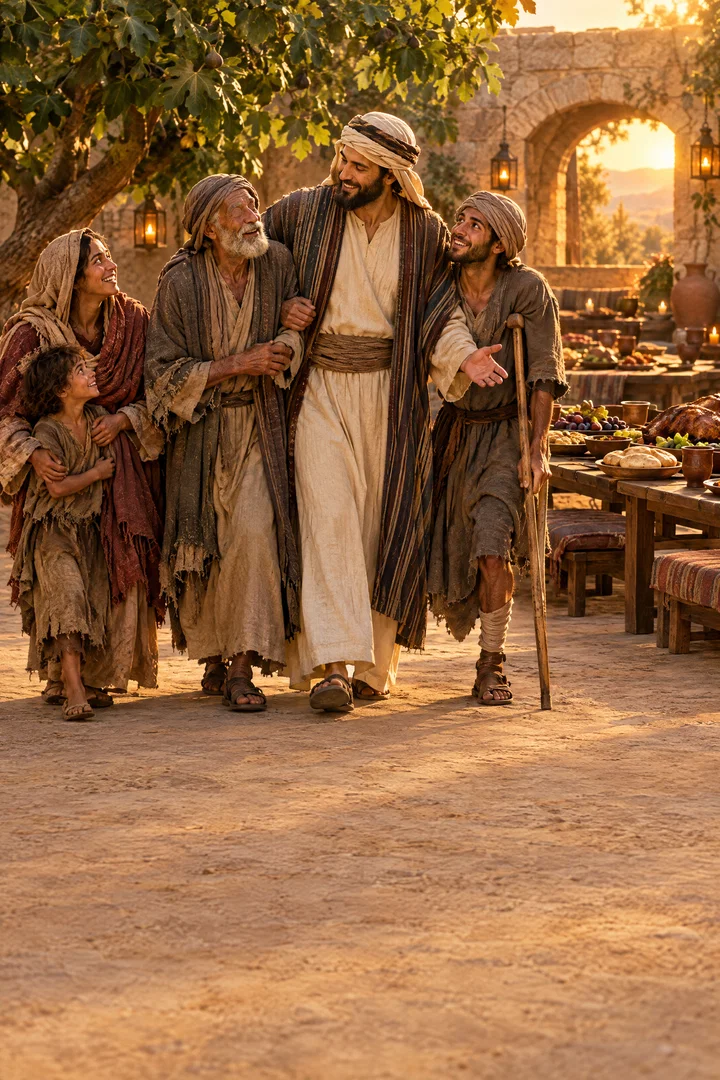
And the servant said, Lord, it is done as thou hast commanded, and yet there is room.
Translations
And the servant said, Lord, it is done as you have commanded, and yet there is room.
King James Version, KJV Cambridge Paragraph Bible, Webster Bible
And the servant said, Lord, it is done as thou hast commanded, and yet there is room.
Revised Version, American Standard Version
And the servant said, Lord, what thou didst command is done, and yet there is room.
'And the servant said, Sir, it hath been done as thou didst command, and still there is room.
And the bondman said, Sir, it is done as thou hast commanded, and there is still room.
And the servant said—Lord! what thou didst order, hath been done; and, yet, there is, room.
‘ Sir,’ the servant replied, ‘ what you ordered has been done, and there is still room.’
‘ Sir,’ the servant replied, ‘ it has been done as you ordered, and there is still room.’
“ The servant said, ‘ Lord, it is done as you commanded, and there is still room.’
And the servant said, Lord, your orders have been done, and still there is room.
And the seruaunt saide, Lord, it is done as thou hast commanded, and yet there is roome.
Douay-Rheims (Challoner revision)
And the servant said: Lord, it is done as thou hast commanded, and yet there is room.
Pictures
Cross-references 20 of 21
- Revelation 19:9
And he saith unto me, Write, Blessed are they which are called unto the marriage supper of the Lamb. And he saith unto me, These are the true sayings of God.
Identifies the parable’s feast as the marriage supper of the Lamb.
- Matthew 22:9-10
Go ye therefore into the highways, and as many as ye shall find, bid to the marriage.
Both describe invitations extended to others after the first guests refuse, until the feast is filled.
- Luke 14:17
And sent his servant at supper time to say to them that were bidden, Come; for all things are now ready.
The supper is ready, and the servant is sent to invite guests.
- Matthew 22:11-13
And when the king came in to see the guests, he saw there a man which had not on a wedding garment:
The furnished feast still requires the wedding garment, representing Christ’s righteousness.
- Isaiah 55:1
Ho, every one that thirsteth, come ye to the waters, and he that hath no money; come ye, buy, and eat; yea, come, buy wine and milk without money and without price.
Both offer a feast freely to all who will come.
- Revelation 22:17
And the Spirit and the bride say, Come. And let him that heareth say, Come. And let him that is athirst come. And whosoever will, let him take the water of life freely.
Both extend a free invitation to come to all who are willing.
- Matthew 20:6
And about the eleventh hour he went out, and found others standing idle, and saith unto them, Why stand ye here all the day idle?
idle in marketplace put to work in vineyard
- Matthew 25:14-30
For the kingdom of heaven is as a man travelling into a far country, who called his own servants, and delivered unto them his goods.
Both texts portray servants carrying out their master’s command and being held accountable.
- Luke 14:12-15
Then said he also to him that bade him, When thou makest a dinner or a supper, call not thy friends, nor thy brethren, neither thy kinsmen, nor thy rich neighbours; lest they also bid thee again, and a recompence be made thee.
The supper parable answers the saying about sharing a feast with the poor.
- Luke 14:33
So likewise, whosoever he be of you that forsaketh not all that he hath, he cannot be my disciple.
No earthly possession should keep anyone from following Christ.
- John 4:35
Say not ye, There are yet four months, and then cometh harvest? behold, I say unto you, Lift up your eyes, and look on the fields; for they are white already to harvest.
Both urge workers to gather a harvest already ready.
- Luke 14:16
Then said he unto him, A certain man made a great supper, and bade many:
identifies the gospel feast to be filled
- Luke 14:7-11
And he put forth a parable to those which were bidden, when he marked how they chose out the chief rooms; saying unto them,
Christ taught another lesson at the same feast.
- John 6:51
I am the living bread which came down from heaven: if any man eat of this bread, he shall live for ever: and the bread that I will give is my flesh, which I will give for the life of the world.
Christ is the bread offered at the gospel feast.
- Matthew 8:11
And I say unto you, That many shall come from the east and west, and shall sit down with Abraham, and Isaac, and Jacob, in the kingdom of heaven.
Both describe people welcomed to a feast in the kingdom.
- John 14:2-3
In my Father’s house are many mansions: if it were not so, I would have told you. I go to prepare a place for you.
banquet is in prepared mansions
- Revelation 19:8
And to her was granted that she should be arrayed in fine linen, clean and white: for the fine linen is the righteousness of saints.
Clean linen signifies the righteousness required for the wedding supper.
- Matthew 22:7
But when the king heard thereof, he was wroth: and he sent forth his armies, and destroyed those murderers, and burned up their city.
contrasts heavier punishment for insulting king
- Romans 11:11-12
I say then, Have they stumbled that they should fall? God forbid: but rather through their fall salvation is come unto the Gentiles, for to provoke them to jealousy.
The rejected invitation foreshadows the Gospel going to the Gentiles.
- Luke 12:37
Blessed are those servants, whom the lord when he cometh shall find watching: verily I say unto you, that he shall gird himself, and make them to sit down to meat, and will come forth and serve them.
The Lord serves his people at the coming feast.
Commentary part 1 of 2
Each commentary is drawn from primary sources: the writings of Ellen G. White and Adventist pioneers and periodicals. Each commentary is separate. Its own words are not a quotation; follow the references to read the source passages.
Ellen G. White
109 sources
The servant has obeyed the command to bring in the poor, maimed, halt, lame and blind from the streets and lanes of the city, and reports that this is done and still there is room for more.Ms 149, 1898, par. 1–2Lt 96, 1898, par. 10–12Ms 11b, 1894, par. 16–18 That remaining room means God's provision through Christ is abundant and not exhausted when the first bidden refuse, so the invitation continues until the house is filled.Ms 149, 1898, par. 1–2Ms 6, 1897, par. 1–4Lt 96, 1898, par. 10–12Ms 81, 1898, par. 33Ms 9, 1898, par. 39–41 The invitation is open to the whole human race at infinite cost, and all who come humbly are welcome.Ms 197, 1898, par. 1Ms 143, 1898, par. 21Ms 59, 1895, par. 63–65 It is for the fallen, outcast, helpless, suffering and sin-bound in cities and country byways, for the Gentiles and strangers despised by the Jews, and also for rich, honorable and influential men who must not be passed by.ST May 4, 1915Ms 11b, 1894, par. 16–18COL 232.4–234.1Lt 5, 1897, par. 7–10Ms 18, 1899, par. 14 Because room remains, the work of inviting is unfinished and must be carried on rapidly and earnestly wherever there is an opening, with the last call to the supper going to highways and hedges and to places that have not yet heard.Ms 6, 1897, par. 1–4Ms 18, 1897, par. 1–4Lt 77, 1893, par. 48–526T 412.2GW 64.3
Parable Setting and Sequence
The report that it is done as commanded and yet there is room belongs to the parable of the great supper, which sets forth the urgent call to reach people with the last message.LS 366.1Lt 142, 1895, par. 1–2 It was spoken by Christ while He was a guest at a Pharisee's feast, and He linked the feast spread before Him to truth, with the sacred feast as a type of the blessings of eternal life.COL 219.1 He accepted invitations to dinners and feasts from Pharisee or publican, and though religious leaders accused Him of eating with publicans and cast the imputation that He was like them, He controlled the table talk and gave precious lessons adapted to the needs of His hearers.Ms 19, 1899, par. 10–13 Publicans and sinners were drawn to Him because He had healed their sick, comforted their sorrowing, and taken their children in His arms and blessed them, and when He opened His lips their attention was riveted and they listened with subdued attention as desirous of hearing to a purpose.Ms 19, 1899, par. 10–13 From childhood His speech was without fault with not one impure word, and as the sinless Son of God in human form He never did a wrong action, so every word He uttered at the feasts was a savor of life unto life, differing most decidedly from past feast conversation, and the respect shown Him was in marked contrast to the manner in which scribes and Pharisees were treated, making them envious.Ms 19, 1899, par. 10–13
By example He taught His disciples how to conduct themselves when in company with those who were not religious and at any public gathering, so they need not want for something to say, and the parable shows the way in which the invitation was treated.Ms 19, 1899, par. 10–13 Its words make a deep impression on hearers, being connected with the need for a work in human hearts and a reformation of character that brings people into close connection with God.2MR 259.3–260.4 The Jews expected a great feast where they would sit down with Abraham, Isaac, and Jacob while the Gentiles stood without looking on with longing.COL 219.1ST May 4, 1915 They thought to shut up God's blessings for the present and the future life to themselves and denied God's mercy to the Gentiles.COL 219.1 The parable warns that they themselves were at that very time rejecting the invitation of mercy, the call to God's kingdom, and the invitation they slighted was to be sent to those whom they despised and shunned as lepers, for whom yet there is room.COL 219.1
The parable is the call to enter the kingdom when the King of the Jews should come.ST Feb 10, 1898 The Jewish priests and elders professed eager piety and anxious expectancy for that supper, claiming they were waiting to go in immediately when called and proclaiming everywhere the great events of the Messiah conquering their enemies and setting up His kingdom.ST Feb 10, 1898 They claimed to obey the law of God while making it impossible to keep by exacting requirements and constantly disobeying it themselves, rendering only false obedience.ST Feb 10, 1898 They applied prophecies relating to Christ's second coming to His first advent, and so when He did come they knew Him not.ST Feb 10, 1898 Those first bidden refuse with trivial excuses about merchandise and oxen bought and a wife married — the piece of ground, the five yoke of oxen, and the married wife — meaning farms, cattle, home interests, worldly possessions, business and cares of this life treated as their own and counted of greater value than eternal riches.Ms 12, 1895, par. 22–24Lt 132, 1901, par. 4–6ST Apr 22, 1875 Putting property before service for Christ is valuing a minor matter above what is far more important, and the invitation calls those brought to the knowledge of the truth to follow Him, to take part in things of eternal value, to render unto God the things that are God's, and to exchange selfishness and covetousness for self-denial and sacrifice for others.19MR 245.4–246.1ST Apr 22, 1875Ms 59, 1895, par. 18–19
Those best able to advance the cause develop selfish characters and frame these excuses, close the door of the heart to the heavenly messenger and leave Jesus knocking in vain, their hearts become unimpressible as the beaten highway and overgrown with thorns, and they continue to wear the galling yoke of selfishness and slavery to mammon instead of Christ's easy yoke and light burden, missing the peace and rest promised to the weary and heavy laden.ST Apr 22, 1875 Those who choose earthly gain and refuse a life of obedience will not taste Christ's glory, for not one who was bidden and refused shall taste of His supper, so the invitation must be accepted carefully and not refused.Ms 12, 1895, par. 22–242T 40.2 After that refusal, the servant as commanded brings into the house the poor, maimed, halt, lame, and blind from the streets and lanes of the city, and reports that it is done as commanded and yet there is room.Ms 149, 1898, par. 1–2Lt 96, 1898, par. 10–12Ms 11b, 1894, par. 16–18Ms 18, 1897, par. 1–4Ms 103, 1900, par. 1–4 The verse thus marks the invitation as not yet complete and not restricted to one social class, for the great feast will still be abundantly filled with guests from the poor and needy, and others could still be brought in so the house might be filled.Ms 149, 1898, par. 1–2Ms 11b, 1894, par. 16–18Ms 19, 1899, par. 20–23
The banquet represents spiritual and temporal blessings prepared for those who form a character like God's, and the remaining open places lead to the further command to invite people from beyond the city, to go out into the highways and hedges and compel them to come in, so that the house may be filled.Ms 103, 1900, par. 1–4Ms 81, 1898, par. 33Ms 29, 1898, par. 5–7 The invitation therefore continued beyond those first brought in, requiring further going out and further labor until the house is filled, while those who first refused lose their place at the supper.Ms 19, 1899, par. 20–23Ms 81, 1898, par. 33Ms 29, 1898, par. 5–7Lt 132, 1901, par. 4–6 The order to compel them to come that His house may be filled means human workers compel others not by forcing the intellect but by the Holy Spirit of God working with the human agent.Ms 12, 1895, par. 22–24 Where the heart is opened to Jesus Christ and the Holy Spirit takes possession, Christ abides as power to overcome so that believers control and are not controlled, and the Spirit brings all things to remembrance just when needed, while beholding the cross of Calvary and Jesus Christ in His death and sacrifice as righteousness carries compelling power that bows the beholder in allegiance to Christ.Ms 12, 1895, par. 22–24
Meaning of Remaining Room
The supper stands for God's abundant provision through Christ, prepared as spiritual and temporal blessings for those who form a character like His, including eternal life, His righteousness, justification by faith, His promises, access to the Father, the comfort of the Holy Spirit, and assurance of eternal life.Ms 81, 1898, par. 33COL 221.1–222.2ST May 4, 1915Ms 184, 1898, par. 50–51Ms 109, 1901, par. 9 The refusal of those first invited does not diminish that provision, for the banquet remains furnished with guests even when it is slighted, and room is left for others beyond the first recipients.Ms 81, 1898, par. 33Ms 9, 1898, par. 39–41COL 221.1–222.2 The invitation reported as carried out yet still open is being sent in this day, purchased by Christ's life, and those who refuse it from fear of ridicule, pressure from neighbors, or unwillingness to keep God's commandments will not taste of it.Ms 81, 1898, par. 33Ms 9, 1898, par. 39–41 Accepting it honors the Giver, while refusing or remaining indifferent rejects it, and nothing else meets spiritual need except receiving the Bread of Life.Ms 184, 1898, par. 50–51Ms 109, 1901, par. 9 Those brought in are to share the peace, joy, and repose Christ offers, clothed in the wedding garment of His righteous character given as a precious gift.Ms 184, 1898, par. 50–51Ms 109, 1901, par. 9
Yet there is room means grace is abundant and the invitation is not exhausted when one group refuses, so opportunity continues and more guests can still be brought in until the house is filled.Ms 149, 1898, par. 1–2Ms 6, 1897, par. 1–4Lt 96, 1898, par. 10–1215MR 307.1–3Lt 20, 1893, par. 10–12 After the poor, maimed, halt, lame, and blind are brought from the city as commanded, the report that work is done and room remains marks the invitation as not yet complete and extends the call to another class.Ms 149, 1898, par. 1–2Ms 6, 1897, par. 1–4Lt 96, 1898, par. 10–12Lt 20, 1893, par. 10–12 That remaining room is continuing opportunity to invite people to share in salvation wherever there is an opening, because many souls can still receive the saving message.Ms 149, 1898, par. 1–2Ms 6, 1897, par. 1–415MR 307.1–3 It stands as the last message of mercy to the world, a feast provided at infinite cost by the Lord Jesus Christ who is the way, the truth, and the life and who convicts hearts through the wooing of the Holy Spirit.15MR 307.1–3Ms 59, 1895, par. 63–65Lt 20, 1893, par. 10–12
The gospel invitation is open to everyone and provided for the whole human race, and all may come and all who come humbly are welcome.Ms 197, 1898, par. 1Ms 143, 1898, par. 21Ms 143, 1898, par. 4Lt 188, 1899, par. 8Ms 7, 1900, par. 1 Those who accept receive Christ's grace and His righteousness, and are moved to urge others to accept the terms of salvation, persevering even when rejected or abused.Ms 197, 1898, par. 1Ms 143, 1898, par. 21 The feast remains open even when some refuse it for earthly goods and worldly advantages, reaching beyond any select group to the hardest and most distant fields.Ms 143, 1898, par. 4Lt 188, 1899, par. 8Ms 7, 1900, par. 1 The call is not to be restricted to one social class or to those who already know the truth, but is to go without limitation to people who have not heard it, to people who work for a living as well as people in higher positions, and into highways and byways and many places rather than treating the work as complete.Ms 6, 1897, par. 1–4Ms 11b, 1894, par. 16–18Lt 233, 1905, par. 11–14 The parable therefore applies to all who have the privilege of hearing the message of mercy and the gracious invitation to the gospel feast.Ms 59, 1895, par. 60–62Ms 59, 1895, par. 63–65
Guests Called to Come
The room still left is for the fallen, the outcasts, the degraded and helpless, the poor and lowly of the earth in the byways and hedges, in the courts and lanes of great cities and the lonely byways of the country.COL 232.4–234.1Lt 5, 1897, par. 7–10Ms 18, 1899, par. 146T 279.4–280.2Lt 171, 1897, par. 6–8 It is for strangers in a strange land, those without church relations, the lonely and forgotten who feel forgotten, those who do not know what to do to be saved, those sunken in sin, those pressed with suffering, want, unbelief, despondency, and disease of body and soul, and poor desponding ones who have gone astray and erred.COL 232.4–234.1Lt 171, 1897, par. 6–88T 160.1–161.1 It is for the needy, afflicted, weak in moral power, suffering and overlooked, those trapped in vice and sin, those enslaved by harmful habits, and those sunk in intemperate and dissolute habits though they feel unworthy and unable to understand the call, to be reached by patient, loving effort and urged to come and receive mercy.Lt 5, 1897, par. 7–106T 279.4–280.28T 160.1–161.1 Among even those fallen very low, poor, disabled, or otherwise overlooked and apparently unlikely to respond, are those whose talents have been hidden by misfortune and who may accept the invitation by the power of the Holy Spirit working with those who bring them in.Lt 171, 1897, par. 6–8
Christ applied the further call beyond Judaism to the peoples of the world, to those whom the Jews despised and shunned as lepers, and to the Gentiles.ST May 4, 1915COL 219.1COL 307.2–308.1 The sacred feast typified the blessings of eternal life which the Jews expected to enjoy with Abraham, Isaac, and Jacob while the Gentiles stood without looking on, seeking to shut up God's blessings for present and future life to themselves and denying His mercy to the Gentiles.COL 219.1 They were at that very time rejecting the invitation of mercy, the call to God's kingdom, and the invitation they slighted was sent to those they despised, who accept what the first group rejected, even though the feast is still furnished with guests.COL 219.1Ms 75, 1895, par. 4COL 307.2–308.1
The room is also for men of influence and large capacity for usefulness when won, through whom the tidings of salvation can be spread far and wide.Ms 11b, 1894, par. 16–18GW 350.1COL 232.4–234.1 It includes rich, wealthy, honorable, worldly-wise and monied men, teachers, ministers, and people in high positions, people who work for a living as well as people in higher positions, and is not to be restricted to one social class.Ms 11b, 1894, par. 16–18GW 350.1RH May 8, 1900Lt 141, 1901, par. 14–15 These wealthy and honorable men hold the Lord's money entrusted to them, must not be passed by as hopeless, and are to be sought with earnest, persevering, determined effort and compelled to come in to Christ's banquet of truth and bountiful repast prepared for them.Lt 132, 1901, par. 4–6GW 350.1Lt 141, 1901, par. 14–15 When moved by the Spirit of God and won, they open doors for the truth, use their entrusted means to advance the work in the cities, and prepare the way of the Lord, as backslidden Israel would have become a missionary center if converted.Lt 132, 1901, par. 4–6COL 232.4–234.1
The call therefore reaches all classes in the highways and hedges, in large cities such as New York and San Francisco, in retired country places, in neglected cities, in the dark parts of the earth, in Africa, in the South among white and colored people, and among humble walks of life and neglected communities.RH May 8, 1900RH May 8, 1900OEWP 36.1–37.1Lt 188, 1899, par. 8Ms 65, 1908, par. 2 Churches are to seek people in every locality, including nearby families and those most in need of sympathy and help, laboring for all classes and not thinking only of great and gifted men to the neglect of the poorer classes in humble circumstances, so that God's house may be full.RH May 8, 19006T 294.1–2Ms 18, 1899, par. 14 God is waiting for home missionary work in large cities and for missionaries in the dark parts of the earth, with heavenly intelligences waiting to cooperate, and workers are to be distributed to cities and towns rather than gathering in one center, while angels minister to heirs of salvation and the Spirit goes before to impress hearts to respond.OEWP 36.1–37.1Ms 65, 1908, par. 2 Where thousands in humble and neglected communities are fully given to God they can be accepted, and even the hardest and most distant fields have provision made for all.Lt 188, 1899, par. 8
The company gathered in response is mixed, with true believers alongside many who accept the invitation and appear to take their stand as believers yet have never put on Christ and lack the robe of His righteousness.Ms 18, 1899, par. 14 Human servants must not take the work of separation upon themselves nor refuse admittance to any who may come, though they must still carry out the Bible rule in regard to disorderly members.Ms 18, 1899, par. 14 The presence of both good and bad among those reached is no reason to neglect the work of saving those who will believe and join it.STMW11 24.2–25.1
To share the supper all must be clothed with the wedding garment, the robe of Christ's righteousness pure and white, offered as a precious gift representing His righteous character, which self-righteousness cannot supply.Ms 8, 1874, par. 9–10Ms 109, 1901, par. 9Lt 7, 1869, par. 6–7 Each person must answer individually, forsaking father, mother, brethren, sisters, husband, wife, relatives and children to be His disciple, lifting the cross, practicing religious principles, and keeping loyalty to God.Ms 59, 1895, par. 63–65 Accepting means turning from worldly interests, giving God the service of heart, intellect, and strength, drawing life from Christ and showing it in Christlike character and good works, and being brought in to share His peace, joy, and repose.Ms 75, 1895, par. 4Ms 109, 1901, par. 9 Those so prepared receive eternal life and glory to walk with Him in white as overcomers, while trifling excuses, neglect, and turning away to please husband or relatives bring sin, spiritual loss, and eternal consequence.Ms 59, 1895, par. 63–65Lt 7, 1869, par. 6–7Lt 90, 1898, par. 3
Refusal Brings Exclusion
None of those first bidden who refuse shall taste of the supper, for after the honored class refuses to come it forfeits any further invitation and is excluded while the feast is still abundantly filled with guests from the poor and needy.Ms 19, 1899, par. 20–23Ms 12, 1895, par. 22–24Lt 132, 1901, par. 4–6Lt 19a, 1895, par. 1–22T 40.2 When those first invited excuse themselves for land and merchandise bought, for oxen bought, and for wife married, there is yet room in God's house, and not one who was bidden and refused shall taste of it, so the invitation, Come for all things are now ready, must be accepted carefully and not refused.Ms 19, 1899, par. 20–23Ms 12, 1895, par. 22–24Lt 132, 1901, par. 4–6 The feast represents the gospel invitation being sent in this day at infinite cost, and those who refuse it from fear of ridicule, pressure from neighbors, or unwillingness to keep God's commandments reject what was purchased by Christ's life and will not taste of the supper.Ms 9, 1898, par. 39–41Ms 59, 1895, par. 63–652T 40.2 The invitation reaches all classes, and those who accept may attend the marriage supper, while those who made light of it and chose earthly gain and refused a life of obedience are excluded and will not taste Christ's glory.Ms 9, 1898, par. 39–41Lt 19a, 1895, par. 1–22T 40.2 The door is shut against the unready, and to seek admittance too late is vain.Ms 19, 1899, par. 20–23Ms 12, 1895, par. 22–24Lt 132, 1901, par. 4–6
Refusal repeats the course of the Jewish rulers, for religious teachers who refuse do not see their peril and are unwilling to make a candid investigation of the Scriptures.Ms 23, 1900, par. 15 Closing the eyes against evidence prepares for continued opposition, with the first step of refusal making the second easier, and going on in refusal shows hatred for the principles of Christ's character just as the Jews hated them.Ms 23, 1900, par. 15 The invitation is refused by self-righteous people who choose to live for themselves rather than for God, and rejecting God's commandments leaves them unfit to live in His presence.Ms 81, 1898, par. 38
To make frivolous excuses, to neglect the invitation, to put property before service for Christ, or to turn away to please husband or relatives is to value a minor matter above what is far more important, and it involves disobedience, sin, spiritual loss, and eternal consequence.19MR 245.4–246.1Ms 59, 1895, par. 63–6515MR 224.3–225.2Ms 59, 1895, par. 40–44 Each person must answer individually, for the wife cannot give her soul into her husband's keeping, and if her husband refuses to come it is no reason or excuse for her to refuse the light, since each must forsake father, mother, brethren, sisters, husband, wife, relatives and children to be His disciple, lift the cross, practice religious principles, and keep loyalty to God.Ms 59, 1895, par. 63–65 It is not safe to refuse, for refusing God's call is no harmless excuse and judgment will not spare those who reject it.Ms 59, 1895, par. 63–6515MR 224.3–225.2Ms 59, 1895, par. 40–44 The same disobedience is in children who treat the call to gather into the house of obedience as unnecessary and refuse the entreaties of their parents with excuses, upon whom the stroke of God's judgment will come as surely as upon the Egyptians, pressing the duty to gather every family member into perfect obedience to what God has commanded.Ms 59, 1895, par. 40–44
The parable teaches a lesson extending to the close of probation, and its meaning has been misapplied and does not support the theories being argued for.15MR 14.3–515MR 222.3Lt 11, 1890, par. 7 The opportunity to accept the invitation belongs to the present probationary time, when the servant has carried out the master's command and there is still room leading to further invitations.15MR 222.3 After that time closes there is no second bidding or later call to the heavenly feast.15MR 14.3–515MR 222.3
Urgency Without Force
The command to go into the highways and hedges and compel them to come in, that the house may be filled, does not mean forcing the intellect, but human workers compelling others through the Holy Spirit of God working with the human agent.5MR 41.2–42.1Ms 12, 1895, par. 22–24Ms 11, 1894, par. 16–17 Where the heart is opened to Jesus Christ the Holy Spirit takes possession, Christ abides within as power to overcome, so that believers control and are not controlled, and the Spirit brings all things to remembrance just when needed.Ms 12, 1895, par. 22–24 After the first bidden refused with trivial excuses about merchandise and oxen bought and a wife married, there was yet room in God's house, and the meal being ready the invitation was to continue reaching people and bringing them in by clearly presenting the truth.5MR 41.2–42.1Ms 12, 1895, par. 22–24Ms 11, 1894, par. 16–17
Beholding the cross of Calvary and Jesus Christ in His death and sacrifice as righteousness carries a compelling power that bows the beholder in allegiance to Christ.Ms 12, 1895, par. 22–24 Those who choose to pattern the deceiver and follow the world have no such compelling power.Ms 12, 1895, par. 22–24
The drawing is done by clearly presenting Christ's words, presenting the truth in simplicity and love as Christ commanded His disciples, presenting the great offering Christ made for the world.5MR 41.2–42.1Ms 11, 1894, par. 16–17Lt 177, 1903, par. 8 People in need of spiritual enlightenment are to be given the invitation and fed the bread of life, the precious seed of truth, for the gospel feast still has room.STMW10 15.1Lt 5, 1897, par. 41–44 All are invited to come to the bountiful table and to the banquet of truth, and Christ's servants must use their abilities and every means available to draw people and continue urging them to accept it and make peace with God.Lt 89, 1898, par. 12–13Lt 177, 1903, par. 8 That call is often rejected with frivolous excuses, jesting, or contempt, yet faithful messengers persist in urging.Lt 89, 1898, par. 12–13
There is still room at the feast and the gospel invitation is open to everyone, so that all may come.Ms 197, 1898, par. 1 Those who accept it receive Christ's grace and are moved to urge others to accept the terms of salvation.Ms 197, 1898, par. 1 After the commanded guests have been brought in and the servant reports the work done, the feast stands as God's generous provision in Christ to meet every person's spiritual need, and accepting honors the Giver while refusing or remaining indifferent rejects that provision.Ms 184, 1898, par. 50–51 Those who accept are to draw others with them, since a person's influence can keep others away from Jesus, and nothing meets spiritual need except receiving the Bread of Life.Ms 184, 1898, par. 50–51 This urging continues with perseverance even when rejected or abused.Ms 197, 1898, par. 1
Unfinished Work to Fill House
The report that there is still room means the inviting work is not finished and must go forward wherever there is an opening, rapidly and earnestly, throughout life, until the house is full and many still have opportunity to share in the Saviour's sacrifice and be saved.Ms 6, 1897, par. 1–4Ms 18, 1897, par. 1–4Lt 77, 1893, par. 48–5215MR 307.1–36T 294.1–2 After the commanded invitations have been given and the poor and afflicted brought in, the continuing call represents the church's work of inviting people who have not heard the truth, without limitation or restriction.Ms 6, 1897, par. 1–4STMW10 4.2–5.1 The churches in every locality are to seek people nearby, including families close at hand and those most in need of sympathy and help, and to invite even those trapped in vice and sin to receive salvation.6T 294.1–2STMW10 4.2–5.1
The last call to the supper, the last invitation to the marriage supper of the Lamb, is the message of Christ's soon coming to be given to the world.6T 412.2GW 64.3 There is still room because thousands of places have not yet heard the call and many who should proclaim it have not yet done so, so young men are called to go out and sound this message without delay.6T 412.2GW 64.3Lt 11, 1899, par. 4 Time is short and the signs of His near coming are fast fulfilling, and the highways and byways are still unworked with still room for labor.Lt 169, 1903, par. 3–5
Medical missionary work fulfills this commission and gives the last call to the prepared supper.Ms 18, 1897, par. 1–48T 71.2STMW11 22.1–23.1 It is to reach poor suffering people in the cities, and churches in every locality are to continue it.Ms 18, 1897, par. 1–4Ms 183, 1898, par. 28 Work for the needy and outcast in highways and byways is important but is to be joined with instruction and the wider work of God, not made the whole work, while the message of healing and mercy reaches many places including the feeblest of Christ's flock.8T 160.1–161.19T 167.1
Sanitariums are one of the means for bringing the invitation into highways and byways where people are, so that all who do not yet know the truth may hear of the banquet prepared at infinite cost.1MR 226.3–4Lt 305, 1904, par. 8–9 There those enslaved by intemperate habits destroying soul and body learn a better way of living and, under the influence of Bible truth, are won to Christ.1MR 226.3–4Lt 305, 1904, par. 8–9 They serve sick and suffering people by teaching Christ's healing power, while angels impress unbelieving hearts and those who have received light work with Christ to bring relief to humanity.1MR 226.3–4STB 609.1Lt 241, 1905, par. 11–12
The work must extend beyond Battle Creek and established centers into other cities, neglected cities, highways and byways, homes and public places, and places that have not heard the truth.Lt 51b, 1898, par. 7–8Lt 233, 1905, par. 11–14Lt 51, 1898, par. 4–610MR 18.2 Workers are to be distributed to cities and towns and along highways and hedges to call and bid men to come, rather than gathering in one center, with home missionary work in large cities and missionaries in the dark parts of the earth.OEWP 36.1–37.1Lt 164, 1899, par. 18 Lack of means or other hindrances must not stop it, and heavenly intelligences wait to cooperate with human agents who improve their talents where they are.OEWP 36.1–37.110MR 18.2 Giving the last call means reaching more who are ready to perish, carrying the message beyond those first invited, multiplying camp meetings in different localities, warning the cities, raising new groups of believers, and recovering those in unbelief.Lt 164, 1899, par. 18Lt 233, 1905, par. 11–14Lt 51, 1898, par. 4–6Ms 4, 1899, par. 52–53
This calls for thorough and much more extensive gospel work in great centers, even in great and wicked cities such as San Francisco, where all classes must be invited to the banquet the Lord has provided.Ms 1, 1901, par. 17 In the serious times before us families are to get out of the cities into the country, laying plans according to the Word and going ahead with persevering energy, since active perseverance counts more than genius and book knowledge.Lt 75, 1898, par. 19–20 Talents unworked are of no value and must be constantly worked, beginning small as the tree is in the acorn, and those not adapted to agricultural work must not hold back advance in these lines, for cultivated land with God's blessing will supply necessities.Lt 75, 1898, par. 19–20 The need to carry light everywhere requires considering where resources can best serve needy places in the short time of increasing wickedness.Ms 74, 1910, par. 3 House-to-house canvassing and evangelistic warning meet this need where salvation is a life-and-death question, and workers are not to pledge years under human tuition or bind themselves to serve under human direction but to work under God's direction and the great Teacher's teaching, as He called humble fishermen and men from the plow and other occupations, opened their understanding to wondrous things in His Word, and wonderfully blesses those who go forth at once to places that have not yet heard the truth with the last note of warning to perishing souls.Lt 169, 1903, par. 3–5Ms 113, 1901, par. 13–16Lt 169a, 1903, par. 3–5
Workers carry the call by keeping the Bible near for reference, praying for grace to speak wisely of Sabbath truth, keeping the heart under the Spirit, and letting light shine in good works.Ms 113, 1901, par. 13–16 The invitation goes by little acts of helpful service, by using knowledge of treatment for the sick with short direct prayer to the great Physician, and by entering every family with courtesy, pleasantness, distinct impressive speech, and single eye to God's glory, hidden in Christ who works with the worker.Ms 113, 1901, par. 13–16 Ministering angels are beside such workers giving access to hearts, the Spirit goes before to impress response, angels ministering to heirs of salvation give grace and power and efficiency to those who open the Scriptures even in retired country places, and heavenly intelligences cooperate as God's people unite to carry the work to completion.Ms 65, 1908, par. 2Ms 113, 1901, par. 13–16 Giving means to start and free this outward work helps the givers themselves, strengthens other places, extends labor, brings ingathering of souls, establishes churches, and gives increasing financial strength sufficient not only for one place but for fields and regions beyond, while withholding gains nothing.Ms 4, 1899, par. 52–53
The invitation, Come for all things are now ready, belongs to servants inviting people to a ready feast and is applied to humble workers going into homes and public places to invite people to receive truth and be saved.PMMEP 19.2 It places hearers in the valley of decision and urges decision to be fully on the Lord's side by keeping all His commandments, to be presented to full interested gatherings including children and youth with hope many will respond with courage.Lt 143, 1895, par. 2 Its words make a deep impression, connected with a work in human hearts and reformation of character bringing close connection with God, and those who bring spiritual help to hungry souls are blessed while those who receive are to share with others.2MR 259.3–260.4Ms 54, 1895, par. 1–7PMMEP 19.2
The church must keep carrying the invitation to those perishing in sin rather than limiting ministry to those who already know truth.Lt 55, 1897, par. 16–19 It is to use every ability and multiply channels through which the Holy Spirit can work, so others may be brought to Christ.Lt 55, 1897, par. 16–19 Meeting physical needs and showing tender sympathy helps bring people within reach of Christ and within reach of help in deep need and misery, including those society rejects.Ms 14a, 1897, par. 11–12Lt 51, 1898, par. 10–14Lt 83, 1897, par. 14–16 Even when only a few accept, the effort is not in vain because every soul is precious.Lt 51, 1898, par. 10–14
Instead of standing apart criticizing, God's people are to continue inviting and working to reach those who will believe.8T 72.2 The call to bring people to the feast is the duty of inviting all to serve the Master and supporting gospel work including in new fields.Lt 4, 1899, par. 27–28 In Battle Creek, where medical-missionary work is the last call to the prepared supper, those who had declined their opportunity were urged to support rather than obstruct it.11MR 217.3–218.3
In all school work the highest education is in the word of the living God, teaching humble submission to God and simple belief in just what it says, and with this education comes sight of God's salvation.FE 532.1 With the Spirit upon them, workers carry light of truth into highways and byways so salvation is revealed in a remarkable manner.FE 532.1 The invitation is not limited to those first invited but extends outward when the servant reports the work done and yet there is room, and it is to be given with decided earnestness as God's people unite to proclaim the testing truths of the last days.Ms 44, 1905, par. 12–13Lt 109, 1901, par. 9–11 This calls for ready and willing teachers and training of men and women to help the cause wherever they are, carrying present truth into highways of life and byways to reach all classes.Lt 168, 1908, par. 5 Beginning with the higher classes, they must hear it, and workers are to seek souls with tenderness and care through humble labor wherever people are.Lt 18, 1898, par. 6–8Lt 109, 1901, par. 9–11
The call to the supper tests those brought to knowledge of the truth to follow Him, take part in things of eternal value, render to God what is God's, and exchange selfishness and covetousness for self-denial and sacrifice for others.ST Apr 22, 1875 Those best able to advance the cause develop selfish characters and frame the parable's excuses of ground, oxen, and wife, meaning farms, cattle, home interests, worldly possessions, business and cares counted of greater value than eternal riches.ST Apr 22, 1875 They close the heart to the heavenly messenger and leave Jesus knocking in vain, their hearts becoming unimpressible as the beaten highway and overgrown with thorns, continuing under the galling yoke of selfishness and slavery to mammon instead of Christ's easy yoke and light burden, missing the peace and rest promised to the weary and heavy laden.ST Apr 22, 1875
Sources