Matthew 20:6
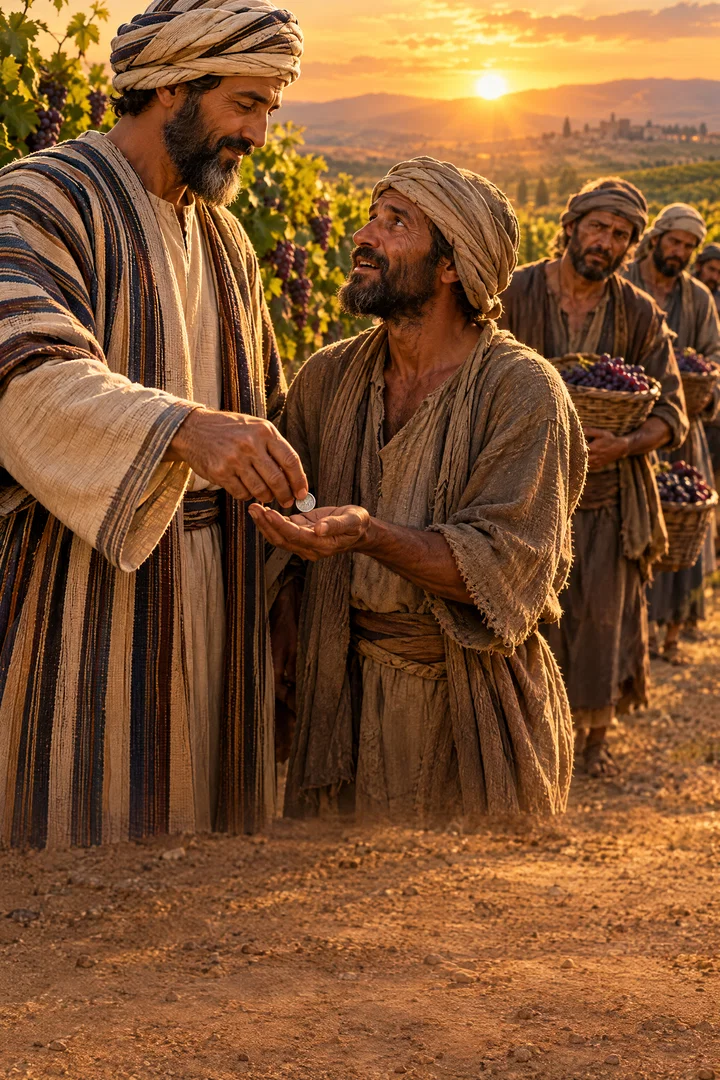
And about the eleventh hour he went out, and found others standing idle, and saith unto them, Why stand ye here all the day idle?
Translations
And about the eleventh hour he went out, and found others standing idle, and says to them, Why stand you here all the day idle?
King James Version, KJV Cambridge Paragraph Bible
And about the eleventh hour he went out, and found others standing idle, and saith unto them, Why stand ye here all the day idle?
And about the eleventh hour he went out, and found others standing idle, and saith to them, Why stand ye here all the day idle?
Revised Version, American Standard Version
And about the eleventh hour he went out, and found others standing; and he saith unto them, Why stand ye here all the day idle?
And about the eleventh hour, having gone forth, he found others standing idle, and saith to them, Why here have ye stood all the day idle?
But about the eleventh [hour], having gone out, he found others standing, and says to them, Why stand ye here all the day idle?
And, about the eleventh, going forth, he found others, standing, and saith unto them—Why, here, stand ye, all the day, unemployed?
About the eleventh hour he went out and found still others standing around. ‘ Why have you been standing here all day long doing nothing?’ he asked.
About the eleventh hour he went out and found still others standing idle. ‘ Why have you been standing here all day long doing nothing?’ he asked.
About the eleventh hour he went out and found others standing idle. He said to them, ‘ Why do you stand here all day idle?’
And about the eleventh hour he went out and saw others doing nothing; and he says to them, Why are you here all the day doing nothing?
And he went about the eleuenth houre, and found other standing idle, and sayd vnto them, Why stand ye here all the day idle?
Douay-Rheims (Challoner revision)
But about the eleventh hour he went out and found others standing, and he saith to them: Why stand you here all the day idle?
Pictures

Cross-references
- Matthew 9:37-38
Then saith he unto his disciples, The harvest truly is plenteous, but the labourers are few;
Both describe a plentiful harvest and the need for laborers.
- Matthew 21:28
But what think ye? A certain man had two sons; and he came to the first, and said, Son, go work to day in my vineyard.
Both verses call people to go and work in the vineyard.
- Matthew 20:1-2
For the kingdom of heaven is like unto a man that is an householder, which went out early in the morning to hire labourers into his vineyard.
The parable introduces workers hired to labor in the vineyard.
- Matthew 20:12
Saying, These last have wrought but one hour, and thou hast made them equal unto us, which have borne the burden and heat of the day.
The first workers complain that latecomers receive equal pay.
- Luke 14:22-23
And the servant said, Lord, it is done as thou hast commanded, and yet there is room.
The late invitation echoes the call to bring in those still outside, while there is yet room.
- Matthew 20:16
So the last shall be first, and the first last: for many be called, but few chosen.
Concludes the parable with the contrast between the first and last, and the called and chosen.
- Matthew 19:30
But many that are first shall be last; and the last shall be first.
The vineyard parable illustrates Jesus’ first-and-last saying.
- John 4:35
Say not ye, There are yet four months, and then cometh harvest? behold, I say unto you, Lift up your eyes, and look on the fields; for they are white already to harvest.
Both urge workers to recognize that the harvest is ready.
- Matthew 25:14-30
For the kingdom of heaven is as a man travelling into a far country, who called his own servants, and delivered unto them his goods.
Both passages depict servants expected to work rather than remain idle before their master returns.
- Luke 10:2
Therefore said he unto them, The harvest truly is great, but the labourers are few: pray ye therefore the Lord of the harvest, that he would send forth labourers into his harvest.
Jesus calls for workers in the harvest.
- 1 Corinthians 3:9
For we are labourers together with God: ye are God’s husbandry, ye are God’s building.
Both describe believers as laborers in God’s vineyard.
- Matthew 22:1-14
And Jesus answered and spake unto them again by parables, and said,
Both parables depict a call to join the kingdom and the response to that invitation.
Commentary part 1 of 2
Each commentary is drawn from primary sources: the writings of Ellen G. White and Adventist pioneers and periodicals. Each commentary is separate. Its own words are not a quotation; follow the references to read the source passages.
Ellen G. White
208 sources
About the eleventh hour, one hour before the day ended, the householder went out to the marketplace, found others standing without work, and asked why they had stood idle all the day.9T 73.3–74.1Ms 19, 1897, par. 38–41Ms 23, 1908, par. 33–36 They answered that no one had hired them, and he sent them also into his vineyard with the promise of what is right, and at evening all from last to first were paid a penny.9T 73.3–74.1Ms 19, 1897, par. 38–41Ms 87, 1899, par. 1–3 The eleventh hour is the brink of eternity and close of probation, the last moment when light comes and is accepted, the closing period of life and the closing work for this time in which urgent work still remains.5RED 77.3–78.2Lt 43, 1890, par. 8Lt 1e, 1890, par. 4 The late-hired who have served briefly and earned no full reward are still accepted and paid a full day's wage by God's free grace and liberality, not by hours worked or results, so first and last share the same eternal gift.COL 396.3–397.1ST Jul 13, 1915ST Jul 13, 1915ST Apr 21, 1881COL 401.2–402.1 His question is a charge and rebuke to every professing believer to stop standing idle and go to work today in His vineyard while it is day, because night comes when no one can work and probation fast closes.Lt 190, 1907, par. 10Ms 15, 1910, par. 13Ms 2, 1897, par. 3–4
Parable Story and Setting
About the eleventh hour, one hour before the workday ended, the householder went out to the marketplace and found others standing there idle without work, and asked them why they had stood there idle all the day.9T 73.3–74.1Ms 19, 1897, par. 38–41Ms 23, 1908, par. 33–36RH Jul 24, 1900ST Aug 9, 1899 This late finding belongs with hirings made at different hours through the day, and the late workers are placed among those called earlier and paid the same as those hired before them.RH Jul 24, 1900RH Jul 24, 1900ST Aug 9, 1899 They answered that no one had hired them, and he sent them also into his vineyard with the promise of what is right and fair.9T 73.3–74.1Ms 87, 1899, par. 1–3Ms 23, 1908, par. 33–36ST Aug 9, 1899ST Aug 9, 1899 When evening came all the laborers from last to first were paid every man a penny, and the late-hired trusted the householder to give what was right, so that their reward reflected his generous purpose rather than the amount of work performed.Ms 87, 1899, par. 1–3ST Aug 9, 1899ST Jul 13, 1915 The earlier hirings were early in the morning for a penny a day and about the third and sixth and ninth hours with the promise of whatsoever is right, showing the Lord's invitation continuing from early morning until the last hour of the day.Ms 87, 1899, par. 1–3RH Jul 24, 1900RH Jul 31, 1900RH Jul 31, 1900
The eleventh hour means the brink of eternity, the close of probation, and the last moment when enlightenment comes and is accepted with intelligent faith.5RED 77.3–78.2 It is also the closing period of life when its sands are nearly run out, in which even the chiefest of sinners coming just as he is with no plea but that Christ died to save sinners may find pardon, yet still requiring cooperation with God through repentance and confession made privately to God and to injured parties rather than always publicly.Lt 1e, 1890, par. 4 It means the closing work for this time, near the end when principalities and powers and spiritual wickedness in high places war against the truth and Satan's deceiving power would if possible deceive the very elect.Lt 43, 1890, par. 8 It means the present time in which there is still urgent work to do, even at a late time when the day is nearly over, so further work should be undertaken and decisive progress made in preparing and training people for missionary service through organized instruction.HSFM 281.2HCSSP 42.1–43.1GW92 284.2
The men hired late had not refused the householder's earlier call, for they were not there in the morning but were still unhired because no one had hired them.Ms 87, 1899, par. 25RH Jul 31, 1900COL 399.1ST Jul 13, 1915RH Jul 31, 1900 Their late response therefore differs from hearing the truth and knowingly refusing to follow it to please friends or to preserve self-righteous comfort, and from refusing the first call to labor though later repenting.Ms 87, 1899, par. 25COL 399.1ST Jul 13, 1915 The parable does not excuse delay in responding to mercy, trifling with the first call of mercy, or presuming on a deathbed repentance like presuming on the thief's conversion, since every ray of light neglected leaves the sinner in greater darkness until deception may take possession and the case become hopeless.COL 399.1ST Jul 13, 19155RED 77.3–78.2
Grace and Equal Reward
The parable teaches God's free grace, correcting the idea that His favor must be earned and that the reward of the righteous is gained by works.COL 390.1RH Jul 24, 1900COL 399.5–401.1ST Jul 13, 1915Ms 87, 1899, par. 10 It rebukes worship and service prompted by a grasping, mercenary, hireling spirit that treats its own work as more valuable than the work of others and tries to agree with God on a set reward for a set amount of labor.COL 390.1RH Jul 24, 1900COL 399.5–401.1Ms 87, 1899, par. 10Lt 93, 1899, par. 14 Those who serve in that spirit claim preference and a greater reward because of long service and sacrifice, serving for honor and reward rather than for the privilege of serving Christ.COL 399.5–401.1ST Jul 13, 1915Ms 87, 1899, par. 10Lt 93, 1899, par. 14 They must not think their service earns them a place in heaven or makes them superior to others, for the reward is given by grace and not earned by works.COL 390.1COL 399.5–401.1ST Jul 13, 1915
The late-hired sinners, whose service is short and who have not earned a full reward, are still accepted and rewarded according to God's generous purpose and liberality.COL 396.3–397.1ST Jul 13, 1915COL 397.2–398.1Ms 29, 1911, par. 66Ms 29, 1911, par. 67 Their reward does not rest on the amount of labor, the hours worked, or visible results.COL 396.3–397.1ST Jul 13, 1915COL 397.2–398.1Ms 29, 1911, par. 66Ms 29, 1911, par. 67 The equal payment to these latecomers displays the householder's liberality, which earlier workers would have recognized if their hearts had been free from selfishness.COL 396.3–397.1Ms 29, 1911, par. 66Ms 29, 1911, par. 67
God values willing, faithful service marked by love, humility, self-forgetfulness, purity of motive, and an earnest desire to glorify Him, not length or greatness of service.RH Aug 13, 1908RH Jul 24, 1900ST Jul 13, 1915ST Jul 13, 1915RH Jul 24, 1900 Even a small duty done sincerely in simple faith and love is pleasing to Him, while great work marred by self-seeking is not.RH Aug 13, 1908RH Jul 24, 1900ST Jul 13, 1915ST Jul 13, 19159T 74.2 Christ accepts penitent sinners who come with humble faith and obey His commandments even near the end of the day, and their acceptance and reward depend on the faith and spirit they bring to the work.RH Aug 13, 1908RH Jul 24, 1900ST Jul 13, 1915RH Jul 24, 19009T 74.2 The late hour of the call thus shows that service is valued by the spirit in which it is given, not by how long a person has labored.RH Aug 13, 1908RH Jul 24, 1900ST Jul 13, 1915RH Jul 24, 19009T 74.2
The late workers leave payment to the householder, trusting Him to deal justly and rightly without bargaining or asking questions about wages.RH Jul 24, 1900Ms 87, 1899, par. 11–12Ms 29, 1911, par. 65Ms 87, 1899, par. 15Ms 29, 1911, par. 67 They are so thankful for a chance to work that they are glad to work at any price, with hearts full of thanksgiving and love for the one who accepted them.RH Jul 24, 1900Ms 87, 1899, par. 11–12COL 397.2–398.1Ms 29, 1911, par. 65Ms 87, 1899, par. 15 When at the close of the day they are paid first a full day's wage they are greatly surprised, knowing they have not earned the money given them.RH Jul 24, 1900Ms 87, 1899, par. 11–12COL 397.2–398.1 The kindness expressed fills them with joy and gratitude they never forget, illustrating the poor sinner who knows his unworthiness, expects little, and is satisfied if Christ will only accept him.RH Jul 24, 1900COL 396.3–397.1Ms 87, 1899, par. 11–12COL 397.2–398.1
Those who served longer must not claim preference, demand greater reward, grumble, boast, seek importance, or begrudge God's generosity to others.ST Aug 9, 1899RH Jul 31, 1900COL 399.5–401.1COL 401.2–402.1ST Jul 13, 1915 God's generous treatment of others is no ground for jealousy, complaint, envy, or suspicion, and hearts need to be purified of selfishness, self-exaltation, and disparagement of others.ST Aug 9, 1899ST Jul 13, 1915COL 399.5–401.1ST Jul 13, 1915Ms 87, 1899, par. 15 They should instead welcome others, recognize His goodness, and remember that they too are saved by grace.ST Aug 9, 1899ST Jul 13, 1915Ms 29, 1911, par. 65Ms 87, 1899, par. 15 God judges motives rather than appearances, so humble, self-sacrificing love, not seniority or a claim to earn heaven, marks those who are first in His sight.ST Aug 9, 1899COL 399.5–401.1ST Jul 13, 1915
First and last share the same eternal reward by grace, given not as debt but as gift.ST Jul 13, 1915COL 401.2–402.1Ms 18, 1888, par. 30Ms 17, 1901, par. 21Ms 52, 1897, par. 26–27 Those called at the eleventh hour can through grace be accounted first, and people who accept the truth and begin working with Christ late, even when the final crisis is near, receive the same reward as those who worked throughout the day.ST Jul 13, 1915COL 401.2–402.1Ms 18, 1888, par. 30Ms 52, 1897, par. 26–27 The penny is given to the worker, while idleness forfeits any claim to the reward of the righteous.ST Apr 21, 1881Ms 9, 1898, par. 13Ms 144, 1897, par. 11–13Lt 8, 1890, par. 35 Yet an invitation to labor remains open even after much time spent idly for those who respond and spread mercy, for late service still receives its promised reward and the time to serve is before death.ST Apr 21, 1881Ms 17, 1901, par. 21Ms 52, 1897, par. 26–27
The householder's dealings represent God's dealings with the human family according to the kingdom and its standards rather than human opinions or customs.Ms 29, 1911, par. 66RH Jul 24, 1900Ms 29, 1911, par. 67 Right service is whole-hearted labor to the utmost of ability without setting a high estimate on one's own services, swelling with pride and self-importance, or measuring every hour's work with exactness.RH Jul 24, 1900SSP 13.1–2 It accounts oneself an unprofitable servant, compares its efforts with the Saviour's work, and grasps the fullness of Christ in order to do much for Him.SSP 13.1–2Ms 144, 1897, par. 11–13Lt 8, 1890, par. 35 There are to be no idlers, for God has given to everyone a work, and each is responsible in proportion to ability, means, and opportunity at the coming reckoning.Ms 9, 1898, par. 13Ms 144, 1897, par. 11–13Lt 8, 1890, par. 35
Who Late Workers Are
The eleventh-hour workers are sinners who enter God's service late after long neglecting the Master's vineyard, knowing their time of service is short and feeling unworthy of reward.RH Jul 24, 1900COL 396.3–397.1ST Jul 13, 1915Ms 87, 1899, par. 11–12COL 397.2–398.1 They expect very little and are satisfied with little if only Christ will accept them, grateful simply for the chance to work.RH Jul 24, 1900COL 396.3–397.1ST Jul 13, 1915Ms 87, 1899, par. 11–12COL 397.2–398.1 They leave payment with the employer without bargaining or asking questions about wages, glad to work at any price with thanksgiving and love and full trust in his justice and kindness.RH Jul 24, 1900COL 396.3–397.1ST Jul 13, 1915Ms 87, 1899, par. 11–12COL 397.2–398.1 When at the close of day they are paid first a full day's wage they are greatly surprised, knowing they have not earned it, and the kindness fills them with joy and gratitude they never forget.RH Jul 24, 1900COL 396.3–397.1ST Jul 13, 1915Ms 87, 1899, par. 11–12COL 397.2–398.1 God accepts them and rewards them according to His generous purpose and mercy rather than the amount of labor, hours worked, or visible results, valuing a humble, trusting, grateful spirit and willing service motivated by love rather than eagerness for compensation.RH Jul 24, 1900COL 396.3–397.1ST Jul 13, 1915Ms 87, 1899, par. 11–12COL 397.2–398.1
The dying thief on the cross is such an eleventh-hour laborer, saved at the brink of eternity at the close of probation when enlightenment came and was accepted.Ms 52, 1897, par. 26–275RED 77.3–78.2DA 750.33SP 158.1–2 He called Jesus Lord and discerned by intelligent faith the world's Redeemer, the Son of God and sinner's Friend and Saviour, when leading Jews denied Him, disciples doubted, and no one else confessed Him.5RED 77.3–78.2DA 750.33SP 158.1–2 His asking showed faith, patience, contrition and earnestness, with full realization that Jesus could save him if He would, hope mingled with anguish that without Him he would be eternally lost, casting his helpless dying soul and body on Christ.Ms 52, 1897, par. 26–275RED 77.3–78.2 His genuine conversion under peculiar circumstances for a special purpose testified to all that Jesus was no impostor but sustained His character and carried out His mission to the closing scene, and his utterance of faith amid blasphemy was most grateful to Christ.5RED 77.3–78.2 It proves the vilest sinner may find pardon, salvation and favor through the merits of Christ's blood, yet it warns never to neglect present opportunities and delay repentance presuming on his conversion or trusting to deathbed repentance, for every neglected ray of light leaves greater darkness until deception may take possession and the case become hopeless.5RED 77.3–78.23SP 158.1–2
Even at the eleventh hour before it is utterly too late, in the closing period of life when its sands are nearly run out, a hardened, hopeless sinner without God on the very borders of the eternal world may still be saved.Lt 4, 1885, par. 5–6Lt 317a, 1904, par. 11–13Lt 1e, 1890, par. 4Lt 1d, 1890, par. 17 The chiefest of sinners who comes just as he is with no plea but that Christ died to save sinners will find pardon by falling broken on the Rock Christ Jesus, crying with a broken repentant heart for mercy like blind Bartimaeus, coming without waiting or reasoning and throwing himself at Jesus' feet.Lt 1e, 1890, par. 4Lt 1d, 1890, par. 17 When a person hears His voice and opens the heart through repentance and faith, Jesus is waiting to reveal Himself, come in and abide there, and God will not leave such a one to perish but alone can touch the heart with new tenderness and bring a sense of long-perverted obligation.Lt 4, 1885, par. 5–6Lt 1d, 1890, par. 17 That late pardon still requires cooperating with God and must not be postponed, for Christ did not die to cover transgression that remains unrepented and unconfessed, and confession is made privately to God and to injured parties rather than always publicly.Lt 317a, 1904, par. 11–13Lt 1e, 1890, par. 4 Receiving saving grace is to bear fruit in practical godliness, doing good and faithfully using entrusted gifts.Lt 317a, 1904, par. 11–13
Christ calls people who appear unpromising, late, discouraging or unready because He sees in them promise and qualifications for service.CH 26.17T 271.1ST Jul 19, 1905GW 36.2–3 As they keep learning, give their hearts to the work and follow His providence, He equips them for work suited to their abilities and gives power through the Holy Spirit to speak.CH 26.17T 271.1ST Jul 19, 1905GW 36.2–3 He works with and in behalf of all who accept whatever work they are called to, setting them free and making cramped and narrow lives broad and efficient, so none need remain idle but all may join His work as laborers together with God.ST Aug 6, 1896 This call reaches people of different ages and ordinary occupations even with little education, and beginners so fitted can enter neglected fields and help those who need a first step toward faith.ST Aug 6, 1896ST Jul 19, 1905GW 36.2–3 The idle ones standing in the marketplace include those in the world who are longing for truth, and the vineyard is His great cause; when converted they become intelligent helpers in it, and by their faith and works show that the labor put forth for them has not been in vain.Ms 76, 1901, par. 5
Late Call in Prophecy
The eleventh hour is the closing work for this time, when principalities and powers and spiritual wickedness in high places are brought into warfare against the truth and Satan's deceiving power is so great that if possible he would deceive the very elect.Lt 43a, 1890, par. 17Lt 43, 1890, par. 8 In that hour thousands who have never recognized or valued truth will see and acknowledge it suddenly, and their conversions will come with a rapidity that will surprise the church, with God alone glorified.12MR 155.21MR 179.1Lt 43a, 1890, par. 17Lt 43, 1890, par. 8 God's Spirit will then pass by those who have had their day of test and opportunity but have not distinguished the voice of God or appreciated the movings of His Spirit, and will be manifested through others no one expects.12MR 155.2Lt 43, 1890, par. 8 Accomplishing this work requires human effort combined with divine power and discernment sharpened by divine enlightenment to know the Spirit that is of God and not be ignorant of Satan's devices.Lt 43, 1890, par. 8
Those who come in at the eleventh hour fill the ranks left broken when those who knew the truth depart from the faith, filling places left vacant by apostasy and death.7MR 186.110MR 170.2–3Lt 103, 1903, par. 12Ms 43, 1912, par. 10Lt 98a, 1897, par. 45–47 They are called when the task has grown harder and people more hardened, including many who hear the truth for the first time in the last days.10MR 170.2–3Lt 103, 1903, par. 12Lt 98a, 1897, par. 45–47 Though called late they prove faithful and self-sacrificing and receive their reward, represented by the penny.10MR 170.2–3Ms 43, 1912, par. 10Lt 98a, 1897, par. 45–47 Their admission shows mercy toward people who had no opportunity to learn the truth, for the Lord still reaches out to save them even while destructive judgments are falling.Lt 103, 1903, par. 12
The eleventh-hour call brings in one-hour laborers at the time when great light shines from the Word of God.Ms 183, 1897, par. 3–6Lt 123, 1897, par. 24–28 These are diligent students of prophecy in all nations, tribes and peoples, coming from grossest error to take the place and crowns of those who had opportunities, privileges, great light and abundance of light but did not prize them, and through perversity turned from Christ, threw off restraint, made void His law, became offended and went away to walk no more with Him.Ms 183, 1897, par. 3–6Lt 123, 1897, par. 24–28 They include men who had very meager opportunities and walked in error because they knew no better way, even those supposed to be heathen, to whom beams of light come as the word came to Zacchaeus, so that the supposed hardened sinner is found tender as a child.Ms 183, 1897, par. 3–6 These one-hour laborers work out their own salvation with fear and trembling, consecrate ability and all entrusted means to advance the work, are true to principle, shun not duty to declare the whole counsel of God, and receiving the reward for faithfulness leave God not without witnesses.Ms 183, 1897, par. 3–6Lt 123, 1897, par. 24–28
Many from other churches will then accept the full truth and at the last obey it all, because they have not opposed the light from heaven and have lived according to all the light they had.RCOC 123.3Lt 36a, 1890, par. 7 They include many who come out of the world and the churches, even the Catholic Church.Ms 30, 1889, par. 73–79 In contrast, those given great light, large privileges and opportunities who have failed to live and walk in that light will fall away and drop out by the way, their light shining less and less until their lamps go out for lack of the oil of grace in their vessels with their lamps.RCOC 123.3Lt 36a, 1890, par. 7
This late-called company gathered from the world includes a converted ministry.20MR 320.1–2Ms 64, 1898, par. 26–27 Its zeal may surpass that of many who proclaimed the truth before them.16MR 238.2Ms 30, 1889, par. 73–79 When the crisis arrives they step forward equipped for the struggle, taking their place in defending God's law, the faith of Jesus, and religious liberty, and they receive the same penny as earlier workers.16MR 238.2Ms 30, 1889, par. 73–79
Men and women are still being brought into the fold at the eleventh hour amid the perils of the last day.Ms 17, 1901, par. 21 If they are in earnest the Lord accepts them and works through them.Ms 17, 1901, par. 21RH May 13, 1902 They labor with great earnestness in the task appointed to them, valuing the great truths of God's Word and bringing those truths into daily life.Lt 56, 1902, par. 11RH Jun 17, 1902Ms 48, 1902, par. 16–17 They use all their talents in humble, all-round work to extend the knowledge of God, labor for those in the churches, and raise up other workers who will help and educate others, so whole communities are blessed.Ms 17, 1901, par. 21 As they put on Christ and receive Christ and heavenly truth their minds are enlarged to give the treasures of heavenly truth to others to be given to still others, and in the parable they are paid as much as those who first entered the field.Ms 17, 1901, par. 21RH May 13, 1902
In the closing work of the third angel's message, people who have long remained indifferent will heed the call and become active, earnest workers for the Master.RH Mar 24, 1910 God has useful work for people of varied talents, including humble workers who have not been ordained.RH Mar 24, 1910 Many faithful men and women will answer, and God will empower young and old alike, renewing their minds and directing their hands, feet, and speech to His service, so they can carry the work forward to completion.Ms 43, 1912, par. 10
Urgent Call to Labor
The question is Christ's charge and rebuke to every church member professing belief to stop standing idle and go to work today in His vineyard while it is day, because night comes when no one can work.Lt 190, 1907, par. 10Ms 15, 1910, par. 13Ms 153, 1897, par. 5Lt 170, 1907, par. 15Ms 20, 1902, par. 14 The voice sounds down through time to the present, reproving idleness and pressing for earnest, unselfish effort beyond an eight-hour measure while opportunity remains, because probation fast closes and the remaining time to share truth is urgent and limited.Lt 190, 1907, par. 10Ms 15, 1910, par. 13Ms 2, 1897, par. 3–4Ms 153, 1897, par. 5 The call applies with urgency in the time near the end, commanding the idle to enter and use time and abilities rather than withhold them.Ms 15, 1910, par. 13Ms 2, 1897, par. 3–4Ms 20, 1902, par. 14
The idle are professed disciples and slothful church members who profess truth yet are not engaged in the Lord's work, letting souls perish while entrusted talents lie buried.Lt 84, 1894, par. 5Ms 42, 1890, par. 41Lt 26, 1894, par. 20 They must unearth talent and use time, abilities, effort, means, influence, minds and affections for God and others, with God at the center of life, rather than waste life in idleness, self-interest, self-pleasing pursuits, business concerns, amusement, own methods, or ways to kill time.Ms 42, 1890, par. 41Ms 45, 1890, par. 25–27Lt 26, 1894, par. 20Ms 42, 1890, par. 602MR 329.2–330.1 Because people and time belong to God, each moment must be used for His will and employed continually in faithful work, shining through good works in prayer, Bible study and labor for others.Ms 42, 1890, par. 41Ms 65, 1898, par. 16GW92 326.2 Neglecting the value of time can and should be overcome through Christ's transforming grace, which elevates those who give themselves to His work.Ms 13, 1893, par. 9
Christ comes to His people throughout the ages like the householder, and the call applies with special force near the close of earth's history to those claiming solemn truth, to the indifferent, and to the closing work of preparing people for the Lord's day and soon coming.Lt 24, 1892, par. 2–3Ms 6, 1902, par. 44–47Lt 65, 1884, par. 12–1415MR 81.1 It urges those who have not joined the work to recognize work to be done and not remain inactive while souls are ready to be gathered, including missionary work in cities and across the world to those in darkness before present opportunities close.Lt 16, 1891, par. 9–10Ms 6, 1902, par. 44–47Lt 65, 1884, par. 12–14RH Nov 17, 1910 Everyone should take up the work given without delay, serving faithfully within abilities rather than waiting for greater gifts or opportunities.ST Jul 3, 1893Ms 49, 1910, par. 4Lt 1, 1883, par. 60–63 Each is accountable for what is entrusted, God accepting effort according to what one has, watching for and improving every opportunity while opportunity remains and avoiding shiftlessness by using all abilities and entrusted talents diligently to save souls rather than remaining idle or absorbed in personal pleasure.RH Apr 13, 1905MYP 206.2–207.1CH 583.2ST Jul 3, 1893Lt 1, 1883, par. 60–63
Standing idle is not neutral, for the idler hinders workers, buries talents, leaves burdens to others, and is given employment by Satan when not earnestly seeking salvation for self and others.2T 114.2–43T 64.1–25T 393.3 Idleness in the marketplace represents spiritual slothfulness and unfaithfulness that neglects duty, faces penalty with even worthy acts receiving no credit, and leaves church members not yet working for Christ.Ms 9, 1898, par. 13Lt 80, 1894, par. 30–3321MR 459.2–4 Such ones must awaken, consecrate themselves, center affections in God, and use God-given opportunities earnestly, with work for everyone and none to remain idle when they can help bring people to truth.3T 64.1–2Lt 80, 1894, par. 30–3321MR 459.2–4 The call summons proclaiming the third angel's message even with great sacrifice, awakening sinners from deadly lethargy before sin's power grows stronger to final ruin.Ms 6, 1885, par. 5Lt 65, 1884, par. 12–14 Bible religion never makes men idle but reproves the indolent and urges industry, teaching those instructed about life's duties to earn what they receive, make the most of it, become self-sustaining in self-reliance, and help others.MH 195.3 In Ohio the church was years behind its appointed work because talents, effort, and resources were diverted elsewhere, warning against standing idle when souls are ready to be gathered and the opportunity to serve is already present.Lt 16a, 1891, par. 13–15Lt 16, 1891, par. 9–10
All Believers Must Serve
The call in the question about standing idle all day is not limited to ordained ministers or to preaching from a pulpit, but summons every professing believer who has heard the message of salvation yet remains inactive to enter active service in the vineyard.AA 110.3–111.1Lt 84, 1894, par. 5Ms 51, 1894, par. 1RH Mar 24, 1910Ms 42, 1890, par. 31–32 Consecrated lay members have a large work to do outside the pulpit, to help educate those in error, win souls, persuade others to receive saving grace, and lead those who thirst to the water of life, each serving according to ability.AA 110.3–111.1Lt 84, 1894, par. 55T 203.3RH Mar 24, 1910Ms 42, 1890, par. 31–32 Every person has work to do for God and for others and should begin at once, in any place and capacity, giving the work the best energies, for the call has been disregarded by many.5T 203.3
There is work for everyone in the vineyard and no one should remain idle or unused, but every soul is to advance willingly in devoted service in preparing people for Christ's coming.5T 386.1SBAWP 10.3–11.1ACSMHFP 12.2Lt 60, 1888, par. 13Ms 62, 1894, par. 3 Whatever the occupation, whether farmer, mechanic, teacher, or pastor, making the most of opportunities and ability, learning what may be learned, and wholly consecrating self to God makes one strong in Christ and an efficient agent for Him, growing in grace and knowledge to the full stature of men and women.ACSMHFP 12.2 There is work for each and work for all, so no one needs to crowd out another to build up self, but each shares responsibility for the health, strength, and growth of the church, caring for souls drawn to Christ, finding work for each convert, encouraging one another by testimony, and uniting human agencies with heavenly agencies as links in a golden chain binding hearts to one another and to God.Lt 32, 1890, par. 7–9 No genuine Christian stays idle, but each becomes a working member instrumental in saving souls for whom Christ died and in carrying the light Christ gives to all parts of the world, serving wherever needed to the full extent of ability without choosing work for personal enjoyment or gain, at the cost of personal sacrifice.5T 386.1Lt 32, 1890, par. 7–9
Women who have allowed God-given talents to lie unused are called by the same question not to wait for greater opportunities or holier dispositions, but to consecrate all they have and are to Christ, trust His power to save, and labor under the Holy Spirit with confidence He will use them to do His will and glorify His name.Ms 38, 1902, par. 6ST Sep 16, 1886ST Jan 9, 1879RH Aug 26, 1902 To leave talents unused through inaction is inexcusable, especially at the crisis, and women imbued with a sense of duty receive self-possession, the light of His countenance, and power exceeding that of men.RH Aug 26, 1902 They can do in families a work men cannot do, reaching the inner life and coming close to hearts men cannot reach, serving as missionaries by teaching truth, corresponding with others, distributing reading matter, speaking with families, and praying with mothers and children, while their refining influence and holy, zealous, persistent labor are needed to spread truth and bring souls to Christ.ST Sep 16, 1886ST Jan 9, 1879RH Aug 26, 1902 That vineyard work includes writing missionary letters to friends at a distance and to strangers to bring important truths to attention with simplicity and without self-exaltation, distributing tracts and papers that correctly represent the faith to neighbors and through the mails to those willing to read and investigate, and unwearied literature circulation, which even those burdened with home responsibilities can do with prayer and discipline to perfect Christian experience.RH Dec 10, 1914
Young men are called even now to enter the vineyard as consecrated laborers, turning powers of mind now used in serving self and acquiring property into earnest, persevering, successful labor for Him.3T 159.2 The vineyard for them is studying the Scriptures, warning sinners, winning souls to Christ, turning sinners to Christ, and pointing the unbelieving and desponding heavenward, walking in the light and going from one degree of light and strength to another until welcomed into the joy of the Lord when the warfare is ended.3T 159.2STSE 27.1–28.1 There are but few doing this when there should be many, because young men are wise in worldly matters but not intelligent in the things of the kingdom, yet the Lord looks for workers for youth and children and for young people whose abilities can be consecrated to prepare them to win souls and become valuable workers.3T 159.2HCSSP 18.17T 231.5STSE 27.1–28.1Lt 168, 1907, par. 5–6 Selling religious books gives students practical training, spiritual growth, and experience that fits them for missionary service.Ms 19, 1908, par. 3–5
Ministers should give those standing idle a portion of work instead of hindering them from going out, for people learn to use talents by putting them to work, and if they make mistakes they should be corrected and set to work again.SPBC 220.3–221.1OEWP 36.1–37.1Ms 10a, 1895, par. 99–100Lt 47, 1895, par. 87–88 In this way all who profess truth are educated to minister effectually as diligent harvest laborers.SPBC 220.3–221.1 Workers should enter without waiting for a regular process, beginning right where they are even in what are called irregular lines, stepping out of regular lines to do self-sacrificing work that wins souls and teaches by experience what it means to labor together with God.7T 255.2–3RCOC 114.5Lt 109, 1901, par. 12 That means opening new fields and warning the world rather than remaining among churches that already have much light and many advantages, or spending most effort where truth is known, while the Lord has workers throughout His vineyard in many places whom He teaches, leads, and guides to serve in harmony without being bound to one human center of control.7T 255.2–3Lt 180, 1901, par. 5–6Ms 1a, 1859, par. 7–8
The call rests on belonging to Him by creation and by redemption, having been bought with a price to use strength, means, and influence for His glory, with the Lord assigning to each person work to be done with the abilities given.Lt 12a, 1893, par. 32Lt 71, 1901, par. 6 Even the humblest servant can render earnest, devoted service that helps others and consistently lives out faith, finding reward in the knowledge of doing what is right, which does not require everyone to labor by arguing continually about matters of faith.Lt 31, 1879, par. 4 Believing oneself called does not excuse neglecting family or leaving the church to carry burdens one can bear, and some who claim such a call need to give up that idea and take responsibility for their own work and household.Lt 21, 1859, par. 3 Those able to serve should not stand back while others bear the burdens but put God-given abilities to use in the Master's vineyard according to capacity, each taking up a needed part of spreading truth and saving souls, beginning wherever one is, including at home and among neighbors and friends.Ms 42, 1894, par. 4–5ST Jan 2, 1879TCBMP 77.2–3 None should be barred from ministry by a human rule, but each should seek direction from God and labor according to ability alongside the influential and the lowly.Lt 180, 1901, par. 5–62MR 62.2
Fields and Forms of Service
The vineyard is the Lord's work of presenting truth to those in darkness for the salvation of souls, and the Saviour uses the vineyard to represent the world itself. TCBMP 201.1Ms 99, 1907, par. 3 It is one great large field needing cultivation, with God's servants working in different parts to warn the careless and save the lost, and many laborers are needed throughout it. RH Jun 2, 190311MR 45.3–46.15T 417.2 No part is to be regarded as an independent whole, for needs exist in every part and servants must care for the whole work, while the Lord watches over workers wherever they labor and the church and its institutions are to send them into the field and sustain their interest and growth with sympathy and opportunity to grow. RH Jun 2, 1903Ms 46, 1903, par. 27
All Christians must labor earnestly for the salvation of others and use every opening to carry truth to those who have not heard it, for few are working while God and angels are moving on hearts. 3T 202.1GW92 47.3 This means wide-awake, zealous, self-sacrificing effort in unison with God and angels moving on hearts and consciences in other nations, where honest souls troubled by the signs of the times and the unsettled state of the nations ask what the end of these things will be. TCBMP 201.1 It requires opening new fields and warning the world rather than remaining among churches that already have much light and many advantages, imitating the Saviour's life of self-denial and faithful labor through which God will accomplish a great work. TCBMP 201.17T 255.2–3 The late-hour call applies with urgency to the cities amid widespread spiritual darkness and great need, and to workers who have delayed entering them, who must now respond and labor with God to win souls. RH Apr 7, 1910ST Oct 31, 1911
Means in the Lord's treasury must be placed on a proper basis so the vineyard is worked proportionately in all its portions and no part is left with nothing or next to nothing. Lt 43, 1900, par. 6 Over-abundance in one place in expensive buildings while the most destitute regions such as the Southern field are left without culture and without facilities violates God's plan, and sharp, keen men working in one portion must use sanctified ability and needed wisdom to plan for all portions, since unfaithful stewardship in distribution will stand before the universe of heaven. Lt 43, 1900, par. 6 When men in responsible positions neglect appeals for that destitute Southern field and close their senses and make no special effort to prepare the way, workers who understand its necessities have a perfect right to go anywhere in the American field, bring the case directly before the people, solicit help from those whose hearts are not sealed, receive means without it passing through any office or society, and devise and plan to prepare their own way. Lt 219, 1899, par. 1–2
Vineyard work includes writing missionary letters to friends at a distance and to strangers to bring important truths to attention with simplicity and without self-exaltation, distributing tracts and papers that correctly represent the faith to neighbors and through the mails to those willing to read and investigate, and unwearied circulation of literature. RH Dec 10, 1914 Even those burdened with home responsibilities can do this work, and the thought and close application it requires gives discipline to perfect Christian experience and brings precious experience, for all can engage successfully when connected with God, lifting the heart in prayer before approaching friends and neighbors or writing, and all who take part with humble heart are educated to become acceptable workers. RH Dec 10, 1914 There are no idlers in the Lord's vineyard, and means and powers are not to be used for selfish unsanctified desire but exercised beyond the home, with every family member educated to work, speaking words of truth, handing a tract, presenting a book, and exerting saving influence day by day, since daily work passes beyond recall and hour by hour decides destiny. Ms 144, 1897, par. 11–13 Refusing this missionary and canvassing labor for selfish interests wastes opportunities to serve and win people to truth, and selling religious books also gives students practical training, spiritual growth, and experience fitting them for missionary service. MC 40.3–4Ms 122, 1899, par. 80–83Ms 19, 1908, par. 3–5
Even at the eleventh hour capable workers must be awakened, prepared, and educated for positions of trust to serve and teach others by example and instruction, each working according to ability without keeping useful knowledge from others. 5T 554.116MR 142.1–2Lt 63, 1886, par. 12 Schools must be educating and training schools fitting men and women for the missionary field and for any place of usefulness in the world and in the church, impressing on those who go forth the greatness of the work and bringing practical godliness into daily experience. CE 46.1 This requires decisive progress through organized instruction to advance preparation for missionary service, for there is still urgent work to do at this late stage and those kept waiting by prolonged study should begin the work they can do. HSFM 281.2HCSSP 42.1–43.1
God calls for whole armies of large-hearted and large-minded young men who have deep love for Christ and the truth to enter the gospel ministry as faithful sentinels in every part of the world to strengthen the outposts. Ms 3, 1899, par. 39–40 Entering the ministry is laboring in God's vineyard to explain the Scriptures and lecture upon the prophecies, and God accepts for that labor those who really have good abilities. 3T 160.26T 411.2FE 45.1–2 Those just entering need a school in the common branches, the truths of God's word for this time, and lectures upon the prophecies to discipline the mind, develop its powers, and direct them understandingly to be useful in advancing God's glory, and even capable workers are greatly benefited by only a few months' instruction. 3T 160.2FE 45.1–2 The ministry of the Word is not inferior but the highest of all work and none more blessed of God than that of the gospel minister, so young men must not be deterred from it nor drawn by glowing representations out of the path where God bids them walk into medical lines when they ought to prepare for the ministry. Ms 3, 1899, par. 39–40
Entrusted resources, abilities, and means are to be turned from selfish gain toward doing good, glorifying God, advancing His cause, and blessing others, for Christ's vineyard has no place for idleness and everyone is called to work. 4T 518.1–23T 121.1–23T 126.2–127.2 Abilities so turned can accomplish much good, whereas gifts devoted to selfish gain become a source of harm, as seen in the case of W. C. who could have used his abilities in the vineyard. 3T 126.2–127.2TCBMP 164.2–165.2 Offerings enable workers to go into God's vineyard and bring people to Him, and the heaviest obligation rests on those with greatest means and opportunity, with each responsible in proportion to ability at the coming reckoning. TCBMP 156.121MR 223.3–6
Faithful vineyard labor is work for the salvation of souls with a sense of its sacredness, consecrating self to God, centering affections and hopes in Him, sending up earnest prayers in faith for fellow workers not fully in the truth, feeling the worth of souls for whom Christ died, and handling sacred things without trifling frivolity. 3T 191.2TBC1872 20.2 It is marked by prayer, faith, self-denial, and restraint of natural appetites and passions, with lives showing the power of the truth shared, going forward trusting God to sustain and guide. GW 80.2Lt 29, 1877, par. 11 It is wide-awake, zealous, untiring, self-sacrificing soul-saving work that does not consult inclination or ease, with prayerful anxiety and unceasing activity sowing truth, giving practical instruction to those who take their stand, and working unselfishly, earnestly, and perseveringly. AA 186.2–3 There are to be no idlers in the worldwide work of winning sinners and raising up churches place after place, but servants are constantly to enlarge efforts, doing more never less until the work encircles the world, going forth beside all waters to sow truth, organizing converts into churches, setting members to work by educating more than preaching, teaching new converts to work at once for regions beyond instead of weakening brethren by criticism, then passing to other fields and training worthy young men as co-laborers. RH Aug 19, 1902
Daily duties are to be cheerfully accepted and performed to do good to needy souls, bringing joy to the sorrowful, light to the darkened, and life to the perishing after the Saviour's hallowed example of working while it is day before night comes. Ms 49, 1907, par. 19 Every word spoken and act done for others' happiness brings happiness to the worker and makes life like Christ's, with words and deportment revealing heaven's attributes, the Word studied and practiced, actions conformed to kingdom laws so heaven can approve, talents multiplied for greater usefulness, and a consecrated life shining amid moral darkness to guide perishing souls to truth. Ms 49, 1907, par. 19
Every accountable person can watch for and improve opportunities to work for the Master in His vineyard. CH 583.2 This includes older family members using abilities to teach and help younger children at home, and parents cooperating with school workers in home training and the education dearest to the Saviour's heart instead of laying responsibility on schools, for neglecting youth education despite great light leaves them little better than idlers and they should make the most of facilities within reach. RH Jun 2, 1910Lt 25a, 1890, par. 13 It includes educating and training people of the colored race to serve as missionaries among their own people, sending missionaries to cities and towns and sustaining Bible readings and meetings without leaving the field, giving Edson White a place in the harvest field where his life will not be sacrificed, and directing medical missionaries to spend abilities saving souls in neglected fields rather than settling near established sanitariums for profit. Lt 233, 1905, par. 40–42Lt 92, 1899, par. 6–82MR 79.2–80.4
Laborers in the vineyard are men employed in God's cause whose work through God brings means into the treasury to sustain it, and God does nothing without man's cooperation in calling able men to this great work. Ms 51, 1900, par. 11Ms 142, 1903, par. 65–66 Their wages must not be cut without their consent and understanding of their situation, for cutting turns the back to God, reveals selfish character, brings families into straits and want, tempts and discourages workers, and in some cases drives them from the field. Ms 142, 1903, par. 65–66 All wage arrangements must be a sacred, fair, true, and right transaction with open statement of lack of means and asking if they could do with less, with workers having as much voice as men in trade and not handled coolly as inanimate objects without voice. Ms 142, 1903, par. 65–66 Pay must rightly represent Christ's self-denial as the Pattern, not a high price on one's labors or desire for higher and still higher wages which spoils spirituality, and those seeking a place in needy fields must come prepared to practice self-denial without expecting paid passage, large wages, or to be carried financially or spiritually, cooperating with fellow workers as they cooperate with God. Ms 109, 1907, par. 39–41Ms 173, 1898, par. 12–13 Ministers and other workers are to labor earnestly and bear fruit rather than remain inactive or consume resources without producing. 17MR 248.3–5
Each has a task in the Lord's vineyard and perseverance in seeking greater usefulness increases ability to work effectively and bear fruit to God's glory. 4T 454.1 No one is to remain idle and every neglected part needs attention, with strength sought from God to do the work and experienced workers helping those taking up new work. Lt 76, 1899, par. 11Ms 15, 1868, par. 16 Christians must not excuse themselves from unpleasant work or choose ease while people remain in darkness, nor wait for fellow believers, for Christ invites each to bring weakness to His strength, no one is neutral, each influence gathers or scatters, and true conversion makes life new in Christ. 4T 75.4ST May 24, 1883 The church and its institutions are to help send laborers into the large field and sustain their interest and growth. RH Jun 2, 1903
Great light and privileges must be appreciated and used rather than allowed to leave the heart calloused, and those devoting talents to business concerns are called to stop serving self and become faithful, self-sacrificing laborers. Ms 42, 1890, par. 60 One who knows the truth must go to work in some part of the vineyard instead of standing idle, for feeling no burden for souls amid great need is condemned and sitting at home calling the church to oneself is not God's order. Lt 58, 1890, par. 5–6 The required work is to consecrate life to God, use entrusted talents diligently, give self wholly to Him, keep step with His people and work, and place oneself decidedly as a worker in the channel where God is working, gathering experience for the cause in unity and harmony which cannot be kept without active labor. ST Jul 3, 1893Lt 58, 1890, par. 5–6
The Lord's vineyard has work for those still idle late in the day, and no one should remain unused, for all are called to willing, devoted service in preparing people for Christ's coming. SBAWP 10.3–11.1 People of different ages and ordinary occupations are called to the gospel work even with little education, because Christ sees their abilities and will prepare them as they keep learning and give hearts to the work. ST Jul 19, 1905 Converted men of promise and ability are especially called not to stand idle but to willing sacrifice and faithful, earnest labor for souls without choosing work for enjoyment or gain, devoting days to good and laboring to win souls. AA 186.2–3
Sources
Pioneers and periodicals
321 sources
About the eleventh hour the householder went out and found others standing idle and asked why they stood idle all day, then on hearing no one had hired them sent them into his vineyard trusting to give what is right, belonging to the parable of hired laborers that uses familiar work to teach spiritual truths.RH Jul 24, 1900ST Dec 2, 1886ST Mar 5, 1902 The eleventh hour is the last working part of the daylight before evening when laborers are paid, with daylight divided into twelve unequal parts from sunrise to sunset rather than fixed clock hours.RH Dec 4, 1855RH Dec 4, 1855 Those who hold it as about five in the afternoon teach it leaves one hour of labor before evening pay, showing a day of about six in the morning to six in the evening with hirings at six, nine, noon and three, and with evening closing that workday and beginning the next.RH May 26, 1853RH Apr 21, 1851RH Aug 5, 1851 To stand idle is to do nothing for salvation and soul-winning even while busy earning money or pursuing wealth, pleasure and fame, so God calls no one to be idle but provides work for all and commands all their might in His vineyard.ST Apr 2, 1902RH Aug 5, 1873RH May 17, 1864 The reward does not depend on length, hardness, amount or visible results but on love, faith, humility and prompting spirit, so genuine loving service in one hour receives heaven's gracious reward as fully as in ten, yet the present is the eleventh hour of closing probationary time just before the end when the final urgent message must go and no one should delay.RH Aug 17, 1911ST Dec 2, 1886RH Apr 21, 1868ST Jan 24, 1911RH Apr 8, 1902
Story and Hour Setting
The householder went out about the eleventh hour and found others standing idle in the marketplace, asked why they had stood idle all day, heard that no one had hired them, and sent them into his vineyard with the promise to give what is right.RH Jul 24, 1900RH Jul 24, 1900ST Aug 9, 1899ST Dec 2, 1886ST Mar 5, 1902 This belongs to the parable of hired laborers, which uses familiar vineyard work to teach spiritual truths, and entering that work brings blessed experience in gathering souls, requiring prayer, dependence, and renewal rather than mere activity.ST Dec 2, 1886ST Mar 5, 1902RH Oct 14, 1902 The late hiring stands among calls made at different hours, with the late workers afterward receiving the same pay as those hired earlier.RH Jul 24, 1900ST Aug 9, 1899ST Mar 5, 1902
The eleventh hour was the final part of the daylight work period before sunset.RH Dec 4, 1855RH Dec 4, 1855 Daylight was reckoned as twelve parts from sunrise to sunset, not as fixed clock hours, so the parts varied in length with the season and the verse alone does not fix five or six o'clock evening nor conflict with the day beginning at sunset.RH Dec 4, 1855RH Dec 4, 1855
The eleventh hour was about five in the afternoon, the last hour before evening, leaving one hour of labor before payment at evening.RH May 26, 1853RH Apr 21, 1851RH Jun 2, 1851 The earlier hirings were at six in the morning, nine, noon, and three, showing a twelve-hour daylight workday from about six morning to six evening.RH May 26, 1853RH Apr 21, 1851RH Jun 2, 1851 Evening closed that workday and began the next, bearing on when the Sabbath begins and ends, with the day ending at evening when the twelfth hour was complete.RH May 26, 1853RH Aug 5, 1851RH Jun 2, 1851
The hours mark when people enter the work, with later joiners contrasting with earlier laborers, including those who came at the sixth or ninth hour after the cause's young and small days and can hardly realize the cheerful courage, strength of purpose, and ardent zeal of the early laborers.RH May 21, 1901ST Jan 4, 1883RH May 27, 1858ST Jan 4, 1883 Workers in different places labor for the same Master in God's work.RH May 21, 1901[286] Even when the day is nearly over there is still opportunity to enter service, with one hour to work and receive the penny and the Master's approval.ST Jul 28, 1881[435] Lack of apparent talent is no excuse, since each has a gift to use, and awareness of weakness should lead to seeking God's help and wisdom.ST Jul 28, 1881 The vineyard is the Lord's work and cause for active gospel labor such as visiting churches, preaching, and introducing the Gospel by many ways and by any honest occupation that supplies need, and those who so labor rather than remain inactive receive well done.ST Jul 29, 1897RH Apr 29, 1873RH Apr 9, 1872
Meaning of Standing Idle
The men were standing without work at the eleventh hour because no one had hired them or offered them work they could do, and they had been waiting for employment rather than refusing it.RH Jul 31, 1900RH Nov 7, 1907ST Feb 26, 1880ST Feb 26, 1880ST Feb 26, 1880 Their waiting itself showed a willing mind, and patience and need in waiting were recognized and counted as service when the call came.ST Feb 26, 1880ST Feb 26, 1880ST Feb 26, 1880 They had not been present in the morning to refuse the earlier calls at the first, third, or ninth hour, and their late response belongs to those receiving their first call late rather than to those who heard earlier and chose to delay.RH Jul 31, 1900ST Feb 26, 1880RH Dec 14, 1905 When hired they accepted the first work at once without bargaining over wages, trusting the promise to receive whatever was right.RH Nov 7, 1907RH Dec 14, 1905 The vineyard's need for workers as the work advances calls for more people with varied abilities to be given a fitting place so the mission can be finished before its opportunity closes.RH Nov 7, 1907
To be idle is to do nothing, as those standing in the marketplace without working, and the same meaning exposes speech that does no constructive work, since words accomplishing nothing are idle and must be accounted for in judgment.ST Apr 2, 1902RH May 17, 1864 People may be busy earning money or pursuing wealth, pleasure, and fame, yet remain idle about salvation and everlasting peace until they enter God's service.RH May 17, 1864 Even hard labor in field, store, shop, or office counts as standing idle all the day if it is not the Lord's work, including years spent building another man's trade such as seventeen years building another man's blacksmithing business while doing nothing to win souls.RH May 17, 1864 Farming, clerking, or any usual vocation need not be abandoned, but it must itself become the Lord's work where one is, with every person met and every conversation taken as an opportunity to point heavenward. God has furnished enough work for all, so ongoing inactivity is wrong and each person must take up his appointed work, discerning it through fasting and prayer, for no one should act as though there were no work for him in the world.RH Feb 16, 1911
Their inability to work without being hired shows the dependent condition of people who have labor but no capital of their own and no independent place to work without permission.STST Dec 16, 1903ST The poor laborer has only the employer's promise to pay as his claim, while employers use their power to hire as cheaply as possible even when the pay will not buy bread.ST Sep 5, 1895 That hiring power grinds workers down until the larder is empty and wife and children are left hungry, lone, cold, sleepless, and cheerless in a comfortless hovel in dreary winter.ST Sep 5, 1895 The same enforced idleness appears when millions stand unemployed while barns are filled with plenty, presses burst with new wine, and warehouses are full of goods, starving for lack of those very goods and convinced they do not receive a just share of wealth.ST Nov 25, 1913 Such helplessness when employment is unavailable, and the resulting discontent and class antagonism, pictures both Northern Sabbath keepers and today's condition.ST Dec 16, 1903ST Nov 25, 1913
Reward by Grace Tested
What counts before God is not how long or hard the labor has been, nor how much has been done or how much can be seen, but the love and faith that prompt it, the humility, self-forgetfulness and spirit brought to it.RH Aug 13, 1908RH Jul 31, 1900RH Jul 24, 1900ST Dec 2, 1886RH Apr 8, 1902 Loving service can be genuine in one hour as in ten, and the last may be first, for the Christian race is decided not by length run but by entering the right way and pressing toward the right goal, and brief service offered in simple faith and love receives heaven's gracious reward.RH Aug 13, 1908ST Jan 24, 1911RH Apr 8, 1902 The late call therefore leaves no ground to demand greater reward than others, since length of service does not determine reward.RH Jul 31, 1900RH Apr 8, 1902
One called late in life may stand higher at the great day than one who has served longer with a less pure motive, for honor is measured not by length but by unselfish devotion.ST Dec 2, 1886 One who answers when much of life has passed receives a sure reward, not measured simply by how long labor has continued.ST Feb 26, 1880
The late workers did not bargain but trusted the householder to give what is right, and their reward reflects his generous purpose rather than the amount performed.ST Jul 13, 1915RH Jul 24, 1900 Their waiting because no one had hired them showed a willing mind, and the master recognized their patience and need and counted that waiting as service when he gave the same penny.ST Feb 26, 1880ST Feb 26, 1880 That patient trust teaches trust in God's timing when one cannot work as eagerly or as much as others, and those called late should work with double zeal, grateful to those who bore the heat and made the truth plain.RH Oct 3, 1865RH Apr 2, 1901
Those long neglecting the vineyard were still accepted, grateful, trusting without bargaining, surprised at full wages and never forgetting the kindness.RH Jul 24, 1900 This pictures the poor sinner who knows unworthiness, expects little, is satisfied to be accepted, feels time is short, and works humbly and trustingly with joy in the privilege of serving with Christ.RH Jul 24, 1900ST Jul 13, 1915 If earnest and faithful, those brought in even at the eleventh hour are accepted and made channels to pass on Christ and heavenly truth to others, and their zeal and faithfulness in loving those who bore burdens from the beginning encourage fellow laborers.RH May 13, 1902RH Nov 25, 1852RH Jun 21, 1906
The reckoning exposes envy and self-righteousness that claim priority for beginning earlier, for God judges motives rather than appearances, and humble self-sacrificing love rather than seniority or supposed earning marks who is first.ST Aug 9, 1899 Those serving longer should welcome others rather than begrudge them, remembering they too are saved by grace, and the first-called must not think service earns heaven, boast, demand more, or seek importance.ST Jul 13, 1915RH Jul 31, 1900ST Jul 13, 1915 Even a small duty done sincerely with love pleases God while great work marred by self-seeking does not, and first and last share the same eternal reward by grace, with the late faithful soon sharing fully alongside those who labored longer.ST Jul 13, 1915RH Feb 6, 1855ST Jun 7, 1877
Those called first can represent a hireling spirit that treats its own work as more valuable and seeks to agree on a set reward for a set labor.RH Jul 24, 1900 The parable does not teach that all receive the same regardless of labor, for the righteous are rewarded according to works, and its murmuring belongs to this probationary life: those refusing self-sacrifice yet resenting others' prosperity, persisting in murmuring, are not saved.RH Sep 4, 1866RH Sep 4, 1866RH Sep 4, 1866 Some called later who give means and strength with sacrifice may outstrip and be promoted above first-called lovers of possessions who grow jealous, find fault and murmur, and nominal keeping and old experience do not excuse refusal to sacrifice.RH Sep 4, 1866RH Sep 4, 1866
Good works springing from faith and love have value, and people are rewarded according to works.ST Mar 3, 1887 Faithful labor honoring Father and Son through trial brings each to an allotted reward at reckoning, expressed as well done, far more than compensating all effort, and calls workers to press on as day-laborers holding to the end for never-ending joy.RH Oct 28, 1858ST Jan 8, 1880 Servants should therefore not give up when the task is hard or brings no visible reward, for all done for Christ is lasting gain, and even the best work falls short, so workers keep courage and faith while awaiting rest.ST Dec 4, 1893RH Apr 28, 1874
All are summoned to sacrifice so that the first need not become last, laboring with zeal, faithfulness and unselfishness.RH Sep 4, 1866 Service must be free of self-exaltation and disparagement, not for praise or wages alone, but prompted by right motive in dependence, working with Christ, each in the proper place doing duties patiently without envy or complaint.RH Jul 31, 1900ST Mar 5, 1902ST Aug 20, 1885 Even those who can do no great thing must cheerfully do little errands with whatever is given, whether one talent or ten, without shame or envy, for account will be required for talents used and for good left undone, and the late-called must be faithful and not neglect the work given.RH Dec 5, 1871ST Dec 17, 1894
Sources