Matthew 21:10
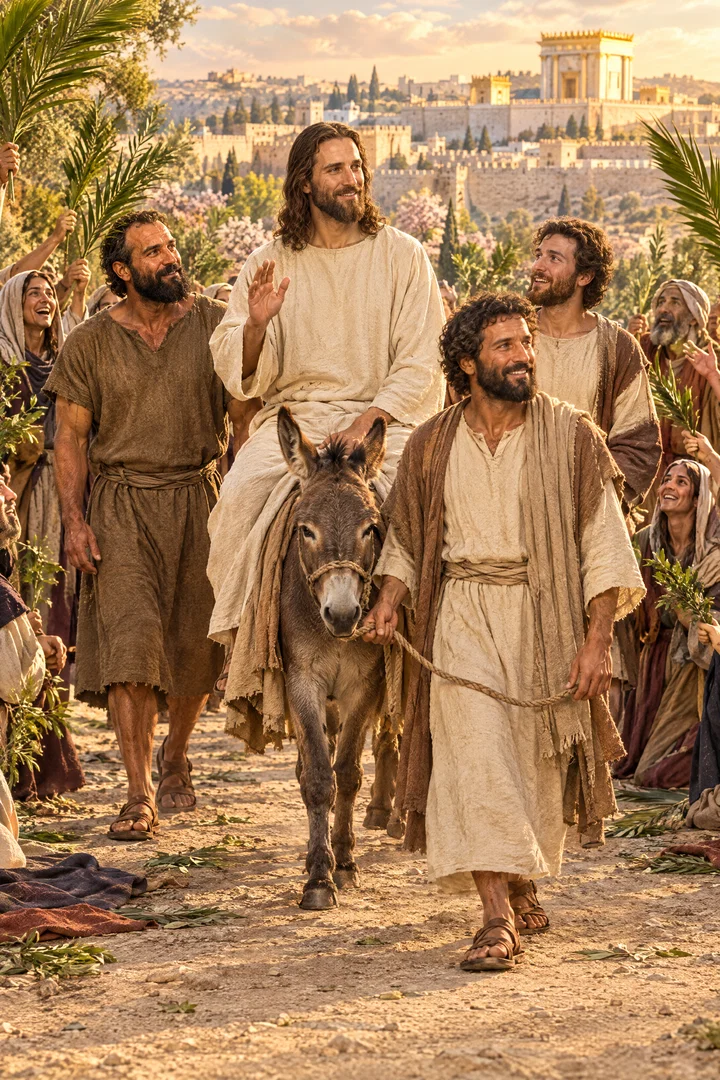
And when he was come into Jerusalem, all the city was moved, saying, Who is this?
Translations
American King James Version, King James Version, KJV Cambridge Paragraph Bible
And when he was come into Jerusalem, all the city was moved, saying, Who is this?
And when he had come into Jerusalem, all the city was moved, saying, Who is this?
Revised Version, American Standard Version
And when he was come into Jerusalem, all the city was stirred, saying, Who is this?
And he having entered into Jerusalem, all the city was moved, saying, 'Who is this?'
And as he entered into Jerusalem, the whole city was moved, saying, Who is this?
And, when he entered into Jerusalem, all the city was startled, saying—Who is this?
Berean Standard Bible, Majority Standard Bible
When Jesus had entered Jerusalem, the whole city was stirred and asked, “ Who is this?”
When he had come into Jerusalem, all the city was stirred up, saying, “ Who is this?”
And when he came into Jerusalem, all the town was moved, saying, Who is this?
And when he was come into Hierusalem, all the citie was mooued, saying, Who is this?
Douay-Rheims (Challoner revision)
And when he was come into Jerusalem, the whole city was moved, saying: Who is this?
Pictures
Cross-references
- Zechariah 9:9
Rejoice greatly, O daughter of Zion; shout, O daughter of Jerusalem: behold, thy King cometh unto thee: he is just, and having salvation; lowly, and riding upon an ass, and upon a colt the foal of an ass.
Foretells the humble King’s entry into Jerusalem on a donkey.
- Luke 19:37-40
And when he was come nigh, even now at the descent of the mount of Olives, the whole multitude of the disciples began to rejoice and praise God with a loud voice for all the mighty works that they had seen;
The crowd welcomes Jesus with praise, and he says the stones would cry out if silenced.
- John 12:12-19
On the next day much people that were come to the feast, when they heard that Jesus was coming to Jerusalem,
Jesus enters Jerusalem as King amid the crowd’s acclaim and testimony.
- Mark 11:1-10
And when they came nigh to Jerusalem, unto Bethphage and Bethany, at the mount of Olives, he sendeth forth two of his disciples,
Parallel account of Jesus’ entry into Jerusalem and the crowd’s welcome.
- Psalms 118:26
Blessed be he that cometh in the name of the LORD: we have blessed you out of the house of the LORD.
The crowd’s Hosanna greeting echoes the blessing of the one who comes in the Lord’s name.
- Jeremiah 23:5-6
Behold, the days come, saith the LORD, that I will raise unto David a righteous Branch, and a King shall reign and prosper, and shall execute judgment and justice in the earth.
The question “Who is this?” points to the promised Davidic King, called the Lord our Righteousness.
- John 12:12-15
On the next day much people that were come to the feast, when they heard that Jesus was coming to Jerusalem,
Describes the crowd’s welcome of Jesus in Jerusalem.
- Luke 19:41-44
And when he was come near, he beheld the city, and wept over it,
Jesus weeps over Jerusalem and warns of its coming destruction.
- John 12:17-18
The people therefore that was with him when he called Lazarus out of his grave, and raised him from the dead, bare record.
The crowd met Jesus after hearing that he had raised Lazarus.
- John 12:9-11
Much people of the Jews therefore knew that he was there: and they came not for Jesus’ sake only, but that they might see Lazarus also, whom he had raised from the dead.
Lazarus drew crowds, and many believed in Jesus because of him.
- Luke 19:37-38
And when he was come nigh, even now at the descent of the mount of Olives, the whole multitude of the disciples began to rejoice and praise God with a loud voice for all the mighty works that they had seen;
The crowd rejoices and welcomes Jesus as the coming King.
- Isaiah 40:9-10
O Zion, that bringest good tidings, get thee up into the high mountain; O Jerusalem, that bringest good tidings, lift up thy voice with strength; lift it up, be not afraid; say unto the cities of Judah, Behold your God!
The prophecy of God coming to Jerusalem is applied to Christ’s entry.
- Matthew 23:39
For I say unto you, Ye shall not see me henceforth, till ye shall say, Blessed is he that cometh in the name of the Lord.
Christ’s promised welcome is fulfilled at his coming in glory.
- Matthew 21:15-16
And when the chief priests and scribes saw the wonderful things that he did, and the children crying in the temple, and saying, Hosanna to the Son of David; they were sore displeased,
Children praise Jesus in the temple.
- Mark 11:15-18
And they come to Jerusalem: and Jesus went into the temple, and began to cast out them that sold and bought in the temple, and overthrew the tables of the moneychangers, and the seats of them that sold doves;
The temple cleansing in Jerusalem foreshadows the city’s doom.
- Acts 13:27
For they that dwell at Jerusalem, and their rulers, because they knew him not, nor yet the voices of the prophets which are read every sabbath day, they have fulfilled them in condemning him.
Jerusalem’s rulers fulfilled prophecy by condemning Jesus.
- Psalms 118:22-24
The stone which the builders refused is become the head stone of the corner.
The rejected cornerstone’s arrival prompts the city’s wonder at the Lord’s doing.
- Psalms 8:2
Out of the mouth of babes and sucklings hast thou ordained strength because of thine enemies, that thou mightest still the enemy and the avenger.
Jesus applies its words about praise from children to their temple acclamation.
- Luke 13:34
O Jerusalem, Jerusalem, which killest the prophets, and stonest them that are sent unto thee; how often would I have gathered thy children together, as a hen doth gather her brood under her wings, and ye would not!
Jesus laments Jerusalem’s refusal to be gathered by him.
- Luke 19:47-48
And he taught daily in the temple. But the chief priests and the scribes and the chief of the people sought to destroy him,
Jesus teaches in the temple, and the rulers respond with opposition.
Commentary
Each commentary is drawn from primary sources: the writings of Ellen G. White and Adventist pioneers and periodicals. Each commentary is separate. Its own words are not a quotation; follow the references to read the source passages.
Ellen G. White
32 sources
His royal entry into Jerusalem stirred the whole city into commotion and awakened deep public interest in who he was.DA 569.3–4Ms 128, 1899, par. 13–14DA 569.1–2 He came with a large rejoicing company riding on a donkey while the crowd honored him as king with palm branches and spread garments, the hillsides echoing with shouts.GC 367.1–2GC88 367.2DA 569 The city's question was answered by identifying him as Jesus, the prophet from Nazareth in Galilee, whom his followers confessed as the promised Messiah, the King of Peace, Immanuel, David's Branch, the Lamb who takes away the world's sin, and the Redeemer.Ms 128, 1899, par. 13–14COS 96.2–97.10 His coming as the just, saving and lowly king fulfilled Zechariah's prophecy of humble kingship and Isaiah's picture of God coming to shepherd His flock.DA 569.1–2EW 206.4Ms 151, 1899, par. 5 The public demonstration brought him before all as Redeemer to direct minds to his coming sacrifice for the world's sins as the voluntary antitypical Passover Lamb, even as priests and rulers rejected the witness and his tears over the rejoicing city became final appeals to a people facing doom.3SP 14.1–23SP 20.1ST Jun 8, 1882ST Jan 10, 1878DA 571.2–4
Entry Stirs Jerusalem
The royal entry into Jerusalem stirred the whole city into commotion and awakened deep public interest in his identity, prompting the question, Who is this, as crowds accompanied him and the people's hopes for a new kingdom were renewed.DA 569.3–4DA 569.1–2ST Jun 8, 1882DA 546ST Jul 22, 1886 His arrival as the promised King fulfilled Zechariah's prophecy of a just, saving, lowly king coming to Jerusalem.DA 569.1–2 The public demonstration was meant to direct attention to his coming sacrifice as the voluntary antitypical Passover Lamb set apart as an offering for the world's sins, so that the events surrounding his entry would lead people to follow his final steps and, after his death, be considered alongside his trial and the prophecies to reveal him as Messiah and bring converts to faith.ST Jun 8, 1882 The crowd's testimony about his merciful works, including works that left visible evidence of divine power, intensified the praise of the people and disciples.Ms 128, 1899, par. 13–14
He came with a large rejoicing company, riding on a donkey while the crowd honored him as king with palm branches and spread garments in his path, welcomed with joyful shouts.GC 367.1–2GC88 367.2DA 569DA 546COS 90 The hillsides echoed the celebration, as the slopes of the Mount of Olives rang with the joyful shouts of the triumphant multitude.3SP 250.3 The triumphal procession was marked not by conquered captives but by people he had delivered and healed, for the rescued, healed, and raised praised him and honored him as king.4RED 120.2 The rejoicing multitude hailed him as the Son of David with shouts and palm branches, in fulfillment of prophecy.GC 367.1–2GC88 367.2
Spectators who had heard of him and expected him in Jerusalem were astonished at his acceptance of kingly homage, and they asked who he was and what the commotion meant.2SP 384.1–385.1DA 570.1–571.1ST Jul 22, 1886ST Jun 8, 1882 He had previously refused such honors and discouraged efforts to make him king, declaring that his kingdom was not of this world, leaving them to wonder what had changed that he now received the crowd's public welcome.2SP 384.1–385.1DA 570.1–571.1ST Jul 22, 1886ST Jun 8, 1882 The excitement built on eager crowds drawn by the raising of Lazarus, which had greatly affected people and drawn an enthusiastic multitude to where he was staying.Ms 128, 1899, par. 1 It was intensified by testimony about his merciful works that left visible evidence of divine power.Ms 128, 1899, par. 13–14
The arrival came near the close of his ministry, just before his trial.ST Jan 10, 18783SP 250.3 It stands at the beginning of the final sequence leading to the cleansing of the temple and the lesson of the barren fig tree.ST Jan 10, 1878ST Feb 15, 1899 The entrance, the cleansing, and the withering of the barren fig tree pointed to Jerusalem's doom.ST Jan 10, 1878 As he looked over the rejoicing city his tears were his last appeals of love and compassion to a city that had rejected him, while the fig tree symbolized the Jewish nation that through pride and apostasy had separated from God, lost its ability to recognize its Redeemer, and faced destruction.ST Jan 10, 1878ST Feb 15, 1899
Proclaimed King Fulfills Prophecy
The question of the stirred city was answered by identifying him as Jesus, the prophet from Nazareth in Galilee.Ms 128, 1899, par. 13–14 The testimony of the crowd about his merciful works, including works that left visible evidence of divine power, intensified the praise of the people and the disciples.Ms 128, 1899, par. 13–14 His followers answered by confessing him as the promised Messiah, the seed who defeats the serpent, the King of Peace, Shiloh from Judah, Immanuel, the divine Prince of Peace, David's Branch and righteousness, the Messiah foretold by Daniel, the Lord of Hosts, the Lamb who takes away the world's sin, God's beloved Son, the Prince of Life and Redeemer, and the Holy One of God.COS 96.2–97.10 The crowd proclaimed him with prophetic titles including Son of David, echoing the prophets' witness that he was the Messiah.3SP 14.1–2ST Jan 10, 1878
His coming as the promised, just, saving, and lowly king fulfilled Zechariah's prophecy of humble kingship.DA 569.1–2EW 206.4 It also fulfilled Isaiah's picture of God coming to his people to shepherd his flock amid praise and rejoicing.Ms 151, 1899, par. 5 The fulfillment had to stand despite opposition, for the Pharisees tried to silence the acclaim.GC88 367.21T 57.3–58.1 When the people fell quiet under threats, children in the temple courts continued the praise, and even the stones would cry out if they held their peace.GC 367.1–2GC88 367.21T 57.3–58.1
The disciples hailed him as the coming king expected to be crowned to reign on David's throne and to establish a temporal kingdom, with renewed hopes.EW 206.41T 57.3–58.1 Those hopes were shattered when he was crucified and buried, as they saw their beloved Master stretched upon the cruel cross above the mocking, taunting Pharisees, with high hopes disappointed and the darkness of death closing about them.EW 206.41T 57.3–58.1 That was a disappointment greater than any later disappointment over unfulfilled hope.1T 57.3–58.1 Yet after he rose and appeared to them their hopes revived, proving him true to his promises, giving sweet consolation to his people and rich reward to the true and faithful.EW 206.41T 57.3–58.1
Rejection Purpose And Application
The multitude's answer to who he was stood as inspired prophetic witness, echoing the prophets in proclaiming him Son of David and Messiah and openly honoring him and confessing his kingdom, yet the priests and rulers heard it and rejected it, becoming amazed and angered and trying to silence the people.3SP 14.1–2ST Jan 10, 1878DA 580.2–581.2 Their opposition did not prevent the public homage, for he received it even as the leaders stood against him.3SP 14.1–2ST Jan 10, 1878
The public demonstration set him before everyone's attention as Redeemer in order to direct minds to his coming sacrifice for the sins of the world.ST Jun 8, 1882DA 571.2–4 He set himself apart voluntarily as the antitypical Passover Lamb, an offering for the world's sins.ST Jun 8, 1882 The events surrounding the entry were to be remembered after his death and searched alongside his trial and the prophecies, following his final steps in thought until they revealed him as Messiah and brought converts to faith in him.ST Jun 8, 1882DA 571.2–4
Together with the cleansing of the temple and the blighting of the barren fig tree, the entrance pointed to Jerusalem's doom.3SP 20.1ST Jan 10, 1878ST Feb 15, 1899 Amid the city's rejoicing and hosannas he wept over Jerusalem, and his tears were final appeals of love and compassion to a people and city that had rejected him.3SP 20.1ST Jan 10, 1878 The barren fig tree symbolized the Jewish nation, which through pride and apostasy had separated from God, lost the ability to discern its Redeemer, and faced destruction.ST Jan 10, 1878ST Feb 15, 1899 The same triumphal entry foreshadowed his future coming in glory with the angels and the rejoicing saints.3SP 9.1
The account exalts him and lifts him up, showing that keeping God's law belongs with magnifying Christ rather than being saved by law.Lt 27, 1880, par. 8 Its proclamation convinces hearers of Christ's centrality and moves them to baptism and uniting with the church in fellowship.Lt 27, 1880, par. 8 Spoken with freedom and listened to as for life, it is a solemn appeal that takes hold upon souls so that all do their part well and stand acquitted in the day of final accounts when judgment sits and the books are opened and every account is balanced, with the solemn thought of not meeting again until that great day and the question of who will be saved through the words spoken.Lt 29, 1880, par. 22–23 It shows the Son of God coming into the world to draw all people to himself, yet his coming sends not peace but a sword.Ms 5, 1882, par. 11 His followers must therefore walk in the light of his glorious example without questioning the cost in labor and trial and suffering, each with a work to maintain the truth in its purity and push the triumphs of his cross and extend his kingdom, a message that when preached makes a deep impression and moves hearers even to weeping.21MR 343.4Ms 5, 1882, par. 11
Sources
Pioneers and periodicals
52 sources
When Jesus came into Jerusalem near the close of his first advent, only days before his suffering and death, the whole city was stirred and asked who he was, and the multitude answered that he was Jesus the prophet from Nazareth of Galilee.ST Apr 14, 1898ST Jul 2, 1894ST Oct 5, 1904 He entered in lowly majesty riding a young donkey as Prince of peace rather than as a conquering hero, yet was hailed with palm branches and praises as the Son of David and heir to David's throne.RH Nov 18, 1862ST Mar 27, 1901ST Nov 8, 1883ST Feb 6, 1901 That entry fulfilled Zechariah's prophecy of the lowly king coming upon an ass, and the shouting of Hosanna by disciples and children fulfilled prophecy even as the later cry for his crucifixion fulfilled prophecy as well.RH Nov 18, 1862ST Mar 27, 1901ST Nov 8, 1883RH Feb 6, 1866RH Aug 24, 1869 The crowds welcomed him because they expected him to be crowned at once, establish his kingdom and deliver the Jews from Roman power, but were bitterly disappointed when his only throne was the cross and he was laid in Joseph's tomb.ST Aug 13, 1902RH Jul 25, 1865ST Jul 27, 1882RH Apr 20, 1916 The welcome quickly faded and turned to rejection, pointing to Jerusalem's doom in the cleansing of the temple and the withering of the fig tree, and the same question will be heard again when the world is moved at his return.ST Mar 27, 1901ST Feb 14, 1878ST Jul 2, 1894ST Jul 30, 1894ST Mar 14, 1906
Arrival Stirs Jerusalem
When he came into Jerusalem all the city was moved and asked, Who is this.ST Apr 14, 1898ST Jul 2, 1894ST Oct 5, 1904ST Sep 27, 1899 The stir belonged to his royal entry amid welcome and praise, and the crowd answered that he is Jesus, the prophet from Nazareth of Galilee.ST Apr 14, 1898ST Jul 2, 1894ST Oct 5, 1904ST Sep 27, 1899ST Mar 27, 1901
The entry took place near the close of his ministry and first advent, in the last week of his life only a few days before his suffering, crucifixion and death.ST Nov 8, 1883ST Feb 14, 1878RH Jul 6, 1869ST Apr 14, 1898 It marked the move into the closing events of his earthly career before his betrayal, trial, crucifixion and resurrection.ST Nov 8, 1883ST Feb 14, 1878RH Jul 6, 1869ST Mar 24, 1887ST Apr 14, 1898 It came about five months after he raised Lazarus.ST Apr 14, 1898
The entry came the day after the events at Bethany amid the disciples' praise, and it preceded his teaching and actions in the temple.ST Feb 15, 1899STST Dec 23, 1886 Those following actions included the cleansing and the lesson of the fig tree, and the next event of importance after the entry was the institution of the Lord's Supper.ST Feb 15, 1899ST The same entry is recorded in Matthew 21, Mark 11 and John 12, with the fullest account in Luke 19.ST
It is commemorated as Palm Sunday, the Fiesta of Ramos, observed April 5 as the beginning of a week continuing through Holy Thursday on the 9th, Holy Friday on the 10th, Holy Saturday on the 11th, and Pascua Sunday on the 12th.ST Feb 11, 1903 The entry is a historical event rather than a legend.RH Mar 8, 1906 It occurred thirty-three years after his birth when a rejoicing procession moved over Olivet toward the city.RH Nov 25, 1873
Jesus the Humble King
He came into Jerusalem in humble fashion, riding a young donkey as a lowly king, as the Prince of peace and not as a conquering hero.RH Nov 18, 1862ST Mar 27, 1901 That lowly entry was a token of self-denying love, set in contrast with the force and display of worldly rulers.ST Feb 6, 1901
He was presented in that entry as the Messiah and heir to David's throne.ST Nov 8, 1883 The crowds welcomed him with palm branches and praises, hailing him as the Son of David and as the one who comes in the Lord's name.ST Jan 10, 1878RH Nov 18, 1862ST They had ample evidence of his identity in fulfilled prophecy, in his miracles, in the purity of his life and teaching, and in the mighty works they had witnessed, including healings and the raising of the dead.ST Nov 8, 1883 That evidence centered especially on his raising of Lazarus after four days in the grave.ST Nov 8, 1883 The public demonstration itself was especially prompted by the report that he had raised Lazarus from the dead.ST Dec 16, 1886
The demonstration was meant to direct attention to his coming sacrifice.ST Jun 8, 1882 As the antitypical Passover Lamb he voluntarily set himself apart as an offering for the world's sins.ST Jun 8, 1882 In this way people would follow his final steps, and afterward his death considered together with his trial and the prophecies would reveal him as Messiah and bring converts to faith.ST Jun 8, 1882
He came as his Father's special agent to attend to his Father's business.ST Nov 20, 1884 After the Father planted a vineyard and let it out to husbandmen, the husbandmen refused returns to the authorized collectors, so finally the Son himself came to handle the matter.ST Nov 20, 1884 This proves he was doing labor for gain for his Father.ST Nov 20, 1884 The account shows his longing for fruit from his own people.ST Jul 15, 1908
It was the one occasion in his life when he allowed the multitudes to give full expression to their honor for him.ST Jul 22, 1886 The growing procession drew spectators who had heard of him but were astonished that he was receiving kingly honors.ST Jul 22, 1886 He had previously refused such honors and had declared that his kingdom was not of this world, so his acceptance of them now surprised the people.ST Jul 22, 1886ST Jun 8, 1882
Even amid joyful crowds he looked on the city with pity and tears.ST Jan 10, 1878ST He foresaw its destruction and the coming rejection of the one it now celebrated.ST His tears were his last appeals of love and compassion to a city that had rejected him.ST Jan 10, 1878
He is the fulfillment of the whole prophetic witness from the garden promise onward to divinity clothed with humanity, God manifest in the flesh.RH Feb 4, 1904 He is the seed of the woman, Melchisedek King of Salem and King of Peace, Shiloh of Judah, Immanuel Wonderful Counsellor the mighty God the everlasting Father the Prince of Peace, the Branch of David the Lord our righteousness, the Messiah, the Lord God of Hosts, the Lamb of God who takes away sin, the beloved Son proclaimed by Jehovah, the Prince of Life and Redeemer acknowledged even by the prince of darkness as the Holy One of God.RH Feb 4, 1904ST Jun 22, 1882ST Jul 2, 1894
Fulfillment of Prophecy
The entry fulfilled Zechariah's prophecy of a lowly king arriving on an ass, coming in humble fashion riding a young donkey and hailed by the common people with shouts of Hosanna as the Son of David.RH Nov 18, 1862ST Mar 27, 1901ST Nov 8, 1883 He came as the Prince of peace and not as a conquering hero, as Messiah and heir to David's throne near the close of his ministry only a few days before his crucifixion.ST Mar 27, 1901ST Nov 8, 1883 The people had ample evidence of his identity in the prophecies he fulfilled, his miracles, the purity of his life and teaching, and especially his raising of Lazarus after four days in the grave.ST Nov 8, 1883 The rejoicing procession moved over Olivet toward the city thirty-three years after his birth, with Jesus of majestic mien and benign countenance seated on an ass in the midst of the host, Jesus of Nazareth foretold by prophets, worshiped by angels, and anointed by God.RH Nov 25, 1873 His coming in this manner proves that what Zechariah foretold was intended by the Holy Spirit to be understood literally.RH Nov 25, 1873
Matthew 21:1-12 records the fulfillment of Psalm 118:22-24 about the stone which the builders rejected becoming the head stone of the corner.RH May 10, 1860RH May 10, 1860 That passage says nothing about a resurrection day, the seventh day, the Sabbath, or any change of the Sabbath from the seventh to the first day, and it does not identify the day the Lord made.RH May 10, 1860RH May 10, 1860
In this event the disciples and children who shouted Hosanna to the Son of David fulfilled prophecy, and those who rejected him and later called for his crucifixion fulfilled prophecy as well.RH Feb 6, 1866 The disciples had mistaken ideas about what was coming, yet their actions fulfilled Scripture.RH Aug 24, 1869 Their mistaken expectation about how prophecy would be fulfilled did not make the proclamation itself wrong, even as Advent people rejoiced in proclaiming the end of the prophetic times but were disappointed because they expected Christ to come then.RH Aug 24, 1869
When the rulers heard reports that he was approaching Jerusalem attended by a great concourse, they went out in trepidation to meet him to disperse the crowd by their authority, intercepting the procession as it was about to descend the Mount of Olives and inquiring with authority who he was and what was the cause of the tumultuous rejoicing.RH Feb 4, 1904ST Jun 22, 1882 The disciples, filled with a spirit of inspiration, answered above the noise of the crowd by repeating the prophecies that identify him.RH Feb 4, 1904ST Jun 22, 1882 He is the seed of the woman that shall bruise the serpent's head, Melchisedek King of Salem and King of Peace, Shiloh of the tribe of Judah, Immanuel Wonderful Counsellor the mighty God the everlasting Father the Prince of Peace, the Branch of David the Lord our righteousness, the Messiah, the Lord God of Hosts, the Lamb of God who takes away the sin of the world, the beloved Son proclaimed by Jehovah from his throne, Jesus the Messiah the Prince of Life the Redeemer of the world, acknowledged even by the prince of darkness as the Holy One of God.ST Jun 22, 1882 In this he is the fulfillment of the whole prophetic witness from the garden promise onward to divinity clothed with humanity, God manifest in the flesh, the mystery of the kingdom of God made manifest in the first advent.RH Feb 4, 1904
Judgment Upon Jerusalem
The chapter shows that the kingdom would be taken from the Jews because they did not keep God's law and would be given to a nation that would keep it.RH Mar 29, 1864RH Sep 9, 1858 The parable of the wicked husbandmen stands in this same setting as a warning against the Jews.RH Sep 9, 1858
The entry, together with the cleansing of the temple and the withering of the barren fig tree, pointed to Jerusalem's doom.ST Jan 10, 1878ST Feb 15, 1899 The fig tree symbolizes the Jewish nation, which through pride and apostasy separated from God, lost the ability to recognize its Redeemer, and faced destruction.ST Jan 10, 1878ST Feb 15, 1899 The triumphal entrance belongs shortly before the crucifixion and near the close of ministry, when the people of Jerusalem were stirred by His arrival.ST Jan 10, 1878ST Feb 14, 1878 The people of that time, like people now, were unmindful of their privileges and heedless of God's warnings as their time of probation ran out.ST Feb 14, 1878
The city gave Him public homage even as its leaders opposed Him.ST Jan 10, 1878 The crowd answered the question Who is this with prophetic words honoring Him as the Son of David and the Messiah, while the priests and rulers rejected the testimony of the prophets they had heard.ST Jan 10, 1878 The rulers, having heard reports that He was approaching attended by a great concourse, went out in trepidation to meet Him to disperse the crowd by their authority, intercepting the procession as it was about to descend the Mount of Olives and inquiring with authority who He was and what was the cause of the tumultuous rejoicing.ST Jun 22, 1882 The great public stir caused by His arrival revealed His influence among the people, and this public acclaim stirred the Jewish leaders' envy and helped lead them to deliver Him to Pilate.ST Jun 16, 1898
The passage says nothing about the Sabbath, much less a change of the Sabbath from the seventh to the first day.RH May 10, 1860RH May 10, 1860 It does not identify a resurrection day, the seventh day, or the day the Lord made.RH May 10, 1860RH May 10, 1860 Matthew 21:1-12 records the fulfillment of Psalm 118:22-24 about the stone the builders rejected becoming the head stone of the corner.RH May 10, 1860RH May 10, 1860
Disappointment and Last-Day Lessons
The entry stirred Jerusalem because disciples and crowds hailed Jesus as king and expected him to be proclaimed king, to assume the position of King, to establish his kingdom and reign over Judah and Jerusalem, to deliver the Jews from Roman power, and to have God's kingdom appear at once.ST Aug 13, 1902RH Jul 25, 1865RH Aug 26, 1915RH Apr 20, 1916RH Oct 3, 1854 With meek majesty and heavenly grace he seemed ready to be crowned as an earthly king in their eyes, and the homage strengthened that expectation.RH Aug 26, 1915RH Oct 3, 1854 Their enthusiasm was moved by what they saw rather than by faith.ST Mar 27, 1901
That expectation of royal enthronement was soon disappointed when he was crucified instead of taking the kingdom.ST Aug 13, 1902RH Jul 25, 1865RH Apr 20, 1916 Instead of being hailed as king in a royal palace his only throne was the cross and he was laid as a lifeless form in Joseph's new tomb.ST Jul 27, 1882 The turn from triumphal escort to crucifixion brought bitter grief and deep disappointment, with joy followed by sadness when events did not match expectations, and led some to doubt whether he was Messiah.RH Apr 20, 1916RH Jul 6, 1869ST Mar 24, 1887 Yet they were blessed in receiving the truths they had heard, and their mistaken views did not justify rejecting the gospel they preached.ST Jul 27, 1882RH Feb 14, 1871
The multitude's faith weakened when he did not meet expectations.ST Mar 27, 1901 Public expressions of goodwill proved not a safe measure of lasting friendship, for the welcome could quickly turn.ST Jul 30, 1894 The joyful welcome that made it a proud time to be his disciple had quickly vanished by the time of his arrest.ST Mar 14, 1906
He knew his mission in Jerusalem would instead pass through suffering and death, and the parable of the nobleman's journey corrected the expectation of an immediate kingdom.RH Oct 3, 1854 As the disciples rejoiced in escorting him and then were sad when events did not match expectations, so Advent people rejoiced in proclaiming the end of the prophetic times but were disappointed because they expected Christ to come then.RH Aug 24, 1869 Their mistaken expectation about how prophecy would be fulfilled did not make the proclamation itself wrong, and the disciples' mistaken ideas still fulfilled Scripture.RH Aug 24, 1869
The entry revealed people's feelings toward him, with the disciples' loyalty manifested as he rode into the city contrasted with opposing feelings from those who did not love him and his appearing.RH Feb 26, 1867 A disappointing, unpopular message thus reveals whether people remain loyal, and the entry stands as a time to remain close to him.ST Mar 14, 1906RH Feb 26, 1867 The children's singing welcoming him in the temple courts pictures children bearing witness to Christ, for in the last days children's voices will help proclaim the final warning message.RH Apr 11, 1912 The question of who this is will be heard again when Christ returns, when the world will be moved and anxious people everywhere will ask who is coming, and his disciples filled with the Spirit will proclaim the Bible's prophetic truths about that return as a renewed loud cry of hosanna.ST Jul 2, 1894
Sources