Luke 24:28
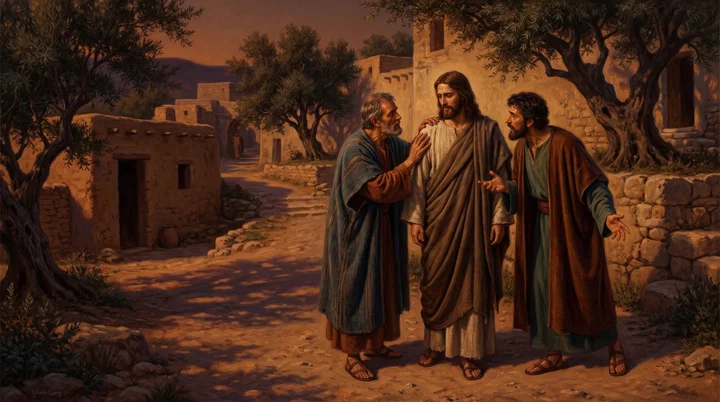
And they drew nigh unto the village, whither they went: and he made as though he would have gone further.
Translations
And they drew near to the village, where they went: and he made as though he would have gone further.
King James Version, KJV Cambridge Paragraph Bible
And they drew nigh unto the village, whither they went: and he made as though he would have gone further.
And they drew nigh to the village whither they were going: and he made as though he would go further.
Revised Version, American Standard Version
And they drew nigh unto the village, whither they were going: and he made as though he would go further.
And they came nigh to the village whither they were going, and he made an appearance of going on further,
And they drew near to the village where they were going, and he made as though he would go farther.
And they drew near unto the village, whither they were journeying; and, he, made for journeying, further.
Berean Standard Bible, Majority Standard Bible
As they approached the village where they were headed, He seemed to be going farther.
They came near to the village where they were going, and he acted like he would go further.
And they came near the town to which they were going, and he seemed as if he was going on;
And they drew neere vnto ye towne, which they went to, but he made as though hee would haue gone further.
Douay-Rheims (Challoner revision)
And they drew night to the town, whither they were going: and he made as though he would go farther.
Pictures
Cross-references
- Mark 16:12-13
After that he appeared in another form unto two of them, as they walked, and went into the country.
Jesus appears to two disciples as they travel, and they report it to the others.
- Luke 24:32
And they said one to another, Did not our heart burn within us, while he talked with us by the way, and while he opened to us the scriptures?
Jesus’ opening of Scripture stirred the disciples’ hearts.
- Luke 24:33-35
And they rose up the same hour, and returned to Jerusalem, and found the eleven gathered together, and them that were with them,
describes hurrying back to tell the disciples
- Luke 24:36-43
And as they thus spake, Jesus himself stood in the midst of them, and saith unto them, Peace be unto you.
another appearance proving resurrection
- Luke 24:16
But their eyes were holden that they should not know him.
The disciples’ eyes were kept from recognizing Jesus on the road.
- Luke 24:13
And, behold, two of them went that same day to a village called Emmaus, which was from Jerusalem about threescore furlongs.
Identifies the disciples’ journey to Emmaus.
- John 20:14-16
And when she had thus said, she turned herself back, and saw Jesus standing, and knew not that it was Jesus.
Mary also failed to recognize the risen Jesus at first.
- James 4:8
Draw nigh to God, and he will draw nigh to you. Cleanse your hands, ye sinners; and purify your hearts, ye double minded.
Seeking Christ assures His presence.
- John 20:19
Then the same day at evening, being the first day of the week, when the doors were shut where the disciples were assembled for fear of the Jews, came Jesus and stood in the midst, and saith unto them, Peace be unto you.
The Emmaus disciples returned to the disciples’ gathering described there.
- Luke 24:42-43
And they gave him a piece of a broiled fish, and of an honeycomb.
eating proves He was the risen Jesus
- Acts 1:3
To whom also he shewed himself alive after his passion by many infallible proofs, being seen of them forty days, and speaking of the things pertaining to the kingdom of God:
It refers to Jesus appearing to the disciples after his resurrection.
- Luke 24:45
Then opened he their understanding, that they might understand the scriptures,
Their walk leads to Jesus opening their understanding of Scripture.
- Luke 24:50-51
And he led them out as far as to Bethany, and he lifted up his hands, and blessed them.
contrasts resurrection with more glorious ascension
- Acts 10:40-41
Him God raised up the third day, and shewed him openly;
appeared only to chosen witnesses, not publicly
- Luke 24:1
Now upon the first day of the week, very early in the morning, they came unto the sepulchre, bringing the spices which they had prepared, and certain others with them.
identifies travel day as first day
- Luke 24:36
And as they thus spake, Jesus himself stood in the midst of them, and saith unto them, Peace be unto you.
It describes what happened after the disciples reported their encounter.
- 1 Corinthians 15:6-8
After that, he was seen of above five hundred brethren at once; of whom the greater part remain unto this present, but some are fallen asleep.
Lists appearances to many, James, the apostles, and Paul.
Commentary
Each commentary is drawn from primary sources: the writings of Ellen G. White and Adventist pioneers and periodicals. Each commentary is separate. Its own words are not a quotation; follow the references to read the source passages.
Ellen G. White
50 sources
On the evening of the resurrection day two sorrowful and confused disciples were walking from Jerusalem toward their home at Emmaus when the risen Jesus joined them as an ordinary traveler and remained unrecognized.DA 795.1DA 795.2FE 189.1ST Sep 19, 1878SG4 119.1 As they drew near the village with the day far spent and night at hand, he made no move to stop but acted as though he would continue farther past them.CE 87.1COS 183.2–184.2DA 800.1–2 He did this not to leave them but to give them opportunity to invite him to stay rather than forcing his presence upon them.6RED 31.1–2ST Nov 14, 1878DA 800.1–23SP 213.13SP 216.2 He deliberately kept his identity hidden until he had opened Moses and the prophets concerning himself, so their faith would rest on the Scriptures and not merely on seeing him alive.ST Sep 19, 18783SP 214.1–2ST Sep 19, 1878ST Oct 6, 1909 When they earnestly constrained him to abide, he went in with them and revealed himself in breaking bread and then vanished, sending them back that same night to Jerusalem with full joy to witness to a risen Saviour.CE 87.1ST Sep 19, 18783SP 214.1–23SP 215.1–3ST Sep 26, 1878
Emmaus Road Setting
On the evening of the resurrection day two earnest but disheartened disciples were traveling from Jerusalem to Emmaus, about eight miles away.DA 795.1DA 795.2 They had heard that Jesus' body was gone from the tomb and that women had seen angels and had met him.DA 795.1 They were returning home to meditate and pray, talking over the trial and crucifixion and struggling to understand what had happened.DA 795.1DA 795.2 They walked in grief and confusion over his suffering and death, sorrowful after his death as the risen Jesus joined them to teach them.DA 795.2RH Mar 31, 1903 As they traveled he opened the Scriptures to show that the Messiah had to suffer before entering his glory, and this revived their faith and hope.RH Mar 31, 1903 Their joy in learning that he was alive later overcame hunger and fatigue and drove them to return to Jerusalem to share the news with the other disciples.ST Sep 26, 1878
They were sorrowful, grieving and confused over his suffering, trial, crucifixion and death.DA 795.13SP 215.1–3 Their journey out of Jerusalem was sorrowful, undertaken to take up their old employment again and to conceal their blighted hopes.3SP 215.1–3 They were going home to meditate and pray while talking over what had happened and struggling to understand it.DA 795.1
The risen Jesus had the same stature as before his crucifixion, with no special marks immediately identifying him as the Son of God.SG4 119.1 He walked beside them as an apparently ordinary traveler and stranger, and they did not know who he was until he made himself known to them.ST Sep 26, 1878SG4 119.1 They still did not recognize him even as they drew near the village, though he had been walking and talking with them and his words had strengthened their discouraged hearts.FE 189.1ST Sep 19, 1878
Seeming to Go Further
As they drew near the village where their home was at Emmaus, the sun was setting and going down with the day far spent and nearly over and night at hand.CE 87.1COS 183.2–184.2Ms 155, 1904, par. 61–633SP 212.3Ms 80, 1886, par. 17 He made no sign of halting but acted as though He would travel further and continue on past the village, appearing ready to go farther rather than stopping there.CE 87.1COS 183.2–184.2DA 800.1–23SP 212.3Ms 80, 1886, par. 17 The walk with Him had seemed unusually short and swift.3SP 212.3
His seeming readiness to go on rather than stopping gave the disciples the opportunity to invite Him to stay and to urge Him earnestly to remain overnight, instead of having His presence and company forced upon them.6RED 31.1–2ST Nov 14, 18783SP 212.33SP 216.26RED 31.3–32.1 He does not force Himself upon anyone but waits to be invited and yields when importuned with longing desire, and He held back at first to let the new hope and joy and affection He had kindled move them to ask Him.6RED 31.1–2DA 800.1–2Ms 155, 1904, par. 61–633SP 212.3Ms 80, 1886, par. 17 That pause before revealing Himself gave them the opportunity to recognize Him when He afterward took bread and blessed and broke it at meat.CE 87.16RED 31.1–2ST Nov 14, 1878
Teaching Before Revealing
Beginning at Moses and all the prophets, he expounded in all the Scriptures the things concerning himself while walking unrecognized with the two toward Emmaus.CE 87.1Ms 94, 1897, par. 28–30Ms 203, 1898, par. 9 He opened the Scriptures to show that the Messiah had to suffer before entering his glory.RH Mar 31, 1903 What they afterward told was how he had opened their eyes and explained the chain of prophecy foreshadowing what had happened to him, a connected line from the patriarchs to their own time.ST Sep 26, 18783SP 217.1–3
He deliberately kept his true identity hidden and did not first reveal himself as risen and then open the Scriptures.3SP 214.1–2ST Sep 19, 1878 The joy of seeing him alive again would have satisfied them so they would no longer hunger for the sacred truths he wanted fixed indelibly in their minds.3SP 214.1–2ST Sep 19, 1878 He wanted those truths firmly fixed to be shared with others until thousands received the light given that day on the journey.3SP 214.1–2ST Sep 19, 1878
He withheld disclosure until he had finished interpreting the Scriptures to lead them to intelligent faith in his life, his character, his mission to earth, and his death and resurrection.ST Sep 19, 18783SP 214.1–2ST Oct 6, 1909 He kept his disguise as they reached Emmaus and acted as if to go further for this purpose.ST Sep 19, 1878 Truth was to take firm root not because it rested on his personal testimony but because the typical law and the prophets agreeing with the facts of his life and death gave unquestionable evidence, so faith would rest on scriptural evidence for his life, mission, death, and resurrection.ST Sep 19, 18783SP 214.1–2ST Oct 6, 1909
Their failure to recognize him and recall the prophecies had left their faith weakened, but his words revived it.ST Oct 30, 1884 Knowing the prophecies about his life, suffering, death, and resurrection would have sustained their faith and kept their hopes firm.ST Oct 30, 1884 As they contemplated his words their hearts burned within them while he opened the Scriptures concerning himself.SPBC 149.3RP 15.2Lt 57, 1895, par. 33 His educating of the lonely, disappointed disciples filled them with sacred hope and joy and holy joy.15MR 23.4Lt 57, 1895, par. 34Lt 37, 1887, par. 18–19
He opened their understanding so they could understand the Scriptures.CE 87.1Lt 25, 1903, par. 12–14Lt 141, 1897, par. 39 That enlightening by divine instruction, with the Holy Spirit shining upon the sacred page to open understanding to know what is truth, is work he still does for those who believe it their privilege to understand what God has spoken.CE 87.1Lt 141, 1897, par. 39 What the Lord has revealed is for us and our children forever and gives a clear, well-defined experience, with hearts burning while the Scriptures are opened.CE 87.1Lt 141, 1897, par. 39 This opening of understanding with light through prayer is needed in studying Daniel, Revelation, and the other prophecies of the Old and New Testaments.Lt 141, 1897, par. 39
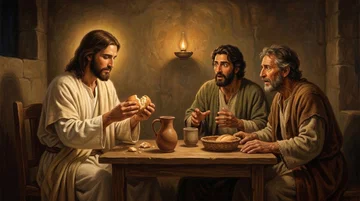
When that work was accomplished he revealed himself at meat when he took bread and blessed and broke it so their eyes were opened and they knew him, to make their joy full.CE 87.1ST Sep 19, 18783SP 214.1–2 Then he vanished from their sight.ST Sep 19, 18783SP 214.1–2
Christ With Suffering Followers
Though he was the mighty conqueror of death, he humbly walked the difficult road to Emmaus with the two disciples as an apparently ordinary traveler in order to teach and comfort them.ST Sep 19, 18783SP 212.1–26RED 30.1–2 That companionship shows he identifies himself with suffering and perplexed followers and is with them on their hardest paths to help them.ST Sep 19, 18783SP 212.1–26RED 30.1–2 His sympathy and love remain the same after his resurrection and ascension.6RED 30.1–2
He walks beside people in despondency and grief even while they do not yet recognize him, and his presence and teaching can fill lonely, disappointed hearts with holy joy.Ms 80, 1886, par. 25–26CT 342.1–2Ms 80, 1886, par. 27 If they accept him he can give them peace and consolation and life.Ms 80, 1886, par. 25–26Ms 80, 1886, par. 27 Their experience of his drawing near as an unrecognized companion and sharing fellowship with them provides a pattern for belief that he meets and strengthens his people in lonely retreats, as the Waldenses believed he met them.HSFM 242.4–243.2
His meeting them on the way gives abundant evidence that he had risen from the dead, for on the very day he rose the living Saviour, no longer dead, joined the two as they walked and, beginning at Moses, opened to them in all the prophets the things concerning himself.Ms 94, 1897, par. 28–30Ms 203, 1898, par. 9 After mighty angels rolled back the stone and he came forth from Joseph's sepulchre as the resurrection and the life, he walked in the way, met the two disciples, and made himself known to them before leaving them.Ms 78, 1910, par. 30 That meeting proves he died on the cross as a sacrifice and then rose, so believers now have a risen Saviour.Ms 78, 1910, par. 30
Invitation and Witness Response
He never forces His presence or company on anyone, but seeks out those who need His care and gives them opportunity to ask Him to stay, entering only when earnestly asked to remain to bring comfort and hope.6RED 31.1–2DA 800.1–23SP 213.1ST Oct 6, 19093SP 212.3 He did not at once yield, but held back to let the new hope and joy and affection He had kindled move them to urge Him earnestly, and their earnest invitation was prompted by affection and the lateness of the day and by courtesy and desire to keep hearing Him explain the Scriptures.ST Oct 6, 19093SP 212.3Ms 80, 1886, par. 17 When they importuned Him because the day was nearly over and constrained Him to abide with them, He yielded and went in to tarry with them, entering even the humblest home and heart to brighten it for those who long for Him and ask Him to remain.CE 87.13SP 213.1ST Oct 6, 19093SP 212.3
Those who are indifferent and do not ask Him to abide pass Him by, and He passes on, so they miss knowing Him and suffer great loss of the chance to know Him.DA 800.1–2Ms 113a, 1897, par. 11 Every heart and home must be searched to see if He has been invited in with the request to abide, since He comes in only as He is invited.Ms 155, 1904, par. 61–63 They urged Him to remain with them because evening was near and the day was far spent and night was at hand, after He had given them beautiful lessons in the Scriptures, and He accepted their invitation.ST Nov 14, 1878Ms 155, 1904, par. 61–63ST Oct 30, 1884ST Sep 19, 18783SP 216.2 That urging gave them the opportunity to recognize Him, for their failure to recall the prophecies had left their faith weakened, but His words revived it.ST Nov 14, 1878ST Oct 30, 1884
Their depressed arrival at Emmaus at the end of a sorrowful journey stands opposite their later joyful departure that same late night, when they left the prepared meal untasted and hurried back over the rough dark road to Jerusalem, their joy in learning He was alive overcoming hunger and fatigue, to share the news of a living Saviour risen from the dead.3SP 215.1–3ST Sep 26, 1878 When they received light they returned to those whom God had led and was still leading and told how they had seen Jesus and talked with Him and how He had opened their eyes.RCNBP 6.3–7.1 All who claim great light concerning the church must likewise go to those chosen to bear living testimony and seek counsel of those with deep experience who still bear the truth and give the last message of warning, giving evidence that this light will better qualify them to prepare a people to stand in the great day of God, instead of taking a different line and breaking unity.RCNBP 6.3–7.1 Their time with Him brought them joy and shows desire for Him to stay and share His presence, and conversation about redemption, His love, salvation, holiness, truth and grace can likewise animate the soul and bring joy to those whose affections are centered on Him.Lt 11, 1875, par. 1–45T 600.2
Sources
Pioneers and periodicals
127 sources
They drew near to the village where they were going, and he acted as though he would go further, until they urged him to stay because it was toward evening and the day was far spent, and then he went in with them for the evening meal.ST Apr 4, 1900ST Dec 10, 1894ST Apr 17, 1901 This came at the end of a sorrowful late-afternoon journey from Jerusalem to Emmaus on resurrection day, after he had opened to them from Moses and all the prophets the things concerning himself.ST Oct 14, 1889RH Oct 23, 1856ST Sep 13, 1905 He deliberately kept his identity hidden and seemed to go on, so as not to force his presence but to finish his teaching and to test their interest and desire for more by giving them opportunity to invite him in.ST Sep 19, 1878ST Nov 14, 1878ST Dec 10, 1894ST Feb 14, 1911RH Jan 26, 1860 He did this so their faith in his death and resurrection would rest firmly on the unquestionable evidence of the Scriptures rather than on sight of his person, and only when that work was done did he reveal himself to make their joy full.ST Sep 19, 1878ST Oct 6, 1909ST Apr 17, 1901 The travel itself was ordinary going on the first day of the week, not a worship assembly or keeping of holy time, and it gives no command, example, or sacredness for a Sunday Sabbath.RH Oct 28, 1915ST Nov 11, 1889ST Jul 2, 1894RH Jan 17, 1856ST Oct 21, 1897
Emmaus Arrival Narrative
He and the two drew near the village where they were going, and he made as though he would have gone further. ST Apr 4, 1900ST Dec 10, 1894ST Apr 17, 1901ST May 24, 1910 That seeming readiness to continue led them to urge and constrain him to abide with them because it was toward evening and the day was far spent. ST Apr 17, 1901ST May 24, 1910ST Nov 27, 1893ST Feb 14, 1911 At their invitation he entered their dwelling and home with them for the evening meal. ST Oct 14, 1889RH Oct 26, 1911ST Nov 27, 1893
The arrival came at the end of a sorrowful journey from Jerusalem to Emmaus up and down the hills, late in the afternoon of resurrection day. ST Oct 14, 1889RH Oct 23, 1856ST Sep 13, 1905 They reached the village near the close of the day, after their conversation had given him opportunity to hear their grief explained. ST Jul 1, 1880ST Apr 7, 1881 By then light had begun to break upon their minds with new hope, because he had expounded from Moses and all the prophets the things concerning himself and his suffering before glory, comforting them about his advent, death, and work of redemption. ST Oct 14, 1889RH Jan 21, 1873
Though Christ was nearer to the sad-hearted travelers than they supposed, and had walked and talked with them, they still did not recognize him. ST Jun 26, 1901RH Nov 26, 1872 Their eyes were held, and the meeting is one of the recorded occasions of his appearing in person after the resurrection to those on the way to Emmaus. ST Jun 2, 1898ST Nov 24, 1898RH Jan 21, 1873 They were grieving and confused about his death, doubting and unbelieving about his resurrection, with discouraged hearts that his strengthening and heart-burning teaching was meant to comfort into understanding. ST Jul 29, 1908RH Jan 21, 1873 They had hoped for mighty works to free Israel and restore its national position rather than knowing him as a personal Saviour from sin. ST Jul 29, 1908
At supper he took bread, lifted his hands in devotional thanks, blessed and broke it, and was made known to them in the breaking of bread. ST Sep 15, 1887ST Mar 24, 1909ST Apr 25, 1906 The print of the nails in his wounded hands, with his words and manner, opened their eyes to know him as the risen Lord and Master, with full recognition and joy, though they had not yet believed he was risen. ST Oct 14, 1889RH Oct 26, 1911ST Sep 15, 1887 Within moments of entering their home they recognized the risen Saviour, and then he vanished from their sight. RH Oct 26, 1911ST Jul 12, 1910 The exact moment of his vanishing and how long he stayed after breaking bread is uncertain, and he did not necessarily vanish immediately but may have remained a little time, with nothing forbidding his eating with them. ST Jul 12, 1910
With weariness and hunger gone they left their meal untasted and rose the same hour to return to Jerusalem the same night to tell how he was known in breaking of bread. RH Jan 17, 1856ST Jul 12, 1910ST Nov 11, 1908 The village lay about seven miles from Jerusalem, stated as seven and one-half miles, sixty furlongs, or eight miles each way and fifteen miles in all counting the return. RH Jan 17, 1856ST Dec 11, 1901RH May 8, 1879ST Sep 8, 1914RH May 13, 1902 That return required at least two hours, sometimes running and sometimes stumbling with pilgrim staff over steep places and smooth rocks in the dark, yet with unseen protection and companionship and the Sun of Righteousness shining on them. ST Apr 13, 1882RH May 8, 1879 So elated that it was night, they hastened back to tell the mourning eleven the tidings that Christ is risen. RH Jan 17, 1856ST Nov 11, 1908
This is part of Luke's fuller record of the closing events of Jesus' life, an account of Jesus with the disciples on the way to Emmaus not given by Matthew or Mark. ST Apr 28, 1909 The differences among Matthew, Mark, Luke, and John in what each includes and omits about the resurrection come because each was impressed to tell particulars the others did not tell, with no effort to harmonize statements. ST Mar 5, 1912 Luke wrote first without witnessing the events himself but receiving them through Peter, writing as the Spirit dictated what was true to touch hearts, and the difference is omission rather than contradiction, so all four accounts are to be read together in harmony. ST Mar 5, 1912
The sixty-furlong return taking at least two hours, with sunset about six o'clock in early April, places the later meeting with the ten that evening after sunset at the beginning of the second day rather than on the first day. ST Apr 13, 1882 If the day began at sunset, the evening after the day was far spent was already the second day, and the journey from Emmaus about seven and a half miles helps place the gathering in John 20:19 after sunset when the first day had ended and the second day had begun. RH Feb 25, 1862STRH Sep 25, 1856 That timing supports the claim that the meeting with the eleven followed the supper, recognition, vanishing, and return, occurring at or after sunset possibly on the second day. ST Apr 13, 1882RH Feb 25, 1862 That time around eight or nine o'clock, at least two hours after sundown, is still called the evening of the first day. RH May 8, 1879
Reason for Seeming Departure
As they reached Emmaus he kept his disguise and made as though he would go further, holding back disclosure of who he was until he had finished opening the Scriptures and leading them to intelligent faith in his life, his character, his mission to earth, and his death and resurrection.ST Sep 19, 1878ST Nov 14, 1878ST Sep 19, 1878 He did not reveal himself at once but appeared ready to continue beyond the village rather than pressing his presence upon them, and they urged him to stay and he accepted.ST Nov 14, 1878ST Sep 19, 1878
He hid his true identity instead of first announcing himself risen and then explaining the Scriptures, because he knew that overwhelming joy at seeing him alive would satisfy their souls so that they would no longer hunger for the sacred truths he meant to impress indelibly upon their minds.ST Sep 19, 1878 He wanted those truths fixed in them for imparting to others, who would spread the precious knowledge onward until thousands received the light given that day on the journey.ST Sep 19, 1878 In this way their faith and conviction of his resurrection were made to rest firmly on unquestionable evidence from the typical law, Moses, and the prophets agreeing with the facts of his life and death, rather than on his personal testimony, on sight, or on a preacher's person and appearance.ST Sep 19, 1878ST Oct 6, 1909ST Apr 17, 1901 As later believers would trust the Word, so their need to understand and believe the Scriptures was more important than first recognizing him by sight, and only when that work was accomplished did he reveal himself to make their joy full.ST Sep 19, 1878ST Oct 6, 1909ST Apr 17, 1901
He did not force his presence but waited to be invited, seeming ready to continue past the village and giving them opportunity to invite the stranger in, and he would have gone on unless they invited him to stay.ST Dec 10, 1894ST Feb 14, 1911ST Aug 3, 1882 That seeming readiness to pass on tested their interest in the truth taught on the way and their desire to hear more of his teaching, for they had become interested in his explanations of Scripture and longed for further understanding and comfort.ST Feb 14, 1911RH Jan 26, 1860ST Apr 17, 1901 Feeling need of him and seeking him through his Word assures his presence and help, while without their urging they would have missed the blessing of recognizing him personally.ST Apr 17, 1901ST Aug 3, 1882
His hesitation at the village entrance as one who might continue on drew out a warmer welcome and earnest invitation, prompted by affection, hospitality, interest, sacrifice, and the lateness of the day.ST Oct 6, 1909ST Jul 21, 1898ST Feb 8, 1883 It reveals his human responsiveness to companionship and affection, showing that he wished to be invited and gladly remains with those who desire his presence and opens the Scriptures to them.ST Jul 21, 1898ST Feb 8, 1883 His response illustrates that he does not come where he is not wanted and does not enter homes and hearts unless wanted and earnestly welcomed, offering blessing but not entering where refused.ST Oct 6, 1909RH Jan 31, 1907RH Aug 11, 1903 Indifference toward the fellow traveler would have lost the precious opportunity to recognize the companion who had reasoned so ably from the Scriptures concerning his life, suffering, death and resurrection, and the blessing of his company.ST Feb 10, 1881RH Jan 31, 1907 Persistent desire and strong longing for him bring seekers nearer to him, and earnest invitation leads him to stay and make himself known.ST Oct 6, 1909ST Apr 4, 1900
Prophecy and Resurrection Witness
The meeting answers doubt about his Messiahship by opening the Scriptures to show that the Messiah had to suffer and then enter his glory, making fulfilled prophecy the evidence that he is the Christ.RH Mar 31, 1903ST Jan 30, 1912 His words about his advent, his death, and his work of redemption comfort the two sorrowful travelers from Jerusalem, revive their weakened faith and hope, and cause their hearts to burn within them.RH Mar 31, 1903ST Jan 30, 1912ST Jul 1, 1880
They had received him as the promised Messiah, yet they expected him to become a temporal king who would redeem Israel, free it from Roman rule, and restore its former national position, following him for his mighty works and fame without knowing him as a personal Saviour from sin.RH Dec 1, 1874ST Feb 22, 1899 His crucifixion therefore brought painful disappointment, sadness, and dashed hopes, because they did not yet understand that he had to be crucified and rise again and did not accept the reports that he had risen.RH Dec 1, 1874ST Apr 21, 1881 Their sadness on the way to Emmaus belongs to events that themselves fulfilled prophecy.ST Apr 21, 1881
Further light comes through his charge calling them slow of heart to believe all that the prophets have spoken, rebuking obtuseness and unbelief in applying the prophecies and showing that prophecy must be practically applied in order to receive the risen Saviour as the world's Redeemer.ST Oct 30, 1884ST Mar 3, 1881 From Moses and the prophets he lays open a connected chain and line of prophecy from the patriarchs to their own time, foreshadowing his birth, life, mission, suffering, death, and resurrection and what had happened to him.ST Sep 26, 1878 As they listen with wonder and delight and understand their mistake, their hearts burn, they rejoice again in hope, and they are prepared to accept him as the Son of God and the long-expected Messiah, a knowledge of those prophecies that would have sustained faith and kept hope firm.ST Oct 30, 1884RH Dec 1, 1874ST Mar 3, 1881 The story they afterward tell is how he opened their eyes and explained that chain of prophecy.ST Sep 26, 1878
The history shows that the same Jesus who died was raised and appeared to his followers, and the meeting on the way to Emmaus is one of the recorded occasions proving that he had risen.RH Nov 21, 1854ST May 25, 1915 After explaining the Scriptures concerning himself and showing himself as the one who had been slain, he commissions the apostles, and the two afterward tell in Jerusalem how he was known in breaking of bread.RH Nov 21, 1871ST May 25, 1915 The interview illustrates that disappointment does not prove doctrine false, for the sore disappointment when the expected king was crucified was only fulfillment of prophecy, just as the Millerite disappointment over Christ's soon coming does not prove that doctrine false.RH Dec 8, 1874 It likewise illustrates how people may grasp part of the truth yet reach a mistaken conclusion until further understanding comes.RH Dec 1, 1874RH Dec 8, 1874
The merciful meeting on the very resurrection day finds two disappointed, sad disciples walking into the country talking of his death and all their disappointed hopes with breaking hearts.RH Jul 6, 1911ST Oct 4, 1899 It is one of the showers of blessing before Pentecost that reveals the living Christ, fills them with joy, and gives them the glad message He is risen to carry to the mourning eleven shut in for fear of the Jews.RH Jul 6, 1911 Jesus enters Jerusalem with the two unseen and keeps himself hidden until the others have time to show unbelief in that testimony.
First Day Without Sacredness
The verse belongs to travel on the first day of the week after the resurrection, the day after the Sabbath, when the risen Christ joined two disciples going to Emmaus from Jerusalem and drew near the village with them before the evening meal.RH Oct 28, 1915ST Nov 11, 1889ST Jul 2, 1894ST Mar 11, 1889ST Sep 10, 1896 They spent that part of the day on the road, not gathered for worship, in bustle, activity, anxiety, unrest, doubt, fear, and dispute about the resurrection rather than celebrating it or keeping a new Sabbath.ST Mar 11, 1889ST Sep 10, 1896 The chapter shows how that first day after the resurrection was spent, with Jesus acting as though he would continue farther as they neared Emmaus, within the same day as his evening meeting with the other disciples in Jerusalem.ST Jul 2, 1894
The journey was ordinary travel, business, and secular activity on the way home, not a religious errand, assembly to commemorate the resurrection, or observance of holy time.ST Oct 17, 1878ST Feb 20, 1879ST Apr 12, 1883ST Mar 18, 1889RH Feb 7, 1916 It covered about seven miles, seven and one-half miles each way, or fifteen miles in all counting the return to Jerusalem the same day and arriving nearly night, longer than a Sabbath day's journey allowed by the Jews.ST Oct 17, 1878ST Feb 20, 1879RH May 1, 1900ST Apr 12, 1883ST Mar 18, 1889 Such travel shows the day was not kept as a Sabbath and had no sacredness put upon the first day, and since even near night and at supper most of the apostles still did not believe Jesus had risen and were doubting and disputing, they were not keeping that day to commemorate an event they did not yet believe.ST Oct 17, 1878ST Apr 12, 1883
Jesus in the garb and dress of a wayfaring and traveling man walked, talked, reasoned, and journeyed with them about the resurrection and acted as one ready to go farther until night made travel impracticable, then made himself known in breaking of bread, disappeared, and left them to walk back without any word of caution against it.ST Mar 16, 1882RH Nov 19, 1872RH Aug 15, 1854RH May 5, 1851 His own companionship in the journey and readiness to continue approve the travel as right and proper and show he treated the day as an ordinary secular day of labor rather than a rest day.ST Mar 16, 1882RH Nov 19, 1872RH May 5, 1851 His blessing of peace on those who had walked fifteen miles further shows his approval of such travel and that the day was not holy, and their unconcern shows no time had been taken from common use and no Sunday sanctity had been made known to Mary in the morning or to them in the afternoon.ST Mar 16, 1882RH Nov 19, 1872RH May 5, 1851
Christ did not rebuke the disciples for traveling or tell them to do differently in the future, did not teach that the first day had become a Sabbath, and the journey was not undertaken for religious purposes.ST Oct 5, 1882RH Nov 1850RH May 5, 1851 The event therefore gives the example of Christ and the apostles for traveling on that day, proving the first day was not regarded as the Sabbath.RH Nov 1850 The account contains no mention of the first day on Christ's lips, no command, sanctity, observance, keeping, or example for a Sunday Sabbath or any sacred purpose, and no ground for a new or transferred Sabbath.RH Jan 17, 1856ST Oct 21, 1897RH Feb 25, 1862ST Mar 9, 1882 It gives only an ordinary evening meal at home and secular business, constrained by them because it was toward evening and the day was far spent, with bread taken, blessed, broken, eyes opened, and return that same hour to Jerusalem to tell how he was known in breaking of bread, and belongs to a day when the disciples still did not believe he was risen.RH Jan 17, 1856 That appearance as offered evidence for Sunday worship is insufficient proof that Sunday is the Sabbath.RH Aug 5, 1851
The three appearances that first day to the women at the sepulchre, to Peter at Jerusalem just before sunset, and to those on the way to Emmaus, and the several appearances in Luke 24:1-49, did not make the first day sacred, and it is presumption to say they did.ST Nov 18, 1886ST Apr 13, 1882ST Aug 6, 1912 Their purpose was to convince unbelieving disciples that he was really risen and alive again so they could be witnesses of that fact, to show he was alive, and to upbraid unbelief respecting his resurrection, not to set the day apart or command it holy.RH Nov 14, 1871ST Nov 18, 1886ST Aug 6, 1912 The interview with the two going to Emmaus and the meeting that same evening with the whole company in their common abode while eating supper was for religious purposes and worship, yet gives no authorization or intimation of changing the Sabbath from seventh to first, no secret alteration of the Father's plain positive commandment to be guessed, and nothing inconsistent with the seventh day as the Lord's Sabbath.RH Nov 14, 1871 After the resurrection he no longer met in synagogues because he never appeared publicly to the world but was manifested only to witnesses chosen before of God.RH Nov 14, 1871 By contrast, the same record is also read to say the meeting was not a religious assembly to commemorate the resurrection but disciples in their common abode eating their evening meal, entered to upbraid unbelief, with no sanctifying of the first day to holy use and nothing indicating purpose to change the Sabbath.RH Nov 14, 1871
Jesus was active and traveling that day on foot toward Emmaus, part of a journey of seven and a half miles and making as though to go further, rather than resting as on the Sabbath, which disproves the claim that resurrection day is the Lord's day because he rested on it.RH Dec 16, 1858RH Aug 19, 1851RH May 27, 1873ST Jan 4, 1877 The busy activity of that whole day around the sepulchre with all running to and fro, and labor performed on foot to Emmaus and back about seven and a half miles each way and fifteen miles the same day, show the day was not kept as Sabbath, since rest from labor is essential to Sabbath.RH Aug 19, 1851RH May 27, 1873ST Jan 4, 1877 Those who held otherwise taught that going and motion does not mean he did not rest that day, because rest does not mean ceasing all motion and becoming perfectly inactive and doing nothing, and as God on the seventh day rested only from creation, so Christ on the first day rested from redemption while still walking with disciples.RH Aug 1, 1871 The weight of the teaching holds that the whole first day went by uncelebrated, unkept, and unobserved, for he did not meet followers until evening when the day was far spent, and only after the eight-mile return did he meet the assembled disciples.RH Feb 13, 1872ST Dec 11, 1901 Christ called no daytime assembly and took no step toward sanctifying the first day, and the day after the Sabbath is not called the Lord's day in Scripture nor set apart, despite earthquake, opened graves, and appearances to the Marys, Emmaus travelers, and the eleven without Thomas.RH Feb 13, 1872ST Dec 11, 1901
Person of Risen Jesus
The account of the two disciples on the road belongs to the proof that Christ has a real, bodily form.RH Oct 8, 1903ST Oct 6, 1914 He was a real spiritual being who walked with them toward the village and ate with them there.RH Oct 8, 1903ST Oct 6, 1914 After the resurrection he could vanish from their sight and return invisibly with them to Jerusalem without their knowing he was present, like those born of the Spirit whose coming and going are not governed by ordinary human limits.RH Jan 22, 1857
His humble companionship as an apparently ordinary traveler shows that he identifies with his suffering and perplexed followers.ST Sep 19, 1878 He is present with them on their hardest paths to comfort and help them.ST Sep 19, 1878 That close personal nearness to him on the road was a privilege and a joy indeed.RH Apr 16, 1867 Their failure to recognize him is a matter of spiritual perception rather than proof that he was appearing in his natural body.RH Nov 26, 1872
Seeking and Sharing Presence
The scene shows Christ as a willing companion and instructor on life's journey, who joins travelers though they do not yet recognize him and makes their journey joyful by his teaching so that their hearts burn within them.RH Aug 12, 1862 His company makes the road seem short and the climb over rugged hills unwearisome, and in the same way his companionship makes the believer's daily journey pleasant.RH Aug 12, 1862 When invited to stay he accepts, joins them at table, and reveals who he is when he breaks bread.RH Aug 12, 1862
By welcoming the stranger they come to know Jesus and receive a blessing they would otherwise have missed.ST Feb 22, 1899 Indifference would have cost them that fellowship, for the blessing of his presence is enjoyed in proportion to the interest and sacrifice shown in seeking communion with him.ST Jul 24, 1879 Those who want the Saviour to abide in their homes or among them must therefore earnestly welcome him and put away what opposes the Holy Spirit.ST Aug 2, 1883
Jesus draws near to anxious seekers to give them knowledge of his plan of salvation, joining the two sorrowing travelers as they talk of dashed hopes and grief.ST Jul 30, 1885ST Apr 4, 1900 He answers by opening the Scriptures and explaining what they say about himself, so that as he speaks their hearts are warmed and comforted through the Word.ST Jul 30, 1885 Their strong desire for his presence leads them to press him to stay, and persistent desire brings them nearer to him until he remains and makes himself known.ST Apr 4, 1900 The encounter shows communion as friendship, for he talks with them as a loving friend and shares their hospitality.RH May 8, 1913
Walking with Jesus allows him to teach, and prepares those taught to lead others to the fountain of life.RH Dec 3, 1901 Their walk illustrates walking with God.RH Oct 9, 1900 The experience of hearing the Scriptures explained in light of the Messiah stands as a model for others.
He may draw near when Christians share helpful words of faith and encouragement, bringing them into sweeter fellowship with him.RH Jun 12, 1900 People may encounter God and receive spiritual blessing while going about ordinary everyday journeys and work, as the meeting came on the common road to Emmaus.RH Apr 8, 1909
The village arrival leads to urgent witness of the risen Lord, for those who press the Stranger to abide discover him as Christ risen from the dead.ST Jul 29, 1908 Joy in learning that he is alive overcomes hunger and fatigue and drives them to share the news with the other disciples.ST Sep 26, 1878 With weariness gone they leave their meal untasted and immediately set out again on the same path to tell the tidings to the disciples in the city, though night is dark and parts of the road unsafe with steep places and smooth rocks where they slip, lose their track and find it again, sometimes running and sometimes stumbling with pilgrim staff in hand, pressing on desiring to go faster under the unseen protection and close companionship of him traveling beside them all the way.ST Jul 29, 1908 The Sun of Righteousness shines upon them, their hearts leap for joy as in a new world, no longer mourning him as dead but repeating over and over that Christ is a living Saviour risen.ST Jul 29, 1908 They carry the greatest tidings ever given to the world, glad tidings on which the hopes of the human family for time and eternity depend, told as the story of who joined them by the way, assuring others that Jesus has risen and has appeared to them.ST Jul 29, 1908ST Mar 8, 1905
Their encounter begins as a shower of blessing with a Bible reading on the crucified Messiah that makes hearts burn, continues with copious blessing when he goes in to supper, and sends them hastening by night back to Jerusalem to tell their joy to the mourning eleven gathered in the upper chamber.ST Nov 11, 1908 On reaching Jerusalem they find the other disciples gathered and tell them the Lord has risen, for Jesus has been their unseen companion on the journey.ST Jun 3, 1897
The seeming withdrawal when he makes as though he would go further is a test to prayer, at first seeming to put off prayer and give no answer when the church begins to pray.RH Feb 20, 1872 It must be met with holdfast, tugging, gripping, wrestling prayer that says I will not let thee go, steadfast and unmovable notwithstanding all discouragement, hinderers, slumbering and sinning souls, backsliders and impenitent souls.RH Feb 20, 1872 Persevering supplication that refuses to relax its grasp will gain a broad, far-reaching benediction for self, the churches, and the world.RH Feb 20, 1872
Walking and listening by his side was personal nearness to Jesus and a way of being with him and doing something for him in person, which cannot now be repeated in the same form.RH Oct 4, 1870 Because Jesus still lives, those who believe can still live for the living Christ by believing, serving, loving, obeying, and doing his will, and whatever is done to the least of his brethren counts as done to him.RH Oct 4, 1870 He is therefore asked to walk with his people now as he walked with them on the road and drawing near the village.
Conversation about sacred things with him prepares for the joy of his presence and later recognition when revealed in the breaking of bread.ST Mar 1, 1905 Desire for the company of one who speaks as Jesus did leads to the invitation to remain.RH Nov 14, 1912RH Dec 30, 1915 The simple act of hospitality reveals their Master, with hearts made to burn within them and joy following recognition.RH Dec 30, 1915RH May 4, 1911
Sources