Luke 24:1
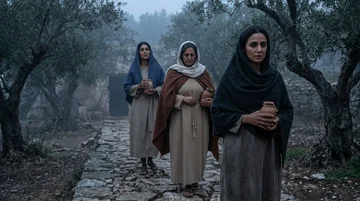
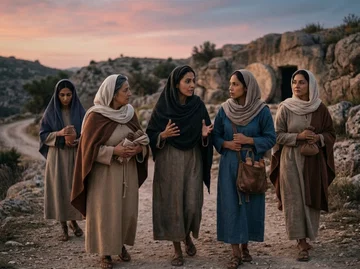
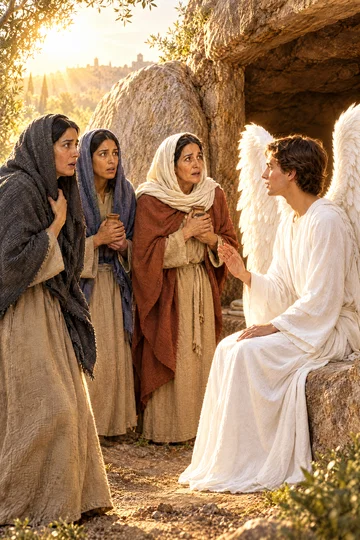
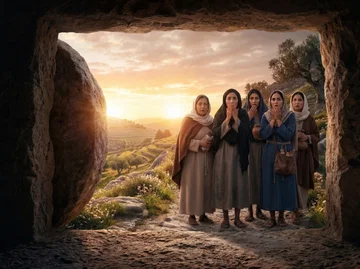
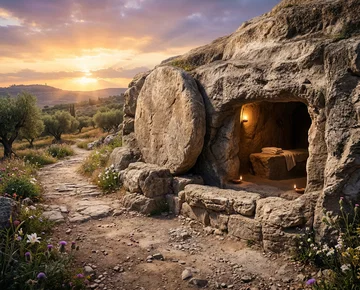
Now upon the first day of the week, very early in the morning, they came unto the sepulchre, bringing the spices which they had prepared, and certain others with them.
Translations
Now on the first day of the week, very early in the morning, they came to the sepulcher, bringing the spices which they had prepared, and certain others with them.
King James Version, KJV Cambridge Paragraph Bible
Now upon the first day of the week, very early in the morning, they came unto the sepulchre, bringing the spices which they had prepared, and certain others with them.
Now upon the first day of the week, very early in the morning, they came to the sepulcher, bringing the spices which they had prepared, and certain others with them.
Revised Version, American Standard Version
But on the first day of the week, at early dawn, they came unto the tomb, bringing the spices which they had prepared.
And on the first of the sabbaths, at early dawn, they came to the tomb, bearing the spices they made ready, and certain [others] with them,
But on the morrow of the sabbath, very early indeed in the morning, they came to the tomb, bringing the aromatic spices which they had prepared.
but, on the first day of the week, at early dawn, unto the tomb, came they, bringing the spices which they had prepared.
On the first day of the week, very early in the morning, the women came to the tomb, bringing the spices they had prepared.
On the first day of the week, very early in the morning, they and certain other women with them came to the tomb, bringing the spices they had prepared.
But on the first day of the week, at early dawn, they and some others came to the tomb, bringing the spices which they had prepared.
But on the first day of the week, at dawn, they came to the place where his body had been put, taking the spices which they had got ready.
Nowe the first day of the weeke early in the morning, they came vnto the sepulchre, and brought the odours, which they had prepared, and certaine women with them.
Douay-Rheims (Challoner revision)
And on the first day of the week, very early in the morning, they came to the sepulchre, bringing the spices which they had prepared.
Pictures
Cross-references 20 of 71
- Luke 23:56
And they returned, and prepared spices and ointments; and rested the sabbath day according to the commandment.
The women rested on the Sabbath before coming to the tomb with spices.
- Matthew 28:1
In the end of the sabbath, as it began to dawn toward the first day of the week, came Mary Magdalene and the other Mary to see the sepulchre.
Both describe the women coming to the tomb at dawn on the first day after the Sabbath.
- Mark 16:1-2
And when the sabbath was past, Mary Magdalene, and Mary the mother of James, and Salome, had bought sweet spices, that they might come and anoint him.
The women bring spices to Jesus’ tomb early on the first day after the Sabbath.
- John 20:1
The first day of the week cometh Mary Magdalene early, when it was yet dark, unto the sepulchre, and seeth the stone taken away from the sepulchre.
A parallel account of Mary’s early visit to the tomb on the first day of the week.
- Mark 16:9
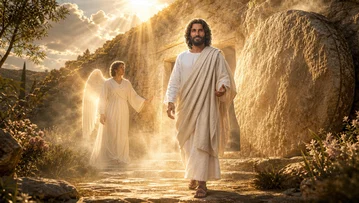
Now when Jesus was risen early the first day of the week, he appeared first to Mary Magdalene, out of whom he had cast seven devils.
Places Jesus’ resurrection and appearance to Mary Magdalene on the first day of the week.
- John 20:19
Then the same day at evening, being the first day of the week, when the doors were shut where the disciples were assembled for fear of the Jews, came Jesus and stood in the midst, and saith unto them, Peace be unto you.
Jesus appears to the disciples that evening on the first day of the week.
- Acts 20:7
And upon the first day of the week, when the disciples came together to break bread, Paul preached unto them, ready to depart on the morrow; and continued his speech until midnight.
Both texts describe events on the first day of the week.
- 1 Corinthians 16:2
Upon the first day of the week let every one of you lay by him in store, as God hath prospered him, that there be no gatherings when I come.
Both use the same Greek phrase for the first day of the week.
- Luke 24:13-35
And, behold, two of them went that same day to a village called Emmaus, which was from Jerusalem about threescore furlongs.
The Emmaus encounter and return to Jerusalem take place on resurrection day.
- Mark 16:1
And when the sabbath was past, Mary Magdalene, and Mary the mother of James, and Salome, had bought sweet spices, that they might come and anoint him.
Both accounts describe the women bringing spices to the tomb after the Sabbath.
- Luke 23:54
And that day was the preparation, and the sabbath drew on.
Marks the preparation day before the Sabbath that precedes the women’s visit.
- Luke 24:6
He is not here, but is risen: remember how he spake unto you when he was yet in Galilee,
The angels announce that Jesus is risen and no longer in the tomb.
- John 20:26
And after eight days again his disciples were within, and Thomas with them: then came Jesus, the doors being shut, and stood in the midst, and said, Peace be unto you.
Jesus appeared to the disciples again after eight days, with Thomas present.
- Mark 16:11-14
And they, when they had heard that he was alive, and had been seen of her, believed not.
The disciples disbelieve reports that Jesus has risen, and Jesus rebukes them.
- Matthew 12:40
For as Jonas was three days and three nights in the whale’s belly; so shall the Son of man be three days and three nights in the heart of the earth.
The three-day saying is harmonized with Luke’s account of the tomb visit and resurrection.
- Luke 24:21
But we trusted that it had been he which should have redeemed Israel: and beside all this, to day is the third day since these things were done.
The disciples say it was the third day since Jesus’ crucifixion.
- Mark 15:42
And now when the even was come, because it was the preparation, that is, the day before the sabbath,
Identifies the day of Jesus’ death as the preparation day before the Sabbath.
- John 19:31
The Jews therefore, because it was the preparation, that the bodies should not remain upon the cross on the sabbath day, ( for that sabbath day was an high day,) besought Pilate that their legs might be broken, and that they might be taken away.
The Sabbath after the crucifixion precedes the women’s first-day visit.
- Matthew 27:66
So they went, and made the sepulchre sure, sealing the stone, and setting a watch.
The tomb was sealed and guarded before the women came at morning.
- Matthew 28:2-4
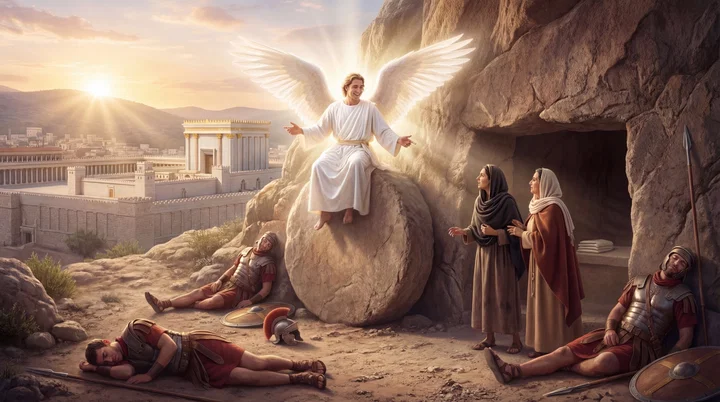
And, behold, there was a great earthquake: for the angel of the Lord descended from heaven, and came and rolled back the stone from the door, and sat upon it.
An angel rolls away the tomb’s stone before the women’s visit, and the guards fall in fear.
Commentary part 1 of 2
Each commentary is drawn from primary sources: the writings of Ellen G. White and Adventist pioneers and periodicals. Each commentary is separate. Its own words are not a quotation; follow the references to read the source passages.
Ellen G. White
17 sources
Very early on the first day of the week, after resting through the Sabbath hours according to the commandment, the women who had stood by the cross came with certain others to the tomb bringing sweet spices they had prepared to anoint the body and finish its burial.Lt 163, 1904, par. 4–73SP 198.2DA 788.1ST Dec 14, 1882EW 153.2–154.1 They came grieving with no thought that He would rise, wondering who would move the heavy stone for them, and found it already rolled away and the tomb open and empty except for the burial cloth, which sank their hearts with fear that enemies had taken Him.3SP 198.2DA 788.1ST Dec 14, 1882DA 788.2–3Ms 94, 1897, par. 22–23 Two angels in shining white who knew their errand showed them where He had lain, told them He was risen, and sent them to tell the disciples He would go before them into Galilee, and that same morning the women also met Jesus Himself alive.EW 153.2–154.1SG1 71.2DA 795.1 The day named is Sunday, the day of His resurrection, not the seventh-day Sabbath, and it is not called the Sabbath or the Lord's day and does not make the first day sacred.DA 842.2–8Lt 163, 1904, par. 4–7 He was not left in the grave to decay but came forth a mighty Conqueror as the resurrection and the life, yet the day of rejoicing was to some a day of perplexity and hopelessness because the disciples doubted the report of angels and of seeing Him alive, showing faith weakened by doctrines that cast doubt on the resurrection, while His suffering and rising opens forgiveness and sanctification to repentant believers who come to the Father through faith in Him and sends His followers as Spirit-empowered witnesses to carry the gospel from their own community to all nations.Lt 100, 1910, par. 18Ms 113a, 1897, par. 1Ms 113, 1897, par. 1Ms 203, 1898, par. 9Ms 83, 1910, par. 33–34
The Morning at the Tomb
Very early on the first day of the week, while it was still dark, the women came to the sepulchre after waiting for the Sabbath hours to pass and after resting on the seventh day according to the commandment.Lt 163, 1904, par. 4–73SP 198.2DA 788.1EW 153.2–154.1SG1 71.2 They brought the spices they had prepared before the Sabbath, prepared the day before the Sabbath, to anoint his body.3SP 198.2DA 788.1ST Dec 14, 1882EW 153.2–154.1 The holy women who had stood by the cross came with certain others, with other women with them, bringing sweet and precious spices to anoint the Saviour's body and to continue the burial work.ST Dec 14, 1882EW 153.2–154.1SG1 71.2Ms 94, 1897, par. 22–23
They came grieving without any thought or expectation that he would rise from the dead.DA 788.1DA 788.2–3Ms 94, 1897, par. 22–23 The sun of their hope had gone out in darkness and night had settled on their hearts, and as they walked they recounted his works of mercy and his words of comfort instead of remembering his promise that he would see them again.Ms 94, 1897, par. 22–23 Grieving and unaware of what was happening, they wondered as they walked who would roll away the stone, which they could not move themselves.DA 788.2–3Ms 94, 1897, par. 22–23
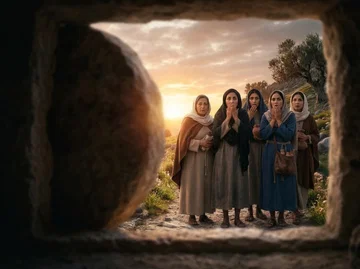
As they approached the earth trembled and they found the heavy stone rolled away from the door, the tomb open and empty with the body gone.3SP 198.2ST Dec 14, 1882EW 153.2–154.1SG1 71.2 Only the burial cloth was left, and the disciples later testified that they found the burial cloth but not Jesus.Ms 203, 1898, par. 9 Their hearts sank and they feared enemies had taken the body.SG1 71.2
Two angels in bright shining white apparel who knew their errand stood by them.SG1 71.2 They showed them the place where he lay, told them they were seeking Jesus but he was not there because he had risen, and sent them to tell the disciples he would go before them into Galilee.EW 153.2–154.1SG1 71.2 The women who came to the tomb very early also saw angels and met Jesus himself, and that same morning the news of the removed body with their report of angels spread in Jerusalem, so that by late afternoon two earnest believers who had come to the city to keep the Passover had heard both the removal and the women's testimony yet remained perplexed.SG1 71.2DA 795.1ST Jul 29, 1908
Resurrection, Sabbath, and Mission
The verse names the day as the first day of the week, which is Sunday and the day of Christ's resurrection, coming after rest on the seventh day according to the commandment, and it is not the seventh-day Sabbath.DA 842.2–8Lt 163, 1904, par. 4–7 It does not call that day the Sabbath, the Lord's day, or a sacred day, nor does it establish sacredness for the first day.DA 842.2–8
The verse opens the account of Christ's resurrection as fact, for He was not left in the grave and His body did not decay.Ms 203, 1898, par. 9Ms 83, 1910, par. 33–34 Angels from heaven rolled back the stone, life from heaven came to Him, and He walked forth a mighty Conqueror proclaiming Himself the resurrection and the life.Ms 83, 1910, par. 33–34 He remains a living Saviour with the same power still.Ms 83, 1910, par. 33–34 The disciples afterward testified that they found the burial cloth but not Jesus, and that they had seen and spoken with Him.Ms 203, 1898, par. 9
That morning held everything to fill hearts with rejoicing, yet to some it became not a day of joy but a day of uncertainty, confusion, perplexity, hopelessness, and disheartenment.Ms 113, 1897, par. 1DA 795.1 The women brought tidings that angels had appeared affirming He had risen and that they themselves had seen Jesus alive in the garden, but the disciples doubted their testimony.Ms 113a, 1897, par. 1Ms 113, 1897, par. 1 Their unbelief showed how weak their faith had become, for influenced by Sadducean doctrines and theories casting doubt on resurrection they scarcely understood what rising from the dead meant.Ms 113a, 1897, par. 1 The report of the removed body with the testimony about angels spread in Jerusalem that same morning, so that by late afternoon two earnest believers who had come to the city to keep the Passover had heard it yet remained perplexed, disheartened, hopeless and faithless.DA 795.1
The chapter to which the verse belongs presents that through His suffering and death He made salvation possible for repentant and converted people who come to the Father through faith in Him.Lt 100, 1910, par. 18 Those who trust Him and follow His example receive assurance of forgiveness and may be sanctified through belief in the truth.Lt 100, 1910, par. 18 His followers are given work to do, for after receiving the Holy Spirit they are to bear witness to the gospel and carry its light from their own community to all nations.RH Jan 26, 1905 That mission of the disciples is a model for believers today, who are to proclaim present truth with compassion and zeal so that people in darkness may hear and be saved.RH Jan 26, 1905
Sources
Pioneers and periodicals
375 sources
Very early on the first day of the week the women came to the sepulchre bringing the spices they had prepared, with certain others with them.ST Nov 11, 1889ST May 24, 1883 They came to finish anointing His body and found the stone rolled away and the tomb empty, for Jesus had already risen.ST Nov 8, 1905ST Oct 21, 1886ST Sep 6, 1910 That first day came immediately after the Sabbath kept according to the commandment, proving the commanded Sabbath is the seventh day distinct from and the day before the first.ST May 24, 1883ST Sep 16, 1880RH Dec 24, 1861 The verse gives the first day no sacred title, sanctification, or command to keep it holy in honor of the resurrection.ST Nov 8, 1905ST Sep 6, 1910 The women had rested on the Sabbath and resumed work on the first day, showing they regarded it as an ordinary working day and knew nothing of any holiness attached to it.ST Apr 29, 1913RH Jul 25, 1912ST
Wording and Translation
The Greek behind the phrase is mia sabbaton, where mia meaning one or first is feminine and agrees with the understood feminine hemeran for day, while sabbaton is neuter genitive plural, and the whole means the first day of the week.RH Jan 2, 1900RH Nov 28, 1871RH Dec 17, 1908ST Apr 3, 1879RH Nov 28, 1871 The word for first modifies the understood word day, and the plural Sabbaths means week.RH Jan 2, 1900RH Nov 28, 1871RH Nov 28, 1871 The day is identified by its place in the week, and the same form is used as in Acts 20:7.RH Nov 28, 1871RH Nov 28, 1871
The plural sabbata or sabbaton can mean week as the interval from Sabbath to Sabbath, by metonymy because the Sabbath is the principal day, and with a numeral it means week, so week rather than Sabbaths is the correct rendering.ST Mar 24, 1887RH Nov 28, 1871RH Sep 25, 1856RH Oct 9, 1860RH Jan 28, 1862 The Greek word rendered week is Sabbaton, but it refers to the seven-day period, not to the whole phrase as a name for a Sabbath, and the numeral first marks the first day within it.RH Sep 25, 1856RH Oct 9, 1860RH Jan 28, 1862ST May 15, 1884 In this plural form it marks the first day of the week.RH Jan 28, 1862ST May 15, 1884
The wording follows the ancient Hebrew manner of numbering days with the cardinal one rather than the ordinal first, as first, second and so on of the week, matching the Septuagint hemera mia of creation.RH Jun 24, 1915RH Oct 23, 1913RH Jan 29, 1867RH Mar 23, 1905RH Jan 2, 1900 Old Syriac speech centuries before Christ counted Sunday through Thursday as numbered days toward the Sabbath and called Saturday the Sabbath, with Sunday through Thursday as numbered days of the Sabbath or week and Saturday as the Sabbath, and the week traces to divine institution at creation.RH Jun 24, 1915RH Oct 23, 1913RH Jan 29, 1867 The calendar language then used called this day one of the week while the seventh day was called the Sabbath, and first of the week reflects the Hebrew way of naming days as first, second and so on, where the word for one could also mean first.RH Dec 17, 1908RH Mar 23, 1905RH Jan 2, 1900 The singular sabbaton can denote the week, as when fasting twice in the week is spoken of, while the plural sabbata can denote the Sabbath day, and sabbaton can mean either Sabbath or week.RH Jun 24, 1915RH Jan 29, 1867
The choice of one instead of first carries no peculiar significance, needs no explanation, and is simply the ordinary Jewish phrase to designate time, as Sabbath is often used to mean week.RH Jan 2, 1900RH Jan 2, 1900 It is an ordinary phrase used simply to designate the time of an occurrence.RH Jan 2, 1900
The phrase is correctly translated the first day of the week, not the first-day Sabbath, and the claim that it means first-day Sabbath identifying the resurrection day is rejected.ST May 15, 1884ST May 15, 1884ST Aug 16, 1905RH Apr 12, 1906 Rendering it Sabbath in some Swedish Bibles is error, as other Swedish translations and the English translation show, and major commentators and English and American Bible revisers accepted first day of the week.ST May 15, 1884ST Jan 9, 1879ST Aug 16, 1905 It is one of the resurrection accounts in which Greek Sabbatone or mian sabbaton is translated the first day of the week, not the Sabbath.ST May 15, 1884ST May 15, 1884ST Aug 16, 1905
It is disputed that one of Sabbaths identifies the first day of the week, without offering a different explanation of the timing.RH The verse is one of eight New Testament expressions containing sabbaton for first day of the week, though Sabbath does not appear in English here, the Greek wording containing sabbaton, the word translated Sabbath elsewhere.RH Jan 30, 1866 Its mention of the first day does not identify it as God's creation rest day, which was the seventh day of the original week.ST Apr 24, 1879
Those who held for a change render the wording the first of Sabbaths to mark the end of seventh-day Sabbaths given to Israel and the beginning of another series of Sabbaths of Jesus Christ.ST Mar 24, 1887RH May 31, 1864 In that teaching the Greek word behind week is Sabbaton in plural form with the definite article the before Sabbaths, meaning in the first of the Sabbaths, where one series ended the other began.ST Mar 24, 1887RH May 31, 1864 This change of Sabbaths was marked by the veil of the temple rent in twain, the middle wall of partition between Jews and Gentiles broken down so both were made one, death abolished and life and immortality brought to light through the gospel, saints begotten again unto a lively hope by the resurrection of Jesus Christ from the dead, the living Jesus victor over death and the grave, and old things passed away with all things become new.RH May 31, 1864
The weight of teaching denies that a new order of Sabbaths began or that the day was made a Sabbath or first of a new series.ST Mar 24, 1887RH Nov 28, 1871ST Sep 23, 1897RH Jun 4, 1908ST Mar 24, 1887 The Greek word rendered week here refers to the interval from one Sabbath to the next and to the seven-day period, not to the Sabbath day, the Sabbath being the crowning day of that period, and the wording gives no evidence that Sunday was a Sabbath when Jesus rose.ST Mar 24, 1887RH Nov 28, 1871 It does not mean one of the sabbaths or first-day sabbath, does not call the first day the Sabbath, a sacred day, or a worship day, and does not say that the old series ceased and a new series began nor that Christ rose on one of the Sabbaths of the Passover week.ST Sep 23, 1897RH Jun 4, 1908
It is claimed by others that the Greek lacks the word for week and calls the day the first of the sabbaths, declaring the first day to be the first Sabbath given to humanity that should be called a Sabbath rather than the first day of the week.ST Oct 21, 1889ST Apr 15, 1897 On that account the resurrection day is known in the Gospels as the Sabbath, and the English translation is said to wrongly name the day.ST Oct 21, 1889ST Apr 15, 1897 It is claimed that every instance rendered first day of the week reads first Sabbath meaning the Christian Sabbath, proving a first-day Sabbath originated with Christ and the apostles, with each evangelist using it at the resurrection to establish it in the whole church when Greek was the prevalent language.RH Jul 24, 1866RH Dec 5, 1871 In that claim all eight places honor the first day with the sacred title of the Sabbath, calling it the first-day Sabbath at the very time of resurrection at the beginning of the present dispensation.RH Jul 24, 1866RH Dec 5, 1871
It is claimed the verse calls the first day the first sabbaton with the same word used for the Sabbath, applying the Sabbath name to the first day in every New Testament mention of the first day beginning after the resurrection, and identifying that resurrection day with the Sabbath.ST May 15, 1884RH Jan 23, 1866 It is argued the Greek means the first day of the sabbaths to assert the resurrection day was the Christian Sabbath and English translators rendered it incorrectly.RH Aug 10, 1905 The literal the one of the Sabbaths is argued to call the first day Sabbath or rest because it uses the identical word rendered Sabbath for the seventh day said to signify rest, with nothing else except the Lord's day, as te de mia toon sabbaton, the one of the Sabbaths.RH Mar 15, 1860RH
Grammar forbids rendering mia as one of a new series of Sabbaths introduced at the resurrection, since mia cannot agree with neuter sabbaton; mia is feminine and agrees with hemeran, day, understood, which is feminine and completes the sense.RH May 31, 1864RH Jun 4, 1908ST Mar 24, 1887 The numeral mia, meaning one or by Hebrew idiom first, stands with sabbatou to give plainly first day of the week, and the common version is correct, the Greek possessive construction expressing the Hebrew-based way of numbering days from Sabbath toward the next Sabbath.RH May 31, 1864RH Jun 4, 1908ST Apr 15, 1897 Nor does it mean one of the Passover-week Sabbaths or first-day sabbath, nor that the old series ended, those renderings being inventions to escape the claims of the fourth-commandment Sabbath.ST Sep 23, 1897RH Jun 4, 1908ST Mar 24, 1887
The verse does not confer the Sabbath title on the first day, for the resurrection did not occur until after that day had begun, coming very early immediately after the seventh-day Sabbath observed according to the commandment after the crucifixion.RH Dec 5, 1871 To call it a Sabbath would make two weekly Sabbaths come together with the new beginning the moment the old ended before the old was abolished.RH Dec 5, 1871
Timing and Circumstances
Very early in the morning on the first day of the week the women came to the sepulchre bringing the spices which they had prepared, with certain others with them, at dawn at break of day.ST Nov 11, 1889ST May 24, 1883ST Sep 16, 1880ST Oct 20, 1914 Their visit followed rest on the Sabbath according to the commandment, coming after the preparation day and after the Sabbath was past, and the day after that Sabbath rest was the first day of the week.ST May 24, 1883ST Sep 16, 1880ST Oct 20, 1914ST Aug 22, 1916 The visit was on Sunday morning, April 9, A.D. 30, very early at dawn while it was yet dark as it began to dawn.ST Oct 21, 1886 As they came they asked who would roll away the exceeding great stone, and looking up saw it rolled back, the exceeding great stone rolled away from the tomb.ST Oct 21, 1886
Very early means deep twilight at break of day when the sun was about to rise but had not risen, while still dark so objects were obscure and not distinctly visible.RH Oct 4, 1864 The arrival was at dawn beginning the first day, not at the end of the Sabbath, after the Sabbath had ended.ST Nov 15, 1910RH Apr 23, 1861RH Jan 2, 1900 The first day had already begun while it was still dark.RH Apr 23, 1861 The women came bringing the spices they had prepared and certain others with them, coming as a group while Mary Magdalene reached the tomb before the others.ST Aug 8, 1906ST Dec 14, 1882ST Jan 25, 1910 Their coming to the tomb on the first day did not change the Sabbath and gives no proof of a change from the seventh day to the first.ST Aug 8, 1906ST Jan 25, 1910
The women came bringing the spices prepared on the evening of Christ's burial, and certain others were with them.RH Jun 12, 1855 They had bought and prepared spices and ointments in the last three hours of the sixth day but lacked time to apply them to the body before the Sabbath, so they put them aside and rested on the Sabbath according to the fourth commandment and then came very early on the first day to anoint Him.RH Apr 7, 1851RH Apr 7, 1851 Friday when He suffered on the cross was the first day, the holy Sabbath was the second day, and the first day of the week was the third day on which He rose, proving the crucifixion was the day before the holy Sabbath and the resurrection the day following it and refuting the claim that Monday is the first day.RH Apr 7, 1851 There were three hours after His three o'clock death for burial and for preparing spices before the Sabbath began.RH Apr 7, 1851 The spices had been prepared before the Sabbath and the women came with others to continue the burial work.ST Dec 14, 1882RH Sep 26, 1907 As they approached the earth trembled and the tomb was found open and empty.ST Dec 14, 1882
The body had been begged from the governor by two wealthy men, wrapped in a linen cloth with a hundred pounds of aloes, myrrh and other spices, laid in the rich man's rock-hewn tomb and closed with a great stone officially sealed with the government seal.ST Apr 8, 1903 The visit to the tomb was very early on the morning of the first day, after the Sabbath day had waned to its close and the night of the first day was well nigh gone, just as morning was about to break.ST Apr 8, 1903 Very early on the first day the women came to anoint His body and continue the burial work, carrying spices they had prepared.ST May 19, 1909ST Jul 22, 1897RH May 12, 1874RH Feb 6, 1879RH Sep 26, 1907 The preceding Sabbath was the Sabbath commanded in the law, the Sabbath according to the commandment, and the first day followed it and came after that rest.ST Jul 22, 1897RH May 12, 1874ST Sep 17, 1902 The verse calls the day simply the first day of the week, not a Sabbath, and assigns it no sacred status.RH Feb 6, 1879
Three women, the two Marys and Salome, crept at break of day to Joseph's tomb and garden each bearing fragrant store from India to Arabia and costly nards from Jerusalem's costliest marts to imbue the dead sepulchre through and through with vital odors, which was all their sorrow-riven love had leave to do.ST Aug 26, 1880 Christ did not need their gifts, leaving the aloes unused, yet neither Mary regretted her offering and Salome did not fret over it, for they did not count as waste what they had brought their Lord.ST Aug 26, 1880 The way home seemed the path to heaven, bearing thenceforth about the robes they wear the clinging perfume everywhere.ST Aug 26, 1880 The verse is one of four distinct records of the same visit at the same time and hour with Matthew 28:1, Mark 16:1-2, and John 20:1, whose only common fact about the first day is that the women came that morning with prepared spices and others with them after the Sabbath was past.ST Nov 18, 1886ST Nov 18, 1886 There is nothing in it to base keeping the first day holy or regarding it as the Sabbath, and no word that anyone kept it for any sacred or religious purpose.ST Nov 18, 1886ST Nov 18, 1886
The time agrees with Mark 16:1,2 on the dawn visit, and with Matthew 28:1 as dawn toward the first day after the Sabbath when read with the making sure of the sepulchre and the Roman sealing and watch.ST Feb 8, 1905ST Oct 17, 1906ST Matthew 28:1 begins with the dawning toward the first day when the words about the end of the Sabbath are read with the making sure of the sepulchre in Matthew 27:66, in harmony with the account that the Roman authorities sealed the stone and set a watch at the end of the Sabbath.ST Feb 8, 1905ST The verse places the women's visit very early on the first day by contemporary reckoning, though this did not make it the seventh reckoned from creation.RH Aug 14, 1860 The passage including the verse places Jesus' resurrection in A.D. 31, the same year as His crucifixion and ascension.ST Sep 22, 1909
Under Bible reckoning the day begins the evening before, so the first day begins on what is commonly called Saturday night after the Sabbath, from Saturday sunset to Sunday sunset.ST Apr 13, 1904RH Dec 15, 1863 The women's coming very early after resting shows the Sabbath had ended at sunset and a new day had begun, establishing sunset as the time for beginning and ending the Sabbath.RH Dec 15, 1863 Counted from Saturday sunset to Sunday sunset, the first day was treated as a working day, for Christ's followers came to the tomb early that morning with spices. Their arrival at dawn does not mean the Sabbath ended at dawn; the Sabbath ended at sunset and the visit took place later on the first day, after the Sabbath had passed.ST Dec 2, 1913 The Bible first day runs from sunset Saturday to sunset Sunday, so it is not identical to secular Sunday; if sacred, the whole sunset-to-sunset period must be observed.ST
The day is argued to begin in the morning about daybreak or sunrise, but that morning beginning is indefinite and gives no exact time, while sunset is definite and better.RH Dec 15, 1863 Sunset reckoning is at least as old, was found among the Jews, and dates to creation week, because God told the Jews to keep the Sabbath of Leviticus 23:26-32 from evening to evening as God kept the first Sabbath.RH Dec 15, 1863 The day had two evenings: the first began at about three o'clock and the second was sunset.ST Mar 24, 1909 The disciples gathered in Jerusalem near the close of the first day, but Jesus met them only after the second day had begun.ST Mar 24, 1909 The timing treats the resurrection day as a definite twenty-four-hour Sunday and is used as a chronological point for counting days from creation.RH Apr 14, 1874ST Jun 12, 1879
Resurrection Morning Account
Luke 24:1 describes the women coming to the tomb at early dawn on the first day of the week with the spices they had prepared, and places their visit on the day Jesus rose, recording an event of that day while giving no indication the day was sacred or set apart for worship.ST Nov 8, 1905ST Oct 21, 1886ST Sep 6, 1910RH Jun 23, 1863ST Feb 15, 1910 It identifies the first day of the week, Sunday, Sunday morning April 9, A.D. 30, very early at dawn while yet dark as it began to dawn, as the day of the resurrection and the morning the tomb was found empty, the day after the weekly Sabbath.ST Oct 21, 1886RH Jan 10, 1871ST Oct 14, 1913RH Apr 4, 1907 Mary Magdalene and the other Mary came to see the sepulcher, with Mary Magdalene reaching it before the others, and as they came they asked who would roll away the exceeding great stone, and looking up saw it rolled back from the tomb.ST Oct 21, 1886ST Jul 21, 1909RH Oct 21, 1873
Christ was already gone when they arrived, having risen early that day before their very early visit, and the resurrection occurred before their arrival without transferring the Sabbath or appointing the day for worship.ST Feb 8, 1905ST Nov 24, 1914ST Jan 1, 1894 The verse records only that they came and He was already gone, not that He rose at the moment they came, and it does not state the exact time He rose or how long He had been gone.RH Jan 17, 1856RH Oct 7, 1873ST Apr 13, 1882ST Mar 16, 1882 It places the discovery of the resurrection on the first day, when the women first came bringing spices to embalm Him and learned He was risen, while those who hold the narrower reading teach it does not say Jesus was raised on that day.RH May 12, 1874RH Feb 13, 1866 The timing shows He did not rise on Sabbath evening, for the tomb had been sealed and guarded during the Sabbath and the women came early the next morning with spices.ST Jul 30, 1912
Coming to anoint Him, they found the stone rolled away, entered and found not the body of the Lord Jesus, and in perplexity were met by two men in shining garments declaring He is not there but risen and reminding them the Son of man must be delivered into sinful men's hands and be crucified and rise the third day.ST Apr 3, 1901RH Jun 6, 1865RH Nov 21, 1854 Because burial preparations could not be completed before the Sabbath they wondered who would move the stone but found it already rolled away, and angels announced the crucified Jesus had risen, reminded them He had foretold death and resurrection on the third day, and told them to report to the disciples and Peter that He would meet them in Galilee. After the Sabbath had waned and the night of the first day was well nigh gone at breaking morning, a mighty messenger cleft the sky, lit the gloom with glory, smote the Roman guard by holiness of presence, and by the Most High's authority called, Son of God, Thy Father calls Thee, and Jesus who died a victim came forth conqueror over sin and death for you and for me.ST Apr 8, 1903
The visit occurred very early on the third day after His death and was met by triumphant resurrection in which an angel rolled away the stone and announced the Father's call and Jesus rose never to die again, victorious over death and the grave, making resurrection of the dead possible, as death came through Adam so resurrection comes through Christ each in its own order.RH Sep 16, 1915 Mary came weeping looking for her Lord and found He was not there because He had risen, an angel having rolled away the stone and two men in shining raiment sitting within, and the answer that Jesus lives is to be told to John and Peter and preached to every nation to dying men, because the crucified One rose as the Son of God and will come again to take His people home.RH Dec 5, 1865 They remembered His words and told these things to the eleven, to whom it seemed as idle tales, and Cleopas going to Emmaus that same day confirmed the timing by declaring that day was the third day since these things were done.RH Jun 6, 1865
Early on the third morning the women carrying spices to embalm Him showed they did not expect Him to rise, and astonished to find the stone rolled away and the tomb empty, Mary still believed His body had been taken until Jesus revealed Himself to her.RH Oct 21, 1862 They found the tomb open and Jesus gone without witnessing the resurrection itself, for the angel's arrival and heavenly command to rise were witnessed by the Roman guards, not by the women, disciples, or mother.ST Feb 7, 1911 They found the body gone, reported angels said He was alive, later reported they had seen Him risen, and in Luke 24:1-12 went to anoint Him, found it empty, spoke with an angel, saw the risen Lord, and spread the report, while the disciples were astonished rather than expectant, showing they did not yet understand His death and resurrection as God's redemption plan.ST Dec 3, 1874ST Feb 7, 1911ST Mar 8, 1905
The women, including His mother, bringing expensive spices and myrrh at cost and spending time and scant money to gather them, proves they had no concerted plan to steal the body, knew nothing of its disappearance, and were genuinely surprised to find it empty.ST Aug 12, 1880 Their devotion led them to go despite the sealed tomb and stone, they were the first to see the risen Jesus, and their loving act shows tender promptings of love deserve to be followed. Their visit led to the angels' announcement and commission to carry the news to the sorrowing disciples, and this personal resurrection message was a shower of blessing preparing the disciples for the Pentecostal baptism.ST Nov 11, 1908 The early visit was part of the reports brought to the two disciples journeying to Emmaus and which amazed them.ST Apr 4, 1900
By the very close of that same first day it was the third day since those things were done, including sufferings and betrayal as well as crucifixion, and after three days and in three days and three days and three nights and on the third day are used generally and do not mean exactly seventy-two hours, for day and night was a Jewish expression for a day counting part of a day as a day.ST Apr 2, 1912ST Jul 25, 1911ST Sep 25, 1893 So the period could include parts of the sixth and first days and the whole Sabbath, with Jesus resting in the tomb on the Sabbath and rising in the middle of the third day, and in that reckoning the heart of the earth does not mean the grave.ST Apr 2, 1912ST Jul 25, 1911ST Sep 25, 1893 The women found Christ had risen on the first day regardless of which day He was crucified or buried.RH Feb 13, 1866
The verse establishes that Christ rose on the first day as now reckoned, providing the point from which the preceding day identified as the Sabbath according to the commandment can be recognized as the seventh day.RH Nov 9, 1869 Scripture states directly that Christ rose on the first day and nowhere says He rose on any other day, so any other view rests on inference, and even if the first day rested on inference it has at least an equal claim.RH Feb 6, 1866 The empty tomb proves the identical personage laid in the tomb arose, that Christ died a literal death of the whole man with no soul or spirit surviving apart, and that after resurrection He is the same bodily being with flesh and bones.RH Nov 21, 1854
The resurrection is a fact established by what happened at the grave and by Christ's appearances, not merely a belief that death is vanquished, for the grave was the place of literal rising and the truth that He had risen must be defended as fact.ST Jan 25, 1905 The verse belongs to the Gospel record of Jesus' bodily resurrection to be accepted or rejected as part of Luke's testimony, Luke not being an eyewitness and probably receiving the events through Peter, with differences among Gospels not by themselves making them contradictory.ST Mar 5, 1912RH Jan 1, 1914 With the following verses it is connected with the claim that Jesus was restored to bodily life and walked out of the tomb, contrasted with the claim that He later died naturally and only His spirit ascended.RH Sep 8, 1853
The verse belongs to the morning's news that His body had been removed, with the women reporting angels and meeting Jesus, which revived the hopes of disciples cast down by the unexpected crucifixion.ST Jul 29, 1908ST Feb 9, 1882 The passage presents Jesus' resurrection as the assurance of the Gospel hope that the dead will rise, for without it faith would be vain and those who died in Christ would have perished.ST Jun 26, 1901 Calvin's commentary on the resurrection record does not identify the first day as sacred or as a day for commemorating the resurrection.ST Jan 2, 1879 The events later that day, including the journey to Emmaus and the disciples' meeting with Jesus, occurred near the day's close and may have extended into the second day.RH Feb 25, 1862
Sabbath Before First Day
Luke 24:1 belongs to a consecutive three-day record in which Christ was crucified on the preparation day, rest was kept on the Sabbath the next day, and the visit to the tomb with prepared spices came very early on the first day of the week when the Sabbath was past.ST May 24, 1883RH Jun 23, 1863RH Apr 7, 1851 With the verses before it the order is the preparation day which was the sixth day, next the Sabbath day according to the commandment, and next the first day when the women came with spices, and this inspired language proves the weekly days had not been lost and the Sabbath kept at Christ's death was the Sabbath enjoined in the commandment, the same day on which God rested. The first day came immediately after the Sabbath kept according to the commandment, proving the commanded Sabbath is the seventh day, the day before the first day, distinct from the first day and not Sunday.ST May 24, 1883ST Sep 16, 1880RH Dec 24, 1861ST Sep 2, 1889RH Jun 23, 1863
That Sabbath kept even after the resurrection was the seventh day, the last day preceding the first and not the first itself, and the New Testament week follows the same order as the Old, showing the first day was already known at the beginning of the Christian era and the resurrection day was called the first, not the seventh.RH Dec 16, 1915RH May 5, 1874RH Apr 7, 1868ST Feb 13, 1893 The visit followed the women's rest on the Sabbath according to the commandment, the preceding Sabbath was the Sabbath of the law, and the first day followed it with no intervening day, as the third day in order after the preparation day and the Sabbath.RH Mar 11, 1862ST Jul 22, 1897RH May 12, 1874ST Sep 17, 1902RH Sep 26, 1907 The day after the Sabbath when Jesus lay in the grave was the first day, fixing the order as crucifixion on Friday, rest in the grave on the Sabbath, and resurrection and return to work on the first day, which proves the Sabbath of Luke 23:54 was the seventh-day Sabbath and not the ceremonial sabbath of the feast, and supports that Jesus rose on Sunday.ST Apr 2, 1912RH Oct 14, 1915ST Jul 25, 1911
Friday of the crucifixion was counted the first day, the holy Sabbath the second, and the first day of the week the third on which He rose, which refutes the claim that Monday is the first day.RH Apr 7, 1851 The first day is the third day in order after the preparation day and the Sabbath according to the commandment, and the preparation day is the day before the Sabbath, the day Christ was crucified and buried, the day directed for baking and seething and preparing for holy Sabbath rest. Since every week has seven days and no more, the seventh day of one week must immediately precede the first day of the next, therefore the Sabbath kept according to the commandment was the seventh day, resting on God working six days and resting the seventh of the first week when no cycle but the week existed.ST May 25, 1882
The verse thereby distinguishes the first day from the Sabbath, showing the first day followed the Sabbath and therefore was not the seventh day.ST Oct 2, 1893ST Aug 27, 1885RH Dec 21, 1869ST Jul 26, 1883 The Sabbath was the day before the first day, which immediately follows it in weekly sequence, and the first day is distinct from and follows the seventh-day Sabbath, which is the last day of the week.ST Mar 20, 1893ST Jun 12, 1879ST Jan 24, 1884RH Oct 23, 1856RH Jun 27, 1878 With Luke 23:54-56 the day before the first day was the Sabbath observed according to the commandment, and the day after that Sabbath was the first day, confirming the Sabbath was the seventh day immediately before the first.RH Sep 1, 1910ST Apr 4, 1906
Together with the preceding verses the Sabbath rest according to the commandment came before the visit and supports the distinction between the Sabbath and the first day, showing the seventh day is the day enjoined in the commandment under the name Sabbath of the Lord.ST Aug 30, 1905ST Aug 5, 1886 The visit on the first day identifies the Sabbath as the day immediately before it, helping locate the seventh day in the weekly cycle rather than leaving it indefinite. The sequence shows the Sabbath kept according to the commandment immediately before the first day was the seventh day of the week and of the commandment, corresponding to Saturday, while the first day corresponds to Sunday, and that Sabbath is the day kept by the Jews, the one day the New Testament calls the Sabbath, the seventh day of the fourth commandment, the only weekly Sabbath God commanded or blessed, so Scripture enjoins no other weekly Sabbath and Sunday is not the true Sabbath.ST Feb 26, 1894ST Jun 26, 1893ST Jul 26, 1883ST Feb 24, 1898ST Apr 30, 1896
The day after the Sabbath rest is identified as the first day, Sunday, establishing that the Sabbath the day before is Saturday, the seventh and last day, distinct from the first day and from the seventh day of creation's week.ST Dec 19, 1916ST Jun 19, 1879ST Jun 19, 1879ST Nov 11, 1889RH Nov 9, 1869 The Sabbath is therefore a definite seventh day, God's rest day after creation named in the fourth commandment, not any day after six of labor and not a day to be freely chosen, and it is still identifiable as Saturday, the same day the Jews observed in Christ's time and still observe, with reckoning unchanged as confirmed by commerce, astronomy, history and religion.RH Jul 27, 1869ST Sep 15, 1881STST Apr 15, 1889ST Apr 19, 1883 The first day named is the same first day kept today in commemoration of the resurrection, so the weekly order has not changed, the seventh day then was the seventh from creation, and its unbroken continuation to the present is fixed by the sequence back to Sinai and the manna, by the wilderness miracle, by the commandment, and confirmed by scattered Jews and by the languages of the nations.RH Mar 3, 1863ST Dec 12, 1892
Sunday is the first day and Saturday is the seventh, the sequence shows the weekly cycle has been preserved since Christ's time and the true seventh day can still be found, the same weekday being reckoned consistently across countries and longitudes.RH Mar 19, 1872RH Jun 2, 1851RH Jun 11, 1872ST Feb 16, 1882 The seventh day known in Jesus' time was the same day as the seventh day in creation week and the New Testament recognizes the same weekly sequence as the Old Testament.ST Mar 8, 1883 The Sabbath kept at burial leaves no question which day the commandment requires, and that seventh day is the same seventh now, carried unchanged by the Jews wherever scattered, undisputed by history, fact, and astronomical data, with uninterrupted sequence from crucifixion and creation through Sinai, identical in order, period, purpose, and Lord.ST Nov 12, 1912ST Sep 29, 1914ST Dec 12, 1892ST Dec 12, 1892ST May 20, 1897
Christ's resurrection on the first day after the women had rested on the Sabbath according to the commandment is consistent with the Sabbath remaining the seventh day and shows its identity had not been lost by Luke's time.RH May 7, 1872 The sequence shows the Sabbath commandment still existed and was still observed by Christ's disciples after His death and after the cross, and had not been abolished or repealed.ST Feb 10, 1904STST Jul 20, 1882ST Oct 31, 1906ST Mar 16, 1882 Read with Luke 23:56, Christ's followers observed the Sabbath after the crucifixion and the Sabbath commandment was still binding and not nailed to the cross, changed, repealed, or replaced by the first day, their conduct shows Christ had not taught a change, and it gives the New Testament rule for keeping the true Sabbath after sacrifice ceased, as expression of God's unchangeable character and law.RH Jan 1851ST Aug 8, 1906ST Apr 13, 1915RH Apr 7, 1851
After the Sabbath had passed the disciples came very early on the first day to anoint His body, doing work deferred because they regarded the Sabbath as sacred out of respect for God's law, and by its notice of obedience at the crucifixion and resurrection the verse proves the Sabbath was still known, observed, and binding after Christ's death with no abrogation and no new obligation, and the seventh-day Sabbath remained unchanged with no change from Saturday to Sunday.RH Apr 10, 1916ST Mar 13, 1907ST May 17, 1883RH Nov 16, 1914RH Nov 12, 1872 The preceding day was the seventh-day Sabbath observed according to the commandment after the crucifixion, the women rested then and came as soon as possible after it closed, deferring even the work of love of embalming because it was not a necessity on the Sabbath, which proves how sacredly they kept it and gives the safe example, and shows they knew of no change to the first day.RH Dec 5, 1871RH Mar 19, 1872RH May 12, 1874ST Nov 30, 1882ST The first day is an ordinary working day coming directly after the Sabbath kept in obedience to the fourth commandment, proving the seventh day of the fourth commandment is the seventh and last day of the New Testament week.RH Mar 10, 1863
The evangelists' numbering supports that day order and contradicts a reckoning making the present week begin with the original seventh day and end with its sixth.ST Jul 31, 1879 Along with parallel accounts the first day was distinct from the seventh-day Sabbath kept by the Jews, and Sunday was not the Sabbath of the Decalogue. The first day on which Christ rose is distinguished from the seventh-day Sabbath on which He had rested in the grave, the first day was the resurrection day, not the rest day.RH Aug 13, 1857RH Aug 13, 1857 The first day is distinct from the seventh day, and the resurrection on it does not change which day is the Sabbath, for the day before the resurrection was the Sabbath by God's commandment, so the first day is not the commanded Sabbath and the seventh day is the abiding Sabbath.ST Sep 20, 1905ST Mar 4, 1886
The verse is one of four Gospel accounts calling the resurrection day the first day, distinguishing it from the seventh day of creation's week, therefore it does not call that day the seventh on which God rested, and the claim that Sunday was the seventh conflicts with the Gospel naming.ST Jun 19, 1879ST Jun 19, 1879 It calls the resurrection day the first day, not the seventh, supporting the New Testament reckoning in which Sunday is the first day.ST May 8, 1879 Christ's resurrection occurred on that Sunday one day after the Sabbath according to the commandments, but the verse does not make Sunday the Edenic Sabbath.ST Sep 9, 1886 It makes Sunday the first day, not the seventh day following the sixth day on which Christ was crucified.RH May 7, 1872
It contrasts with calculations claiming Sunday was the original seventh-day Sabbath based on creation on Monday, or that the resurrection day was the seventh from creation, or that days are reclassified by counting from Monday, for the apostles called the day after the Sabbath the first day, not the Sabbath.ST Jun 19, 1879RH Jun 27, 1878ST Jun 12, 1879 It identifies Sunday as the first day, not the seventh-day Sabbath to which the Sabbath law pertains, with no law forbidding travel on Sunday, while Saturday is the seventh, the first has no sacred title and, except for twenty-four-hour duration, not one characteristic of the Bible Sabbath.ST Dec 10, 1912ST Oct 22, 1894
Sources