Luke 24:29
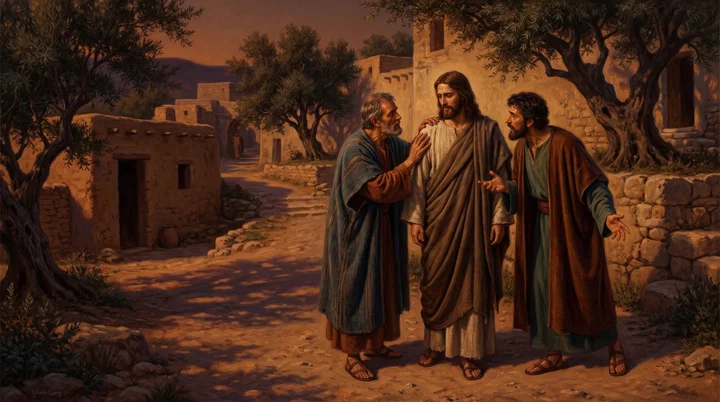
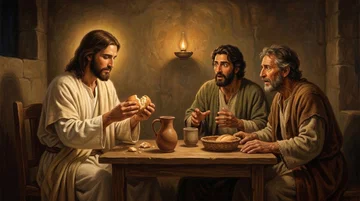
But they constrained him, saying, Abide with us: for it is toward evening, and the day is far spent. And he went in to tarry with them.
Translations
American King James Version, King James Version
But they constrained him, saying, Abide with us: for it is toward evening, and the day is far spent. And he went in to tarry with them.
KJV Cambridge Paragraph Bible, Webster Bible
But they constrained him, saying, Abide with us: for it is towards evening, and the day is far spent. And he went in to tarry with them.
And they constrained him, saying, Abide with us: for it is toward evening, and the day is now far spent. And he went in to abide with them.
And they constrained him, saying, Abide with us; for it is toward evening, and the day is now far spent. And he went in to abide with them.
and they constrained him, saying, 'Remain with us, for it is toward evening,' and the day did decline, and he went in to remain with them.
And they constrained him, saying, Stay with us, for it is toward evening and the day is declining. And he entered in to stay with them.
And they constrained him, saying—Abide with us; because it is, towards evening, and the day hath already declined. And he went in to abide with them.
Berean Standard Bible, Majority Standard Bible
But they pleaded with Him, “ Stay with us, for it is nearly evening and the day is almost over.”So He went in to stay with them.
They urged him, saying, “ Stay with us, for it is almost evening, and the day is almost over.”He went in to stay with them.
But they kept him back, saying, Do not go, for evening is near, the day is almost gone. And he went in with them.
But they constrained him, saying, Abide with vs: for it is towards night, and the day is farre spent. So he went in to tarie with them.
Douay-Rheims (Challoner revision)
But they constrained him; saying: Stay with us, because it is towards evening, and the day is now far spent. And he went in with them.
Pictures
Cross-references
- John 20:19
Then the same day at evening, being the first day of the week, when the doors were shut where the disciples were assembled for fear of the Jews, came Jesus and stood in the midst, and saith unto them, Peace be unto you.
The passage connects the Emmaus return with Jesus’ appearance to the disciples.
- Luke 24:33-36
And they rose up the same hour, and returned to Jerusalem, and found the eleven gathered together, and them that were with them,
The Emmaus disciples return to Jerusalem and report before Jesus appears among the gathered disciples.
- Revelation 3:20
Behold, I stand at the door, and knock: if any man hear my voice, and open the door, I will come in to him, and will sup with him, and he with me.
Christ’s invitation to enter and share a meal echoes the disciples’ request that he abide with them.
- Luke 24:13
And, behold, two of them went that same day to a village called Emmaus, which was from Jerusalem about threescore furlongs.
The two disciples begin their journey to Emmaus that day.
- Mark 16:12
After that he appeared in another form unto two of them, as they walked, and went into the country.
Jesus appears to the two disciples as they walk into the country.
- Luke 24:36-43
And as they thus spake, Jesus himself stood in the midst of them, and saith unto them, Peace be unto you.
The risen Jesus appears to the gathered disciples after the Emmaus travelers return.
- Luke 24:15-16
And it came to pass, that, while they communed together and reasoned, Jesus himself drew near, and went with them.
The risen Jesus walks with the disciples, but they do not recognize him.
- Luke 24:1
Now upon the first day of the week, very early in the morning, they came unto the sepulchre, bringing the spices which they had prepared, and certain others with them.
Identifies the day of the Emmaus journey as the day Jesus rose.
- John 15:4
Abide in me, and I in you. As the branch cannot bear fruit of itself, except it abide in the vine; no more can ye, except ye abide in me.
The appeal for Christ to remain echoes the call to abide with him.
- Luke 24:19-21
And he said unto them, What things? And they said unto him, Concerning Jesus of Nazareth, which was a prophet mighty in deed and word before God and all the people:
They describe their disappointment and sorrow before recognizing Jesus.
- Genesis 32:26
And he said, Let me go, for the day breaketh. And he said, I will not let thee go, except thou bless me.
Both refuse to let the Lord go without his blessing.
- John 4:40
So when the Samaritans were come unto him, they besought him that he would tarry with them: and he abode there two days.
both show he stays when urged
- Luke 24:35
And they told what things were done in the way, and how he was known of them in breaking of bread.
same Emmaus meal called breaking of bread
- Acts 16:15
And when she was baptized, and her household, she besought us, saying, If ye have judged me to be faithful to the Lord, come into my house, and abide there. And she constrained us.
Lydia urges Paul and his companions to stay with her.
- Luke 24:17
And he said unto them, What manner of communications are these that ye have one to another, as ye walk, and are sad?
same sad walk leading to the invitation
- Genesis 19:1-3
And there came two angels to Sodom at even; and Lot sat in the gate of Sodom: and Lot seeing them rose up to meet them; and he bowed himself with his face toward the ground;
Lot urges visiting angels to stay with him.
- Luke 19:5-6
And when Jesus came to the place, he looked up, and saw him, and said unto him, Zacchæus, make haste, and come down; for to day I must abide at thy house.
another example of sharing table and house with Jesus
- Acts 10:40-41
Him God raised up the third day, and shewed him openly;
appearances were only to chosen witnesses
- John 14:16-17
And I will pray the Father, and he shall give you another Comforter, that he may abide with you for ever;
Jesus promises the Spirit will abide with his disciples forever.
Commentary
Each commentary is drawn from primary sources: the writings of Ellen G. White and Adventist pioneers and periodicals. Each commentary is separate. Its own words are not a quotation; follow the references to read the source passages.
Ellen G. White
64 sources
On the afternoon of the resurrection day two disheartened disciples reaching home at sunset urged the still-unrecognized fellow traveler to remain with them for the evening meal, and he went in to stay with them.DA 795.1ST Oct 14, 1889DA 795.2COS 183.2–184.2Ms 113a, 1897, par. 10 Their pressing invitation expressed both hospitality at nightfall and tender longing to keep hearing him, for their hearts were burning as he opened the Scriptures and they could not bear to part from him.COS 183.2–184.2Ms 11, 1893, par. 2–4ST Feb 10, 1881ST Sep 19, 1878Ms 80, 1886, par. 17 He does not force his company on anyone, so their eagerness gave them the opportunity to know him; if they had not constrained him to abide they would not have recognized the risen Lord.Ms 113, 1897, par. 11–12ST Feb 10, 1881ST Jul 29, 19086RED 31.1–2ST Nov 14, 1878 At the table he was made known in blessing and breaking bread, then vanished, and forgetting weariness and leaving the meal untasted they hastened back that same night to Jerusalem to proclaim a living Saviour.CE 87.1ST Jul 29, 1908ST Feb 10, 1881ST Sep 19, 18783SP 215.1–3 Their plea is the invitation every heart and home should give Jesus at the close of day, for when he is earnestly asked in he enters to teach and comfort, while those who are indifferent may lose the blessing of knowing him.Ms 113, 1897, par. 11–12Ms 198, 1898, par. 3–5ST Jul 29, 1908Ms 155, 1904, par. 61–63Lt 11, 1875, par. 1–4
Time Place and Journey
The verse belongs to the walk to Emmaus on the afternoon of the resurrection day, when two earnest but disheartened disciples were traveling from Jerusalem to Emmaus.DA 795.1DA 795RH Mar 31, 1903 The risen Jesus walked with them though they did not recognize him, and explained from Scripture that Christ had to suffer and enter his glory, so that their faith and hope revived as they remembered the promises in prophecy and their hearts burned as he opened the Scriptures.DA 795.1RH Mar 31, 1903 They had come to Jerusalem for Passover and were returning home, perplexed by the events surrounding Jesus' death and by reports that his tomb was empty and that he had been seen alive.DA 795.1
It was toward evening at sunset when they reached their home, for evening had come and the day was far spent and nearly over.DA 795.2COS 183.2–184.2ST Jul 29, 1908ST Jul 29, 1908 A simple evening meal of bread was then made ready for them to share.COS 183.2–184.2ST Jul 29, 1908 Though a repast was prepared, that evening stay became only a brief halt.3SP 215.1–3
Jesus acted as if he would go further, seeming ready to continue his journey beyond their abiding place and about to pass on farther.COS 183.2–184.2Ms 11, 1893, par. 2–46RED 31.1–23SP 212.3 He walked with them as a humble, ordinary fellow traveler, accompanying suffering and perplexed people to comfort and teach them and share their human sympathies.ST Sep 19, 18783SP 212.1–26RED 30.1–2 They traveled together over rough and steep roads, showing that he identifies with his people and is present with them on hard and trying paths and through their hardest paths.ST Sep 19, 18783SP 212.1–26RED 30.1–2 His true character as the risen Redeemer and conqueror of death was hidden, for he had the same size after rising as before his crucifixion and bore no special outward marks that would immediately identify him as the Son of God.3SP 212.1–2SG4 119.1
Invitation and Its Motives
The two travelers tenderly and earnestly constrained, urged and pressed the still-unrecognized Jesus to abide with them and go in to tarry and remain with them when their journey ended, and He accepted and entered to stay with them in their home and lodging.ST Oct 14, 1889DA 795.2Ms 113a, 1897, par. 10ST Jul 29, 1908ST Feb 10, 1881 Their plea was made because evening was approaching and the day was nearly over and far spent, and their invitation to remain is the example of welcoming Jesus and desiring His presence, so that when He is invited to stay He welcomes believers to the Gospel feast where all things are ready.DA 795.2Ms 113a, 1897, par. 10Ms 198, 1898, par. 3–5ST Jul 29, 1908ST Feb 10, 1881 He had acted as if He would go further and seemed ready to continue beyond their abiding place, but when pressed He willingly went in to remain with them.COS 183.2–184.2Ms 11, 1893, par. 2–4Ms 113a, 1897, par. 10
Their urging expressed tender affection and longing to remain with Him, for they could not bear to part from the One who had renewed their hope and joy and brought them such joy and hope on the way.COS 183.2–184.2Ms 11, 1893, par. 2–4ST Sep 19, 18783SP 212.3 They could not endure to be separated from the One who had instructed them, they felt they wanted more, and they wished to keep hearing Him explain the Scriptures.COS 183.2–184.2Ms 11, 1893, par. 2–4Ms 80, 1886, par. 17 Their invitation expresses the desire that Jesus be present with them.Lt 11, 1875, par. 1–4
Their invitation also showed hospitality and courtesy to a fellow traveler, welcoming Him to stay because evening had come and the day was almost over.ST Feb 10, 1881Ms 80, 1886, par. 17 They did not yet recognize that the stranger with them was their Lord, but His opening of the prophecies on the rough way, beginning at Moses and all the prophets expounding in all the Scriptures the things concerning Himself, was reviving their hopes.CE 87.1Ms 113, 1897, par. 11–12Ms 11, 1893, par. 2–4 Their hearts burned within them while He talked by the way and opened the Scriptures, and they were drawn to Him and eager to hear more.CE 87.1Ms 113a, 1897, par. 10ST Jul 29, 1908 Christ does not force His company on people, and those who are indifferent and do not ask Him to remain may lose the blessing of knowing Him.Ms 113, 1897, par. 11–12ST Jul 29, 1908
Their willingness to welcome a fellow traveler and their eagerness to keep Him with them gave them the opportunity to recognize the risen Christ, whose words and wounded hands became known to them when He sat at meat and took bread and blessed and broke it.ST Feb 10, 1881ST Jul 29, 1908ST Nov 14, 1878 Their earnest insistence made it possible for them to recognize the risen Lord, and they would not have recognized Him and known Him if they had not pressed Him to remain.ST Jul 29, 1908ST Nov 14, 1878Ms 113a, 1897, par. 11
Presence Revelation and Return
Christ does not force his company on anyone but gives those who need his care the opportunity to ask him to remain.ST Jul 29, 19086RED 31.1–2ST Sep 19, 18783SP 213.1DA 800.1–2 When they long for him and earnestly invite him he gladly enters even the humblest home and the lowliest heart to teach and comfort and bring hope and joy and light.ST Jul 29, 19086RED 31.1–2ST Sep 19, 18783SP 213.1DA 800.1–2 Those who are indifferent and do not ask him to abide may lose the blessing of knowing him and miss his presence.Ms 113, 1897, par. 11–12ST Jul 29, 1908DA 800.1–2
He kept himself unrecognized while he stayed because his work with them was not yet finished.ST Sep 19, 18783SP 214.1–2ST Sep 19, 1878 He spent hours with them, teaching and comforting them, while holding his disguise until he had interpreted the Scriptures.ST Sep 19, 1878ST Sep 19, 1878ST Oct 6, 1909 He did not first reveal himself as risen, because joy at seeing him would have satisfied their souls so they would not hunger for the sacred truths he wished to impress indelibly on their minds.ST Sep 19, 1878ST Sep 19, 18783SP 214.1–2 He wanted truth to take firm root not by his personal testimony but by unquestionable evidence from the typical law and the prophets of the Old Testament agreeing with the facts of his life, character, mission to earth, death, and resurrection, leading them to intelligent faith.ST Sep 19, 18783SP 214.1–2ST Oct 6, 1909 Only when that object was gained did he allow them to be recognized so their joy might be made full.ST Sep 19, 18783SP 214.1–2ST Oct 6, 1909
As he sat at meat he took bread and blessed and broke it, and they knew him by his words and manner and by his wounded hands with the marks of crucifixion.ST Feb 10, 1881Ms 155, 1904, par. 61–63ST Oct 30, 1884 Their eyes were opened and their recognition and faith were awakened as they remembered how their hearts burned within them while he talked by the way and opened the Scriptures.CE 87.1ST Oct 30, 1884 Then he vanished from their sight.ST Sep 19, 18783SP 214.1–2
The evening stay became only a brief halt.3SP 215.1–3 The prepared simple evening meal of bread was left untasted, and hunger and weariness and fatigue were forgotten.ST Jul 29, 19083SP 215.1–3ST Sep 26, 1878 With hearts leaping for joy they immediately set out again that same night on the same path to carry the greatest tidings ever given that Christ is a living Saviour.ST Jul 29, 19083SP 215.1–3ST Sep 26, 1878 Late as it was, they hastened back to Jerusalem on a rough, uncertain, moonless road of stones and ledges where they stumbled and lost the track, yet with light hearts and fresh speed.3SP 215.1–3 They could not tarry at home and keep their newly found knowledge from the other disciples but longed to impart their own joy to their companions that all might rejoice together.3SP 215.1–3ST Sep 26, 1878 Jesus remained their unseen companion and entered the gathered disciples' room with them.ST Sep 26, 1878 One account adds that he stayed with them through the night.Ms 80, 1886, par. 17
Scripture Prophecy and Resurrection
Beginning at Moses and all the prophets he expounded in all the Scriptures the things concerning himself, explaining that Christ had to suffer and enter into his glory, and afterward he opened their understanding that they might understand the Scriptures.CE 87.1RH Mar 31, 1903Ms 94, 1897, par. 28–30Lt 25, 1903, par. 12–14 He showed them a connected, straight chain and line of prophecy reaching from the patriarchs and from the days of the patriarchs to that time, with the typical law and the prophets foreshadowing his birth, life, mission, death, and resurrection.3SP 216.23SP 217.1–3 This unfolding renewed their faith, hope, and joy and led them to accept him as the promised Messiah. As they contemplated the word with Christ their hearts burned within them while he talked by the way and opened the Scriptures.RH Mar 31, 1903SPBC 149.3RP 15.2Lt 57, 1895, par. 33Lt 141, 1897, par. 39 His teaching filled the lonely, disappointed disciples with holy hope and joy, and his presence and teaching brought holy joy.15MR 23.4Lt 57, 1895, par. 33Lt 57, 1895, par. 34Lt 37, 1887, par. 18–19
The encounter is evidence that he had risen from the dead and proves he is living and not dead, the resurrection and the life and a living risen Saviour and conqueror of death whose body did not see corruption.Ms 94, 1897, par. 28–30Ms 203, 1898, par. 9Ms 78, 1910, par. 30 Joined with his revealing himself in the upper chamber to the eleven as one risen from the dead, with the empty sepulcher and the shroud, it left the disciples calm and joyful in belief and in declaring that Christ had risen early on the first day of the week.Ms 203, 1898, par. 9 This was a decided triumph that made of none effect the falsehood of the priests and established Christianity by evidence that could not be controverted.Ms 203, 1898, par. 9 It calls for thankfulness to God and for understanding the sacrifice he made by dying on the cross.Ms 78, 1910, par. 30 The light received kept them united with God's led people, for when they received light and saw Jesus and talked with him they returned to those whom God had led and was still leading and to those chosen to bear a living testimony.RCNBP 6.3–7.1 They told how they had seen Jesus and talked with him, giving evidence that better qualifies a people to stand in the great day of God, and sought counsel from those of deep experience in bearing the truth and the last message of warning, rather than taking a different line and breaking unity.RCNBP 6.3–7.1
The same opening of the truths of his word strengthened the Waldenses in lonely retreats to reject false guides and worship God alone, as he met with them as with the disciples at Emmaus.HSFM 242.4–243.2 Divine teaching by the Holy Spirit still enlightens those who seek understanding from God, and the Holy Spirit shining upon the sacred page still opens understanding to know what is truth.Lt 25, 1903, par. 12–14Lt 141, 1897, par. 39 That light comes into dwellings when Daniel and Revelation and the other prophecies of the Old and New Testaments are studied with prayer.Lt 141, 1897, par. 39 He identifies with his suffering and perplexed people, coming near as their companion and humble fellow traveler on hard and trying paths and over rough and steep roads to comfort and teach them.ST Sep 19, 18783SP 212.1–26RED 30.1–2 He is likewise beside the despondent and sorrowing and by the side of his followers unseen, ready to give them peace, life, and comfort if they accept him.Ms 80, 1886, par. 25–26CT 342.1–2Ms 80, 1886, par. 27 Awareness of his unseen presence brings holy joy and feeds followers with the bread of life, and he is pleased when they talk of his teachings and value holy things.CT 342.1–2
Inviting Christ Today
The disciples' plea to remain because evening had come is the invitation every heart and home should give to Jesus, expressing longing for His company and desire for His presence.Ms 198, 1898, par. 3–5Ms 155, 1904, par. 61–63Lt 11, 1875, par. 1–4 It is an example of welcoming Him to stay, urging every person to search whether Jesus has been invited in.Ms 198, 1898, par. 3–5Ms 155, 1904, par. 61–63DA 803.3 Every heart troubled with doubts and fears should make that plea to abide, for He is ever ready to speak peace and waits to be welcomed into the heart.DA 803.36RED 57.1 He promises to come in and share fellowship with anyone who hears His voice and opens the door to Him.DA 803.3
To give that invitation means unlocking the door of the heart, opening the heart to Him, and clearing away the rubbish.ST Sep 27, 1899Ms 1, 1891, par. 27–28 It means praying, Abide with me, prostrate at the throne of divine grace, because the day is far spent and the night is at hand.ST Sep 27, 1899Ms 1, 1891, par. 27–28 When He is invited He comes in, accepts and enters the lodging, and welcomes believers to the Gospel feast where all things are ready.Ms 198, 1898, par. 3–5 In breaking bread and asking the blessing He is known as Jesus by the marks of crucifixion in His hands, bringing glory to God.Ms 155, 1904, par. 61–63
He does not force His company on anyone, but gladly enters humble homes and the hearts of those who need Him and ask Him to stay.Ms 113, 1897, par. 11–12ST Jul 29, 1908DA 800.1–2 The earnest insistence of the disciples made it possible for them to recognize the risen Lord, and without pressing Him to remain they would not have known Him.ST Jul 29, 1908Ms 113a, 1897, par. 11 Those who are indifferent and do not ask Him to abide with them may lose the blessing of knowing Him and miss His presence.Ms 113, 1897, par. 11–12ST Jul 29, 1908DA 800.1–2Ms 113a, 1897, par. 11
He is ready to bring peace to people troubled by doubt and fear, and His peace entering the heart makes believers calm and patient under the severest trials.6RED 37.1DA 803.36RED 57.1ST Sep 26, 18783SP 219.1 That calm holds through continual strife against principalities and powers, spiritual wickedness, sleepless foes, and temptation, giving strength to resist, to overcome as He overcame, and to win victory.6RED 57.1 Pleading for God's Spirit to abide brings the impartation and outpouring of the divine Spirit as upon the disciples, as the remedy for sin-sick souls.ST Sep 27, 1899 His presence brings converting power that softens hard hearts, fills with joy and rejoicing, and transforms believers into channels of blessing.ST Sep 27, 1899
Communion with Christ in hallowed fellowship, as the disciples knew it on the way to Emmaus, brings joy and divine strength.5T 600.2 Instead of talking darkness, talking of Christ and asking Him to stay is the cure for darkness and discouragement.Ms 1, 1891, par. 27–28 Lack of a clear, well-defined Christian experience comes from not counting it a privilege to understand what God has spoken through His word.CE 87.1 Christ, who beginning at Moses and all the prophets expounded the things concerning Himself and afterward opened understanding that the Scriptures might be understood, may still be looked to to do this same work of opening the Scriptures for believers now, for what the Lord has revealed is for us and our children forever.CE 87.1
Sources
Pioneers and periodicals
140 sources
On resurrection day two sorrowing disciples walking from Jerusalem to Emmaus toward evening press the still-unrecognized Jesus to remain with them, and he goes in to tarry, shares the evening meal, makes himself known, and they hasten back that same night to Jerusalem with the news.ST Oct 14, 1889RH Jul 25, 1854ST Apr 17, 1901 Constrained means urged with importunate desire for his continued presence and words, and abide means to remain and dwell continually as a familiar guest, not for a brief glance or passing word.ST Apr 4, 1900RH Dec 13, 1864ST Aug 8, 1906ST Aug 8, 1906ST Apr 4, 1900 He does not force his company but seems ready to go farther to test interest, and when earnestly desired and invited he enters, opens Scripture, and at the blessing and breaking of bread opens their eyes to know him as the risen Saviour.ST Jul 29, 1908ST Sep 19, 1878ST Apr 4, 1900ST Aug 13, 1896ST Dec 10, 1894 Their fifteen-mile going and returning with his approval is ordinary travel and not a religious keeping of the first day, and the verse says nothing about the Sabbath, gives no command to keep Sunday, and appoints no holy use to the day.ST Oct 5, 1882RH Nov 1850RH Nov 14, 1871RH Oct 28, 1915RH Jan 17, 1856 Toward evening and the day far spent becomes the plea for him to stay through life's eventide when darkness thickens and helpers fail, and through the closing day of gospel light and probation to save and bring safely into the kingdom.RH Dec 13, 1864ST Aug 8, 1906RH Jan 26, 1860ST Aug 8, 1906ST Oct 20, 1914
Emmaus Story and Wording
Two disciples reaching Emmaus on resurrection day toward evening urged the still-unrecognized Jesus to stay because evening had come and the day was far spent, and he went in to tarry with them, shared a meal, made himself known, and they returned that same night to Jerusalem to tell the news.ST Oct 14, 1889RH Jul 25, 1854ST Apr 17, 1901ST Jan 30, 1912RH Oct 26, 1911 The going to Emmaus drew nigh unto the village toward evening after he made as though he would go further, and he went in to abide with them and sat down with them to meat.ST Oct 14, 1889RH Jul 25, 1854ST Apr 17, 1901ST Jan 30, 1912ST May 24, 1910 Their insistence brought him into their home where they soon recognized him as the crucified Saviour risen, with hearts overflowing with joy, and they immediately returned to Jerusalem.ST Oct 14, 1889RH Jul 25, 1854RH Oct 26, 1911ST May 24, 1910
They had walked from Jerusalem grieving because condemnation and death had seemed to destroy their hopes, and Jesus drew near unrecognized and seemed ready to go farther.RH Jan 26, 1860RH Jan 21, 1873 Christ was nearer to the sad-hearted travelers than they supposed, and his presence and words brought courage to trusting hearts.RH Jan 26, 1860ST Jun 26, 1901 They told him of the mighty works of their Master, his condemnation and crucifixion, the early visits to the sepulcher and the report of angels saying he was risen, yet they had not accepted the resurrection, having hoped he would redeem Israel by an earthly kingdom.RH Jan 21, 1873 Their request reflected desire to keep the stranger with them, for after he had opened the Scriptures they wanted further explanation and comfort.RH Jan 26, 1860ST Jun 26, 1901
Constrained means pressed beyond measure with urgent, importunate desire for his continued cheering presence and words, not satisfied with brief teaching on the way.ST Apr 4, 1900ST Apr 4, 1900 Their desire for his presence caused him to stop and tarry with them, and that tarrying gave him opportunity to make himself known to them.ST Apr 4, 1900ST Apr 4, 1900 The same experience comes to those who become as importunate in desiring his presence, for earnest, persistent desire for fellowship secures deeper knowledge of him.ST Apr 4, 1900ST Apr 4, 1900
Abide means remain and dwell continually as a familiar, condescending, patient guest, not a brief glance, passing word, or short sojourn.RH Dec 13, 1864ST Aug 8, 1906ST Aug 8, 1906RH Aug 19, 1858 Toward evening and the day far spent means life's eventide when darkness thickens, life's little day ebbs to its close, earthly joys dim, change and decay appear, other helpers fail, comforts flee, and death approaches.RH Dec 13, 1864ST Aug 8, 1906RH Aug 19, 1858 He is asked to come not in terrors as King of kings but kind and good as Help of the helpless and Friend of sinners, with healing, tears for woes and a heart for every plea, smiling from early youth despite rebellion, giving grace every hour to foil the tempter, to guide and stay through cloud and sunshine, to remove fear of foes, to take weight from ills and bitterness from tears, to triumph over death's sting and the grave's victory, to hold the cross before closing eyes, to shine through gloom and point to the skies until heaven's morning breaks.RH Dec 13, 1864RH Aug 19, 1858
Emmaus lies about seven to seven and a half miles, sixty furlongs, from Jerusalem, making about fifteen miles for the journey there and back that day, a walk requiring at least two hours.ST Apr 13, 1882ST Oct 5, 1882RH Dec 9, 1852ST Apr 12, 1883 One reckoning places the supper near sunset about six o'clock in early April, and one description places Emmaus seven miles from the Mount of Olives.ST Apr 13, 1882ST Oct 5, 1882RH Dec 9, 1852 The two arrived in the latter part of the afternoon on resurrection day and urged him to go in and tarry because the day was far spent, and he went in and ate supper with them and then made himself known, after which they immediately returned to Jerusalem.ST Apr 13, 1882ST Oct 5, 1882RH Dec 9, 1852ST Apr 12, 1883 Since Jewish days began at sunset, this was near the end of the first day as Jews reckoned it, corresponding to early evening by modern reckoning.ST Apr 13, 1882RH Dec 9, 1852
The lateness of the hour places the meal and recognition at the close of the first day, with the return to Jerusalem after sunset when that day had ended and the second day had begun.ST Apr 13, 1882ST Nov 10, 1914ST Nov 11, 1889ST Dec 11, 1901 If days begin at sunset this timing puts them at the beginning of the second day, and the later meeting in Jerusalem is therefore in the evening after the first day.ST Apr 13, 1882ST Nov 10, 1914ST Dec 11, 1901RH Feb 25, 1862 The meeting with the two at Emmaus happened when the day was far spent toward evening, after the whole first day had gone by uncelebrated, and they then returned to Jerusalem, with Jesus meeting the apostles gathered in their common abode only subsequent to that arrival.ST Apr 13, 1882ST Nov 11, 1889ST Dec 11, 1901 After supper they recognized Jesus, returned to Jerusalem, and arrived near the close of the day or after it had ended, so the subsequent meeting with the eleven may have occurred on the second day of the week.ST Apr 13, 1882ST Nov 10, 1914RH Feb 25, 1862
He sits down with them to meat, the ordinary closing meal of the day.ST Jul 29, 1908ST Apr 17, 1901RH Jul 4, 1865ST Jul 21, 1898 That eating is called breaking of bread, but it was common food to satisfy hunger, not the Lord's supper, proving the phrase to break bread does not always mean communion.ST Apr 17, 1901RH Jul 4, 1865 How long he stayed after entering is not stated, leaving room for him to share the meal at which their eyes were opened, so the disciples ate before rising up the same hour to return to Jerusalem.ST Apr 17, 1901RH Jul 4, 1865ST Jul 12, 1910 That untasted meal is left when with weariness and hunger gone and hearts leaping for joy they immediately set out again that same night on the same path to the city, leaving their prepared meal to hurry back because joy at recognizing the risen Jesus made them eager to share the news.ST Jul 29, 1908ST Sep 26, 1878ST Jul 12, 1910 He went in to stay, ate with them, blessed and broke the bread, and opened their eyes so they recognized him before he vanished.ST Jul 29, 1908ST Jul 12, 1910ST Jul 21, 1898
He appears ready to go farther to test their interest and draw out a warmer welcome.ST Feb 22, 1899RH Nov 19, 1872ST Mar 16, 1882ST Feb 8, 1883ST Apr 17, 1901 Feeling need of Christ and seeking him through his word assures his presence and help, and their urging him to stay kept him from passing on and secured the blessing of personally recognizing him, which they would otherwise have missed.ST Feb 22, 1899ST Apr 17, 1901 Their Eastern hospitality and godly courtesy in pressing the stranger to tarry opens the interview, for had they let him continue they would not have recognized Jesus or received the blessing of his presence.ST Feb 22, 1899ST Feb 14, 1911ST Apr 17, 1901 His apparent hesitation at the door drew out their warmer welcome and reveals responsive human need for companionship and sympathy, and they also wanted to keep listening to his wise words and learn the truth.ST Feb 14, 1911ST Feb 8, 1883 His acting as though he would have gone further means he was ready to continue his journey until night made travel impracticable, and he takes the head of the meal as his place in every home.ST Feb 22, 1899RH Nov 19, 1872ST Mar 16, 1882
He walks with them in humble, ordinary manner, interested in what troubles them, identifying with suffering and perplexed people on hard paths.ST Sep 19, 1878ST Sep 19, 1878ST Jun 26, 1901RH Aug 12, 1862ST Apr 7, 1881 He spent hours with them, teaching and comforting them while they did not recognize him, walking beside them and answering them from Scripture after inviting them to explain what troubled them.ST Sep 19, 1878ST Sep 19, 1878ST Apr 7, 1881 His companionship makes the road seem shorter and turns an ordinary journey into unexpected spiritual blessing, for after the stranger joined the two travelers they climbed its hills without weariness.ST Jun 26, 1901RH Aug 12, 1862RH Aug 12, 1862 Christ's presence can likewise accompany believers through daily life and make even hardship more cheerful, bringing courage to trusting hearts.ST Jun 26, 1901RH Aug 12, 1862RH Aug 12, 1862
Their eyes are holden and he appears in another form, so they do not recognize him.RH Jan 21, 1873RH Nov 26, 1872 Jesus traveled with them toward evening without being recognized because their eyes were holden and he appeared in another form, comforting them by rehearsing the Scriptures until their hearts burned within them, then making himself known in the breaking of bread.RH Jan 21, 1873RH Nov 26, 1872 One explanation is that their spiritual eyes do not yet recognize his presence, rather than proof about his natural body.RH Jan 21, 1873RH Nov 26, 1872
Risen Body and Prophecy
The same Jesus of Nazareth who commended his life to the Father and died on the cross and was laid as a body in the tomb is the one who drew near to the reasoning disciples and went in to tarry and sit at meat with them.RH Nov 21, 1854 The same whole man who died rose the third day with flesh and bones, not as a spirit or apparition, with no part of his intelligent or unintelligent nature surviving death apart from him.RH Nov 21, 1854ST Jun 12, 1884 His immortal body of flesh and bones made visible what the invisible God is like.RH Apr 16, 1872 That bodily form shows that God and Christ are personal beings with real bodily form and personality.RH Apr 16, 1872RH Oct 8, 1903
After breaking bread with them and being welcomed to stay, the risen Christ vanished from their sight.ST Oct 6, 1914RH Jan 22, 1857 In this he is like one born of the Spirit, whose movement is compared to the wind.RH Jan 22, 1857
The Emmaus encounter is counted among the recorded appearances of the risen Christ made known to his disciples on the first day.ST Oct 28, 1913ST Jun 2, 1898 It is reckoned as his second appearance on resurrection day, when he accompanied two disciples to Emmaus and returned with them to Jerusalem the same day.RH Nov 1850 It is also reckoned as the third meeting during the journey of about seven and a half miles, in which he was not recognized until the supper and afterward vanished from sight, and as the fourth recorded appearance to his disciples.RH Apr 12, 1860RH Sep 10, 1857 Together with it stand his being seen by the women at the sepulchre early in the morning, his being seen by Peter at Jerusalem just as the day was closing and before sunset, and his afterward appearing to the eleven.RH Nov 1850ST Apr 13, 1882 Luke's account of the resurrection tells particulars the other Gospels do not tell and omits events they tell, yet without contradiction, each account being true as dictated by the Spirit to touch hearts with no effort to harmonize statements.ST Mar 5, 1912 Luke did not witness the events himself but received them through Peter, while Matthew and John wrote as eyewitnesses among the twelve and Mark as a young man who may have witnessed some events.ST Mar 5, 1912
While still hidden he appealed to Moses and the prophets and the typical law, showing from Scripture concerning himself that Christ had to suffer, die, and enter glory, with prophecies of his birth, life, mission, death, and resurrection fulfilled.RH Mar 31, 1903RH Dec 10, 1872RH Jan 21, 1873 He explained the scriptural teaching about the Messiah and his suffering and death to disciples who knew of his mighty works, his condemnation and crucifixion, the early visits to the sepulchre, and the report of angels saying he was risen, yet had not accepted the resurrection. As the Holy Spirit, the Comforter, the Spirit of truth, opens understanding and takes away the veil, hearts burn as he opens the Scriptures, faith and hope revive as promises in prophecy are remembered, and what was long believed seems new and can afterward be expounded with clearness and power.RH Mar 31, 1903ST Jul 30, 1885RH Jan 21, 1873 Conversation about Christ and the Scriptures in sorrow thus brings comfort and refreshment, for the Lord is present where people speak sincerely of spiritual things.ST Jul 30, 1885 The disciples understood some truths about him but did not yet understand that he must suffer and rise again, for they had hoped he would redeem Israel by becoming a temporal king in the line of David to deliver Israel, and his death brought disappointment.RH Dec 1, 1874RH Jan 21, 1873 Further scriptural light helps recognize the mistake and rejoice again in hope, illustrating how part of the truth may be grasped while other parts are misunderstood until clarified.RH Dec 1, 1874
That first-advent disappointment and renewed encouragement from fulfilled prophecy foreshadows the bitter disappointment after the first sounding of the speedy coming, followed by reconciled difficulties and renewed certainty that the Deliverer is at hand, redemption is near even at the doors, and God will make all things new at the coming day of glory.RH Jan 21, 1873 The suffering seen on the cross was only fulfillment of prophecy, and disappointment accompanied fulfillment of prophecy, so disappointment does not prove false a doctrine or hope grounded in prophecy, whether concerning Christ's suffering or the second-advent hope.RH Dec 8, 1874ST Apr 21, 1881 The Emmaus encounter in which the risen Christ revealed himself to the two disciples was one of the showers of blessing that brought joy and strengthened the message, He is risen.RH Jul 6, 1911
First Day Not Sacred
The walk to Emmaus and back on resurrection day covered about fifteen miles in all, seven to seven and a half miles each way from Jerusalem, with Jesus walking and talking with the two all the way and then going in to tarry when they pressed him toward evening.ST Oct 5, 1882RH Nov 1850RH Oct 28, 1915ST Feb 20, 1879ST Mar 18, 1889 That traveling was ordinary secular movement for no religious purpose, not a religious meeting, not Sabbath rest, and not observance of the first day as sacred, and he gave no rebuke, no caution against traveling, and no instruction to do differently but joined and approved it.ST Oct 5, 1882RH Nov 1850ST Feb 20, 1879ST Mar 18, 1889RH Feb 7, 1916 No hint of a change of the weekly rest was given when opportunity was most favorable, and the timing near evening when the day was far spent is part of the proof that the disciples traveled on the first day rather than keeping it as a Sabbath.ST Oct 5, 1882RH Nov 1850RH Oct 28, 1915ST Feb 20, 1879RH Feb 7, 1916
That first day was one of bustle, activity, anxiety, unrest, doubt, fear, and disbelief, when few yet believed he was risen and the long hours were passed in sorrow over a hope that seemed destroyed.RH May 1, 1900RH Oct 23, 1856ST Sep 15, 1887ST Apr 12, 1883ST Mar 11, 1889 The two did not believe at the start, recognition came only later at the breaking of bread, and even as late as that evening few of the apostles yet believed, so they were not gathered to celebrate the resurrection or to keep a new Sabbath.RH May 1, 1900RH Oct 23, 1856ST Sep 15, 1887ST Apr 12, 1883ST Mar 11, 1889 When he came among them while they were eating supper and doubting and disputing, he upbraided unbelief and convinced them by showing hands and feet and eating fish and honeycomb before them, not by commending Sunday worship.RH Nov 14, 1871RH May 1, 1900ST Apr 12, 1883ST Mar 11, 1889
That evening gathering in Jerusalem was in their common abode behind shut doors for fear of the Jews, eating the ordinary evening meal, not assembled to commemorate the resurrection or to honor Sunday worship.RH Nov 14, 1871RH May 1, 1900RH Nov 14, 1871 It stands as only one first-day meeting, not a pattern of honoring and observing the first day for worship.RH Nov 14, 1871RH Nov 14, 1871 The verse says nothing about the Sabbath or a change of the Sabbath, contains no command to keep Sunday, no mention of the first day by Jesus, no appointment of the first day to holy use, no purpose to transfer the Sabbath or make Sunday holy, and no sacredness attaches to the day.RH Nov 14, 1871RH Jan 17, 1856RH Feb 11, 1858ST Oct 21, 1897 A Sabbath is made by what is done to the day, not merely by what is done on it, and Christ does nothing to the first day and does not even take it into his lips, while the account itself is historical report rather than injunction.RH Nov 14, 1871RH Jan 17, 1856ST Jul 1, 1880ST Oct 21, 1897
The two at Emmaus intended to spend the night there rather than attend an evening meeting with Jesus in Jerusalem, and their sadness and disappointment had not ended earlier that day.ST Jul 19, 1883ST Oct 17, 1878RH Feb 27, 1872ST Mar 9, 1882 The journey was longer than a Sabbath day's journey and treats travel and labor as permitted on the first day while the seventh day is kept according to the commandment, and his journeying that day and not resting means the first day cannot be called the Lord's day on the ground that the Lord rested on it.ST Feb 20, 1879ST Mar 18, 1889ST Apr 12, 1883ST Mar 11, 1889RH Dec 16, 1858 The eating called breaking of bread at that ordinary closing meal to satisfy hunger was common food, not the Lord's supper, proving the phrase does not always mean communion.RH Jul 4, 1865 By contrast, those who held Sunday sacred appealed to the verse as proof that the apostles usually met on the first day and that Sunday is the Sabbath, as the beginning and reason for Sunday preaching and public worship on the first day as the Christian Sabbath, and as an evening meeting where they broke bread and invited Jesus to share the meal.ST Jul 2, 1894RH Aug 5, 1851RH May 13, 1858 By another contrast, those who held first-day rest taught that his walking and staying on the first day does not mean he did not rest that day, since rest does not mean ceasing all motion and becoming perfectly inactive, but as God on the seventh day rested only from creation, so Christ on the first day rested from redemption while going with the disciples.RH Aug 1, 1871
Invitation Brings Revelation
Christ does not force his company on anyone but waits to be invited, making as if to go farther while giving opportunity to ask him to remain, and he gladly enters even humble homes to comfort those who need his care, while indifference to him brings loss of blessing.ST Jul 29, 1908ST Sep 19, 1878ST Oct 6, 1909ST Dec 10, 1894RH Aug 11, 1903 He offers his blessings yet does not enter where he is not wanted, and the disciples' welcome shows that he comes in to share a meal only when desired.ST Dec 10, 1894RH Aug 11, 1903 The same invitation belongs in homes and church gatherings, where he is to be earnestly invited and sought wholeheartedly together with whatever resists the Holy Spirit put away, so that his blessing may be received.ST Aug 2, 1883
When his presence is really desired and he is urged to abide, he does abide, for earnest and persistent, even importunate, desire and effort to seek fellowship secures his tarrying.ST Apr 4, 1900ST Aug 13, 1896RH Jan 31, 1907ST Apr 4, 1900 Those who press him beyond measure because brief cheering words on the way have not satisfied them cause him to stop and tarry, and that tarrying gives him opportunity to make himself known, leading to deeper knowledge of him.ST Apr 4, 1900ST Apr 4, 1900 The blessing of his presence is enjoyed in proportion to interest and effort, so that indifference would cost the privilege of sharing the meal with him, while welcoming him fully into the heart constrains him to remain as a continual guest.ST Jul 24, 1879RH Oct 1, 1861
Their urging springs from unsatisfied desire for more of his reassuring presence and words, for further explanation of puzzling events, for comfort in sorrow, and for love toward the stranger whose words stir hearts and renew hope and joy.ST Apr 4, 1900RH Jan 26, 1860RH Nov 14, 1912ST Nov 27, 1893RH Jan 26, 1860 Having become deeply interested as he opened the Scriptures, they want to keep listening to learn the truth and to keep him with them, and this reflects both affection and Eastern hospitality in pressing a fellow traveler to stay.ST Sep 19, 1878RH Jan 26, 1860ST Feb 14, 1911 When they welcome him in, they come to know him as their risen Friend.ST Nov 27, 1893
Had they let him continue they would not have recognized him nor received the blessing of his presence, for willingness to welcome a fellow traveler tests faith and godly courtesy and gives opportunity for recognition at the meal.ST Feb 10, 1881ST Nov 14, 1878ST Feb 22, 1899 Their eagerness to keep him provides the occasion for his words and wounded hands to become known to them as those of the risen Christ.ST Feb 10, 1881ST Nov 14, 1878 His place at the head of that meal is his place in every home he enters.ST Feb 22, 1899
He keeps his true character as risen Redeemer hidden and stays because his work with them is not yet finished, lest overjoy at seeing him risen satisfy their souls so they no longer hunger for the sacred truths he would impress indelibly upon their minds.ST Sep 19, 1878ST Sep 19, 1878 He holds his disguise until he has interpreted the Scriptures and led them to intelligent faith in his life, character, mission to earth, death, and resurrection, wanting truth to take firm root not by personal testimony alone but by unquestionable evidence from the typical law and the prophets of the Old Testament agreeing with the facts of his life and death.ST Sep 19, 1878ST Oct 6, 1909ST Apr 17, 1901 Only when that object is gained does he allow recognition so joy may be full, and then he vanishes from sight, leaving hunger satisfied in order that light received that day may be imparted to others until thousands receive it.ST Sep 19, 1878ST Sep 19, 1878 Faith in his resurrection is thus to rest on Moses and the prophets clearly taught, not on seeing him or on anything remarkable about a preacher, for God's truth so taught leads to belief and sanctification.ST Apr 17, 1901
At the simple evening meal of bread that follows the invitation, his blessing and breaking of bread reveals him to them, as his words, manner, and wounded hands awaken recognition and faith while they remember the Scriptures about his life, suffering, death, and resurrection.ST Oct 30, 1884ST Nov 27, 1893ST Apr 25, 1906ST Jul 21, 1898 Their invitation showed they welcomed his reproof and teaching from Scripture, and he ate with them and opened their eyes before he vanished.ST Apr 25, 1906ST Jul 21, 1898 Eaten in the evening after the afternoon journey when the day was nearly over, this eating together is the setting in which Jesus is revealed to them.ST Feb 23, 1915
That meal is left untasted when they learn he is risen, and with weariness and hunger gone and hearts leaping for joy they immediately rise the same hour that very night and hasten back over the same path to the city to carry the greatest tidings ever given to the world that Christ is a living Saviour upon whom the hopes of the human family for time and eternity depend.ST Jul 29, 1908ST Sep 26, 1878 Though it is night and the home lies seven miles away, their constraining the supposed stranger to tarry and sup brings a copious shower of blessing that so elates them that they hurry to Jerusalem to tell their joy to the mourning eleven.ST Nov 11, 1908 With glad hearts and great joy they carry that testimony to the locked upper room on Sunday night, where the disciples are disheartened, hopeless, faithless, and filled with doubts and fears, and their story dispels gloom, sadness, and doubt.ST Mar 8, 1905 He likely returns with them to Jerusalem though unseen, still their unseen companion entering the gathered disciples' room with them, and as soon as the joyful message is delivered the risen Jesus manifests himself to the amazed disciples and fills them with faith and hope, so that all are refreshed together.ST Sep 26, 1878ST Sep 13, 1905ST Nov 11, 1908ST Mar 8, 1905
Conversation about Christ and the Scriptures warms hearts and brings comfort and refreshment, for the Lord is present where people speak sincerely about spiritual things after telling him their grief and lost hopes.ST Jul 30, 1885 Because the two talk together about sacred themes, Christ himself joins their company unseen, their hearts burn within them, and after he goes in with them he reveals himself in the breaking of bread.ST Mar 1, 1905 Talking about common business such as the sheep market or the price of olive oil, doves, or young pigeons would not have brought burning hearts, Christ's company, or his revelation.ST Mar 1, 1905 Laying faith alongside faith strengthens faith, joins righteousness and peace, shares triumph over temptation and comfort, joins hope to hope so both rise higher, and brings gladness of his presence, while failure in religious conversation keeps hearts from being made glad by him, and discussing his crucifixion and resurrection opens eyes to recognize him as the risen conqueror of death.ST Mar 1, 1905ST Jan 7, 1889 Jesus draws near and joins Christians as they share helpful words of faith and courage, making their conversation sweeter communion with him.RH Jun 12, 1900
His conversation and stay express the friendship and close fellowship meant by communion, as he shares their hospitality on the day of his resurrection.RH May 8, 1913 His companionship makes the journey pleasant, so that the road seems shorter and its hills are climbed without weariness, and he likewise accompanies believers through daily life to make even hardship more cheerful.RH Aug 12, 1862 Walking with him means receiving his teaching and being equipped to lead others to the source of life, for he stays with those who truly desire him, teaches them through the Spirit of truth, makes the Scriptures plain so they may live by them, blesses them with the bread of life, and helps them through every trial.ST Jul 21, 1898RH Dec 3, 1901 Being with him makes time, toil, and care recede, turning labor into rest and pain into sweetness, and turning toil and care into rest.ST Jul 21, 1898 Their request for him to abide gives the language of Christ abiding with a person in close, continuing fellowship.RH Aug 1, 1912
Abiding Prayer for Life
Abide with us is desire for his continuing presence as welcomed heavenly guest, to lean on his support and receive his counsel, to be guided on the way to heaven and given what is needed, to have ordinary tasks made glad and to be saved from temptation, and to be sustained through sorrow until final rest and joy with him.RH Jul 25, 1854RH Jan 26, 1860RH Aug 28, 1913RH Feb 23, 1905RH Sep 8, 1904 His abiding prepares for every duty and crisis, and is echoed in the plea that he stay near through every moment.RH Jan 26, 1860RH Sep 8, 1904 Toward evening and the day far spent means life's eventide when darkness thickens and life's little day ebbs to its close, when earthly joys grow dim and glories pass away and change and decay are seen all around, when other helpers fail and comforts flee and death approaches.RH Dec 13, 1864ST Aug 8, 1906RH Aug 19, 1858 The prayer is therefore for his abiding presence not as brief glance, passing word, or short sojourn but as familiar, condescending, patient, free dwelling, sought through life's changing hours, trials, doubt, grief, fear, loneliness, darkness, and approach to death.RH Dec 13, 1864ST Aug 8, 1906RH Aug 19, 1858ST Jan 6, 1887ST Jul 12, 1899
He is asked to come not in terrors as King of kings but kind and good with healing, with tears for woes and a heart for every plea, as Help of the helpless and Friend of sinners who changes not.RH Dec 13, 1864RH Aug 19, 1858 He is asked to smile from early youth even when rebellious and perverse, to give presence and grace every passing hour to foil the tempter's power, to guide and stay through cloud and sunshine, so that with him at hand to bless no foe is feared, ills have no weight and tears have no bitterness.RH Dec 13, 1864RH Aug 19, 1858 He is asked to triumph over death's sting and the grave's victory, to hold the cross before closing eyes, to shine through gloom and point to the skies until heaven's morning breaks and earth's vain shadows flee, needed in life and in death.RH Dec 13, 1864RH Aug 19, 1858 To ask him to abide means to seek his presence when the day is past and gone and eventide and night come on, when darkness creeps over the soul and the heart is faint, lone, sinking and filled with fear, along a long, dark, dreary, weary way where thorns spring up, clouds appear, and heavy shadows lie across the path.RH Apr 2, 1867RH Nov 29, 1864 It means asking him to stay because the tempter's power is strong and human strength is weak and does the wrong it would not do, to bear safe along from that day onward, holding him and not letting him go without blessing from felt need, knowing he will not and cannot answer no.RH Apr 2, 1867RH Nov 29, 1864
The request becomes a lesson in urgently seeking his presence while the day of gospel light, salvation, and probation draws to its close, for he alone can save and bring safely into the kingdom, with his presence and grace needed in every part of life and when the final night of trouble comes.RH Jan 26, 1860 He is willing to dwell and waits to be welcomed, so there is no time to waste, and those who have delayed must repent and hasten onward before the way to Canaan is closed.RH Jan 26, 1860ST Oct 20, 1914 His abiding stands in contrast to those who reject his presence and rule and fail to recognize that his favor is worth more than all the treasures of the world.RH Jan 26, 1860
The verse supplies the evening prayer for him to remain in quiet hours to speak peace and fill the heart with love and joy, to remain near through night and throughout life to protect and guide, to sustain by grace and give courage in anguish and loneliness when darkness draws near.RH Aug 23, 1906ST Jan 6, 1887RH Jul 15, 1902 It also points toward death, asking him to overcome the grave and raise the dead to immortal life so they may abide with him, with comfort while waiting for his appearing.RH Aug 23, 1906RH Jul 15, 1902 Welcoming him fully into the heart and giving him every key constrains him to remain as a continual, perpetual guest, and holding fast and not letting him go until he blesses brings blessing to the household.RH Oct 1, 1861RH Jun 10, 1873RH Mar 22, 1860RH Feb 25, 1873 His gracious presence dwelling within cleanses from sin and supplies forgiveness, peace, and perfect righteousness, with him reigning as King unto victory, empowering a life of service rather than putting off welcome to a more convenient time.RH Nov 21, 1912RH Dec 14, 1916RH Feb 25, 1873
Opening the heart to him brings his peace to those troubled by doubt and fear, making them calm and patient through severe trials even while resisting temptation and struggling against spiritual enemies.ST Sep 26, 1878 Prayed to God's Spirit with unlocked door, prostrate at the throne of divine grace, the plea Abide with me brings impartation and outpouring of the divine Spirit as remedy for sin-sick souls, with converting power softening hard hearts, filling with joy and rejoicing, and transforming believers into channels of blessing.ST Sep 27, 1899 Cried from the bottom of the soul for help as Help of the helpless, the plea finds the one soft spot left in a calloused heart after ten long years away from church, bringing happy light, lifting unworthiness and cowardice, and giving faith to make time for religion while keeping daily work and duties too.ST Mar 12, 1894 With God to watch over it, even the most disheartened little timid word that leads another to make this plea can grow wings strong and bright to bear the Master's message and blessing, and its words in the hymn awaken long-neglected faith and lead back to church and renewed desire to make room for religion in life.ST Mar 12, 1894ST Nov 17, 1909
Sources