Translations
But their eyes were held that they should not know him.
King James Version, KJV Cambridge Paragraph Bible, Revised Version, American Standard Version
But their eyes were holden that they should not know him.
Webster Bible, Douay-Rheims (Challoner revision)
But their eyes were held, that they should not know him.
and their eyes were holden so as not to know him,
but their eyes were holden so as not to know him.
but, their eyes, were held, so as not to know him.
Berean Standard Bible, Majority Standard Bible
But their eyes were kept from recognizing Him.
But their eyes were kept from recognizing him.
But their eyes were not open that they might have knowledge of him.
But their eyes were holden, that they could not know him.
Pictures
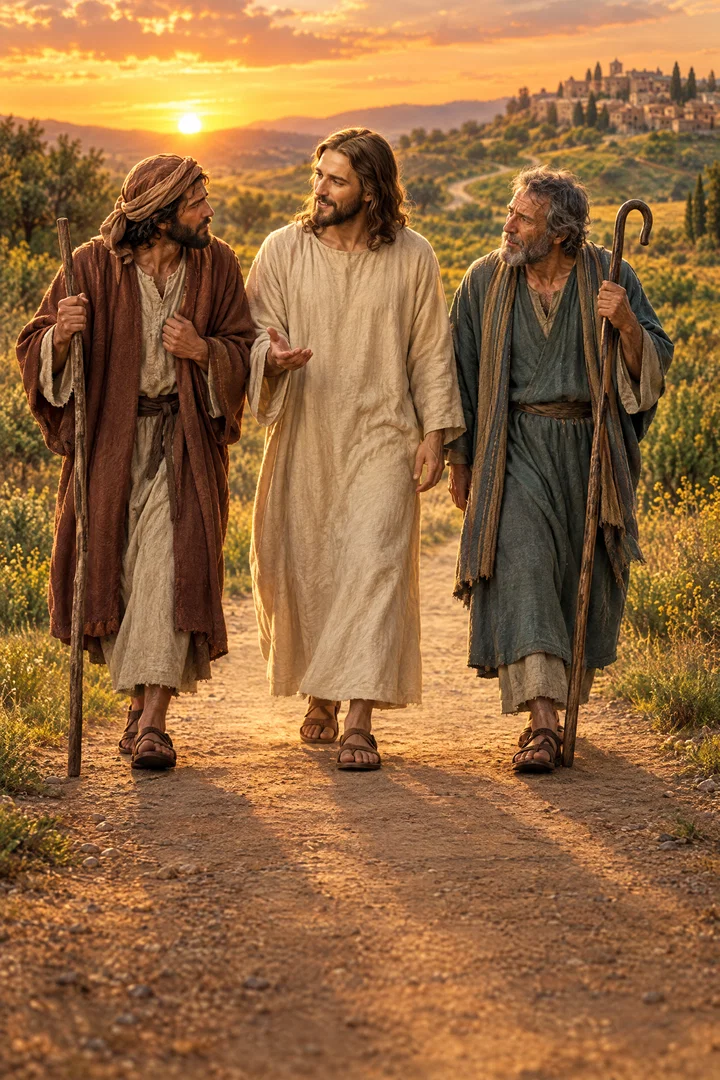
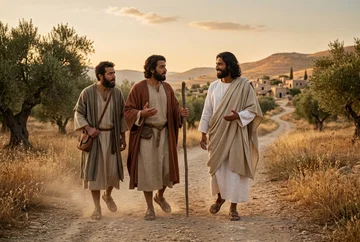
Cross-references 20 of 31
- Luke 24:31
And their eyes were opened, and they knew him; and he vanished out of their sight.
revealed after faith to make joy full
- Luke 24:27
And beginning at Moses and all the prophets, he expounded unto them in all the scriptures the things concerning himself.
Christ explains from Moses and the prophets that the Messiah had to suffer and enter his glory.
- Mark 16:12-13
After that he appeared in another form unto two of them, as they walked, and went into the country.
Jesus appears to two disciples, whose report the others disbelieve.
- Luke 24:32
And they said one to another, Did not our heart burn within us, while he talked with us by the way, and while he opened to us the scriptures?
They recall their hearts burning as Jesus opened the Scriptures.
- Luke 24:36-43
And as they thus spake, Jesus himself stood in the midst of them, and saith unto them, Peace be unto you.
The risen Jesus appears to the gathered disciples with a tangible body.
- John 20:19
Then the same day at evening, being the first day of the week, when the doors were shut where the disciples were assembled for fear of the Jews, came Jesus and stood in the midst, and saith unto them, Peace be unto you.
The risen Jesus appeared among the disciples that evening.
- John 20:14-16
And when she had thus said, she turned herself back, and saw Jesus standing, and knew not that it was Jesus.
Mary also initially saw the risen Jesus without recognizing him.
- Luke 24:34
Saying, The Lord is risen indeed, and hath appeared to Simon.
The disciples report that the risen Lord appeared to Simon.
- Luke 24:29
But they constrained him, saying, Abide with us: for it is toward evening, and the day is far spent. And he went in to tarry with them.
The disciples ask the still-unrecognized Jesus to stay as evening approaches.
- Luke 24:39
Behold my hands and my feet, that it is I myself: handle me, and see; for a spirit hath not flesh and bones, as ye see me have.
Jesus shows his hands and feet to prove he is risen and has a real, touchable body.
- Luke 24:45
Then opened he their understanding, that they might understand the scriptures,
Jesus opened the disciples’ understanding of Scripture.
- John 20:27-28
Then saith he to Thomas, Reach hither thy finger, and behold my hands; and reach hither thy hand, and thrust it into my side: and be not faithless, but believing.
Thomas recognizes the risen Jesus by his crucifixion wounds.
- Mark 16:14
Afterward he appeared unto the eleven as they sat at meat, and upbraided them with their unbelief and hardness of heart, because they believed not them which had seen him after he was risen.
Jesus rebuked the disciples for their unbelief after appearing to them.
- Luke 24:1
Now upon the first day of the week, very early in the morning, they came unto the sepulchre, bringing the spices which they had prepared, and certain others with them.
Places the Emmaus journey on the day Jesus rose.
- Luke 24:21
But we trusted that it had been he which should have redeemed Israel: and beside all this, to day is the third day since these things were done.
The disciples express their lost hope that Jesus would redeem Israel and note it is the third day.
- Luke 24:35
And they told what things were done in the way, and how he was known of them in breaking of bread.
They recounted how they recognized Jesus when he broke bread.
- John 20:29
Jesus saith unto him, Thomas, because thou hast seen me, thou hast believed: blessed are they that have not seen, and yet have believed.
Jesus commends belief that does not depend on seeing him.
- Luke 24:28
And they drew nigh unto the village, whither they went: and he made as though he would have gone further.
Jesus continues the Emmaus journey toward night, with no Sunday restriction.
- Luke 24:6-7
He is not here, but is risen: remember how he spake unto you when he was yet in Galilee,
The women are told Jesus has risen, as he foretold.
- Luke 24:25
Then he said unto them, O fools, and slow of heart to believe all that the prophets have spoken:
Jesus rebukes the disciples’ blindness as slow belief in the prophets.
Commentary
Each commentary is drawn from primary sources: the writings of Ellen G. White and Adventist pioneers and periodicals. Each commentary is separate. Its own words are not a quotation; follow the references to read the source passages.
Ellen G. White
62 sources
On the evening of the resurrection day two disciples walked sadly from Jerusalem toward Emmaus, and the risen Jesus drew near and journeyed with them as an ordinary stranger, while their eyes were held and restrained so they did not know Him for hours.DA 795DA 795.13SP 207.3–208.1ST Sep 19, 18783SP 214.1–2 Grief and disappointment absorbed them, and unbelief blinded them because they did not understand and believe the prophecies of His suffering and glory.DA 795.2ST Nov 14, 1878RH Mar 31, 1903ST Oct 30, 1884 Recognition was withheld on purpose so He could first interpret Moses and all the prophets concerning Himself, that their faith might rest firmly on the Old Testament agreeing with the facts rather than merely on seeing Him alive.COS 181.6–183.13SP 214.1–2ST Sep 19, 1878ST Sep 19, 1878 Their eyes were opened when He blessed the bread and they saw the wounds in His hands, and then He vanished while they hurried back to Jerusalem with burning hearts and joy exceeding their former despair.Ms 110, 1901, par. 4–123SP 215.1–33SP 213.2–36RED 31.3–32.1 As He then taught and comforted the perplexed on their hardest path, so now He walks unseen beside those who meditate on His sacrifice and opens the Scriptures to give peace and consolation.DA 795.23SP 212.1–2SPBC 149.3RP 15.2
Emmaus Road Setting
The verse belongs to the evening of the resurrection day, when two disciples walked from Jerusalem to Emmaus, eight miles away.DA 795DA 795.1COS 181.1–5 They journeyed on foot with staffs across open country as robed travelers, with Jesus walking beside them without being known.DA 795COS 181.6–183.1 He joined them late in the afternoon as they went, coming up as a stranger to walk and talk with them unrecognized.COS 181.6–183.1COS 181.1–5
They walked sadly and weeping, burdened with grief and deeply discouraged and perplexed by Jesus' death and the reports that He had risen.DA 795.1Ms 80, 1886, par. 7–12COS 181.1–5 They were absorbed in perplexing thoughts and busy talk about what had happened, especially the women's report of angels and of meeting Jesus after His resurrection, so that they scarcely noticed they had company and hardly noticed His presence.Ms 80, 1886, par. 7–123SP 207.1–2COS 181.1–5 They were returning home to meditate and pray in hope of gaining light on matters that were dark to them.COS 181.1–5 While their eyes were held from knowing Him He taught them, opening the Scriptures concerning Himself, and their hearts were filled with new hope and joy.15MR 23.4Lt 37, 1887, par. 18–19
The risen Jesus drew near and joined them disguised as a stranger, appearing as an ordinary traveler and fellow traveler returning from the feast.6RED 24.2–25.2ST Sep 19, 18783SP 212.1–26RED 26.1–27.1 His humble, ordinary manner gave no sign that their companion was more than a fellow traveler, though He was the divine Saviour and conqueror of death.ST Sep 19, 18783SP 212.1–26RED 30.1–2 He was the same size as before with no special marks identifying Him as the Son of God, so they took Him for someone else while He spoke of Himself as though He were another.3SP 207.3–208.16RED 24.2–25.2 He came alongside to teach and comfort them, entering their conversation and leaving them free to speak of the events that had confused and saddened them.6RED 24.2–25.23SP 212.1–26RED 26.1–27.1
Why Eyes Were Holden
Their eyes were held and restrained from knowing him while he remained disguised as a stranger, so that sight was clouded and kept from seeing who he was.3SP 207.3–208.13SP 214.1–2ST Sep 19, 18786RED 26.1–27.1 They walked and talked with him for hours as he taught and comforted them, and his truths sank deeply into their discouraged hearts, yet they did not know who he was.ST Sep 19, 1878ST Oct 6, 1909 He entered their conversation and stayed unrecognized while he explained the Scriptures to lead them to faith in his life, character, mission, death and resurrection.3SP 214.1–2ST Sep 19, 18786RED 26.1–27.1
Grief and disappointment so absorbed them that they did not look closely at him.DA 795.2 Absorbed in perplexing thoughts over recent events, especially the reports of the women who had seen angels and met Jesus after his resurrection, and busy with their conversation as they returned home to meditate and pray for light, they scarcely noticed they had company and hardly noticed his presence.3SP 207.1–2COS 181.1–5 Burdened with grief they wept as they traveled, and unbelief had blinded them so that faith and hopes seemed to die with him, with sorrow shaping how they saw him.ST Nov 14, 1878RH Mar 31, 1903COS 181.1–5 Their understanding was blinded by unbelief and sorrow, and their failure to recognize him was linked to failure to believe what Scripture taught about his suffering and glory.RH Mar 31, 1903ST Oct 30, 1884
That failure to recognize him was bound up with failure to understand the prophecies of his suffering and glory, which they only dimly comprehended through priests' traditions and misinterpretations about his trial, death and resurrection.RH Mar 31, 1903ST Oct 30, 18843SP 209.1–210.1 When the prophecies about the Messiah were made clear they could understand that his life and death fulfilled them, and as the Scriptures were explained their faith revived.RH Mar 31, 19033SP 209.1–210.1 They did not fully recognize divinity in humanity while he walked among men in humiliation, being slow to take in the great truths testifying of him and the mystery of his incarnation and dual character of his nature.DA 507.1 In him dwelt knowledge that no human being unaided by divine agency could comprehend, needing the help of him whom kings, prophets and righteous men had foretold, and only after illumination by the Holy Spirit were they brought into fellowship with the Deity, longing to see him again and have him explain the Scriptures and grieving that faith had been feeble and ideas wide of the mark.DA 507.1
In a wider application, eyes are held so what is before them is not recognized when repeated teaching about coming trial and suffering is not grasped because the knowledge is unwelcome.ST Nov 23, 1915 Self-pity makes them shrink from sharing his suffering, and Peter's protest expressed the thought and feeling of all twelve.ST Nov 23, 1915
Deliberate Delay for Faith
Recognition was held back on purpose, and no miracle was done to convince them, because making himself known first would have let joy satisfy them before they had firmly learned the truth.COS 181.6–183.1ST Sep 19, 1878ST Sep 19, 1878 He needed their faith to be established on all the types and prophecies of the Old Testament, so that they would learn that his death was not the destruction of their hopes but the very strongest evidence that he ought to suffer and enter his glory.COS 181.6–183.13SP 214.1–2ST Sep 19, 1878 While still disguised he interpreted the typical law, Moses, and all the prophets, leading them to intelligent faith in his life, character, mission to earth, death, and resurrection.COS 181.6–183.1ST Sep 19, 1878ST Sep 19, 1878 In this way exposition of Scripture became his first work, showing the lasting use and authority of the Old Testament as witness to his mission.COS 181.6–183.1
He delayed revealing himself so that truth would take firm root in their minds on the unquestionable evidence of the law and the prophets agreeing with the facts of his life and death.3SP 214.1–2ST Sep 19, 1878ST Sep 19, 1878 Their faith was to rest on that agreement of Scripture with the facts, rather than merely on seeing him alive or on hearing his personal testimony that he was alive.3SP 214.1–2ST Sep 19, 1878ST Sep 19, 1878 Remaining unrecognized left them free to speak with him about the events that had confused and saddened them, telling why they were sad and giving their account of him as a prophet mighty in deed and word.COS 181.6–183.16RED 24.2–25.2 It also made them hunger for and firmly learn the truths about his life, mission, death, and resurrection before the joy of recognizing him could satisfy them, and it fitted them to impart that truth to others.ST Sep 19, 1878ST Sep 19, 1878 When that object was gained he allowed them to know him so that their joy might be full, and then he vanished from their sight.ST Sep 19, 1878
Their not knowing lasted the whole time he opened the Scriptures to them.Ms 110, 1901, par. 4–12ST Sep 19, 1878ST Oct 6, 1909ST Oct 6, 1909 They walked and talked with him for hours without knowing who he was, while he taught and comforted them.ST Sep 19, 1878ST Oct 6, 1909ST Oct 6, 1909 The truths he spoke sank deeply into their discouraged hearts during that unrecognized teaching.Ms 110, 1901, par. 4–12ST Sep 19, 1878ST Oct 6, 1909ST Oct 6, 1909
Recognition and Joyful Return
Recognition came later at the table when He took the bread and blessed it, and the marks of the crucifixion and the nail wounds in His hands were seen, with His familiar voice also making Him known.Ms 110, 1901, par. 4–123SP 213.2–36RED 31.3–32.1Ms 113, 1897, par. 18 Then their eyes were opened, they rose up to worship Him, and He vanished from their sight.Ms 110, 1901, par. 4–12Ms 113, 1897, par. 18 Their failure to know Him had lasted through the whole time He was opening the Scriptures to them while His teaching sank into their discouraged hearts.Ms 110, 1901, par. 4–123SP 213.2–3
That unknowing continued until they pressed Him to stay with them, and by welcoming Him they came to know that their companion was the Lord.Lt 11, 1875, par. 1–4Ms 113a, 1897, par. 11 Their experience stands as the example of those who want Jesus to remain with them.Lt 11, 1875, par. 1–4Ms 113a, 1897, par. 11 When their eyes were opened they recognized Him and understood the chain of prophecy extending from the patriarchs to that time which foretold what had happened to their Saviour.3SP 217.1–3
Their unknowing belonged to the despairing outward journey from Jerusalem, when they meant to take up their old employment again and conceal their blighted hopes.3SP 215.1–3 It stands in contrast to the late-night return with burning hearts, when joy exceeding their former despair made hunger and fatigue forgotten as they hurried back over the dark, rough, moonless road to Jerusalem.3SP 215.1–3 They hastened to impart to the other disciples the newly found knowledge of a living Saviour risen from the dead, the great truth around which all the faith and hope of the church would center.3SP 215.1–3 While they went, Jesus still attended them unseen and heard with gladness their expressions of joy and gratitude by the way.3SP 215.1–3
He was their unseen companion on the road to Emmaus and all the way from Emmaus back to Jerusalem, walking beside them without being recognized until their eyes were opened.ST Sep 26, 18783SP 216.16RED 34.1–2ST Sep 26, 1878 He entered with them into the upper chamber where the brethren were gathered.ST Sep 26, 18783SP 216.1 There hope and faith were struggling for ascendancy amid excitement, for they had heard the report of Mary Magdalene and the other women but some were too hopeless to believe, while Peter's testimony of his interview with the risen Lord carried more weight and revived faith.3SP 216.2 The Emmaus pair bringing joyful tidings were met with the declaration that the Lord is risen indeed and has appeared to Simon.3SP 216.2
The meeting shows Him as a risen and living Saviour who Himself joined two disciples on the way, walked with them, and made Himself known to them before leaving them.Ms 94, 1897, par. 28–30Ms 78, 1910, par. 30 Beginning at Moses He opened to them in all the prophets the things concerning Himself.Ms 94, 1897, par. 28–30 In that walk abundant evidence was given that makes the resurrection certain.Ms 94, 1897, par. 28–30Ms 78, 1910, par. 30
Scripture Opened and Taught
Beginning at Moses He opened in all the prophets the things concerning Himself, making the prophecies about the Messiah clear so that His life and death could be understood as their fulfillment.3SP 209.1–210.1Ms 94, 1897, par. 28–30 Their darkness and unbelief about His trial, death and resurrection were bound up with the priests' traditions and misinterpretations of prophecy.3SP 209.1–210.1 He joined the two as they walked, speaking as a stranger, and in that walk abundant evidence was given making the resurrection certain.3SP 209.1–210.1Ms 94, 1897, par. 28–30
Their understanding was limited at first, but He opened it by explaining the Old Testament Scriptures and revealing meanings they had not perceived.ST Apr 4, 1906Lt 25, 1903, par. 12–14 After the resurrection He continued on earth as educator as before, when He spoke as never man spoke, teaching the lonely and disappointed on the way to Emmaus and those assembled in the upper chamber.15MR 23.4Lt 37, 1887, par. 18–19 While their eyes were held from knowing Him He opened to them the Scriptures concerning Himself, and their hearts were bound with a holy, new and sacred hope and joy.15MR 23.4Lt 37, 1887, par. 18–19 On the resurrection afternoon He joined two grief-burdened disciples walking to Emmaus while perplexed over the women's report, kept from knowing Him as He talked unrecognized, asked why they were sad, and heard their account of Jesus of Nazareth as a prophet mighty in deed and word, making exposition of Scripture His first work and showing the lasting use and authority of the Old Testament as witness to His mission.COS 181.6–183.1
The same opening of understanding comes when the Holy Spirit shines upon the sacred page for those who seek God humbly and ask Him to guide them into truth, that they may know what is truth.Lt 25, 1903, par. 12–14Lt 141, 1897, par. 39 He talked with them by the way and opened their understanding that they might understand the Scriptures until their hearts burned within them.Lt 141, 1897, par. 39 This calls for study of Daniel, Revelation and the other prophecies of the Old and New Testaments, with prayer for light, yes light, in the dwellings.Lt 141, 1897, par. 39 He opened the Scriptures to the two and later revealed Himself to the eleven, but the reason the two did not recognize Him is left unexplained.Ms 203, 1898, par. 9Lt 37, 1887, par. 18–19
Christ Present Today
He drew near on the resurrection day late in the afternoon to walk the eight miles to Emmaus with two perplexed disciples going home to meditate and pray for light on what was dark to them, especially the women's report of angels and of meeting Jesus risen.3SP 212.1–2COS 181.1–5 He came as a stranger in humble, ordinary manner with no sign to mark Him as more than a fellow traveler, though He was the divine Saviour and conqueror of death.3SP 212.1–26RED 30.1–2 They were so busy with their talk and so burdened with grief that they wept as they traveled and hardly noticed His presence nor looked closely at Him.DA 795.2COS 181.1–5 With pitying heart of love He saw a sorrow there that He could comfort, and He understood their sorrow and would comfort them, yet first He would teach them lessons they would never forget.DA 795.2COS 181.1–5 He walked beside the sorrowing to teach and comfort, identifying Himself with His suffering and perplexed people and attending them on their hardest paths, and though unrecognized His presence brought comfort.3SP 212.1–26RED 30.1–2Ms 80, 1886, par. 27
When eyes are opened mourners can see He is near to give peace and life and consolation even in despondency, and they may accept it.Ms 80, 1886, par. 25–26Ms 80, 1886, par. 27 As He opened the Scriptures concerning Himself their hearts burned within them in contemplation of His teaching and word.SPBC 149.3RP 15.2Lt 57, 1895, par. 33 The same is true now, for Jesus unseen walks beside those who meditate on His incarnation and great sacrifice to save from perdition and bring pardon, peace, and everlasting righteousness.14MR 125.2–3 He surrounds them with the holy atmosphere of His presence and feeds them the bread of life, and His unseen presence is near while they talk.14MR 125.2–3CT 342.1–2 If they knew He was by their side and heard their talk, their hearts would burn with holy joy as did the hearts of the two when He was unseen to them and then opened the Scriptures to them as they listened.14MR 125.2–3Lt 57, 1895, par. 34CT 342.1–2
Those who have centered their affections on Christ and talk together of the plan of redemption, the love of Jesus, salvation offered to fallen man through His infinite love, holiness of heart, precious saving truth for these last days, and the grace of Christ feel that same joy given on the walk to Emmaus and gather divine strength from such hallowed association.5T 600.2 The hidden encounters of the Waldenses with their Redeemer are like that meeting, for He opened the truths of Scripture to them and strengthened them though His presence was not recognized in the same way the two failed to know Him as He walked and talked with them.HSFM 242.4–243.2 People may still meet heavenly visitors appearing as ordinary men and fail to recognize them because eyes are held, for angels visit earth in human guise and communicate with people who do not know who they are.Ms 62, 1886, par. 105–107
The account is instruction for the work given to followers to carry the gospel from Jerusalem to all nations, while the holding of eyes shows the disciples on the road not recognizing Him.RH Jan 26, 1905 Those who truly receive light by seeing Jesus and talking with Him follow the example of the two who at first did not know Him and then received light, by returning to those whom God has led and is still leading and telling what they have seen and learned.RCNBP 6.3–7.1 They show how the light better qualifies them to prepare a people to stand in the great day of God, and they seek counsel from those chosen to bear a living testimony, who have borne and are still bearing the truth and giving the last message of warning and who have had deep experience in God, instead of taking a different line and breaking unity.RCNBP 6.3–7.1 The image of eyes held also describes failing to see a situation as it is and to discern the true character of the work, whether through shortsightedness or deception, as with Elder Olsen who could not see or take in the situation as it was either because he was shortsighted or because some power had deceived him, leading to a blind decision.Lt 25, 1894, par. 14Lt 63, 1894, par. 4–5
Sources
Pioneers and periodicals
106 sources
On the afternoon of the resurrection two disciples walked to Emmaus speaking together of what had happened when Jesus Himself drew near and went with them, but their eyes were held back from knowing Him.ST Dec 10, 1894RH Oct 21, 1862ST Apr 4, 1900 The restraint was laid upon their sight by God and by Jesus Himself for a time, working through their unbelief and sorrow, their hope in one who would free Israel and reign on earth, their taking Him for only a fellow traveler, and their slowness in what Moses and the prophets had spoken concerning Him.RH Oct 21, 1862GSAM 69.2–70.1ST Jan 30, 1912RH Oct 23, 1856ST Feb 3, 1887 He kept Himself unknown while He opened Moses, the prophets, and all the Scriptures concerning Himself, so their faith would rest on prophecy fulfilled in His suffering, death, and resurrection and their hearts would burn before He was made known in the breaking of bread by His wounded hands and then vanished from their sight.ST Oct 14, 1889ST Sep 19, 1878ST Sep 19, 1878GSAM 69.2–70.1ST Apr 17, 1901 His being unrecognized at first did not mean another person or another body, for He rose the same crucified One in a real body bearing the marks, though some taught the buried flesh was dissolved and He appeared in a spiritual body seen only when sight was given.RH Nov 21, 1854RH Nov 26, 1872RH Nov 26, 1872RH Oct 8, 1903RH Nov 26, 1872 That first day itself was spent in ordinary journeying, sorrow, doubt, and unbelief with no worship, rest, or command, giving no warrant for first-day sacredness.RH Nov 1850ST Oct 5, 1882RH May 1, 1900
Emmaus Journey Setting
Two disciples were on the way to Emmaus talking together about all that had happened, and Jesus Himself drew near and went with them, yet their eyes were holden so that they did not know Him.RH Oct 21, 1862ST Apr 4, 1900ST Apr 4, 1900GSAM 69.2–70.1ST Apr 17, 1901 They were anxiously desirous to learn what these events meant to their hopes for the future, and He introduced Himself by asking what they were discussing as they walked.ST Apr 4, 1900ST Apr 4, 1900 Their eyes were kept from knowing Him on the road, and they did not recognize Him until He later broke bread with them.ST Dec 10, 1894GSAM 69.2–70.1ST Apr 17, 1901
The village lay threescore furlongs, upwards of seven miles, or about seven and one-half miles, from Jerusalem, and He joined them in the latter part of the afternoon of resurrection day.ST Apr 13, 1882ST Oct 5, 1882RH Jan 17, 1856 He acted as though He would continue farther, but was made known to them at supper at Emmaus when the day was far spent, toward the close of the day.ST Apr 13, 1882ST Oct 5, 1882RH Jan 17, 1856 After that disclosure they arose that night and returned to Jerusalem, making about fifteen miles of travel that day going and returning on foot.ST Apr 13, 1882RH May 1, 1900 The meeting was a traveling encounter ending in a supper disclosure, not a called worship assembly.ST Apr 13, 1882
That manifestation is counted among the resurrection appearances that day before the joint evening meeting with the disciples after sunset.ST Apr 13, 1882ST Apr 13, 1882 It is reckoned as the second of three separate manifestations that day, together with His being seen by the women at the sepulchre and by Peter at Jerusalem just before sunset.ST Apr 13, 1882ST Apr 13, 1882 It is also reckoned as the fourth appearance with a fifth to follow in Jerusalem, and as one of five appearances on the day of the resurrection.RH Apr 12, 1860 Luke alone records the Emmaus account with details the others omit, and those differences do not by themselves make the accounts contradictory.ST Mar 5, 1912ST Apr 28, 1909
Their eyes being holden means their eyes were restrained, held, and kept from seeing who He was, as if clouded from recognizing Him.ST Dec 10, 1894RH Oct 23, 1856 They did not recognize the risen Jesus as He walked with them, and the failure occurred on the day of His resurrection before He was made known near the close of the day.ST Dec 10, 1894RH Nov 21, 1854RH Oct 23, 1856 They knew Him later at their lodging in the breaking of bread, when they saw the nail prints and pierced, nail-marked hands.ST Oct 14, 1889ST Dec 10, 1894GSAM 69.2–70.1RH Nov 21, 1854 After that recognition He vanished from sight, identified as the same person who had been crucified and buried.RH Nov 21, 1854
The same chapter is read as instruction for the work of carrying the gospel from Jerusalem to all nations.RH Jan 26, 1905 The two returned and told the others what had happened, but the eleven did not believe their report.ST Nov 11, 1889RH Jun 5, 1860 Eyes could be holden in the same way when Mary met Jesus at the tomb, did not know Him, and supposed Him to be the gardener. They walked beside Him and heard Him converse, discussing His crucifixion and resurrection until His words led them to recognize Him as the risen Redeemer and Conqueror of death, and their encounter brought joy and the message that He is risen.ST Jan 7, 1889RH Jul 6, 1911 At Emmaus they sat sad-hearted and despondent while the holy women hurried to the sepulchre after the Lord had risen.
Causes of Nonrecognition
Their sight was held back for a time by divine restraint, so that although He drew near and walked with them on resurrection day they did not know Him.ST Sep 19, 1878RH Oct 21, 1862GSAM 69.2–70.1RH Oct 23, 1856 The holding meant their eyes were restrained, held, kept and clouded from seeing who He was, and the failure to see His glory lasted until His work with them was done and their eyes were opened when He broke bread and was made known near the close of the day.ST Sep 19, 1878GSAM 69.2–70.1RH Oct 23, 1856ST Jun 30, 1898 He Himself deliberately kept them from recognizing Him while He came disguised as a stranger, which allowed Him to speak with them and explain from Scripture why the Messiah had to suffer and enter His glory though they still doubted the report that He was alive.ST Sep 19, 1878RH Oct 21, 1862ST Jun 30, 1898 The same holding explains how eyes can be kept from recognizing Him so that He could pass through a hostile crowd without vanishing because the people were unable to see Him.ST Jun 30, 1898
Unbelief had blinded them, for their faith and hopes had died with Him.ST Sep 19, 1878ST Nov 14, 1878ST Jul 29, 1908ST Jan 30, 1912ST Feb 3, 1887 Grief and disappointment absorbed them so fully that they did not observe Him closely, and sorrow, mourning, weeping and sadness over His death shaped how they saw Him as they walked and talked with Him for hours.ST Sep 19, 1878ST Jul 29, 1908ST Feb 10, 1881ST Dec 3, 1874ST Jul 21, 1898 They spoke of His death and of the report that He had appeared to the women, yet they did not believe that He had risen and remained doubtful that He was the Messiah.RH Oct 21, 1862ST Jan 30, 1912ST Feb 3, 1887 The truths He spoke as He taught and comforted them sank deeply into their discouraged hearts, yet they did not know who He was until He answered their doubt by showing from the Scriptures that the Messiah had to suffer and enter His glory.ST Sep 19, 1878ST Nov 14, 1878ST Jan 30, 1912
They understood Him chiefly as a mighty man who would redeem Israel by freeing them from under the Romans and establishing a temporal kingdom in the line of David, not as Saviour from sin through death and intercession.RH Dec 1, 1874ST Feb 22, 1899ST Dec 3, 1874RH Jan 21, 1873ST Apr 17, 1901 They did not yet see that He had to be crucified and rise again and were not looking forward with joyous hope to the third day, so His death seemed to defeat their hopes and leave them blasted, mourning and weeping with astonishment at the report of the women that He was alive despite the prophecies fulfilled in Him and the miracles they had witnessed.RH Dec 1, 1874ST Feb 22, 1899ST Dec 3, 1874RH Jan 21, 1873ST Apr 17, 1901 Their trust was mixed with erroneous expectation of a natural, temporal kingdom, and their incomplete understanding and slowness of heart meant that even the fact of resurrection could not by itself correct their mistaken ideas, for they needed first to understand the Gospel and the Messiah's mission from Moses and all the prophets.RH Dec 1, 1874ST Dec 3, 1874RH Jan 21, 1873ST Apr 17, 1901RH Feb 28, 1854 Their disappointment gave way to renewed hope only as further light clarified their mistake, showing that people may understand some truth about Christ without yet understanding all of it, and that Scripture rather than visible proof must ground faith and correct false ideas about the Messiah and Israel.RH Dec 1, 1874RH Jan 21, 1873ST Apr 17, 1901 The same blindness and bitter disappointment belonged afterward to believers after the first angel's message about His speedy coming, now reconciled by light from the sacred page, when the Comforter, the Spirit of truth, took the veil away so they could expound Scripture with clearness and power that convinced hearers by the thousand with burning hearts and certainty that the Deliverer at the second advent is at hand.RH Jan 21, 1873
He came to them in another form as a stranger and wayfaring man, and His humble manner gave them no reason to see Him as more than a fellow traveler returning from the feast.ST Sep 19, 1878ST Sep 19, 1878RH Jan 21, 1873RH Aug 12, 1862ST Oct 4, 1899 They took Him for an unfamiliar stranger and did not observe Him closely, though Cleopas and his companion found the walk becoming a joyful and pleasant journey through His companionship and His conversation reminded them of Jesus so that they wanted Him to stay with them.ST Jul 29, 1908ST Sep 19, 1878RH Aug 12, 1862RH Nov 14, 1912 He mercifully sought His disciples on the very day of His resurrection when their hearts were breaking with sadness at His death, joining two disappointed souls as they walked into the country sad and talking together of His death and all their disappointed hopes because they did not believe He had risen.RH Aug 12, 1862RH Nov 14, 1912ST Oct 4, 1899
Their blindness came from not being acquainted with the Scriptures concerning Christ and from dullness and obtuseness in understanding and applying what the prophets had spoken.ST Feb 10, 1881ST Oct 30, 1884ST Jul 21, 1898ST Mar 3, 1881ST Had they known prophecy plainly stating the treatment Christ would receive, their faith would have been sustained and their hopes unshaken, but unbelief and sorrow blinded their understanding so they did not discern the risen Saviour though He drew near unrecognized while they talked over disappointed hopes over the death of the Master.ST Feb 10, 1881ST Oct 30, 1884ST Jul 21, 1898 Though longing to reveal Himself, He did not do so abruptly but came as a fellow traveler asking why they were sad, and they listened with wonder and delight until night came and they reached home and pressed Him to tarry, the blindness lasting until the evening meal at Emmaus when His words, His manner, and His wounded hands revealed Him and faith revived only when the words of Moses and the prophets were brought to remembrance.ST Feb 10, 1881ST Mar 3, 1881 Their experience proves that prophecy is practical because applying prophecy rightly was necessary in order to receive the risen Saviour as the world's Redeemer, and it warns that neglecting the prophetic Word leaves people unable to understand events in the light of Christ's work and coming.ST Oct 30, 1884ST Mar 3, 1881ST
Their travel is described as secular business, not a religious gathering.RH Aug 1, 1854 Their walking together and grieving after His death, when their hopes that He would redeem Israel had been disappointed, is used as a parallel to the disappointment of Advent believers when 1844 passed without His return, without adding an explanation of why their eyes were held.RH Jul 24, 1856RH Aug 1, 1854
Purpose in Withholding Recognition
Their eyes were held from knowing Him while He opened Moses and all the prophets and the typical law concerning Himself, so that they would hunger for truth and learn firmly His life, character, mission, death and resurrection before recognition could satisfy them.ST Sep 19, 1878ST Sep 19, 1878 Their faith was to rest on the unquestionable evidence of prophecy agreeing with the facts of His life and death, not merely on His personal presence proving He was alive.ST Sep 19, 1878ST Sep 19, 1878 They were kept from recognizing Him in bodily form so they would first see Him in the Scriptures, giving a lasting knowledge that could remain after His visible presence was gone and be shared through preaching.RH Jan 12, 1911 Their trust was mixed with the mistaken hope that He would redeem Israel by a natural temporal kingdom, so His death seemed to defeat them, and even the fact of resurrection by itself could not correct that error until they understood from Moses and the prophets the Gospel and the Messiah's mission.ST Apr 17, 1901 This withholding reverses human expectation, which would prove by sight first and teach afterward, for conviction had to be by faith and not by sight, since the gospel was to be preached by men whose hearers must believe because of the Word proclaimed and not because of anything wonderful in the preachers themselves, as Paul's letters were weighty and powerful while his bodily presence was weak, and men are sanctified through truth only so far as the preacher presents it intelligibly.ST Apr 17, 1901
He Himself drew near and walked with them as they talked together about all that had happened and anxiously desired to learn what it meant for their hopes, introducing Himself by asking their theme, and He still draws near in the same way to every anxious inquirer to give the soul's longing for knowledge of the plan of salvation.ST Apr 4, 1900ST Apr 4, 1900 He came to teach and comfort and encourage the disappointed, discouraged and sad whose conversation was of Him and whose hearts could be reached by truth in their need of counsel, for the same reason He showed Himself to Mary Magdalene that morning, to make them witnesses of the truth.ST Apr 17, 1901 When that work of rooting truth firmly in their minds was done, He allowed them to know Him that their joy might be full, and then vanished from sight.ST Sep 19, 1878
Though longing to reveal Himself, He did not do so abruptly but came as a fellow traveler asking why they were sad, their faith having died with Him and unbelief blinding them.ST Feb 10, 1881 He stole upon them unrecognized and played the stranger in sympathetic humanity, responsive to outward impressions and to the needs and feelings of those He met, and He hesitated at the door to draw out a more cordial welcome.ST Feb 8, 1883 The blindness lasted until the evening meal, when His words, His manner, and His wounded hands revealed Him.ST Feb 10, 1881ST Sep 19, 1878
Although they did not know who He was, they walked and talked with Him for hours as He taught and comforted them, and the truths He spoke sank deeply into their discouraged hearts.ST Sep 19, 1878ST Oct 6, 1909ST Oct 6, 1909
Resurrection Body Identity
The risen Jesus on the road is the same person who was crucified and buried, and the temporary failure to know him does not mean his bodily identity had changed.RH Nov 21, 1854RH Nov 26, 1872ST Feb 21, 1878 His body is literal, visible and touchable, bearing the marks of crucifixion, with bodily form and personal presence, and the hindrance lay in eyes that were held rather than in a body too strange to recognize.RH Nov 26, 1872RH Oct 8, 1903 He was kept from recognition for a time and appeared as a stranger, then was known in the familiar act of blessing and breaking bread when eyes were opened.RH Nov 21, 1854ST Feb 21, 1878 The same holding of eyes explains Mary's failure and the disciples' failure alike.RH Nov 26, 1872
He can be present without being known, accompanying travelers as an unseen companion until he makes himself known.ST Jul 29, 1908ST Sep 26, 1878ST Sep 26, 1878ST Jun 3, 1897 He walks beside them unrecognized, remains unseen beside them even as they hurry back to Jerusalem unaware of his protection, and later vanishes from sight.ST Jul 29, 1908ST Sep 26, 1878ST Oct 6, 1914 Because eyes can be held so people do not recognize him, he can also pass through a hostile crowd without vanishing, since the people are unable to see him.ST Jun 30, 1898
Those who held the opposite taught that failure to know him proves the resurrected body was not the same veritable material body of flesh, blood and bones that was buried.RH Nov 26, 1872 In that teaching his appearances after resurrection were not generally in the revived fleshly body, though the body was revivified and removed from the tomb as proof that he was alive and he could at times resume it to appear in earthly form.RH Nov 26, 1872 The usual manner of perceiving his real spiritual body, which is seen only by spiritual eyes, was the couching or opening of the spirit eyes of the beholders, as with Mary at the tomb and the travelers to Emmaus.RH Nov 26, 1872 Appearing under a variety of forms, entering rooms without opening, and not being seen by the people generally prove he was not always possessed of that material body of flesh, blood and bones and did not ascend in it.RH Nov 26, 1872 His natural body was instantly resolved into its original gases as at Elijah's translation, while he possessed the spiritual body in which he ascended, the same body Stephen saw when stoned and Saul saw, with the ascension itself being the closing up of the spiritual eyes of the beholders, in which same spiritual manner he will come.RH Nov 26, 1872
His vanishing after breaking bread shows a post-resurrection existence that is Spirit-born, like the wind whose coming and going cannot be traced.RH Jan 22, 1857 Yet not recognizing him at first is no proof against the truth of the resurrection, with understanding coming in God's own time through the Spirit's teaching.RH Aug 26, 1862
First Day Sabbath Question
The first day after the resurrection was spent in ordinary journeying and secular activity, in bustle and anxiety and sorrow and mourning and weeping, in doubt and fear and unbelief, with no sacred title and no worship and no rest and no command attached to it.RH Nov 1850ST Oct 5, 1882RH May 1, 1900RH Oct 28, 1915ST Nov 11, 1889 Two disciples spent the first part of the day walking seven and one-half miles on foot from Jerusalem into the country to Emmaus, meeting Jesus on the way without recognizing Him, and returning late in the evening to report to the others.ST Oct 5, 1882RH May 1, 1900ST Oct 17, 1878ST Nov 11, 1889 Those who heard the report did not believe that He had risen, but remained together behind shut doors for fear, eating supper and terrified when He stood in the midst until He showed His hands and feet and reproved unbelief.RH May 1, 1900ST Nov 11, 1889 The walk and the evening telling were not a religious observance honoring the resurrection nor a keeping of the day as Sabbath, and the meeting gives no indication that the day was sacred or that the journey was undertaken for worship.RH Nov 1850RH May 1, 1900ST Oct 17, 1878RH Oct 28, 1915ST Nov 11, 1889 The whole day was one of busy travel and unbelief with no act setting Sunday apart as Sabbath, so the account gives no warrant for Sunday sacredness or for observing the first day as Sabbath or Lord's day.RH Nov 1850RH May 1, 1900ST Nov 11, 1889
Jesus Himself drew near and walked with the two on the road to the village seven and one-half miles from Jerusalem in the daytime, in the garb of a wayfaring man, talking and reasoning without being known, though they were not going to attend a religious meeting.RH Dec 16, 1858RH Nov 19, 1872ST Mar 16, 1882RH May 5, 1851 He acted as one ready to go farther until constrained to abide because it was toward evening and the day was far spent, then sat at meat, revealed Himself in the breaking of bread, and disappeared, leaving them to walk the seven and one-half miles back to Jerusalem that night to find the eleven gathered together.RH Nov 19, 1872ST Mar 16, 1882 He gave no word about Sunday sanctity and no caution against traveling on that day, and by Himself accompanying them and speaking peace to those who had walked fifteen miles He approved the propriety of the going and returning journey.RH Nov 19, 1872ST Mar 16, 1882RH May 5, 1851 His active journeying shows He was not resting that day, which contradicts the claim that the day is the Lord's day because the Lord rested on it, and the walk and night gathering gave no hint of a new Sabbath and were not worship meetings to honor the first day on account of the resurrection.RH Dec 16, 1858RH Nov 19, 1872RH May 5, 1851 Sunday keeping was never commanded by God or Christ or any inspired man and was never kept by resting by God or Christ or prophets or apostles, and Jesus remains Lord of the only Bible Sabbath made for man.RH May 5, 1851
The timing details confirm ordinary travel toward evening when the day was far spent, a journey of seven and one-half miles each way and fifteen miles going and returning on foot, arriving nearly night.RH Sep 25, 1856RH Aug 19, 1851ST Jan 4, 1877ST Jan 29, 1902 That journey was longer than a Sabbath day's journey allowed, which proves the first day was not kept as a Sabbath and that travel and labor were permitted on it while the seventh day remained the day of rest.RH Aug 19, 1851ST Jan 29, 1902 The whole day was one of travel and busy activity with no rest kept and no command to keep Sabbath twice a week, since rest from labor is essential to a Sabbath.RH Aug 19, 1851ST Jan 4, 1877ST Jan 29, 1902 The evening meeting with the disciples was after sunset when by evening reckoning the second day had begun, with Thomas absent and most still unconvinced that He had risen, and was not held to celebrate the resurrection.RH Aug 19, 1851ST Jan 4, 1877 The later meetings after eight days near the middle of the week and while fishing prove a Sabbath no more than these first meetings do.ST Jan 4, 1877
Those who held the opposite taught that from that afternoon and evening when He preached to the apostles at Emmaus and in Jerusalem, the apostles and a large majority of Christians have been content to observe public worship on the first day of the week as the Christian Sabbath.ST Jul 2, 1894 By a further nuance, His walking and meeting and instructing on that day does not mean He did not rest on it, because divine rest does not mean ceasing all motion and becoming perfectly inactive.RH Aug 1, 1871 As God's rest on the seventh day meant only resting from the work of creation, so Christ's rest on the first day meant resting from the work of redemption.RH Aug 1, 1871
Scripture Prophecy Instruction
The two on the road did not know Him, and in their doubt whether He was the Messiah He called them fools and slow of heart to believe all the prophets had spoken.ST Jan 30, 1912ST Mar 13, 1901 He taught that Christ had to suffer these things and enter into His glory, beginning at Moses and all the prophets and expounding in all the Scriptures the things concerning Himself.ST Sep 19, 1878ST Jan 30, 1912ST Mar 13, 1901 Their failure to know Him went with mourning and weeping after His death, disappointment over the crucifixion, lack of faith in His resurrection, and astonishment at the report of the women that He was alive, for they spoke of His death and reports of His resurrection without believing He had risen.ST Dec 3, 1874 They did not understand the plan of God for salvation through the death and intercession of Christ and were not looking forward with joyous hope to the third day, because their hope that He would redeem Israel meant they supposed He would free them from the Romans and establish His kingdom.ST Dec 3, 1874 Their understanding was limited at first, but when He opened the Scriptures their hearts burned within them, showing that the entrance of God's words gives light and understanding to the simple and reveals meanings not before perceived, renewing hope and leading them to accept Him as Son of God and Messiah, after which He made Himself known to them.ST Sep 19, 1878ST Apr 4, 1906ST Mar 13, 1901
Their disappointment over an expected earthly crowning did not prove Christianity false, for He afterward showed them that the cross was only fulfillment of prophecy.RH Dec 8, 1874 In the same way disappointment over the speedy coming does not prove the doctrine of Christ's soon coming false, and their sadness after blasted hopes parallels the Advent believers' disappointment when 1844 passed.RH Dec 8, 1874RH Jul 24, 1856 Their blindness came from looking for a king in the line of David who would deliver Israel and from failing to understand what was written, so they needed the Comforter, the Spirit of truth, to take the veil away.RH Jan 21, 1873 When the Spirit came they could expound Scripture with clearness and power that convinced hearers by the thousand, and the same blindness and bitter disappointment belongs to believers after the first angel's message about His speedy coming, now reconciled by light from the sacred page with burning hearts and certainty that the Deliverer at the second advent is at hand.RH Jan 21, 1873
Unbelief had blinded them so that faith and hopes died with Him, and He chose to walk with them and explain the Scriptures before revealing Himself.ST Nov 14, 1878ST Feb 10, 1881 The blindness came from not being acquainted with the Scriptures concerning Christ, and had they known prophecy plainly stating the treatment Christ would receive, their faith would have been sustained and their hopes unshaken.ST Nov 14, 1878ST Feb 10, 1881 Faith revived only when the words of Moses and the prophets were brought to remembrance, and when their eyes were opened they understood the chain of prophecy extending from the patriarchs to that time which foretold what had happened to their Saviour.ST Feb 10, 1881 Their failure to know Him at once, though they listened with wonder and delight until night and pressed Him to tarry, exposes obtuseness and unbelief in applying what the prophets had spoken, and proves that prophecy is practical because applying prophecy rightly was necessary in order to receive the risen Saviour as the world's Redeemer.ST Mar 3, 1881 Neglecting the prophetic Word leaves people unable to understand events in the light of Christ's work and coming.ST
The meeting was a shower of blessing preceding the early rain in preparation for the pentecostal baptism, given to two sad-hearted and lonely disciples journeying late on resurrection day toward their home seven miles away.ST Nov 11, 1908 He gave them a Bible reading on the crucified Messiah, rehearsing and explaining the Scriptures that speak definitely of His advent, death, and work of redemption, which made their hearts burn within them and led to copious blessing when they constrained Him to tarry and sup with them.RH Jan 21, 1873ST Nov 11, 1908 When their eyes were opened they understood more fully the Scriptures and Christ's mission, death, and resurrection, for the Holy Spirit opened their understanding.RH Aug 11, 1903 This shows that receiving the Holy Spirit brings clearer understanding of God's truth, including truth that can make familiar beliefs newly understood, and that in the last days the Spirit will open understanding of present truth.RH Aug 11, 1903
Late on that first day they called it the third day since the betrayal, suffering, and crucifixion, counting those events within the three days. Their conversation on the road took place late on the first day of the week, which they identified as the third day since the events of the crucifixion, showing that He rose on the third day with one day intervening between His death and resurrection.RH Apr 20, 1905 Giving light from God's Word to people who are spiritually bewildered and groping toward understanding, as He instructed the two journeying home from Jerusalem, can bring spiritual help that may lead to eternal life.RH Mar 13, 1913 Walking with Jesus as He taught those disciples makes Him their teacher and enables His followers to lead others to the fountain of life.RH Dec 3, 1901
Present Spiritual Applications
Jesus still draws near in the same way now to every anxious inquirer who is anxiously desirous to learn what events mean for future hope, asking what is discussed on the way in order to give what the soul longs for, a knowledge of the plan of salvation.ST Apr 4, 1900ST Apr 4, 1900 He walks with sad travelers who fail to recognize Him, and He can be nearer to people in sorrow than they suppose, bringing courage through words from Scripture that make hearts burn within.ST Jun 26, 1901 He comes beside disciples on the road wherever they are and welcomes them to tell Him their grief, then opens the Scriptures to them.ST Apr 7, 1881 When conversation is about sacred themes instead of common business such as the sheep market in Jerusalem or the price of olive oil, doves, or young pigeons, Christ joins the company and can have a share unrecognized in faithful conversation, while failure in religious converse keeps hearts from being made glad by His presence.ST Mar 1, 1905 Those who mourn that He is gone while telling Him their grief do not see that He is already present walking and talking with them, and their sorrow holds a hidden victory because Christ is near.ST Nov 25, 1886 He comes to give knowledge of God’s plan to those anxiously trying to understand recent events, to cheer hearts, and to be sought as companion seen by faith in everyday journeys.ST Apr 4, 1900ST Jun 26, 1901ST Apr 4, 1900
Eyes can be held so people do not recognize Jesus, and this explains how He could pass through a hostile crowd without vanishing, because the people were unable to see Him.ST Jun 30, 1898 God can holden the eyes of hostile officers so that though they look toward those they are seeking they do not know them, and thus His servants escape arrest, which is literal divine withholding of recognition for protection in danger.RH Dec 9, 1902 God can keep the eyes of violent men from knowing His servant standing before them so they do him no harm, leaving them silent and still, moving only to open a free passage for him to walk through untouched with his companions, and the same divine power overawes them so they cannot lift a hand or speak a word against him until after he has escaped, when they wake as from a dream to find their prey gone.ST May 13, 1875
Eyes being held illustrates how believers who gave the first angel’s message failed to see that two messages would follow theirs and that Christ would come after all three messages had been given.ST Oct 17, 1878RH Feb 25, 1875 Advent preaching proclaimed the hour of judgment as come and proved from prophecy and the signs of the times that judgment was near, preaching it as an immediate event without seeing the messages of the second and third angels that were to follow, because eyes can be holden so people do not see beyond the work then present.RH Sep 2, 1851 Those who gave the first angel’s message naturally concluded that the angel’s oath about the ending of prophetic time announced the coming of Christ and the end of the dispensation, and fully believed that time would be no longer at the close of their message, because they did not understand that the judgment must sit and the sanctuary be cleansed before the coming of the Lord.RH Feb 25, 1875 They correctly proclaimed that prophetic time would end and the prophetic periods ended as expected and the judgment began, yet they did not understand the work of judgment or expect the disappointment, mistakenly thinking this meant probationary time would end.RH Dec 1, 1904 God holds eyes from seeing truth until the appointed time, so Adventists who had announced the first and second angels’ messages had their eyes holden from seeing the cleansing of the sanctuary at the end of the 2300 days, the closing work of Christ as High Priest and Advocate at the throne of judgment, and the third angel’s loud final warning against worship of the beast and his image and receiving his mark, calling to keep the commandments of God and the faith of Jesus.RH Mar 25, 1875 They expected Christ to come before that solemn ministration was fulfilled and before that decisive warning was even announced, but God permitted the error and the 1844 disappointment to humble and prove them and to lead them to look into the most holy place in the heavenly temple and into truth of which they and almost the whole Christian world were ignorant, just as the first disciples fulfilled prophecy without understanding and were disappointed, so that after disappointment they must prophesy again with a message that will not end in disappointment but in Christ’s coming.RH Mar 25, 1875
Eyes held also describes people who have not yet recognized the heavenly Father, though He is near to them in Jesus Christ.ST Dec 27, 1905 It illustrates how people can fail to recognize the way God is leading them while they wander from His loving will, and when they finally reach the promised Canaan they will marvel that their eyes were held and they could not see the way to set their feet.ST Aug 25, 1887 Eyes can be held so people do not know a true messenger of God with them because they have been blessed with close companionship with him, taking for certain that one known so well cannot be a prophet, so many households only know the prophet after death has taken him away, and people entertain angels without awareness and feel bitterly when too late that they did not know them.ST Apr 22, 1889 A person’s eyes can be holden so that he does not know what happens directly in front of him, so that even a man watching very closely every candidate stepping into the water can fail to see his own sister go down into the water and be baptized, missing what occurred while it was taking place before him.RH Aug 11, 1904 The phrase describes failure to know Him despite His presence, applied to a preacher who imagines that Christ was present in church and listening yet remained unrecognized, prompting self-examination of preaching and worship. Eyes can be held so a person does not recognize the Lord’s presence with them, helping and strengthening them through hardship.ST Jun 5, 1901
The journey took place on the evening of the first day of the week, the resurrection day, when many disciples were still uncertain what had become of the body of Jesus, as two men left crowded Jerusalem by the eastern gate for Emmaus about eight miles to the northwest, walking northward toward the mountains of Ephraim and talking about the strange events of the past three days.ST Feb 14, 1911 One was Cleopas of Emmaus, the merchant whose withered hand had been restored at Capernaum, returning home after attending the Passover, and the other was Matthias traveling with him.ST Feb 14, 1911 He stole upon His disciples unrecognized and played the stranger, with their sight restrained so they did not know Him, showing a sympathetic human nature encouraged or cast down by the same circumstances that act upon people, responsive to outward impressions, to the love of friends, and to the needs and feelings of those He met, and He hesitated at the door to draw out a more cordial welcome.ST Feb 8, 1883 The Emmaus encounter on the day of resurrection, when Jesus communed with two disciples as a loving friend talking with them and sharing their hospitality, illustrates communion as friendly conversation and close fellowship.RH May 8, 1913 The disciples’ inability to recognize Jesus as He walked with them is compared with a Jewish man’s amazement and eagerness as the gospel was explained to him from Moses and the prophets.
Sources