Mark 6:3
Is not this the carpenter, the son of Mary, the brother of James, and Joses, and of Juda, and Simon? and are not his sisters here with us? And they were offended at him.
Translations
American King James Version, King James Version, KJV Cambridge Paragraph Bible
Is not this the carpenter, the son of Mary, the brother of James, and Joses, and of Juda, and Simon? and are not his sisters here with us? And they were offended at him.
Is not this the carpenter, the son of Mary, the brother of James, and Joses, and of Judas, and Simon? and are not his sisters here with us? And they were offended at him.
Revised Version, American Standard Version, Darby Translation
Is not this the carpenter, the son of Mary, and brother of James, and Joses, and Judas, and Simon? and are not his sisters here with us? And they were offended in him.
Is not this the carpenter, the son of Mary, and brother of James, and Joses, and Judas, and Simon? and are not his sisters here with us?' — and they were being stumbled at him.
Is not, this, the carpenter? the son of Mary, the brother of James and Joses and Judas and Simon? And are not his sisters here with us?—and they were finding cause of stumbling in him.
Berean Standard Bible, Majority Standard Bible
Isn’ t this the carpenter, the son of Mary and the brother of James, Joses, Judas, and Simon? Aren’ t His sisters here with us as well?” And they took offense at Him.
Isn’ t this the carpenter, the son of Mary and brother of James, Joses, Judah, and Simon? Aren’ t his sisters here with us?” So they were offended at him.
Is not this the woodworker, the son of Mary, and brother of James and Joses and Judas and Simon? and are not his sisters here with us? And they were bitter against him.
Is not this that carpenter Maries sonne, the brother of Iames and Ioses, and of Iuda and Simon? and are not his sisters here with vs? And they were offended in him.
Douay-Rheims (Challoner revision)
Is not this the carpenter, the son of Mary, the brother of James, and Joseph, and Jude, and Simon? are not also his sisters here with us? And they were scandalized in regard of him.
Pictures


Cross-references
- Matthew 13:55
Is not this the carpenter’s son? is not his mother called Mary? and his brethren, James, and Joses, and Simon, and Judas?
Identifies Jesus as a carpenter and names members of his family.
- Luke 2:51
And he went down with them, and came to Nazareth, and was subject unto them: but his mother kept all these sayings in her heart.
Jesus was subject to his parents.
- Luke 4:24
And he said, Verily I say unto you, No prophet is accepted in his own country.
Jesus says a prophet is not accepted in his own country.
- John 7:3-5
His brethren therefore said unto him, Depart hence, and go into Judæa, that thy disciples also may see the works that thou doest.
His brothers advise Jesus, yet do not believe in him.
- Matthew 12:46-47
While he yet talked to the people, behold, his mother and his brethren stood without, desiring to speak with him.
Both texts mention Jesus’ mother and brothers.
- John 6:42
And they said, Is not this Jesus, the son of Joseph, whose father and mother we know? how is it then that he saith, I came down from heaven?
People reject Jesus’ heavenly origin because they know his earthly family.
- Galatians 1:19
But other of the apostles saw I none, save James the Lord’s brother.
Both identify James as Jesus’ brother.
- Luke 4:22
And all bare him witness, and wondered at the gracious words which proceeded out of his mouth. And they said, Is not this Joseph’s son?
The audience questions Jesus’ identity and reacts to his words.
- John 7:5
For neither did his brethren believe in him.
Jesus’ brothers did not believe in him.
- Luke 8:19-20
Then came to him his mother and his brethren, and could not come at him for the press.
Jesus’ mother and brothers come seeking him.
- John 1:46
And Nathanael said unto him, Can there any good thing come out of Nazareth? Philip saith unto him, Come and see.
Both texts reflect contempt toward Jesus because of his association with Nazareth.
- Matthew 13:57
And they were offended in him. But Jesus said unto them, A prophet is not without honour, save in his own country, and in his own house.
Jesus teaches that a prophet lacks honor in his own country and house.
- Mark 3:31
There came then his brethren and his mother, and, standing without, sent unto him, calling him.
Jesus’ mother and brothers seek him.
- John 2:12
After this he went down to Capernaum, he, and his mother, and his brethren, and his disciples: and they continued there not many days.
Mentions Jesus’ mother and brothers accompanying him.
- Luke 4:23
And he said unto them, Ye will surely say unto me this proverb, Physician, heal thyself: whatsoever we have heard done in Capernaum, do also here in thy country.
Nazareth demands that Jesus perform there the miracles heard of elsewhere.
Commentary
Each commentary is drawn from primary sources: the writings of Ellen G. White and Adventist pioneers and periodicals. Each commentary is separate. Its own words are not a quotation; follow the references to read the source passages.
Ellen G. White
80 sources
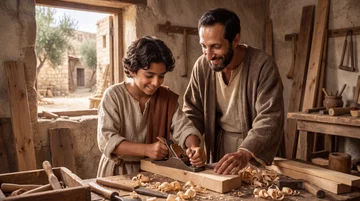
The townspeople of Nazareth heard Him teach with astonishing wisdom and power in their synagogue on the Sabbath, yet they fastened on His familiar identity as the working carpenter, the son of Mary with His brothers and sisters among them, and took offense at Him.Lt 158, 1908, par. 14–158MR 267.4–268.1DA 236RP 26.5–6DA 236.1–2 Their unbelief limited what He did there to laying His hands on a few sick folk to heal them, fulfilling His word that a prophet is without honor in his own country and among his own kin.Lt 158, 1908, par. 14–158MR 267.4–268.1DA 236.1–2 They stumbled because they knew His poor, lowly, unpretending life and expected a Redeemer of power and glory, so they judged a common workman could not be the promised Messiah.Ms 39, 1889, par. 4–5DA 236LC1 55.14RED 5.1–2Ms 14, 1897, par. 6 For about thirty years He had worked with His own hands at the carpenter's trade in Nazareth, sharing the burdens of His poor family without using divine power to lighten His toil.RH Oct 3, 1912RH Jul 2, 1908ST Oct 9, 1884Ms 34, 1899, par. 2CTBH 78.2 He did that ordinary work perfectly and faithfully, thereby ennobling useful labor as honorable and sacred and giving all workers and youth an example of diligence, helpfulness, and communion with God.RH Oct 3, 1912COL 345.2ST Oct 9, 1884MYP 214.3–215.1ED 217.1–2
Nazareth Sabbath Rejection
Jesus came into His own country with His disciples following Him and taught in the synagogue on the Sabbath day, where many who heard Him were astonished at the wisdom given to Him and at such mighty works wrought by His hands, yet questioned who He was because He was the carpenter, the son of Mary, the brother of James and Joses and Juda and Simon, with His sisters there among them, and they were offended at Him.Lt 158, 1908, par. 14–158MR 267.4–268.1 In that place He could do no mighty work except lay His hands upon a few sick folk and heal them, which shows His power to stay disease even where unbelief prevailed and that His ministry faced rejection in some places where He could not work.Lt 158, 1908, par. 14–158MR 267.4–268.1Lt 45, 1900, par. 44–47
After they were offended at Him, He said a prophet is not without honor except in his own country and among his own kin and in his own house, and this rejection by His own people of Nazareth cast a shadow over His Galilean ministry.Lt 158, 1908, par. 14–15DA 236.1–2 The speakers were townspeople who had known Him from infancy and had seen Him worship among them in their synagogue through childhood and youth, who knew His mother and His brothers and sisters.DA 236.1–2 They were filled with interest and expectation when He returned after absence since the opening of His ministry and entered their synagogue on the Sabbath, yet they stumbled over His familiar lowly family and trade and rejected Him.DA 236.1–2
Their disbelief over His familiar life as the carpenter who had lived and worked among them opened the way for Satan to control their minds despite His deeds of love and mercy.COS 60.3–61.3 That unbelief turned into wrath against Jesus and ended in an attempt to kill Him.COS 60.3–61.3 His neighbors in His hometown focused on His familiar origins and rejected Him as the Messiah and as a prophet of God, and His brothers also did not believe He was the Son of God and were impatient that His life lacked worldly display and honor.8MR 241.2–242.3
Lowly Family Identity
He is named as the carpenter, the son of Mary, the brother of James and Joses and Juda and Simon, with His sisters living there among the people who knew them all. DA 236RP 26.5–6 Their knowing His mother and His brothers and sisters made His family identity familiar to those around Him. DA 236RP 26.5–6
His home was in Nazareth, a despised village proverbial for wickedness, where He came from and dwelt in a peasant's home among the hills. STB 187.2–3Ms 2, 1893, par. 3FE 142.1–2 He lived there in a simple way with no extravagance or display, wearing the simple garb of a common laborer and going to and returning from humble work over mountain steeps. ST Oct 9, 1884Ms 20, 1902, par. 8 He lived with His parents in Nazareth and worked with Joseph as a carpenter before beginning His public ministry, honoring labor by His humble place and trade. Ms 2, 1893, par. 3Ms 20, 1902, par. 8
He belonged to a humble human family that was poor and lowly without distinction in learning, wealth, or social position. CTBH 62.1–2HL 275.2Lt 81, 1896, par. 14–18 The home of Joseph and Mary had few luxuries on its table, and His parents depended on daily toil, so He lived in poverty, self-denial, and privation. CTBH 62.1–2MYP 78.3 Once He was old enough to handle tools He shared the work of caring for the family, contributing His share toward its sustenance and support. CTBH 62.1–2CE 164.1–29T 185.2STB 187.2–3
Outwardly He was only a carpenter's son, a poor Galilean without earthly rank or power and with a humble outward appearance and humble manner. DA 162.1–4Lt 81, 1896, par. 14–18 He was the son of a carpenter who worked years at the trade with His father Joseph. LC1 55.1 His ordinary life and humble manner were known to those who expected a conquering king. Lt 81, 1896, par. 14–18
Though outwardly only a poor Galilean, at the cleansing of the temple the priests and rulers fled at His command because He spoke with the authority of a king, and in His appearance and tones there was irresistible power they could not resist. DA 162.1–4 When divinity flashed through humanity they saw indignation on His countenance, realized their true position as hypocrites and robbers, understood His words, and felt as before the throne of the eternal Judge with sentence passed for time and eternity. DA 162.1–4
Offense Through Familiarity
Their closeness to His family and His everyday work as a carpenter's son, rather than as the Messiah, caused them to stumble and take offense at Him.Ms 39, 1889, par. 4–5DA 236 They had known His humble, unpretending life among the poor and lowly, in which as one who had worked years at the trade with His father Joseph He made no claim to distinction or greatness.LC1 55.1 At first authority and power held them spellbound and His words stirred their hearts with joy, but doubt and unbelief turned them back to His lowly origin, and envy and criticism hardened them so that they demanded He prove Himself with miracles despite the words that had stirred their hearts.Ms 39, 1889, par. 4–5LC1 55.1
Because they looked for a Redeemer with power, honor, and glory, a conquering king and militarily powerful deliverer, they judged that a common workman with mother and brethren among them could not be the promised one, and their false idea of how the Messiah would appear, formed around a peasant and carpenter of obscure origin, blinded them to the evidence that He was their Redeemer.LC1 55.14RED 5.1–2Ms 14, 1897, par. 6 His ordinary life and humble manner in undistinguished circumstances thus offended and disappointed those who expected a conquering king, though His humility should have led them to trust His mission.Lt 81, 1896, par. 14–18 Familiarity joined with national expectations could in this way lead people to treat Him as merely ordinary, to reject Him, and to take offense at Him.Ms 39, 1889, par. 4–5
Years of Humble Labor
He learned the carpenter's, or builder's, trade as a child and youth and practiced it with His own hands, working with His father Joseph in the little shop at Nazareth in keeping with Jewish custom.COS 36.1–2RH Mar 13, 1900CT 147.1Ms 43, 1900, par. 7–8Ms 137, 1898, par. 4 At the bench He was more an educator than a learner, and this work and ministry belong to His real human life on earth before His ascension.RH Jul 2, 1908RH Mar 13, 1900 His labor honored labor and encourages people in the ordinary duties of life.RH Jul 2, 1908Ms 137, 1898, par. 4
He spent many years in humble employment, about thirty years working for wages for His daily bread, subject to His parents.ST Oct 9, 1884Ms 34, 1899, par. 2CTBH 78.2Lt 122, 1902, par. 23–25Lt 47a, 1902, par. 17–19 Though poor in earthly riches, for thirty years He was not ashamed of honest poverty.ST Oct 9, 1884Ms 34, 1899, par. 2 With His hands He helped sustain His family and willingly carried His share of its burdens from an early age, contributing to its support.CTBH 62.1–2DA 72.3–4RP 26.5–6MYP 211.2Ms 34, 1899, par. 2 He helped His mother in the home, and faithfully and cheerfully bore household burdens as a willing servant and a loving, obedient son.CTBH 62.1–2RH Jun 2, 1910DA 72.3–4RH May 6, 1909
Though He had divine power and could command the entire angel host, He did not use it to make daily work easier or to lessen His burdens or lighten His toil.RH Oct 3, 1912ST Oct 9, 1884DA 72.3–4RP 26.5–6Ms 58, 1890, par. 15 He called no attention to Himself as a marked personage, and worked with patient hands in humble employment.RH Oct 3, 1912ST Oct 9, 1884Ms 58, 1890, par. 15 Wearing the simple garb of a common laborer, He walked the streets of the little town going to and returning from humble work over mountain steeps, living and laboring in humble circumstances.ST Oct 9, 1884DA 72.3–48T 222.2–223.2MH 399.1–400.110MR 253.3–254.2
He lived humbly as an obedient son who waited for God's time to begin His appointed work.COS 36.1–2Ms 110, 1905, par. 11FE 392.1–2 His years at home before and beyond public ministry revealed His Father's character while He remained free from sin.Ms 110, 1905, par. 11 He also lived on earth as a helpless human child though He was the Prince of life and Saviour of all who believe, willingly humbled from equality with God to become a servant and share the stages of human life.CTBH 78.2Ms 110, 1904, par. 29 From His earliest years He lived poverty and spent childhood days in toil at the bench until often weary.Lt 158, 1908, par. 8–10 His ordinary work as a child was obedient and worthwhile service done faithfully and cheerfully.Lt 3, 1881, par. 7–8Lt 158, 1908, par. 8–10
Perfect and Sympathetic Workmanship
Is not this the carpenter points to real bench work done to the same standard of perfection He brought to the characters He transformed.COL 345.2RH Mar 13, 1900 Every kind of task was taken up carefully and thoroughly and pressed as near to perfection as possible, with each stroke true and each piece joined exactly so that parts fitted precisely and the whole could bear testing.Ms 57, 1902, par. 14Ms 127, 1901, par. 2–4Ms 157, 1904, par. 22 He would not settle for defective work even in the handling of tools, and when others called Him too slow He made no retaliation but sang psalms until His companions joined Him.STE 42.3–43.1Lt 53, 1898, par. 23–24Ms 157, 1904, par. 22 His trade mattered because He came to build character, and He was a perfect builder of character.COL 345.2RH Mar 13, 1900Ms 93, 1899, par. 17–18 The heavenly architect who planned sacred buildings spent earthly life in an ordinary trade in faithful service to His Father.COL 348.4–349.1
The workshop at Nazareth where the holy Nazarene labored was marked by purity.CTBH 98.3–99.1 The business life of the Christian is to be marked by that same purity.ST Nov 12, 1885CTBH 98.3–99.1
Though He had been the Commander of heaven, the Prince of heaven and King of glory, He laid aside His kingly crown and position and clothed divinity with humanity to live a life of toil and hardship.ST Oct 9, 18847MR 48.2–3STE 42.3–43.1Lt 299, 1905, par. 10–11 He became like one of us to be acquainted with toil and sorrow and fatigue and privation, that He might understand the poor and those who toil and enter into full sympathy with humanity.ST Oct 9, 18847MR 48.2–3Lt 299, 1905, par. 10–11 It was a mystery to angels that He should condescend to take humanity and assume its heaviest burdens and most humble occupations.ST Oct 9, 1884
That lowly trade was as faithful a fulfilling of His mission as healing the sick or walking on the storm-tossed waves of Galilee, for His craft was linked with the highest ministry both human and divine.ST Oct 9, 1884ED 217.1–2 His ordinary work consecrated the labor of craftsmen earning their daily bread and gave working people an example and inspiration, so that though neglected and despised He held His authority from heaven.Ms 24, 1898, par. 10–11 The carpenter was also the King of glory, tempted as humanity is tempted and able to impart His divinity to help people resist temptation.Ms 157, 1904, par. 22
Dignity of Useful Labor
That He is called the carpenter shows that useful labor is honorable and dignified, ennobled and made sacred, with Heaven's sanction and blessing upon it.RH Oct 3, 1912ST Oct 9, 1884MYP 214.3–215.1ST Nov 12, 1885Ms 34, 1899, par. 2 No honest, humble, useful work is degrading or a cause for shame or contempt, and none of it should be despised.RH Oct 3, 1912ST Oct 9, 1884Ms 34, 1899, par. 2ST May 4, 1882 He spent about thirty years in Nazareth working for wages for His daily bread in Joseph's humble shop, wearing the simple garb of a common laborer, living in a peasant's home among the hills and sharing the daily toil of the lowly going to and returning from humble work.ST Oct 9, 1884ST Nov 12, 1885Ms 34, 1899, par. 2ST May 4, 1882 Though He had divine power and could command the entire angel host, He worked patiently at the bench, contributed to His family's support, was subject to His parents and was not ashamed of honest poverty, never using that power to make daily work easier, lessen burdens or lighten toil, and calling no attention to Himself as a marked personage.RH Oct 3, 1912ST Oct 9, 1884Ms 34, 1899, par. 2
His example teaches industriousness and diligence, for God appointed work as a blessing, industry is man's duty, and only the diligent worker finds the true glory and joy of life.RH Oct 3, 1912ST Oct 9, 1884DA 72.3–4 Youth are given in Him an example of useful industry rather than idleness, indolence and selfish indulgence.DA 72.3–4 By His own life He taught that work should be done with exactness and thoroughness, that exercise teaching the hands to be useful and training the young to bear their share of life's burdens gives physical strength and develops every faculty, and that all should find something to do beneficial to themselves and helpful to others.DA 72.3–4
His lowly trade was as faithful a fulfilling of His mission as healing the sick or walking on the storm-tossed waves, and it stands as a lesson to copy to the end of time.ST Oct 9, 1884 It encourages the poor and lowly to be contented with their lot, reproves divorcing religion from worldly business and the idea that the wealthy are superior to the poor, and proves that men and women in the humblest positions may hold closest communion with God.ST Oct 9, 1884 He stands with working people and His work honored all honest workers whether high or low, rich or poor, which welcomes those who do ordinary work and takes the poor's side.Ms 11, 1894, par. 16–17Ms 60, 1894, par. 7Ms 11b, 1894, par. 16–18 It was a mystery to angels that He should condescend to take humanity and assume its heaviest burdens and most humble occupations, but He did so to become like one of us, to be acquainted with toil, sorrows, fatigue and privations and thus to understand and sympathize with trials.ST Oct 9, 1884
Ordinary household duties and manual work at the bench and in the home, helping His mother, were part of His divinely given work and fulfillment of His commission just as truly as His later public ministry.RH Jun 2, 1910RH May 6, 1909Ms 33, 1908, par. 27MR 19.3–20.2 His craft was linked with the highest ministry both human and divine, so ordinary skilled labor is worthy of honor and commonplace duties deserve faithful effort, and He labored to provide for His own needs.ED 217.1–2Ms 143, 1897, par. 22 His example in this teaches children and youth to drink in the gladness of His life by following Him, remaining in the Christian home to help parents and share its burdens when study hours are ended.Ms 33, 1908, par. 27MR 19.3–20.2
However lowly His task He did it with the utmost exactitude, and His working life exemplifies principles for work requiring plain buildings with not one dollar invested in needless display, so that every part bears witness to the great unworked missionary field and actions speak louder than words.6MR 321.4–322.1
Example for Daily Life
The Son of God labored with His hands at the carpenter's trade with His father, and thereby gave an example to all youth to engage in physical labor and take up the common duties of life instead of scorning them and living in indolence and selfish indulgence.CTBH 62.1–2CE 164.1–2FE 151.1–2 He was subject to His parents and contributed His share toward the sustenance and support of the family.CTBH 62.1–2CE 164.1–2FE 151.1–2 The home of Joseph and Mary was poor and lowly with few luxuries on its table, and He lived simply among the poor and lowly content with simple wholesome food, teaching patient industry, family responsibility, and contentment.CTBH 62.1–2CE 164.1–2FE 151.1–2
He is an obedient, helpful example to all the human family, who learned a trade and with His own hands worked in the carpenter's shop with Joseph, walking the streets of the little town in the simple garb of a common laborer going to and returning from His humble work.DA 72.3–4CT 147.1STE 42.3–43.1 Though He had been the Commander of heaven whom angels delighted to obey, He became a willing servant and a loving, obedient son, faithfully and cheerfully bearing His part of the household burdens and helping His mother in the home, and He did not use His divine power to lessen His burdens or lighten His toil.DA 72.3–4Ms 33, 1908, par. 27MR 19.3–20.2 His example teaches children to bear their share of responsibility promptly and cheerfully without waiting to be told, to be faithful in little things so they can be faithful in larger things, to do everyday duties like washing dishes and sweeping floors not as a burden but as a pleasure done for Jesus, and to drink in the gladness of His life by following Him in helpfulness at home.Ms 33, 1908, par. 24MR 95.47MR 19.3–20.2 That work in the home fulfilled His commission just as truly as His public ministry did, and His example teaches children and youth to remain in the Christian home to help their parents and share its burdens when study hours are ended.Ms 33, 1908, par. 27MR 19.3–20.2 The approval of God rests with loving assurance upon children and youth who cheerfully take their part in household duties sharing the burdens of father and mother, and such children will go out from the home to be useful members of society.DA 72.3–4
As He worked in childhood and youth His mind and body were developed, and He did not use His physical powers recklessly but kept them in health with healthful exercise to do the best work in every line.DA 72.3–4CT 147.1STE 42.3–43.1Lt 53, 1898, par. 23–24 He was unwilling to be defective even in the handling of tools, perfect as a workman as He was perfect in character, a diligent skillful workman who studied Scripture and nature and lived in harmony with God's Word.DA 72.3–4STE 42.3–43.1Lt 53, 1898, par. 23–24 By His own example and precept He taught that it is duty to be industrious, that work should be done with exactness and thoroughness, that such labor is honorable and dignified, and that exercise that teaches the hands to be useful and trains the young to bear their share of life's burdens gives physical strength and develops every faculty.DA 72.3–4STE 42.3–43.1 All should find something to do that is beneficial to themselves and helpful to others, for God appointed work as a blessing and only the diligent worker finds the true glory and joy of life.DA 72.3–4
His faithful work for about thirty years sharing in carrying the burdens of His family is an example for husbands and fathers, and He gives His followers strength to share the burdens of home life faithfully.Lt 47a, 1902, par. 17–19 His working with His hands gives ministers an example of physical labor to follow, for a minister does not lose dignity by waiting on himself when he is able and by working with his hands when he is not pressed with other duties, but acts in harmony with Christ.2T 568.2 This labor encourages industry by example and helps health by drawing blood from the brain to relieve mental strain, equalizing circulation, and promoting digestion.2T 568.2
His life teaches diligence in labor and providing for those entrusted to one's care, for He worked with His hands to do His part in sustaining His family and remained subject to His parents for thirty years.CE 179.2–3CTBH 78.2FE 392.1–2 His divine origin did not exempt Him from ordinary work or the care of temporal responsibilities, and He did not use His divine character to exalt Himself, but lived obedient through childhood, youth, and adulthood.FE 392.1–2 His ordinary labor shows such work is honorable and should be done carefully and well, with upright principle, strength, and skill, and His example makes honest manual labor honorable and shows practical work belongs alongside mental and spiritual effort.COS 37.1–3Lt 89, 1897, par. 24–29 Physical strength is His property to be employed in His service in useful service to God and not left idle, and practical work belongs in balanced education.ST Oct 18, 1899Lt 89, 1897, par. 24–29
In the garb of a common laborer He walked the streets of the little town going to and returning from His humble work, presenting a marked contrast to an age that estimated value by outward show and to educators who sought respect by display and ostentation.MH 399.1–400.110MR 253.3–254.2 His lowly working life stood against religion measured by outward show and pomp and demonstrates the worthlessness of what men regard as life's great essentials.MH 399.1–400.110MR 253.3–254.2 His mother was His first human teacher, and from her lips and from the scrolls of the prophets He learned heavenly things, showing true education is gained from Heaven-appointed sources — useful work, study of the Scriptures, nature, and the experiences of life.MH 399.1–400.1
From His earliest years He lived a life of poverty and spent His childhood days in toil, working at the carpenter's bench and bearing the burdens that came to Him as a member of the family until He often became weary.Lt 158, 1908, par. 8–10 Though He lived in a corrupt age He was uncorrupted by the evil surrounding Him and uninfluenced by artificial and wicked characters.Lt 158, 1908, par. 8–10 In the open fields and amid the scenes of nature He found rest from toil and food for spiritual life, gathering knowledge from beneath the surface of the mysteries of nature that filled Him with peace and joy.Lt 158, 1908, par. 8–10 In all His habits of life He gave an example of what God designs His church on earth to be, without spot or blemish.Lt 158, 1908, par. 8–10
His humble work and lowly circumstances show that poverty and an ordinary position in life do not prevent someone from serving God or becoming an effective worker for Christ.TSSW 75.1 His years at home, before and beyond His public ministry, revealed His Father's character; He lived humbly, obeyed His earthly parents, and remained free from sin, and His example in word and deed is one believers can follow with God's sufficient grace.Ms 110, 1905, par. 11 Manual workers can look constantly to Him for strength, encouragement, and guidance, for He laid aside His kingly crown as Prince of heaven and exalted commander to live a life of toil and hardship in full sympathy with the human race, and by receiving Him they are given power to become the sons of God.7MR 48.2–3
He came into His own country with His disciples following Him, and on the Sabbath day taught in the synagogue, where many hearing Him were astonished at the wisdom given unto Him and that even such mighty works were wrought by His hands, yet they stumbled over His lowly identity as the carpenter, the son of Mary, the brother of James and Joses and Juda and Simon, with His sisters there with them, and were offended at Him, so that He said a prophet is not without honor but in his own country and among his own kin and in his own house.Lt 158, 1908, par. 14–158MR 267.4–268.1 Even there He laid His hands upon a few sick folk and healed them, which proves His compassionate power to forgive and to heal and His power to stay disease.Lt 158, 1908, par. 14–158MR 267.4–268.1 It calls the sick to be pointed to Him as Saviour and advocate in the heavenly courts with simple fervent prayer united with treatment, with repentance and ceasing to transgress the laws of God and confession of sin to receive pardon, through whose gracious providence they may be restored, revealing Himself to save those in sanitariums and elsewhere who will submit themselves to Him, and it invites suffering ones today to have faith in Him, for man's necessity is God's opportunity.Lt 158, 1908, par. 14–158MR 267.4–268.1
Sources
Pioneers and periodicals
95 sources
At Nazareth he taught in the synagogue on the Sabbath, and many who heard him were astonished at his wisdom and the mighty works done by his hands.ST Aug 4, 1881RH Feb 11, 1862 He is called the carpenter because he learned the builder's trade in his youth and practiced it at Nazareth with Joseph, laboring at the bench for nearly thirty years before his public ministry.ST Jul 16, 1894ST Jan 13, 1881ST Jul 27, 1882 The brothers named as James, Joses, Juda and Simon, with his sisters living among the people, were Joseph's children by a former wife, reckoned legally as his brothers and sisters, while those who held the other position taught the verse does not establish whether they were Mary's children or Joseph's and Scripture does not rule out that Mary had other children.ST Sep 6, 1910ST Jan 14, 1913 His lowly work as a working carpenter proves manual labor is honorable and not degrading, dignifying honest toil and making him a pattern of industriousness for workers and youth.RH Oct 3, 1912ST Oct 9, 1884RH Oct 4, 1864ST Apr 22, 1889 Fixing on his familiar family and occupation, his townspeople treated the Son of God as merely an ordinary man like themselves and were offended at him, so they failed to receive the blessing he came to give.ST Feb 26, 1894ST Jul 22, 1897ST Apr 22, 1889RH May 13, 1902ST Aug 16, 1910
Nazareth Visit and Offense
The verse belongs to the Nazareth episode in which Jesus returned into his own country and his townspeople took offense at him.ST Aug 4, 1881RH Feb 11, 1862 When the Sabbath day was come he taught in the synagogue, and with unusual authority.RH Feb 11, 1862 Many hearing him were astonished at whence he had these things, at the wisdom given unto him, and at the mighty works wrought by his hands.RH Feb 11, 1862ST Aug 7, 1884
It was his first visit to Nazareth after entering upon public ministry, about six months after his baptism, after spending a day or two there. On the Sabbath he read Isaiah 61:1 and expounded it with force and intelligence, identifying himself with the prophecy. His teaching was wholly different from the scribes, so that his hearers were astonished. They were probably not even aware he could read, and when he read and explained the Scripture they questioned among themselves from whence he had these things and where he obtained his knowledge.
Their response shows the proud, perverted fanaticism of unbelief.ST Aug 4, 1881 Yet contempt for a messenger because of who he is thought to be is no reason to reject the truth he brings.ST Aug 4, 1881ST Nov 13, 1893
Family Brothers and Sisters
The verse lists James, Joses, Judas or Juda, and Simon as his brothers and speaks of his sisters as living there among the people, and the wording points to brothers and sisters in the natural sense rather than cousins, although the word brother can also denote a more distant relative such as a cousin. It does not by itself settle whether they were Mary's own children or Joseph's children by an earlier wife, and Scripture leaves open that Mary may have had other children. Those who hold the other teaching understand them to have been Joseph's children by a former wife, reckoned legally as Jesus' brothers and sisters and thus his half-brothers in law.ST Sep 6, 1910ST Jan 14, 1913ST Jan 25, 1910
He alone is singled out as the son of Mary while his brothers and sisters are spoken of as well known in the community, which suggests the brothers were older, had been known longer, had another mother, and looked upon Jesus as a younger and less familiar member of the family.ST Aug 16, 1910ST Sep 6, 1910ST Jun 20, 1911 Whether they were actual or legal brothers has no bearing on salvation, for what matters is being his true disciple. The naming of Juda here bears on identifying the writer of Jude as Judas, one of the Lord's brothers, and the naming of James bears on identifying the James who wrote the epistle as probably the Lord's brother rather than James the son of Zebedee.ST Dec 16, 1908ST Dec 3, 1912
These family details place him as born into the Jewish people and living among ordinary working people, with his mother, brothers, and sisters named around him, and they reveal the patient tenderness belonging to a true home and family life.ST Nov 25, 1930RH Aug 5, 1909 Yet his life and mission were not confined to living simply as a Jew, for he lived as the Son of God serving his Father's purpose.
Carpenter Work at Nazareth
He was known as the carpenter because in his youth he learned the carpenter's or builder's trade and practiced it at Nazareth, working with tools at the bench in the shop with Joseph his earthly father as his father's helpful assistant, even apprenticed to the work and known by it in the small circle around him.ST Jun 23, 1881ST Jul 16, 1894ST Jul 27, 1882RH Jan 16, 1913 His manual work was real and careful, not play and not refusal of a worker's wage, done in obedience to the Father without fault or flaw, so that no task is too lowly when done for him and his blessing attends it.ST Jul 27, 1882RH Mar 27, 1900 His childhood and youth in that trade give children and youth a pattern to follow, teaching that it is good and wise for boys to learn some useful trade and to be good workmen, doing good honest work as he did, and he knows their disappointments, trials and temptations as a sympathetic friend to whom they can bring their griefs.ST Jun 23, 1881 He spent nearly thirty years at that work before his public ministry, working at his trade until he was thirty, thirty years unknown in secluded Nazareth amid small daily duties unseen to mortal view but known to God, years as an obscure workman and thirty years spent in a workshop, keeping the Sabbath and therefore working on Sundays during his working years.ST Jan 13, 1881ST Nov 21, 1892ST Aug 5, 1913RH Jan 10, 1871
He came from a poor family whose members earned their living by working, and he worked for wages and helped support his family and his mother, wearing the simple garb of a common laborer and sharing the poverty and hard ordinary work of common life.ST Oct 9, 1884RH Nov 5, 1872ST Jan 17, 1900RH Sep 3, 1914 His labor for his bread from humble circumstances made him close to working people and one with those who toil.ST Jan 25, 1899ST Jan 17, 1900RH Sep 3, 1914 His work was real, careful, thorough and perfect, skilled and exact, and he was not willing to be defective even in the handling of tools, being perfect as a workman as he was perfect in character.RH Sep 25, 1900ST Jul 27, 1882ST Jan 17, 1900RH Mar 4, 1909 When others criticized his work he did not retaliate but sang psalms while his companions joined him, and as he worked with Joseph he sang and comforted those who were sorrowful or troubled, an example of usefulness at home for children preparing to serve elsewhere.RH Nov 11, 1915
Though he had divine power and could command the entire angel host, he did not use it to lessen his burdens, lighten his toil, make his daily work easier, or escape ordinary labor and its hardships, but worked patiently in the carpenter's shop and contributed to his family's support.RH Oct 3, 1912ST Oct 9, 1884 He lived in a peasant's home among the hills, going to and returning from humble work over mountain steeps, mingling with the lowly and sharing their daily toil, with no outward appearance of distinction and calling no attention to himself as a marked personage.ST Oct 9, 1884 He was raised in a despised village by common people and lived and served in humble ordinary circumstances rather than choosing status or privilege, without royal status, luxury or outward signs of pride.ST May 17, 1899ST Aug 20, 1894 His humble beginnings, lowly position, obscure family and work as a carpenter were part of the humiliation he accepted in giving himself to redeem humanity, and even in that hidden life as an obscure workman he had tender sympathy for human suffering, giving his life and death and not money or animal sacrifices to pay the price of salvation.RH May 16, 1854ST Aug 21, 1884ST Jun 23, 1909 The wood, hammer and nails of that trade call to mind his crucifixion, but it was human hatred and sin that made his cross and his love that held him to it.RH Sep 7, 1916
Dignity and Pattern of Labor
His lowly occupation as a working carpenter proves that physical and manual labor with the hands is honorable and not a disgrace or degrading.RH Oct 3, 1912RH Jul 2, 1908RH Oct 4, 1864RH Sep 28, 1911RH Sep 11, 1900 It dignifies honest work of every kind, sanctifies common toil, and shows that humble duties have sacred dignity.RH Oct 3, 1912ST Apr 22, 1889RH Sep 28, 1911RH Sep 11, 1900 Anyone who thinks it a disgrace to labor with the hands would be ashamed of Christ himself.RH Oct 4, 1864 His labor at the carpenter's bench dignifies toil and makes him a pattern for workers and for boys learning a useful trade.ST Apr 22, 1889 It teaches industriousness and contentment with one's lot, and shows that hard, humble work is not beneath a noble soul or inconsistent with high aspirations.ST Oct 9, 1884ST Apr 22, 1889RH Nov 3, 1874 It gives youth an example of useful industry rather than idleness and selfish indulgence, calling boys to learn some useful trade and to be good, honest workmen because he was perfect as a pattern in work as in all else.RH Jan 16, 1913
His years at the trade were Christian work as fully as his public teaching and part of the life by which people are saved.RH Mar 6, 1900ST Feb 26, 1902 He made the ideal real in common duties, transfiguring carpentry into a school that trained himself as the world's Saviour, lifting common duties by divine motives and looking on life and work as God looks on them.ST Dec 9, 1889 Faithfully doing one's daily task, mastering it, and doing it as well as possible is work for Christ, while careless work is not service to him.ST Feb 26, 1902 Everyday labor joined with the highest ministry shows that a busy working life is compatible with faithful service to God.ST Jan 18, 1916ST Dec 9, 1889RH Jan 25, 1912 His craft work and ordinary duties in helping at home fulfilled his commission as truly as his later ministry, both human and divine, and looking to him bridges the gap when daily work and Sabbath worship feel far apart.RH May 6, 1909ST Jan 18, 1916ST Dec 9, 1889
His example calls teachers to manual labor as part of life and education, since he spent nearly thirty years doing carpenter work before entering ministry. It calls ministers not to insist on faultless attire and false dignity but to soil their hands sawing and planing boards, digging, and carrying parcels, since ordinary labor is not degrading even for a minister of the gospel.ST Oct 24, 1895RH Oct 22, 1901 It calls young men of integrity to learn practical industry and make their work self-supporting in the harvest field, for labor at the bench is God's service as much as working miracles, with science in work and God's approval on it.RH Mar 6, 1900 It calls ministers to preach without money and without price, taking no large salaries and keeping no riches, and it sets before followers a minister drafting plans and wielding hammer and saw to build a meeting-house.ST Apr 29, 1897RH Oct 22, 1901 His work developed his physical powers in the shop with his father.RH Sep 3, 1908 It shows physical strength is his property to be exercised with care in practical labor and useful service rather than left idle.ST Oct 18, 1899RH Sep 30, 1902
As second Adam and a worker by trade, his example proves useful manual labor is right and idleness wrong.RH Jan 9, 1913 Active work in a useful occupation is a remedy for physical ills and for spiritual ills such as envy, discouragement, petulance, and jealousy, and a preventive against both.RH Jan 9, 1913 He leads followers into physical exercise as surely as into mental effort, so there is no lazy Christian, and following him means overcoming selfishness and slothfulness to do practical, muscular work for others, even though as a child his mental ability could confound learned doctors and lawyers.RH Sep 30, 1902 His ordinary labor and humble life show he shared the everyday conditions of humanity, including toil, weariness, hunger, and thirst.RH Sep 22, 1910RH Nov 5, 1872 He mingled with the lowly, understands privations, sympathizes with trials, toilers, and the poor, and is one with people who toil and a personal Saviour who understands them.ST Oct 9, 1884RH Sep 22, 1910ST Jan 25, 1899ST Jan 17, 1900
His working life displayed devotion, integrity that never sacrificed principle, loyalty to his heavenly Father, and honor to his earthly parents beside his earthly father at the bench.ST Nov 14, 1906 It displayed obedience and helpfulness at home in the little shop at Nazareth, where he was not willing to be defective even in handling tools, and was perfect as a workman as he was perfect in character.RH Sep 25, 1900 His trade is significant because he was also a builder of character, and all his work was perfect, an example of purity that Christian business life should copy.ST Nov 12, 1885RH Mar 13, 1900 Though perfect he learned obedience through practice in the shop and advanced in wisdom, stature, and favor with God and people.RH May 6, 1909 Those who work without complaint follow his example and do God's will, and he is present with people who labor whether together or alone.ST Feb 6, 1901ST Oct 13, 1898
Faithful work can be praise and prayer, and honest labor is holy service.RH Jul 16, 1914 God has not gone to some distant star but is in the mill where toilers are, hearing thoughts, measuring tears, counting sighs of anxious hearts over failing loved ones, over buying fresh fruits and flowers, over tending wants in working hours, and over leaving the sick alone, and remembering those who love their own and toil and trust.ST May 13, 1897 He who labored as a carpenter now reigns as King, and sincere acknowledgment of him as final Arbitrator is the only way to settle the conflict between capital and labor because its deepest roots are in moral causes.ST Dec 25, 1893 Social and industrial problems are religious concerns, and the church is to help heal them through the touch of his wounded hand.ST Aug 4, 1909
Unbelief Through Familiarity
The people fastened on his familiar family and trade and treated the Son of God as merely an ordinary man like themselves, and by doing so they failed to receive the blessing he came to give.ST Jul 22, 1897ST Apr 22, 1889RH May 13, 1902 They mistook knowing the outward facts of his life for knowing who he was, and they resented having to look up to one they had long regarded as their equal.ST Apr 22, 1889RH May 13, 1902 In Nazareth, where he had led a humble life working as a carpenter, they were astonished at his knowledge and wisdom and at the mighty works done by his hands, yet giving way to prejudice they fixed upon his lowly trade and upon his mother and his brothers and sisters living among them, and were offended at him.ST Feb 26, 1894ST Aug 16, 1910
His testimony was not popular because it did not flatter Jewish national pride, so they prejudged him and put him out of the way.ST Feb 26, 1894 They disliked his doctrine, yet they were powerless to resist his reasoning or to answer him from the Scriptures. They were offended that one of the humblest men of their own town should presume to instruct them, though they would have received some great man of the world. Their offense came from envy that a humble workman from their own town should rise to distinction above themselves, and this is why a prophet is without honor in his own country, when friends and neighbors refuse him the honor strangers give because they feel the honor ought to come to themselves.
They were stirred by his plain declarations about himself and his work, and jealousy was aroused that a man of humble birth could work wonders they could not explain away and teach truths they could not contradict.ST Oct 1, 1896 They scornfully pointed to his life as a Galilean laborer and to his poor and lowly family, and declared that the lofty claims of this uneducated carpenter should at once be repudiated.ST Oct 1, 1896 Pride still blinds people so that they dismiss him as only the familiar carpenter's son whom they think they know.ST Oct 1, 1896 His humble occupation and plain strong appearance stood in contrast to the learned and socially prominent teachers, and because he came in an unpretentious and unpopular way they took offense at him.RH Sep 30, 1873ST Aug 7, 1884 The humility of his birth and the thirty years spent with his father as a carpenter blinded their eyes, so that although they fully believed the prophecy that God would raise up a prophet like Moses, and he fulfilled it in every particular, they did not see its fulfillment.ST Aug 7, 1884
His divine glory was veiled in human form with no outward appearance of distinction, so those who looked only at his outward circumstances and saw him only as a carpenter from Nazareth did not recognize who he was.RH Oct 14, 1902RH May 13, 1902ST Apr 27, 1904ST Sep 17, 1896 In the same way the outward form of Scripture can make it seem merely human, though its true meaning is unfolded by the Spirit.RH Sep 28, 1905 His townspeople used the title carpenter with disdain when rejecting his claim to be the Messiah, treating him as an impostor and as a vain fellow in his own city even after mighty works had been done.RH Sep 22, 1910ST Oct 1, 1896ST Sep 20, 1910 His humble standing exposed him to malicious insinuations and to the distrust of the world.RH Dec 15, 1859
Prophecy Sabbath and Return
This rejection fulfilled Isaiah's prophecy that he would be despised, for his divine glory was veiled in human form and those who looked only at his outward circumstances as an ordinary man known by work and family did not recognize who he was.RH Oct 14, 1902 He taught in the synagogues with a wisdom and mighty works that astonished his hearers, yet they were offended at him because they knew him as the carpenter, the son of Mary, with his brothers James and Joses and Juda and Simon and his sisters among them.ST Aug 7, 1884 The humility of his birth and thirty years spent with his father as a carpenter blinded their eyes, so that although they fully believed the prophecy that God would raise up a prophet like Moses and he fulfilled it in every particular, they did not see its fulfillment.ST Aug 7, 1884
His ordinary family and upbringing under Joseph the carpenter, with whom he worked at the trade, were part of his real human earthly life before his ascension.ST Oct 31, 1878RH Aug 13, 1872 That earthly life as Mary's son brought up by Joseph is what the New Testament writers presented as fulfilling the prophetic picture of the Messiah.RH Aug 13, 1872
The scene shows him teaching in the synagogue on the Sabbath with unusual authority, where the people were astonished yet recognized him as the local carpenter and Mary's son and knew his brothers and sisters and took offense at him. His identity as a carpenter at Nazareth shows he worked at his trade on the six working days and observed the Sabbath by resting from work and attending worship, like Paul as a tentmaker who worked through the six days and rested the seventh day according to the commandment.ST Jul 10, 1893 He worked at his trade until he was thirty and kept the Sabbath, and therefore worked on Sundays during his working years.ST Jan 13, 1881 Since he lived and worked in Nazareth among people familiar with his mother, brothers, and sisters and observed the seventh day, his Nazareth manner of work and seventh-day observance would under a Sunday law condemn the sinless Saviour as a criminal or penalize him for working on Sunday.ST Oct 17, 1916
The Jesus known on earth as carpenter, teacher, healer, and sufferer is the same risen and ascended Christ who will soon appear in the heavens, and those who have known and loved him will recognize him without fear at his meeting.RH Mar 21, 1912 Though he wrote no books, the accounts written by his followers after his departure reveal his deep understanding of people and his power to win hearts.ST Oct 23, 1884
The carpenter detail stands alongside the truth that the Creator took fallen human nature and shared Abraham's humanity in sympathy and love, becoming a humble carpenter among the hills of Nazareth and living as an obedient Son.ST May 22, 1907 His ordinary labor at the trade was part of his life on earth as a helpless human child, though he was the Prince of life and the Saviour of all who believe. As second Adam he was a worker by trade, proving useful manual labor right and idleness wrong, a remedy for physical ills and for spiritual ills such as envy, discouragement, petulance, and jealousy.RH Jan 9, 1913 He was Saviour from birth, just as much as a child at play and as a young man at the bench in Nazareth as when preaching to multitudes, so the life he gives is not apart from eating and drinking and the daily round of duties, and religion is not chiefly going to meeting and observing forms and ceremonies and professing points of doctrine.
His ordinary household duties at the bench and helping his mother in the home during his early years were part of his divinely given work just as truly as his later public ministry, and his ordinary duties and manual work fulfilled his commission as truly as that ministry.RH Jun 2, 1910RH May 6, 1909 As he worked with Joseph he sang and comforted those who were sorrowful or troubled, and his usefulness at home is an example for children preparing to serve in other places.RH Nov 11, 1915
Though a poor boy working in his father's shop in a little town with only a small corner, even when no older than a child he was a light in the world, proving a lowly place does not prevent shining and that he will help anyone shine anywhere if asked.ST May 27, 1889 His presence at the bench and in the marketplace, and also in debate but not for strife, was not for pleasure but for business and usefulness, and his followers follow the same pattern with countenance lighted up and heart aglow with heavenly fire received from reading and meditating on the Bible.RH Jun 10, 1862
He spent thirty years unknown in Nazareth on secluded ground, doing daily work at Joseph's call amid small duties unseen to mortal view but known to God, though Lord of all, devoting his life to fulfill law and prophets by doing the Father's will before three years of public work and then death.ST Nov 21, 1892 A true life of willing obedience in a secluded place, planned long ago, is known and seen by him and becomes blessed work transfigured when lived for him.ST Nov 21, 1892 The title of carpenter of Nazareth belongs to the Child whose care for the wounded shows he will not leave anyone to perish alone.ST May 3, 1910
As a simple working man known as the son of a poor woman who worked with tools, his lasting greatness came not from ambition for empire, wealth, or fame but from love. That humble background contrasts with wealth and display that would look down on him.ST Feb 8, 1905
The Son of God chose a home among the poor and lowly and worked for his daily bread in Joseph's shop, honoring useful industry and making himself an example of a life of work.ST Nov 12, 1885 His humble upbringing and work at the bench show the dignity of labor and place useful work alongside rather than beneath spiritual and mental education, in contrast to education centered in the prestigious rabbinic schools of Jerusalem.RH Feb 7, 1907 As a child fleeing Herod to Egypt he was led by Joseph, a simple workingman, placing him among humble working people from the beginning.ST Mar 24, 1881
Sources