Luke 9:36
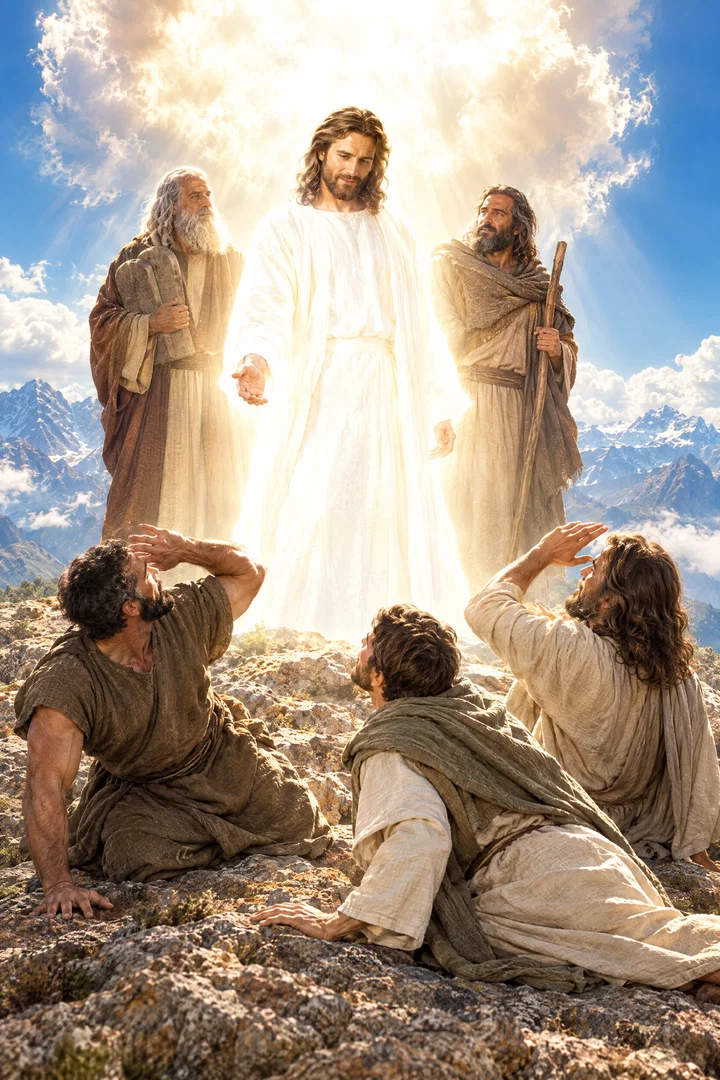
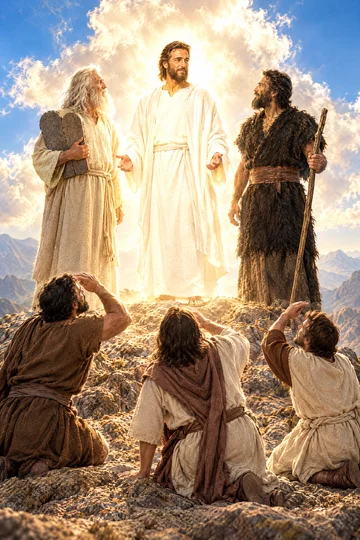
And when the voice was past, Jesus was found alone. And they kept it close, and told no man in those days any of those things which they had seen.
Translations
American King James Version, King James Version, KJV Cambridge Paragraph Bible, Webster Bible
And when the voice was past, Jesus was found alone. And they kept it close, and told no man in those days any of those things which they had seen.
Revised Version, American Standard Version
And when the voice came, Jesus was found alone. And they held their peace, and told no man in those days any of the things which they had seen.
and when the voice was past, Jesus was found alone; and they were silent, and declared to no one in those days anything of what they have seen.
And as the voice was [heard] Jesus was found alone: and they kept silence, and told no one in those days any of the things they had seen.
And, when the voice came, there was found, Jesus alone. And they held their peace, and, unto no one, reported they, in those days, any of the things which they had seen.
Berean Standard Bible, Majority Standard Bible
After the voice had spoken, only Jesus was present with them. The disciples kept this to themselves, and in those days they did not tell anyone what they had seen.
When the voice came, Jesus was found alone. They were silent, and told no one in those days any of the things which they had seen.
And after the voice was gone they saw that Jesus was by himself. And they kept quiet, and said nothing at that time to anyone of the things which they had seen.
And when the voyce was past, Iesus was found alone: and they kept it close, and tolde no man in those dayes any of those things which they had seene.
Douay-Rheims (Challoner revision)
And whilst the voice was uttered, Jesus was found alone. And they held their peace, and told no man in those days any of these things which they had seen.
Pictures
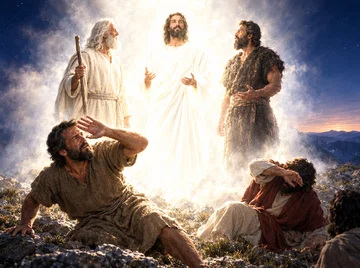
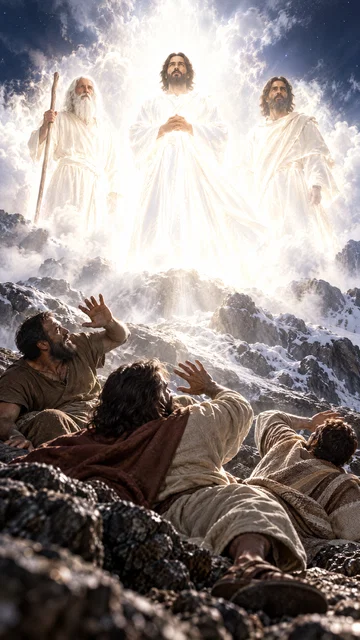
Cross-references 20 of 21
- Matthew 17:1-8
And after six days Jesus taketh Peter, James, and John his brother, and bringeth them up into an high mountain apart,
The Transfiguration account ends with the disciples seeing Jesus alone.
- Mark 9:2-9
And after six days Jesus taketh with him Peter, and James, and John, and leadeth them up into an high mountain apart by themselves: and he was transfigured before them.
The transfiguration’s heavenly voice and glory culminate with Jesus alone, followed by a command to keep it secret.
- 2 Peter 1:16-18
For we have not followed cunningly devised fables, when we made known unto you the power and coming of our Lord Jesus Christ, but were eyewitnesses of his majesty.
Peter recalls the disciples’ eyewitness view of Christ’s majesty and the heavenly voice.
- Luke 9:27
But I tell you of a truth, there be some standing here, which shall not taste of death, till they see the kingdom of God.
The promise that some disciples would see the kingdom is fulfilled at the Transfiguration.
- Luke 9:31
Who appeared in glory, and spake of his decease which he should accomplish at Jerusalem.
Moses and Elijah speak with Jesus about his coming death at Jerusalem.
- Matthew 17:9
And as they came down from the mountain, Jesus charged them, saying, Tell the vision to no man, until the Son of man be risen again from the dead.
Jesus tells the disciples to keep the vision secret until after his resurrection.
- Mark 9:1
And he said unto them, Verily I say unto you, That there be some of them that stand here, which shall not taste of death, till they have seen the kingdom of God come with power.
The promise of seeing the kingdom come with power is fulfilled at the Transfiguration.
- Mark 9:7-8
And there was a cloud that overshadowed them: and a voice came out of the cloud, saying, This is my beloved Son: hear him.
The voice commands the disciples to hear Jesus, whom they then see alone.
- Luke 9:29
And as he prayed, the fashion of his countenance was altered, and his raiment was white and glistering.
Describes the change in Jesus’ face and clothing.
- Matthew 16:28
Verily I say unto you, There be some standing here, which shall not taste of death, till they see the Son of man coming in his kingdom.
The promised glimpse of Christ’s kingdom is fulfilled in the Transfiguration.
- 2 Kings 2:11
And it came to pass, as they still went on, and talked, that, behold, there appeared a chariot of fire, and horses of fire, and parted them both asunder; and Elijah went up by a whirlwind into heaven.
Elijah’s presence contrasts with Moses, who had died.
- Mark 9:9
And as they came down from the mountain, he charged them that they should tell no man what things they had seen, till the Son of man were risen from the dead.
Jesus instructs the disciples to keep the transfiguration secret until the resurrection.
- Matthew 17:8
And when they had lifted up their eyes, they saw no man, save Jesus only.
Records the disciples seeing Jesus alone after Moses and Elijah disappear.
- 2 Peter 1:17
For he received from God the Father honour and glory, when there came such a voice to him from the excellent glory, This is my beloved Son, in whom I am well pleased.
A voice from glory declares Jesus to be God’s beloved Son.
- Matthew 17:1
And after six days Jesus taketh Peter, James, and John his brother, and bringeth them up into an high mountain apart,
Dates the same event as occurring after six days.
- Matthew 17:2
And was transfigured before them: and his face did shine as the sun, and his raiment was white as the light.
Describes Jesus’ radiant appearance at the transfiguration.
- Exodus 33:18-22
And he said, I beseech thee, shew me thy glory.
Moses receives a unique revelation of God’s glory, as Jesus’ glory is revealed at the transfiguration.
- Matthew 26:37
And he took with him Peter and the two sons of Zebedee, and began to be sorrowful and very heavy.
The same three disciples were present at both events.
- Exodus 34:29-35
And it came to pass, when Moses came down from mount Sinai with the two tables of testimony in Moses’ hand, when he came down from the mount, that Moses wist not that the skin of his face shone while he talked with him.
Moses’ face shone after communion with God, though less than Jesus’.
- Mark 9:14-27
And when he came to his disciples, he saw a great multitude about them, and the scribes questioning with them.
Jesus restores the boy after the transfiguration.
Commentary
Each commentary is drawn from primary sources: the writings of Ellen G. White and Adventist pioneers and periodicals. Each commentary is separate. Its own words are not a quotation; follow the references to read the source passages.
Ellen G. White
26 sources
When the cloud and the voice had passed, Moses and Elijah disappeared and Jesus was left alone with the disciples, coming near to them in His familiar voice to touch and reassure them in their fear, and they kept what they had seen to themselves and told no one in those days.SG1 43.2ST Aug 31, 19152SP 331.1–2DA 425.3
The witnesses were Peter, James and John, the three favored disciples brought into closest relationship with Christ to be His chief witnesses.7RED 68.1BS 45.1–3RH Apr 27, 1911
The shining of His veiled divinity through His humanity, with the Father's voice from the excellent glory declaring Him the beloved Son to be heard, was given to assure them that He was truly the Son of God and the promised Messiah and to keep their faith from failing in the sorrow and trial of His humiliation, death and crucifixion as part of God's plan of redemption.3RED 115.1–116.1EW 131.3SG1 40.1SG1 43.2Lt 64, 1900, par. 4
It fulfilled His promise that some standing with Him would see the kingdom of God come with power, showing that kingdom in miniature with Moses representing those to be raised from the dead and Elijah representing those to be living and translated without seeing death at Christ's second coming.EW 134.12SP 336.23RED 126.1
That glorification also strengthened Jesus Himself for His betrayal, crucifixion and last dreadful sufferings ahead, and beholding His glory above leads into service below, stooping from the mount to save the lost enslaved by Satan.DA 429.2–430.1SG4 268.4ST Jan 22, 1902
Setting on the Mount
After the cloud lifted and the voice fell silent, Moses and Elijah vanished and Jesus was left alone with the disciples on the mountain.ST Aug 31, 19152SP 331.1–2DA 425.3 The heavenly glory had passed, and Jesus came near to the fearful disciples, touched them, and reassured them in His familiar voice.DA 425.3 That mountain encounter with Jesus belonged to the communion that came before the disciples' later mission and prepared them for their work.ST Aug 31, 1915 Beholding Christ's glory on the mount then leads into service among people in need below, for those who have stood with Christ are to carry faith and prayer to people enslaved by Satan.ST Jan 22, 1902
They kept what they had seen to themselves at that time and told no one in those days what they had witnessed.SG1 43.2 The witnesses were the three favored disciples Peter, James, and John, brought into the closest relationship with Christ to be His chief witnesses after His death.7RED 68.1 John was permitted to witness Christ's glory on the mount as one of those three.BS 45.1–3 James's place among the three connects with his later understanding of Jesus' words about sharing His cup and baptism when he faced imprisonment and death.RH Apr 27, 1911
Moses and Elijah were sent to talk with Jesus about His sufferings and death and to be bearers of God's glory to Him.EW 131.3SG1 40.1SG4 58.2 They were chosen instead of angels because they had experience in earth's trials.SG1 40.1 Elijah had been translated, and Moses had been greatly honored by God, privileged to talk with God face to face as a man speaks with a friend, with God's excellent glory revealed to him as to no other.SG4 58.2 The disciples saw Christ's glory and heard the heavenly voice in fearful majesty testify to His divine character, declaring Jesus to be God's beloved Son to be heard, with His face lighted up with divine glory and His raiment white and glistening.EW 131.3SG1 40.1SG1 43.2
Peter proposed shelters for Jesus and the two heavenly messengers because he thought Elijah's appearance meant Christ's earthly kingdom was about to be established.2SP 330.2–3 He mistakenly thought they had come to protect Jesus from the death awaiting Him in Jerusalem.2SP 330.2–3 He forgot that Jesus' suffering and death were necessary to complete the plan of salvation.2SP 330.2–3
Assurance and Prophecy
On the mountain the divine glory veiled by His humanity shone through, as much as human beings could bear, and God glorified Him and raised Him above humanity to commune with Him.SG1 40.1SG1 43.2Lt 64, 1900, par. 4 His face was lighted up with divine glory and His raiment white and glistening, while the voice of God in fearful majesty from the excellent glory declared Him to be the beloved Son to be heard.SG1 40.1SG1 43.2Lt 64, 1900, par. 4 What the three saw with their eyes and heard with their ears is beyond human comprehension and leaves no room for doubt that Jesus is the promised Messiah.EW 131.3SG1 40.13RED 122.1 Glorious ones from the courts of heaven paid Him homage, and this acknowledged glory stands set against His life as the patient, meek and lowly Teacher who for nearly three years wandered from city to city as a homeless Man of sorrows with no place to rest.3RED 122.1
The manifestation of divinity was given to assure the disciples that Jesus was truly the Son of God, to remove their doubts and comfort them.3RED 115.1–116.12SP 327.1EW 139.3 It was meant to keep their faith from failing in the bitter sorrow and disappointment and fear and trial of His humiliation and death and crucifixion, so that they would not entirely cast away their confidence.3RED 115.1–116.1EW 131.3SG1 40.13RED 122.12SP 327.1 It showed that His shameful death was part of God's plan of redemption, concerning which Moses and Elijah spoke with Him.3RED 115.1–116.1EW 131.3SG1 40.1 Even when His trial made them doubt and fear, the divine voice and glory strengthened their faith that He was the Son of God.2SP 327.1EW 139.3
The transfiguration fulfilled Jesus' promise that some standing with Him would not see death until they saw the kingdom of God come with power.EW 134.12SP 336.23RED 126.1SG1 43.2 That fulfillment showed the kingdom of Christ in miniature, with Jesus clothed with the glory of heaven and proclaimed by the Father's voice to be the Son of God.EW 134.12SP 336.23RED 126.1SG1 43.2 In that miniature picture of the kingdom of the redeemed at Christ's second coming and second advent, Moses represented those who will be raised from the dead.EW 134.12SP 336.23RED 126.1SG1 43.2PK 227.2 Elijah represented those who will be living on earth then and be changed from mortal to immortal and translated to heaven without seeing death or dying.EW 134.12SP 336.23RED 126.1SG1 43.2PK 227.2
The glorification by the Father, declaring that the Son of man is glorified and God is glorified in Him, strengthened Jesus Himself for His betrayal and crucifixion and last dreadful sufferings ahead.SG4 268.4 He had withdrawn to the mountain for prayer before important work, and the scene prepared Him for the trials ahead.SG4 268.4 By it Christ gave the disciples a visible token of His divinity and a symbol of His kingdom, to strengthen their faith and help them understand His mission.Ms 202, 1899, par. 12 His death was necessary for His glory and the Father's glory and the human race's sharing in that glory.Ms 202, 1899, par. 12
Remembrance and Mission
This portion is to be studied to get its meaning so that the heart is in full harmony with Christ and intelligent in regard to His work and what He will do for those who follow on to know the Lord.Ms 72, 1911, par. 1–5 His going forth is prepared as the morning, which means there is a continual increase of light.Ms 72, 1911, par. 1–5 Christ was in the world reflecting light upon the people as the time was nearly come when He should be taken from them, and He desired His disciples to remember all that He had said to them in preparation for a coming time of trials and persecutions everywhere.Ms 72, 1911, par. 1–5
The mountain encounter when Jesus was found alone after the voice belongs to the communion that preceded the disciples' later mission and prepared them for their work.ST Aug 31, 1915 Beholding Christ's glory on the mount does not end in moments of spiritual illumination alone but leads into service among people in need below.DA 429.2–430.1ST Jan 22, 1902 Soon afterward He descended from the mountain and restored the demon-oppressed boy, showing the Divine One stooping from the Father's glory to save the lost.DA 429.2–430.1 Those who have stood with Christ are to carry faith and prayer to people enslaved by Satan.ST Jan 22, 1902
James was among the three disciples who witnessed Jesus thus, and that place connects with his later understanding of Jesus' words about sharing His cup and baptism when he faced imprisonment and death.RH Apr 27, 1911 The glory shown when Jesus was glorified by His Father and strengthened before His betrayal and crucifixion anticipates the glory God's faithful people will share as they face their final conflict.1T 353.3 Strengthened by the latter rain and the power attending the closing work, they will reflect the light accompanying the third angel's message.1T 353.3
Sources
Pioneers and periodicals
78 sources
When the voice from the cloud ended Moses and Elijah were gone and the three disciples saw Jesus alone, and they kept what they had seen to themselves and told no one until after his resurrection.RH Jan 23, 1866ST Jul 4, 1899ST Jul 4, 1899RH Jan 8, 1875ST Jan 28, 1886
The shining of his face and garments fulfilled his promise that some standing with him would see the kingdom of God, giving a miniature glimpse of his coming in glory and power.ST Sep 27, 1910RH Apr 13, 1876RH Jun 13, 1854ST Jan 11, 1905ST Nov 12, 1894
Moses who had died and was raised and Elijah who was taken without dying stood there as real persons, representing the righteous dead who will be raised and the living saints who will be changed at his coming.STRH Apr 13, 1876ST Apr 11, 1911RH Oct 16, 1860
The revelation was given to strengthen faith for his coming suffering and death and to correct false ideas of the Messianic kingdom by showing the nature of the eternal kingdom.ST Oct 6, 1881RH Apr 13, 1876ST Jan 16, 1901
With the prophets withdrawn honor and obedience belong to Christ alone as the beloved Son to be heard, and the mountaintop glory was not to be kept but to be carried down to strengthen for work among suffering people below.RH Jan 4, 1912ST Jun 10, 1889ST Nov 13, 1893RH Nov 24, 1910RH Sep 25, 1900
Transfiguration Setting Described
Luke 9:36 closes the literal account of the transfiguration, in which Jesus' appearance was changed and his face, whole person, and garments shone with extraordinary divine glory revealing his unique relation to God, who is light.RH Jan 23, 1866 The apostles witnessed real events, not a dream or a vision, and the command to keep what they had seen secret until after Jesus' resurrection was a serious instruction about when to tell of the event.RH Jan 23, 1866 It was a literal event presenting in miniature the glorious kingdom of Christ soon to appear, with Moses present as a real being in a resurrected state representing the resurrected saints.RH Jan 23, 1866
The same account is given in Matthew and Mark with only additional details, closing with the voice from the cloud past, Jesus found alone, and the disciples keeping it close and telling no one in those days what they had seen.ST Jan 16, 1901 Luke dates it as occurring about an eight days after, compared with Matthew's and Mark's after six days, to show that after eight days does not necessarily mean one week later.RH Nov 24, 1868
The scene took place about a week after the prior events and instruction, on a mountain near Caesarea Philippi with Peter and James and John alone with Jesus on a mountaintop in Galilee nearly nineteen centuries ago.ST Jan 27, 1904ST Feb 13, 1896 There they had the glorious privilege of seeing Christ transfigured in sublime grandeur of countenance and shining raiment, a sight no mortal eyes will ever behold again until the Son of God is seen coming in the clouds of heaven with all his holy angels with him.ST Jan 27, 1904 Peter in awe and wonder said it is good to be there and proposed making three tabernacles, one for Christ and one for Moses and one for Elijah, but Christ had work for Peter in the valleys of the world's needs.ST Jan 27, 1904 After the glory and the Father's voice faded, Jesus and the three disciples left the mountain at dawn, their faces still aglow.ST Sep 8, 1909
The mountain is visible from the hill above Nazareth, and the place long held to be the site is the round-domed Mt. Tabor to the east, where three churches were built on the summit to carry out Peter's proposal to make three tabernacles.ST May 19, 1898 Recent investigation places it instead on some part of Mt. Hermon, associated with a peak near Caesarea Philippi.ST May 19, 1898RH Apr 26, 1906
Jesus in perfect form, with tender beaming smile and warmth, led his three faithful followers up through wild dim shadows to a lonely mountain apart from worldly pomp and art to bow the knee in prayer, the Saviour with his faithful three, to talk with God and commune with his Father.ST Jan 15, 1880ST Jun 13, 1900 He withdrew to the mountain for prayer before important work, and the scene prepared him for the trials ahead. Solitude puts the soul in a reverent mood, and it is blessed to withdraw to find God's hiding place in need, to mount above the world's concern and feel the inner glory of love's celestial fire burn.ST Jan 15, 1880 The silence of that lone retreat was sweet and fit for prayer, hallowing all the mountain air.ST Jan 15, 1880
The word hemera translated day in the verse is cited as an instance in which day refers to a period of days, supporting that New Testament uses of day can denote a full twenty-four-hour period.RH Dec 12, 1871
Jesus Alone and Silence
When the voice from the cloud was past, Jesus was found alone, for Moses and Elijah had gone and were no longer visible, and the three disciples looking forth saw only Jesus.RH Jan 8, 1875ST Jan 28, 1886ST Jan 15, 1880ST Oct 5, 1904ST Feb 4, 1903 They kept what they had witnessed on the mountain to themselves in those days and told no man of those things which they had seen.ST Jul 4, 1899ST Jan 15, 1880ST May 3, 1899ST Oct 5, 1904ST Feb 4, 1903 The mountaintop glory thus ended with Jesus alone before them and with silence about what had passed.ST Jul 4, 1899RH Jan 8, 1875ST Jan 15, 1880ST Oct 5, 1904ST Feb 4, 1903
With the prophets gone, Jesus alone held their attention, and honor and attention were to belong to Christ alone.RH Jan 8, 1875ST Jan 28, 1886ST Jun 10, 1889ST Nov 13, 1893RH Sep 25, 1900 He alone remained as the source of life and light and the Pattern shown on the mount.RH Jan 8, 1875ST Jan 28, 1886ST Jun 10, 1889ST Nov 13, 1893RH Sep 25, 1900 The heavenly command to hear the beloved Son leaves Jesus as the one to whom attention and obedience are due.ST Jun 10, 1889ST Nov 13, 1893RH Sep 25, 1900
The keeping close was in obedience to Jesus' charge as they came down from the mountain not to tell anyone until after his resurrection.RH Jan 23, 1866ST Jul 4, 1899ST May 12, 1890ST May 3, 1899ST May 12, 1890 The command about when to tell was a serious instruction about the time for making the event known.RH Jan 23, 1866ST Jul 4, 1899 The account is literal, of real events witnessed by the apostles, and it supplies eyewitness evidence of Jesus' majesty and of the Father's voice through sight and hearing, though the verse itself describes the disciples' silence afterward.RH Jan 23, 1866ST May 3, 1899
They kept it close at first because the people were not yet prepared to receive its account.ST May 12, 1890ST May 12, 1890 After Jesus rose from the dead they could understand the event more fully and explain its meaning.ST May 12, 1890ST May 12, 1890 That fuller meaning included its instruction about the future state and the Lord's coming.ST May 12, 1890ST May 12, 1890 The vision nevertheless remained with the three afterward and lingered with them in power even till their latest hour, leaving the gates ajar with a gleam that brightens earthly life.RH Jan 8, 1875ST Jan 15, 1880
The verse stands as part of the transfiguration scene that gave the disciples a glimpse of Christ's future kingdom and strengthened them in view of his coming death.ST May 12, 1890ST Jul 29, 1897ST Dec 2, 1880 In that scene Moses and Elijah were with Jesus in glory as a miniature picture of the kingdom of glory, Moses representing the dead in Christ who will be raised and Elijah representing the living who remain until the Lord's coming.ST May 12, 1890ST Dec 2, 1880 The vision strengthened the apostles' faith.ST May 12, 1890ST Dec 2, 1880 Its divine glory shone not only on the mount but also in Jesus' loving ministry among ordinary people, through which his humanity is shown as divinely fair and humanity is linked to God.ST May 12, 1890ST Jul 29, 1897
Preview of Coming Kingdom
The transfiguration fulfilled Jesus' promise that some standing with him would not taste death till they see the kingdom of God, giving Peter, James, and John a glimpse of Christ coming in the glory of his kingdom and assurance of his coming in glory.RH Jun 13, 1854ST Jan 11, 1905ST Nov 12, 1894RH Apr 18, 1854 After the heavenly voice ceased Jesus was found alone and the three kept what they had witnessed to themselves at that time, having received a vivid preview of his power and his coming in heavenly glory.RH Jun 13, 1854ST Jan 11, 1905ST Nov 12, 1894 That encouragement was given to correct their wrong idea of the Messianic kingdom and teach the nature of the eternal kingdom, which is the Son of man coming in his kingdom and the kingdom of God come with power, when he will sit on the throne of his glory and his reign in glory and power will begin.ST Jan 16, 1901
The scene was a type and miniature representation of Christ's second coming and of the kingdom coming in power, a miniature display of God's kingdom and demonstration of his future personal, glorious appearing on earth with the Father's presence and voice.ST Sep 27, 1910ST Apr 11, 1911RH Feb 14, 1854RH Jun 13, 1854ST Feb 17, 1909 Jesus was its glorified central figure, glorified with the light of heaven shining around him, with glorified saints beside him and the earth beneath him, displaying the majesty, power, and glory that will be revealed at his coming.RH Apr 13, 1876ST Apr 11, 1911RH Feb 14, 1854RH Jun 13, 1854ST Feb 17, 1909 When Peter and those with him awoke out of sleep they saw the glory of the Lord and the two men from the mansions of glory standing with him talking of his departure from this world, and their hearts were filled with joy so that they desired to remain in that beautiful place and make it their home.RH Apr 13, 1876 It was a brief display and preview of his future coming in glory and eternal kingdom yet to come, not the continuing establishment of his kingdom on earth.ST Dec 11, 1879
On the mount his kingly glory, native beauty, and heavenly dignity were revealed, a glory that was his before the world began, with glorified countenance and regal robes of shining white.ST Jan 15, 1880ST Jan 16, 1901 There he received honor and glory from God the Father through the voice heard on the holy mount, which bore witness to his power and coming.ST Jul 23, 1885ST Jan 16, 1901 The revelation was meant to encourage the disciples as they struggled to accept his coming suffering and death and to strengthen their faith.ST Oct 6, 1881RH Apr 13, 1876 It showed them the kingdom of God and representatives of its future subjects, giving them a view of his future triumph to prepare them for coming trials, disappointment, and delay before his coming.RH Apr 13, 1876ST Jan 16, 1901ST Oct 11, 1905ST Sep 7, 1904ST Mar 3, 1909
Moses and Elijah Identified
The two figures seen with Jesus were Moses and Elijah themselves, real persons present and talking with him about his departure and death soon to take place at Jerusalem, not spirits of deceased people and not a deception.RH Oct 16, 1860ST Jan 11, 1905 The question at issue is whether Moses was literally there, not whether his soul was there.RH Oct 16, 1860 After the voice Jesus was left alone, and the scene points to the coming kingdom and the redemption of the faithful, both living and dead.ST Jan 11, 1905
Their histories differed.ST Feb 25, 1875RH Feb 4, 1875RH Jan 14, 1873 Elijah went to heaven without dying or tasting death, was never buried with funeral ceremonies, and went bodily to heaven to appear in the same body.ST Feb 25, 1875RH Feb 4, 1875RH Jan 14, 1873 Moses died and was buried by God himself with no human funeral ceremonies, and the place of his burial was unknown.ST Feb 25, 1875RH Feb 4, 1875RH Jan 14, 1873 Their appearance therefore does not show that both had died and were buried.ST Feb 25, 1875
Moses could appear and talk only by being raised from the dead.STRH Jan 14, 1873ST Apr 9, 1902 He had been resurrected bodily before he came from heaven to the mount, and if he was actually present he had been resurrected, since he had died and the dead know nothing.STRH Nov 20, 1860ST Apr 9, 1902 That raising was by Michael, who is Christ as Archangel and Prince of Life by whose voice and power the dead are raised, and Michael raising his body proves it.ST Jan 16, 1901RH Jan 14, 1873 Jude's account of the dispute over his body concerns the attempt to prevent his resurrection before its appointed time.ST The close of the transfiguration belongs with the resurrection of Moses and with Christ as the first-fruits.RH Jan 21, 1875
Together Moses and Elijah present the two classes of heirs who will share that glory at his coming.RH Apr 13, 1876ST Jan 16, 1901 Moses, who died but was raised from the dead, represents the dead in Christ, the sleeping saints and all the righteous dead who will be raised to everlasting life and immortality.RH Apr 13, 1876ST Apr 11, 1911ST Dec 11, 1879ST Jan 16, 1901 Elijah, who was translated without seeing death, represents the living saints who will be changed to immortality, translated without tasting death, and remain until the Lord's coming to be glorified with Christ.RH Apr 13, 1876ST Dec 11, 1879ST Jan 16, 1901 The scene thus showed the kingdom of glory in miniature with Christ in glory, strengthened the apostles in faith, and was a brief display and preview of his future coming in glory rather than the continuing establishment of his kingdom on earth.RH Apr 13, 1876ST Apr 11, 1911ST Dec 11, 1879 It is a pattern of the glorious body believers will receive when mortality puts on immortality and hope is swallowed up in fruition.ST Jan 27, 1904
The account confronts pagan falsehood concerning the immortality of the soul and consciousness in death.ST Jan 16, 1901 This appearance is not proof that the soul is immortal.ST Moses and Elijah appeared not as immaterial spirits proving conscious souls after death but as material bodies, and their exceptional appearance does not prove that departed spirits watch over the living.RH Jan 14, 1873 Moses speaking there of Jesus' death soon to take place at Jerusalem does not prove the dead know and take part in what is done under the sun.RH Apr 16, 1872
Kept distinct is the position that their appearance shows the righteous live after their bodies die, and that it was neither a deception nor an appearance of resurrected bodies, since Christ had not yet died and risen.RH Jun 26, 1866 Kept distinct also is the position that the transfiguration was a supernatural vision rather than a literal meeting on earth between Jesus and the immortal spirit of Moses before the disciples.RH Apr 16, 1872 Other questions are raised without settling them: whether Moses was literally present on the mount, and whether the persons discussed were raised to immortality.RH Oct 16, 1860RH Nov 20, 1860 On those questions, resurrection means bringing to life and activity what was dead and inactive and does not have to mean raising to immortal life, so the verse itself does not establish that those raised became immortal, and the fact that they may have died again would not prove they had not been raised.RH Nov 20, 1860
The word vision in this connection means a seeing or spectacle and does not rule out a supernatural reality.ST Apr 9, 1902ST Jan 9, 1901 The events and persons on the mountain were real, while the whole scene was also a vision, and a vision may be real.ST Apr 9, 1902ST Jan 9, 1901 Their silence fits the scene being called a vision, for after the heavenly voice ceased Jesus was found alone and the disciples kept what they had seen to themselves and told no one at that time.ST Apr 9, 1902
Eyewitness Testimony Affirmed
The account to which the verse belongs supplies eyewitness evidence of Jesus' majesty and of the Father's voice, making Peter, James, and John eyewitnesses of Christ's majesty.ST May 3, 1899RH Apr 3, 1855RH Sep 30, 1852ST Feb 15, 1883 They saw Christ in the majesty in which He will appear at His second coming, a miniature representation of God's kingdom and an eyewitness vision of His majesty and coming.RH Apr 3, 1855RH Sep 30, 1852ST Feb 15, 1883 Their testimony came through both sight and hearing, for they saw His glory and heard God's voice from heaven affirming Jesus as His beloved Son.RH Apr 3, 1855ST Feb 15, 1883 After that voice ended they saw Jesus alone, and the verse itself describes how they kept what they had witnessed secret at that time.ST May 3, 1899 That eyewitness testimony through sight and hearing is surpassed in certainty by the prophetic word, because prophecy comes from God through the Holy Spirit and is as reliable as God Himself.ST Feb 15, 1883
Peter, James, and John were Jesus' closest companions, who beheld His glory on the mount of transfiguration.RH Apr 27, 1911ST Apr 11, 1900 There they saw Moses and Elijah talking with Him and heard the voice from heaven.ST Apr 11, 1900 Because they had shared that privilege, Jesus desired them to be near Him in His great struggle in Gethsemane.ST Apr 11, 1900 James was among those three witnesses, and that experience connects with his later understanding of Jesus' words about sharing His cup and baptism when he faced imprisonment and death.RH Apr 27, 1911
On the mount Peter in awe and wonder said it was good to be there and proposed making three tabernacles, one for Christ and one for Moses and one for Elijah, wanting to remain there in quiet communion.ST Jan 27, 1904RH Jun 8, 1869RH Nov 24, 1910 The disciples saw Jesus in heavenly glory with two celestial visitors and heard the Father's approving voice, but they did not understand the lesson and wanted to remain on the mountain.RH Jun 8, 1869ST Aug 16, 1905 Their glimpse of heavenly glory and God's approval stands in contrast with their later failure to stay awake with Jesus in Gethsemane and their weakness during His suffering.RH Jun 8, 1869 Christ had work for them in the valleys of the world's needs, for suffering and sorrow awaited below where help and ministry were needed, and Jesus came down to help the suffering people below, encouraged by the heavenly vision and the Father's approval of His work.ST Jan 27, 1904RH Nov 24, 1910ST Aug 16, 1905
Call to Come Down
The mountain gave a view of God's triumphant kingdom but was not a place to remain, for they had to come down with Christ to meet suffering people and continue the work of helping them.RH Jan 4, 1912 Suffering and sorrow awaited below, where help and ministry were needed, even when the desire was to remain on the mountain in quiet communion with God.RH Jan 4, 1912RH Nov 24, 1910
The mountaintop experience stands in sharp contrast to the descent among the crowd and the demoniac, for after the heavenly voice ceased and Jesus was found alone with what had been witnessed kept for that time, the disciples came down to that scene below.ST Jun 13, 1900ST Oct 5, 1904 After the transfiguration on the mountain came the giving of the glory of Christ's life to the needy, demon-haunted multitude in the valley below, as Jesus who had communed with His Father in prayer on the mountain went down to work for men in the valley.ST Jun 13, 1900ST May 8, 1901 Those who have been with Christ on the mount and have stood with Him beholding His glory are those who can cast out evil spirits at the foot of the mount, by carrying faith and prayer to people enslaved by Satan.ST Jan 22, 1902ST Jun 13, 1900 Spiritual triumph on the mountain is followed by labor and travail and pain for sick bodies and dying souls, ending in the triumph of saving souls, in the same order by which the resurrection and ascension of Christ are followed by the labor of His body the church to minister His life and witness to the power of His resurrection in the great field of the world.ST May 8, 1901
Though the heavenly vision on the mount did not continue, its power remained with the disciples, strengthening them for their appointed work and showing a pattern of heavenly life to follow in the daily duties below.ST Jun 23, 1909 Peter and James and John had been alone with Jesus on a mountain top in Galilee nearly nineteen centuries ago, with the glorious privilege of seeing Christ transfigured in sublime grandeur of countenance and shining raiment, a sight no mortal eyes will ever behold again until the Son of God is seen coming in the clouds of heaven with all His holy angels with Him.ST Jan 27, 1904 Peter in awe and wonder said it is good to be there and proposed making three tabernacles, one for Christ and one for Moses and one for Elijah, but Christ had work for Peter in the valleys of the world's needs.ST Jan 27, 1904 If appointed work is faithfully done, whether humble work or work in the place God has assigned amid fields whitening for the harvest or within the home, believers will take part in that wonderful transfiguration when mortality shall put on immortality and hope shall be swallowed up in fruition, for the same Jesus is coming again and His coming is near at hand.ST Jan 27, 1904 To be so absorbed in religious elevation that one does not help lead people to Christ is a failure of service.ST May 27, 1897
That glory was not His constant earthly condition, but one bright point and brief bathing in ineffable glory with God's divine voice of approval upon Jesus, among difficult paths of rejection at Nazareth, undeserved enmity, the dark hours of Gethsemane, and the blackness of the cross.ST Mar 2, 1915 Every hard road believers must walk is already marked by the footprints of Jesus, who sought above all that God's will be wrought in Him, by Him, and through Him for their eternal good and God's glory, so it is better to abide with Him in gloom than to walk without Him at noonday.ST Mar 2, 1915 His divine glory shines also in His loving ministry among ordinary people, by which His humanity is shown as divinely fair and humanity is linked to God.ST Jul 29, 1897 The mountain encounter with Jesus, when after the voice was heard He was found alone, preceded the disciples' later mission and formed part of the communion that prepared them for their work.ST Aug 31, 1915
Sources