Luke 9:56
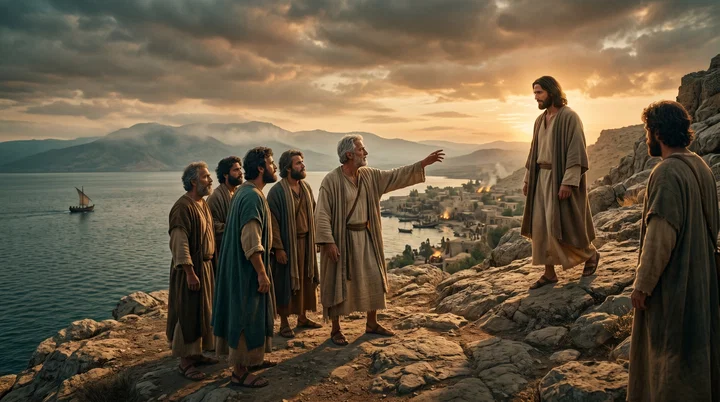
For the Son of man is not come to destroy men’s lives, but to save them. And they went to another village.
Translations
American King James Version, King James Version, KJV Cambridge Paragraph Bible
For the Son of man is not come to destroy men’s lives, but to save them. And they went to another village.
For the Son of man is not come to destroy men's lives, but to save them. And they went to another village.
Revised Version, American Standard Version, Darby Translation
And they went to another village.
for the Son of Man did not come to destroy men's lives, but to save;' and they went on to another village.
And they journeyed into a different village.
And He and His disciples went on to another village.
For the Son of Man did not come to destroy the lives of men, but to save them.” And He and His disciples went on to another village.
For the Son of Man didn’t come to destroy men’s lives, but to save them.”They went to another village.
And they went to another small town.
For the Sonne of man is not come to destroy mens liues, but to saue them. Then they went to another towne.
Douay-Rheims (Challoner revision)
The Son of man came not to destroy souls, but to save. And they went into another town.
Pictures
Cross-references 20 of 46
- John 12:47
And if any man hear my words, and believe not, I judge him not: for I came not to judge the world, but to save the world.
Christ came to save, not judge the world.
- 2 Kings 1:10-12
And Elijah answered and said to the captain of fifty, If I be a man of God, then let fire come down from heaven, and consume thee and thy fifty. And there came down fire from heaven, and consumed him and his fifty.
Elijah calls down fire, the act the disciples ask to imitate.
- Matthew 26:52
Then said Jesus unto him, Put up again thy sword into his place: for all they that take the sword shall perish with the sword.
Jesus forbids the disciple’s use of the sword and warns of its consequences.
- John 18:36
Jesus answered, My kingdom is not of this world: if my kingdom were of this world, then would my servants fight, that I should not be delivered to the Jews: but now is my kingdom not from hence.
Christ's kingdom is not of this world and is not advanced by fighting.
- John 3:17
For God sent not his Son into the world to condemn the world; but that the world through him might be saved.
Christ came to save, not condemn or destroy.
- Luke 19:10
For the Son of man is come to seek and to save that which was lost.
Both describe the Son of Man’s mission as seeking and saving the lost.
- Matthew 20:28
Even as the Son of man came not to be ministered unto, but to minister, and to give his life a ransom for many.
Both describe Christ’s mission to give his life for others.
- Matthew 5:44
But I say unto you, Love your enemies, bless them that curse you, do good to them that hate you, and pray for them which despitefully use you, and persecute you;
Jesus teaches love and prayer for persecutors rather than retaliation.
- Romans 12:19
Dearly beloved, avenge not yourselves, but rather give place unto wrath: for it is written, Vengeance is mine; I will repay, saith the Lord.
Vengeance belongs to God, not Christ’s followers.
- Matthew 5:39
But I say unto you, That ye resist not evil: but whosoever shall smite thee on thy right cheek, turn to him the other also.
Both teach refusing retaliation when struck or persecuted.
- Luke 22:51
And Jesus answered and said, Suffer ye thus far. And he touched his ear, and healed him.
Jesus stops the sword’s violence and heals the wounded servant.
- John 18:11
Then said Jesus unto Peter, Put up thy sword into the sheath: the cup which my Father hath given me, shall I not drink it?
Jesus accepts his Father’s cup rather than resist by force.
- Exodus 20:13
Thou shalt not kill.
Jesus chooses to save lives rather than destroy them, in keeping with the command against killing.
- 1 Peter 2:23
Who, when he was reviled, reviled not again; when he suffered, he threatened not; but committed himself to him that judgeth righteously:
Christ endured insult without retaliation.
- John 3:16
For God so loved the world, that he gave his only begotten Son, that whosoever believeth in him should not perish, but have everlasting life.
God gave the Son so believers might be saved and have everlasting life.
- 2 Peter 3:9
The Lord is not slack concerning his promise, as some men count slackness; but is longsuffering to us-ward, not willing that any should perish, but that all should come to repentance.
Both express God’s desire to save rather than destroy.
- John 8:3-11
And the scribes and Pharisees brought unto him a woman taken in adultery; and when they had set her in the midst,
Jesus refuses to condemn the accused woman, illustrating saving instead of condemning.
- 2 Timothy 2:24-25
And the servant of the Lord must not strive; but be gentle unto all men, apt to teach, patient,
The Lord’s servant gently teaches and corrects those who err.
- Mark 10:45
For even the Son of man came not to be ministered unto, but to minister, and to give his life a ransom for many.
same psuche rendered life or lives
- 1 Kings 18:38
Then the fire of the LORD fell, and consumed the burnt sacrifice, and the wood, and the stones, and the dust, and licked up the water that was in the trench.
James and John invoke Elijah’s fire from heaven.
Commentary
Each commentary is drawn from primary sources: the writings of Ellen G. White and Adventist pioneers and periodicals. Each commentary is separate. Its own words are not a quotation; follow the references to read the source passages.
Ellen G. White
45 sources
The Son of man came to save, preserve and recover human life, not to destroy it.GC88 570.2Ms 62, 1886, par. 60–64Lt 338, 1905, par. 7 He spoke this when a Samaritan village refused Him lodging on His way to Jerusalem, and James and John wanted to call down fire to consume them, but He pitied and rebuked their vengeful spirit and went with them to another village to bless those willing to receive Him.4SP 386.3GC 570.2Lt 21, 1901, par. 18–19Ms 106, 1894, par. 9AA 540.1–541.1 His heart overflows with love, pity and sympathy, He used His power only to bless and never to hurt, and He gave Himself wholly to restore God's moral image in fallen man.4SP 386.3BS 49.2–50.1Lt 46, 1887, par. 4–5Ms 238, 1902, par. 4 He never compels belief or forces His presence, and cruelty, persecution, imprisonment and killing for conscience or rejection are contrary to His spirit and come from Satan, not from Christ.GC 570.2DA 838.1–2AA 540.1–541.1ST Nov 2, 1882Ms 55, 1894, par. 9–10 His followers must therefore learn meekness, humility and love, forgiving without retaliation, correcting and reforming to save and not to ruin, and continuing His healing and life-saving work by simple means.BS 49.2–50.1Ms 55, 1894, par. 7–8ST Nov 2, 1882RH May 7, 1901Ms 87, 1898, par. 33
Context and Wording
The declaration is that the Son of man came to save, preserve, and recover human lives rather than to destroy them.GC88 570.2Ms 62, 1886, par. 60–64Lt 338, 1905, par. 7Lt 126, 1909, par. 7 It was uttered when a Samaritan village slighted Him and refused Him lodging and hospitality on His journey toward Jerusalem, and James and John, indignant at the rejection, wanted to call down fire from heaven to consume and punish the people.4SP 386.3GC 570.2Ms 106, 1894, par. 9DA 487.2–3ST Nov 2, 1882 The refusal to hear Him and the inhospitality of the Samaritans drew from the disciples a desire for retribution that called forth His correction.Ms 106, 1894, par. 9DA 487.2–32T 566.1–2
He looked upon the disciples with pity and rebuked their harsh, vengeful, and vindictive spirit.4SP 386.3GC 570.2Lt 21, 1901, par. 18–19AA 540.1–541.1 He did not retaliate for the disrespect or force His presence upon those unwilling to receive Him, nor did He withdraw His love, but went with them to another village to bless those willing to receive Him.AA 540.1–541.1ST Nov 2, 1882Ms 99, 1894, par. 2–3 Those who refused His presence in Samaria missed the blessing they could have received by welcoming Him.ST Nov 2, 1882
The journey toward Jerusalem in this setting directs attention to His coming sacrifice as the sacrifice that brings salvation to the lost world.DA 485.1–3 The saying belongs to His final instruction to His disciples before He is taken from them, to be studied to understand His work and reflect His light so they can remain in harmony with Him through coming trials and persecutions.Ms 72, 1911, par. 1–5
Mission to Save
The verse reveals a heart overflowing with love, pity and sympathy that are not repressed, teaching meekness, humility and love.4SP 386.3BS 49.2–50.1 Nearness to moral perfection makes sensibilities keener, perception of sin more acute, and sympathy for the afflicted deeper.4SP 386.3 He used His powers only to bless and never to hurt, and His words, His bearing and His work were full of divine tenderness.Lt 46, 1887, par. 4–5 Nothing could disturb His absolute patience or rouse Him to vindictiveness, and He patiently endured the most contemptuous sneers, the bitterest criticism and the most marked hostility.Lt 46, 1887, par. 4–5
He never killed anyone.Ms 62, 1886, par. 60–64 He gave Himself wholly to save people and to restore God's moral image in them, and His sacrifice shows Him to be a Saviour, not a destroyer.Ms 238, 1902, par. 4 That saving work was planned in heaven to reshape broken, perverted human character and restore the moral image of God.ST Jul 2, 1896 It meant Christ, the only-begotten of the Father, taking humanity in the likeness of sinful flesh to condemn sin in the flesh and lift up man.ST Jul 2, 1896
By living the law in humanity He testified to the unchangeable character of God's law, to stop every mouth and prove Satan an accuser and liar.ST Jul 2, 1896 In doing so He revealed God as full of mercy, compassion and inexpressible love, so that whoever believes in Christ as personal Saviour will be saved.ST Jul 2, 1896 His healing miracles testified to this saving purpose, for wherever He went His mercy brought health, life, joy and renewed ability.DA 350.3ST Jun 9, 1914MH 19.4–20.1GW 43.2–3 He used earthly blessings to prepare people and to lead them to receive the gospel of His grace.ST Jun 9, 1914MH 19.4–20.1GW 43.2–3
His works were done to restore and heal, never to destroy, so the disciples recalled this verse when His curse on the fig tree and its withering seemed unlike His usual work as Restorer and Healer.DA 581.3–582.1ST Jul 21, 1909 His mission of mercy is joined with the warning of judgment and with God's justice.COL 212.1ST Jan 6, 1909 The parable of the barren fig tree illustrates this, for the tree that fails to bear fruit faces judgment and the warning that it may be cut down, yet is given time, care and a further opportunity of mercy.COL 212.1ST Jan 6, 1909
Freedom From Force
Christ does not compel belief or force anyone to receive Him, and He does not force His presence on those who refuse Him but seeks to win them through mercy and love.AA 540.1–541.1ST Nov 2, 1882DA 487.4–488.1 His ministers are therefore to persuade and appeal rather than command or force, for He accepts only willing service and the voluntary surrender of the heart.DA 838.1–2AA 540.1–541.1DA 487.4–488.1 When hospitality was refused, the missed blessing fell on those who would not welcome Him, while His followers were called to learn meekness, humility, and love rather than answer disrespect with violence.ST Nov 2, 1882
The verse rebukes the desire to answer rejection, disrespect, or disagreement with punishment, harm, or destruction.Lt 21, 1901, par. 18–19DA 487.2–3Ms 55, 1894, par. 9–10 It forbids a vindictive and overbearing spirit in dealing with others.Lt 21, 1901, par. 18–19Ms 106, 1894, par. 9 Zeal for God must be tempered so that it does not express a harsh spirit that misrepresents His character, for a zeal that would call down fire and destroy lives must be corrected.Ms 106, 1894, par. 9DA 487.2–3Ms 21, 1893, par. 21–23
It forbids religious bigotry, persecution, oppression, disrespect, and revenge.Ms 55, 1894, par. 9–10 Cruelty, torture, and murder are contrary to His spirit, whose love and sympathy stand in contrast to cruelty and coercion, and He does not condemn people to death for refusing to honor or accept Him.GC 570.2Ms 55, 1886, par. 28–30 Consigning people to prison, rack, or death for refusing Him homage or for worshiping according to conscience does not reflect Him, whose life shows compassion for suffering people and readiness to relieve human pain.4SP 386.3Ms 55, 1886, par. 28–30 A power that persecutes and kills those who do not accept it manifests a spirit entirely different from His and cannot truly represent Him.4SP 386.3 He never killed anyone.Ms 62, 1886, par. 60–64
Persecution of people seeking liberty of conscience, and the desire to hurt or destroy those who reject one's work or disagree with one's ideas, come from the spirit of Satan, the deceiver and murderer, not from Christ.Ms 62, 1886, par. 60–64DA 487.4–488.1 Every person belongs to God, Christ died to redeem all, and everyone who believes in Him is precious to His heart, for He identifies His interests with suffering humanity.Ms 50, 1894, par. 16–19DA 487.4–488.1 Therefore harm done to another by words, actions, or conduct is counted in heaven as harm done to Him and as an offense against Himself, and bringing religious suffering on others is offensive to God.Ms 50, 1894, par. 16–19DA 487.4–488.1Ms 55, 1894, par. 9–10 Those who would seek God's judgment on the disobedient must examine their own conduct and must not wish retribution on anyone who dishonors the truth.Ms 55, 1894, par. 9–10
Following His Spirit
To follow Him is to learn meekness, humility, and love instead of answering slight or disrespect with resentment, retaliation, or violence.BS 49.2–50.1ST Nov 2, 18822T 566.1–2 Forgiveness replaces returning abuse, and jealousy, hurt pride, and self-interest are to be resisted.BS 49.2–50.12T 566.1–2 His followers rise above slights and supposed injustice, showing pity and sympathy even to those felt to have done injury, pardoning and being reconciled to a brother, and speaking only wise and gentle words.2T 566.1–2Lt 46, 1887, par. 4–5 They are kind even to enemies, for His powers were used only to bless and never to hurt, His words, bearing, and work full of divine tenderness, with an absolute patience nothing could disturb and no vindictiveness aroused even by contemptuous sneers, bitter criticism, and marked hostility.Ms 55, 1894, par. 7–8Lt 46, 1887, par. 4–5 Like John when corrected for wanting fire upon the inhospitable village, they are to be teachable and heed His instruction, accepting rebuke and learning from it.Lt 338, 1905, par. 7
With imperfect people they are to deal in His compassion, love, sympathy, and tenderness rather than hastily condemning them and ending their work.Lt 35, 1885, par. 15–18 Harm is to be corrected without wounding the work or endangering souls.Lt 35, 1885, par. 15–18 Reform and correction of others' habits are to be carried forward as a work to save and give a more secure foundation, not to ruin or destroy.RH May 7, 1901CH 415.3 Reformers are not destroyers but seek to save in kindness and love, drawing people through persuasion, patience, forbearance, and love, avoiding rudeness, bigotry, and domineering behavior and letting their own example support their teaching.RH May 7, 1901CH 415.3 Amid war and bloodshed they are not to imitate violence but to cooperate with God in the work of salvation.Ms 87, 1898, par. 33
That same life-saving work is to be done by the most simple means, by teaching families how to care for the sick, by reviving the hope of the gospel in men and women, and by drawing them to Christ as the great Healer.Lt 126, 1909, par. 7 Physical healing is His best way to reach the sick and afflicted and draw them to Himself, and being cured of bodily suffering leads many to eternal life.Ms 31a, 1898, par. 32Ms 65b, 1898, par. 4 It includes giving comfort, sympathy, and a helping hand to the poor who will never recover themselves without help.Ms 31a, 1898, par. 32 Physicians are to work intelligently by rational methods and not with drugs, and then by the prayer of faith to draw upon God's power to stay the progress of disease.Lt 126, 1909, par. 7 This inspires belief in Christ and in the power of prayer and gives confidence in simple methods of treating disease, and so directs minds to the truth and is of great efficiency in gospel ministry.Lt 126, 1909, par. 7
The physician's work of relieving suffering and rescuing life reflects His purpose and must be done with reliance on Christ, who steadies and guides the physician.Ms 238, 1902, par. 2 In the sickroom physicians and nurses are to reflect through words and actions that God is present to save rather than destroy.19MR 364.4–5 Ministers of the gospel are to come into close connection with Him as the divine Healer whose purpose is to rescue life and walk in His footsteps.Ms 101, 1909, par. 3–5 They are to proclaim the message for this time in all large cities under the influence and leading of the Holy Spirit, uniting prayer and the healing of the sick with teaching soul-saving truths, so that healing accompanies and confirms evangelistic work with convincing power as it did the labors of Christ and His apostles.Ms 101, 1909, par. 3–5
The destruction of the Review and Herald office and the earlier destruction of the Battle Creek Sanitarium are corrective appeals from God.STGC 17.2–4 The workers' lives were preserved, defended, and spared so they could recognize the warning, repent, be converted, and return to Him.STGC 17.2–4Ms 1, 1903, par. 1–6 In this sparing of life while property was lost, He shows that He seeks to save life, not destroy it.STGC 17.2–4Ms 1, 1903, par. 1–6
Sources
Pioneers and periodicals
106 sources
When Samaritans refused Him because He was heading toward Jerusalem, James and John wanted to call down fire to consume them as Elijah had done, but He rebuked them for not knowing what spirit they were of and simply went with His disciples to another village.ST Nov 25, 1908ST Aug 21, 1893RH Jan 6, 1910 He came to save men's lives and not to destroy them, to seek and save the lost of every class and carry on heaven's life-giving work.ST Jul 29, 1897ST Jun 2, 1909ST Mar 19, 1896 His church therefore exists to save and not to destroy, with no right to compel faith, punish rejecters, lord it over conscience, or put even a heretic to death.RH Mar 26, 1914ST Nov 21, 1906STST Jul 4, 1911ST Apr 23, 1912 When rejected His followers are to answer with meekness, refusing anger, resentment or revenge, forgiving injury and laboring on still in patience and love.ST Apr 9, 1894ST Nov 14, 1906RH Jan 27, 1863ST May 14, 1894ST Oct 3, 1878 True Christianity is therefore all gentleness, goodness and kindness, the opposite of war and killing, advancing not by sword, force or human power but by humble service, persuasion and the Spirit's drawing.RH Mar 7, 1865ST Sep 25, 1901ST Jul 21, 1898ST Jan 7, 1897ST Jun 16, 1898
Words and Historical Setting
The saying was spoken on a journey toward Jerusalem when Jesus entered a Samaritan village where bitter rivalry and hatred existed between Samaritans and Jews.ST Nov 25, 1908RH Jan 6, 1910 The villagers refused to receive Him because His face was turned toward Jerusalem, and from prejudice against Him on that account.ST Nov 25, 1908RH Jan 6, 1910 His coming was to save human lives, not to destroy them, and that purpose condemns intolerance and any desire to punish or destroy those who reject Him.ST Nov 25, 1908RH Jan 6, 1910
When the Samaritans rejected Him, James and John in anger proposed putting them to death by calling down fire from heaven to consume them as Elijah had done.ST Nov 25, 1908RH Jan 6, 1910ST May 26, 1898 Jesus turned and rebuked the disciples for their wrong spirit, telling them they did not know what manner of spirit they were of.ST Aug 21, 1893ST May 26, 1898ST Jul 24, 1893 Calling curses on people who commit or seem to commit sin is not His spirit, and rejection is no reason to seek people's destruction.ST Aug 21, 1893ST May 26, 1898ST Jul 24, 1893 Rather than punish the villagers, He and His disciples simply left them alone and went to another village.ST Nov 25, 1908ST May 14, 1894ST May 26, 1898 His followers must therefore have the same saving spirit and must not kill or harm those who reject or oppose them, but go elsewhere.ST May 26, 1898ST Jul 24, 1893
The word rendered lives is the Greek psuche, also rendered soul elsewhere in the New Testament.RH Oct 24, 1854ST Jun 6, 1878 Psuche is the only Greek word translated soul in the New Testament, occurring 105 times in all.ST Jun 6, 1878 This verse is one of 40 places where it is translated life or lives.ST Jun 6, 1878
Saving Mission Explained
The Son of man came to save men's lives and not to destroy them, to seek and save the lost of every class and to carry on heaven's life-giving work of salvation.ST Jul 29, 1897ST Jun 2, 1909ST Mar 19, 1896ST Jul 3, 1907ST Mar 5, 1894 His rebuke of the desire to call down fire upon rejecters shows that the wish to destroy those who refuse Him is contrary to His mission and spirit, and the same rebuke applies to reformers who would punish or destroy men for rejecting their message.ST Jul 29, 1897ST Jun 2, 1909ST Mar 19, 1896 His kingdom does not advance by force or by compelling acknowledgment, but by persuading, helping and saving, and coercion acts against His saving purpose.ST Mar 19, 1896ST Mar 5, 1894ST Oct 29, 1896 That saving mission expresses God's love for all mankind and corrects the disciples' impulse, which belonged to ideas they would outgrow after receiving the Holy Spirit at Pentecost.ST Mar 19, 1896ST Oct 29, 1896 Man is the one precious object on this sin-cursed earth to the mind and heart of God, loved with an everlasting love even in sin, loved as individuals and not merely in the aggregate, with God no respecter of persons, so that God gave His only-begotten Son to save him from sin and death.ST Apr 13, 1904
That saving work was planned in heaven to reshape broken, perverted human character and restore the moral image of God, which is the mystery of godliness.ST Jul 2, 1896 It meant Christ the only-begotten taking humanity in the likeness of sinful flesh to condemn sin in the flesh and lift up man, testifying by living God's law in humanity to its unchangeable character, stopping every mouth and proving Satan an accuser and liar, and revealing God as full of mercy, compassion and inexpressible love, so that whoever believes in Christ as personal Saviour will be saved.ST Jul 2, 1896 His mission was not to establish a worldly kingdom by force or ambition, but to restore obedience to God's law and bring help, healing, comfort and joy to the burdened and distressed.ST Nov 3, 1881ST Jun 19, 1884 It advances through humility, love and free honest conviction rather than compulsion or violence, teaching patience toward rejecters, and lasting change requires the heart to be renewed individually through the Holy Spirit rather than relying on external measures, so refusal to pursue civil reform is not indifference to human suffering.ST Nov 3, 1881ST Oct 4, 1899
The same saving principle reveals a heart open to all classes, including the needy, the sick, the foreigner and even rejecters, and it condemns the class and union spirit that would shut out or destroy those outside one's own set, a principle unchanged today because He does not change.ST Jun 12, 1907 He mingled with Samaritans, taught them and brought them salvation, breaking down the barrier between Jews and others and correcting national and class prejudice among His disciples.ST Jun 12, 1907ST May 24, 1910 Shortly after being ungraciously rejected He made a Samaritan the hero of His picture of true neighborliness, which required great moral courage to exalt a despised Samaritan before Jews. Joseph's refusal to take vengeance on his brothers likewise reflects this mercy of saving lives rather than destroying them.ST Oct 23, 1901
His healing miracles testified to this saving purpose by bringing mercy, health, joy and life to the afflicted, removing disease, suffering and sin toward complete restoration, health, peace and perfection of character.ST Jun 9, 1914ST Oct 30, 1907RH Jul 10, 1916ST Sep 27, 1899 He gave earthly blessings to lead people to receive the gospel of grace and to prepare them for it, and His compassion is reflected in works that relieve suffering and restore health.ST Jun 9, 1914ST Oct 30, 1907ST Sep 27, 1899 His words and embrace reveal a spirit of love producing Christian charity as a refuge of delight and faith for the poor, helpless, sufferers, sinners and saints. The same saving purpose for a lost world is expressed in the parables of the lost sheep, the lost coin and the lost son, standing opposite every merciless scheme that would relieve human woe by destroying human life. His work is to seek and save the lost, including those whom society regards as low or worthless because they are precious to God, winning them by self-giving love and sacrifice that draws people to God rather than by legislation, compulsion or coercion.ST Sep 29, 1909ST Aug 19, 1897
Mercy Joined With Judgment
At His first coming and in His earthly work He came to save men's lives and not to destroy them, and not to condemn them but to seek and save the lost of every class, including adulterers and Sabbath-breakers and all sinners, being long-suffering toward all and unwilling that any should perish but that all should come to repentance.ST Dec 4, 1893ST Aug 13, 1902ST Jan 24, 1884ST Oct 13, 1898 When the disciples wanted to call down fire on the village that would not receive Him, as Elijah had done, He restrained them and rebuked them for failing to understand His spirit, and He went with them to another village rather than punish rejecters.ST Dec 4, 1893ST Aug 13, 1902ST Jan 24, 1884 His mission is to appeal to people with truth and not to compel belief or acceptance, for bearers of the gospel of peace are not executioners.ST Dec 4, 1893ST Aug 13, 1902 Judgment belongs to the Lord and will be carried out by God's appointed means and time, not by His followers, and even the Lord Himself withholds vengeance on the ungodly until He leaves the mediatorial throne.ST Aug 13, 1902ST Jan 24, 1884ST Oct 13, 1898 The destruction of His enemies does not take place till the last day at Christ's return, leaving judgment to that day and no reason for religious prosecution or persecution now.ST Dec 4, 1893ST Oct 13, 1898
The disciples were not to imitate Elijah's act of calling down fire as retribution but to copy deeds of mercy instead.ST Jul 13, 1904 Destruction by fire was proper in Elijah's circumstances but improper in their time, and they were not competent to judge those circumstances.ST Jul 13, 1904 Such judgments are largely reserved for the future, contrasting the Spirit's life-giving ministry with the letter that kills, but their certainty is not diminished by delay.ST Jul 13, 1904
His mission of mercy is joined with the warning of justice and judgment, as illustrated by the barren fig tree that faces judgment yet is given a further opportunity with time and care, but with warning that failure to bear fruit brings being cut down.ST Jan 6, 1909 His works were done to restore and never to destroy, so the fig tree's withering seemed unlike His usual work as Restorer and Healer.ST Jul 21, 1909
His mission was not to accuse sinners or add condemnation to them, for they are already condemned and face death unless they accept pardon, but to offer salvation and to grieve over those who reject mercy.ST Sep 24, 1896 When the Samaritans refused to receive Him and the disciples wanted to destroy them with fire, He rebuked their hostile spirit.ST Sep 24, 1896 Those who accuse and seek to destroy act in the spirit of the destroyer, not in Christ's spirit.ST Sep 24, 1896
Meekness and Transforming Love
When rejected, He answered hostility with meekness, staying calm when treated badly and refusing anger, offense, resentment, or revenge for insult or rejection.ST Apr 9, 1894RH Jan 27, 1863ST Oct 3, 1878 He denied Himself, expected no honor or good treatment, forgave injury and blotted out the past, modeling non-resistance to insult rather than forceful retaliation.ST Apr 9, 1894ST Oct 3, 1878 Instead of calling down fire from heaven though urged to do so, He rebuked the proposal to punish and went to another village where He would be received to labor on still.ST Apr 9, 1894RH Jan 27, 1863ST Oct 3, 1878 Workers for Him must have the same meek spirit, not rising in pride to defend self, not quitting because efforts are unappreciated or met with sharp words and severe criticism, but enduring patiently like the anvil and finding labor easy.ST Oct 3, 1878
He does not force His presence on anyone, so the inhospitable Samaritans missed the blessing they could have received by welcoming Him.ST Nov 2, 1882ST Oct 16, 1884 Yet He continued in universal charity by still sending the seventy to preach in Samaria, showing a loving spirit toward those who had refused Him.ST May 14, 1894ST Nov 17, 1881 His example teaches followers to leave people free to choose their way and to address those who err with His meekness and patience rather than answering disrespect with violence or destruction.ST Nov 2, 1882ST Oct 16, 1884ST May 14, 1894 They must learn from Him meekness, humility, and love.ST Nov 2, 1882ST Oct 16, 1884
The disciples' wish to punish with fire came from false, selfish zeal rather than His Spirit, with pride, personal offense, and bigotry lying beneath the claim to act zealously for God.ST May 14, 1894ST Sep 19, 1911 It showed they did not understand the spirit guiding them, and He rebuked their harsh, vindictive, self-righteous desire.ST May 14, 1894ST Sep 19, 1911 That destructive spirit is still found among His followers.ST Nov 14, 1906 Religious persecution, even against those who openly reject Him, is contrary to His saving work to save lives and not destroy them.ST May 14, 1894ST Sep 19, 1911
That rebuke transformed John from an impetuous, resentful, ambitious, judging and destroying spirit into the beloved disciple of love.ST Jan 13, 1888RH Mar 4, 1915 When John was ready to call fire from heaven to destroy a whole village because its people did not receive Christ according to his ideas, he was told he did not know what manner of spirit he was of, since the Son of man came to save lives, not to destroy them.RH Mar 4, 1915 Christ then bore with him day after day and led him along by kindness and patience, teaching by precept and example, until he was changed to calm consideration, forbearance, humility, and patience like Christ.ST Jan 13, 1888RH Mar 4, 1915 As so changed he wrote of the Father's love in making us sons of God and of dwelling in God by dwelling in love.RH Mar 4, 1915
Guarding the heart continually, drinking of His spirit, and letting forgiving love imbue the soul means bearing insult, harshness, and false accusation with loving forbearance and patience without retaliation or contempt.ST Jan 13, 1888 It means allowing no revengeful thought to arise and cherishing no unholy anger, for revengeful thoughts and words are contrary to the spirit of the meek and lowly Jesus.ST Jan 13, 1888 Only sorrow and indignation that souls are deceived are to be cherished.ST Jan 13, 1888 In light of the exceeding breadth of the sixth commandment, where hatred itself is murder, the spirit that leads to murder is not in harmony with His Spirit to save and not destroy, holding the murderous spirit shuts its possessor out of heaven, and no one would be innocent enough to execute judgment if all real guilt had to be punished.ST Jan 13, 1888ST Oct 23, 1893
His saving rather than destroying purpose calls for correction that points the erring toward what is right, weighs motives instead of judging only by appearances, and gives confidence rather than condemnation.RH Feb 1, 1912 Trusting Mary helped lead her to a life of loyalty and devotion, and such confidence can help others rise to better lives.RH Feb 1, 1912 Reformers are not destroyers but seek to save, and reforms are to be carried forward in kindness and love.RH May 7, 1901 Reform comes through the Gospel, God's Word and Spirit, and loving hearts, and His followers must not use force or vengeance to reform or punish others for their beliefs.RH May 7, 1901ST Jan 9, 1912
Freedom From Coercion
The Son of man came to save men's lives and not to destroy them, and when a Samaritan village refused to receive Him He rebuked James and John for wanting to call down fire upon its people and simply went to another village with His disciples.ST Mar 19, 1896STST Apr 16, 1894RH Aug 4, 1910ST Mar 5, 1894 Rejection gives no warrant to condemn or punish rejecters, to discipline those outside the church, to lord it over the faith of those inside, or to advance the Gospel by earthly methods and carnal force.ST Mar 19, 1896STST Oct 4, 1910RH Aug 4, 1910ST Mar 5, 1894 His kingdom is not of this world and does not advance by force or by compelling acknowledgment, but by humble service, by being examples to the flock and helpers of their joy, by spiritual weapons ruling inward thought, and by beseeching, persuading, convincing, converting, drawing, and helping rather than compelling, coercing, or driving.ST Mar 19, 1896STST Oct 4, 1910RH Aug 4, 1910ST Mar 5, 1894 Those who use coercion act against His saving purpose and show they do not know what manner of spirit His mission requires, an impulse to be outgrown after receiving the Holy Spirit.ST Mar 19, 1896STST Apr 16, 1894 His spirit is therefore salvation rather than coercion or retaliation for rejection.ST Apr 16, 1894ST Oct 4, 1910ST Mar 5, 1894
The purpose of the church is to save and not to destroy, so its authority is limited to saving work with no right to punish, coerce, or call down destruction on those who reject its message.RH Mar 26, 1914 Knowing Him does not lead a person to compel others to profess faith, and religious force reflects a spirit contrary to His saving purpose.RH Mar 26, 1914ST Nov 21, 1906 At His first coming He came to teach God's will, to minister to men, to live as their example, and to die to redeem them from sin.ST Aug 21, 1893 The path to glory and to God is self-denial, and greatness is reached by serving and not by ruling, so as He is so are His followers in this world.ST Aug 21, 1893 His work was to convince and convert by drawing rather than compelling or driving, seeking no Caesar's help and no union of church and state, keeping civil and religious authority distinct with no right to compel, coerce, or condemn men by civil law or to civil penalties for violation of any religious observance whatsoever.ST Aug 21, 1893
People are free to believe or not believe, for Christianity does not compel faith.ST Nov 21, 1906 Putting even a heretic to death contradicts His purpose and is a greater heresy than the person's errors.ST Nov 21, 1906ST Jul 4, 1911ST Nov 26, 1896 When reason and Scripture do not persuade, dissenters are to be left alone rather than burned or killed, since He came to give life and not to destroy it.ST Apr 23, 1912ST Nov 26, 1896RH May 14, 1914 This upholds liberty of conscience as the teaching of Christ and the apostles.ST Nov 21, 1906ST Apr 23, 1912 In His earthly work He came to seek and save the lost, including adulterers and Sabbath-breakers and sinners of every class, being long-suffering toward all and not willing that any should perish but that all should come to repentance.ST Aug 13, 1902ST Oct 26, 1904 Death remains the penalty for sin and the law remains in full force, yet bearers of the gospel of peace are not executioners, and followers have no warrant to execute death upon anyone, especially upon fellow men who differ in matters of faith.ST Aug 13, 1902ST Oct 26, 1904 Enforcing belief by law unto death, such as death for Sabbath or Sunday breaking, violates His mission and repeats the work that made the Dark Ages red with the spilled blood of His faithful ones, leaving punishment for sin with God rather than staining Christian hands with blood.ST Aug 13, 1902ST Oct 26, 1904
The ultimatum of love and the operation of the Spirit is death of the old man and a new and living creation, while the ultimatum of force is death of the physical man.ST Jul 4, 1900 A missionary sent by Christ must therefore not appeal to any foreign civil power, whose arm is flesh with army and navy, for protection against persecution or outrage, but must use the sword of the Spirit which is the Word of God and appeal to heaven.ST Jul 4, 1900 Appealing to earthly force identifies Christianity in the minds of unbelievers with force and not love.ST Jul 4, 1900 Followers are to preach salvation to all, including Turks, not condemn them or wish their destruction.ST Jul 4, 1900 Hunting down and punishing criminals may be necessary in the world, but it is not Gospel or Christian work, for Christians are to show His spirit rather than execute judgment.ST Aug 28, 1901 Disciples must not act as a cordon keeping people from Christ or claim sole right to guard His grace.ST Apr 16, 1896 His cause is not to destroy people but to save them, and under the banner of truth it leads through suffering and hardship toward victory in God.ST Apr 16, 1896ST Jul 6, 1904
Peace Instead of War
The Son of man came to preserve and rescue human life rather than to take it, for His mission is to save lives, not destroy them.RH Mar 7, 1865ST Sep 25, 1901ST Jul 21, 1898ST Aug 23, 1899ST Feb 22, 1899 True Christianity is therefore all gentleness and positive goodness and kindness, which is the opposite of war, since war is the very essence of cruelty.ST Jul 21, 1898ST Aug 23, 1899 The Gospel's work is to seek souls and not destroy lives, proceeding by God's Spirit rather than by force or human power, so a spirit that leads to destroy people is contrary to the Spirit of God.RH Mar 7, 1865ST Sep 25, 1901 Christians who follow Him therefore keep aloof from the sword and give themselves to a nobler and more important work, even while nations in this present evil world continue to resort to war.ST Jul 21, 1898 His saving mission is consistent with spiritual warfare against selfish thoughts and evil, not bloody conflict against other people, and stands in contrast to the warlike spirit of professed followers and to peace maintained by force with a civilization that destroys people.ST Aug 23, 1899ST Feb 22, 1899ST Aug 23, 1899
His greatness was unlike greatness sought through armies and navies, which is won at the expense of human life.ST Jun 6, 1906 His mission calls His ministers to seek people's salvation rather than take life with weapons or act as enforcers of the law, since every human being has potential through Christ for noble and immortal life.
Christians are never sent to bear the sword against enemies, and no retaliation for rejection or persecution is of Christ, even to defend His own cause.ST Jan 7, 1897ST Jun 16, 1898ST Dec 14, 1915 When two disciples wanted to call down fire from heaven on the village that would not receive and lodge Him, He rebuked them for not knowing what manner of spirit they were of.ST Jan 7, 1897 Using destroying physical force, including war and civil law backed by force, is contrary to His mission to save lives and proves those who use it do not belong to His spiritual army, whose warfare is not carnal and whose only offensive weapon is the Word of God.ST Jan 7, 1897 Killing men is never Christian endeavor, and a professed follower who puts on the world's armor, takes a carnal weapon, and seeks opportunity to slay fellow men, even the bitterest foe, is deceived.ST Jun 16, 1898 He refused to bear arms and told His disciples to put away the sword when drawn in His defense, giving no command and no example for saving people by the sword, so Christians have no divine law justifying destroying empires.ST Dec 1, 1914ST Dec 14, 1915ST Jan 7, 1897
Christians are assigned to the same work He came to do, to preach the Gospel of salvation and the kingdom of God, walking as He walked.ST Sep 29, 1898 They must give themselves to the Lord's vineyard where laborers are few, while leaving God to take care of the nations and to limit and punish the wicked world by violent means through worldly agents if needed, leaving the world with its plenty of laborers to do the world's work.ST Sep 29, 1898 Depending on the sword, which represents all human government and its military warfare that kills, maims, and destroys, violates the only service God will recognize at the righteous judgment before whose bar all must appear, and will perish with such governments when supplanted by the kingdom the God of heaven shall set up to fill the whole earth.ST Aug 4, 1898
The ruling principle of Christian warfare forbids carnal war against people with its impoverishing expense and demoralizing effect.ST Sep 7, 1904 It directs wrestling not against flesh and blood but against principalities, powers, rulers of darkness, and spiritual wickedness, using only the whole armor of God — truth, righteousness, the gospel of peace, faith, salvation, the Word of God, prayer and watching — with the moral law and the Golden Rule.ST Sep 7, 1904 If all professed Christians adopted it, great armies and carnal warfare would be done away.ST Sep 7, 1904
His example opposes military occupations that incur and deal death, training youth to use weapons and fight against other people, and measures bringing wholesale destruction physically and spiritually of the life He came to save.ST Jan 10, 1900ST Jan 10, 1900 His saving work cost Him His own life to rescue life physically and spiritually, and binds those who bear His name so they cannot urge men into work that incurs and inflicts death, encourage youth to learn deadly weapons and fighting, or urge or applaud such measures.ST Jan 10, 1900ST Jan 10, 1900 Christians put up the sword to work for peace and righteousness.RH Oct 29, 1914 As the greatest hero and greatest benefactor the world ever saw He never used a carnal weapon even to protect life nor took human life on any pretext, giving His own life to bring peace on earth and goodwill toward men and never calling for taking others' lives.ST Mar 17, 1898ST Apr 14, 1898 Love of country therefore does not mean war, for war is the worst calamity that can befall a people, and true patriotism to be taught to children is saving life and ruling the spirit rather than fighting, killing, and military hero-worship, following peace with all men rather than using frightful, brutalizing and terrible war as cure for barbarities or reparation for loss of life and treasure.ST Mar 17, 1898ST Apr 14, 1898
Military drill in public schools is condemned because it fosters a killing spirit and makes boys regard human life as cheap instead of becoming their enemies' saviors.ST Dec 24, 1896 Using the forces of the church to train boys and young men for the state in drill and brother-killing war is contrary to His preserving work and proves the church has changed, not the world.ST Aug 25, 1898 Civilization advances not by war and destruction of peoples but by love taught through the Word of truth.
That saving mission to preserve and rescue life rather than take it stands in direct contrast to civil government spending the people's money, even when called Christian, for war and destruction while lives are lost for lack of food, so that even the best human civil government that can be devised falls short and makes urgent the prayer for God's kingdom to come and His will to be done on earth as in heaven.ST Jun 13, 1900 Christianity stands as far above patriotism as heaven stands above earth, all-embracing without partisan or national limit, seeking the lost everywhere and giving itself as ransom for all.ST May 26, 1898 Those who follow Him share the same character, building up whatever is of God in the nation where they live while serving others rather than demanding to be served.ST May 26, 1898
Followers therefore refuse to kill, as four believers refused to carry arms or kill even when bound and forced to serve as soldiers.ST Dec 8, 1914 Christians must refuse to be drafted into the army to kill, choosing to die rather than kill, being taught by God not to kill any man.RH Nov 19, 1914 Treating skill in killing people in war as a Christian qualification is condemned, since Christ gave His life to save those whose lives fighters destroy.ST Dec 10, 1902 Christians should not lightly take up work deliberately killing fellow beings, but should seek service in the medical corps where they can save life and minister God's Word, with the motive to preserve life and care for others including nursing the sick and wounded rather than taking lives.ST Oct 20, 1914
The Lord's spirit to save life, not destroy it, means abstaining from spirits helps keep others from being led toward ruin and death through intemperance.ST Dec 18, 1879 His spirit is unlike the violent spirit shown in the attack on John Kensit.ST Oct 8, 1902 Spanish and Portuguese conquerors seeking gold and rule acted in the opposite spirit, sacrificing the lives and welfare of the Indians through conquest, cruelty, forced labor, and oppression rather than bringing them salvation.RH Apr 8, 1902
Religious killing, such as Catholics killing Protestants and Protestants killing Catholics, harms the cause of Christ and misrepresents Him, for the Gospel brings salvation rather than death and disagreement over religion gives no reason to kill. A heart holding desire to kill or anger against another over religion proves one not inspired by the Spirit of Christ and not filled with the pure Gospel, but led by another spirit. The disposition to hurt and destroy, as when James and John wanted to command fire from heaven to consume those rude, discourteous and inhospitable to Jesus, is evidence of possessing the spirit of Satan, contrary to the saving spirit of Christ.RH Feb 5, 1914
Demands that wicked nations and persons ought not be tolerated on the earth condemn the desire to be instruments of God's vengeance instead of instruments of His mercy, charging God with laxness for suffering wicked men to live and leading men to get ahead of the Lord and make themselves both judge and executioner.ST Mar 18, 1897 Followers of Christ are not called to destroy men's lives but to save them by pointing them to Christ, so a follower cannot at the same time fight with swords, rifles, cannons and other instruments of war, for the Gospel brings peace and salvation, not fire and sword.ST Jan 25, 1899
The true Christian follows His example and does not use weapons of violence, rejecting carnal violence and acting as He acted to save rather than destroy.ST Apr 24, 1893RH Oct 16, 1856
Witness Through Service
Luke 9:56 declares that Christ came to save people's lives and not to destroy them.ST Dec 3, 1894ST Mar 5, 1894 His miraculous power was exercised only for human good and for the glory of His Father.ST Mar 5, 1894 He rejected force as the foundation of His kingdom and established it upon love rather than upon fear or compelled submission.ST Mar 5, 1894 His followers therefore must not advance His cause by physical or legal force, for His rebuke of the desire to call down fire upon rejecters teaches that Christian work follows His example of service and not compulsion in the name of Christ or the church.ST Dec 3, 1894ST Mar 5, 1894
Sources