Luke 22:51
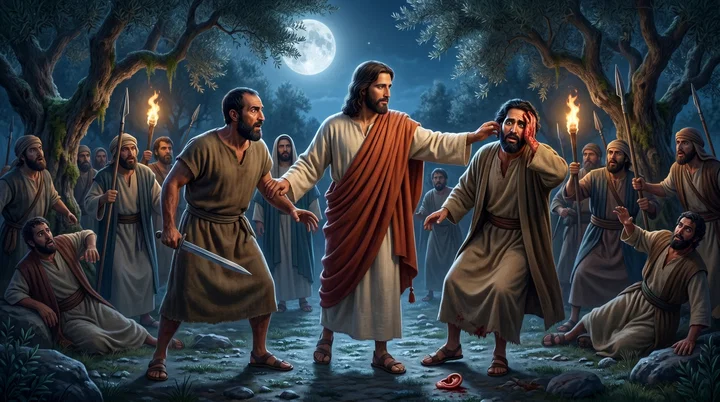
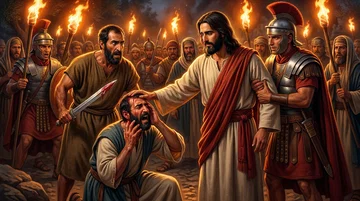
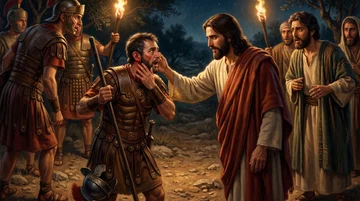
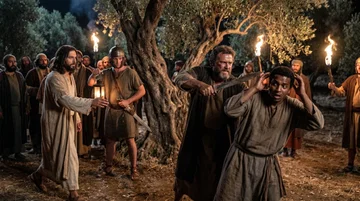
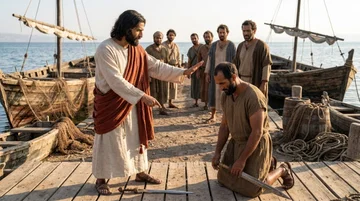
And Jesus answered and said, Suffer ye thus far. And he touched his ear, and healed him.
Translations
And Jesus answered and said, Suffer you thus far. And he touched his ear, and healed him.
King James Version, KJV Cambridge Paragraph Bible, Webster Bible
And Jesus answered and said, Suffer ye thus far. And he touched his ear, and healed him.
But Jesus answered and said, Suffer ye thus far. And he touched his ear, and healed him.
But Jesus answered and said, Suffer ye them thus far. And he touched his ear, and healed him.
and Jesus answering said, 'Suffer ye thus far,' and having touched his ear, he healed him.
And Jesus answering said, Suffer thus far; and having touched his ear, he healed him.
But Jesus, answering, said—Let be—as long as this! …And, touching the ear, he healed him.
Berean Standard Bible, Majority Standard Bible
But Jesus answered, “ No more of this!” And He touched the man’s ear and healed him.
But Jesus answered, “ Let me at least do this”— and he touched his ear and healed him.
But Jesus, answering, said, Put up with this, at least. And touching his ear, he made it well.
Then Iesus answered, and said, Suffer them thus farre: and he touched his eare, and healed him.
Douay-Rheims (Challoner revision)
But Jesus answering, said: Suffer ye thus far. And when he had touched his ear, he healed him.
Pictures
Cross-references
- Matthew 26:51-54
And, behold, one of them which were with Jesus stretched out his hand, and drew his sword, and struck a servant of the high priest’s, and smote off his ear.
Jesus heals the wounded servant, forbids the sword, and submits to Scripture’s fulfillment.
- John 18:10-11
Then Simon Peter having a sword drew it, and smote the high priest’s servant, and cut off his right ear. The servant’s name was Malchus.
John names the injured servant and records Jesus healing him and telling Peter to put away his sword.
- Mark 14:47
And one of them that stood by drew a sword, and smote a servant of the high priest, and cut off his ear.
A disciple strikes the high priest’s servant and cuts off his ear during Jesus’ arrest.
- John 18:36
Jesus answered, My kingdom is not of this world: if my kingdom were of this world, then would my servants fight, that I should not be delivered to the Jews: but now is my kingdom not from hence.
Jesus’ kingdom is not advanced by his servants fighting.
- John 18:11
Then said Jesus unto Peter, Put up thy sword into the sheath: the cup which my Father hath given me, shall I not drink it?
Jesus tells Peter to sheath his sword and accepts the Father’s cup.
- John 18:6
As soon then as he had said unto them, I am he, they went backward, and fell to the ground.
His captors fall before him, yet he uses his power to heal rather than escape.
- Matthew 26:53
Thinkest thou that I can not now pray to my Father, and he shall presently give me more than twelve legions of angels?
Jesus could call more than twelve legions of angels.
- Matthew 26:51
And, behold, one of them which were with Jesus stretched out his hand, and drew his sword, and struck a servant of the high priest’s, and smote off his ear.
parallel account of sword and ear
- Mark 14:48-49
And Jesus answered and said unto them, Are ye come out, as against a thief, with swords and with staves to take me?
Jesus questions the armed arrest and says Scripture must be fulfilled.
- Matthew 26:56
But all this was done, that the scriptures of the prophets might be fulfilled. Then all the disciples forsook him, and fled.
Jesus says the events fulfill Scripture.
- Luke 22:38
And they said, Lord, behold, here are two swords. And he said unto them, It is enough.
Connected to the passage’s distinction between two swords.
- Matthew 26:50
And Jesus said unto him, Friend, wherefore art thou come? Then came they, and laid hands on Jesus, and took him.
Records Jesus’ words and healing of the servant’s ear.
- Luke 22:39-46
And he came out, and went, as he was wont, to the mount of Olives; and his disciples also followed him.
named as part of same foretold ordeal
- 1 Peter 2:21-23
For even hereunto were ye called: because Christ also suffered for us, leaving us an example, that ye should follow his steps:
Jesus endured suffering without retaliation, setting an example for his followers.
Commentary
Each commentary is drawn from primary sources: the writings of Ellen G. White and Adventist pioneers and periodicals. Each commentary is separate. Its own words are not a quotation; follow the references to read the source passages.
Ellen G. White
17 sources
At the arrest after Gethsemane when Judas betrayed Him to armed men, Peter cut off the ear of the high priest's servant, and Jesus commanded that no further violence be done while permitting Himself to be taken, then freed His held hands to touch the wound and make it instantly whole.5RED 24.2–3ST Aug 21, 1879COS 123.23SP 104.2–3COS 122.5–123.1 In healing one of His captors instead of resisting them He displayed divine power used for mercy and care toward His enemies.5RED 24.2–3ST Aug 21, 1879ST Sep 23, 1886 Together with the prostrating of the mob before Him, the act proved He could have delivered Himself and had more than twelve legions of angels longing to disperse His captors.ST Aug 21, 1879ST May 20, 18893SP 105.1 Yet He refused armed rescue, ordered the sword put away, and submitted to be bound and led away so the Scriptures would be fulfilled.5RED 24.2–3ST Aug 21, 1879COS 123.3–4 His submission offended the disciples so that they forsook Him and fled in terror and despair, and Peter's hasty sword-stroke exposed an ardent but still unconverted zeal that only true repentance after his denial would transform.COS 123.3–43SP 105.1EW 137.1Lt 12, 1861, par. 12–14
Arrest Setting and Healing
The verse belongs to the arrest after the agony in Gethsemane, when armed men seized Him following that agony.COS 123.2Ms 107, 1893, par. 2 Judas, one of His own disciples, betrayed Him into that arrest.Ms 107, 1893, par. 2 The arrest stood as part of the coming betrayal, agony, condemnation, humiliation and death.4RED 102.2–103.1
At that arrest a disciple struck with a sword and cut off the ear of the high priest's servant.COS 123.2ST Sep 23, 1886ST May 20, 1889 That disciple was Peter.5RED 24.2–33SP 105.1EW 137.1 The wounded man was the servant of the high priest, struck in the midst of the attempt to take Jesus by force.5RED 24.2–3ST Sep 23, 1886ST May 20, 18893SP 105.1EW 137.1
His command to permit matters to go this far stopped further violence by allowing what had happened to go no further.ST Aug 21, 18793SP 104.2–3 At the same time it permitted the arrest itself to proceed.3SP 104.2–3COS 122.5–123.1 He spoke it calmly to those holding Him, telling them to allow what was happening.ST Aug 21, 18793SP 104.2–3COS 122.5–123.1
Though His hands were held by the Roman soldiers, He acted to heal.5RED 24.2–3ST Aug 21, 18793SP 104.2–3ST Jun 6, 1878ST Sep 23, 1886 He released His hands from their hold and freed them for the work.5RED 24.2–3ST Aug 21, 1879ST Jun 6, 1878ST Sep 23, 1886COS 122.5–123.1 He touched the wounded ear.5RED 24.2–33SP 104.2–3ST Jun 6, 1878ST Sep 23, 1886COS 122.5–123.1 He made it instantly whole at once.ST Aug 21, 18793SP 104.2–3ST Jun 6, 1878ST Sep 23, 1886COS 122.5–123.1
Power in Willing Submission
Even with His hands held by the Roman soldiers, He freed them to touch the wounded ear of the high priest's servant and make it instantly whole at once.5RED 24.2–3ST Aug 21, 1879ST Sep 23, 1886 In stopping the violence that way He displayed both divine power and tender care for the injured man.5RED 24.2–3ST Aug 21, 1879ST Sep 23, 1886 He used His power not to resist arrest but to show mercy even to one among the arresting party and to His enemies.ST Aug 21, 1879ST May 20, 1889DA 696.3
That healing, together with the falling backward prostrate to the ground of those who came to take Him, proved that He had power to act and could have delivered Himself from the murderous mob and His captors.ST Aug 21, 1879ST May 20, 18893SP 105.1 He could have escaped, or prayed to His Father for more than twelve legions of angels.ST Aug 21, 1879EW 137.1 The angels were animated with hope and longed to surround their Commander and disperse the mob, and the disciples knew He could deliver Himself.3SP 105.1EW 137.1ST Sep 23, 1886
Yet He deliberately refused armed rescue and made no effort to deliver Himself.COS 123.3–4EW 137.1 He commanded the sword to be put away and chose to submit to be taken and bound and led away.5RED 24.2–33SP 105.1EW 137.1 He did so that the Scriptures would be fulfilled that thus it must be, accepting the suffering this required.5RED 24.2–3ST Aug 21, 1879EW 137.1
Lessons for Followers
His refusal to make any effort to deliver Himself and His submission to being taken and bound instead offended the disciples, who could not understand His submission and blamed Him for not acting with power to save Himself from humiliation to Himself and to them.COS 123.3–43SP 105.1 Though the instant healing of the servant's ear, together with the prostrating to the ground of those who came to take Him, proved He could have delivered Himself from the murderous mob, and the disciples knew this, they were mortified and terror-stricken at His conduct and forsook Him and fled.COS 123.3–43SP 105.1 When the mob that had fallen backward rose and surrounded Him again the disciples still hoped for deliverance, and after Peter cut off the ear He commanded the sword to be put away and yielded Himself to be led away to His enemies.EW 137.1 He declared He could pray to His Father for more than twelve legions of angels, and the angels were animated with hope and longed to surround their Commander and disperse the mob, yet sorrow returned when He added that the Scriptures must be fulfilled that thus it must be, and the disciples sank into despair and bitter disappointment.EW 137.1 This desertion had been foretold when He said the hour would come when they would be scattered and leave Him alone, yet He would not be alone because the Father was with Him.COS 123.3–4
He knew the coming trial of betrayal, agony in Gethsemane, condemnation, humiliation and death, and therefore deliberately brought on an earlier easily misunderstood crisis that sifted out unbelieving and weak, undecided followers while He was still present to comfort and strengthen the chosen twelve.4RED 102.2–103.1 This was so that when their Lord was betrayed and condemned in the Judgment Hall, humiliated, hissed at and reviled by the multitude that had hailed Him as king, scorned on the way to the cross and deserted by professed friends, the faithful would not be overwhelmed with surprise.4RED 102.2–103.1 When the cruel jeering crowd cried Crucify him, they would not sink beneath fear and disappointment and grief and the ruin of their hopes, nor be carried away by the example of apostasy.4RED 102.2–103.1 Having already tested the inconstant favor of the world, they had learned not to hang faith on the opinions of others.4RED 102.2–103.1
Peter's cutting off the high priest's servant's ear in Gethsemane was the outburst of an ardent, quick, zealous man who was still unconverted, showing that ardent zeal and bold assertions of willingness to suffer and die do not mean conversion.Lt 12, 1861, par. 12–14 His hasty, quick temper brought him into trouble, destroyed his peace and happiness, and injured the cause he loved.Lt 12, 1861, par. 12–14 True conversion came only afterward, after he denied his Lord with cursing and swearing, when Christ's look of sadness and grief broke his heart and led him to repent and be prepared to strengthen his brethren.Lt 12, 1861, par. 12–14 Overcoming such hot, passionate temper requires the sanctifying influence of truth to make a man patient, refusing to open the mouth when temper rises, and praying and working earnestly and zealously with help from others.Lt 12, 1861, par. 12–14 There is to be no discouragement if victory is not all at once, since the work is not done in a moment and eternal life is worth lifelong, persevering, untiring effort.Lt 12, 1861, par. 12–14
Sources
Pioneers and periodicals
45 sources
When those around Him saw the armed multitude seizing Him in the garden, one of His disciples struck with a sword and cut off the right ear of the high priest's servant.ST Nov 5, 1894ST Feb 7, 1900ST Jun 11, 1896 Jesus stopped further armed resistance and let the arrest go forward, then freed His held hands to touch the severed ear and make it whole again.ST Aug 21, 1879ST Jun 6, 1878ST Apr 28, 1909ST Feb 7, 1900ST Jan 10, 1911 It was His last miracle before His death, done to undo a rash wound inflicted by a follower upon a man come to take His life.ST Feb 7, 1900ST Feb 27, 1901ST Nov 5, 1894 The act gave even His enemies proof of divine power at the moment He seemed overpowered, yet He would not use that power to spare Himself but submitted to suffering in mercy toward His captors to save life and not destroy it.ST Aug 21, 1879ST Sep 23, 1886ST Sep 23, 1886ST Feb 7, 1900RH Feb 20, 1900 His kingdom is therefore spiritual and is never to be set up, defended, or spread by carnal weapons or force, and His healing of the injury instead of avenging it remains the example for His followers not to fight or take human life.ST Apr 28, 1909ST Dec 16, 1886ST Jun 7, 1905ST Oct 20, 1914ST Sep 20, 1910
Arrest Setting and Wording
Luke 22:51 belongs to Luke's account of Jesus' last Passover with His disciples and His apprehension in the garden at midnight.ST Nov 5, 1894ST Sep 27, 1910ST Jun 11, 1896 While He was still speaking to the disciples, Judas, one of the twelve, came before a multitude and drew near to kiss Him, saying with that kiss that He betrayed the Son of man.ST Nov 5, 1894ST Jun 11, 1896 That multitude came with lanterns, torches, swords and staves from the chief priests, Pharisees, captains of the temple and elders.ST Nov 5, 1894ST Jun 11, 1896
When those about Him saw what would follow they asked, Lord, shall we smite with the sword.ST Nov 5, 1894ST Jun 11, 1896 Simon Peter drew a sword to defend his Master, meaning a mortal blow against the servant of the high priest nearest him, but it glanced and cut off his right ear.ST Jun 11, 1896ST Jan 10, 1911ST The wounded man was Malchus, the servant of the high priest.ST Jun 11, 1896ST Jan 10, 1911ST The stroke that took the ear was the rash act of a disciple acting to defend the Gospel and its ministry.ST Feb 7, 1900ST Feb 27, 1901
The words Suffer ye thus far were Jesus stopping armed resistance and halting the violence, telling the disciples to let what had happened go no further and to let the arrest proceed.ST Aug 21, 1879ST Apr 28, 1909ST Feb 7, 1900ST Mar 19, 1896 That command teaches submission even when there was no real cause for the arrest, submission to civil authority even when its officers are in the wrong, while not obeying civil laws that conflict with God's law.ST Mar 19, 1896 It was also kindness even toward enemies, for He then touched the injured servant's ear and healed him.ST Apr 28, 1909
Though His hands were held by the soldiers, He released them and touched the severed ear hanging down on the man's shoulder.ST Aug 21, 1879ST Jun 6, 1878ST Sep 23, 1886ST Jan 10, 1911 The wounded ear was instantly made whole again by that touch.ST Aug 21, 1879ST Jun 6, 1878ST Sep 23, 1886ST May 20, 1889 He used His power in that moment to show mercy even to one among the arresting party, rather than to resist arrest.ST Sep 23, 1886ST May 20, 1889
It was His last miracle before His death, done for a man who had come to take His life.ST Feb 27, 1901ST Nov 5, 1894 By it He undid the injury rashly inflicted with a weapon by one of the disciples when they saw He was about to be taken, restoring the ear Peter had cut off and repairing Peter's mistake.ST Feb 7, 1900ST Feb 7, 1900ST Nov 5, 1894 The healing restored His wounded enemy.ST Nov 5, 1894
Immediately after healing He ordered Peter to put the sword back into its sheath.ST Jun 11, 1896ST Jan 10, 1911 He accepted the cup the Father had given Him and willingly permitted Himself to be taken, drinking the bitter cup for the sake of humanity.ST Jun 11, 1896ST He warned that all who take the sword shall perish with the sword, declared He could beseech His Father for more than twelve legions of angels, rebuked His impetuous disciple with words full of lessons for the ages, and asked the chief priests and captains of the temple and elders who had come against Him if they had come out as against a robber with swords and staves.ST Nov 5, 1894ST Jun 11, 1896ST
The healed ear was afterward held up in public before Herod Antipas as living proof that Jesus of Nazareth does miracles and makes men whole and as reason not to condemn the Holy One of Israel.ST Jan 17, 1911 The man healed was Malchus, who had stood by his master the high priest when Bar-jona's sword severed his ear the night before at the arrest.ST Jan 17, 1911 The chief priests answered that proof by charging that His miracles were by the power of Beelzebub, and Jesus Himself added no further miracle for display but remained silent before Herod.ST Jan 17, 1911
Power Mercy and Mission
The touch that restored the severed ear gave even His enemies clear evidence of divine power at the very moment armed men seemed to overpower Him, so that apparent weakness was accompanied by a miraculous act.ST Aug 21, 1879ST Sep 23, 1886RH Feb 20, 1900 Though His hands were held by the soldiers He released them and made the wound whole at once, and He could have escaped or called angels to protect Him but chose instead to submit to the suffering required for Scripture to be fulfilled.ST Aug 21, 1879ST May 20, 1889 The disciples knew from that display that He had power to deliver Himself from His captors, yet He permitted Himself to be taken and bound.ST Aug 21, 1879ST May 20, 1889ST Sep 23, 1886
The healing was mercy and kindness toward enemies and toward one among the arresting party, rather than resistance, with the command to let matters go no further while He was being seized.ST Sep 23, 1886ST May 20, 1889ST Feb 7, 1900ST Dec 4, 1893 Even when betrayed and facing death He did not answer violence with violence but showed mercy to a foe who had come to take Him.ST Feb 7, 1900ST Dec 4, 1893 Healing another's minor injury while suffering Himself and about to suffer wounds displayed self-restraint and self-denying love, using power for others' needs and not to spare Himself.ST Jan 31, 1906ST Nov 15, 1905ST Aug 28, 1879 His loving hand cared for a foe without resentment or self-pity, revealing tender consideration and self-forgetful love even in a moment of danger and urgency when one of His followers had struck the blow.ST Jan 31, 1906ST Aug 28, 1879ST May 20, 1897
The act proves the divine power and majesty that made the armed men go backward and fall to the ground was never used for Himself but only for others.ST Nov 18, 1886 Even under a cloud of anguish and dread His first thought was solicitude for His little band, undoing Peter's rash act by healing so Peter would not be involved in the same danger of arrest, and that care is unchanged now that He is exalted above all principalities and powers.ST Nov 18, 1886 He came to save life, not to take it or destroy it, willingly permitting Himself to be taken and drinking the bitter cup for humanity in a mission of peace not advanced by carnal weapons or armed force.ST Mar 18, 1897STST Jun 7, 1905ST Oct 20, 1914 He rebuked His impetuous disciple with words full of lessons for the ages, reproved the drawing of the sword, and healed the wound Peter made.ST Mar 18, 1897STST Oct 20, 1914
The miracle shows how liberal God is with His ministry of healing in rectifying the mistake of a follower, willing at times to help over the results of rash blunders and to make whole the wound from gross carelessness when a disciple in rashness cut off the right ear.ST Nov 14, 1906 The healing proved He would do nothing to defend Himself, and seeing this the disciples forsook Him and fled.ST Jan 10, 1911ST Aug 8, 1906RH Mar 18, 1915 Peter had struck the servant nearest him meaning a mortal blow, but the sword glanced and cut off his ear hanging down on his shoulder, and after Jesus told him to put the sword back into its sheath and made it whole again, Malchus looked at Peter in astonishment but said nothing.ST Jan 10, 1911 Peter acted from physical bravery and rashness because his way was not yet God's way, and because Jesus would not let him have his own way he became offended and fled with the other disciples, with the vision of the healing still before his mind adding another grief and lesson to the loving heart of Jesus, yet Jesus read his heart and knew it must be broken and then its pent-up love would gush forth in strength and loyalty faithful even to death.ST Jan 10, 1911ST Aug 8, 1906RH Mar 18, 1915 That same healing of the ear Peter had severed demonstrates that the Jesus who will return is the same personal Jesus who lived and acted among people on earth.ST Dec 21, 1915
Kingdom Without Force
Christ's kingdom is spiritual and is not to be defended, set up, spread, or carried out by force, carnal weapons, temporal power, or armed resistance.ST Dec 16, 1886ST Jun 7, 1905ST Sep 20, 1910ST Oct 9, 1907 When the sword was drawn to defend Him He commanded it to be sheathed, refusing to permit even a single drop of blood to be shed in support of His kingdom, and by miracle healed the wound that had been inflicted.ST Dec 16, 1886ST Jun 7, 1905ST Sep 20, 1910ST Oct 9, 1907 His answering of violence with healing shows His mission of peace was not advanced by armed force, and the swords were not for defending Him or harming His enemies.ST Jun 7, 1905ST Sep 20, 1910
The healing reveals His spirit against intolerance and rebukes the use of physical force, violence, or punishment in religious matters to defend Him or to defend and spread Christianity.ST Mar 18, 1897RH Jan 6, 1910ST Jul 14, 1898 He came to save life, not to take it, so His followers must not use violence to defend Him or themselves even under grave injustice and persecution.ST Mar 18, 1897RH Jan 6, 1910 His calm, sympathetic touch and restoration of the ear display His power and tender mercy in contrast with the use of the sword, showing force is not the way for His followers to defend Him or advance His cause.ST Dec 4, 1893ST Jul 14, 1898
He met violence with submission, non-resistance, and healing rather than force, teaching that wickedness must not be met by force.ST Feb 27, 1901ST Sep 20, 1910ST Dec 4, 1893 Even when betrayed and facing death He showed mercy to an enemy and did not answer violence with violence, making Himself an example to His disciples.ST Feb 27, 1901ST Dec 4, 1893 The healing remedied the harm caused by the human attempt to defend His cause and reinforced His rejection of force as a means of defending or spreading the gospel.ST Mar 19, 1896ST Feb 27, 1901 Zeal for God does not justify harming others, so He censures the violent act and heals the hurt it caused, presenting healing and care for the injured rather than violence as the Christian response.ST Mar 19, 1896ST Feb 27, 1901RH Oct 21, 1909
His command to put away the sword remains in force, and the verse does not justify using weapons in God's work.ST Feb 27, 1901ST Dec 10, 1894 It was His last miracle before His death, done for a man who had come to take His life to undo a wound inflicted rashly by a disciple with a weapon in supposed defense of the gospel and its ministry.ST Feb 27, 1901ST Dec 10, 1894 The disciples had to experience the consequences of using the sword before they could understand His teaching.ST Dec 10, 1894 Peter's resort to the sword was physical bravery and rashness, not God's way, for he had not yet accepted Christ's counsel and admonitions with all his heart.ST Dec 30, 1889ST Aug 8, 1906ST Aug 8, 1906
His violent impulse was undone when Jesus healed the ear and commanded the sword to be put away.ST Dec 30, 1889ST Aug 8, 1906ST Aug 8, 1906 Because Jesus would not let him have his own way, Peter became offended and with the other disciples forsook his Lord.ST Aug 8, 1906 His stopping of resistance and letting the arrest proceed, although there was no real cause for it, teaches submission to civil authority even when its officers are in the wrong, while not obeying civil laws that conflict with God's law.ST Mar 19, 1896 His action in reproving the drawing of the sword and healing the wound made is the example for Christians not to fight or take human life, because Christian weapons are not carnal but mighty to pull down the strongholds of sin in the heart, and He came to save men's lives, not to destroy them.ST Oct 20, 1914
Example for Believers Today
Jesus did not resist arrest but stopped the violence around him, reproving Peter for drawing the sword and touching and healing the wound Peter had made.ST Apr 28, 1909ST Oct 20, 1914ST Dec 4, 1893 Even when betrayed and facing death he showed mercy to an enemy among the arresting party and did not answer violence with violence.ST Apr 28, 1909ST Oct 20, 1914ST Dec 4, 1893 His action is the example to his disciples and to Christians in these days not to fight or take human life, for Christian weapons are not carnal but mighty to pull down the strongholds of sin in the heart, and Christ came to save men's lives, not to destroy them.ST Oct 20, 1914ST Dec 4, 1893 His calm, sympathetic touch in restoring the severed ear displayed his power and tender mercy in direct contrast with Peter's use of the sword, showing that force is not the way for his followers to defend him or advance his cause.ST Jul 14, 1898
Peter's attempt to serve Christ's cause by force wounded a person, and Jesus followed by healing the injury Peter had caused.RH Nov 5, 1901 That sequence illustrates that service driven by motives other than love for people can create prejudice and wounds that Christ's followers must afterward try to heal, sometimes leaving lasting scars.RH Nov 5, 1901 Answering the use of the sword by healing the wound it caused makes healing and care for the injured, rather than violence, the Christian response.RH Oct 21, 1909
Sources