Matthew 19:20
The young man saith unto him, All these things have I kept from my youth up: what lack I yet?
Translations
The young man says to him, All these things have I kept from my youth up: what lack I yet?
King James Version, KJV Cambridge Paragraph Bible
The young man saith unto him, All these things have I kept from my youth up: what lack I yet?
The young man saith to him, All these things have I kept from my youth: what lack I yet?
Revised Version, American Standard Version
The young man saith unto him, All these things have I observed: what lack I yet?
The young man saith to him, 'All these did I keep from my youth; what yet do I lack?'
The young man says to him, All these have I kept; what lack I yet?
The young man saith unto him—These all, have I kept,—What, further, do I lack?
“ All these I have kept,” said the young man. “ What do I still lack?”
“ All these I have kept from my youth,” said the young man. “ What do I still lack?”
The young man said to him, “ All these things I have observed from my youth. What do I still lack?”
The young man says to him, All these things have I done: what more is there?
The yong man sayd vnto him, I haue obserued all these things from my youth: what lacke I yet?
Douay-Rheims (Challoner revision)
The young man saith to him: All these I have kept from my youth, what is yet wanting to me?
Pictures
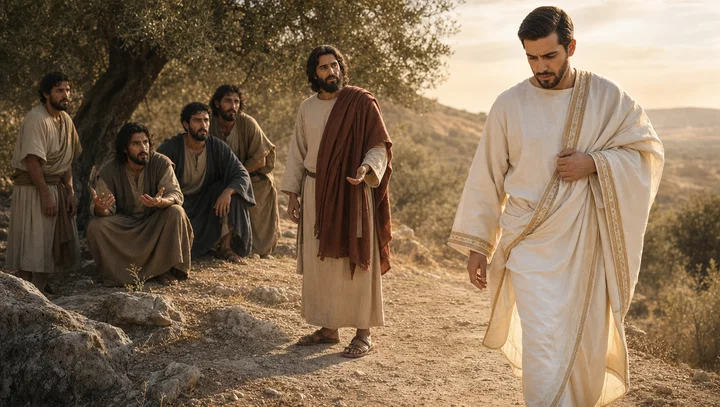
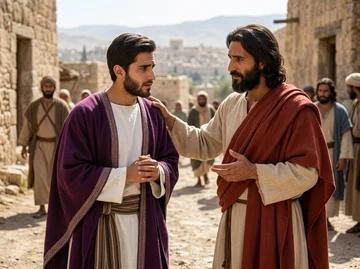
Cross-references 20 of 45
- Luke 18:21-22
And he said, All these have I kept from my youth up.
Luke records the young ruler’s claim and Jesus’ response revealing what he still lacked.
- Mark 10:17-22
And when he was gone forth into the way, there came one running, and kneeled to him, and asked him, Good Master, what shall I do that I may inherit eternal life?
The young man claims obedience, and Jesus tests him by calling him to follow.
- Leviticus 19:18
Thou shalt not avenge, nor bear any grudge against the children of thy people, but thou shalt love thy neighbour as thyself: I am the LORD.
The command to love one’s neighbor exposes the ruler’s failure through his attachment to wealth.
- Exodus 20:12-17
Honour thy father and thy mother: that thy days may be long upon the land which the LORD thy God giveth thee.
Jesus names commandments the young man says he has kept, including the command against coveting.
- Matthew 6:19-21
Lay not up for yourselves treasures upon earth, where moth and rust doth corrupt, and where thieves break through and steal:
Earthly possessions are contrasted with heavenly treasure, where the heart is set.
- Matthew 22:37-40
Jesus said unto him, Thou shalt love the Lord thy God with all thy heart, and with all thy soul, and with all thy mind.
The two great commandments reveal the love he lacked.
- James 2:10
For whosoever shall keep the whole law, and yet offend in one point, he is guilty of all.
Offending in one commandment makes a person guilty of breaking the law.
- Matthew 19:16
And, behold, one came and said unto him, Good Master, what good thing shall I do, that I may have eternal life?
The young man asks how to gain eternal life before asking what he still lacks.
- Luke 10:27-28
And he answering said, Thou shalt love the Lord thy God with all thy heart, and with all thy soul, and with all thy strength, and with all thy mind; and thy neighbour as thyself.
Whole-hearted love and obedience to the law are connected with life.
- John 15:10
If ye keep my commandments, ye shall abide in my love; even as I have kept my Father’s commandments, and abide in his love.
Jesus kept the Father’s commandments and abided in his love.
- Romans 7:7-12
What shall we say then? Is the law sin? God forbid. Nay, I had not known sin, but by the law: for I had not known lust, except the law had said, Thou shalt not covet.
The law reveals sin beneath outward confidence in keeping its commandments.
- Deuteronomy 6:5
And thou shalt love the LORD thy God with all thine heart, and with all thy soul, and with all thy might.
The ruler lacks wholehearted love for God.
- Mark 10:21
Then Jesus beholding him loved him, and said unto him, One thing thou lackest: go thy way, sell whatsoever thou hast, and give to the poor, and thou shalt have treasure in heaven: and come, take up the cross, and follow me.
Jesus loved the young man and exposed what he lacked by calling him to give up his wealth and follow.
- Revelation 22:14
Blessed are they that do his commandments, that they may have right to the tree of life, and may enter in through the gates into the city.
Both connect keeping God’s commandments with entering life.
- Deuteronomy 6:25
And it shall be our righteousness, if we observe to do all these commandments before the LORD our God, as he hath commanded us.
Observing all God’s commandments is connected with righteousness.
- Revelation 14:12
Here is the patience of the saints: here are they that keep the commandments of God, and the faith of Jesus.
Joins keeping God’s commandments with faith in Jesus.
- Matthew 5:19
Whosoever therefore shall break one of these least commandments, and shall teach men so, he shall be called the least in the kingdom of heaven: but whosoever shall do and teach them, the same shall be called great in the kingdom of heaven.
Jesus taught that the commandments remain in force and should be kept.
- Exodus 20:8-11
Remember the sabbath day, to keep it holy.
The Sabbath commandment is among the commandments the young man claimed to have kept.
- Matthew 19:29
And every one that hath forsaken houses, or brethren, or sisters, or father, or mother, or wife, or children, or lands, for my name’s sake, shall receive an hundredfold, and shall inherit everlasting life.
Promises reward and eternal life to those who forsake possessions for Christ’s name.
- 1 John 5:3
For this is the love of God, that we keep his commandments: and his commandments are not grievous.
God’s love is expressed in keeping his commandments, which are not burdensome.
Commentary
Each commentary is drawn from primary sources: the writings of Ellen G. White and Adventist pioneers and periodicals. Each commentary is separate. Its own words are not a quotation; follow the references to read the source passages.
Ellen G. White
73 sources
The speaker is a rich young ruler who professes to have kept the duties to others from his youth up and earnestly asks what he still lacks for eternal life.Lt 345, 1904, par. 7–11Ms 40, 1905, par. 3–5Lt 3, 1897, par. 2–3Lt 345, 1904, par. 2–6Ms 123, 1908, par. 35–42 His claim is confident but self-deceived, for his outward blameless life is mistaken for true keeping while he does not grasp the depth of the law in mind and heart.SG2 239.1–240.13MR 66.2–67.2Ms 23, 1885, par. 25–271T 482.1–483.1ST Feb 14, 1878 What he lacks is exposed by his great possessions, for supreme love of riches rules his heart over love to God and to his neighbor, leaving him without the love that is the spirit and life of the commandments.Lt 1a, 1872, par. 13–14Ms 62, 1894, par. 11–12Lt 90, 1895, par. 7–10Ms 58, 1896, par. 20ST Jan 27, 1876 Christ tests him by calling him to sell what he has, give to the poor, gain treasure in heaven and follow, but he goes away sorrowful, choosing seen earthly treasure over unseen heavenly treasure and fellowship with Christ.Lt 354, 1907, par. 13–15Lt 195, 1903, par. 8–10RH May 20, 1862SG4 265.5Lt 160, 1899, par. 2–3 His case pictures many professed believers today who think themselves perfect and without lack yet cling to idols and turn sorrowful when self-denial, right use of wealth for the needy, and sacrifice for God's cause are required.1T 170.4–171.3STBk 105.1ST2 46.11T 482.1–483.12T 679.1–680.1
Speaker and Context
The one who speaks is a rich young ruler in Israel who comes to Christ as a teacher by whom he is willing to be taught.Ms 40, 1905, par. 3–5Ms 123, 1908, par. 35–42 He has watched Christ's compassion for the poor and ignorant and has been touched and drawn by His meekness and lowliness of heart, attracted and charmed by His life and teaching.Ms 40, 1905, par. 3–5Ms 123, 1908, par. 35–42 He is a man of pleasing appearance, outward piety, high capabilities and sincere desire, capable of great blessing and qualified for service, not ignorant of duty to God and convinced that obedience brings a place of happiness.Ms 123, 1908, par. 35–42DA 519.3 He fully desires to be as Christ is and to work out a perfect character fit to live eternally with God, yet he still needs to give himself fully to Christ in heart devotion and love to God, with supreme love of self surrendered before his character can be sanctified for God's use.Ms 123, 1908, par. 35–42DA 519.3
The exchange concerns how to gain eternal life, and he is directed to keep God's commandments as obedience to principles expressing God's character and requiring harmony with Him.1T 170.4–171.3Lt 195, 1903, par. 8–10COL 390.2–391.1 The commandments named to him are duties to other people, against murder, adultery, theft and false witness, with honor to father and mother and love to neighbor as self.1T 170.4–171.3SG2 240.2–241.1STB 572.2–5 The first four commandments containing duty to God are not named to him at first, and obedience is presented as necessary for eternal life.1T 170.4–171.3DA 518.6SG2 240.2–241.1 His profession of having kept all these things from his youth up draws Christ's call to be perfect by selling what he has, giving to the poor, gaining treasure in heaven, and coming to follow Him, a saying he hears and then goes away sorrowful because he has great possessions.Lt 195, 1903, par. 8–10STB 572.2–5
His reply claims to have kept all these things from his youth up and honestly asks what he still lacks in order to gain eternal life.Lt 345, 1904, par. 7–11Lt 3, 1897, par. 2–3Lt 345, 1904, par. 2–6 The question is earnest and comes from high motives but imperfect understanding, moved by conviction at seeing Christ's love and self-denial.Ms 40, 1905, par. 3–5Lt 3, 1897, par. 2–3 By human standards his outward life is blameless, yet he fears that all is not right between him and God, remaining dissatisfied with inward unease and sensing that something is still missing.DA 518.5COL 391.4–5ST Oct 28, 1908 His claim reflects a high estimate of his own righteousness rather than a sense of defectiveness, with an external and superficial understanding of the law, and he hopes Jesus can satisfy the need he still feels and complete a character that profession alone has not made complete.Lt 345, 1904, par. 7–11DA 518.5COL 391.4–5ST Oct 28, 1908
Meaning of His Claim
The claim is made with full confidence in personal fidelity and righteousness, as one who thinks himself perfect, blameless, and lacking nothing.1T 482.1–483.1ST Feb 14, 1878Lt 202, 1899, par. 3–4 By human measurement his outward life is blameless, amiable, and willing to do good, and having been flattered for those traits he flatters himself that integrity in dealing with fellow men fulfills the law.RH Sep 11, 1900Lt 202, 1899, par. 3–4 That confidence conceals a fatal deficiency of character, for the sense of security is false while possessions are cherished as idols of greater value than eternal life.1T 482.1–483.1ST Feb 14, 1878 His attachment to earthly wealth when told to sell, give to the poor, and follow exposes the limits of his obedience and his unwillingness to obey fully.ST Feb 14, 1878Lt 202, 1899, par. 3–4
The claim is false and self-deceived, for he supposes he has kept all the commandments from his youth but has not truly kept them and does not understand their depth and significance.SG2 239.1–240.13MR 66.2–67.2Ms 23, 1885, par. 25–27Ms 39, 1886, par. 1–3 His profession of obedience does not mean his character is complete, his heart is right, or he is ready to follow in self-denial.Ms 23, 1885, par. 25–27Ms 39, 1886, par. 1–3Lt 8, 1895, par. 22–25 His supreme love of wealth keeps him from loving God with whole heart and neighbor as himself, so he fails to keep the commandments while thinking himself fit for eternal life.SG2 239.1–240.1Lt 118, 1897, par. 21–25Ms 1, 1889, par. 35–40 His question about what he still lacks itself reveals a real lack and weakness, showing he is not a true lover of God and needs to accept righteousness joined with divine power to human effort, which never permits breaking the law.3MR 66.2–67.2Ms 1, 1889, par. 35–40 The same deception is taught as holding where wealth is withheld from those in need and possessions are prized more than the Giver, leaving love to God and neighbor unfulfilled.Lt 8, 1895, par. 22–25Lt 118, 1897, par. 21–25
He mistakes outward integrity and amiable character for spiritual perfection, resting on outward propriety of conduct and profession of truth while the heart remains unregenerate.Ms 150, 1899, par. 22–27RH Sep 11, 1900Ms 150, 1899, par. 28–29 No human standard of propriety, profession, or letter of the law can save a soul from death, as seen in the same spiritual state as Paul when blameless touching the letter; God's standard must be seen, acknowledged, and followed.Ms 150, 1899, par. 22–27RH Sep 11, 1900 What is still lacking is the law written in mind and heart and brought home to the conscience to see the exceeding sinfulness of sin, unto death to self and crucifixion of self, without which spiritual holiness cannot be known and readiness for the kingdom is impossible.RH Sep 11, 1900Ms 150, 1899, par. 28–29 If he had understood through the commandment that he was sinful, as Paul did, and obeyed in spirit and truth, the law would have exposed and slain his sinful nature and he would have laid hold of eternal life.Ms 150, 1899, par. 28–29 His refusal when tested to deny self, take up the cross, and follow proves disobedience, for keeping the whole law yet offending in one point is guilt of all.RH Sep 11, 1900
Outward commandment-keeping can thus coexist with a cherished inward defect and a heart not made whole.Lt 8, 1895, par. 22–25Lt 63a, 1893, par. 18–21Lt 63, 1893, par. 22–25 Legal obedience had not fully entered his life and character, and he was unwilling to give all he had and all he was.Lt 8, 1895, par. 22–25DA 523.2 Selfishness and covetousness are exposed as the plague-spot in his character, showing that outward obedience had not made his heart whole.Lt 63a, 1893, par. 18–21Lt 63, 1893, par. 22–25 The same self-righteous spirit appears in Judas, who appeared righteous yet neglected his own character and failed to live the words spoken to him.Lt 63, 1893, par. 22–25
Lack That Remained
What he still lacked was laid bare by his great possessions, for his supreme love of riches was his idol swallowing up his heart in earthly treasure.ST Jan 27, 1876SG2 240.2–241.1RH Jan 12, 1905ST Oct 28, 1908SG2 242.1–3 That idol stood in the way of loving God with whole heart and soul and mind, of following Christ in self-denial, of appreciating and receiving Christ, and of bearing the cross.Lt 90, 1895, par. 7–10ST Jan 27, 1876SG2 240.2–241.1ST Jul 21, 1898 Though he claimed to have kept the commandments from his youth and asked what was still wanting, outward obedience had not removed this governing attachment, and his sorrow showed he would not surrender riches to follow Jesus.Lt 90, 1895, par. 7–10ST Jan 27, 1876RH Jan 12, 1905ST Jul 21, 1898 He did not love his neighbor as himself because he kept his wealth rather than using entrusted wealth to help the poor and needy, and that same attachment kept him from loving God fully.ST Jan 27, 1876RH Jan 12, 19054T 49.3–50.1 Christ's invitation required giving up visible earthly treasure for unseen heavenly treasure, but he valued reputation and possessions more than fellowship with Christ and eternal life, so he turned away.Ms 123, 1908, par. 35–42ST Oct 28, 1908
Because riches ruled him he failed both tables of the law.Ms 62, 1894, par. 11–12SG2 240.2–241.1SG2 242.1–3 He failed the first four commandments containing duty to God by not loving God supremely, since supreme love of riches made it impossible to love God with all heart, soul and mind.Ms 62, 1894, par. 11–12SG2 240.2–241.1SG2 242.1–3 He failed the last six by not loving his neighbor as himself, shutting his eyes to the wants of fellow men and withholding wealth from those in need instead of caring unselfishly for others, especially those in greatest danger and need.Ms 62, 1894, par. 11–12SG2 240.2–241.14T 49.3–50.1SG2 242.1–3 A profession of love for God without such love for one's brother is not genuine, and thinking he had kept the last six did not mean he had fulfilled their true demands.Ms 62, 1894, par. 11–12SG2 240.2–241.14T 49.3–50.1 The call to sell and give to the poor proved how much God and truth were loved, testing whether he prized eternal life higher than riches.SG2 240.2–241.1SG2 242.1–3
What was missing was love, which is the spirit and life of the commandments.Lt 1a, 1872, par. 13–14Ms 58, 1896, par. 20COL 392.1 Self-love and worldly gain ruled his heart, making him a transgressor of the law and out of harmony with heaven's principles.Lt 1a, 1872, par. 13–14COL 392.1 He lacked the spirit of love and self-sacrifice that is the touchstone of character and the test applied at the final judgment.Ms 58, 1896, par. 20COL 392.1 Keeping the commandments cannot be separated from love for others, so his refusal to give his possessions to the poor and follow Jesus disproved his claim and exposed a defect in character.Lt 1a, 1872, par. 13–14Ms 58, 1896, par. 20COL 392.1
He loved his possessions more than eternal life, more than God, more than heavenly treasure, and more than fellowship with Christ.RH May 20, 1862SG4 265.5SG2 240.2–241.1ST Oct 28, 1908CET 164.3 Though willing to keep the commandments and desiring eternal life and a perfect character, he wanted heavenly treasure and also the temporal advantages of riches.RH May 20, 1862Ms 123, 1908, par. 35–424T 219.34T 50.2 He desired eternal life but was unwilling to make the sacrifice, judging heaven to cost too much and counting giving up seen earthly treasure for unseen heavenly treasure too great a risk.Ms 123, 1908, par. 35–424T 219.34T 50.2 His desire was chilled when required to give to the poor, he refused the offer of eternal life, renounced immortal life, and chose earthly treasure over eternal reward.SG4 265.5Ms 123, 1908, par. 35–424T 219.34T 50.2 He went away sorrowful because he had great possessions and gave his worship ever after to the world.RH May 20, 1862Ms 123, 1908, par. 35–42CET 164.3
The inward plague-spot was supreme selfishness and covetousness.ST Feb 14, 18781T 207.213MR 21.1–3 Self-love was supreme with him, concealing a fatal deficiency of character beneath confident claims to have kept all from his youth.ST Feb 14, 187813MR 21.1–3 He had a close and covetous heart that could tithe mint and rue and other small things while neglecting the weightier matters, proving lack of the true spirit of sacrifice acceptable to God.1T 207.213MR 21.1–3 He loved God's gifts more than their Giver, loved his possessions above God and His service and more than the souls of his fellow men, so riches were his idol and the world held first place in his affections.ST Oct 28, 1908ST Feb 14, 187813MR 21.1–3
Christ's Test and Outcome
To his question what he still lacked, the answer is to be perfect by selling what he has, giving to the poor, gaining treasure in heaven, and coming to follow Christ.Lt 354, 1907, par. 13–15Lt 195, 1903, par. 8–10Lt 44, 1893, par. 8–9STB 572.2–5Lt 354, 1905, par. 27 Entering life is conditional, and outward keeping of the commandments named to him does not meet his need.Lt 195, 1903, par. 8–10Lt 160, 1899, par. 2–3Lt 44, 1893, par. 8–9Lt 354, 1905, par. 27 His profession of having kept them from his youth does not make him perfect or prove he has passed the test, for making these sacrifices is receiving the bread of life until Christ becomes the life-giving current within the soul.Lt 44, 1893, par. 8–9Lt 354, 1905, par. 27
The command exposes his idol and tests how much higher he prizes eternal life than riches and how much God and truth are loved.1T 170.4–171.3Lt 118, 1897, par. 21–25SG2 240.2–241.1SG2 242.1–3 It points to undone duties plainly specified in the law, to love God supremely and to love his neighbor as himself by using entrusted wealth to help the poor and needy in their wants and greatest danger and need.1T 170.4–171.3Lt 118, 1897, par. 21–25SG2 240.2–241.1RH Jan 12, 1905SG2 242.1–3 His supreme love of riches has swallowed up his heart in earthly treasure, shut his eyes to fellow men, made it impossible to love God with all heart, soul, and mind, and therefore is both his failure in the first four commandments and his failure truly to keep the last six.1T 170.4–171.3Lt 118, 1897, par. 21–25SG2 240.2–241.1SG2 242.1–3 Outward obedience without self-surrender and love in action is not enough, for truth set home by the Spirit crowds out love of riches, since love of Jesus and riches cannot dwell in the same heart.RH Jan 12, 1905SG2 242.1–3
He hears the saying and goes away sorrowful because he has great possessions.Lt 354, 1907, par. 13–15SG4 265.5Ms 123, 1908, par. 35–42STB 572.2–5STB 573.3–574.1 His desire is chilled and his sorrow shows he will not remove the obstacle, surrender his riches, or accept the condition of discipleship.Lt 354, 1907, par. 13–15SG4 265.5Lt 160, 1899, par. 2–3Ms 123, 1908, par. 35–42STB 573.3–574.1 He values his riches more than heavenly treasure, wants both the heavenly treasure and the temporal advantages of riches, counts giving up seen earthly treasure for unseen heavenly treasure too great a risk, refuses the offer of eternal life, and gives his worship ever after to the world.SG4 265.5Ms 123, 1908, par. 35–42STB 573.3–574.1
Jesus invites him without compelling his choice.Lt 160, 1899, par. 2–3 Yet obeying Christ's words is his only hope of salvation and of attaining a complete Christian character.DA 520.2 Following Christ requires complete obedience and self-surrender, giving up whatever would corrupt the whole person and compete with God for the affections, whether much or little, even when the sacrifice seems great.DA 523.2DA 520.2DA 523.4 His legal obedience has not fully entered his life and character, for he is unwilling to give Christ all he had and all he was, and keeping anything back diminishes moral strength and ability to do good until cherished worldly things take over the heart.DA 523.2DA 520.2
His refusal when tested proves disobedience, for keeping the whole law yet offending in one point is guilt of all.RH Sep 11, 1900 His claim is only outward propriety of conduct and profession while the heart remains unregenerate and the defect in the heart unseen, and his confidence comes from seeing only outward obedience.Ms 1, 1889, par. 35–40RH Sep 11, 1900Ms 150, 1899, par. 28–29 What he still lacks is the law written in mind and heart and brought home to the conscience to see the exceeding sinfulness of sin, unto death to self and crucifixion of self, without which spiritual holiness cannot be known and readiness for the kingdom and for the coming of the Lord is impossible.RH Sep 11, 1900Ms 150, 1899, par. 28–29 He needs a humble, contrite heart that recognizes the supreme love owed to God and its own lack, surrenders supreme love of self, finds its perfection in Christ, and is sanctified for God's use and service.DA 519.2DA 519.3 He needs to accept Christ as Saviour and receive His righteousness, with divine power joined to human effort to obey God's law, for faith does not permit breaking the law.Ms 1, 1889, par. 35–40
Warning for Today
The young ruler pictures the condition of many Sabbath-keepers and professed believers who seek eternal life while confident they are perfect and lacking nothing when they are far from perfection.1T 170.4–171.31T 482.1–483.1 Like him they cherish idols that will shut them out of heaven, and if told to sell all and give to the poor they would go away sorrowful, choosing to keep riches rather than part with them to secure treasure in heaven.1T 170.4–171.31T 482.1–483.1 His claim to have kept from youth the duties toward neighbor exposes the same lack, for supreme love of riches as an idol makes it impossible to love God with all heart, soul and mind and shuts the eyes to the wants of fellow men.1T 170.4–171.3
He stands for a large class who, when duty is brought to bear upon them, see a cross to be lifted.Ms 39, 1886, par. 9–103MR 69.1–3 Earthly treasures hold them back from obeying God, which is why few obey.3MR 66.2–67.2Ms 39, 1886, par. 1–3Ms 39, 1886, par. 9–103MR 69.1–3 His self-deception about having kept all the commandments is repeated by many who become sorrowful when the duty of keeping the Sabbath is pointed out to them because they are not willing to lift the cross and follow Christ in self-denial with wholehearted love to God.3MR 66.2–67.2Ms 39, 1886, par. 1–3
His sorrowful turning away is repeated by those who, when God's work calls for their property, hold on to earthly goods rather than sacrifice to support its messengers, carry saving present truth to others, and feed hungry seekers in spiritual need.ST2 46.1STM2 30.1CET 106.1–2ExVEGW 29.3–30.1EW 40.1–2 Holding wealth back leaves those needs unmet and fails to lay up treasure in heaven.ST2 46.1EW 40.1–2STA 104.4–106.1 Possessions thus withheld from God's work may soon be swept away by coming destruction, leaving it forever too late to sacrifice earthly goods and store treasure in heaven.STBk 105.1STM2 30.1CET 106.1–2ExVEGW 29.3–30.1EW 40.1–2
Riches must not be loved better than fellow men, better than God, or better than truth, for then eternal life cannot be had.SG2 242.1–3 They must be held as not one's own and faithfully discharged as God's stewardship, distributed to bless the needy and to advance God's cause, turned toward good works and used as lent for God's glory.2T 679.1–680.1SG2 242.1–32T 680.2 When love to God so far surpasses love of riches, truth set home to the heart by the Spirit crowds out love of riches, affections are transferred to God, and the possessor finds highest pleasure in right disposition of the Lord's goods and ministering to the wants of His cause; then the first four commandments and the last six can be kept.SG2 242.1–3 Outward keeping alone does not reach the heart, for attachment to earthly riches can eclipse love for neighbor and the eternal inheritance, and discipleship is tested by willingness to give to the poor, take up the cross and follow.2T 679.1–680.12T 680.2
The verse warns against self-deception when truth is not sought earnestly, for worldly cares, riches and other desires can choke the word, leave life without fruit, and let understanding of important truths fade until in darkness.CET 166.2 Wanting everlasting life is not enough while unwilling to sacrifice, as shown also by the aged who would accept eternal life but not at cost to themselves.CET 165.2–3 The choice weighs Christ against the world, and a person cannot hold riches as the heart's highest love and also possess treasure in heaven.1T 172.1–3DA 523.1
Sources
Pioneers and periodicals
107 sources
A wealthy young ruler kneels before Jesus asking how to gain eternal life, and after hearing precepts of the Decalogue concerning duty to others against murder, adultery, stealing and false witness with honor to parents and love of neighbor, he declares he has kept them all from childhood and asks what he still lacks.ST Jun 19, 1884ST Feb 10, 1898RH Oct 26, 1911ST Oct 18, 1877ST Dec 2, 1886 Outwardly his life was morally blameless with no charge anyone could bring, yet his confidence rested on outward observance and his own estimate rather than God's standard, for he did not know how broad the law is in reaching the heart and requiring perfect love.RH Feb 26, 1901ST Apr 15, 1880RH Jul 3, 1856RH Feb 11, 1858ST Feb 10, 1898 What he still lacked was the spirit of the law itself, love to his neighbor as himself in relieving the poor with his goods, and supreme love to God, because his great possessions ruled his affections as an idol that left no room for God.RH Nov 26, 1857RH Oct 11, 1906RH Nov 12, 1857ST Jun 14, 1899ST Nov 24, 1881 By breaking those two great precepts of love on which all hang he was guilty of all, even of coveting and idolatry though those commandments were not among those named, so one cherished selfishness cost him heaven.ST Jul 17, 1884RH Feb 25, 1873RH Oct 21, 1873 Jesus in love exposed the false claim by telling him to sell what he had, give to the poor and follow Him, but he went away sorrowful because his trust was in riches, showing that keeping the commandments is the way to life yet outward morality without a new heart, faith in Christ and wholehearted self-surrender cannot save.RH Nov 12, 1857RH May 3, 1860RH Sep 4, 1900ST Jun 19, 1884
Setting and Wording
The saying belongs to a rich young ruler who came to Jesus, kneeling before Him to ask what good thing he should do to gain eternal life, and after hearing the commandments named he declared he had kept them all from his youth or childhood up while asking what he still lacked.ST Mar 5, 1902ST Jun 19, 1884ST Feb 10, 1898ST Dec 2, 1886RH Jul 3, 1856 His question about doing good for eternal life is asked by thousands and should interest every person, because life is a boon of inestimable value that men seek to prolong while eternal life lengthens it forever, making it a matter of all-absorbing interest to all who anxiously ask what they must do to be saved and live forever.ST Jun 19, 1884 He was virtuous and eager for eternal life, honestly seeking the way, and his claim of outward keeping with no overt transgression anyone could charge was met by further instruction that exposed how attachment to wealth kept him from fully following.ST Mar 5, 1902ST Dec 2, 1886RH Jul 3, 1856ST Jun 17, 1886
The commandments Jesus had named before the claim are precepts from the Decalogue concerning duty to other people, against murder, adultery, stealing and false witness, with honor to father and mother and love of neighbor as self.ST Feb 10, 1898RH Oct 10, 1854 Five or six commandments were cited from the Father's existing law rather than a new law given on His own authority, enough to show which law was meant and to reveal where the ruler was deficient.RH Oct 26, 1911ST Oct 18, 1877RH Jun 10, 1852RH Oct 10, 1854RH Aug 20, 1914 Omission of the others, including those concerning duty to God such as the Sabbath and the tenth against coveting, does not make them nonbinding or permit them to be broken, since naming only some cannot qualify for life apart from the whole.RH Oct 26, 1911ST Oct 18, 1877RH Jun 10, 1852
After claiming obedience he asked which commandments were meant and what he must do to be perfect, with the personal question about what he still lacked leading into the requirement to keep God's commandments including the moral law and the commandment made a sign between God and His people.ST Jun 19, 1884RH Jun 20, 1865RH Dec 9, 1873 The word for lack is the same word used for all having sinned and lacking the glory of God in Romans 3:23.
The encounter is recorded three times, in Matthew 19, Mark 10 and Luke 18, showing its importance as scriptural precedent for counteracting the love of self that makes the last days perilous and for keeping that selfishness out of the church. It belongs among the events of Jesus' final journey to Jerusalem, with Matthew 19:13-20 recommended for reading alongside His teaching on prayer in Luke 18.ST Apr 23, 1896 Jesus met the seeker with kindly advice, warning and patience even when he sorrowfully turned away from cross-bearing counsel, loving him and wanting him to follow as a disciple and, in this case, to become a herald carrying Christ's message to the world as Saviour of the world who gives eternal life.ST Jan 28, 1913ST Jun 17, 1886RH Dec 2, 1873
The exchange does not make recognition of Christ's deity a condition of the ruler's acceptance or regeneration.ST Nov 23, 1915 Its answer to what he should do differs from the call to improve the world through political action.RH Jul 29, 1909
The ruler represents the respectable wealth-loving of every age and land, so his claim and question with Christ's answer present eternal truth with practical lessons for every age, especially days of peril.ST Feb 10, 1898 The question about what remains lacking after keeping the commandments tests the teaching that auricular confession is necessary to salvation and that Christian ministers have power to forgive sins.ST Sep 11, 1884
Claim of Obedience
The young man declares that he has kept all these things from his youth or childhood up, and outwardly he probably kept the outward form with no overt transgression anyone could charge against him.ST Feb 10, 1898RH May 18, 1876 He appears virtuous and eager for eternal life, coming on his knees to ask what he still lacks, as one Jesus loved.RH Jul 3, 1856 He is respectable and considered respectable, yet also amiable in character and morally blameless, though still lacking the one thing needful.RH Feb 11, 1858RH May 18, 1876 Usefulness to the church and good character of that kind do not make him a Christian or save him from being lost.RH May 18, 1876
He sincerely believed he had kept the commandments concerning his neighbor and thought he told the truth, yet still recognized something was missing and felt an unmet longing for eternal life.ST Nov 24, 1881ST Feb 10, 1898 His claim concerned the commandments Jesus had named about duties to other people, but it reflected only those commandments as he understood them.RH Sep 4, 1866RH Feb 23, 1905 He believed he had kept them from childhood and sincerely wanted eternal life, while still asking what he lacked.RH Sep 4, 1866ST Dec 2, 1886RH Feb 23, 1905 His outwardly unblemished life had not exposed the selfishness within him, and his question revealed that he thought himself nearly perfect and did not recognize the defect in his character.RH Oct 19, 1916 His great possessions, retained while people around him lacked life's necessities, showed that he did not have the law's spirit of love, and Jesus' next instruction to sell, give to the poor, and follow exposed that his attachment to wealth kept him from fully following.ST Nov 24, 1881ST Dec 2, 1886
His confidence was self-deceptive and rested on outward obedience rather than freedom of heart from supreme selfishness.ST Apr 15, 1880ST Aug 18, 1887 It rested on the rabbis' teaching that keeping these precepts, the last six commandments Jesus named, secured eternal life.RH Feb 26, 1901 He had been flattered for his amiable traits and willingness to do good, and he flattered himself that integrity in dealing with fellow men fulfilled the law.RH Sep 11, 1900 He thought he possessed perfection of character, in the same spiritual state as one blameless touching the letter of the law, but no human standard can save a soul from death.RH Sep 11, 1900 God's standard must be seen, acknowledged, and followed, and people commonly speak of keeping the whole law while thinking a small exception does not matter.RH Sep 11, 1900ST
He did not know that the commandments are exceedingly broad and reach the heart, requiring God's Spirit and life received by yielding all by faith to God.ST Feb 3, 1909ST Feb 10, 1898 He had not understood the law's full reach, which condemns sinful anger and lust and requires perfection like God's.ST Aug 18, 1887 He did not understand the depth and significance of God's law, and his own estimate of obedience was not God's standard.ST Oct 29, 1912ST Oct 22, 1894ST Oct 21, 1886 Measured by that standard he still fell short, lacking love to God with all heart, mind, soul, and strength, Christ's justifying blood, the sanctifying power of Christ's obedience, and faith in Jesus.ST Oct 21, 1886ST Feb 10, 1898 Keeping the law by one's own effort cannot bring a person to the full stature of moral character before God, and his claim proved ignorance of the covetous, deceitful heart within, since true love of neighbor as self would have used wealth to relieve suffering and feed and clothe the poor.ST Oct 21, 1886 When told to give to the poor and follow Christ he went away sorrowful, revealing that he would not let the law's demands govern his heart and did not truly keep the commandments.ST Oct 29, 1912ST Oct 22, 1894ST Feb 3, 1909
His claim was false and deceptive, concealing supreme selfishness and a fatal deficiency of character.ST Oct 28, 1908ST Feb 14, 1878RH Nov 26, 1857 It was likely untrue, since Jesus continued by exposing his covetousness and calling him to sell his possessions, give to the poor, and follow Him.RH Dec 10, 1872 He failed to love God above all and his neighbor as himself, for his love of wealth was supreme and his possessions kept him from responding.RH Nov 26, 1857 Riches were his idol, and he loved God's gifts more than their Giver, valuing reputation and possessions more than fellowship with Christ and eternal life.ST Oct 28, 1908 That love made it impossible to love God with all heart, soul, and mind, so he failed the first four commandments, and it shut his eyes to the wants of fellow men so he did not love his neighbor as himself, so he failed the last six too.RH Nov 26, 1857 Because he had great wealth but gave nothing to those in need, he failed to love his neighbors in practice and was in effect withholding from the poor what they needed, and keeping the commandments includes overcoming covetous desires through good works and following Christ.RH Dec 10, 1872
What He Still Lacked
What he still lacked was love for his neighbor as himself, which is the essence and spirit of keeping the commandments.RH Oct 11, 1906ST Jun 14, 1899ST Nov 24, 1881 He claimed to have kept the commandments concerning his neighbor, but he kept his great possessions while people around him lacked the necessities of life.ST Jun 14, 1899ST Nov 24, 1881RH Apr 13, 1869 His refusal to sell his goods and give to the poor showed he did not truly love his neighbor in this way, and his confidence rested on outward obedience and the teaching that keeping these precepts secured eternal life.ST Jun 14, 1899RH Feb 26, 1901RH Apr 13, 1869 The test exposed his covetousness and his failure in love, for he would not use wealth to relieve the poor, to feed and clothe them, and to share goods joyfully.RH Feb 26, 1901RH Apr 13, 1869 Keeping only some commandments could not qualify him for life, since love to God and neighbor encompasses the whole law.RH Feb 26, 1901
He also lacked supreme love to God, for his possessions were an idol ruling his affections and leaving no room for God.RH Nov 26, 1857RH Nov 12, 1857RH Oct 25, 1906 He loved God's gifts more than the Giver, loving riches more than God, more than his neighbor, more than eternal life and heavenly treasure.RH Nov 26, 1857RH Nov 12, 1857ST Jul 17, 1884 He valued self and property above spiritual life, and likewise valued reputation, status and human praise above it.ST Jul 17, 1884ST Sep 17, 1912 His attachment to wealth kept him from giving himself wholly to God, exposing the impossibility of serving both God and gold.RH Nov 26, 1857RH May 20, 1862ST Sep 17, 1912 He was willing to keep the commandments but loved his possessions more than eternal life and was unwilling to sacrifice them to follow Christ.RH May 20, 1862RH Nov 12, 1857
By breaking the two great precepts of love to God and neighbor on which all hang, he was a violator of all the commandments.RH Nov 26, 1857ST Jul 17, 1884RH Oct 21, 1873 His supreme love of riches made it impossible to love God with all heart, soul and mind, so he failed the first four commandments by idolatry, and it shut his eyes to the wants of fellow men so he failed the last six by not loving his neighbor as himself.RH Nov 26, 1857ST Jul 17, 1884RH Oct 21, 1873 He violated even the tenth against coveting, though it was not among those quoted, and the omission of the first four and the tenth from those named does not mean they could be broken.RH Feb 25, 1873RH Oct 21, 1873 One cherished covetousness and one cherished sin cost him heaven, and even a person of good moral character can lose eternal life by clinging to it.RH Feb 25, 1873ST Jul 22, 1880ST Dec 16, 1908 Keeping the whole law yet offending in one point is guilt of all.ST Jul 17, 1884
He was just in the sense of strict integrity, rendering every person what was due and never wronging any man.ST Nov 25, 1886ST Mar 22, 1883 Yet he was not good in benevolence, magnanimity, extensive philanthropy and disinterested kindness to the needy.ST Nov 25, 1886ST Mar 22, 1883 He felt no responsibility for them so long as he had not caused their suffering.ST Mar 22, 1883
His remaining lack was wholehearted self-devotion to God's glory, which is the essence of true religion, and it nullified his other virtues and confidence in favor.RH Oct 19, 1916ST Apr 15, 1880 He wanted to become a disciple while keeping his money and was not ready to give Jesus his whole heart, clinging to a hidden idol while asking what was still lacking.ST Mar 24, 1881RH Jun 12, 1900 His own estimate of obedience was not God's standard, for measured by that standard he still fell short and lacked Christ's justifying blood, the sanctifying power of Christ's obedience, and faith in Jesus.ST Jul 17, 1884ST Oct 21, 1886 Keeping the law by one's own effort cannot bring a person to full stature of moral character before God, and without becoming a new creature enabled to keep the commandments, outward propriety leaves the heart unregenerate and obedience superficial, selfish and self-righteous.ST Jul 17, 1884RH Oct 19, 1916ST Oct 21, 1886 Genuine Christlikeness requires receiving Christ by faith with the law written in mind and heart and brought home to the conscience, with death to self and crucifixion of self, letting Him shape the character.RH Oct 19, 1916ST Apr 15, 1880ST Oct 21, 1886
Jesus loved him and tested the claim by telling him to sell what he had, give to the poor, have treasure in heaven and follow Him.RH Nov 12, 1857RH Sep 4, 1900 That command touched his idol and tested how much higher he prized eternal life than riches, showing whether attachment to possessions stood between him and fully following.RH Nov 26, 1857ST Dec 2, 1886 His claim of obedience did not meet that test of perfect commandment-keeping in love and not in formal observance alone.ST Mar 5, 1902RH Sep 4, 1900RH Apr 13, 1869 He went away sorrowful because he had great riches, choosing earthly wealth and giving up the heavenly inheritance though he wanted both, and he is not reported to have returned.RH Nov 12, 1857RH Apr 13, 1869
The problem was not merely that he owned great possessions, but that they owned and ruled him and his trust was in riches rather than God.RH Oct 25, 1906 His outwardly respectable life did not free him from slavery to money, for when Jesus struck at this idol he chose riches over freedom.RH Oct 25, 1906 His riches made him the most handicapped for spiritual growth, while poverty is no hindrance to it.ST Sep 22, 1914 Jesus answered with the unsparing prescription to sell and give because He loved him and wanted to save him from the love of money, rebuking riches only when they hinder noble character.RH Oct 25, 1906ST Sep 22, 1914
Commandments and the Law
Keeping God's commandments is the rule for life and the condition for entering eternal life.RH May 3, 1860ST Jun 19, 1884RH Oct 18, 1853RH Jun 10, 1852 For one who professes to serve God and has received forgiveness through faith, doing God's will in obedience is the one thing required in personal conduct.ST Dec 27, 1905 That obedience leads to life, to entrance into the city, and to right to the tree of life, while disobedience and sin bring death as inevitable consequence and not as arbitrary punishment.ST Dec 27, 1905 The young man's asking which commandments he must keep, after saying he had kept them from his youth, is answered by pointing him to the moral law as God's commandments and as what is required for eternal life.ST Jun 19, 1884
The commandments meant are the Ten Commandments spoken by God at Sinai, not additional laws given through Moses.RH Jun 2, 1874RH Apr 16, 1861 They are the Father's existing law rather than a new law given on His own authority or a revised decalogue, with five precepts from the Decalogue named in the exchange and grounded in their original authority.RH Oct 10, 1854RH Apr 16, 1861 When asked which ones, the answer cites the moral rather than the ceremonial law, including the fourth and seventh commandments, as the standard by which the claim to have kept the commandments from youth is tested.RH Jun 10, 1852ST Jan 27, 1881RH Dec 9, 1873 The question about which leads into the emphasis that God's commandments are to be kept, including the commandment God made a sign between Himself and His people.RH Dec 9, 1873
Only some commandments are named, enough to identify which law is meant and to reveal where the ruler was deficient.RH Oct 26, 1911ST Oct 18, 1877RH Feb 25, 1873 The commandments concerning duties to other people were directed to him to expose covetousness and failure in love for neighbor, and the commandments were then expanded to show him his mistake.RH Jun 10, 1852 Omission of the Sabbath and other commandments concerning duty to God, and of the tenth against coveting though it was not among those quoted, does not make them nonbinding or permit them to be broken.RH Oct 26, 1911RH Jun 10, 1852 Keeping only some cannot qualify a person for eternal life, since love to God and neighbor encompasses the whole law. His going away sorrowful when told to sell possessions and give to the poor revealed violation of the tenth commandment against coveting, though he believed he had kept the commandments and was self-deceived.RH Feb 25, 1873
The mentioning of commandments but omitting the fourth is used as an argument in debate over whether the Sabbath commandment remains binding.RH May 2, 1854 Beside it stands the teaching of those who held that this commandment-keeping belonged to the old covenant while it was still in force, with the Sabbath abolished at the cross and not commanded over by Christ and the apostles so not now binding.RH Apr 9, 1872 The claim to have kept them from youth does not remove the need to examine whether all are being kept, including the fourth commandment.ST Mar 1, 1877 People commonly speak of keeping the whole law while thinking a small exception does not matter, yet even a fine distinction in obedience matters, and those able to do much can obey in the matter they lack, since outward obedience and good deeds do not excuse failure to obey God fully.STRH Aug 15, 1871 His worldly-mindedness is a warning, but he is not to be condemned without that same self-examination.ST Mar 1, 1877
Good works do not save a person, but they are necessary in a saved life.ST Mar 1, 1877 His belief that he had kept God's commandments from youth while asking what he still lacked exposed that his obedience was not wholehearted, with treasure on earth and unwillingness to keep God's law from the heart.RH Oct 15, 1857 Genuine service from the heart bears fruit to God's glory, and those who think they obey God may be self-deceived.RH Oct 15, 1857 Keeping God's commandments does not earn life: life is present in the way of righteousness, because God's life flows through the channel of His law, and without faith true obedience is superficial, selfish, and self-righteous, since the law requires more than outward morality.ST Sep 26, 1906
Righteousness and Eternal Life
An outwardly moral life does not by itself secure eternal life, for keeping the law by one's own effort cannot bring a person to full stature of moral character before God.ST Oct 21, 1886RH Nov 6, 1900 A man's own estimate of his obedience is not God's standard, and even sincere belief that the commandments have been kept from youth still falls short before God.ST Oct 21, 1886RH Nov 6, 1900 What is lacking is Christ's justifying blood, the sanctifying power of Christ's perfect obedience, and faith in Jesus, through which alone that righteousness is received.ST Oct 21, 1886RH Nov 6, 1900 Avoiding obvious wrongdoing does not by itself settle the need for salvation, and Christ's words reach the conscience to reveal the ruler to himself and expose what he lacks.ST Oct 5, 1882ST Oct 28, 1889 Moral conduct must be shaped by the Spirit into conformity with Christ, the perfect pattern of the moral law.
Perfection required him to sell his possessions, give to the poor, and follow Jesus, for his claim of obedience from youth did not meet that test.RH Sep 4, 1900RH Jun 20, 1865RH Apr 23, 1901 Giving all one has to advance God's work is the perfection of commandment-keeping and a supreme test of it.RH Apr 23, 1901 His question concerns what he still lacked in commandment-keeping in order to obtain eternal life, and Jesus' answer identifies that giving and following as what would make his obedience complete.RH Apr 23, 1901RH Apr 23, 1901 Keeping the commandments means the commandments of God, made clear by quoting five of them, and it is more than formal observance and must be fulfilled in love.RH Aug 20, 1914 His refusal to give up great possessions and distribute property to be perfect revealed that he did not love his neighbor as himself, since obedience to that command requires sacrificing selfish interests.RH Nov 26, 1857
Riches are a snare, and a rich person will find it difficult to enter the kingdom of heaven.RH Oct 30, 1856 Trusting in riches makes it hard to enter the kingdom of God.ST Dec 19, 1900 Earthly wealth hinders piety and salvation, for riches are deceitful and are among the thorns that choke the word sown in the heart.RH Dec 17, 1872 Most who have great possessions here feel no interest in gaining wealth in the world to come, and those whose treasures and hearts are on earth yet dream of going to heaven are deluded.RH Dec 17, 1872
Earthly wealth is temporary, while the eternal life and lasting treasure offered by Jesus are of far greater worth, and unwillingness to part with riches shows failure to value and trust that offer enough to act on it. Wealth cannot purchase God's gift of eternal life, and the commandments cannot be kept in spirit while earthly riches are valued above loving service. What Christ required was true sacrifice, not merely giving a surplus left after gratifying all wants, and nothing less than that same sacrifice is required now to inherit eternal life.RH Mar 23, 1852
It is right to keep God's law, for the law teaches duty and reveals inability to meet that duty, showing the person to be a sinner in need of Christ.RH May 27, 1852 Through Christ come pardon and justification, and a person under grace can fulfill the law's righteousness.RH May 27, 1852
Call to Follow and Give
The demand laid on the rich young man was no exceptional hardship imposed on him alone, but the Christian temper required of all who would follow Christ.RH Dec 8, 1874RH Jul 3, 1856 He came eagerly on his knees, virtuous and desirous of eternal life, professing to have kept the commandments from his youth and asking what he still lacked, and he was loved even as he was tested.RH Dec 8, 1874RH Jul 3, 1856 He sincerely thought he had kept them, yet he did not see his own selfishness, for his possessions stood between him and eternal life.RH Dec 8, 1874 The command to sell all was therefore directed to his particular attachment, and in the same way each person must give up whatever holds the heart back from following.RH Dec 8, 1874 That surrender may require giving up all property when thorough overcoming of selfishness demands it, for giving to God's cause is the appointed remedy for covetousness.
To become a laborer with Jesus required a clear separation between His service and the world, so riches and business could not be taken along.RH Sep 16, 1902 In this case following meant becoming a herald carrying Christ's message to the world.ST Jan 28, 1913RH Sep 16, 1902 His estate was not for foolish indulgence, luxury, or worldly pleasure, but was to serve the needs of distressed fellow believers and the poor.RH Jul 31, 1856RH Feb 7, 1854RH Aug 10, 1916 Wealth gives no exemption from the demands of eternal life, and obedience that keeps the commandments does not remove the duty to give wealth to God.RH Jul 31, 1856RH Aug 10, 1916 Trust in God's promise of provision should overcome reluctance to surrender and share, for keeping love of neighbor means practical generous service even at sacrifice, and to have great wealth while giving nothing to those in need and withholding what they need is failure to love in practice.RH Feb 7, 1854RH Aug 10, 1916RH Dec 10, 1872
Giving is an essential part, though not the whole, of Christian religion, and possessions can stand in the way of following Christ.ST Aug 7, 1879ST Aug 25, 1881 Jesus sought the man himself, for the heart follows where treasure is invested, so counsel to sell, give to the poor, lay up treasure in heaven, and follow was the only way to save his soul.ST Aug 7, 1879ST Aug 25, 1881ST May 31, 1905 He went away sorrowful because he had great possessions, wanting control of his money while receiving credit for giving himself, and his refusal of blessing through wise unselfish use of means left him without hope.ST Aug 7, 1879ST Feb 14, 1884ST May 31, 1905 Like him, those who turn away sorrowful when God's cause calls for surrender of possessions lose the chance to serve and to lay up treasure in heaven.RH Aug 25, 1904RH Aug 25, 1904 Those who cling to wealth instead of using it to send the message to souls in need will find earthly goods soon swept away, and sacrifice made too late cannot help those who have perished, while the widow who gives all exemplifies the opposite spirit.RH Aug 25, 1904RH Nov 19, 1908RH Aug 25, 1904
He stands as an example of nominal keepers who rely on earlier religious experience and love possessions more than the Lord, their fellows, and heavenly treasure.RH Sep 4, 1866ST Feb 14, 1911 Though recognizing Jesus as Messiah, wealth kept him from accepting the answer and following.ST Feb 14, 1911 When called to sacrifice for the cause of truth such ones refuse, and may afterward resent others who heed the call and are blessed in this life.RH Sep 4, 1866 His condition is the condition of many Sabbath-keepers who appear to have kept the commandments yet lack willingness to overcome love of the world and use wealth sacrificially for God and the advancement of His cause.RH Nov 30, 1911RH Nov 30, 1911 The same warning meets a wealthy inquirer who gives up truth for love of money, and it answers the prayer to be shown what is lacking, where the lack identified is Sabbath-keeping to be accepted in obedience to truth.RH Feb 27, 1908RH Jun 11, 1908
Knowing and believing truth or resting satisfied with outward obedience is not enough; truth must be lived in daily conduct and shown before others, with honest self-examination by the Bible's standard of Christian life.RH Jul 10, 1856 His sorrow did him no good because it was not the right kind, and another sorrow remains in store for such refusal.ST Aug 21, 1884 His case proves the extreme danger of stifling conviction and deferring action when convinced of duty, for the carnal mind is enmity against God, none can come unless the Father by the Spirit draws, and the Spirit will not always strive.ST Aug 21, 1884 Amiable character, moral blamelessness, usefulness to the church, and good morals did not make him a Christian nor save him from being lost.RH Feb 11, 1858RH May 18, 1876 His riches did not make him a recipient of grace as the repentant thief was, Christ made no special effort to retain him despite wealth and respectability, and his question shows self-righteous trust in personal morality and observance which cannot give sound hope, for confidence belongs in the cross.RH Feb 11, 1858RH Apr 11, 1854RH May 5, 1868
Outwardly doing all required things can still leave an essential lack, as when restitution for one wrong fails to settle conscience about other wrongs, and as when keeping health rules in the letter without its spirit is betrayed by a violated physiological law.RH Mar 5, 1914 A good reputation and apparent obedience do not excuse making riches one's aim, and wealth cannot make pursuit and enjoyment of an estate innocent.RH Jul 31, 1856
Sources