Mark 12:44
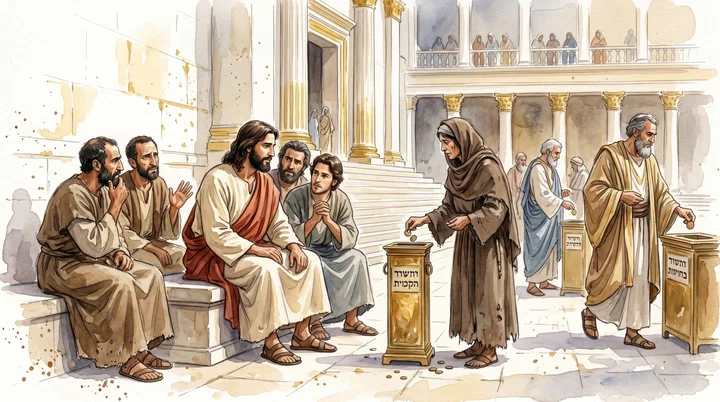
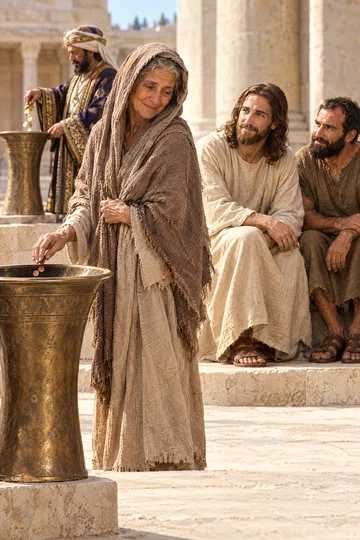
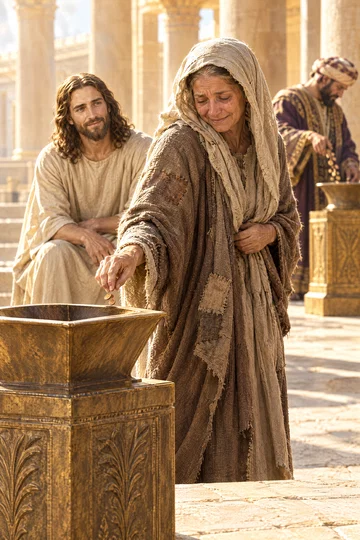
For all they did cast in of their abundance; but she of her want did cast in all that she had, even all her living.
Translations
American King James Version, King James Version
For all they did cast in of their abundance; but she of her want did cast in all that she had, even all her living.
for all they did cast in of their abundance; but she of her want did cast in all that she had, even all her living.
For all they cast in of their abundance: but she of her want cast in all that she had, even all her living.
Revised Version, American Standard Version
for they all did cast in of their superfluity; but she of her want did cast in all that she had, even all her living.
for all, out of their abundance, put in, but she, out of her want, all that she had put in — all her living.'
for all have cast in of that which they had in abundance, but she of her destitution has cast in all that she had, the whole of her living.
For, they all, out of their surplus, cast in, but, she, out of her deficiency, all, as much as she had, cast in,—the whole of her living.
Berean Standard Bible, Majority Standard Bible
For they all contributed out of their surplus, but she out of her poverty has put in all she had to live on.”
for they all gave out of their abundance, but she, out of her poverty, gave all that she had to live on.”
Because they all put in something out of what they had no need for; but she out of her need put in all she had, even all her living.
For they all did cast in of their superfluitie: but she of her pouertie did cast in all that she had, euen all her liuing.
Douay-Rheims (Challoner revision)
For all they did cast in of their abundance; but she of her want cast in all she had, even her whole living.
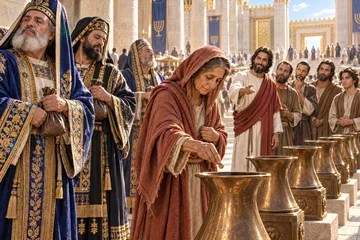
Pictures
Cross-references 20 of 28
- Luke 21:1-4
And he looked up, and saw the rich men casting their gifts into the treasury.
The parallel account describes the widow giving all she had.
- 2 Corinthians 8:12
For if there be first a willing mind, it is accepted according to that a man hath, and not according to that he hath not.
Both teach that giving is accepted according to what one has and a willing heart.
- 2 Corinthians 9:7
Every man according as he purposeth in his heart, so let him give; not grudgingly, or of necessity: for God loveth a cheerful giver.
Both commend giving willingly and cheerfully, rather than grudgingly.
- Acts 20:35
I have shewed you all things, how that so labouring ye ought to support the weak, and to remember the words of the Lord Jesus, how he said, It is more blessed to give than to receive.
Both teach that giving brings blessing, as the widow gives all she has.
- Matthew 6:20
But lay up for yourselves treasures in heaven, where neither moth nor rust doth corrupt, and where thieves do not break through nor steal:
Giving to God lays up lasting treasure in heaven.
- 2 Corinthians 8:9
For ye know the grace of our Lord Jesus Christ, that, though he was rich, yet for your sakes he became poor, that ye through his poverty might be rich.
Christ became poor for others, modeling sacrificial giving.
- 2 Corinthians 8:2-3
How that in a great trial of affliction the abundance of their joy and their deep poverty abounded unto the riches of their liberality.
The Macedonian churches give liberally despite deep poverty, beyond their means.
- Luke 12:33
Sell that ye have, and give alms; provide yourselves bags which wax not old, a treasure in the heavens that faileth not, where no thief approacheth, neither moth corrupteth.
Giving all one has reflects the call to give alms and lay up unfailing heavenly treasure.
- Proverbs 11:25
The liberal soul shall be made fat: and he that watereth shall be watered also himself.
Both connect generous giving with the giver’s blessing.
- Acts 5:1-5
But a certain man named Ananias, with Sapphira his wife, sold a possession,
Ananias and Sapphira kept back part of what they claimed to give.
- 2 Samuel 24:24
And the king said unto Araunah, Nay; but I will surely buy it of thee at a price: neither will I offer burnt offerings unto the LORD my God of that which doth cost me nothing. So David bought the threshingfloor and the oxen for fifty shekels of silver.
Both make the giver’s cost the measure of a gift to God.
- 2 Corinthians 9:6
But this I say, He which soweth sparingly shall reap also sparingly; and he which soweth bountifully shall reap also bountifully.
The harvest corresponds to how generously one gives.
- Luke 14:33
So likewise, whosoever he be of you that forsaketh not all that he hath, he cannot be my disciple.
Both teach that disciples must give up all they possess.
- Acts 10:4
And when he looked on him, he was afraid, and said, What is it, Lord? And he said unto him, Thy prayers and thine alms are come up for a memorial before God.
Cornelius’s alms, like the widow’s gift, are remembered before God.
- 1 Kings 17:12-16
And she said, As the LORD thy God liveth, I have not a cake, but an handful of meal in a barrel, and a little oil in a cruse: and, behold, I am gathering two sticks, that I may go in and dress it for me and my son, that we may eat it, and die.
The widow gives her last food, and her supply does not fail.
- Proverbs 11:24
There is that scattereth, and yet increaseth; and there is that withholdeth more than is meet, but it tendeth to poverty.
Both connect generous giving with increase and withholding with poverty.
- Luke 6:38
Give, and it shall be given unto you; good measure, pressed down, and shaken together, and running over, shall men give into your bosom. For with the same measure that ye mete withal it shall be measured to you again.
Giving generously is linked with receiving blessing in return.
- 1 Chronicles 29:6-9
Then the chief of the fathers and princes of the tribes of Israel, and the captains of thousands and of hundreds, with the rulers of the king’s work, offered willingly,
The temple received voluntary gifts from the people.
- Mark 14:3-9
And being in Bethany in the house of Simon the leper, as he sat at meat, there came a woman having an alabaster box of ointment of spikenard very precious; and she brake the box, and poured it on his head.
Both honor loving sacrifice above value.
- 2 Kings 12:9
But Jehoiada the priest took a chest, and bored a hole in the lid of it, and set it beside the altar, on the right side as one cometh into the house of the LORD: and the priests that kept the door put therein all the money that was brought into the house of the LORD.
Describes a temple collection chest related to the treasury setting.
Commentary part 1 of 2
Each commentary is drawn from primary sources: the writings of Ellen G. White and Adventist pioneers and periodicals. Each commentary is separate. Its own words are not a quotation; follow the references to read the source passages.
Ellen G. White
61 sources
The rich put in from what they had left over, but the widow put in from her need everything she owned to live on.Ms 101, 1906, par. 44AA 342.1RH Jul 11, 19072T 666.1–2SG2 249.2 Her all was only two very small coins, and to give them left her without food and without what seemed necessary to live.AA 342.1RH Jul 11, 19073SP 72.2 Jesus counted her gift greater than all the large sums given that day.Ms 101, 1906, par. 44RH Jul 11, 1907DA 615.1–616.1 God does not measure a gift by its size or money value, but by its proportion to what the giver has and by the sacrifice, faith, love, and wholehearted willingness behind it.AA 342.13SP 72.2ST May 9, 1878SG2 249.2RH Dec 15, 1874 She gave in unselfish love with childlike trust that her Heavenly Father would care for her and supply her future need.AA 342.1RH Jul 11, 19073SP 72.2 Her example has kept working through the ages to relieve the poor, spread the truth, and save souls, and such self-denying giving lays up treasure in heaven.RH Jul 11, 1907DA 615.1–616.1DA 614.3–4SG2 249.26T 310.1–2
Contrast Between Givers
The verse sets two kinds of giving side by side: the rich cast in out of their abundance, but the widow cast in out of her want all she had, even all her living.Ms 101, 1906, par. 442T 666.1–21T 176.3–177.13T 398.2–3Ms 53, 1906, par. 1 They gave only a small portion of what they possessed, while she gave from her need what she could have kept for herself, giving all she had to live on.2T 666.1–2SG2 249.21T 176.3–177.13T 398.2–3Ms 53, 1906, par. 1 Her all was two small coins, her whole living, and to part with them was to accept real privation.AA 342.1RH Jul 11, 1907DA 615.1–616.1DA 614.3–42T 666.1–2 Giving them meant going without food and depriving herself of life's necessities and even its apparent necessities, though she was poor.AA 342.1RH Jul 11, 19073SP 72.2ST May 9, 1878DA 615.1–616.1
By contrast the gifts of the rich cost them no comfort or luxury, for they gave from abundance without giving up comforts, without sacrifice and without feeling want.RH Jul 11, 1907ST May 9, 1878DA 615.1–616.13SP 73.2Lt 155, 1899, par. 1–3 While still having all that heart could wish, they denied themselves nothing, and their gifts were often given to gain honor from others.DA 615.1–616.13SP 73.2RH Nov 26, 1857 Jesus therefore reckoned her gift as more in God's sight than the large sums, worth more than the larger gifts and greater than gifts from abundance.RH Jul 11, 1907DA 615.1–616.1DA 614.3–43SP 73.22T 666.1–2 He declared it the greatest offering cast into the treasury that day, greater than all who gave of their abundance.Ms 101, 1906, par. 44RH Jul 11, 1907DA 615.1–616.1DA 614.3–4RH Nov 26, 1857
The phrase for all her living can also describe borrowed land money as the lenders' entire living, so that to repay it would place them under severe pressure.Lt 30a, 1894, par. 11–12
How God Measures Gifts
God measures a gift not by its amount, size, or monetary worth, but by its proportion to what the giver possesses and what it costs in sacrifice and self-denial.SG2 249.2RH Dec 15, 1874GW 222.13T 412.1Lt 48, 1901, par. 10 The widow gave all she had even though she was poor and her gift deprived her of life's necessities, while the rich gave from abundance without feeling want, and Christ valued her gift above larger offerings because of the proportion she gave and her motive.AA 342.1SG2 249.2RH Dec 15, 1874 A poor person's small gift can therefore represent a greater sacrifice than a wealthy person's larger gift, and gifts are acceptable in keeping with the spirit that prompts them and the love and sacrifice behind them.RH Dec 15, 1874GW 222.13T 412.1 Those who cannot give as much are to give what they can, forgoing something they could do without, for poverty does not excuse neglecting the duty to give, and faithful use of even a little can lay up treasure in heaven and help save souls.SG2 249.2GW 222.1Lt 48, 1901, par. 10
He looks to the faith, love for God and interest in His work, and the unselfish and willing motive behind the gift.3SP 72.2ST May 9, 1878DA 615.1–616.1DA 614.3–43SP 71.2–72.1 The value lay not in the small amount but in unselfish sacrifice and genuine, unwavering faith that her Heavenly Father would not overlook her need but would care for her and provide for her future.3SP 72.2ST May 9, 1878DA 615.1–616.1 He looks to wholehearted, cheerful devotion and fidelity, including strict faithfulness to His requirements and heart principle, and it is heart service that makes the gift valuable.3SP 72.2ST Oct 21, 1889 Little gifts and duties cheerfully done from a loving and faithful heart have great worth before Him even when people regard them as insignificant.3SP 72.2
Therefore a poor person's smallest willing gift given from love is as acceptable as the largest gift from the rich, and the humble gift of the poor is not inferior to a wealthy person's larger offering.RH Oct 10, 19079T 224.33T 398.2–3RH Dec 15, 18747T 294.2–295.1 Smallness is no cause for rejection when a person does his best to the utmost of ability, and gifts of different sizes are accepted when given sincerely, willingly, and obediently, with even small offerings from every source to be carefully cherished.9T 54.37T 294.2–295.1ST Oct 21, 1889 Even the smallest willing offering from a poor person is acceptable when given from love to Christ, for the gift is valued not by its amount but by the love that moves the sacrifice.RH Oct 10, 19079T 224.33T 398.2–3
Jesus understood and commended her offering, and her unselfish motive, love, and faith won His commendation and made her offering precious to God.3SP 72.2ST May 9, 1878DA 615.1–616.1DA 614.3–43SP 71.2–72.1 Gifts given by denying self for His cause are noticed by God whatever their amount, and He marks, accepts, and blesses such self-denying gifts however small and does not despise humble effort.SCEV 42.2–3ST Oct 21, 1889 Though the giver is ignorant and humble, if the heart overflows with love to God and duty is done to the best of ability, Heaven notices the effort. Wrongdoing by religious leaders in abusing and misapplying gifts could not take away God's blessing from the giver.DA 614.1–2
The disciples' forsaking of a few fishing boats and nets was accepted like the widow's mite because it was their all and was as dear to them as the riches of the wealthy are to the rich, and Christ does not reproach such givers for having forsaken but little.Ms 40, 1905, par. 11–12 God does not make light of the small ability He has entrusted to ignorant and humble givers but expects it to be put out to use just as the larger talents are.ST Oct 21, 1889 When those who are poor embrace the truth and do to the very best of their ability, the heavenly Father sees when they have gone to the extent of their ability, and He will bring in other talents to carry forward His work.Ms 14, 1887, par. 18 Those who so give in willingness of heart and love make the offering sweet and acceptable, and God will open ways before them and increase their talents, so that in faithfulness they will not rob God even in little things but will bear every responsibility to His glory and act like living soldiers of the cross in the work still to be done.ST Oct 21, 1889Ms 14, 1887, par. 18
Widow's Faith and Love
She gave out of unselfish love and deep interest in the cause she loved, consecrating completely what she was able to give.RH Jul 11, 19073SP 72.2ST May 9, 1878DA 615.1–616.1DA 614.3–4 The worth of her offering lay not in its small amount but in that love and unselfish motive, which made it precious and won commendation.3SP 72.2ST May 9, 1878DA 615.1–616.1DA 614.3–43SP 71.2–72.1 She gave all she had to live on, while the rich gave from abundance without giving up comfort or luxury.RH Jul 11, 1907ST May 9, 1878DA 615.1–616.1DA 614.3–43SP 71.2–72.1
She acted with childlike, genuine, unwavering faith, trusting that her Heavenly Father would not overlook her need but would care for her and provide for her future.RH Jul 11, 19073SP 72.2ST May 9, 1878DA 615.1–616.1DA 614.3–4 That trust remained even though her gift deprived her of food and of life's necessities and left her facing an uncertain future.AA 342.1RH Jul 11, 19073SP 72.2DA 615.1–616.1DA 614.3–4 By that proportion and motive of self-denial her gift was valued above larger offerings.AA 342.1RH Jul 11, 19073SP 72.2ST May 9, 1878DA 615.1–616.1
She gave willingly and with a willing heart, and her two small coins were precious because they were her all and cost real sacrifice.Lt 155, 1899, par. 1–37T 294.2–295.1Ms 20, 1896, par. 1Ms 26, 1891, par. 33–35Lt 24b, 1896, par. 38–39 What she gave was her best, given wholeheartedly and with her whole heart.Lt 155, 1899, par. 1–37T 294.2–295.1Ms 20, 1896, par. 1Ms 26, 1891, par. 33–35Lt 24b, 1896, par. 38–39 A small offering presented with cheerful gratitude from love is classed with hers and blessed, and God values the gift by the wholehearted, cheerful love with which it is given.7T 294.2–295.1Ms 26, 1891, par. 33–35 Her thoughtful, willing offering is made fruitful and greatly increased in His hands in its work of mercy.7T 294.2–295.1Ms 26, 1891, par. 33–35
Her gift revealed heart principle, for she chose God's way and practiced His will rather than putting her own interests ahead of God's purposes.Lt 52, 1891, par. 42–45 It shows strict faithfulness to His expressed requirements, with motive and principle noticed rather than mere size.Lt 52, 1891, par. 42–45 Her small gift in this way displays self-denial and the Saviour's unselfishness, and gifts of different sizes are accepted when given sincerely, so that all can give in some measure.9T 54.3
By contrast, those who have abundance but give little in comparison withhold from God because they fear want and will not trust Him.2T 198.1 She stinted herself to give her mite, and such a small offering given at personal cost is counted precious.AA 342.1RH Jul 11, 19073SP 72.2ST May 9, 18782T 198.1
Lasting Influence and Reward
Though she did not know how far it would reach, her act has continued through the ages, inspiring many to generosity with results no one can measure.RH Jul 11, 1907DA 615.1–616.1DA 614.3–46T 310.1–2Ms 138, 1903, par. 3–4 Its worth is seen in lasting influence for good, relieving the poor and helping spread the gospel and extend truth.RH Jul 11, 1907DA 615.1–616.1DA 614.3–4ST Nov 15, 1910 That same influence has helped support missions, hospitals, care for the needy and sick, and preaching of the gospel, and in the day of God she will see the good her deed brought about.6T 310.1–2 Her example also encourages others to give, including those so poor they can give only a small sum, and calls children to follow her by giving their mites and earning money in simple ways to help the needy.ST Nov 15, 1910Ms 138, 1903, par. 3–4
Little gifts and duties cheerfully done from a loving and faithful heart have great worth before God even when people regard them as insignificant.3SP 72.2 Even small offerings given in self-denial can help save souls.Lt 48, 1901, par. 10 A small offering given willingly and thoughtfully is accepted by the Lord and can be greatly increased in His hands.Ms 57, 1901, par. 6
Such sacrifice for God's cause brings a reward and lays up treasure in heaven.SG2 249.2RH Nov 26, 18571T 176.3–177.1GW 222.1 Those who cannot give largely are not excused but are to do what they can, denying themselves something they could do without, and like her they will actually give more than all who gave of abundance.SG2 249.2RH Nov 26, 18571T 176.3–177.1 A small gift given in sympathy and love can do good and receive a reward hereafter, as illustrated in self-denial in giving for the Lord's house, including setting aside money beyond the tithe to help pay its debt.6T 103.1–2 Faithful use of even a little, with poverty no excuse for neglecting the duty to give, can lay up treasure in heaven.GW 222.1
Her giving is recorded by God as service to Christ, showing how every action, even one that appears small, matters in the judgment and contributes to the influence for which each person is accountable.Lt 29, 1897, par. 19–22
Call to Self-Denying Giving
Everyone entrusted with means is called to give in the same self-denying way as the widow, and poverty does not excuse neglect of this duty, for the poor have their part and must give what they can rather than excuse themselves because they cannot give largely.SG2 249.21T 176.3–177.1GW 222.1GW92 269.3–270.1SG2 154.2–156.1 This means forgoing some article that could be done without and sacrificing for the cause, so that even a small gift given at personal cost lays up treasure in heaven.SG2 249.2RH Nov 26, 18571T 176.3–177.1 Giving is not a duty laid only on the rich, and faithful use of even a little is accepted.GW 222.1GW92 269.3–270.1SG2 154.2–156.1
Self-denial is to be practiced in the home by denying useless spending on dress and gratification and by saving through economy.Ms 98, 1904, par. 1–8 Money often spent for self-gratification, for candy and other needless things, is to be laid aside for the Lord, with parents and children setting aside something regularly so there will be something to give when calls for help come.9T 55.1Ms 36, 1905, par. 12–13 This includes paying a faithful tithe and also setting aside money beyond the tithe.6T 103.1–2Ms 36, 1905, par. 12–13 Those who realize what Christ sacrificed for fallen man will need no appeals to be liberal, self-denying and self-sacrificing, but will make it a fixed principle to save from what they have so they always have something for the Lord's treasury.Ms 6, 1878, par. 31
Such gifts help pay church debts and the debt on the Lord's house, support missionaries in new fields, help the needy work such as the destitute people of the South, and supply the pennies needed for mission work.6T 103.1–2Ms 98, 1904, par. 1–8MYP 312.2–3Lt 149, 1905, par. 3MYP 311.2–312.1 Children are to follow her example by giving their mites and earning money in simple ways to help the work for the needy in the South.RH Dec 25, 1900Ms 138, 1903, par. 3–4 They are to put into a collection box money that would otherwise be spent for candy and other needless things, make simple useful household articles and sell them while telling buyers of the work the money will support, and tell visitors who see the box the story of the effort to help, and in this willing self-denial they become fellow workers.RH Dec 25, 1900Lt 149, 1905, par. 31MR 347.1–2 Mothers are to teach children to save pennies and clothing for missionary work, which also gives protection against intemperance.Ms 98, 1904, par. 1–8
Giving is to be liberal and hearty even when the giver still has all the heart could wish, and small gifts given in sympathy and love can do good and receive a reward hereafter.RH Nov 26, 18576T 103.1–2 Freewill giving is to be esteemed a privilege, and it is sweet to give to the needy, deny self, and sacrifice for the truth.RH Nov 26, 1857 The poor are as precious as the wealthy when willing and obedient, and a humble offering is accepted when it is all the giver can bring, encouraging those who give freely and cheerfully despite having little.ST Jul 15, 1880 Humble service likewise is not to be despised, for to every person is given his own work, whether humble service or powerful speaking, and everyone who stays in touch with Christ can minister in kindness and speak a timely word, with every sincere gift accepted whether pounds or only mites.Lt 377, 1904, par. 14Lt 175, 1904, par. 10
Offerings reveal the heart, for giving grudgingly or presenting what is lame, sick, or deficient shows a low view of sacred things.2T 256.3–258.3 Giving calls for wholehearted consecration and stewardship, with money dedicated to the Lord rather than spent to gratify self, and its use treated as a matter for which account must be given.7T 295.2 Money raised by enticing people through lavish, appetite-gratifying feasts is less acceptable than the widow's mite, while those who give from the heart in her spirit make even a simple offering valuable and precious under Heaven's blessing.HLT1 53.3–5
An Oakland widow who had no house or land and supported herself gave eighty dollars she had deliberately set aside for the cause, and her gift was praised as more than the gifts of the others because she gave from need and not from abundance.Lt 342, 1906, par. 13–14 Poor widows and families who give from hard-earned means, even at the cost of their own comfort, give in faith and with joy to support the work of saving souls.2T 571.1 A poor widow may give nearly all she has with gratitude, prayer, and trust, making a deeply self-sacrificing offering that stands as the model of giving that costs the giver something.STPW 11.2–12.12T 571.1
Sources
Pioneers and periodicals
199 sources
The verse shows a poor widow putting two tiny coins into the temple treasury, which was all she had to live on, while the rich put in large gifts out of their surplus, and her gift was counted as more than all of theirs together.ST Dec 18, 1893RH Jun 9, 1859 Jesus watched those giving, saw what she gave, valued and commended it, and had it remembered through succeeding generations.RH Jul 29, 1909RH Jul 23, 1901 Its worth is measured not by amount or outward size but by sacrifice, proportion to means, what is kept behind, and the love, motive, purity and faith behind it.ST Dec 18, 1893RH Mar 26, 1901ST Mar 14, 1906 She gave in unselfish love and complete trust, leaving herself penniless and trusting her Heavenly Father to care for her need.RH Jul 11, 1907ST May 9, 1878ST Mar 30, 1882 Even the very poor therefore have a part and can lay up as great treasure as the rich, while those with abundance cannot excuse a trifling gift by calling it the widow's mite.ST Dec 18, 1893RH Jun 9, 1859RH Jul 29, 1909RH Dec 27, 1853ST Mar 23, 1882
Coins Words and Contrast
All the others put in out of their surplus and abundance, but she put in out of her need and want and poverty all that she had, even all her living, her two mites.ST Dec 18, 1893RH Jun 9, 1859ST Nov 8, 1899 Her gift was reckoned as more than all the wealthy gifts together, greater in divine sight and judgment than the larger amounts, because theirs cost no sacrifice of comfort while hers was all she had to live on.ST Dec 18, 1893RH Jun 9, 1859ST Nov 8, 1899 Its worth lies not in amount but in sacrifice, love for God and interest in His work, so the poor are commended and encouraged that faithful small offerings matter and are precious and blessed.ST Dec 18, 1893RH Jun 9, 1859
The two mites were valued at nearly three cents.RH Jun 9, 1859 They were valued at about one fourth of a cent and about a quarter of a cent.RH Jul 29, 1909RH Apr 28, 1904 Financially the whole offering counted for only a farthing, a quadrant equal to four mills or two fifths of a cent or three fourths of an English farthing.RH Oct 25, 1906 They were valued at about half a cent, and as less than half a cent in the world possessed with great deprivation.ST Jul 25, 1878ST Aug 30, 1883
The two mites make a farthing.RH Sep 12, 1865RH Aug 29, 1871 Eight mites made a penny, and in giving all the money she had she left herself nothing for food or clothing.RH Nov 11, 1915 Literal examples of those small coins still remain in the ruins of once opulent and popular cities as sure testimony to the truth of the Bible.RH Aug 29, 1871
Her entire living amounted to two mites, illustrating the extreme poverty of many people in Palestine during that ministry.ST Aug 24, 1904 She put in both coins, all she had to live on and all her ready money, not merely one coin or a small amount from surplus.RH Feb 21, 1907 Her small donation was therefore a complete offering of her means.RH Feb 21, 1907RH Sep 8, 1904 Giving so little is justified only when it is truly all a person has.RH Sep 29, 1863
Setting and Divine Witness
Long before Christ the people had taken up the practice of bringing an offering every Sabbath to the house of God and placing it in the treasury, and Jesus was watching those depositing gifts when the widow threw in her two mites.RH May 2, 1907 He was in the temple in the presence of a multitude and spoke directly to His disciples, exalting her and her two mites above all the rich of Jerusalem.ST Aug 5, 1886 That exaltation belonged to His general life of serving others and relieving the wants of everybody, not to the special example of washing the disciples' feet.ST Aug 5, 1886
Jesus watched those giving into the treasury and saw what she gave, noticing, valuing, esteeming, commending and blessing it, and having the deed recorded and remembered through succeeding generations both in heaven and on earth.ST May 9, 1878RH Jul 29, 1909RH Jul 23, 1901ST Mar 30, 1882 Even a poor dependent believer's everything is therefore not despised, and limited sacrifices made from love are accepted.ST May 9, 1878RH Jul 29, 1909ST Mar 30, 1882ST Oct 23, 1893 He still invisibly sits as overseer of the treasury, observing not only what is given but what remains, discerning the spirit, so that by that heavenly standard offerings reveal the heart and spiritual condition.RH Oct 25, 1906ST Feb 26, 1885RH Sep 23, 1873RH May 21, 1872ST Mar 9, 1915 Even the smallest sum placed at sacrifice is under God's watch, so entrusted offerings must be handled carefully and not put to improper use.RH Oct 25, 1906RH Jun 2, 1904
She gave quietly out of gratitude for sustaining care, fearing scorn beside rich gifts, not to win applause or attention.ST Oct 23, 1893ST Jan 24, 1911RH Sep 22, 1874 Jesus saw the faith and sacrifice, knew her heart, regarded her with love and gave deserved encouragement.ST Oct 23, 1893ST Jan 24, 1911RH Sep 22, 1874 Her name is not given, so the account does not justify publicizing donors' names to raise funds, nor fostering dependence on public sympathy or distracting from God's glory.RH Dec 2, 1873
Her small amount was money honestly earned and given out of love, while the wealthy abundance was gained by exploiting the poor who had reduced her to need.RH Mar 26, 1901ST Dec 23, 1903RH Mar 26, 1901 God measures gifts by righteousness in how money was gotten, so money gained by crowding down sellers and crowding up buyers, robbing widows and the poor, or grinding laborers' wages cannot count as the giver's gift but is reckoned to those ground down.RH Mar 26, 1901RH Mar 26, 1901 Christ's honoring of her honest whole living above large gifts stands opposite churchly avarice that excuses rich devourers of widows' houses.RH Mar 26, 1901ST Jul 19, 1905 That included the double robbery when priests gathering for Passover bought cattle, sheep and doves cheap as for sacrifice and resold them at exorbitant prices.RH Mar 26, 1901
How God Measures Gifts
The worth of a gift is not fixed by its amount or outward impressiveness but by the sacrifice, cost, effort, proportion to means, love, devotion, motive, purity, faith and cheerful generosity behind it.ST Dec 18, 1893RH Apr 21, 1903ST Aug 30, 1905 A small gift given out of want and self-denial is precious, great and acceptable, while large gifts given out of abundance without sacrifice are not.ST Dec 18, 1893ST Aug 30, 1905RH Mar 2, 1876 Though small in amount, hers was all she had and therefore a greater sacrifice, for they gave from abundance while she gave from her poverty all she had to live on.ST Dec 18, 1893RH Apr 21, 1903RH Mar 2, 1876 Even small offerings are precious and bring blessing, and the poor who long to support the work should not be turned away, for gifts given from love however small are consecrated.ST Dec 18, 1893RH Apr 21, 1903
Generosity is measured by proportion to means and by what remains or is kept after giving, not by size.RH Sep 12, 1865RH Apr 28, 1904RH Mar 15, 1906RH Dec 30, 1909ST Oct 15, 1894 God estimates gifts not by what is given but by what is kept, not by the amount contributed but by the cost in self-denial.RH Oct 25, 1906RH Apr 28, 1904RH Dec 30, 1909 Financially her whole offering counted for only a farthing, a quadrant equal to four mills or two fifths of a cent or three fourths of an English farthing, reckoned by others as about a quarter of a cent, yet the two mites were her whole means of subsistence while the others reserved what they needed or wanted and gave from superabundance.RH Oct 25, 1906RH Apr 28, 1904 What remains or is withheld or spent elsewhere reveals whether one values self more than God, so her example is praised and challenges people to consider how much is kept rather than how little must be given.RH Oct 25, 1906RH Dec 30, 1909ST Oct 15, 1894 Keeping can hide giving when hoarding and self-indulgent spending leaves only crumbs labeled charity, but surrendering the dearest last trusted resource lays up treasure and makes one rich in good works.RH Oct 25, 1906
The value is measured by the heart, motive, love and purity rather than size.RH Mar 26, 1901RH Jan 10, 1871RH Mar 13, 1913ST Mar 24, 1887ST Aug 14, 1884 A small gift with a single eye to God's glory and unselfish devotion counts for more than a large gift for human admiration, show, fashion, praise or personal gain, which earns only that applause.RH Jan 10, 1871ST Aug 14, 1884 Poverty itself does not earn favor, and the rich would also have been acceptable in the same unselfish spirit, for fidelity and faithfulness mean more than millions without motive.RH Jan 10, 1871ST Aug 14, 1884 Jesus reverses ordinary value by a spiritual standard reaching thoughts and feelings, and God blesses abundantly according to motive, regarding the will as more important than amount.ST Mar 14, 1906RH Jan 10, 1871RH Mar 13, 1913
Heaven measures work by a different standard than earthly arithmetic of men influenced, buildings erected, or loaves and garments given, where counting such figures and congratulating oneself on liberality is self-deception.ST Apr 27, 1882RH Jun 24, 1902ST Apr 5, 1883 A small gift given faithfully with God's blessing can advance His cause more than a much larger sum, accomplishing more than gifts given from abundance.ST Apr 27, 1882RH Mar 28, 1854RH Jun 24, 1902 A small gift given wholly can be used to move hearts and help others know His will beyond its size, and small weak efforts from love can accomplish much.ST Apr 5, 1883ST Sep 22, 1881RH Apr 24, 1900 The Master sees each effort where love and doing what one can matter more than quantity, God regards how much love attends work rather than amount done giving full value even to what is little before men, and those who do what they can have done as much as anyone.ST Apr 27, 1882RH Jun 24, 1902ST Apr 5, 1883
Her gift was precious because in need she denied herself actual necessities until she felt its loss as real sacrifice.RH Dec 5, 1907ST Oct 11, 1883ST Jul 15, 1886RH Dec 24, 1901 It was a love offering valued not for intrinsic worth but as expressing truest affection and loyal life, with deep pure unselfish affections.RH Dec 24, 1901 Giving is a test of love and loyalty where poverty no more excuses giving than loving, with the same self-giving motive as Christ though His was greater, shown in sacrificing comforts and nearly life's necessities and in coming to die.RH Dec 24, 1901RH May 6, 1873 To give all for Christ is better than to give from abundance for humanity, the one rejoicing in having given so much by amount given while the other having given everything sorrows that there is no more to give.ST Jul 15, 1886 Large gifts for churches, schools and influence do not prove greater knowledge of Christ compared to consecration and transformation from selfishness.ST Jul 15, 1886RH Dec 24, 1901
A poor person's small offering can be a greater sacrifice than a rich person's large gift from abundance, and God accepts a humble offering when it is all the giver can bring, requiring only what one has.ST Jul 15, 1880RH Jul 2, 1867RH Feb 6, 1879 Giving is measured by what one actually does with what he has now, not promises if he had more, for one cheerfully giving little with all his heart would give greatly with great opportunity, while one pleading poverty would not give with ten times more.ST Feb 16, 1882 Giving one's whole means overcomes covetousness and stinginess, and both rich and poor are called with value measured by sacrifice and consecration.RH Sep 4, 1900ST Aug 26, 1875RH Feb 6, 1879 God tests willingness in relation to what one has, sometimes calling to sell possessions even at a loss, and the value is measured by means and sacrifice not amount.RH Jul 2, 1867RH Sep 4, 1900RH Feb 6, 1879
Right giving gives the best, the very nicest and hardest to keep, enough that the giver feels the cost.ST Feb 18, 1886ST Feb 22, 1883 A small gift freely given from what is truly needed, even when it is all one has, is great in God's sight.ST Feb 18, 1886ST Feb 22, 1883ST Oct 7, 1880 Sacrifice is shown by what giving costs and is measured not by amount but by cost, calling people to trust the Lord and do good, for having abundance would not make such giving a sacrifice.ST Feb 18, 1886ST Feb 22, 1883ST Oct 7, 1880
Widow's Faith and Love
She gave from unselfish love and childlike faith, in prayer and complete trust, going without food and leaving the temple penniless while trusting her Heavenly Father to care for her need and uncertain future.RH Jul 11, 1907ST May 9, 1878ST Nov 7, 1878ST Mar 30, 1882ST Jan 18, 1916 Her gift was measured by the faith that entrusted her future to God, a humble private faith, and her example teaches trust in the Lord and doing good even though people often feel they need all they possess.RH Jul 11, 1907ST Nov 7, 1878ST Jan 18, 1916ST Oct 15, 1894 True love is shown by giving even when it requires sacrifice, wholly dead to the world and alive to God, and not by a lame offering.RH Jul 11, 1907ST May 9, 1878ST Mar 30, 1882
She was a cheerful giver with a willing, ready mind needing no urging, glad to give and counting it a privilege to cast in all her living because she loved to give.RH Sep 7, 1869RH Mar 27, 1900ST Aug 12, 1889 Such a mind is not natural to man but comes only from God, from whom all love springs in giving His Son and the Son giving Himself, and it is received when the hard selfish heart is taken away by the Holy Spirit.ST Aug 12, 1889 Her willing, self-denying gift pleased the Saviour as a great deed, for she gave her last money with joyful heart and found joy and peace without turning back, as Israel was supplied with manna.RH Sep 7, 1869RH Jan 21, 1875 Giving to the cause can be a chief delight in gratitude, blessing both gift and giver, unlike giving to be seen, and true giving gives all with a willing spirit while counting the gift slight, bringing supreme delight that fills the emptied vessel.ST Nov 1, 1910RH Mar 27, 1900RH Aug 25, 1904
Her two mites were her whole savings expressing complete devotion, not a purchase of pardon or public honor, and love makes any gift precious whether large or small.RH Nov 23, 1916RH Nov 23, 1916 A small act of charity in holy divine love is acceptable to God and can receive blessing and bring happiness, and a small offering with cheerful gratitude from love is classed with her mite and blessed, so God does not despise humble ignorant effort but expects small ability to be used as larger talents.RH Jul 28, 1874ST Jul 25, 1878 Giving should be proportionate, with poverty no reason to close the heart, for a small gift from poverty is precious and even the least done for Him is precious, and even a very small gift from love is worthy, including money to support gospel carriers.RH Nov 23, 1916RH Jul 21, 1868
Her offering was great because in loving zeal she answered duty without knowing how the priests would use the money, leaving the outcome to God who sees and knows all.ST Nov 8, 1899 Her gift tested her love and teaches all to share in cheerful sacrifice, while those with more than enough should give liberally from surplus.RH Aug 20, 1872 When dues are rendered in faith He recognizes and commends, for heart service makes the gift valuable and smallness is no rejection when one does his best with willingness and love, with God opening ways and increasing talents.ST Oct 21, 1889 Wholehearted giving measured by surrender rather than amount may be met with blessing and return, as when one gave all out of love and faith without considering future need.ST Apr 3, 1907
She gave like the widow of Zarephath who gave her little food to Elijah as willing sacrifice prompted by need and suffered no loss because the supply did not fail.RH Jun 24, 1902 Her voluntary gift expressed noblest benevolence in sacrificing comforts and nearly necessities, while Christ gave more than money, giving Himself in constant sacrifice and self-denial of all He had.RH Feb 24, 1859 Lack of money is no reason to withhold support, for Jesus saw and approved her gift and the Lord will provide for those who give.RH Mar 12, 1872
Sources