Mark 13:1
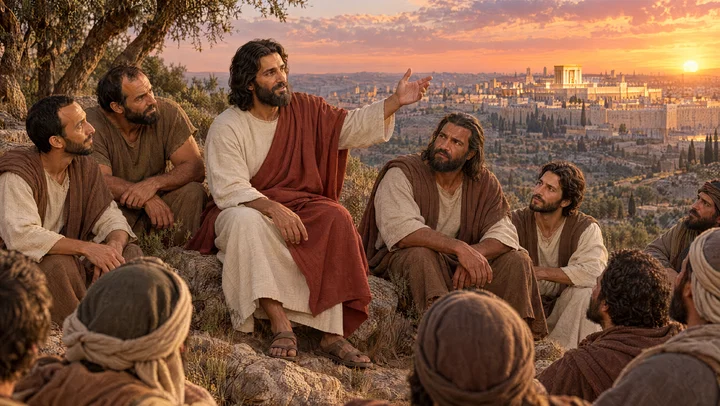
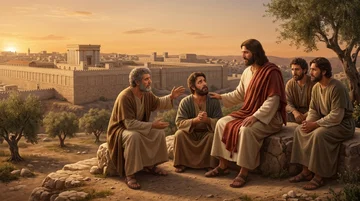
And as he went out of the temple, one of his disciples saith unto him, Master, see what manner of stones and what buildings are here!
Translations
And as he went out of the temple, one of his disciples says to him, Master, see what manner of stones and what buildings are here!
And as he went out of the temple, one of his disciples saith unto him, Master, see what manner of stones and what buildings are here!
And as he went out of the temple, one of his disciples saith unto him, Master, see what manner of stones and what buildings are here.
And as he was going out of the temple, one of his disciples saith to him, Master, see what manner of stones, and what buildings are here!
And as he went forth out of the temple, one of his disciples saith unto him, Master, behold, what manner of stones and what manner of buildings!
And as he went forth out of the temple, one of his disciples saith unto him, Teacher, behold, what manner of stones and what manner of buildings!
And as he is going forth out of the temple, one of his disciples saith to him, 'Teacher, see! what stones! and what buildings!'
And as he was going out of the temple, one of his disciples says to him, Teacher, see what stones and what buildings!
And, as he was going forth out of the temple, one of his disciples saith unto him—Teacher! see what manner of stones, and what manner of buildings!
Berean Standard Bible, Majority Standard Bible
As Jesus was leaving the temple, one of His disciples said to Him, “ Teacher, look at the magnificent stones and buildings!”
As he went out of the temple, one of his disciples said to him, “ Teacher, see what kind of stones and what kind of buildings!”
And when he was going out of the Temple, one of his disciples said to him, Master, see, what stones and what buildings!
And as he went out of the Temple, one of his disciples said vnto him, Master, see what maner stones, and what maner buildings are here.
Douay-Rheims (Challoner revision)
And as he was going out of the temple, one of his disciples said to him: Master, behold what manner of stones and what buildings are here.
Pictures
Cross-references
- Matthew 24:1-2
And Jesus went out, and departed from the temple: and his disciples came to him for to shew him the buildings of the temple.
The disciples admire the temple, and Jesus predicts its destruction.
- Luke 21:5-6
And as some spake of the temple, how it was adorned with goodly stones and gifts, he said,
Jesus’ temple remark leads into his prophecy of its destruction and the disciples’ questions.
- Matthew 24:3
And as he sat upon the mount of Olives, the disciples came unto him privately, saying, Tell us, when shall these things be? and what shall be the sign of thy coming, and of the end of the world?
parallel account of disciples' question
- Matthew 24:1
And Jesus went out, and departed from the temple: and his disciples came to him for to shew him the buildings of the temple.
Both describe the disciples showing Jesus the temple buildings as he leaves the temple.
- Luke 21:7
And they asked him, saying, Master, but when shall these things be? and what sign will there be when these things shall come to pass?
The passage names Luke 21 as another parallel account of the discourse.
- Matthew 24:34
Verily I say unto you, This generation shall not pass, till all these things be fulfilled.
Cited in the question about whether Christ would return in the disciples’ lifetime.
- John 2:20
Then said the Jews, Forty and six years was this temple in building, and wilt thou rear it up in three days?
Both texts refer to Herod’s temple and its construction.
- Mark 15:38
And the veil of the temple was rent in twain from the top to the bottom.
The temple veil was torn at Christ’s death, fulfilling the sacrificial types.
- Luke 21:6
As for these things which ye behold, the days will come, in the which there shall not be left one stone upon another, that shall not be thrown down.
Jesus foretells the temple’s destruction.
- Matthew 24:15-30
When ye therefore shall see the abomination of desolation, spoken of by Daniel the prophet, stand in the holy place, ( whoso readeth, let him understand:)
Desolation, tribulation, and signs precede Christ’s coming.
- Daniel 9:26
And after threescore and two weeks shall Messiah be cut off, but not for himself: and the people of the prince that shall come shall destroy the city and the sanctuary; and the end thereof shall be with a flood, and unto the end of the war desolations are determined.
Daniel foretold the destruction of Jerusalem and its sanctuary.
- Micah 3:12
Therefore shall Zion for your sake be plowed as a field, and Jerusalem shall become heaps, and the mountain of the house as the high places of the forest.
The prophecy says Jerusalem and the temple mount will be laid waste.
- John 2:19
Jesus answered and said unto them, Destroy this temple, and in three days I will raise it up.
Jesus speaks of the temple’s destruction and its raising.
Commentary
Each commentary is drawn from primary sources: the writings of Ellen G. White and Adventist pioneers and periodicals. Each commentary is separate. Its own words are not a quotation; follow the references to read the source passages.
Ellen G. White
12 sources
As He was going out of the temple, one of His disciples, and in other accounts more than one, called His attention to what manner of stones and what buildings were there.Ms 35, 1906, par. 13–14DA 627.1–321MR 66.4–64SP 25.1–2Ms 71, 1897, par. 23–24 They spoke as they passed out with Him after hearing that their house was left desolate.DA 627.1–33SP 69.3–70.1 Their pointing set the scene for His warning that the magnificent temple would be destroyed.21MR 66.4–6Lt 317, 1905, par. 7–93SP 69.3–70.1
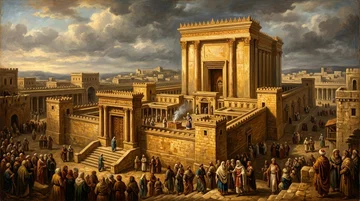
They spoke in awe and wonder at His prediction of overthrow, with a foreboding of evil and an anxious desire for a more definite statement to understand His words more fully.DA 627.1–3GC 24.3–25.1GC88 25.1–2 They did not yet understand, and could not imagine or comprehend how such mighty structures could be overthrown.DA 627.1–3Ms 71, 1897, par. 23–24Ms 78, 1897, par. 31–33ST Dec 19, 1900 What they pointed to was of purest brilliant-white marble in blocks of almost fabulous size, with massive walls and massive porch and supporting pillars.DA 627.1–3Ms 71, 1897, par. 23–24Ms 78, 1897, par. 31–33ST Dec 19, 19003SP 69.3–70.1 The masonry was laid so perfect that it appeared like one solid stone dug from the quarry, emphasizing strength and beauty and apparent durability.DA 627.1–33SP 69.3–70.1
That splendor reflected more than forty years of costly work, with freely expended wealth and labor and architectural skill.4SP 25.1–2GC 24.3–25.1GC88 25.1–2 It included massive blocks of white marble brought from Rome as part of its structure.4SP 25.1–2GC 24.3–25.1 Herod the Great had lavished upon it Roman wealth and Jewish treasure, and even the emperor of the world had enriched it with gifts.4SP 25.1–2GC 24.3–25.1GC88 25.1–2 A portion of the wall had withstood Nebuchadnezzar's army, so the walls seemed mighty and apparently indestructible.DA 627.1–3
Jesus received their pointing to the wonderful buildings with sadness because He knew destruction was coming, yet He acknowledged what they showed Him.DA 627.1–3ST Dec 19, 1900 To their words He made the solemn and startling answer that the magnificent temple would be completely demolished so that not one stone would be left upon another that would not be thrown down.Ms 35, 1906, par. 13–14DA 627.1–3GC 24.3–25.1Lt 317a, 1905, par. 6–8 Its strength and splendor would not preserve it, and angels of God would be sent to throw down every stone.Ms 35, 1906, par. 13–1421MR 66.4–6 The verse opens a chapter about the future destiny of men that must be studied as a warning to be read as for life.Lt 317, 1905, par. 7–9Lt 317a, 1905, par. 6–8 It calls each one to take heed to himself and let no man blind the mind by human sophistries or by mocking burlesque of sacred things, which is blasphemy against the Holy Spirit, and to prayerfully ask who will stand acquitted without spot or stain before the judgment seat of Christ.Lt 317, 1905, par. 7–9Lt 317a, 1905, par. 6–8
Those saved must form character without fault before a pure and holy God by doing their appointed work and cooperating with Christ under His yoke and learning His meekness and lowliness.Lt 317, 1905, par. 7–9 Such ones angels love and minister to, and they receive daily experience in the meaning of the divine beatitudes, because every man will be judged according to deeds done in this life.Lt 317, 1905, par. 7–9 Even the magnificent, firmly built temple fell in complete destruction, and the same fate will come upon modern expensive buildings costing millions of money, despite their architectural beauty and unusual firmness and solidity of construction.Ms 35, 1906, par. 13–14
Sources
Pioneers and periodicals
79 sources
As He was leaving the temple for the last time, one disciple called His attention to its massive stones and splendid buildings in admiration of their grandeur.ST Nov 15, 1899ST Mar 3, 1914ST Mar 30, 1888ST May 14, 1896 It was Herod's temple, a magnificent structure of immense white marble blocks and gold-covered sanctuary, built through forty-six years of repair and standing in full view from the Mount of Olives.ST Dec 19, 1900RH Nov 10, 1863ST Mar 30, 1888ST Nov 5, 1912ST Nov 5, 1912 Their admiration, born of pride in earthly grandeur and confidence that such solidity could not be overthrown, prompted His prediction that not one stone would be left upon another.ST Apr 22, 1889RH Aug 17, 1869ST Mar 30, 1888RH Oct 25, 1870ST Dec 20, 1910 The remark opens His great prophecy given on the Mount of Olives, recorded more fully in Matthew 24 and Luke 21, outlining the history from the siege and overthrow of Jerusalem to the end of the age, the second advent, and the final cleansing of the universe.STRH Dec 22, 1904ST Jan 13, 1887ST Jun 27, 1906ST Aug 25, 1887 That destruction was fulfilled to the letter when the Romans destroyed the temple in A.D. 70 and believing hearers who fled were saved, yet it was only a partial fulfillment and type whose terrors foreshadow the more appalling events, deliverance of God's people, and appearing of the Son of man at the end.RH Nov 10, 1863RH Feb 17, 1916RH Apr 12, 1915ST Oct 20, 1909
Temple Splendor and Setting
As He went out of the temple, one of His disciples called His attention to its impressive stones and buildings, admiring its grandeur as they were leaving.ST Nov 15, 1899ST Mar 3, 1914ST Feb 14, 1906ST Mar 3, 1909 The disciples pointed to the stones and buildings of the temple at Jerusalem, and their admiration of its grandeur set the scene for and led into His prediction that the buildings would be destroyed and His discourse about His second coming.ST Nov 15, 1899ST Mar 3, 1914ST Feb 14, 1906ST Aug 21, 1893 That admiration introduces the setting for His prophecy of the temple's destruction and for His teaching about the destruction of Jerusalem and the end of the world.ST Feb 14, 1906ST Mar 3, 1909ST Aug 21, 1893
The temple was a magnificent structure of exceeding strength, built of immense white marble blocks with enormous supporting pillars.ST Dec 19, 1900RH Nov 10, 1863ST Mar 30, 1888ST Dec 20, 1910 Its stones were exceptionally large, reported as twenty-five cubits long, twelve cubits broad and eight cubits thick, with foundations seemingly set firmly in the mountain rock.RH Nov 10, 1863ST Mar 30, 1888ST Dec 20, 1910 Its gold-covered sanctuary was dazzling, making the whole complex appear splendid and impressive.RH Nov 10, 1863
It was Herod's temple, built by Herod the Great to please the Jews.ST Mar 30, 1888 Herod had spent forty-six years repairing Zerubbabel's temple, and in the days of Christ it stood as a magnificent structure.ST Nov 5, 1912ST Nov 5, 1912 It stood grandly in the foreground of the view from the Mount of Olives.RH Aug 20, 1901
The remark came after Christ's denunciation of the Pharisees as He passed out of the temple for the last time, after He had left the temple for the day.ST Mar 30, 1888ST May 14, 1896 The following discourse was given on the Mount of Olives while viewing Jerusalem.ST May 14, 1896ST Mar 21, 1906ST
The verse opens Christ's great prophecy given while viewing Jerusalem from the Mount of Olives.ST Jan 13, 1887ST Jun 27, 1906ST Aug 25, 1887ST Nov 21, 1911 That prophecy outlines the history of the whole Christian dispensation and of the conflict between Christianity and the powers of darkness.ST Jan 13, 1887ST Jun 27, 1906ST Aug 25, 1887 It begins with the siege and overthrow of Jerusalem and the destruction of the temple and extends down to the time when sin and sinners are no more, God's universe is clean, the great controversy between Christ and Satan is forever ended, and all declare that God is love.ST Jan 13, 1887ST Jun 27, 1906ST Aug 25, 1887ST Nov 21, 1911
Disciples Reaction and Prediction
The disciples call attention to the massive stones and splendid buildings because their beauty and apparent solidity make the coming desolation hard to picture.ST Apr 22, 1889ST Mar 30, 1888 The walls and towers seem so strong that they cannot see how destruction could happen, and with foundations set firmly in the mountain rock and huge marble blocks, the temple appears so enduring that they join the thought of its overthrow with the doom of the world itself.ST Mar 30, 1888ST Dec 20, 1910RH May 30, 1912
Even His followers show how earthly grandeur captivates the heart, sharing the Jews' pride in the temple and city as the pride and idol of the nation.RH Aug 17, 1869RH Oct 25, 1870RH Jun 17, 1915 They feel He does not notice it enough and want Him to bestow praise as everyone else does, while He looks beyond the present into the future and knows the beautiful buildings admired will soon perish and therefore thinks little of them.RH Aug 17, 1869RH Oct 25, 1870
Their admiration sets the scene for and prompts His prediction that the buildings will be thrown down with not one stone left upon another.ST Nov 15, 1899ST Apr 22, 1889ST Feb 14, 1906RH Oct 25, 1870 The sight brings Him sadness because He knows their destruction is coming, which they cannot understand.ST May 14, 1896 Their attention to the great stones leads into His declaration of that throwing down, and their question about these things means that destruction and gives rise to their further questions about when it will happen and about the signs of His coming and of the end of the age.ST May 14, 1896ST Aug 21, 1893
Discourse Scope and Parallels
This opening remark belongs to and opens Jesus' prophetic discourse in Mark 13 about the temple's destruction, His coming, and the end of the age.STST Jan 17, 1906ST Aug 4, 1914 It stands at the opening of Christ's own outline history of the world and of His people from His time to the present and to the second advent.STRH Dec 22, 1904RH Dec 31, 1903RH Nov 5, 1903 Every prophecy in that discourse is fulfilled in consecutive order, from the overthrow of Jerusalem in A.D. 70 and the eruption of Vesuvius upon Pompeii in A.D. 79, answered by Mount Pelee and St. Pierre in the present day, through continuing political upheavals and social and religious disturbances among the nations, including the Dark Ages and the Dark Day and meteoric showers, except the final act.RH Dec 22, 1904RH Dec 31, 1903RH Nov 5, 1903 The whole story proclaims the coming King of kings and marks the approach of the end.STRH Nov 5, 1903
Mark preserves only part of that answer, while Matthew 24 and Luke 21 supply other portions needed to understand its full meaning.ST Jan 17, 1906ST Aug 14, 1893ST Jul 8, 1897 It is one of three versions of that same teaching together with Matthew 24 and Luke 21, none complete by itself, each supplementing the others without contradiction, with Matthew 24 the most complete.ST Aug 14, 1893ST Jul 8, 1897ST Aug 21, 1893 The accounts should be studied together because each adds information, giving definite and distinct signs in the sun, moon, stars, earth, and nations by which His coming near may be known, in answer to questions about the coming events, the sign of His coming, and the end of the age.ST Jun 27, 1900ST Jul 8, 1897ST Aug 21, 1893 It is a chapter parallel to Matthew 24 and Luke 21, and a chapter of particular interest to students of the future.ST Jun 20, 1900ST Jun 27, 1900
The discourse traces the history of His people in relation to the world and the professed church from His day to the end.ST Nov 28, 1900ST Aug 5, 1913 Its waymarks show changes in their work, duties, and trials: fleeing when Jerusalem is surrounded, enduring hatred, preaching the gospel to all nations, responding faithfully to the signs of Christ's nearness, and going out to meet the bridegroom. It gives a line of prophecy culminating in the everlasting gospel being given to the world and the second coming of Christ, whose final events may occur at almost any time.ST Dec 24, 1912ST Aug 5, 1913 It is one of the great lines of symbolic and literal prophecy in the Word of God, and its converging line with the other great prophecies brings the world almost to the focal center, the second coming of Christ, showing that the end of earthly rule is nearly over.ST Nov 28, 1900ST Nov 1, 1910 It is one of more than a dozen different lines of prophecy that begin at different times in the centuries of the past and culminate in the very days now lived, together with Daniel 2, 7, 8, 9, 10 and 11, Matthew 24, Luke 21, and the Revelation prophecies of the seven churches, seven seals, seven trumpets, seven-headed dragon, seven-headed beast and seven-headed scarlet-colored beast, carrying history forward to the glorious completion and consummation of Christ's kingdom with more than twenty special signs to occur in the last generation.ST Nov 1, 1910ST Aug 5, 1913
The prophecy was given not only for the disciples' generation but also for people living just before His second coming, and it assumes that they would know other prophecies about events leading to that same climax.ST Oct 16, 1893 It gives light about events in the Christian age, especially the last days, and warns God's people so they may be prepared for what is coming.ST Oct 16, 1893 Its evidence for the nearness of Christ is plain so the simple and unlearned can comprehend the warning and heed its admonitions.ST Aug 14, 1893
The chapter's teaching on prophetic symbols and prophetic time is presented as part of the Gospel, given in answer to the disciples' earnest inquiry about the future. It gives specific instruction taught by Christ to His disciples about the destruction of Jerusalem and His second coming.ST Aug 14, 1893 It concerns the signs and nearness of His second coming and the end of the age and Christ's coming.ST Nov 28, 1900ST Apr 16, 1894
Jerusalem Fall and Foreshadowing
The warning given in answer to the admiration of the stones saved those who heeded it, for when Jerusalem was surrounded by armies the believers fled and were saved. Improbable as overthrow seemed while gazing on that splendor, the Romans destroyed the temple about thirty years afterward, in A.D. 70 or 73.RH Nov 10, 1863
The destruction was fulfilled to the letter in the last siege, even though Titus sought to spare the magnificent pile and urged the Jews to fight elsewhere so the holy house might be preserved.RH Jun 17, 1915 Their fury defeated his efforts, the temple fell in ruins, and Titus afterward examined those same stones and declared that God had aided the Romans and driven the Jews from those fortifications.RH Jun 17, 1915
Its splendor did not keep God from leaving it, for at Christ's death its veil was torn and its services became an empty form, while the building itself stood until the Romans destroyed it in 70 A.D.RH Jun 17, 1915ST Nov 5, 1912 The true cause lay in the city's own course, for guardian care had long protected the city of David, but when that protection was thrust aside the people placed themselves under the power of the great destroyer, so that divine justice could no longer shield the city from the judgments due to persistent transgression against light.RH Jun 17, 1915 Jerusalem in that generation of great light and high privilege fell because it did not know the time of its visitation, and its fall stands as a warning to those upon whom the ends of the world are come.RH Jun 17, 1915
That capture of the Holy City by Titus was real yet only partial, the nearer destruction supplying the language and colors that picture the distant future at the end of the age.RH Feb 17, 1916RH Apr 12, 1915 The destruction of Jerusalem was a type of the second coming, a miniature fulfillment whose terrors foreshadow the more appalling events at the end.ST Oct 20, 1909ST Apr 22, 1889 It did not complete the prophecy, because at Jerusalem's fall the people of God were not delivered, the enemies of God were not punished, and the sign of the Son of man did not appear in heaven.RH Feb 17, 1916RH Apr 12, 1915
The discourse therefore does not apply entirely to Jerusalem's destruction and was not all fulfilled when Jerusalem was destroyed.ST Sep 16, 1889ST Nov 27, 1879 Prophecy is not always fulfilled in the order given and must be compared with other scriptures to fix its application.ST Nov 27, 1879 The temple portion has been fulfilled, but the portion concerning Christ's coming and the end remains future, reaching beyond A.D. 70 to give signs of the second coming.ST Aug 21, 1893ST Apr 22, 1889ST Sep 16, 1889 Its prediction of unparalleled affliction is no exaggeration born of emotion but must be understood in the light of prophetic inspiration.
Signs Through History to Nearness
The discourse opened by the remark on the stones is an outline history of the world from Christ's time to the present, in which every prophecy is fulfilled in consecutive order except the final act.RH Dec 22, 1904RH Dec 31, 1903RH Dec 10, 1903RH Jan 7, 1904RH Nov 5, 1903 That order runs from the overthrow of Jerusalem in A.D. 70 and the eruption of Vesuvius upon Pompeii in A.D. 79, answered by Mount Pelee and St. Pierre in the present day, through continuing political upheavals and social and religious disturbances among the nations.RH Dec 22, 1904RH Dec 31, 1903 It likewise covers the falling away of the church in the early centuries, the change of the Sabbath, the 1,260 days of persecution, the Dark Ages, and the Dark Day and meteoric showers at their exact point in history.RH Dec 31, 1903ST Apr 20, 1904
The signs in the sun, moon, and stars were to begin after the papal persecution of the 1,260 years, which ran from 538 to 1798.ST Apr 24, 1879ST Apr 15, 1903 The time of the end is fixed to 1798 as the close of the Dark Ages persecution, standing with Daniel 7 and 11 and Revelation 11, 12, and 13, where began the fulfilling of the definite-time prophecies whose last met its termination in 1844.ST Nov 28, 1895ST Nov 28, 1895 Although persecution had already been restrained by the Reformation, the fulfillment began at the foretold time.ST Apr 24, 1879
Immediately after the tribulation of those days the sun was darkened and the moon did not give her light.ST Apr 15, 1903 On May 19, 1780 the sun was darkened at midday in his going forth and became black as sackcloth of hair, and the following night the full moon gave no light in a darkness that could be felt, and when next seen had the appearance of blood.ST Apr 15, 1903ST Dec 30, 1903 The relative positions of the sun, moon, and earth show these signs were supernatural and not caused by an eclipse.ST Apr 20, 1904 That darkening is distinct from the withdrawing of the shining of the stars, which is literal and comes right in connection with the ushering in of the day of God at the close of probation.ST Sep 3, 1912
The falling of the stars was fulfilled on November 30, 1833 in a display no science explains, culminating the heavenly signs after the long persecution of the Dark Ages.ST Apr 15, 1903 Through ages filled with war, famine, plague, earthquakes, and tidal waves the discourse warns again and again to beware of imposters and directs minds forward through the long dark centuries of persecution which began in 538 and ended in 1798.ST Apr 15, 1903 It declares nation against nation through the dismembering of the Roman kingdom down to the generation that witnesses all these signs.ST Jul 30, 1902ST Nov 28, 1895
To that generation it gives the parable of the fig tree: when his branch is yet tender and puts forth leaves summer is near, so when all these things are seen He is near, even at the doors.ST Apr 15, 1903ST Nov 28, 1895 That generation that sees these things reach their culmination shall not pass till all these things including the coming of Christ be fulfilled, though heaven and earth shall pass away His words shall not pass away.ST Apr 15, 1903ST Jul 30, 1902ST Nov 28, 1895 All but one of the heavenly signs are already past, the foretold conditions are everywhere manifest, and the line of prophecy culminates in the everlasting gospel being given to the world and the second coming, with the signs to be preached in the generation that sees them fulfilled and fulfilling in connection with the final threefold message.ST Dec 24, 1912ST Feb 7, 1906 The final events may occur at almost any time.ST Dec 24, 1912 One teaching held that the gospel-age description had been fulfilled in the generation then being discussed.RH Feb 6, 1855
Future Coming and Watchfulness
The discourse places the second coming far in the future from the disciples' day, not as an event expected during their lifetime.ST Mar 3, 1909ST Apr 15, 1903 Many notable events would occur first, but the end is not yet, and this both prepared them for the disappointment that would come and showed the future triumph of the Son of God.ST Mar 3, 1909 Wars and upheavals begin a sequence, while Jerusalem's destruction, tribulation, deception, specific signs in the heavens, and worldwide fear precede the Son of Man's coming.ST Apr 15, 1903ST Jul 30, 1902 It carefully, clearly, and repeatedly assures that these signs and the end would not take place in the disciples' day, warns again and again to beware of imposters, and directs minds forward through ages filled with war, famine, plague, earthquakes and tidal waves, and through the long dark centuries of persecution which began in 538 and ended in 1798.ST Apr 15, 1903 Immediately after the tribulation of those days the sun would be darkened and the moon would not give her light, fulfilled when on May 19, 1780 the sun was darkened at midday in his going forth and became black as sackcloth of hair, and the following night the full moon gave no light causing a darkness that could be felt and when next seen had the appearance of blood, and when on November 30, 1833 the falling of the stars was fulfilled in a display no science explains.ST Apr 15, 1903 When all these things come to pass He is near, even at the door, as surely as summer is near when trees put forth leaves, and that generation that sees these things reach their culmination shall not pass till all these things including the coming of Christ be fulfilled.ST Apr 15, 1903ST Jul 30, 1902
It presents prophetic teaching about His coming in His kingdom, His descent to earth in glory with the heavenly hosts, and His gathering of His children to Himself. He will appear in the clouds with power and great glory and send His angels to gather His elect, and this gathering is the time when the sleeping saints are taken home to the mansions.RH Nov 1, 1870 It also speaks of a coming that takes place in heaven when Jesus leaves the heavenly sanctuary to go to His Father to receive His kingdom, whose day and hour no man shall know.RH Sep 7, 1916 Readiness for that heavenly coming decides readiness for His personal coming in the clouds to earth some time later after the time of trouble, so all are admonished to watch.RH Sep 7, 1916 Only those prepared when Christ ceases His work as priest, whose sins have all been confessed and gone beforehand to judgment, will be ready to meet Him at His earthly coming.RH Sep 7, 1916
Its statements that the definite time is unknown apply to the last generation as well as to the earlier events, and oppose attempts to set a definite date for Christ's return.ST Dec 3, 1874RH Jan 21, 1873 Its exhortations to watch are given in connection with the signs of the second advent and apply to a certain period just prior to that event, namely the waiting, watching time since the disappointment in 1844 when believers must wait and watch and pray without definite time.ST Dec 3, 1874RH Oct 15, 1872 The destruction of Jerusalem is a miniature fulfillment of the greater destruction, and its terrors foreshadow the more appalling events at the end.ST Apr 22, 1889 The temple portion of the prophecy has been fulfilled, the portion concerning Christ's coming and the end remains future, so His disciples in every age are to watch and live in readiness.ST Apr 22, 1889
It teaches that the last days will be evil, not a time when the world is converted, and their character is illustrated by the times of Noah and Lot.ST Jul 1, 1908 It reveals the last days and the persecution of those who obey God, which will follow the church's backsliding and union with the world and result from the Sunday-sabbath movement.ST Dec 26, 1892 It gives light about events in the Christian age, especially the last days, and warns God's people so they may be prepared for what is coming.ST Oct 16, 1893
Its fulfillment is presented as evidence of the divine authority of Scripture and gives great evidence of the divine stamp upon the Scripture canon.ST May 1, 1907ST Sep 26, 1895 Together with Daniel 2, 7, 8, 9, 10 and 11, Matthew 24, Luke 21, and the Revelation prophecies of the seven churches, seven seals, seven trumpets, seven-headed dragon, seven-headed beast and seven-headed scarlet-colored beast, it is one of more than a dozen different lines of prophecy that begin at different times in the centuries of the past and culminate in the very days now lived.ST Nov 1, 1910 It gives prophetic warning of future calamities, lessons, coming judgments and dangers menacing the people of God, including more than twenty special signs to occur in the last generation.ST Nov 1, 1910 Blessing is promised on those who read, hear and keep what is written in such prophecy, and failure to heed its warning brings doom as it did to the great nations of the past.ST Nov 1, 1910 These signs, together with unsealed prophecies, let God's people know that His coming is near and the judgment-hour message belongs to the generation able to recognize those signs.RH Dec 9, 1851 These signs, along with signs recorded elsewhere in Scripture, are to be preached in the generation that sees them fulfilled and fulfilling, that generation will remain until Christ comes and is associated with the final threefold message.
The prophetic history shows that the world is in its closing years and that Christ's second coming is the next great event.ST Sep 10, 1894 It teaches that the end of all things is near, this world's history is soon to close, and the great day of God is about to begin.RH Sep 9, 1915 It is a prophecy about Christ's coming and a source of prophetic light showing that His coming is near. It stands as one of the great lines of prophecy whose converging lines meet in one focal center, the second coming of Christ, showing that the end of earthly rule is nearly over and Christ's coming is near.ST Dec 14, 1904
Spiritual Application Today
Even followers of Jesus can be captivated by fading earthly grandeur, and the disciple's pointing to the impressive stones and buildings shows that valuing of earthly splendor while Jesus looked beyond it to coming destruction.RH Aug 17, 1869 The lesson is not to be captivated by the fading glory of earthly things but to look toward the world to come and the city still to come.RH Aug 17, 1869 The disciples shared pride in the temple and the city as an idol, felt He did not notice it enough and wanted Him to bestow praise as everyone else did, yet He manifested no admiration for it.RH Oct 25, 1870 He used the remark as a favorable opportunity to direct them to look at the great buildings and goodly stones they admired and to foretell that not one stone would be left upon another, because He looked beyond the present into the future and knew the beautiful buildings would soon perish and therefore thought little of them.RH Oct 25, 1870 Earthly things are thus to be looked upon through the light of prophecy, so that affections are not set upon visible things which are all destined to perish but upon invisible things which remain.RH Oct 25, 1870
Admiration of the impressive stones and buildings reflects confidence in religious system and accomplishments and in what was thought to make a people worthy, rather than in God's power and worthiness.RH Nov 30, 1916 A people can be saved only through God's power and worthiness.RH Nov 30, 1916 The words about stones and buildings warn against pride in religious institutions and their accomplishments, against becoming self-satisfied by looking at the church's achievements instead of continually looking to Jesus.RH Nov 30, 1916 Pleasing God depends on that constant reliance on Him.RH Nov 30, 1916 That admiration of buildings is contrasted with a community whose worth lies in its people, where daily acts of kindness and growth in strength, knowledge and just will build an ecclesia to be admired for its men, not its stones.RH Jul 18, 1871
The chapter belongs to the account of the disciples' interview with Jesus about the signs of His coming and the end of the world, given in response to their question on the Mount of Olives.ST Jul 21, 1898 It begins a chapter that gives a striking lesson about the destruction of Jerusalem and the end of the world.ST Mar 3, 1909 It is a literal prophecy of His coming again, which foretells signs before His return and marks the last days of earth's sorrow and travail.ST Nov 8, 1905 It describes signs that precede His coming and make it possible to know when the end is near.
Sources