Mark 4:34
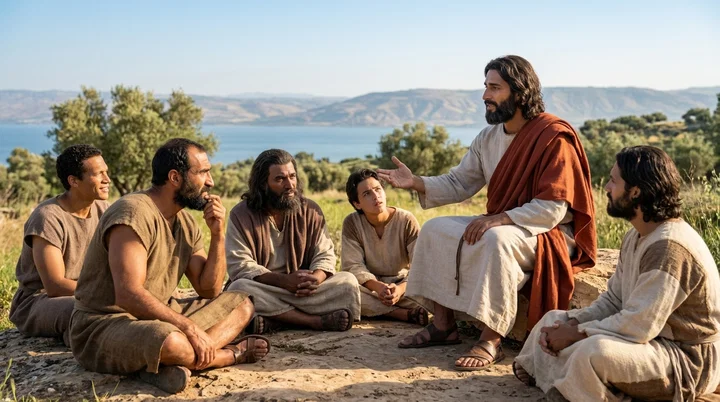
But without a parable spake he not unto them: and when they were alone, he expounded all things to his disciples.
Translations
But without a parable spoke he not to them: and when they were alone, he expounded all things to his disciples.
King James Version, KJV Cambridge Paragraph Bible
But without a parable spake he not unto them: and when they were alone, he expounded all things to his disciples.
But without a parable he spoke not to them: and when they were alone, he expounded all things to his disciples.
Revised Version, American Standard Version
and without a parable spake he not unto them: but privately to his own disciples he expounded all things.
and without a simile he was not speaking to them, and by themselves, to his disciples he was expounding all.
but without a parable spoke he not to them; and in private he explained all things to his disciples.
but, without a parable, was he not speaking unto them,—privately, however, unto his own disciples, was he explaining all things.
Berean Standard Bible, Majority Standard Bible
He did not tell them anything without using a parable. But privately He explained everything to His own disciples.
Without a parable he didn’ t speak to them; but privately to his own disciples he explained everything.
And without a story he said nothing to them: but privately to his disciples he made all things clear.
And without parables spake hee nothing vnto them: but he expounded all thinges to his disciples apart.
Douay-Rheims (Challoner revision)
And without parable he did not speak unto them; but apart, he explained all things to his disciples.
Pictures
Cross-references
- Mark 4:11
And he said unto them, Unto you it is given to know the mystery of the kingdom of God: but unto them that are without, all these things are done in parables:
Outsiders hear parables, while the disciples are given their meaning.
- Luke 8:9-10
And his disciples asked him, saying, What might this parable be?
The disciples ask about the parable, and Jesus explains its purpose.
- Matthew 13:36
Then Jesus sent the multitude away, and went into the house: and his disciples came unto him, saying, Declare unto us the parable of the tares of the field.
Jesus explains a parable to his disciples after they come to him privately.
- Matthew 13:10-13
And the disciples came, and said unto him, Why speakest thou unto them in parables?
Jesus explains to his disciples why he teaches the crowds in parables.
- Matthew 13:1-3
The same day went Jesus out of the house, and sat by the sea side.
Jesus teaches the gathered multitude in parables.
- Mark 4:10
And when he was alone, they that were about him with the twelve asked of him the parable.
The disciples asked Jesus about the parables after the crowd had gone.
- Mark 4:2
And he taught them many things by parables, and said unto them in his doctrine,
Jesus taught the people in parables.
- Luke 8:4
And when much people were gathered together, and were come to him out of every city, he spake by a parable:
Places the parable of the sower before a crowd.
Commentary
Each commentary is drawn from primary sources: the writings of Ellen G. White and Adventist pioneers and periodicals. Each commentary is separate. Its own words are not a quotation; follow the references to read the source passages.
Ellen G. White
13 sources
He spoke to the multitudes only in parables, but when alone with His disciples He explained all things more fully and plainly in private.RH Jun 2, 1904GW92 191.3–192.2FE 236.1 His parables joined spiritual truth to familiar scenes from nature and daily life, often things happening around His hearers, in simple language and plain symbols that even ordinary hearers could understand.FE 236.1SCE 6.11RED 66.1 Those familiar figures stirred attention and inquiry, drew out questions that brought home the force of the truth, and fixed divine principles in heart and mind so the lesson would be recalled whenever the connected scene was met again.FE 236.1SCE 6.1Ms 76a, 1900, par. 5 In private He could speak openly to illuminate the mind and fill the soul with hope, because His disciples had been with Him and could understand, while He veiled the plain meaning from hostile hearers who would misuse the truth.GW92 191.3–192.2ST Aug 5, 1897 His example calls for giving those who need better understanding, especially young workers and apprentices, quiet times apart for fuller explanation of public instruction, by which they are vitalized with divine power and fitted to herald the gospel.RH Jun 2, 1904FE 493.1–2Ms 40, 1904, par. 5–6ST Aug 5, 1897
Christ's Parabolic Teaching Method
Jesus spoke to the multitudes only in parables, but when they were alone He expounded all things to His disciples more fully and plainly in private.RH Jun 2, 1904GW92 191.3–192.2FE 236.1FE 493.1–21RED 66.1 What He had spoken before the crowd in parable He afterward explained to them in quiet retirement, giving the plain meaning that had been veiled in public teaching.RH Jun 2, 1904GW92 191.3–192.2FE 493.1–21RED 66.1Ms 40, 1904, par. 5–6
His parables joined spiritual truth to familiar scenes from nature and daily life, making divine principles clear through comparisons drawn from the natural world.FE 236.1SCE 6.11RED 66.1Ms 139, 1898, par. 64 He used familiar figures and objects, often things happening around His listeners at the time, and nature furnished beautiful and clear illustrations for His instruction.FE 236.1SCE 6.11RED 66.1 He chose simple language and plain symbols and touching words rather than lofty eloquence, so that even ordinary and simple hearers could understand.SCE 6.11RED 66.1Ms 139, 1898, par. 64
Those familiar figures stirred attention and interest and inquiry, helping listeners to attend and understand truths that might otherwise have left little impression.FE 236.1SCE 6.1 His illustrations prompted questions that brought out the force of the truth, reaching the heart as well as the understanding.FE 236.1SCE 6.1Ms 76a, 1900, par. 5 They made divine principles memorable, and helped hearers recall the lesson when they later met the connected scene or experience.FE 236.1SCE 6.1Ms 76a, 1900, par. 5
When alone with His disciples He did not need to speak in parables because they had been with Him and could understand Him, so He could speak openly and plainly.ST Aug 5, 1897 In that retirement He illuminated the chambers of the mind, dispelled darkness, and filled the soul with hope and gladness by truth that loses nothing by being questioned and critically examined.ST Aug 5, 1897 He hid the plain meaning from Pharisees and Sadducees because they would misuse the truth, which teaches care not to confront people with truths they are not prepared to receive or that have not been fully explained.GW92 191.3–192.2
Following His Private Example
Jesus spoke to the crowd in parables and then explained them more fully in private to his disciples in a quiet setting apart.RH Jun 2, 1904FE 493.1–2Ms 40, 1904, par. 5–6Ms 104, 1904, par. 9Ms 40a, 1904, par. 11 His example calls for giving young workers quiet, focused times apart for fuller explanation of public instruction and for study of God's Word.RH Jun 2, 1904FE 493.1–2Ms 104, 1904, par. 9 Those special times are to be seasons of study and of seeking the Lord, given with patience.FE 493.1–2Ms 104, 1904, par. 9 Experienced workers are to give the younger workers this fuller explanation of spiritual instruction and to guide them in studying the Bible.Ms 40, 1904, par. 5–6
Apprentices are to receive this fuller explanation of what they hear, with quiet times for seeking God and studying His Word.Ms 104, 1904, par. 9 All who desire a better understanding of instruction given to many should be offered such fuller personal teaching in a smaller circle.Ms 40a, 1904, par. 11 Apprentices in particular, who need instruction and saving, need this personal explanation.Ms 40a, 1904, par. 11 His disciples followed the pattern by mingling with the hearers after His instruction, repeating what He had said and using Scripture to correct their misunderstandings.6T 87.4–88.1
In retirement alone with them He talked together with them about the work of God and how to bring greater efficiency into it.ST Aug 5, 1897 There He corrected their errors, made plain the right way of approaching unbelievers, and opened more fully to them the precious treasures of divine truth from the inexhaustible storehouse.ST Aug 5, 1897 By this plain private instruction they were vitalized by divine power and inspired with hope and courage.ST Aug 5, 1897 Their rest was therefore not self-indulgent rest given to pleasure or frivolous amusement.ST Aug 5, 1897 As those thus taught in private after the public parables, they were to herald the gospel message.
Sources
Pioneers and periodicals
12 sources
He spoke to the crowds only in parables, adapting His teaching to what they were able to hear, and when alone with the twelve who were constantly with Him He explained everything fully and plainly.RH Oct 30, 1860ST Aug 13, 1874ST Mar 28, 1906RH Sep 29, 1874 His parables set forth the truths of the kingdom of heaven more forcefully than plain statement could, reaching weak human understanding indirectly through the senses and imagination like instruments by which dim eyes perceive deep lessons otherwise unseen.ST Nov 26, 1894ST Aug 19, 1880 That private unfolding was not because He needed help in preaching, but to prepare the disciples to herald to the nations after His ascension the same gospel He had begun to teach.ST Aug 13, 1874RH Sep 29, 1874 For this reason the story of the rich man and Lazarus is to be taken as a parable whose details serve its main lesson, not as a literal account establishing doctrine about the dead.ST Mar 28, 1906RH Dec 27, 1855 Even the disciples could not always tell the precise point to be emphasized without His explanation, which shows parables may mislead when left unexplained, so His private explaining gives the pattern for giving young workers quiet times for fuller study of the Word.RH Jun 2, 1904ST Aug 19, 1880
Jesus' Twofold Teaching Method
To the multitudes Jesus spoke only in parables, adapting His teaching to what they were able to hear and unfolding doctrine cautiously, then when alone He expounded all things to His disciples.RH Oct 30, 1860ST Aug 13, 1874ST Mar 28, 1906RH Dec 27, 1855RH Sep 29, 1874 His parables presented truths about the kingdom of heaven more forcefully than plain declaration.ST Nov 26, 1894 Because of weak human understanding He addressed teaching not directly to the understanding but indirectly through the senses and the imagination, as helps to the comprehension of great truths, like optical instruments through which dim eyes can behold doctrines and principles and deep lessons that otherwise could not be perceived.ST Aug 19, 1880
The saying belongs to Mark's concise account of the kingdom parables, which records the teachings briefly rather than giving longer discourses and emphasizes the nature of Christ's kingdom.ST Oct 4, 1910 His teaching and ministry in this manner display the character of a perfect King, joining power with love, benevolence with justice, and humility with authority, respecting the least, relieving the burdened, and acting without selfish ambition.RH Oct 30, 1860
When alone with His disciples, the twelve whom He kept constantly with Him through His three and a half year ministry, He expounded all things fully and plainly.RH Oct 30, 1860ST Aug 13, 1874RH Sep 29, 1874ST Nov 26, 1894RH Nov 12, 1914 He no longer needed to speak in parables to them because they had been with Him and could understand Him, and they listened to His words as part of their life and work with Him.ST Aug 5, 1897RH Nov 12, 1914 This private instruction was given not because He needed their help in preaching, but to prepare them to herald the gospel message to the nations after His ascension, so they would know what to teach in the future and the gospel they afterward taught would be the same He had begun to unfold.ST Aug 13, 1874RH Sep 29, 1874
In retirement with them He talked together about the work of God and how to bring greater efficiency into it, corrected their errors, made plain the right way of approaching unbelievers, and opened more fully the precious treasures of divine truth from the inexhaustible storehouse.ST Aug 5, 1897 By this plain instruction they were vitalized by divine power and inspired with hope and courage, so their rest was not self-indulgent rest given to pleasure or frivolous amusement.ST Aug 5, 1897 He came to illuminate the chambers of the mind, dispel darkness, and fill the soul-temple with hope and gladness, bringing truth that loses nothing by being questioned and critically examined.
Interpreting Parables Today
He taught the crowds through parables and explained everything when alone with His disciples, and this established pattern supports treating the rich man and Lazarus as a parable rather than as a literal account that establishes a doctrine about the dead.ST Mar 28, 1906RH Dec 27, 1855 As a parable, its details serve its main lesson rather than each detail establishing a doctrine about the state of the dead.RH Dec 27, 1855 Though the disciples were familiar with parables, they could not always determine the precise point meant to be emphasized without His private explanation, which shows that parables can be ambiguous and may mislead when left unexplained, so that important teachings require clear interpretation.ST Aug 19, 1880
He spoke to the crowd in parables and afterward explained their meaning privately to His disciples.RH Jun 2, 1904 His private unfolding of what had been spoken publicly provides the pattern for dealing with younger laborers.RH Jun 2, 1904 Young workers should be given quiet, focused times for fuller explanation and study of God's Word.RH Jun 2, 1904
Sources