Matthew 13:36
Then Jesus sent the multitude away, and went into the house: and his disciples came unto him, saying, Declare unto us the parable of the tares of the field.
Translations
American King James Version, Webster Bible
Then Jesus sent the multitude away, and went into the house: and his disciples came to him, saying, Declare to us the parable of the tares of the field.
King James Version, KJV Cambridge Paragraph Bible
Then Jesus sent the multitude away, and went into the house: and his disciples came unto him, saying, Declare unto us the parable of the tares of the field.
Revised Version, American Standard Version
Then he left the multitudes, and went into the house: and his disciples came unto him, saying, Explain unto us the parable of the tares of the field.
Then having let away the multitudes, Jesus came to the house, and his disciples came near to him, saying, 'Explain to us the simile of the darnel of the field.'
Then, having dismissed the crowds, he went into the house; and his disciples came to him, saying, Expound to us the parable of the darnel of the field.
Then, dismissing the multitudes, he went into the house, and his disciples came near to him, saying—Make quite plain to us the parable of the darnel of the field.
Berean Standard Bible, Majority Standard Bible
Then Jesus dismissed the crowds and went into the house. His disciples came to Him and said, “ Explain to us the parable of the weeds in the field.”
Then Jesus sent the multitudes away, and went into the house. His disciples came to him, saying, “ Explain to us the parable of the darnel weeds of the field.”
Then he went away from the people, and went into the house; and his disciples came to him, saying, Make clear to us the story of the evil plants in the field.
Then sent Iesus the multitude away, and went into the house. And his disciples came vnto him, saying, Declare vnto vs the parable of the tares of that fielde.
Douay-Rheims (Challoner revision)
Then having sent away the multitudes, he came into the house, and his disciples came to him, saying: Expound to us the parable of the cockle of the field.
Pictures
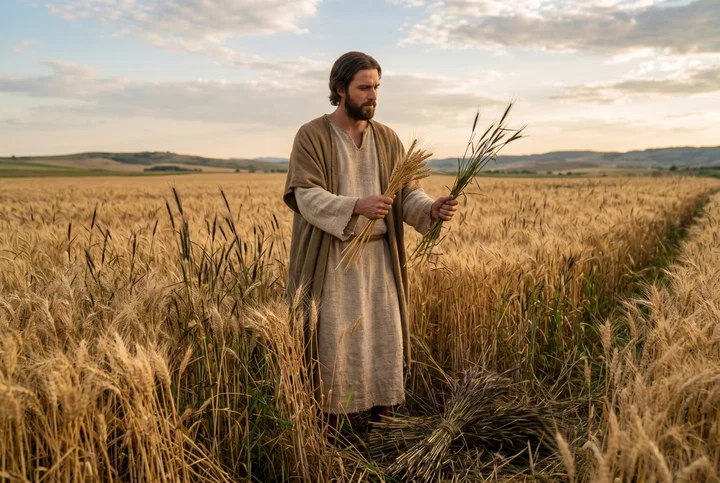
Cross-references
- Matthew 13:24-30
Another parable put he forth unto them, saying, The kingdom of heaven is likened unto a man which sowed good seed in his field:
The parable depicts wheat and tares growing together until harvest.
- Matthew 13:40-43
As therefore the tares are gathered and burned in the fire; so shall it be in the end of this world.
The tares are burned at the end of the world, while the righteous shine in the kingdom.
- Matthew 13:3-9
And he spake many things unto them in parables, saying, Behold, a sower went forth to sow;
Both passages connect Jesus’ parable teaching with the parable of the sower.
- Revelation 14:14-16
And I looked, and behold a white cloud, and upon the cloud one sat like unto the Son of man, having on his head a golden crown, and in his hand a sharp sickle.
The Son of man reaps the earth’s ripe harvest at the final separation.
- Matthew 13:19-23
When any one heareth the word of the kingdom, and understandeth it not, then cometh the wicked one, and catcheth away that which was sown in his heart. This is he which received seed by the way side.
Describes four kinds of hearers of the word of the kingdom.
- Matthew 13:24
Another parable put he forth unto them, saying, The kingdom of heaven is likened unto a man which sowed good seed in his field:
only good seed sown in field
- Matthew 13:25
But while men slept, his enemy came and sowed tares among the wheat, and went his way.
enemy sows tares while others sleep
- Matthew 13:42
And shall cast them into a furnace of fire: there shall be wailing and gnashing of teeth.
angels cast tares into fire
- Matthew 13:10-17
And the disciples came, and said unto him, Why speakest thou unto them in parables?
Explains why Jesus taught in parables and why his disciples were given understanding.
- Matthew 13:43
Then shall the righteous shine forth as the sun in the kingdom of their Father. Who hath ears to hear, let him hear.
The righteous shine in the Father’s kingdom.
- Mark 4:1-20
And he began again to teach by the sea side: and there was gathered unto him a great multitude, so that he entered into a ship, and sat in the sea; and the whole multitude was by the sea on the land.
Mark gives a parallel account of Jesus’ parable teaching.
- Matthew 13:28
He said unto them, An enemy hath done this. The servants said unto him, Wilt thou then that we go and gather them up?
enemy sowed the tares
- Luke 8:4-15
And when much people were gathered together, and were come to him out of every city, he spake by a parable:
Both texts recount Jesus teaching a parable and explain its meaning to his disciples.
Commentary
Each commentary is drawn from primary sources: the writings of Ellen G. White and Adventist pioneers and periodicals. Each commentary is separate. Its own words are not a quotation; follow the references to read the source passages.
Ellen G. White
38 sources
Jesus sent the multitude away and went into the house to a retired private place, where His disciples came to Him asking Him to declare the parable of the tares of the field.Lt 102, 1901, par. 4–6Ms 14, 1898, par. 14Lt 28, 1909, par. 11–12 The Sower of the good seed is the Son of man, the field is the world, the good seed are the children of the kingdom, the tares are the children of the wicked one, the enemy that sowed them is the devil, the harvest is the end of the world, and the reapers are the angels.Lt 102, 1901, par. 4–6RH Apr 1, 1902ST Nov 24, 1887 At the harvest He sends His angels to gather out of His kingdom all that offends and those who do iniquity to be cast into a furnace of fire with wailing and gnashing of teeth, while the wheat ripened for God is gathered into His garner and the righteous shine forth as the sun in the kingdom of their Father.Lt 102, 1901, par. 4–6ST May 10, 1877RH Apr 1, 1902 The wheat and the tares, the righteous and the wicked, remain together in the world and in the church until the harvest at the end of the world, for men cannot read the heart or reliably tell them apart, and no man has the right to separate them, that work being given to Christ and His angels who gather without error.Lt 98, 1896, par. 26–29ST May 10, 1877COL 75.1Ms 92a, 1898, par. 14–1816MR 270.3–271.2 Its instruction must be studied carefully with the Holy Spirit for clear perception of future destiny and the character required to stand acquitted, teaching humility and distrust of self rather than judging and condemning others.Lt 102, 1901, par. 4–6Lt 317a, 1905, par. 6–8Lt 317, 1905, par. 7–9COL 74.1Lt 135, 1899, par. 22
Setting and Explanation
Then Jesus dismissed the crowd and went into the house to a retired private place, and there His disciples came to Him asking Him to declare to them the parable of the tares of the field.Lt 102, 1901, par. 4–6Ms 14, 1898, par. 14ST May 10, 1877RH Apr 1, 1902ST Nov 24, 1887 This withdrawing after public teaching to give further instruction in private is His manner of work with those who seek to understand more fully.Ms 14, 1898, par. 14Lt 28, 1909, par. 11–12 The request opens His direct explanation of the parable that follows.Lt 102, 1901, par. 4–6Ms 14, 1898, par. 14RH Apr 1, 1902
He who sows the good seed is the Son of man, the field is the world, the good seed are the children of the kingdom, the tares are the children of the wicked one, the enemy that sowed them is the devil, the harvest is the end of the world, and the reapers are the angels.Lt 102, 1901, par. 4–6RH Apr 1, 1902ST Nov 24, 1887 This identification gives the fixed meaning of each figure in the parable.Lt 102, 1901, par. 4–6RH Apr 1, 1902ST Nov 24, 1887
At the harvest the Son of man sends forth His angels to gather out of His kingdom all things that offend and them which do iniquity.Lt 102, 1901, par. 4–6ST Nov 24, 1887COL 75.1 The wicked, ripening for destruction, are gathered and cast into a furnace of fire, where there is wailing and gnashing of teeth.Lt 102, 1901, par. 4–6ST May 10, 1877RH Apr 1, 1902ST Nov 24, 1887COL 75.1 The wheat, ripening for God and for His garner, are gathered in for eternal life, and the righteous shine forth as the sun in the kingdom of their Father.Lt 102, 1901, par. 4–6ST May 10, 1877RH Apr 1, 1902COL 75.1RH Aug 25, 1910
The parable also pictures Satan secretly sowing evil and error and false doctrine in human minds in opposition to Christ sowing truth in the heart.2SP 247.2–249.1ST Nov 24, 1887GC 248.3 He is a diligent sower, never out of his field, never idle, ever at his plow.GC 248.3 His sowing puts away Bibles and books and the light of the gospel, puts down Christ's cross and God's word and care for clothing the naked and helping the poor and helpless, and puts up candles, beads, purgatory, the decking of images, and men's traditions and laws.GC 248.3 Those seeds of sin multiply and produce harmful results, crowd out the good, leave the heart unfruitful, and spread sin to others.ST Nov 24, 1887
It shows divine and satanic agencies in decided opposition and vital conflict continuing until the close of earth's history.Ms 7, 1900, par. 20–22Lt 176, 1900, par. 3 That closing conflict comes when everything that can be shaken will be shaken that what cannot be shaken may remain, when God tests and proves His people.Lt 176, 1900, par. 3 It reveals how long God has borne with men who provoke Him by stubborn self-indulgence, while His living Word works to sanctify those who receive it and to gather the wheat for Christ.Ms 7, 1900, par. 20–22Lt 176, 1900, par. 3
Wheat and Tares Together
The wheat and the tares are the righteous and the wicked, who grow together in the world and in the church until the harvest at the end of the world, when they are clearly distinguished.Lt 98, 1896, par. 26–29ST May 10, 1877COL 75.12SP 247.2–249.1 The tares are not changed into wheat but remain wicked and are destroyed, while the wheat is gathered into God's garner and the righteous shine forth in their Father's kingdom.ST May 10, 1877COL 75.12SP 247.2–249.1 The Son of man sends His angels to remove from His kingdom all that causes sin and all who practice iniquity, casting them into fire with wailing and gnashing of teeth.ST May 10, 1877COL 75.1
For a long time the tares so closely resemble the wheat that men cannot read the human heart or reliably distinguish them by sight, including who are wise and who are foolish.Ms 7, 1900, par. 20–222SP 247.2–249.1Ms 92a, 1898, par. 14–1816MR 270.3–271.2 To uproot them prematurely would harm the faithful, so good and evil are left together until the harvest.Ms 7, 1900, par. 20–222SP 247.2–249.1 No man has the right to measure the characters of his fellow men or to attempt their separation.Lt 98, 1896, par. 26–29Ms 92a, 1898, par. 14–1816MR 270.3–271.2 Judgment has been given only to Christ, because He has lived humanity and He alone can understand human weakness and human striving to attain Christian perfection, and the true Watcher never makes a mistake in His estimate of character.Lt 98, 1896, par. 26–29Lt 135, 1899, par. 22 At the harvest the angels, commissioned to counterwork those who fight against the truth, will gather the wheat from among the tares without error or mistake, knowing each one by fruits, when the door is shut.Ms 92a, 1898, par. 14–1816MR 270.3–271.2Lt 135, 1899, par. 22
The present church is the church militant composed of wheat and tares, not the church triumphant.Lt 98, 1896, par. 26–29 In every church there are counterfeit Christians, hypocrites, and defective characters, and mere membership or claim to be sons and daughters of God does not prove a person a genuine Christian.Lt 98, 1896, par. 26–29COL 74.1Lt 135, 1899, par. 22Lt 98, 1896, par. 30–32 Those who really believe are genuine without pretense, true to one another in heart and soul and action.Lt 135, 1899, par. 22 The presence of tares does not mean that Christ's church will be erased, disorganized, or broken apart by human efforts, for the final separation belongs to the angels at the harvest.RCOC 6.21MR 362.2–363.11MR 303.1–2
The parable rules out a temporal millennium in which the whole world is converted and the church triumphs before Christ's second coming and the end.ST May 10, 1877LS 58.4–60.2 The work of separating the wheat from the tares and binding and sealing the wheat for the heavenly garner is the third angel's mission, to command full attention.SCEV 38.3Ms 3, 1854, par. 16–17 God does not approve corrupting church associations or tolerating evil in Christian assemblies, for evil can work beneath appearances to deceive those connected with God's Word.Ms 7, 1900, par. 20–22 The tares picture warns of spreaders of doubts and questioning who set up a false issue like a man of straw to attack, and of workers who at first appear interested but later become dissatisfied, complain, and spread suspicion, so not everyone who joins the work can be trusted.Ms 7, 1900, par. 20–22Lt 200, 1906, par. 6–9Lt 90a, 1899, par. 10–12
Study and Obedience
Matthew 13 belongs to a warning whose instruction must be heeded and studied carefully, with the Holy Spirit impressing the minds of those who desire a clear perception of the parable.Lt 102, 1901, par. 4–6Lt 317a, 1905, par. 6–8Lt 317, 1905, par. 7–9 It directs attention to future destiny and to the unstained character required in order to stand acquitted at Christ's judgment and be saved.Lt 102, 1901, par. 4–6Lt 317a, 1905, par. 6–8Lt 317, 1905, par. 7–9 That warning must not be obscured by human sophistry or by mocking that blasphemes the Holy Spirit.Lt 317a, 1905, par. 6–8
Christ welcomes sincere inquiry and gives more definite instruction to those who desire to understand, so that those who study His Word with hearts open to the Holy Spirit receive clearer understanding of its mysteries.Ms 30, 1898, par. 15–16Ms 26, 1898, par. 1 When understanding is unclear they may ask Christ the great Teacher for enlightenment, and anyone with enough interest to ask what His words meant is welcomed.Ms 30, 1898, par. 15–16Ms 26, 1898, par. 1 The questions He answered and the lessons He explained privately to the disciples after the crowds dispersed are essential for people today to understand and practice as practical godliness.Lt 16, 1909, par. 10
After sowing seeds of truth publicly before large multitudes, He continued His lessons in a retired place where the disciples could seek further instruction, going apart with the limited number who wanted better understanding into a quiet room enclosed with walls or some retired spot in the country and giving fuller explanation of what had been spoken in public.Lt 28, 1909, par. 11–12Ms 40, 1904, par. 5–6Ms 104, 1904, par. 9Ms 40a, 1904, par. 11 Public instruction must be followed by such private teaching in special seasons of seeking the Lord and studying His Word for younger workers and apprentices, including in publishing houses, for learners in whom truth is abiding in the heart and who receive light from God's Word.Ms 40, 1904, par. 5–6Ms 104, 1904, par. 9Ms 40a, 1904, par. 11 Those in charge are to follow the same way by taking apart apprentices who need teaching and saving, and the disciples afterward helped listeners understand and correct misunderstandings by explaining what Scripture said.6T 87.4–88.1Ms 40, 1904, par. 5–6Ms 40a, 1904, par. 11
The parable teaches humility and distrust of self rather than judging and condemning others, for being in the church does not prove a person a Christian.COL 74.1 Believers must not look at defective members, make them the theme of conversation, or feed with a critical spirit on their real or supposed faults with habitual seeing and talking of evil, lest they themselves be ranked among the tares with a false contentious experience that does not obey the truth but obeys unrighteousness.COL 74.1Lt 98, 1896, par. 30–32 The sins committed by professed Christians, though hypocrites as tares among the wheat are in the churches all through the land, are no excuse for any soul and do not justify blaming Christ and His ministers, for Christ gave His life to save all who believe in Him.Lt 135, 1899, par. 22 Those who really believe are genuine Christians without pretense, true to one another in heart and soul and action, feeding on Christ alone as the perfect pattern of Christianity, while the true Watcher who never mistakes the characters of men will after a time separate the tares from the wheat.Lt 135, 1899, par. 22Lt 98, 1896, par. 30–32
Wrong actions sow tares, while faithful actions sow the good seed of the kingdom and can help draw people to Christ.FE 301.2–3 Good principles must be planted in children early and guarded from harmful influences, because evil can grow and become difficult to remove.SG4 298.1
Sources
Pioneers and periodicals
150 sources
Jesus sent the multitude away and went into the house, where his disciples came to him privately asking him to declare the parable of the tares of the field.RH Jul 30, 1872 The explanation that follows is his own authoritative interpretation, which makes its meaning certain and turns its figures into literal realities.RH Aug 30, 1864ST Nov 9, 1882RH Jan 21, 1875 The Sower is the Son of man, the field is the world and not the church, the good seed are the righteous children of the kingdom, the tares are the children of the wicked one, the enemy is the devil, the harvest is the end of the world, and the reapers are the angels.RH Mar 25, 1858RH Jul 30, 1872RH Sep 23, 1862RH Nov 1, 1853 The wheat and the tares remain together in the world until the harvest, which rules out a temporal millennium in which the whole world is converted before Christ's second advent.RH Dec 7, 1869ST May 8, 1907RH Jul 23, 1857ST Jun 4, 1874RH Jul 4, 1871 At that harvest Christ sends his angels to gather out evildoers to be burned in the furnace of fire, the lake of fire and second death, and to gather the wheat into the garner where the righteous shine forth as the sun in the kingdom of their Father when probation has forever closed.RH Aug 28, 1866ST Dec 3, 1912ST Oct 9, 1879RH Mar 14, 1871
Setting and Request
Jesus dismissed the crowd and went into the house, where the disciples came to him privately asking him to make plain the parable of the tares of the field.RH Jul 30, 1872RH Dec 7, 1869RH Sep 23, 1862ST May 8, 1907 The meaning was thus disclosed privately to the disciples after the public teaching, with the sower identified as the Son of man, the field as the world, the good seed as the children of the kingdom, the tares as the children of the wicked one, and the enemy who sowed them as the devil.RH Dec 7, 1869RH Sep 23, 1862ST May 8, 1907 The harvest was identified as the end of the world and the reapers as angels, who would remove out of his kingdom all causes of stumbling and evildoers to be cast into the furnace of fire, while the righteous shine forth in the kingdom of their Father, and both wheat and tares remain together until that harvest at the close of the Christian age.RH Dec 7, 1869RH Sep 23, 1862ST May 8, 1907 Another teaching held the same parable to illustrate the building up and purification of the kingdom of heaven as the true church, with the field as mankind, the harvest as the close of the Jewish dispensation, the reapers as angels or messengers separating good from bad through gospel preaching, the tares including the kingdom's enemies especially the Jewish nation, and the outcome as weeping and wailing for the rejected and conspicuous standing forth in power and glory for the righteous.RH Jul 30, 1872
The parable was first given and afterward explained to those who sought the explanation, and the servants' asking to see all the hidden meaning met with the householder making it plain.ST Mar 10, 1898ST Jul 16, 1902 Those who desired to know the meaning with honest hearts received the explanation from his own lips, and the call to explain underscores the need to understand this teaching because tares are present among the wheat in the church today.RH Apr 1, 1902ST Jul 16, 1902ST Feb 24, 1898 His own interpretation makes the meaning very certain and must be accepted as given, so that its points can be known with certainty.RH Aug 30, 1864RH Jan 21, 1875ST Jul 27, 1882 The harvest and the end of the world later in the chapter are plain explanation and not merely parabolic statements, turning the figures into literal realities and facts: the field is the world, the good seed and tares are the children of the kingdom and of the wicked one, the Son of man and the devil are real persons, and the reapers are angels, with the wicked and righteous separated at the end of the world or age and each rewarded according to character, so that to treat the explanation itself as figurative would leave it unexplained.RH Aug 30, 1864ST Nov 9, 1882RH Jan 21, 1875ST Dec 24, 1885
He had taught plainly but the Jews refused to hear, opposing him at every step and seeking to catch him in his words to find excuse to put him to death.ST Feb 24, 1898 He therefore changed to teaching by parables, which kept those not seeking truth for truth's sake from understanding the truths contained therein and from finding anything with which to condemn him or hinder his work.ST Feb 24, 1898 The move from public teaching by the seaside to instruction in the house exemplifies how much of his teaching was given in conversation with individuals or the small band of disciples.ST Jun 8, 1904 The parables of this chapter belong among the teachings given the multitude before crossing the Sea of Galilee with his disciples, as part of a teaching ministry that could proceed during a brief period of peace in Palestine.ST Jul 19, 1905ST Jan 13, 1914
The verse is listed as an example of the Greek preposition eis in a construction occurring only once.ST May 17, 1883 The example shows eis does not always mean merely toward but can indicate motion into a place without being repeated or compounded with the verb.ST May 17, 1883
Symbols and Meanings
The explanation gives the fixed meaning of each figure: the sower is the Son of man, the field is the world, the good seed are the children of the kingdom, the tares are the children of the wicked one, the enemy that sowed them is the devil, the harvest is the end of the world, and the reapers are the angels.RH Apr 1, 1902ST Nov 24, 1887RH Sep 23, 1862RH Nov 1, 1853 At that harvest the angels remove from his kingdom all causes of stumbling and evildoers to cast them into the furnace of fire, while the righteous shine forth in the kingdom of their Father.ST Nov 24, 1887RH Sep 23, 1862 The harvest imagery is Christ coming to reap the earth at the end of the present world, when the angels gather the redeemed.ST Sep 16, 1930
The good seed are not the word or seed of truth as in the preceding parable, but that incorruptible seed taken root and bearing fruit in the persons of the righteous.RH Aug 30, 1864 They are children of the kingdom as expectant heirs rather than actual possessors, awaiting the future literal kingdom of righteousness, peace and joy.RH Aug 30, 1864RH Mar 25, 1858 The field is the world and mankind, not the church, and not the vine of John 15, which has no hypocrites and where fruitless branches are taken away.RH Mar 25, 1858RH Jul 30, 1872 The harvest is the winding up of the age or dispensation, not the end of the earth or its creation, so evil and its works will be destroyed, not the earth itself.ST Apr 22, 1875 The visible church therefore remains mixed and imperfect until Christ comes.ST Apr 22, 1875
The kingdom in the parable is the arrangement put in operation for the salvation of men, existing through patriarchal, Jewish and Christian stages and continuing in Gentile hands after it was taken from the Jews.RH Aug 20, 1872 It shows the kingdom of God in its original wholeness, its corruption through sin, and its restoration.ST May 17, 1899 That kingdom tends to subject even the outward and visible to its sway and is not simply internal and spiritual, but ultimately affects and fashions anew the material organization of bodies and the world.RH Aug 30, 1864 Body as well as soul is the subject of redemption in Christ as the resurrection proves, and the earth itself, the habitation of the children of the kingdom, is included in the restitution of all things and shall be redeemed and made a constituent part of the kingdom of the heavens.RH Aug 30, 1864 Believers therefore look for new heavens and a new earth according to promise, when the curse shall be removed and the creature delivered from bondage of corruption into the glorious liberty of the children of God.RH Aug 30, 1864
Only one of the four kinds of hearers in the chapter bears fruit: some do not understand the word, some receive it joyfully but turn away under trouble or persecution, and others become unfruitful when worldly cares and riches choke the word, while good-ground hearers understand and bear differing amounts.RH Sep 4, 1856 Brief-lived revival converts wither like grain that does not endure, and lasting conversion requires truth that brings obedience.RH Mar 28, 1871 Within the chapter's group introduced by the kingdom of heaven is like unto, the leaven means silent grace working in hearts to leaven the whole lump for God, the field means the planting of the Lord and the harvest the final ingathering of souls, the merchant seeking goodly pearls means seeking wisdom more precious than rubies, and the fisherman's net means the gospel net by which men are gathered into the kingdom.RH Mar 17, 1910 The tares sown by the enemy among the good seed bring suffering and fear, showing the trouble comes from their presence and not from lack of God-given good seed.ST Feb 14, 1906
Growing Together Until Harvest
The wheat and the tares are the righteous and the wicked remaining together in the world until the harvest, which is the end of the world or age, when they are separated.RH Dec 7, 1869ST May 8, 1907RH Jul 23, 1857ST Jun 4, 1874ST Jun 10, 1875 The field is the world, the good seed are the children of the kingdom, and the tares are the children of the wicked one, and at the harvest angels remove the wicked for destruction while the righteous shine in their Father's kingdom.RH Dec 7, 1869ST May 8, 1907RH Jul 23, 1857 The world therefore stays mixed with evil and persecution rather than becoming wholly converted by the gospel before Christ returns.RH Jul 23, 1857ST Jun 4, 1874
That mixed condition began when the Son of man sowed the good seed and continues without essential change except for the worse until the end, with good and evil side by side through the Christian and gospel age.RH Sep 23, 1862RH Sep 23, 1862RH Sep 23, 1862 There is no interval of universal holiness before then, and the church does not achieve complete triumph and universal holiness in this world.RH Sep 23, 1862RH May 13, 1875 The mixture lasts until the judgment at Christ's second coming, when the righteous enter the everlasting kingdom and evil is removed.RH May 13, 1875RH Sep 23, 1862
The tares are not to be rooted out by human power before the harvest, for this is not part of God's plan.ST Sep 4, 1893 They do not become wheat but remain wicked to be destroyed and burned at the end of the world.ST May 10, 1877ST Sep 4, 1893 This rules out a temporal millennium in which the whole world is converted before the end.ST May 10, 1877
Human efforts to spread the gospel or reform the world do not convert tares into wheat, and Christ's kingdom is not built by worldly power.RH Aug 30, 1864 Its final separation of wheat and tares belongs to Christ and his angels.RH Aug 30, 1864
The professing and visible church remains to the end a mixed multitude containing both faithful wheat and unfaithful tares, including counterfeit believers and hypocrites whom people cannot always detect.ST Jan 12, 1882ST Aug 7, 1901RH Jun 4, 1914 This imperfect condition rules out a millennium before Jesus comes, for this age gathers a people for God rather than converting the whole world, and Christ's return brings the world-wide triumph afterward.ST Jan 12, 1882ST Aug 7, 1901 The wheat will be gathered before the great day of the Lord, so the presence of tares does not erase the hope of a final harvest, and the presence of many inquirers does not mean all are sincere, since some are chaff rather than wheat.RH Jun 4, 1914RH May 20, 1909
The tares are false Christians sown among the true by Satan, and every man is either wheat or tare.RH Mar 15, 1864RH Oct 19, 1916 One who loves his sins can for a while appear as a saint and grow with the wheat while being a tare, and such influence can bring darkness and unbelief into the church.RH Mar 15, 1864RH Oct 19, 1916 Outward appearances therefore do not give infallible grounds to judge others, so action toward others must be cautious; yet when an erring member's influence corrupts others, the church should follow the Bible's rule and disfellowship that person, trusting heaven will ratify the action.RH Oct 19, 1916 The reaping time of the last harvest will soon come to separate wheat and tare when angels gather the harvest home, and then the truly righteous will see their Father's kingdom and shine like the sun forever there while the tares meet an awful doom, so all must prepare, seek God, and seek to be found among the wheat.RH Mar 15, 1864
The wheat and tares growing together until the harvest means the wicked may triumph in the present world while the saints wait for their triumph and reign in the world to come.ST Mar 27, 1884
No Converted World Millennium
The private explanation given at the disciples' request shows the righteous and the wicked remain together in the world until the harvest, which is the end of the age, and therefore the whole world will not be converted before Christ's second advent.ST May 10, 1877ST Jun 4, 1874RH Jul 4, 1871ST Jan 29, 1880ST Apr 14, 1887 The wheat and the tares grow together until that harvest, so there is no period before the second advent when the world is converted and the church triumphs without the wicked.ST Jun 4, 1874RH Jul 4, 1871ST Jan 29, 1880ST Apr 14, 1887 The tares are not changed into wheat but remain wicked until angels gather them for destruction, while the righteous receive eternal life.ST May 10, 1877 The last days instead are marked by a fallen, unfaithful church and a world filled with crime and violence.
The children of the kingdom and the children of the wicked one grow together until the end of the world, when angels separate them, and that harvest marks a time of great wickedness, not a period when righteousness prevails throughout the world.ST Apr 8, 1886ST Sep 23, 1886RH Jun 13, 1854 The world is not converted to Christianity before that harvest, and sin does not cease before Christ comes.ST Apr 8, 1886ST Sep 23, 1886ST Sep 22, 1898 The professing church remains a mixed multitude in an imperfect condition until the end of the age, rather than a wholly converted world.ST Jan 12, 1882ST Jun 3, 1889 Good and evil remain together during the gospel age, wickedness is destroyed by judgment after mercy has been rejected and the gospel has gathered the redeemed, and the better day comes only after sin is blotted out and the earth is renewed.ST Jun 3, 1889
The children of God's kingdom and the children of the wicked one remain together in the world until its end like wheat and tares until harvest, and at Christ's coming the Son of man sends his angels to remove from his kingdom all causes of sin and those who do evil to cast them into a fiery furnace.RH Apr 4, 1854ST Apr 22, 1875RH Jul 23, 1857 Their presence until then means the gospel will not convert everyone or fill the earth with God's glory before Christ comes.RH Apr 4, 1854ST Jun 4, 1874RH Dec 6, 1853 Christianity and anti-Christianity, pictured as wheat and tares, coexist until the end of the age, so the earth will not be filled with righteousness or the glory of the Lord during the present dispensation.ST Apr 22, 1875ST Jun 4, 1874RH Dec 6, 1853 Good and evil continue side by side until the age ends rather than the church triumphing over all evil in a temporal millennium, wickedness will not be wholly removed before the harvest time of ingathering and separation, and righteousness will dwell alone only after judgment when God makes the new earth.ST Apr 22, 1875RH Jul 23, 1857
The field is the world, the good seed are the children of the kingdom, the tares are the children of the wicked one, and the harvest is the end of the world, with both wheat and tares to grow together until the harvest, which proves the wicked continue together with the righteous until the end of the Christian age and stands directly against the doctrine of the world's conversion.RH Jan 21, 1875RH Apr 3, 1855 Good and evil remain together until the harvest at the end of the world rather than evil being removed by a prior age of worldly triumph, contradicting the promise of a thousand years of peace and prosperity before the day of wrath.RH Jan 21, 1875RH Apr 3, 1855 The wheat and tares are ripening toward the harvest in the last days amid Satan's strong delusion and danger of deception even for the elect.RH Jun 12, 1860ST Mar 3, 1881 Good and evil remain mixed in God's field until the harvest at the end of the world and are not fully separated during this age, the church will continue to face persecution, the world will not become wholly Christian before Christ appears, and the last days are not a time of universal peace and holiness before Christ comes.ST Mar 3, 1881RH Dec 11, 1855 At that harvest Christ brings restoration and judgment, rewarding the righteous and bringing vengeance on the wicked.ST Mar 3, 1881
This age gathers a people for God rather than converting the whole world, and Christ's return brings the world-wide triumph of the gospel afterward.ST Aug 7, 1901 Counterfeit believers and hypocrites will remain in the church to the end, and people cannot always detect these counterfeits.ST Aug 7, 1901ST Nov 29, 1899 In this age the church does not outnumber the world and will not do so, with wheat and tares growing together and remaining practically indistinguishable until the end.ST Aug 7, 1901ST Nov 29, 1899
Final Separation and Reward
At the harvest Christ sends his angels to gather out of his kingdom all causes of stumbling and all workers of iniquity, removing every offense from his field, while the elect are gathered to safety and glory.RH Mar 14, 1871RH Mar 12, 1857ST Aug 10, 1882RH Dec 10, 1901 The harvest is the end of the world and the reapers are the angels, and at Christ's coming they bind his enemies for burning and gather his elect.ST Oct 9, 1879 This gathering of what offends belongs to the close of the gospel age, which began in Christ's ministry and was established on earth at Pentecost, not to its beginning and not to the Jewish age.ST Aug 10, 1882 The fruitful are then gathered into God's everlasting kingdom, and Christ returns with angels to give each group its sentence, the unbelieving being condemned.RH Mar 12, 1857RH Dec 10, 1901
The tares are bound in bundles and cast into the furnace of fire with wailing and gnashing of teeth.RH Dec 8, 1868RH Jul 5, 1864 That furnace is another name for the lake of fire, where the wicked, as children of the wicked one, are brought forth to suffer the second death.ST Dec 3, 1912ST Jan 22, 1885 Their burning is personal and literal destruction at the end of the world.RH Aug 28, 1866 It is the figure for the final destiny and destruction of the wicked.RH Aug 28, 1866RH Jul 5, 1864
The wicked are reserved for judgment and punishment rather than punished before the day of judgment.RH Oct 18, 1864ST Aug 2, 1877 The gathering of the tares to be burned applies to the future judgment when the Son of man appears, after the third angel's warning.ST Nov 25, 1889 That punishment takes place after Christ's second coming and the judgment, not before.ST Dec 3, 1912 It did not happen at Jerusalem's destruction, which is distinguished from Christ's future coming when angels gather the wicked to cast them into fire while the righteous shine as the sun.ST Dec 3, 1912ST Jul 24, 1884
The wheat is gathered into the garner, the heavenly storehouse.RH Jan 31, 1907 At the end angels remove evildoers for destruction and the righteous are glorified and shine forth as the sun in the kingdom of their Father and receive eternal life.RH May 30, 1854RH Jan 31, 1907 The gospel ripens both wheat and tares, and the parable describes final separation of righteous and wicked, not a further opportunity for the wicked after the harvest.RH Jan 31, 1907
The harvest presents two gatherings, righteousness and life and sin and death, a gathering for heaven and a gathering for earth.ST Nov 29, 1899 It depicts two distinct gatherings at the end, God's people and the wicked.RH Apr 3, 1866 The false professor is found wanting, professions are weighed and who is pure and free from guile is revealed, the tares are destroyed, and the just dwell in joy with Christ in glory.RH Jul 9, 1867ST Jul 23, 1874
The separation marks the end of the age of probation that began with John the Baptist's preaching, and the kingdom's final righteous state cannot come before it.RH May 30, 1854 Christ takes his kingdom only after the work of the gospel closes, when the Son of Man sends his angels to gather out everything that offends and all workers of iniquity for destruction in fire with wailing and gnashing of teeth, while the righteous shine forth in the kingdom of the Father.ST Jan 21, 1903 There is no later age in which procrastinators can still meet the conditions of salvation, for when the harvest is fully ripe the tares are gathered to be burned and the wheat brought into the garner, picturing the end of probation when offers of salvation cease and sin and its effects are no longer tolerated.ST Jan 21, 1903ST Oct 30, 1901
The enemy's work of sowing evil among God's people will finally be undone, the tares gathered and burned while the wheat is gathered into the garner, as part of the deliverance and triumph of the redeemed.RH Aug 30, 1864 Satan's sowing of tares among the wheat is then forever remedied.RH Aug 30, 1864RH Mar 18, 1858ST Feb 28, 1884 That final separation is associated with Satan being bound at the beginning of the thousand years and God's people receiving their everlasting blessing.RH Jul 7, 1874
The harvest is the judgment, when reaping can no longer be delayed and the whole earth as a harvest field yields wheat for gathering while tares representing sin are bound for burning.ST Nov 22, 1899 It is the time when both classes receive their reward, each group sentenced according to character.RH Mar 12, 1857ST May 8, 1907 God's judgment brings the rights and wrongs of every age to light, and Infinite Wisdom judges with a sentence even the condemned will acknowledge as just.ST Nov 22, 1899ST Jun 22, 1904
Timing Prophecy and Doctrine
The parable teaches events connected with the second advent, portraying scenes at the close of the last days to be compared with the scene of his coming.RH Jul 10, 1913ST Oct 31, 1878ST Jan 9, 1893 The harvest follows the world's full warning and takes place before Christ's coming, and the three angels' messages are the great worldwide warning proclamation to prepare a people to meet the King in peace at that harvest, so that those who accept and obey them will be prepared for his coming and those who reject them will not be prepared.ST Dec 21, 1882 He appears on a white cloud with a golden crown and a sharp sickle to reap the harvest of the earth at his coming. The apostolic commission to preach the gospel extends until that harvest, the day when God judges the world through Jesus Christ, and the gospel is not to be preached after that time.ST Jun 15, 1882RH Jan 23, 1855
The parables show the coming as future, to occur at an indeterminate time that would seem long deferred, not a return in the clouds of heaven with power and great glory during the lifetime of the disciples.ST Mar 3, 1909 The chapter's parables have a chronological correspondence with the seven churches in Revelation, with the dragnet pointing to worldwide evangelism existing alongside the church's final condition of apathy and lukewarmness.ST Apr 19, 1910 The harvest at the end is the gathering with joy of the greatly increased nation according to the joy of harvest, which multiplied nation is the spiritual seed of Abraham.ST Dec 14, 1904 The separation of the just and the unjust at the end of the world is when angels gather God's people, and the kingdom the saints inherit is received at this future separation, not already possessed.ST Dec 14, 1904RH Mar 31, 1874
One position holds the harvest is the close of the Jewish dispensation, an illustration of the building up and purification of the kingdom of heaven as the true church in which the Son of man sows the good seed as the children of the kingdom and the devil sows the tares as the children of the wicked one including the kingdom's enemies, especially the Jewish nation, with the field as mankind and the reapers as angels or messengers who separate good from bad through gospel preaching, the rejected facing weeping and wailing while the righteous stand forth conspicuously in power and glory.RH Jul 30, 1872RH Jul 30, 1872 In this view the Jewish church could not be reformed by removing the tares without uprooting the wheat, so both remained until the harvest which primarily came at Pentecost when the Jewish dispensation ended and the Christian dispensation began, when God's kingdom came with power and the Son of man came in glory with angels and the righteous shone in the kingdom of their Father.RH Jul 30, 1872RH Jul 30, 1872 A related position holds the coming of the Son of man is a continuous progressive coming in his kingdom, with the harvest as the end of an age beginning on the day of Pentecost and still going on, the gathering out of the tares being the ending of the Jewish dispensation and Jewish theocracy and the institution of a new and more perfect order, the Christian dispensation, with the divine government administered by Jesus then fully set up as King of kings and Lord of lords riding forth on the white horse of divine truth conquering and to conquer, beginning soon after the ascension and continuing with fuller completion as one age after another passes away and is superseded by a brighter one, unfolding the latter days when the kingdom and greatness of the kingdom under the whole heaven shall be given to the people of the saints of the Most High to reign forever.RH Jul 30, 1872 Another position holds the same transfer of God's kingdom from the Jews to the Christians at the close of the Jewish dispensation called the end of the world, at which transition human and angelic messengers separate the wicked from the righteous and the righteous shine in the Father's new kingdom, as Christ drank from the cup at the last supper under the Jewish dispensation and would drink of the vine's fruit anew in the Christian kingdom.RH Aug 20, 1872
The opposing position holds the parable applies wholly to the Christian dispensation, not to the Jewish age, since the kingdom of heaven belongs to the gospel age, began in Christ's ministry and was established on earth at Pentecost, with sowing of tares and growing together of righteous and wicked continuing since the Jewish age ended, so the harvest comes at the close and not the beginning of the gospel age when Christ at his second coming sends angels to gather everything that offends out of his kingdom.ST Aug 10, 1882RH Jul 30, 1872RH Aug 20, 1872 The age spoken of was recorded six years after the resurrection for the benefit of Christians in this age, and its end is the close of the present dispensation, now very soon, when the tares as the wicked will be gathered into bundles to burn and cast into a furnace of fire with weeping and wailing and the righteous will shine forth in the kingdom of their Father.RH Jul 30, 1872 That gathering and burning did not happen at the end of the Jewish age, and the destruction of Jerusalem forty years later is not its fulfillment, since the apostles did not then shine forth or sit on twelve thrones judging the twelve tribes of Israel but suffered violent death and persecution and misery in this life, and the kingdom in the sense of God's arrangement for saving men did not finish its work and come to an end at the close of the Jewish age but was only transferred from the Jews to another people.RH Jul 30, 1872RH Aug 20, 1872
The work of the parable is clarified by the sanctuary prophecy showing how destinies are decided before the Lord appears.RH Aug 7, 1900 The enemy Satan sowed tares among the wheat, and that work will be forever remedied when Christ finishes his ministration in the heavenly sanctuary, removes the sins of his people from the sanctuary, lays them on Satan as the antitypical scapegoat bound in the bottomless pit at the beginning of the thousand years, so that sins are borne away to be remembered no more, the tares have been gathered into bundles to burn and the wheat gathered into the garner, and the great High Priest has come forth to pronounce blessing on his waiting people.ST Jul 15, 1880 One teaching applies the tares' destruction by fire to the final destruction of the wicked at the end of the thousand years, after which the righteous shine in their Father's kingdom, while another places the wheat-and-tares harvest before the thousand years with the elect gathered to meet the Lord and the wicked destroyed on earth.ST Dec 17, 1885ST Nov 18, 1913 The harvest is an emblem of the latter outpouring of the Holy Spirit, following the early outpouring at the beginning of the gospel dispensation.RH Oct 28, 1858
The parable teaches that the righteous and the wicked remain together on earth until the end of the world, and since both classes have existed since the Fall, the law of God cannot be abolished for one class while remaining in force for the other.ST Jul 24, 1884 The one discordant group in the universe chose a will at variance with God, beginning with the selfish choice of the bright covering cherub whose beauty lifted up his heart to hate, and God lets that living sin live its little day to show the nature of rebellion and ripen its fruit, because to have plucked it in bud would have left doubt about its lethal character among faithful beings.ST Mar 11, 1903 Sin is therefore an incident with a coeval end of sin and woe, severed from the Fount of life it must sicken and die with death in mercy ending its self-increasing misery and discord, and meanwhile by the pruning-knife of plague and exterminating war God crops its luxuriant growth to preserve some wheat amid the tares in every age, treasured as gleanings in the storehouse of the tomb, to be transplanted in the purged soil of earth and bloom as a new Eden-globe, proving that blotting out sin and sinners is love and vindicating God's law of righteousness.ST Mar 11, 1903
Warnings and Christian Living
No one is to decide who can still be saved, for God alone decides, and salvation turns on a person's choice and submission to him, not on how wicked or vile the past has been, since he can make anyone a new creation in Christ.ST Jun 14, 1899 The righteous and the wicked remain together until Christ comes and alone separates them, and present appearance of character is not a safe standard for judging who belongs to God, for the final separation comes at the judgment, the end of the age, when the righteous go to their eternal home and the wicked receive death.ST Jun 14, 1899ST Jun 22, 1904ST Mar 26, 1912 Infinite Wisdom judges with perfect knowledge, and even the condemned will acknowledge the sentence as just.ST Jun 22, 1904
Motives and true character are often too difficult to discern, and wheat and tares may be so intertwined that removing one would harm the other, so judgment of others is not entrusted to human beings in this life.RH Dec 30, 1909ST Jun 22, 1904 Final judgment must be left to God, who alone has perfect knowledge to judge perfectly, while his followers labor lovingly and patiently for everyone.RH Dec 30, 1909 Even those marked by sin may still be transformed by the gospel, and character not yet clear will be revealed at the harvest.RH Dec 30, 1909
Persistent open sin must still be separated from the church, yet no one is to judge another's character or motives.ST Oct 30, 1901 When an erring member's influence corrupts others with darkness and unbelief, the church should follow the Bible's rule and disfellowship that person, trusting heaven will ratify the action, while acting cautiously because outward appearances do not give infallible grounds to judge.RH Oct 19, 1916 Christ's patience with Judas models bearing patiently with difficult people while wheat and tares remain together until the harvest, when tares are burned and wheat is gathered into God's garner.ST Oct 30, 1901
Christ's servants must not bind themselves to the tares by joining secret societies or by pursuits and alliances that interfere with service to God, for that makes them participants in evil deeds and binds them with the tares for the harvest.RH Oct 19, 1916 The wheat is not to sow itself among the tares.RH Oct 19, 1916 In the same way believers as wheat and unbelievers as tares warn those considering marriage not to bind their lives to an unbeliever unless a change takes place, since such a choice may bring lasting sorrow and the tares are ultimately burned.RH Mar 2, 1911
The message sent to save the world ripens all who hear it, as the same sun and rain ripen both wheat and tares and both grain and weeds.ST Aug 22, 1911ST Apr 2, 1912ST Nov 29, 1905 Those who accept it and walk in it are ripened in character for the heavenly garner, developing purity and strength of character never known in the past as keepers of the commandments of God and the faith of Jesus, while those who utterly reject it are just as truly ripened in wickedness into character unworthy of salvation.ST Aug 22, 1911ST Nov 29, 1905 Truth hardens resisters and more fully reveals their true character, while those who yield to its claims, dwell upon its beauties, and open their hearts to its principles are changed into true men and women of God.ST Apr 2, 1912ST Apr 19, 1905
The harvest is near at hand and will be fully ripe, when gathering angels sweep the world and separate the ripe from the unripe, and God will have a perfect harvest.RH Sep 11, 1860 Only sound, fully ripened wheat will go into the barn, while green stuff called wheat and whatever is not ripe when the angels come will be gathered among the tares.RH Sep 11, 1860 Therefore ripening must go forward daily and hourly, for as with a wheat crop even a day's stop brings rust and blight that can spoil the crop and leave one meeting the reapers unprepared.RH Sep 11, 1860
Nominal professors who bind themselves together to oppose truth are binding themselves into bundles ahead of the gathering angels' work.RH Sep 11, 1860 Tares are corrupted minds that blight and choke the Master's careful seeding, though long offered favor, power to change, rain and sunshine, care and blessing, and watchers sent with prayers and tears to turn them into fruitful kinds, yet living on the Husbandman's bounty and showing their own fruit.ST Apr 16, 1894 The time of harvest hastens with a sounding message while tares are thick through all the grounds, and the Harvest Lord commands gathering his faithful in and gathering first the tares that long cumbered the ground, spurned invitation, and found no redeeming strength, for burning when mercy is past and there is no salvation after harvest is passed.ST Apr 16, 1894
Trials and temptations rapidly develop both good and evil character toward the harvest, and the final outcome reveals what was sown.ST Nov 7, 1895 The decisive question is whether a person becomes wheat gathered for the Master or tares destined for the fire.ST Nov 7, 1895 The weeds are sin grown a hundredfold from hatred and hidden wrong, anger ripening into murder from Adam until now, greed, selfishness with its hunger and strife, pleasure ripening into shame, strong drink ruining souls who bartered home and heaven, and heedlessness that slumbered in sin while Christ waited knocking and was not bidden in.ST Nov 29, 1899 Each person must ask what the angels are reaping to his own name as they pass through the mingled mass, whether glorious harvest of God-appointed deeds or bundles to burn among the weeds.ST Nov 29, 1899
Servants laboring in the world are to sow the pure seed of gospel truth and guard it from error, while God supplies the rain and promises the increase.ST Sep 11, 1907 Unfaithful servants grieve him by mixing error with truth, sowing too little good seed, or abandoning it to sow only tares.ST Sep 11, 1907 A worker may find the harvest holds more tares than wheat, with few ripe ears to offer, yet the sheaves as results of labor draw comfort from the Lord's patient love and acceptance of sincere effort even when the harvest is small.ST Feb 12, 1880
An enemy sows tares among the Lord's wheat, identifying the devil as the source of spiritual deception, a picture applied to Spiritualism.ST Oct 7, 1886 Satan secretly sows evil and error in human minds while Christ sows truth in the heart, and these seeds of sin multiply, produce harmful results, crowd out the good, leave the heart unfruitful, and spread sin to others.ST Nov 24, 1887 The field is the world and the harvest-field of life, sown by the Master's hand to yield only precious grain, where people sow life's precious seed day by day in word and deed where temptation is rife.ST Jul 16, 1902 The Evil One, unseen but ever standing watchfully night and day and never sleeping, waits at life's harvest-gates to cast in evil seed, and while people wait and sleep he sows thick and fast tares of sin among the precious wheat, which spring up and choke it.ST Jul 16, 1902 His work diverts attention from the world to come to entangle people and fasten them to this vain and wicked world within the heart, because by doing so he can ruin them eternally.RH Oct 4, 1870
Each child's heart is a field that must be sown, and if parents do not plant there the precious seeds of truth, love, and heavenly attributes, Satan will preoccupy the field with stubbornness, selfishness, love of pleasure, pride, and sinfulness that turn the mind into wrong channels.ST Apr 30, 1894 Parents who brought children into the world without their choice bear most weighty responsibility to educate, train, discipline, and give religious training in the home circle so children do not miss eternal life.ST Apr 30, 1894 It is a terrible mistake to neglect this work thinking children will come out all right and seek religious experience on their own when older.ST Apr 30, 1894
The sowing was already visible at the start of the Christian age in denials of Christ and the working of the mystery of iniquity, proving determined opposition marking the last time. The enemy sows tares among the wheat while servants sleep, and those tares cannot be rooted out by human effort but must grow together until angels reap the earth and gather them for destruction by fire.
Every person is either wheat or tare, and one who loves his sins can for a while appear as a saint while growing with the wheat.RH Mar 15, 1864 Wheat and tares now grow together until the reaping time of the last harvest soon comes to separate them, when angels gather the harvest home, the truly righteous see their Father's kingdom and shine like the sun forever, and the tares meet an awful doom.RH Mar 15, 1864ST Jul 16, 1902 The good seed sown by Christ are the children of the kingdom and the tares are the children of the Evil One sown where only good seed was sown, left together lest uprooting the tares uproot the good, until the wondrous day when earth and time pass away, the tares are first bound and burned, and the precious wheat is gathered into barns unto rest.ST Jul 16, 1902 At Christ's second coming the wheat is gathered into God's garner and the tares are burned, and each person must choose which outcome will be his, preparing, seeking God, watching in prayer, and being ready to meet the Holy One, for the harvest is ready while Satan's delusions spread to ensnare.ST Feb 7, 1906ST Oct 9, 1901ST Jan 3, 1905 God's people must separate from evil yet not judge and condemn others before that time, when true character is revealed and the distinction between those who serve God and those who do not is clear.RH Oct 19, 1916
God's message in every age is received by some and rejected by others, bringing life to those who receive it and death to those who reject it.ST The angel-garnered grain will break into a harvest shout of endless praise and glory to the Lamb once slain who banishes sin and pain, after one short hour of hope in which every hindrance must be braved.ST Apr 16, 1894 Shepherds who did not feed and rescue souls will have no souls saved from sin and no precious sheaves garnered when mercy is forever past, the tares are bound to burn at the very last, and the record kept by angel scribes is read.ST Nov 11, 1886
The separation at the end is part of the day of the Lord, when good and bad who remained together are divided, the good gathered in and the bad bound to be burned.ST Jan 28, 1875 The wheat as the Lord's people are gathered out from among the tares in time to be saved.RH Jul 3, 1856 God's kingdom will be established and evil overcome in this world not by human effort but by the King's direct action with his angels, bringing complete everlasting separation of godly from ungodly, restoring what the Fall ruined, destroying the devil's works, and establishing Christ's eternal reign.RH Aug 30, 1864
The tares represent sinners facing judgment when Christ comes, and their harvest is what they have reserved in store.ST Nov 22, 1910 Evil may perish while grain is not destined for death but will endure.RH Jul 22, 1862 The golden grain pictures a life cleansed from sin and made fruitful nearing harvest, calling the soul to readiness, while weeds cast away and ripened grain gathered image present hardship followed by healing, peace, and joy.ST Oct 9, 1901RH Sep 22, 1874
The world is God's own field where wheat and tares sown together grow unto joy or sorrow, first the blade then the ear then the full corn, until the Lord comes to take his harvest home, purge all offenses from his field, cast tares into fire by angels, and store fruitful ears in his garner evermore.ST Sep 5, 1911 God's people must therefore be wholesome pure grain, free from sorrow and sin and forever purified to abide in his presence, and pray for him to come quickly with all his angels to the final harvest-home.ST Sep 5, 1911 The wheat will be gathered before the great day of the Lord, so the presence of tares does not erase hope of a final harvest, and while tares ripen in wickedness surpassing any time since the Flood, those prepared for translation will be a holy zealous people helped by past and present light to become ready for God's kingdom.RH Aug 21, 1866RH Jun 4, 1914 The call to explain the parable underscores the need to understand this teaching, for tares are present among the wheat in the church today.RH Apr 1, 1902
Sources