Mark 6:23
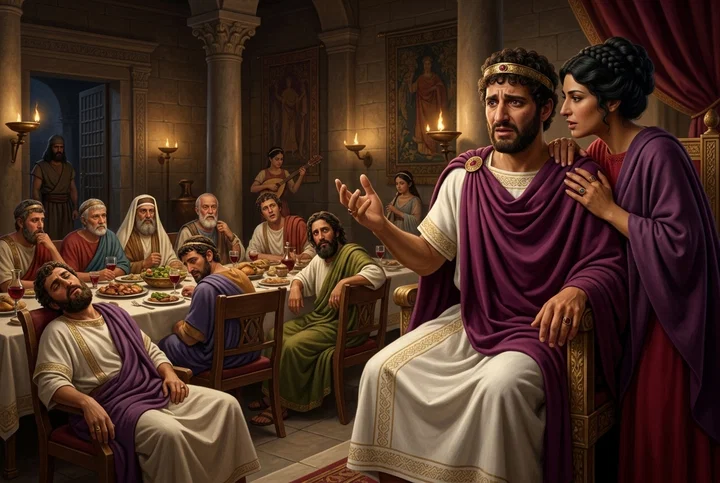
And he sware unto her, Whatsoever thou shalt ask of me, I will give it thee, unto the half of my kingdom.
Translations
And he swore to her, Whatever you shall ask of me, I will give it you, to the half of my kingdom.
King James Version, KJV Cambridge Paragraph Bible, Revised Version, American Standard Version
And he sware unto her, Whatsoever thou shalt ask of me, I will give it thee, unto the half of my kingdom.
And he swore to her, Whatever thou shalt ask of me, I will give it thee, to the half of my kingdom.
and he sware to her — 'Whatever thou mayest ask me, I will give to thee — unto the half of my kingdom.'
And he swore to her, Whatsoever thou shalt ask me I will give thee, to half of my kingdom.
and he took an oath to her—Whatsoever thou shalt ask me, I will give thee, unto half my kingdom.
Berean Standard Bible, Majority Standard Bible
And he swore to her, “ Whatever you ask of me, I will give you, up to half my kingdom!”
He swore to her, “ Whatever you ask of me, I will give you, up to half of my kingdom.”
And he took an oath, saying to her, Whatever is your desire I will give it to you, even half of my kingdom.
And he sware vnto her, Whatsoeuer thou shalt aske of me, I will giue it thee, euen vnto the halfe of my kingdome.
Douay-Rheims (Challoner revision)
And he swore to her: Whatsoever thou shalt ask I will give thee, though it be the half of my kingdom.
Pictures
Cross-references
- Matthew 14:6-11
But when Herod’s birthday was kept, the daughter of Herodias danced before them, and pleased Herod.
Herod’s oath leads to the request for John’s head and his execution.
- Luke 3:19-20
But Herod the tetrarch, being reproved by him for Herodias his brother Philip’s wife, and for all the evils which Herod had done,
John rebukes Herod for his wrongdoing, and Herod imprisons him.
- Esther 5:3
Then said the king unto her, What wilt thou, queen Esther? and what is thy request? it shall be even given thee to the half of the kingdom.
Ahasuerus offers Esther whatever she requests, as Herod does Salome.
- Esther 7:2
And the king said again unto Esther on the second day at the banquet of wine, What is thy petition, queen Esther? and it shall be granted thee: and what is thy request? and it shall be performed, even to the half of the kingdom.
Ahasuerus repeats his offer to Esther, echoing Herod’s promise.
- Luke 9:7-9
Now Herod the tetrarch heard of all that was done by him: and he was perplexed, because that it was said of some, that John was risen from the dead;
Mentions John’s death and Herod’s concern about Jesus.
- Mark 6:28
And brought his head in a charger, and gave it to the damsel: and the damsel gave it to her mother.
oath led to beheading
- Matthew 14:5
And when he would have put him to death, he feared the multitude, because they counted him as a prophet.
Herod feared the crowd because they regarded John as a prophet.
Commentary
Each commentary is drawn from primary sources: the writings of Ellen G. White and Adventist pioneers and periodicals. Each commentary is separate. Its own words are not a quotation; follow the references to read the source passages.
Ellen G. White
23 sources
At his birthday feast Herod was captivated by the dance of Herodias's daughter and rashly swore with an oath to give her whatever she asked, even up to half his kingdom.RH Mar 11, 1873RH Apr 8, 1873DA 220.6–221.3 The oath was made amid wine, revelry and sensual indulgence that clouded reason and judgment, weakened moral restraint, and grew from pride and desire to impress his guests.RH Mar 11, 1873ST Mar 15, 1883RH Apr 8, 18732SP 76.1–77.12SP 77.2–78.2 From concern for reputation before his guests he treated the rash oath as binding, deluded into thinking it was more binding than God's command not to kill, and chose the real guilt of murder rather than the false charge of breaking his oath.RH Apr 8, 1873ST Mar 15, 1883STRH Apr 8, 1873 Fulfilling it meant yielding to Herodias's revenge and ordering the beheading of innocent John, one of the greatest prophets, showing how intemperance in those in authority can lead to grave injustice.ST Mar 15, 1883RH Apr 8, 1873DA 220.6–221.3ST Mar 15, 1883RH Mar 11, 1873 The act brought lasting regret and remorse, yet continued sin dulled his conscience until he grew hardened, warning that sensual indulgence and intemperance corrupt reason and lead to lasting consequences, for such speech and entertainment are the merchandise of Satan, recorded in heaven and to be exposed in its true light at the last great day.ST Mar 15, 1883ST Mar 15, 1883COS 144.2–33SP 135.1CT 340.2
Feast Oath and Context
At his birthday feast Herod was pleased, captivated and infatuated by the dance of Herodias's daughter, called Salome, and rashly swore with an oath to give her whatever she asked, even up to half his kingdom.RH Mar 11, 1873RH Apr 8, 1873DA 220.6–221.32SP 76.1–77.1RH Mar 11, 1873 The oath was made amid wine, feasting, dancing, revelry and entertainment, when intoxication and sensual indulgence clouded reason and judgment, weakened moral principle and restraint, drove away reverence for God, and left him ruled by passion and vulnerable to Satan's control.RH Mar 11, 1873ST Mar 15, 1883RH Apr 8, 18732SP 76.1–77.1RH Mar 11, 1873 It grew from pride, vanity and desire to impress his guests.RH Mar 11, 18732SP 76.1–77.12SP 77.2–78.2 The impression made on him by the dance is the same kind of alluring, deceptive impression made by flattery, cheap talk and foolish witticisms to create a laugh.CT 340.214MR 122.1
The verse belongs to the history of John the Baptist as first in heralding Christ's kingdom and first in suffering, shut from the free air of the wilderness into a dungeon cell in the fortress of Herod Antipas in territory east of Jordan where much of his ministry had been spent.DA 214.1 John had faithfully denounced Herod's iniquitous alliance and marriage with Herodias his brother's wife, and had reproved Herod for sin.DA 214.1SG1 29.2–30.1STB 377.2Ms 16, 1895, par. 18 Herod feared John knowing he was a just and holy man and a true prophet, listened to him, trembled under the call to repentance, heard him gladly, did many things, was deeply impressed, and feebly sought to break the chain of lust.DA 214.1COS 144.2–33SP 135.1
Herod did not give up his sinful life but became increasingly hardened, while Herodias fastened him more firmly in her toils to take revenge, induced him to cast John into prison, and then used the oath as her opportunity to secure John's death through her influence.DA 214.1DA 220.6–221.3RH Mar 11, 1873COS 144.2–32SP 77.2–78.2 In prison week after week with no change brought gloom, inaction, despondency and doubt over being deprived of liberty and perhaps of life.DA 214.2–215.2 His disciples had access and brought tidings of the works of Jesus and how the people flocked to Him, yet questioned why Jesus did nothing to release him, for John did not understand the nature of Christ's kingdom but expected earthly kingly authority.DA 214.2–215.2
Herod's later belief that Jesus was John risen from the dead implies he had not previously heard of or known Jesus despite living in Galilee, pointing to the religious ignorance often found among people of high rank.ST
Consequences and Moral Warnings
Concern for reputation before his guests led Herod to treat his rash oath as binding and to order John's execution, though he could have asked them to release him from it.RH Apr 8, 1873 Intoxication had clouded his judgment and weakened his moral principles, turning a promise made in revelry into the occasion for killing an innocent prophet.RH Apr 8, 1873 He was deluded into thinking he had to keep that oath, and absurdly treated it as more binding than God's command not to kill.ST Mar 15, 1883STRH Apr 8, 1873 He chose the real guilt of murder rather than the false charge of breaking his oath.ST Mar 15, 1883ST Intemperance had weakened his reason and left him ruled by passion, so he wrongly treated an oath made in that excited, feasting state as binding even when fulfilling it meant violating God's commandment.ST Mar 15, 1883RH Apr 8, 1873
Fulfilling the oath meant giving in to Herodias's revenge and ordering the beheading of innocent John, one of the greatest prophets, to please Herodias.RH Apr 8, 1873ST Mar 15, 1883COS 144.2–3RH Apr 8, 1873Ms 107, 1893, par. 1 His vow made during a feast clouded by intemperance and self-indulgence helped bring about that death through impaired judgment.ST Mar 15, 1883RH Apr 8, 1873 While debased by wine and captivated by the dance, he ordered the death after his promise to grant whatever was asked.ST Mar 15, 1883Ms 107, 1893, par. 1 It shows how intemperance among people in authority can lead to grave injustice, and how delivering a pointed message against wrongdoing could cost a prophet his life.ST Mar 15, 1883RH Apr 8, 1873
The act brought Herod lasting regret and remorse for killing a man he knew was a true prophet.ST Mar 15, 18833SP 135.15RED 55.1 He had once been deeply impressed by John's teaching but had not given up his sinful life, and he became increasingly hardened.ST Mar 15, 1883COS 144.2–3 Continued sin dulled his conscience until it grew less sensitive, he turned from the light he had received through John, and his sins seemed trivial.COS 144.2–33SP 135.15RED 55.1 John's death reached Jesus' disciples as a bitter sorrow and tested their faith.ST
The verse warns that sensual indulgence, self-indulgence and intemperance corrupt reason and judgment and lead to grave, lasting consequences.ST Mar 15, 1883RH Apr 8, 1873 Reckless, extravagant words reveal how flattery and entertainment can draw a person into foolish and sinful action.RH Apr 8, 187314MR 122.1 Such speech and entertainment are the merchandise of Satan, and all who indulge in it are trading in his goods.CT 340.2 These alluring, deceptive impressions made by cheap talk, flattery, and foolish witticisms to create a laugh are workings of the devil to lead people into the broad road and wide gate that opens to ruin.CT 340.2 Every such transaction is recorded in the books of heaven and will appear in its true light before the guilty at the last great day.CT 340.2
Sources
Pioneers and periodicals
50 sources
Herod at his birthday feast, delighted by the dancing of Herodias's daughter, swore publicly to give her whatever she asked, even to half his kingdom.RH Mar 11, 1873ST Dec 24, 1894ST Jun 7, 1899 He spoke rashly while his judgment was clouded by wine, revelry and lust, and from pride before his lords and captains.RH Mar 11, 1873ST Mar 15, 1883ST Dec 24, 1894ST Sep 6, 1910ST Jan 31, 1906 He wrongly treated the extravagant vow as binding even when it was turned to demand John's death, choosing murder rather than seem to break his word when he should have broken it.RH Apr 8, 1873ST Mar 15, 1883STST Apr 20, 1882RH Sep 11, 1860 The oath thus became Herodias's tool to have John beheaded in prison and his head brought on a tray into the banquet hall.RH Mar 11, 1873ST Dec 24, 1894ST Jun 7, 1899ST Mar 8, 1899ST Sep 13, 1910 Sensual indulgence corrupts reason and will, and fear of men's opinion is no substitute for fear of God.ST Mar 15, 1883RH Mar 11, 1873RH Apr 8, 1873ST Apr 20, 1882
Historical Setting and Wording
The oath belongs to Herod's birthday feast, where the dancing of Herodias's daughter pleased him and drew from him a sworn promise to give her whatever she asked, even to half his kingdom.RH Mar 11, 1873ST Dec 24, 1894ST Jun 7, 1899ST Jun 13, 1900ST Mar 3, 1898 The girl who danced and received the promise was Herodias's daughter, his step-daughter and his brother's wife's daughter, named Salome.ST Mar 8, 1883ST Dec 24, 1894ST Jun 7, 1899ST Sep 6, 1910RH Aug 29, 1865 Her extravagant offer then became the occasion for demanding John's death.RH Mar 11, 1873ST Dec 24, 1894ST Jun 7, 1899ST Mar 3, 1898ST Sep 6, 1910
The feast was probably held at Macherus in the neighboring region of Perea in the spring of A.D. 28, and John was beheaded about a year later, in A.D. 29.ST Dec 24, 1894 It was a supper Herod made in his royal palace on the summit overlooking Galilee for his lords, high captains, and chief estates of Galilee.RH Aug 29, 1865 While the feast was still going on John's head was brought in a charger and given to the damsel, and the ruined palace where the oath was spoken stands as a comment on the vanity of worldly greatness.RH Aug 29, 1865
The setting is also placed at Herod Antipas's palace in Tiberias, with John the Baptist imprisoned near the palace while the festivities were underway, whom Herodias wanted killed for reproving her sins.ST Sep 6, 1910 The promise belongs to the setting of John's execution at Machaerus. Herod swore publicly before his drunken guests.ST Sep 6, 1910
The episode stands among the events in Mark that reveal Jesus as a just and benevolent King, in contrast with earthly rulers whose power is marked by ambition and injustice.RH Oct 30, 1860 Herod's dealing with John was a public act by a known ruler, who heard John gladly yet at last beheaded him at the request of a dissolute woman, showing that John's work and death were open and widely known and not done in secret.ST May 8, 1907
Herod's Mind and Character
Herod spoke his oath while intoxicated and excited by feasting, wine, entertainment and revelry, with reason and moral judgment clouded, reverence for God driven away, and himself ruled by passion and sensual self-indulgence.RH Mar 11, 1873ST Mar 15, 1883RH Apr 8, 1873ST Mar 8, 1883ST Mar 15, 1883 His sober judgment would not have led him to make such a promise, but impaired judgment and self-indulgence turned a pledge made in revelry into the occasion for killing an innocent prophet.ST Mar 15, 1883RH Apr 8, 1873ST Mar 15, 1883ST Dec 24, 1894 He was flushed with wine and captivated by the dancer, merry with wine and moved by her beauty and by drunken pleasure after her dance pleased him at his birthday feast.ST Sep 6, 1910ST Jan 31, 1906ST Sep 6, 1910 That rash delight gave Herodias her opening to direct the request toward the death of John the Baptizer.ST Sep 6, 1910ST Sep 6, 1910
He intended the oath to impress his guests, and pride and a false sense of dignity and concern for the guests' opinion later drove him to carry it out.RH Apr 8, 1873ST Mar 8, 1883ST Dec 24, 1894ST Dec 15, 1887ST Sep 13, 1910 Intoxication clouded his judgment and weakened his moral principles, and eagerness to impress set pride and concern for reputation against the chance to spare John, so he chose to honor the oath rather than protect the righteous man.RH Apr 8, 1873ST Mar 8, 1883ST Sep 13, 1910 He was a weak and wicked king, wicked chiefly because weak, a man with a conscience but without courage, who feared God but feared man still more and his wife most of all, and who desired to do right but dared not be laughed at.ST Apr 20, 1882 In keeping a foolish promise he was inveigled into making, he preferred to be called murderer rather than promise-breaker.ST Apr 20, 1882
Though he had feared the multitude who counted John as a prophet and had in some sense feared God knowing John was holy, and had therefore refused his wife's pressure to kill John, guarded him from malice, and heard him often and gladly, his fear of God was weaker than his fear of public opinion.ST Apr 20, 1882 He kept the vow because he feared the jeers of his companions more than the rebuke of his own conscience and the judgments of God, by which a cowardly man was outmatched by a cunning woman.ST Apr 20, 1882 He shows instability, halting between two opinions: one day he listens joyfully to John's instructions, the next day he listens to the horrid proposal of Herodias's daughter, convinced but not converted nor changed in heart, without decision of character, floating loosely upon the tide, now blown to one shore and now to another.RH Apr 28, 1863
His belief that Jesus was John risen from the dead implies that he had not previously heard of or known Jesus despite living in Galilee, pointing to the religious ignorance often found among people of high rank.ST He had authority as ruler over John, the Lord's special messenger sent to announce the coming of the Messiah, and misused that power to kill him.ST Jul 13, 1904
Rash Oath and Obligation
The oath was rash, reckless, foolish and extravagant, a classic illustration of the folly of making rash vows.RH Mar 11, 1873ST Dec 24, 1894ST Mar 3, 1898ST Mar 8, 1899 Pleased by the dancing at his birthday feast, Herod swore to give the girl whatever she asked, even to half his kingdom, and that sweeping promise placed him under pressure to grant her demand for John's death.RH Mar 11, 1873ST Dec 24, 1894ST Mar 8, 1899 It was made amid wine, entertainment, pride and revelry, when reason and moral judgment were clouded and reverence for God driven away, and sober judgment would never have led him to make it.RH Mar 11, 1873RH Apr 8, 1873ST Dec 24, 1894 Pride and a false sense of dignity before his guests then drove him to carry it out, and concern for reputation turned a promise made in revelry into the occasion for killing an innocent prophet.RH Apr 8, 1873ST Dec 24, 1894 Prompted by a woman, the rash promise led directly to beheading by the sword.ST Mar 8, 1899
It was a vague, general oath to give whatever was asked, putting himself into another's hands and pledging himself to do whatsoever he was bidden.ST Apr 20, 1882 Given while he gave himself up to sensual self-indulgence, the indulgence captured his resolutions and made him do another's bidding.ST Apr 20, 1882 He was deluded into thinking he had to keep that oath, and absurdly treated it as binding him to comply even when she demanded John's death.RH Apr 8, 1873ST Mar 15, 1883ST He treated it as more binding than God's command not to kill, and intemperance having weakened his reason and left him ruled by passion, he ordered the death of innocent John, a prophet of God, bringing lasting regret.RH Apr 8, 1873ST Mar 15, 1883RH Apr 8, 1873 In keeping a foolish promise he was inveigled into making, he preferred to be called murderer rather than promise-breaker, choosing the real guilt of murder rather than the false charge of breaking his oath.STST Apr 20, 1882
He could have asked his guests to release him from the oath, but concern for reputation before them led him to treat it as binding and order the execution.RH Apr 8, 1873 When urged to release himself from that oath rather than kill the prophet, he hesitated but ultimately let the oath stand.RH Apr 8, 1873ST Sep 13, 1910 When asked to have John killed he appealed to those present to release him, acknowledging that John was a just and holy man, yet his pride and concern for the guests' opinion were in conflict with the chance to spare John, and he chose to honor the oath rather than protect the righteous man.ST Sep 13, 1910ST Sep 13, 1910ST Sep 13, 1910 The vow was not truly binding when keeping it meant beheading John, for a promise to do wrong does not have to be kept.ST Apr 20, 1882ST Oct 9, 1884 Such a bad, vague promise is better broken than kept and best never made, and some promises are more honorable to break than to keep.ST Apr 20, 1882RH Sep 11, 1860ST Jun 9, 1898 No one should bind himself to a vague obligation whose enforcement may lead into sin or temptation, but should remain the unhampered master of himself, as shown by the fact that if she had asked for Herod's own head he would not have felt obliged to keep it.ST Apr 20, 1882ST Oct 9, 1884
John's Death and Aftermath
The extravagant oath to give whatever was asked, even up to half the kingdom, placed Herod under pressure to grant the request that followed and set the stage for the demand for John the Baptist's death.RH Mar 11, 1873ST Dec 24, 1894ST Jun 7, 1899 Made amid wine, entertainment and pride when reason and moral judgment were clouded, and made while flushed with wine and captivated by the dancer, the offer gave Herodias her chance to direct her daughter's request toward John's death.RH Mar 11, 1873ST Sep 6, 1910ST Sep 6, 1910 The sweeping promise was answered by the demand that he give John's head that day, and it was that promise that led to the execution.ST Feb 7, 1911
Herodias had planned to use the promise after the dance to secure John's death, and she used it to bring about his execution while he was in prison.ST Jun 19, 1907ST Sep 6, 1910ST Sep 6, 1910 By that rash vow to his step-daughter a cowardly man was outmatched by a cunning woman.ST Apr 20, 1882
The rash promise, prompted by a woman and made as a reckless oath-bound commitment during the birthday feast, led to John being beheaded by the sword.ST Mar 8, 1899ST Sep 13, 1910ST Sep 13, 1910 That promise set the stage for the tragedy that ended the celebration and led to the order for his execution, despite the horror and hesitation of those present.ST Sep 13, 1910ST Sep 13, 1910 The story includes the beheading and the presentation of his head on a tray in the banquet hall. She kept dancing until the soldier returned from killing John and bringing his head to the king.ST Sep 13, 1910
John's faithful rebuke of the king cost him his life.RH Nov 11, 1858 He was in Herod's house to proclaim God's truth to a licentious ruler and to face the hatred of an adulterous woman, and the events culminated in his beheading and the indignity done to his body.
Herod put John out of the way because of John's course, while the Jewish authorities never acknowledged John's mission as from heaven and never openly condemned him, but were willing to appear to join the popular favor toward him because they saw Herod would remove him so they would not need to do it themselves.ST Oct 11, 1899 Had they acknowledged his mission as heaven-born they would have had no excuse for rejecting Christ whose forerunner he was.ST Oct 11, 1899
The death reached Jesus' disciples as a bitter sorrow and tested their faith.ST
The promise led Herod to order the death of innocent John, a prophet of God, by wrongly treating an oath made amid feasting, dancing and revelry as binding even when fulfilling it meant killing and violating God's commandment.ST Mar 15, 1883RH Apr 8, 1873 Keeping that oath by allowing John to be killed cost him his peace and brought lasting regret, and the deed later haunted him as he remembered his sweeping promise with guilt.ST Mar 15, 1883ST Feb 7, 1911ST Sep 13, 1910 He feared that John, a just man, would rise from the dead and condemn him, a fear that challenged the Sadducees' denial of resurrection and raised the possibility that the Pharisees were right.ST Sep 13, 1910
Moral Warnings for Life
Herod's extravagant oath to give whatever was asked, even to half his kingdom, was made at a feast clouded by intemperance, intoxication, dancing and revelry, when indulgence had weakened reason and moral restraint and left him ruled by passion.ST Mar 15, 1883RH Mar 11, 1873RH Apr 8, 1873 In that state he treated a rash vow as binding even when keeping it meant beheading an innocent prophet in violation of God's commandment.RH Apr 8, 1873 Sensual indulgence thus corrupts judgment and can lead to grave and lasting consequences.ST Mar 15, 1883RH Mar 11, 1873RH Apr 8, 1873
Lust and strong drink always go hand in hand, and drunkenness inspires and produces almost every other crime.ST Dec 12, 1906 No other sin is so often warned against in the Bible, nor its punishment so positively affirmed, as intemperance.ST Dec 12, 1906 The drunken court and the indecent dance that drew forth the oath illustrate that connection.ST Dec 12, 1906
Scenes and places that stimulate the animal and the sensual while impairing the spiritual and the intellectual are dangerous, because indulgence captures resolutions and makes a person do another's bidding.ST Apr 20, 1882 Herod's vague, general oath put himself into another's hands and pledged him to do whatsoever he was bidden.ST Apr 20, 1882 Such a bad, vague promise is better broken than kept and best never made, for no one should bind himself to a vague obligation whose enforcement may lead into sin or temptation, but should remain the unhampered master of himself.ST Apr 20, 1882
The feast's intemperance left those in authority unable to exercise sound judgment, and their failure to object helped bring about John's martyrdom.ST Dec 15, 1887 The event therefore warns against intemperance and calls for Christian temperance, especially among people whose decisions affect others' lives.ST Dec 15, 1887
Herod had feared the multitude who counted John as a prophet and had in some sense feared God, knowing John was holy, and had therefore refused his wife's pressure to kill John, guarded him from malice, and heard him often and gladly.ST Apr 20, 1882 Yet the vow exposed that his fear of God was weaker than his fear of public opinion, for he kept it because he feared the jeers of his companions more than the rebuke of his own conscience and the judgments of God, allowing a cowardly man to be outmatched by a cunning woman.ST Apr 20, 1882 Fear of public opinion is a poor substitute for fear of God, and respect for human opinion may prop tottering virtue for a time but cannot root virtue to stand against temptation.ST Apr 20, 1882
The dance that occasioned the extravagant promise is the New Testament's sole example of dancing, and in purpose it most resembles dancing in modern times.ST Feb 18, 1886 It is remembered as the story in which John the Baptist lost his head after the girl danced for Herod.ST Feb 18, 1886ST Aug 17, 1904
Sources