Mark 6:28
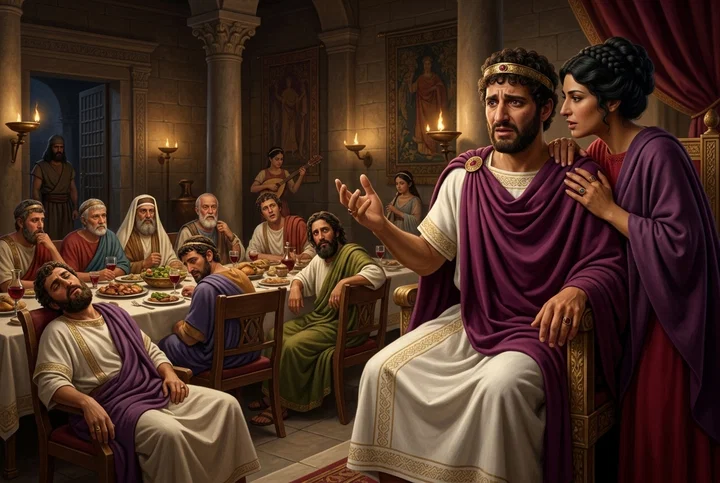
And brought his head in a charger, and gave it to the damsel: and the damsel gave it to her mother.
Translations
American King James Version, King James Version
And brought his head in a charger, and gave it to the damsel: and the damsel gave it to her mother.
and brought his head in a charger, and gave it to the damsel: and the damsel gave it to her mother.
And brought his head in a dish, and gave it to the damsel: and the damsel gave it to her mother.
and brought his head in a charger, and gave it to the damsel; and the damsel gave it to her mother.
and brought his head on a platter, and gave it to the damsel; and the damsel gave it to her mother.
and he having gone, beheaded him in the prison, and brought his head upon a plate, and did give it to the damsel, and the damsel did give it to her mother;
and brought his head upon a dish, and gave it to the damsel, and the damsel gave it to her mother.
And, departing, he beheaded him in the prison, and brought his head upon a charger, and gave it unto the damsel—and, the damsel, gave it unto her mother.
Berean Standard Bible, Majority Standard Bible
The man brought John’s head on a platter and presented it to the girl, who gave it to her mother.
and brought his head on a platter, and gave it to the young lady; and the young lady gave it to her mother.
And came back with the head on a plate, and gave it to the girl; and the girl gave it to her mother.
And brought his head in a charger, and gaue it to the maide, and the maide gaue it to her mother.
Douay-Rheims (Challoner revision)
And he beheaded him in the prison, and brought his head in a dish: and gave it to the damsel, and the damsel gave it to her mother.
Pictures
Cross-references
- Matthew 14:11
And his head was brought in a charger, and given to the damsel: and she brought it to her mother.
Describes the delivery of John’s head to the girl and her mother.
- Luke 3:19-20
But Herod the tetrarch, being reproved by him for Herodias his brother Philip’s wife, and for all the evils which Herod had done,
Herod imprisoned John after John rebuked him.
- Matthew 11:7-11
And as they departed, Jesus began to say unto the multitudes concerning John, What went ye out into the wilderness to see? A reed shaken with the wind?
Jesus testifies to John’s prophetic role and greatness while John is imprisoned.
- Luke 9:7-9
Now Herod the tetrarch heard of all that was done by him: and he was perplexed, because that it was said of some, that John was risen from the dead;
Herod recalls beheading John while troubled by reports about Jesus.
- Mark 6:20
For Herod feared John, knowing that he was a just man and an holy, and observed him; and when he heard him, he did many things, and heard him gladly.
Herod heard John gladly before ordering his execution.
- Mark 6:16
But when Herod heard thereof, he said, It is John, whom I beheaded: he is risen from the dead.
Herod identifies Jesus as John, whom he had beheaded, risen from the dead.
- Luke 7:19-28
And John calling unto him two of his disciples sent them to Jesus, saying, Art thou he that should come? or look we for another?
Records John’s message from prison and Jesus’ testimony about him.
- Mark 6:24
And she went forth, and said unto her mother, What shall I ask? And she said, The head of John the Baptist.
beheading was done at Herodias's request
- Mark 6:17-18
For Herod himself had sent forth and laid hold upon John, and bound him in prison for Herodias’ sake, his brother Philip’s wife: for he had married her.
Herod imprisoned John after John rebuked him.
- Matthew 14:1-2
At that time Herod the tetrarch heard of the fame of Jesus,
Herod fears that John has risen from the dead.
- Matthew 17:12-13
But I say unto you, That Elias is come already, and they knew him not, but have done unto him whatsoever they listed. Likewise shall also the Son of man suffer of them.
Jesus identifies John the Baptist and foretells the suffering inflicted on him.
- Matthew 3:1-12
In those days came John the Baptist, preaching in the wilderness of Judaea,
Both recount John the Baptist’s ministry.
- John 1:19-28
And this is the record of John, when the Jews sent priests and Levites from Jerusalem to ask him, Who art thou?
Both texts concern John the Baptist and his ministry.
Commentary
Each commentary is drawn from primary sources: the writings of Ellen G. White and Adventist pioneers and periodicals. Each commentary is separate. Its own words are not a quotation; follow the references to read the source passages.
Ellen G. White
33 sources
At Herod's command John the Baptist was beheaded in prison and his severed head was brought on a charger before Herod and his guests and given to the daughter of Herodias, who carried it to her mother.STRH Mar 11, 1873DA 214.2–215.2 John had faithfully denounced Herod for his unlawful alliance with Herodias, his brother's wife, for which Herod had imprisoned him while Herodias plotted his death.DA 214.12SP 76.1–77.1EW 124.3–125.1 The execution took place during Herod's birthday feast amid drunken revelry after the dancing of Herodias's daughter, and completed Herodias's revenge while filling the guests with horror.STDA 214.2–215.2COS 144.2–3Ms 107, 1893, par. 1 Herod had honored and feared John as a true prophet and was nearly persuaded by his reproof, but weakened by indulgence he treated his rash oath and honor before his guests as more binding than God's command not to kill.RH Mar 11, 18732SP 76.1–77.1ST Mar 15, 18833SP 135.15RED 55.1 The act murdered an innocent prophet and silenced the voice that called sinners to repentance, leaving Herod tormented by remorse, and it warns against intemperance and pleasure-seeking among those in authority.STDA 221.4–222.1ST Mar 15, 18832SP 80.2STB 377.2
The Beheading Described
At Herod's command John the Baptist was beheaded in prison, and his severed head was brought on a platter or charger before Herod and his guests.STRH Mar 11, 1873ST Mar 15, 1883RH Apr 8, 1873DA 220.6–221.3 The executioner gave it to the girl, Salome, the daughter of Herodias, and she carried it to her mother.STRH Mar 11, 1873DA 214.2–215.2RH Apr 8, 1873DA 220.6–221.3 The delivery fulfilled the girl's demand and made Herod's decision final.RH Mar 11, 1873RH Apr 8, 1873DA 220.6–221.3 John had faithfully denounced Herod Antipas for his unlawful alliance with Herodias, his brother's wife, while her husband was still living.DA 214.1EW 124.3–125.1SG1 29.2–30.11RED 44.33SP 136.1–2 For that reproof Herod shut him in his fortress prison and punished him, while Herodias plotted his death and Herod delayed releasing him.DA 214.12SP 76.1–77.1EW 124.3–125.1SG1 29.2–30.13SP 136.1–2
The execution took place during Herod's birthday feast amid feasting and drunken revelry.COS 144.2–3Ms 107, 1893, par. 12SP 80.1Ms 87, 1898, par. 18–19 It followed the dancing performance of Herodias's daughter before Herod and his guests.Ms 107, 1893, par. 114MR 122.1Ms 87, 1898, par. 18–19 Herod's intemperance and the impaired judgment of his guests led to a decision that cost a prophet his life.ST Mar 15, 18832SP 80.1 The bringing in of the head completed Herodias's revenge against John, whom she had sought to have killed.RH Mar 11, 1873DA 214.2–215.2RH Apr 8, 1873DA 220.6–221.3 Herodias exulted over him and insulted him even after his death, while the sight filled the guests with horror and Herod could not shut his eyes to what he had ordered.STMs 107, 1893, par. 1
John had been put to death only a short time before Herod heard of Christ's preaching and miracles.ST Herod heard the report only after Christ sent forth His disciples to work miracles in His name, though Christ had spent most of His time in Galilee.ST Herod's supposition that Jesus was John risen from the dead shows he had never before heard of Jesus or known that such a person existed, for one who had lived about thirty years in Galilee could not be John who a short time before had been put to death.ST Nothing solves the difficulty but the general disregard which persons in high rank show to religion, and the astonishing ignorance in which most of them remain of what goes forward in that respect.ST
Revenge, Oath, and Intemperance
Herod honored and feared John as a true prophet, for John's reproof had struck his guilty conscience, and he had nearly become his disciple, yet he turned from the truth.2SP 76.1–77.13SP 135.15RED 55.1 His conscience and moral judgment grew dull as he continued in sin and rejected the light he had received.3SP 135.15RED 55.1 Herodias plotted John's death while Herod delayed releasing him, exploiting Herod's weakness for luxurious food and wine.2SP 76.1–77.1RH Mar 11, 1873 She planned to use his birthday feast and intoxication to make him lose sound judgment and agree to John's death.2SP 76.1–77.1
The feasting and intoxication helped lead to the crime, for intemperance and sensual indulgence impaired the judgment of Herod and his guests and led to a decision that cost a prophet his life.RH Mar 11, 1873ST Mar 15, 1883ST Mar 15, 1883RH Mar 11, 1873RH Apr 8, 1873 The head brought on a platter to the girl, who gave it to her mother, records the completion of the execution and the result of Herodias's revenge.RH Mar 11, 1873ST Mar 15, 1883RH Apr 8, 1873 Herod, impaired by feasting and drinking, treated his rash oath as binding and feared losing honor before his guests.RH Mar 11, 1873ST Mar 15, 1883ST He chose the guilt of murder rather than face accusation of breaking his oath, driven by Herodias's consuming desire for revenge.ST Mar 15, 1883STRH Apr 8, 1873
He wrongly treated his oath as more binding than God's command not to kill, when sober reason would have recognized the demands of justice and duty and recoiled from the deed.RH Apr 8, 1873 The delivery of John's head completed the killing of an innocent prophet in violation of that commandment.ST Mar 15, 1883RH Apr 8, 1873 The slaying was done in drunken revel to please Herodias and to satisfy a cruel woman's revenge.COS 144.2–32SP 79.1–33SP 135.15RED 55.1 Herod ordered the execution and the head was brought before him and his guests after they had failed to speak up for John, and their silence and Herod's drunkenness and concern for reputation allowed an innocent servant of God, one of the greatest prophets, to be condemned.DA 221.4–222.12SP 80.22SP 79.1–3 His death silenced the voice that had called Herod to reform and sinners to repentance, ending his life amid a night of frivolity and dissipation.DA 221.4–222.12SP 80.2
Aftermath and Moral Lessons
The bringing of the severed head on a platter completed the killing of an innocent prophet of God, one of the greatest of the prophets, in violation of God's commandment against murder.DA 221.4–222.1ST Mar 15, 1883RH Apr 8, 1873 The silence of Herod and his guests helped condemn that innocent servant, while feasting and drinking impaired their judgment and allowed a rash oath and Herodias's revenge to prevail.DA 221.4–222.1ST Mar 15, 18832SP 79.1–3 Herod wrongly treated his rash oath as more binding than God's command not to kill, fearing loss of honor before his guests, when sober reason would have recognized the demands of justice and duty and recoiled from the deed.ST Mar 15, 1883RH Apr 8, 18732SP 79.1–3 The death silenced the voice that had called Herod to reform and sinners to repentance, ending in a night of frivolity, dissipation, sensual indulgence and revelry.DA 221.4–222.12SP 80.2RH Apr 8, 1873 It stands as the deadly result of intemperance and failure to act justly among people in authority, whose drunkenness, concern for reputation, and impaired judgment let an innocent prophet be killed to satisfy revenge.RH Apr 8, 18732SP 79.1–32SP 80.1
That execution made John a martyr and witness for God, yet the killing of his body could not take away his hope or eternal life.Ms 16, 1895, par. 18 The memory of the act afterward troubled Herod's conscience and filled him with fear of punishment and remorse, even as Herodias exulted over John and insulted him after his death.ST Herod had known John was a true prophet and had nearly become his disciple, but he turned from the truth and rejected the light to kill a prophet he knew to be true.3SP 135.15RED 55.1 His remorse over the crime faded as his conscience, moral sense and moral judgment grew more degraded and dull through continued sin, until he boasted of punishing John for reproving him.3SP 135.15RED 55.1DA 730.1–5
Tidings of the death reached Jesus and the disciples just after their return from their first missionary tour, when they were filled with joy over success as heralds of the gospel.ST The news brought bitter sorrow and disappointment, and leaving John to die in prison severely tested their faith.ST They questioned why Jesus had not saved John from such a violent death, with his severed head brought on a dish and given to the girl who gave it to her mother.STDA 380.1–2 Jesus met their sorrowful, tear-stained faces with pitying tenderness, with tears in His own eyes and voice, bidding them come apart into a desert place and rest awhile.ST
The completion of John's martyrdom after Herod's birthday feast warns against pleasure-seeking and calls for Christian temperance.2SP 80.1 John's example shows that a pointed message against deception may cost the messenger his life, yet still serve to keep people from being deceived.STB 377.2STB 55.4 The dancing of Herodias's daughter before Herod led to the beheading, with the head brought in and given to her and then to her mother, illustrating how alluring, deceptive influences can lead people toward ruin.STB 377.2STB 55.414MR 122.1
Sources
Pioneers and periodicals
52 sources
The verse records the completion of Herod's oath-bound promise, when John the Baptist was beheaded in prison and his head was carried on a platter to the dancing girl, who then handed it to her mother Herodias.STST Mar 8, 1883RH Mar 11, 1873ST Jun 7, 1899ST Dec 24, 1894 It took place at Herod's birthday feast for his leading guests, after the girl's dance and his rash promise, with the prison placed at the fortress of Machaerus in Galilee.ST Dec 24, 1894RH Aug 29, 1865ST Jun 19, 1907ST Sep 13, 1910 John's death came because he faithfully rebuked Herod's adultery, which made Herodias hate him as a dangerous enemy and wait for revenge.STRH Nov 11, 1858RH Nov 25, 1858RH May 11, 1869ST Sep 6, 1910 Herod honored and feared John as a true prophet and did not intend to kill him, but weakened by appetite, drink and pride he treated a sinful oath as more binding than God's command not to kill.ST Mar 15, 1883RH Mar 11, 1873STST Apr 20, 1882ST Dec 15, 1887 The revelry and intemperance that impaired judgment and led to a prophet's murder stand as a warning that an oath to do evil is not binding, and that faithfulness to truth before rulers may bring suffering and death.ST Mar 8, 1883ST Mar 15, 1883RH Apr 8, 1873ST Jun 7, 1899ST Oct 9, 1884
The Act Described
The verse records the fulfillment of Herod's promise, for after John the Baptist was beheaded his head was brought on a platter or charger, given to the girl, and then carried by her to her mother.ST Mar 8, 1883ST Jun 7, 1899ST Dec 24, 1894ST Mar 3, 1898ST Mar 8, 1899 The killing followed Herod's drunken vow at his birthday feast after the girl's dance, when the guests kept silence and no one spoke to defend the prophet.ST Mar 8, 1883ST Mar 3, 1898ST Feb 7, 1911 The execution was carried out in prison at Herod's command by an executioner, fulfilling the king's order during the banquet.STRH Mar 11, 1873RH Apr 8, 1873RH Apr 8, 1873ST Sep 13, 1910 The feast where this was done lay in Galilee, probably at Macherus, the fortress of Machaerus where John had been imprisoned for a year, and John was thirty-three years old.ST Dec 24, 1894ST Mar 3, 1898
The head was brought before Herod and his guests and passed through the girl's hands, being given to Herodias's daughter Salome, who gave it to her mother Herodias.ST Mar 8, 1883RH Mar 11, 1873RH Apr 8, 1873ST Mar 8, 1883ST Feb 7, 1911 In one telling the platter was first delivered to Herod and then passed to Salome, who gave it to her mother.ST Sep 13, 1910 She had requested it as the reward for her dance, and the outcome was simply that John was beheaded because of the vow.ST Feb 7, 1911 The episode is summed up as John losing his head by a sword because Herod had lost his judgment through a woman.ST Mar 8, 1899
The execution added further indignity after death, for Herodias exulted over the head and insulted John, receiving it from her daughter with bitter hatred and fiendish joy.STST Feb 10, 1881 John was killed while kneeling in prayer, dying by the sword at the hand of a heathen soldier in the service of Herod Antipas.ST Sep 13, 1910ST Dec 20, 1910 The man who beheaded him was one of Herod's soldiers under arms while marching to battle against Aretas, king of Arabia.RH Sep 30, 1862 He belonged to the same drafted army that had passed through where John was baptizing and questioned him, and had been told to practice humanity, to abstain from violence, pillage, rapine and lust, to be content with wages for soldiering, and to do violence to no man, yet he carried out the execution at Herodias's request.RH Sep 30, 1862
Setting and Sequence
The beheading was completed at Herod's birthday feast for his leading guests, after the girl's dance and Herod's oath-bound promise, when Herodias's demand was carried out and the head was brought on a platter to the girl for her mother.RH Aug 29, 1865ST Jun 19, 1907ST Sep 13, 1910 The feast and imprisonment are placed in Galilee, probably at Macherus, the fortress of Machaerus where John was imprisoned and beheaded.ST Dec 24, 1894 In another telling the birthday festivities of Herod Antipas were at his palace in Tiberias, with John imprisoned near the palace.ST Sep 6, 1910 In that account John had been held for a year and was 33 years old when the final act of his martyrdom took place at the feast.ST Mar 3, 1898
The verse belongs to the chapter containing Jesus feeding the multitude, where messengers bring Jesus news of John's death and the feeding follows that report. Those tidings of John's death at Herod's hand reached Jesus and the disciples just after their return from their first missionary tour, when they were filled with joy over success as heralds of the Gospel.ST The news brought bitter sorrow and disappointment and severely tested their faith, leaving John to die in prison.ST Jesus met their sorrowful, tear-stained faces with pitying tenderness, with tears in His own eyes and voice, bidding them come apart into a desert place and rest awhile.ST
John had been put to death only a short time before Herod heard of Christ.ST Herod and his courtiers had not known of Christ's earlier preaching and miracles in Galilee, even though He spent most of His time there, and heard the report only after Christ sent forth His disciples to work miracles in His name.ST Herod's supposition that Jesus was John the Baptist risen from the dead shows he had never heard of Jesus before or known that such a person existed, since one who had lived about thirty years in Galilee could not be John so recently put to death.ST Nothing solves the difficulty but the general disregard which persons in high rank show toward religion, and the astonishing ignorance in which most of them remain of what goes forward in that respect.ST
People and Motives
John was the brave prophet who feared God but not man, whom the king could not silence, as quick to rebuke iniquity in high places as among the lowly, a man who dared to do right at any cost and a model for the modern preacher.ST Apr 20, 1882 Chuza regarded the slain prophet as righteous, and Matthias called him master.ST Sep 13, 1910ST Jan 31, 1911 His death was the consequence of faithfully rebuking Herod, openly condemning his adultery and confronting the ruler over his sin and crimes.RH Nov 11, 1858RH Nov 25, 1858RH May 11, 1869
Herodias treated John as a dangerous enemy because he condemned her conduct, hated him for reproving her sins, waited for an opportunity to kill him, and drove the demand for his head from consuming desire for revenge.STST Sep 6, 1910ST Sep 6, 1910 She plotted while Herod honored and feared John as a true prophet and intended to release him, exploiting Herod's appetite, luxurious food and drink, intoxication, and weakened judgment to secure John's death.RH Mar 11, 1873ST Dec 15, 1887 She persuaded Salome to dance before Herod and ask for John's head, using Salome's desire for ornaments and promises of reward, wealth, marriage to a powerful man, and a palace.ST Sep 6, 1910ST Sep 6, 1910 Salome first reacted with horror, then became pleased by the promised rewards.ST Sep 6, 1910
Herod was the weak and wicked king, wicked chiefly because weak, a man with conscience but without courage, who feared God but feared man still more and his wife most of all, who desired to do right but dared not be laughed at, who when inveigled into making a foolish promise preferred to be called murderer rather than promise-breaker.ST Apr 20, 1882 He had not intended to kill John, but by rejecting God's reproof he became vulnerable to temptation; while drunk he promised what he would not have promised sober, then pride, concern for appearances, reckless bravado, mocking looks from guests, and a false sense of dignity and honor led him to carry out the order despite sorrow.ST Dec 24, 1894ST Sep 13, 1910 He wrongly treated his rash oath as binding and more obligatory than God's command not to kill, choosing the guilt of murder rather than face accusation of breaking his oath.ST Mar 15, 1883STRH Apr 8, 1873 Sober reason would have recognized justice and duty and recoiled from killing an innocent prophet.ST Mar 15, 1883RH Apr 8, 1873
He had listened to John's preaching and heard him gladly, yet at last had him beheaded at the request of a dissolute woman.ST May 8, 1907 Today he listens joyfully, convinced but not converted nor changed in heart and without decision of character, and tomorrow he listens to the daughter of Herodias, halting between two opinions like a wind-tossed leaf, double-minded and unstable.RH Apr 28, 1863 At the king's appeal no one spoke to defend John, and Chuza was at first silenced by horror; when he finally urged Herod to release the righteous prophet, the courtiers' response confirmed that John's fate was sealed, and Herod's wavering gave way to the fatal order.ST Sep 13, 1910ST Sep 13, 1910 When the girl received the head on the platter, Herod first placed a strand of hair beside it and handed it to the trembling girl, leaving him dazed and disturbed.ST Sep 13, 1910
Warnings From the Crime
The revelry and dissipation of that night, the feasting and drinking and sensual indulgence, impaired the judgment of Herod and his guests and led to the death of a prophet who had faithfully delivered God's message.ST Mar 8, 1883ST Mar 15, 1883RH Apr 8, 1873 Intemperance among those in authority has deadly consequences, and this account stands as a biblical warning against pleasure-seeking and its certain punishment, calling to Christian temperance.ST Dec 15, 1887ST Dec 12, 1906 Lust and strong drink go hand in hand, and intemperance inspires and produces almost every other crime, as seen when an indecent dance before a drunken court ended in beheading.ST Dec 12, 1906 The feast illustrates the danger of drinking intoxicating wine, and the rash vow made there is an example of the folly of making rash promises.ST Mar 3, 1898
No vow to do evil is binding, and Herod was not obliged to keep his vow to the girl when keeping it meant murder.ST Oct 9, 1884 If she had asked for his own head he would not have kept his promise, which proves that an oath to commit murder carries no obligation.ST Oct 9, 1884 Yielding to temptation little by little entangles a person in grave sin, for Herod had not intended to kill John but by rejecting God's reproof became vulnerable, promising while drunk what he would not have promised sober and then carrying it out from pride and a false sense of dignity and honor.ST Dec 24, 1894 The safe course is to heed God's reproof rather than reject it.ST Dec 24, 1894 The delivery of the head completed the killing of an innocent prophet, a deed that violated God's commandment against murder, for the rash oath was wrongly treated as more binding than the command not to kill when sober reason and the demands of justice and duty would have recoiled from it.ST Mar 15, 1883RH Apr 8, 1873 The whole episode is summed up in this: John lost his head by a sword because Herod had lost his judgment through a woman.ST Mar 8, 1899
The act by which Herod thought to preserve his honor brought him lasting dishonor, while Herodias took satisfaction in revenge but her cruelty made her infamous.ST Mar 8, 1883 The use of temporary authority to behead the Lord's messenger who announced the Messiah shows that holding such authority does not make its holder wiser or better than others.ST Jul 13, 1904 A coward's sword could kill John, but that physical death was not the coward's true victory, for the coward was the one truly defeated.
Wider Meaning and Use
John lost his head because he faithfully gave his message to all classes, to publican and Pharisee, to priest and prince.ST Jun 7, 1899 His beheading proves that the Gospel mission goes to rulers and shapers of state as well as to common people, and that faithfulness in that work brings suffering and death.ST Jun 7, 1899 His story happened as an ensample and was written for admonition upon those on whom the ends of the world are come, and he with Elijah is a type of God's faithful servants in these days.ST Jun 7, 1899 He lost his life for preaching the truth to a king, showing that loyalty to God's truth may bring suffering or death.RH Dec 16, 1902
His death could not silence his influence, for his warnings and example continued to be remembered through later generations.ST Mar 8, 1883 Herod's memory of the act later troubled his conscience and filled him with fear of punishment.ST That fear included dread that John, a just man, would rise from the dead and condemn him, despite Herod's Sadducean background and its denial of the resurrection.STST Sep 13, 1910 The beheading of John by Herod the king at a woman's request was a public, well-known act, proving that the work of John and of Jesus was open and widely known and not done in secret or in a corner.ST May 8, 1907
The account of the daughter dancing at Herod's banquet and asking for John's head at her mother's urging stands as a warning about dancing and its associations.ST Aug 17, 1904 The verse presents John as a great hero who gave his life for his Master, a truth that stirs admiration in boys of teen age but only frightens a little child under six. Its harrowing details of beheading and carrying the head on a tray into the banquet hall are unsuited to the needs of little children and can make a five-year-old wake trembling and sobbing with fear of dying. Herod is named as one example of a notorious criminal, though the charge of robbing God is said to reach people much nearer home.RH Jul 22, 1873 The outcome of Herod's vow was simply that John was beheaded because of it.RH Sep 11, 1860
Sources