Mark 6:31
And he said unto them, Come ye yourselves apart into a desert place, and rest a while: for there were many coming and going, and they had no leisure so much as to eat.
Translations
And he said to them, Come you yourselves apart into a desert place, and rest a while: for there were many coming and going, and they had no leisure so much as to eat.
King James Version, KJV Cambridge Paragraph Bible
And he said unto them, Come ye yourselves apart into a desert place, and rest a while: for there were many coming and going, and they had no leisure so much as to eat.
And he said to them, Come ye yourselves apart into a desert place, and rest a while: for there were many coming and going, and they had no leisure so much as to eat.
Revised Version, American Standard Version
And he saith unto them, Come ye yourselves apart into a desert place, and rest a while. For there were many coming and going, and they had no leisure so much as to eat.
and he said to them, 'Come ye yourselves apart to a desert place, and rest a little,' for those coming and those going were many, and not even to eat had they opportunity,
And he said to them, Come ye yourselves apart into a desert place and rest a little. For those coming and those going were many, and they had not leisure even to eat.
And he saith unto them—Come, ye yourselves, apart, into a desert place, and rest yourselves a little. For they who were coming and they who were going were many, and, not even to eat, were they finding fitting opportunity.
Berean Standard Bible, Majority Standard Bible
And He said to them, “ Come with Me privately to a solitary place, and let us rest for a while.” For many people were coming and going, and they did not even have time to eat.
He said to them, “ Come away into a deserted place, and rest awhile.” For there were many coming and going, and they had no leisure so much as to eat.
And he said to them, Come away by yourselves to a quiet place, and take a rest for a time. Because there were a great number coming and going, and they had no time even for food.
And he sayd vnto them, Come ye apart into the wildernes, and rest a while: for there were many commers and goers, that they had not leasure to eate.
Douay-Rheims (Challoner revision)
And he said to them: Come apart into a desert place, and rest a little. For there were many coming and going: and they had not so much as time to eat.
Pictures

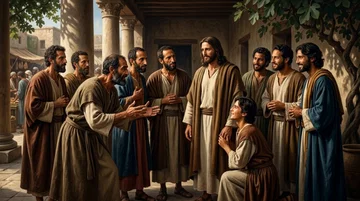
Cross-references
- Matthew 14:13-21
When Jesus heard of it, he departed thence by ship into a desert place apart: and when the people had heard thereof, they followed him on foot out of the cities.
Parallel account of Jesus withdrawing with the disciples before feeding the crowd.
- Luke 9:10-17
And the apostles, when they were returned, told him all that they had done. And he took them, and went aside privately into a desert place belonging to the city called Bethsaida.
Jesus withdraws with the disciples before welcoming and feeding the crowd.
- Mark 6:35-44
And when the day was now far spent, his disciples came unto him, and said, This is a desert place, and now the time is far passed:
Jesus feeds the hungry multitude after calling his disciples to rest.
- Matthew 11:28
Come unto me, all ye that labour and are heavy laden, and I will give you rest.
Christ invites the weary and burdened to come to him for rest.
- Luke 5:16
And he withdrew himself into the wilderness, and prayed.
Jesus withdraws from the crowds to pray in a solitary place.
- John 6:1-14
After these things Jesus went over the sea of Galilee, which is the sea of Tiberias.
Parallel account of Jesus feeding the crowd.
- Matthew 14:15-21
And when it was evening, his disciples came to him, saying, This is a desert place, and the time is now past; send the multitude away, that they may go into the villages, and buy themselves victuals.
Jesus feeds the gathered crowd after the disciples report the remote place and lack of food.
- Mark 1:35
And in the morning, rising up a great while before day, he went out, and departed into a solitary place, and there prayed.
Jesus withdraws to a solitary place for prayer.
- Luke 4:42
And when it was day, he departed and went into a desert place: and the people sought him, and came unto him, and stayed him, that he should not depart from them.
Jesus went to a desert place apart.
- Matthew 14:14
And Jesus went forth, and saw a great multitude, and was moved with compassion toward them, and he healed their sick.
explains why rest was not obtained
- Mark 6:46
And when he had sent them away, he departed into a mountain to pray.
After the crowd departs, Jesus goes to the mountain to pray alone.
- Luke 9:12-17
And when the day began to wear away, then came the twelve, and said unto him, Send the multitude away, that they may go into the towns and country round about, and lodge, and get victuals: for we are here in a desert place.
Jesus feeds the hungry crowd in a desert place.
- Luke 9:11
And the people, when they knew it, followed him: and he received them, and spake unto them of the kingdom of God, and healed them that had need of healing.
Jesus welcomes and teaches the multitude that followed him.
- Isaiah 30:15
For thus saith the Lord GOD, the Holy One of Israel; In returning and rest shall ye be saved; in quietness and in confidence shall be your strength: and ye would not.
Both associate quietness and rest with strength.
Commentary
Each commentary is drawn from primary sources: the writings of Ellen G. White and Adventist pioneers and periodicals. Each commentary is separate. Its own words are not a quotation; follow the references to read the source passages.
Ellen G. White
104 sources
After their first missionary tour the disciples gathered to Jesus to tell Him all they had done and taught, with joy over results shadowed by sorrow over the death of John the Baptist, while constant crowds seeking healing and teaching left no privacy and no leisure even to eat.MH 56.1DA 359.1ST Aug 5, 1897Lt 91, 1892, par. 3–5DA 359.2–3 With pitying tenderness He invited His worn workers to come apart by themselves into a lonely quiet place near Bethsaida and rest a while, recognizing that wholehearted labor had exhausted their strength and that human strength has limits.MH 56.1GW 243.1ST Aug 5, 1897Lt 160, 1899, par. 10–12ST Aug 5, 1897 That rest was duty and not neglect or indolence, for God does not require relentless sacrifice without mercy, yet the invitation is for self-forgetful workers spent to the extent of their ability and is no excuse for idleness or sparing oneself from service.ST Aug 5, 1897ST Aug 5, 1897Ms 8, 1892, par. 15–17DA 360.1–3GW 246.1–2 The hoped-for rest was interrupted when the multitude followed by land and water, and moved as the good Shepherd by love and pity He put their needs before His own desire for repose, healing and teaching them through the day until evening.Lt 91, 1892, par. 3–5Lt 160, 1899, par. 10–12MH 56.2–57.1ST Dec 19, 1916ST The call to come apart brings quiet communion with God that gives true rest and strength, corrects error, guards against pride and self-sufficiency, and prepares for service, so workers today must still stop to rest and recover lest ceaseless strain overtax mind and body and mar the work.ST Aug 5, 1897Lt 16f, 1892, par. 27–28DA 360.1–3DA 362.1–2ST Dec 19, 1916
Setting and Circumstances
The call came just after the disciples returned from their first missionary tour, when they gathered around Jesus and told Him all they had done and taught.MH 56.1ST Aug 5, 1897DA 359.2–3ST Dec 19, 1916ST They laid before Him in close fellowship their successes and failures, their favorable and unfavorable experiences, their faults, weaknesses and errors in their first work as evangelists.ST Aug 5, 1897DA 359.2–3 Their joy over results as heralds of the gospel was followed by bitter sorrow and disappointment at the news that Herod had put John the Baptist to death, which severely tested their faith.MH 56.1ST Dec 19, 1916ST Jesus shared their grief with pitying tenderness, even with tears in His eyes and voice, and saw that they needed both rest and further instruction.MH 56.1ST Aug 5, 1897ST
Where they then were there was no privacy, because many were constantly coming and going and they had no leisure so much as to eat.DA 359.1Lt 91, 1892, par. 3–5DA 359.2–3ST Mar 1, 18772SP 258.3 The crowds pressed with steady demands, coming to hear and see Jesus, seeking healing and teaching, and the work left the workers weary and with no time even to eat.Lt 91, 1892, par. 3–5Lt 4, 1900, par. 1–2Ms 8, 1892, par. 15–17ST Mar 1, 18772SP 258.3 Jesus recognized that this ceaseless activity had exhausted them and proposed withdrawing with them for a short rest apart from the crowds.Lt 4, 1900, par. 1–2Ms 8, 1892, par. 15–17ST Mar 1, 1877
The desert place they sought was a lonely, quiet region near Bethsaida at the northern end of the Sea of Galilee.MH 56.2–57.1ST It was beautiful with the fresh green of spring, reached by entering a boat to cross the lake from Capernaum, beyond the sea to a suitable place for seclusion.STST May 10, 1883ST May 20, 18863RED 52.1 There, apart from the confusion of the multitude and the retorts and accusations of the Pharisees, they hoped for solitude, a little season of repose for Himself and for their benefit, and a short season of fellowship with their Lord.MH 56.2–57.1STST May 10, 1883ST May 20, 1886 Their plan was to rest, to listen to His words, and to talk about the work of the gospel away from the crowds.MH 56.2–57.1ST May 10, 1883ST Mar 18, 1913ST Feb 22, 1877
The crowd was thronging after Christ as the fountain of all blessings, anxious to be healed and eager to hear His words.DA 359.2–3 Many who came then for health accepted Him as Saviour, while many others who were then afraid to confess Him because of the Pharisees were later converted at the descent of the Holy Spirit and acknowledged Him as the Son of God before the angry priests and rulers.DA 359.2–3
The invitation belongs to a demanding day of ministry in which both the crowd and Jesus had gone without food, and the disciples were concerned about the people's needs lest they go home unrefreshed.ST Mar 1, 1877 After Jesus fed them on the barren shore, the people returned the next morning, and large numbers arrived by land and water.ST Dec 29, 1887
Tender Invitation to Rest
With pitying tenderness and compassion He invited His worn, toil-worn disciples to come apart by themselves into a desert place and rest a while after strenuous labor on their first missionary tour.MH 56.1GW 243.1Lt 160, 1899, par. 10–12MH 56.2–57.1 Their joy over the success of the work had been followed by bitter sorrow over the death of John the Baptist, which tested their faith, and He shared their grief in offering them a quiet season apart with Him.MH 56.1 Where they were there was no leisure so much as to eat because of the constant coming and going of the crowds, and His compassion for their weariness made the brief rest with Him precious to them.ST Aug 5, 1897Lt 160, 1899, par. 10–12 They crossed the lake hoping for solitude and fellowship with Him away from the crowds and the Pharisees, to talk over the work of the gospel and how to make it more effective.ST Aug 5, 1897MH 56.2–57.1
He saw that their wholehearted labor for the people had exhausted their physical and mental strength, leaving them weary and too busy even to eat.GW 243.1ST Aug 5, 1897ST Aug 5, 1897 They had gathered to Him and told Him all they had done and taught, laying before Him their successes and failures, faults, weaknesses and errors, and their closeness to Him enabled this frank sharing.ST Aug 5, 1897 He recognized the limits of human strength and that they needed both rest and further instruction, so those who have worked to their limits should ease their efforts that their powers may recover and they may serve more effectively.ST Aug 5, 1897Ms 8, 1892, par. 15–17GW 428.2–429.1 The worn condition of the workers calls for practical arrangements so that God's servants can withdraw and recover strength.GW 428.2–429.1
The words were spoken by the Creator, who knew they would continue to comfort and help His followers when He was no longer physically with them.Lt 4, 1900, par. 1–2 The great harvest and the shortage of workers do not call for ceaseless toil, for He still calls workers today to receive rest.CH 163.2DA 362.1–2 Resting is not wasted time but brings refreshment and renewed strength for better work.Lt 4, 1900, par. 1–2 Rest was their duty and not neglect, indolence, or failure of service, for God does not require relentless sacrifice without mercy and service does not require ceaseless toil.ST Aug 5, 1897Ms 8, 1892, par. 15–17DA 360.1–3GW 245.2MH 58.2
The invitation is for self-forgetful workers who have used spiritual and physical strength to the extent of their ability in earnest service and are distressed that they cannot do more, even going in their zeal beyond their strength.ST Aug 5, 1897GW 246.1–2 It is not an excuse for idleness or for sparing oneself from diligent service and one's share of responsibility.ST Aug 5, 1897GW 246.1–2 Even His own exhausted human nature cried for rest and sleep, as when after a day of ceaseless toil He lay fast asleep in a fisherman's boat with a coil of rope for a pillow.10MR 349.221MR 371.3 He sought a little season of repose for Himself as well as for their benefit, showing by His own need for sleep amid demanding service that acceptance of needed rest belongs with earnest giving of self to relieve suffering and bring hope.ST May 20, 188621MR 371.3Ms 86, 1910, par. 53
Interrupted Rest and Compassion
The quiet they hoped for did not last even an hour, for people searching for Him saw Him depart and watched the slowly receding boat crossing from Capernaum toward the lonely region beyond the sea.MH 56.2–57.1ST3RED 52.1 Supposing His usual place of retirement near Bethsaida, they spread the news from city to city that He was crossing the water and flocked to the place where His boat was expected to land, while others followed over the water in boats.ST3RED 52.1ST Mar 18, 1913 In this way the crowd found them and met them when they landed, so that Jesus and His disciples came ashore into the midst of a multitude pressing forward on all sides, and their intended solitude and fellowship were interrupted.MH 56.2–57.1ST Dec 19, 1916ST3RED 52.1ST Mar 18, 1913
As the good Shepherd He felt only love and pity for restless, thirsting souls, and He put their needs before His own desire for repose.Lt 160, 1899, par. 10–12MH 56.2–57.1ST Dec 19, 1916STST Mar 1, 1877 He ministered to them through the day until evening, healing the sick who sought healing and teaching those who needed spiritual help.Lt 91, 1892, par. 3–5Lt 160, 1899, par. 10–12STST Aug 12, 1897ST Mar 1, 1877 When the waiting crowd needed help He gave up the rest He had sought and responded with compassion and aid, putting the people's spiritual need first.ST Dec 19, 1916ST Aug 12, 1897ST Mar 1, 1877
The disciples urged withdrawal and rest after long labor, because each person seeking mercy seemed to have an urgent need yet the strain left no time even to eat.MH 55.13RED 53.3Ms 86, 1910, par. 53ST Feb 22, 1877 He Himself would not be drawn away from labor to rest with them but ministered all day to the throngs that came to Him and could not turn them away when they flocked to Him.MH 55.13RED 53.3Ms 86, 1910, par. 53ST Feb 22, 1877 Then at eventide or in the early morning He went away to the sanctuary of the mountains for communion with His Father, while He often released the disciples who worked with Him for a season to visit their homes and rest.MH 55.1
He cared for bodily weariness as well as spiritual need, noticing when the following multitude grew weary and hungry and some fainted and fell to the ground after following from place to place with no leisure even to eat.ST Aug 12, 1897ST Aug 12, 1897Ms 186, 1907, par. 8–9Ms 182, 1907, par. 21–23Ms 73, 1909, par. 20–21 He had compassion on them and acted as their sanctuary and helper, calling them aside and providing a place for them to rest in a secluded place.Ms 186, 1907, par. 8–9Ms 73, 1909, par. 20–21Ms 86, 1910, par. 14–18 He had them sit down comfortably on the grass in companies on a grassy plot, asked what food they had, took the five loaves and few small fishes, and with sympathy and thoughtful care gave simple food through the disciples until the five thousand besides women and children were satisfied.ST Aug 12, 1897ST Aug 12, 1897Ms 186, 1907, par. 8–9Ms 182, 1907, par. 21–23Ms 73, 1909, par. 20–21
On that occasion the disciples did not get to rest, for Jesus met the people's need and kept laboring for them until nearly faint with exhaustion.Lt 91, 1892, par. 3–5 He was weary Himself when He crossed the sea, yet finding still more urgent needs He patiently continued to care for the sick and afflicted though repeatedly interrupted.Lt 91, 1892, par. 3–53RED 53.2
Communion Instruction and Renewal
The call to come apart gives workers a few hours alone with Christ in quiet, personal communion with God, stepping away from ceaseless labor to rest, to tell Him their needs, to listen for His will, to pray for those in need, and to sit with the divine Teacher.ST Aug 5, 1897ST Dec 19, 1916STMs 38, 1889, par. 2DA 363.2–3 That communion brings true rest and help and strength, with peace and joy and grace, and it refreshes and strengthens mind and heart to resist temptation and prepares for further service and greater usefulness even amid demanding work.ST Dec 19, 1916Ms 38, 1889, par. 2DA 363.2–3 The disciples used that quiet place to report their work to Him and to talk together about the work of the gospel and how to make their labor more effective in reaching people.ST Aug 5, 1897Ms 81a, 1901, par. 22ST There He gave them further instruction for future work, corrected their errors, taught them how to approach unbelievers, opened to them the treasures of truth, and vitalized them by divine power so they were inspired with renewed hope and courage.ST Aug 5, 1897STST Aug 5, 1897
They needed much instruction and spiritual renewal because success after labor brings danger of pride and self-sufficiency, of becoming self-important, strong and full of self, wise in their own conceits, trusting human plans and methods, praying less and having less faith, losing sight of dependence on God, and making a saviour of constant activity.Lt 16f, 1892, par. 27–28DA 360.1–3DA 362.1–212MR 337.4 Withdrawal from conflict and the din of battle keeps workers from that self-exaltation and keeps them open to be led and taught and used by the Lord to His glory.Lt 16f, 1892, par. 27–2812MR 337.46MR 82.1–2 Resting apart is the time to bury self and hide self in Christ so that Christ alone appears, enabling the humble, trusting believer to lift Jesus before the people while God does all things through him.12MR 337.46MR 82.1–2
The quiet outdoor setting, away from the confusion of busy places, suited lessons of simplicity and faith and self-denial.CH 162.2 Rest apart with Christ equips workers with the Holy Spirit to communicate what those in necessity need, as Christ Himself did, and teaches them to work in a way that brings God the greatest glory.Ms 186, 1907, par. 8–9Lt 9, 1905, par. 5–8 Only work done with much prayer and meditation and study of the word, sanctified by the merit of Christ, will in the end prove efficient for good, for His power does the work while workers labor earnestly for the salvation of the lost.DA 362.1–2 That time apart was not spent in self-indulgence or frivolous amusement but in discussing God's work and yielding the will to God for counsel and spiritual renewal.ST Aug 5, 1897
Feeding the Five Thousand
What began as a withdrawal for rest amid relentless work continued into ministry to a tired, hungry multitude of five thousand men besides women and children.6T 263.1Ms 186, 1907, par. 8–9Ms 73, 1909, par. 20–21 With only five loaves and a few small fishes at hand, Jesus had the people sit down on a grassy plot in companies, broke the food into small pieces, and gave it through His disciples until all had eaten enough.Ms 123, 1909, par. 32–34Ms 186, 1907, par. 8–9Ms 182, 1907, par. 21–23Ms 73, 1909, par. 20–21 The supply multiplied again and again as it was handed out, with provision still remaining in His hands as He kept imparting it, and the disciples themselves also ate from what remained.6T 263.1Ms 64, 1910, par. 10–11Ms 182, 1907, par. 21–23 Even that retirement became continued ministry, for crowds followed Him wherever He went, and He watched them closely as they grew weary and hungry and some fainted, acting as their sanctuary and helper and physician.Ms 186, 1907, par. 8–9Ms 182, 1907, par. 21–23 In one account of the journey the people had been with Him three days with their food used up, and after all were satisfied He commanded that the fragments be gathered up so that nothing would be lost.Ms 64, 1910, par. 10–11Ms 123, 1909, par. 32–34
The wonder was like the provision of food for one hundred men in the time of Elisha, for divine power multiplied a small amount until it was sufficient.Ms 114, 1899, par. 1–3 His followers are therefore to share with the needy what they receive from Him, bringing temporal and spiritual blessing, and what is offered and used faithfully can become enough to feed a multitude.6T 263.1STB 119.3–4 His command to give the people food was backed by divine power, so lack of supply is no reason to withhold what is at hand.DA 369.1 A small offering in Christ's hands can provide abundantly, so His people should give in faith and not be discouraged when what they have seems insufficient.Ms 66, 1900, par. 11–12
After miraculously satisfying hunger He taught economy and thrift by being careful that what remained should not be wasted, commanding that the fragments be gathered up.STB 772.1–2Ms 64, 1910, par. 10–112T 435.3 Twelve baskets were gathered on this occasion and seven on another occasion.Ms 123, 1909, par. 32–34 Industry and economy are duties: to owe no one anything, to live within means, to labor faithfully for small wages as well as large, to be a faithful steward of strength by using it to keep the family above want and dependence, and to safeguard by frugality and thrift the interests of the work entrusted to those in charge of institutions, especially when trying circumstances compel close economy.STB 772.1–22T 435.3 No one has a right to waste, or to gain means by gambling or by robbing another through scheming, but must freely impart what God has given.Ms 182, 1907, par. 21–23
The providence of God had placed Him in the wilderness with the multitude that came without invitation and listened long, knowing they would feel hungry and faint and being one with them in their need of food, and with apparently no means at hand He depended on His heavenly Father for means to relieve the necessity.ST Aug 19, 1897 The place of need teaches dependence on God when brought into strait places, seeking wisdom from Him who has infinite resources and trusting Him to deliver and keep every soul, showing what Christ can do to provide and minister and teach and guide and calling for more faith in Him in every trial.ST Aug 19, 1897Ms 123, 1909, par. 32–34 The miracle belonged to His mission and expressed His love for humanity, and His meeting the bodily need for food shows He remains able to provide for the physical needs of His people.17MR 252.3Ms 18, 1898, par. 11 From the feeding practical lessons are to be drawn about preparing food simply and economically and following the Lord's methods in food work, within a ministry in which teaching and healing taxed body and soul yet showed careful attention to practical needs, even to saving the food that was left.Lt 302, 1906, par. 515MR 41.2–3 His care for the weary and hungry means that people seeking the way of salvation are not to be neglected or sent away faint, tired, and discouraged, but Christians are to make thoughtful efforts to give them opportunity to hear the word of life and to remove obstacles that make coming to Him difficult.ST Aug 12, 1897
Rest for Workers Today
Even amid urgent needs and ceaseless service human beings need time for rest, for the call to labor does not mean ceaseless toil or carrying every burden that can be borne without pause.Lt 153a, 1897, par. 21MH 58.2GW 243.3RH Jun 20, 1912Lt 12, 1906, par. 1 He who could work miracles and had empowered workers to do so still directed worn disciples to withdraw to a quiet place and rest, recognizing their need and not placing every responsibility on a few.MH 58.2GW 243.3 That compassionate call to withdraw and rest for a while preserves health and strength for effective service.Lt 153a, 1897, par. 21MH 58.2RH Jun 20, 1912
Resting is not wasted time but brings refreshment and renewed strength for better work, preserving strength for future duties and causing no loss.Lt 4, 1900, par. 1–25MR 13.3GW 245.2 Workers worn by heavy cares and labor should turn aside from continual activity to a quiet place, especially when the press of work leaves no time even to eat, and then return invigorated with more clearness of thought, more strength of intellect, and better preparation to do the important work committed to them.Lt 4, 1900, par. 1–2Lt 23, 1892, par. 115MR 13.3GW 245.21T 519.1–2 Such relief includes recreation and relief from labor so that strength can be recovered and duties resumed better prepared.Lt 23, 1892, par. 111T 519.1–2 Rest is not selfish indulgence, and when mind is strained and body weakened temptation presses more fiercely, so the weary worker should care for strength and spend time with Jesus.GW 245.2
To stay always under strain and excitement neglects personal piety and overtaxes mind and soul and body, so while self-denial and sacrifice are required, reason must be used and the laws of health followed to preserve the life God has given.GW 243.2DA 362.1–2 Overzeal must be guarded against lest Satan take advantage of human weakness and mar the work of God, for constant bustle of activity is not religion.GW 243.2DA 362.1–2 With increased activity and success there is danger of trusting human plans and methods, praying less, having less faith, losing sight of dependence on God, and making a saviour of activity while building self-sufficiency and separation from God.DA 362.1–2 Workers must therefore look constantly to Jesus because His power does the work, laboring earnestly for the salvation of the lost while also taking time for meditation and prayer and study of the word, since only work done with much prayer and sanctified by the merit of Christ will in the end prove efficient for good.DA 362.1–2
When mind is strained and body weakened temptation presses more fiercely, so the weary worker should care for strength, spend time with Jesus, and withdraw for a time to rest, pray, commune with God, and open the heart to the Holy Spirit before further action.GW 245.2Ms 38, 1889, par. 2Lt 48a, 1900, par. 8 That time apart provides space for communication with God, refreshing and strengthening mind and heart to resist temptation and making room to talk with God.Ms 38, 1889, par. 2Lt 48a, 1900, par. 8Lt 38, 1902, par. 1–3 It is the needed response when mind and soul are troubled and when a contentious spirit causes contention.Lt 48a, 1900, par. 8Lt 38, 1902, par. 1–3
Provision should be made for God's servants to rest and recover strength, including a welcoming refuge where worn-out workers can receive care without anxiety about cost and a place for change without constant worry about expenses.7T 292.2–3Ms 67, 1899, par. 3–4GW 428.2–429.1 Experienced workers who have borne the burdens should be relieved of taxing loads so they can be appreciated as educators, while younger workers take up the demanding work.Ms 82, 1899, par. 6–7 Sanitarium workers with little or no time even to eat should be given a reasonable workload and freedom to rest after a day's labor so they can maintain strength and vitality and do their work well.GW 428.2–429.1SSP 36.1–2
Those weary and restless from continual demands should stop labor and rest awhile to renew physical and spiritual strength, setting worry aside.Lt 83, 1902, par. 24–28Lt 37, 1901, par. 6 That call applies to an ambitious person whose brain needs care, reminding that constant active service should give way to rest.Lt 10, 1894, par. 28 Rest may come through a change to work with less responsibility, which can protect spiritual simplicity and keep leadership from endangering it.Ms 109, 1893, par. 2 Those who do not love God wholeheartedly should withdraw from work for a time, or take up other work, until they breathe a purer atmosphere and their hearts are purified by obeying God's Word, and rest should be taken while still exerting a Christlike influence and dealing wisely with others.17MR 244.3–245.1Lt 10, 1902, par. 10
When turmoil, discomfort, weariness, or restless nervousness leaves workers distracted or nearly despairing, Christ invites them to withdraw and rest rather than continue without pause or press on in the din of battle.13MR 305.1Lt 19c, 1892, par. 14–167T 244.1 When workers grow weary and full of care, worry, and self-pity, He calls them to step aside for rest, which keeps them in His care instead of worrying themselves out of it.7T 244.17MR 395.5–396.2 Rest with shared responsibilities and stepping away from confusion can prevent overwork from harming oneself and others, while regular time for rest amid demanding work sustains endurance under heavy burdens.Lt 15, 1896, par. 5Lt 19c, 1892, par. 14–16CH 391.6
Pressing on through exhaustion without rest can destroy workers who are then lost to the work, resting in the grave until the last trumpet calls the righteous to immortality.GW 245.1 Self-denial and sacrifice have limits, for God does not require continual overwork that damages health or leaves a person unable to meet later duties; workers are not to labor beyond strength but to care for physical powers so they can serve again the next day.GW 245.1ST Aug 5, 1897 Rest is sleep and relief from strain that protects nerve and muscle, and going long without it wears the body toward paralysis and helplessness, so that carrying a heavy unavoidable burden with almost no opportunity for rest under terrible strain gives all the glory to God alone.8MR 49.2
The call applies tenderly to a burdened person to step away from study, grief, and thoughts of mistreatment into calm fellowship with Jesus and trust in promises.Lt 10, 1894, par. 22–24 It is a compassionate wish for a devoted caregiver to step away from duties and rest for a while, and fitting counsel when responsibilities and labor have left a person in need of rest.Lt 98, 1903, par. 1Lt 40, 1902, par. 1 Zealous workers overwhelmed by burdens beyond what finite people can accomplish should not become overwhelmed but should do what they can calmly and well, let others carry responsibilities that are theirs, allow some work to wait, stop carrying loads only finite man can do, and let the Lord carry the burden while trusting Him to provide, guide the work, and care for family.10MR 278.3–279.1Lt 184, 1901, par. 20–22Lt 270, 1903, par. 1–5 That means trusting wholly in God, seeing Christ going before in every experience preparing the way, being of good courage about help and comfort for worker, wife, and little ones, holding fast with patience without worry and unbelief, and not expecting a perfect school at its planting on new soil, as with the burden of establishing the school at Berrien Springs, since planting and perfecting takes time and every inch gained must be held fast.10MR 278.3–279.1Lt 270, 1903, par. 1–5
Sources
Pioneers and periodicals
96 sources
After the disciples returned from their first missionary tour and told all they had done and taught, Jesus invited them apart with Himself into a quiet uninhabited place for a brief season of repose, because the crowds were coming and going so constantly that they had no privacy and no leisure even to eat.ST Aug 5, 1897ST Jun 14, 1899ST Feb 1, 1899ST Jun 14, 1899 The withdrawal was for quiet fellowship and spiritual nourishment, to share their victories, failures, hopes and faults and to receive further instruction about His kingdom, correction of mistakes, and power to labor more effectively.ST Apr 30, 1912ST Aug 5, 1897ST Apr 30, 1912RH Jun 6, 1912 Christ tenderly calls workers exhausted in body and mind by wholehearted service to rest as a duty, for God does not require health-destroying sacrifice, yet the call is not an excuse for idleness or sparing oneself, and workers must care for physical powers and obey the laws of health so they can serve effectively again.ST Apr 30, 1912ST Aug 5, 1897ST Aug 5, 1897ST Apr 30, 1912RH Sep 4, 1900 The intended solitude was not kept, for the multitudes reached the place ahead of them, and though weary Jesus would not turn them away but was moved with compassion to teach and minister to their needs all day until evening, putting their spiritual need first and then caring for their bodily weariness.ST Dec 19, 1916ST Jun 14, 1899ST Feb 1, 1899ST Mar 8, 1899ST May 25, 1904 Withdrawing still renews spiritual strength through communion, prayer and the Word, and rest and recreation that restore for renewed service are legitimate and make labor more productive, distinct from seeking pleasure as an end or worldly amusement.RH Dec 7, 1911RH Mar 14, 1854RH Feb 25, 1904RH Aug 29, 1912ST Oct 1, 1885
Words and Historical Setting
The invitation was given when the disciples had just returned from their first missionary tour and told Jesus all they had done and taught, reporting their work and experiences with both its successes and its failures, including their faults and weaknesses, in the frankness made possible by their closeness to Him.ST Aug 5, 1897ST Apr 30, 1912ST Jun 14, 1899RH Dec 19, 1907 Their need for rest followed that tour of labor, and He saw that they also needed further instruction.ST Aug 5, 1897ST Apr 30, 1912RH Dec 19, 1907 The withdrawal came after the arraignment over Sabbath-breaking and after the news of the death of John the Baptist.ST Feb 1, 1899 Jesus Himself also withdrew for meditation after hearing of John's death, while the disciples needed rest after their extended preaching tour, so that both Master and disciples were overworked.ST Feb 15, 1905 The disciples were filled with joy over success as heralds of the gospel and at the same time stricken with bitter sorrow and disappointment at the news that Herod had put John to death, which severely tested their faith.ST They were worn by labor and grieving John's death when Jesus with pitying tenderness, with tears in His eyes and voice, invited them apart to rest.ST Dec 19, 1916ST The news of John's death likely helped prompt the retreat, since it warned that the work in Galilee would soon end through the people's rejection and cast the shadow of a violent death to come.ST Jun 14, 1899
So many people were constantly coming and going that Jesus and the disciples had no privacy and no leisure even to eat, being kept so busy by the crowds that they had little time for food.ST May 10, 1883ST Jun 14, 1899ST Jun 6, 1900ST Dec 30, 1903 Their work left them surrounded and persistently sought, so that finding rest was difficult even when a quiet place was sought.ST Apr 25, 1900ST Dec 30, 1903 The desert place to which He called them means a quiet, uninhabited, isolated place for private withdrawal with Him.ST Jun 14, 1899ST Feb 1, 1899ST Feb 15, 1905ST Jun 6, 1900 Rest awhile means a brief, short season of repose.ST Jun 14, 1899ST Feb 1, 1899 Rest also means abiding and giving rest or refreshment, as God's Spirit abides upon and refreshes those who suffer with Christ.ST Aug 28, 1898
The retreat was a lonely region near Bethsaida at the northern end of the Sea of Galilee, east of the Jordan in Philip's territory, distinct from the Bethsaida west of the sea.ST Dec 19, 1916STST Jun 14, 1899 It was a mountainous desert within sight of the sea, beautiful with the fresh green of spring.STST It had been home to Andrew, Peter and Philip.ST Jun 14, 1899 They sought it privately by entering a boat to cross the lake beyond the sea from Capernaum, about six miles away.ST Dec 19, 1916STST May 10, 1883ST May 20, 1886ST Jun 14, 1899 The mention of coming and going around a meal shows that gatherings in those times could be open and informal, and it is not evidence of a regular religious meeting on the first day of the week.ST May 28, 1885
Fellowship and Instruction Purpose
Jesus drew the disciples away with himself for a few hours of quiet fellowship after their first missionary tour.ST Apr 30, 1912ST Aug 5, 1897RH Nov 18, 1915 Close to him, they freely told him all about their work, its successes and failures, their victories, hopes and fears, and their faults and weaknesses.ST Aug 5, 1897RH Jun 6, 1912RH Nov 18, 1915RH May 15, 1913 In that withdrawal from the press of activity they brought him their work and received spiritual nourishment, strength, the bread of life and the wine of love.ST Apr 30, 1912RH Jun 6, 1912RH Nov 18, 1915RH May 15, 1913 The retreat gave rest to body and mind with spiritual refreshment and time for meditation and prayer, showing the continuing need for quietness apart with nature and God.RH Oct 16, 1913
The quiet was also for further instruction about his kingdom and work, because weariness and the report of their experiences showed they needed to be taught more.ST Apr 30, 1912ST Apr 30, 1912 Apart from confusion, retorts and accusations, the brief precious time alone was spent talking about the work of the gospel and how to make labor more effective in reaching people.STRH Dec 19, 1907 There mistakes were pointed out, errors corrected, and lessons given on how to approach unbelievers, study the gospel work, pray, and take counsel for more effective labor.RH Dec 19, 1907 As he opened the treasures of truth they were vitalized by divine power and inspired with hope and courage, and so prepared to serve more effectively.ST Apr 30, 1912STRH Dec 19, 1907
That retirement was needed for communion, instruction and preparation for future work, providing spiritual nourishment as well as physical rest.ST Apr 30, 1912 It made room for quiet personal communion with God rather than demanding ceaseless toil to meet every need, and by his example taught withdrawal from activity and human demands for prayer, including prayer for those in need.ST Dec 19, 1916ST Quiet retirement renews spiritual strength through prayer and the Word, and in solitude and prayer workers learn to do God's work in his way and at the time he appoints.RH Dec 7, 1911RH Mar 14, 1854 Service is worthy when it flows from the joy of God's presence, after the pattern of one who repeatedly went to solitary places to pray, even rising very early.RH Dec 7, 1911
Rest of this kind is not retreat from service, for renewed through communion the workers return to their work refreshed.RH Jun 6, 1912RH Nov 18, 1915RH May 15, 1913 Time spent learning from the Master is not wasted but prepares followers to continue service.RH Nov 18, 1915RH May 15, 1913 Learning more of him teaches about his rest in heaven.RH Jun 6, 1912
Rest as Gracious Duty
Christ tenderly calls workers exhausted in body and mind by wholehearted, self-forgetful labor to withdraw and rest for a while, and their rest is a duty and not a failure of service.ST Apr 30, 1912ST Aug 5, 1897ST Apr 30, 1912ST Apr 30, 1912RH Sep 4, 1900 God does not require them to sacrifice health in continual overwork, but desires mercy, and self-denial and sacrifice have their limits.ST Apr 30, 1912ST Aug 5, 1897ST Apr 30, 1912ST Aug 5, 1897 The call also gives a few hours with Him for fellowship, instruction, renewed hope and comfort, and preparation to serve more effectively, and those who come to Him with their troubles receive renewed strength.ST Apr 30, 1912ST Apr 30, 1912RH Jun 6, 1912
The invitation is for those who have used spiritual and physical strength in self-forgetful work and are distressed that they cannot do more, not for those who avoid work.ST Aug 5, 1897ST Apr 30, 1912 It is no excuse for idleness, for sparing oneself from diligent service, for laziness or for self-indulgence.ST Aug 5, 1897ST Apr 30, 1912ST Apr 30, 1912 Workers must not presume upon their strength or ruin health by laboring beyond strength to exhaustion.ST Apr 30, 1912ST Apr 30, 1912ST Aug 5, 1897RH Sep 4, 1900 They should care for physical powers, obey the laws of health, and use strength wisely so they can serve effectively in the work ahead, serve again the next day, and meet later duties.ST Apr 30, 1912ST Aug 5, 1897
He did not expect His workers to labor without pause, but to step away from demanding work and human demands for quiet communion with God and prayer for those in need.ST Rest so taken helps restore health and preserve workers for continued service, while those who neglect needed rest may die before they can continue serving.RH Nov 25, 1909 Rest is compatible with faithful service, and wholesome recreation and sleep are legitimate needs for tired bodies and exhausted nerves, not sin.RH Sep 4, 1900ST Aug 4, 1914ST Feb 18, 1886 Bodily weariness and fatigue are not themselves sin or proof of insufficient faith, nor are they illness or idleness, and caring for the soul fittingly includes rest even amid necessary work.ST Feb 18, 1886ST Nov 10, 1898ST Dec 24, 1894 Rest and recreation that restore for renewed service are distinct from seeking pleasure as an end in itself, and too little recreation dries up the work, so workers should play wisely and take time to renew themselves.ST Oct 1, 1885
The pause from going out to the people is not release from duty, for when the crowds came after the crossing He directed the disciples to feed them.RH Nov 18, 1915RH Nov 28, 1912 Withdrawal is not a life of idleness or isolation, but God calls for active service balanced with learning from Him, meditating on His instructions, feeding on His Word and receiving His Spirit.ST Jan 18, 1905 Through this fellowship He makes servants His friends, and renewed through communion they return to work, so time spent learning from the Master is not wasted.RH Jun 6, 1912RH Nov 18, 1915ST Jan 18, 1905
Jesus Himself grew weary from labor and sought brief rest for Himself as well as the disciples, who had been so busy they had no time even to eat.ST May 10, 1883ST Apr 8, 1889ST Dec 24, 1894 He proposed going with them to a quiet place beyond the sea from Capernaum, and His disciples sometimes had to take Him away from work lest exhaustion overcome Him.ST May 10, 1883ST Apr 8, 1889 He needed to withdraw from the demands of others for rest and prayer amid constant need when there was scarcely time to eat or rest.ST Jan 21, 1897 His care for physical needs exemplifies the loving concern members should show one another, especially when afflicted or tempted.RH Mar 24, 1910 His thoughtfulness takes account of nervous and physical needs and life's practical needs as well as hunger, sorrow and spiritual needs and growth, even having the people sit down comfortably in a secluded place before providing simple food.ST Aug 12, 1897RH Mar 24, 1910RH Oct 28, 1909RH Feb 24, 1910
Compassion Interrupting Rest
The invitation to withdraw to a quiet place for a while after the work came because constant coming and going left no leisure even to eat, and the retreat to a lonely region near Bethsaida was meant to take them away from the crowds for fellowship, teaching, and renewed hope and courage after the strain of the first missionary tour and grief over the death of John the Baptist.ST Dec 19, 1916STST Aug 12, 1897ST Jun 14, 1899ST Mar 8, 1899 That solitude was not kept, for the multitude supposed His usual place of retirement, followed Him there, and reached it ahead of them by land and water, so the hoped-for rest was interrupted and even an hour of quiet was frustrated.ST Dec 19, 1916STST Jun 14, 1899ST Mar 8, 1899ST May 25, 1904 The scene shows that a place sought for rest may still bring people in need, leaving without the respite that had been intended.ST May 25, 1904
Though weary and without opportunity to rest, He could not hide from them or turn them away.STST Feb 1, 1899ST Dec 22, 1887 As the good Shepherd He felt only love, pity and compassion for the restless, thirsting, sick and suffering souls whose great need drew His immediate attention, and He ministered to their needs all day with calm kindness until evening when He dismissed them to go to their homes and rest.ST Dec 19, 1916STST Aug 12, 1897ST Feb 1, 1899ST Dec 22, 1887 Seeing their suffering filled Him with compassion so that He could not leave them without aid, and rather than allowing the hungry crowd to go home unrefreshed He met their need.ST Mar 1, 1877ST Dec 22, 1887
He put the people's spiritual need first by teaching them, then cared for their physical weariness by having them sit comfortably on the grass in a secluded place before providing simple food, showing sympathy and thoughtful care for both body and soul.ST Aug 12, 1897ST Aug 12, 1897 The needs of suffering people mattered more to Him than His own comfort, so He set aside His rest and ministered to the eager crowd that followed.ST Aug 12, 1897 Those who are weary and hungry and seeking the way of salvation are not to be neglected or sent away faint, tired and discouraged, and thoughtful efforts are to be made to give people opportunity to hear the word of life and to remove obstacles that make coming difficult.ST Aug 12, 1897
The same pattern holds where continual demands leave devoted workers no leisure for food and rest, as when teaching from early morning until midnight leaves hardly time to eat or rest, yet strength is given for the work.ST May 25, 1904RH Aug 29, 1907ST Jan 21, 1897 Even Christ needed to withdraw from the demands of others for rest and prayer, and the strain of serving amid constant need may leave scarcely time to eat or rest.ST Jan 21, 1897
Feeding Miracle and Connections
This invitation opens the account of feeding the five thousand, the same feeding told in John 6:1-14, a miracle recorded by all four Gospel writers whose parallel accounts repay comparison.ST Feb 1, 1899RH Jul 28, 1903RH Jul 11, 1912 After the call apart for rest because crowded labor left no leisure even to eat, the feeding of the multitude followed in the desert place.ST Dec 29, 1887RH Jul 28, 1903ST Jul 7, 1898 Afterward He sent the crowd away and went up into the mountain to pray alone while the disciples crossed the sea, and the next morning large numbers returned by land and water.ST Dec 29, 1887ST Jul 7, 1898ST Aug 2, 1905
In that wilderness far from home at nightfall were about five thousand men besides women and children, eager but uninvited and without command to follow, many with no means to buy food, who had listened all day and grown hungry and faint.STST Aug 19, 1897RH Jul 28, 1903ST Sep 18, 1893ST From a little lad's basket of five loaves and two fishes He blessed plain substantial food, the same food given to Himself and His disciples, and the disciples distributed it until all ate.RH Jul 28, 1903ST Sep 18, 1893RH Jul 11, 1912ST What is shared can multiply in the act of distribution, and His blessing upon the little store made it more than enough, showing how God makes limited resources sufficient for a far-reaching work.ST Sep 18, 1893ST May 13, 1880RH Jul 11, 1912 The same Christ who fed Israel with manna in the wilderness provided the food, pointing to Himself as the Bread of Life who supplies spiritual food for followers to share with others. The five loaves feeding the crowd is noticed as a marvel, while the daily multiplication of seed into grain and of moisture into wine through the grape are equally marvelous but go unnoticed through familiarity.ST Aug 26, 1880 That wilderness feeding pictures heaven as a place where everyone has ample food, and shows how a single moment in a servant's life can lead to far-reaching blessing.RH Mar 9, 1916
The call apart helps explain why the Spirit led Jesus into the wilderness immediately after His baptism, with a twofold object.ST Feb 1, 1899 He must undergo temptation in its most direct and potent way in order to reach the depth of human suffering and know how to sympathize with those He came to save, and those days were also to serve as a season of meditation and preparation for the great work before Him, a season of triumph over Satan and over the flesh by absorbing, elevating communion with God, a lesson for all entrusted with responsibilities in the work of salvation.ST Feb 1, 1899 Time apart can likewise prepare a person to receive transforming truth, as Peter's rest became the occasion for his vision of the sheet teaching that Gentiles could share the gospel without first becoming Jews, changing both belief and practice.ST Oct 30, 1879
The call to rest for workers long bearing heat and burden until worn and weary does not cast them off from the firing line.RH Aug 29, 1912 Though no longer in active warfare, God still counts them as part of His loyal army and they shall share equally with brethren who by greater endurance remain, even as David counted his faint comrades at Besor.RH Aug 29, 1912 The miracle shows He could work miracles because humanity and divinity were combined in Him, and believers need faith laying hold of Christ with self-denial and sacrifice to be united with Him.RH May 20, 1909 Being placed by God's providence where need appears with apparently no means at hand, rather than letting people return home fasting, teaches dependence on God in every strait place and emergency, seeking help and wisdom from Him who has infinite resources at command to deliver and keep every soul trying to keep the way of the Lord.STST Aug 19, 1897 Scarcity, suffering multitudes, and hard times therefore do not excuse slackened effort but call for enlarged plans, obedient giving, and faith in Him who never fails, trusting that the resources of heaven are pledged to the work, with thoughtful efforts to give people opportunity to hear the word of life and to remove obstacles that make coming to Christ difficult.ST Aug 12, 1897ST Sep 18, 1893
Renewal and Present Application
Withdrawing for a time of quiet retirement with the Lord renews spiritual strength through prayer and the Word.RH Dec 7, 1911RH Mar 14, 1854 Solitude and prayer teach how to do God's work in His way and at the time He appoints, and service is worthy when it flows from the joy of His presence.RH Dec 7, 1911 Jesus Himself repeatedly went to solitary places to pray, even rising very early, and His followers need this same wilderness teaching with God.RH Dec 7, 1911 The rest Christians need is therefore spiritual renewal rather than amusement, leaving work briefly after the manner of the weary disciples directed to a quiet place.RH Mar 14, 1854RH Feb 25, 1904
The call to rest is not a demand for constant toil to meet every need, but makes room for quiet personal communion with God which renews strength for service.ST Dec 19, 1916 Service does not take the place of loving communion, for work without love is nothing, and time apart with Jesus restores closeness of heart.RH Nov 18, 1909 Coming apart in the desert means sustained communion to renew the soul, strengthen spiritual life and motives, and nourish the truths shared with others.ST Dec 19, 1916RH Nov 18, 1909ST Apr 29, 1903 The greater the labor for Christ, the more necessary this intimate communion becomes.ST Apr 29, 1903
The invitation belongs to daily quiet time and contact with heaven.RH Nov 25, 1909 It calls to leave daily cares for a while and draw near to the Master in worship and prayer.RH Nov 25, 1909ST Nov 25, 1930 Any place may become a temple when the Master dwells within, so prayer need not be confined to a particular place.ST Nov 25, 1930
Rest and recreation that restore for renewed service are legitimate, distinct from seeking pleasure as an end in itself.ST Oct 1, 1885 Jesus providing rest for Himself and His disciples gives the example of withdrawing from demanding work for a time of rest and recreation, when constant activity left no time even to eat.ST Oct 1, 1885RH Oct 30, 1913 Christians may likewise make time for rest and recreation while conducting their gatherings differently from worldly amusement.RH Oct 30, 1913 Gatherings in nature for communion with God, prayer, singing, Bible study and other helpful activities that draw to the Saviour are proper, provided they do not sink to worldly standards and Christian dignity is maintained.RH Aug 29, 1912 This invitation to come apart and rest is the basis for practical lessons about true recreation and vacation guidance.RH Jul 11, 1912ST Jul 16, 1912
True rest is found by taking Christ along, even in recreation.ST Aug 5, 1897 Useful faithful work should be deliberate rather than frantic, and taking time for rest and quiet strengthens for work.ST Nov 9, 1915 When demands leave no time even to eat, devoted workers need to stop and rest, and this necessity is not a sign of illness or idleness.ST Aug 5, 1897 Proper rest does not hinder labor but can make it more productive.ST Nov 9, 1915RH Mar 14, 1871
A brief period of quiet and rest gives renewed strength for duties, and the call to rest awhile applies to a tired mother needing a little undisturbed time not for selfish pleasure but to regain energy and patience for her household.ST Jul 15, 1886 The same counsel applies to people worn down by continual activity, including weary nerve-sick people who need restorative rest.RH Jan 12, 1905 Bodily sickness itself can serve as such a retirement, weakening the flesh, exposing the vanity of worldly desires and pride, removing reliance on earthly support, and teaching dependence on God.RH Feb 9, 1860 Pain and illness can bring closer communion with God, and whether slight or severe are to be received as opportunity to grow in righteousness, since suffering as well as active service can glorify Him.RH Feb 9, 1860
Overworked servants of the Lord as well as the disciples should seek rest and health, for the command to rest awhile is important and often neglected.RH Sep 19, 1865 Jesus recognized His servants' need for change and rest after laboring for others and graciously invited them to withdraw for a while.RH Dec 12, 1907 Taking time apart to rest can be a duty for missionaries as well as going out to serve, needed after faithful labor especially when health requires change and medical care.RH Mar 9, 1916 Faithful missionaries returning from demanding work in foreign fields should therefore have time to recover and regain strength before serving again.RH Dec 12, 1907RH Mar 9, 1916 The workers' retreat at Avera, where they found needed rest before returning with renewed energy and courage, applies this call to a quiet place.RH Jan 12, 1905 Camp-meeting grounds with natural enclosure and stream, such as Hot Springs in northwestern Nebraska, can provide such a place for rest with the Lord.RH Jul 14, 1903 After five years of intense activity with almost no rest, workers may take two or three months away under this invitation.RH Apr 30, 1908 The same principle provides rest homes, a home in the Canaries from tropical sun and malaria, a quiet setting for teachers, institutes for study and prayer and counsel on effective labor, and a winter training-school term for ministers, wives, Bible workers, canvassers and secretaries to gain Bible knowledge, new life and power.RH Dec 12, 1907RH Mar 9, 1916RH Jan 12, 1905RH Jul 14, 1903RH Apr 30, 1908
Jesus calls everyone to come apart and rest awhile with Him beneath the cross, leaving the world with its gain and loss and stepping apart from self.ST Sep 30, 1889 The call is for those who feel life's journey long, for poor weary anxious toilers with dull aching hearts, for bright gay thoughtless children of pleasure lest in joy and selfish pride they forget the One who died to make them blessed, and even for those whose life has been one long unrepented dark vile sin though the world oppress and hate them, to rest in Him now before it is too late.ST Sep 30, 1889 The invitation also means making time to learn God's lessons and turn thoughts toward Him rather than waiting until affliction or life's end forces a pause.RH Mar 22, 1906 Its value is in serving God faithfully throughout life and sharing His goodness with others.RH Mar 22, 1906 When worn down by continual demands, being taken aside by Jesus in times of sorrow and loss brings comfort in solitude with Him, awareness that He knows pain, and hope of eternal gain through His suffering on the cross.RH Mar 14, 1912 Being taken aside also gives space to hear His loving voice and grow in faith until the Father's home feels near.RH Mar 14, 1912
Sources