Matthew 14:15
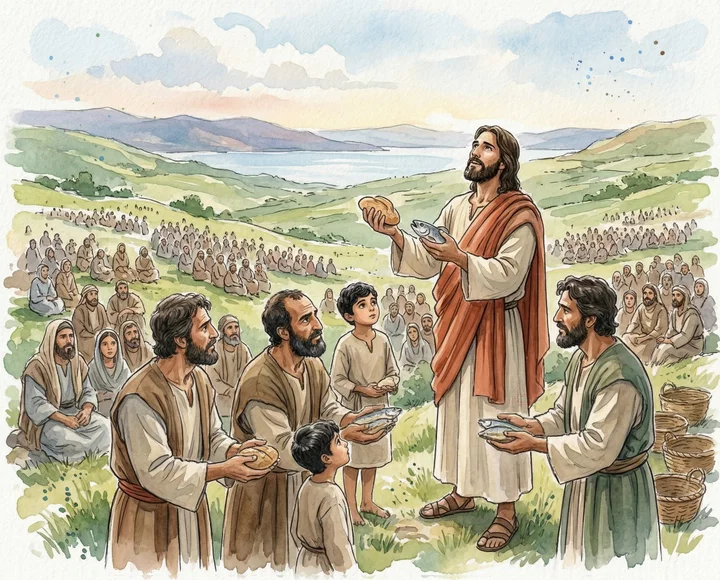
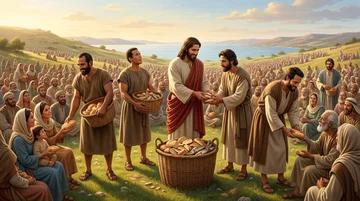
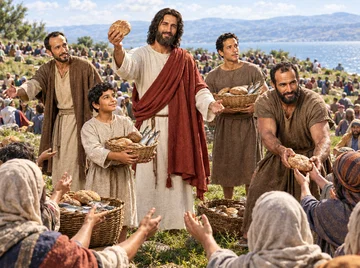
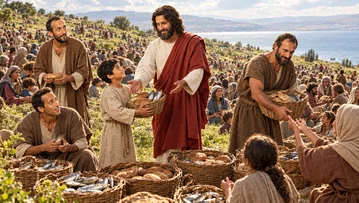
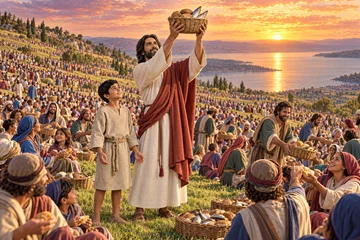
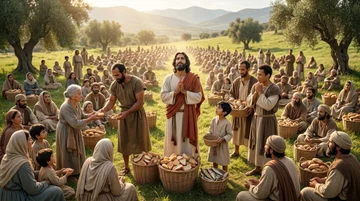
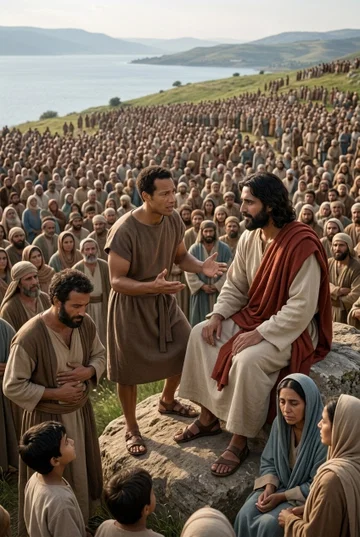
And when it was evening, his disciples came to him, saying, This is a desert place, and the time is now past; send the multitude away, that they may go into the villages, and buy themselves victuals.
Translations
American King James Version, King James Version, KJV Cambridge Paragraph Bible, Webster Bible
And when it was evening, his disciples came to him, saying, This is a desert place, and the time is now past; send the multitude away, that they may go into the villages, and buy themselves victuals.
Revised Version, American Standard Version
And when even was come, the disciples came to him, saying, The place is desert, and the time is already past; send the multitudes away, that they may go into the villages, and buy themselves food.
and evening having come, his disciples came to him, saying, 'The place is desolate, and the hour hath now past, let away the multitudes that, having gone to the villages, they may buy to themselves food.'
But when even was come, his disciples came to him saying, The place is desert, and [much of] the [day] time already gone by; dismiss the crowds, that they may go into the villages and buy food for themselves.
And, evening, arriving, the disciples came unto him, saying—The place is, a desert, and, the hour, hath already passed,—dismiss the multitudes, that they may go away into the villages, and buy themselves food.
When evening came, the disciples came to Him and said, “ This is a desolate place, and the hour is already late. Dismiss the crowds so they can go to the villages and buy themselves some food.”
When evening came, His disciples came to Him and said, “ This is a desolate place, and the hour is already late. Dismiss the crowds so they can go to the villages and buy themselves some food.”
When evening had come, his disciples came to him, saying, “ This place is deserted, and the hour is already late. Send the multitudes away, that they may go into the villages, and buy themselves food.”
And when evening had come, the disciples came to him, saying, This place is waste land, and the time is now past; send the people away so that they may go into the towns and get themselves food.
And when euen was come, his disciples came to him, saying, This is a desart place, and the time is alreadie past: let the multitude depart, that they may goe into the townes, and bye them vitailes.
Douay-Rheims (Challoner revision)
And when it was evening, his disciples came to him, saying: This is a desert place, and the hour is now past: send away the multitudes, that going into the towns, they may buy themselves victuals.
Pictures
Cross-references 20 of 25
- Mark 6:35-44
And when the day was now far spent, his disciples came unto him, and said, This is a desert place, and now the time is far passed:
Parallel account of Jesus feeding the multitude.
- John 6:5-13
When Jesus then lifted up his eyes, and saw a great company come unto him, he saith unto Philip, Whence shall we buy bread, that these may eat?
Jesus feeds the multitude after the disciples raise the need for food.
- Luke 9:12-17
And when the day began to wear away, then came the twelve, and said unto him, Send the multitude away, that they may go into the towns and country round about, and lodge, and get victuals: for we are here in a desert place.
Parallel account of Jesus feeding the crowd.
- John 6:35
And Jesus said unto them, I am the bread of life: he that cometh to me shall never hunger; and he that believeth on me shall never thirst.
physical feeding points to spiritual feeding
- Matthew 14:19-21
And he commanded the multitude to sit down on the grass, and took the five loaves, and the two fishes, and looking up to heaven, he blessed, and brake, and gave the loaves to his disciples, and the disciples to the multitude.
Jesus feeds the multitude in the desert and gathers the leftovers.
- Matthew 14:23
And when he had sent the multitudes away, he went up into a mountain apart to pray: and when the evening was come, he was there alone.
The later evening follows the evening when the crowd was dismissed.
- Matthew 15:32-38
Then Jesus called his disciples unto him, and said, I have compassion on the multitude, because they continue with me now three days, and have nothing to eat: and I will not send them away fasting, lest they faint in the way.
Jesus again feeds thousands out of compassion with a few loaves.
- John 6:5
When Jesus then lifted up his eyes, and saw a great company come unto him, he saith unto Philip, Whence shall we buy bread, that these may eat?
Jesus responds by asking where to buy bread
- John 6:9
There is a lad here, which hath five barley loaves, and two small fishes: but what are they among so many?
Andrew identifies the boy’s small supply of loaves and fish.
- Matthew 14:20
And they did all eat, and were filled: and they took up of the fragments that remained twelve baskets full.
All were satisfied, and twelve baskets of fragments remained.
- 2 Kings 4:42-44
And there came a man from Baal-shalisha, and brought the man of God bread of the firstfruits, twenty loaves of barley, and full ears of corn in the husk thereof. And he said, Give unto the people, that they may eat.
Elisha’s small supply fed a crowd, with food left over.
- Mark 6:39-40
And he commanded them to make all sit down by companies upon the green grass.
Jesus arranges the crowd in groups during the feeding of the five thousand.
- Matthew 14:21
And they that had eaten were about five thousand men, beside women and children.
Five thousand men, besides women and children, were fed.
- Exodus 16:4
Then said the LORD unto Moses, Behold, I will rain bread from heaven for you; and the people shall go out and gather a certain rate every day, that I may prove them, whether they will walk in my law, or no.
God provided bread for His people in the wilderness.
- Mark 6:37
He answered and said unto them, Give ye them to eat. And they say unto him, Shall we go and buy two hundred pennyworth of bread, and give them to eat?
Jesus tells the disciples to feed the multitude despite their limited means.
- Matthew 16:9-10
Do ye not yet understand, neither remember the five loaves of the five thousand, and how many baskets ye took up?
The remembered feedings show that Christ’s provision leaves no lack.
- Mark 6:46
And when he had sent them away, he departed into a mountain to pray.
Mark places another evening after the crowd was sent away.
- Mark 8:1-9
In those days the multitude being very great, and having nothing to eat, Jesus called his disciples unto him, and saith unto them,
The disciples’ response contrasts the two feedings and shows their unbelief.
- John 6:7
Philip answered him, Two hundred pennyworth of bread is not sufficient for them, that every one of them may take a little.
estimating the money value of food for the multitude
- Exodus 16:14-20
And when the dew that lay was gone up, behold, upon the face of the wilderness there lay a small round thing, as small as the hoar frost on the ground.
The passage draws a lesson from Israel’s manna and its response to God’s provision.
Commentary
Each commentary is drawn from primary sources: the writings of Ellen G. White and Adventist pioneers and periodicals. Each commentary is separate. Its own words are not a quotation; follow the references to read the source passages.
Ellen G. White
72 sources
At evening in a remote desert place far from villages with no food at hand, the hour was late and the time to eat long past.ST May 10, 1883MH 48.2–3ST More than ten thousand people, five thousand men besides women and children, had lingered all day listening and being healed, and had grown tired, hungry and faint.Lt 318, 1908, par. 7–11DA 364.1ST May 20, 1886 Seeing the need beyond their means, the disciples urged Jesus to send the multitude away to buy themselves food in the villages.MH 45.1–4ST May 10, 1883ST In compassion for them as sheep without a shepherd, He would not send them home fasting to faint by the way.DA 364.2ST May 20, 1886DA 368.2–3 Instead He made the disciples the channel between Himself and the people, receiving from the Father and giving to them to distribute until all were filled.6T 263.1ST Jan 22, 190216MR 70.1–2
Evening Desert Setting
The hour was late, the time past, and evening had come upon a desert place, remote and secluded wilderness far from home and from the villages where food might be bought, with no food readily available and no nearby source of supply.ST May 10, 1883MH 48.2–3STST May 10, 18832SP 261.2–262.2 The urgency was plain because the people were hungry, many far from home and unable to buy food, and the disciples saw the lateness of the hour and the deserted place as reason the multitude must be sent away.ST May 10, 1883MH 48.2–3STRH Apr 8, 19092SP 261.2–262.2 Their concern arose from the apparent lack and from judging feeding to be beyond their means, yet the setting itself teaches dependence on God in emergency when human provision fails.MH 48.2–3ST May 10, 1883RH Apr 8, 1909
The place lay beyond the sea from Capernaum, on the shore of Galilee near the beach, at Bethsaida where the first feeding took place among Jews.ST May 20, 18866RED 64.26RED 44.23SP 226.1–2DA 404.1–405.2 There Jesus taught the multitude from a grassy eminence, generally choosing the open air, the groves and the seaside for discourse because no walls could enclose so great a multitude and because He could have commanding view of landscape and scenery.ST May 20, 1886RH May 30, 1871 On that shore near the beach more than ten thousand people were miraculously fed from a few small loaves and fishes.6RED 64.26RED 44.23SP 226.1–2
He had sought a secluded retreat and then interrupted it in compassion to teach the way of salvation to those like sheep without a shepherd, ministering when about five thousand men besides women and children had gathered to hear.Lt 318, 1908, par. 7–11DA 364.2DA 364.1 He labored to sow the seed of truth in out-of-the-way places, traveling slowly away from the villages and from city to city, walking on foot from place to place with the Word while the crowd kept gathering and gathering around Him.Lt 318, 1908, par. 7–11Ms 64, 1910, par. 10–11Ms 73, 1910, par. 16Ms 123, 1909, par. 29–31 It was after people had followed Him away from the cities into that remote setting that the disciples' concern about food arose, and all these circumstances were for making His work known to those who afterward would be His disciples.Lt 318, 1908, par. 7–11Ms 64, 1910, par. 10–11
Crowd And Disciples Request
The gathering numbered five thousand men besides women and children, more than ten thousand people in all, and those fed at this first feeding were Jews.Lt 318, 1908, par. 7–11ST May 20, 1886ST Mar 7, 19066RED 64.26RED 44.2 The count of five thousand men besides women and children belongs to the multitude that had followed after a sought seclusion was interrupted.Lt 318, 1908, par. 7–11DA 364.1ST May 20, 1886 The feeding near Galilee on the shore and beach belongs to this same account of more than ten thousand fed with a few small loaves and fish.6RED 64.26RED 44.2
The people had come without invitation, many from far away, and many had eaten nothing since morning.MH 45.1–4ST Aug 19, 1897ST May 10, 1883 They lingered all day listening to teaching of the way of salvation, while He ministered with compassion as to sheep without a shepherd receiving no help from religious leaders.DA 364.2ST Aug 19, 1897ST May 20, 1886 The sick and afflicted brought to Him were healed, life was brought to the dying, and the day felt like heaven on earth, so the throng still lingered as the sun was sinking, unaware how long it had been since they had eaten.MH 45.1–4ST May 20, 1886ST Jan 22, 1902
Many were tired, hungry, weak, weary and faint, and some were fainting and falling to the ground.Lt 318, 1908, par. 7–11Ms 186, 1907, par. 8–9Ms 182, 1907, par. 21–23 They could not be sent home unrefreshed without fainting by the way.ST May 20, 1886ST Mar 1, 1877 Jesus Himself had labored all day without food or rest and was pale from weariness and hunger, yet He could not withdraw from the multitude pressing upon Him.ST May 20, 1886ST Jan 22, 1902
The disciples saw the late hour, the desert place, and the urgent need for food, with no nearby source of supply and no means at hand to provide it.ST May 10, 1883STST May 10, 18832SP 261.2–262.2ST Mar 1, 1877 They judged feeding so many beyond their means and urged Jesus to send the multitude away into the villages and nearby towns to buy themselves victuals.MH 45.1–4ST May 10, 1883STST May 10, 18832SP 261.2–262.2 They were also concerned that He was exhausted and wanted to take Him away to rest and eat.MH 45.1–4ST Jan 22, 1902
Jesus Himself knew their hunger and said they must have something to eat.Ms 123, 1909, par. 32–34Ms 127, 1909, par. 8–9Ms 73, 1909, par. 20–21 As evening drew on He told His disciples the people were weary and needed rest and food rather than being dismissed.Ms 123, 1909, par. 32–34Ms 73, 1909, par. 20–21 When the need for food arose He did not send the multitude away but kept them to be fed.Ms 186, 1907, par. 8–9Ms 182, 1907, par. 21–23Ms 127, 1909, par. 8–9
Compassionate Miraculous Provision
Jesus looked on the crowd as sheep without a shepherd, receiving no help from the religious leaders, and shared their human need with tender compassion.DA 364.2ST Aug 19, 1897 He knew they had followed Him and listened all day until many were weary and hungry and fainting and falling to the ground, and He would not send them home fasting to their homes unrefreshed nor let them faint by the way or suffer for lack of food.ST May 20, 1886DA 368.2–3Ms 182, 1907, par. 21–23 Though He would not work a miracle to satisfy His own hunger in the wilderness, He would not allow the multitude to suffer so.ST May 20, 1886 He cared for their ordinary physical needs, providing simple food rather than luxury, so His followers could trust their needs would be supplied even if their fare was plain or scanty, for His abiding presence is better than worldly goods.DA 367.1–2
Instead of dismissing them He tested the faith of the disciples by asking about obtaining bread for so many, already knowing Himself how He would provide.ST May 10, 1883ST May 20, 1886ST Mar 1, 1877 The disciples judged feeding beyond their means with no nearby source of food, yet Jesus depended on His heavenly Father to supply what was needed in the emergency.MH 48.2–3ST Aug 19, 1897DA 368.2–3 He knew they would be hungry and weak after listening, and intended that the people not go home unrefreshed.ST Aug 19, 1897ST Mar 1, 1877ST Mar 18, 1913 The shortage of food thus became the test of their faith and the need that prompted the miracle.DA 368.2–3ST Mar 18, 1913
He led them to a grass plot and had them sit down in companies on the ground, seated on the grassy ground.Lt 318, 1908, par. 7–11Ms 186, 1907, par. 8–9Ms 123, 1909, par. 32–34Ms 182, 1907, par. 21–23 He gave thanks and asked the blessing over the food with a hymn sung, broke the bread into small pieces and placed it in the disciples' hands to carry and distribute to the hungry multitude.Ms 197, 1907, par. 1–4Ms 123, 1909, par. 32–34Ms 182, 1907, par. 21–23 The only supply was five small barley loaves and two small fishes, a scanty store that was but a small supply for His own family of disciples.ST Jan 22, 1902ST Mar 18, 1913Ms 66a, 1900, par. 30–31Ms 73, 1909, par. 20–21 Instead of inviting them to eat He began to distribute it and bade them serve the people, passing it through His disciples until all had enough though feeding so great a multitude seemed impossible.ST Jan 22, 1902Ms 123, 1909, par. 32–34Ms 73, 1909, par. 20–21
The food multiplied in His hands and kept coming as the disciples distributed it, the little store sufficing for all, until all were filled and satisfied.3RED 55.2ST Jan 22, 1902Ms 123, 1909, par. 32–34 Christ and His disciples also ate of the precious heaven-supplied food.6T 263.1ST Jan 22, 1902 Twelve baskets full of fragments were gathered on this occasion, and seven baskets on the other feeding.3RED 55.2RH Apr 8, 1909ST Mar 7, 1906Ms 123, 1909, par. 32–34 He then commanded to gather up the fragments and let nothing be lost, so nothing was wasted.Ms 197, 1907, par. 1–4Ms 123, 1909, par. 32–34Ms 182, 1907, par. 21–232T 435.3 That careful gathering teaches careful use of resources and thrift, and care of the fragments is as essential as creating the food.STB 772.1–2ST Dec 15, 1909
Divine Power To Provide
The miracle is an illustration of divine power in providing food, the same creative power that works every day in the growth of crops and the production of bread, though human labor in the process causes many to overlook God's agency.ED 107.3 Care of what remains is as essential as the creating of the food, and is evidence of divinity.ST Dec 15, 19092RED 39.1–41.2ST Jun 25, 1874 The same power was His while He labored to support His family, yet He did not use it to lessen ordinary toil or to relieve His own hunger and suffering, showing that useful labor is honorable and that men should work industriously.2RED 39.1–41.2RH Oct 3, 1912ST Jun 25, 1874 He had power to satisfy His own hunger miraculously, but to do so for Himself would not have accorded with the plan of salvation, for His miracles were for the benefit of suffering people.2RED 39.1–41.2ST Jun 25, 1874 Though the Prince of life from the royal courts, He laid off His kingly crown and royal robes and clothed divinity with humanity, suffering the inconveniences of poverty that He might discern the needs of the poor, coming to minister to the suffering and needy.Ms 1, 1909, par. 5–6 Obtaining the higher education does not mean gaining popularity, securing worldly advantages, having all temporal wants abundantly supplied, or being honored by the titled and wealthy, for He wore not the gorgeous robes of the high priest and had no earthly riches, but He had His Father's power to work miracles for the help and uplifting of mankind, supplying with a few loaves and fishes the needs of a multitude faint with hunger.Ms 1, 1909, par. 5–6
Christ can supply His people's needs even when what they have seems insufficient, making a small amount sufficient for a multitude, as He supplied bread and flowing water in the wilderness.6T 465.4Lt 121, 1904, par. 14–16Ms 114, 1899, par. 1–3 With five loaves and two small fishes He fed five thousand men besides women and children, showing that He can do great things for His people today even when the visible supply appears inadequate.6T 465.4Ms 66a, 1900, par. 24–27Ms 66, 1900, par. 11–12 What appears to be a meager supply can become a rich feast, leaving enough to satisfy those who receive it and to share with others, for after all were satisfied twelve baskets of fragments remained.Ms 66a, 1900, par. 24–27Lt 121, 1904, par. 14–16Ms 66, 1900, par. 11–12 Means used faithfully can be blessed to meet the needs of a multitude, for the food was given to the disciples to distribute and the Lord blessed and multiplied it.STB 148.2–3STB 119.3–4 His benevolence is not exhausted in providing for bodily necessities, and He can give knowledge to help obtain food.17MR 252.3 Today He gives tact, skill and understanding to those who come into line with Him, and the crowd's need for food illustrates also the spiritual hunger of those who need the bread of life.STB 119.3–4Ms 14, 1902, par. 4
The need could not be met by human means, with five thousand men besides women and children to be fed and only five loaves and two fishes in hand, so God's children are not to worry and fret over things they cannot help but are to trust Christ and go from strength to strength.ST Mar 7, 1906 The feeding in the desolate place is an object lesson in trusting Christ to multiply even small gifts for a work entrusted to His people when ordinary supplies appear inadequate.Ms 66a, 1900, par. 24–27 What is placed in His service can be multiplied as it is shared, so that all may eat and be filled, and the work should not be measured by the resources currently at hand.Ms 66a, 1900, par. 24–272MR 283.1–284.2 The fact that He could furnish food in a miraculous way did not teach that no effort is to be put forth to provide the necessities of life.Lt 93, 1892, par. 4–5 Through the miracle He was seeking to impart spiritual truths of vital importance to the salvation of souls, and as with feeding, the Lord will not always work miracles to heal the sick and keep people alive in answer to prayer, so agencies for hygienic living and treatment remain God's way and must not be despised or abolished.Lt 93, 1892, par. 4–5
Receiving To Give
The disciples stood as the channel of communication between Christ and the people, for Christ received from the Father and imparted to the disciples, the disciples imparted to the multitude, and the people imparted to one another.ST Jan 22, 190216MR 70.1–2DA 370.1Lt 7, 1901, par. 1–3 The feeding of the five thousand in the secluded place thus teaches that those who serve others are to receive grace from Him and pass it on to people in need, just as the disciples received bread from the Saviour to give to the crowd.6T 263.116MR 70.1–2Lt 7, 1901, par. 1–3 God provides for hungry people through disciples whose hands are supplied by Christ, enabling them to share with the needy what they receive from the Master.6T 263.1DA 370.1
All who are united with Christ receive from Him the bread of life, the heavenly food, and impart it to others.ST Jan 22, 1902 Christ is the great Center, the Source of all strength, and His disciples today are to receive their supplies from Him, for even the most intelligent and most spiritually minded can bestow only as they receive and of themselves can supply nothing for the needs of the soul.ST Jan 22, 1902 Their work as His representatives was to feed the people with the bread of life rather than turn anyone away unfed, and that work would expose their own helplessness and need for spiritual food from Christ so they could supply others.DA 370.1ST Mar 16, 1915
In that giving the gift increases.16MR 70.1–2Lt 7, 1901, par. 1–3 In full reliance on God Jesus took the small store of loaves that was but a small supply for His own family of disciples, and instead of inviting them to eat He began to distribute to them and bade them serve the people.ST Jan 22, 1902 The food multiplied in His hands, and the hands of the disciples reaching out to Christ Himself the Bread of Life were never empty, and the little store was sufficient for all, and after the wants of the people were supplied the fragments were gathered up and Christ and His disciples ate of the precious heaven-supplied food.ST Jan 22, 1902 We can impart only as we receive, and we can receive only as we impart, and as we continue to impart we shall continue to receive, and the more we impart the more we shall receive.ST Jan 22, 1902 What is placed in Christ's service can be multiplied as it is shared, so that all may eat and be filled, and the work should not be measured by the resources currently at hand.6T 263.12MR 283.1–284.2
What people have should be shared with those who lack it, and temporal and spiritual blessings accompany such giving.6T 263.1Ms 180, 1907, par. 27–28 This applies to sharing the truth with people everywhere, including with the bread of life, since scarcity of visible resources is no reason to despair.6T 467.1Ms 180, 1907, par. 27–28 The crowd's need for food also illustrates the spiritual hunger of people who need the bread of life, which God can meet by blessing limited resources so they meet great needs.STB 119.3–4 Gifts sent in with thanksgiving and prayer will be multiplied and blessed in the same way the Lord multiplied and blessed the food given into the disciples' hands to feed the five thousand.6T 467.1Lt 218, 1908, par. 42–43 If believers make the best use they can of the means they have, with intelligent, self-denying, self-sacrificing effort, God will enable them to feed the multitude who are starving for the Bread of Life, carrying forward medical missionary work for soul-saving to fulfill the gospel commission.Lt 218, 1908, par. 42–43
The first feeding at Bethsaida was for Jews, and there with Christ's blessing the disciples' little store availed for feeding the multitude.DA 404.1–405.2 Though the disciples saw His power to multiply the food for the hungry crowds, afterward they still failed to bring forward all they had and trust that power.DA 404.1–405.2
Thrift And Practical Care
The miracle together with the command to gather what remained teaches carefulness, saving and economy in the use of all God's gifts, in order to give, since giving is more blessed than receiving.STB 772.1–2ST Dec 15, 19092T 435.3 Care of the fragments is as essential as creating the food and proves divinity, showing that the bounties of Providence are not to be squandered or used aimlessly or wastefully.ST Dec 15, 1909 This points to God's standard of economy in saving food as well as money, for the Lord values every gift and all depend on Him for life, means, health, food and air, while industry and frugality teach careful use of what is received from His hand.ST Dec 15, 1909 Even in trying circumstances in a deserted place at a late hour, provision was made and the food left over was not wasted, as a lesson in careful stewardship and thrift use of resources.STB 772.1–22T 435.3
The lesson is twofold, that in spiritual as in temporal things nothing is to be wasted, with no temporal opportunity or spiritual advantage let slip and nothing wasted that would benefit a human being or relieve the hungry.Ms 197, 1907, par. 1–4ST Dec 15, 1909 Every such act of gathering is to make a lasting impression of truth on human minds, beyond merely saving leftover food.Ms 197, 1907, par. 1–4 The baskets were distributed among the throng and carried into all the region round about for friends at home, so those fed were to give others the bread from heaven to satisfy hunger of soul and repeat what they had learned of God, with nothing lost.ST Dec 15, 1909 Allowing no extravagance, sanitariums are to be made plain and simple while still providing room to care for people and impress those healed who see His miracles.Ms 197, 1907, par. 1–4 None have a right to gamble or to get means by robbing another, but must impart what God has given them.Ms 182, 1907, par. 21–23
Surroundings were regarded when giving truth, with the open air, groves and seaside generally chosen because no walls could enclose the multitude and a commanding view of landscape and scenery could be had.RH May 30, 1871 Scenery that would attract the eye and awaken admiration in lovers of the beautiful was chosen to make lessons plain, simple and interesting, using objects and scenes familiar to humble life to illustrate important truths and connecting the works of God's finger in heaven and earth with the words of life, so that looking on nature would bring the lessons fresh to memory.RH May 30, 1871 Birds caroling without care, flowers of the valley, the lily on the lake, lofty trees, cultivated lands, waving grain, barren soil, the fruitless tree, everlasting hills, the bubbling stream, and the setting sun gilding the heavens were associated with divine truth, extolling the wisdom of God in creation and directing minds through nature up to nature's God, so that landscape, trees, birds, flowers, hills, lake and heavens would remain hallowed in memory with sacred truths after the ascension.RH May 30, 1871 A tired, hungry throng of five thousand gathered in the open air to listen to words of life was known to be unable to receive spiritual benefit while hungry, and bodily needs were not forgotten but met by miracle instead of leaving them unfed.RH May 30, 18712T 579.2–580.2 Simple food rather than luxury was provided, showing care for ordinary physical needs and that abiding presence is better than worldly goods, with followers able to trust that needs would be supplied even if fare was plain or scanty.RH May 30, 1871DA 367.1–22T 579.2–580.2
People seeking the way of salvation must not be neglected when hungry or weary, and practical care should help them hear the message without making their path burdensome.CT 34.1ST Aug 12, 1897Ms 55, 1901, par. 22–23 God provides for human necessities and gives guidance and knowledge for preparing suitable food for different times and occasions, and providing food for the needy is a lesson of the miracles showing care for the poor and needy.CH 599.1–27T 114.3STB 438.117MR 252.3GW 362.2–363.1 He came to serve the poor and needy, not to seek comfort or worldly advantage, and His benevolence is not exhausted but can give knowledge to help obtain food.CT 34.117MR 252.3 The feeding provides a lesson for food work, that Christ's methods should be studied and practical provision carried forward without selfish private interests obstructing the work.Lt 302, 1906, par. 5 Everything put in servants' hands is to be used to meet need and glorify God's holy name, to communicate light, open the door to those in darkness, and save the world because Christ is coming, as shown when the crowd following on foot from place to place and city to city until five thousand besides women and children were together with nothing to eat were not sent away but seated and fed.Lt 302, 1906, par. 5Ms 127, 1909, par. 8–9Lt 218, 1908, par. 42–43
Christ was attentive wherever He went to all needing help, being their sanctuary and helper and the great leading Physician even without buildings like sanitariums.Ms 186, 1907, par. 8–9 Those softened and subdued and sanctified by the Holy Spirit must study how to work the very works He worked, going with Him from place to place and trusting that dedication to the Lord God of heaven will bring the Holy Spirit to communicate to those in necessity.Ms 186, 1907, par. 8–9 He laid off His kingly crown and royal robes and clothed divinity with humanity, suffering poverty's inconveniences that He might discern the needs of the poor.Ms 1, 1909, par. 5–6 Obtaining the higher education does not mean gaining popularity, securing worldly advantages, having all temporal wants abundantly supplied, and being honored by the titled and wealthy, for He wore not gorgeous robes nor had earthly riches but had His Father's power to work miracles for the help and uplifting of mankind, supplying with a few loaves and fishes the needs of a multitude faint with hunger, as part of His mission of love.Ms 1, 1909, par. 5–6Ms 18, 1898, par. 11 All these circumstances, including the request in the evening in the desert place where about five thousand besides women and children had gathered to hear teaching to send the multitude away into the villages to buy food because the time was past, came about because labor was given to sow seed in out-of-the-way places while traveling slowly away from villages where Scriptures had been opened in simplicity, since there was a world to hear and some souls who had not yet heard truth would receive it, and were for making His work known to those who after crucifixion and resurrection would be His disciples.Lt 318, 1908, par. 7–11
Sources
Pioneers and periodicals
77 sources
As evening drew on in a lonely uninhabited place by the Sea of Galilee near Bethsaida, the disciples pointed out that the place was remote and the hour late and urged Jesus to send the hungry multitude to nearby villages to buy food for themselves.ST May 20, 1886ST Sep 21, 1915ST Mar 16, 1904ST The evening here is the first of two that day, beginning about three in the afternoon and lasting till sunset, with the feeding coming between it and the second evening after sunset, though others teach it was only the approach of evening and not proof of two evenings or of an evening beginning at three.ST Sep 21, 1915RH Apr 20, 1876ST Sep 21, 1915RH Jan 17, 1856 Jesus did not send them away hungry to faint by the way, but with five barley loaves and two small fishes fed five thousand men besides women and children till all were satisfied, with twelve baskets of fragments gathered.RH Mar 16, 1905ST Oct 22, 1902RH Nov 21, 1907 The feeding was a literal miracle by His own creative power, multiplying bread at once as He multiplies grain through sunshine and harvest, proving Him the Son of God and the living Bread where there can be no lack.ST Aug 26, 1880RH Feb 8, 1906ST Nov 1, 1910 He gave the food to the disciples and they to the multitude, teaching that blessing a little store in obedient sharing makes it more than enough and that those entrusted with heavenly bread must give to others and waste nothing.ST Jan 22, 1902ST Apr 11, 1906ST Sep 18, 1893ST May 13, 1880RH Nov 17, 1910
Evening, Desert, and Wording
The evening here is the first of two evenings belonging to the same day, beginning about the ninth hour or three o'clock in the afternoon and lasting until sunset.RH Jan 17, 1856 The later evening in Matthew 14:23 is the true evening beginning at sunset and marking the beginning of the next day, coming much later after the crowd was sent away while Jesus was alone praying.RH Apr 20, 1876RH Jan 17, 1856 The feeding of the multitude with five loaves and two fishes takes place between the two evenings, with the disciples' request coming before the feeding at the first evening when the day was far spent but the sun had not yet set.RH Apr 20, 1876 The feeding and gathering of the leftovers took considerable time between them.RH Apr 20, 1876
Those who held the opposite position taught that the verse does not establish two Bible evenings or an evening beginning at three o'clock.ST Sep 21, 1915ST Sep 21, 1915ST Sep 21, 1915 The Greek for when it was expresses approaching or drawing near and a change toward evening, and the parallels say the day was wearing away or far spent, so evening was coming on but not yet after sunset.ST Sep 21, 1915ST Sep 21, 1915 The disciples approached Jesus in the evening at a deserted place saying the time was past and asking him to send the crowd to nearby villages to buy food, and this creates no uncertainty about when the Sabbath begins.ST Sep 21, 1915ST Sep 21, 1915
Desert place does not mean barren, sandy, dry land without water or vegetation, but a solitary, uninhabited region away from towns and inhabited places.ST Jun 7, 1883ST May 20, 1880ST May 13, 1880ST Dec 22, 1887 The disciples called it desert because it was solitary and asked Jesus to send the crowd to nearby villages to buy food because evening had come and the day was passing.ST May 13, 1880ST Dec 22, 1887 The crowd could sit on grass there and water could be available, showing the place was not barren.ST Jun 7, 1883ST May 20, 1880ST May 13, 1880ST Dec 22, 1887
The hour that is now past means the time or season, here the mealtime, had passed, not a literal twelfth part of the day.RH Mar 24, 1863 Without limit or qualification the word for hour does not necessarily denote a literal hour.RH Mar 24, 1863 Victuals and meats mean food of any kind, literally broma, not flesh alone.ST Nov 15, 1910ST Jul 29, 1908 The use of victuals for food therefore illustrates that meats in 1 Timothy 4:3 means food generally.ST Nov 15, 1910ST Jul 29, 1908
The place was countryside beside the Sea of Galilee belonging to Bethsaida, near Bethsaida and Bethsaida Julia, on a plain a few miles across, beyond the sea from Capernaum on a grassy eminence.ST May 20, 1886STRH May 27, 1858ST Jul 7, 1898 As evening came at the close of a full day the disciples noted it was remote and late and proposed sending the people to nearby villages to buy food.STRH May 27, 1858RH May 27, 1858 They made this suggestion after the people had lingered to hear Jesus and be healed, when five thousand men besides women and children stood before him who had been all day without food with no more food to be obtained there.ST May 20, 1886STRH May 27, 1858 After the feeding Jesus sent the multitudes away and went into the mountain to pray.ST Jul 7, 1898
The feeding follows the beheading of John the Baptist, after Jesus withdrew with the disciples to a quiet retreat to rest and instruct them concerning his kingdom and work following the tidings of John's death.ST Jan 20, 1909 The multitude went before them and followed on foot to the desert place, and he welcomed them, taught them of the kingdom of God and healed their sick till evening came when the day was far spent.ST May 20, 1886 Matthew's wording of the request as the day closed parallels Mark 6:35-36, and all four Gospels record the miracle so the accounts should be compared.ST Sep 12, 1911ST Jun 14, 1899 The feeding coming after the rubbing of corn and just before another Passover before the last fixes Christ's ministry at more than three years with three Passovers named by John and one final year after three full years.ST Sep 12, 1911ST Jun 14, 1899ST Jan 20, 1909
Late Hour and Request
As evening came in a deserted place the disciples came to Jesus, pointed out that the place was remote and the hour was late or the day far spent, and urged him to send the multitude away into the villages and country round about to lodge and buy food for themselves.ST Sep 21, 1915ST Mar 16, 1904ST Jul 26, 1905ST Jun 14, 1899 The request grew from practical anxiety as evening approached with no nearby supply, seeing only dismissal as the way to meet human need.ST Mar 16, 1904ST Jul 26, 1905ST Jun 14, 1899ST Oct 12, 1904 It followed his teaching the crowd with compassion because they were as sheep without a shepherd, and it set up his command that they feed the crowd and his demonstration that he can provide for his people in any circumstances.STST Mar 16, 1904ST Jun 14, 1899ST Oct 12, 1904
The people had come from far without invitation and had spent the whole day listening without noticing time, being taught and healed till the sun was sinking.STST May 10, 1883ST May 20, 1886ST Jan 22, 1902RH May 30, 1871 They had eaten nothing since morning and stood before him five thousand men besides women and children, faint and hungry, with no food obtainable there.STST May 10, 1883ST May 20, 1886RH Apr 8, 1909ST Jan 22, 1902 They had lingered though the sun was sinking and the day felt like heaven on earth, and they might faint on the journey home.STST May 20, 1886RH Apr 8, 1909ST Jan 22, 1902ST Oct 12, 1904 He had labored all day without food or rest, pale from weariness and hunger, yet could not withdraw from the multitude pressing upon him, and he knew a tired hungry throng could not receive spiritual benefit and would not send them away unrefreshed to faint by the way.ST May 20, 1886ST Jan 22, 1902RH May 30, 1871
The proposal reflected the disciples' own hunger after long hours and their judgment that feeding so many was beyond their means.STST May 10, 1883ST Jan 22, 1902ST Oct 12, 1904 It showed they did not yet fully understand Christ's spirit and mission, did not account for those unable to buy or for his compassion, and needed to learn his creative power and to trust and obey his word which also supplies spiritual needs.ST May 10, 1883ST May 20, 1886ST Mar 16, 1904
Compassionate Miraculous Provision
Jesus would not send the crowd away hungry, unrefreshed, or to faint on the way home, but fed them where they were.ST Aug 19, 1897ST May 20, 1886RH Apr 8, 1909ST Mar 1, 1877 With five barley loaves and two small fishes he fed five thousand men besides women and children until all were satisfied.RH Apr 8, 1909RH Mar 16, 1905ST Oct 22, 1902RH Nov 21, 1907ST Sep 18, 1893 The loaves were made by a woman and brought by a boy, and the blessing upon that little store in obedience made it more than enough.ST Sep 18, 1893 Twelve baskets of fragments were gathered afterward, more taken up than was present at first.RH Apr 8, 1909RH Mar 16, 1905ST Oct 22, 1902 The multitude stood before him faint and hungry with no food obtainable in that remote place, and he miraculously provided bread when ordinary provision was lacking.ST Aug 19, 1897RH Apr 8, 1909RH Nov 21, 1907ST Sep 18, 1893
The feeding was a literal historical event and not merely a symbolic feeding of the soul with the bread of life, for the crowd needed bodily food.ST Nov 1, 1910ST Jul 25, 1911 The bread multiplied as it left his hands and continued multiplying in the disciples' hands by his own power, not by angelic power.ST Feb 13, 1912 This display of creative power attests his divine mission and gives evidence that he is the Son of God, who created the bread and is also Master of the sea.ST Nov 1, 1910ST Aug 2, 1905 He is the living bread where there can be no lack, whose word can take material form.ST Feb 13, 1912 The occasion was meant to teach disciples and crowd alike that turning needy people away to provide for themselves was not part of his mission.
The same divine power that multiplied bread in an instant takes one kernel of wheat and makes fifty out of it over several months in a wheat field, so that feeding and harvest are the same miracle differing only in time.ST Aug 26, 1880RH Apr 9, 1901ST Mar 31, 1898 The marvel that astonishes in the feeding occurs each day when sown seed multiplies into full ears of grain, though familiarity hides the wonder.ST Aug 26, 1880RH Apr 9, 1901 The miracle does at once what sunshine, rain, sowing, and harvest do gradually, without rejecting those ordinary processes, and thereby reveals Christ as their source and master.RH Feb 8, 1906RH Apr 9, 1901ST Mar 31, 1898 Both the sudden multiplying and the gradual growth and preparation of bread are works of the same power.RH Feb 8, 1906ST Mar 31, 1898 God is therefore not limited in resources nor in ways and means for sustaining his people, and can feed a multitude even without a wheat crop or outward supplies.ST Oct 22, 1902RH Jun 17, 1902RH Oct 7, 1902
Sharing human need, pale from weariness and hunger after laboring all day without food or rest, Jesus depended on his heavenly Father to provide what was needed.ST Aug 19, 1897ST May 20, 1886 He already knew how he would provide, and his question about obtaining bread tested the disciples' faith, who judged feeding so many beyond their means.ST May 10, 1883ST May 20, 1886ST Mar 1, 1877 Though he had power to provide food by other means, he chose to use the small amount offered, teaching hope and trust through what seems insufficient.ST Mar 1, 1877RH Apr 10, 1900 He who would not work a miracle to satisfy his own hunger in the wilderness would not allow the multitude to suffer for lack of food nor let them go home unrefreshed.ST Aug 19, 1897ST May 20, 1886 The crowd had come without invitation and listened all day without food, and he knew after such listening they would be hungry and weak.ST Aug 19, 1897ST May 10, 1883ST May 20, 1886
In compassion for them as sheep without a true shepherd he had taught them many things concerning his kingdom and healed their sick till evening came.ST Jun 14, 1899RH Jul 28, 1903 He fed mind and heart with his word and body with food, then sent them home, joining spiritual instruction with practical kindness.RH Nov 19, 1908RH Jul 28, 1903 He generally chose the open air, the groves, the mountainside and the seaside for discourse, using landscape and familiar objects to make lessons plain and memorable, and he knew a tired hungry throng could not receive spiritual benefit unless bodily need was met.RH May 30, 1871RH Jul 28, 1903 He delighted to minister to the poor without asking worthiness or gratitude, and such care served his greater mission of saving the sinners he came to save.RH Nov 19, 1908
Receiving to Give More
Christ gave the food to the disciples and they gave to the multitude, and this is the true Gospel way of blessing.ST Jan 22, 1902ST Apr 11, 1906RH Nov 17, 1910 Christ received from the Father and imparted to the disciples, the disciples imparted to the multitude, and the people shared with one another.ST Jan 22, 1902ST Apr 11, 1906RH Nov 17, 1910 All who are united with Christ thus receive from Him the bread of life, the heavenly food, and impart it to others.ST Jan 22, 1902RH Nov 17, 1910 In full reliance on God He took the small store of loaves that was but a small supply for His own family of disciples, and instead of inviting them to eat He began to distribute and bade them serve the people.ST Jan 22, 1902 The food multiplied in His hands, and the hands of the disciples reaching out to Christ Himself the Bread of Life were never empty, so the little store was sufficient for all, and after the wants of the people were supplied the fragments were gathered up and Christ and His disciples ate of the precious heaven-supplied food.ST Jan 22, 1902 Christ is the great Center, the Source of all strength, and His disciples today are to receive their supplies from Him, for even the most intelligent and most spiritually minded can bestow only as they receive and of themselves can supply nothing for the needs of the soul.ST Jan 22, 1902ST Apr 11, 1906 We can impart only as we receive, and we can receive only as we impart, and as we continue to impart we shall continue to receive, and the more we impart the more we shall receive, since God's munificence is limited only by want of faith, giving special strength for every time of need and a word of encouragement for the faltering one by the side, to be sought in earnest faith and prayer.ST Jan 22, 1902ST Apr 11, 1906
His blessing upon the little store in obedience makes it more than enough for about five thousand men beside women and children in a desert place with nothing to eat.ST Sep 18, 1893RH Nov 1, 1906RH Apr 10, 1900 The bread multiplies in the hand that takes it to divide and distribute, showing that God never gives a treasure to be selfishly hoarded.ST Sep 18, 1893ST May 13, 1880 Though He had power to provide food by other means, He chose to use what was offered, teaching hope and trust in God's work through what seems insufficient.RH Jul 11, 1912RH Apr 10, 1900 That same blessing upon what God's people have and what they do enables them to feed the entire multitude and to carry the bread of life to all the world, with the treasury and arsenal of heaven filled with all that is needed and opened to demand by prayer as the key that places its contents at their disposal.RH Jul 11, 1912RH Nov 1, 1906 God multiplies limited money and gifts for His work, so a small amount blessed by God can provide for many hungry people and illustrate how people are fed with the bread of life, bringing great results from little beginnings.RH Nov 1, 1906RH Apr 10, 1900ST Feb 27, 1893
The miracle left twelve baskets of fragments from five barley loaves and two small fishes, and the command to gather them teaches that food should not be wasted.ST Dec 15, 1909RH Mar 16, 1905ST Jan 11, 1877 Carefulness in the use of all God's gifts, saving and economy so as to give, is as essential as creating the food and is evidence of divinity, showing that the bounties of Providence are not to be squandered or used in an aimless or wasteful manner.ST Dec 15, 1909 The lesson is twofold, that in spiritual as in temporal things nothing is to be wasted, no temporal opportunity or spiritual advantage let slip, nothing wasted that would benefit a human being or relieve the hungry, because it is more blessed to give than to receive.ST Dec 15, 1909 The baskets were distributed among the throng and carried into all the region round about for friends at home, so those fed were to give others the bread that comes down from heaven to satisfy hunger of soul and repeat what they learned of God, with nothing lost.ST Dec 15, 1909 The Lord values every gift, and all depend on God for life, means, health, food, and air, while industry and frugality teach careful use of what is received from His hand, in food as well as money.ST Dec 15, 1909RH Mar 16, 1905
There is no need for them to go away, for human need met by dismissal is overruled by the charge to give them to eat.ST Nov 15, 1899ST Mar 11, 1908 Those entrusted with the heavenly bread, God's sweet manna, are to let the multitude be fed, so none departs with longing heart and famine's craving is stilled.ST Nov 15, 1899RH Jul 11, 1912 The disciples as Christ's representatives cooperate in His works, their helplessness in a desert place as night comes on exposing need for supplies from Him, while that same blessing enables God's people to do the mighty work rightly by divine grace and wisdom and power.ST Nov 15, 1899RH Jul 11, 1912ST Mar 11, 1908 This charge covers all spiritual hunger for life's food at home, abroad, on lonely road or crowded street, and beyond the seas in distant lands where feeble knees and trembling hands are dying, to feed the suffering multitude in discreet love by sharing the bread of life now, because time is fleeting.ST Nov 15, 1899 Those who feed on Christ through the Word become living examples of it and pass it on, so others are spiritually fed and live, as papers sent to distant places nourish people spiritually.RH Nov 17, 1910
Trust, Mission, and Example
God's children are not to worry and fret over needs that human means cannot meet but to trust Christ and go on from strength to strength, for in a desert place at evening with five thousand men besides women and children to be fed and only five loaves and two fishes in hand, He knew their needs and showed He can provide for His people in any circumstances when they trust and obey His word for body and soul.ST Mar 7, 1906ST Mar 16, 1904 Jesus afterward recalled that feeding with five loaves alongside the feeding of the four thousand with seven loaves to rebuke little faith when the disciples reasoned because they had taken no bread, proving His provision for physical need and showing His word about the leaven of the Pharisees and Sadducees was not spoken concerning literal bread but concerning their teaching.ST Jun 28, 1899 The disciples who witnessed the miracle yet afterward failed to consider what it showed had hardened hearts and at first forgot the lesson, though His power in using the small supply offered teaches hope and trust in God's work through what seems insufficient.RH Apr 10, 1900ST Feb 11, 1886RH Apr 15, 1909
There is no need for them to go away, for those entrusted with heavenly bread, God's sweet manna, are to give them to eat so none departs with longing heart and famine's craving is stilled.ST Nov 15, 1899 Help is to be given bountifully and not alone to the faithful and true, without asking whether want came through misfortune or through folly, whether the sufferer is Gentile or Jew, without scanning closely frailties or first asking worthiness or gratitude, but by giving to the friendless who tells his woes and not turning away from him that would borrow.ST Apr 29, 1908ST Nov 20, 1901 This charge covers all spiritual hunger for life's food at home, abroad, on lonely road or crowded street, and beyond the seas in distant lands where feeble knees and trembling hands are dying, to feed the suffering multitude in discreet love by sharing the bread of life now, because time is fleeting, so that those who feed on Christ through the Word become living examples and pass it on till others are spiritually fed and live.ST Nov 15, 1899 Practical care must not make the path to Christ burdensome for hungry, weary seekers, and the gathering to hear spiritual teaching becomes a royal feast of the bread of life without money and without price, as a small gift blessed can serve a multitude and papers sent to Samoa can nourish its people spiritually.ST Apr 29, 1903
The scene shows that the spirit of heaven is doing good, and doing good makes earth like heaven, for Jesus did not turn away those who crowded around Him and appealed to His humanity but magnified a few loaves and fed thousands after teaching them, joining spiritual instruction with practical kindness and delighting to minister to the wants of the poor and needy.RH Dec 4, 1860RH Mar 10, 1863 It is proof that He pleased not Himself, for though He possessed all power He lived as if having none with self-restraint passing human thought, feeling alone for the needs of others and never for His own, freely feeding thousands yet not providing even one meal for Himself.ST Nov 15, 1905 His self-forgetting sympathy fed thousands including children though He Himself had no home or bread, and the same power that fed five thousand with five loaves and two fishes was His while He worked to support His family, yet He did not use it to lessen ordinary toil, showing useful labor honorable and industrious and ordinary bread-giving worthy of His care.RH Oct 3, 1912 The feeding in the wilderness, where everyone had enough to eat, illustrates heaven as abundant provision.RH Oct 28, 1915ST Apr 29, 1908
The occasion was a hard-times test on the northern bank of the Sea of Galilee, where about five thousand men besides women and children were in a desert place with nothing to eat and the little church saw the great need of the suffering multitude but felt powerless to help because the whole apparent supply was only five loaves and two little fishes, until His blessing upon their little store in obedience made it more than enough.ST Sep 18, 1893 Judas Iscariot of Kerioth worked furiously that day supplying the multitude, afterward counted how many shekels the food would have brought if sold, and argued from the creating of food that Jesus could create food for an army to go up against the Romans, heading the turbulent throng that sought to crown Jesus king at Jerusalem, while Jazer who had gone to Bethsaida hoping to trap Jesus in His words stayed and ate the bread and fish.ST Oct 25, 1910ST Nov 1, 1910 The recorded account carried out methodically shows Christ's work in detail, and a moment spent in speaking became far-reaching blessing in feeding five thousand.RH Aug 10, 1916 The feeding from nothing by His personal presence proves the power of that presence in one place, on which the disciples depended for food, healing, teaching, and power to cast out devils as children to a parent, and makes plain why the promise that the Holy Spirit dwelling at the same time with all believers would be to each all that Christ had been personally was full of mystery, for mighty works He alone did call disciples not to literal repetition but to moral likeness in submission, obedience and overcoming.ST Jun 26, 1893
Sources