Mark 6:35
And when the day was now far spent, his disciples came unto him, and said, This is a desert place, and now the time is far passed:
Translations
American King James Version, Webster Bible
And when the day was now far spent, his disciples came to him, and said, This is a desert place, and now the time is far passed:
King James Version, KJV Cambridge Paragraph Bible
And when the day was now far spent, his disciples came unto him, and said, This is a desert place, and now the time is far passed:
And when the day was now far spent, his disciples came unto him, and said, The place is desert, and the day is now far spent:
And when the day was now far spent, his disciples came unto him, and said, The place is desert, and the day is now far spent;
And now the hour being advanced, his disciples having come near to him, say, — 'The place is desolate, and the hour is now advanced,
And when it was already late in the day, his disciples coming to him say, The place is desert, and it is already late in the day;
And, already, a late hour, having arrived, his disciples came unto him and were saying, A desert, is the place, and it is, already, a late hour:
Berean Standard Bible, Majority Standard Bible
By now the hour was already late. So the disciples came to Jesus and said, “ This is a desolate place, and the hour is already late.
When it was late in the day, his disciples came to him and said, “ This place is deserted, and it is late in the day.
And at the end of the day, his disciples came to him and said, This place is waste land, and it is late:
And when the day was nowe farre spent, his disciples came vnto him, saying, This is a desart place, and nowe the day is farre passed.
Douay-Rheims (Challoner revision)
And when the day was now far spent, his disciples came to him, saying: This is a desert place, and the hour is now past:
Pictures
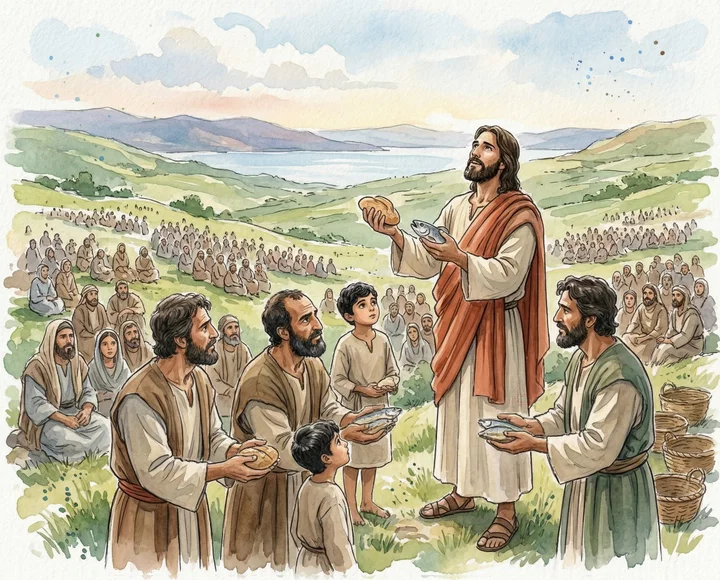
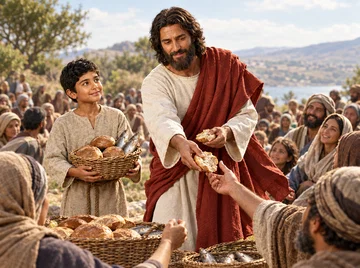
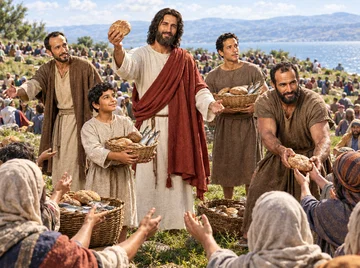
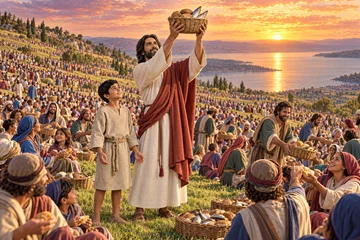
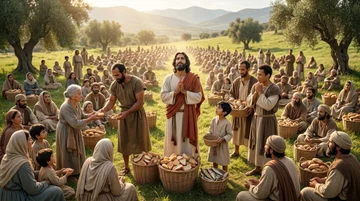
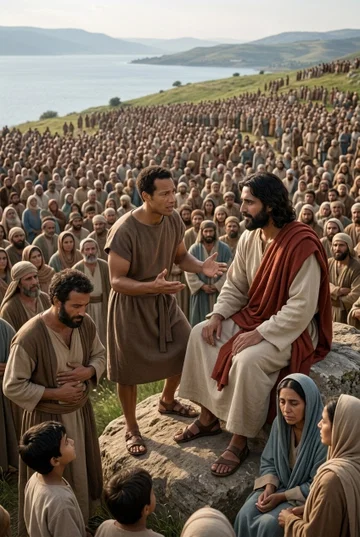
Cross-references
- John 6:5-13
When Jesus then lifted up his eyes, and saw a great company come unto him, he saith unto Philip, Whence shall we buy bread, that these may eat?
Jesus feeds the multitude and gathers the leftover food.
- Matthew 14:15
And when it was evening, his disciples came to him, saying, This is a desert place, and the time is now past; send the multitude away, that they may go into the villages, and buy themselves victuals.
The disciples note the late hour and remote place before Jesus feeds the crowd.
- Luke 9:12-17
And when the day began to wear away, then came the twelve, and said unto him, Send the multitude away, that they may go into the towns and country round about, and lodge, and get victuals: for we are here in a desert place.
The disciples note the late hour and remote setting before Jesus miraculously feeds the crowd.
- Matthew 14:21
And they that had eaten were about five thousand men, beside women and children.
Gives the number fed, besides women and children.
- John 6:5
When Jesus then lifted up his eyes, and saw a great company come unto him, he saith unto Philip, Whence shall we buy bread, that these may eat?
Jesus considers how to provide food for the crowd.
- John 6:9
There is a lad here, which hath five barley loaves, and two small fishes: but what are they among so many?
The disciples question whether the small supply of loaves and fish can feed the crowd.
- Mark 6:41-43
And when he had taken the five loaves and the two fishes, he looked up to heaven, and blessed, and brake the loaves, and gave them to his disciples to set before them; and the two fishes divided he among them all.
Jesus feeds the crowd from a small supply, with twelve baskets left over.
- 2 Kings 4:42-44
And there came a man from Baal-shalisha, and brought the man of God bread of the firstfruits, twenty loaves of barley, and full ears of corn in the husk thereof. And he said, Give unto the people, that they may eat.
Both accounts show God multiplying limited food to feed a crowd.
- Mark 6:46-47
And when he had sent them away, he departed into a mountain to pray.
Describes the later evening after the feeding and dismissal.
- Mark 6:31
And he said unto them, Come ye yourselves apart into a desert place, and rest a while: for there were many coming and going, and they had no leisure so much as to eat.
Jesus invites the disciples to rest, but compassion leads him to serve the crowd.
- Mark 8:1-9
In those days the multitude being very great, and having nothing to eat, Jesus called his disciples unto him, and saith unto them,
Christ feeds a great multitude in a wilderness place.
- Deuteronomy 8:3
And he humbled thee, and suffered thee to hunger, and fed thee with manna, which thou knewest not, neither did thy fathers know; that he might make thee know that man doth not live by bread only, but by every word that proceedeth out of the mouth of the LORD doth man live.
The wilderness feeding recalls God’s earlier provision of manna.
- Psalms 78:25
Man did eat angels’ food: he sent them meat to the full.
The crowd is in a wilderness place, recalling Israel’s provision of food there.
- John 6:26-35
Jesus answered them and said, Verily, verily, I say unto you, Ye seek me, not because ye saw the miracles, but because ye did eat of the loaves, and were filled.
Jesus explains the feeding miracle and contrasts perishable food with the bread of life.
- John 6:48-51
I am that bread of life.
discourse on this miracle
- Matthew 14:23
And when he had sent the multitudes away, he went up into a mountain apart to pray: and when the evening was come, he was there alone.
Both texts place the events after the day had grown late.
- John 21:9-13
As soon then as they were come to land, they saw a fire of coals there, and fish laid thereon, and bread.
In both texts, Christ provides a meal for his disciples.
- Exodus 16:14-21
And when the dew that lay was gone up, behold, upon the face of the wilderness there lay a small round thing, as small as the hoar frost on the ground.
Israel gathered manna according to need, while the passage contrasts contentment with discontent over God’s provision.
Commentary
Each commentary is drawn from primary sources: the writings of Ellen G. White and Adventist pioneers and periodicals. Each commentary is separate. Its own words are not a quotation; follow the references to read the source passages.
Ellen G. White
51 sources
The day was far spent with the sun setting in a desert, lonely, secluded place far from settlements where food could not readily be obtained, when the disciples came to urge Him to send the people away.ST May 7, 1912ST May 10, 1883ST Aug 12, 1897 More than ten thousand people, five thousand men besides women and children, had remained all day to hear His teaching and receive healing without noticing hunger, and by evening were tired, hungry, and in danger of fainting by the way.Ms 87, 1909, par. 12–14DA 364.1DA 364.2ST Aug 12, 1897ST Aug 19, 1897 Jesus Himself was weary from laboring all day without food or rest, yet in compassion He would not withdraw, and knowing already how He would provide, He tested the faith of the disciples by inquiring where bread could be obtained and commanding that they themselves give the people to eat.DA 3642SP 261.2–262.2ST May 20, 1886STDA 365.2 With five barley loaves and two small fishes He asked the blessing, broke and distributed the food until all were satisfied with twelve baskets full left, showing His care for physical needs as well as spiritual and revealing the same divine power that daily multiplies seed in the harvest to feed millions.ST May 7, 1912Ms 197, 1907, par. 1–4ED 107.36T 263.1Ms 186, 1907, par. 8–9 His command backed by that power teaches workers for all time not to hold back from serving others for fear their means are insufficient, but to act in obedience and dependence upon God, trusting His blessing to make a scanty supply sufficient and to increase the gift as it is shared.ST Aug 19, 1897DA 369.1Lt 7, 1901, par. 1–3Lt 24a, 1896, par. 22–24
Time, Place, and Crowd
The day was far spent with the sun setting, and evening had come while Jesus and the crowd were still together in a desert, lonely, secluded place far from human settlements where food could not readily be obtained.ST May 7, 1912ST May 10, 1883ST Aug 12, 18972SP 261.2–262.2ST Mar 1, 1877 The disciples recognized the lateness of the hour and the desolate setting and saw that the crowd needed food before setting out for home.ST May 7, 1912ST May 10, 18832SP 261.2–262.2ST Mar 1, 1877ST Mar 1, 1877 The people had listened for hours without noticing how long they had gone without food, and Jesus was concerned that they not leave hungry or grow faint on the way home.ST Aug 12, 1897ST Mar 1, 1877ST Mar 1, 1877
The place was a grassy eminence and grassy plot beyond the sea from Capernaum, a lonely place of retirement and retired spot away from the cities near the Sea of Galilee to which Jesus had withdrawn with His disciples.ST May 20, 1886Ms 186, 1907, par. 8–9Ms 123, 1909, par. 32–34Ms 64, 1910, par. 10–11 The shore where the miracle took place lay near the Sea of Galilee and within sight of the disciples as they gathered again in Galilee.6RED 64.2 There only five barley loaves and two small fishes could be found in the company, and with no more food to be obtained Jesus Himself was at no loss how to provide.ST May 20, 1886
The crowd numbered five thousand men besides women and children, more than ten thousand people in all, including Passover pilgrims, who had come without invitation or command and followed Him wherever He went.Ms 87, 1909, par. 12–14DA 364.1ST Aug 19, 18976RED 64.2 Christ had made Himself one with the people in their need, traveling on foot from place to place teaching and healing so all might hear and follow Him, and large crowds followed Him.Ms 87, 1909, par. 12–14ST Aug 19, 1897 Those healed had joined those already following, and placed there by the providence of God He depended on His heavenly Father to relieve the necessity.Ms 87, 1909, par. 12–14ST Aug 19, 1897
All day the people had remained to hear His teaching and receive healing, for Jesus had taught the multitude through the entire day and healed all the sick and afflicted brought to Him.DA 364.2ST May 20, 1886Ms 182, 1907, par. 21–23Ms 73, 1909, par. 20–21 By evening they were tired, hungry, weary and fainting, in danger of returning to their homes unrefreshed or fainting by the way, with some falling to the ground.ST May 20, 1886ST May 10, 1883Ms 182, 1907, par. 21–23Ms 73, 1909, par. 20–21 As evening drew on Jesus told His disciples the people must be weary and should have rest and food, and instead of sending them away hungry He noticed their condition and would provide.ST May 10, 1883Ms 182, 1907, par. 21–23Ms 73, 1909, par. 20–21
Jesus had labored all day without food or rest and was weary, yet in compassion He could not withdraw from the crowd pressing around Him when the disciples came to urge Him to stop.DA 365.2 He responded to their need with compassion and taught them the way of salvation.DA 364.2 The account belongs to the feeding of the multitude told in Matthew, Mark, Luke and John, centered on His command that the disciples themselves give the people to eat.DA 364
The miracle that followed was performed three times in different localities so that people in different parts might learn the lessons He would teach thereby.Ms 87, 1909, par. 12–14 The feeding took place at a barren, isolated shore where the crowd had been fed the preceding day, and news of the miracle spread widely so people returned in large numbers the following morning.ST Dec 29, 1887 He led about five thousand away to the retired place where they had been with Him three days, had used up the food they had, and had only five loaves and a few small fishes among so many.Ms 64, 1910, par. 10–11
Disciples Concern and Response
The disciples saw that the hour was late and the place remote, and that the crowd had nothing to eat, so they urged that the people be sent away into the surrounding country and villages to buy bread for themselves.Ms 87, 1909, par. 12–142SP 261.2–262.2ST Mar 1, 1877Ms 66a, 1900, par. 30–31Lt 24a, 1896, par. 22–24 Their question whether they should go and buy food showed they felt the need was beyond their means, a question of anxious unbelief in the face of hunger.Ms 87, 1909, par. 12–14Ms 66a, 1900, par. 30–31Lt 24a, 1896, par. 22–24 Jesus Himself was at no loss how to provide, for He already knew how He would feed them, yet He inquired of Philip where bread could be obtained in order to test the faith of the disciples.2SP 261.2–262.2ST May 20, 1886ST He stood with the five thousand men besides women and children who had listened long without food and were in danger of going home unrefreshed or fainting by the way, placed there by providence and one with the people in their need, and He depended on His heavenly Father to relieve the necessity.ST May 20, 1886DA 368.2–3ST Aug 19, 1897
Instead of sending them away hungry He pitied them and said they were weary and must have rest and food.Ms 180, 1907, par. 27–28Ms 182, 1907, par. 21–23Ms 73, 1909, par. 20–21 He commanded the multitude to sit down in companies on the grass on the grassy plot, and a hymn was sung.Ms 197, 1907, par. 1–4STMW8 30.2–31.2Ms 182, 1907, par. 21–23Ms 73, 1909, par. 20–21 What could be found in the company was only five barley loaves and two small fishes, and when asked how much they had the disciples answered to that effect.Ms 197, 1907, par. 1–4ST May 20, 1886STMs 182, 1907, par. 21–23Ms 73, 1909, par. 20–21
He took the five barley loaves and the two small fishes, asked the blessing so that the food increased, broke it into small pieces and placed the pieces in the disciples' hands to distribute through their hands to the multitude.Ms 197, 1907, par. 1–4Ms 186, 1907, par. 8–9Ms 123, 1909, par. 32–34Ms 73, 1909, par. 20–21 As they put it into the hands of the hungry they came back for more and kept imparting what they received until all were filled and satisfied.Ms 197, 1907, par. 1–4Ms 182, 1907, par. 21–23Ms 73, 1909, par. 20–21 The disciples themselves also ate from the abundance, and temporal and spiritual blessing accompanied such giving.6T 263.1Ms 186, 1907, par. 8–9
The food did not run out as it was distributed but increased as it was shared, so that the small supply satisfied the crowd.ST3RED 55.26T 263.1Lt 121, 1904, par. 14–16 He then commanded that the fragments be gathered up that nothing be lost, leaving twelve baskets full in this feeding and seven baskets full in the other feeding.ST3RED 55.2Ms 123, 1909, par. 32–34Ms 73, 1909, par. 20–21 The twelve baskets of leftovers showed the abundance of His provision.ST3RED 55.2Lt 121, 1904, par. 14–16
Divine Provision and Meaning
The disciples saw that the day was late and the place desolate, and brought to Jesus the practical need that the crowd must have food, and His answer that began the feeding of the five thousand shows His care for bodily hunger as well as spiritual hunger.ST May 7, 1912ST May 10, 1883ST Aug 12, 189717MR 252.3 The people had been without food all day, and He would not send them home unrefreshed lest they faint on the way from that place far from human habitations.ST May 10, 1883ST Aug 12, 1897Lt 3, 1859, par. 4–5 What He did there was to provide simple food by divine power out of compassion, and that provision was part of His mission and an expression of His love for humanity.17MR 252.3Lt 3, 1859, par. 4–5Ms 18, 1898, par. 11 That goodness and continuing care teaches that the ordinary supply of food, like the miraculous loaves, depends on God's power to supply food for His people.ST Aug 12, 189717MR 252.3
The same miracle reveals the divine power that is also at work in the harvest, for the multiplying of the loaves parallels the daily multiplying of seed and the feeding of millions from the earth's crops.ED 107.3ST Aug 12, 1897 Both are acts of God's creative care, even when men overlook His agency and credit only natural or human causes.ED 107.3 As in the earlier wonder of multiplying food for one hundred men, it shows that God's power can take a very small and seemingly inadequate store and make it sufficient for many.3RED 55.2Ms 114, 1899, par. 1–3Lt 121, 1904, par. 14–16Ms 66, 1900, par. 11–12 The food did not run out as it was distributed from five barley loaves and two small fishes, everyone was satisfied, and abundance remained in twelve baskets of fragments in this feeding.3RED 55.2Lt 121, 1904, par. 14–16Ms 66, 1900, par. 11–12
That abundance strengthened the people's belief that Jesus was the Messiah.ST2SP 262.3–263.1 They took Him to be the promised Deliverer and decided to make Him king of Israel to claim David's throne, mistaking His mission for a temporal kingship.ST2SP 262.3–263.1
Lessons for Believers and Workers
The command to give the people food, backed by the power that fed the multitude, teaches workers not to hold back from serving others from fear that their means are insufficient, but to act in obedience and trust His blessing to make a scanty supply sufficient.DA 369.1Lt 24a, 1896, par. 22–24Ms 66, 1900, par. 11–12 What appears inadequate — five loaves and two fishes — can become more than enough in God's hands, so that He can accomplish great things for His people with resources that seem insufficient.Lt 24a, 1896, par. 22–24Ms 66, 1900, par. 11–12 Christ's followers receive from Him what they are to give to people in need, and the gift increases as it is shared.DA 369.1Lt 7, 1901, par. 1–3 The disciples' question whether they should go and buy food in nearby villages reflected anxious unbelief at the late hour and hungry crowd beyond their means.Lt 7, 1901, par. 1–3Lt 24a, 1896, par. 22–24
The desert place late in the day is a lesson for all time of dependence upon God.ST Aug 19, 1897 With five thousand men besides women and children who had come without invitation and listened long until hungry and faint, with no food at hand and apparently no means at command, placed there by providence and made one with the people in their need, Christ depended on His heavenly Father to relieve the necessity.ST Aug 19, 1897 Wisdom and judgment are to be exercised and trial not to be recklessly sought, yet when brought into strait places and compassed with difficulties after following the best knowledge, there is to be whole dependence upon God in fullest confidence without failing or discouragement.ST Aug 19, 1897 Wisdom is to be sought from Him who has infinite resources, and He will deliver and keep every soul brought into perplexity through trying to keep the way of the Lord.ST Aug 19, 1897
Workers are to trust Christ rather than worry over apparent impossibilities or depend on outside help to revive and feed people.STMW8 30.2–31.2 Christ supplies the bread of life through His servants, who are to receive the truth, pray over it, practice it, and pass on to the needy what they receive.STMW8 30.2–31.26T 263.1 When Jesus gave thanks late in the day in the secluded place and entrusted the small supply to the disciples to distribute, it increased as they shared it until the tired, hungry crowd was satisfied with food left over, and the disciples also ate from the abundance.STMW8 30.2–31.26T 263.1 Temporal and spiritual blessings accompany such giving.6T 263.1 Those who serve as His body are to work on unselfish principles, share what they have, consider those who lack the truth, and work selflessly to carry it everywhere.Ms 180, 1907, par. 27–28Ms 66a, 1900, par. 30–31 God can bless and multiply a scanty provision and make small, cheerfully given offerings sufficient for the needs of a much larger work.Ms 180, 1907, par. 27–28Ms 66a, 1900, par. 30–31
Followers must compassionately make practical provision for people seeking the way of salvation and must not let them leave faint, weary, or discouraged.ST Aug 12, 1897 Though by miracle He satisfied the hunger of the multitude in a desert place late in the day, He was careful that the food that remained should not be wasted.STB 772.1–2ST Dec 15, 1909 Gathering the leftovers teaches order, economy, thrift, self-denial and sacrifice, with special application to trying circumstances when close economy is required.STB 772.1–2Ms 73, 1909, par. 20–2115MR 41.2–3 What God gives is to be imparted to the needy and suffering and never wasted, gambled away, or gained by robbing another, and this applies to both material and spiritual gifts, with no opportunity or advantage that can benefit others to be wasted, but spiritual nourishment received from Christ to be shared.ST Dec 15, 1909Ms 182, 1907, par. 21–23Ms 73, 1909, par. 20–21
Those in charge of institutions, especially medical institutions, are to apply this by acting wisely, refusing to spend money that can be saved by frugality and thrift, safeguarding the interests of the work entrusted to them, and putting Bible principles of economy and thrift into daily practice.STB 772.1–2 Industry and economy are duties: believers must owe no man anything, live within their means, labor faithfully for small wages as well as large, and be faithful stewards of strength to place their families above want and dependence.STB 772.1–22T 435.3 The command to gather up the fragments and let nothing be lost means more than saving leftover food; it is a far-reaching lesson that every such action should make a lasting impression on human minds.Ms 197, 1907, par. 1–4 It teaches no extravagance but plainness and simplicity in building sanitariums while still making room to care for and impress people, so that those healed keep the impression of truth in their minds.Ms 197, 1907, par. 1–4
Gifts of money for advancing medical missionary work, sent with thanksgiving and prayer and put to the best use, are multiplied and blessed like the food given to the disciples to give to the crowd.STB 148.2–3STB 119.3–4 When the best use is made of the means available, God enables His workers to feed the multitudes who are starving for the bread of life through soul-saving work.STB 148.2–3STB 119.3–4 The feeding is an example of His methods to be studied in practical work, including preparing simple, inexpensive food and keeping selfish private interests from hindering the work.Lt 302, 1906, par. 5 God also gives tact, skill, and understanding when people work in harmony with Him.Lt 302, 1906, par. 5Ms 14, 1902, par. 4
When the scattered small supply is placed in missionary work, God will multiply it as it is imparted to others so that all may eat and be filled.2MR 283.1–284.2 Work must not stop to measure advance by the means at hand, for that shows very limited faith.2MR 283.1–284.2 As was said to Moses, the word is to go forward, to diffuse the gospel over the whole earth whether means are large or small, and to plan and work in faith as God's human agents given this great work.2MR 283.1–284.2 When people dedicate themselves to the Lord God of heaven He gives His Holy Spirit so they can communicate to those in necessity what Christ supplies, as He Himself was sanctuary and helper and great leading Physician with no earthly sanitarium but a grassy plot for the fainting crowd.Ms 186, 1907, par. 8–9
All the works of Christ manifested in our day by message or in any way of helpfulness are to be held as a credit, as taught by gathering the fragments and letting nothing be lost after the supply increased as it was given out until all had eaten.Ms 64, 1910, par. 10–11 The miracle, leaving twelve baskets full in this feeding and seven baskets full in the other feeding, shows what Christ can do for His people.Ms 123, 1909, par. 32–34 It calls for more faith in Him to minister, teach, and guide into truth.Ms 123, 1909, par. 32–34
Sources
Pioneers and periodicals
46 sources
The verse places Jesus with about five thousand hungry people late in the day in a lonely desert place far from any source of food or lodging, as evening approached and the usual mealtime had passed.ST May 7, 1912ST May 20, 1886STST Jun 14, 1899ST Jul 26, 1905 His disciples, themselves hungry and anxious at the isolation and lateness, pointed out the place and hour and urged him to send the crowd into the surrounding country and villages to find lodging and buy food.ST Jun 14, 1899ST Jul 26, 1905ST Apr 25, 1900ST May 25, 1904 Jesus, who had welcomed the eager crowd, spent the day teaching them of the kingdom of God and healing the sick, answered by commanding the disciples to feed them in order to test their faith.ST May 20, 1886STSTST Aug 19, 1897ST Jun 14, 1899 The scene reveals his care for bodily need as well as spiritual need, showing him as the infinite Lord who can provide when ordinary means fail and multiply a small store of five loaves and two fishes until all are satisfied.ST May 7, 1912ST May 10, 1883ST Aug 12, 1897RH Oct 30, 1860RH Jul 16, 1901 Christ gives the food through his disciples to the multitude to teach that his followers receive his blessing in order to share it, that human need and helplessness do not release them from serving, and that with his blessing their little means become more than enough.ST Aug 12, 1897ST Apr 11, 1906ST May 13, 1880RH Nov 28, 1912RH Jun 22, 1905
Words and Setting
The place was lonely, remote and desolate, far from settlements and from any place to buy food or find lodging.ST May 7, 1912ST Jun 14, 1899ST Jul 26, 1905RH Oct 30, 1860 Evening was approaching while the multitude remained in that wilderness, with no provisions at hand, so the isolation and lateness were seen as reasons to send them to nearby villages and country round about for food.ST Jul 26, 1905ST Jun 14, 1899ST Oct 12, 1904ST Jun 6, 1900 The day was now far spent, with the sun setting, the usual mealtime passed and night at hand, when the crowd would soon need to travel home.ST May 20, 1886ST Mar 1, 1877ST Jun 14, 1899ST Jun 14, 1899ST Oct 12, 1904
The word rendered hour does not necessarily mean one-twelfth of a day, but used without limit or qualification means time in a general sense, here that the day was now far spent.RH Mar 24, 1863 It describes the first of two evenings reckoned in the day, beginning about the ninth hour and lasting until sunset, distinct from the later evening that began at sunset and continued until dark after the crowd was sent away and the leftovers were gathered.RH Jan 17, 1856RH Apr 20, 1876 The day is described as wearing toward evening, not as having reached a separate evening beginning at three o'clock, and this helps show that the day and the Sabbath run from sundown to sundown.ST Sep 21, 1915
The setting belongs to the region of Bethsaida and Capernaum, on a grassy eminence beyond the sea from Capernaum, on the plain east of the Sea of Galilee at Bethsaida Julia.ST May 20, 1886ST Jun 14, 1899ST May 20, 1886ST Jul 7, 1898 About five thousand men besides women and children had been all day without food, hungry and faint and in danger of returning to their homes unrefreshed or fainting by the way.ST May 20, 1886STST Mar 1, 1877ST May 10, 1883ST Sep 18, 1893 With night at hand far from home, many having no means to purchase food, the only apparent supply found in the company was five barley loaves and two small fishes.ST May 20, 1886STST Sep 18, 1893
Story Around It
Jesus welcomed the crowd that followed Him into the desert, and moved with compassion because they were as sheep not having a shepherd, He spent the whole day teaching them many things of the kingdom of God.ST Jun 14, 1899ST May 20, 1886ST Nov 11, 1886 Through the entire day He healed the sick and all the afflicted who were brought to Him and needed healing.ST May 20, 1886ST Jun 14, 1899ST May 20, 1886 The feeding took place on the way to the Passover, when He Himself spread a table in the wilderness because He pitied the people.ST Nov 11, 1886
He and the disciples had withdrawn by boat with the apostles to find rest, but the multitude followed on foot from the cities into the desert place belonging to Bethsaida.ST May 25, 1904ST May 20, 1886 They had come eager to be in His presence without invitation or command, and after listening all day to His instruction they were hungry and faint.STST Aug 19, 1897 Their constant demands so occupied Him and His disciples that they sometimes had no time even to eat, and their coming interrupted the rest that had been sought.ST Apr 25, 1900ST May 25, 1904
As night drew on the disciples themselves were hungry and grew anxious at the lateness and isolation, seeing that evening was approaching, the usual mealtime passed, and the people had no provisions and would soon need to travel home.ST Jul 26, 1905ST Jun 14, 1899ST Oct 12, 1904 They came to Jesus, pointed out the desert setting and the far-spent hour, and urged Him to send the multitudes away into the country and villages round about to lodge and to buy food for themselves.ST Jun 14, 1899RH Jul 28, 1903ST May 20, 1886 Their concern over the shortage and the lateness set the scene for His miraculous provision before nightfall, showing God multiplying human effort offered in response to Him.ST Oct 12, 1904RH Jul 28, 1903
Jesus answered their proposal to send the people away by commanding the disciples to feed them.ST Jun 14, 1899RH Jul 28, 1903RH Nov 28, 1912 Though Himself at no loss how to provide, He inquired of Philip where bread could be obtained in order to test the faith of the disciples.ST May 20, 1886STST Mar 1, 1877 The disciples' recognition that evening had come in a remote place with no food nearby thus became the occasion for Him to test them and then to feed the multitude.ST Mar 1, 1877
The only supply to be found in the whole company was five barley loaves and two small fishes.ST May 20, 1886ST The loaves came through a boy, and had been made by a woman's small ordinary work that helped refresh the great company.ST May 29, 1884
The people were seated in groups of fifty and one hundred, and Jesus multiplied the small store of loaves and fish so that all were satisfied.STST Dec 22, 1887 Twelve baskets of fragments remained, showing the abundance of His provision.STST Dec 22, 1887 It stands as the marvel in which five loaves fed five thousand, noticed while the daily multiplication of seed into harvest goes unnoticed.ST Aug 26, 1880
What It Reveals
The disciples' notice that the day was far spent in a desolate place recognized a real need for food, and Christ's answer to their concern begins the feeding, showing his benevolence and his care for bodily needs as well as spiritual needs.ST May 7, 1912ST Aug 12, 1897RH Oct 30, 1860 He meets hungry people far from human habitations with simple food, showing God's goodness and continuing care, so that ordinary provision of food depends on God's power no less than the miraculous loaves.ST Aug 12, 1897 Their words set the scene where food could not readily be obtained from the small supply of loaves and fishes, for him to provide when ordinary means were lacking as the infinite Lord with infinite resources who could multiply bread before their eyes.ST May 10, 1883RH Jul 16, 1901 The account is a literal historical event of feeding the body with physical food, not merely a symbolic picture of feeding the soul with the bread of life.ST Jul 25, 1911 The miracle was possible because humanity and divinity were combined in him, and his followers need the faith that lays hold of Christ and unites them with him, with self-denial and self-sacrifice and the putting away of wrong habits and practices.RH May 20, 1909
Placed in the wilderness late in the day with five thousand men besides women and children far from home with night at hand, he was one with the people in their need.STST Aug 19, 1897 They had come eager without invitation or command and had listened all day to his instruction until they were hungry and faint, many with no means to purchase food, and he who for their sake had fasted forty days in the wilderness would not suffer them to return fasting to their homes.STST Aug 19, 1897 The providence of God had placed him where he was with no food at hand and apparently no means at his command, and he depended on his heavenly Father for means to relieve the necessity.STST Aug 19, 1897 This is a lesson for his followers in all time of dependence upon God when brought into strait places, to exercise wisdom and judgment and not recklessly place themselves in trial, yet when compassed with difficulties after following the best knowledge they have to depend wholly upon him in fullest confidence without failing or discouragement, seeking help in every emergency and wisdom from him who has infinite resources at his command, and he will deliver and keep every soul brought into perplexity through trying to keep the way of the Lord.STST Aug 19, 1897
The wilderness feeding pictures heaven as a place where everyone has enough to eat.RH Mar 9, 1916 The power to provide bread was wrongly taken as reason to make him a temporal king to fulfill political hopes, so he sent the disciples across the sea and dismissed the disappointed crowd and went alone into the mountain to pray for them.RH Jul 16, 1901ST Aug 2, 1905 Because the disciples considered not the miracle of the loaves their heart was hardened, and after their disappointed hope of making him king they were sore amazed beyond measure and spent the night in doubt and unbelief.RH Jul 16, 1901
Links to Other Scripture
This is the feeding of about five thousand men with five barley loaves and two fishes recorded in John 6:1-14.ST Feb 1, 1899 It took place on the way to the Passover, when Jesus by his own hand spread a table in the wilderness because he pitied the people as sheep having no shepherd.ST Nov 11, 1886 Meeting the weary crowd in a desert place late in the day, he showed the same care still given to his tempted and wearied servants to heal their wounds, supply their needs, and comfort their hearts.ST Nov 11, 1886
The feeding stood near Bethsaida Julia on the plain east of the Sea of Galilee, in a deserted place late in the day when the need to send the people away for food was recognized.ST Jul 7, 1898ST Aug 2, 1905 The miracle that followed proved him the infinite Lord with infinite resources who could multiply bread before their eyes.RH Jul 16, 1901 The people wrongly took that power to provide bread as reason to make him a temporal king to fulfill their political hopes, and Jesus dismissed the disappointed crowd.ST Aug 2, 1905
He sent the disciples across the sea and went alone into the mountain to pray for them.ST Jul 7, 1898ST Aug 2, 1905 While they crossed they were caught in a storm with contrary winds through a rough night, with his eye upon them, and he came to them walking upon the water and stilled the tempest, with Peter also walking on the water.ST Jul 7, 1898RH Jul 16, 1901 Because they considered not the miracle of the loaves their heart was hardened, and they were sore amazed beyond measure and spent the night in doubt and unbelief after their disappointed hope of making him king.RH Jul 16, 1901 Considering that miracle now means trusting the Captain infinite in resources who can save by few or by many, not limiting him but coming with humble childlike faith for all supplies, so that his blessing on the loaves and fishes in hand can do a mighty work in and for the world.RH Jul 16, 1901
The barren, isolated shore where the multitude was fed late in the day is connected with a feeding there the preceding day.ST Dec 29, 1887 News of the miracle spread widely, and people returned in large numbers the following morning.ST Dec 29, 1887
Call to Trust and Share
Christ hands the food to his disciples and they hand it to the multitude, so that receiving from him means passing on to others, and the bread increases while it is being given out and not while it is held back for self.ST Apr 11, 1906ST May 13, 1880 The treasure put into their hands is made to grow by sharing, not by selfish hoarding.ST May 13, 1880
That the place is lonely and the day is nearly gone does not free his followers from the duty to serve, for want around them is no warrant to send people elsewhere and leave their care to others.RH Nov 28, 1912RH Jun 22, 1905 Those who come seeking salvation are to be compassionately met with practical help, so that none goes away faint and weary and discouraged.ST Aug 12, 1897
The strait was allowed in order to teach living trust in the living Creator at hand, for feeding so many was impossible to the disciples yet his command to feed them calls his people in their helplessness to him.ST Sep 18, 1893RH Jul 16, 1901 His blessing upon the little store in their hands makes it more than enough, multiplying human effort offered back to him and bringing great results from little beginnings.ST Oct 12, 1904ST Sep 18, 1893RH Jul 11, 1912RH Aug 11, 1910 That same blessing upon small means can carry the bread of life to the whole world to warn and enlighten it and to bring the work to completion.RH Jul 11, 1912RH Jul 16, 1901
To reckon with the miracle now is to trust the Captain who saves by few or by many, coming with humble childlike faith for every supply and refusing to limit him.RH Jul 16, 1901 His people are to use wisdom and judgment and not thrust themselves recklessly into trial, yet when after following the best light they have they are shut in by difficulty, they are to depend wholly upon him in full confidence without failing or discouragement, and he who has infinite resources will deliver and keep every perplexed soul that seeks to keep his way.ST Aug 19, 1897 Though he had power to supply food in another way, he chose to use what was offered in order to teach hope and trust, and faith that lays hold upon him in self-denial and self-sacrifice, putting away wrong habits and practices, unites humanity with divinity as in him.RH Apr 10, 1900RH May 20, 1909 That eye that watched over the disciples through the rough night of contrary winds after the loaves were multiplied is still upon his own.RH Jul 16, 1901
Economy belongs to the gift as much as provision, for he had the fragments gathered to show that what God supplies in material and spiritual things is not to be wasted, and no opportunity or advantage that could benefit others is to be thrown away but shared as spiritual nourishment received from him is shared.ST Dec 15, 1909 The pity that spread a table in the wilderness late in the day for the weary crowd is still given to tempted and wearied servants to heal wounds, supply needs, and comfort hearts.ST Nov 11, 1886 A great work can grow out of a mere moment, for words spoken in a moment fed five thousand and can feed hundreds of thousands when moments are committed to him and filled with his life and light instead of being wasted in self and emptiness. The noticed marvel by which five loaves fed five thousand should teach the unnoticed daily marvel by which seed multiplies into harvest.ST Aug 26, 1880
Sources