Matthew 13:21
Yet hath he not root in himself, but dureth for a while: for when tribulation or persecution ariseth because of the word, by and by he is offended.
Translations
Yet has he not root in himself, but endures for a while: for when tribulation or persecution rises because of the word, by and by he is offended.
Yet hath he not root in himself, but dureth for a while: for when tribulation or persecution ariseth because of the word, by and by he is offended.
yet hath he not root in himself, but dureth for a while: for when tribulation or persecution ariseth because of the word, by and by he is offended.
Yet he hath not root in himself, but endureth for a while: for when tribulation or persecution ariseth because of the word, forthwith he is offended.
Revised Version, American Standard Version
yet hath he not root in himself, but endureth for a while; and when tribulation or persecution ariseth because of the word, straightway he stumbleth.
and he hath not root in himself, but is temporary, and persecution or tribulation having happened because of the word, immediately he is stumbled.
but has no root in himself, but is for a time only; and when tribulation or persecution happens on account of the word, he is immediately offended.
yet hath he no root in himself, but is, only for a season,—and, there arising, tribulation or persecution because of the word, straightway, he findeth cause of stumbling.
Berean Standard Bible, Majority Standard Bible
But since he has no root, he remains for only a season. When trouble or persecution comes because of the word, he quickly falls away.
yet he has no root in himself, but endures for a while. When oppression or persecution arises because of the word, immediately he stumbles.
But having no root in himself, he goes on for a time; and when trouble comes or pain, because of the word, he quickly becomes full of doubts.
Yet hath he no roote in himselfe, and dureth but a season: for assoone as tribulation or persecution commeth because of the woorde, by and by he is offended.
Douay-Rheims (Challoner revision)
Yet hath he not root in himself, but is only for a time: and when there ariseth tribulation and persecution because of the word, he is presently scandalized.
Pictures
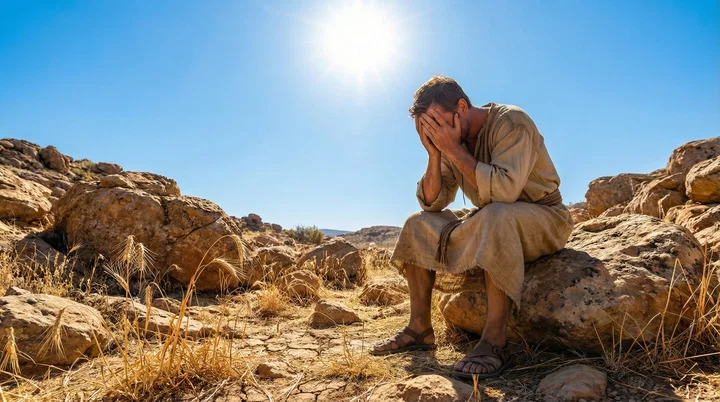
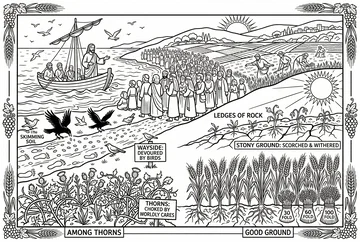

Cross-references 20 of 34
- Luke 8:13
They on the rock are they, which, when they hear, receive the word with joy; and these have no root, which for a while believe, and in time of temptation fall away.
Rocky-ground hearers believe for a time, then fall away when tested.
- Mark 4:16-17
And these are they likewise which are sown on stony ground; who, when they have heard the word, immediately receive it with gladness;
Seed received joyfully has no root and falls away when trouble or persecution comes.
- Matthew 13:5-6
Some fell upon stony places, where they had not much earth: and forthwith they sprung up, because they had no deepness of earth:
The rocky-ground seed withers when trouble comes.
- John 6:66
From that time many of his disciples went back, and walked no more with him.
Many disciples are offended by Jesus’ teaching and stop following him.
- Matthew 13:8
But other fell into good ground, and brought forth fruit, some an hundredfold, some sixtyfold, some thirtyfold.
Good soil bears fruit, unlike seed that is uprooted.
- Matthew 7:26-27
And every one that heareth these sayings of mine, and doeth them not, shall be likened unto a foolish man, which built his house upon the sand:
Both describe hearers who fail to endure when tested.
- Matthew 24:13
But he that shall endure unto the end, the same shall be saved.
Enduring to the end is contrasted with withering under persecution.
- Luke 8:11
Now the parable is this: The seed is the word of God.
Identifies the seed as the word of God.
- John 15:18-20
If the world hate you, ye know that it hated me before it hated you.
Jesus warns that his followers will face the world’s hatred and persecution.
- Acts 14:22
Confirming the souls of the disciples, and exhorting them to continue in the faith, and that we must through much tribulation enter into the kingdom of God.
Believers enter God’s kingdom through much tribulation.
- John 16:33
These things I have spoken unto you, that in me ye might have peace. In the world ye shall have tribulation: but be of good cheer; I have overcome the world.
Jesus says his followers will face tribulation in the world.
- 1 John 2:19
They went out from us, but they were not of us; for if they had been of us, they would no doubt have continued with us: but they went out, that they might be made manifest that they were not all of us.
Those who fall away reveal they were never truly part of the community.
- Matthew 13:30
Let both grow together until the harvest: and in the time of harvest I will say to the reapers, Gather ye together first the tares, and bind them in bundles to burn them: but gather the wheat into my barn.
The tares are gathered in bundles and burned at the harvest.
- Mark 4:6
But when the sun was up, it was scorched; and because it had no root, it withered away.
The seed without root withers when the sun rises.
- Luke 8:6
And some fell upon a rock; and as soon as it was sprung up, it withered away, because it lacked moisture.
The seed withers because it lacks moisture.
- Luke 8:5
A sower went out to sow his seed: and as he sowed, some fell by the way side; and it was trodden down, and the fowls of the air devoured it.
Both describe the sower illustrating the spreading of truth.
- Luke 8:15
But that on the good ground are they, which in an honest and good heart, having heard the word, keep it, and bring forth fruit with patience.
Describes hearers who keep the word and bear fruit with patience.
- Colossians 2:7
Rooted and built up in him, and stablished in the faith, as ye have been taught, abounding there in with thanksgiving.
Walking in Christ entails being rooted and built up in him.
- Luke 8:14
And that which fell among thorns are they, which, when they have heard, go forth, and are choked with cares and riches and pleasures of this life, and bring no fruit to perfection.
shares falling away through cares and pleasures
- Matthew 13:38-40
The field is the world; the good seed are the children of the kingdom; but the tares are the children of the wicked one;
The tares represent the wicked, and the harvest marks the end of the world.
Commentary part 1 of 2
Each commentary is drawn from primary sources: the writings of Ellen G. White and Adventist pioneers and periodicals. Each commentary is separate. Its own words are not a quotation; follow the references to read the source passages.
Ellen G. White
89 sources
The verse pictures a stony-ground hearer who receives the gospel quickly and joyfully yet lasts only for a while, withering like shallow seed under the sun when tribulation or persecution arises because of the word and causes him to stumble away.ST Jun 30, 1881Ms 26, 1898, par. 11–13Lt 28, 1909, par. 11–12COL 47.22SP 234.1–2 To have no root in oneself is to have a shallow faith resting on feeling rather than settled principle, unconnected with Christ and unnourished by Him, with the heart unrenewed, selfishness unsubdued, and the old nature unbroken.COL 46.2–33T 111.2–112.1COL 47.1COL 411.1Ms 131, 1903, par. 1–4 Such shallowness comes from trying to serve both self and Christ, welcoming the gospel as escape from suffering rather than deliverance from sin, without counting the cost or yielding habits and life to its control.COL 49.3–50.1COL 47.2ST Jan 26, 1915ST Jan 26, 1915 When testing comes, the same trial that strengthens deep-rooted faith destroys the shallow, for the hearer is offended by close reproof that exposes cherished sin and calls for self-denial, sacrifice, and radical change, and chooses present comfort rather than being changed.TCBMP 140.1–142.13T 111.2–112.1COL 47.22SP 234.1–2 Yet no one need remain a stony-ground hearer, for the heart-soil can be broken up by repentance and conviction, softened and subdued by the Spirit through daily surrender, and grounded by much personal study of Scripture and reliance on God so as to endure.COL 56.1–2ED 111.1–2DA 323.2–48MR 279.4Ms 37, 1901, par. 1–2
Parable Setting and Imagery
Matthew 13:21 belongs to the parable of the sower, which illustrates the kingdom of heaven and Christ's work of sowing gospel truth to bring people back to loyalty to God.COL 33.1 His teachings in that parable were seed to be cultivated, and minds and hearts desiring light and knowledge could gather them as precious treasure from heaven.RH Jul 2, 1908 The precious seed He scattered represented truth, which as given through prophets and people had become mingled with error and therefore had to be separated from heresy and evil and restored to the gospel in its original clarity.ST Dec 11, 1893
The verse pictures seed springing up quickly on stony ground with no depth of earth and withering when the sun rises.ST Jun 30, 1881 It describes a hearer who receives the word with joy but has no deep root in himself, so his response lasts only temporarily.Ms 26, 1898, par. 11–13COL 33JIOKP 44.1–3 When trouble or persecution arises because of the word, he stumbles, is offended, and turns away.Ms 26, 1898, par. 11–13Lt 28, 1909, par. 11–12COL 33JIOKP 44.1–3 That joyful response to the message does not last when hardship comes.CH 34.3
The parable as a whole shows the different tendencies of the human heart as soil receiving seed and the kinds of people Christ taught.2SP 241.1–24RED 86.2–3 It explains why His ministry did not produce greater immediate results.2SP 241.1–24RED 86.2–3 Acceptance or rejection is presented as human choice, for people were free to accept or reject Him and were not forced by divine power to believe or obey.2SP 241.1–24RED 86.2–3 The crowd listening included people with varying degrees of understanding, and for some the seed of life lodged in their hearts and later bore fruit.2SP 295.1
Human traditions and distorted interpretations can obscure the plain truth of God's word and rob it of its power.CT 438.3–4 In the surrounding teaching companion failures appear on the other soils: Satan may snatch away the word, while life's cares and riches choke it.Lt 34, 1875, par. 4–8 Hearing without taking root leaves a person unable to endure, and hearts can be made hard or crowded out by worldly possessions and cares, so that earthly interests overpower the invitation of truth and leave no room for heavenly things.ST Apr 22, 1875 The seed of truth sown in the heart can thus fail to grow and bear fruit when the spirit of the world chokes it and when attractive distractions draw the mind from Bible truth.Lt 34, 1875, par. 4–8Lt 21, 1868, par. 6–7
Meaning of No Root
To have no root in oneself is to receive the word with a shallow, temporary faith that springs up quickly but cannot endure, because it rests on feeling rather than settled principle and is never established in the truth so as to go on to form a perfected Christian character.COL 46.2–33T 111.2–112.13T 114.15MR 4.2 Such hearers may appear to be bright converts, yet their religion is superficial, lasting only while circumstances are favorable and withering when trial or persecution comes because of the word.COL 46.2–35MR 4.2 When trials, sacrifices, or persecution test them their zeal fades, and when pointed truth exposes defects of character they take offense and give up the truth rather than let it sanctify them, since genuine Christian life requires daily self-denial and conflict and not merely religious feeling and belief.3T 111.2–112.15MR 4.2
The lack of root means disconnection from Christ, so that spiritual life is not nourished by faith in Him, and the hearer instead relies on self, on good works and good impulses, and on personal righteousness.COL 47.1 The principles of the word are not assimilated and therefore its influence does not last, for although the Holy Spirit can implant a new nature when a person consents, a superficial response leaves the old nature unbroken and fails under trial.COL 411.1
Rootlessness also means the truth has not renewed the heart through God's Spirit, leaving no source of nourishment for the seed to endure.COL 46.2–33T 111.2–112.1 There is no deep sorrow for sin and no humbling sense of guilt, underlying selfishness remains unsubdued, the truth stays only on the surface, and professing Christians show no genuine change of life while feelings may be stirred and the work in the heart remains superficial.COL 46.2–3Ms 131, 1903, par. 1–4
Having root in oneself is being grounded in faith through much personal study of Scripture, turning from the themes of the day, coming with the Bible on the knees before God and asking for wisdom from God to comprehend the treasures of truth.8MR 279.4 Without this study there is no root and without root there is no standing when everything that can be shaken is shaken, a shaking that exposes the rootless through the devil working in a special manner with popular churches to pick flaws with the Bible and with those working in Christ's lines, through prevailing infidelity, through the mystery of iniquity and superhuman workings bewitching minds.8MR 279.4 Hearing the word is not enough, for a merely Christian name cannot protect against temptation; root means reliance on God rather than dependence on others, with believers educated to stand firm under opposition, and steadfastness comes through God's grace in truth.Ms 37, 1901, par. 1–2Lt 79, 1897, par. 1
The different outcomes do not depend on the sower or the seed, which are the same, but on the condition and response of the hearer's heart.COL 56.1–2ST Feb 2, 1915 Hearers are responsible for resisting the Spirit and for allowing hardness and hindrances to keep the word from taking root, receiving it without depth and remaining faithful only for a time until trouble or persecution because of the word makes them quickly fall away.COL 56.1–2ST Feb 2, 1915 Stony and thorny soil need not remain so, but can be changed and cultivated through repentance, uprooting of evil tendencies, and earnest effort in Christ's strength.COL 56.1–2
Causes of Shallow Faith
Trying to serve both self and Christ makes a person a stony-ground hearer, and half-hearted service leaves him weak in purpose and unable to endure when trouble or persecution tests him.COL 49.3–50.1ST Jan 26, 1915 Such a hearer has not counted the cost and has not yielded habits and life to the control of the word, so faith lasts only while life is easy but stumbles and falls when trouble or persecution comes because of the word.COL 47.2ST Jan 26, 1915 He may welcome the gospel as a way to escape suffering rather than as deliverance from sin, choosing present comfort over eternal realities when the word exposes a cherished sin or calls for self-denial, sacrifice, radical change, and bearing reproach for Christ.COL 47.2ST Jan 26, 1915 He may appear faithful while the path runs smoothly, yet fail under temptation and reproach for Christ, for the same trial that strengthens deep-rooted faith destroys shallow faith.COL 47.2ST Jan 26, 1915
Rootlessness comes because natural and cultivated tendencies to wrong have not been changed by grace and true Christian principles are not constantly followed, leaving no enduring interest in truth.Lt 102, 1901, par. 7–8RH Apr 1, 1902 Those so described hear the word and at first receive it with joy and endure for a while, but continually lose the interest once felt and return to sinful practices.Lt 102, 1901, par. 7–8RH Apr 1, 1902 They may continue to profess Christianity yet do not honor the truth and do not go on from grace to grace, becoming neither cold nor hot for a time and finally hardened to all good impressions, careless, worldly, and inattentive, hearing without receiving.Lt 102, 1901, par. 7–8Ms 74, 1897, par. 33–35 Unsanctified self remains alive because truth is not applied to heart and conscience, so under trial they become faithless, envious, jealous, and suspicious, with no progressive development of Christian practice springing from Christian principle as evidence of inward spiritual life.Ms 130, 1897, par. 26Ms 74, 1897, par. 33–35 Their Christianity is theory on the lips showing much love while the heart goes after covetousness, unmelted, unsubdued, and unconverted, putting selfish interests first under unconsecrated influence, satisfied to float along according to their own ideas until personal habits and selfishness are rebuked, and then offended, falling away and turning traitor to its principles.Ms 74, 1897, par. 33–352T 444.1
Receiving the word only partly, with merely partial sympathy for truth, leaves the heart without deep roots so the response lasts only briefly and turns away when trouble or persecution comes because of the word.Ms 85, 1894, par. 15–17 Such partial reception leaves the heart vulnerable to Satan's seed and to thorns that choke and destroy the good seed.Ms 85, 1894, par. 15–17 Self-righteous hardness also makes the heart unfit, hopeless, and profitless soil where heavenly truth cannot take root.ST Dec 3, 1912ST Dec 17, 1894 Cherished pride and a feeling of superiority are self-deluding, supposing others at fault while exalted self claims all faith, honor, and love, and strong hard words of reproof and condemnation crush hope and courage out of the soul.ST Dec 3, 1912ST Dec 17, 1894 Instead of good root, the goodness of heart seen in true Christians stirs roots of bitterness, evil thoughts, suspicion of the purest motives, and making a man an offender for a word, whereby many are defiled.ST Dec 3, 1912ST Dec 17, 1894
Surface hearers listen every day to the living oracles without purpose to give entrance to God's words, passing by precious treasures of truth as if of no consequence while gathering up the chaff.Ms 177, 1897, par. 2–4 They become excited to talk and say perverse things, and with a tattling, wicked tongue sow in minds evil seed that injures souls and bears its harvest.Ms 177, 1897, par. 2–4 This stands in place of promoting God's honor and glory by sound speech seasoned with grace and by doing the appropriate action God requires in each opportunity of life.Ms 177, 1897, par. 2–4
Testing and Falling Away
The shallow hearer lasts only for a time, and when trouble, trial, temptation or persecution arises because of the word he is offended, stumbles and quickly falls away.COL 47.2ST Jan 26, 19152SP 234.1–2 The same trial that strengthens deep-rooted faith destroys shallow faith, for one may receive the word quickly and with joy yet lack deep roots because he has not counted its cost or yielded habits and life to its control.ST Jan 26, 19152SP 234.1–2 Such a one may welcome the teaching and feel new purpose, may even appear faithful while life is easy, yet welcome the gospel as escape from suffering rather than deliverance from sin and fail under temptation or reproach for Christ.COL 47.22SP 234.1–2 When unfavorable surroundings, worldly cares and temptations arise the first impression fades and he returns to former sins and indifference.2SP 234.1–2
To be offended is to refuse the close reproof of the word and its work of sanctifying the character, choosing to yield the truth instead of facing personal faults and being changed by it.TCBMP 140.1–142.13T 111.2–112.1 Faith of this kind rests on feeling rather than settled principle, the heart has not been renewed through God's Spirit, and zeal fades when trials, sacrifices or persecution test what sacrifices the truth requires.TCBMP 140.1–142.13T 111.2–112.1 When pointed truth exposes defects of character, a cherished sin, or calls for self-denial, sacrifice, radical change and bearing reproach for Christ, the hearer turns away and chooses present comfort over eternal realities.COL 47.2ST Jan 26, 1915
Offense also comes when practical duties and claims are presented, as when converts draw back upon learning of tithing and missionary work, saying they were not so taught, and stop walking with those who believe and love the truth.GW92 99.2 When teaching from the Word that is needed to purify the soul brings offense, pride leads these enthusiastic yet rootless and temporary disciples, who are false disciples failing under trial, to abandon Christ.5MR 121.2
Religious trials expose this instability, for adversity purges such rootless professors from the church while prosperity can swell their number.4T 89.2–90.1 When professed believers are not sanctified by the truth they may give up the faith, and their failure can weaken others and prepare the way for backsliding.4T 89.2–90.12T 277.1 Many enter and appear sound and unquestionable while there is no persecution, yet have no root in themselves and do not hold fast the beginning of their confidence firm unto the end nor are strengthened in strait places.Ms 48, 1891, par. 15–16 When tribulation or persecution arises because of the word, especially when the law of God is made void and the church is sifted by fiery trials, Satan's varied snares and specious reasons prepared for varied minds gain force with them, so that they give heed to seducing spirits and doctrines of devils and go out from God's people in larger numbers than anticipated, proving they were not living branches of the True Vine that bear fruit, whom the husbandman takes away.Ms 48, 1891, par. 15–16
Truth received without deep roots withers when opposition comes, and new or unfamiliar teaching may meet determined pressure from ministers, friends and acquaintances who try to take the truth from the heart, so continued care is needed lest the seed be lost.6T 74.1–2 The rootless hearer remains faithful only briefly and then stumbles when hardship comes because of the word.Lt 15, 1862, par. 25–27 Those brought into truth are at risk of turning away when later teaching presses duties their first teacher neglected, and only thorough instruction and firm commitment fortify them against that failure.6T 74.1–2Lt 15, 1862, par. 25–27
Warning and Self Examination
The chapter holding this verse is a warning and instruction to be read carefully and to be heeded.Lt 317a, 1905, par. 6–8Lt 317, 1905, par. 7–9 It is to be read as for life, with self-examination and close heedfulness in view of the future destiny of those for whom Christ gave His life.Lt 317a, 1905, par. 6–8Lt 317, 1905, par. 7–9 It calls every reader to examine himself in light of Christ's judgment, where the question is who will stand acquitted.Lt 317a, 1905, par. 6–8Lt 317, 1905, par. 7–9 Those who are saved must form characters without fault, without spot or stain, in the sight of a pure and holy God in order to stand acquitted before the judgment seat of Christ.Lt 317a, 1905, par. 6–8Lt 317, 1905, par. 7–9 No one must allow himself to be blinded by human sophistries or by mocking burlesque of sacred things, for such mocking is blasphemy.Lt 317, 1905, par. 7–9
The parable warns that gospel seed may fall on poor soil and bear no fruit.Ms 1b, 1874, par. 2–4 Some hear the gospel but do not become firmly rooted in it, so their response lasts only a short time and fails when trouble or persecution comes because of the message.Ms 1b, 1874, par. 2–4 Rejecting the light leaves such hearers condemned, while the warning itself gives them opportunity to receive the truth.Ms 1b, 1874, par. 2–4
The verse gives the reason for the condition of the churches.Lt 102, 1901, par. 7–8RH Apr 1, 1902 It describes those who have no root in themselves because they do not constantly follow true Christian principles and their natural and cultivated tendencies to wrong have not been changed by grace.Lt 102, 1901, par. 7–8RH Apr 1, 1902 They hear the word and at first receive it with joy and endure for a while, yet without an enduring interest in the truth.Lt 102, 1901, par. 7–8RH Apr 1, 1902 They continually lose the interest they once felt, return to sinful practices, and may still profess Christianity while not honoring the truth of God nor going on from grace to grace.Lt 102, 1901, par. 7–8RH Apr 1, 1902 For a time they are neither cold nor hot, but finally they become hardened to all good impressions and grow careless, worldly, and inattentive, hearing the truth without receiving it.Lt 102, 1901, par. 7–8 When tribulation or persecution arises because of the word they stumble, are offended, abandon the truth, and fall.Lt 102, 1901, par. 7–8RH Apr 1, 1902
Cultivating Deep Lasting Root
Stony and thorny ground need not stay that way, for the heart as soil is to be broken up by repentance and by conviction of sin and of need, with evil tendencies uprooted through earnest effort in Christ's strength and name so the good seed is not choked.COL 56.1–2ED 111.1–2DA 104.1–2 The different outcomes turn on the condition of the hearer's heart, and the hearer is responsible for resisting the Spirit and allowing hardness and hindrances to keep the word from taking root.COL 56.1–2 Only a receptive heart awakened to its sin and need gives the gospel seed lodgment, and that conviction breaks up the soil and moves the person to seek healing from Jesus.DA 104.1–2
Before fruit to God's glory can appear the heart must be worked upon by the Spirit of God, refined, disciplined, softened and subdued.Ms 28, 1895, par. 6Lt 20, 1894, par. 46T 68.1 Truth accepted fully prepares the heart for continual sowing and for harvest, in contrast to hearing without rooting which does not last.Lt 20, 1894, par. 46T 68.1 A merely Christian name cannot protect against temptation, and steadfastness comes through God's grace in truth.Lt 79, 1897, par. 1 Without daily surrender to God and the indwelling of the Holy Spirit, faith does not endure, and when temptation or opposition comes the hearer falls away and may again come under evil's dominion.DA 323.2–4 Genuine Christian life requires daily self-denial and conflict rather than mere religious feeling and belief, for emotional response alone lasts only while circumstances are favorable and withers under trial or persecution because of the word.DA 323.2–45MR 4.2
Guarding against shallowness requires laying foundations from the outset in salvation through Christ's sacrifice and in taking His life and character as one's own.COL 57.1–2 Believers are to learn self-denial, burden-bearing, enduring hardship, trusting Christ's love, and working for Him, so that worldly pleasures lose attraction and worldly burdens lose power to discourage.COL 57.1–2 Root in oneself comes from studying Scripture much, turning from the themes of the day, coming with the Bible on the knees before God, and asking Him for wisdom to comprehend the treasures of truth.8MR 279.4 Without that study there is no root and no standing when everything shakable is shaken, a shaking brought by the devil working in a special manner through fault-finding popular churches that pick flaws in the Bible and in those working in Christ's lines, through prevailing infidelity, through the mystery of iniquity, and through superhuman workings bewitching minds with his power.8MR 279.4
The soil must also be prepared and planted point by point, because merely listening to sermon after sermon leaves only a few points that soon lose force upon the mind.Lt 29, 1890, par. 10–12 Shorter sermons, teaching, Bible readings, fastening points and texts in the mind, and answering questions in the plainest manner plant the seed for eternal interest so truth is grasped, springs up, and bears fruit.Lt 29, 1890, par. 10–12 Hardened hearts need much labor, skill, and painstaking preparation to bring them into condition for planting, with deep plowing and harrowing done in intelligent, harmonious cooperation of the divine and the human rather than surface work and haphazard half-effort.11MR 37.1–3 Shallow work is exposed at harvest when tribulation tests whether seed has taken hold, and the gospel seed requires broken-up, subdued, favorable soil to grow and produce a harvest.11MR 37.1–3 Personal ministry expressing Christ's love can soften a hard heart so seed can take root, and patient, gentle religious influence through prayer and worship builds confidence, weakens prejudice, and makes people receptive, as confidence-building meetings prepare hearts to receive the seed.GW 185.1HRP 10.13T 166.3–167.2
Decided effort is needed to become firmly rooted so that tribulation or persecution because of the word does not turn a person away from truth, including the Sabbath, for without depth the response endures only briefly and offense comes quickly.4T 442.2Ms 67, 1890, par. 6Lt 52, 1897, par. 1 The same soil image applies to the mind, which must be prepared to receive and retain God's truth and kept from fictitious reading that crowds it and leaves it unready for heavenly impressions.Ms 67, 1890, par. 6 Without daily cultivation the uncultivated mind is overrun by weeds, and neglected faculties sink into ignorance, superstition, and false ideas.4T 442.2
Sowing and Teaching Truth
The verse describes one outcome of teaching the word of the kingdom in extending a kingdom of truth and righteousness against deceptive opposition, where the stony-ground hearer receives the word at once with joy yet without root endures only for a while and falls away when tribulation or persecution arises because of the word.Lt 86, 1907, par. 8–9 It was given to teach disciples how to meet that deceptive work, showing that hostile purposes are defeated by teaching the truth.Lt 86, 1907, par. 8–9 Teachers of sacred truth can impart only what they know by experience and must embody what they teach, as Christ embodied truth because He was the truth.Lt 86, 1907, par. 8–9
The chapter sets forth two opposing working forces, Christ's word and the enemy's deceptive influence, explaining why hearts are not moved by proclamation of the gospel when soil is unprepared and seed does not spring up to bear fruit.Ms 115, 1906, par. 21–22Lt 140, 1903, par. 11–13 Evil angels in human form talk with those who know the truth and mingle with hearers to suggest, criticize, misapply, misinterpret and misconstrue words until by suggestions and insinuations the words of life lose their force.Lt 140, 1903, par. 11–13 Truth was presented in parables as the only way to rebuke sin without causing personal offense.Lt 140, 1903, par. 11–13
Poor reception does not stop the sowing, for the sower continues to scatter seed on all soils even though some hearers receive without deep settled root, last only briefly, and quickly fall away when trouble or persecution comes because of the word.7T 35.3 Those who join in that work must sow with care, anxiety and self-denial, having the mind of Christ and following His life of continued sacrifice for others' good so they do not become weary in well-doing.TBC1872 111.1 They must sow the seed of truth and trust God to quicken it to life, knowing precious seed may lie dormant for some time until grace convicts the heart and awakens it to spring up and bear fruit to God's glory, which calls for unselfish, earnest, persevering labor together with Christ and heavenly angels for the salvation of fellow men.TBC1872 111.1
Growth is often not immediately visible, for a heart may hold seed for a time without showing that it has taken root until God's Spirit works and it springs up and bears fruit.GW92 402.3 The seed of truth Jesus sowed took root and endured though its effect was not seen at once, springing up in minds and bearing lasting fruit in many souls saved.ST May 2, 1878 After His crucifixion and resurrection the lessons were revived in many attentive listeners, who repeated what they had heard for future generations to the close of time.ST May 2, 1878 Even when teaching seems to have little effect and students seem careless, some truth lingers in memory, the Holy Spirit waters the sown seed, and often it springs up after many days and bears fruit.STSE 97.2
Churches raised up through unconverted labor lack inward root and cannot stand alone, so a converted ministry is necessary.GW92 41.2–42.1 Preaching Christ and His redeeming love alongside the truth helps the word spring up and bear fruit rather than ending in a rootless response when trouble comes.GW 158.1 From the very first establishment of the work the heart as soil must be softened and subdued by careful, dignified, godlike presentation that carries minds along guardedly and weaves practical godliness into doctrinal discourses, for the teachings and love of Christ soften the soil for seed.Lt 14, 1887, par. 19 Confidence is gained by becoming acquainted with people while keeping the work elevated, publications, papers and pamphlets must prepare reading minds for preaching, and humble teachable workers who begin wisely and prosecute wisely will secure lasting success.Lt 14, 1887, par. 19
Parents bear the life duty, not to be trusted to other hands, of preparing children's heart-soil from the earliest years for the great Sower to scatter in it the seeds of truth, since lasting root depends on that preparation.RH Feb 28, 1907 They are to sow the living seed of truth deep into children's hearts, making God's Word the standard, living simply to have time, leading to cheerful willing obedience and submission, and bringing them up in nurture and admonition, with faithful cheerful undiscouraged perseverance bringing endurance and in due time reaping if there is no fainting.RH Feb 28, 1907Ms 9, 1868, par. 8 Truth must be planted from the earliest years by tenderly and lovingly teaching children to give hearts and minds to Christ and become His disciples.FE 368.3 The untrained mind is like an uncultivated field and Bible truth is precious seed for the soil of the mind, requiring unceasing cultivation and watchful guard because the enemy sows tares that spring up to bear evil fruit.CT 136.4 Trashy exciting tales leave the mind uncultivated, while sensible reading that throws light on Scripture and quickens desire to study it prepares the mind to take interest in Bible story, history and argument, whereas books of science and philosophy with partly hidden thorns of skepticism, vague fanciful stories, and writings on Scripture mixed with human fancies sow bad seed growing to a plentiful harvest of infidelity seen in human depravity.CT 136.4CT 186.3–187.2
Truth may produce little visible fruit for a time when it has not taken deep root, as Nicodemus watched and weighed the teachings for three years without publicly acknowledging Him, though not an enemy, until the raising of Lazarus gave decisive evidence of Messiahship.4RED 18.1 Likewise a person may hear and be deeply convicted while facing opposition because of it, as when seed is sown through a young man's work and a brother's family opposes Adventist books and teaching, where the final response under pressure is not yet known and falling away is not shown to have occurred.Lt 188, 1900, par. 4–5 Some witnesses at the trial in whom seed had taken root instead grew into perfect faith, and some later endured trials for their lives as disciples, showing that shallow brief faltering under trouble is not the only possible outcome.3SP 121.2 A patient whose heart is softened by suffering may likewise become receptive to religious counsel through truth as seed sown in the heart.CH 372.3–373.1
Thorough instruction and firm commitment from the first establishment of the work fortify converts, since people brought into truth are at risk of turning away when later teaching presses duties their first teacher neglected.Lt 15, 1862, par. 25–27 Human traditions and distorted interpretations can obscure truth made plain and rob the word of its power, so plain thorough teaching guards the seed.CT 438.3–4 The heart as soil must be cultivated to receive the good seed, in home and school, by careful teaching and formation of correct habits so lessons take root and are not quickly forgotten.CTBH 67.3
Sources