Matthew 13:28
He said unto them, An enemy hath done this. The servants said unto him, Wilt thou then that we go and gather them up?
Translations
He said to them, An enemy has done this. The servants said to him, Will you then that we go and gather them up?
King James Version, KJV Cambridge Paragraph Bible
He said unto them, An enemy hath done this. The servants said unto him, Wilt thou then that we go and gather them up?
He said to them, An enemy hath done this. The servants said to him, Wilt thou then that we go and gather them?
Revised Version, American Standard Version
And he said unto them, An enemy hath done this. And the servants say unto him, Wilt thou then that we go and gather them up?
And he saith to them, A man, an enemy, did this; and the servants said to him, Wilt thou, then, [that] having gone away we may gather it up?
And he said to them, A man [ that is] an enemy has done this. And the bondmen said to him, Wilt thou then that we should go and gather it [up]?
And he said unto them—An enemy, hath, done this. And they say, unto him—Wilt thou, then, that we go and collect it?
Berean Standard Bible, Majority Standard Bible
‘ An enemy did this,’ he replied.So the servants asked him, ‘ Do you want us to go and pull them up?’
“ He said to them, ‘ An enemy has done this.’“ The servants asked him, ‘ Do you want us to go and gather them up?’
And he said, Someone has done this in hate. And the servants say to him, Is it your pleasure that we go and take them up?
And hee said to them, Some enuious man hath done this. Then the seruants saide vnto him, Wilt thou then that we go and gather them vp?
Douay-Rheims (Challoner revision)
And he said to them: An enemy hath done this. And the servants said to him: Wilt thou that we go and gather it up?
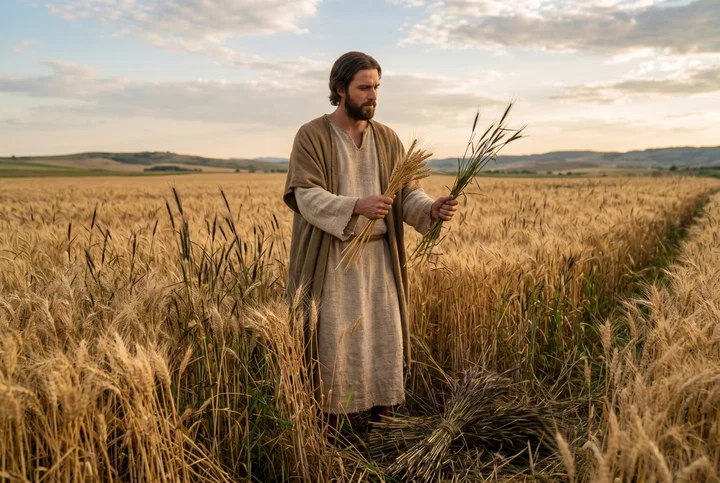
Pictures
Cross-references
- Matthew 13:36-43
Then Jesus sent the multitude away, and went into the house: and his disciples came unto him, saying, Declare unto us the parable of the tares of the field.
gives Christ's explanation of the enemy, harvest, and reapers
- Matthew 13:40-42
As therefore the tares are gathered and burned in the fire; so shall it be in the end of this world.
The tares are gathered and burned at the end of the world.
- Matthew 13:3-9
And he spake many things unto them in parables, saying, Behold, a sower went forth to sow;
Different soils illustrate varied responses to the word and its fruitfulness.
- Matthew 13:49-50
So shall it be at the end of the world: the angels shall come forth, and sever the wicked from among the just,
Both parables show the final separation of the wicked from the just and the wicked’s punishment.
- Matthew 3:12
Whose fan is in his hand, and he will throughly purge his floor, and gather his wheat into the garner; but he will burn up the chaff with unquenchable fire.
Both depict the final separation of the righteous from the wicked, with the wicked destroyed.
- Revelation 14:14-16
And I looked, and behold a white cloud, and upon the cloud one sat like unto the Son of man, having on his head a golden crown, and in his hand a sharp sickle.
The Son of man reaps the earth’s harvest, portraying the final separation.
- Matthew 13:38
The field is the world; the good seed are the children of the kingdom; but the tares are the children of the wicked one;
Identifies the field, wheat, and tares in the parable.
- Matthew 13:18-23
Hear ye therefore the parable of the sower.
The explanation shows how hearers’ hearts affect whether the word bears lasting fruit.
- Matthew 13:43
Then shall the righteous shine forth as the sun in the kingdom of their Father. Who hath ears to hear, let him hear.
The righteous shine in the Father’s kingdom after the harvest.
- Matthew 13:40
As therefore the tares are gathered and burned in the fire; so shall it be in the end of this world.
The tares’ burning occurs at the end of the world, portraying judgment.
- Matthew 13:37
He answered and said unto them, He that soweth the good seed is the Son of man;
Identifies the Son of man as the sower of the good seed.
- Matthew 13:47-48
Again, the kingdom of heaven is like unto a net, that was cast into the sea, and gathered of every kind:
Both parables depict a mixture of good and bad separated at judgment.
- Matthew 15:13
But he answered and said, Every plant, which my heavenly Father hath not planted, shall be rooted up.
Uprooting what God has not planted is God's work, not man's.
- Joel 3:13
Put ye in the sickle, for the harvest is ripe: come, get you down; for the press is full, the fats overflow; for their wickedness is great.
The harvest comes when the people’s wickedness is great.
Commentary part 1 of 2
Each commentary is drawn from primary sources: the writings of Ellen G. White and Adventist pioneers and periodicals. Each commentary is separate. Its own words are not a quotation; follow the references to read the source passages.
Ellen G. White
125 sources
The one who secretly sowed weeds among the good seed is Satan, the enemy of God and man, who works out of enmity to harm the crop and bring loss to its owner, while neither God nor His angels ever sow seed that produces a tare.COL 70.3Lt 102, 1901, par. 4–6Lt 86, 1907, par. 10–13 He does his work while men sleep, meaning while workers are unwatchful, self-sufficient and neglecting prayer, while he himself never slumbers.Ms 39, 1891, par. 4Ms 40a, 1890, par. 4–5FE 90.1 When the servants recognize his work and ask to go and pull up the weeds at once, they are refused, because the tares closely resemble wheat while green and their roots are entwined with it, so ruthless gathering would root up and destroy the precious grain.ST Nov 24, 1887Lt 102, 1901, par. 4–6Lt 86, 1907, par. 10–13 Both are commanded to grow together until the harvest, which is the end of the world, when the angels as reapers will gather the weeds for burning and bring the wheat into the barn.Lt 102, 1901, par. 4–6Lt 98, 1896, par. 26–29Lt 11, 1893, par. 8–10 Therefore the work of judging and separating is forbidden to men and left to Christ and His angels alone, since men cannot reliably distinguish wheat from tares or read hearts, and believers are to show forbearance, patience and humility rather than condemning and uprooting those they judge evil.Ms 52, 1899, par. 1–2Lt 98, 1896, par. 26–29Lt 57, 1893, par. 9–10RCNBP 15.29MR 137.1–4
Enemy and His Sowing
The one who sowed the tares is an enemy, and that enemy is Satan, the devil, the evil one, the enemy of God and man.COL 70.3Lt 102, 1901, par. 4–6Lt 98, 1896, par. 26–29Ms 84, 1897, par. 3–5Ms 65, 1899, par. 7 He works in enmity toward Christ, out of revenge seeking to harm the crop and bring loss upon its owner, afflicting the human family by this evil sowing.COL 70.3Lt 102, 1901, par. 4–6Ms 84, 1897, par. 3–5 Neither God nor His angels ever sow seed that produces a tare, nor does the owner himself sow such seed, for all tares are of Satan's sowing alone.COL 70.3Ms 84, 1897, par. 3–5Ms 65, 1899, par. 7 Every noxious herb is of his sowing, and not one was placed in the Lord's great garden, for Christ never planted the seeds of death in the human system.Ms 84, 1897, par. 3–5Ms 65, 1899, par. 7 The servants' question about gathering them up already introduces the danger that removing the tares would uproot the wheat as well, so both are left to grow together until the harvest when they are separated.Lt 102, 1901, par. 4–6Lt 86, 1907, par. 10–13Lt 98, 1896, par. 26–29
The sowing is done while men sleep, which is secret work succeeding when workers are unwatchful, self-sufficient, and spiritually sleeping, neglecting constant prayer and watchfulness.Ms 39, 1891, par. 4Ms 40a, 1890, par. 4–516MR 3.1–4.1Ms 188, 1897, par. 12–13Ms 10, 1892, par. 13 Such sleep is unconsciousness and inaction, as when older experienced Christians stand as mere spectators toward the young, or when church members sleep instead of shining and leave undone through idleness and selfish self-centered spirit the work God gave to everyone.Ms 40a, 1890, par. 4–5FE 90.1Ms 10, 1892, par. 13 In that unwatchfulness they become ensnared, blinded in understanding, ignorant of wonderfully specious devices, and perverted in vision by dependence on human wisdom, professing to work for God while in reality serving the prince of darkness unless through living faith and earnest prayer they become partakers of the divine nature.Ms 40a, 1890, par. 4–5Ms 188, 1897, par. 12–13 The enemy himself never slumbers but is wide awake, working as a devouring lion and a living persevering power to complete rebellion, to bar the way of Christ's kingdom, to persuade men to take his arm and advance woe and misery, and to take God's standard from God's people without their discerning it.Ms 40a, 1890, par. 4–5Ms 188, 1897, par. 12–13Ms 10, 1892, par. 13 Servants who see the wrongdoing but let it continue become implicated in its guilt and help his work, so men must awake out of sleep, remain watchful, and act against evils that can be checked rather than allowing them to take root and spread.16MR 3.1–4.1Ms 188, 1897, par. 12–13
That enemy is a deceiver who sinned in heaven, the first great sower of evil, whose rebellion commenced and continued under the power of a lie.Lt 86, 1907, par. 10–13Ms 34, 1898, par. 5–7 By deceptive power he drew away part of the holy family of heaven, drawing many angels into rebellion with him, and every disloyal subject who apostatized with him fell and was turned out of the blessed abode, cast out with his sympathizers never again to occupy his holy exalted place.Lt 86, 1907, par. 10–13Ms 34, 1898, par. 5–7Ms 71, 1902, par. 3 Even the loyal angels did not fully discern his character, and God did not at once destroy him, for had He done so the holy angels would not have perceived the justice and love of God, and doubt of God's goodness would have become as evil seed yielding the bitter fruit of sin and woe.Lt 86, 1907, par. 10–13 Therefore the author of evil was spared to fully develop his character, and through long ages God has borne the anguish of beholding the work of evil and has given the infinite Gift of Calvary rather than let any be deceived by misrepresentations.Lt 86, 1907, par. 10–13Ms 92, 1897, par. 21–22 God suffers the tares for a time to allow envy and hatred to fully manifest, just as He allowed Satan, until Satan stands exposed before the heavenly universe and before unfallen and fallen worlds in his true attributes as deceiver, accuser of the brethren, and murderer at heart.Ms 92, 1897, par. 21–22Ms 71, 1902, par. 3
The evil manifest even in the natural world comes from that same enemy and is no part of God's creation.Ms 84, 1897, par. 3–5Ms 65, 1899, par. 7ED 101.1ST May 5, 1909 Brier and thorn, thistle and tare, briars multiplying to choke the good seed, and poisonous herbs springing up after Adam was tempted to disobedience, came through the enemy by the curse when he tempted Adam to eat of the tree of knowledge, which meant disobedience to God.Ms 84, 1897, par. 3–5Ms 65, 1899, par. 716MR 247.1–3 By ingenious methods of amalgamation he has corrupted the earth with tares, making labor tenfold harder and toilsome, and leading men to murmur against God as the cause of misery when Satan himself is the real cause, with men cooperating by do-nothing habits and neglect.Ms 84, 1897, par. 3–5Ms 65, 1899, par. 7 Everything God made is useful, yet even a child coming in contact with nature finds cause for perplexity because he cannot but recognize the working of antagonistic forces, so nature needs an interpreter to teach this sorrowful lesson to children and to everyone.ED 101.1ST May 5, 1909 Nature is read rightly only in the light that shines from Calvary, where the story of Bethlehem and the Cross shows how good is to conquer evil and how every blessing is a gift of redemption, and if left unchecked the tares spoil the wheat by rank growth.ST May 5, 19098T 326.3
The field first sown with pure wheat is Christ's church in the world, including the church and its institutions, where God's work of salvation is carried out and where people grow and ripen for God's harvest.Ms 39, 1891, par. 4COL 70.2 It is also the world itself, the same field where good seed is sown, where good and evil workers labor side by side and truth and error contend, and where their opposing work and conflict continue until the great harvest at the close of history.COL 70.2RH Apr 3, 1900Ms 3, 1900, par. 5–8 There the unjust may be found among the just, with some spreading error and darkening minds while others sow good seed by revealing Christ, and the final separation is not yet taking place.RH Apr 3, 1900Ms 3, 1900, par. 5–8STA 84.2 The enemy's work there is the bringing in of worldly elements and placing them in positions of trust as respected teachers, directors, and officials, where they are worked by the spirit of darkness until the line between him that serves God and him that serves Him not is no longer distinguished and institutions become unsubstantial and unreliable.Ms 39, 1891, par. 4STMW6 4.1–2
Servants' Request and Refusal
When the servants learn that an enemy has sown tares among the wheat, they recognize the enemy's work and ask whether they should go and gather them up.ST Nov 24, 1887Ms 52, 1899, par. 1–2Lt 11, 1893, par. 8–10ST Nov 24, 1887ST May 10, 1877 The question expresses the desire of human agents to condemn church members and purify the church by removing the tares at once.Ms 52, 1899, par. 1–2Lt 57, 1893, par. 9–10 It arises because tares are present among the wheat in the church militant, which is not yet triumphant.Lt 98, 1896, par. 26–29Lt 57, 1893, par. 9–10 The weeds were sown to injure the owner, and the servants propose to take them out and leave only the wheat.ST Nov 24, 1887ST May 10, 1877
The request is refused with Nay, lest in gathering the tares the wheat be rooted up also.Lt 102, 1901, par. 4–6Lt 98, 1896, par. 26–29Lt 11, 1893, par. 8–10 The tares are harmful weeds growing alongside the wheat and closely resembling it while the blades are green, so pulling them could disturb the wheat's roots and destroy young plants.ST Nov 24, 1887Lt 86, 1907, par. 10–13ST Nov 24, 1887ST May 10, 1877 Their roots are entwined with the precious grain, and ruthless tearing would uproot the wheat with them.Lt 102, 1901, par. 4–6Lt 11, 1893, par. 8–10ST Nov 24, 1887 That work is forbidden to men and left to the Son of God alone, who lived the law of God in humanity and understands the strength of temptation coming to every child of His, for if committed to human judgment terrible mistakes would be made.Ms 52, 1899, par. 1–2Lt 98, 1896, par. 26–29 The same forbearance shown by the Lord of heaven toward Satan is required toward fellow men, not condemnation and judgment of others but humility and distrust of self, since being in the church does not prove one a Christian and removing those judged evil could cause others who might have remained steadfast to stumble or be driven to despair.Lt 86, 1907, par. 10–13Lt 98, 1896, par. 26–29
Both are therefore allowed to grow together until the harvest, and until then good and evil remain together and their conflict continues.Lt 102, 1901, par. 4–6ST Nov 24, 1887ST May 10, 1877COL 75.1 The harvest is the end of the world, when God sends angels as reapers to separate them.Lt 102, 1901, par. 4–6Lt 98, 1896, par. 26–29Lt 11, 1893, par. 8–10COL 75.1 Then the weeds are gathered and bound for burning and the wheat is brought into the barn, the good and evil separated and their destinies fixed forever with no probation after the Judgment.Lt 98, 1896, par. 26–29Lt 11, 1893, par. 8–10ST Nov 24, 1887COL 123.1–2
Wheat, Tares, and Harvest
The tares are persons embodying error and false principles, children of the wicked one sown among the children of the kingdom by Satan, who is the enemy that did this work.COL 70.3Lt 86, 1907, par. 10–13Lt 98, 1896, par. 26–292SP 247.2–249.1RH Apr 1, 1902 They are counterfeit Christians and false brethren bearing Christ's name while denying His character, hypocrites and mere professors mingling for a time with true followers yet not joined to Christ, and their presence dishonors God, endangers souls, damages the gospel work, and gives no excuse for unbelief or disobedience.Lt 86, 1907, par. 10–13Lt 98, 1896, par. 26–29Lt 30, 1895, par. 47–482SP 247.2–249.1RH Apr 1, 1902 The wheat are the true followers of Christ, genuine Christians true in heart and action, the good seed sown among whom the enemy secretly introduces evil.Lt 86, 1907, par. 10–13Lt 98, 1896, par. 26–292SP 247.2–249.1 The church militant is therefore composed of wheat and tares, with counterfeit Christians in every church, and the fact that men are in the church does not prove them Christians.Lt 86, 1907, par. 10–13Lt 98, 1896, par. 26–29ST Feb 9, 1915
The tares closely resemble the wheat while the blades are green, so that pulling them could disturb the roots and destroy the young wheat plants.ST Nov 24, 1887Lt 86, 1907, par. 10–13ST May 10, 18772SP 247.2–249.1 Their outward show of piety and semblance of Christianity can conceal that they are not joined to Christ and is calculated to deceive many, and they are erring and hypocritical professors whose sin among God's people frustrates in part Christ's work of saving fallen humanity and making the heart fruitful in good works.Lt 86, 1907, par. 10–13ST Nov 24, 1887COL 74.2–3 Their mixed crop draws attention and brings reproach on Christianity, so that observers may judge the whole field and its sower as worthless or corrupt and the world may doubt Christ's truths.2SP 247.2–249.1ST Nov 24, 1887 They are known by fruit, for when the field is white to the harvest the worthless weeds bear no likeness to the wheat bowing under the weight of its full, ripe heads, and in the harvest of the world there will be no likeness between good and evil when those who joined the church but did not join Christ are manifest.Lt 86, 1907, par. 10–13COL 74.2–3
The tares remain tares rather than being changed into wheat, and are then gathered and destroyed while the righteous are gathered into eternal life.ST Nov 24, 18872SP 249.2–250.2ST Feb 9, 1915 The verse does not teach that all tares will become wheat, but that wheat and tares grow together until the harvest, which is the end of the world, when angels as reapers separate them.ST Nov 24, 18872SP 249.2–250.2ST Feb 9, 1915 At that time Christ will distinguish them and judge each person by words, works, and character, not by profession.COL 74.2–3ST Feb 9, 1915
The tares also represent what the enemy sows as seed: error mingled with truth, false teaching and heresies diligently spread alongside good doctrine, doubts and unbelief planted in minds and hearts, skeptical thoughts, strange theories, infidel sentiments and ideas mixed with education, seductive spiritualistic sophistries, human maxims and false interpretations, and chaff sown instead of pure sanctifying truth.Lt 51a, 1895, par. 15–17GC88 248.3Lt 208, 1900, par. 6RH Jul 3, 19004SP 173.1 Satan secretly plants these seeds of evil and error in human minds while Christ sows good seed in the heart, mixing evil with good so the two are hard to distinguish without clear spiritual sight.ST Nov 24, 1887Lt 208, 1900, par. 6 Once sown the seed cannot be gathered up but grows abundantly, spreads from field to field, crowds out and destroys what is good, weakens faith, corrupts young minds, and produces a harmful harvest that will continue to the close of history.Lt 51a, 1895, par. 15–17ST Nov 24, 1887RH Jul 3, 1900
The verse belongs to the parable of the wheat and tares, one of the familiar objects of seed, fieldwork, and harvest used to make divine truths memorable to the hearers.ST Dec 1, 1887ST May 1, 1901ST May 17, 1877 Like the parable of the sower it applies broadly, to people from every class, with imagery of seed scattered by laborers and grain harvested that was familiar to those who heard it.ST Dec 1, 1887ST May 17, 1877 It introduces the servants' question whether to gather up the tares before the harvest.COL 70.1Lt 29, 1872, par. 1–2 It is applied to the gospel harvest ripening for Christ's coming, when Christians bearing fruit to God's glory more quickly sow the world with the gospel and the final harvest ripens for Him to gather the precious grain.COL 69.2
Patience Without Human Separation
The pulling up and judging is not given to human hands but is reserved to the Son of God alone, and if it were committed to human judgment terrible mistakes would be made in rooting up wheat with tares.Ms 52, 1899, par. 1–2Lt 98, 1896, par. 26–299MR 137.1–4 He alone is fit to judge because He lived the law of God in humanity and understands the strength of temptation and the weakness and striving of every child of His toward Christian perfection.Ms 52, 1899, par. 1–2Lt 98, 1896, par. 26–29Lt 64a, 1895, par. 12–16 The servants are answered with Nay, lest in gathering the tares the wheat be rooted up also, and both must grow together until the harvest, which is the end of the world, when the angels as reapers gather the tares to burn and the wheat into the barn.Lt 98, 1896, par. 26–299MR 137.1–4Lt 64a, 1895, par. 12–16 The righteous and wicked therefore remain mingled in life until the Lord alone separates them and gives each a true position in the judgment, and faults seen in members must not be made an excuse for criticism or for deciding who belongs among God's people.Lt 98, 1896, par. 26–29Lt 64a, 1895, par. 12–16Lt 48, 1897, par. 12–23 Human beings are not given the right to pass judgment on others or to condemn and root out those they judge false, for Christ who owns and redeems them does not use force to remove even a perverse disciple, and pity is to restrain wrath and passion toward the deceived.Lt 48, 1897, par. 12–2313MR 312.1
Men cannot now safely tell tares from wheat nor read hearts, and may mistake wheat for tares, while Christ and His angels know the difference by fruits and will never make a mistake.ST Feb 9, 1915Ms 92a, 1898, par. 14–1820MR 149.2–4 The tares closely resemble the wheat while green, so attempted cleansing could harm true believers or drive to despair those Christ is drawing to Himself.ST Feb 9, 1915Ms 92a, 1898, par. 14–18 The church on earth is militant and not yet triumphant, containing both, and the Lord alone knows who are His.Lt 57, 1893, par. 9–10RCNBP 15.2 No one is therefore to decide membership by private judgment nor to exclude any from footwashing and the sacrament, for though Jesus knew Judas would betray Him He washed his feet and let him partake with the rest.20MR 149.2–4DA 656.1 At every such service unseen angels and messengers of darkness are present as then, yet even those not in heart united with truth and holiness are not to be forbidden the ordinances by men.20MR 149.2–4
The refusal teaches forbearance, patience, humility and distrust of self rather than condemnation, accusation, faultfinding, or feeding on the real or supposed faults of brethren.Lt 86, 1907, par. 10–13COL 72.2COL 74.1 Evil is allowed time to reveal its character, and believers are to bear patiently with others rather than act hastily to force out harmful elements, lest sincere believers be damaged like wheat pulled with tares.COL 72.2TCBMP 143.1–145.1COL 72.1 Premature separation can create opposition and factions, give grounds for complaint, and cause others who might otherwise remain steadfast to stumble, so difficulties call for careful consideration, earnest prayer, and wise judgment, and may sometimes resolve without intervention.TCBMP 143.1–145.1COL 72.13T 114.1 The fact that men are in the church does not prove them Christians, for sinners making a pretension of piety mingle for a time with true followers and the semblance of Christianity is calculated to deceive many.Lt 86, 1907, par. 10–13COL 74.1 One's own faults may be greater or less visible, so Christ alone is the pattern to feed upon rather than the faults of others.COL 74.1
The same warning forbids trying to uproot those judged evil before the harvest by force through civil power.COL 73.1 Imprisonment, torture, and killing of those counted heretics in Christ's name reflect Satan's spirit and method, misrepresent God, and seek to bring the world under Satan's rule.COL 73.1
Defective and unconverted persons, counterfeit Christians, pride, self-sufficiency, stubborn unbelief, and refusal to yield even when evidence is piled upon evidence may be present in every church, with precious and vile together, yet their presence does not make the commandment-keeping church Babylon nor blot it out so that it will not exist.RCNBP 4.1–5.1RCNBP 15.2RCOC 6.2 The church is loved and is not to be disparaged, abandoned, disorganized, broken into independent atoms, or torn to pieces by human efforts to gather out the evil.RCOC 6.21MR 362.2–363.11MR 303.1–2 Believers must stay in Christ's lines, strengthen the wheat, work for purification, and let the Lord who knows His own do the separating at the harvest, when angels and not men first gather the chaff and bind it in bundles to burn and gather the wheat into the garner.Lt 57, 1893, par. 9–10RCOC 6.21MR 362.2–363.11MR 303.1–2
Final Separation at Harvest
At the harvest the good and the evil are clearly distinguished and separated forever, with destinies fixed and no probation after judgment.Lt 98, 1896, par. 26–29COL 123.1–22SP 247.2–249.1COL 75.1ST Nov 24, 1887 Both grow together until the harvest, which is the end of the world, when the angels as reapers bind the tares to burn and gather the wheat into the barn.Lt 98, 1896, par. 26–29Lt 11, 1893, par. 8–102SP 247.2–249.1COL 75.1ST Nov 24, 1887 The wicked are removed from among the righteous and destroyed while the righteous receive eternal life.Lt 98, 1896, par. 26–29Lt 11, 1893, par. 8–102SP 247.2–249.1 The tares remain tares rather than being changed into wheat, and are then gathered and destroyed.COL 123.1–2ST Nov 24, 1887ST Feb 9, 1915 The church militant today is therefore composed of wheat and tares, with counterfeit Christians and false professors mingling with true followers, bringing reproach and danger to the gospel work, yet allowed to remain together for a time.Lt 98, 1896, par. 26–292SP 247.2–249.1COL 75.1
Each is then given a true position according to character, judged by words and works and fruits, not by profession.ST Feb 9, 1915Lt 48, 1897, par. 12–23Ms 25, 1897, par. 25Lt 92, 1887, par. 2 The wheat are those really believing, genuine and true in heart and action, while the tares are those appearing Christian but not joined to Christ, whose works disclose an unchanged, unsanctified character.ST Feb 9, 1915Lt 48, 1897, par. 12–23Lt 135, 1899, par. 22Lt 92, 1887, par. 2 Reaping is as sowing, for none can sow tares and reap wheat, and what a person sows determines what is reaped.Lt 63, 1896, par. 2Lt 92, 1887, par. 2Lt 48a, 1900, par. 16 A character molded by devotion to earthly things receives a worldly mold that remains as at death and appears unchanged in the morning of the resurrection, with no conversion or transformation of character then.Lt 63, 1896, par. 2
Divisions will come and two parties will be developed, the wheat and tares growing up together for the harvest to the very close of time.Lt 176, 1900, par. 317MR 17.2–18.1Ms 32, 1896, par. 34–37 Divine and satanic agencies are engaged in decided opposition and vital conflict till the close of this earth's history.Lt 176, 1900, par. 3 God has long borne with stubborn self-indulgence, and the time has come when everything that can be shaken will be shaken so that what cannot be shaken may remain, as He tests and proves His people.Lt 176, 1900, par. 3 Meanwhile a new life from heaven takes possession of all God's people and the last message of mercy is sounded to a fallen world, growing deeper and more earnest with laborers together with God contending for the faith once delivered to the saints.Ms 32, 1896, par. 34–37
That selecting and sealing or binding of the wheat for the heavenly garner is the work of the third angel.SCEV 38.3Ms 3, 1854, par. 16–17Ms 3, 1853, par. 7Ms 1, 1854, par. 7–8 The vile is separated from the precious, and the wheat is selected and sealed for the heavenly garner.Ms 3, 1854, par. 16–17Ms 3, 1853, par. 7Ms 1, 1854, par. 7–8 This separation calls for the whole mind and attention, and failing to take part in it is failing to work with that angel.Ms 3, 1854, par. 16–17Ms 3, 1853, par. 7
False professors bound closely to Satan will be among the first to feel God's wrath.STGC 87.2Ms 10, 1899, par. 2Ms 162, 1902, par. 43 They are men found all along among believers who do much harm to the cause, spots in feasts of charity and wolves among sheep, tearing and devouring, delighting to bear false witness and cruelly injure reputation by lies.STGC 87.2Ms 162, 1902, par. 43Ms 106, 1903, par. 60 They are not rooted out at once but remain among the wheat until God's appointed day to judge the world in righteousness, when the separation will be made and every man rewarded according to works.STGC 87.2Ms 162, 1902, par. 43Ms 106, 1903, par. 60 In that day those who sought to destroy reputation will be revealed as hypocrites, their own lips bearing testimony that clears from suspicion those they falsely accused, showing they knew all along they were injuring their fellow man.STGC 87.2Ms 162, 1902, par. 43Ms 106, 1903, par. 60
Growing together does not forbid all effort against evil.Lt 117, 1896, par. 13Ms 81, 1897, par. 9Ms 167, 1899, par. 13–16Ms 128a, 1903, par. 96T 239.2–4 Faithful guardians must watch and pray, give marked attention, reprove, rebuke and correct with wholesome words, set in order any person seen sowing tares, and refuse to allow tares to be sown through wrong associations that hurt youth and contaminate health.Ms 81, 1897, par. 9 Objectionable teachings and evils that threaten to choke the work must be met and corrected through decisive action, and leaders are to work for purification of the church so it can shine as a light rather than disparage or abandon it.Lt 51b, 1898, par. 13–15Ms 167, 1899, par. 13–16Ms 128a, 1903, par. 96T 239.2–4 Successful care of the school requires discipline taught by precept and carried out by practice, and corrupting influences that block the work must be cleansed by removal.Ms 81, 1897, par. 9Ms 128a, 1903, par. 9 Yet labor must be personal, house-to-house missionary labor of the kind that builds up, restores, and strengthens faith, not of the kind that weakens and confuses and destroys souls ransomed at infinite price.Lt 117, 1896, par. 13
Enemy Sowing in Life
In the home the child's heart is a field where the enemy preoccupies the mind when parents neglect early culture, sleep, or leave the child to do as it pleases and take in good and bad indiscriminately.ST Aug 6, 1912SG4 298.1ST May 20, 1889 His tares there include stubbornness, selfishness, impurity, pride, love of pleasure, disobedience, sinfulness, and evil habits that overshadow precious plants.ST Aug 6, 1912ST May 20, 1889 Evil learned early grows faster than good and is difficult to eradicate, so that allowing good and evil to grow together in hope good will later prevail is dangerous, and removing its influence afterward may take many years.SG4 298.1ST Apr 17, 1884 The untrained mind is like an uncultivated field requiring unceasing care, and unless parents keep watchful guard the tares will spring up to bear evil fruit.CT 136.4 The remedy is to sow good seed from babyhood by filling minds with what is good and pure before evil can be planted, guarding education and society, giving patient answers, forming pure habits, cultivating good traits, repressing evil, and exercising firm wise control.CT 136.4SG4 298.1ST May 20, 1889 Teaching children to reject trashy exciting tales and turn to sensible reading that leads to Bible story, history and argument, and reading that throws light upon the Sacred Volume and quickens desire to study it, stores the mind with Bible truth and is beneficial and not dangerous.CT 136.4
In education the enemy sows tares through teachers taught by him whose influence should not educate the young, through unbalanced or loveless teachers, and through books presenting errors and fables.RH Jul 3, 1900CT 30.3CE 82.1–2 False teaching is weeds sown among good seed, mixing infidel ideas with education and sowing erroneous sentiments in young minds, with a harmful harvest to follow.RH Jul 3, 19006T 162.2–164.2 Such teachings corrupt minds, create distaste for the Bible, lead away from biblical truth, introduce error alongside truth, and threaten spirituality and belief, turning youth into infidels.6T 162.2–164.2STE 159.1 Teachers may spread harmful notions while some mistake those tares for precious wheat, so teachers should introduce no new idea unless sure it is true.Ms 172, 1897, par. 25–28 Schools must therefore guard manuscripts, erect barriers, discard degrading matter including infidel books and fictitious profane literature, novels handled on the same presses as truth, Greek and Latin overloads, and hypnotic bewitching heresies, and store minds with Bible truth and sensible reading.CE 82.1–26T 162.2–164.2STE 159.1
By tongue and example every worker is either a devoted servant of Christ or under the enemy's leadership, sowing wheat or tares by letters written, by thoughts, by words, and by the spirit in which daily duties are performed, all forming character.Ms 54, 1899, par. 16–17 Those who sow wheat abide in the true vine and partake of the divine nature with pure holy motives, speaking only words in harmony with Christ and helping others do right, while those who appropriate low debasing worldly influences imbibe pride and self-indulgence and grow in worldliness and sin.Ms 54, 1899, par. 16–17 Sowing tares is planting doubts and unbelief in minds and hearts so faith is weakened, and once sown that seed cannot be gathered up but will grow and produce a harvest.Lt 51a, 1895, par. 15–17Ms 195, 1905, par. 4–5 Evil words and skeptical thoughts are seeds that take root in other minds to bear harmful fruit, and a person can become the agent through whom such tares are sown in younger minds by example.Ms 195, 1905, par. 4–5Lt 96, 1895, par. 7 The tares also include doubts and questionings suggested by Satan such as picking at straws and setting up men of straw to attack over the words I, we and us, which those who pass along become his agents for communicating, so that clearing one brings another; the right response is to sow grand soul-saving truths and remove his questions when possible rather than employ minds in unprofitable work over images of straw.Lt 200, 1906, par. 6–9 The same sowing is done by words and actions, even by those in responsible positions, when they criticize those who by the Holy Spirit labor with God and reject the messages they bear, the enemy working through evil angels guiding the sowers and inspiring imagination with defective perverted eyesight to see many things in false light, openly and secretly counteracting God's appointed work through human agencies, and those continuing without repentance will soon find no place for repentance though sought carefully with tears, like Esau.Lt 87, 1896, par. 15 Other forms are raising suspicions without foundation, faultfinding and jealousy from self-sympathy, repeating confidences, betraying friends, envy, evil-speaking, misrepresentation, bitterness, self-exaltation, and criticism that disrupts faith.Ms 195, 1905, par. 4–5Lt 87, 1896, par. 15Ms 54, 1899, par. 16–17
In churches, sanitariums, publishing houses and gospel work the field first sown with pure wheat is the church and its institutions, and the enemy's work while men sleep is bringing in worldly elements and placing them in trust as respected teachers, directors and officials, where they are worked by the spirit of darkness until the line between him that serves God and him that serves Him not is no longer distinguished and institutions become unsubstantial and unreliable.Ms 39, 1891, par. 4STMW6 4.1–2 Objectionable teachings and evils that threaten to choke gospel medical missionary work are tares whose wrongs must be met and corrected through decisive action.Ms 128a, 1903, par. 9 Satan attempts to introduce vice among virtue and corrupt God's work, and those not converted may contaminate others, so zeal must follow Christ's leading rather than act ahead of Him.Lt 189, 1900, par. 7–9 Harsh management by ordering, scolding, sharpness in voice and exertion of kingly authority does not come from God but from the enemy, who has sown unholy tares among the wheat souring those in the office, and it is high time for cleansing by removing those tares and working in the tender loving spirit of the Master with sweetness of Christ, calling good and evil by right names.Lt 55, 1901, par. 5–6 The remedy for perverted principles, unbelief sown by misrepresentation and dominating rule, display of wealthy patrons, and rival enterprises mingling tares with truth until its holy character sinks from sight, is tender Christlike management, cleansing by removing corrupting influences, and refusing to abandon neglected fields where weeds were sown through long neglect, since that field is now harder to work yet urgently needs labor.Ms 39, 1891, par. 4Ms 128a, 1903, par. 9SW 39.1
This life is sowing time when the seed sown should produce wheat rather than tares, and God works with people giving talents to use in producing a harvest.CT 491.1 The Master sends servants to sow His field with wheat, pure wheat and not mingled seed, for the tares are the heterogeneous mass of heresies, strange new things, unstable theories, mere suppositions and vagaries of the brain that unsanctified men conjure up and present as oracles of God and life-and-death questions.Lt 136a, 1898, par. 23–27 To pass those speculations along as food is to sow chaff instead of pure sanctifying golden truth from the Word, and even if the sowers see folly, repent and are forgiven for teaching what was never committed to them, they cannot change tares into wheat by tears and repentance, and when chaff is found in the wheat at harvest they will realize souls never had the light and experience they might have had.Lt 136a, 1898, par. 23–27 Christians must therefore sow seeds of truth and sow no tares, avoid sowing weeds through wrong conduct, and instead sow the kingdom's good seed by living faithfully and helping others do right.FE 301.2–3Ms 59, 1886, par. 7–8 Because wheat and tares grow together in the church with dangers threatening it, there is need as never before for personal house-to-house missionary labor that builds up, restores and strengthens faith and does not weaken, confuse and destroy souls ransomed at infinite price, with every faculty appreciated and every talent used for God's glory.Lt 117, 1896, par. 13 Faithful guardians given responsibility for souls must stop tares sown through wrong associations that hurt youth and contaminate spiritual and physical health, by marked attention, watching and praying, reproving, rebuking and correcting with wholesome words, setting in order any person seen sowing tares and refusing to allow it, with discipline taught by precept and carried out by practice, purging from vessels of dishonor, tending one's own garden rather than finding weeds in a neighbor's, and associating with the self-denying.CT 491.1Lt 117, 1896, par. 13Ms 81, 1897, par. 9
The mixed crop draws attention and may lead observers to judge the whole field and its sower as worthless or corrupt, for tares as erring hypocritical professors bring reproach on Christianity, cause the world to doubt Christ's truths, and in part frustrate Jesus' work of saving fallen humanity from Satan's power and making the heart fruitful in good works.ST Nov 24, 1887 False brethren will remain until the close of time, yet their presence should not dishearten Christians or give reason to doubt Christianity, and Christ's patience with Judas shows believers are to bear patiently with erring people rather than seek to lose any soul.COL 72.3 God will arouse His sleeping people, and if other means fail He permits heresies to come in to separate chaff from wheat, calling all who believe to awake, study Scripture diligently, and examine positions critically in the light of Bible truth showing perils right upon them.ST Nov 15, 1905 The two groups grow toward different ends, the faithful as wheat for God's harvest and the worldly as tares for destruction, distinguishing those faithfully serving God from those rejecting divine authority.RH Aug 25, 1910 Those who fail to stand in Christ's freedom and gather precious wheat choose instead to gather tares, while truth stands on its eternal basis amid error professed by God's people developing among tares.Ms 21, 1911, par. 91MR 372.1 Leaders are therefore called to purify the church so it shines rather than be disparaged, though the barrier the mixed crop becomes keeps some from standing with God's people and does not excuse unbelief or disobedience, for God still loves His faithful.ST Nov 24, 1887COL 72.3ST Nov 15, 1905
The same enemy work appears as two working forces with deceptive wiles to be warned against.Ms 115, 1906, par. 21–22 At Corinth after Paul's departure harmful influences took root among believers and produced evil fruit, picturing tares planted by the enemy among wheat.ST Apr 14, 1914SLP 149.1AA 299.2–3 The unjust may thus be found among the just in the field, and servants ask whether to remove them.STA 84.2 Students who encourage evil and bring trouble or discouragement to teachers are likewise tares springing up among wheat, showing evil can be planted among good and raise the question of removal.FE 249.2 So also Solomon's pagan alliances mingling idolatry with faith, secret-society vows binding members, unreliable complaining workers, friction-making plans, traits needing testing, novels and falsehoods in publishing, infidel questioning in Bible study, error-spreading such as Elder McCullagh's, and last-day covert counterworking of the Spirit, will be exposed at judgment when books are opened.ST Apr 14, 1914SLP 149.1AA 299.2–3
Sources
Pioneers and periodicals
376 sources
An enemy sowed weeds among wheat while men slept, and when the servants found them and asked whether to pull them up, they were told to let both grow together until harvest lest the wheat be rooted up with them.ST Nov 24, 1887ST May 8, 1907RH Sep 23, 1862ST Jun 22, 1882ST Oct 30, 1901 The enemy is Satan, not God or His angels, for God made all things good and is not the author of sin and evil in the world and in human life.ST May 8, 1907ST Jun 22, 1882RH Nov 1, 1853RH Nov 16, 1911RH Oct 5, 1905 The wheat are the children of the kingdom and the tares the children of the wicked one, and the field is the world, not the church, so both classes remain mixed together in every age until the end.ST Aug 28, 1884RH Jul 23, 1857RH Jul 25, 1865RH Mar 25, 1858ST Sep 4, 1893 No human gathering before the time is permitted, for finite men cannot surely distinguish counterfeit from genuine nor separate without destroying wheat, so judgment belongs to God alone and calls for patience, forbearance and labor to save rather than condemn.ST Jun 14, 1899ST Aug 7, 1901ST Mar 6, 1901RH Oct 19, 1916RH Dec 30, 1909 At the harvest, which is the end of the world at Christ's second coming, angels as reapers will make the final separation, gathering the righteous into the garner for eternal life and binding the wicked in bundles to be burned and destroyed.RH Sep 23, 1862ST Oct 30, 1901ST Feb 24, 1898RH Jan 24, 1856ST Jan 28, 1875 Therefore the world will not be wholly converted and made holy before the end, but good and evil will grow side by side with evil ripening worse until Christ comes.ST Jun 22, 1882RH Jul 23, 1857RH Mar 19, 1867RH Jan 30, 1872ST Apr 23, 1912
Parable Story and Setting
The saying belongs to the parable of the wheat and the tares, in which a man sows good seed, an enemy sows tares among the wheat while men sleep, the servants discover the tares and ask whether to go and gather them up, and both are left to grow together until the harvest when the tares are burned and the wheat is gathered into the barn or garner.ST Nov 24, 1887ST Dec 24, 1885ST Mar 10, 1898ST Feb 28, 1884ST Jan 9, 1893 The weeds were sown to injure the owner, and removing them before harvest risked uprooting the wheat as well, so both were to grow together until the harvest, when the weeds would be gathered for burning and the wheat brought into the barn.ST Nov 24, 1887ST Nov 24, 1887ST Oct 30, 1901 The parable was afterward explained to those who sought the explanation, giving the figures literal meanings in which the field is the world, the wheat and tares are the children of the kingdom and of the wicked one, and the harvest brings their separation.ST Dec 24, 1885ST Nov 9, 1882ST Mar 10, 1898
The tares were harmful weeds growing alongside the wheat and closely resembling it while growing, so intertwined that removing them could disturb the wheat's roots and destroy young plants.ST Nov 24, 1887ST Oct 30, 1901ST Jun 22, 1904 People cannot reliably distinguish tares from wheat before maturity, and the plants may be so intertwined that removing one destroys the other.ST Nov 24, 1887ST Jun 22, 1904 Unlike weeds that come up spontaneously without planning and unlike edible grains and fruits that never take hold and grow luxuriantly and produce bountifully by accident, these tares were sown intentionally for mischief by design to do harm.ST Nov 24, 1887ST Oct 30, 1901 The servants' wish to remove the tares early therefore belongs to the parable's account of the kingdom of heaven and its proposed gathering before the time.ST Oct 30, 1901ST Dec 24, 1885
The meaning of every point of the parable of the tares is given, so there is no doubt about its interpretation, unlike parables where the exact meaning of every detail must be held cautiously.ST Jul 27, 1882 It uses familiar agricultural and fieldwork objects, such as seed scattered by laborers and grain harvested, to make divine truth simple, truthful, clear and memorable to hearers.ST Dec 1, 1887ST May 1, 1901ST May 17, 1877ST Sep 1, 1898ST Jan 7, 1913 With the sower and the dragnet it proves its teaching by agreement of parables and applies broadly through familiar scenes from agricultural life.ST May 17, 1877ST Sep 1, 1898 The harvest statements and the gathering of the elect by angels are Christ's own explanation to seekers, not merely part of the parable story, while the servants' question belongs to the parable account and is not separately explained and in some applications receives no further explanation.ST Dec 24, 1885ST Nov 9, 1882RH Oct 7, 1858RH Aug 1, 1912
The parable was one of Jesus' preserved public discourses by the seaside through which He instructed His disciples.ST Jun 8, 1904ST Feb 24, 1898 It was given because the Jews refused plain teaching, opposed Him at every step and sought to catch Him in His words to put Him to death, so those not seeking truth for truth's sake could find nothing in it with which to condemn Him or hinder His work while honest seekers received the explanation from His own lips.ST Feb 24, 1898 Its ministry setting was after His baptism by John in Jordan near John's death at Herod's hands, within a three-and-one-half-year work preceded by thirty years of preparation and John's preparing work until the work of Jesus was well established.ST Mar 10, 1898 The parable's natural detail remains visible in the Holy Land, where tares growing among wheat confirm the setting's fit with the account.RH Aug 29, 1871
Meaning of the Symbols
The enemy who sowed the tares is Satan, the devil, the Evil One, the adversary, the enemy of God and of humanity.ST May 8, 1907ST Jun 22, 1882RH Nov 1, 1853RH Jul 23, 1857RH Dec 11, 1866 Neither God nor his angels nor the master sowed them, and God is not the direct agent of wickedness or the author of sin.RH Nov 1, 1853RH Nov 16, 1911RH Oct 5, 1905 The servants' question about gathering them up belongs to the account of that sowing and introduces the warning that premature removal would uproot the wheat as well.ST May 8, 1907ST Jun 22, 1882RH Nov 1, 1853 The enemy is also identified with the enemies of the kingdom, especially the Jewish nation in its opposition.RH Jul 30, 1872
His counterworking through temptation and the fall was permitted for a limited time with limited power in opposition to God.RH Oct 5, 1905 Imperfection is due to that counterworking of God's purpose.RH Oct 5, 1905 Evil now in the world, in human life, and even seen in nature comes from that enemy and not from God.ST May 5, 1909RH Nov 16, 1911RH Oct 5, 1905 Contact with nature therefore brings perplexity because of antagonistic forces at work, and nature is read rightly only in the light shining from Calvary, where Bethlehem and the Cross show how good is to conquer evil and how every blessing is a gift of redemption.ST May 5, 1909
God in the beginning made everything good and has made nothing new since, and made man good, with all people of every grade, race or color sprung from that one man. Evil in people is degeneracy resulting from sin. God never made a bad man nor any other bad thing, and is not in a bad man or in any other bad thing. He is by his Spirit in believers and in them only, working in them to will and to do his good pleasure, but if that purpose is rejected he will not remain. Evil dispositions and actions are not what God made people for, since an enemy has marred his good work, so evil cannot be treated as natural and therefore right.RH Jan 8, 1861
The enemy is received into the heart instead of Christ when people will not receive and obey the light, and his presence brings spiritual darkness.ST Mar 25, 1897 His one subtle purpose has run unchanged from conspiracy against his Maker to the present and will continue to his last victim.ST Jan 3, 1905 His power over those who do not have the mind of Christ continues to the end and increases as it continues, with keener sophistry seen in the rapid increase and spread of heathen teachings from long-darkened lands into new lands and even into Christian pulpits, prevailing wherever the power of God does not dominate the life.ST Jan 3, 1905 Both weeds and wheat are now ripe and the harvest is ready for the sickle, so it is time to seek God and watch unto prayer in order not to be counted among the victims of the overspreading delusions of the last days.ST Jan 3, 1905
Sin originated with the bright covering cherub whose selfish choice fixed beauty upon self until thoughts of self corroded into hate.ST Mar 11, 1903 It has no cause that would vindicate it and came through no fault in creation.ST Mar 11, 1903 The tares are living sin and misshaped character severed from God as the fount of life.ST Mar 11, 1903 They were not plucked in bud because early destruction of evil would have left doubt among faithful beings about its nature, so sin is allowed to live its little day to show rebellious thought and ripen baleful fruit.ST Mar 11, 1903 God meanwhile checks luxuriant growth with sharp pruning by plague or exterminating war to preserve some wheat amid the tares, and in mercy ends self-increasing woe by death to stop the discord.ST Mar 11, 1903 The wheat ever preserved amid the tares, gleaned through the years and treasured in the storehouse of the tomb, will be transplanted in the purged soil of earth to bloom as a new Eden-globe.ST Mar 11, 1903
Sorrow and strife following that sowing are not God's work, though God permits Satan and sin to show their true results so that affliction will never arise again.RH Nov 16, 1911 Sin and disease and death are the work of an enemy, not part of God's purpose.ST Jun 2, 1898ST Oct 6, 1898 God gives life to his creatures and did not design them to die, so a life that is not eternal ends in death.ST Jun 2, 1898 God's purpose and the normal working of his laws are life, giving power over sin and healing to body and soul, regenerating and building up, and only in that operation of life can the great purposes of creation be read.ST Oct 6, 1898 His law ordained to life was perverted by sin into death, and Christ died to restore men to that law in its normal working as the law of the Spirit of life, so God in normal operation works above and through the perverted economy of nature to save a soul or heal a body, because life is greater than death.ST Oct 6, 1898 At the end of sin, Satan and the fruits of his work will be eliminated and the universe will be clean.RH Nov 16, 1911
The wheat are the children of the kingdom sown by the Son of man, the righteous and godly people.ST Aug 28, 1884ST Feb 24, 1898ST Dec 24, 1885 They stand distinguished from false followers as loyal versus disloyal, as faithful servants growing for God's harvest versus the worldly growing for destruction.RH Jul 30, 1872 They belong with the tares to two opposing groups in the conflict between Christ and Satan and are present in every age.RH Jul 30, 1872 The righteous and wicked thus remain together until the harvest at the end of the age, and the world is not converted before Christ returns.RH Jul 23, 1857RH Jul 25, 1865
The tares are the children of the wicked one, the wicked and ungodly, workers of iniquity sown by the Evil One among the good.ST Aug 28, 1884RH Aug 28, 1866RH Sep 23, 1862ST Jul 16, 1902 They remain distinct from wheat and never again grow together with it after harvest.ST Nov 24, 1887 They remain tares rather than being changed into wheat, and are then gathered and destroyed.ST Nov 24, 1887ST Sep 4, 1893 Appearing as Christians does not prove one a Christian, for they are not joined to Christ, and will be judged by words and works not profession.RH Sep 23, 1862 Their gathering and burning at the end of the world illustrates the literal destruction of the wicked.RH Aug 28, 1866
In this life as growing and changing time tares can still be changed to wheat.RH Mar 19, 1901 Terms of favor were long offered with power to change and renew corrupted minds and turn tares to fruitful kinds.ST Apr 16, 1894 The servants' question does not authorize people to judge or remove those they think are tares, for God alone can decide, and the parable is not meant to teach that the wicked cannot be saved.ST Jun 14, 1899 The parable uses the two plants to show children of God and worldlings thoroughly distinct in character and nature, but it does not teach that one who is once wheat must always remain wheat and is not meant to settle whether a converted person can later turn away.ST Mar 14, 1906 When growing time is over and harvest past and summer ended it is too late to change, for harvest is the gathering of ripened character sealed and fixed for eternity by the latter rain and finishing sealing work of the Spirit, and now is the day of salvation to be changed.ST Apr 16, 1894RH Mar 19, 1901
The field is the world, the earth, not the church nor a particular people, place or dispensation, and contains only wheat and tares.ST Aug 28, 1884RH Mar 25, 1858ST Feb 24, 1898 The field must exist and the wheat must grow before there can be a church, for the church is the wheat, not the field.ST Aug 28, 1884 Letting both grow together therefore means tares remain in the world and does not forbid the church from disciplining or rejecting unworthy members.RH Mar 25, 1858ST Aug 28, 1884 The parable portrays a period of probation before the kingdom is established, with separation of evil and good reserved for the end of the world.RH Mar 25, 1858
The servants who ask about gathering the tares when they first appear are angels.ST Aug 28, 1884 Angels, not human beings, will separate the tares from the wheat at the harvest.ST Aug 28, 1884 In the taking of the kingdom the angels as messengers include both human and angelic helpers aiding in separating the good from the bad and the chaff from the wheat.RH Aug 20, 1872
The kingdom likened to a man sowing good seed is intended to shape not only spiritual life but also the redeemed world and the bodies of the righteous.RH Aug 30, 1864 It shows the close connection between the kingdom of grace and the kingdom of glory as distinct kingdoms, where the design of the former is to prepare subjects for the latter.ST Jun 25, 1874 The kingdom of grace reaches back to the patriarchs as early as grace appeared in pardon of sin, and the word kingdom means both the means of grace necessary to prepare men for future life and the future immortal kingdom itself.RH Feb 1, 1870 Children of the kingdom and children of the wicked one both remain such till the end of the world.RH Feb 1, 1870 The parable shows the kingdom of God corrupted by sin and ultimately restored, with the servants' question following recognition of the enemy's sowing and introducing how tares are handled before restoration.ST May 17, 1899
The parable applies throughout the period from Cain and Abel until the close of the day of grace, in the present imperfect world where people need and may enjoy the means of grace, and does not describe the future state of glory.ST Apr 5, 1877RH Feb 10, 1874ST Jun 25, 1874 It applies to the Christian dispensation after the work of saving people was transferred from Jews to Gentiles and continued in a new stage rather than ending, so it was not fulfilled merely by that transfer.RH Aug 20, 1872 At harvest the angels as reapers gather all things that offend and them which do iniquity to cast into a furnace of fire with wailing and gnashing of teeth, and then the righteous shine forth as the sun in the eternal kingdom of their Father.ST Jun 25, 1874
Those who held the differing view taught that wheat and tares were to remain together in the Jewish church until the harvest marking the end of that dispensation.RH Jul 30, 1872 That harvest was primarily fulfilled at Pentecost, when the Christian dispensation began and God's kingdom came with power, the Son of man coming in glory with his angels including apostles and heavenly angels who helped establish the Christian church.RH Jul 30, 1872 The tares were thus gathered out at the end of the Jewish dispensation when the Christian dispensation replaced it and a new order was established under Christ as king, the taking of the kingdom from Jews to Christians being that end of the world.RH Jul 30, 1872RH Aug 20, 1872
The weight of testimony holds the opposite, that the parable applies wholly to the Christian dispensation, not to the Jewish age, with sowing by an enemy and growing together continuing since the Jewish age ended for the benefit of Christians in this age.RH Jul 30, 1872RH Aug 20, 1872 It was not fulfilled at the end of the Jewish age or at the transfer from the Jewish to the gospel age, because there the kingdom did not finish its work and come to an end but was only transferred to another people amid persecution and cruelty.RH Jul 30, 1872RH Aug 20, 1872 The gathering into bundles to burn, the furnace of fire, the weeping and wailing, the shining of the righteous in the kingdom of their Father, and sitting on twelve thrones judging the twelve tribes did not happen then nor at Jerusalem's destruction forty years later.RH Jul 30, 1872 Those events happen when this dispensation closes, now very soon, with events of so terrible a nature as to leave no doubt about fulfillment of the threatening the parable contains.RH Jul 30, 1872
Growing Together Until Harvest
The servants recognize the tares as the work of an enemy, not the householder, and ask whether they should go and gather them up.RH Sep 23, 1862RH Nov 1, 1853RH Jul 23, 1857ST Jan 1, 1885 The enemy who sowed them is the devil, who introduces wickedness among the righteous in the world.ST May 8, 1907ST Jun 22, 1882RH Nov 1, 1853RH Dec 7, 1869RH Jul 23, 1857 The answer forbids gathering them early, because removing the weeds before the harvest could uproot the wheat as well.ST May 10, 1877RH Sep 23, 1862RH Nov 1, 1853ST Oct 30, 1901ST Oct 30, 1901 Both must therefore grow together with no separation beforehand, the righteous and the wicked remaining together in the world until the harvest, which is the end of the world or age.ST May 8, 1907RH Sep 23, 1862ST Jun 22, 1882RH Dec 7, 1869RH Jul 23, 1857 At that time separation is made by God's angels at Christ's coming, when the wicked are separated from the righteous and each class receives its outcome, so the world is not converted before Christ's second advent.ST May 8, 1907RH Sep 23, 1862ST Jun 22, 1882RH Dec 7, 1869RH Jul 23, 1857
Good and evil have opposing sources yet coexist until the consummation in the same field, with conflict continuing and final separation not yet taking place.RH Apr 3, 1900ST Jul 30, 1912 In that field some darken minds with error while others sow good seed by revealing Christ.RH Apr 3, 1900 The righteous and ungodly may live together without their difference being fully apparent until the final harvest, when God who can distinguish them will make it manifest.ST Jan 1, 1885 The final separation belongs to the Lord alone, who can distinguish them, and is not to be made before then.ST Jan 1, 1885 The servants' question does not authorize people to judge or remove those they think are tares; judgment of character, motive and others is not entrusted to finite human beings, but God alone can decide in infinite wisdom, and even the condemned will acknowledge the justice of the sentence.ST Jun 14, 1899ST Jun 22, 1904
Counterfeit piety may so resemble genuine piety, like weeds resembling wheat while growing, that people cannot reliably distinguish by fruit until harvest.ST May 10, 1877ST Aug 7, 1901RH Dec 30, 1909ST Jun 22, 1904 The plants may be so intertwined that removing one destroys the other, and lives and motives may be too closely intertwined for people to judge reliably, so premature identification and removal is dangerous.ST May 10, 1877ST Oct 30, 1901ST Jun 22, 1904 The servants' proposed removal is therefore refused, and judgment must be reserved for the final harvest, when each will be revealed as they truly are and good and evil can be separated.ST May 10, 1877RH Dec 30, 1909ST Oct 30, 1901 The parable gives no hint that wickedness will steadily decline, but supports that evil does not grow less before the end and does not teach that the world will be converted before the end.ST Mar 6, 1901RH Dec 30, 1909 Nor is the parable meant to teach that the wicked cannot be saved.ST Jun 14, 1899
Mistaken zeal to criticize, condemn, or remove everyone judged spiritually unworthy can harm faithful believers, extinguish an erring person's last hope, and drive those Christ is drawing to despair.RH Oct 19, 1916RH Dec 30, 1909 Finite people are not safe judges unless sanctified by the Holy Spirit, and rashly casting out an erring person can wrong the church.RH Oct 19, 1916RH Oct 19, 1916 Therefore Christ teaches patience, forbearance, humility and distrust of self toward character not yet revealed, leaving unholy connections but not condemning others before that time.RH Oct 19, 1916RH Oct 19, 1916 Instead they are to seek to save and restore others with patience, gentleness and love, keeping on laboring lovingly and patiently for all, since even those marked by sin may yet be transformed.RH Oct 19, 1916RH Dec 30, 1909 Perfect judgment must wait until the harvest, when what is now unclear will be revealed and the wheat and tares finally separated, for only God has perfect knowledge and can judge perfectly.RH Oct 19, 1916RH Dec 30, 1909
The tares are allowed to grow so that removing them does not destroy any wheat, and the delay allows time for salvation.ST Oct 30, 1901 It ends when the harvest is fully ripe, when further appeals would be useless and the Spirit of God no longer strives with people, and then the tares are gathered for burning and the wheat for the garner.ST Oct 30, 1901 The wicked enjoy God's protection because God's people are present among them.RH Mar 11, 1909 A wicked person cannot make himself righteous, nor can another person change him by human power; only God's creative power can remake him.RH Mar 11, 1909 People are not to bring about the final removal of evil themselves or try to take over the work of separating weeds from good growth, but the King and his angels will intervene at the harvest to reap, separate the good from the bad, destroy the works of the Devil, restore what was ruined by the Fall, cast away weeds and tares, gather ripened fruit into God's barns, and establish Christ's eternal reign.RH Aug 30, 1864RH Sep 22, 1874
The presence of tares bound for burning does not show that the gospel or God's provision for salvation has failed.ST Oct 9, 1879 Servants cannot judge the whole work by visible weeds or apparent failure, because the field contains both visible weeds and living seed hidden from view.RH Oct 15, 1901 The righteous and the wicked remain together on earth until the end of the world, and both classes have existed since the Fall.ST Jul 24, 1884 God's law remains in force throughout that time and is not abolished for Christians or unbelievers.ST Jul 24, 1884
Sources