Matthew 13:29
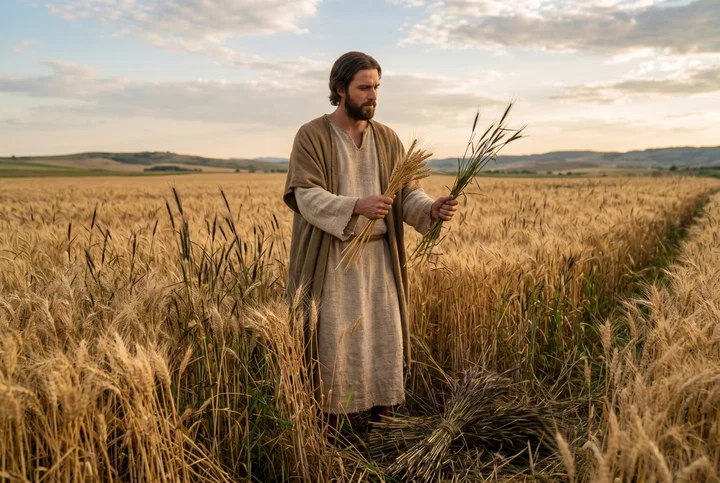
But he said, Nay; lest while ye gather up the tares, ye root up also the wheat with them.
Translations
But he said, No; lest while you gather up the tares, you root up also the wheat with them.
King James Version, KJV Cambridge Paragraph Bible
But he said, Nay; lest while ye gather up the tares, ye root up also the wheat with them.
But he said, No; lest while ye gather the tares, ye root up also the wheat with them.
Revised Version, American Standard Version
But he saith, Nay; lest haply while ye gather up the tares, ye root up the wheat with them.
'And he said, No, lest — gathering up the darnel — ye root up with it the wheat,
But he said, No; lest [ in] gathering the darnel ye should root up the wheat with it.
And, he, saith—Nay! lest, at any time, while collecting the darnel, ye uproot, along with it, the wheat:
Berean Standard Bible, Majority Standard Bible
‘ No,’ he said, ‘ if you pull the weeds now, you might uproot the wheat with them.
“ But he said, ‘ No, lest perhaps while you gather up the darnel weeds, you root up the wheat with them.
But he says, No, for fear that by chance while you take up the evil plants, you may be rooting up the grain with them.
But he saide, Nay, lest while yee goe about to gather the tares, yee plucke vp also with them the wheat.
Douay-Rheims (Challoner revision)
And he said: No, lest perhaps gathering up the cockle, you root up the wheat also together with it.
Pictures
Cross-references
- Matthew 13:36-43
Then Jesus sent the multitude away, and went into the house: and his disciples came unto him, saying, Declare unto us the parable of the tares of the field.
Jesus identifies the field, tares, harvest, and reapers and describes the final separation.
- Matthew 13:40-43
As therefore the tares are gathered and burned in the fire; so shall it be in the end of this world.
These verses explain the tares’ destruction and the righteous’ outcome at the end.
- Matthew 13:25
But while men slept, his enemy came and sowed tares among the wheat, and went his way.
The enemy secretly sows tares among the wheat while people sleep.
- Matthew 13:47-50
Again, the kingdom of heaven is like unto a net, that was cast into the sea, and gathered of every kind:
Both parables gather good and evil together until their separation at the end.
- Revelation 14:14-16
And I looked, and behold a white cloud, and upon the cloud one sat like unto the Son of man, having on his head a golden crown, and in his hand a sharp sickle.
The Son of man reaps the earth’s ripe harvest, gathering the wheat at the end.
- Matthew 3:12
Whose fan is in his hand, and he will throughly purge his floor, and gather his wheat into the garner; but he will burn up the chaff with unquenchable fire.
Both use the wheat-and-chaff harvest image to portray separating the righteous from the wicked.
- Matthew 13:38
The field is the world; the good seed are the children of the kingdom; but the tares are the children of the wicked one;
Identifies the field as the world and the wheat and tares as people of opposing allegiances.
- Matthew 13:43
Then shall the righteous shine forth as the sun in the kingdom of their Father. Who hath ears to hear, let him hear.
The righteous shine in the Father’s kingdom after the separation.
- Matthew 13:3-8
And he spake many things unto them in parables, saying, Behold, a sower went forth to sow;
shares same application to ongoing work
- Matthew 13:40
As therefore the tares are gathered and burned in the fire; so shall it be in the end of this world.
Explains that the tares are burned at the end of the world.
- Matthew 13:49-50
So shall it be at the end of the world: the angels shall come forth, and sever the wicked from among the just,
The end-time separation of the wicked from the righteous brings punishment.
- Matthew 13:37
He answered and said unto them, He that soweth the good seed is the Son of man;
identifies the sower in the parable
- Matthew 13:42
And shall cast them into a furnace of fire: there shall be wailing and gnashing of teeth.
furnace and weeping not yet fulfilled
- 2 Timothy 2:20
But in a great house there are not only vessels of gold and of silver, but also of wood and of earth; and some to honour, and some to dishonour.
The great house contains both honourable and dishonourable vessels.
- Matthew 25:32-33
And before him shall be gathered all nations: and he shall separate them one from another, as a shepherd divideth his sheep from the goats:
The Lord separates the righteous from the wicked.
- Malachi 3:18
Then shall ye return, and discern between the righteous and the wicked, between him that serveth God and him that serveth him not.
At the harvest, the righteous and wicked are distinguished.
- Mark 4:14
The sower soweth the word.
The sower scatters the word as seed.
- Matthew 15:13
But he answered and said, Every plant, which my heavenly Father hath not planted, shall be rooted up.
unplanted plants to be rooted up
- 1 Corinthians 4:5
Therefore judge nothing before the time, until the Lord come, who both will bring to light the hidden things of darkness, and will make manifest the counsels of the hearts: and then shall every man have praise of God.
Both warn against judging before the appointed time.
- 2 Peter 2:9
The Lord knoweth how to deliver the godly out of temptations, and to reserve the unjust unto the day of judgment to be punished:
The unjust are reserved for punishment until the day of judgment.
Commentary part 1 of 3
Each commentary is drawn from primary sources: the writings of Ellen G. White and Adventist pioneers and periodicals. Each commentary is separate. Its own words are not a quotation; follow the references to read the source passages.
Ellen G. White
201 sources
Christ's command leaves wheat and tares growing together in the same field, which is His church in the world and the world itself as the place of contending good and evil until the end, because while growing the tares closely resemble wheat with roots intertwined so they cannot yet be safely distinguished.ST Nov 24, 1887Lt 102, 1901, par. 4–6Lt 179, 1896, par. 24–28COL 70.2RH Apr 3, 1900 The servants are forbidden to pull them now because uprooting them would disturb the roots and destroy young wheat, harm sincere believers and extinguish the hope of souls Christ is drawing to Himself.ST Feb 9, 1915MH 493.2COL 71.2–3 No human may judge character or attempt the final separation, for judgment belongs not to men whose discernment is imperfect but to the Son who knows hearts, and at the appointed harvest at the end of probationary time angels who never mistake will gather first the tares for burning and the wheat into the kingdom.Ms 52, 1899, par. 1–2Lt 98, 1896, par. 26–29Lt 11, 1893, par. 8–10COL 69.220MR 26.2 God spares the author of evil and the tares for the same reason, that immediate destruction would leave His justice and love in doubt, so in patience that would lose no soul He bears with evil and calls His people to tolerate and labor for the erring until character is fully developed.Lt 86, 1907, par. 10–13COL 72.2Lt 176, 1900, par. 3COL 72.3STB 294.2 Open persistent sin is still to be dealt with by careful separation that nourishes and establishes the sincere, yet complete separation waits until the harvest when good and evil will be wholly unlike by fruit and the righteous gathered to eternal life while the wicked are destroyed.TCBMP 143.1–145.1COL 74.2–3STGC 87.26T 239.2–4Lt 204, 1899, par. 10–13
Parable Setting and Symbols
The saying belongs to the parable of wheat and tares where the field is Christ's church in the world, the place where saving work is done and believers grow and ripen for the harvest.Lt 102, 1901, par. 4–6COL 70.2 The gospel calls people out from the world to gather together in church capacity, yet the kingdom must be kept free from worldly practices while the Holy Spirit impresses those seeking clear understanding.Lt 102, 1901, par. 4–6 The same field is also the world and mission territory where good and evil are sown together and contend together until the great harvest, with both kinds of seed sown at the same time and not separated prematurely.RH Apr 3, 1900Ms 3, 1900, par. 5–8Ms 80, 1893, par. 19 The great house is the church, in which tares grow with wheat and the vile exist alongside the precious.Lt 58, 1900, par. 9–15
The good seed are the children of the kingdom, born of God's word and truth, while the tares embody error and false principles sown by Satan and not by God or His angels.COL 70.3 The wheat are those gathered for Christ, with the Holy Spirit gathering God's loyal children for the Lord while Satan gathers his followers among them, and though tares may long imitate wheat they are rejected at harvest.Ms 7, 1900, par. 20–22Lt 38, 1894, par. 10 The wheat are Christ's true followers as distinct from mere professors of religion bound closely to Satan, including consecrated devoted servants who work with pure holy motives to do God's will, abide in the true vine, partake of the divine nature, feel daily converting power, and grow in piety and grace by appropriating high and holy influences.Ms 10, 1899, par. 2Ms 54, 1899, par. 16–17 Some whose names are on church books are not joined to Christ nor changed into His likeness, for outward self-denial and good deeds do not make Christians when temptation and dealings reveal a spirit unlike His that misrepresents Him.Lt 19a, 1892, par. 16–18 Fearing God, the wheat remain as leaven among other churches and are to be appealed to.Ms 54, 1899, par. 16–17
The tares were sown by the enemy and grow among the wheat to injure the crop and bring trouble and loss to its owner, picturing Satan's malicious scattering of evil among good in Christ's kingdom for which Christ is falsely blamed.COL 71.1 They are not part of God's original creation but confusion introduced under the curse, secretly sown as evil seeds in the human mind that grow among what Christ sowed and sometimes crowd out and destroy good.ST Nov 24, 1887Lt 131, 1897, par. 3–5 They are hypocritical professors and false professed Christians in churches through the land, unconverted members and false brethren, mere professors bound to Satan, who profess to follow Christ yet bring reproach, frustrate His work, spoil the harvest, and will be clearly distinguished and separated only at harvest.2SP 247.2–249.1Lt 135, 1899, par. 22 In the last days Satan mixes error with truth by using degraded people for whom much labor is spent, with perverted appetites, misshapen characters and groveling habits and desires, who make only superficial change, suppose themselves Christians, enter fellowship without new birth or submission, remain controlled by the disposition that brought them down, resentful, bitter, wrathful, malicious, downward, sensual, untrustworthy, unthankful and unholy, and through whom he sows jealousy, dishonesty, criticism and accusing to corrupt others and create dissension and strife.8T 184.1–2
Tares also mean error mingled with truth and guarded by Satan, which must be met by plainly setting truth against error so people recognize and discard the false while cherished truth roots in the heart and uproots error.Ms 30, 1898, par. 5–6 They include false theories mixed with truth and zealously promoted, and Satan's sowing of false teaching alongside sound doctrine, where care is needed lest suppressing error uproot good doctrine with it.RCNBP 10.3GC 248.3 Christ sends servants to sow pure wheat of pure sanctifying truth, golden threads from the Word, not mingled seed of heterogeneous heresies, man-made tests, mere suppositions and vagaries of the brain conjured as new strange things and passed as food and life-and-death questions by foolish unsanctified messengers He has not commissioned, food that tastes strongly of error to an unperverted appetite and leaves souls fed on chaff without the light and experience they might have had, and even if the sowers repent and are forgiven they cannot turn tares into wheat and will face loss when chaff is found in wheat at harvest.Lt 136a, 1898, par. 23–27 Such tares are theories received from human lips pressed by specious argument into minds where they ought not be, false theories looking like light yet deceptive, so believers must take heed how they hear and receive human teaching and let Christ's word abide as food and drink while walking in the light as He is in the light.Lt 224, 1906, par. 29Lt 322, 1905, par. 2
While growing the tares resemble grain so closely as to be difficult to distinguish, and they must not be pulled while wheat is growing lest roots be disturbed and young blades destroyed.ST Nov 24, 1887 The wheat becomes so closely allied to tares that rooting up tares would root up wheat with them, for roots are entwined and only the Lord can separate at the appointed time in pity and compassion, with false believers closely linked to true disciples whose real character is not yet fully clear.Lt 179, 1896, par. 24–28COL 72.120MR 26.2 Good and bad plants look alike while young but at harvest ripe wheat bowing under full heads is wholly unlike worthless weeds, when false professors of piety who resembled true followers are removed and destroyed and grain is gathered so the wicked no longer trouble the righteous.ST Nov 24, 1887 Evil may be so mingled with good that people cannot reliably tell tares from wheat without spiritual discernment and a discerning eye, and contradictory beliefs can confuse until ability to tell truth from error is lost.Lt 179, 1896, par. 24–28Lt 208, 1900, par. 6
The sowing occurs while men sleep, showing the danger of inattentiveness giving evil an opening among good.5T 493.1 That sleep is living far from Jesus without constant prayer and watchfulness, becoming self-sufficient and self-exalted and failing to discern His voice, so that unless God's sentinels through living faith and earnest prayer partake of the divine nature they are ensnared and, professing to work for God, serve the prince of darkness with understanding blinded for lack of heavenly eyesalve and vision perverted by dependence on human wisdom which is foolishness with God.Ms 40a, 1890, par. 4–5 It is spiritual sleep when spiritual life is not constantly fed by God's Spirit, then the enemy by seductive mind-upon-mind influence linking the human mind with his own accomplishes iniquity without the led knowing they are led at his will.Lt 244, 1907, par. 4–7 Satan never slumbers but exults to persuade men to take his arm, walk with him, become agents advancing his plans and increasing woe, watching to take God's standard from His people and put his own in their hands undiscerned, so the call is to awake, cast off Satan's arm, break connection with him and link with Christ.Ms 188, 1897, par. 12–13 The church asleep refuses to shine, leaves God-given work undone, and becomes idle, selfish and self-centered, a spirit Satan constantly works to produce in professed Christians to bar Christ's kingdom and hinder God's will on earth, and after the fall ground at first producing only good began producing tares requiring continual warfare.FE 90.118MR 159.3
The harvest is the end of the world and the end of probationary time when after the Judgment there is no further probation and each destiny is forever fixed.ST May 10, 1877COL 123.1–2 The reapers are the angels who separate at that time, gathering first the tares to burn them and gathering the wheat into the barn, into God's kingdom and eternal life, while the wicked remain wicked and are destroyed.ST May 10, 1877RH Apr 1, 1902ST Nov 24, 1887 Wheat and tares remain together until then because earlier gathering would uproot wheat, and the tares do not all become wheat but are separated from wheat gathered into God's kingdom.COL 75.1 The final harvest is the gathering of precious grain by Christ associated with His coming.COL 69.2
Reason Tares Are Spared
The householder forbids his servants to gather the tares now, because their roots are intertwined with the wheat so that pulling them would disturb the roots and destroy young blades and uproot wheat with tares.ST Feb 9, 1915MH 493.2COL 71.2–33T 113.1RCNBP 4.1–5.1 Such premature gathering would harm sincere believers who might otherwise be nourished and established, cause others who would have remained steadfast to stumble, and extinguish the hope of people Christ is drawing to Himself.ST Feb 9, 1915COL 71.2–33T 114.1 The two are therefore to remain together until the harvest, which is the end of probationary time, and open persistent sin alone is to be dealt with by separation while error and its agents are not to be removed prematurely when doing so would harm the good seed.MH 493.2COL 71.2–33T 113.1RCNBP 4.1–5.13T 114.1 Church discipline in removing those acting like tares must be done with great care, self-control, prayer, sound judgment and careful consideration, lest acting too soon or without wisdom create division and destroy good members along with the erring.ST Feb 9, 1915RCNBP 4.1–5.13T 114.1
Human judgment is imperfect and under Satan's influence may mistake wheat for tares and destroy it, so managing good and bad together requires Christ's wisdom.RCNBP 4.1–5.1Lt 63, 1893, par. 15–17Lt 75, 1886, par. 1–3 Some troublesome unsanctified people must therefore be tolerated in the church until heaven rather than be uprooted in a way that harms the good.Lt 63, 1893, par. 15–17Lt 75, 1886, par. 1–3 In the same way a new idea must not be accepted without thought lest a poisonous seed sown by Satan be mistaken for truth, and teachers must distinguish truth from error and guard students rather than introduce untested ideas that could damage faith, since sound and precious ideas may have mistaken ideas mixed among them and ideas and traditions may be mistaken for truth just as tares may be mistaken for wheat.Ms 172, 1897, par. 25–28Ms 141, 1898, par. 8
False believers may be closely linked with true disciples and suffered to remain among God's people for a time, with their real character not yet fully clear, at times having the appearance of flourishing and spreading like a green bay tree.Ms 92, 1897, par. 21–22Ms 99, 1908, par. 10 Deception may be least suspected where Satan plants it among God's people, and its actions can hinder genuine believers and workers.Ms 99, 1908, par. 10 Where families open their hearts to the sowing of tares through false accusations and slander, the tares strengthen while the wheat grows less and less until precious truth loses its power to them and false zeal hardens them against advocates of truth.STMW11 9.2–10.1Ms 92, 1897, par. 21–22
God delayed destroying Satan for the same reason the tares are spared, for when Satan sinned even the loyal angels did not fully discern his character.Lt 86, 1907, par. 10–13COL 72.2 Immediate destruction would have hidden the justice and love of God and left doubt of His goodness, so the author of evil was spared to fully develop his character and reveal the full character of evil, while through long ages God has borne the anguish of beholding evil yielding the bitter fruit of sin and woe and gave the infinite gift of Calvary rather than let any be deceived by misrepresentation.Lt 86, 1907, par. 10–13COL 72.2ST Feb 9, 1915 During this long delay divine and satanic agencies are left engaged in decided opposition and vital conflict until the close of this earth's history with no premature uprooting lest the wheat be rooted up, while God bears patiently with stubborn, self-indulgent men and tests and proves His people, shaking everything that can be shaken so that those things which cannot be shaken may remain.Lt 86, 1907, par. 10–13Lt 176, 1900, par. 3 This forbearance requires the same humility and distrust of self instead of condemnation and judgment of others toward fellow men as the Lord shows toward Satan, teaching patience and forbearance rather than condemnation.Lt 86, 1907, par. 10–13COL 72.2ST Feb 9, 1915
Christ's patience aims not to lose a soul, so Christians are to bear patiently with erring and false brethren rather than try to remove them by force, for the church will contain false brethren until the close of time.ST Feb 9, 1915COL 72.3 They are to tolerate them, labor for both classes, guard the seeds of truth already sown from the enemy's tares by active interest in sharing truth and winning people to it, and let God's blessing heal rather than destroy so that people who have made mistakes are not uprooted to the harm of those growing with them.STB 294.2Lt 51b, 1898, par. 13–15Lt 288, 1906, par. 22 The mixed condition is not a reason to reject efforts to reach sinners or to prevent those who may believe from joining in the work, and efforts to remove error must not harm those receiving the truth by condemnation but win them to knowledge of the truth through faithful careful work.Lt 51b, 1898, par. 13–15RH Nov 29, 1906 This includes more earnest effort for those of ability and talent who, if converted, will become channels of light, even though Satan puts objectionable untransformed people into the church and will continue to do it so that their presence becomes a great barrier causing others who look at those who have joined to refuse to believe.Lt 4, 1900, par. 8–9Lt 288, 1906, par. 22
Evil among God's people can obscure the good and bring reproach on the cause, for hypocritical people claiming to follow Jesus lead the world to doubt Christ's truths, and sin among believers hinders though it does not wholly stop Jesus' work of rescuing people from Satan and making human hearts fruitful in good works.ST Nov 24, 1887 The tares are Satan's sowing among the wheat, and if left unchecked their rank growth spoils the wheat.8T 326.3CT 188.3–189.2 Yet tares growing rank do not eliminate faithful witnesses, for truth continues to spring up and bear fruit despite persecution and attempts to bury it, and the coexistence of error and faithful witnesses shows witnesses keeping faith and truth alive.Ms 75, 1886, par. 31–32 Satan's agents mingle truth with tares and indecent practices seeking to discredit the truth, but their deceptive mixture does not change the truth's unerring character.21MR 129.2–6
Judgment Left to God
No human hand is to gather the tares, for wheat and tares are to grow together until the harvest and the work of condemning members and purifying the church has not been committed to human agents who would make terrible mistakes and root up the wheat with the tares.Ms 52, 1899, par. 1–2Lt 98, 1896, par. 26–29Lt 11, 1893, par. 8–10 All judgment is committed to the Son alone, who lived the law of God in humanity and alone understands the strength of temptation, human weakness and human striving to attain Christian perfection.Ms 52, 1899, par. 1–2Lt 98, 1896, par. 26–29 No person has the right to measure the characters of fellow members or to attempt to identify and remove those judged spiritually harmful, since doing so may damage the faithful.Lt 98, 1896, par. 26–29Lt 11, 1893, par. 8–10 Every church contains counterfeit Christians alongside true children of the kingdom, false professors uncircumcised by grace whose conduct misrepresents Christ, and being in the church does not prove a person a Christian.Lt 98, 1896, par. 26–29Lt 30, 1895, par. 47–48COL 74.1 The present church is the church militant mixed with wheat and tares, not the church triumphant, and each is to live as a good example of Jesus rather than take upon himself to decide who is wheat and who is tare.Lt 98, 1896, par. 26–295T 333.3 Their presence gives no excuse for refusing to believe in Christ, refusing duty to God and to the soul purchased by blood, for no man's sin will excuse another in continuing in sin in the day of God.Lt 30, 1895, par. 47–48
Only the Lord can separate the wheat from the tares, and He will do it at the appointed time, for the roots are entwined so that ruthlessly tearing up the tares would disturb the wheat also.20MR 26.2Ms 92a, 1898, par. 14–18 Human beings are not authorized to make this separation safely, because tares closely resemble wheat, while God's angels can identify each by its fruits and gather the wheat without error.Ms 92a, 1898, par. 14–18Lt 215b, 1899, par. 7–11 Christ is the true Watcher who knows the false from the true and never makes a mistake in His estimate of character, distinguishing the hypocrites and false professed Christians found in churches all through the land from those who really believe in Jesus, genuine Christians with no pretense, true to one another in heart and soul and action.Lt 135, 1899, par. 22 Men cannot read hearts to say who are wise and foolish, since those holding truth in unrighteousness appear outwardly like the wise, and after a time He Himself will separate them.Lt 135, 1899, par. 22Lt 215b, 1899, par. 7–11 The sins of professed Christians and the presence of hypocrites give no excuse for sin in any soul and no ground for blaming Christ and His ministers, since Christ gave His life to save all who believe in Him.Lt 135, 1899, par. 22
Applied to the church, the command forbids punishing those judged to be evildoers or heretics by civil power, and imprisonment, torture and execution in Christ's name follow Satan's spirit and method rather than Christ's Spirit.COL 73.1ST Feb 9, 1915 Such persecution misrepresents God and attempts to rule the world by Satan's method.COL 73.1ST Feb 9, 1915 For the same reason no one claiming to be a Christian is to be excluded from footwashing and the Lord's Supper, since no human can read hearts to distinguish tares from wheat reliably.20MR 149.2–4DA 656.1Ms 47, 1897, par. 18–20 Jesus knew Judas from the beginning yet washed his feet and allowed him to unite with Him in partaking of the sacrament, so even one present who is not in heart united with truth and holiness, a Judas refusing to be worked by the Holy Spirit, must not be forbidden.20MR 149.2–4 Each person is instead to examine himself as to fitness to participate.DA 656.1
The chapter to which the verse belongs is a warning that must be read carefully as for life and heeded, pressing self-examination in view of Christ's judgment.Lt 317a, 1905, par. 6–8Lt 317, 1905, par. 7–9 The question it presses is who shall stand acquitted without spot or stain of character before the judgment seat of Christ.Lt 317a, 1905, par. 6–8Lt 317, 1905, par. 7–9 Those saved must form characters without fault in the sight of a pure and holy God, each doing his given work in cooperation with Christ, wearing His yoke and learning His meekness and lowliness, ministered to by angels and taught daily the meaning of the divine beatitudes, because at the great day every man will be judged according to deeds done in this life.Lt 317, 1905, par. 7–9 Wheat and tares grow together in this life and are revealed by proving, for every soul will be tried as gold in the furnace until dross is consumed and Christ's image is reflected, deciding whether each will be worthy to be counted among the members of the Lord's family above.Lt 21a, 1892, par. 2–4 By beholding Christ believers are to become changed into His likeness and to be one with Christ as He is one with the Father, and when those once regarded as wheat manifest themselves as tares this sifting should not bring great disappointment.Lt 21a, 1892, par. 2–4
No criticism that breaks up the faith of God's people is to be entertained, for such criticism sows tares among the wheat.Lt 222, 1906, par. 4–7Lt 116, 1901, par. 10–11 God forbids a spirit of judgment that draws apart from ministering brethren when things do not appear right to human judgment, and looking for danger that may come at some future time and speaking words of criticism sows tares resembling wheat and dishonors God.Lt 116, 1901, par. 10–11 Accusing brethren and indulging self-sympathy because one thinks brethren do not esteem him as they should plants seeds of faultfinding and jealousy in others that grow into a harvest of tares, producing dissension and strife which God forbids.Lt 48a, 1900, par. 8 Satan produces tares through men who teach the theory of truth but do not practice or keep it, dropping seeds by giving the self over to do his work in speech, repeating words spoken in confidence, betraying friends, cutting the threads of union between brother and brother and between sister and sister, and kindling a fire of strife and disaffection not easily quenched.Ms 43a, 1898, par. 32–33 Members must not make defective members their theme of conversation, habitually seeing evil and talking of evil and feeding on real or supposed faults with a spirit of criticism, lest they gain a false Christian experience, become contentious and disobedient to truth, and themselves be ranked among the tares.Lt 98, 1896, par. 30–32 Instead they are to feed on Christ, the only perfect pattern of Christianity and the Sin-bearer who alone takes away sin and gives eternal life, for personal religion and truth held in the heart lead to conduct representing Christ's character rather than sowing what He calls tares.Lt 98, 1896, par. 30–32Lt 2, 1898, par. 1–4
Final Separation at Harvest
Wheat and tares are to remain together until the harvest, when God alone makes the complete separation and does not permit it before the appointed time lest the wheat be harmed.STGC 87.2DA 333.1–2Ms 106, 1903, par. 60Ms 25, 1897, par. 255MR 297.2 At that judgment the wicked remain wicked and are destroyed while the righteous are gathered to eternal life, and rebellion is permitted for a time to reveal the faithful and expose the spurious.DA 333.1–25MR 297.2 Near the end God sifts His people, the chaff is separated from the wheat, the tares are bound in bundles to burn, and true character is revealed as those who have not the truth in the heart and will not be sanctified through it are made manifest by tacking truth onto carnal, unsanctified, unholy characters without bringing it into life and weaving it into character.Lt 92, 1887, par. 2 Those who have harmed God's servants and spread false reports will then be exposed as hypocrites, and their own words will testify to the innocence of those they accused.STGC 87.2Ms 106, 1903, par. 60
The tares are not changed into wheat by miraculous conversion but remain tares and are destroyed at the harvest, which is the end of the world, while the righteous are gathered into God's kingdom.ST Nov 24, 18872SP 249.2–250.2 This contradicts the expectation of a temporal millennium in which the whole world is converted before the end.ST Nov 24, 1887 For a time tares may closely resemble wheat and be known only by fruit, but at harvest good and evil will be wholly unlike and plainly distinguished.COL 74.2–3ST Apr 9, 1912Ms 25, 1897, par. 25 Tares resembling green wheat will bear no likeness to wheat bowing under full ripe heads, for profession alone does not determine destiny but character does as decided by Christ.COL 74.2–3ST Apr 9, 1912 Then sinners pretending piety who deceived many will be made manifest, and those who joined the church without joining Christ will be revealed.COL 74.2–3
The present church is the church militant mixed with wheat and tares, not the church triumphant, and the Lord alone knows who truly belongs to Him.Lt 57, 1893, par. 9–10RCNBP 15.2Ms 49, 1893, par. 25–26 Unconverted tares will be found growing together with the wheat until the harvest and are commanded to be left lest the wheat be rooted up with them, so the church is not to be judged as sustaining the unconverted and no one must become an accuser of the brethren because of the mixture.Lt 57, 1893, par. 9–10RCNBP 15.2Ms 49, 1893, par. 25–26 The presence of pride, unbelief and other faults does not mean the church will cease to exist.Lt 16, 1893, par. 21 Divisions will come and two parties will be developed, with wheat and tares growing up together mingled to the very close of time while the last message of mercy is sounded to a fallen world.17MR 17.2–18.1Ms 32, 1896, par. 34–37
The fearful work of separating wheat from tares and binding or sealing the wheat for the heavenly garner belongs to the third angel, selecting the wheat from the tares and distinguishing the vile from the precious.SCEV 38.3Ms 3, 1854, par. 16–17Ms 3, 1853, par. 7Ms 1, 1854, par. 7–8 That separating work must be done with care lest the wheat be uprooted with the tares.SCEV 38.3Ms 3, 1854, par. 16–17Ms 3, 1853, par. 7Ms 1, 1854, par. 7–8 It should command the whole mind and attention.SCEV 38.3 The presence of false professors and hypocrites in churches all through the land, and evils even among Sabbathkeepers, with unbelievers found among believers despite profession, does not remove the need for plain positive testimony even when painful.Lt 92, 1887, par. 5 Their presence gives no excuse for refusing to believe, refusing duty, continuing in sin, or saying God's people are abandoned, for with God's presence and favor they are safe while those who turn from faith in the living God to trust in their own power and riches will be overthrown.Lt 92, 1887, par. 5Ms 32, 1900, par. 12–15 The wheat is God's own agency carrying forward His work while the tares are unconsecrated elements yielding to temptation to hinder and discourage, and because many cannot discern chaff from wheat they bind themselves with the chaff, become spiritually blinded, and in envy, jealousy, distrust and evil surmising array themselves against God's work instead of guarding it.Lt 179, 1896, par. 31–33
Faithful Discipline in Church
Open persistent wrongdoing is to be met by separation, yet any removal of those who act like weeds must be done with great care, self-control, prayer, sound judgment and careful consideration, for premature or forceful action can harm sincere believers who might otherwise be nourished and established.TCBMP 143.1–145.1Ms 128, 1903, par. 9Ms 104, 1901, par. 21–221MR 355.1–356.1 Leaders of churches and institutions are still to take up purification so the church may shine as a light in a dark place, not as secret criticism but as open brightness, and they must not disparage the agencies God has placed in it.6T 239.2–4Lt 204, 1899, par. 10–13 Evil may exist among the faithful without justifying contempt for the church, for weeds are present among wheat even in the body of Sabbathkeepers, and removing evil must not destroy the good with it.6T 239.2–4Lt 204, 1899, par. 10–131MR 355.1–356.1 Some difficulties may resolve if left alone rather than settled in one's own spirit, and impurity is not to be allowed to spread unchecked but to be met by careful inquiry, guarding children, and placing the wicked where they will do least harm.TCBMP 143.1–145.1Ms 104, 1901, par. 21–22 Objectionable sentiments that can leaven churches, institutions and the world must be corrected so they do not spoil gospel medical missionary work, and patient humble work should strengthen and restore rather than tear apart.Ms 128, 1903, par. 91MR 355.1–356.1
The commandment-keeping church, though pride, self-sufficiency, stubborn unbelief, refusal to yield to piled-up evidence and the rebuke to Laodicea apply to some members, still exists, is still loved, is not Babylon, and must not be disorganized or broken into independent atoms.RCOC 6.21MR 362.2–363.11MR 303.1–2ST Oct 23, 1879 Wheat and weeds must grow together until the harvest and must not be separated by human hands lest wheat be rooted up with weeds, for the presence of false or unfaithful members does not make it cease to be God's church nor justify withdrawing because of imperfections.RCOC 6.21MR 303.1–2ST Oct 23, 1879RCOC 10.1–2 The work of separation belongs at harvest to the angels, who bind the chaff to burn and gather wheat into the garner, while zeal should strengthen and help rather than tear apart.RCOC 6.21MR 303.1–2RCOC 10.1–2 Those who strive amid temptation and trial are dear to God, and messengers who call the church Babylon and lead to division give a false message that deceives and comes to nothing for those who heed it.RCOC 6.221MR 57.2
In Corinth the enemy's weeds represent harmful influences and people appearing among faithful wheat, whose evil fruit became evident after Paul left as some became careless and returned to heathen sins.ST Apr 14, 1914SLP 149.1AA 299.2–3 At Battle Creek unholy weeds grew among wheat in the publishing house, namely sharpness and harshness in voice, ordering and scolding, exertion of kingly authority and harsh management that soured those in the office, a spirit not of God but of the enemy.Lt 55, 1901, par. 5–6 The time had come for the office to be cleansed by removing that spirit through working in the tender loving spirit of the Master, putting the sweetness of Christ into words and calling good and evil by their right names.Lt 55, 1901, par. 5–6 There also the seed-sowing influence of Living Temple sowed weeds among wheat as Satan designed, staining purity of faith in many minds, bringing confusion as to what is truth, introducing confused ideas and letting impure thoughts mold faith, so that little dependence could be placed on students coming out of Battle Creek, the seed cherished being unholy desire and formed rebellious purpose.Lt 57, 1906, par. 5
In the Southern Field faithful and unfaithful coexist, and attempts to remove evil before harvest could also harm good.Lt 99, 1899, par. 6–10 At North Fitzroy the present mingling of weeds and wheat, with dangers threatening and great need of revival, calls not for labor that weakens, confuses and destroys souls ransomed at infinite price, but for personal house-to-house missionary labor that builds up, restores and strengthens faith and leads every soul to appreciate every faculty and use every talent for God's glory.Lt 117, 1896, par. 13 Where evil seed has been sown weeds will certainly come up and this must be expected, yet they must not be torn out by making open division and internal warfare that would split God's people into two parties before the world.Lt 368, 1904, par. 5–8 Those at fault are instead to repent, come into line, and blend in unity between gospel ministry and medical missionary work, each doing his part in fear of God and love of souls and standing firmly on the platform of eternal truth, and then God can overrule evil for good and keep the world from seeing strife it should never see.Lt 368, 1904, par. 5–8 Satan has sown weeds even among the colored people where missionary work was long neglected, making the field harder to work, but that difficulty is no reason to delay further efforts to reach those needing help, while a proposed company of unreliable dissatisfied workers shows weeds among wheat that make a plan unsafe because some would serve for a time then complain, become dissatisfied and sow distrust.SBAWP 55.2–56.3Lt 90a, 1899, par. 10–12CNA 121.1–122.1
False spiritualistic theories, seductive fallacies, evil doctrines and skeptical thoughts are weeds to be left alone and not rooted up by controversy, for the work is instead to strengthen wheat and help it flourish so weeds do not gain supremacy.Ms 34, 1898, par. 5–720MR 64.4–65.3Lt 239, 1903, par. 2–420MR 64.1–3 Explaining, discussing, combating, quoting or showing the fallacy of such views in sermons, articles, church papers or discourse sows weeds by putting thoughts into minds where they would never have been, perpetuates evil and becomes a snare for souls.20MR 64.4–65.320MR 64.1–3Ms 20, 1906, par. 2–3 The seed so sown springs up and brings forth weeds, and attention to errors can introduce harmful thoughts rather than protect truth.20MR 64.4–65.3Ms 20, 1906, par. 2–3 Truth is to be taught as Christ taught it without human theories or conjectures mingled with it, keeping strictly to Bible truth, presenting the affirmative plainly, clearly and decidedly with It is written and presenting the reasons of faith.20MR 64.1–3RH Nov 3, 1904
Sowing Wheat in Daily Life
Every person is constantly sowing either wheat or tares, and the reaping will be exactly as the sowing has been, for no one can sow tares and reap wheat.CT 491.1Lt 63, 1896, par. 2Lt 48a, 1900, par. 16Lt 228, 1903, par. 17 The sowing is done by letters, thoughts, words and the spirit brought into daily duties, and each one must know what kind of crop is being sown.CT 491.1Ms 74, 1897, par. 28Lt 48a, 1900, par. 16 Words bear either wheat or tares, and bearing wheat means speaking only words in harmony with Christ, learned from Him line upon line, with the aim that some may be saved, since laborers together with God must speak no word unadvisedly.CT 491.1Ms 74, 1897, par. 28 Sowing tares perverts the true moral standard of the gospel and harms the flock by precept or example, bringing decided danger to the sower's own soul, while sowing wheat means living closely to the example in Christ's life in greatest humility and humbleness of mind, learned only in the deepest sense of ruin, with sincere love for Christ and proper gratitude to Him who gave His life.Lt 48a, 1900, par. 16 Devoting thoughts to earthly things molds character after the world, and character as it is at death is character as it will be in the morning of the resurrection, with no conversion or transformation then, so talents are to be used in God's strength and He will increase usefulness.CT 491.1Lt 63, 1896, par. 2
The heart is a garden and field where weeds arise among the good seed and can choke it, and evil principles allowed to take root there produce lasting harm that makes later reform difficult.1T 403.11T 317.1–318.1ST Sep 25, 1901 The tares in the heart are stubbornness, selfishness, love of pleasure, pride, sinfulness, self-indulgence and bitterness, proving Christ's love is not abiding, and their presence testifies Satan has already sown his seed there.ST Aug 6, 1912Lt 209, 1899, par. 15–16Ms 14, 1898, par. 2 Evil thoughts may remain even where truth is known and professed, for knowing truth is not possessing it inwardly, and knowledge alone does not change thoughts or make one converted.Ms 14, 1898, par. 2 Conversion requires faith working through love to purify the soul, and calls for unequaled growth in spiritual power so Satan cannot mold men and women after his likeness.Lt 209, 1899, par. 15–16Ms 14, 1898, par. 2 The good seed needs constant care and vigilance to live and flourish against Satan, evil angels and wicked men seeking to destroy it, and parents must diligently tend the heart, removing harmful traits without damaging what is good, since gathering tares carelessly endangers the wheat.ST Aug 6, 19121T 317.1–318.1ST Sep 25, 1901
Children's minds are like an uncultivated field where the enemy preoccupies the ground and sows tares unless parents keep watchful guard, and those tares will spring up to bear evil fruit.CT 136.4ST May 20, 1889 The tares are evil ideas and habits from trashy, exciting tales and fiction, and it is easier and safer to sow good teaching from the start than to eradicate evil after it has taken root.CT 136.4SG4 298.1CTBH 138.3–139.1 Letting children absorb good and evil indiscriminately in hope good will prevail is dangerous, for evil may grow faster and be difficult to uproot, damaging the wheat growing with it.SG4 298.1ST Apr 17, 1884 The best prevention is to preoccupy the soil early by cultivating the mind with unceasing care, sowing the precious seed of Bible truth, forming proper habits of thought through daily reading and study of Scripture, and training every capability from babyhood.CT 136.4ST May 20, 1889 Children must be taught to reject worthless exciting reading for sensible reading that leads to interest in Bible story, history and argument, and reading that throws light upon Scripture and quickens desire to study it is beneficial and not dangerous, while faults are removed and good growth is tended patiently in harmony with God's plan.CT 136.4ST May 20, 1889
In schools the sower of tares is the false teacher who brings error endangering spiritual growth, sowing erroneous sentiments and infidel ideas in the minds of youth.CE 82.1–2CT 30.3Ms 45, 1898, par. 22 The sowing happens when teachers and students give condemned infidel authors place as lesson books, and the tares are corrupted minds, distaste for God's word, and impressions in inexperienced youth turning thought into channels fatal to piety.6MR 263.3–265.2Ms 45, 1898, par. 22 Tolerating and retaining such books sanctions them as safe, and sowing that seed surely brings its harvest of infidels.6MR 263.3–265.2 Exposing students to teaching that leads away from biblical truth mingles error among truth, and the warning against uprooting wheat while gathering tares cautions against careless efforts to separate them while still condemning the danger.STE 159.1FE 450.3 Overtaxing brains with Greek and Latin, tolerating improper literature, and handling matter that leaves evil influence all sow the same crop, so only elevating matter that leaves no evil influence should be handled.CE 82.1–2CT 30.36MR 263.3–265.2
Publishing cheap, fictitious, profane literature in the same office and press as truth mingles tares with wheat coming from the same press.6MR 266.2–267.3 The wheat is tracts, pamphlets, and small and large books giving truth to enlighten the world for time and eternity, while the tares are novels and objectionable, unelevated, degrading matter, including exaggerated and false Calendar work, leaving evil influence behind.6MR 266.2–267.3 Sowing these tares in workers' minds poisons, demoralizes and degrades them, perverts taste by the food given the mind, and eclipses truth by error, misleading readers especially the young when presented as help to faith.6MR 266.2–267.3Lt 106, 1902, par. 4–6 The work representing truth must come first and commercial work second, and nothing lowering the dignity of the office to cheap perishable goods should be introduced or handled, but only matter that elevates, ennobles and leaves no evil influence, with falsehood stopped and books containing truth handled to produce a good harvest.6MR 266.2–267.3Ms 47, 1898, par. 4
Workers must sow pure wheat by working God's works and giving nourishing soul food from close study of the Word, for labor is of value only as that kind of work.Ms 81, 1897, par. 9Lt 69, 1896, par. 29–30 Speaking only words in harmony with Christ to save some, teaching truth as Christ taught it with clearness after talking with God, and guarding words and actions closely with more time in study keeps the sowing pure.Lt 69, 1896, par. 29–30Ms 74, 1897, par. 28 Sowing tares is arousing baseless suspicions by unguarded words and actions, overestimating self and thinking no one else can help, working recklessly beyond strength then pitying self and reaching for sympathy, meeting the world's standard, catching the world's ideas, and giving tame lifeless sermonizing and smooth deceit instead of living testimony.Lt 69, 1896, par. 29–30Lt 92, 1891, par. 5 It is dropping unbelief into a heart by a question full of unbelief in Bible study, starting minds in another channel, confusing ideas, deepening Satan's shadow and robbing the class of solid principles of eternal welfare, so questions should be required in writing after class that the teacher may discern whether they sow tares or bring light, life and enlightenment.Ms 40, 1891, par. 52–54 It is also sowing unbelief by presenting objections, contradictions, charges, criticisms and accusations against the testimonies and the Bible in long private talks, sometimes late into the night, destroying faith and undermining confidence in God's messages instead of going directly to the one concerned, endangering youth and workers called to be educated for duty.Lt 26, 1898, par. 4–7Lt 120, 1906, par. 4
Satan sows tares of dissension among professing Christians through lack of Christian love, true confidence and persevering faith, through envy, evil-speaking, misrepresentation, watching for defects, and false scandalous statements passed lip to lip causing alienation and making God's work tenfold harder.Ms 34, 1902, par. 15–16 Accusing brethren and indulging self-sympathy from feeling insufficiently esteemed plants seeds of faultfinding and jealousy in others growing into a harvest of tares, producing dissension and strife which God forbids.Lt 48a, 1900, par. 8 Seeds of doubt and unbelief are also sown by words and actions criticizing God's appointed work and rejecting His messages, and those sowing, even in responsible positions, work openly and secretly under evil angels to counteract what God performs through divine agencies working through human agencies.Lt 87, 1896, par. 15 Those who sow see with defective perverted eyesight, imagination inspired by satanic agencies seeing many things in false light, and unless they repent they will soon find no place for repentance though sought carefully with tears, like Esau, while those cherishing strife will be destroyed unless strife is expelled and replaced by sweetened fellowship in pure and undefiled religion.Lt 87, 1896, par. 15Ms 34, 1902, par. 15–16 Teaching foolish imaginings and fables in place of grand truths centered in the third angel's message is the same sowing, for truth is sensible and genuine bearing heaven's signature, while cherishing false notions descends from the highest elevation of the Word to the lowest level, and God is not working with those sowers who should leave the work for sensible men.Lt 207, 1899, par. 1–2 People influenced by harmful teaching carry it onward into other hearts, and false assertions spreading unbelief among believers can put souls in danger of being lost, though the wheat must not be uprooted while tares are gathered.21MR 296.5–6Lt 126, 1906, par. 19
Worldly display and wealthy patrons sow tares in young helpers, nurses and students, tempting them away from faithful service, and removing them carelessly may harm the wheat as well.YGBCOEP 53.3–4STB 332.3–48T 228.1–3 The sowing happens through contact with wealthy worldly men and women patronizing a large sanitarium, becoming their favorites, strong inducements to enter their employ, and influence of worldly display, with silent influence, attendance at entertainments, indulgence in worldly dress, flattering favor and alluring offers planting evil influences and temptations to go astray.8T 228.1–310MR 255.4–257.1 These tares rob youth of simplicity, put those without God's fear in their hearts out of place for training in saving service, unity and piety, and fit them for straying.8T 228.1–310MR 255.4–257.1 They should be guarded from such settings and disciplined by precept and practice, while instructors given responsibility to watch for souls must watch, pray, reprove, rebuke, correct with wholesome words, set in order any seen sowing tares, and refuse to allow it.Ms 81, 1897, par. 910MR 255.4–257.1 Satan also sows in institutions sacredly devoted to God's work when bewitching science is invited in, sowing with perfect freedom in minds that should never have been tempted, planting seeds that germinate and take subtle hold not easily cast out.Lt 140, 1901, par. 15–20
Satan does not possess minds by force but tempts to disobey by promising great good, as with Adam and Eve, until reasoning upon temptation makes what opposed Scripture appear favorable and the once steadfast soul is secured by confederacies of evil, the grown harvest being corrupting influences revealed in men in trust as cherished principles instead of fine gold of character, bringing disaster, spiritual blindness, nakedness and despair.17MR 223.2–3 He works by mind upon mind in men given solemn charge, bringing apostasy through deceptions ruining faith and spoiling confidence, especially protestations of belief in the testimonies by those disbelieving and manufacturing assertions against them, deceiving souls to depart from faith and heed seducing spirits.Lt 126, 1906, par. 17–18 One sinner under such deception works untold harm spoiling God's flock, and if sowers continue sentence will be pronounced, while open stand by them brings relief because minds are no longer captivated by assurance after assurance of belief.Lt 126, 1906, par. 17–18 Turning from abiding in Christ links a worker with men not led and taught of God who deceive themselves and others and steep souls in darkness, and where tares are sown the Lord desires reliable men to adjust the work so those He designs to enlighten shall not be steeped deeper.Lt 252, 1907, par. 7–8 Misleading sentiments placed in the mind through deceptive influence bind like a yoke and fetter to be broken by ridding the mind of them and standing on the Lord's side as He lifts a standard against the enemy.Lt 116, 1906, par. 12–14 He sows in cities while God's people sleep instead of working them, so corruption and evil principle root in city life, yet cities must still be worked while God's people keep out of them and stand as true as steel to principle, steadfast adherence distinguishing wheat bearing the seal of the living God from tares with the mark of the beast.Lt 26, 1903, par. 8–9
Nature read aright only in light shining from Calvary, through Bethlehem and the cross, shows brier and thorn, thistle and tare as evil blighting and marring put there by an enemy, alongside singing bird and opening blossom, rain and sunshine, summer breeze and gentle dew, and ten thousand objects from oak of forest to violet at its root showing restoring love.ED 101.2–3 This mixture teaches how good is to conquer evil and how every blessing is a gift of redemption, and nature still speaks of God's goodness.ED 101.2–3 The familiar picture of fields, workers, sowing and harvesting made the parable accessible to all classes and to all people listening.2SP 253.2–3ST Dec 1, 1887ST May 17, 1877 In the present fallen state evil grows spontaneously like briers and thorns in a field left without example and teaching, while precious grain grows only by care and unremitting labor.Lt 26d, 1887, par. 40–41 Self-indulgence, love of pleasure, enmity, pride, self-esteem, envy and jealousy need only that mind and character be given to natural tendencies, bad habits forming more easily than good and given up with more difficulty, and careless habits of disorder, indolence, skepticism, irreligion and disrespect once woven in scar character, injure lifelong usefulness and weave fatal deception, so youth must be guarded and resist temptation at the first step before it is too late to recover from the devil's snare.Lt 26d, 1887, par. 40–41
The same care forbids violent efforts to remove the faulty from the church militant, for zeal does not make it as pure as the church triumphant, and uprooting weeds too soon can uproot wheat with them.RCNBP 6.24SP 173.1RH Aug 25, 1910 Satan sows harmful growth alongside good seed and false teaching alongside sound doctrine, so corrupt elements entering church and institutions can blur the distinction between those serving God and those not, and the duty is diligent sowing of good doctrine.GC88 248.3STMW6 4.1–24SP 173.1 Those following Christ outwardly but turning away when His words offend remain mixed with the faithful yet are not spiritually alive, their fruit revealing what they are, ripening for different ends like wheat for harvest and tares for destruction.ST Jul 15, 1897RH Aug 25, 1910 Students sowing tares by troubling teachers, unreliable dissatisfied people making plans unsafe, secret-society vows joining tares, withholding tithes robbing the Householder, skeptical words bearing fruit yet cleansed by grace, fanaticism mixed with good requiring closeness to Jesus, and friction even from wise-seeming plans requiring earnest labor all belong to the same mingling that must be met not by premature force but by patient faithful sowing.RCNBP 6.2STMW6 4.1–2Ms 81, 1897, par. 9
Sources