Matthew 13:27
So the servants of the householder came and said unto him, Sir, didst not thou sow good seed in thy field? from whence then hath it tares?
Translations
So the servants of the householder came and said to him, Sir, did not you sow good seed in your field? from where then has it tares?
King James Version, KJV Cambridge Paragraph Bible
So the servants of the householder came and said unto him, Sir, didst not thou sow good seed in thy field? from whence then hath it tares?
So the servants of the householder came and said to him, Sir, didst thou not sow good seed in thy field? from whence then hath it tares?
Revised Version, American Standard Version
And the servants of the householder came and said unto him, Sir, didst thou not sow good seed in thy field? whence then hath it tares?
'And the servants of the householder, having come near, said to him, Sir, good seed didst thou not sow in thy field? whence then hath it the darnel?
And the bondmen of the householder came up and said to him, Sir, hast thou not sown good seed in thy field? whence then has it darnel?
And the servants of the householder, coming near, said to him,—Sir! was it not, good seed, thou didst sow in thy field? Whence then hath it, darnel?
Berean Standard Bible, Majority Standard Bible
The owner’ s servants came to him and said, ‘ Sir, didn’ t you sow good seed in your field? Where then did the weeds come from?’
The servants of the householder came and said to him, ‘ Sir, didn’ t you sow good seed in your field? Where did these darnel weeds come from?’
And the servants of the master of the house came and said to him, Sir, did you not put good seed in your field? how then has it evil plants?
Then came the seruaunts of the housholder, and sayd vnto him, Master, sowedst not thou good seede in thy fielde? from whence then hath it tares?
Douay-Rheims (Challoner revision)
And the servants of the goodman of the house coming said to him: Sir, didst thou not sow good seed in thy field? whence then hath it cockle?
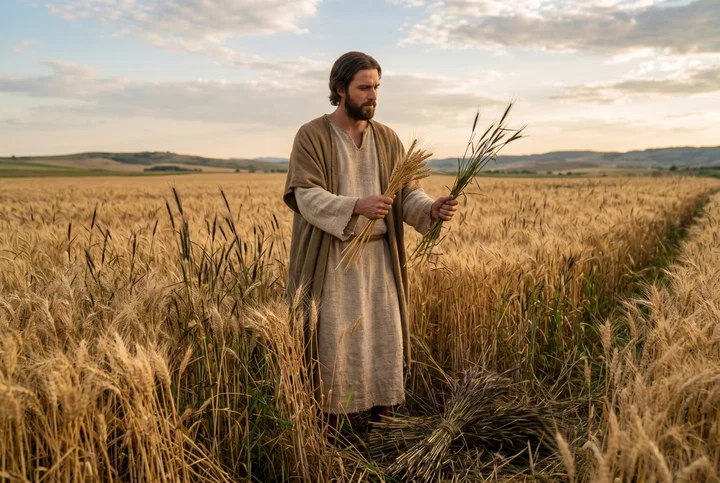
Pictures
Cross-references
- Matthew 13:38-39
The field is the world; the good seed are the children of the kingdom; but the tares are the children of the wicked one;
Identifies the tares as children of the wicked one and their sower as the devil.
- Matthew 13:40-43
As therefore the tares are gathered and burned in the fire; so shall it be in the end of this world.
Explains the harvest as the end-time separation of the righteous and wicked.
- Galatians 6:7
Be not deceived; God is not mocked: for whatsoever a man soweth, that shall he also reap.
Both connect what is sown with the harvest that follows.
- Matthew 13:38
The field is the world; the good seed are the children of the kingdom; but the tares are the children of the wicked one;
Identifies the field as the world and the good seed and tares as people.
- Revelation 14:14-20
And I looked, and behold a white cloud, and upon the cloud one sat like unto the Son of man, having on his head a golden crown, and in his hand a sharp sickle.
The two harvest scenes depict the final separation of the righteous and the wicked.
- Matthew 13:43
Then shall the righteous shine forth as the sun in the kingdom of their Father. Who hath ears to hear, let him hear.
The righteous wheat shine in the Father’s kingdom after the harvest.
- Matthew 13:3-8
And he spake many things unto them in parables, saying, Behold, a sower went forth to sow;
The parable of the sower illustrates how the word bears fruit in different soils.
- Matthew 13:49-50
So shall it be at the end of the world: the angels shall come forth, and sever the wicked from among the just,
Both parables keep good and bad together until angels separate the wicked for punishment.
- Matthew 3:12
Whose fan is in his hand, and he will throughly purge his floor, and gather his wheat into the garner; but he will burn up the chaff with unquenchable fire.
Both describe separating wheat from chaff.
- Matthew 13:42
And shall cast them into a furnace of fire: there shall be wailing and gnashing of teeth.
The tares are gathered and cast into a furnace of fire.
- Matthew 13:37
He answered and said unto them, He that soweth the good seed is the Son of man;
names the sower of the parable
- Matthew 13:36
Then Jesus sent the multitude away, and went into the house: and his disciples came unto him, saying, Declare unto us the parable of the tares of the field.
servants ask for the hidden meaning
- Matthew 13:19-23
When any one heareth the word of the kingdom, and understandeth it not, then cometh the wicked one, and catcheth away that which was sown in his heart. This is he which received seed by the way side.
The verses explain how hearers receive the word and whether it bears fruit.
- 2 Timothy 2:20
But in a great house there are not only vessels of gold and of silver, but also of wood and of earth; and some to honour, and some to dishonour.
Both teach that the church contains members of differing kinds.
- Luke 3:17
Whose fan is in his hand, and he will throughly purge his floor, and will gather the wheat into his garner; but the chaff he will burn with fire unquenchable.
Both use the image of separating the good from what is worthless.
- 1 Corinthians 3:6
I have planted, Apollos watered; but God gave the increase.
Planting and watering describe the work of spreading good seed.
Commentary part 1 of 2
Each commentary is drawn from primary sources: the writings of Ellen G. White and Adventist pioneers and periodicals. Each commentary is separate. Its own words are not a quotation; follow the references to read the source passages.
Ellen G. White
148 sources
In the parable of the wheat and tares the servants discover weeds where only good grain was planted and ask how they came to be there.ST Nov 24, 1887COL 70.3Ms 115, 1906, par. 21–22 The answer is that a hostile enemy sowed them in secret while men slept, and that enemy is Satan, not God, who sows only good seed.Ms 65, 1899, par. 7COL 70.1ST May 10, 1877 The tares are counterfeit Christians mingled with true disciples, and also the seeds of error and evil principles mingled with truth.COL 70.3Lt 98, 1896, par. 26–29ST Nov 24, 1887 They must be left to grow together with the wheat until the harvest at the end of the world, because their roots are entwined and only Christ and His angels can judge hearts without mistake.ST Nov 24, 1887Ms 52, 1899, par. 1–2Lt 30, 1895, par. 47–48 Until then no human is appointed to root out the supposed tares, but all are to be patient and forbearing, watchful against evil, and careful to sow only good seed in life and speech.Ms 52, 1899, par. 1–2Lt 98, 1896, par. 26–29Lt 317, 1905, par. 7–9
Parable Setting and Imagery
Matthew 13:27 belongs to Jesus' parable of the wheat and tares, where the householder has sown good seed yet tares appear growing with it, and the servants notice them and ask how they came to be there when only good seed was sown.ST Nov 24, 1887COL 70.3Ms 115, 1906, par. 21–22COL 70.1COL 69.2 Their question leads to the answer that an enemy secretly and covertly sowed them among the wheat, introducing evil among those who belong to Christ.COL 70.1ST May 10, 1877 In the parable's harvest setting the good seed is connected with the gospel and with people born of God's word and truth, while the tares embody error and false principles sown not by God or His angels but by Satan, and the lessons reveal two working forces in opposition whose work continues until the great harvest when the righteous and wicked are separated.COL 70.3Ms 115, 1906, par. 21–22COL 69.2ST May 10, 1877
The tares are harmful weeds, cockle and darnel, that closely resemble the grain while the blades are green and young, so that laborers could fear uprooting good plants if they pulled them roughly, since rough removal could disturb the wheat's roots and destroy its young shoots.ST Nov 24, 1887ST Nov 24, 1887GC 248.3 They may look like wheat for a long time and deceive observers, and men cannot reliably distinguish them or read the heart by outward likeness, though their fruits declare their character.Ms 7, 1900, par. 20–22ST Nov 24, 1887Ms 92a, 1898, par. 14–1816MR 270.3–271.2 When the field is white to harvest the difference is plain and the worthless weeds bear no likeness to wheat bowed under full ripe heads, for the tares are rejected and removed and destroyed while the wheat is gathered for Christ without error by angels who never mistake characters.Ms 7, 1900, par. 20–22ST Nov 24, 188716MR 270.3–271.2
The field and its sowing and harvesting were a familiar sight used to teach all kinds of people from many walks of life, chosen to make divine truth memorable to hearers who would later see these everyday things.2SP 253.2–3ST Dec 1, 1887ST May 1, 1901 The field represents Christ's church in the world where people grow and ripen for God's harvest as part of His work of salvation, and also the world itself where good and evil are sown in the same field at the same time and their opposing work continues until the great harvest.COL 70.2RH Apr 3, 1900 In the church and its institutions the good seed is pure truth and members, while workers everywhere sow either good seed or evil seed, those receiving truth revealing Christ and preparing for His second coming.Ms 39, 1891, par. 4RH Apr 3, 1900
The servants are surprised and disappointed to find tares where only pure good seed and pure wheat were sown, recognizing that the tares did not come from the householder's sowing and that the field was not sown with bad seed.Lt 98, 1896, par. 26–29Ms 39, 1891, par. 4ST Feb 9, 1915STMW11 24.2–25.1 Their question expresses recognition that faults and counterfeit Christians found in every church, and worldly elements brought in through association with the world and placed in trust as teachers, guides and officials, came from another source.Lt 98, 1896, par. 26–29Ms 39, 1891, par. 4 Even in application to children the same holds, that tares did not come from the householder's planting of good seed, so parents must not assume goodness will naturally prevail but must cultivate good traits and correct evil ones, and in the church heretical unbelief spread by those misusing responsibility shows the tares were not sown by the householder.ST Sep 25, 1901Ms 27, 1908, par. 8–9
Their question is answered that an enemy hath done this, the devil, who sowed the tares to injure the householder by secretly planting evil and error in the human mind and in unsanctified hearts.TCBMP 143.1–145.13T 113.1ST Nov 24, 18872SP 249.2–250.2 The sowing is covert and secret, done while men slept and through times of negligence that give opportunity and create receptive soil.TCBMP 143.1–145.13T 113.1ST Nov 24, 18872SP 249.2–250.2 The tares therefore represent the children of the wicked one among the children of the kingdom, and their presence does not mean the good sower planted bad seed, but good and evil remain together until the harvest when they are separated.ST May 10, 18772SP 249.2–250.2
Sowers of Good and Evil
The good seed is people born of God's word and truth, the gospel sown in the heart, pure truth and its members, God's living Word that sanctifies those who receive it, leads them to partake of the divine nature, and, by fruitful witness, hastens the ripening harvest.COL 70.3Lt 102, 1901, par. 4–6Ms 39, 1891, par. 4COL 69.2Ms 7, 1900, par. 20–22 The field where this seed is sown is Christ's church and its institutions and also the world itself, where good and evil are sown at the same time and their opposing work continues until the great harvest.Lt 102, 1901, par. 4–6Ms 39, 1891, par. 4RH Apr 3, 1900 Those who receive the truth reveal Christ and prepare for His coming, while those who reject it spread error and darken understanding.RH Apr 3, 1900 The Holy Spirit impresses minds that seek a clear perception of this, keeping the kingdom free from the sinful practices of the world even while tares grow with the wheat in the church militant.Lt 102, 1901, par. 4–6
God and Christ sowed only good seed and never planted seeds of death, disease, or error in the human system or in the earth.Ms 65, 1899, par. 7 Creation was made ready to do His pleasure with nothing useless in it, with cloud and rain, dew and sunshine, wind and storm, grass and fruit obeying God and developing in proper season from blade to ear to full corn.17MR 58.1–59.1Lt 131, 1897, par. 3–56MR 30.2 The tares in nature — every noxious herb and poisonous plant, brier and thorn, thistle and tare — are no part of that creation but were sown by the enemy through the curse after Adam and Eve sinned.Ms 65, 1899, par. 716MR 247.1–317MR 58.1–59.16MR 30.2 In the Lord's great garden no noxious plant was placed, but after disobedience at the tree of knowledge poisonous herbs sprang up, and by ingenious methods of amalgamation the earth was corrupted with tares.Ms 65, 1899, par. 7 That blighting, marring evil in nature raises the perplexing question of whence it came, which can be read aright only in the light shining from Calvary, showing through Bethlehem and the cross how good is to conquer evil and how every blessing is a gift of redemption.ED 101.2–3
Satan, not God or His angels, is the enemy who sowed the tares.COL 70.3Lt 86, 1907, par. 10–13Ms 65, 1899, par. 7 He secretly plants evil and error in human minds and hearts while Christ sows good seed in the heart, then guards his sowing so that it grows.COL 71.1ST Nov 24, 1887ST Nov 24, 1887 Those seeds of error can grow abundantly, crowd out and destroy what is good, spread sin to others, and if left unchecked spoil the wheat by rank growth.ST Nov 24, 1887 He brings into the church people who bear Christ's name while denying His character, then makes the resulting harm appear to come from Christ, dishonoring God, misrepresenting salvation, and putting souls in danger.COL 71.1
The sowing is done while men sleep, while the household is unaware.Ms 40a, 1890, par. 4–5Ms 188, 1897, par. 12–13Lt 244, 1907, par. 4–7 That sleep is spiritual sleeping, when spiritual life is not constantly fed by the Spirit of God, when people rely on themselves and human wisdom instead of living faith, earnest prayer, and watchfulness, and may unknowingly serve the prince of darkness.Ms 40a, 1890, par. 4–5Lt 244, 1907, par. 4–7 It is seen when church members refuse to shine and enlighten the world, becoming mere spectators, idle and selfish and self-centered, leaving undone the work God has given everyone to do and leaving cities unworked while corruption is planted during the neglect.18MR 159.3Ms 10, 1892, par. 13Lt 26, 1903, par. 8–9 Satan never slumbers but watches for such unwatchfulness, exulting when he can persuade men to take his arm and become his agents to advance his plans and increase woe and misery, working to take God's standard from the hands of God's people without their discerning it and to bar the way so that Christ's kingdom may not come and God's will may not be done on earth.Ms 188, 1897, par. 12–1318MR 159.3Ms 10, 1892, par. 13 Because of this it is high time to awake out of sleep, to cast off his arm, break connection with him and link with Christ, calling upon God who never slumbers nor sleeps, putting on the whole armor of righteousness and standing steadfastly for principle.Ms 188, 1897, par. 12–13Lt 26, 1903, par. 8–9
The servants' question thus reveals two working forces in decided opposition and vital conflict, divine and satanic agencies striving together in the world.Ms 7, 1900, par. 20–22Lt 176, 1900, par. 3Ms 3, 1900, par. 5–8 Good and evil are sown at the same time and strive against each other until the harvest at the close of this earth's history.Ms 7, 1900, par. 20–22Lt 176, 1900, par. 3Ms 3, 1900, par. 5–8 The time has come when everything that can be shaken will be shaken that what cannot be shaken may remain, and God tests and proves His people while long bearing with men who provoke Him by stubborn self-indulgence.Lt 176, 1900, par. 3 That tares are found in the church during probationary time does not mean God's good work has failed, for the church militant is not yet the church triumphant.Ms 115, 1906, par. 21–22Lt 63a, 1893, par. 4–6
Who the Tares Are
The tares are counterfeit Christians and false brethren mingled for a time with true disciples and followers of Christ.COL 70.3Lt 30, 1895, par. 47–48COL 72.1COL 74.2–3 They are unconverted and faulty, lukewarm, half-hearted and worldly professors, hypocrites and inconsistent members, found in every church and in every age, whose real character becomes known in time by fruit, words, works and character.Lt 98, 1896, par. 26–29RCNBP 4.1–5.1COL 74.2–3Ms 71, 1902, par. 3 They may be closely joined to the faithful so that their difference is not yet clear, and hasty separation would endanger wheat that would otherwise remain faithful.Lt 30, 1895, par. 47–48COL 72.1RCNBP 4.1–5.1 The church on earth in which they grow is militant and imperfect, not yet triumphant, and wheat and tares must remain together until the harvest.Lt 98, 1896, par. 26–29RCNBP 4.1–5.1ST Feb 9, 1915
Among them are spots in feasts of charity and wolves among sheep, ready to bite, tear and devour, who do much harm to God's cause through the history of the third angel's message.STGC 87.2Ms 162, 1902, par. 43Ms 106, 1903, par. 60 They delight to bear false witness, create lies, cruelly injure reputations and destroy the standing of God's servants and fellow men, and at God's appointed judgment they will be revealed as hypocrites while their own lips clear those they accused.STGC 87.2Ms 162, 1902, par. 43Ms 106, 1903, par. 60 They include unworthy members and false brethren connected even with institutions, bringing often severe trials on those earnestly doing God's will by striving to bring in wrong principles, giving advice and counsel contrary to God's Word, separating friends by unkind criticism, and acting with sharp cruelty under Satan's control.Ms 71, 1902, par. 3 Some are bound by secret societies and secret vows while thinking themselves pure grain, not seeing their danger and need to separate from the world to stand as God's children.Lt 28, 1888, par. 39 Others keep their names on church books while withholding tithes and offerings.Lt 19a, 1892, par. 16–18
Sinners making pretension of piety mingle for a time with true followers, and the semblance of Christianity is calculated to deceive many.Lt 86, 1907, par. 10–13ST Nov 24, 1887 While the blades are green the tares closely resemble wheat and can deceive even laborers, but when the field is white to harvest the worthless weeds bear no likeness to wheat bowed under full ripe heads.Lt 86, 1907, par. 10–13ST Nov 24, 1887 At the harvest of the world there will be no likeness between good and evil, and those who joined the church but never joined Christ will be manifest and trouble the righteous no more.Lt 86, 1907, par. 10–13COL 74.2–3ST Nov 24, 1887 Those once regarded as wheat may thus manifest as tares without cause for crushing disappointment, since this life proves every soul until character is purified and fitness for the Lord's family is decided.Lt 21a, 1892, par. 2–4
Being in the church and having a profession of faith do not prove one a Christian nor determine destiny.Lt 86, 1907, par. 10–13COL 74.2–3COL 74.1ST Feb 9, 1915 Names may stand on church books while hearts are not joined to Christ, not transformed into His likeness, not abiding in Him and not subjects of His kingdom, and even self-denial and good deeds do not make such professors Christians when under temptation they reveal another spirit and misrepresent Him.COL 74.2–3Lt 19a, 1892, par. 16–18 Christ judges each person by words, works and character, and judgment is committed to Him alone because He lived humanity and understands weakness and striving for perfection.Lt 98, 1896, par. 26–29COL 74.2–3ST Feb 9, 1915 The lesson is therefore humility and distrust of self rather than measuring fellow men or condemning others.Lt 86, 1907, par. 10–13Lt 98, 1896, par. 26–29COL 74.1ST Feb 9, 1915 Their counsels and cooperation are not waited for and their resistance will not long hinder God's work, which is done not by human strength but by His wisdom and grace.Lt 19a, 1892, par. 16–18
Their presence brings reproach on Christianity and causes the world to doubt Christ's truths and blame the sower, as observers condemn the good field because of the weeds.ST Nov 24, 18872SP 247.2–249.1 Their sin in part frustrates Christ's work of saving people from Satan and making hearts fruitful in good works, dishonors God, misrepresents salvation and puts souls in danger.ST Nov 24, 1887Lt 135, 1899, par. 22 Yet their presence does not mean God has no church on earth, does not disprove Christianity, and does not prove that truth has failed or that God's good work has failed.2SP 247.2–249.1RCNBP 4.1–5.1COL 72.3Lt 63a, 1893, par. 4–6 Christ bears with false brethren as He bore with Judas, the true Watcher never mistakes characters, and the sins of professed Christians excuse no soul nor justify blaming Christ and His ministers.2SP 247.2–249.1COL 72.3Lt 135, 1899, par. 22
Tares as False Error
The tares are also seeds of error, evil doctrine, false principles and corrupting influences that the enemy secretly mingles with precious truth, for Christ sows only good seed of truth in the heart while Satan plants evil in the human mind to grow abundantly, crowd out and destroy the good and spread to others.ST Nov 24, 18874SP 173.1Ms 30, 1898, par. 5–6 Guarded by him so it will grow, that sowing strengthens until it eclipses truth, diminishes the wheat crop, weakens faith and makes right and wrong harder to distinguish.STMW11 9.2–10.1Ms 34, 1898, par. 5–7Ms 30, 1898, par. 5–6 Truth must therefore be presented clearly in contrast with deceptive falsehood, exposing it so that those who receive and cherish truth discard error and uproot it from the heart.Ms 30, 1898, par. 5–6 In the fiercer conflict Satan even takes the field to personate Christ and deceive if possible the very elect by misinterpreting, misapplying and perverting truth, so that entire families once rejoicing in truth open their hearts, the tares spring up and flourish for a season with false zeal, precious truth loses power through calamities and falsehoods about loved associates, and hearts harden against advocates of truth as the Jews hardened against Christ.Ms 92, 1897, par. 21–22 Church leaders are thus to sow sound teaching diligently and to strengthen the wheat so the tares do not gain supremacy, lest falsehoods take root among those who received truth.4SP 173.1STMW11 9.2–10.1Ms 34, 1898, par. 5–7
In education the tares are specious errors, fables and infidel ideas mingled with teaching, including through books used in schools and lesson books in publishing houses.RH Jul 3, 1900CE 82.1–2STE 159.1 To sow tares is to mingle sentiments of infidel authors with education and to voice ideas that should never be placed before young or old, making the teacher a co-worker with Satan, for all teaching is seed sowing whose harvest must be garnered and for which teachers are accountable.Ms 45, 1898, par. 22 Putting infidel authors condemned by God into students' hands as lesson books sows the wrong seed from which tares must come, corrupting minds of teachers as well as students, producing distaste for the word of God which gives eternal life, leading inexperienced youth into channels of thought fatal to piety and reaping a sure harvest of infidelity.6MR 263.3–265.2 The servants' surprise at weeds where good seed was sown warns against allowing those taught by the enemy of truth to educate the young, against honoring such teachers, against overloading minds with useless study, against novels and fictitious literature and false theories, against sending students to places like Ann Arbor, where minds are opened to be corrupted, demoralized and led to infidelity.RH Jul 3, 1900CT 30.3
In children and youth the tares are evil growths sown in the heart-field when parents neglect early training in purity and godliness, for a child's heart is a field to be sown early with what is good and pure lest Satan preoccupy it.ST Aug 6, 1912ST May 20, 1889 Where good seed is not planted Satan sows instead stubbornness, selfishness, love of pleasure, pride, sinfulness, bad habits and waywardness, which take root faster than good, crowd it out and may mark life and take many years to uproot.ST Aug 6, 1912ST Apr 17, 1884 The enemy sows in minds as in an uncultivated field, and unless parents keep watchful guard the tares spring up to bear evil fruit, so the soil of the mind needs unceasing care in cultivation and sowing with the precious seed of Bible truth.CT 136.4 It is easier and safer to sow clean good seed from the beginning and from babyhood than to remove weeds later, teaching according to the Bible, persisting toward salvation, rejecting trashy exciting tales and turning to sensible reading that interests the mind in Bible story, history and argument, throws light upon the Sacred Volume and quickens desire to study it.CT 136.4SG4 298.1ST Apr 17, 1884
In speech and influence the tares are suspicions without foundation, tale-bearing, faultfinding, jealousy, dissension, strife, envy, evil-speaking, betraying confidence, skeptical words, angry glances, infidel suggestions, objections to the testimonies such as picking at I, we and us, and seeds of doubt and unbelief sown by words, actions and letters.Lt 69, 1896, par. 29–30Ms 195, 1905, par. 4–5Lt 87, 1896, par. 15 The good seed is pure wheat that nourishes souls, but unguarded words and actions and labor that thinks no one else can help the people sow impure seed, while close guarding of words and actions with more study of the Word gives nourishing food instead.Lt 69, 1896, par. 29–30 Skeptical words, an angry glance and infidel suggestions lodged in another mind can be acted upon and produce tares, bringing unhappy reflection to a sensitive soul, confusing judgment and weakening faith, and past influence once gone forth is unchangeable and repeats itself in the future.Ms 195, 1905, par. 4–5 Such criticism disrupting the faith of God's people is not to be entertained, and drawing apart from ministering brethren unless things appear right to human judgment dishonors God and sows seed that grows great from a spirit of judgment and words of criticism resembling wheat for a time.Lt 222, 1906, par. 4–7Lt 116, 1901, par. 10–11 Those in responsible positions who criticize laborers together with God, reject their messages and counteract God's appointed work through human agencies sow doubt under guidance of evil angels, working openly and secretly with defective perverted eyesight and satanic-inspired imagination seeing many things in false light, and unless they repent will find no place for repentance though sought carefully with tears, like Esau.Lt 87, 1896, par. 15 Safety is to take heed how false theories from human lips pressed in by specious argument are received, to let God's Word abide within, to make Christ's words food and drink, to pray with childlike simplicity, to do humbly the duties at hand and to walk in the light as Christ is in the light even when the end cannot be seen.Lt 224, 1906, par. 29 Converting grace makes clean thoughts and pure words, and influence from a converted soul dependent on God bears right fruit, while minds given up to unity of purpose with other parts of the work do away with this tare-producing criticism.Ms 195, 1905, par. 4–5Lt 116, 1901, par. 10–11
In churches, institutions, cities and mission fields the tares are worldly elements brought in through association with the world and placed in trust as teachers, guides and officials, worked upon by the spirit of darkness until institutions become unsubstantial and unreliable and the distinction between him that serves God and him that serves Him not is erased.Ms 39, 1891, par. 4STMW6 4.1–2 The field is the church and its institutions, the good seed pure truth and members, and the servants' disappointed question exposes corruption whose cause is an enemy working while men slept.Ms 39, 1891, par. 4 Through untransformed people admitted to the church Satan sows jealousy, dishonesty, criticism and accusation among members, with harshness and kingly authority, objectionable conduct, theatrical preaching and perverted principles that block progress.8T 184.1–2 Harmful influences can also spread through and choke the gospel medical missionary work, so wrong teachings and practices must be corrected rather than allowed to remain.Ms 128a, 1903, par. 9 Youth in school are hurt by wrong associations contaminating spiritual and physical health away from parents and guardians, the wheat being students to be preserved and the tare-sowers those who corrupt them, whom faithful teachers and responsible guardians watching for souls as those that must give account must set in order, watching, praying, reproving, rebuking and correcting with wholesome words in precept and practice and refusing to allow tares to be sown.Ms 81, 1897, par. 9 Satan has already sown tares in hearts of young men and women employed as helpers and nurses at the large sanitarium through wealthy worldly patrons whose display, favor and strong inducements to enter their employ, with dress, entertainments and employment, tempt youth to leave faithful service.YGBCOEP 53.3–4
History shows the pattern, for after Paul left Corinth the enemy's tares appeared among the wheat and bore evil fruit as converts returned to heathen sins, bringing severe trial through carelessness.ST Apr 14, 1914SLP 149.1AA 299.2–3 Priests tried to undo the truth Tyndale had sown, ravaging work begun by faithful preaching.GC 246.1 Solomon's heathen alliances mingled idolatry with Israel's religion, human maxims entered the Jewish system, and error already confronted the Gospel in a corrupted world.SBAWP 55.2–56.3 Satan had been sowing tares among the colored people in the South for years, and long neglect of missionary work made the field harder to cultivate, requiring entry without further delay.SW 39.1SBAWP 55.2–56.3
The tares include fanaticism that Satan intrudes and mingles with God's work, sowing falsehood among what is good, so discerning the genuine from the spurious requires living close to Jesus.5MR 242.2–3
Why Both Must Remain
The question why evil is present where only good was sown is answered that an enemy has done this, for the deceiver sowed tares among the wheat.Lt 86, 1907, par. 10–13COL 72.2 When he sinned in heaven even loyal angels did not fully discern his character, so he was not destroyed at once.Lt 86, 1907, par. 10–13COL 72.2 At-once destruction would have left holy angels unable to perceive the justice and love of God, and doubt of God's goodness would itself have become evil seed yielding bitter fruit of sin and woe.Lt 86, 1907, par. 10–13COL 72.2 The author of evil was therefore spared to fully develop his character, and through long ages God has borne the anguish of beholding the work of evil and gave the infinite gift of Calvary rather than let any be deceived by misrepresentation.Lt 86, 1907, par. 10–13COL 72.2 The tares could not be plucked up without danger of uprooting the precious wheat, and this requires the same forbearance toward fellow men as the Lord of heaven shows, with humility and distrust of self instead of condemnation and judgment of others.Lt 86, 1907, par. 10–13COL 72.2
Wheat and tares must grow together until the harvest because their roots are entwined, so ruthlessly tearing up the tares would disturb the wheat also.ST Nov 24, 1887COL 72.22SP 247.2–249.1TCBMP 143.1–145.120MR 26.2 The tares are harmful weeds that closely resemble the grain while growing, and pulling them out roughly could disturb the roots and destroy young shoots.ST Nov 24, 18872SP 247.2–249.1TCBMP 143.1–145.1 Counterfeit believers are found among true disciples, yet Christ does not entrust their removal to human hands, because people might uproot the wheat along with them.Lt 30, 1895, par. 47–482SP 247.2–249.1TCBMP 143.1–145.1 Hasty action may damage the wheat, may cause those who would have remained faithful to stumble, may extinguish a last hope, or may mistake those Christ is drawing.2SP 247.2–249.1TCBMP 143.1–145.120MR 26.2 The Lord alone in pity and compassion can separate the wheat from the tares, and He will do it at the appointed time.2SP 247.2–249.120MR 26.2
The work of condemning members and purifying the church is not committed to human agents, because humans would make terrible mistakes in judgment.Ms 52, 1899, par. 1–2Lt 98, 1896, par. 26–29RCNBP 15.2Lt 64a, 1895, par. 12–16Lt 48, 1897, par. 12–23 Men cannot reliably read hearts or distinguish wise from foolish and wheat from tare by outward likeness, though true character will be revealed by words, works and fruit.Lt 98, 1896, par. 26–29RCNBP 15.2Lt 208, 1900, par. 6Lt 48, 1897, par. 12–23 The householder is the true Watcher who never mistakes characters and alone knows who are His, and the church militant on earth composed of wheat and tares is not yet the church triumphant.Lt 98, 1896, par. 26–29RCNBP 15.2Lt 64a, 1895, par. 12–16 All judgment is committed to the Son, who in humanity lived the law of God and understands the strength of temptation, human weakness and human striving to attain perfection that comes to every child of His.Ms 52, 1899, par. 1–2Lt 98, 1896, par. 26–29Lt 48, 1897, par. 12–23 Angels who never err will do the separating, giving each a true position, with the obedient marked out by obedience and gathered to eternal life while the disobedient are separated from God.RCNBP 4.1–5.1Lt 64a, 1895, par. 12–16
Both good and harmful elements now coexisting in church and world remain together until the harvest, which is the end of the world and the end of probationary time.Ms 52, 1899, par. 1–2COL 123.1–2COL 75.1RCNBP 4.1–5.1ST Nov 24, 1887 Then good and evil can be distinguished and separated, when the gospel work is complete and each destiny is fixed forever with no probation after judgment.COL 123.1–2COL 75.1RH Apr 1, 1902 The tares do not all become wheat but remain tares, are gathered out and burned and destroyed in the fire, while the wheat is gathered into God's storehouse.COL 123.1–2COL 75.1ST Nov 24, 1887 Their presence does not mean God has no church on earth nor that all the wicked will eventually turn to God.COL 123.1–2RCNBP 4.1–5.1 Human judgment may mistake wheat for tares and damage the church by trying to remove the erring hastily, so Christ is patient with them until angels separate them at the appointed harvest.Ms 52, 1899, par. 1–2RCNBP 4.1–5.1RH Apr 1, 1902
Harvest and Final Separation
At the harvest the righteous and the wicked are separated and revealed, for good and evil remain together until the end of the world and the end of probationary time, when the gospel work is complete and judgment fixes each destiny forever with no probation afterward.COL 123.1–2COL 75.19MR 137.1–4 The tares do not all become wheat but remain tares, and they are gathered out and burned in fire and destroyed while the wheat is gathered into God's storehouse and heavenly garner for eternal life.COL 123.1–2COL 75.1ST Nov 24, 1887 While the plants are young the tares resemble wheat and can deceive the laborers and make them fear uprooting good plants, but at harvest their difference is plain, and false professors of piety who mingle for a time with true followers will trouble them no more.COL 75.1ST Nov 24, 1887ST Nov 24, 1887 The Lord knows each character, whether there is obedience and love for His commandments and ripening for God by obedience, though righteous and wicked remain mixed in the work of life where people may not see the difference, and human hands must not try to remove the tares lest the wheat be uprooted.ST Nov 24, 1887Ms 3, 1854, par. 16–179MR 137.1–4
That separating is the work of the third angel, selecting and sealing the precious wheat and binding it for the heavenly harvest and heavenly garner, while the vile are separated from them and left.SCEV 38.3Ms 3, 1854, par. 16–17Ms 1, 1854, par. 7–8Ms 3, 1853, par. 7 The wheat-and-tares imagery of servants finding weeds among good seed and asking how they came there is the pattern for this binding and sealing of wheat for the heavenly garner.SCEV 38.3Ms 1, 1854, par. 7–8Ms 3, 1853, par. 7 When the separation is complete each destiny is fixed forever.COL 123.1–2
Near the end there is a sifting and revealing of true character, with divisions coming so that two parties develop and grow up together to the very close while the last message of mercy is sounded to a fallen world and those who labor together with God contend earnestly for the faith once delivered to the saints.Lt 146, 1897, par. 11–13Lt 92, 1887, par. 2Ms 32, 1896, par. 34–37 Trials and testing separate the untrue from the true and reveal whether those among God's people are converted and sanctified or remain with the world, and those who leave show they were not truly of the faithful community.SG4 234.2–235.1STA 84.2Lt 146, 1897, par. 11–13 Those once regarded as wheat may manifest themselves as tares, and this should not cause crushing disappointment or great disappointment, for exposure comes in this life where every soul is proved and tried until character is purified and it is decided whether each will be worthy to be counted among the members of the Lord's family in the mansions above.Lt 146, 1897, par. 11–13Lt 21a, 1892, par. 2–4 The unjust will be found among the just, and those who reject received light will face corresponding darkness, for the tares are already being bound in bundles to burn and God will sift His people so the chaff is separated from the wheat.STA 84.2Lt 92, 1887, par. 2 They are those who do not have truth in the heart and are not sanctified through the truth, but have only tacked truth onto carnal, unsanctified, unholy characters without bringing it into life and weaving it into character, until circumstances reveal thoughts and actions in unholy works, in contrast to living by every word that proceeds out of the mouth of God and to God's people by beholding becoming changed into the likeness of Christ and becoming one with Christ as He is one with the Father.Lt 92, 1887, par. 2Lt 21a, 1892, par. 2–4
Reaping follows sowing, for sowing tares produces only tares and never wheat, and evil seed sown brings forth tares as its expected growth, so the reaping time will be as the sowing time has been.Lt 63, 1896, par. 2Lt 48a, 1900, par. 16Lt 368, 1904, par. 5–8 The Master sent His servants to sow His field with pure wheat only and not with mingled seed, yet tares are sown as mere suppositions, spurious ideas, fallacious theories and vagaries of the human brain conjured up as something original and passed along as food and as life-and-death truth, depriving souls of the light and experience they might have had from gathering golden threads of sanctifying truth from the Word.Lt 136a, 1898, par. 23–27 Sowing tares means pursuing a wrong course and harming the flock of God by precept or example and perverting the true moral standard of the gospel, bringing decided danger to the soul, while sowing wheat means living closely to the example given in the life of Christ in greatest humility and humbleness of mind, where in the deepest sense of ruin sincere love for Christ and proper gratitude to Him who gave His life are learned.Lt 48a, 1900, par. 16Ms 65, 1898, par. 3 As character is at death so it remains until the morning of the resurrection, with no conversion or transformation of character then, and even when sowers see their folly, repent, and are forgiven for teaching what was never committed to them, their tears and repentance do not change their tares into wheat, so that when the harvest is gathered the chaff is still found in the wheat to their condemnation.Lt 136a, 1898, par. 23–27Lt 63, 1896, par. 2 The judgment books will reveal the spirit that led people to sow wrongdoing that harms God's cause, yet the Lord can overrule for good if repentance is carried out and each acts his part in the fear of God and for love of souls, standing firmly on the platform of eternal truth and living the truth before the world and avoiding divided parties and internal warfare that dishonors God and retards His work.Ms 65, 1898, par. 3Lt 368, 1904, par. 5–8
Human Duty and Application
The servants' surprised question whether to go and gather up the tares means the work of condemning members and purifying the church has not been committed to human agents, for both must grow together until the harvest because human judgment would make terrible mistakes.Ms 52, 1899, par. 1–2Lt 98, 1896, par. 26–29Lt 64a, 1895, par. 12–16 All judgment has been committed to the Son alone, who lived humanity under law and understands the strength of temptation, human weakness and striving for perfection.Ms 52, 1899, par. 1–2Lt 98, 1896, par. 26–29 Trying to uproot supposed evildoers by civil power with imprisonment, torture and death is not Christ's way but Satan's way and misrepresents God, and those who oppose or despise truth, however objectionable they appear, are to be left to God's judgment rather than judged, punished or violently rooted out.COL 73.113MR 312.1Lt 34, 1894, par. 23–26 Their presence in every church gives no one the right to measure fellow character and must not keep anyone from being a Christian.Lt 98, 1896, par. 26–29
No person is appointed to decide who is tare and who is wheat, since the Lord alone knows who are His and angels who never err will do the separating at harvest.RCNBP 15.2RCOC 6.25T 333.3 The church militant on earth therefore contains both faithful and unfaithful and is not yet the church triumphant, and the mistaken expectation of only pure and perfect people is no reason for disappointment, for violently denouncing or excommunicating those judged in error, for breaking up the church, for tearing apart or abandoning efforts to reach and save those who may believe and join the work, or for setting up new contrivances.RCNBP 15.2RCOC 6.2RCNBP 6.21MR 362.2–363.1STMW11 24.2–25.1 Christ bore with Judas even to foot-washing and sacrament, false brethren will remain until the end, and evils among Sabbathkeepers give no reason to disparage the church, separate from it, or refuse Christianity on account of others.COL 72.3STMW11 24.2–25.1Ms 167, 1899, par. 13–16
What is required instead is the same forbearance toward fellow men that the Lord of heaven shows toward Satan, with humility and distrust of self rather than condemnation, judgment, criticism and accusation, looking to Christ the perfect pattern and feeding on Him rather than feeding on real or supposed faults lest fault-seers themselves be ranked as tares.Lt 86, 1907, par. 10–13COL 74.1Lt 63, 1893, par. 15–17 Ministers and churches need patience, care and self-control before taking steps to correct or separate, because premature removal may damage wheat that might still grow strong, extinguish last hope, create division and opposition, and mistake those Christ is drawing.TCBMP 143.1–145.13T 114.1Lt 63, 1893, par. 15–17 Personal house-to-house labor should therefore build up, restore and strengthen ransomed souls rather than tear down.Lt 63, 1893, par. 15–17
Watchfulness remains nonetheless, for leaders should work for purification so the church shines as a bright light and becomes evident in transformation, strengthen the wheat so tares do not gain supremacy, and investigate impurity rather than let it remain, since silence about checkable evils shares guilt.STMW11 24.2–25.1Ms 167, 1899, par. 13–166T 239.2–4Lt 204, 1899, par. 10–13 Wrong teachings and practices that would spread through and choke gospel medical missionary work, institutions and ministry must be corrected rather than allowed to remain, yet hasty removal without careful thought and earnest prayer creates division.3T 114.1Ms 128a, 1903, par. 9 The presence of tares sown by the enemy in negligence and unsanctified hearts calls for prayerful discrimination between acting too soon and failing to act at all.TCBMP 143.1–145.13T 114.1
Life itself is sowing time, pictured by the question about tares among good seed, in which choices, work, talents, conduct, thoughts, words, letters, spirit in daily duties and personal influence sow seed producing wheat or tares for eternity and the future judgment according to deeds.Lt 317, 1905, par. 7–9CT 491.1FE 301.2–3Ms 54, 1899, par. 16–17 All should therefore sow wheat by patience, kindness, right conduct, faithful living and sharing knowledge of God, so as not to lead others away or cause stumbling, and students who encourage evil or discourage teachers sow tares helping Satan.CT 491.1FE 301.2–3FE 249.2 This requires guarding the mind's soil with Bible truth and sensible reading, keeping one's own garden by purifying thoughts and words, appropriating high and holy influences lest low worldly ones imperceptibly form character toward worldliness and sin, and keeping vigilance so error sown by the enemy does not take root among truth already sown.Lt 317, 1905, par. 7–9RH Nov 29, 1906Ms 54, 1899, par. 16–17
The perplexity of evil seen even in nature, from whence came tares when only good seed was sown, with brier and thorn, thistle and tare blighting and marring, needs an interpreter and can be read aright only in the light shining from Calvary.ED 101.2–3 Through Bethlehem and the cross is shown how good is to conquer evil, how every blessing is a gift of redemption, and how nature still speaks of God's goodness.ED 101.2–3 Daily sowing and reaping, where growth depends on God's power working with human skill and labor, reveals God at work in nature and makes heaven's kingdom plain, while cultivation of soil cursed after transgression gave Satan opportunity mirrors God's continual warfare in man to defeat Satan upon the soul.Ms 170, 1899, par. 12–13Lt 5, 1900, par. 4
When other means fail God may allow heresies to come in to wake a sleeping people and separate chaff from wheat, calling all who believe to awake out of sleep, study Scripture diligently, examine positions most critically, and take heed how theories are received.ST Nov 15, 1905 Precious light of Bible truth showing perils at hand must lead to such searching, with not even a seed of falsehood entertained, the yoke of misleading sentiments broken, and a firm stand on the Lord's side under His lifted standard.ST Nov 15, 1905Ms 21, 1911, par. 9 The same warning applies to inattentive hearers during preaching, whose distraction and spiritual heedlessness let Satan sow while men sleep and keep the word from rooting and bearing fruit, and to workers in medical missionary work and ministry who look much like the genuine.5T 493.1Lt 38, 1894, par. 101MR 372.1Lt 36, 1899, par. 10–11
Sources
Pioneers and periodicals
348 sources
The servants come to the householder in surprise that tares are growing where only good seed was sown, and ask where they came from.RH Aug 30, 1864RH Jul 23, 1857RH Jul 30, 1872 The answer is that an enemy did this on purpose, so the evil growth does not come from his sowing and does not mean he sowed bad seed.RH Jul 23, 1857RH Dec 30, 1909 The field is the world, not the church, the sower of the good seed is the Son of man, the good seed are the children of the kingdom, the tares are the children of the wicked one, and the enemy is the devil.RH Aug 30, 1864RH Jul 23, 1857RH Jul 30, 1872RH Dec 30, 1909ST May 8, 1907 Evil is therefore the fruit of seed sown by God's enemy, for God made everything good and never planted a tare.RH Nov 16, 1911 Both classes remain mingled together until the harvest at the end of the world, so men must not attempt to judge and uproot the tares beforehand, but leave the final separation to the angels when the wheat is gathered into the barn and the tares are bound to be burned.RH Mar 19, 1867ST May 8, 1907RH May 30, 1854ST Feb 24, 1898ST Sep 16, 1930
Parable Story Retold
The servants of the householder come to him in surprise and ask where the tares came from, since he sowed good seed in his field.RH Aug 30, 1864RH Jul 23, 1857RH Jul 30, 1872RH Dec 30, 1909RH Mar 19, 1867 Their question is asked after good seed has been sown and tares appear among it, with the good seed understood as the children of the kingdom and the tares as the children of the wicked one in the world.RH Jul 23, 1857RH Jul 30, 1872RH Dec 30, 1909RH Mar 19, 1867ST May 8, 1907 Both are left to grow together until the harvest at the end of the age, when they are separated, so the world is not made wholly converted before Christ's return.RH Jul 23, 1857RH Jul 30, 1872RH Dec 30, 1909RH Mar 19, 1867ST May 8, 1907
The servants' question introduces the answer that an enemy did this on purpose for mischief.RH Jul 23, 1857RH Sep 23, 1862ST Oct 30, 1901ST Feb 24, 1898 The evil growth did not come from the householder's sowing, and its presence does not mean he sowed bad seed, for an enemy introduced the tares among the good seed.RH Dec 30, 1909RH Sep 23, 1862ST Oct 30, 1901ST Feb 24, 1898 The tares became visible when the plants sprang up and bore blade and fruit, first the blade then the ear then the full corn, and their appearing alongside the wheat raises the question of how evil appears alongside good.RH Jul 3, 1900ST Oct 30, 1901ST Feb 24, 1898RH Oct 15, 1901ST Nov 30, 1904 The servants also ask leave to gather up the tares, but are forbidden lest they root up the wheat with them, and are commanded to let both grow together until the harvest.RH Mar 25, 1858ST Feb 24, 1898RH Apr 22, 1915RH Apr 5, 1860ST Jul 29, 1913 That leaving of wheat and tares together until the harvest, rather than gathering beforehand, sets up whether removal should occur before the end.RH Mar 25, 1858ST Feb 24, 1898RH Apr 22, 1915ST Jul 29, 1913
The verse belongs to the comprehensive parable commonly called the Parable of the Wheat and Tares, or Parable of the Tares, recorded only by Matthew.ST Jun 30, 1881ST Feb 6, 1896 It is one of the two popular discourses of Jesus delivered by the seaside, whose meaning Jesus himself explained.ST Feb 6, 1896ST Jun 8, 1904 Because its explanation is given elsewhere in the chapter, it may properly be used to teach doctrine, unlike parables that are not explained.ST Dec 1, 1887ST Jun 30, 1881 Jesus used this familiar farming scene and everyday objects to make divine truth clear, memorable, and receivable by humble learners of every level.ST May 1, 1901ST Dec 20, 1910RH Nov 1, 1853ST Jan 7, 1913ST Jul 21, 1881 The continued growth of tares among wheat in the Holy Land confirms its setting, and the image was chosen so hearers would remember the truth when they later saw these everyday things.ST Dec 1, 1887ST May 1, 1901ST Dec 20, 1910RH Aug 29, 1871ST Jul 21, 1881
The setting allows both for people who had experienced an enemy spoiling their work by sowing weeds and for people who had done the same to others. In this it teaches that people everywhere can act maliciously and need grace to soften them. The parable was spoken after Christ's baptism in Jordan at the hands of John and in connection with John's death at the hands of Herod, within His three-and-one-half-year work that followed thirty years of preparation.ST Feb 24, 1898ST Mar 10, 1898 It came after a year of beginnings and a year of development, when opposition among the Jews grew constantly stronger, they opposed Him at every step, refused plain teaching, and sought to catch Him in His words to hinder His work and find excuse to put Him to death.ST Feb 24, 1898ST Mar 10, 1898 Told as a parable, the servants' question gives those not seeking truth for truth's sake nothing with which to condemn the Teacher, while those who with honest hearts desire God's truth receive its explanation from His own lips.ST Feb 24, 1898 The verse uses the contrast between wheat and tares to picture evil among good and to highlight the difference between the good seed planted and the tares found growing.RH Sep 23, 1862RH Apr 10, 1866ST Sep 6, 1899ST Sep 13, 1899 That contrast is also expressed as scattered blades gathered into one complete sheaf and as gospel and sin sown as seed with their respective ripening and resulting harvest.ST Sep 6, 1899ST Sep 13, 1899
Symbols Meaning Explained
The field is the world and its human inhabitants, the whole earth where good and evil are now mingled, and not the vine or the church.RH Aug 30, 1864RH Jul 23, 1857RH Jul 30, 1872RH Dec 30, 1909ST May 8, 1907 The field must exist and the wheat must grow before there can be a church, for the church is the wheat and not the field.RH Mar 25, 1858ST Aug 28, 1884 The one who sows the good seed is the Son of man, the world's Redeemer, who afterward explained the parable to those who sought its meaning.ST Feb 24, 1898ST Mar 10, 1898RH Apr 2, 1861ST Sep 3, 1896 From the beginning to the close of time the reaping of the harvest of the earth is in progress, and His return in power and great glory is the final ingathering of the sheaves.ST Sep 3, 1896
The good seed are the children of the kingdom, the righteous and Christ's loyal subjects and followers, scattered like seeds as they preach and bring others to faith.RH Aug 30, 1864RH Jul 23, 1857RH Dec 30, 1909RH Mar 19, 1867ST May 8, 1907 They are only heirs awaiting the estate and not yet possessors, the rightful heirs of the earth to be restored to them.RH Mar 25, 1858 The tares are the children of the wicked one, the wicked and disloyal and enemies of the kingdom, including especially the Jewish nation, who remain among the children of the kingdom until the end.RH Aug 30, 1864RH Jul 23, 1857RH Jul 30, 1872RH Dec 30, 1909RH Mar 19, 1867 The enemy who sowed the tares is the devil, Satan, Christ's opponent in establishing His kingdom, who first introduced sin into the world.RH Aug 30, 1864RH Dec 30, 1909ST May 8, 1907RH Mar 25, 1858RH Jul 25, 1865 He secretly introduces evil among those who belong to Christ and in the human mind while Christ sows good seed in the heart.ST Feb 24, 1898
The enemy sowed the tares while men slept.ST Feb 24, 1898 The servants who care for the field are angels, so the proposed work of gathering out the tares is not a task for human beings.ST Feb 24, 1898ST Aug 28, 1884 The tares are harmful weeds that closely resemble the grain while growing, and pulling them out roughly could disturb the wheat's roots and destroy its young shoots.ST Nov 24, 1887ST Nov 24, 1887RH Nov 1, 1853 Their roots, blades, and stalks can look alike and deceive the laborers, so they are allowed to grow until the fruit makes the difference plain.ST Nov 24, 1887RH Nov 1, 1853 Wheat bears good grain for food while the tare bears unsavory fruit, and by their fruits the two are known at harvest when the difference is plain.ST Nov 24, 1887RH Nov 1, 1853
The harvest is the end of the world or age, when angels as reapers separate the wicked for destruction and gather the righteous.RH Jul 23, 1857RH Dec 30, 1909RH Mar 19, 1867ST May 8, 1907ST Jun 22, 1882 The wheat is gathered into the garner, barn, storehouse, or kingdom, and the tares are bound to burn root and branch.RH Jul 18, 1865ST Feb 24, 1898 That harvest is the end of the Christian age at Christ's second advent, after the world has been fully warned and preceding the thousand years.RH Dec 7, 1869ST Jun 4, 1874RH Jan 21, 1875RH Jun 13, 1854RH Dec 17, 1872 The period described extends to the final judgment.ST Jun 15, 1882
One position holds the harvest marks the close of the former Jewish dispensation, with reapers as angels or messengers separating bad from good through gospel preaching.RH Jul 30, 1872 That harvest primarily pointed to Pentecost, when the Jewish church could not be reformed by removal lest the wheat be uprooted also, the Christian dispensation was inaugurated, and the Son of man came in glory with apostles and heavenly angels soon after the ascension.RH Jul 30, 1872RH Jul 30, 1872RH Jul 30, 1872 The field in that transfer is the cause and kingdom of God taken from the Jews and given to Christians, where the righteous shine forth in the new kingdom of the Father and Christ drinks anew of the fruit of the vine in the Lord's supper.RH Jul 30, 1872RH Aug 20, 1872 The opposite position holds the parable applies wholly to the Christian dispensation after the gospel was transferred from Jews to Gentiles, concerning a work still in progress and completed only when this dispensation soon closes.RH Aug 20, 1872RH Jul 30, 1872RH Aug 20, 1872 It was not fulfilled at the end of the Jewish age, in Jerusalem's destruction forty years later, in the apostles' violent deaths, or in a mere change of stages, but will be fulfilled in terrible events with the furnace of fire and the shining forth of the righteous.RH Jul 30, 1872ST Aug 10, 1882RH Aug 20, 1872
The parable describes the kingdom of grace in its present imperfect state from Cain and Abel to the close of grace when sinners still need and may receive grace, not the kingdom of glory nor the church as a kingdom of grace set up at the first advent.RH Mar 25, 1858ST Apr 5, 1877RH Feb 10, 1874RH Feb 1, 1870 Grace and glory are distinct though closely connected, grace commencing with pardon after the fall in the patriarchs to prepare subjects for glory.RH Feb 10, 1874ST Jun 25, 1874RH Feb 1, 1870 Its figures are explained by Jesus as literal facts represented through figures rather than further symbols.ST Dec 24, 1885 It agrees with the parable of the net that bad remain with good until the end when angels, not men, sever the wicked from the just into the furnace of fire.ST Nov 13, 1901 Christ's teaching distinguishes the burning of the wicked from the destruction of the earth, so the earth is not put out of existence but remains as the saints' inheritance after evil is removed, when believers enter the kingdom of glory and the earth is cleansed and restored to Edenic perfection.
Evil's Origin Revealed
Evil in the world is the fruit of seed sown by an enemy of both God and humanity, not the result of God's purpose for the earth and its people.RH Nov 16, 1911 The Lord never planted a tare, for in the beginning God made everything good and has made nothing new since, making man good with all of every grade, race, or color sprung from that one man. God never made a bad man nor a bad anything else and is not in a bad man or a bad anything else, but is in believers by His Spirit and in them only to work in them both to will and to do of His good pleasure, and if that purpose is rejected He will not remain. The tares in the vineyard of the Lord were never planted by God but are perversions of truth sown by the enemy of souls to destroy the precious fruit of the Spirit, growing without special cultivation so that mere neglect to cultivate the ground about the seeds of truth lets temptation and false doctrine master the situation and take possession of the field. Therefore good seed must be sown continually morning and evening, with continual watering and cultivating and watchfulness against the enemy.
How tares came to be in a field sown with good seed is how sin and misery spread in God's good creation, through no fault or lack of foresight in creation's plan but solely through the daring selfish choice of the bright covering cherub whose beauty fixed his mind on self until his heart was lifted up and ripened into hate.ST Mar 11, 1903 God did not pluck up this newborn plant of evil while yet in bud, because its lethal bloom would not yet appear hideous and faithful beings might doubt its nature, so sin is allowed to live its little day to show the nature of rebellious thoughts and manifest its baleful fruit over long ages.ST Mar 11, 1903 Meanwhile God by His sharp pruning-knife crops its too luxuriant growth by plague or exterminating war to preserve some precious grain of good, so some wheat amid the tares has ever been.ST Mar 11, 1903 When the gleanings of the years long treasured in the storehouse of the tomb are transplanted in the purged soil of earth, they will make it bloom as a new Eden-globe in never-ending spring, ending sin and woe together.ST Mar 11, 1903
The enemy scattered tares among the wheat while careless servants slept at the very beginning of the Christian dispensation, a gigantic manifestation of rebellion and opposition to God in many antichrists and the workings of the mystery of iniquity. Those tares can never be eradicated or plucked up by human effort but must grow together in rank luxuriance with the wheat until the final harvest of the earth, when angels will gather them out and cast them into the furnace of fire. The church is pictured as having an enemy sowing weeds among it while it is not fully awake, with the servants discovering tares among the good seed and asking how they came to be there.ST Mar 20, 1907RH Jan 29, 1861 The tares represent evil introduced by the enemy among the good seed both in the world and in the church when professed people are asleep and failing to watch after truth has been preached, and this sowing continues weakening those who should uphold righteousness.RH Jan 29, 1861RH Oct 25, 1906ST Dec 1, 1909 The parable therefore shows that the world is not to be converted before the end.ST Dec 1, 1909
Christ's gospel was sown in a world already corrupted by the enemy, where error had accumulated and people who had separated from God accepted false ideas taught by their leaders.ST Feb 24, 1898 The parable of the tares sown among the wheat simply and truthfully portrays how the work of Satan in that corrupted world is accomplished.ST Sep 1, 1898
Where tares are found growing in a field where good seed was sown, rejecting God's truth leaves people vulnerable to Satan's deception as false teaching arises alongside truth.RH Apr 3, 1855 While Christian sowers slept Satan sowed them, and the sleep is the apathy, declension and inactivity of the churches, laying down their oars and leaving faith and benevolence unexercised until they wither into weakness and decay and lose glory and strength.RH Oct 22, 1857 The enemy is Satan, and his sowing is broadcasting scepticism and sin and the corrupting doctrine of devils through the church and over the whole field of Christian enterprise.RH Oct 22, 1857 The tares are the whole history of heresy and the various forms of unbelief and sin that pervert and plague the Christian church, and the giant ungodliness of the times, which could never have taken root if the churches had stayed active and flourishing.RH Oct 22, 1857 Once the plants have grown the servants notice the tares and ask how they appeared where the householder had sown good seed, and the answer is that they came from an enemy and not from the householder, for they represent error and false principles and unbelief sown by Satan among the good seed and multiplied by those who reject the messages God has sent.ST Oct 30, 1901RH Feb 6, 1908 The enemy's effort to sow tares among the precious seed of truth is opposition intended to hinder the work of the gospel and the growth of those who receive it, though the seed is hoped to fall on good ground.RH Aug 19, 1902
False prophets in Christendom are tares among the good seed, with infidelity, rationalism, and higher criticism luring people away from the true Christ.ST Mar 6, 1893 When Satan's influence undermines God's work, the rejection and discrediting of Scripture by religious teachers makes that harvest of tares more abundant.RH Aug 21, 1913
Doubt sown by spiritual leaders produces tares that choke the soul's aspirations, destroy trust in God, and ruin respect for divine law.RH Oct 11, 1906RH Jul 30, 1914 The tares come from seeds of infidelity and skepticism sown by an unconverted ministry through destructive criticism of the Bible and doubt spoken from the pulpit.RH Mar 12, 1914 Every such seed springs up into many tares that choke out the aspirations of the soul, destroy trust in God, and ruin respect for divine law, leaving only human power to restrain evil, which is utterly insufficient.RH Mar 12, 1914
The pure seed sown in Germany during the Reformation became mixed with tares as the harvest approached, for the Papacy countered the Reformation through the Jesuits and their educational system, whose subtle influence helped bring about that mixture.ST Jun 28, 1899 Falsehood mixed with truth is pictured by tares among good wheat, and the separation of tares from wheat represents the Reformation exposing and separating Roman superstition from what was true.ST Nov 13, 1884
The tares are the principles and propaganda of National Reform for church control of the state and enforcement of divine law by human government, sown by that organization in the world.RH Sep 9, 1909 They find a fertile field for growth and propagation in a Spirit-lacking and power-loving church that has lost the power of the Holy Ghost and reaches out for the power and pomp and political influence of the world, as the church did in the days of Constantine.RH Sep 9, 1909 While statesmen are absorbed with other problems, the enemy of the American idea of civil government sows the tares of the union of church and state, and those tares are destined to yield an awful harvest of religious intolerance and persecution, describing coercive religious forces growing among the good fruits of religious liberty.ST Jun 11, 1912RH Nov 21, 1912
A fully grown tare is one who embraces Spiritualism and the belief that the soul is naturally immortal while rejecting God's word, ripe for destruction, in contrast with wheat ripened for the heavenly harvest by the Third Angel's Message when the earth's harvest is near.RH Sep 9, 1858 The teaching that people receive their reward in heaven at death is a tare sown among God's promises, an unscriptural teaching.RH Oct 4, 1864 Tares sown among the good seed in mission work include the harmful teaching that Monday is the first day of the week and Sunday the Christian Sabbath, yet despite tares sown in past years the prospect for gathering sheaves remains bright.RH Jan 14, 1909
Sources