Matthew 13:24
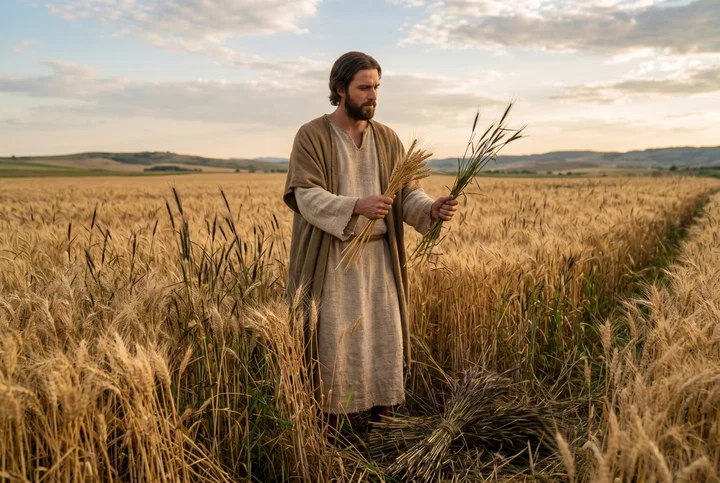
Another parable put he forth unto them, saying, The kingdom of heaven is likened unto a man which sowed good seed in his field:
Translations
Another parable put he forth to them, saying, The kingdom of heaven is likened to a man which sowed good seed in his field:
King James Version, KJV Cambridge Paragraph Bible
Another parable put he forth unto them, saying, The kingdom of heaven is likened unto a man which sowed good seed in his field:
Another parable he proposed to them, saying, The kingdom of heaven is likened to a man who sowed good seed in his field:
Revised Version, American Standard Version
Another parable set he before them, saying, The kingdom of heaven is likened unto a man that sowed good seed in his field:
Another simile he set before them, saying: 'The reign of the heavens was likened to a man sowing good seed in his field,
Another parable set he before them, saying, The kingdom of the heavens has become like a man sowing good seed in his field;
Another parable, put he before them, saying—The kingdom of the heavens hath become like a man sowing good seed in his field;
Berean Standard Bible, Majority Standard Bible
Jesus put before them another parable: “ The kingdom of heaven is like a man who sowed good seed in his field.
He set another parable before them, saying, “ The Kingdom of Heaven is like a man who sowed good seed in his field,
And he gave them another story, saying, The kingdom of heaven is like a man who put good seed in his field:
Another parable put hee foorth vnto them, saying, The kingdome of heauen is like vnto a man which sowed good seede in his fielde.
Douay-Rheims (Challoner revision)
Another parable he proposed to them, saying: The kingdom of heaven is likened to a man that sowed good seeds in his field.
Pictures
Cross-references 20 of 23
- Matthew 13:36-43
Then Jesus sent the multitude away, and went into the house: and his disciples came unto him, saying, Declare unto us the parable of the tares of the field.
These verses explain the parable the passage names.
- Matthew 13:30
Let both grow together until the harvest: and in the time of harvest I will say to the reapers, Gather ye together first the tares, and bind them in bundles to burn them: but gather the wheat into my barn.
At the harvest, the wheat is gathered and the tares are burned.
- Matthew 13:40-43
As therefore the tares are gathered and burned in the fire; so shall it be in the end of this world.
The harvest is the end of the world, when angels separate the wicked from the righteous.
- Galatians 6:7-8
Be not deceived; God is not mocked: for whatsoever a man soweth, that shall he also reap.
Both connect what is sown with its eventual harvest.
- Matthew 13:38
The field is the world; the good seed are the children of the kingdom; but the tares are the children of the wicked one;
Identifies the field as the world and the good seed as the children of the kingdom.
- Revelation 14:14-20
And I looked, and behold a white cloud, and upon the cloud one sat like unto the Son of man, having on his head a golden crown, and in his hand a sharp sickle.
The Son of man reaps the earth’s harvest, gathering the righteous and judging the wicked.
- Matthew 13:47-49
Again, the kingdom of heaven is like unto a net, that was cast into the sea, and gathered of every kind:
Both parables depict good and wicked together until angels separate them at the end.
- Matthew 13:43
Then shall the righteous shine forth as the sun in the kingdom of their Father. Who hath ears to hear, let him hear.
The righteous shine in their Father’s kingdom after the harvest.
- Matthew 13:33
Another parable spake he unto them; The kingdom of heaven is like unto leaven, which a woman took, and hid in three measures of meal, till the whole was leavened.
The leaven parable gives another illustration of the kingdom’s work.
- Matthew 13:31-32
Another parable put he forth unto them, saying, The kingdom of heaven is like to a grain of mustard seed, which a man took, and sowed in his field:
The mustard-seed parable is another field-based illustration of the kingdom.
- Luke 8:5-8
A sower went out to sow his seed: and as he sowed, some fell by the way side; and it was trodden down, and the fowls of the air devoured it.
A parallel account gives the same four soils and their outcomes.
- Matthew 13:28-29
He said unto them, An enemy hath done this. The servants said unto him, Wilt thou then that we go and gather them up?
The enemy sowed tares, and the wheat and tares are to grow together.
- Mark 4:1-20
And he began again to teach by the sea side: and there was gathered unto him a great multitude, so that he entered into a ship, and sat in the sea; and the whole multitude was by the sea on the land.
Another account of the parable identifies the sown seed as the word.
- Matthew 13:49-50
So shall it be at the end of the world: the angels shall come forth, and sever the wicked from among the just,
The wicked are separated and cast into fire at the end of the world.
- Matthew 13:44
Again, the kingdom of heaven is like unto treasure hid in a field; the which when a man hath found, he hideth, and for joy thereof goeth and selleth all that he hath, and buyeth that field.
The hidden treasure parable illustrates the kingdom of heaven for those seeking riches.
- Matthew 3:12
Whose fan is in his hand, and he will throughly purge his floor, and gather his wheat into the garner; but he will burn up the chaff with unquenchable fire.
Both describe wheat separated from chaff.
- Matthew 13:3
And he spake many things unto them in parables, saying, Behold, a sower went forth to sow;
Christ also begins teaching with a parable about sowing.
- Matthew 13:40
As therefore the tares are gathered and burned in the fire; so shall it be in the end of this world.
Gives the harvest ending to the sowing begun here.
- Matthew 13:37
He answered and said unto them, He that soweth the good seed is the Son of man;
Identifies the Son of man as the sower of good seed.
- Matthew 13:42
And shall cast them into a furnace of fire: there shall be wailing and gnashing of teeth.
The wicked are cast into the fiery furnace, where there is wailing.
Commentary part 1 of 3
Each commentary is drawn from primary sources: the writings of Ellen G. White and Adventist pioneers and periodicals. Each commentary is separate. Its own words are not a quotation; follow the references to read the source passages.
Ellen G. White
158 sources
The verse opens the parable of the wheat and tares, using sowing and harvest to picture the growth and ending of Christ's kingdom.ST Nov 24, 18872SP 253.2–3ST Dec 1, 1887 The sower is Christ Himself, the good seed is His truth and the children of the kingdom born by it, and the field is the world and Christ's church in it where they grow.ST Feb 9, 1915COL 70.3Lt 102, 1901, par. 4–6Lt 98, 1896, par. 26–29 The enemy is the devil, the tares are the children of wickedness and all false principle, the harvest is the end of probationary time, and the reapers are the angels.Lt 102, 1901, par. 4–6Lt 86, 1907, par. 10–13Lt 98, 1896, par. 26–29 Wheat and tares must grow together until the harvest, for men cannot read hearts and would uproot true believers if they judged and separated before the time.Lt 102, 1901, par. 4–6Lt 86, 1907, par. 10–13Ms 52, 1899, par. 1–2Lt 98, 1896, par. 26–29 At the harvest the wicked remain unchanged and are bound to be burned, while the righteous are gathered into the garner to shine as the sun in their Father's kingdom.Lt 102, 1901, par. 4–6Lt 86, 1907, par. 10–13Ms 52, 1899, par. 1–2ST May 10, 1877
Parable Language and Symbols
The verse opens the parable of the wheat and tares, setting the kingdom of heaven before hearers in the picture of a man sowing good seed in his field.ST Nov 24, 18872SP 253.2–3ST Dec 1, 1887 Like the parable of the sower it draws on familiar sights of fields and workers scattering seed and harvesting grain, and that common work of sowers and reapers made its teaching clear and accessible to people from many walks of life and to all kinds of people.ST Nov 24, 18872SP 253.2–3ST Dec 1, 1887ST May 17, 1877 It stands among several illustrations teaching the same important truths, with harmful weeds growing alongside the wheat, resembling it while growing, and endangering the wheat's roots if pulled too soon.ST Nov 24, 1887ST May 17, 1877
The man sowing the good seed is the Son of man, Christ Himself as Sower.COL 70.3Lt 102, 1901, par. 4–6Lt 98, 1896, par. 26–29ST May 10, 1877RH Apr 1, 1902 He scatters precious seed in the world and in the soil of the human heart, while Satan secretly sows evil among it.Lt 102, 1901, par. 4–6ST May 10, 18772SP 247.2–249.1 False professors can then resemble true followers so closely that people may mistake one for the other for a time, yet the mixture will not last to the harvest.2SP 247.2–249.1
The good seed are the children of the kingdom, true believers born of God's word.COL 70.3Lt 102, 1901, par. 4–6Lt 98, 1896, par. 26–29Lt 30, 1895, par. 47–48 It is also the truth itself, the gospel and the living Word of God, which sanctifies those who receive it, leads them to share the divine nature, and when Christians bear fruit spreads through the world until the final harvest ripens.COL 70.3COL 69.2Ms 7, 1900, par. 20–22 That word is to be sown purely without human supposition, and evil working covertly in imitation of good gives no warrant for corrupting church associations or tolerating evil in Christian assemblies.Ms 7, 1900, par. 20–22
The field is the world.Lt 102, 1901, par. 4–6Lt 98, 1896, par. 26–29ST May 10, 1877RH Apr 1, 1902COL 75.1 In its present application it signifies Christ's church in the world, where God's work of saving people is carried out and where believers grow, mature, and ripen for God's harvest, with the Holy Spirit also moving on hearts throughout the world.ST Feb 9, 1915COL 70.3Ms 52, 1899, par. 1–2COL 70.2 It also pictures the human heart, the minds of youth, and the mission territory where truth enters.2SP 247.2–249.1
The enemy is the devil, Satan the deceiver, and his sowing is the planting of evil and error in human minds.Lt 102, 1901, par. 4–6Lt 86, 1907, par. 10–13Lt 98, 1896, par. 26–29ST May 10, 1877RH Apr 1, 1902 The tares are the children of the wicked one, counterfeit Christians and all who embody error and false principles, mingling for a time with true followers under a semblance of Christianity.COL 70.3Lt 102, 1901, par. 4–6Lt 86, 1907, par. 10–13Lt 98, 1896, par. 26–29 The harvest is the end of the world and the close of probationary time, and the reapers are the angels.Lt 102, 1901, par. 4–6Lt 98, 1896, par. 26–29ST May 10, 1877RH Apr 1, 1902COL 75.1
The instruction in Matthew 13 must be read as for life and taken personally.Lt 317, 1905, par. 7–9 The chapter is a warning calling for taking heed to oneself and refusing to be blinded by human sophistries or by mocking burlesque of sacred things.Lt 317, 1905, par. 7–9
Wheat and Tares Together
The wheat and the tares are left to grow together in the same field until the harvest, with divine and satanic agencies in decided opposition and vital conflict until the close of earth's history.Lt 86, 1907, par. 10–13Ms 52, 1899, par. 1–2Lt 98, 1896, par. 26–29RH Apr 1, 1902COL 75.1 The field is the world, and in its present application it is the church, which contains both wheat and tares and as the church militant on earth is mixed in every church with true and false members and is not yet the church triumphant.Ms 52, 1899, par. 1–2Lt 98, 1896, par. 26–29Ms 115, 1906, par. 21–22RH Apr 1, 1902COL 75.1 They are not to be gathered up by human hands before the harvest, because committing the work of condemning members and purifying the church to humans would cause terrible mistakes, uproot true believers, and disturb the precious grain.Lt 86, 1907, par. 10–13Ms 52, 1899, par. 1–2Lt 30, 1895, par. 47–4820MR 26.2Lt 64a, 1895, par. 12–16 All judgment belongs to the Son of God alone, who lived God's law in humanity and understands human weakness, striving, and the strength of temptation that comes to every one of His children.Lt 86, 1907, par. 10–13Ms 52, 1899, par. 1–2Lt 98, 1896, par. 26–29 At the harvest, which is the end of the world, He will send His angels as reapers to bind the tares to burn and to gather the wheat into His barn and garner, when evildoers are removed for judgment and the righteous shine forth as the sun in the kingdom of their Father.Lt 86, 1907, par. 10–13Ms 52, 1899, par. 1–2Lt 98, 1896, par. 26–29RH Apr 1, 1902COL 75.1 The delay in destroying evil answers the dealing of God with men and angels when Satan sinned in heaven, for even loyal angels did not fully discern his character, so God spared the author of evil to fully develop his character rather than leave doubt of God's justice and love that would itself sow evil seed yielding sin and woe.Lt 86, 1907, par. 10–13 Through long ages God has borne the anguish of beholding evil and gave the infinite gift of Calvary rather than let any be deceived by misrepresentation, and the parable therefore requires forbearance, humility and distrust of self rather than condemnation and judgment of others.Lt 86, 1907, par. 10–13COL 74.1ST Feb 9, 1915
The tares closely resemble the wheat while the blades are green, so that false professors and counterfeit Christians can mingle for a time with true followers of Christ and the semblance of Christianity deceives many.ST Nov 24, 1887Lt 86, 1907, par. 10–13COL 74.2–3ST Nov 24, 1887ST Feb 9, 1915 Their roots become entwined with the roots of the wheat, so that if the tares were ruthlessly torn up the wheat would also be disturbed and damaged, and only the Lord can separate them at the appointed time.ST Nov 24, 1887Lt 86, 1907, par. 10–1320MR 26.2Lt 64a, 1895, par. 12–16 Satan can mingle evil among what is good, making the two difficult to distinguish, so clear spiritual sight is needed to discern good from evil.COL 74.2–3ST Nov 24, 1887Lt 208, 1900, par. 6 They receive the same sun and rain while allowed to grow alongside the wheat, but they are known only by their fruit at harvest, when the field is white and the worthless weeds bear no likeness to wheat bowed under full ripe heads.Lt 86, 1907, par. 10–13COL 74.2–3ST Nov 24, 1887ST Feb 9, 1915 Then in the harvest of the world there will be no likeness between good and evil, the wicked will be separated from the righteous so as no longer to trouble them, and those who have joined the church but have not joined Christ will be made manifest.Lt 86, 1907, par. 10–13COL 75.1COL 74.2–3ST Nov 24, 1887
The mixture exists in the world and in the church, with righteous and wicked living and working together in this life, sometimes even within the same family and among workers in medical missionary work and ministry.Lt 98, 1896, par. 26–29ST Nov 24, 1887Lt 64a, 1895, par. 12–16Lt 117, 1896, par. 13Lt 36, 1899, par. 10–11 At the present time the wheat and the tares are growing together in the church, a condition that brings dangers threatening the church and makes a revival effort greatly needed through personal, house-to-house missionary labor that builds up, restores and strengthens faith rather than work that weakens, confuses and destroys souls for whom Christ died at infinite price.Lt 98, 1896, par. 26–29RH Apr 1, 1902Lt 117, 1896, par. 13 People who profess to follow Jesus but live wrongly or hypocritically, with unworthy motives and deceptive practices among professed piety, bring reproach on Christianity, draw criticism of the whole field, cause the sower to be wrongly blamed for mixing bad seed with good, and lead the world to doubt Christ's truths.Lt 86, 1907, par. 10–13Lt 98, 1896, par. 26–29ST Nov 24, 1887 Sin among God's people also hinders, though it does not wholly defeat, Jesus' plan to save people from Satan's power and make their hearts fruitful in good works.ST Nov 24, 1887 Those faithfully serving God ripen as wheat for His garner while the worldly ripen as tares for destruction, and their opposing loyalties and sympathies leave no unity of purpose between them.Lt 98, 1896, par. 26–29Lt 64a, 1895, par. 12–16RH Aug 25, 1910 Though people may not see the difference, the Lord reads character and distinguishes those who obey and love His commandments from those who reject them, and at the judgment the righteous are gathered to God while the wicked are separated from Him, when character cannot be changed and one person's grace cannot be transferred to another.Lt 64a, 1895, par. 12–16
Mere profession, church membership, names on church books, or outward forms do not prove a person a Christian or decide destiny, for not all sown in the field is good grain.Lt 86, 1907, par. 10–13COL 74.2–3COL 74.1ST Feb 9, 1915Lt 19a, 1892, par. 16–18 Many whose names are on the books are not joined to Christ, are not transformed into His likeness, and are not subjects of His kingdom; they may deny self and do good deeds, yet they are not Christians, and under temptation they show they have another spirit than Christ's, are not abiding in Christ, and in association and dealing with others misrepresent the Saviour.Lt 86, 1907, par. 10–13COL 74.2–3Lt 19a, 1892, par. 16–18 Christ, not human beings, decides who belongs in heaven, judging each person by words, works and character rather than profession, and those joined to the church but not joined to Christ will be revealed and made manifest at the harvest.Lt 86, 1907, par. 10–13COL 74.2–3COL 74.1ST Feb 9, 1915 The Lord does not need their profession or service to promote His glory or establish His kingdom, does not wait for their counsels, acknowledgments or cooperation, and His work will not long be hindered by their objections or resistance, for success does not depend on human instrumentalities but on His wisdom and grace working with His people to do what He has designed.Lt 19a, 1892, par. 16–18 The parable does not teach that all tares become wheat, for the tares remain to be separated and burned while counterfeit believers are left in the field rather than entrusted to men to uproot lest the wheat be uprooted as well.Lt 30, 1895, par. 47–48COL 75.1ST Feb 9, 1915 Feeding on the defects of church members by criticism itself ranks a person among the tares, while the parable calls instead for humility and distrust of self.Lt 98, 1896, par. 26–29COL 74.1ST Feb 9, 1915
Final Harvest and Separation
At the harvest the tares are gathered first and bound in bundles to be burned, while the wheat is gathered into the barn or garner.Lt 102, 1901, par. 4–6Lt 86, 1907, par. 10–13Ms 52, 1899, par. 1–2RH Apr 1, 1902COL 75.1 The Son of man sends His angels as reapers to gather out of His kingdom all things that offend and them which do iniquity, and cast them into a furnace of fire where there is wailing and gnashing of teeth.Lt 102, 1901, par. 4–6Lt 98, 1896, par. 26–29RH Apr 1, 1902 Then the righteous shine forth as the sun in the kingdom of their Father.Lt 102, 1901, par. 4–6Lt 98, 1896, par. 26–29RH Apr 1, 1902 The harvest is the end of the world, and both wheat and tares must grow together until that time lest gathering the tares root up the wheat also.Lt 102, 1901, par. 4–6Lt 86, 1907, par. 10–13Ms 52, 1899, par. 1–2Lt 98, 1896, par. 26–29COL 75.1 The gospel calls together in church capacity those who come out from the world, and the kingdom must be kept free from the sinful practices of the world, with clear perception of this parable impressed by the Holy Spirit on minds that desire it and do all in their power to understand it.Lt 102, 1901, par. 4–6
The tares remain tares and are not changed into wheat by miracle; the wicked are separated and destroyed rather than converted, while the righteous receive eternal life.ST May 10, 1877COL 75.1ST Nov 24, 18872SP 249.2–250.2 The parable does not teach that all tares become wheat, and those who merely profess faith without joining Christ are exposed.COL 75.1 The wicked will not all turn to God before that separation, and there is no probation after the judgment: when the gospel's work is complete, each class's destiny is fixed forever.COL 123.1–2 Character cannot then be changed, and one person's grace cannot be transferred to another, for the Lord reads character and distinguishes those who obey and love His commandments from those who reject them.Lt 64a, 1895, par. 12–16 Sin and hypocritical followers within the church can hinder Christ's work and bring reproach on Christianity, though the final judgment will distinguish the wicked from the righteous.ST May 10, 1877
The separation is the fearful selecting, binding, and sealing work of the third angel.SCEV 38.3Ms 3, 1854, par. 16–17Ms 3, 1853, par. 7Ms 1, 1854, par. 7–8 The wheat is selected and bound for the heavenly harvest and sealed for the heavenly garner, while the tares are distinguished from it.SCEV 38.3Ms 3, 1854, par. 16–17Ms 3, 1853, par. 7Ms 1, 1854, par. 7–8 Those who work with the angel must distinguish the vile from the precious.Ms 3, 1854, par. 16–17 The parable is applied to gathering the wheat rather than the tares, while standing firm in the liberty Christ gives.Ms 21, 1911, par. 9
The parable pictures the kingdom's development and the final separation of the righteous and the wicked so they no longer trouble each other.DA 333.1–25MR 297.2 Satan is permitted for a time to expose character, test the faithful, and reveal those who are false, and in due time the rebels are separated from the loyal and true.5MR 297.2 As the end of time approaches God sifts His people with the chaff separated from the wheat and the tares already binding in bundles to burn, and the work of the enemy of all righteousness intensifies near the end.Lt 92, 1887, par. 2 That separation is a revealing of true character, contrasting those who have only tacked the truth onto carnal, unsanctified, unholy characters without bringing it into their lives and weaving it into their characters, with those who claim to keep God's commandments living by every word that proceeds out of the mouth of God.Lt 92, 1887, par. 2 Divisions will come in the church and two parties will be developed, with wheat and tares growing up together for the harvest and remaining mixed until the very close of time, while a new life from heaven takes possession of all God's people for sounding the last message of mercy.Ms 32, 1896, par. 34–37 Those who are true and those who are untrue remain together for a time in the church as a field, but trial will separate them, and a time of refining brings a separation in which those who do not wholly turn and obey the truth are left with the world to receive its reward.Lt 146, 1897, par. 11–13
Patient Forbearance Required
The command is to let wheat and tares grow together until the harvest and not to gather up the tares beforehand by human hands, because those who attempt to purify the church by condemning members will make terrible mistakes.Lt 102, 1901, par. 4–6Ms 52, 1899, par. 1–2Lt 30, 1895, par. 47–48 Servants might mistake wheat for tares and root up the wheat also, uprooting true believers, disturbing wheat whose roots are entwined with tares, and driving away those Christ is drawing.Lt 102, 1901, par. 4–6Lt 30, 1895, par. 47–4820MR 26.2RCNBP 15.2 All judgment belongs to the Son of God alone, who lived God's law in humanity and understands human weakness and the strength of temptation coming to every child, while the final gathering is by angels as reapers, not by men.Lt 102, 1901, par. 4–6Ms 52, 1899, par. 1–2Lt 98, 1896, par. 26–29 At that harvest, which is the end of the world, the tares are gathered first and bound in bundles to burn, cast into a furnace of fire with wailing and gnashing of teeth, while the wheat is gathered into the barn and the righteous shine forth as the sun in the kingdom of their Father.Lt 102, 1901, par. 4–6Ms 52, 1899, par. 1–2Lt 98, 1896, par. 26–29 The field is the world and in application the church, where the Son of man as Sower sowed the good seed as the children of the kingdom, while the devil as enemy sowed the tares as the children of the wicked one and counterfeit believers, and the gospel calls together in church capacity those come out from the world, with the church militant not yet the church triumphant and the Lord alone knowing who are His.Lt 102, 1901, par. 4–6Lt 98, 1896, par. 26–29RCNBP 15.2
God bears long with evil as He bore with Satan, for when Satan sinned even loyal angels did not fully discern his character, and immediate destruction would have left holy angels unable to perceive the justice and love of God.Lt 86, 1907, par. 10–13COL 72.2 That doubt of God's goodness would itself have been evil seed sown yielding sin, woe and sorrow, so God spared the author of evil to fully develop his character and through long ages bore the anguish of beholding evil, giving the infinite gift of Calvary rather than let any be deceived by misrepresentation.Lt 86, 1907, par. 10–13COL 72.2 For the same reason the tares could not be plucked up without danger of uprooting the precious grain, and the parable requires forbearance toward fellow men as the Lord is forbearing, with humility and distrust of self rather than condemnation and judgment of others.Lt 86, 1907, par. 10–13COL 73.1COL 74.1 Church difficulties therefore call for patience and caution and are not to be dealt with prematurely or in zeal without knowledge, and using civil power to punish supposed heretics misrepresents God and is contrary to Christ's spirit.TCBMP 143.1–145.1COL 73.1 Not all sown in the field is good grain and being in the church does not prove a person a Christian, for tares closely resembled wheat while green but when white to harvest the worthless weeds bore no likeness to wheat bowed under full ripe heads, and those joined to the church but not joined to Christ will be made manifest when in the harvest there is no likeness between good and evil.Lt 86, 1907, par. 10–13COL 74.1
False brethren may be so closely joined to true disciples that removing them could cause others to stumble, so they are to be borne with until character is fully revealed.COL 72.1COL 72.23T 114.1 The church should not separate people prematurely, since removing those judged unworthy can harm sincere believers who might otherwise be nourished, strengthened and established in the truth.COL 72.13T 114.1Lt 6a, 1894, par. 16 False brethren will be found within the church until the close of time, yet their presence is no reason to doubt Christianity or become disheartened, for Christ bears patiently with flawed people and does not want to lose anyone, and unruly unsanctified people may have to be tolerated with wisdom.3T 114.1COL 72.3Lt 75, 1886, par. 1–3 Trying to separate counterfeit mingled with genuine can put souls in danger, requiring watchfulness wherever God works because Satan and his angels are present ready to mislead.Lt 6a, 1894, par. 16
Because no one can read hearts, human beings cannot distinguish wheat from tares, and those who wish to take part in ordinances should not be excluded on suspicion.20MR 149.2–4DA 656.1Ms 47, 1897, par. 18–20 The difference between them is not for people to judge in deciding who may take part in footwashing and the Lord's Supper, since only God can read the heart.20MR 149.2–4DA 656.1Ms 47, 1897, par. 18–20 Even though Jesus knew from the beginning that Judas would betray Him, He washed Judas's feet and let him unite with the disciples in partaking of the sacrament, so none claiming to be Christians should be excluded even when they may not in heart be united with truth and holiness.20MR 149.2–4 There may be a Judas in the company while unseen heavenly angels and messengers from the prince of darkness are present watching.20MR 149.2–4
No man has the right to measure the character of fellow men, and faults seen in members give no excuse for refusing to be a Christian.Lt 98, 1896, par. 26–29Lt 63a, 1893, par. 11–14 Feeding on defects by criticism and making defective members the theme of conversation ranks the critic among the tares, and those who habitually see evil and talk of evil will themselves be ranked among the tares.Lt 98, 1896, par. 26–29Lt 98, 1896, par. 30–32 Christians should instead resist dwelling on others' faults, turn to Christ as the flawless example and perfect pattern of Christianity, and let character be built up in meekness and wisdom from above by feeding on Christ rather than on real or supposed faults of brethren.Lt 98, 1896, par. 26–29Lt 63a, 1893, par. 11–14Lt 98, 1896, par. 30–32
Watchfulness is still required, for servants asleep and unwatchful let evil take root among God's people, and failure to watch and oppose evils that can be checked implicates them in guilt.RH Nov 29, 1906Ms 128a, 1903, par. 716MR 3.1–4.1 Prompt correction of wrongdoing is called for so it does not take root and spread and choke the work, including the gospel medical missionary work as good seed choked by evils and objectionable teachings sown by the enemy, and Christians must labor to keep the enemy from working among those who received truth and help others learn it.Ms 128a, 1903, par. 9RH Nov 29, 1906Ms 128a, 1903, par. 7 Silently supporting work God cannot approve helps Satan's work and can lead to loss of souls, while sowing tares by perverted unchristian principles confuses minds of old and young, blocks the wheels of the work and confuses judgment, so those who do it, including leaders in medical missionary work and sanitariums, must repent, be converted and disconnect or the sacred work cannot be accomplished.Ms 128a, 1903, par. 7Ms 45, 1904, par. 1116MR 3.1–4.1 Harsh management, ordering and scolding, sharpness and harshness of voice and exertion of kingly authority, as soured workers in the publishing house at Battle Creek, are not of God but of the enemy, and while the time comes to cleanse the Office by removing unholy tares growing among the wheat, the final rooting out of persons as tares is left to God.Lt 55, 1901, par. 5–6
Church Still God's Church
The kingdom in its present state is the church militant on earth, not yet the church triumphant, and therefore it is mixed in every place with true and false members growing together until the harvest at the end of the world and close of probationary time.Lt 102, 1901, par. 4–6Lt 98, 1896, par. 26–29RCNBP 4.1–5.1RCNBP 15.2Ms 49, 1893, par. 25–26 The good seed sown by Christ the Son of man are the children of the kingdom whom He brings into the church, while the enemy the devil sowed counterfeit Christians, the children of the wicked one, among the wheat while men slept, so that both sprang up together in the same field which is the world.Lt 102, 1901, par. 4–6Lt 98, 1896, par. 26–29RCNBP 4.1–5.1 Unconverted, faulty and defective members are to be expected and pitied rather than made a reason to judge and condemn the whole church as sustaining evil, and no man has the right to measure fellow men or root up the tares by harsh human judgment lest the wheat be rooted up with them, for judgment belongs only to Christ who lived humanity and understands weakness, and at harvest He will send His angels as reapers to gather out all that offends to burn in fire with wailing and gnashing of teeth and to gather the wheat into His barn where the righteous shall shine as the sun in the kingdom of their Father.Lt 102, 1901, par. 4–6Lt 98, 1896, par. 26–29Ms 49, 1893, par. 25–26 God still loves the church and leads a people who keep His commandments, and the Lord alone knows who are His even when evil, coldness, pride and inconsistency are met in others, with no one forced to choose such persons as close associates or to be a tare himself because all the harvest is not wheat.Lt 98, 1896, par. 26–29RCNBP 15.2Ms 49, 1893, par. 25–26 The gospel calls together in church capacity those who come out from the world, and the kingdom must be kept free from the sinful practices of the world, with clear perception of the parable impressed by the Holy Spirit on minds that desire it and do all in their power to understand it.Lt 102, 1901, par. 4–6
The presence of tares with pride, self-sufficiency, stubborn unbelief and refusal to yield to piled-up evidence does not make the commandment-keeping church Babylon, does not blot out its existence, does not cancel its authority and work, and does not prove that God has no church.RCOC 6.21MR 362.2–363.1STMW6 4.1–21MR 303.1–2ST Oct 23, 1879 The wheat and tares with chaff mixed among them are to grow together until the harvest when the wheat is gathered into the garner and the chaff is bound in bundles to burn, and that separating work is done by angels and not by men.RCOC 6.21MR 362.2–363.11MR 303.1–2 The church is therefore not to be disorganized or broken up into independent atoms by human separation, nor weighed in human scales, judged against, drawn apart from, or torn to pieces, and calling it Babylon and leavening others to divide it is a false message that deceives, prepares for advanced delusions, and comes to naught by those not led by God and on the wrong track.RCOC 6.21MR 362.2–363.1RCOC 10.1–2 Worldly elements brought into the church and placed in positions of trust can corrupt institutions, influence others, and blur the distinction between those who serve God and those who do not, yet the tares do not mean that the Master sowed bad seed.STMW6 4.1–2
Faults seen in church members give no excuse for refusing to be a Christian, and the presence of good and bad gathered together in gospel work, even of people in the church with no connection with God, is no reason to refuse efforts to save those who will believe and join the work.Lt 98, 1896, par. 26–29STMW11 24.2–25.1Lt 51b, 1898, par. 13–15 Evils may exist among believers, but their presence is no reason to disparage the church.Ms 49, 1893, par. 25–26Ms 167, 1899, par. 13–166T 239.2–4 Faithful members stay in the body, walk in Christ's lines, work in all humbleness and devotedness for deeper sanctification and holiness, help those who are ready to die, inspire the church with zeal, and bring freshness and the atmosphere of heaven to vitalize it.RCOC 10.1–2 Feeding on defects by criticism itself ranks a person among the tares.Lt 98, 1896, par. 26–29
Using civil power to punish people considered heretics is contrary to Christ's spirit and misrepresents God, and force, excommunication and denunciation against those judged in error are not the appointed way, for the parable's lesson is humility and distrust of self rather than condemning others.COL 73.1RCNBP 6.2 Leaders of every church and institution are instead to take up purification and labor for its transformation so that the church shines as a light in a dark place, becoming a bright light where darkness and division had been strengthened by those not worked by the Holy Spirit who come under another spirit and mar God's plan, in contrast to those sanctified by Christ's blood who will not counterwork His plan or perpetuate division.Ms 167, 1899, par. 13–166T 239.2–4Lt 204, 1899, par. 10–13
Enemy Sowing While Sleeping
The sowing in the verse is the Son of man scattering good seed, who are the children of the kingdom, in the field which is the world, while the enemy who is the devil sows the tares who are the children of the wicked one, with the harvest as the end of the world and the reapers as the angels.Lt 102, 1901, par. 4–6Lt 98, 1896, par. 26–29 While men slept the enemy came and sowed tares among the wheat, and that sleep is spiritual sleep when the spiritual life is not constantly fed by the Spirit of God, neglect of warnings, and unwatchfulness that gives Satan opportunity.3T 113.1TCBMP 143.1–145.1Lt 244, 1907, par. 4–7Lt 126, 1906, par. 17–18Ms 188, 1897, par. 12–13 Negligence opens receptive, unsanctified hearts to the spread of error, and Satan works against God's work when people are spiritually unwatchful so that evil hinders Christ's kingdom.3T 113.1TCBMP 143.1–145.1Ms 40a, 1890, par. 4–58T 184.1–2 Both must spring up and grow together until the harvest lest gathering the tares root up the wheat also, and in the time of harvest the tares are gathered first and bound in bundles to burn in a furnace of fire with wailing and gnashing of teeth while the wheat is gathered into the barn, when the righteous shall shine forth as the sun in the kingdom of their Father.Lt 102, 1901, par. 4–6Lt 98, 1896, par. 26–29 The gospel thus calls together in church capacity those who come out from the world into the church militant on earth, which is mixed in every church with true and false members and is not yet the church triumphant, and the kingdom must be kept free from the sinful practices of the world with clear perception of the parable impressed by the Holy Spirit on minds that desire it and do all in their power to understand it.Lt 102, 1901, par. 4–6Lt 98, 1896, par. 26–29 Faults seen in members give no excuse for refusing to be a Christian, and no man has the right to measure character or root up the tares lest the wheat be rooted up, for judgment belongs only to Christ who lived humanity and understands weakness and striving for perfection, while feeding on defects by criticism itself ranks a person among the tares.Lt 98, 1896, par. 26–29 Church difficulties therefore should not be dealt with prematurely or in zeal without knowledge, for forcibly removing tares can harm the wheat and requires patience and caution.TCBMP 143.1–145.1
Satan never slumbers but works while men sleep in spiritual neglect and inattention, secretly sowing evil among the good after the manner of an enemy secretly sowing a harmful weed that could damage the crop and bring loss to the owner.COL 71.1Ms 188, 1897, par. 12–13 He does not take the mind by force but by seductive, deceptive influence, mind acting upon mind, molding one mind by another until those led by him do not know they are being led at his will, so that he can imbue them with his spirit and lead them to work his works.Lt 244, 1907, par. 4–7Lt 126, 1906, par. 17–18Ms 188, 1897, par. 12–13 He exults when he can persuade men to take his arm and walk with him, to become his agents to advance his plans and increase the woe and misery of the world, watching to take God's standard from the hands of God's people and place his own standard in their hands without their discerning it.Ms 188, 1897, par. 12–13 The remedy is to awake out of sleep, to cast off the arm of Satan, to break connection with Satan and link up with Christ, and to call upon God who never slumbers or sleeps, wearing Christ's yoke in meekness and lowliness of heart, with divine power giving force to human workers and unequaled growth in spiritual power to stop him.Lt 209, 1899, par. 15–16Ms 188, 1897, par. 12–13 His sowing is seen when selfishness, pride, and self-indulgence testify that he has sown his seed in hearts to mold men and women after his own likeness, and people may then bear Christ's name while denying His character, dishonoring God, misrepresenting salvation, endangering souls, and causing the fruit of evil to be attributed to Christ.COL 71.1Lt 209, 1899, par. 15–16 Those who open their hearts let the tares spring up among the wheat and strengthen until the wheat crop becomes less and less and precious truth loses its power, and a false zeal for new theories hardens hearts against advocates of truth as the Jews were hardened against Christ.Ms 92, 1897, par. 21–22
Under Satan's zeal the tares for a time have the appearance of flourishing and spreading like a green bay tree, but only for a season, and the Lord suffers them for a time to manifest envy and hatred against God's people just as He allowed Satan to develop his character before the heavenly universe and the unfallen and fallen worlds in his true attributes as deceiver, accuser of the brethren, and murderer at heart.Ms 92, 1897, par. 21–22 This belongs to a conflict that will wax fiercer as Satan takes the field to personate Christ and to misinterpret, misapply, and pervert everything he possibly can to deceive, if possible, the very elect, causing entire families who once rejoiced in the truth to lose faith through calamities and falsehoods about those they loved.Ms 92, 1897, par. 21–22 The sowers of tares are men entrusted with a solemn charge who fail to heed warnings and turn away to work under satanic agencies, professing belief in the testimonies while showing positive disbelief, captivating minds with assurances, deceiving souls, ruining faith, spoiling confidence, and bringing apostasy, and if they continue to depart from the faith and give heed to seducing spirits sentence will be pronounced upon them for spoiling the flock of God.Lt 126, 1906, par. 17–18
Sowing good seed means diligently spreading sound doctrine, while Satan diligently sows corrupt teaching and religious error to corrupt practice.GC88 248.34SP 173.1GC 248.3 Christ as the sower plants truth and does not sow error, but Satan mingles tares of falsehood with the truth and watches over them so they may grow and obscure it.Ms 30, 1898, par. 5–6 The field sown with pure wheat represents the truth of God's Word, and sowing other ideas alongside it introduces tares rather than good seed, so speculative theories must not be passed off as essential truth or mixed with teaching given to people.Lt 136a, 1898, par. 23–27 He plants false ideas and theories in human minds and makes their advocates zealous for error, including heresy, infidel sentiments, false science, fanaticism, and perverted principles that confuse judgment, obscure truth's distinct holy character, and choke the work.RCNBP 10.3 The kingdom's doctrines are made plain by presenting truth in contrast with error, and when truth is planted and cherished in the heart it uproots errors held as truth, yet repentance cannot turn tares sown into wheat when the harvest comes, and error if reasoned upon grows until what is opposed to Scripture appears favorable.Ms 30, 1898, par. 5–6Lt 136a, 1898, par. 23–27
He also sows dissension by divisive words, betraying confidence, evil-speaking, envy, criticism, accusations against God's messages, objections, and unbelief that spread from heart to heart, weaken faith, spoil confidence, and bring apostasy.Lt 126, 1906, par. 17–18Lt 222, 1906, par. 4–7Lt 87, 1896, par. 15Lt 116, 1901, par. 10–11 The tares are seeds of doubt and unbelief sown by words and actions, especially by those in responsible positions who criticize God's appointed work performed through human agencies as laborers together with God by the Holy Spirit and who reject messages borne by God's workers.Lt 87, 1896, par. 15 Such sowers work under evil angels both openly and secretly to counteract God's appointed work, seeing with defective and perverted eyesight with imagination inspired by satanic agencies so they see many things in a false light, and unless they repent they will soon like Esau find no place for repentance though they seek it carefully with tears.Lt 87, 1896, par. 15 Criticism and a spirit of judgment that lead brethren to draw apart from ministering brethren sow tares resembling wheat among the good seed, when God's workers are to be inspired with one purpose in perfect unity, and God desires this criticism to be entirely done away and no such criticism breaking up faith to be entertained.Lt 222, 1906, par. 4–7Lt 116, 1901, par. 10–11 Unbelief sown by those who reject God's messages grows and multiplies like tares, and students who stir up trouble and discourage teachers exert a harmful influence like sowing tares among wheat.FE 249.2
After good seed was sown at Corinth by Paul's teaching and example, tares sown by the enemy appeared among the wheat after Paul left and soon produced evil fruit as some believers returned to heathen sins.ST Apr 14, 1914SLP 149.1 Many grew careless, let natural desires control them, and returned to the sins they had abandoned at conversion, showing how harmful influences take root among believers and produce evil fruit.AA 299.2–3 Likewise where sound doctrine was taught in England the same pattern holds: the sower sows truth in one place and then must go sow in another place, and he cannot be everywhere at once to protect what was sown.GC 246.1 After he leaves that field the enemy comes into the same field to ravage it and destroy the work by threats and misrepresentations, and without the Holy Scriptures in their own tongue believers cannot of themselves withstand such sophists and be established in the truth.GC 246.1
Neglect to work the cities while living outside them, worldly display and favoritism toward helpers and nurses in large institutions, and mingling like Solomon's idolatry with true religion show how tares fill fields.SW 39.1STB 332.3–4RH Mar 10, 1910 The field applied to work among the colored people in the South, where Satan has sown tares, is now harder to work than it would have been earlier, but the work must not be delayed.SW 39.1 Tares are sown among promising youth through the display and inducements of wealthy patients, identified as Satan's work affecting young workers whose hearts are being reached by worldly influences.STB 332.3–4 Through wealthy, worldly men and women patronizing a large sanitarium, by worldly display and by offering strong inducements and favoritism to young helpers and nurses, tares of temptation are sown in hearts, surrounding them with influences that tend to lead them astray from simplicity and training for service.YGBCOEP 53.3–48T 228.1–3Ms 129, 1903, par. 14–15 Becoming favorites of wealthy patients, receiving strong inducements to enter their employ, and seeing worldly display plant love of the world, loss of simplicity, and loss of the fear of God through evil associations and silent influence, and lead youth astray from service for the Lord.8T 228.1–3Ms 129, 1903, par. 14–15
God permits heresies to come in among His people when other means fail to arouse them, and the heresies separate the chaff from the wheat, calling all who believe His Word to awake out of sleep, to receive precious present light showing perils right upon them, and to give themselves to diligent study of the Scriptures and most critical examination of the positions they hold.ST Nov 15, 1905 Tares sown among the wheat can take root and grow, making the wheat crop diminish, showing how falsehood and misleading ideas can be introduced among people who have received the truth and weaken its influence.STMW11 9.2–10.1 The tares are Satan's sowing, and if left unchecked they spoil the wheat by their rank growth.8T 326.3CT 188.3–189.2 The sowing of seed in the field gives counsel to the heart softened by grace and carries the mind to spiritual seed-sowing.8T 326.3
When Christ sowed the good seed, the field was already corrupted by the enemy through accumulated error as people turned from God, and by leaders teaching human commandments as doctrine.ST Feb 24, 1898
Sowing Good Seed Daily
Life is sowing time, and every life sows a moral crop that will also be reaped, either wheat or tares, so each person must know what kind of crop he is sowing.CT 491.1Lt 63, 1896, par. 2Lt 48a, 1900, par. 16 The reaping will be as the sowing has been, for the seed sown in this life fixes the harvest and none can sow tares and reap wheat.Lt 63, 1896, par. 2RP 7.2–3 Sowing wheat is doing what is right and not influencing others toward wrong, holding the true moral standard of the gospel unperverted, learning from deep ruin to love Christ sincerely with gratitude to Him who gave His life, and living closely to His humble example in humbleness of mind.CT 491.1FE 301.2–3Lt 48a, 1900, par. 16 Sowing tares is pursuing a wrong course not led and taught by the Word, hurting and imperiling souls and harming the flock by precept or example, bringing decided danger to the soul and unspeakable loss to the sower himself, calling for reliable men to adjust the work lest those to be enlightened be steeped in deeper darkness.Lt 252, 1907, par. 7–8Lt 48a, 1900, par. 16 Characters devoted to earthly things receive a worldly mold, and as they are at death so they will be in the morning of the resurrection, with no conversion or transformation of character made then.Lt 63, 1896, par. 2
The sowing of wheat and tares goes on in letters written, thoughts, words, associations, and the spirit in which daily duties are performed, with every association leaving an impression on character for wheat or for tares.Ms 54, 1899, par. 16–17Ms 74, 1897, par. 28 Influence is like seed planted in another mind that can take root and produce lasting results, so skeptical or unbelieving words are evil seed that may grow into tares and trouble a sensitive soul, while influence from a converted person depending on God bears good fruit.Lt 96, 1895, par. 7Ms 195, 1905, par. 4–5 Bearing wheat with the words spoken means speaking in harmony with Christ, drawing continually with Him and learning line upon line without one word spoken unadvisedly, which is laboring together with God that by any means some may be saved, while bearing tares is speaking otherwise.Ms 73, 1911, par. 14Ms 74, 1897, par. 28 What should be sown through life and work is truth and kindly, patient conduct that bears fruit, sharing the knowledge of God with neighbors, which also causes light and truth to shine in the sower's own heart.Ms 54, 1899, par. 16–17Ms 73, 1911, par. 14 Workers are either devoted servants of Christ constantly abiding in the true vine and partaking of the divine nature, or under the leadership of the enemy imbibing pride and self-indulgence, for worldly influences imperceptibly affect mind and character so that if there is not growth in piety and grace there is growth in worldliness and sin.Ms 54, 1899, par. 16–17
A child's heart is the field where good and pure things, truth, love, and heavenly qualities, even precious Bible truth, must be planted from babyhood and from the beginning by faithful instruction, love, discipline, and redoubled effort for salvation.ST Aug 6, 1912SG4 298.1ST May 20, 1889 Parents as laborers together with God must watch lest surrounding influence injure children and must select their society rather than suffer them to choose for themselves, since no others have such constant care, deep love, and interest for them.SG4 298.11T 403.1 If this work is neglected Satan sows tares in the heart — stubbornness, selfishness, love of pleasure, pride, sinfulness, and wrong principles and habits which he nourishes into a lasting harvest shaping character through life.ST Aug 6, 1912ST Apr 17, 18841T 403.1 Evil increases faster than good and time is short, so early sowing is easier and much safer than plucking up weeds afterward, for though learned evil might be eradicated after many years no one should venture that risk.SG4 298.1ST Apr 17, 1884
The mind of youth is likewise a field needing watchful care and cultivation, where teachers sow truth or tares by the ideas planted through education.RH Jul 3, 1900CT 136.4 Teachers who mix erroneous or infidel sentiments with their teaching sow tares rather than good seed and will reap a harvest from what they have planted, and those taught by the enemy of truth must not be entrusted to teach the young.RH Jul 3, 1900CT 30.3 Books that teach falsehood and tempt carnal appetites, infidel authors, novels, degrading literature, false philosophy, and unbelieving teachers are tares that corrupt faith, eclipse truth, and reap infidels, so only elevating matter should be handled and schools need watchful discipline by precept and practice.CE 82.1–2Ms 81, 1897, par. 9FE 90.1 Youth away from parents are in danger of contamination of spiritual and physical health by wrong associations, and any person sowing tares among the wheat must be set in order by faithful guardians who watch, pray, reprove, rebuke, and correct with wholesome words and refuse to allow tares to be sown.Ms 81, 1897, par. 9FE 90.1
Sowing good seed is the work God appoints through human agencies who by the Holy Spirit become laborers together with God, revealing Jesus Christ, preparing the way for His second coming, and working faithfully with Christ in new fields for the salvation of souls.RH Apr 3, 1900Ms 3, 1900, par. 5–8Lt 87, 1896, par. 15 The world is a field where good and evil seed are sown at the same time by opposing workers continuing side by side until the great harvest, where error confuses and darkens minds and ensnares people while truth reveals Christ.RH Apr 3, 1900Ms 3, 1900, par. 5–8Lt 288, 1906, par. 22 Sowing tares in this work is spreading doubt, unbelief, questioning, criticism, and a spirit of judgment that leads brethren to draw apart from ministering brethren, especially by those in responsible positions who criticize God's appointed work and reject messages borne by His workers.Lt 87, 1896, par. 15Lt 200, 1906, par. 6–9Lt 116, 1901, par. 10–11 Such sowers, seeing with defective perverted eyesight and imagination inspired by satanic agencies so they see many things in false light, work openly and secretly under evil angels to counteract God's work, and unless they repent will like Esau find no place for repentance though sought carefully with tears.Lt 87, 1896, par. 15 God desires criticism to be entirely done away, with workers inspired with one purpose in perfect unity taking active interest to help bring others to truth already sown even where the enemy sows tares among it.Lt 116, 1901, par. 10–11Lt 288, 1906, par. 22
The seed is the precious word spoken in worship, which must be heard attentively to take root in good ground and bear fruit, for distraction can keep it from doing so.5T 493.18T 326.3 Sowing gives counsel to the heart softened by grace and carries the mind to spiritual seed-sowing, yet tares are Satan's sowing and if left unchecked spoil the wheat by rank growth.8T 326.3Ms 170, 1899, par. 12–13 God sowed only good seed in His field, for creation is a reservoir of means made ready to do His pleasure with nothing useless in itself, while tares with brier, thorn, and thistle came by the enemy through the curse and stand as evil that blights and mars, though nature otherwise obeys God's will and develops in proper order without resistance.ED 101.2–3Lt 131, 1897, par. 3–517MR 58.1–59.1 This lesson from nature can only be read aright in the light shining from Calvary through Bethlehem and the cross, showing good shall conquer evil and every blessing is redemption's gift, with nature still speaking of God's goodness and restoring love while His power works unseen giving life and usefulness to soil and seed as people plant and cultivate.ED 101.2–3Ms 170, 1899, par. 12–13
Each soul is a garden to keep where good seed is sown but Satan sows weeds and tares whenever it is neglected, even while watching for weeds in a neighbor's garden.Lt 407, 1906, par. 1Ms 40, 1896, par. 12–13 The tares are defective traits, impure thoughts, reckless words, bitterness, suspicion, and false harmful ideas that should not be welcomed into the mind, and each steward of his own garden must remove every weed by purifying thoughts into captivity to Christ and guarding words and spirit rather than scattering words recklessly and finding fault.Lt 407, 1906, par. 1Ms 40, 1896, par. 12–13Lt 9, 1869, par. 2 Two watchers contend over the soil of the heart, Christ drawing the soul to believe on the Son of God unto eternal life while Satan watches for every opportunity to sow tares with every power against salvation.Lt 23, 1890, par. 38–41Lt 126, 1893, par. 2 Evil angels press temptation upon temptation, suggesting evil thoughts and exciting worldly desires and carnal lusts until the heart estranged from God no longer responds to the Spirit, becoming hard and almost insensible because truth was not brought into the inner sanctuary, like dry preoccupied ground where seed cannot take root and tares leave no chance for wheat to grow.Lt 23, 1890, par. 38–41Lt 126, 1893, par. 2
Evil seed sown will bring forth tares, and the evil sowing already done cannot be undone so its harvest must be expected, while good seed needs careful continued care to live and flourish against evil seed that takes root and spreads readily threatening to crush it out.1T 317.1–318.1Lt 368, 1904, par. 5–8 Yet truth as good seed continues to grow and bear harvest despite persecution and sown error and heresies, which may grow rankly but cannot prevent witnesses keeping faith alive, though the enemy seeks to scatter briers and thorns among precious wheat.Ms 75, 1886, par. 31–321MR 172.5–173.4 If those responsible repent and act in fear of God for love of souls, standing firmly on the platform of eternal truth and living it before the world, the Lord can overrule evil sowing for good.Lt 368, 1904, par. 5–8 Coming into line in unity avoids open division and internal warfare that dishonors God, grieves His Spirit, pleases the enemy, and retards the work to be done in the world.Lt 368, 1904, par. 5–8
Tares among wheat include men among believers who do much harm to the cause, spots in feasts of charity and wolves among sheep ready to bite, tear, devour, and delighting to create lies, bear false witness, and cruelly injure reputation.STGC 87.2Ms 162, 1902, par. 43Ms 71, 1902, par. 3 Connected with God's institutions they bring severe trials on those earnestly doing His will, striving to bring wrong principles, advice and counsel not in harmony with the Word, unkind criticism separating friends, and sharp cruel schemes under Satan's control against God's government.Ms 71, 1902, par. 3Ms 65, 1898, par. 3 They are not separated now but left until God's appointed day when He judges the world in righteousness and rewards every one according to works, with the spirit behind sowing revealed by heaven's books.STGC 87.2Ms 162, 1902, par. 43Ms 65, 1898, par. 3 Then separation between wheat and tares will reveal those who tore down reputation as hypocrites who knew they dealt unjustly, and by their own lips they will bear testimony clearing the innocent from suspicion.STGC 87.2Ms 106, 1903, par. 60Ms 162, 1902, par. 43
Sources