Matthew 21:7
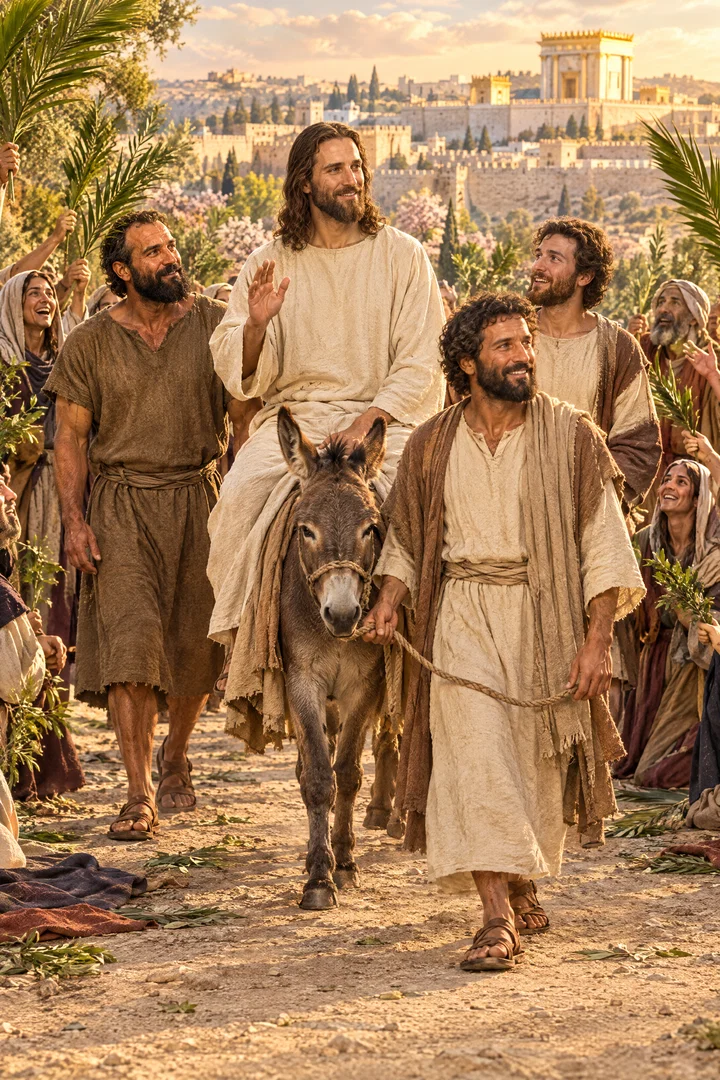
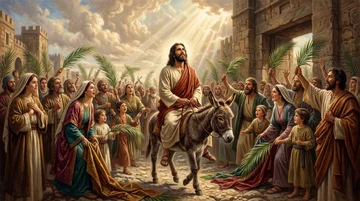
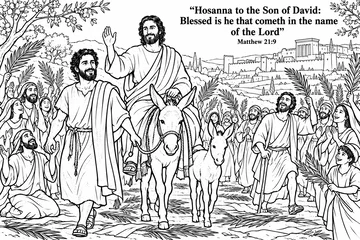
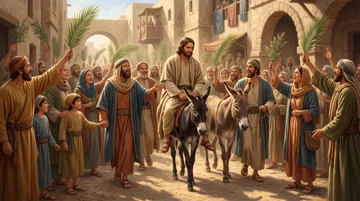
And brought the ass, and the colt, and put on them their clothes, and they set him thereon.
Translations
American King James Version, King James Version
And brought the ass, and the colt, and put on them their clothes, and they set him thereon.
and brought the ass, and the colt, and put on them their clothes, and they set him thereon.
And brought the ass and the colt, and put on them their clothes, and they set him thereon.
Revised Version, American Standard Version
and brought the ass, and the colt, and put on them their garments; and he sat thereon.
brought the ass and the colt, and did put on them their garments, and set [him] upon them;
brought the ass and the colt and put their garments upon them, and he sat on them.
and led the ass and the colt, and laid upon them their garments, and he took his seat upon them.
Berean Standard Bible, Majority Standard Bible
They brought the donkey and the colt and laid their cloaks on them, and Jesus sat on them.
and brought the donkey and the colt and laid their clothes on them; and he sat on them.
And got the ass and the young one, and put their clothing on them, and he took his seat on it.
And brought the asse and the colt, and put on them their clothes, and set him thereon.
Douay-Rheims (Challoner revision)
And they brought the ass and the colt, and laid their garments upon them, and made him sit thereon.
Pictures
Cross-references
- Zechariah 9:9
Rejoice greatly, O daughter of Zion; shout, O daughter of Jerusalem: behold, thy King cometh unto thee: he is just, and having salvation; lowly, and riding upon an ass, and upon a colt the foal of an ass.
Foretells the King’s humble entry into Jerusalem riding on a colt.
- Luke 19:35-38
And they brought him to Jesus: and they cast their garments upon the colt, and they set Jesus thereon.
Jesus rides the colt into Jerusalem as the people welcome and praise him as King.
- John 12:12-15
On the next day much people that were come to the feast, when they heard that Jesus was coming to Jerusalem,
Jesus rides into Jerusalem as the crowd welcomes him as King.
- Mark 11:7
And they brought the colt to Jesus, and cast their garments on him; and he sat upon him.
The disciples place garments on the colt, and Jesus sits upon it.
- Luke 19:39-40
And some of the Pharisees from among the multitude said unto him, Master, rebuke thy disciples.
The disciples acclaim Jesus, and he says the stones would cry out if they were silent.
- Psalms 118:26
Blessed be he that cometh in the name of the LORD: we have blessed you out of the house of the LORD.
Its blessing echoes the Hosanna welcome to Jesus.
- Luke 19:38
Saying, Blessed be the King that cometh in the name of the Lord: peace in heaven, and glory in the highest.
The crowd welcomed Jesus as king during his entry into Jerusalem.
- Matthew 21:2-3
Saying unto them, Go into the village over against you, and straightway ye shall find an ass tied, and a colt with her: loose them, and bring them unto me.
Jesus sends the disciples to bring the ass and colt.
- John 12:19
The Pharisees therefore said among themselves, Perceive ye how ye prevail nothing? behold, the world is gone after him.
The Pharisees saw the public honor paid to Jesus.
- John 12:17-18
The people therefore that was with him when he called Lazarus out of his grave, and raised him from the dead, bare record.
The crowd met Jesus after hearing of Lazarus’s raising.
- 2 Kings 9:13
Then they hasted, and took every man his garment, and put it under him on the top of the stairs, and blew with trumpets, saying, Jehu is king.
Garments spread before a king.
Commentary
Each commentary is drawn from primary sources: the writings of Ellen G. White and Adventist pioneers and periodicals. Each commentary is separate. Its own words are not a quotation; follow the references to read the source passages.
Ellen G. White
27 sources
The verse records the disciples bringing the donkey and its unridden colt, laying their clothes upon them, and seating Jesus upon the colt for His entry into Jerusalem.DA 569.3–4Ms 7a, 1886, par. 1–2DA 569.1–22SP 384.1–385.1 His riding was humble, without earthly pomp or display, yet it followed the customary royal entry on the kind of animal ridden by Israel's kings.DA 569.3–44RED 120.2COS 91.1–54RED 116.1–117.2DA 570.1–571.1 In this He fulfilled Zechariah's prophecy that Israel's King and Messiah would come to His kingdom humbly on a donkey.DA 569.3–4DA 569.1–2DA 570.1–571.1 The ride was a deliberate public presentation of Himself as Redeemer and Messiah, to direct attention to His approaching death as the sacrifice for the sins of the world.4RED 116.1–117.2ST Jun 8, 1882DA 571.2–4 He accepted the public homage as the promised King, though the crowds took it as a sign He would establish an earthly kingdom and deliver Israel from Rome, a hope shattered at His crucifixion and revived after His resurrection.DA 569.3–4ST Jun 8, 1882EW 206.4DA 570.1–571.11T 57.3–58.1
The Humble Royal Entry
The disciples brought the ass and the colt, put their clothes upon them, and set Jesus upon the colt for His entry into Jerusalem.DA 569.3–4Ms 7a, 1886, par. 1–2DA 569.1–2ST Jun 8, 1882COS 91.1–5 The colt He chose and rode had never been ridden before, on which no one had ever sat.DA 569.3–4DA 569.1–22SP 384.1–385.14RED 116.1–117.2ST Jul 22, 1886 This was the first time in His ministry that He consented to ride.Ms 128, 1899, par. 1
His riding was humble, without earthly pomp or costly display and without heavenly royal display with angels or divine trumpets, unlike a conqueror's parade.4RED 120.2COS 91.1–54RED 116.1–117.2ST Jun 8, 1882DA 571.2–4 At the same time His riding followed the customary royal entry, using the kind of animal ridden by Israel's kings.DA 569.3–4DA 570.1–571.1
As He rode, followers and onlookers honored His path with their garments and with leafy branches and palm branches amid joyful shouts and rejoicing.DA 569ST Jul 22, 18864SP 253.2COS 90 The slopes of the Mount of Olives rang with that joyful shouting before His trial.3SP 250.3
The occasion was a special, unforgettable gathering at Jerusalem.Ms 7a, 1886, par. 1–2 The crowd honoring Him included people He had rescued from Satan's power and healed — the blind, the formerly dumb and crippled, cleansed lepers, widows and orphans, people He had healed and people raised from the dead.Ms 7a, 1886, par. 1–24RED 120.2 Lazarus, restored to life and strength, guided the beast carrying his Liberator.4RED 120.2
Prophecy and Divine Purpose
The seating upon the colt was the customary entry of a king, using the kind of animal ridden by Israel's kings, and in that humble riding Zechariah's prophecy was fulfilled that Israel's King and the Messiah would come to His kingdom humbly on a donkey.DA 569.3–4DA 569.1–2DA 570.1–571.1 The preparation of bringing the donkey and the colt, laying clothes upon them, and setting Him thereon took place amid praise and rejoicing and also fulfilled Isaiah's prophetic vision of the Lord coming to Jerusalem as both ruler and shepherd, bringing God's work and care to His people.Ms 151, 1899, par. 5 The prophecy was truly fulfilled in that special, unforgettable gathering at Jerusalem, where the multitude unknowingly fulfilled it, including people He had healed and people raised from the dead.Ms 7a, 1886, par. 1–24SP 253.2 His followers honored Him as King, believing He was about to be crowned and take David's throne to deliver Israel from its oppressors and establish an earthly kingdom, spreading garments and palm branches before Him with joyful acclaim, yet their hopes were shattered and ended in bitter disappointment when He was crucified and died, though after His resurrection their hope revived.EW 206.41T 57.3–58.14SP 253.2
The ride was a deliberate, humble, public presentation without earthly pomp or heavenly royal display, with no angels or divine trumpets, meant to identify Him as Redeemer and Messiah and King.4RED 116.1–117.2ST Jun 8, 1882DA 571.2–4 Its purpose was to direct attention to His approaching death as the sacrifice for the sins of the world, making His final progress to the cross widely known so that afterward, in recalling the events, people would search the prophecies, examine them, and recognize Him as the Messiah.4RED 116.1–117.2ST Jun 8, 1882DA 571.2–4 The people's homage and joy shortly before His death for the world's sins faintly prefigured His future coming in the clouds with power and glory, accompanied by the triumph of angels and the rejoicing of the saints.4RED 116.1–117.23SP 9.1 Amid the rejoicing and hosannas the triumphal entrance pointed to Jerusalem's coming doom and destruction, and His tears over the city were His last appeals of love and compassion to it.3SP 20.1ST Jan 10, 1878 That entry took place just before He cleansed the temple and presented the barren fig tree as a symbol of that destruction, the tree representing the Jewish nation in pride and apostasy unable to recognize its Redeemer.ST Feb 15, 1899
Expectations and Present Application
By that seating upon the colt with the disciples' garments laid upon it, he was publicly presented as the promised Messiah and King, and the joyful spreading of garments before him was homage welcoming him as King in the hope he would be acknowledged at Jerusalem.ST Jun 8, 1882COS 91.1–54RED 115.32SP 384.1–385.1ST Jul 22, 1886 The entry was humble without costly display, yet it followed the custom of a royal entry upon the kind of animal ridden by Israel's kings, and the crowd hailed and treated him as Messiah and King.COS 91.1–54RED 115.32SP 384.1–385.1DA 570.1–571.1ST Jul 22, 1886 He accepted that public homage and joyful welcome as King, even as those welcoming him looked for him to free Israel from Roman rule.ST Jun 8, 1882COS 91.1–54RED 115.3DA 570.1–571.1ST Jul 22, 1886
The disciples and the crowds took his consenting for the first time in his ministry to ride, upon a colt that had never been ridden, as the sign that he would now assert kingly authority, claim royal power, be crowned and take David's throne.DA 569.3–4DA 570.1–571.11T 57.3–58.14SP 253.2Ms 128, 1899, par. 1 They understood the customary royal entry fulfilling the prophecy of the Messiah coming as King to mean he would establish his kingdom as an earthly kingdom, deliver Israel from its oppressors and from Roman rule.DA 569.3–4EW 206.4DA 570.1–571.11T 57.3–58.14SP 253.2 Their hopes were soon shattered and ended in bitter disappointment when he was crucified and died, yet after his resurrection their hope revived.EW 206.41T 57.3–58.14SP 253.2
Proclaiming this account of his riding into Jerusalem exalts and lifts up Jesus as Saviour, showing salvation is through Jesus exalted and not by being saved through law.Lt 27, 1880, par. 8 Preaching it answers the charge of legalism by exalting Jesus more highly, convinces hearers of his centrality, and moves them to baptism and to unite with the church.Lt 27, 1880, par. 8 His entry as the Son of God come into the world to draw all men unto him calls his followers to walk in the light of his glorious example without questioning the cost in labor, trial, and suffering.Ms 5, 1882, par. 11 Each has a work to maintain the truth in its purity, to push the triumphs of his cross, and to extend his kingdom.Ms 5, 1882, par. 11
Sources
Pioneers and periodicals
47 sources
The disciples brought both the ass and her unbroken colt, laid their garments upon them, and seated Jesus upon the colt to ride into Jerusalem near the close of His earthly ministry.ST Jul 22, 1886ST Jul 22, 1886ST Sep 27, 1899ST Apr 14, 1898ST Oct 5, 1904 The act fulfilled the prophecy that Zion's promised King, the Messiah and heir of David, would come meek and lowly and having salvation, riding upon an ass and its colt.ST Oct 5, 1904RH Nov 18, 1862ST Jun 5, 1879 By choosing a young donkey rather than a warhorse He revealed Himself as the humble Prince of Peace, bearing the burden for the people in self-denying love instead of coming with military display.RH Nov 18, 1862ST Mar 27, 1901RH Sep 18, 1855ST Feb 6, 1901ST Mar 25, 1903 The multitudes honored Him as King and Son of David because they expected Him then to take David's throne, establish a literal kingdom in Jerusalem, and give political deliverance.ST Jun 5, 1879ST Aug 13, 1902 He had come not to be crowned but to die, and was crucified a few days later, yet their mistaken hope did not make the fulfillment false, even as those disappointed in 1844 truly fulfilled God's appointed message.ST Jun 5, 1879ST Apr 8, 1903STRH Jul 25, 1865RH Aug 24, 1869
Wording and Immediate Setting
The disciples carried out his instructions by bringing the ass and the colt, putting their clothes on them, and setting him upon them for the ride into Jerusalem seated on the colt.ST Sep 27, 1899ST Apr 14, 1898ST Oct 5, 1904ST Mar 27, 1901ST Dec 16, 1886 The parallel account makes plain that the garments were placed on the colt and that he sat upon it.ST Sep 27, 1899ST Oct 5, 1904ST Mar 27, 1901 The preparation of the animals with the garments readied the triumphal procession into the city.ST Apr 14, 1898ST Oct 5, 1904ST Dec 16, 1886RH Jul 4, 1871 The remarkable public demonstration drew people in part because they had heard he raised Lazarus from the dead.ST Dec 16, 1886
The colt on which he sat had never been ridden.ST Jul 22, 1886ST Jul 22, 1886 The disciples spread their garments on the colt and placed him on it as he entered Jerusalem.ST Jul 22, 1886ST Jul 22, 1886 Their act with the garments formed part of the triumphal welcome in which the crowd honored him as Messiah and King.ST Jul 22, 1886ST Jul 22, 1886
The entry belongs to the account of his coming to Jerusalem shortly before his suffering and death.ST Nov 8, 1883ST Feb 14, 1878 It took place near the close of his ministry, in the last week of his earthly life, only a few days before his crucifixion.ST Nov 8, 1883ST Feb 14, 1878ST Apr 14, 1898 It was on Palm Sunday, the only day he is recorded as riding, and it closes the history of his first advent, life and mission before his betrayal, trial, crucifixion, burial and resurrection.ST Apr 14, 1898 The scene was marked by the people's joy, shown by laying garments and branches in his path and praising God for the mighty works they had witnessed.
The same account is also found in Mark 11 and John 12, with the fullest account given in Luke 19.ST It is genuine Gospel testimony about his life and work, not legend or an unhistorical event.RH Mar 8, 1906
The chapter also contains the vineyard parable of the Father's business with unfaithful husbandmen, in which the Father planted a vineyard and let it out to husbandmen who refused returns to his authorized collectors, so that finally the Son himself came to attend to the business.ST Nov 20, 1884 The joyful triumphal procession, with crowds praising him as the Son of David and welcoming him in the name of the Lord, was followed by his sorrow over Jerusalem and his foreknowledge of the city's destruction and his rejection.ST That praise proved temporary, for those who celebrated him would soon call for his death.ST The entry took place just before he cleansed the temple and presented the barren fig tree as a symbol of Jerusalem's coming destruction, the tree representing the Jewish nation whose pride and apostasy left it unable to recognize its Redeemer.ST Feb 15, 1899
Prophecy Fulfilled in Entry
The bringing of the ass and the colt with garments laid upon them and Jesus set thereon was the literal fulfillment of the prophecy that Jerusalem's King would come meekly and lowly, riding upon an ass and its colt.ST Oct 5, 1904RH Nov 18, 1862ST Jun 5, 1879ST Jun 9, 1898ST Mar 27, 1901 It was Zechariah 9:9 coming to pass when Jesus rode into Jerusalem seated on the colt, the promised King of Zion coming to Zion.ST Jun 5, 1879ST Jun 9, 1898ST Mar 27, 1901ST May 9, 1878ST Aug 1, 1916 His humble arrival on the donkey, rather than on a warhorse, displayed that lowliness and presented Him as the Prince of peace rather than a conquering hero seeking military glory or display.RH Nov 18, 1862ST Mar 27, 1901
That fulfillment identifies Jesus as the promised King, the Messiah, heir to David's throne and King of Israel, just and having salvation.ST Jun 5, 1879ST Jun 9, 1898ST Nov 8, 1883 He is the one foretold by the prophets, worshiped by angels and anointed by God.RH Nov 25, 1873 Ample proof of His identity had already been given by fulfilled prophecies, miracles, pure life and teaching, and especially by raising Lazarus after four days in the grave.ST Nov 8, 1883
The prophecy's imperative wording was not a description of Zechariah's own day but a command given in advance to be fulfilled literally at the appointed time.ST Jun 5, 1879ST May 9, 1878 The disciples fulfilled it literally, crying out in the words of the prophecy as commanded, by divine impulse under the Spirit of prophecy.ST Jun 5, 1879ST Apr 8, 1903ST Nov 20, 1884 The shout was put into the people by God, commanded long before by the Spirit of prophecy and at the time by His Spirit, so that even the stones would have cried out if they had held their peace.ST Jun 5, 1879ST Apr 8, 1903ST Feb 4, 1903 What Zechariah foretold was therefore intended by the Holy Spirit to be understood literally, as proved by Jesus riding the ass.RH Nov 25, 1873
The same entry is also set forth as fulfilling Psalm 118:22-24 concerning the rejected stone becoming the head stone of the corner and the Lord making a day for rejoicing.RH May 10, 1860RH May 10, 1860 Those who so apply it hold that day to be the resurrection day, yet Matthew's account of the entry says nothing about the Sabbath, the seventh day, the resurrection day, or any change of the Sabbath.RH May 10, 1860RH May 10, 1860
The event was recognized and proclaimed by the people as fulfilling that prophecy, and its place in a chain of events helped identify it.ST Aug 1, 1916 The Palm Sunday welcome at the first advent is compared with the people raised up to announce the second coming.ST Aug 1, 1916 The triumphal entry in the last week of His earthly life points toward Christ's final triumph when He enters His kingdom to reign.ST Apr 14, 1898
Humble King Revealed
His humble arrival on a young ass is a token of His meek and humble mind, carried out in humility rather than with heavenly royal display.ST Jun 8, 1882RH Nov 18, 1862ST Mar 27, 1901 Choosing a donkey rather than a warhorse presents Him as the Prince of Peace, not a conquering hero seeking military glory or display.ST Mar 27, 1901 The entry was a royal act in the manner of Israel's kings and a sign of peace, with garments put on the animals and spread before Him as was done to honor royalty.ST Apr 12, 1905RH Sep 18, 1855 That use of garments for Him was an initial act of proclaiming Him king, as the long-awaited Messianic reign was expected to begin.RH Sep 18, 1855ST Sep 27, 1899
He did not ride upon the people's shoulders in gorgeous robes but rode the colt in His everyday clothes.ST Mar 25, 1903 He Himself was the burden-bearer for the people, not a burden upon them, showing self-denying love in contrast to the brutal force of worldly rulers.ST Feb 6, 1901ST Mar 25, 1903 The entry was a remarkable public demonstration honoring Jesus, the one occasion when He allowed the multitudes full sway in honoring Him.ST Dec 16, 1886ST Jul 22, 1886 It drew people in part because they had heard He raised Lazarus from the dead.ST Dec 16, 1886
The joyful welcome honored Him as King, Messiah and Son of David, with garments and branches in His path and praise to God for the mighty works witnessed.ST Jul 22, 1886ST They welcomed Him in the name of the Lord and hoped He would be acknowledged in Jerusalem, and the disciples' spreading of garments on the colt and placing Jesus on it helped honor Him as king.ST Jun 8, 1882ST Jul 22, 1886ST Jul 22, 1886 The public event was meant to direct attention to His approaching death as the sacrifice for the sins of the world, leading people to examine the prophecies and recognize Him as Messiah, while also pointing to the city's coming doom.ST Jun 8, 1882ST Jan 10, 1878
Mistaken Hope and Disappointment
The disciples and the crowds hailed Jesus as King on the colt because they expected him then to take David's throne and enter upon his reign in Jerusalem, to establish a literal, material kingdom with political deliverance and national rule and to dwell with them forever, and that homage strengthened their expectation and kept them from anticipating his betrayal, trial and crucifixion.ST Jun 5, 1879ST Aug 13, 1902RH Mar 17, 1859RH Sep 18, 1855 The rejoicing was fitting as royal honor, with garments put on the animals and spread before him as was done for royalty, because they looked for the Messiah's kingdom to appear immediately.RH Mar 17, 1859RH Sep 18, 1855ST Nov 20, 1884 Their expectation was followed by bitter disappointment when he was put to death, showing that disappointment does not prove a belief false since the events unfolded within God's plan.ST Jun 5, 1879RH Jul 25, 1865
He had come not to take a throne and reign but to die, so a few days later he was crucified at Calvary instead of crowned, going only to the cross and lying lifeless in Joseph's new sepulcher while the disciples scattered.ST Jun 5, 1879ST Apr 8, 1903ST Aug 13, 1902RH Mar 17, 1859ST Jul 27, 1882 Their hopes died with the words that they had trusted he would redeem Israel, their triumph turning to bitter disappointment and their loyalty shown as they wept.ST Jun 5, 1879ST Jul 27, 1882 The joyful triumphal procession with praise to the Son of David was followed by sorrow over Jerusalem and foreknowledge of the city's destruction and his rejection, for the crowd's temporary praise soon turned to calling for his death.ST Apr 8, 1903STST Aug 13, 1902
Their mistaken expectation did not make the event or its fulfillment of prophecy false, since the mistake concerned the event they expected rather than the timing of the prophetic fulfillment.ST Jun 5, 1879RH Jul 25, 1865 They were in the line of duty fulfilling Scripture and the appointed message by divine impulse, obeying the prophetic command to shout so that even the stones would have cried out if they had held their peace, and though they misunderstood what it meant their error did not prevent them from proclaiming the message appointed for that time nor justify rejecting the gospel they preached.ST Jun 5, 1879ST Apr 8, 1903ST Nov 20, 1884RH Jun 29, 1911 They were blessed in receiving the truths they had heard, so disappointment does not prove the message was not a blessing.RH Jul 25, 1865ST Jul 27, 1882
The same holds for the Adventists of 1844 who proclaimed that the hour of his judgment is come; though mistaken in expecting Christ to come then and disappointed, they truly fulfilled the message within God's plan, for God uses human errors and misapprehensions to aid the fulfillment of his word, so disappointment does not prove a belief false.ST Jun 5, 1879RH Jul 25, 1865RH Aug 24, 1869 Like the disciples rejoicing while expecting an event whose nature they misunderstood, their mistaken expectations did not prevent them from fulfilling Scripture.ST Jun 5, 1879RH Aug 24, 1869 After Christ rose from the dead, was glorified in heaven and sent the Comforter, the disciples understood these things better and were begotten again to a lively hope.ST Jun 5, 1879
Though the shout looked like signal defeat because Christ was not then made king but was crucified by his bitterest enemies, his crucifixion was his real coronation and his triumph over the powers of darkness on Calvary's cross, sealing the doom of Satan, his principles and his kingdom.ST Feb 4, 1903 The shout was put into the people by God, commanded long before by the Spirit of prophecy and at the time by his Spirit, a genuine exclamation of praise for a great victory achieved or about to be achieved that the disappointed disciples did not understand.ST Feb 4, 1903
Connections and Present Application
The outer garments laid upon the beasts and strewn before him picture the laying down of life for love of him.ST Jun 19, 1884 Acts of mercy and charity honor him in the same way, and so do victories won over temptation.ST Jun 19, 1884 Even the lowly young animal had a part to carry in his work, which shows that no humble creature is too small to serve his purpose.ST By application, boys too can be useful to him.ST The welcome that surrounded that ride also warns that public goodwill can swiftly turn and does not secure lasting loyalty.ST Jul 30, 1894 For the crowds were moved by what they saw rather than by faith, and their enthusiasm faded, showing that the friendship of the world is dangerous and is not to be trusted too heavily.ST Mar 27, 1901ST Jul 30, 1894
Sources