Matthew 22:15
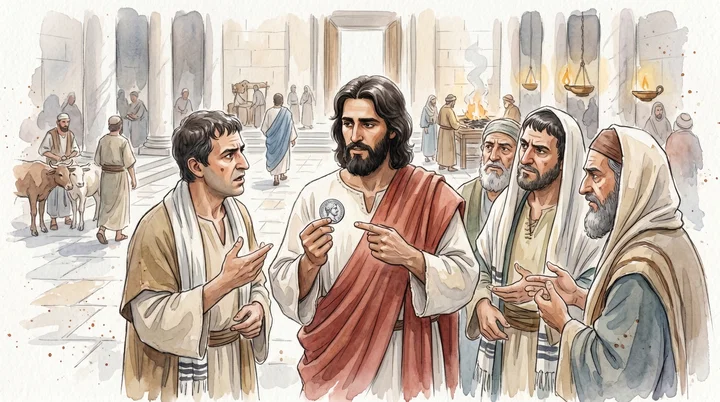
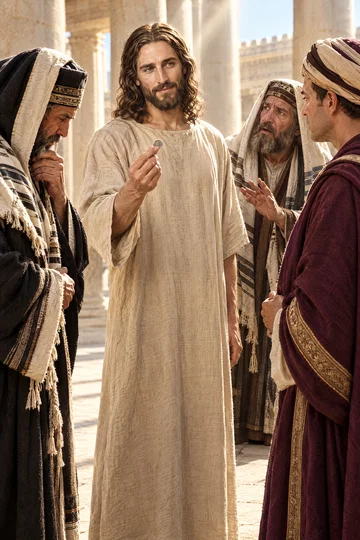
Then went the Pharisees, and took counsel how they might entangle him in his talk.
Translations
American King James Version, King James Version, KJV Cambridge Paragraph Bible, Webster Bible
Then went the Pharisees, and took counsel how they might entangle him in his talk.
Revised Version, American Standard Version
Then went the Pharisees, and took counsel how they might ensnare him in his talk.
Then the Pharisees having gone, took counsel how they might ensnare him in words,
Then went the Pharisees and held a council how they might ensnare him in speaking.
Then, went the Pharisees and took, counsel, that they might ensnare him, in discourse.
Berean Standard Bible, Majority Standard Bible
Then the Pharisees went out and conspired to trap Jesus in His words.
Then the Pharisees went and took counsel how they might entrap him in his talk.
Then the Pharisees went and had a meeting to see how they might make use of his words to take him.
Then went the Pharises and tooke counsell how they might tangle him in talke.
Douay-Rheims (Challoner revision)
Then the Pharisees going, consulted among themselves how to insnare him in his speech.
Pictures
Cross-references
- Luke 20:20-26
And they watched him, and sent forth spies, which should feign themselves just men, that they might take hold of his words, that so they might deliver him unto the power and authority of the governor.
Leaders send spies to trap Jesus with a question about tribute.
- Mark 12:13-17
And they send unto him certain of the Pharisees and of the Herodians, to catch him in his words.
The parallel account describes the plot to trap Jesus with the tribute question and his reply.
- Matthew 22:21
They say unto him, Cæsar’s. Then saith he unto them, Render therefore unto Cæsar the things which are Cæsar’s; and unto God the things that are God’s.
Jesus distinguishes what is due to Caesar from what is due to God.
- Mark 12:15-17
Shall we give, or shall we not give? But he, knowing their hypocrisy, said unto them, Why tempt ye me? bring me a penny, that I may see it.
Jesus answers a test about paying tribute to Caesar.
- Matthew 22:34-40
But when the Pharisees had heard that he had put the Sadducees to silence, they were gathered together.
A Pharisaic lawyer then tested Jesus about the greatest religious principle.
- Matthew 21:23-27
And when he was come into the temple, the chief priests and the elders of the people came unto him as he was teaching, and said, By what authority doest thou these things? and who gave thee this authority?
Jesus answers hostile questioners with wisdom.
- Matthew 22:23-33
The same day came to him the Sadducees, which say that there is no resurrection, and asked him,
The Sadducees next tried to entangle Jesus over the resurrection.
- Luke 23:2
And they began to accuse him, saying, We found this fellow perverting the nation, and forbidding to give tribute to Cæsar, saying that he himself is Christ a King.
A false charge about tribute contrasts with Christ’s true teaching.
Commentary
Each commentary is drawn from primary sources: the writings of Ellen G. White and Adventist pioneers and periodicals. Each commentary is separate. Its own words are not a quotation; follow the references to read the source passages.
Ellen G. White
17 sources
The Pharisees with the chief priests and rulers took counsel together after pointed rebukes, sending spies with Pharisees, Herodians and Sadducees to question Him in the temple and seize on His answer to use against Him.DA 601.1–602.5DA 600.3ST Jun 29, 1882 They were driven by mortification and anger at an address they could not refute, and by jealousy at His growing popularity and works, listening not to learn but to turn the people away, restore their own influence, and silence and remove Him.ST Jun 29, 1882RH Jun 10, 1852EW 88.2–3 Pretending sincere interest with courteous flattery, they hung on His words to throw Him off guard and twist them, bringing Herodians as witnesses and framing the snare whether tribute to Caesar was lawful so a yes would lose Him popular favor and a no would accuse Him to the Romans as an enemy of civil authority.Ms 10, 1906, par. 8–12DA 601.1–602.5ST Apr 25, 1878ST Feb 8, 1899ST Jun 29, 1882 He was not deceived but read their hearts and hidden purposes, and answered with no evasion by laying down the principle to give to civil authority what belongs to it and to God what belongs to God.Ms 10, 1906, par. 8–12ST Feb 8, 1899Ms 80, 1896, par. 5Ms 71, 1897, par. 27 When they heard it they marveled and left Him, yet hardened in prejudice and unbelief, and the same hostile work continues today by those who watch to catch some word, misconstrue words and Scriptures, and resist clear evidence and the movings of the Spirit.DA 600.3ST Feb 8, 1899Lt 59, 1890, par. 18–19Ms 23, 1899, par. 37–393RED 38.2–39.1
The Plot to Trap
The counsel taken was deliberate entrapment, not honest inquiry, entered into after pointed rebukes that the questioners could not refute.DA 601.1–602.5DA 600.3ST Jun 29, 1882 The Pharisees joined together with the chief priests and rulers, and sent spies to seize upon an answer that could be used to condemn Him.DA 601.1–602.5ST Jun 29, 1882ST May 2, 1878 Pharisees, Herodians and Sadducees each artfully questioned Him, pressing their attacks in the temple as He taught, hoping to use His answers against Him and to expose Him to the consequences of rejecting the Son.DA 600.3ST May 2, 1878Ms 71, 1897, par. 27
They were driven by mortification and anger at a penetrating address that laid bare their true condition and condemned their wickedness.ST Jun 29, 1882 Jealousy at His growing popularity and powerful works made them more determined to remove Him, while His meek, self-denying life and guileless truth exposed their real character.RH Jun 10, 1852EW 88.2–33RED 38.2–39.1 They listened not to learn but to turn the people away from Him and restore their own influence, to silence Him and put Him out of the way, even to joining in the call for His crucifixion.RH Jun 10, 1852EW 88.2–33RED 38.2–39.1
Their method was deception by apparent sincerity, with hostile questioners pretending interest in His teaching and desire to profit from His divine wisdom.DA 601.1–602.5ST Apr 25, 1878ST Jun 29, 1882 They approached courteously with flattery and strong commendation of His straightforward fearlessness, hung on His words and followed with spies to mark them, thinking their apparent honesty sufficiently disguised their purpose.ST Feb 8, 1899ST Jun 29, 1882Ms 80, 1896, par. 5Lt 59, 1890, par. 18–19 They hoped to throw Him off guard so they could repeat, misinterpret and twist what He said to mean what their own unsanctified minds wanted, and thus use it to condemn Him and bring Him before the governor.DA 601.1–602.5ST Jun 29, 1882Ms 80, 1896, par. 5Lt 59, 1890, par. 18–19
They privately arranged for Herodians to accompany the spies and hear His words, so they could serve as witnesses against Him when He was arraigned on trial for His life.ST Apr 25, 1878ST Jun 29, 18823SP 41.3–4 The chosen snare was whether it was lawful to give tribute to Caesar, framed to catch Him with a simple yes or no either way.3SP 42.2ST Feb 8, 1899ST Jun 29, 1882 If He said it was unlawful, they would accuse Him before the governor and the Romans as an enemy of civil authority stirring rebellion; if He said it was lawful, He would go contrary to Jewish opinion, fret under Roman taxes held contrary to God's law, lose popular favor, and be accused to the elders and Jews as opposed to God's law.Ms 10, 1906, par. 8–123SP 42.2ST Feb 8, 1899ST Jun 29, 18823SP 41.3–4
Christ Exposes Hypocrisy
He was not deceived by flattering words, strong commendation, and pious pretensions of apparent honesty that were thought to sufficiently disguise the wicked purpose.Ms 10, 1906, par. 8–12ST Feb 8, 1899Ms 80, 1896, par. 5 He perceived their wickedness, read their hearts and hidden purposes as an open book, and revealed their hypocrisy.Ms 10, 1906, par. 8–12ST Feb 8, 1899 Such discernment of what they thought was disguised gave evidence of His divinity.ST Feb 8, 1899
His answer was no evasion but a candid laying down of the underlying principle in straight lines: render to civil authority what belongs to it and to God what belongs to God.ST Feb 8, 1899 That plain and wise answer rebuked hypocrisy and presumption and settled the vexed question.ST Feb 8, 1899Ms 71, 1897, par. 27 It brought precious light to the people, sowed seeds of truth that would later bear fruit, and led many hearers ever after to uphold the right principle.ST Feb 8, 1899Ms 71, 1897, par. 27
When they heard it they marveled and left Him and went their way.ST Feb 8, 1899 They were convinced by further evidence of His divinity, yet they would not yield but hardened their hearts in deeply rooted prejudice and unbelief so that from that time evidence had no effect.ST Feb 8, 18993RED 38.2–39.1 The warnings and illustrations connected with their course show the foreshadowed doom of all who reject the Son as Redeemer and do not repent.DA 600.3
Under this enmity He did not turn from His work but continued with pity, sympathy and love seeking the salvation of lost and ungrateful people.Ms 80, 1896, par. 5 He spoke truth without revenge, held firmly to principle, and taught heaven's law of righteousness and justice.Ms 80, 1896, par. 5
Warning and Example Today
The counsel to entangle in talk was a deliberate two-sided snare over tribute to Caesar: a no would bring accusation before the Romans as an enemy of civil authority, a yes would bring accusation to the elders as opposed to God's law, in hope of inducing some incriminating word.Ms 10, 1906, par. 8–12 That plotting was met by clear perception, for flattering words and strong commendation did not deceive, but wickedness, hearts and hidden purposes were read through.Ms 10, 1906, par. 8–12 The same discernment continues now, understanding the true character of every person whatever the profession may be.Ms 10, 1906, par. 8–12 True motives of all are written in His book, and no cover of pretentious righteousness can deceive Him.Ms 10, 1906, par. 8–12
The same hostile watching is done today by hearts filled with prejudice and jealousy and evil thinking.Ms 23, 1899, par. 37–39 As then they hung on His words with spies to mark them for repeating, misinterpreting and twisting into what unsanctified minds wanted them to mean, so now men watch to catch some word at which to take offense.Lt 59, 1890, par. 18–19Ms 23, 1899, par. 37–39 Though they have seen the fruits and witnessed all the proof of the power of the Holy Spirit they will ever have, they will not admit the evidence for a heaven-sent message.Ms 23, 1899, par. 37–39 Though the evidences on the covenants and the law question in Galatians are clear and convincing to every candid, unprejudiced mind, investigative power is spent to produce a different position and men turn from plain light from fear of accepting it.Lt 59, 1890, par. 18–19 Words and Scriptures are misconstrued to make false issues and to cloud and mislead minds, deceiving the people, while the Bible is made to sustain their own ideas instead of bringing their ideas to the Bible.Lt 59, 1890, par. 18–19Ms 23, 1899, par. 37–39
By that opposition of the natural heart to truth, influence is exerted over minds that ought to look to God, leading souls to hang on finite men.Ms 23, 1899, par. 37–39 By resistance to truth and to the deep movings of the Spirit, they place themselves where they are too blind to discern.Ms 23, 1899, par. 37–39 Their condition becomes wretched and miserable and poor and blind and naked.Ms 23, 1899, par. 37–39
Sources
Pioneers and periodicals
34 sources
Stung because the wedding-feast parable for the king's son implicated them, the Pharisees withdrew to confer on how to trap him in his talk.ST Oct 18, 1899ST Jan 22, 1894RH Sep 9, 1858 To hide their purpose they sent their disciples with the Herodians, though the two groups opposed each other over the Herodian ruling family, approaching him courteously with flattery of his fearless straightforwardness as if seeking instruction.ST Apr 25, 1878ST Jun 29, 1882ST Jun 29, 1882 Their snare was the tribute question, so that saying it was lawful would turn the people against him as violating Jewish law, while saying it was unlawful would open him to accusation before the governor of rebellion and treason.ST Aug 22, 1911ST Jul 3, 1907 He read their hypocrisy and wicked intent and gave no evasion but a wise settlement of the question, pointing to Caesar's image on the coin to assign to Caesar what is Caesar's and to God what is God's.ST Feb 8, 1899ST Sep 11, 1893RH Mar 10, 1868RH Mar 9, 1869 That distinction separates what belongs to the state from what belongs to God, so the Sabbath which bears God's image and authority is not for civil power to control or enforce by legislation, and the church is not to undertake regulation of civil affairs or political reform.ST Jan 23, 1907ST Jan 30, 1907ST Sep 13, 1905RH Mar 26, 1914ST Apr 25, 1900
Setting and Crafted Trap
The counsel to trap him came right after parables aimed at the Jewish leaders, including the parable of the husbandmen and the parable of the wedding feast for the king's son.ST Oct 18, 1899RH Sep 9, 1858 The wedding invitation went out at Christ's first advent when full salvation was displayed, but the invited guests were distracted by everyday affairs and festivities and were therefore declared unworthy, and the king's judgment on the murderers included destruction of their city.ST Jan 22, 1894 Stung because the wedding-feast parable implicated them, the Pharisees withdrew to confer on how to trap him in his words.ST Oct 18, 1899
The plotting took place on Tuesday, the day he returned to Jerusalem, taught in the temple, answered questions and denounced hypocrisy, his last day teaching in the temple before leaving its precincts for the final time.RH Jan 29, 1914 The attacks came in the temple as he taught, and this tribute attempt was the first of several same-day efforts by his enemies in the temple, with later failures concerning the resurrection and the greatest religious principle.ST May 2, 1878ST Mar 23, 1888 To avoid being humiliated before the people again and to make the attack appear less like a Pharisaic effort, they secretly planned to set spies on him and sent their disciples with the Herodians to question him.ST Oct 18, 1899RH Mar 10, 1868ST Oct 18, 1899
The Pharisees joined with the Herodians though the groups opposed each other, the Pharisees opposing the Herodian ruling family while the Herodians favored it. They set aside differences to force Jesus into a position open to attack by one side or the other, since either a yes or a no to the tribute question could give one party grounds to attack him. They privately arranged for Herodians to accompany the spies and hear his words so they could be witnesses against him when he was arraigned for trial for his life.ST Jun 29, 1882
The questioners pretended to seek his teaching and profit from his wisdom, approached courteously with flattery of his straightforward fearlessness of men, and asked as if for information whether it was lawful to give tribute to Caesar.ST Jun 29, 1882 They acted from mortification and anger at having to endure his penetrating address that laid bare their condition and condemned wickedness, which they had been utterly unable to refute, and thought their apparent honesty and pious pretensions disguised their purpose and would throw him off guard.ST Feb 8, 1899ST Jun 29, 1882 Their flattery concealed a calculated test meant to lead him to say something they could use to condemn him.ST Jun 29, 1882ST Oct 10, 1906
Their plan was to entangle him in his talk by the tribute question so that either a yes or a no would give grounds to attack him for political or religious conspiracy.ST Jul 3, 1907 If he said it was lawful to give tribute to Caesar he would go against Jewish opinion, lose popular favor, face trouble with his own people and be open to a charge of heresy or violating Jewish law.ST Apr 25, 1878ST Feb 8, 1899ST Aug 22, 1911 If he said it was unlawful they could accuse him to the Romans and the governor of rebellion and treason and undermine his influence.ST Apr 25, 1878ST Feb 8, 1899ST Oct 30, 1901ST Oct 10, 1906 They expected either answer to turn people against him or give them grounds to accuse him.ST Oct 30, 1901
The snare drew on real resentment, since the Jewish leaders regarded Roman rule as usurpation, fretted under Roman taxes as contrary to the law of God, and resented paying tribute.ST Jun 29, 1882ST Aug 22, 1911 The earlier revolt led by Judas of Galilee against the land tax, on the cry that tribute was unlawful, shows the political danger of the question.ST Feb 12, 1902 The Herodians' part in the snare was inconsistent, since they appealed to the principle of Jewish rule under Deuteronomy 17:15 yet Roman power had kept the Herods on the throne, and after the Herods were removed and Pilate governed Judea they joined the Pharisees in demanding Jewish rights.ST Oct 18, 1899
Jesus read their hearts as an open book and discerned their wicked intent, hypocrisy and presumption, giving evidence of divinity by discerning their hidden purpose.ST Feb 8, 1899RH Mar 10, 1868 He discerned that the hard theological questions about tribute, the resurrection and other subjects were asked not from desire for light or search for truth but to trap him, and pointed out their real trouble as erring from not knowing the Scriptures. His answer was no evasion but a candid, wise settling of the vexed question that rebuked them and laid down the underlying principle in straight lines, assigning to Caesar what is Caesar's and to God what is God's.ST Feb 8, 1899 He pointed to the coin bearing Caesar's image and applied their own teachers' rule that people acknowledge as lord the king whose money is current among them, showing they recognized Caesar's civil rule.ST Sep 11, 1893RH Mar 9, 1869 He answered in a way that exposed folly without sharing its evil temper, lest the fool be left wise in his own conceit, and answered from Moses so as to break their quibbles apart at one blow.RH Sep 17, 1861
No disputant could trap him in his words, for he could answer every challenge and solve every problem, and the teaching he gave was wonderful and marvelous and could not be gainsaid.ST Sep 3, 1912ST Jul 15, 1908ST May 11, 1904 The questioners were confounded, marveled, were put to silence, and left him and went their way in confusion.ST Feb 8, 1899ST Jan 7, 1889RH Mar 10, 1868 They were convinced by fresh evidence of his divinity yet would not yield but hardened their hearts against it, so that evidence had no effect on deeply rooted prejudice.ST Feb 8, 1899
Doctrine and Lasting Application
The plotting to trap him by his words set up the question about paying tribute to Caesar, and the answer that followed teaches that civil authority has a proper place and that what is due to the state should be rendered to it.ST Jan 23, 1907ST Sep 13, 1905RH Oct 29, 1914 The exchange about what belongs to Caesar and what belongs to God distinguishes the two realms and illustrates the separation of church and state.ST Jan 23, 1907ST Sep 13, 1905RH Oct 29, 1914 Civil government is owed what belongs to it, and God what belongs to Him.ST Sep 13, 1905
That distinction applies to the Sabbath, whose image and authority are God's and not Caesar's.ST Jan 30, 1907 The Sabbath belongs to God, not to civil authority to control or to enforce by legislation.ST Jan 30, 1907ST Sep 13, 1905 Civil government has no authority over it.ST Jan 30, 1907
The episode also marks limits on the church's authority and distinguishes its sphere from secular power.RH Mar 26, 1914 Jesus did not undertake to regulate people's civil affairs or involve himself in political matters, and his work was to save sinners, not to reform earthly governments.ST Apr 25, 1900 By pointing to the coin bearing Caesar's image in the dispute about tribute, he showed that the Jews recognized Caesar's civil rule, so their claim to exercise civil authority for God is unfounded.ST Sep 11, 1893
His plain teaching to give Caesar all that was due proves false the later charge made before Pilate that he was perverting the nation and forbidding tribute to Caesar while saying he himself is Christ a King.ST May 25, 1904 His manner in answering the fools who sought to trap him models the right answering of a fool according to his folly, lest the fool be wise in his own conceit.RH Sep 17, 1861 He exposed their folly without becoming like them by showing the same evil temper.RH Sep 17, 1861
The attempt to trap him by his words was part of the temptations, instigated by Satan, that confronted him during his earthly life.ST Mar 12, 1912 He did not let these trials turn him from obedience to God, showing that temptation need not lead to disobedience.ST Mar 12, 1912 The same hostility would meet him again, since his truthful, guileless speech would expose people's real character and lead them to try to catch him in what he said and to remove him, even by demanding his crucifixion.RH Jun 10, 1852
Sources