Matthew 22:16
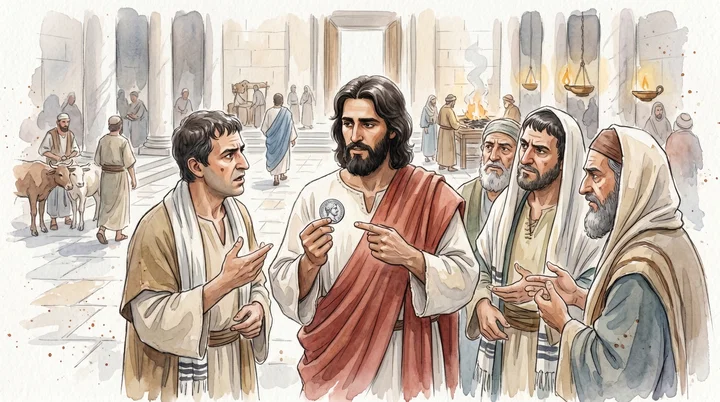
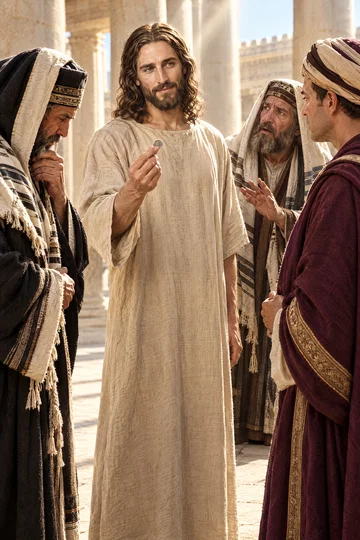
And they sent out unto him their disciples with the Herodians, saying, Master, we know that thou art true, and teachest the way of God in truth, neither carest thou for any man: for thou regardest not the person of men.
Translations
And they sent out to him their disciples with the Herodians, saying, Master, we know that you are true, and teach the way of God in truth, neither care you for any man: for you regard not the person of men.
King James Version, KJV Cambridge Paragraph Bible
And they sent out unto him their disciples with the Herodians, saying, Master, we know that thou art true, and teachest the way of God in truth, neither carest thou for any man: for thou regardest not the person of men.
And they sent out to him their disciples, with the Herodians, saying, Master, we know that thou art true, and teachest the way of God in truth, neither carest thou for any man: for thou regardest not the person of men.
And they send to him their disciples, with the Herodians, saying, Master, we know that thou art true, and teachest the way of God in truth, and carest not for any one: for thou regardest not the person of men.
And they send to him their disciples, with the Herodians, saying, Teacher, we know that thou art true, and teachest the way of God in truth, and carest not for any one: for thou regardest not the person of men.
and they send to him their disciples with the Herodians, saying, 'Teacher, we have known that thou art true, and the way of God in truth thou dost teach, and thou art not caring for any one, for thou dost not look to the face of men;
And they send out to him their disciples with the Herodians, saying, Teacher, we know that thou art true and teachest the way of God in truth, and carest not for any one, for thou regardest not men's person;
And they sent forth to him their disciples, with the Herodians, saying, Teacher! we know that, true, thou art, and, the way of God, in truth, dost teach, and it concerneth thee not about anyone,—for thou lookest not unto the face of men:
Berean Standard Bible, Majority Standard Bible
They sent their disciples to Him along with the Herodians. “ Teacher,” they said, “ we know that You are honest and that You teach the way of God in accordance with the truth. You seek favor from no one, because You pay no attention to external appearance.
They sent their disciples to him, along with the Herodians, saying, “ Teacher, we know that you are honest, and teach the way of God in truth, no matter whom you teach; for you aren’ t partial to anyone.
And they sent to him their disciples, with the Herodians, saying, Master, we see that you are true, and that you are teaching the true way of God, and have no fear of anyone, because you have no respect for a man's position.
And they sent vnto him their disciples with the Herodians, saying, Master, we knowe that thou art true, and teachest the way of God truely, neither carest for any man: for thou considerest not the person of men.
Douay-Rheims (Challoner revision)
And they sent to him their disciples with the Herodians, saying: Master, we know that thou art a true speaker, and teachest the way of God in truth, neither carest thou for any man: for thou dost not regard the person of men.
Pictures
Cross-references
- Luke 20:20-26
And they watched him, and sent forth spies, which should feign themselves just men, that they might take hold of his words, that so they might deliver him unto the power and authority of the governor.
Parallel account of the tribute question and Jesus’ answer.
- Mark 12:13-17
And they send unto him certain of the Pharisees and of the Herodians, to catch him in his words.
The opponents try to trap Jesus with a tribute question, and he answers them.
- Matthew 22:21
They say unto him, Cæsar’s. Then saith he unto them, Render therefore unto Cæsar the things which are Cæsar’s; and unto God the things that are God’s.
Jesus distinguishes what is owed to Caesar from what is owed to God.
- Mark 12:15-17
Shall we give, or shall we not give? But he, knowing their hypocrisy, said unto them, Why tempt ye me? bring me a penny, that I may see it.
Jesus answers a question about Caesar and God.
- Matthew 22:34-40
But when the Pharisees had heard that he had put the Sadducees to silence, they were gathered together.
A Pharisaic lawyer then tested Jesus about the greatest religious principle.
- James 2:9
But if ye have respect to persons, ye commit sin, and are convinced of the law as transgressors.
Both texts address showing respect or partiality toward persons.
- Mark 3:6
And the Pharisees went forth, and straightway took counsel with the Herodians against him, how they might destroy him.
cited together as joint action against Jesus
- John 3:2
The same came to Jesus by night, and said unto him, Rabbi, we know that thou art a teacher come from God: for no man can do these miracles that thou doest, except God be with him.
Both acknowledge Jesus as a teacher who speaks with divine authority.
- John 14:6
Jesus saith unto him, I am the way, the truth, and the life: no man cometh unto the Father, but by me.
Jesus identifies himself as the way and the truth.
- Isaiah 35:8
And an highway shall be there, and a way, and it shall be called The way of holiness; the unclean shall not pass over it; but it shall be for those: the wayfaring men, though fools, shall not err therein.
Names another aspect of God’s way.
- Luke 20:27-38
Then came to him certain of the Sadducees, which deny that there is any resurrection; and they asked him,
Cited alongside Matthew 22 as evidence of Jewish belief in bodily resurrection.
- Luke 23:2
And they began to accuse him, saying, We found this fellow perverting the nation, and forbidding to give tribute to Cæsar, saying that he himself is Christ a King.
The false charge about tribute contradicts Jesus’ teaching on paying Caesar.
- Matthew 21:23-27
And when he was come into the temple, the chief priests and the elders of the people came unto him as he was teaching, and said, By what authority doest thou these things? and who gave thee this authority?
Jesus exposes his challengers’ evasive questioning with a wise counterquestion.
Commentary
Each commentary is drawn from primary sources: the writings of Ellen G. White and Adventist pioneers and periodicals. Each commentary is separate. Its own words are not a quotation; follow the references to read the source passages.
Ellen G. White
16 sources
The Pharisees counseled with the Herodians and sent their young disciples as spies feigning a sincere desire to learn duty, with the Herodians arranged to hear and seize His words to deliver Him to the governor for condemnation.Ms 10, 1906, par. 8–12ST Feb 8, 18993SP 41.3–4
They addressed Him as true and impartial, teaching the way of God without regard for standing or favor, but the praise was insincere flattery and hypocrisy meant to deceive Him and throw Him off guard.Ms 10, 1906, par. 8–12Ms 33, 1912, par. 2–3DA 601.1–602.5ST Apr 25, 1878
Their aim was to entangle Him over tribute to Caesar so that denial would be reported to Rome as rebellion and approval would be used before the people as opposition to the law of God.Ms 10, 1906, par. 8–123SP 42.2ST Jun 29, 1882
He was not deceived by their commendation but read their wicked purposes as an open book and exposed their hypocrisy, showing that no cover deceives Him and giving evidence of His divinity.Ms 10, 1906, par. 8–12ST Feb 8, 1899Ms 80, 1896, par. 5
Their flattering words were true in themselves and will stand against them in judgment, and they set the standard of truthful judgment without favor to persons that should govern all dealing with His servants.Ms 33, 1912, par. 2–3DA 601.1–602.5Ms 142, 1903, par. 151–152Ms 142, 1903, par. 1–3ST Feb 8, 1899
The Plot and Flattery
The Pharisees counseled together with the Herodians and sent their own disciples with the Herodians to Him, choosing young zealous men rather than the older Pharisees so they would not be recognized.ST Feb 8, 18993SP 41.3–4ST Jun 29, 1882 They came as spies feigning themselves to be just men who sought to know their duty and to profit from His wisdom, while the Herodians were privately arranged to go with them to hear His words.ST Feb 8, 1899ST Jun 29, 1882 Their purpose was to entangle Him in His talk and take hold of His words to serve as witnesses against Him, in order to deliver Him to the governor for trial for His life and condemnation to death.Ms 10, 1906, par. 8–12ST Feb 8, 1899ST Jun 29, 1882
Their address praised Him as true and as teaching the way of God in truth, caring for no man and regarding not the person of men.Ms 10, 1906, par. 8–12DA 601.1–602.5Ms 142, 1903, par. 151–152Ms 142, 1903, par. 1–3ST Apr 25, 1878 That meant a straightforward, truthful and impartial course, independent of human standing and status and irrespective of the favor or frowns of men.Ms 33, 1912, par. 2–3ST Apr 25, 1878ST Jun 29, 1882 The praise for speaking truth and fearing no man was expressed with courteous confidence as if they respected His teaching and desired it.3SP 41.3–4ST Jun 29, 1882
The commendation was insincere flattery and hypocrisy covering wicked purposes.Ms 10, 1906, par. 8–12DA 601.1–602.5ST Apr 25, 1878ST Feb 8, 18993SP 41.3–4 They pretended respect and desire for His teaching in order to deceive Him, throw Him off His guard, and make Him lower His guard.ST Apr 25, 1878ST Feb 8, 18993SP 41.3–4ST Jun 29, 1882 Their aim in this disguise was to induce an answer they could seize and use to condemn Him and give them grounds to accuse Him.Ms 10, 1906, par. 8–123SP 41.3–4ST Jun 29, 1882
The immediate trap concerned tribute to Caesar, framed so that either answer would furnish accusation.Ms 10, 1906, par. 8–123SP 42.2ST Jun 29, 1882 If He denied the lawfulness of tribute, it would be reported to the Roman authorities as rebellion and enmity to civil authority.Ms 10, 1906, par. 8–123SP 42.2 If He approved it, it would be used before the elders and the Jewish people as opposition to the law of God, under which the Pharisees chafed at Roman taxes as contrary to God's law.Ms 10, 1906, par. 8–123SP 42.2ST Jun 29, 1882
This questioning belongs to the rulers' series of attempts by Pharisees, Herodians and Sadducees to provoke Him into saying something they could turn against Him.ST May 2, 1878Ms 71, 1897, par. 27 It stands within the second parable of the invitation, which is a king's commanding invitation coming from one vested with power to command and involving much.Ms 149, 1898, par. 3 That command met with no more favorable response than the householder's, but was made light of under pleas of circumstances and supposed duties, while His messengers were treated with scorn, despitefully used and slain, bringing deeper guilt on those who refused it.Ms 149, 1898, par. 3ST May 2, 1878
Discernment, Judgment, and Application
He was not deceived by flattering commendation calling Him true and teaching God's way truly without regard for persons, but read the hearts and wicked purposes behind the hypocrisy covering a plot to induce an incriminating answer about tribute to Caesar, whether denial to accuse Him before the Romans as an enemy of civil authority or approval to accuse Him before the elders as opposed to God's law.Ms 10, 1906, par. 8–12ST Feb 8, 1899 No cover of pretentious righteousness deceives Him, for He understands the true character of every man whatever the profession and writes the true motives of all in His book, reading purposes as an open book and exposing hypocrisy.Ms 10, 1906, par. 8–12ST Feb 8, 1899Ms 80, 1896, par. 5 That unerring detection gave further evidence of His divinity, and the plotters themselves knew their attempt to trap Him was detected yet it was unavailing against Him.ST Feb 8, 1899Ms 80, 1896, par. 5
The flattering words were true in themselves, rightly describing One who teaches truthfully and shows no partiality, and they prove His divine discernment.DA 601.1–602.5ST Feb 8, 1899 By their own testimony the speakers will be judged, and that testimony will stand against them in judgment.DA 601.1–602.5ST Feb 8, 1899 Instead of being trapped He answered each question of Pharisees, Herodians and Sadducees plainly and intelligently, turning their provocations into opportunity to expose their true condition and warn of the consequences of their sins.ST May 2, 1878Ms 71, 1897, par. 27 Those answers brought precious light to the people and sowed seeds of truth among them.Ms 71, 1897, par. 27
The verse sets the standard of truthful, impartial judgment that shows no favor based on a person's standing.Ms 33, 1912, par. 2–3Ms 142, 1903, par. 151–152 Those words describe the fair and impartial treatment that should have been shown to His servants, yet men deciding their cases acted discourteously, arbitrarily and overbearingly and could not rightly be described in the same way.Ms 33, 1912, par. 2–3Ms 142, 1903, par. 1–3 Though constantly assailed by enemies using praise and flattery and pretending friendship to entice and ensnare Him, He continued in pity, sympathy and love to labor for the salvation of lost, ungrateful men.Ms 80, 1896, par. 5 Firmly and unswervingly He told the truth without revenge and without deviating one hair from principle, following and teaching the law of heaven, which is righteousness and justice.Ms 80, 1896, par. 5
The verse stands in the second parable of invitation by a king vested with power to command and involving much, which met no more favorable response than the householder's and laid deeper guilt on those who refused it.Ms 149, 1898, par. 3 They made light of it, pleading circumstances and supposed duties for failure to comply, and treated His messengers with scorn, despitefully using and slaying them.Ms 149, 1898, par. 3 More than exclusion from His presence and table was their punishment, for the king's wrath sent forth his armies and destroyed those murderers and burned up their cities.Ms 149, 1898, par. 3 The chapter's illustrations and warnings show the consequences of rejecting the Son of God, applying to sinners in every age, and unless they repent the foreshadowed doom will be theirs.Ms 149, 1898, par. 3DA 600.3
The verse pictures a zeal that hangs on His words and follows to mark them so they can be repeated and misinterpreted and twisted to mean what unsanctified minds want them to mean.Lt 59, 1890, par. 18–19 That zeal is driven by desire to catch and pervert truth, deceiving the people by making false issues and handling things so as to cloud and mislead minds.Lt 59, 1890, par. 18–19 The same manner of interpreting and misconstruing Scripture is repeated by those who spend investigative power for naught to produce a different position on the covenants from the true light.Lt 59, 1890, par. 18–19 They turn from plain light because they fear the law question in Galatians will have to be accepted.Lt 59, 1890, par. 18–19
Sources
Pioneers and periodicals
37 sources
The address calls Jesus a truthful teacher who teaches God's true way without being swayed by any person's status, rank, or opinion.ST Oct 18, 1899ST Jul 3, 1907ST Oct 18, 1899RH Mar 26, 1914RH Feb 3, 1910 The praise was calculated flattery to throw him off guard and draw out an answer for accusation, yet it was true in itself and by it its speakers will be judged.ST Feb 8, 1899ST Oct 18, 1899ST Jul 3, 1907ST Oct 18, 1899RH Mar 10, 1868 Those who sent it were the disciples of the Pharisees acting together with the Herodians, ordinarily opposed parties united for the moment as church joined with state power.ST Feb 8, 1899ST Jun 29, 1882ST May 6, 1897ST Oct 10, 1906 It set up the dangerous question whether tribute to Caesar was lawful, where denial would invite a charge of sedition before the governor and affirmation would turn his own nation against him.ST Jan 23, 1907ST Oct 30, 1901ST Feb 12, 1902RH Mar 9, 1869 The exchange introduces his distinction that what bears Caesar's stamp is to be rendered to civil authority and what bears God's to God, with duty to God holding the prior claim and the state having no right to intrude on conscience or religious observance.ST Jan 23, 1907ST Sep 13, 1905RH Mar 26, 1914ST Dec 12, 1895
Setting and Entrapment
This flattering approach belongs to Jesus' teaching in the temple on Tuesday, the last day he taught there, when he answered questions and exposed hypocrisy.ST Sep 3, 1912RH Jan 29, 1914 It was part of the same day's effort by his enemies to ruin him by trapping him into saying something they could use against him before the Roman authorities or the people.ST Sep 3, 1912ST Mar 23, 1888 Their challenges instead gave him opportunity to expose their true condition and warn of the consequences of their sins.ST May 2, 1878
The senders were the disciples of the Pharisees and Jewish leaders acting together with the Herodians, an example of union between the Jewish church and the Roman state bearing on whether church or state put Christ to death.ST May 6, 1897 Understanding who the Herodians were explains the verse, for the Pharisees opposed the Herodian ruling family while the Herodians supported it.ST May 6, 1897 Though ordinarily and strongly opposed to each other, they temporarily set aside their differences and joined in a delegation to press Jesus into a position that would give one side grounds to attack him.ST Oct 10, 1906
The Pharisees counseled with the Herodians and sent young, zealous disciples as spies instead of the older Pharisees, hoping Christ would not know them.ST Feb 8, 1899 They feigned themselves just men seeking duty, pretending to be interested in his teaching and to want profit from his wisdom.ST Feb 8, 1899ST Jun 29, 1882 The Herodians were privately arranged to go with them to hear his words and serve as witnesses against him when he would be put on trial for his life, to take hold of his words, deliver him to the governor, and obtain testimony to condemn him to death.ST Feb 8, 1899ST Jun 29, 1882
They address him as Master who is true and teaches the way of God in truth without being swayed by any man's status, rank, or opinion.ST Apr 25, 1878ST Oct 18, 1899ST Oct 18, 1899 Their praise for speaking truth and fearing no man meant praise for his straightforward course irrespective of favor or frowns of men, yet it was calculated flattery concealing hostile intent.ST Apr 25, 1878ST Jun 29, 1882ST Jul 3, 1907 It was intended to deceive him, throw him off guard, and draw an unguarded answer that could be turned into a charge of political or religious conspiracy and into a politically dangerous statement about Roman rule.ST Jun 29, 1882ST Jul 3, 1907ST Oct 18, 1899ST Jun 3, 1908
The flattering address declaring him true and teaching the way of God truly without regard for persons was true in itself and proves his divine discernment, and by their own testimony they will be judged.ST Feb 8, 1899 Jesus read their hearts as an open book, saw their wicked intent, and exposed their hypocrisy, giving further evidence of his divinity.ST Feb 8, 1899RH Mar 10, 1868 He answered with superior wisdom, leaving them confounded.RH Mar 10, 1868
The praise sets up the trap question about whether paying tribute to Caesar is lawful, with the purpose of entangling him in his words.ST Jan 23, 1907 It was a politically dangerous question because Judas of Galilee had led a revolt against the tax crying that tribute to Caesar was unlawful, and because the Pharisees chafed under Roman taxes as contrary to God's law.ST Jun 29, 1882ST Feb 12, 1902 The immediate aim was to force him to offend either Jewish law or Roman authority, thus setting the scene for his discerning answer about rendering to Caesar what is Caesar's and to God what is God's.ST Jun 29, 1882ST Jan 23, 1907
The dilemma was that saying no could bring an accusation of sedition and let them hand him over to the governor, while saying yes could turn the Jews against him and bring trouble with his own nation, so that either a yes or a no would give one faction grounds to accuse him.ST Oct 30, 1901RH Mar 9, 1869 They did not ask because they desired light or were searching for truth but to entangle him in his talk. Jesus discerned the motives that prompted them to quiz him.
He did not fall into their trap but answered by applying the principle about the current coin, that people acknowledge as lord the king whose money is current among them, and his answer left the men confused.RH Mar 9, 1869ST Mar 23, 1888 With sayings of Moses and the Scriptures he demolished their theological quibbles at one blow, so completely that they were put to silence and left him and went their way. The business of propounding so-called hard nuts to puzzle others is centuries old, and men who do it still err for the same reason of not knowing the Scriptures.
These trials were efforts instigated by Satan to tempt Christ, belonging to the scribes' and Pharisees' efforts against him.ST Mar 12, 1912 They did not lead him away from obedience to God.ST May 2, 1878ST Mar 12, 1912
Meaning of the Praise
The address acknowledges Jesus as true and as teaching the way of God truthfully, without partiality and without being swayed by any person's status, rank, or opinion.RH Mar 26, 1914RH Feb 3, 1910 The word for person here means an individual person, not an immaterial shapeless essence, and the declaration that he does not regard it illustrates that ordinary sense by affirming his impartiality.ST Aug 23, 1877 The way of God in truth that he teaches is God's true way, which he identifies as himself, the way, the truth, and the life.ST Feb 3, 1914 As a true teacher his instruction carries authority, and so he is the example for gospel teachers, who must teach only truth received through personal communion with him, the Truth.RH May 19, 1903
Duty to God and Caesar
The flattering address about teaching God's way without partiality leads into the question about paying tribute to Caesar and introduces the distinction between rendering to civil authority what belongs to it and rendering to God what belongs to Him.ST Jan 23, 1907ST Dec 12, 1895RH Feb 3, 1910 The question was framed to trap, since either a yes or a no would give one faction grounds for accusation, yet it set the scene for the discerning answer about what is Caesar's and what is God's.ST Jan 23, 1907 Civil matters belong to Caesar's jurisdiction, while religious observances belong to God, with the duty owed to God having the prior claim.ST Dec 12, 1895RH Feb 3, 1910
His work was to save sinners, not to reform earthly governments, and He did not involve Himself in political affairs or seek to regulate civil life.ST Apr 25, 1900 He rejected the claim of the Jewish rulers to exercise civil authority in God's name.ST Sep 11, 1893 By pointing to the tribute coin bearing Caesar's image and inscription He reminded them that Caesar ruled them and that they acknowledged his authority by using his coin.ST Sep 11, 1893 People acknowledge as lord the king whose money is current among them, and His application of that principle left His questioners confused.ST Sep 11, 1893RH Mar 9, 1869
What bears Caesar's stamp belongs to Caesar, while what bears God's belongs to God, so civil duties and duties to God are distinct.ST Jun 30, 1909RH Feb 3, 1910 Government may require taxes and regulate outward conduct between people, but a person's duty to God belongs to the individual conscience and cannot be overruled by human authority.ST Oct 30, 1901 Courtesy and respect are to be given to civil authorities without compromising truth in teaching or example, but when civil authority goes beyond its proper bounds and interferes with duty to God, its requirements are to be disregarded.ST Oct 30, 1901
The passage teaches the separation of civil government and the things that belong to God, for Christ's religious mission is distinct from the state's civil authority.ST Sep 13, 1905RH Mar 26, 1914RH Oct 29, 1914 Pure Christianity requires the separation of church and state.RH Oct 29, 1914 The state has no right to intrude on a person's relationship with God or to interfere with or enforce religious observances, and Christians and the church have a duty to protest such interference, since doing so usurps divine prerogatives.RH Mar 26, 1914ST Dec 12, 1895RH Feb 3, 1910
The Sabbath bears God's authority and mark because the commandment identifies the seventh day as the Sabbath of Jehovah, Creator of heaven and earth, so it belongs to God and is not subject to Caesar's authority.ST Jan 30, 1907ST Jun 30, 1909 It belongs to God, not to civil authority.ST Jan 30, 1907ST Sep 13, 1905 Civil government therefore has no right to control it or to use government power to enforce its observance.ST Jan 30, 1907ST Sep 13, 1905ST Jun 30, 1909 God leaves people free to observe the Sabbath or not, and His servants are not authorized to condemn them or carry out judgment before the last day.ST Jun 30, 1909
Links to Other Scripture
The chapter opens with the kingdom of heaven likened to a certain king who made a marriage for his son and sent forth his servants to call them that were bidden.RH Apr 15, 1858ST Aug 19, 1880 The king's son is the Son of God and the marriage is the marriage of the Lamb.RH Apr 15, 1858ST Aug 19, 1880 It is a definite event located at a particular time in the fulfillment of a chain of prophecy, the same event proclaimed when the marriage of the Lamb is come and his wife hath made herself ready.RH Apr 15, 1858 The same chapter presents Jesus' two great commandments to love God and to love one's neighbor.ST Apr 20, 1904 Love for God is set out in detail in the first table of the Decalogue, and love for one's neighbor in its six remaining precepts, and Jesus declared that all the law and the prophets depend on these commandments.ST Apr 20, 1904 The verse belongs to the exchange in which Jesus confounded a group of Jewish opponents before the Sadducees challenged him about the resurrection.ST Jan 7, 1889
The verse also belongs to Jesus' plain teaching to give Caesar all that was due to him.ST May 25, 1904 That teaching proves false the charge brought before Pilate that Jesus was perverting the nation and forbidding tribute to Caesar while saying that he himself is Christ a King.ST May 25, 1904 His answer to the flattering question about the lawfulness of giving tribute to Caesar fulfills the command to answer a fool according to his folly lest he be wise in his own conceit.RH Sep 17, 1861 He answers in a way that exposes the folly of his questioners rather than staying silent, while he does not answer according to folly so as to be like them by showing the same evil temper they showed.RH Sep 17, 1861
Sources