Matthew 23:15
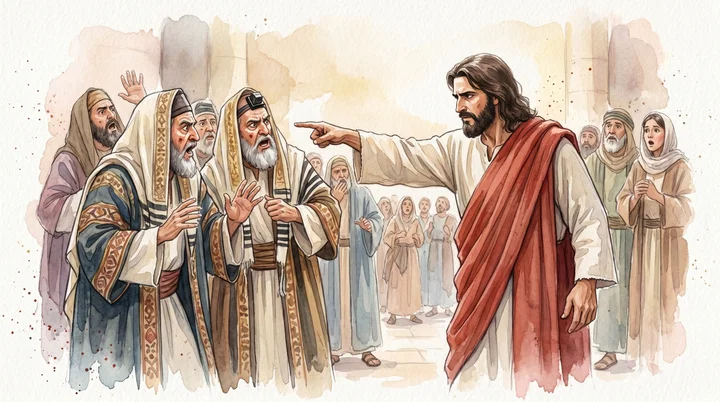
Woe unto you, scribes and Pharisees, hypocrites! for ye compass sea and land to make one proselyte, and when he is made, ye make him twofold more the child of hell than yourselves.
Translations
Woe to you, scribes and Pharisees, hypocrites! for you compass sea and land to make one proselyte, and when he is made, you make him twofold more the child of hell than yourselves.
King James Version, KJV Cambridge Paragraph Bible
Woe unto you, scribes and Pharisees, hypocrites! for ye compass sea and land to make one proselyte, and when he is made, ye make him twofold more the child of hell than yourselves.
Woe to you, scribes and Pharisees, hypocrites! for ye compass sea and land to make one proselyte, and when he is made, ye make him two-fold more the child of hell than yourselves.
Revised Version, American Standard Version
Woe unto you, scribes and Pharisees, hypocrites! for ye compass sea and land to make one proselyte; and when he is become so, ye make him twofold more a son of hell than yourselves.
'Woe to you, Scribes and Pharisees, hypocrites! because ye go round the sea and the dry land to make one proselyte, and whenever it may happen — ye make him a son of gehenna twofold more than yourselves.
Woe to you, scribes and Pharisees, hypocrites, for ye compass the sea and the dry [ land] to make one proselyte, and when he is become [such], ye make him twofold more [ the] son of hell than yourselves.
Alas for you, Scribes and Pharisees, hypocrites: because ye compass sea and dry land, to make one convert—and, when it is done, ye make him a son of gehenna, twofold more than ye.
Berean Standard Bible, Majority Standard Bible
Woe to you, scribes and Pharisees, you hypocrites! You traverse land and sea to win a single convert, and when he becomes one, you make him twice as much a son of hell as you are.
Woe to you, scribes and Pharisees, hypocrites! For you travel around by sea and land to make one proselyte; and when he becomes one, you make him twice as much a son of Gehenna as yourselves.
A curse is on you, scribes and Pharisees, false ones! for you go about land and sea to get one disciple and, having him, you make him twice as much a son of hell as yourselves.
Wo be vnto you, Scribes and Pharises, hypocrites: for ye compasse sea and land to make one of your profession: and when he is made, ye make him two folde more the childe of hell, then you your selues.
Douay-Rheims (Challoner revision)
Woe to you scribes and Pharisees, hypocrites; because you go round about the sea and the land to make one proselyte; and when he is made, you make him the child of hell twofold more than yourselves.
Pictures
Cross-references
- Matthew 23:33
Ye serpents, ye generation of vipers, how can ye escape the damnation of hell?
Both warn of Gehenna’s judgment, which cannot be escaped.
- Matthew 23:23
Woe unto you, scribes and Pharisees, hypocrites! for ye pay tithe of mint and anise and cummin, and have omitted the weightier matters of the law, judgment, mercy, and faith: these ought ye to have done, and not to leave the other undone.
They show religious zeal for minor matters while neglecting justice, mercy, and faith.
- Matthew 23:27-28
Woe unto you, scribes and Pharisees, hypocrites! for ye are like unto whited sepulchres, which indeed appear beautiful outward, but are within full of dead men’s bones, and of all uncleanness.
Their outward appearance of righteousness masks inward corruption.
- Matthew 23:4
For they bind heavy burdens and grievous to be borne, and lay them on men’s shoulders; but they themselves will not move them with one of their fingers.
The leaders lay burdens on others that they will not bear themselves.
- Matthew 23:2-3
Saying, The scribes and the Pharisees sit in Moses’ seat:
Christ warns against imitating leaders who teach but do not practise.
- Luke 11:52
Woe unto you, lawyers! for ye have taken away the key of knowledge: ye entered not in yourselves, and them that were entering in ye hindered.
The lawyers take away knowledge’s key and hinder those seeking it, failing to make true converts.
- Mark 12:38-40
And he said unto them in his doctrine, Beware of the scribes, which love to go in long clothing, and love salutations in the marketplaces,
Both warn of religious leaders’ hypocrisy and coming judgment.
- Luke 12:1
In the mean time, when there were gathered together an innumerable multitude of people, insomuch that they trode one upon another, he began to say unto his disciples first of all, Beware ye of the leaven of the Pharisees, which is hypocrisy.
Both describe Pharisaic hypocrisy spreading like leaven.
- Luke 20:46-47
Beware of the scribes, which desire to walk in long robes, and love greetings in the markets, and the highest seats in the synagogues, and the chief rooms at feasts;
Both condemn religious leaders’ hypocrisy and warn of judgment.
- Matthew 23:5-6
But all their works they do for to be seen of men: they make broad their phylacteries, and enlarge the borders of their garments,
They sought public honor while professing godliness.
- 1 Timothy 4:2
Speaking lies in hypocrisy; having their conscience seared with a hot iron;
Hypocritical teaching leads others into apostasy.
Commentary
Each commentary is drawn from primary sources: the writings of Ellen G. White and Adventist pioneers and periodicals. Each commentary is separate. Its own words are not a quotation; follow the references to read the source passages.
Ellen G. White
41 sources
Spoken in the temple courts on the last day of public teaching to expose the rulers, it warns that traveling far with great zeal to win even one convert to one's own party can leave him twice as fit for ruin and judgment as his teachers, by turning him from salvation through Christ and divine truth to superstition, falsehood and human commandments.DA 610ST Jun 14, 1899Ms 71, 1897, par. 8–103SP 57.1Ms 81, 1893, par. 43 It denounces the scribes and Pharisees as blind hypocrites whose outward profession and self-righteous zeal hid hearts without humility and love.Ms 71, 1897, par. 8–107MR 234.4–235.1Lt 165, 1901, par. 11–14CH 671.2Ms 1, 1878, par. 56–59 Their fault was straining over little matters while neglecting the weightier demands of the law — justice, mercy, faith and love — condemning small faults severely while lightly passing over their own far greater wrongs.7MR 234.4–235.17MR 235.2–3Lt 134, 1902, par. 13–14 Their corrupt teaching and example acted like unholy leaven, molding other minds and hardening followers still further, shutting them out of the kingdom and leaving the fruitless pretender with less hope than an open sinner.ST Jun 14, 1899Ms 5, 1882, par. 14–16ST May 2, 1878Lt 41, 1898, par. 20–21CT 487.2 The denunciation stands as a warning to every age against exalting human authority to rule the conscience, for the same woes will fall on priests, rulers and all in sacred trust who do a like work unless they repent, reform character, and seek others' salvation in humility, sympathy, love and freedom from binding human control.4SP 414.3GC 596.2GC88 595.3–596.1Lt 134, 1902, par. 13–14Ms 175, 1897, par. 81
Words and Temple Setting
The woe was spoken in the temple courts on the final day of public teaching.3SP 57.1Ms 81, 1893, par. 43 Then the character of the rulers and elders was exposed to warn and condemn them.3SP 57.1Ms 81, 1893, par. 43 To compass sea and land means to travel far and work hard with great zeal to win even a single convert to one's own party.DA 610ST Jun 14, 1899Ms 71, 1897, par. 8–10Ms 5, 1882, par. 14–16ST Mar 21, 1878 That zeal to gain proselytes did not make them faithful guides.ST Jun 14, 1899Ms 5, 1882, par. 14–16Ms 5, 1882, par. 12–13
To make the proselyte twofold more the child of hell is to make him twice as fit for hell as his teachers.DA 610ST Jun 14, 1899Ms 71, 1897, par. 8–10 It is to make him more devoted to evil than they were themselves.DA 610ST Jun 14, 1899Ms 5, 1882, par. 14–16ST Mar 21, 1878Ms 5, 1882, par. 12–13 It is to lead him further into evil and ruin than themselves, farther into sin and condemnation.ST Jun 14, 1899Ms 5, 1882, par. 14–16ST Mar 21, 1878Ms 5, 1882, par. 12–13 It is to make him even more liable to divine judgment than his teachers.Ms 71, 1897, par. 8–10Ms 5, 1882, par. 14–16
Their proselytizing did not bring people to salvation through Christ.Ms 5, 1882, par. 14–16Ms 5, 1882, par. 12–13 It shut people out from the kingdom of heaven and shut them away from the kingdom.Ms 5, 1882, par. 14–16Ms 5, 1882, par. 12–13 It refused the light brought by Jesus and made converts responsible for the light they rejected.Ms 5, 1882, par. 14–16Ms 5, 1882, par. 12–13 It turned people from divine truth toward superstition and falsehood, by deception and opposition to truth.Ms 5, 1882, par. 14–16ST Mar 21, 1878 It taught human commandments as contrary to pure truth, through dishonest practices.ST Mar 21, 1878ST Apr 5, 1905
Hypocrisy Christ Exposed
The woe is a direct denunciation of the scribes and Pharisees as hypocrites guilty of the very sins condemned, whose zeal to travel far to win even one convert only made that convert twice as fit for ruin as themselves.Ms 71, 1897, par. 8–10 It belongs to a chapter exposing people spiritually blinded and unable to discern the relative importance of what they should understand.Lt 165, 1901, par. 11–14 That blindness showed in focusing on minor matters while neglecting the weightier concerns of the law, and no amount of outward religious care can make up for failing to put right principles into practice.7MR 234.4–235.1
Their fault was neglecting justice, mercy, faith and love while claiming to serve God, a wrong principle that made them deserving of the woes pronounced.7MR 234.4–235.17MR 235.2–3 While very scrupulous about little matters, even making a man an offender for a word, they were not actuated by right principles, did not reveal justice, mercy and the love of God, and gave no practical evidence of love for their brethren.Lt 134, 1902, par. 13–14 Their outward religious zeal, profession and self-righteousness hid hearts lacking humility and love.Ms 1, 1878, par. 56–59 Such vain pretense is hated, and the denunciations fell heavily upon all hypocrisy, while even those who had spent life in sin but come to God in penitence with a sense of sinfulness are accepted and treated with tenderness.4T 614.4 To practice evil under a cloak of godliness brings especially severe judgment, leaving more hope for an open sinner than for one whose profession bears no good fruit and lies under a curse like a fruitless tree.CH 671.25T 144.2Ms 9, 1880, par. 37–42
The same hypocrisy acts imperiously, deals unjustly with the Lord's heritage, tampers with conscience, and by subtle reasoning makes imaginary distinctions between degrees of guilt.7MR 235.2–3Lt 134, 1902, par. 13–14 It condemns with great severity wrongs that do not begin to compare with its own sin in cherishing and working on false principles, while lightly passing over very serious wrongs of its own.Lt 134, 1902, par. 13–14 The rebuke therefore exposes impenitence and opposition to truth and righteousness, for rejection of counsel and despising of mercy bring condemnation.3SP 9.2Ms 175, 1897, par. 81 It exposes professed devotion to God joined with action opposing His purposes, with hypocrisy and failure to recognize sin leaving men ready to question God's justice in judging persistent rebellion.ST Jan 6, 1881 The same scathing rebukes stand against religious leaders today for impenitence and opposition to truth and righteousness, and warn all who claim to represent Christ while their lives deny Him.3SP 9.2Ms 175, 1897, par. 81
The denunciation was fearless, exposing dishonest practices and teaching of human commandments as contrary to pure truth.ST Apr 5, 1905 It was spoken with burning earnestness and words of terrible severity against abominations seen in the church and in the world, refusing to allow the people to be deceived by false claims to righteousness and sanctity.STB 79.5–80.115MR 258.2–259.1 Yet the sharp exposure of hypocrisy was without irritated temper, and searching denunciation was consistent with meekness and gentleness, with divine grace alone able to correct objectionable tendencies.ST Aug 27, 1912
Ruin of Misled Converts
Zeal to win converts did not make the scribes and Pharisees faithful guides, for they traveled far and worked hard to make even one proselyte, yet their hypocrisy, false religion, and rejection of salvation through Christ led those they taught further into evil and condemnation.ST Jun 14, 1899Ms 5, 1882, par. 14–16ST May 2, 1878 They shut people out of the kingdom of heaven and refused the light brought by Jesus, so the convert became twofold a child of hell and even more liable to divine judgment than his teachers.ST Jun 14, 1899Ms 5, 1882, par. 14–16 Their corrupt example and teaching therefore harmed those they sought to win instead of bringing them to salvation.ST Jun 14, 1899Ms 5, 1882, par. 14–16ST May 2, 1878
Their hypocrisy works like unholy leaven spreading from soul to soul, molding other minds and reproducing the same evil until followers become still more hardened.Lt 41, 1898, par. 20–21CT 487.2 One who has pledged to represent Christ but fails to keep strict guard over himself and lets the barriers against sin be broken down is overcome by specious temptation and develops a blemish of character whose evil influence molds others, so that the moral palsy of sin destroys his own soul and reproduces the same evil in others.CT 487.2 Those who violate right motive and right principle and seek crooked paths, crooked practices, scheming and dishonesty to injure the cause act against Jesus and betray Him and let the synagogue of Satan triumph.Lt 41, 1898, par. 20–21 By making crooked paths for their feet they turn the lame out of the way, and by going farther in resistance when reproved they leave an example that deceived, deluded souls in enmity will follow and carry out, becoming twofold more hardened unless they repent and are converted, when impenitent ones will receive sentence at a tribunal from which there is no appeal.Lt 41, 1898, par. 20–21
By rejecting light and using the same excuses as earlier opponents, such zealous religious effort did not bring people to salvation but shut them away from the kingdom, caused them to regard truth as error and be led astray, and made them responsible for the light they rejected.Ms 5, 1882, par. 12–13Ms 44, 1900, par. 16 Seeking authority over others in this way, with outward religious zeal and self-righteousness hiding hearts lacking humility and love, obstructs entrance to God's kingdom, causes spiritual harm, and can lead to the loss of souls.Ms 1, 1878, par. 56–59
The condition of the religious pretender who bears no good fruit to God's glory is worse and has less hope than that of an open sinner, like a fruitless tree under a curse.CH 671.2ST Aug 22, 1878Ms 9, 1880, par. 37–42 Outward zeal and religious profession do not make a person righteous when they lead others into deeper evil, and practicing iniquity under a cloak of godliness brings especially severe judgment under Christ's burning denunciations of hypocrites.CH 671.25T 144.2Ms 9, 1880, par. 37–42 The fruitless fig tree represents the pretender whose profession bears no good fruit and is under God's curse, whose corrupt life and influence make his condition worse than that of an open sinner who has more hope.ST Aug 22, 18785T 144.2Ms 9, 1880, par. 37–42 Vain pretense is hated, and denunciation falls heavily on all hypocrisy, yet those who have spent life in sin but come to God in penitence with a sense of sinfulness are treated with tenderness and accepted even when they have been the chief of sinners.4T 614.4 They stand in a more favorable position for the perfection of Christian character than those who have had great light and have failed to improve upon it, since professing to have light far in advance of others while works do not correspond with profession brings condemnation, and neglecting to improve granted light and opportunities is what leaves men and women in darkness.4T 614.4
Warning to Later Church
The denunciation of blind leaders and the warning against following them were recorded to speak to people of every age and nation and to stand as an admonition to future generations.4SP 414.3GC 596.2GC88 595.3–596.13SP 57.1 It was spoken in the temple on the final day of teaching when the character of the rulers and elders was exposed to warn and condemn them.3SP 57.1 The warning was preserved because the same danger would continue beyond the Jewish dispersion through all ages of the church.4SP 414.3GC 596.2GC88 595.3–596.1
It condemns the exaltation of human authority to rule the conscience, warning that religious leaders who claim authority can lead others away from truth.4SP 414.3GC 596.2GC88 595.3–596.1 Such abuse of authority to rule the conscience would continue in the church through all ages.4SP 414.3GC 596.2 Religious leaders can use lawful authority for unlawful ends, so that when priests and rulers become wicked, obedience to them comes into conflict with obedience to God.GC 102.1
The same woes pronounced on the scribes and Pharisees will verily fall on all engaged in a like work unless they repent.Lt 134, 1902, par. 13–14Ms 175, 1897, par. 81 Were Christ upon the earth today the same woes would be pronounced upon priests and rulers for impenitence and opposition to truth and righteousness.Ms 175, 1897, par. 81 This includes those in positions of responsibility and trust and in sacred positions who misrepresent Christ's righteousness while supposing they are doing God's service, and whose conduct makes them examples of the hypocrisy that brings such denunciation.Lt 134, 1902, par. 13–14Lt 71a, 1894, par. 19–21 They must reform character or face the same condemnation, for they will be denounced by the Lord as surely as the Pharisees were denounced.Lt 134, 1902, par. 13–14Lt 71a, 1894, par. 19–21 Their overbearing and imperious spirit, wrong course of action, and lack of principle show spiritual blindness with dimmed spiritual eyesight, neglecting God's great and sacred work, not actuated by right principles, not revealing justice, mercy, and the love of God, and not giving practical evidence of love for the brethren.Lt 134, 1902, par. 13–14 While very scrupulous about little matters, making a man an offender for a word, they deal unjustly with the Lord's heritage, tamper with the conscience, and by subtle reasoning make imaginary distinctions between degrees of guilt, lightly passing over very serious wrongs while condemning with great severity wrongs that do not begin to compare with their own sin in cherishing and working on false principles.Lt 134, 1902, par. 13–14 Righteousness exalts a nation and sin brings it to ruin, as true of individuals as of nations.Lt 134, 1902, par. 13–14
The warning also applies to those who claim to represent Christ while their lives deny him, through rejection of counsel and despising of mercy.3SP 9.2 It applies to those who claim to serve God while acting imperiously, neglecting justice, mercy, and love, and condemning minor faults while excusing serious wrongs of their own.7MR 235.2–3 Neglecting granted light and turning from a holy calling places people in a more unfavorable position for judgment than that pronounced on the Jews for their course.TBC1882 58.15T 75.3
A Pharisaic spirit persists when established, restrictive methods and the use of power hinder the work instead of advancing it and leave too little room for present truth to spread.RCOC 35.3 The corrupt spirit spreads through pride, contentiousness, self-appointed authority, and human methods that displace Scripture and divine instruction rather than lead people to God.Lt 81, 1896, par. 6–8 The Pharisees are a pattern for religious leaders who react angrily when their authority is questioned, denounce those proclaiming a warning as servants of Satan, and stir others to persecute them.4SP 424.1 An exacting, intolerant spirit and rejection of the Lord's reproof bring judgment, and those who persist place the stumbling block of their own iniquity before their eyes, as shown when the warnings had no effect on the men first addressed.Ms 18, 1896, par. 29–30
Call to Faithful Ministry
Those who would lift others must first reform themselves, following in humility and self-denial instead of outward religious zeal and self-righteousness that hide hearts lacking humility and love.Ms 1, 1878, par. 56–59 Such self-seeking grasping for authority over others obstructs entrance to God's kingdom, causes spiritual harm, and can lead to the loss of souls.Ms 1, 1878, par. 56–59 The work of helping must therefore seek the salvation of others through sympathy, love, patience, and courtesy rather than force.Ms 1, 1878, par. 56–59
The traveling of sea and land to gain a convert is to be turned to right use, going to great lengths with prayer and support to establish memorials for God.ST Sep 24, 1902 That going is to be driven by unselfish love rather than selfishness.ST Sep 24, 1902 Faithful service requires standing free from any binding influence, in God-given manhood with freedom of speech and freedom of faith.STB 79.5–80.115MR 258.2–259.1 When wrong sentiments and false statements are heard that are known to be untrue, they are to be openly protested and corrected instead of being listened to in silence and verified as if true, with no harmonizing with wrong plans and no being held speechless or cowered into silence by a masterful spirit.STB 79.5–80.115MR 258.2–259.1 This follows the pattern of burning earnestness and words of terrible severity in denouncing the abominations seen in the church and in the world, refusing to let people be deceived by false claims to righteousness and sanctity.STB 79.5–80.115MR 258.2–259.1
Searching exposure of hypocrisy is consistent with meekness and gentleness, for the sharp rebuke was given without irritated temper.ST Aug 27, 1912 Divine grace alone can correct objectionable tendencies.ST Aug 27, 1912
Sources
Pioneers and periodicals
112 sources
Spoken in the temple in His final day of teaching before leaving it for the last time, the verse is one of seven woes pronouncing complete condemnation on the generation then living.RH Apr 15, 1909RH Jan 29, 1914ST Jan 14, 1875RH Apr 15, 1909RH Apr 15, 1909 To compass sea and land is to travel widely and go to great lengths with hard zeal to win even a single convert.ST Nov 1, 1899ST Nov 1, 1899RH Jun 15, 1869 To be called a child of hell is not literal birth from the devil but a relation formed through obedience and subjection to him, into which even one who began as a child of the kingdom can fall, and to be made twofold more so is to be made more deeply bound to evil and more liable to judgment than the teachers themselves.RH Oct 24, 1854RH Jun 12, 1860ST Dec 1, 1887RH Oct 12, 1869ST Apr 17, 1879 The scribes and Pharisees sought converts to strengthen their own party, reputation and authority rather than to honor God or save souls, hiding inward corruption behind outward righteousness while teaching human traditions that made God's law of none effect.ST Mar 21, 1878ST Jan 26, 1882RH Sep 20, 1853ST Jan 9, 1893RH Mar 17, 1903 Their intense sincerity did not save them, for zeal without knowledge does not save and zeal in propagating error can even exceed zeal for truth.RH Jul 13, 1916ST Jun 21, 1883 Hell here is Gehenna, figured from the valley of Hinnom, naming not torment at death but the final lake of fire after resurrection and judgment where the wicked are utterly destroyed body and soul.ST Jul 15, 1880ST May 22, 1879RH Mar 7, 1865RH May 23, 1865ST Nov 16, 1876
Context and Wording
Jesus spoke these words near the close of his earthly ministry as the cross approached, during his final day of teaching in the temple in denunciation of the Jews for hypocrisy.RH Apr 15, 1909RH Jan 29, 1914 He addressed them to the multitude in the presence of his disciples, reproving the scribes and Pharisees for their sins before he left the temple for the last time.ST Jan 14, 1875ST Mar 30, 1888 That reproof and sentence immediately preceded and declared the doom of the Jews, their city and their temple.ST Jan 14, 1875RH Dec 20, 1870
The utterance is one of seven woes against the scribes and Pharisees, a sevenfold woe and sentence of complete condemnation pronounced on the generation then living for misinterpreting Scripture and rejecting the Messenger of the covenant while profession and life differed.RH Apr 15, 1909RH Apr 15, 1909RH May 13, 1909 Those woes explain the judgments that would culminate in Jerusalem's destruction and the end of the Jewish nation, calamities he foresaw for that generation.RH Apr 15, 1909RH May 13, 1909 The period when they were pronounced saw one false christ after another appear among the Jews.
To compass sea and land is to travel widely and go to great lengths, working hard and with far-reaching zeal to win even a single convert to one's party.ST Nov 1, 1899ST Nov 1, 1899RH Jun 15, 1869ST Jan 19, 1882RH Jul 3, 1866 Such success in recruiting does not make the work sound when the converts are spiritually misled.ST Jul 27, 1882 To be called a child of hell, or Gehenna, does not mean literal birth from the devil but describes the relation formed through conduct, obedience and subjection to the devil and to hell, just as obeying God makes one a child of God.RH Oct 24, 1854RH Oct 12, 1869 As Judas shows, one who began as a child of the kingdom can become a child of hell, so condemnation was not fixed from the start.ST Apr 17, 1879
To be made twofold more the child of hell means the proselyte is taught and formed into someone even more opposed to God, more committed to evil, more deeply bound to evil, more fit for destruction and more deserving of and liable to future punishment and judgment than the teachers themselves.ST Nov 1, 1899ST Nov 1, 1899RH Jun 12, 1860ST Dec 1, 1887RH Apr 17, 1855 The harm lies not only in false principles but in their spread by example and deceptive teaching.ST Jan 19, 1882ST May 27, 1913 The woe belongs among the fearful words pronounced upon those who rejected all the light and blessing given them, and among the strongest and most terrible expressions of Jesus' warnings, growing more terrible to the close of his ministry close upon the proclamation of the kingdom and the call to repentance.ST Jul 15, 1908ST Jul 15, 1908ST Feb 10, 1898 It was given not to condemn men but so that through it they may seek the kingdom of God and his righteousness.ST Feb 10, 1898
Pharisees Exposed as Hypocrites
The scribes and Pharisees compassed sea and land to win converts in order to strengthen their own party, increase their numbers, build their reputation and extend their authority, satisfying pride, personal ambition, greed and selfish motives rather than honoring God, saving souls or promoting the convert's good.ST Jan 26, 1882RH Mar 17, 1903ST Jan 8, 1885ST Nov 14, 1900RH Aug 27, 1901 Their zeal to gain even one proselyte could therefore be harmful, because effort to advance a religious theory or denomination is not the love of truth nor the saving work of sharing it.RH Sep 20, 1853RH Mar 17, 1903 Instead of leading people to truth they made them subject to themselves as blind guides, drawing them into deception and the same ruin while seeking honor, prominent seats, public greetings and titles.RH Sep 20, 1853ST Nov 14, 1900
Their hypocrisy was especially terrible because they hid inward corruption, iniquity and uncleanness behind an outward appearance of serving God and outward righteousness.RH Jun 2, 1859ST Jul 7, 1887ST Nov 1, 1899 Their outward honoring of God concealed hearts far from Him, so that profession and life differed and their lives showed what they truly believed, for they were not atheists or infidels yet lacked genuine faith.RH Jun 2, 1859ST Sep 15, 1887 Religious pretenders who bear no fruit to God's glory in this way have less hope than open sinners, and hypocrisy that uses influence to lead others toward perdition is hideous in God's sight.ST Aug 22, 1878ST Jan 6, 1881ST Nov 1, 1899
They pretended to teach God's law but failed to keep it, adding their own traditions until the word of God was made of none effect, and their hearts so filled with tradition left their minds blinded to the light of the gospel.ST Mar 21, 1878ST Jan 9, 1893 They taught human commandments contrary to pure truth, superstition and falsehood, laying upon others heavy burdens grievous to be borne in ceremonial exactions, numerous fastings and ablutions, rigorous rules and strict observances that could make a person appear deeply religious while displacing the spirit of religion and morality and leaving him morally corrupt.ST Apr 5, 1905ST Nov 15, 1910ST May 19, 1881 Having zeal for God but not according to knowledge, they remained ignorant of God's righteousness and sought to establish their own righteousness, trying to make it appear that they were righteous when in reality they were not, covering inward sins with a cloak of hypocrisy until conscience becomes hard and speechless.ST Nov 15, 1910ST Jul 15, 1908
A hypocrite in this sense is not only one who knowingly pretends to be righteous but also a false professor who mistakes his spiritual condition, and sincerity in the professed religion did not prevent uncleanness.RH Sep 2, 1858 Such strangers to piety could harbor aversion to true piety while remaining intensely zealous to gain converts.RH Sep 2, 1858 They treated ignorance of everything non-Jewish as sacred, would not even show a non-Jew the way, accepted a convert only if he renounced his country and left children, parents and family, and prided themselves on being the orthodox representatives of Moses and God's chosen people.ST May 19, 1881
Their intense sincerity, energy and zeal did not save them or their converts and did not prove Christian devotedness, for zeal without knowledge does not save.ST Jun 21, 1883RH Sep 2, 1858 God holds men responsible for the principles they hold, and what a man believes determines salvation, so possession of religious truth in outward form and active missionary labor did not preserve vital Christianity nor prevent individual spiritual decline.RH Jul 13, 1916 Zeal in propagating error can even exceed zeal in propagating truth, and men can preach, write, pray and suffer for what they call the cause of truth while governed by no higher motive than desire to promote the interests of a party.RH Sep 2, 1858 Such sectarian attachment and party zeal is self-deception when mistaken for devotion to God, exposed when a person looks with indifference, envy or pain on evident good and revivals among other Christians while extolling the same work among his own party.RH Sep 2, 1858
By deceptive teaching opposed to truth and by example more than precept they fostered ignorant furious bigotry, hostility to Christ and the gospel, blindness, formality and evil-heartedness.ST Jan 26, 1882RH Jul 15, 1875RH Jan 2, 1866 Without the true key of repentance toward God and faith in the Lord Jesus Christ their proselytes gained mere religious profession that was vain, becoming more devoted servants of Satan and more openly harmful, blasphemous and persecuting in opposing Christ and persecuting believers.ST Jun 14, 1899ST Jan 26, 1882RH Jul 15, 1875 A convert may thus become more corrupt than the teacher who wins him when that teacher's selfish, unrighteous example contradicts his teaching, since example is more forceful than precept.ST May 2, 1878RH Jan 2, 1866 Their effort was directed toward calling the righteous and worthy from other groups rather than serving sinners and outcasts, the opposite of going where need was greatest to call sinners to repentance.RH Nov 23, 1911
Doom of Jewish Nation
Matthew 23 denies the Jews any further claim upon Abraham for religious favors, so they have no peculiar blessings in reserve for them.RH Sep 9, 1858 The fall of the Jewish church and its rejection by God followed its wickedness and unfaithfulness.RH Mar 6, 1855 In reproving the scribes and Pharisees for their sins Jesus declared the doom of the Jews, their city and their temple.RH Dec 20, 1870 The verse belongs to the sevenfold woe pronounced on the generation then living, and those woes explain the judgments that would culminate in Jerusalem's destruction and the end of the Jewish nation.RH Apr 15, 1909
The Jewish leaders claimed they would not have shared in their ancestors' killing of the prophets, yet after rejecting the Messiah they themselves killed him and many of his apostles and saints, revealing that they had come under Satan's power.RH May 19, 1851 The period when these woes were pronounced saw one false christ after another appear among the Jews. The chapter's warnings about false teachers and false doctrines were given near the close of his earthly ministry as the cross approached to protect believers in every age.RH Apr 15, 1909
Those who hear of Jesus' works and gracious words yet reject him place themselves among those upon whom he pronounced woes, and outward religious profession does not excuse refusing his words.ST Sep 6, 1899 Christ denounced the scribes and Pharisees for sin and not for crimes or failures in civil government, for their pride and hypocrisy were sins despite their social respectability, and their rejection of God's light brought judgment.ST Oct 7, 1930 That denunciation of the Jewish nation's sins was a warning against evil, not political activity.ST Dec 11, 1901
Hell and Retribution Taught
Hell in the verse is Gehenna, the Greek word so translated, not the grave, and it is distinguished from Hades the place of the dead and from Tartarus where the fallen angels were cast.ST May 22, 1879RH May 23, 1865RH Jul 2, 1872 Gehenna refers to the valley of Hinnom near Jerusalem associated with the destruction of what was cast into it, used figuratively as a type and figure of utter and complete destruction of wickedness where the wicked will finally be burned up body and soul.ST Nov 16, 1876RH Jul 2, 1872ST Dec 17, 1902ST Nov 16, 1876 Calling a proselyte a child of hell describes his relation to that punishment.ST May 22, 1879RH May 23, 1865
Gehenna names the lake of fire, the final place of punishment where the wicked are cast after the resurrection and judgment and destroyed.ST Jul 15, 1880RH Mar 7, 1865RH May 23, 1865 It does not refer to a hell of torment now in existence where the wicked go at death, but to a punishment that will exist after the judgment, and it symbolizes inescapable punishment and complete destruction, not never-ending punishment.RH Jan 17, 1856ST Sep 30, 1930 Calling the proselyte the child of hell, or child of Gehenna, identifies him with that fate and says he becomes even more deserving of that future punishment than his teachers.RH Oct 24, 1854RH Jun 12, 1860RH Mar 7, 1865
The verse shows wickedness has degrees, since one person can be made much worse than another.RH Apr 8, 1858 Joined with Matthew 12:45 and 2 Peter 2:20 it proves that offenders are not all equally depraved.RH Apr 8, 1858 It clarifies James 2:10 to mean that justification by deeds of law requires perfect and entire obedience with death as the penalty for anything short, not that keeping all but one commandment is as corrupt as breaking them all.RH Apr 8, 1858 While branding the leaders with fearful condemnation for daring to trifle with the high commands of God, Jesus magnified the law in all its purity as exceeding broad and deep.ST Jan 9, 1893 They pretended to teach God's law but failed to keep it, adding their own traditions until the word of God was made of none effect, and their hearts were so filled with tradition that their minds were blinded to the light of the glorious gospel of Christ.ST Jan 9, 1893
Christ's Rebuke as Example
Christ openly, directly, sharply and fearlessly denounced the scribes and Pharisees and their dishonest practices, calling them hypocrites and fools.ST Apr 5, 1905ST Dec 8, 1887ST Dec 1, 1887ST Apr 1, 1889RH Jun 11, 1872 He censured the leaders themselves and not only their false principles, and he did not withhold necessary truth for fear of their reaction.ST Dec 8, 1887ST Apr 1, 1889 Opposing evil can require openly denouncing both the wrongdoing and those who promote it, as in the case of the drink trade and its agents and supporters.ST Dec 9, 1880
The denunciation was Christ's most scathing rebuke, and its severity was aimed at hypocrisy as a contemptible sin.RH May 7, 1901 Yet he reproved their sins and hypocrisy while remaining free of those same sins.RH Feb 24, 1859 He spoke without irritated temper or anger, with meekness and gentleness, condemning sin while feeling pity and tenderness for sinners.ST Aug 27, 1912 He sought to draw even those who upheld evil toward himself, and divine grace alone can correct objectionable tendencies.ST Aug 27, 1912
He exposed their true spiritual condition so that they could recognize it, turn from their course, and be saved, for warning people of their fallen condition gives them the chance to repent.RH Mar 6, 1913 His ministers should follow him in this, speaking words of condemnation to none but hypocrites and otherwise being hopeful and cheerful.RH Oct 22, 1914 They should seek what to praise rather than to censure, and make truth simple in order to instruct and to save.RH Oct 22, 1914 Such searching rebukes of sinners and hypocrites could make hearers tremble, and preaching them may disturb people rather than preserve a preacher's influence.RH Jul 29, 1875
The denunciation would not persuade the Romans, who were disgusted by Pharisaic pretension, nor the Sadducees, who had used similar language against the Pharisees.ST May 27, 1889 The same denunciation of the Pharisees for hypocrisy suggests that those who profess admiration for Jesus might reject him if he appeared among the poor and publicly condemned religious hypocrisy.RH Jun 6, 1871
Modern Proselytizing Warned
Proselytism came to be disowned because a teacher whose own character is degenerate cannot raise pupils above that level, and converts made under loose makes-no-difference views imbibe the idea that God is not very particular and become fully persuaded to do as they please.RH Jul 3, 1866RH May 29, 1866RH Sep 8, 1874 Because fallen human nature tends downward and a stream cannot rise higher than its source, a low standard encourages converts to descend still further and become twofold more corrupt than their teachers, to the teachers' surprise and dissatisfaction when pupils fall short of even their own ideas of what is proper and right.RH May 29, 1866ST Mar 10, 1887RH Sep 8, 1874 Religious leaders can thus use their influence to make those they train more devoted to evil than themselves, as when worldly rewards and privileges encourage pride, ease and luxury and raising children in those ways makes them twofold children of hell.RH Sep 22, 1859RH Jul 3, 1866RH May 29, 1866 Worldly churches needing radical reform cannot therefore serve as faithful instruments for the Lord's work merely by making proselytes.RH May 29, 1866
Condemned proselyting that travels widely to win even one follower for numbers or pride is different from seeking to win others to what one believes is God's truth, for religious teaching worth sharing outweighs denominational boundaries.ST Jan 27, 1890 Becoming merely a proselyte to belief without genuine conversion is not enough and is not wanted; those who join must possess living faith and be of the true stamp, with the truth given in close testing testimony that secures obedient living faith rather than nominal proselytes, since many are called but few are chosen.RH Sep 2, 1873 Making a convert without bringing that person to genuine conversion can leave the proselyte farther from the kingdom of heaven than an errorist in opinion whose heart has been regenerated by God's love.RH Feb 11, 1873 Zealously making converts to one's chosen sect does not take the place of real spiritual piety or living unto God, for a person may have a name among God's people and talk much about religion and the church and show such zeal yet have no Scriptural hope of heaven unless the heart is moved, the character moulded and the whole life conformed unto God who died for him.RH Sep 25, 1856RH Oct 30, 1855RH Apr 16, 1914 Zealous effort to win converts does not make a person right with God when outward religious forms and service replace lived experience of God and cultivation of inward Christlike qualities while practical inward duties are neglected.RH Apr 16, 1914
The image of crossing sea and land to make converts who are then led into a worse spiritual condition applies to the energetic spread of soul-destroying teachings by Spiritualism.RH Nov 7, 1865 It also applies to Rome's conversion of Guatemala's Indians, who though nominally Catholic were left in darkness and superstition with earlier paganism and idolatry only partly Romanized, making them twofold more children of hell.ST Apr 5, 1905 The same warning applies to people supposedly converted by political excitement and war, whose conversion is no improvement if those forces lead to greater sin rather than genuine religion, the test being whether they show living piety and godliness or sink further in morality.RH May 16, 1865 The image of traveling far to gain a convert describes Roman Catholic energetic efforts among freedpeople in the South, including through schools educating large numbers of Black children, connected with the aim of gaining political power in the United States.RH Jul 26, 1870 It likewise applies to Rome's strenuous efforts to win converts by seductive promises and assurances, as when Panelli was brought back from the Greek Church and returned with the Greek prelate Archbishop Eusevidis.RH May 19, 1874
Compassing sea and land describes traveling widely to persuade people that the Sabbath command does not apply everywhere and may be broken, and by teaching that one commandment may be broken encouraging rejection of the rest of the law, so that the convert becomes even more committed to wrongdoing than the teachers who persuaded him.RH Oct 17, 1854 It is zealous effort to win someone over that makes that person more deeply opposed to God, applied to efforts to persuade people to oppose Sabbath-keeping and become enemies of God's law.RH Dec 2, 1858 Going to great lengths by traveling around the earth or by making arguments to oppose Sabbath observance will have no place in the renewed earth, where God's law will be written in every heart and all will delight to worship Him on the day He rested after creation.RH Jun 23, 1868 Searching widely over sea and land for objections to God's appointed Sabbath does not withstand the facts of the regular order of days and weeks.RH May 2, 1871
Compassing sea and land to make proselytes is condemned when it means working, running and begging for money to send men abroad to win converts to the church creed while orphans within a stone's cast cry for bread, widows suffer, sorrow and die in want, and men bearing the human form without any knowledge of God, heaven, Christ, revelation or religion are left untaught at home, repeating ancient hypocrisy by seeking distant converts and neglecting pressing need close by.RH Apr 24, 1856 Such foreign mission work passes over duty to household and near neighbors to go across sea and land to distant nations to plant the standard of Christianity and establish the creed of the church, with those sent out carrying a church creed in one hand and the miseries of an endless hell and burning wrath in the other to save souls while the poor and ignorant at home are left uncared for.RH Apr 24, 1856 By contrast, the image of traveling sea and land is applied positively to the unselfish labor with prayer and support by which Christ's followers should go to great lengths to establish memorials for God, driven by unselfish love rather than selfishness.ST Sep 24, 1902
Zealous claims of piety can hide despotic efforts to enforce religious creeds and dominate freedom of faith and worship, which Christ exposed as religious hypocrisy.ST May 19, 1914 Direct denunciation belongs against those who profess a covenant with God but violate it in letter and spirit through intolerant self-righteousness. To enforce Sabbath observance where the heart rebels is to offer God the essence of hypocrisy, bringing two evils that the world stops believing in the power of the Holy Spirit because the church does not use or value it, and that world and church sink deeper into sin because the church seeks help against evil from the very source of evil.ST Dec 25, 1893 Outward compulsory religious observance is not pleasing to God and does not keep the Sabbath in His sight, and laws compelling outward observance of religious institutions only make men hypocrites, since true keeping acceptable to God must be from a holy heart and life made holy by the presence of God filling the letter of the law from within and can never seek to compel men to observe a sabbath.ST Oct 3, 1895 Formal Pharisees drew the strongest denunciations because they treated outward service as pleasing to God and were punctilious about the conduct of others.ST Oct 3, 1895
The scathing rebuke of hypocrites whose zealous effort to win converts produces people even more corrupt than themselves applies to professed Christians whose much-repeated claims about moral forces at work move skeptics to despise all Christianity as visionary and fanatical.RH Nov 29, 1864 The phrase compass sea and land also describes readiness to travel far and work hard for worldly wealth, in contrast to the few who seek increase in divine knowledge.RH Feb 14, 1856 Great effort to make converts that leads them further into evil fits condemnation of a priesthood that oppresses people and perverts the truths of God.ST Jul 23, 1912 An outward show of respectability can conceal and help expand deeper evil made twofold more a way of hell, as with saloons where high license may make the business look respectable while gambling and prostitution are added to increase profits.ST Jun 12, 1884 Zeal to win converts that made them worse in religious error through hypocrisy and formalism stands in contrast with Christ, who welcomed the poor and socially despised rather than showing repulsion toward them.ST Jan 27, 1904
Christ denounced the hypocrisy of the Pharisees and pronounced woes on evil-doers.ST Jul 17, 1884 Opposing evil can require openly denouncing both the wrongdoing and those who promote it, as applied to the drink trade and its agents and supporters, following Christ's denunciation of scribes and Pharisees who practiced evils He condemned.ST Dec 9, 1880 Sharp rebukes belong upon religious leaders whose knowledge of God's revealed will and spiritual privilege has been degraded to serve personal ambition and greed.ST Jan 8, 1885
Sources