Translations
American King James Version, King James Version
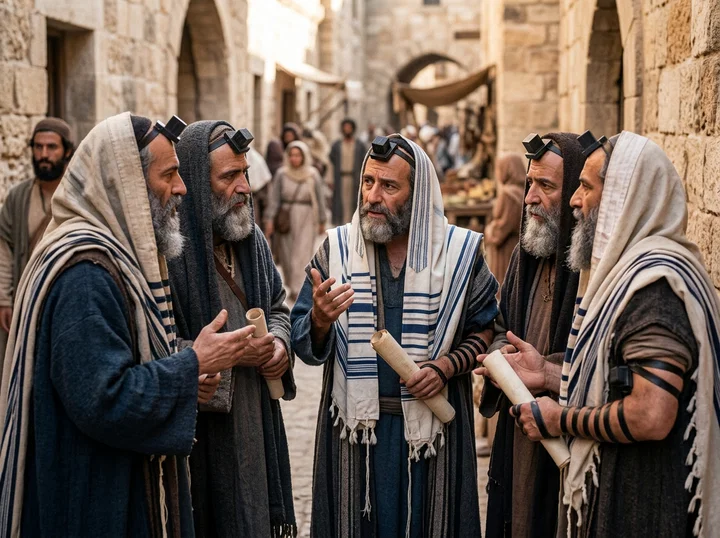
Saying, The scribes and the Pharisees sit in Moses’ seat:
saying, The scribes and the Pharisees sit in Moses’ seat:
Saying, The scribes and the Pharisees sit in Moses's seat.
Revised Version, American Standard Version
saying, The scribes and the Pharisees sit on Moses’ seat:
saying, 'On the seat of Moses sat down the scribes and the Pharisees;
saying, The scribes and the Pharisees have set themselves down in Moses' seat:
saying—Upon Moses’ seat, have sat down, the Scribes and the Pharisees:
Berean Standard Bible, Majority Standard Bible
“ The scribes and Pharisees sit in Moses’ seat.
saying, “ The scribes and the Pharisees sit on Moses’ seat.
The scribes and the Pharisees have the authority of Moses;
Saying, The Scribes and the Pharises sit in Moses seate.
Douay-Rheims (Challoner revision)
Saying: The scribes and the Pharisees have sitten on the chair of Moses.
Pictures
Cross-references
- Matthew 23:23
Woe unto you, scribes and Pharisees, hypocrites! for ye pay tithe of mint and anise and cummin, and have omitted the weightier matters of the law, judgment, mercy, and faith: these ought ye to have done, and not to leave the other undone.
Jesus rebukes leaders for neglecting the law’s weightier matters while focusing on minor details.
- Matthew 23:27
Woe unto you, scribes and Pharisees, hypocrites! for ye are like unto whited sepulchres, which indeed appear beautiful outward, but are within full of dead men’s bones, and of all uncleanness.
The Pharisees appear righteous outwardly but are inwardly full of uncleanness.
- Luke 20:46-47
Beware of the scribes, which desire to walk in long robes, and love greetings in the markets, and the highest seats in the synagogues, and the chief rooms at feasts;
Both condemn the scribes’ conduct and religious hypocrisy.
- Mark 12:38-40
And he said unto them in his doctrine, Beware of the scribes, which love to go in long clothing, and love salutations in the marketplaces,
Both describe the scribes’ conduct and status as religious leaders.
- Matthew 23:15
Woe unto you, scribes and Pharisees, hypocrites! for ye compass sea and land to make one proselyte, and when he is made, ye make him twofold more the child of hell than yourselves.
Their effort to make proselytes illustrates activity without vital godliness.
- Matthew 23:29-30
Woe unto you, scribes and Pharisees, hypocrites! because ye build the tombs of the prophets, and garnish the sepulchres of the righteous,
Their honoring the prophets’ tombs is part of the outward religion described.
- Luke 11:42-52
But woe unto you, Pharisees! for ye tithe mint and rue and all manner of herbs, and pass over judgment and the love of God: these ought ye to have done, and not to leave the other undone.
Jesus’ woes against religious leaders anticipate his warnings in Matthew 23.
- Deuteronomy 17:8-11
If there arise a matter too hard for thee in judgment, between blood and blood, between plea and plea, and between stroke and stroke, being matters of controversy within thy gates: then shalt thou arise, and get thee up into the place which the LORD thy God shall choose;
Both require obedience to those who judge and teach according to the law.
- John 7:19
Did not Moses give you the law, and yet none of you keepeth the law? Why go ye about to kill me?
Jesus says Moses gave the law to the people.
Commentary
Each commentary is drawn from primary sources: the writings of Ellen G. White and Adventist pioneers and periodicals. Each commentary is separate. Its own words are not a quotation; follow the references to read the source passages.
Ellen G. White
31 sources
To sit in Moses' seat is to claim his authority as teacher, expounder and interpreter of the law and as judge of the people, demanding deference and obedience.DA 610.1–611.2ST May 2, 1878ST Mar 21, 1878 As Jewish teachers stood to read the Scriptures but sat to expound them, sitting pictures that claimed right to speak and act in Moses' place.Ms 71, 1897, par. 1–3ST Jun 14, 1899 Those who held that place were to be obeyed when what they bade agreed with the law, but their works were not to be copied, for they told others what to do without doing it themselves.DA 610.1–611.2ST May 2, 1878Ms 115, 1894, par. 1 They laid heavy traditional burdens on others while exempting themselves, were strict over outward forms yet spiritually lifeless, and passed by the weightier matters of judgment, mercy and faith for lesser concerns.ST May 2, 1878Ms 84, 1894, par. 10–137MR 234.4–235.1Lt 165, 1901, par. 11–14 That same wrongful exalting of human authority to rule conscience did not end with the dispersion of the Jews but continues as a curse to the church in every age, and the warnings against following such blind leaders stand as an admonition to future generations.4SP 414.3GC88 595.3–596.1RH Jun 7, 1906
Meaning of Moses' Seat
The scribes and Pharisees claimed the authority associated with Moses, seating themselves in his seat as teachers, expounders and interpreters of the law and as judges of the people.DA 610.1–611.2ST May 2, 1878ST Mar 21, 18783SP 58.1ST Jun 14, 1899 They presented themselves as taking Moses' place in an exalted place of interpretation of the law given by God, supposing themselves capable of acting in his place and demanding deference and obedience.DA 610.1–611.2ST May 2, 1878ST Mar 21, 1878Ms 71, 1897, par. 1–3ST Jun 14, 1899 Their position was that of teachers and interpreters of God's law, represented by Moses' seat.DA 610.1–611.2ST May 2, 1878ST Mar 21, 18783SP 58.1ST Jun 14, 1899
Jewish teachers stood up to read the Scriptures but were seated when they expounded them, so sitting pictures the claimed authority to expound in Moses' place.Ms 71, 1897, par. 1–3ST Jun 14, 1899 To sit in Moses' seat was therefore to claim authority to explain as interpreters in his place, as those capable of acting in his place.Ms 71, 1897, par. 1–3ST Jun 14, 1899
The saying was spoken by Christ in the temple for the last time, to the scribes and Pharisees and His disciples.Ms 71, 1897, par. 1–3 It came after He had warned and denounced the leaders at their table where they had invited Him to find cause to put Him to death.Ms 71, 1897, par. 1–3 It belongs to His final day in the temple courts, when hypocrisy was exposed, and in that final temple teaching their character as rulers and elders was exposed to free the people from customs, traditions and unquestioning trust in a corrupt priesthood.Ms 71, 1897, par. 1–33SP 57.1Ms 81, 1893, par. 43
The people respected them as teachers and had obeyed their authority in religious matters, even as they saw them oppose Jesus.GC88 595.3–596.1ST May 2, 1878 They had been taught from infancy to reverence and implicitly bow to that assumed authority.GC88 595.3–596.1
Hypocrisy and Opposition to Christ
Those in Moses' seat were to be obeyed when what they taught agreed with the law, including what they lawfully bid observe, but their works were not to be imitated because they said what should be done without doing it themselves.DA 610.1–611.2ST May 2, 1878Ms 115, 1894, par. 1ST Mar 21, 18783SP 58.1
They taught duties they neglected and laid burdensome rules rooted in tradition on others while exempting themselves, strict about religious forms and adding human requirements yet lacking spiritual life, with public display and desire for honor revealing hypocrisy and self-righteousness.ST May 2, 1878ST Mar 21, 1878Ms 84, 1894, par. 10–13ST Apr 28, 1898
They were spiritually blind, unable to discern the relative importance of what they should understand, neglecting judgment, mercy and faith while attending to minor and lesser concerns.Ms 84, 1894, par. 10–137MR 234.4–235.1Lt 165, 1901, par. 11–14
Their office was lawful religious authority, yet wicked leaders could turn it to unlawful ends, so office neither made conduct right nor authority infallible, nor made them faithful shepherds.GC 102.1Ms 176, 1898, par. 421MR 1.8
They exercised power harshly and in an authoritative manner while leaving the people unfed and without spiritual nourishment as sheep without a shepherd, stirring compassion and deserving censure as thieves and robbers.Ms 176, 1898, par. 421MR 1.8
They used their place to instill false interpretations, teaching their own words instead of God's words and burying truth under doctrines, maxims and traditions, whereas teachers are accountable to speak God's words and not substitute their own.Ms 2, 1888, par. 7–10ST Jul 23, 1896
They taught that Christ was to appear as a great conqueror to break the Roman yoke, holding to the prophecies of glorious reign while from proud hearts refusing those of one who is a man of sorrows and acquainted with grief.ST Jul 23, 1896
Their rejection came not from lack of light and evidence but from malignity, jealousy, prejudice, envy and unholy passion that would not come to the word of God for decision.ST Jul 23, 1896
Claiming to know God and to communicate the light and truth the people needed, they fixed attention on Moses instead of Christ, although Christ had been Israel's beneficent friend throughout its wanderings and is the true bread from heaven who gives life to the world.Ms 18, 1895, par. 25
They opposed Christ because He drew attention away from them and they feared losing the people's attention, rejecting evidence of His works of compassion and healing, distorting His words, treating the people's joy as a personal insult, working by every means to counteract His influence and discourage belief, and turning the common people from accepting Him.ST Jun 20, 1900ST Sep 26, 19119MR 265.1–2Ms 14, 1900, par. 30–34
Their influence led the nation to reject its Redeemer, as the people trusted the unbelief of their rulers and learned scribes above the divine power and wisdom attending His words and the clearest evidence of His Messiahship, and fear of these leaders kept many from openly acknowledging Him.GC88 595.3–596.1ST Jun 20, 1900Ms 14, 1900, par. 30–34
Their opposition drove Christ to leave Judea for Galilee to preserve His life until the appointed time.ST Jun 20, 1900
The woes of the chapter are scathing rebukes for impenitence and opposition to truth and righteousness, the same rebukes priests and rulers would hear were He upon the earth today.Ms 175, 1897, par. 81
Warning for Later Generations
The warning about undue assumption of authority reaches beyond the dispersion of the Jews, for exalting human authority to rule the conscience did not cease then but continues as a terrible curse to the church in every age.4SP 414.3GC88 595.3–596.1RH Jun 7, 1906 It is still manifested by high professors of piety who refuse to examine the testimony of the Scriptures concerning special truths for this time.GC88 595.3–596.1 The same false reasoning that led the scribes and Pharisees to bury truth under their doctrines, maxims and traditions and to reject Christ from malignity, jealousy, prejudice, envy and unholy passion rather than from lack of light and evidence is repeated in the present day among rulers and ministers.GC88 595.3–596.1ST Jul 23, 1896
The fearful denunciations of the scribes and Pharisees and the warnings not to follow these blind leaders were given with prophetic foresight of that future work and were placed on record as an admonition to future generations.4SP 414.3GC88 595.3–596.1RH Jun 7, 1906 The passage therefore warns against Pharisaism in those who seek authority over others without God's authorization.Lt 81, 1896, par. 6–8 Such rule is marked by pride and desire to dominate rather than humility and teachability, departs from the Bible standard, and can corrupt the work entrusted to them.Lt 81, 1896, par. 6–8
The principle of obeying what is lawfully bid means complying with lawful civil requirements, such as obtaining a college diploma, passing the state board examination, and holding a certificate to practice medicine.Ms 72, 1909, par. 25Ms 71, 1909, par. 25 It includes studying required subjects even when not thought essential.Ms 72, 1909, par. 25Ms 71, 1909, par. 25 Yet worldly methods are not to be copied, for subjects that other schools teach in their way can be taught in a different way, teaching drugs by showing the dangers of using them and how to get along without them instead of how to give them, and teaching geology to show that evolution is false instead of on an evolution basis.Ms 72, 1909, par. 25Ms 71, 1909, par. 25
Their failure warns to consider what kind of guidance God's flock is receiving today, for though sitting in the recognized place of religious teachers they exercised power harshly and in an authoritative manner while leaving the people without spiritual nourishment as sheep without a shepherd, deserving censure as thieves and robbers and stirring compassion.Ms 176, 1898, par. 421MR 1.8 The call is for much more well-organized effort and far less preaching.Ms 176, 1898, par. 421MR 1.8 Instruction in the church is to be given modestly by teachers who practice and do the Word they hold forth and in meekness and humbleness open mind and heart to its light and understanding, for God's Word gives light and understanding.Ms 176, 1898, par. 421MR 1.8
Sources
Pioneers and periodicals
53 sources
Moses' seat is the recognized office of teaching, interpreting and judging the law given through Moses.ST Mar 26, 1885ST Nov 1, 1899RH Jul 3, 1856 Sitting in it claimed authority to act in Moses' place as expounders of Scripture, since teachers stood to read and sat to explain.ST May 2, 1878ST Mar 21, 1878ST Jun 14, 1899 What they taught faithfully from God's word and law was to be observed and done, but their works were not to be imitated, because they said what should be done without doing it.ST Nov 1, 1899ST Nov 17, 1914RH Jul 3, 1856 Their correct form of truth did not excuse their failure to live it, for doing God's will is what counts before God, and outward religious service without holiness of heart and life is not pleasing to Him.ST Mar 26, 1885ST Nov 17, 1914ST Sep 15, 1887ST Oct 3, 1895 They buried that truth under human traditions, burdensome rules and vain philosophy until the word of God was made of none effect, while seeking honor, titles and mastery in pride opposite to meek and sincere service.ST May 2, 1878ST Apr 29, 1897RH Jun 2, 1859ST Jan 9, 1893
Meaning and Setting
Moses' seat denotes the recognized teaching office connected with Moses, that of teachers, interpreters and judges of the law given through him.ST Mar 26, 1885ST Nov 1, 1899RH Jul 3, 1856ST Nov 1, 1899RH Apr 15, 1909 Those who occupied it held a position of authority to teach the law, and their lawful instruction from that law was to be observed and done, while their works were not to be copied because they said and did not.ST Mar 26, 1885ST Nov 1, 1899RH Jul 3, 1856RH Apr 15, 1909ST Feb 15, 1883 Their evil character did not erase the position they occupied, and their failure to practice what they taught did not make right teaching false when it agreed with God's word.ST Mar 26, 1885ST Nov 1, 1899ST Nov 1, 1899RH Apr 15, 1909ST Feb 15, 1883
Jewish teachers stood to read the Scriptures and sat to explain them, so sitting in that seat claimed authority to act in Moses' place as expounders and interpreters of God's law.ST May 2, 1878ST Mar 21, 1878ST Jun 14, 1899 In that claim they took his place as teachers of the law and judges of the people, demanding deference and obedience.ST May 2, 1878ST Mar 21, 1878ST Jun 14, 1899 The people respected them as teachers and had obeyed their authority in religious matters, even while seeing them oppose Jesus.ST May 2, 1878ST Mar 21, 1878ST May 2, 1878 Their position entitled their lawful teaching to be followed but not their conduct, for they taught duties they neglected and imposed burdensome rules rooted in tradition while exempting themselves from what they required of others.ST May 2, 1878ST Mar 21, 1878ST Jun 14, 1899
The words were spoken by Jesus to the multitude and to his disciples.RH Jul 3, 1856RH Jan 29, 1914 They belong to his final day of teaching in the temple, when he answered questions and denounced hypocrisy.RH Jul 3, 1856RH Jan 29, 1914ST Mar 30, 1888 That denunciation of the Pharisees took place before he left the temple for the last time.RH Jan 29, 1914ST Mar 30, 1888
The utterance is part of his open denunciation and fearless rebuke of the Jewish leaders, in which necessary truth was not withheld from them out of fear.RH Jun 2, 1859ST Dec 8, 1887ST Jan 14, 1875RH Dec 20, 1870 It reproved the scribes and Pharisees for their sins and declared the doom of the Jews, Jerusalem and the temple.RH Jun 2, 1859ST Jan 14, 1875RH Dec 20, 1870 It censured them for sins, especially pride, covetousness, hypocrisy and social superiority, whose respectable standing did not make them right in God's sight, and whose unbelief and rejection of light brought divine judgment.RH Jun 2, 1859ST Oct 7, 1930 It belongs to the strongest and most terrible expression of his warnings and judgments, coming close upon the proclamation of the kingdom and the call to repentance and growing more and more terrible to the close of his ministry, given not to condemn men but so that through it men may seek the kingdom of God and his righteousness.ST Dec 8, 1887ST Jan 14, 1875RH Dec 20, 1870ST Feb 10, 1898ST Oct 7, 1930
Obey Teaching Not Example
The scribes and Pharisees occupied the place of Moses as teachers, interpreters and judges of the law, and whatever lawful and good instruction they gave from that teaching office was to be observed and done.ST Nov 1, 1899RH Jul 3, 1856RH Apr 15, 1909 They said what should be done but did not do it, so their works, wrong examples and ambitious pretensions were not to be imitated.ST Nov 17, 1914RH Jul 3, 1856ST Jun 9, 1881 Their teaching was thus to be distinguished from their conduct, since they failed to live by what they taught and did not practice what they preached.ST Nov 17, 1914RH Apr 15, 1909 In contrast to them stands Christ, who both taught and lived the truth.
Their teaching was to be followed when it faithfully stated God's word, the law and the true message, and their failure to live it does not make the teaching itself false.ST Mar 26, 1885 They could teach right things and the correct form of truth while failing to practice what they taught, and without lived truth their teaching lacked the authority of truth practiced.ST Mar 26, 1885RH Jul 20, 1905 Their claimed authority as teachers of the law and judges of the people entitled their lawful teaching to be followed when it agreed with the law, but not their conduct.ST May 2, 1878ST Mar 21, 1878 They taught duties they neglected and imposed burdensome rules rooted in tradition while exempting themselves from what they required of others.ST May 2, 1878
They pretended to teach God's law but added their own traditions until the word of God was made of none effect, with hearts filled with tradition until minds were blinded to the light of the gospel.ST Jan 9, 1893 They obscured God's commandments with human traditions and distinctions and imposed burdensome rules on others while fallen and prejudiced themselves.ST May 2, 1878ST Oct 23, 1893 The same place of teaching can be misused to teach vain philosophy and the traditions of the elders instead of God's word, misleading young men preparing to preach the gospel.ST Jun 5, 1879 Exposure of them as blind leaders, hypocrites and full of iniquity magnified the law in all its purity as broad and deep, searching the thoughts and intents of the heart, showing that Christ came to die because it had been broken, stripping off the traditions and commands of men to leave God's law as it was given.ST Jan 9, 1893
Their teaching about God's commandments should be followed when it faithfully stated what ought to be observed, but their failure to keep the seventh-day Sabbath should not be copied.RH Mar 2, 1876 Even when their conduct did not match their teaching, what they taught from the law with authority was to be followed while their deeds were not to be imitated.ST Aug 27, 1885 In contrast to unreliable human teachers who may both teach and practice inconsistently, the Bible rather than man is the standard to follow.ST Aug 27, 1885 To acknowledge God's command yet excuse obedience because of inconvenience is inconsistency facing both ways.
Mere saying is not enough, for doing God's will rather than merely saying right things distinguishes the faithful and counts before God.ST Nov 17, 1914 Religious belief is real only when it shapes the heart and conduct, as shown by the way life reveals what is truly believed apart from merely outward profession.ST Nov 17, 1914ST Sep 15, 1887 Outward religious service with careful attention to outward conduct is not pleasing to God without holiness of heart and life, and true Sabbath keeping depends on that inward holiness rather than merely external observance.ST Oct 3, 1895
Character of the Leaders
Their recognized standing as teachers of the people did not justify the power over the people that they assumed.ST Jan 27, 1904 When that authority was used to rule the conscience it became an undue claim, foreseen as continuing beyond the dispersion of the Jews and bringing a terrible curse upon the church through the ages, with warnings against following such blind leaders recorded to admonish future generations.RH Jun 7, 1906
They were rebuked for sins, pride, covetousness, hypocrisy and social superiority, resisting exposure of these evils.RH Jun 2, 1859 They sought honor from people, titles and places of prominence, and such pride and self-seeking stands opposite meekness.RH Sep 20, 1853 Popular ministers repeat the pattern by striving for masteries and superiority instead of gentle, sincere service, preaching Christ from contention and envy rather than love in order to keep the favor of the people, their fame, membership and pay, fearing loss of all these if God-fearing members see and cherish the light of truth.RH Apr 29, 1873
Truth could be preserved in outward form with extensive religious activity while vital personal godliness was lacking, so missionary work, worship, prayers and care for the prophets' tombs did not prevent individual spiritual declension or save.RH Jul 13, 1916 Sincerity in professed religion did not prove true piety, since even sincere professors could be false, full of uncleanness.RH Sep 2, 1858 Sitting in Moses' seat could make religion appear pure and authoritative, yet that outward standing did not prove genuine worship, because impressive religious conduct could conceal cold formalism.RH Sep 3, 1901
As professed teachers in Moses' place they pretended to teach God's law but failed to keep it, adding their own traditions until the word of God was made of none effect, with hearts filled with tradition until minds were blinded to the light of the gospel.ST Jan 9, 1893 They used a teaching authority associated with Moses to promote false interpretations of Scripture, burying truth under doctrines, maxims and traditions.ST Apr 29, 1897ST Jul 23, 1896 Pride kept them from believing the prophecies, holding to those of glorious reign while refusing from proud hearts those of one who is a man of sorrows and acquainted with grief, teaching that the Messiah would appear as a political conqueror to free Israel from Rome, break the Roman yoke and establish universal dominion, so that when Christ came without outward signs of conquest they rejected him and worked by every means to counteract his influence.ST Apr 29, 1897ST Jul 23, 1896 Their rejection came not from lack of light and evidence but from malignity, jealousy, prejudice, envy and unholy passion that would not come to the word of God for decision, a false reasoning repeated in the present day among rulers and ministers, requiring heed that no man deceive.ST Jul 23, 1896 They stand exposed as blind leaders of the blind who with their followers would fall into the ditch, as hypocrites, fools, vipers, children of hell, full of hypocrisy and iniquity, and fearful condemnation of them for trifling with the high commands of God magnified the law in all its purity as so broad and deep that it searches the thoughts and intents of the heart, showing Christ came to die because it had been broken, stripping off the traditions and commands of men to leave God's law as it was given.ST Jan 9, 1893
Sitting in Moses' seat meant being regarded as expounders and recognized interpreters of the law, yet religious office and apparent sanctity did not prevent hypocrisy nor shield from sharp reproof when the church was corrupt.RH Nov 11, 1858ST Aug 21, 1879 Authority as authorized expounders did not ensure correct judgment, for they rejected appeal to Scripture and condemned those who were right while the established religious leadership was wrong.ST Aug 21, 1879 High position did not shield them from reproof, and faithful reformers confronted such corrupt leaders when the church departed from purity, as John the Baptist rebuked those who sat in Moses' seat, appeared holy yet lived in hypocrisy, and called them to repentance.RH Nov 11, 1858ST Sep 20, 1883
Law Binding Until Cross
Jesus' direction in Matthew 23:1-3 enforced keeping the law given through Moses during the time before the crucifixion.RH Jan 14, 1862RH Jun 10, 1862 Both the ceremonial and the moral law remained in force until his death.RH Jan 14, 1862 Since the Ten Commandments were part of that law, this included the Sabbath commandment.RH Jun 10, 1862
Because the scribes and Pharisees occupied Moses' teaching authority, Jesus told his disciples to observe what they directed from the law of Moses.RH May 19, 1851RH Oct 21, 1851 Only their lawful instructions were to be observed.RH Oct 21, 1851 That obligation lasted until observance of that law ended at the cross, so the Sabbath law stayed in force throughout Christ's life.RH May 19, 1851RH Oct 21, 1851 He himself kept it during his life, and he did not abolish the Sabbath during his public ministry.RH Oct 21, 1851
Rejecting Christ and Warning
The men in Moses' seat held a place that should have led them to recognize Jesus as the one Moses wrote about, but they rejected him and called for Barabbas instead.ST Jun 20, 1900ST Sep 26, 1911RH Jan 30, 1866 Though the people feared their influence, they opposed Christ because he drew attention away from them, discouraged the people from believing in him despite the evidence of his works and teaching, rejected evidence, distorted his words, and treated the people's joy at his works of compassion and healing as a personal insult.ST Jun 20, 1900ST Sep 26, 1911 That opposition pressed Christ to leave Judea for Galilee to preserve his life until the appointed time.ST Jun 20, 1900
They saw him walking about, heard of his wondrous works, listened to his gracious words, and heard of his miracles in healing, lifting the fallen, and saying to the sin-sick soul to go and sin no more, yet rejected him.ST Sep 6, 1899 Their rejection was not from lack of light and evidence but from proud, fallen prejudice, malignity, jealousy, envy and unholy passion that would not come to the word of God for decision.ST Jul 23, 1896ST Sep 6, 1899 They claimed they would not have shared in their ancestors' killing of the prophets, yet when their hour of trial came they acted under Satan's power, rejecting the Messiah and killing him and many of his apostles and saints.RH May 19, 1851RH Apr 3, 1855 Rejecting God's truth in this way leaves people vulnerable to Satan's deception and persecution.RH May 19, 1851
Their claim to be explaining God's law helps explain why Christ was called a blasphemer and transgressor when his teaching opposed theirs.ST Jul 1, 1897 They held to the prophecies of glorious reign and taught that the Messiah would appear as a great political conqueror to break the Roman yoke, free Israel from Rome, and establish universal dominion, while from proud hearts refusing the prophecies of one who is a man of sorrows and acquainted with grief.ST Apr 29, 1897ST Jul 23, 1896 When Christ came without outward signs of conquest they rejected him and worked by every means to counteract his influence.ST Apr 29, 1897ST Jul 23, 1896 Official place and power belonged to the persecuting priesthood, as with Caiaphas sitting in Moses' seat as the established religious authority while Christ wandered without where to lay his head, so that truth in Christ was outside it, homeless and wandering.RH Dec 25, 1856 The life of Jesus is typical of the history of truth in every age, ever born in a manger, in advance of its age and persecuted by its age, continually persecuted, reviled and killed yet living forever, in contrast to leaders who say and do not, while Christ both taught and lived the truth.RH Dec 25, 1856
His warnings against following these blind leaders were recorded to admonish future generations.RH Jun 7, 1906 The same false reasoning is repeated in the present day among rulers and ministers, and among teachers who hold the teachers' place while teaching vain philosophy and the traditions of the elders instead of God's word and thereby misleading young men preparing to preach the gospel.ST Jul 23, 1896ST Jun 5, 1879 It is repeated where religious leaders are appealed to as insisting that their commands must be obeyed even when they conflict with the message to obey the Great King's law.ST Mar 26, 1902 It is repeated when the Bible lies scarcely read, is read hurriedly with no food for meditation, and is treated as an unwelcome guest, for as a person treats the Word so he treats the Father and the Son.ST Sep 6, 1899
Sources