Matthew 25:19
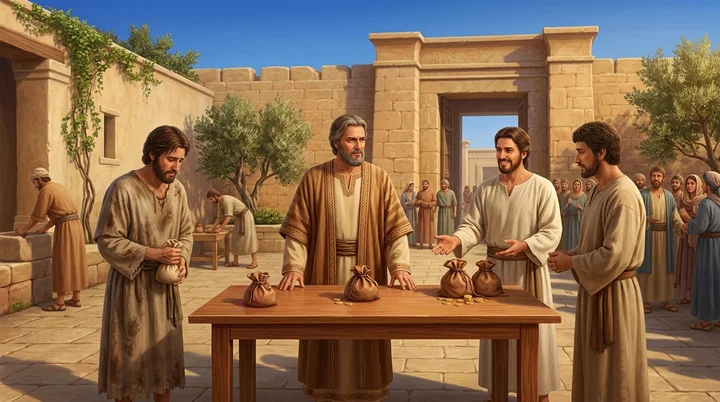
After a long time the lord of those servants cometh, and reckoneth with them.
Translations
After a long time the lord of those servants comes, and reckons with them.
King James Version, KJV Cambridge Paragraph Bible, Webster Bible
After a long time the lord of those servants cometh, and reckoneth with them.
Revised Version, American Standard Version
Now after a long time the lord of those servants cometh, and maketh a reckoning with them.
'And after a long time cometh the lord of those servants, and taketh reckoning with them;
And after a long time the lord of those bondmen comes and reckons with them.
And, after a long time, cometh the lord of those servants, and reckoneth with them.
After a long time the master of those servants returned to settle accounts with them.
After a long time the master of those servants returned and settled accounts with them.
“ Now after a long time the lord of those servants came, and settled accounts with them.
Now after a long time the lord of those servants comes, and makes up his account with them.
But after a long season, the master of those seruants came, and reckoned with them.
Douay-Rheims (Challoner revision)
But after a long time the lord of those servants came, and reckoned with them.
Pictures
Cross-references 20 of 64
- Luke 19:12-27
He said therefore, A certain nobleman went into a far country to receive for himself a kingdom, and to return.
The parallel parable also depicts the nobleman returning and reckoning with his servants.
- Matthew 25:26-30
His lord answered and said unto him, Thou wicked and slothful servant, thou knewest that I reap where I sowed not, and gather where I have not strawed:
The idle servant is judged for hiding rather than using what was entrusted to him.
- 2 Corinthians 5:10
For we must all appear before the judgment seat of Christ; that every one may receive the things done in his body, according to that he hath done, whether it be good or bad.
Both connect a future reckoning with deeds and the use of what was entrusted.
- Revelation 22:12
And, behold, I come quickly; and my reward is with me, to give every man according as his work shall be.
Christ returns with reward for each person according to their work.
- Romans 14:12
So then every one of us shall give account of himself to God.
Each person must give an account of himself to God.
- Matthew 25:15
And unto one he gave five talents, to another two, and to another one; to every man according to his several ability; and straightway took his journey.
The master distributes talents to each servant according to ability before reckoning with them.
- 1 Corinthians 4:2
Moreover it is required in stewards, that a man be found faithful.
Stewards must be found faithful with what is entrusted to them.
- Luke 12:48
But he that knew not, and did commit things worthy of stripes, shall be beaten with few stripes. For unto whomsoever much is given, of him shall be much required: and to whom men have committed much, of him they will ask the more.
Responsibility and judgment correspond to what each person has received.
- Luke 19:15
And it came to pass, that when he was returned, having received the kingdom, then he commanded these servants to be called unto him, to whom he had given the money, that he might know how much every man had gained by trading.
In the parallel parable, the lord returns and calls the servants to account.
- Matthew 25:30
And cast ye the unprofitable servant into outer darkness: there shall be weeping and gnashing of teeth.
The unfaithful servant is condemned at the reckoning and cast into outer darkness.
- Mark 13:34
For the Son of man is as a man taking a far journey, who left his house, and gave authority to his servants, and to every man his work, and commanded the porter to watch.
Both describe an absent master assigning work to servants and returning.
- Luke 16:10
He that is faithful in that which is least is faithful also in much: and he that is unjust in the least is unjust also in much.
Faithfulness in little things shows fitness for greater trust.
- Revelation 20:12
And I saw the dead, small and great, stand before God; and the books were opened: and another book was opened, which is the book of life: and the dead were judged out of those things which were written in the books, according to their works.
The dead are judged from the opened books according to their works.
- Matthew 25:23
His lord said unto him, Well done, good and faithful servant; thou hast been faithful over a few things, I will make thee ruler over many things: enter thou into the joy of thy lord.
The faithful servant receives the master’s commendation and enters his joy.
- Luke 16:2
And he called him, and said unto him, How is it that I hear this of thee? give an account of thy stewardship; for thou mayest be no longer steward.
A steward is called to account for managing entrusted goods.
- Matthew 25:26
His lord answered and said unto him, Thou wicked and slothful servant, thou knewest that I reap where I sowed not, and gather where I have not strawed:
The lord condemns the servant for hiding his entrusted talent.
- Matthew 16:27
For the Son of man shall come in the glory of his Father with his angels; and then he shall reward every man according to his works.
Christ comes and rewards each person according to their works.
- Luke 19:20
And another came, saying, Lord, behold, here is thy pound, which I have kept laid up in a napkin:
Both servants hide entrusted money in a napkin.
- Matthew 24:46
Blessed is that servant, whom his lord when he cometh shall find so doing.
The returning Lord finds the servant faithfully at work and holds his servants accountable.
- Matthew 25:24-25
Then he which had received the one talent came and said, Lord, I knew thee that thou art an hard man, reaping where thou hast not sown, and gathering where thou hast not strawed:
The fearful servant’s excuse for hiding his entrusted talent is given at the reckoning.
Commentary part 1 of 3
Each commentary is drawn from primary sources: the writings of Ellen G. White and Adventist pioneers and periodicals. Each commentary is separate. Its own words are not a quotation; follow the references to read the source passages.
Ellen G. White
38 sources
After a long interval of delay the master returns and calls each servant to account for what was entrusted, requiring it back with increase.GW 296.9ST Apr 22, 1875COL 325.1–2 The lord is Christ and the servants are His followers redeemed for service, and the reckoning is His second coming and the great Judgment-day of final accounts.GW 296.9COL 325.1–219MR 389.2–4 The goods reckoned for are the Lord's own loaned capital purchased with His blood, distributed to every person according to ability and capacity, embracing body, mind, time, means, influence and every natural and spiritual gift.ST Apr 22, 1875Lt 11, 1865, par. 2–319MR 389.2–4 The long time is the present probationary time of opportunity to trade, and the reckoning is the last-day investigative judgment from the record books when character is disclosed, reward is given according to works, and the account is fixed forever with no second probation.ST Apr 22, 1875Ms 19, 1899, par. 5–7ST Oct 23, 1901 Those who diligently trade and double their trust in soul-winning service are commended as good and faithful and enter the joy of their lord with eternal life, while the servant who buries his trust through fear, idleness and selfishness is condemned as wicked and slothful and cast out, for reward is measured by fidelity and improvement rather than amount.ST Apr 22, 1875COL 325.1–219MR 389.2–4Ms 184, 1907, par. 1–5Ms 25, 1908, par. 16
Verse Wording and Setting
After a long time, interval and delay the master returns and calls his servants to account for the goods entrusted to them, judging stewardship by what was done with those goods and requiring his own back with increase.GW 296.9ST Apr 22, 1875COL 325.1–2Ms 81, 1899, par. 1–7 The reckoning examines what each did with what was lent, commending and rewarding the faithful while condemning those who buried or squandered the trust and judging the servant who hid his talent for failing to use it.ST Apr 22, 1875Ms 81, 1899, par. 1–7ST Oct 23, 1901 Those who improved and doubled their talents present both principal and gain, and are made rulers over many and bidden to enter the joy of their lord, while the servant who hid his one talent in the earth and did nothing comes with complaint and excuse for slothfulness.Lt 11, 1865, par. 2–3ST Oct 23, 1901 He pleads fear and charges the lord with being hard, reaping where he has not sown and gathering where he has not strawed, as if God were severe and unjust and no benefit would come from improvement since God would take the gain himself.Lt 11, 1865, par. 2–3 He is answered as wicked and slothful and told he ought to have put the money to the exchangers so the lord might receive his own with usury at his coming, and his talent is taken and given to him who has ten talents, and as an unprofitable servant he is cast into outer darkness with weeping and gnashing of teeth.Lt 11, 1865, par. 2–3
The verse belongs to the parable of the talents in Matthew 25:14-23, given by Jesus in his discourse shortly before entering Gethsemane.ST Nov 20, 188419MR 385.2–386.1Lt 108, 1896, par. 2–9 It is the last of the many parables in his public teachings to the disciples, spoken early in the morning after he had crossed the mount.19MR 385.2–386.1Lt 108, 1896, par. 2–9 It was given as a warning in regard to his second appearing in the clouds of heaven, so that the coming of the lord after a long time to reckon with his servants points to that second coming.19MR 385.2–386.1Lt 108, 1896, par. 2–9 That coming is after this gospel of the kingdom is preached in all the world for a witness to all nations, and its day and hour no man and no angel knows but the Father only.19MR 385.2–386.1 It will be as the days of Noah, when people eating and drinking and marrying knew not until the flood took them away, with one taken and the other left, because they did not heed God's warning through Noah to build the ark on dry land.19MR 385.2–386.1
The waiting and slumber followed by the coming in Matthew 25 was applied to the expected advent announced in the 1844 movement, when a period of waiting and slumber was followed by the bridegroom's coming.GC 400.1–401.2 In the parable the lord represents Christ and the servants represent his followers, and the reckoning points to the great Judgment-day of final accounts when they must answer for how they have served him.GW 296.9COL 325.1–2 The reckoning is his second coming to call his servants to account for what he entrusted to them, an accounting of the use made of soul, body, spirit and endowments.ST Oct 23, 1901RH Dec 17, 1901 It embraces more than earthly, temporal employments and more than worldly goods, because eternal interests are involved and eternity must be kept in the reckoning.19MR 389.2–4Lt 108, 1896, par. 13–15
Talents Owned and Distributed
The talents to be reckoned for are the Lord's own goods, loaned capital and a sacred trust of His grace, not the servants' own property to bury, squander, or use for self-pleasing.ST Apr 22, 187519MR 389.2–4ST Oct 23, 1901RH Dec 17, 1901Lt 108, 1896, par. 13–15 They were secured at infinite cost, for Christ paid with His own blood and sufferings to purchase entire obedience and service, and therefore even the humblest service done at His bidding becomes a consecrated gift to promote His glory.Lt 11, 1865, par. 2–319MR 389.2–4Lt 108, 1896, par. 13–15 At His coming He requires His own again with usury, commending faithful investment that saves souls and condemning burial or misuse, for church membership alone does not release the steward and self-denying zeal alone is rewarded.ST Apr 22, 1875Lt 11, 1865, par. 2–3Ms 25, 1908, par. 16RH Dec 17, 1901
They are distributed to every man, woman, and child, to each according to his several ability and capacity, in differing measure as five, two, and one, never equally to all.ST Apr 22, 1875ST Oct 23, 1901Ms 25, 1908, par. 16RH Dec 17, 1901 The outcome of that stewardship brings satisfaction to the Master and to all interested when He returns after the long interval to call each to account for what was entrusted.ST Apr 22, 1875Ms 184, 1907, par. 1–5Ms 19, 1899, par. 5–7 Greater trusts bring greater responsibility, yet each is accountable only for faithful use of what was actually received, able to present both principal and gain when the faithful are commended and the unfaithful judged.Ms 19, 1899, par. 5–7ST Oct 23, 1901RH Dec 17, 1901
The reckoning embraces more than earthly temporal employments and more than worldly goods, for eternity must be kept in the reckoning because eternal interests are involved.GW 296.9COL 325.1–219MR 389.2–4Lt 108, 1896, par. 13–15 It is an accounting of soul, body, and spirit with all endowments, to be sacredly employed and not trifled with or buried in worldly enterprises.19MR 389.2–4RH Dec 17, 1901Lt 108, 1896, par. 13–15 It covers time, money, property, houses, lands, intellect, influence, speech, affections, opportunities, light, and every natural and spiritual gift, with ability to accumulate giving no ground for satisfaction unless turned to account for Him who bestowed it.19MR 389.2–4ST Oct 23, 1901RH Dec 17, 1901Lt 108, 1896, par. 13–15
Probation Time and Judgment
The long time is the present, the probationary time of gracious opportunity in which trading is to be done today. ST Apr 22, 1875Lt 11, 1865, par. 2–319MR 389.2–4Ms 184, 1907, par. 1–5Ms 25, 1908, par. 16 It lasts only until the Master comes or probation ends, when the account is fixed forever and what was done with entrusted means, souls, and service determines approval or condemnation. ST Apr 22, 1875Lt 11, 1865, par. 2–3ST Oct 23, 1901Ms 25, 1908, par. 16RH Dec 17, 1901 The reckoning embraces eternal interests, covering more than earthly employments and worldly goods, and its outcome brings satisfaction to the Master and to others interested in the stewardship. 19MR 389.2–4Ms 184, 1907, par. 1–5ST Oct 23, 1901Lt 108, 1896, par. 13–15
That reckoning is the last-day final reckoning at Christ's return, the great Judgment-day and close of probation when each servant answers for gifts, opportunities, soul, body, spirit, and endowments. ST Apr 22, 1875COL 325.1–2Ms 19, 1899, par. 5–7ST Oct 23, 1901RH Dec 17, 1901 Each life's work is examined, character is disclosed, and reward or condemnation is given according to works, with the faithful who present principal with increase commended and the unfaithful who hid their trust judged and stripped of it. ST Apr 22, 1875Lt 11, 1865, par. 2–3Ms 19, 1899, par. 5–7ST Oct 23, 1901RH Dec 17, 1901 The books of record fix what was invested for the cause and the salvation of souls and what was buried or squandered, and after that examination there is no second probation. ST Apr 22, 1875Ms 25, 1908, par. 16RH Dec 17, 1901Lt 108, 1896, par. 13–15
The reckoning is soon, fast approaching and near, with only a little probationary time left. GW 296.9ST Apr 22, 1875COL 325.1–2Lt 11, 1865, par. 2–319MR 389.2–4 Therefore the delay is no ground for idleness but a call to urgent diligence, readiness, and working while the day lasts, using differing gifts faithfully in God's service and especially in missionary soul-winning. ST Apr 22, 187519MR 389.2–4ST Oct 23, 1901Ms 25, 1908, par. 16
Faithful Rewarded Unfaithful Punished
After a long interval the master returns to call his servants to account for the goods entrusted to them, and the issue of that stewardship brings satisfaction to him and to all who are concerned in it.Ms 184, 1907, par. 1–5Ms 114, 1905, par. 6–13Ms 34, 1901, par. 12–13 The present is the time to put opportunities and abilities to work for him, especially in missionary labor for the salvation of souls, for church membership alone does not secure entrance into heaven.Ms 25, 1908, par. 16Ms 34, 1901, par. 12–13 Those who trade faithfully and double what was given can present both principal and increase, with souls won through investing in the warning message rather than tying means up in uncertain ventures or worldly enterprises.19MR 389.2–4ST Oct 23, 1901Lt 108, 1896, par. 13–15Ms 114, 1905, par. 6–13 They are commended as good and faithful, made rulers over many things, bidden to enter the joy of their lord, and rewarded with eternal life by him who rewards self-denying, self-sacrificing zeal.Lt 11, 1865, par. 2–3Ms 25, 1908, par. 16 That reward embraces more than earthly employment and worldly goods, for eternity with its eternal interests is kept in the reckoning, and even the humblest service done at the Master's bidding to advance his glory becomes a consecrated gift.19MR 389.2–4Lt 108, 1896, par. 13–15
The servant who hid his talent and did nothing with it comes with complaint and excuse for slothfulness, claiming the lord is a hard man reaping where he has not sown and gathering where he has not strawed, and saying he was afraid.Lt 11, 1865, par. 2–3RH Dec 17, 1901 He is answered as wicked and slothful, told he ought to have put the money to the exchangers so the lord could receive his own with usury at his coming.Lt 11, 1865, par. 2–3RH Dec 17, 1901 His talent is taken from him and given to him who has ten talents, and as an unprofitable servant he is cast into outer darkness where there is weeping and gnashing of teeth.COL 325.1–2Lt 11, 1865, par. 2–3Ms 19, 1899, par. 5–7 In that great Judgment-day the lord who represents Christ calls his followers to answer for how they have served him, so that the faithful who invested means to save souls receive the Master's approval while those who bury or squander what was lent to them, doing no good with soul, body, spirit and endowments, receive condemnation and loss.ST Apr 22, 1875COL 325.1–2Ms 19, 1899, par. 5–7ST Oct 23, 1901RH Dec 17, 1901
The talents are God's gifts lent and not the servants' own, given in differing measure according to each one's ability, and each is accountable for using faithfully what was received.19MR 389.2–4ST Oct 23, 1901RH Dec 17, 1901 Reward is measured not by amount but by fidelity, motives, and improvement, so faithful use of little is as accepted as faithful use of much.ST Apr 22, 1875ST Oct 23, 1901Ms 25, 1908, par. 16 Ability to accumulate worldly goods gives no ground for satisfaction unless turned to account for him who bestowed it and paid with his own blood and sufferings to secure entire obedience and service.19MR 389.2–4Lt 108, 1896, par. 13–15 Neglect that leaves gifts unproductive and fails to bless others brings proportionate condemnation and eternal loss.ST Apr 22, 1875RH Dec 17, 1901Ms 34, 1901, par. 12–13
Trading Increase Required
After a long interval the master returns to call his servants to account, and the outcome of their stewardship brings satisfaction to him and to all others interested in the matter.Ms 184, 1907, par. 1–5Ms 26, 1899, par. 4–8Ms 114, 1905, par. 6–13 The reckoning is an accounting for how opportunities, abilities, and all natural and spiritual gifts entrusted have been used, and the present is the time to put those gifts to work for him, especially in missionary work for the salvation of souls.Ms 25, 1908, par. 16Ms 26, 1899, par. 4–8Ms 34, 1901, par. 12–13 Every person has a duty to employ what was given faithfully and to the fullest in his service and to bless others, putting gifts to productive use and increasing them for the good of others, for gifts misused or left unproductive fail that responsibility.Ms 26, 1899, par. 4–8Ms 9, 1891, par. 1–3Ms 34, 1901, par. 12–13 They are to be invested wisely in carrying the warning message and winning souls, not tied up in uncertain ventures, worldly enterprises, or self-pleasing, and church membership alone does not secure entrance into heaven.Ms 25, 1908, par. 16Ms 114, 1905, par. 6–13Ms 34, 1901, par. 12–13 God rewards servants who labor with self-denying, self-sacrificing zeal to advance his cause.ST Apr 22, 1875Ms 25, 1908, par. 16
The master after long delay requires his stewards to answer for what was entrusted, holding them accountable for using their means to advance his cause.GW 296.9ST Apr 22, 1875COL 325.1–2 Those who bury or squander what was committed receive condemnation, while faithful servants who invest it to save souls receive the Master's approval.ST Apr 22, 1875Ms 19, 1899, par. 5–7ST Oct 23, 1901 The reckoning embraces more than earthly, temporal employments and more than worldly goods, because eternal interests are involved and eternity must be kept in the reckoning.19MR 389.2–4 The talents committed are a loan from the Master and a stewardship of his grace for a sacred, higher trust, to be invested in work for him to advance his glory and not to be buried up in worldly enterprises.19MR 389.2–4RH Dec 17, 1901 Ability to accumulate worldly goods gives no ground for satisfaction unless those talents are turned to account for him who bestowed them, since entire obedience and service were secured at the cost of his own blood and sufferings.19MR 389.2–4 Even the humblest service becomes a consecrated gift when exercised in doing the Master's bidding and promoting his glory, and faithful servants can present both what they received and what their work gained, while the servant who hid his talent is judged for failing to use it.19MR 389.2–4ST Oct 23, 1901
The lord who reckons is not hard but good, compassionate, forgiving, and just, a giver whose goods are lent and after a long time required again at the servants' hands.19MR 389.2–4RH Dec 17, 1901Ms 9, 1891, par. 1–3 The accounting covers soul, body, spirit, and endowments, which are to be consecrated and sacredly employed in his service and not trifled with, with faithful use putting the money out to usury and returning principal with interest commended and rewarded, while hiding the talent and doing no good with it brings condemnation and loss.RH Dec 17, 1901 The unfaithful servant's fear and complaint that his lord is a hard man reaping where he has not sown and gathering where he has not strawed show that he did not know God's character, carrying the false idea that God is a severe and unjust master who would gather the improvement himself so the servant would not be benefited.Lt 11, 1865, par. 2–3Ms 9, 1891, par. 1–3 That excuse for slothfulness is answered as wicked and slothful, with the charge that he ought to have put the money to the exchangers so the lord could receive his own with usury at his coming.Lt 11, 1865, par. 2–3 His talent is therefore taken and given to him who has ten talents, and as an unprofitable servant he is cast into outer darkness where there is weeping and gnashing of teeth.ST Apr 22, 1875Lt 11, 1865, par. 2–3ST Oct 23, 1901
Burying Talent Condemned
To hide the talent in the earth, to hoard it or leave it idle and do no good with it, is to fail the trust and to bring condemnation and loss at the reckoning, while faithful servants who invest what was lent them to save souls receive the Master's approval.ST Apr 22, 1875ST Oct 23, 1901RH Dec 17, 1901 After a long interval the master returns to call his servants to account for what he entrusted to them and to require those talents again at their hands, for they are not their own.ST Apr 22, 1875Ms 184, 1907, par. 1–5Ms 19, 1899, par. 5–7RH Dec 17, 1901 The accounting covers the use made of soul, body, spirit and every endowment, which are to be consecrated and sacredly employed in God's service and not trifled with.ST Oct 23, 1901RH Dec 17, 1901 To bury them in worldly enterprises, to squander means on selfish indulgence, or to withhold resources so that souls are not saved, is unfaithfulness, and church membership alone does not secure entrance into heaven.ST Apr 22, 1875ST Oct 23, 1901Ms 25, 1908, par. 16 The present is the time to put opportunities and abilities to work for Him, especially in missionary work for the salvation of souls, and God rewards those who labor with self-denying, self-sacrificing zeal, to the satisfaction of himself and of all who are interested in the matter.Ms 184, 1907, par. 1–5Ms 19, 1899, par. 5–7Ms 25, 1908, par. 16
Mere profession counts for nothing at that reckoning, for genuine faith works by love in self-denying service and even the humblest service becomes a consecrated gift when done in doing the Master's bidding and promoting His glory.19MR 389.2–4Ms 25, 1908, par. 16Lt 108, 1896, par. 13–15 The reckoning embraces more than earthly, temporal employments and more than worldly goods, because eternal interests are involved and eternity must be kept in view.GW 296.9COL 325.1–219MR 389.2–4Lt 108, 1896, par. 13–15 The talents are a loan from the Master and a stewardship of His grace for a sacred, higher trust, to be invested in work for Him to advance His glory and not buried up in worldly enterprises.19MR 389.2–4Lt 108, 1896, par. 13–15 Ability to accumulate worldly goods gives no ground for satisfaction unless those talents are turned to account for Him who bestowed them, who paid with His own blood and sufferings to secure entire obedience and service.19MR 389.2–4Lt 108, 1896, par. 13–15 When the lord who represents Christ returns after a long absence to reckon with His followers, selfishness, pride, covetousness and even idle words are exposed, and only those who can present both what they received and what their work gained are accepted as faithful.COL 325.1–2ST Oct 23, 1901RH Dec 17, 1901
The reckoning is strict, charging not only wrong done but what could have been done and was left undone, with neglected opportunities and souls that might have been saved laid to the servant's account.ST Apr 22, 1875ST Oct 23, 1901RH Dec 17, 1901 The servant who did not improve his one talent but hid it and did nothing with it comes with an excuse for slothfulness, complaining that the lord is a hard man reaping where he has not sown and gathering where he has not strawed.ST Apr 22, 1875Lt 11, 1865, par. 2–3 He pleads that he was afraid, carrying the idea that God is a severe and unjust master and that he himself would not be benefited by improvement because God would gather the improvement Himself.Lt 11, 1865, par. 2–3 That plea is no excuse and that false judgment of God does not release him, for he is answered as wicked and slothful, told he ought to have put the money to the exchangers so the lord could receive his own with usury at his coming.Lt 11, 1865, par. 2–3RH Dec 17, 1901 His talent is therefore taken and given to him who has ten talents, and as an unprofitable servant he is cast into outer darkness where there is weeping and gnashing of teeth.Lt 11, 1865, par. 2–3
Personal Proportionate Accountability
After a long time the master comes back to settle accounts with his own servants one by one, requiring each to answer for what was actually placed in his hands.ST Apr 22, 1875Ms 184, 1907, par. 1–5Ms 19, 1899, par. 5–7ST Oct 23, 1901RH Dec 17, 1901 No steward can hand his trust to someone else to bear, blend it into another's work, sell it off, or surrender its control to any other person or body, whether council, conference, or publishing house, for the reckoning lies with the receiver himself.Ms 184, 1907, par. 1–5Ms 19, 1899, par. 5–7ST Oct 23, 1901Ms 25, 1908, par. 16RH Dec 17, 1901 What is demanded back is the use made of soul, body, spirit, and every endowment, consecrated to service and not trifled with, with principal returned together with increase gained by faithful work.ST Apr 22, 1875Ms 19, 1899, par. 5–7ST Oct 23, 1901Ms 25, 1908, par. 16RH Dec 17, 1901 Those who so invest what was lent to save souls meet approval and bring satisfaction to the master and to all concerned, while those who bury or squander it meet condemnation.ST Apr 22, 1875Ms 184, 1907, par. 1–5Ms 19, 1899, par. 5–7Ms 25, 1908, par. 16RH Dec 17, 1901
The measure in that reckoning is what was given, for talents differ according to ability and each is judged by the light, grace, and truth received.GW 296.9COL 325.1–2ST Oct 23, 1901RH Dec 17, 1901Lt 108, 1896, par. 13–15 Condemnation falls in proportion to the trust bestowed, because the reckoning reaches beyond earthly employment and worldly goods to eternal interests that must be kept in view.GW 296.9COL 325.1–219MR 389.2–4RH Dec 17, 1901Lt 108, 1896, par. 13–15 The goods are a loan and a stewardship of grace for a sacred and higher trust, to be invested to advance His glory and not buried in worldly enterprise, and mere skill in accumulating property gives no ground for satisfaction unless turned to account for Him who bestowed it.ST Apr 22, 187519MR 389.2–4ST Oct 23, 1901RH Dec 17, 1901Lt 108, 1896, par. 13–15 Men belong to Him by creation and by redemption, since He paid with His own sufferings and blood to secure entire obedience and service.19MR 389.2–4RH Dec 17, 1901Lt 108, 1896, par. 13–15
Even the humblest service, when done at His bidding for His glory, becomes a consecrated gift, and the one small talent faithfully used is accepted and gains increase like the larger trusts.ST Apr 22, 1875Lt 11, 1865, par. 2–319MR 389.2–4ST Oct 23, 1901RH Dec 17, 1901 Mere church membership does not secure entrance, for the present time to work with self-denying zeal in missionary soul-saving must be improved.ST Apr 22, 1875Ms 184, 1907, par. 1–5ST Oct 23, 1901Ms 25, 1908, par. 16RH Dec 17, 1901 Caution twisted into fearful inaction is slothfulness, and the plea of fear with complaint against the master as hard brings the answer of wicked and slothful, loss of the talent to the faithful, and casting out as unprofitable into outer darkness with weeping and gnashing of teeth.ST Apr 22, 1875Lt 11, 1865, par. 2–3ST Oct 23, 1901RH Dec 17, 1901 Neglect of mind and speech and failure to put the money to the exchangers so it returns with usury therefore fails the test, while those who double what they received are commended as good and faithful, made rulers over many, and enter the joy of their lord.Lt 11, 1865, par. 2–3ST Oct 23, 1901Ms 25, 1908, par. 16RH Dec 17, 1901
Present Calls to Action
After a long interval the returning master requires his stewards to account for what was done with what was entrusted, holding them answerable for using means, gifts and opportunities to advance his cause and save souls.ST Apr 22, 1875Ms 19, 1899, par. 5–7ST Oct 23, 1901 The accounting covers soul, body, spirit and every endowment, which are not their own but lent to be consecrated and sacredly employed, with faithful investment that returns principal with increase approved and rewarded, and burying, squandering or doing no good condemned with loss.Ms 25, 1908, par. 16RH Dec 17, 1901Lt 108, 1896, par. 13–15 The goods reckoned are more than temporal employments and worldly goods, for eternity and eternal interests are involved, and ability to accumulate gives no ground for satisfaction unless turned to account for him who bestowed it.RH Dec 17, 1901Lt 108, 1896, par. 13–15 The present is the time to put gifts to work, especially in missionary labor with self-denying zeal, since church membership alone does not secure entrance, and the faithful will be able to present both what was received and what was gained while the one who hid his talent is judged for failure.Ms 19, 1899, par. 5–7ST Oct 23, 1901Ms 25, 1908, par. 16
Present opportunity is a trust to be traded by regarding money, houses, lands, property, time, strength and abilities as the Lord's goods and using them to build up his kingdom and help others, seeking wisdom so the trust is not used to glorify self or indulge selfish impulses.9T 245.34T 619.1–2 Trading means improving talents so they yield a return, with even the smallest talent of means having its appointed work, and faithfulness in little duties operating on the plan of addition while God multiplies, making small faithful efforts most precious influences.9T 245.33T 53.4MYP 297 All ransomed sons and daughters of Adam must answer in the last day for neglecting entrusted talents, reproaching their Maker, robbing God by withholding and burying his goods, and abusing gifts for self.4T 619.1–2ST Aug 1, 1911 Entrusting property to wife or children does not release responsibility, which remains until the means are returned to God through faithful use in his cause, and the judgment examines that stewardship.1T 530.1–2
Diligent use can enlarge and multiply what was entrusted according to ability, and even the smallest gift is to be valued and used rather than hidden.6MR 107.3–108.1Lt 76, 1898, par. 1–2ST May 8, 1901 Servants must learn to trade from the very first endowment, putting goods out to the exchangers by calling attention to their value, presenting sacred truth by precept and example, seeking wisdom daily, searching the Scriptures, and realizing co-partnership with God, in which he educates workers and develops executive ability.Lt 86, 1895, par. 7–8ST Jan 21, 1897 Life itself is a costly talent owned by God through creation and redemption, to be used, improved and returned to him, with faithful service rewarded and selfish departure from his will leaving a person wanting in judgment.ST May 8, 1901ST Jan 21, 1897 The servant who hid his talent and then accused his lord of hardness took the slothful course, failing to advance the kingdom and lay up treasure in heaven, whereas faithful stewardship brings reward.Lt 23a, 1893, par. 5–9Lt 76, 1898, par. 1–2Ms 144, 1897, par. 1–4
Day by day and hour by hour people trade on the Lord's money and build the record for the last great day, when results are expected from everyone with reward proportionate to work and no second probation afterward.21MR 354.5–7 Money lent by the master is to be examined carefully, especially in old age, as to whether all required to advance his work was done, and returning what is his means placing it in new missionary fields where truth was never preached and lifting the standard there, for the giver's own eternal interest.Lt 53, 1899, par. 1ST Sep 12, 1895 Responsibility rests not on priests and rulers alone but on every believer from lowliest to highest, each called to decided service in the vineyard with active virtues illustrating saving truth, with earnest, vigilant working joined to waiting, watching and preparing for appearing.Lt 32, 1875, par. 6–8Ms 126, 1899, par. 9 Faithfully using even small ability in whatever situation prepares for greater responsibility, while neglect fails the trust; wealth and abilities spent on selfish desires violate stewardship, but used in mercy and compassion they serve need and bring increase beyond measure.Lt 32, 1875, par. 6–8Ms 144, 1897, par. 1–4ST Sep 12, 1895
Sources
Pioneers and periodicals
748 sources
After a long absence the master returns to settle accounts with the servants entrusted with his goods.RH Feb 6, 1855RH Jan 12, 1911ST Dec 14, 1882 The long time is the whole Christian age from his going to the Father to receive a kingdom until his personal second coming to repay each according to deeds.ST Jul 1, 1889ST Aug 19, 1889RH Sep 23, 1862RH Nov 10, 1868 The reckoning is the judgment, the investigative closing work in the heavenly sanctuary where every case is decided before he appears in the clouds.LDT 187.3–188.2RH Aug 25, 1868RH Aug 25, 1868ST Dec 17, 1885ST Feb 22, 1883 The talents are his gifts lent in differing measure according to each one's ability, including all powers of body and mind, time, means, opportunity and light of truth to be traded for increase.ST Oct 23, 1901ST Jul 2, 1902ST Sep 14, 1882ST Nov 22, 1899RH Aug 6, 1872 Those who use what they have and gain more are approved as good and faithful and enter his joy with the same commendation whether two or five, while the servant who hides even one is condemned as wicked, slothful and unprofitable, loses his gift and is cast out.RH Feb 6, 1855ST Dec 19, 1916RH Jun 15, 1905RH Feb 9, 1911 Accountability is by faithfulness rather than greatness, for talents grow by use and are lost by disuse, and no excuse of fear, littleness or delay removes responsibility.RH Jan 12, 1911ST Dec 19, 1916ST Sep 13, 1899ST Jan 22, 1885
Wording and Immediate Setting
After a long time the lord of those servants comes and settles accounts with them.RH Feb 6, 1855ST Feb 19, 1902RH Jan 8, 1901 That reckoning calls each servant to give a report of what was done with the goods entrusted to him, concerning how the talents were used.RH Jan 12, 1911ST Dec 14, 1882ST Feb 19, 1902 The servants who traded with the five talents and the two talents and gained other talents receive approval as good and faithful servants, while the servant who dug in the earth and hid his lord's money fails to justify himself, has his talent taken from him, and is cast into outer darkness.RH Feb 6, 1855 The reckoning belongs to the final accounting when the Lord returns, and its day is approaching, so each servant's faithfulness in using what was given will matter.RH Jan 8, 1901RH May 1, 1879 Talents may grow through use or be lost through disuse, and servants are individually accountable for their stewardship of abilities and work given them.RH Jan 12, 1911ST Dec 14, 1882
The verse belongs to the parable of the talents, which illustrates accountability for gifts received, since what is given is taken away if it is not improved or used.ST Nov 30, 1904 It is studied together with the parable of the pounds, given two or three days earlier shortly before the crucifixion, so that the two parables together give a fuller lesson about human accountability to the Master.ST Apr 30, 1896 The parable of the pounds likewise concerns Christ going away and later returning to call servants to account for spiritual gifts entrusted to them, to be used in His service until He comes again and handled faithfully even when small.ST Apr 30, 1896 The verse also belongs with the parable of the ten virgins and teaches watchfulness for the kingdom and second advent, with trimmed and burning lights meaning watching at all hours for One expected at no definite known time, lest His coming take His own people unawares and find them unprepared.ST Apr 27, 1904 It gives instruction similar to Luke 12 about watchfulness and faithfulness while awaiting the Lord's return, is one of Jesus' concrete stories and not a model for dramatic presentation, and going out to meet the Bridegroom when He is near is not extravagant or nonessential.ST Mar 5, 1896RH Jan 27, 1874
The verse stands in Jesus' continuous prophetic discourse in Matthew 24 and 25, begun in Matthew 24 with the chapter division added later.ST Apr 7, 1881 That discourse covers the entire Christian age and presents Christ's second coming as a prominent subject.ST Jun 11, 1874ST Jan 27, 1876 It is recorded most fully in Matthew 24-25 alongside Mark 13 and Luke 21, which give the key to rightly dividing its teaching.ST Apr 22, 1889 It was given in the discourse shortly before entering Gethsemane, when earthly ministry was drawing to a close and the shadow of the cross was over Him.ST Nov 20, 1884RH Apr 15, 1909
That discourse answers about His coming and the end of the world, presenting the Lord's return as a future event when the Son of man brings those who have accepted saving grace to be with Him.RH Dec 23, 1902 It gives in sublime language with imagery much used by the ancient prophets a graphic description of the utter political destruction of the Jewish nation including its civil, political and religious polity, the end of that dispensation, and the establishing of the Christian dispensation, the kingdom of heaven, with principles of its administration and results in separating tares from wheat and righteous from wicked and the final destiny of each class and the coming of the Son of Man in their accomplishment.RH Sep 3, 1872 Its immediate primary reference to destruction of Jerusalem and its tribulation by the Romans is soon left behind for greater events that usher in the end of the world in answer to Matthew 24:3, pointing ahead to the more dreadful time foretold by Daniel and elaborated in Revelation.ST Apr 22, 1889 It forms one of eleven long chains of prophecy spanning the whole Christian dispensation to the day of God, placing readers on the last link on the verge of the day of God, with certainty of the personal second coming to punish the ungodly and reward the saints and bring the reign of peace and redemption and restitution, calling for earnest work in proclaiming the proximity of the judgment and coming of the Bridegroom.RH Mar 11, 1875 It throws light on the pathway through this dispensation and especially the last days, showing leading events in world and church, warning of dangers and perils including papal tribulation and present deceptions saying Lo here is Christ, and giving light, warnings, unmistakable signs, counsel and encouragement so that disciples may escape coming things and stand before the Son of man, knowing the generation though not the day or hour, and so the day does not come as a thief.RH Apr 15, 1909ST Oct 16, 1893
The two classes of servants at the end of Matthew 24 are manifested at the same time the kingdom of heaven is compared to the ten virgins, so the reckoning with the servants is set within the same discourse as the parable of the virgins.ST Apr 7, 1881 It is part of the exhortations to watch in Matthew 24 and 25 connected with the signs of the second advent and applying to the period just before it, pointing to the Lord's coming as the end of the waiting and watching period when believers must be found awake, ready and faithful.RH Oct 15, 1872 Its meaning must be established by comparing clear Scriptures and considering circumstances and intended lesson rather than by imagination alone.ST Jul 1, 1889 Universal terms like all men and every man in Matthew 25 are limited in scope and must not be taken to mean all the wicked in graves are judged and rewarded at the second advent, but limited as in John 6:45 in light of the plainly stated fact of two resurrections. It relates to the end of the world and to the conversation about general judgment, destruction of Jerusalem, and discussions about Christ's kingdom, but not to what is called the presence of Christ as non-material spiritual presence and power.ST Aug 4, 1898
The master is Christ, whose return is the second advent, and His servants are His followers and church, redeemed for service.ST Jul 2, 1902ST Oct 13, 1898 They are given gifts when He goes away and charged to use them until He returns, each given his own work and special place in the eternal plan of heaven, with the true object of life as ministry to God and fellow men in cooperation with Christ for salvation of souls.ST Jul 2, 1902ST Oct 13, 1898 The goods are a share in the plan of salvation, given so each has a part not only in enjoying its blessings and provisions but in extending it to others, and the coming after a long time means each steward will render account and show increase.RH Nov 3, 1910 The parable sets out principles governing the church throughout the Christian dispensation, presenting people as Christ's agents entrusted with interests of His kingdom.RH Oct 22, 1872 Improvement is required according to several ability, not capriciously, five for five, two for two, and one for one, and God is equally honored by faithful improvement whether great or small, expecting returns only according to what a man has and not according to what he has not.ST Jul 2, 1902 The phrase his own servants lets even one who fears having no talent hope to be one of the Lord's servants.ST Jul 14, 1881 Faithful Christians live in constant anticipation of the absent Master and Bridegroom's return, distinct from the world, testifying its works are evil, employing every talent for His cause, with garments washed white in the blood of the Lamb and loins girt with truth, watchful and prayerful though no one can calculate day or hour though prophetic periods show the time of the end is present.ST Sep 2, 1880
The chapter does not describe the investigation of cases in the great trial of the dead but the separation of the righteous and the wicked accomplished by the resurrection of the just.ST Aug 15, 1878 At that coming the righteous and wicked are forever separated, living saints from living wicked and dead saints from wicked dead, following a prior decision about who belongs among the righteous.RH Nov 19, 1857 After the separation Christ explains to each party why it was made, acting as executor of judgment and directing execution of His changeless award.RH Aug 19, 1909ST Aug 15, 1878 The righteous and wicked are judged before they receive recompense, and their words in the judgment scene are inconsistent with having already spent ages in heavenly glory or hell before hearing the Judge's sentence.ST Sep 15, 1881RH Apr 21, 1874 The reckoning is placed at Christ's final coming when He appears in glory at the end of earthly history, sits upon His throne, establishes His earth kingdom, and brings final reward.RH Aug 19, 1909ST May 7, 1912
Long Delay and Promised Return
After a long time covers the whole Christian dispensation from ascension after the resurrection to coming again.ST Jul 1, 1889ST Aug 19, 1889RH Sep 25, 1866 The delay was necessary because he must go away to the Father to receive a kingdom to be set up at the second coming.ST May 25, 1882ST Jan 11, 1883 The parable was given to correct expectation of an immediate temporal kingdom freeing Israel from Rome and giving world sovereignty to the Jews, an expectation held even at the ascension and understood only afterward when the Holy Spirit brought his teaching to mind.ST May 25, 1882 The present condition of things therefore continues until he returns to judge the world and take possession of his kingdom, with no intervening millennium of holiness, and retributive justice does not have its complete exhibition in this world but is future and expressly connected with his coming.ST Jul 1, 1889RH Sep 23, 1862RH Mar 19, 1861 His appearing as earth's rightful King then brings deliverance of creation and establishment of his kingdom, and the goods entrusted are to be used until that return.ST Jul 1, 1889RH Sep 25, 1866
That return is personal and literal, when he comes at the time appointed by the Father to call servants to account and repay each according to deeds.ST Jul 9, 1912ST Jan 11, 1883 It is the glorious appearing and solemn close of life's working day, an individual inquiry manifesting hearts, when talents entrusted to the church after the ascension must be answered for and faithful use is outward preparation joined to inward spiritual life.RH Nov 10, 1868ST Jul 9, 1912 Some have neglected their talents and others reject his reign, and each is judged according to talents entrusted and according to the master chosen to serve.ST Jan 11, 1883RH Feb 2, 1911 The prospect calls for waking from sleep, living in light and truth, watchfulness because the time is unknown, and meeting him by trusting his wounds and walking in light.RH Nov 10, 1868ST Feb 3, 1909ST Jul 9, 1912
The return after long delay belongs among sayings showing uncertainty of timing.ST Mar 10, 1890ST Jan 14, 1913RH Jun 7, 1915 The verb rendered cometh means simply come, go or pass and does not by itself specify secret manner or that only the righteous will know of it.ST Mar 10, 1890ST Jan 14, 1913 The surrounding expressions convey that he may come unexpectedly and suddenly at an uncertain time.ST Mar 10, 1890RH Dec 1, 1859ST Jan 14, 1913 That uncertainty supports hope in his return with duty to watch, rejoicing in deliverance at his approach, readiness through faithful service with hearts fixed on his coming and hope in his kingdom, and faithful work while life and opportunity remain even when that service is small.RH Dec 1, 1859RH Jun 7, 1915ST Jul 1, 1897
The long time represents a disappointment of his people who went forth expecting to meet Christ at his coming.GSAM 148.2 It belongs to the closing work of the church before the second coming, through darkness and delay when there is no prophetic period to measure time and the approach of day must be discerned by signs.RH Mar 18, 1873 Those signs and events mark changing duties and trials, approaching judgment, and review of servants' responsibility. The delay requires patient waiting rather than rushing ahead without command, restraining eagerness to labor, pain at seeming silence, reproach from fellow workmen, and temptation to take talents and go; waiting itself is service, the hindering hedge being his own encircling arm, and the servant must be still, bow under correction, trust his way through clouds and darkness, and look for him to open the gate in his own time.RH Apr 2, 1901 Readiness is taught through faithful service, constant watchfulness, prayer and labor while life remains.ST Jul 1, 1897
The delay does not remove responsibility or cancel obligation.ST Nov 14, 1878RH Aug 25, 1868RH Nov 10, 1874 The interval is time to use and develop each entrusted talent, to use all talents God has given so as to help prepare the world for his coming, and to consecrate time and talents before the reckoning.RH Aug 25, 1868RH Feb 9, 1911RH Jun 7, 1906RH Nov 10, 1874 His coming is certain and each must be found faithfully doing the assigned task whether great or small, whether active work or patient waiting, looking to whether the work is done unto the commendation Well done.ST Sep 11, 1893 Inaction in his service will eventually destroy confidence in God, a talent left unused risks judgment as foolish and unprofitable, increase is required from what was given, and the approaching end makes the work urgent.ST Nov 14, 1878RH Aug 25, 1868RH Nov 10, 1874
The long interval allows small repeated gains from trading to accumulate until original capital is doubled, which in the illustration could happen in little more than three years.ST Apr 8, 1886 The long time is now nearly ended because signs of near approach are nearly all past, and his coming to reward every man according to work and to call each to account for improvement or hiding is at hand.RH Feb 6, 1855 Because that coming is now near every talent must be used with double urgency.ST Aug 19, 1889 It is therefore a period for earnest vigilant work to prepare the way by waiting, watching, praying and working, with personal consecration through cultivated heart-holiness, faithfulness without declension, continual striving to increase capabilities, and intelligent use of every facility provided.RH Oct 2, 1900RH Feb 6, 1855
Sources