Matthew 26:69
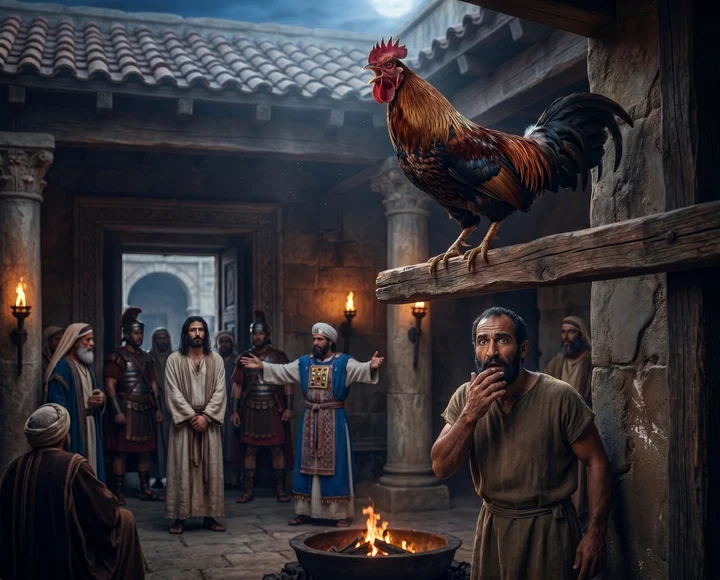
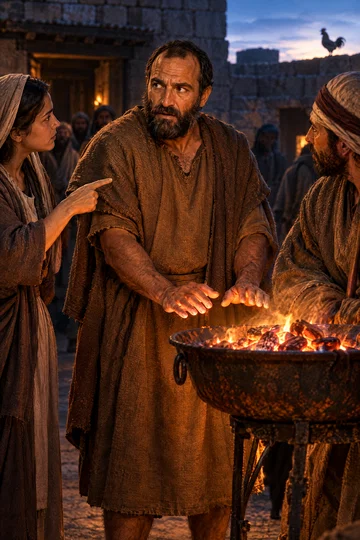
Now Peter sat without in the palace: and a damsel came unto him, saying, Thou also wast with Jesus of Galilee.
Translations
Now Peter sat without in the palace: and a damsel came to him, saying, You also were with Jesus of Galilee.
King James Version, KJV Cambridge Paragraph Bible
Now Peter sat without in the palace: and a damsel came unto him, saying, Thou also wast with Jesus of Galilee.
Now Peter sat without in the palace: and a damsel came to him, saying, Thou also wast with Jesus of Galilee.
Now Peter was sitting without in the court: and a maid came unto him, saying, Thou also wast with Jesus the Galilaean.
Now Peter was sitting without in the court: and a maid came unto him, saying, Thou also wast with Jesus the Galilæan.
And Peter without was sitting in the court, and there came near to him a certain maid, saying, 'And thou wast with Jesus of Galilee!'
But Peter sat without in the palace-court; and a maid came to him, saying, And thou wast with Jesus the Galilaean.
Now, Peter, was sitting without, in the court; and there came unto him a certain female servant, saying—Thou also, wast with Jesus, the Galilaean.
Berean Standard Bible, Majority Standard Bible
Meanwhile, Peter was sitting out in the courtyard, and a servant girl came up to him. “ You also were with Jesus the Galilean,” she said.
Now Peter was sitting outside in the court, and a maid came to him, saying, “ You were also with Jesus, the Galilean!”
Now Peter was seated in the open square outside the house: and a servant-girl came to him, saying, You were with Jesus the Galilaean.
Peter sate without in the hall, and a maide came to him, saying, Thou also wast with Iesus of Galile:
Douay-Rheims (Challoner revision)
But Peter sat without in the court: and there came to him a servant maid, saying: Thou also wast with Jesus the Galilean.
Pictures


Cross-references 20 of 44
- Luke 22:54-62
Then took they him, and led him, and brought him into the high priest’s house. And Peter followed afar off.
Peter denies Jesus, then Jesus looks at him and he weeps bitterly.
- John 18:17
Then saith the damsel that kept the door unto Peter, Art not thou also one of this man’s disciples? He saith, I am not.
The doorkeeper asks Peter whether he is Jesus’ disciple, and Peter denies it.
- Mark 14:66-72
And as Peter was beneath in the palace, there cometh one of the maids of the high priest:
Parallel account of Peter’s denial and bitter grief.
- John 21:15-17
So when they had dined, Jesus saith to Simon Peter, Simon, son of Jonas, lovest thou me more than these? He saith unto him, Yea, Lord; thou knowest that I love thee. He saith unto him, Feed my lambs.
Jesus restores Peter after his denial and entrusts him with caring for the flock.
- Matthew 26:34
Jesus said unto him, Verily I say unto thee, That this night, before the cock crow, thou shalt deny me thrice.
Jesus foretold Peter’s denial despite his confident promise of faithfulness.
- Luke 22:31-34
And the Lord said, Simon, Simon, behold, Satan hath desired to have you, that he may sift you as wheat:
Jesus warns Peter of his coming trial and denial, then charges him to strengthen his brethren.
- Matthew 26:58
But Peter followed him afar off unto the high priest’s palace, and went in, and sat with the servants, to see the end.
Peter follows Jesus at a distance before denying him.
- Matthew 26:40-41
And he cometh unto the disciples, and findeth them asleep, and saith unto Peter, What, could ye not watch with me one hour?
Peter slept instead of praying in the garden before his denial.
- Acts 4:8-13
Then Peter, filled with the Holy Ghost, said unto them, Ye rulers of the people, and elders of Israel,
Peter, filled with the Spirit, boldly testifies before rulers after denying Jesus.
- Matthew 26:56
But all this was done, that the scriptures of the prophets might be fulfilled. Then all the disciples forsook him, and fled.
The disciples forsook Jesus and fled when he was arrested.
- Luke 22:56-57
But a certain maid beheld him as he sat by the fire, and earnestly looked upon him, and said, This man was also with him.
A servant girl identifies Peter as being with Jesus, and he denies it.
- John 18:25-27
And Simon Peter stood and warmed himself. They said therefore unto him, Art not thou also one of his disciples? He denied it, and said, I am not.
Records Peter’s denial of being Jesus’ disciple and completes the account of his denials.
- Matthew 26:33
Peter answered and said unto him, Though all men shall be offended because of thee, yet will I never be offended.
Peter’s boast contrasts with his denial hours later.
- Mark 16:7
But go your way, tell his disciples and Peter that he goeth before you into Galilee: there shall ye see him, as he said unto you.
The resurrection message specifically includes Peter after his denial.
- Acts 2:14
But Peter, standing up with the eleven, lifted up his voice, and said unto them, Ye men of Judæa, and all ye that dwell at Jerusalem, be this known unto you, and hearken to my words:
Peter speaks boldly to the crowd after denying Jesus.
- Matthew 10:33
But whosoever shall deny me before men, him will I also deny before my Father which is in heaven.
Peter denies Jesus when questioned before others.
- Acts 3:12-16
And when Peter saw it, he answered unto the people, Ye men of Israel, why marvel ye at this? or why look ye so earnestly on us, as though by our own power or holiness we had made this man to walk?
Peter denies his own holiness and credits Jesus with the miracle.
- Matthew 14:28-31
And Peter answered him and said, Lord, if it be thou, bid me come unto thee on the water.
Peter’s failure in the courtyard follows the lesson about his weakness on the sea.
- John 18:15-16
And Simon Peter followed Jesus, and so did another disciple: that disciple was known unto the high priest, and went in with Jesus into the palace of the high priest.
John enters the palace with Jesus and helps Peter gain admission.
- Matthew 26:73
And after a while came unto him they that stood by, and said to Peter, Surely thou also art one of them; for thy speech bewrayeth thee.
Galilean speech identifies Peter
Commentary
Each commentary is drawn from primary sources: the writings of Ellen G. White and Adventist pioneers and periodicals. Each commentary is separate. Its own words are not a quotation; follow the references to read the source passages.
Ellen G. White
63 sources
Peter sat outside in the courtyard of the high priest Caiaphas's palace while Jesus was examined within, when a servant girl charged him with having been with Jesus of Galilee, and startled and confused he denied knowing what she meant and drew away to avoid recognition.Ms 167, 1907, par. 8–10Ms 29, 1909, par. 5–9RH Feb 6, 1913ST Oct 19, 1882 That challenge began the denial Jesus had foretold, the first of three denials that ended with cursing and swearing after the cock crowed.Ms 167, 1907, par. 8–10EW 138.23SP 108.1 His fall came from boastful self-confidence that he would stand firm unto prison and death, from sleeping instead of watching and praying in Gethsemane, and from fear for his safety and fear of scorn and reproach when he hid his faith among Christ's enemies.Ms 29, 1909, par. 5–9RH Feb 6, 1913ST Oct 19, 1882DA 382.2Ms 126, 1907, par. 9–10 Jesus' sorrowful look melted his heart, he went alone to Gethsemane and wept bitterly with shame, and Jesus did not forsake him but forgave his sincere repentance and after the resurrection sent him by name a loving message of acceptance.EW 138.2SG1 49.23SP 205.1DA 815.19MR 304.2–3 The denial pierced Jesus with a keener pang than mockery and insult, and it warns believers that disguising faith for fear of suffering denies the Lord as truly as Peter did, yet converted, distrustful of self and filled with the Spirit, Peter later stood boldly before those same rulers to honor the name he had disowned.3SP 107.13SP 279.1–25RED 27.1ST Oct 19, 1882ST Jun 6, 1878
Judgment Hall Setting
Peter sat outside in the courtyard of the high priest's palace while Jesus was being examined inside, and that palace was the palace of Caiaphas the officiating high priest.Ms 167, 1907, par. 8–10Ms 29, 1909, par. 5–9RH Feb 6, 19133SP 108.1ST Jun 6, 1878 The examination within was a mock examination, and the denial outside belonged to the same failure that followed self-confidence at the Last Supper and began the denial Jesus had predicted.Ms 167, 1907, par. 8–10Ms 29, 1909, par. 5–93SP 108.1ST Jun 6, 1878 By hiding his faith and placing himself among people hostile to Jesus, Peter made himself an easy target for ridicule, and fear of being identified as Jesus' follower left him vulnerable to temptation.RH Feb 6, 1913DA 711.2–3 Christians who disguise their faith to avoid suffering or reproach deny their Lord as Peter did, and his experience warns that without strength from above even those who claim to await Christ's coming may fail in trial, so faithfulness should not be boasted of and a deeper experience is needed to endure testing.Ms 167, 1907, par. 8–10Ms 29, 1909, par. 5–9DA 711.2–3
A servant girl, described also as a woman and a servant woman, came to Peter and identified him as one who had been with Jesus of Galilee.Ms 167, 1907, par. 8–10Ms 29, 1909, par. 5–9ST Oct 19, 1882Lt 33, 1879, par. 14–154T 12.1–3 Matthew 26:69-75 records the whole denial, and this recognition led to the first denial, when Peter angrily said he did not know Jesus.ST Oct 19, 1882Lt 33, 1879, par. 14–154T 12.1–3ST Apr 8, 1913 He had tried to blend in with the people around the fire so he would not be recognized, and the challenge startled and confused him.ST Oct 19, 1882 The challenge exposed his fear of sharing Christ's scorn and reproach, for despite wanting to remain near Jesus he denied knowing what the woman was saying and moved away to avoid recognition.RH Feb 6, 1913
He tried to hide that he was Jesus' follower by appearing indifferent to the trial.3SP 108.2 Inwardly he was sorrowful and distressed by Jesus' abuse, yet also angry that Jesus submitted passively, and he tried to conceal these conflicting feelings by joining the persecutors' mockery, which left him vulnerable to temptation.3SP 108.2 The setting was the very dark early morning, after Jesus had been hurried to the palace amid insult and mockery through dark and narrow streets by an armed band guided by torches and lanterns.ST Jun 6, 1878 There He was coarsely accused by His persecutors and sneeringly questioned by the priest and reviled by the whole assembly.ST Jun 6, 1878 The encounter happened amid Jesus' arrest and repeated hearings before earthly authorities, where Satan's power was working on human hearts, and the denial with cursing and swearing was the act of one of Jesus' best-loved disciples.ST Nov 30, 1882
Course of Peter's Denial
This moment outside the palace opens the denial Jesus had foretold, when Peter is recognized by a servant girl as one who had been with Jesus and makes his first denial, after which the cock crows at once.Ms 167, 1907, par. 8–103SP 108.1SG1 49.2 Fear for his own safety and for his life drives him to disown his Master, and what begins here continues until he has denied three times, at last with cursing and swearing.EW 138.2SG1 49.2Lt 40, 1890, par. 17 It is the record of three open denials taking place during Christ's greatest trial, showing a forward and impulsive nature left vulnerable to attack.EW 138.2DA 812.1–2Lt 40, 1890, par. 17 When challenged, he angrily declares that he does not know Jesus.ST Oct 19, 1882Ms 49, 1898, par. 37–40 The One he disowns is his own Lord and Saviour.ST Oct 19, 1882Ms 49, 1898, par. 37–40
The denial dishonors and deserts Jesus in the hour of His humiliation.3SP 108.1DA 811.1 It is the denial of the Man of Sorrows acquainted with grief in the very time of His rejection.3SP 108.1ST Nov 11, 1897 It also leaves a stain that causes his fellow disciples to distrust him until he gives public evidence of repentance.ST Nov 11, 1897DA 811.1 The fall stands in stark contrast to his earlier confession, flooded with light, that Jesus is the Christ, the Son of the living God, for which he had been called blessed because the Father in heaven had revealed it; now, when Christ is acknowledged as the long-expected Messiah, none of the disciples dare open their lips to acknowledge Him, and Peter when charged with being His follower denies, and when charged again denies with cursing and swearing.12MR 403.1
With prophetic eye Jesus had discerned beforehand that He, a Galilean, would be delivered to be scourged and crucified.Ms 56, 1894, par. 3–4 He foresaw that Peter, though favored by His presence and by words from His lips, would remain untransformed in character and deny Him with cursing and swearing.Ms 56, 1894, par. 3–4 Lesson upon lesson, line upon line, in clear and elevated principles showing God's hatred for sin had been given, yet the character was unchanged.Ms 56, 1894, par. 3–4 He foresaw likewise that Judas, one of the twelve with Him, would betray Him into the hands of sinners.Ms 56, 1894, par. 3–4
Causes of the Fall
Peter's fall began hours earlier at the supper when with boastful self-confidence he insisted he would stay faithful and go with Jesus to prison and to death.Ms 29, 1909, par. 5–9STMW6 5.1–6.1Ms 38, 1897, par. 18–21Ms 39, 1891, par. 6–7 Believing himself strong he was unprepared for testing, did not take Jesus' warning that he would deny Him thrice before the cock crew as verity and truth, and the trial of circumstance exposed how little he knew himself.Ms 29, 1909, par. 5–9RH Feb 6, 1913DA 382.2STMW6 5.1–6.1Ms 39, 1891, par. 6–7 His earlier confidence that he would remain faithful left him careless about temptation when the damsel's challenge came outside the palace.RH Feb 6, 1913Ms 38, 1897, par. 18–21
His failure shows the danger of relying on one's own strength and of making claims of constant loyalty, for self-confidence cannot be trusted to keep a person faithful under trial.Ms 167, 1907, par. 8–105T 557.1Ms 1, 1878, par. 51–52Lt 35, 1891, par. 5–8 It warns followers against self-confidence and self-righteousness, teaching that without divine power and strength from above no one can endure proving.Ms 167, 1907, par. 8–10Ms 29, 1909, par. 5–9Ms 1, 1878, par. 51–52 Peter had not yet learned to distrust himself, and putting confidence in himself he failed to witness for his Lord in the time of test.5T 557.1Lt 35, 1891, par. 5–8
The failure was not want of courage in active conflict, for he would have fought boldly for his Master.ST Oct 19, 18825RED 32.23SP 112.2 Fear for his safety and for his life made him deny when accused of being a disciple, and fear of ridicule and scorn and of sharing Christ's reproach made him a coward when challenged.EW 138.2ST Oct 19, 1882SG1 49.25RED 32.23SP 112.2 Overcome by that temptation he denied knowing what was said and at last emphasized denial with cursing and swearing.EW 138.2SG1 49.2Ms 39, 1891, par. 6–7
He was left to his own weak and feeble strength in the trial because he had failed to watch and pray, being overcome with sleep in Gethsemane in the very hour he should have watched with Jesus in fervent prayer.STMW6 5.1–6.1Ms 126, 1907, par. 9–102T 204.2–3ST Dec 9, 1897Ms 39, 1891, par. 6–7 Because the disciples did not watch they did not receive the light God desired to give, the knowledge of Christ's sufferings and the glory that should follow.Ms 126, 1907, par. 9–10 They lost the blessing of sharing His self-sacrifice, and losing faith as they beheld the Son of God, they missed the rays of hope that amid the gloom of that terrible trying hour would have lighted the darkness and sustained faith at the cross.Ms 126, 1907, par. 9–10
By hiding his faith and placing himself among people hostile to Jesus he became an easy target for ridicule and vulnerable to temptation.5RED 32.23SP 112.2DA 711.2–3 Associating with those who tempt believers can lead them to say or do what they otherwise would not, and disguising faith from fear of suffering or reproach is denying the Lord as truly as Peter did.ST Oct 19, 18825RED 32.23SP 112.2DA 711.2–3 Those who pressure the faithful to give up conviction may then despise them for yielding.3SP 112.2
Because he tried by worldly policy to avoid reproach, scorn, persecution and abuse, unbelief gained a foothold and when the crisis came he failed to show fidelity.5T 427.3 His forward, impulsive nature made him vulnerable to Satan's attack, and even one of the twelve proved not proof against temptation.DA 812.1–2Ms 21, 1888, par. 2–6 Putting confidence in himself he gave voice to the words Satan suggested when he denied his Lord.Lt 35, 1891, par. 5–8
His boastful confidence and refusal to see his own weakness left him careless and revealed infirmity and unsanctified temper instead of Christ's character, when he could have shown the bravery and loyalty he had claimed.STMW6 5.1–6.1Lt 33, 1879, par. 14–15Ms 38, 1897, par. 18–21 He could have sought Christ's help to be saved from himself, to be made watchful and kept loyal under attack.Ms 38, 1897, par. 18–21 His steadfastness and Christlike conduct would then have been his highest testimony to Jesus.Ms 38, 1897, par. 18–21
Repentance and Forgiveness
Jesus turned a sorrowful, reproving look of grief and sadness upon Peter, a look that was not hopeless, and it brought back to his mind his own words and boast that he would not fall away and Jesus' warning that he would deny Him thrice before the cock crew.EW 138.2SG1 49.2Ms 39, 1891, par. 6–7 That look melted his heart and broke it.EW 138.2SG1 49.2Ms 39, 1891, par. 6–7
Filled with shame and sorrow he wept bitterly, and with blinding tears he went alone to Gethsemane and threw himself down on the very spot where he had seen his Saviour prostrate.EW 138.2ST Nov 11, 1897SG1 49.2 There he remembered with remorse that he had been asleep while Jesus prayed through those fearful hours in the very hour he should have watched with Him in fervent prayer.ST Nov 11, 1897 His proud heart broke, and his penitential tears wet the ground so recently stained with the bloody sweat of God's dear Son.ST Nov 11, 1897 He left the garden a converted man, sincerely repenting, repenting and being converted and thoroughly converted and made ready to strengthen his fellow disciples.EW 138.2ST Nov 11, 1897SG1 49.2
His shameful denial left him the most despondent of all Christ's followers, with deep remorse for that crime, yet the holy angels understood it and showed tender compassion for him as wayward and sorrowing.3SP 205.1 He hated himself for denying his Lord in the hour of trial through temptation and weakness, but Jesus did not forsake His poor disciple and did not thrust him away.9MR 304.2–3 His love never faltered but loved him still.DA 815.19MR 304.2–3
After the resurrection He called Peter by name and sent him a loving message through the angels at the tomb, expressly naming him as one to receive the news of the resurrection.3SP 205.19MR 304.2–3 That naming evidenced to him that his repentance was accepted and his sin forgiven.3SP 205.1 This proves a kind, loving, compassionate Saviour who loves His own though they err.9MR 304.2–3
Remembering his failure and Jesus' suffering in Gethsemane humbled him, made him compassionate toward the tempted and erring, and prepared him to warn the presumptuous and strengthen his fellow believers.3T 416.2 Though his sin was forgiven and he later served faithfully as a minister of Christ, he never forgot the experience and remained deeply conscious of that sin throughout his life.4T 342.1AA 537.3COL 160.1 He knew that only Christ's grace could overcome the weakness of character that had led to his fall, leaving him with nothing in himself to boast about.COL 160.1 His life became one of repentance and humility, and when he faced martyrdom for his faith he asked to be crucified head downward, feeling unworthy to die in the manner of his Lord.4T 342.1
Restoration and Later Courage
Peter's denial dishonored Christ and broke the confidence of his fellow disciples, and because he had so often acted as representative of the twelve he could not simply resume his apostolic work without giving them all public evidence of sincere repentance.DA 811.13SP 228.2–229.1 Jesus Himself arranged the circumstances by which Peter could regain their entire confidence, lest their lingering distrust over his former failure cripple his usefulness in a future emergency.3SP 228.2–229.1 When the disciples afterward remembered how Peter had denied Jesus in His humiliation and rejection, their own hearts were stirred as they recognized their unbelief and their failure to appreciate who He was.DA 507.2–508.1
Later Peter was brought to stand in the same room before the same men, Annas and Caiaphas and the other leaders, who remembered his denial.3SP 279.1–2ST Nov 14, 1878RH Feb 2, 1911 That memory gave him the opportunity to overcome his former cowardice, to remove its stain, and to make amends by boldly honoring the name he had disowned.ST Jan 22, 1885AC1 15.3–16.1ST Nov 14, 1878SG1 81.1RH Feb 2, 1911 What had been cowardly and hasty apostasy became open confession before the very council where he had fallen.ST Jan 22, 1885SG1 81.1RH Feb 2, 1911
The man who denied had been self-confident, boastful, proud and fearful, but the man who confessed had been converted, had learned distrust of self, and was filled with the Holy Spirit.3SP 279.1–2ST Jan 22, 1885AC1 15.3–16.1ST Nov 14, 1878 By that power he stood firm, courageous and yet modest, honoring the name he had once disowned and seeking to atone for former cowardice.3SP 279.1–2ST Jan 22, 1885AC1 15.3–16.1ST Nov 14, 1878 His forward, impulsive nature had made him vulnerable, but repentance and humiliation left him less self-confident and better fitted to shepherd Christ's flock.DA 812.1–2 His boldness and energy remained needed for the work, yet now even a mild caution from John could check his ardent zeal, while John's patience and devotedness drew souls.SG1 122.2
Remembering his own weakness and failure, and remembering Christ as the chief Shepherd who treated him with unfailing patience, sympathy and forgiving love, Peter learned to deal tenderly with those entrusted to him.3T 416.26RED 69.2AA 516.2–3DA 815.1 His fall and his memory of Jesus' suffering humbled him, made him compassionate toward the tempted and erring, fitted him to warn the presumptuous and to strengthen his fellow believers.3T 416.2AA 516.2–3DA 815.1 Every under-shepherd is thus to feel such love for sheep and lambs, and even those fallen into serious sin are to be met with humility, tenderness, sympathy and love.6RED 69.212MR 289.1–2
Warning to Believers
To disguise faith from fear of suffering or reproach is to deny the Lord as truly as Peter did when a servant girl named him as one who had been with Jesus, for professed love for Jesus is tested in trial and to fail to witness for Him and follow Him is to fail to stand by Him.ST Oct 19, 18825RED 32.23SP 112.2DA 711.2–3SG1 170.1 Peter would have fought boldly for his Master in active conflict, yet when challenged with ridicule and scorn he became a coward, and by hiding his faith and placing himself among people hostile to Jesus he became an easy target for temptation.ST Oct 19, 18825RED 32.23SP 112.2DA 711.2–3 Associating with people who tempt believers can lead them to say or do what they otherwise would not, and those who pressure the faithful to give up their convictions may then despise them for yielding.ST Oct 19, 18825RED 32.23SP 112.2
Peter believed himself strong, but his fall when questioned in the palace courtyard reveals weakness he had not recognized and shows that self-confidence and reliance on one's own strength cannot be trusted to keep a person faithful.Ms 167, 1907, par. 8–10DA 382.25T 557.1 Safety in temptation depends on constant reliance on Christ and divine power and on learning to distrust self, not on self-trust.Ms 167, 1907, par. 8–10DA 382.25T 557.1 His experience warns that without strength from above even people who claim to await Christ's coming may fail in time of trial, that faithfulness should not be boasted of, and that a deeper experience is needed to endure testing.Ms 167, 1907, par. 8–10Ms 29, 1909, par. 5–9
The denial is laid bare in Scripture as a warning and lesson for later believers, for the recorded struggles and falls of God's servants show that they are human and that through God's grace later believers can take heart and overcome.4T 12.1–3 Readers of the account may wrongly think they themselves would never have denied Jesus when tested.EW 221.1 The failure is also an example that flawed people may be found within God's organized church, which does not mean the church should be rejected, for Christ teaches and corrects such people and points out the dangers facing His church.RCOC 9.1–5
Peter remained deeply conscious of that sin throughout a converted life of repentance and humility, and when he faced martyrdom he asked to be crucified head downward as unworthy to die in the manner of his Lord.4T 342.1 His example shows that suffering for Christ should be accepted willingly and gladly, not with complaint.4T 342.1
Christ's Suffering and Love
Matthew 26:69 begins Peter's denial while Jesus was being examined in the high priest's palace, and that denial, carried at last to cursing and swearing, caused Jesus deep sorrow.3SP 107.15RED 27.1 While He endured a mock examination in the palace of the officiating high priest Caiaphas, after being hurried there amid insult and mockery through dark and narrow streets in the very dark early morning by an armed band guided by torches and lanterns, where He was coarsely accused by His persecutors and sneeringly questioned by the priest and reviled by the whole assembly, His heart was pierced by a keener pang than His enemies could inflict when He heard His beloved disciple deny Him.ST Jun 6, 1878 That pang pierced Him more deeply than the insults and mockery of His enemies.5RED 27.1
The denial was one of the humiliations Jesus endured through the betrayal and failure of a follower, after Peter was confronted at the palace as one who had been with Jesus and denied association with Him.ST May 30, 19118MR 241.2–242.3 It was one way Jesus was forsaken by His own disciples in His suffering, beginning when Peter was identified as a companion of Jesus and going on to three denials during Christ's greatest trial.8MR 241.2–242.3Lt 40, 1890, par. 17Lt 2, 1874, par. 37–43 So even Christ, who was without sin, endured betrayal, denial, and abandonment by His disciples.Lt 40, 1890, par. 17
Jesus saw this rejection beforehand and felt its agony in advance while bowing under the load of guilt, though Peter claimed he did not know Jesus even though Jesus was his Lord and Saviour.Ms 49, 1898, par. 37–40 He knew it as one part of the humiliation, self-sacrifice, and contradiction of sinners He must meet, together with betrayal, Pilate's unjust course, mocking, scourging, and the cross.Ms 49, 1898, par. 37–40
Sources
Pioneers and periodicals
106 sources
Peter sat outside in the high priest's courtyard waiting to see the outcome while Jesus was questioned inside, when the servant girl keeping the door charged him with having been with Jesus of Galilee.RH Feb 6, 1913ST Nov 27, 1901RH Jul 14, 1868ST Mar 14, 1906 He was there because he still loved his Lord and could not leave him, yet he followed at a distance, self-confident after boasting he would die with Jesus though unready for trial by reproach.ST Mar 14, 1906ST Nov 21, 1892ST Aug 8, 1906RH Dec 2, 1909 Fear of scorn and suffering overcame him, and having slept instead of watching and praying in Gethsemane and mingled with Christ's enemies to hide his discipleship, he was left to his own feeble strength.ST Oct 19, 1882ST Oct 24, 1911RH Jun 10, 1858RH Feb 10, 1863RH Feb 16, 1911 Her words began his threefold denial, in which he said he did not know what she meant and went on to lie and swear that he did not know him.ST May 24, 1883ST Jan 21, 1889ST Mar 3, 1881ST Dec 30, 1889RH Feb 9, 1911 Jesus turned and looked on him with pity and love that broke his heart, so he went out and wept bitterly in godly sorrow and was forgiven and restored to bold witness, warning believers who from fear disguise their faith or keep silent when they should speak that they deny the Lord as truly as Peter did.ST Aug 8, 1906ST May 24, 1883RH Jul 14, 1868ST Jun 17, 1897
Place in the Story
Matthew 26:69 belongs to the account of Jesus' arrest and trials before the chief priests, elders and Sanhedrin on the day of the crucifixion, after his followers forsook him.ST Feb 3, 1909RH Nov 18, 1862RH Feb 13, 1872 It falls amid his repeated hearings before earthly authorities, with insult, mockery, reviling and hatred, and shows one of his best-loved disciples denying him with cursing and swearing under Satan's working on human hearts.ST Nov 30, 1882RH Sep 7, 1916RH Jun 4, 1908 The denial is part of Jesus being denied, deserted and forsaken in suffering endured for those he came to save.RH Sep 7, 1916RH Jun 4, 1908
Peter sat without, outside in the high priest's palace and courtyard, in the judgment hall precinct where Jesus was being questioned inside, while Peter waited to see the outcome.RH Feb 6, 1913ST Oct 19, 1882RH Jul 14, 1868ST Mar 14, 1906ST Jan 10, 1911 A woman, a young servant girl, recognized him there as one who had been with Jesus of Galilee, exposing his fear of sharing Christ's scorn and reproach.RH Feb 6, 1913RH Jul 14, 1868ST Mar 14, 1906 Startled and confused, he denied knowing what she said and moved away to avoid recognition, unprepared by his earlier confidence that he would remain faithful.RH Feb 6, 1913ST Oct 19, 1882ST Jun 17, 1897 His tears afterward showed repentance, for failing to repent after sin is worse than the sin itself, and his failure humbled him into deep penitence before Jesus later drew three affirmations of love from him.RH Jul 14, 1868ST Jun 17, 1897
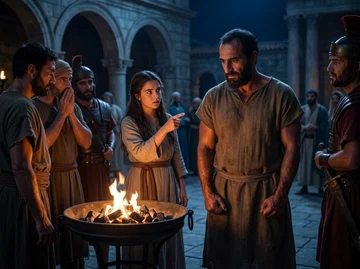
It was dark early morning and cool, and Peter stood and warmed himself with officers, servants, soldiers and the mocking crowd around a brazier of burning coals on the cool spring night.ST Jun 24, 1889ST Aug 12, 1880ST Mar 14, 1906 He mingled with Jesus' enemies and the indifferent, reckless crowd in the hall, listening keenly to all taking place concerning Jesus while trying to seem indifferent and to blend in by the fire so as not to be recognized.ST Oct 19, 1882RH Dec 2, 1909ST Mar 14, 1906ST Oct 1, 1885 In the chill of the outer night he had been ready to die for Jesus, but among his enemies he was ready to deny him, and that dissembling and choice of company itself became further weakness and failure.ST Jun 24, 1889ST Dec 30, 1889RH Dec 2, 1909 The contrast teaches that trials and discomforts can guard character and keep the heart from growing cold toward Christ.ST Jun 24, 1889
At that hour Jesus was enduring a mock examination in the palace of the officiating high priest Caiaphas, after being hurried there through dark and narrow streets in the very dark early morning by an armed band guided by torches and lanterns amid insult and mockery.ST Jun 6, 1878 There he was coarsely accused by persecutors, sneeringly questioned by the priest, reviled by the whole assembly, and smitten in the face by an officer with no provocation while Peter heard his calm words and watched with stirred anger.ST Jun 6, 1878ST Mar 14, 1906 He had been dragged in custody, bound, mocked, forsaken, stripped of his robe and left with bare flesh shivering in the cold air, though days before Peter had boldly witnessed for him and knew he had raised Lazarus of Bethany from death a week before.ST Aug 12, 1880 While enduring that mockery his heart was pierced by a keener pang than enemies could inflict when he heard his beloved disciple deny him with cursing and swearing.ST Jun 6, 1878
A damsel, a servant girl and doorkeeper at the door, came to Peter and said he also had been with Jesus of Galilee, beginning the sequence in which fear led him to deny knowing Jesus.ST Oct 24, 1911ST Nov 1, 1910ST Jan 10, 1911 John, being known to the high priest, had entered openly with Jesus, and at his word to the maid Peter was brought inside, but Peter betrayed anxiety and was recognized by association and by his Galilean speech.ST Aug 12, 1880 The sudden fear of being identified brought out his former weakness on forbidden ground where presumption brings a sharp lesson and an awful fall, and he denied knowing Jesus and went on to lie, curse and swear.ST Nov 1, 1910ST Apr 3, 1884 His denial rejected one he knew closely through years of teaching and ministry, after boasting he would die with Jesus and failing to keep watch in Gethsemane, and it shows how fear of people leads to disowning the Lord by spoken words or by silence when faithfulness calls for speech.ST Oct 24, 1911ST Sep 9, 1889
Peter was there because he could not forget his Lord and could not leave him, still loving him, drawn to follow him to the palace, with his heart still yearning for him.ST Mar 14, 1906RH Dec 2, 1909ST Feb 14, 1911 He still smarted under Christ's rebuke for using the sword and still hoped for opportunity to fight for Christ, expecting Jesus to assert the authority Peter had seen him use in cleansing the temple so Peter could prove how valiant his heart and strong his right hand were.ST Mar 14, 1906 That expectation shows he had so little learned the Master's spirit and the principles of the kingdom, did not know Jesus as he should, and sought to promote the kingdom by carnal means, though all who take the sword shall perish with the sword.ST Mar 14, 1906ST Feb 16, 1915 His first attempt to defend Jesus with the sword showed an assertive but not truly courageous spirit, and soon afterward, cold in body and spirit and following at a distance while John was near Jesus, he denied the Lord cowardly.ST Feb 16, 1915RH Feb 5, 1914
Why Peter Failed
Peter was following at a distance, cold in body and spirit, no longer clearly identified with Christ, so that a servant girl had to ask whether he was His disciple.ST Aug 8, 1906ST Apr 20, 1882RH Jul 13, 1911ST Dec 30, 1889 That distance itself prepared the way for denial, for in keeping back to avoid recognition and mingling with unbelievers he placed himself in temptation and was left without assurance against falling.ST Apr 20, 1882RH Jul 13, 1911RH Oct 31, 1912 Ignoring reproof and resenting it in selfishness, brooding over it until Christ seemed far ahead, allowed pride, ambition, avarice, greed and pleasure to come between him and Christ.ST Aug 8, 1906ST Dec 30, 1889 He was unwilling then to meet sneers and persecution or to suffer with Him, to go with Him into the judgment hall, to condemnation, loss of reputation and death at all hazards, though days before he had been proud to be His disciple when He was welcomed as king.ST Dec 30, 1889 The call therefore is to keep with Him and to warm no longer indifferently among scoffers, for wandering into forbidden paths still meets forgiving tenderness inviting return to the Father's house where there is bread to spare.ST Dec 30, 1889RH Oct 31, 1912
He was self-confident and unprepared, sincere when he boasted he would die with Jesus and go to prison and death though all forsook Him.RH Feb 6, 1913ST Nov 21, 1892RH Jul 21, 1868ST Oct 19, 1882 His boldness in the garden showed he was ready to fight and might have died defending Jesus, yet he was unready for trial by reproach rather than combat, a kind of test he had not expected.RH Feb 6, 1913ST Oct 19, 1882 That earlier confidence left him unprepared, so that when a woman in the palace outside identified him as one who had been with Jesus of Galilee he denied knowing what she said and moved away to avoid recognition.RH Feb 6, 1913RH Jul 21, 1868 All are like him in bragging and most in denial, but few in quick repentance, and his becoming the first disciple to desert Jesus shows the danger of assuming oneself beyond falling.ST Nov 21, 1892RH Oct 2, 1866
Fear of people overcame him, fear of scorn, ridicule, scoffing, contempt, suffering, danger and death, and of being counted among Christ's inner friends.ST Oct 19, 1882ST Oct 24, 1911RH Jun 8, 1869RH Jan 6, 1910RH May 5, 1863 Though he would have fought boldly for his Master, challenged in the palace he became a coward, shrinking, dissembling and hiding his discipleship rather than confessing openly and remaining faithful under trial.ST Oct 19, 1882RH Feb 10, 1863RH Jun 8, 1869RH May 5, 1863 His denial by spoken words warns that silence when faithfulness calls for speech, and disguising faith from fear of suffering or reproach, denies the Lord as truly as he did.ST Oct 19, 1882ST Oct 24, 1911 Letting public opinion govern in that hour stands in contrast to Christ's courage under insult and trial.RH Feb 10, 1863RH May 5, 1863
He had failed to watch and pray in Gethsemane, sleeping while Jesus prayed and not entering into His agony, drifting idly without active service and without being deeply rooted in God's word and firm trust.ST Dec 9, 1897RH Jun 10, 1858RH Feb 16, 1911RH Aug 3, 1869RH Nov 26, 1903 Unwatchful, he was left to his own feeble strength to face the test, so that a servant girl's words frightened him into denying his association with Jesus, even with oaths and curses.ST Dec 9, 1897RH Jun 10, 1858RH Aug 3, 1869RH Dec 12, 1865 Idle drifting in Christian experience itself led him to that denial, and his example warns believers to remain watchful and prayerful lest they also deny the Lord when tested.RH Feb 16, 1911RH Aug 3, 1869RH Nov 26, 1903
He still loved Jesus and was drawn to follow Him to the palace, yearning for his Lord, yet in weakness he hid his discipleship and mingled in the hall with the indifferent, reckless crowd.ST Dec 30, 1889RH Dec 2, 1909 That dissembling itself became the source of further weakness and failure, for associating with those who tempt leads to saying and doing what otherwise would not be said or done.ST Oct 19, 1882RH Dec 2, 1909 Sitting in the palace yard among Jesus' enemies began the sequence leading to denial, showing that mingling with Christ's enemies degrades a disciple rather than elevating him, and that concealing Christian identity and choosing the company and ways of unbelievers can end in repeatedly and at last vehemently declaring with cursing and swearing that he did not even know the Lord.RH Dec 2, 1909RH Jul 13, 1911ST Oct 1, 1885
He had so little learned the spirit of the Master and the principles of the kingdom, still smarting under Christ's rebuke for using the sword and still hoping for opportunity to fight.ST Mar 14, 1906 He could not forget his Lord nor leave Him, expecting Jesus to assert the authority he had seen Him use in cleansing the temple so he could prove how valiant his heart and how strong his right hand were.ST Mar 14, 1906 All who profess His name yet seek to promote His kingdom by carnal means profit nothing, for all that take the sword shall perish with the sword.ST Mar 14, 1906 Despite Christ's instruction about His death, humiliation, trial and crucifixion, the apostles utterly failed to grasp the truth, so when the trial came their hope died and they all forsook Him and fled, Peter denying with an oath that he knew not the man.GSAM 68.2 That same dull comprehension made them question what rising from the dead should mean and prepare to embalm His body after He was laid in Joseph's new tomb, leaving hope buried with Christ through a desolate Sabbath without their tender, merciful, comforting Saviour near.GSAM 68.2
What the Denial Was
The maid's challenge opens Peter's threefold denial of Jesus, his first denial leading into the second and third until the cock crowed.ST May 24, 1883ST Jan 21, 1889ST Dec 30, 1889ST Mar 14, 1906ST Jan 10, 1911 Sitting without in the high priest's palace and courtyard while Jesus was questioned inside, Peter was recognized as having been with Jesus of Galilee and asked if he too was a disciple.ST Oct 19, 1882ST Dec 30, 1889ST Mar 14, 1906ST Jan 10, 1911 The question caught him unprepared, startled and confused him as he tried to blend in around the fire, and fear moved him to deny discipleship.ST Oct 19, 1882ST Dec 30, 1889ST Jan 10, 1911 That first step in wrong and compromise sank rapidly, turning him back toward his old fisher life until the crowing ended it.ST May 24, 1883ST Jan 21, 1889ST Dec 30, 1889 His distance from Jesus and mingling with servants, soldiers and the indifferent crowd left him vulnerable to that temptation.ST Dec 30, 1889ST Mar 14, 1906RH Dec 2, 1909
He answered that he did not know what she said, said I know him not and I am not, and went on to lie, curse and swear to prove his word.ST Mar 3, 1881ST Jan 28, 1897ST Apr 3, 1884RH Dec 2, 1909RH Oct 7, 1862 He denied with impetuous rage and angry sharp words only hours after just as vehemently assuring Jesus he would be faithful unto death though all forsook him.ST Mar 3, 1881RH Feb 9, 1911ST Jan 28, 1897 The lie was unpremeditated, fallen into almost before awareness, then persisted in with an oath and vehement cursing and swearing that he did not even know the Lord.RH Feb 9, 1911ST Jan 28, 1897ST Apr 3, 1884RH Dec 2, 1909 Fright and anxiety brought out his former weakness and old habits of cursing and swearing to show he was no disciple.ST Apr 3, 1884RH Dec 2, 1909RH Oct 7, 1862
It was grievous failure, cowardice and apostasy, wrong and contrary to divine righteousness, by one of Jesus' closest, best-loved, intimate friends while Jesus was persecuted and reviled.ST Feb 18, 1886RH Feb 2, 1911RH Jul 18, 1871RH May 5, 1863RH Aug 22, 1871 He proved himself a coward and apostate even with oaths and cursings, fearing the contempt of the crowd, in contrast to Jesus' courage under insult and trial.ST Feb 18, 1886RH May 5, 1863RH Aug 22, 1871 Yet it was a momentary fall under terrible pressure and darkness, not a calculated course for years with lying promises and cover-up, and one sinful act does not define his whole character or cancel later faithfulness.RH Jul 18, 1871RH Dec 4, 1860RH Aug 22, 1871 He repented of it, abandoned his sin, was restored to confidence, affection and fellowship without first having to prove himself brave, and became a martyr for the Master he had denied.ST Feb 18, 1886RH Jul 18, 1871RH Dec 4, 1860RH Aug 22, 1871 His weakness as even a prominent servant of God does not make believers perfect or justify faults, does not allow condemning Christianity for followers' shortcomings, and warns against judging character by a single act or letting public opinion keep anyone from God's requirements.RH Jul 18, 1871RH Dec 4, 1860RH May 5, 1863
His instability then fits the name Peter, meaning a stone, and when Jesus later addresses him as Simon the name gently rebukes and humbles him by recalling the obedient disciple he should be, without driving him to despair.ST Mar 5, 1912 The denial shows gradual backsliding by smaller steps, from following at a distance to denial, so the beginning of evil must be resisted lest small yieldings reach serious failure.ST Apr 20, 1882ST Oct 21, 1897RH Jul 8, 1909 It was failure under a small, sudden, unexpected temptation by a servant girl rather than a grand planned test, where heedless words in a seemingly minor moment exposed cowardice and began serious moral failure.ST Apr 20, 1882ST Oct 21, 1897RH Apr 2, 1861 His indifferent manner while warming in the hall was a small-seeming act of cowardice, proving lack of endurance can appear in ordinary moments as well as great persecution.ST Oct 21, 1897RH Apr 2, 1861 After only a few hours separation from him, a brief loss of sight of the Master brought sinking, and evil thinking led in sequence to evil speaking, evil doing and evil being, with pride after first compromise demanding persistence.ST Apr 20, 1882RH Jul 8, 1909RH Apr 2, 1861
Repentance and Restoration
When Jesus turned and looked at Peter there was no censure, anger or rebuke but deepest pity, love, compassion, grief and full knowledge.ST Mar 3, 1881RH Feb 9, 1911 That loving, sorrowful look troubled him, burned into his soul and broke his heart, bringing his sin to mind and bringing him to himself again to hate his sin.ST Jan 21, 1889ST Mar 3, 1881RH Feb 9, 1911RH Jul 18, 1854 Sympathy in that look restores the fallen, while censure would drive to despair or some desperate act.RH Feb 9, 1911
He went out and wept bitterly with blinding tears, lying prone till dawn in remorse, shame, self-loathing and despair yet with hope.ST Nov 11, 1897RH Jul 14, 1868ST Mar 3, 1881RH Feb 9, 1911RH Jul 21, 1868 His going out and weeping was godly sorrow, sorrowing according to God, bringing him into the same feelings and views regarding sin that God has, seeing sin in itself as infinitely evil as Jesus himself saw it rather than in its consequences of suffering and loss.ST Mar 3, 1881 That grief was as bitter as the grief of Judas, but it contained an element of hope because he saw God in it all, so despair of self did not lead to despair of God, and it produces repentance that results in salvation and life.ST Mar 3, 1881 His tears show repentance, and failing to repent after sin is worse than committing the sin in the first place.RH Jul 14, 1868ST Jun 17, 1897
With blinding tears he went alone to Gethsemane and threw himself down on the same spot where he had seen his Saviour prostrate, on ground so recently stained with the bloody sweat of God's dear Son.ST Nov 11, 1897 There he remembered with remorse that he had been asleep while Jesus prayed through those fearful hours.ST Nov 11, 1897 His proud heart broke, his penitential tears wet the ground, and he left the garden a converted man.ST Nov 11, 1897 Religious zeal and firm personal purpose were not enough to stand for Christ; he needed thorough conversion, completed in Gethsemane, and the Holy Spirit at Pentecost to face reproach, suffering and death.ST Sep 20, 1905
He sought forgiveness and was forgiven, restored to fellowship, confidence, affection and useful service, learning to depend on Christ rather than himself for sustaining grace.ST May 24, 1883ST Jan 21, 1889RH Mar 13, 1879ST Feb 18, 1886 Jesus restored him to confidence and affection without waiting for him first to prove himself faithful and brave, and his past need not prevent full restoration after wholehearted repentance.RH Mar 13, 1879ST Feb 18, 1886 Jesus later drew from him three affirmations of love and loyalty to match three denials, humbling him and bringing deep penitence.ST Jun 17, 1897 He received a special invitation to meet the risen Saviour with a personal message of love, and was chosen to preach the principal sermon at Pentecost.ST May 31, 1905
Later, facing trial before the same council in the same room and before the same men, Annas, Caiaphas and the temple leaders who remembered his denial, Peter remembered his denial.ST Jan 22, 1885ST Nov 14, 1878RH Mar 18, 1915 The memory gave him opportunity to overcome former cowardice by honoring the name he had disowned and seeking to make amends for former cowardice and apostasy.ST Jan 22, 1885ST Nov 14, 1878 The once self-confident, fearful, boastful man had been converted, had learned distrust of self, and was filled with the Holy Spirit; through that power he stood firm and courageously honored Christ, bold in witnessing even before many of the same men who had heard his denial and in exalting Jesus and obeying God even when threatened.ST Jan 22, 1885ST Nov 14, 1878RH Mar 18, 1915ST Nov 4, 1930ST Sep 20, 1905 After once refusing to acknowledge the cross he came to accept death for the gospel as a joy, yet feeling unworthy to die as his Master had he asked to be crucified head downward, and his request was granted.RH Sep 26, 1912
The denial was part of Jesus' own suffering, one expression of the hatred and sin that made the cross, while his love held him there.ST Jun 6, 1878RH Sep 7, 1916ST Apr 9, 1912 While enduring mockery his heart was pierced by a keener pang than his enemies could inflict when he heard his beloved disciple deny him, for one of his most cherished friends turned against him with aversion and denial.ST Jun 6, 1878ST Apr 9, 1912 That pain was far greater than the little slights that sensitive sufferers magnify in tired minds.ST Apr 9, 1912 By enduring that denial Jesus came to know the fickleness of friends and the mistrust and wounding of brethren through betrayal and failure of a follower, part of his being in all points tempted like humans are yet without sin, and it gives him a human yet divine sympathy that is tender, clinging and personal around every bodily, mental and spiritual infirmity.ST May 30, 1911RH Feb 9, 1911RH May 10, 1860
Doctrine and Scripture Links
Peter's fall proves that even a prominent, experienced and ardent disciple remains weak and fallible and may deny his Lord.RH Jul 18, 1871ST Jul 29, 1886ST Apr 21, 1898ST Jul 22, 1913 His denial therefore cannot make him infallible, for at that point he was not infallible even if infallibility had begun when Jesus addressed him.ST Dec 3, 1894 That human failure does not make believers perfect, does not justify their faults, belongs to the human element, and does not diminish the divine message given through weak and fallible people, but points instead to looking to Jesus and treating the failings of others charitably.RH Jul 18, 1871RH Feb 26, 1914 Nor does the weakness of one disciple make the Christian faith or its teachings false, excuse anyone else from following Christ, or justify condemning Christianity or any system of faith because some followers fall short.ST Jul 29, 1886ST Apr 21, 1898
The inspired record accurately preserves his words and actions in denying Christ, yet recording the denial does not mean God approved it or moved him to do it, for his conduct was contrary to the divine standard of righteousness.RH Jul 9, 1908
Matthew 26:69 begins the account of Peter sitting outside in the palace where a servant girl recognizes him as having been with Jesus of Galilee, and he then openly denies his Lord three times.ST Jun 17, 1897ST May 30, 1895ST Jul 27, 1882 The cock's repeated crowing solemnly recalls that unfaithfulness, crowing with a loud shrill voice three times.ST Aug 10, 1882RH Mar 4, 1875 His failure humbled him, made him diffident, and brought deep penitence, so that remembering it he no longer boasted that he loved Jesus more than the other disciples.ST Jun 17, 1897ST Jul 27, 1882 Jesus later drew from him three affirmations of love and loyalty to match the three denials, and the memory grieved Peter when Jesus questioned the depth of his love.ST Jun 17, 1897ST May 30, 1895 The three denials are also matched in number by the three times the voice from heaven bore witness to Christ and His work on earth: at His baptism, at His transfiguration, and during His prayer to the Father recorded in John 12.ST Dec 16, 1897
Peter's later withdrawing and separating from the Gentile believers was just as much a public denial of Christ as the earlier denial begun through sudden fear, even though unintentional.ST Dec 22, 1898 While the controversy was still alive over whether men are saved by faith alone in Christ or by outward forms, his discriminating against them for being uncircumcised said in effect that salvation depends on circumcision and the works of the law and cast doubt on the power of faith in Christ alone to save.ST Dec 22, 1898 The same sin has been committed too often by all to allow sitting in judgment, but its fact and natural consequence are to be noted as a warning.ST Dec 22, 1898
Denying Jesus, even with an oath, is denying the Word of God and denying the truths that gave birth to Christianity, and such denial leads to failure until there is return to the truth.RH Sep 28, 1916ST Jul 14, 1914ST Dec 27, 1905 Even a close follower may so betray the truth, and such denial by a follower was among the things that threatened to extinguish God's Word.ST Dec 27, 1905 Yet it only aided it, proving how transient is the noblest monument man can build and how enduring is the least word God has spoken, for the Word of God endures despite betrayal.RH Sep 28, 1916ST Dec 27, 1905
Warning and Application
Following at a distance leaves no assurance against denial and may be followed by rebuke and humiliation.ST Aug 8, 1906ST Dec 30, 1889 Ignoring reproof, resenting it in selfishness and dwelling on it till Christ seems far ahead, with pride, ambition, greed, avarice and pleasure coming between, makes others have to ask whether one is a disciple and proves one is not clearly identified with Christ.ST Aug 8, 1906ST Dec 30, 1889 Concealing Christian identity, mingling with unbelievers and warming indifferently in the company of scoffers to avoid recognition prepares the way for denial when the test comes.RH Jul 13, 1911ST Dec 30, 1889 Those who disguise faith from fear of suffering, scorn and reproach, who refuse to speak for Christ when He is assailed and keep silent when faithfulness calls for speech, or who neglect the Word and prayer while seeking tempting and amusing company, deny the Lord as truly as Peter did and wound Him even among professed friends.ST Oct 19, 1882RH Jan 13, 1863RH Jul 13, 1911 Trusting in self and following from afar without a heart renewed by grace and upheld by power leaves one no stronger than those who have fallen before, and the call is to go in with Jesus even to the judgment hall, to condemnation, to loss of reputation, to death, keeping with Him at all hazards.ST Dec 30, 1889
Denying to know Him has its counterpart in every heart, not only in open words with the mouth.RH Aug 27, 1857 To turn from suffering homeless ones without pity and leave them to their dreary lot, to refuse drink to a thirsty enemy, to turn from upright deeds and burden the worker, to fail to guide erring feet into peace and light, to crowd today with tomorrow's care in a fretful murmuring spirit as if the Father cares not, and to forget the thorn-crowned, pierced, bleeding Saviour who in kindly love watches to feed lives, is to deny Him in the same way. Those who live wholly for self and make provision for this life as though Christ were never coming, heedless of the temporal wants, neglects, sufferings and bitter tears of God's pilgrim servants who preached, prayed with aching lungs for pardon, baptized and left home and family to save souls, abuse and slight Christ in the person of His chosen servant, and every want, neglect and tear is written and marked against them in heaven.RH Aug 27, 1857 Clinging to old habits and practices instead of following on to know the Lord is the same denial, and those who so deny lose the blessing they would have at every step in following Him.RH Jan 13, 1910
Expediency led to the denial outside the palace when confronted about being with Jesus of Galilee, while standing by principle would have meant accepting death by the cross.ST Sep 9, 1889ST Jan 28, 1913 The choice illustrates that expediency betrays principle, and betraying principle betrays Christ.ST Sep 9, 1889ST Jan 18, 1905 Faithfulness to right is far better even at the cost of financial loss, of life itself, for Christ's sake.ST Jan 18, 1905ST Jan 28, 1913
Trials, offenses, apostasies and sifting must be expected and should not discourage as though some strange thing had happened, since the primitive church was not free from them and even among the chosen twelve there was a Judas and a denying Peter who with cursing and swearing said he knew Him not after the rest forsook and fled.RH Sep 2, 1873 In the chill of the outer night one may be ready to die, yet among enemies by a warm fire ready to deny, and that contrast teaches that trials and discomforts can guard character and keep the heart from growing cold toward Christ.ST Jun 24, 1889 Lack of endurance appears in small ordinary moments as well as in great persecution, as in the small-seeming cowardice of an indifferent manner while warming in the hall.ST Oct 21, 1897 During the sifting some will give way under pressure, complain, leave their stand of truth and withdraw for a time, yet like Peter after his fall they can by mercy be converted, humbly repent, return and resume their place.RH Sep 2, 1873RH Dec 31, 1914
Strong feeling, zeal, purpose, courage and loyalty are unreliable without conversion, sustaining grace, watching in prayer and the Spirit's power at Pentecost, and confidence in one's own courage is unsafe.ST Jan 22, 1885ST May 24, 1883ST Jan 21, 1889 Self must be refused and distrusted, Christ alone known, so that He lives in followers and their service depends not on their own holiness or strength but on His sustaining grace.ST Jan 22, 1885ST Jan 21, 1889 The sorrowful loving look that brings sin to mind leads to weeping, seeking forgiveness and restoration to fellowship, confidence, affection and useful service without first having to prove oneself faithful and brave.ST May 24, 1883ST Jan 21, 1889RH Mar 13, 1879ST Feb 18, 1886 No longer self-confident or boastful but converted, distrusting self and filled with the Holy Spirit, the once fearful denier can stand firm in the same room before the same men, courageously honor the name once disowned and seek to make amends for former cowardice and apostasy.ST Jan 22, 1885ST Nov 14, 1878 Sympathy restores the fallen, while censure drives to despair.ST May 24, 1883
Following at a distance ends in saying one does not know Him, first following afar off and then denying.RH May 9, 1865RH Dec 31, 1914 Avoidable absence from Christian fellowship and from church is a sign of spiritual decline that can lead toward denial, and infallible evidence of such decay.RH May 9, 1865RH Dec 31, 1914
The account calls every reader under trial and persecution to examine with trembling whether he too is ready to deny, for Peter represents those who fail to confess and are spiritually asleep when called to watch with Him.ST Apr 13, 1904RH Mar 6, 1866 When temptations entangle and warring passions rage within, the same denial spurns tender care in base ingratitude that only God could bear, and deep feeling and weeping over the sin must come before He looks and gives assurance that the name is in the book of life.RH Jul 30, 1857 He knows human frailty, is touched by penitential tears, forgives and banishes all fear.RH Jul 30, 1857 Speedy repentance is needed before conscience is seared, for loss of trust destroys moral courage.ST Apr 13, 1904 The lie was afterward admitted and the denier testified that Jesus is both Lord and Christ, unlike a repeated, long-lasting, prolonged calculated denial with lying promises and cover-up.RH Feb 8, 1915RH Apr 16, 1861 One sinful act in a moment of weakness does not define a whole character nor cancel later faithfulness, for he became a martyr for the Master he had denied, in contrast to seemingly prudent economy, and the example warns against judging character by a single action whether bad or apparently good.RH Dec 4, 1860
Sources