Matthew 5:18
For verily I say unto you, Till heaven and earth pass, one jot or one tittle shall in no wise pass from the law, till all be fulfilled.
Translations
For truly I say to you, Till heaven and earth pass, one stroke or one pronunciation mark shall in no wise pass from the law, till all be fulfilled.
King James Version, KJV Cambridge Paragraph Bible
For verily I say unto you, Till heaven and earth pass, one jot or one tittle shall in no wise pass from the law, till all be fulfilled.
For verily I say to you, Till heaven and earth shall pass away, one jot or one tittle shall in no wise pass from the law, till all be fulfilled.
Revised Version, American Standard Version
For verily I say unto you, Till heaven and earth pass away, one jot or one tittle shall in no wise pass away from the law, till all things be accomplished.
for, verily I say to you, till that the heaven and the earth may pass away, one iota or one tittle may not pass away from the law, till that all may come to pass.
For verily I say unto you, Until the heaven and the earth pass away, one iota or one tittle shall in no wise pass from the law till all come to pass.
For, verily, I say unto you, until the heaven and the earth shall pass away, one least letter, or one point, may in nowise pass away from the law, till all be accomplished.
Berean Standard Bible, Majority Standard Bible
For I tell you truly, until heaven and earth pass away, not a single jot, not a stroke of a pen, will disappear from the Law until everything is accomplished.
For most certainly, I tell you, until heaven and earth pass away, not even one smallest letter or one tiny pen stroke shall in any way pass away from the law, until all things are accomplished.
Truly I say to you, Till heaven and earth come to an end, not the smallest letter or part of a letter will in any way be taken from the law, till all things are done.
For truely I say vnto you, Till heauen, and earth perish, one iote or one title of the Law shall not scape, till all things be fulfilled.
Douay-Rheims (Challoner revision)
For amen I say unto you, till heaven and earth pass, one jot, or one tittle shall not pass of the law, till all be fulfilled.
Pictures
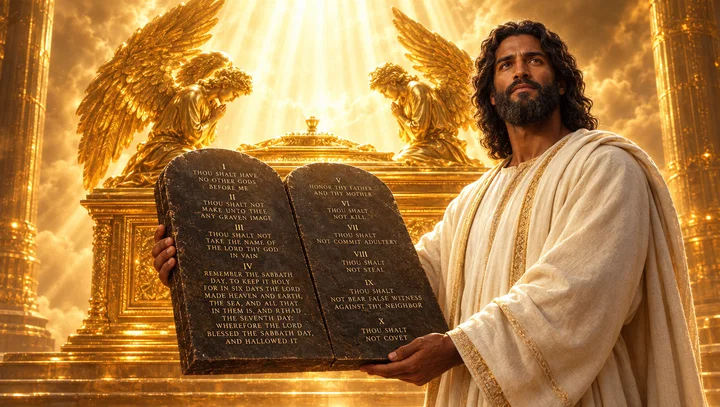
Cross-references 20 of 117
- Romans 3:31
Do we then make void the law through faith? God forbid: yea, we establish the law.
Faith establishes rather than nullifies the law.
- Exodus 20:1-17
And God spake all these words, saying,
Jesus affirms that the law’s commandments remain in force until fulfilled.
- Luke 16:17
And it is easier for heaven and earth to pass, than one tittle of the law to fail.
Both affirm that not even the law’s smallest detail will fail.
- James 2:10-11
For whosoever shall keep the whole law, and yet offend in one point, he is guilty of all.
Breaking one commandment makes a person guilty of transgressing the whole law.
- Isaiah 42:21
The LORD is well pleased for his righteousness’ sake; he will magnify the law, and make it honourable.
Christ magnifies and honors the law, not abolishing it.
- Romans 7:12
Wherefore the law is holy, and the commandment holy, and just, and good.
The law and commandment are called holy, just, and good.
- Psalms 111:7-8
The works of his hands are verity and judgment; all his commandments are sure.
God’s commandments are sure and stand fast forever.
- 1 John 3:4
Whosoever committeth sin transgresseth also the law: for sin is the transgression of the law.
Defines sin as transgression of the law Jesus says will endure.
- Psalms 19:7
The law of the LORD is perfect, converting the soul: the testimony of the LORD is sure, making wise the simple.
Both affirm that the Lord’s law is perfect.
- Romans 8:4
That the righteousness of the law might be fulfilled in us, who walk not after the flesh, but after the Spirit.
The law’s righteousness is fulfilled in those who walk by the Spirit.
- Colossians 2:14
Blotting out the handwriting of ordinances that was against us, which was contrary to us, and took it out of the way, nailing it to his cross;
Ordinances nailed to the cross are distinguished from the enduring law.
- Hebrews 8:10
For this is the covenant that I will make with the house of Israel after those days, saith the Lord; I will put my laws into their mind, and write them in their hearts: and I will be to them a God, and they shall be to me a people:
God promises to write his law on his people’s hearts under the new covenant.
- Jeremiah 31:33
But this shall be the covenant that I will make with the house of Israel; After those days, saith the LORD, I will put my law in their inward parts, and write it in their hearts; and will be their God, and they shall be my people.
God promises to write his law in his people’s hearts.
- Psalms 40:7-8
Then said I, Lo, I come: in the volume of the book it is written of me,
The Messiah comes to do God’s will, with his law in his heart.
- Romans 7:7
What shall we say then? Is the law sin? God forbid. Nay, I had not known sin, but by the law: for I had not known lust, except the law had said, Thou shalt not covet.
The law forbids coveting and thereby makes sin known.
- Psalms 119:142
Thy righteousness is an everlasting righteousness, and thy law is the truth.
Both affirm God’s law as truth and enduring righteousness.
- Exodus 31:18
And he gave unto Moses, when he had made an end of communing with him upon mount Sinai, two tables of testimony, tables of stone, written with the finger of God.
God writes the commandments on stone tablets with his finger.
- Psalms 119:89
For ever, O LORD, thy word is settled in heaven.
Both affirm that God’s word and law remain established forever.
- Psalms 89:34
My covenant will I not break, nor alter the thing that is gone out of my lips.
God promises not to break his covenant or alter what he has spoken.
- Matthew 19:17-19
And he said unto him, Why callest thou me good? there is none good but one, that is, God: but if thou wilt enter into life, keep the commandments.
Jesus directs the seeker of life to keep the commandments and cites the moral law.
Commentary part 1 of 5
Each commentary is drawn from primary sources: the writings of Ellen G. White and Adventist pioneers and periodicals. Each commentary is separate. Its own words are not a quotation; follow the references to read the source passages.
Ellen G. White
257 sources
Christ did not come to weaken or set aside the law but to fulfill it by living it perfectly, freeing it from human traditions and revealing its full spiritual reach to heart and thought, so not even its smallest detail loses authority until all is accomplished.ST Sep 23, 1889COL 314.2–4ST Oct 15, 1894ST Jan 25, 1905Ms 135, 1902, par. 19–20 The law thus preserved is the ten holy precepts of God's unchangeable character and government, distinct from the ceremonial system of types and sacrifices that ended when they met their fulfillment in His death.Ms 69a, 1896, par. 46–47Ms 69, 1896, par. 5–6PP 365.1–3ST Mar 7, 1878ST Aug 7, 1879 His suffering and death confirm and exalt that moral law rather than abolishing it, for He bore its penalty to satisfy justice because it could not be changed even to save fallen humanity.COL 314.2–4ST Dec 19, 1900ST Jan 25, 1905ST Jul 18, 1878RH Jun 4, 1901 Therefore the Sabbath of the fourth commandment remains binding as long as heaven and earth endure, and no human or church authority can change it to another day.4SP 280.1Ms 91, 1894, par. 2ST Nov 12, 1894Lt 118, 1900, par. 4–7DA 283.1–2 The same law remains the standard by which every person will be judged, so breaking even its least requirement or teaching others to do so brings condemnation, while doing and teaching it through His grace brings blessing and honor.Ms 75, 1908, par. 5–6Ms 69a, 1896, par. 46–47Ms 69, 1896, par. 5–6Lt 29, 1897, par. 23–25ST Mar 3, 1881
Wording Setting and Certainty
Christ spoke these words with divine authority at the opening of His ministry in the Sermon on the Mount, going up into a mountain to teach His disciples before the multitudes.Ms 68, 1903, par. 32–34Lt 202, 1908, par. 7–11Lt 170, 1908, par. 4–6 The hearers included Pharisees and Sadducees and reached to the Gentile world, as a soul-saving exposition of His own law and of God's government correcting false ideas of the kingdom and how to enter it.Ms 68, 1903, par. 32–34Lt 202, 1908, par. 7–11 Its sentences are simple enough for a child, rescuing truth buried under human traditions and rubbish to commend it to intellect and conscience.Lt 202, 1908, par. 7–11 With the calls to be salt and light and to do good works that glorify the Father, they transform character, belonging with not destroying the law or the prophets but fulfilling it, with breaking even the least commandment and teaching men so bringing lowness in the kingdom while doing and teaching bringing greatness, and with righteousness exceeding that of the scribes and Pharisees as the condition of entrance.Ms 68, 1903, par. 32–34Lt 170, 1908, par. 4–616MR 73.3ST May 10, 1910Lt 7, 1901, par. 11 The chapter is full of precious instruction to be studied, acted upon, and written on the tablets of the soul, showing a life reflecting the divine law and what cooperation and union with Christ can accomplish, and it must be tested by Scripture rather than by Fathers or ministers.Lt 202, 1908, par. 7–11ST May 10, 1910
Till heaven and earth pass and till all be fulfilled means the law keeps full authority to the farthest edge of human history, as long as heaven and earth remain and through eternity.ST Feb 11, 1897FE 237.1ST Mar 20, 1901SCE 7.1 Till all be fulfilled means until everything concerning the human race and everything relating to the plan of redemption is accomplished. Since Christ's death did not cause heaven or earth to pass away, it did not abolish the law but testifies across generations to its unchangeable nature and enduring claims.ST Nov 15, 1899 Christ, who spoke the law at Sinai, explains its far-reaching claims in the Sermon as holy, just, and good, not a cold code of human traditions, perfect in all requirements so it cannot be improved and any remodeling only causes imperfection.ST Feb 11, 1897FE 237.1SCE 7.1 It is the foundation of God's government and stands forever as the immutable standard of righteousness that all must reach to be saved and by which all cases will be decided when the books are opened, leaving no excuse for any power in heaven or earth to change it, including the Sabbath commandment, while claims it is done away come from unwillingness to obey.ST Feb 11, 1897ST Mar 20, 1901
God's Word is infallible and endures forever through the ceaseless ages of eternity.Ms 39, 1899, par. 1–4RH Feb 6, 1900RH Jun 12, 1900 Heaven and earth may pass away, but not the smallest part of it will fail and not one jot or tittle shall pass from the law till all be fulfilled.Ms 39, 1899, par. 1–4RH Jun 12, 1900ST Nov 18, 1897Lt 319, 1905, par. 14–15 No power on earth, of men in the highest positions, or of devils, can make void the words of Christ.Lt 319, 1905, par. 14–15 Events of history carry out God's purposes even through those who do not understand, while each person still chooses a course and forms character, and no part of God's word will be lost or thwarted as people act according to their own characters.RH Jun 12, 19003MR 184.3–185.2
Jot or tittle means the smallest possible written mark, letter, particle, amount, bit, or value.8MR 35.221MR 315.4–316.3Lt 156, 1897, par. 3–6Lt 54a, 1894, par. 20–23 Every jot and tittle therefore means the whole completely with nothing left out.8MR 35.2 To be moved one jot or tittle is to be moved even slightly at all, while to be moved by not one jot or tittle is to be wholly uninfluenced in a decision.21MR 315.4–316.3Lt 20, 1887, par. 5–8 To have given not one jot or tittle of cause leaves evil speeches and false accusations with no ground at all, and exact honesty requires adding not even that smallest amount above true worth, as in stating what land is worth.Lt 156, 1897, par. 3–6Lt 54a, 1894, par. 20–23 The wording is also used for every bit of strength to be given to reproduce what the Lord has shown and make it vivid, and for small scattered pieces of writing and every little bit of good news.Lt 325, 1905, par. 48MR 35.2
No word from God becomes void before it is fulfilled, but prophecy becomes history at fulfillment.RH Feb 27, 1900Ms 127, 1899, par. 45 The sacrificial offerings that prefigured Christ met antitype when the Son of God died.RH Feb 27, 1900Ms 127, 1899, par. 45 God's promises cannot fail in even the smallest detail but will be fulfilled completely for the faithful in every age, as a light in darkness until the day dawns.1MR 385.21MR 322.1Ms 44, 1897, par. 6–8Ms 22, 1886, par. 10–11 This includes that those who honor God will be honored, and that faithful teaching and example forming youth in principle, purity, and godliness will bring salvation and reward when those won stand before the throne in white linen which is the righteousness of the saints.1MR 322.1Ms 22, 1886, par. 10–11
Messages given in the past and lessons of past experience keep full force at this stage of history and must be preserved, valued, remembered, and practiced.LSEGW 428.1Lt 130, 1910, par. 4Ms 92, 1891, par. 1–4 Younger believers need to understand them while those grown gray in service continue to testify to them.LSEGW 428.1 The great evidences made certain in 1844 after the passing of the time remain unchanged, standing as solid foundation pillars and principles that confirm and quicken souls, including ministers and physicians.STB 401.1 Even difficult parts of the Word lose none of their force, and the lessons and warnings of Revelation must be remembered and practiced because the time is near when its symbols will be fulfilled.Lt 130, 1910, par. 4Ms 92, 1891, par. 1–4
Christ Fulfills and Magnifies Law
Christ came not to destroy, abolish, weaken or set aside the law or the prophets but to fulfil them, and not even the smallest detail passes away before all is fulfilled, so the law remains fully authoritative, binding, perpetual and unchangeable.ST Sep 23, 1889COL 314.2–4ST Oct 15, 1894PK 183.2ST Dec 19, 1900 His death for human sin did not abolish or lower its standard but atoned for transgression and upheld its justice and permanence, confirming rather than voiding every precept.ST Sep 23, 1889COL 314.2–4ST Dec 19, 1900 Breaking even a least commandment or teaching others to break it brings consequence and dishonor, while doing and teaching the commandments is honored in the kingdom of heaven.ST Sep 23, 1889Ms 63, 1912, par. 30–33Ms 23, 1898, par. 16 He upheld the sacredness and authority of the law while freeing it from human traditions that obscured its meaning and showing its full significance.ST Oct 15, 1894PK 183.2ST Oct 22, 1912
He fulfils the law by vindicating, establishing and fully developing its principles, living it in perfect conformity as a living illustration with the law in His heart.ST Jan 25, 1905RH May 19, 1910Ms 16, 1894, par. 6–9 He frees it from spurious human traditions, customs, rubbish, maxims, false interpretations and burdensome exactions that obscured it and made it a yoke of bondage, clearing away distortions to restore it to its eternal basis of virtue and purity.ST Oct 15, 1894ST Jan 25, 1905Ms 16, 1894, par. 6–9 He reveals its length and breadth, dignity and nobility, purity and spirituality as reaching beyond outward acts to motives, heart and unspoken thoughts, teaching practical godliness by word and example.ST Oct 15, 1894ST Jan 25, 1905RH May 19, 1910Ms 16, 1894, par. 6–9 Spoken to Pharisees who thought disregard of traditions made the law void, the declaration rebuked their pretentious piety, corrected erroneous ideas, answered the charge that His teaching displaced God-given religion, and opposed self-righteous scribes and Pharisees.Ms 135, 1902, par. 19–20RH May 19, 1910Ms 16, 1894, par. 6–9Ms 8, 1902, par. 13–14 It exalts the law as more comprehensive than civil law and the royal law of the only true God bringing light and immortality, requires a piety exceeding theirs, and holds law and gospel hand in hand.ST Jan 25, 1905RH May 19, 1910
He fulfilled every letter by His own perfect, sinless obedience to every detail in humanity, observing even Mosaic precepts while Jewish teachers perverted the law and transgressed it.Ms 63, 1912, par. 30–33ST Dec 30, 1913ST Jan 16, 1896 He kept complete loyalty without deviating one jot or tittle or doing anything contrary to the Father's will, never conceding to sin or leaving evil unrebuked, developing a perfectly upright character under infirmity and fierce temptation.ST Jan 16, 1896DA 308.2–309.1 His obedient life magnifies and exalts the law, proves it can be kept, vindicates God's justice in requiring it, condemns sin in the flesh, and will stand in the judgment for the law.ST Dec 30, 1913ST Jan 16, 1896DA 308.2–309.1 It shows that through His grace, imputed righteousness and imparted divine nature every believer can obey, turn from the former life and be renewed in holiness, for the law's righteousness is Christ's righteousness received by faith, with no one hopelessly subject to bondage to sin and Satan.ST Dec 30, 1913ST Jan 16, 1896DA 308.2–309.1 The moral law remains the rule of human conduct where even least disobedience is offensive, the ceremonial law did not end before its fulfillment in Christ, and those who keep and teach the commandments are counted great in heaven while those who break and teach others to break them are counted least, since heaven values humble obedience above earthly learning, wealth or position.Ms 63, 1912, par. 30–33Ms 23, 1898, par. 16
As Creator, Giver of the law at Sinai, guide of Israel in the wilderness and teacher in Eden He declares and makes plain its precepts for future generations in positive terms leaving no room for doubt or evasion.FE 237.1SCE 7.118MR 134.1 The law existed before the earth was called into being and angels are governed by its principles, made known to man in Eden when the morning stars sang together.18MR 134.1 As all nature from the mote in the sunbeam to the worlds on high is under law and the order and harmony of the natural world depend on obedience, so great principles of righteousness control the life of all intelligent beings and the well-being of the universe depends on conformity to them.FE 237.1 His teaching and works agreed with both moral and ceremonial requirements, giving Israel its ceremonies and ordinances, observing what was binding on the Jews without diminishing the law's dignity or claims, and when His death fulfilled the sacrificial offerings they foreshadowed those offerings lost value without abolishing the law.ST Apr 8, 1875ST Jan 22, 1880
Eternal Unchangeable Moral Law
The law preserved is the ten holy precepts spoken on Sinai, the moral law distinct from the ceremonial system of types, shadows, sacrifices and offerings pointing to Jesus as the Lamb, which ceased and lost value when type met antitype in Christ's death.PP 365.1–3ST Mar 7, 1878ST Aug 7, 1879DA 308.2–309.1ST Jul 18, 1878 Christ's death ended the ceremonial law of sacrifices and ordinances when its symbols met fulfillment in Him, but it did not abolish the moral law, and the necessity of His death to atone for transgression confirms that law's unchanging authority.PP 365.1–3ST Mar 7, 1878ST Aug 7, 1879 The moral principles made known in Paradise remain under the new covenant written in hearts and minds and will remain unchanged in Paradise restored, and the teachings given through Moses at Sinai remain relevant to guard against injustice and guide dealings with one another.Ms 63, 1912, par. 30–33DA 308.2–309.1ST Jul 18, 1878 No part of the moral law loses authority before fulfillment, and even the least disobedience is offensive, while the ceremonial law was not to end before its fulfillment in Christ.Ms 63, 1912, par. 30–33
The law is the moral law and revelation of God's will and character and transcript of His character and thought, as unchangeable as God and founded on love to God and neighbor.Ms 69a, 1896, par. 46–47Ms 69, 1896, par. 5–6Ms 105, 1894, par. 28Lt 89, 1898, par. 14–19GC88 434.1 Its original is kept in heaven with the stone commands spoken amid Sinai's thunders as accurate transcript, enduring forever like God's throne.Lt 89, 1898, par. 14–19GC88 434.1 Though appearing negative it is Do and Live, holy, just and good, perfect in all requirements so it cannot be improved, strengthened, weakened or remodeled, and it is the foundation of His government and moral government over the world, the great standard of righteousness and rule of conduct.Ms 105, 1894, par. 28Lt 89, 1898, par. 14–19GC88 434.1 Not one moral precept is to be trifled with to please self or for convenience or pleasure, and breaking one commandment makes one guilty of the whole as breaking one link severs a chain.Ms 69a, 1896, par. 46–47Ms 69, 1896, par. 5–6Lt 35a, 1877, par. 14–16Ms 105, 1894, par. 28 To break one of the least and teach men so brings judgment and registers one as least in value, not as an inferior subject admitted to heaven, for disobedient subjects never enter and misleaders are not proper teachers, while to do and teach them is to be recognized as one with Christ and God and called great by angels, archangels, cherubim and seraphim.Ms 69a, 1896, par. 46–47Ms 69, 1896, par. 5–6Lt 35a, 1877, par. 14–16Ms 105, 1894, par. 28
The law will endure through the eternal ages as long as God's throne remains, as the eternal standard leaving no room for doubt or evasion.ST Jan 25, 1905Ms 51, 1902, par. 1Lt 1, 1895, par. 9–11Ms 51, 1902, par. 2–3Ms 163, 1897, par. 27–28 The enduring heavens and earth testify to its immutability, and no power in heaven or earth has excuse to change it.Lt 1, 1895, par. 9–11Ms 51, 1902, par. 2–3Ms 163, 1897, par. 27–28 Even Satan in exalted glory before the fall could not change its smallest letter nor can he as apostate, nor does joining of world and church to make it void prove change, for to say God made an imperfect law needing change would stamp Him changeable and imperfect who will not break His covenant or alter what has gone out of His lips.ST Jan 25, 1905Ms 51, 1902, par. 2–3 It is as unchangeable as the everlasting hills no human arm can uproot, and God's servants are to remain as firm in fidelity to it.ST Jan 25, 1905COS 75.1–4 It remains binding as long as heaven and earth remain, with not even its smallest part passing away until all is kept or performed in perfect obedience, its plain words standing as judgment against transgressors and assurance of blessing for the obedient.COS 75.1–4Lt 1, 1895, par. 9–11
The law stands immutable and eternal as God's throne and as God Himself and cannot be weakened, strengthened, repealed, changed or explained away in even one principle, but remains holy, just, good and complete in itself.ST Mar 20, 1901ST Mar 12, 1896 Changing any part would mar its perfection, suggest God's word is faulty and give Satan advantage in his challenge.ST Mar 20, 1901ST Mar 12, 1896 Calling it honored or dishonored is merely human speech that does not alter it, and claims it is done away come from unwillingness to obey.ST Mar 20, 1901ST Mar 12, 1896 The atonement was made so the divine law and government might be maintained, giving forgiveness through repentance and faith without setting the law aside, which Christ honored by implicit obedience.ST Mar 20, 1901
God's law is no less binding now than when Adam and Eve were on trial in Eden, and people are more responsible now because they have the record of obedience and disobedience.Ms 17, 1893, par. 3–5 What saves man is not abolishing the law, for it is immutable and changeless as His throne, and if it could have been changed Jesus need not have died.Ms 17, 1893, par. 3–5Ms 58, 1900, par. 33–36Ms 61b, 1895, par. 27–30 God would not leave men free to continue in transgression, and because man was lost he must be ransomed with a price.Ms 17, 1893, par. 3–5 Its perpetuity stands with creation, the fall and the atonement as pillars of faith, its precepts existing before humanity and remaining as long as heaven and earth endure as the character of Father and Son.Ms 58, 1900, par. 33–36Ms 61b, 1895, par. 27–30 Christ's death met the demands of the law and upheld its dignity, ending typical sacrifices and ceremonies, not the moral law, which remains the standard distinguishing obedience and disobedience.Ms 58, 1900, par. 33–36Ms 61b, 1895, par. 27–30
Unlike human laws the law takes cognizance of every act, word and thought, daily approving or condemning every soul as a sin detector.Lt 89, 1898, par. 14–19ST Dec 30, 1913ST Apr 26, 1877 It reaches beyond outward acts to thoughts and intents of the heart, so evil thoughts, lustful looks, hatred and even the least injustice violate it, and outward observance with a corrupt heart is not enough.ST Dec 30, 1913ST Apr 26, 1877SLP 323.2–324.1ST Jul 7, 1890Ms 10, 1894, par. 9–10 It requires perfect spiritual obedience, extends beyond outward acts to the thoughts and intents of the heart, and obeyed guides parents and children to well-being and leads men to deny ungodliness and worldly lusts and live soberly, righteously and godly.SLP 323.2–324.1Ms 10, 1894, par. 9–10 The ten holy precepts keep every jot of their claims through all generations to the close of time as the believer's rule of life and the sinner's condemnation, based on love to God and men.SLP 323.2–324.1
Every detail of God's word, even its jots and tittles, is to govern the mind and affections, stamp the whole character, shape daily life including business conduct, and serve as the measure of actions and test of character in the judgment as a lamp for the feet.Ms 78, 1904, par. 8–9COL 313.1–314.17MR 164.1–3Lt 138, 1899, par. 3 It is to be reverenced and obeyed without swerving for temptation and held fast though heaven and earth pass, with not one jot or tittle marred or dishonored.Lt 306, 1903, par. 3–47MR 164.1–3Lt 138, 1899, par. 3 Grace does not permit making the law void by following natural desires or acting tyrannically, and disregarding or teaching others to disregard even a least commandment is warned against.Ms 78, 1904, par. 8–9Lt 306, 1903, par. 3–4
The binding claims of the law remain upon every soul to the end of time, requiring strict obedience to all precepts without respect of persons as proof of allegiance.ST May 13, 1886Lt 23, 1885, par. 18–1915MR 351.2–352.1Lt 37a, 1903, par. 8–9 It must be presented as pure and binding and defended when people unite to make its commandments void, with obedience letting God reveal His power and make His people lights.RH Oct 15, 1901ST May 13, 1886Lt 23, 1885, par. 18–19 God has made His people its depositaries to uphold its downtrodden claims against opposition from ministers, men of learning, position and authority whose same refuted arguments are renewed again and again, and when the Christian world joins with Catholic and worldly powers to make them void God's chosen people arise to defend His law.SLP 279.115MR 351.2–352.1 God's holy requirements and Word will not be changed or done away to suit the unready, but all must be guided by His enduring Word even when heaven and earth pass away.Lt 37a, 1903, par. 8–9
Cross Confirms the Law
Christ's suffering and death did not abolish, weaken, cancel, lessen, extinguish or set aside the law but confirms, upholds, vindicates, magnifies, honors and exalts it, standing forever as decisive proof of its unchangeable nature.COL 314.2–4ST Dec 19, 1900RH Jun 4, 1901GC88 466.2–3GC 466.1–3 He pledged to bear and suffered the penalty for its violation to atone for transgression, and if the law could have been changed or set aside He would not have needed to die to save man from the penalty of sin.COL 314.2–4RH Jun 4, 1901PP 365.1–3GC88 466.2–3GC 466.1–3 His death ended the ceremonial law of sacrifices and ordinances when its symbols met their fulfillment in Him, but it did not abolish the moral law of the Ten Commandments which remains binding as long as heaven and earth remain with not even its smallest detail passing away until all is fulfilled.ST Dec 19, 1900RH Jun 4, 1901PP 365.1–3GC88 466.2–3GC 466.1–3 He denied coming to destroy the law, declared its smallest details remain binding while heaven and earth stand, came to magnify it and make it honorable, delighting to do God's will with the law within His heart and living every precept in humanity to show His followers the life He requires.COL 314.2–4ST Dec 19, 1900GC88 466.2–3GC 466.1–3 Those who break even a least commandment and teach others to do so are least in the kingdom of heaven, while those who keep and teach the commandments are called great.RH Jun 4, 1901
God would not change, repeal or set aside even the smallest part of the law to meet man in his fallen condition or to remove consequences and penalty.ST Jan 25, 1905ST Jul 18, 1878Ms 12, 1894, par. 17–19Ms 51, 1902, par. 2–3ST Apr 26, 1877 Redemption therefore required Christ as Substitute and Surety in human nature to bear guilt, suffer the penalty of transgression, conquer Satan and ransom humanity, and rather than alter even an iota God gave His only Son.ST Jan 25, 1905ST Jul 18, 1878Ms 51, 1902, par. 2–3ST Apr 26, 1877Lt 30, 1893, par. 6–7 He satisfied justice, met its demands, upheld and exalted the law, passed over the ground where Adam stumbled and fell, bore the test and proving of God with perfect obedience and resistance, and thereby provided probation, ransom, pardon and adoption instead of permission to keep transgressing.ST Jan 25, 1905ST Jul 18, 1878Ms 12, 1894, par. 17–19Ms 51, 1902, par. 2–3ST Apr 26, 1877 His life proves false Satan's declaration that man cannot keep the law and shows that through His merits people can become overcomers who live in obedience to it through His merits and righteousness.ST Jan 25, 1905ST Jul 18, 1878Ms 12, 1894, par. 17–19Ms 51, 1902, par. 2–3Ms 162, 1899, par. 16–18 He came not to introduce a new law but to establish the old law that to all eternity will be the standard of obedience, to show its immutability and the holiness of its claims, to vindicate it and explain its claims, to remove deception, to make plain what Satan tries to make obscure, to establish what Satan seeks to make void, to show how far-reaching its principles are, to strip from it the burdensome human exactions loaded upon it, and to open before men its length and breadth, dignity and nobility, purity and spirituality.ST Jan 25, 1905ST Jul 18, 1878Ms 12, 1894, par. 17–19Ms 51, 1902, par. 2–3ST Apr 26, 1877 Its principles are unchangeable with no sinless swerving from them, and blessing follows those who reverentially obey; its letter sets out how to live while its spirit points to Christ as the atoning sacrifice through whom repentant sinners can meet its requirements, so law and gospel are in harmony.ST Jan 25, 1905ST Jul 18, 1878ST Apr 26, 1877 He kept every precept of the law, and those who accept Him as Saviour and share in the divine nature can also obey while God leaves them free to choose, for His mission was not to free people to break the law or to treat outward observance as enough when heart and life remain corrupt.ST Jul 18, 1878Ms 12, 1894, par. 17–19Ms 162, 1899, par. 16–18ST Apr 26, 1877
Obedience was ever the Lord's due from His creatures and His requirements have not been relaxed one jot or tittle to meet man in his fallen condition.Ms 88, 1899, par. 21–26 The law requires unquestioning obedience and spiritual perfection, especially the fourth commandment Sabbath instituted in Eden, and no human law contrary to it may be obeyed.Ms 88, 1899, par. 21–26 Christ upheld the law by making a full atonement, bearing the penalty of transgression so the human race might return to loyalty, imputing His righteousness to repentant believing sinners and presenting their penitence and obedience to God.Ms 88, 1899, par. 21–26
Salvation is from sin, not in sin.Ms 75, 1886, par. 25–26 Christ's suffering for the world's guilt did not give people permission to keep breaking the law; they must cease transgressing it and become loyal to Christ, who kept His Father's commandments.Ms 75, 1886, par. 25–26 His perfect character offered for guilty humanity makes it possible for people to obey God acceptably, with His righteousness imputed to them.Ms 75, 1886, par. 25–26 His death makes it possible for transgressors to be saved, but He does not save them while they continue in sin; He gives them another probation and stands as their substitute and surety.Lt 30, 1893, par. 6–7 Through faith in Christ and repentance toward God they may receive His righteousness, become partakers of the divine nature, and testify that the law is unchangeable and has brought in everlasting righteousness.Ms 75, 1886, par. 25–26Lt 30, 1893, par. 6–7
The law of the Ten Commandments is as lasting as heaven and earth, while the types and shadows ceased when Christ their fulfillment came.ST Jul 18, 1878 It reveals sin and condemns transgression but cannot pardon or cleanse the sinner; it acts as a divine mirror showing sinfulness and the heart's deformity to drive the sinner to repentance and faith in Christ for full and complete pardon through the atoning sacrifice.ST Jul 18, 1878ST Jul 7, 1890RH Jun 26, 1900 The gospel and faith do not cancel, weaken or set aside any part of the law but enforce it rather than lessening its standard or permitting continued transgression under freedom, and the gospel taught from Genesis to Revelation does not set aside the Old Testament.ST Jul 18, 1878ST Jul 7, 1890RH Jun 26, 1900ST Feb 25, 1897GC88 263.2 Faith that leads people to disobey the law betrays Christ rather than magnifying Him, and not even the least commandment may be set aside under pretense of honoring Christ or advancing the gospel or treated with indifference.ST Jul 7, 1890ST Feb 25, 1897GC88 263.2 The ten-commandment law still demands holiness in every part and calls every soul higher to be holy and holier still, divided as the first four and the last six commandments.RH Jun 26, 1900Ms 10, 1894, par. 9–10 It remains the just, holy and perfect standard for testing human character and by which all will be judged in the last day, so every person must decide whether to make void the law of God or to stand in its vindication by carefully examining thoughts and words, since outward observances do not amount to keeping it in the heart.ST Jul 7, 1890RH Jun 26, 1900Ms 10, 1894, par. 9–10 His death does not immortalize sin or perpetuate transgression but gives the transgressor hope through His perfect sacrifice, and in the Sermon on the Mount He showed the true character of the law of Jehovah and its far-reaching claims, tearing away the mass of human traditions, customs and error that had brought truth to the dust and replacing the scribes' dwelling on technicalities with its great principles.RH Jun 26, 1900Ms 10, 1894, par. 9–10
Sabbath Remains Binding Test
The saying proves that Christ did not change the Sabbath, for He came not to destroy the law or the prophets but to fulfill them, and not even the smallest letter or stroke passes from the law until heaven and earth pass and all is fulfilled.4SP 280.1Ms 91, 1894, par. 2ST Nov 12, 1894GC88 446.3–447.1RH Nov 6, 1913 The Sabbath commandment therefore remains fully binding and claims obedience as long as heaven and earth remain, including its designation of the seventh day as the Lord's Sabbath blessed and hallowed from creation, and it was never removed, abolished, or changed to Sunday or the first day by church or papal authority or by human business arrangements.4SP 280.1Ms 91, 1894, par. 2ST Nov 12, 1894GC88 446.3–447.1Lt 38, 1906, par. 10–13 Christ honored it by word and example, teaching its sacred obligations, keeping it according to God's law, emphasizing its binding claims, and setting aside the selfish and arbitrary false teaching of the rabbis that had perverted its observance and misrepresented God's character.ST Nov 12, 1894RH Nov 6, 1913Lt 38, 1906, par. 10–13 Breaking even the least of the commandments or teaching others to break them brings lowness in the kingdom of heaven, while doing and teaching them brings greatness.4SP 280.1Ms 91, 1894, par. 2RH Nov 6, 1913
The Sabbath thus preserved was made known in Eden before Sinai and was given to the world and not to Israel alone.Lt 118, 1900, par. 4–7DA 283.1–2RH Aug 18, 1910 It remains God's memorial of creating the world in six days and resting the seventh, and a sign of the Creator's power and of obedience, and it will be honored on the renewed earth where its inhabitants worship from one Sabbath to another.Lt 118, 1900, par. 4–7DA 283.1–221MR 281.3–282.4Ms 6, 1894, par. 9–13RH Aug 18, 1910 The fourth commandment stands unchanged as God wrote it on the stone tablets, with the seventh day remaining that memorial, and its wording is not to be altered into a counterfeit which has no biblical warrant.21MR 281.3–282.4Ms 6, 1894, par. 9–13Ms 11, 1893, par. 12–13 To remove it disregards God's honor and divides the loyal who keep His commandments from the disloyal, and papal breach cannot annul it, while calling Sunday the Sabbath echoes the first deceiver.21MR 281.3–282.4Ms 6, 1894, par. 9–13
The saying stands against the Roman power and the man of sin who opposes God by seeking to change His times and laws.Ms 115, 1894, par. 4Ms 139, 1903, par. 20–21Ms 5, 1889, par. 17–1918MR 32.2–33.1 The coming test is between the seventh-day Sabbath of the Lord God Jehovah and the spurious sabbath, with the Sunday law made a distinctive oppressing power against those who stand firmly to honor God.Ms 139, 1903, par. 20–21Ms 5, 1889, par. 17–1918MR 32.2–33.1 God's royal law stands firm while God holds the throne, and the third angel's message makes known that the Creator has always required obedience and always will.Ms 139, 1903, par. 20–2118MR 32.2–33.1RH Apr 16, 1901 Churches have disregarded it and human enactments have been put in its place, and Sunday, a child of the Papacy bearing no sanctity, has been set before the people as sacred in place of the holy Sabbath of the fourth precept.21MR 281.3–282.4RH Apr 16, 1901
While God reigns no human power can alter even the smallest part of His unchangeable law, and the Sabbath command remains binding despite its replacement by Sunday in human practice.Ms 88, 1897, par. 19–20Ms 12, 1893, par. 8–12ST Feb 20, 1901 The fourth commandment was not abolished by Christ's death but was to be kept sacred even forty years afterward and continues to claim observance while heaven and earth endure.Ms 88, 1897, par. 19–20Ms 12, 1893, par. 8–12ST Feb 20, 1901 Christ's words cut through human traditions that burden or alter the Sabbath.Ms 88, 1897, par. 19–20Ms 12, 1893, par. 8–12ST Feb 20, 1901 The law is not open to human amendment but must be obeyed as given, and His sayings about doing good on the Sabbath do not turn transgression into obedience or remove the Sabbath's sanctity.5MR 78.4–80.1Ms 34, 1897, par. 29–31 It must be obeyed as God gave it without treating the Sabbath like a common workday, for the Sabbath is a test of loyalty and a sign of allegiance to the Creator.5MR 78.4–80.1Ms 34, 1897, par. 29–31
Not even the smallest mark of precious scriptural truth passes away, and such truths are needed to steady those whose confidence is shaken by doctrines advanced to evade the Sabbath question, for truth cannot be changed into error.Lt 9, 1898, par. 13–17Lt 130, 1894, par. 1–4 The Sabbath command remains binding truth to be obeyed, and preaching that the law is abolished is error.Lt 9, 1898, par. 13–17Lt 130, 1894, par. 1–4 Upholding its permanence gives victory to truth, shines light on minds, and convicts and converts souls to obedience, with God on the side of truth and righteousness against opposition.Lt 9, 1898, par. 13–17Lt 130, 1894, par. 1–4
The Ten Commandments express God's will, written with His finger on stone with not one to be changed or erased, binding in every age and country.Ms 27, 1899, par. 6–7Ms 36, 1900, par. 12–1419MR 154.2–155.2 They are divided as the first four and the last six, still demanding holiness in every part and calling every soul higher to be holy and holier still.RH Jun 26, 1900Ms 10, 1894, par. 9–10Ms 36, 1900, par. 12–14 Proclaimed at Sinai by Christ Himself who will not countermand His own statutes, the law is as just as when given to Adam and still just today, and to assert a change in the law of the divine government casts reflection upon God's character.RH Jun 26, 1900Ms 27, 1899, par. 6–7ST Nov 14, 1895 The gospel has not abolished it nor removed even its smallest claim, and the crucifixion established it even while the sacrificial offerings and ceremonial law ended when type met antitype in Christ's death.RH Jun 26, 1900Ms 10, 1894, par. 9–10 It has no power to pardon transgression but acts as a divine mirror showing the exceeding sinfulness of sin to drive the sinner to Christ, where repentance and faith receive full pardon through the atoning sacrifice without immortalizing sin or perpetuating transgression, and it remains the just and holy standard by which all will be judged in the last day.RH Jun 26, 1900Ms 10, 1894, par. 9–10 Obedience brings people into harmony with God and serves their good, preserving life, happiness, health, and joy now and in the life to come, and it is to be taught by ministers in the pulpit and by parents in the home line upon line, precept upon precept, enjoined upon children from their earliest years.Ms 36, 1900, par. 12–1419MR 154.2–155.2 Its perpetuity is reflected in Christians in history who regarded the Bible as their rule of faith and observed the Sabbath of the fourth commandment.ST Jun 25, 1885GC88 63.1
Standard for Judgment and Obedience
To break one of the least commandments and teach others to do so by precept or example is to be called least in the kingdom of heaven, which means to be registered in the councils of heaven and of the universe as of least value among men and least in all creation by decision pronounced by God and Christ and the Holy Spirit and angels.Ms 75, 1908, par. 5–6Ms 69a, 1896, par. 46–47Ms 69, 1896, par. 5–6 To be called least does not mean to enter heaven as an inferior subject, for violators who mislead the inexperienced into forbidden paths have no part there and will never enter, but will be brought into judgment as not proper religious teachers.Ms 75, 1908, par. 5–6Ms 69a, 1896, par. 46–47Ms 69, 1896, par. 5–6 Breaking one commandment makes a person guilty of the whole law, just as breaking one link severs a chain, and such teaching directly or indirectly leading others to disregard the commandments will be faced in the judgment.Ms 69a, 1896, par. 46–47Ms 69, 1896, par. 5–6Lt 35a, 1877, par. 14–16 To do and teach the commandments is to be called great in the kingdom of heaven, which means to be recognized in heaven as one with Christ and with God and to be accounted great and honored by angels and archangels, cherubim and seraphim and the angelic hosts.Ms 69a, 1896, par. 46–47Ms 69, 1896, par. 5–616MR 73.3 Keeping the commandments is best because God reveals His power through an obedient people, and if all obeyed they would be lights in the world.16MR 73.3RH Jun 4, 1901
Those who break even a least commandment and teach others to do so are called least and of no esteem in heaven however high their worldly position, while those who obey and teach them are called great, for heaven values humble obedience above earthly learning, wealth, or position.Lt 38, 1906, par. 18–2014MR 153.4–154.1Lt 48, 1911, par. 7–8Ms 23, 1898, par. 16 Breaking even one point makes a person guilty of the whole law, and Christ condemns those who disobey and teach others to disobey while affirming the continuing authority of the law and the prophets against mistaken ideas.14MR 153.4–154.1DA 308.2–309.14RED 71.1 No one who willfully disregards a principle of the law will enter heaven, for those who obey as Christ did affirm that the law is good, while those who break it support the claim that it is unjust and cannot be obeyed, bringing dishonor and discord.DA 308.2–309.14RED 71.1 True righteousness must exceed the outward righteousness of the scribes and Pharisees.Lt 48, 1911, par. 7–8
The law remains the holy, just, and good standard of righteousness by which all are judged when the judgment sits and the books are opened in the great day, revealing the obedient and the disobedient and condemning persistent transgression.Lt 29, 1897, par. 23–25Lt 119, 1897, par. 12–13Ms 63, 1897, par. 29–31 Human standards of righteousness count for nothing against it, for it reaches to the intents of the heart and demands purity in secret thoughts, desires, and dispositions, requiring supreme love to God and love to neighbor as self and claiming perfect obedience so that the least deviation by neglect or willful transgression is sin.ST Mar 3, 1881Lt 78, 1894, par. 9Ms 34, 1897, par. 16–17 Christ fulfilled all righteousness and showed that people through the grace He provides can meet God's requirements and keep His commandments, and thus the law is magnified and honored rather than set aside to meet fallen man.Lt 119, 1897, par. 12–13Ms 63, 1897, par. 29–31 Salvation is not brought by abolishing any smallest part of the law, for God did not alter the law to meet fallen man, and had He retracted His word no confidence could be placed in His government and Satan's claim that man cannot keep the law would have been proved true.Lt 78, 1894, par. 9Ms 63, 1897, par. 29–31 The death of Christ testifies to heaven, to unfallen worlds, and to fallen Adam's sons and daughters that the law is immutable, and in the judgment the immutable law will condemn everyone who has persisted in transgression.Lt 29, 1897, par. 23–25Ms 63, 1897, par. 29–31
The law will be revealed as God's standard of character at Christ's return and in the judgment when the books are opened, confronting every transgressor and deciding every case in review before the Judge of the universe.Ms 7, 1901, par. 7–8Ms 39, 1898, par. 17–20ST Feb 11, 1897 Christ's statement, made by the Alpha and the Omega, will confront every transgressor of the law in the day of judgment, and those who have rejected or taught against its commandments, especially the Sabbath instituted in Eden and proclaimed at Sinai and not limited to the Jews, will face its authority.Ms 7, 1901, par. 7–8Ms 39, 1898, par. 17–20 The law is perfect in all its requirements so it cannot be improved, and any attempt to remodel it only causes imperfection; it is the foundation of God's government standing forever as the immutable standard all must reach in order to be saved.ST Feb 11, 1897ST May 20, 1880 Those who refuse obedience during probation could not safely enter God's kingdom, because they would oppose its law and bring about another rebellion, and executing justice against those who despise the law is consistent with God's love as shown at the cross.Ms 63, 1897, par. 32–34ST Mar 24, 1881 The declaration joins God's love and mercy with strict, impartial justice, including judgment and retribution for the wicked, and the law remains the rule of human conduct as long as time lasts and the rule of God's future judgment.ST May 20, 1880ST Mar 24, 1881
The law is God's great standard of righteousness by which every person will be judged in the great day, and not one jot or tittle of its claims is altered by convenience, worldly loss or gain, or danger to business interests, especially the Sabbath requirement of the fourth commandment.ST Feb 11, 1897Ms 34, 1897, par. 16–17 Infringing the Sabbath for worldly work steals God's time, removes its hallowed sacred dignity in one's own mind and in others, and brings what God made holy down to the level of common working days.Ms 34, 1897, par. 16–17 Every transgression, with the character of the offense, is written by name against the offender in the books of heaven.Ms 34, 1897, par. 16–17 The permanence of the law proves God's strict and impartial justice standing together with His love and mercy and divine tenderness and compassion in giving His only Son to redeem a lost race.PP 469.1–2ST Mar 24, 1881 In the cross the binding claims of the law and the condemnation of those who disregard it can be read, with obedience distinguishing God's people.PP 469.1–2ST Mar 24, 1881
Every moral precept and principle is to be treated seriously without trifling to please self rather than obey God, and in just the degree a person does so God will bring him into judgment, for not one moral precept is to be set aside for convenience or pleasure.Ms 69a, 1896, par. 46–47Ms 69, 1896, par. 5–6Ms 150, 1899, par. 52–54 Obedience brings blessing to individuals and nations as it would have brought to ancient Israel, reveals God's power through an obedient people, gives freedom from sin when the law expressing true holiness is written on the heart and revealed in character, and proves holiness, while the gospel requires perfect obedience.ST Jan 25, 1905ST Oct 21, 188616MR 73.3Ms 150, 1899, par. 52–54 Breaking the law or leading others to break it brings judgment, is incompatible with heavenly esteem, makes claims of sanctification false, and leaves those who know instruction yet continue in sin with no place among the blessed.ST Jan 25, 1905Ms 69a, 1896, par. 46–47Ms 69, 1896, par. 5–6 Christ came not to introduce a new law but to establish the law that to all eternity will be the standard of obedience, showing its immutability and the holiness of its claims and how far-reaching its principles are.ST Jan 25, 1905ST Oct 21, 1886 His life proves false Satan's declaration that man cannot keep the law and shows that man can keep it.ST Jan 25, 1905
Obedience to every jot and tittle honors and exalts the holy law; those who yield to its claims have wickedness expelled from their hearts, and sacred, refining truth is revealed in their lives.DA 308.2–309.1Ms 162, 1905, par. 18–19 Following Christ in self-denial and bearing the cross, with His spirit ruling the heart, enables people to meet the law's requirements and enter the city, while those who fail remain outside.Ms 45, 1886, par. 11–12Ms 162, 1905, par. 18–19 Those who obey as Christ did affirm that the law is good, while willful disregard shuts one out of heaven.DA 308.2–309.1Ms 45, 1886, par. 11–12 Obedience to the law leads people to reject ungodliness and worldly desires and to live soberly, righteously, and godly in this life, for its foundation is love to God and love to others and obedience to it is the whole duty of humanity reaching beyond outward actions to thoughts and intentions.AA 505.1–506.2ST Jan 9, 1912 If perfectly obeyed, oppression, injustice, corruption, selfishness, idolatry, and covetousness would give way to love, harmony, and joy, producing a different society including different conditions in families, whereas disobedience brings sin and misery.3MR 102.2ST Jan 9, 1912Ms 45, 1886, par. 11–12
Obedience to every word is required with nothing conceded to sin, and Christ's rebuke of sin and hypocrisy rather than giving evil passions license brought Satan's hostility upon Him.18MR 72.1–2 His suffering at the cross fulfilled the prophecy that the serpent would bruise His heel, while His resistance to sin and Satan's role in bringing about His death led to Satan's defeat and downfall.18MR 72.1–2 The ten-commandment law remains binding in its moral prohibitions against intemperance and licentiousness such as alcohol, tobacco, and impurity, and the theory that the law is abolished deludes the intemperate and licentious so that no message can impress them and excuses continued indulgence of depraved appetite.ST Mar 3, 1881RH Mar 18, 1875 Health, truth, happiness, prosperity, and safety for individuals and nations come only through intelligent knowledge of and full obedience to the law joined with perfect faith in Jesus Christ, and unwavering obedience is the only safety securing divine favor.ST Mar 3, 1881RH Mar 18, 1875 Teachers and ministers who preach holiness while yielding to appetite and leading people to despise physical and moral law by teaching abolition will meet a fearful record.RH Mar 18, 1875
The law is the rule of life to be taught diligently to children by precept and example, avoiding every smallest transgression with love and fear of God first rather than regard for what neighbors do and say and think.Ms 110, 1893, par. 11Lt 20, 1893, par. 4–6Ms 69a, 1896, par. 11–12 Neglect to teach its commandments diligently and apostasy from that law is transgression, for no part of the law loses its significance and not one jot or tittle has passed away.Ms 110, 1893, par. 11Lt 20, 1893, par. 4–6 Obedience means working in harmony with God and brings His promised blessing when rising up and sitting down and when going out and coming in, with preservation, provision, and prosperity guiding parents and children toward well-being and a fruitful life.Ms 110, 1893, par. 11Lt 20, 1893, par. 4–6 Careless disobedience brings the same ruin as Adam and Eve's transgression, deterioration of character, loss of God's blessing and power, and the education of children and children's children as confirmed transgressors until contempt for the law is almost worldwide.Lt 20, 1893, par. 4–6Ms 69a, 1896, par. 11–12 This requires quiet yet active, earnest, sincere piety giving God the whole heart, and this piety decides the destiny of parents and loved ones for the future life.Ms 69a, 1896, par. 11–12
Sources