Nehemiah 2:12
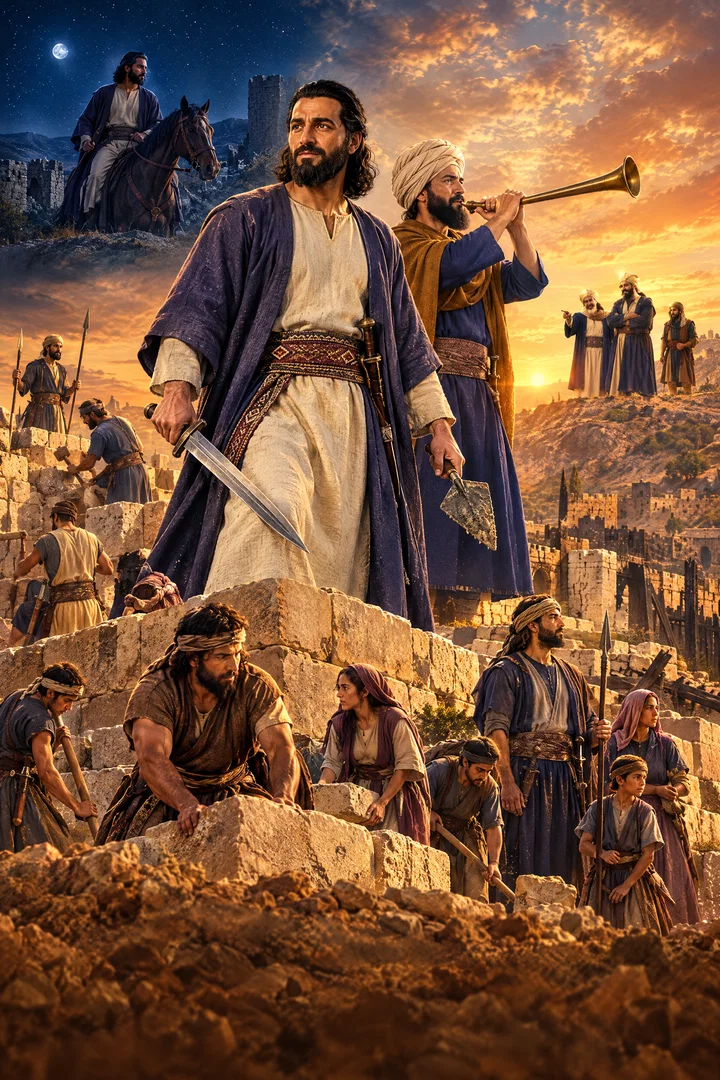
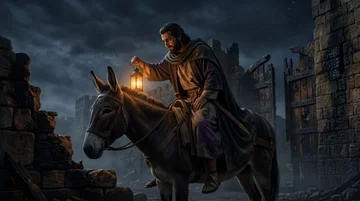
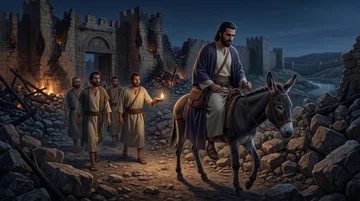
And I arose in the night, I and some few men with me; neither told I any man what my God had put in my heart to do at Jerusalem: neither was there any beast with me, save the beast that I rode upon.
Translations
And I arose in the night, I and some few men with me; neither told I any man what my God had put in my heart to do at Jerusalem: neither was there any beast with me, save the beast that I rode on.
King James Version, KJV Cambridge Paragraph Bible, Webster Bible
And I arose in the night, I and some few men with me; neither told I any man what my God had put in my heart to do at Jerusalem: neither was there any beast with me, save the beast that I rode upon.
And I arose in the night, I and some few men with me; neither told I any man what my God put into my heart to do for Jerusalem: neither was there any beast with me, save the beast that I rode upon.
And I arose in the night, I and some few men with me; neither told I any man what my God put into my heart to do for Jerusalem; neither was there any beast with me, save the beast that I rode upon.
and I rise by night, I and a few men with me, and have not declared to a man what my God is giving unto my heart to do for Jerusalem, and there is no beast with me except the beast on which I am riding.
And I arose in the night, I and some few men with me — but I told no man what my God had put in my heart to do for Jerusalem — and there was no beast with me, except the beast that I rode upon.
Then rose I by night, I, and a few men with me, I having told no man, what, my God, had been putting in my heart, to do for Jerusalem,—and, beast, was there none with me, save the beast on which, I myself, was riding.
Berean Standard Bible, Majority Standard Bible
I set out at night with a few men. I did not tell anyone what my God had laid on my heart to do for Jerusalem. The only animal with me was the one on which I was riding.
I arose in the night, I and a few men with me. I didn’t tell anyone what my God put into my heart to do for Jerusalem. There wasn’t any animal with me except the animal that I rode on.
And in the night I got up, taking with me a small band of men; I said nothing to any man of what God had put into my heart to do for Jerusalem: and I had no beast with me but the one on which I was seated.
And I rose in the night, I, and a fewe men with me: for I told no man, what God had put in mine heart to do at Ierusalem, and there was not a beast with me, saue the beast whereon I rode.
Douay-Rheims (Challoner revision)
And I arose in the night, I and some few men with me, and I told not any man what God had put in my heart to do in Jerusalem, and there was no beast with me, but the beast that I rode upon.
Pictures
Cross-references
- Nehemiah 2:16
And the rulers knew not whither I went, or what I did; neither had I as yet told it to the Jews, nor to the priests, nor to the nobles, nor to the rulers, nor to the rest that did the work.
The people were already working on Jerusalem when Nehemiah arrived.
- Nehemiah 2:17-18
Then said I unto them, Ye see the distress that we are in, how Jerusalem lieth waste, and the gates thereof are burned with fire: come, and let us build up the wall of Jerusalem, that we be no more a reproach.
Nehemiah reports Jerusalem’s distress and calls the people to rebuild, and they agree.
- Nehemiah 1:3
And they said unto me, The remnant that are left of the captivity there in the province are in great affliction and reproach: the wall of Jerusalem also is broken down, and the gates thereof are burned with fire.
The report of Jerusalem’s broken wall prompts Nehemiah’s work there.
- Nehemiah 2:4
Then the king said unto me, For what dost thou make request? So I prayed to the God of heaven.
prayed for God to direct his speech
- Nehemiah 2:7-8
Moreover I said unto the king, If it please the king, let letters be given me to the governors beyond the river, that they may convey me over till I come into Judah;
Nehemiah secured the king’s authority and credentials before revealing his plan.
- Nehemiah 1:4-11
And it came to pass, when I heard these words, that I sat down and wept, and mourned certain days, and fasted, and prayed before the God of heaven,
Nehemiah’s earnest prayer and mourning precede his work to restore Jerusalem.
- Nehemiah 2:17
Then said I unto them, Ye see the distress that we are in, how Jerusalem lieth waste, and the gates thereof are burned with fire: come, and let us build up the wall of Jerusalem, that we be no more a reproach.
call to build after viewing ruins
- Nehemiah 3
Then Eliashib the high priest rose up with his brethren the priests, and they builded the sheep gate; they sanctified it, and set up the doors of it; even unto the tower of Meah they sanctified it, unto the tower of Hananeel.
Records the wall-building work that followed the inspection.
- Zechariah 2:4-5
And said unto him, Run, speak to this young man, saying, Jerusalem shall be inhabited as towns without walls for the multitude of men and cattle therein:
Jerusalem’s promised protection preceded the restoration of its wall.
- Nehemiah 2:20
Then answered I them, and said unto them, The God of heaven, he will prosper us; therefore we his servants will arise and build: but ye have no portion, nor right, nor memorial, in Jerusalem.
Nehemiah declares that God will prosper the rebuilding work.
- Ezra 1:2-3
Thus saith Cyrus king of Persia, The LORD God of heaven hath given me all the kingdoms of the earth; and he hath charged me to build him an house at Jerusalem, which is in Judah.
Cyrus’s decree authorized the work to rebuild Jerusalem’s temple.
- Nehemiah 6:15
So the wall was finished in the twenty and fifth day of the month Elul, in fifty and two days.
wall finished in fifty-two days
- Daniel 9:25
Know therefore and understand, that from the going forth of the commandment to restore and to build Jerusalem unto the Messiah the Prince shall be seven weeks, and threescore and two weeks: the street shall be built again, and the wall, even in troublous times.
The decree to restore Jerusalem marks the prophecy’s starting point.
Commentary
Each commentary is drawn from primary sources: the writings of Ellen G. White and Adventist pioneers and periodicals. Each commentary is separate. Its own words are not a quotation; follow the references to read the source passages.
Ellen G. White
14 sources
Nehemiah arose in the night with only a few trusted men to inspect Jerusalem for himself, telling no one what God had put in his heart to do there and taking no animal except the one he rode.PK 635PK 628PK 628.2PK 636.3 On the third night after his arrival he rose at midnight and rode on his mule from part to part surveying the broken walls and burned gates, his heart filled with sorrow as past greatness stood in sharp contrast to present humiliation.PK 636.3 He kept his purpose hidden even from his own countrymen because bitter enemies stood ready to oppose the work, and he needed time to study the ruin and form his plans so he could secure cooperation before fear or prejudice was stirred.ST Dec 6, 1883PK 633.1PK 636.1 Though he carried a royal commission requiring their help, he would not depend on authority but sought to gain their confidence and sympathy, knowing that union of hearts as well as of hands was essential to the rebuilding.PK 637.1–2 The burden weighed so heavily that he could not sleep, and after completing his silent circuit he spent the remainder of the night in prayer, while seeing the weakness of the city with his own eyes gave earnestness and power to his morning call to arouse and unite his dispirited countrymen.ST Dec 6, 1883PK 637.1–2PK 636.4
Arrival and Night Inspection
Nehemiah came to Jerusalem in safety, bearing royal letters to the governors along his route that secured for him honorable reception, prompt assistance, and the protection of Persian power so that no enemy dared molest him.PK 635.1 Yet his coming with a military escort marked him as on an important mission and stirred the jealousy of the heathen tribes living near the city, foremost Sanballat the Horonite, Tobiah the Ammonite, and Geshem the Arabian, who watched his movements with critical eyes and sought by every means to thwart his plans and hinder his work.PK 635.1 The verse means that he arose in the night with only a few men to inspect Jerusalem, telling no man his plan and taking no beast with him except the one he rode.PK 635PK 628PK 628.2 The work he intended to do at Jerusalem he recognized as what his God had put in his heart.PK 635PK 628PK 628.2
He acted on the third night after his arrival, rising at midnight with a few trusted companions to see the ruin for himself.PK 636.3 Mounted on his mule, he rode from one part of the city to another, surveying the broken-down walls and gates of the city of his fathers.PK 636.3 As he gazed on the ruined defenses of his beloved Jerusalem, his heart was filled with sorrow and painful reflection, with memories of Israel's past greatness standing in sharp contrast to the evidences of her humiliation.PK 636.3
The burden of the work weighed so heavily on him that he could not sleep.ST Dec 6, 1883 After completing his circuit in secrecy and silence he spent the remainder of the night in prayer.PK 636.4 The morning would call for earnest effort to arouse and unite his dispirited and divided countrymen.PK 636.4
Prudent Secrecy and Leadership
He concealed the nature of his mission and told no one what God had put in his heart to do at Jerusalem, because bitter and determined enemies stood ready to oppose and obstruct the work.ST Dec 6, 1883PK 636.1 He kept his purpose hidden while he studied the situation and formed his plans, hoping to secure the cooperation of the people and set them at work before opposition was aroused to stir up fear or prejudice.ST Dec 6, 1883PK 636.1 He kept the plan God had put in his heart to rebuild Jerusalem secret even from his countrymen, acting with prudence because careless actions might provoke the enemies' jealousy and cause the undertaking to fail.PK 633.1
He kept his night inspection secret even from the people who would help him, though he carried a royal commission requiring their cooperation, because he did not want to depend on authority but to gain their confidence and sympathy.PK 637.1–2 He knew that a union of hearts as well as of hands was essential for rebuilding the walls.PK 637.1–2 He completed his circuit in secrecy and silence, telling nothing of what he did to the rulers, the Jews, the priests, the nobles, or the rest that did the work.PK 636.4 The few men with him were men he knew to be worthy of confidence and trusted companions, and he did not rely on himself alone but told them the circumstances that had led him to come, the object he wished to accomplish, and the plans he proposed to follow, so their interest was enlisted and their assistance secured.ST Dec 6, 1883PK 636.2
Although his hearers were not told of the midnight circuit, making it gave success to his morning call to arouse their dormant energies and unite their scattered numbers.PK 637.1–2 Having looked upon the weakness and degradation of the city enabled him to speak of its condition with an accuracy and minuteness that astonished them and gave earnestness and power to his words.PK 637.1–2 The verse belongs to the account of Nehemiah asking the king for help and receiving a generous response, teaching that God does not forbid His people from asking those in authority for assistance to advance God's work.Ms 47, 1907, par. 5 God had put the work of rebuilding Jerusalem into Nehemiah's heart, and the work he began remained under God's care as he directed and encouraged the workers.ST Dec 6, 1883
Sources
Pioneers and periodicals
33 sources
Nehemiah's first practical step after arriving in Jerusalem and remaining there three days was to rise in the night to view and inspect the ruined walls and gates before organizing the work.RH Apr 8, 1902ST Feb 6, 1893ST May 14, 1902 He went with only a few men, told no man what God had put in his heart to do, and took no beast except the one he rode, keeping his purpose from rulers, priests, nobles and people until he knew the state of affairs and how to carry it out.RH Dec 29, 1859RH Oct 8, 1908RH Oct 8, 1908 The secrecy was deliberate wisdom and careful preparation, quietly surveying the whole situation and planning the completed work beforehand so every stroke would count, acting under God's guidance and burden in the solitude of night.RH Apr 8, 1902RH Jun 25, 1908RH Dec 29, 1859RH Oct 8, 1908 The commission behind it was the personal, verbal permission of Artaxerxes in his twentieth year, dated to 444 B.C. and by some to 445 B.C., weighed as one of four candidate acts for the command to restore Jerusalem from which Daniel's seventy weeks and the 2300 days are dated, yet the weight holds it insufficient by itself to begin them because others were already rebuilding under Ezra's decree, leaving the decree to Ezra in 457 B.C. as the starting point.RH Jul 21, 1863ST Nov 1, 1877RH Jan 7, 1858ST Feb 23, 1882 Earnest, constant prayer and dependence on divine guidance bring success to God's work at crisis, and his secrecy preserved it until he could gain the people's cooperation before opponents could stir fear, a pattern typical of God's work in other ages, especially in the last days when adversaries hinder it but God carries it to glorious success.ST Dec 6, 1883ST Jun 2, 1909ST Aug 17, 1915
Night Inspection at Jerusalem
After coming to Jerusalem and remaining there three days, his first practical step was to arise in the night to view and inspect the ruined walls and gates before organizing the work.RH Apr 8, 1902ST Feb 6, 1893ST May 14, 1902GSAM 160.4–5ST Feb 18, 1886 He went out by night with only a few men to look upon the ruinous condition in which the city still lay, and afterward he assembled the priests, nobles, rulers and others to set the work before them.RH Apr 8, 1902ST May 14, 1902ST Feb 18, 1886 His examination of the ruined wall by night was preliminary work that fulfilled his praying, coming before his meeting with the rulers to acquaint them with his plan.ST Oct 25, 1899
He told no man what his God had put in his heart to do at Jerusalem, keeping his purpose secret from the rulers, priests, nobles and people until he knew the state of affairs and could see how to carry it out.RH Apr 8, 1902RH Dec 29, 1859RH Oct 8, 1908RH Oct 8, 1908 He took no beast with him except the one he rode, identified as a mule, and went with only those few men.ST Dec 6, 1883ST Dec 6, 1883RH Dec 29, 1859RH Oct 8, 1908 He did not rely on himself alone, but shared the circumstances, purpose and proposed plans at first only with a few trusted companions whose help he secured.ST Dec 6, 1883
The secrecy was deliberate wisdom and careful preparation amid opposition to the rebuilding, preserving the work until he could gain the people's cooperation and begin before opponents could stir up fear or prejudice.ST Dec 6, 1883RH Apr 8, 1902 He quietly surveyed the whole situation and planned the completed work in his mind beforehand, taking a critical survey before beginning so that every stroke would count when building started.RH Jun 25, 1908RH Oct 8, 1908RH Oct 8, 1908 Because determined enemies were ready to obstruct it, he waited until he had assessed the work and understood the situation.ST Dec 6, 1883RH Apr 8, 1902RH Oct 8, 1908
The work was what God had put in his heart, and he acted under God's guidance and burden, carrying in his heart what God had given him to do at Jerusalem.ST Dec 6, 1883RH Dec 29, 1859ST Jun 2, 1909 After months of waiting in which his character was strengthened, his sorrow stamped itself on his face so the king noticed and asked the cause, and he did not immediately detail his plans but first prayed silently to the God of heaven to direct his speech before answering and receiving the king's authority.ST Apr 23, 1902 In the solitude of night he sought God alone while the burden of the work weighed so heavily on him that it kept him from sleep, and the work he began remained under God's care as he directed and encouraged the workers.ST Dec 6, 1883ST Dec 6, 1883
The setting was his service as butler, or cup-bearer, to King Artaxerxes Longimanus, still emperor of Persia, an office that included the privilege of being admitted to the king's most private seclusion to present his plea for assistance.ST Oct 25, 1899ST Oct 9, 1901 After God moved the king to grant his request and give authority, with letters to the governors beyond the river and beyond the Euphrates, he journeyed to Jerusalem and came as governor of Judah while Ezra was religious teacher and scribe.ST Oct 25, 1899ST Apr 23, 1902ST Feb 18, 1886 His coming to seek the welfare of the children of Israel grieved Sanballat the Horonite and Tobiah the Ammonite exceedingly, and the work went forward amid opposition from Sanballat, Tobiah, and Geshem the Arabian.ST Oct 25, 1899ST Feb 18, 1886
The inspection led to calling the priests, nobles, rulers and others to build up the wall of Jerusalem so they would be no more a reproach, setting before them the distress of Jerusalem lying waste with its gates burned with fire.ST May 14, 1902 He told them of God's good hand upon him and of the words the king had spoken to him, until they answered heartily to rise up and build and strengthened their hands for this good work.ST Dec 6, 1883ST May 14, 1902 The organized rebuilding that followed covered the whole wall, divided among people of every sort and condition with people building near their own homes, so that all parts could be completed together, and the specific work he had come to do was finished in fifty-two days.RH Dec 24, 1914ST Oct 25, 1899RH Jul 28, 1863
The verse belongs to the first month after his coming, a month spent pushing forward the work on the wall and warding off the schemes of enemies, so that he had not yet had time or opportunity to look into the individual and social conduct and condition of the people.ST May 21, 1902 It belongs to the period when Jerusalem's wall was being restored, seventy-three years after Zechariah's vision.ST Apr 19, 1883
Command to Restore Jerusalem
Nehemiah 2:12 belongs to the commission or permission from Artaxerxes in his twentieth year to go to Jerusalem, dated to 444 B.C., with one account dating it to 445 B.C.RH Jul 21, 1863ST Nov 1, 1877RH Jan 7, 1858RH Jun 4, 1857RH Jul 28, 1863 That commission is considered as one of four candidate acts for the command to restore and build Jerusalem from which Daniel's seventy weeks and the 2300-day prophecy would be dated.RH Jul 21, 1863RH Jan 7, 1858RH Jun 4, 1857 The permission was apparently verbal and personal to Nehemiah alone, for a limited time with return.ST Nov 1, 1877ST Feb 23, 1882ST Feb 23, 1882ST Nov 1, 1877RH Sep 13, 1870 With it went letters for passage to the governors beyond the river and an order on the keeper of the king's forest for timber for beams, but it did not by itself authorize others to go or restore the city's civil and political life.ST Feb 23, 1882ST Feb 23, 1882RH Sep 13, 1870
When Nehemiah arrived, rulers, priests, nobles, and people were already rebuilding Jerusalem under the earlier decree given to Ezra, and he completed his own work in fifty-two days.ST Nov 1, 1877ST Feb 23, 1882RH Jul 28, 1863RH Sep 13, 1870 Therefore this permission is judged insufficient by itself to mark the beginning of Daniel's seventy weeks, and it is argued that it is not the command that begins the 2300-day prophecy.ST Feb 23, 1882RH Dec 29, 1859ST Nov 1, 1877RH Sep 13, 1870 The four acts weighed are the decree of Cyrus in 536 B.C., the decree of Darius in 519 B.C., the decree of Artaxerxes to Ezra in 457 B.C., and the commission to Nehemiah in 444 B.C.RH Jan 7, 1858RH Sep 13, 1870 The first two are set aside because dating the seventy weeks, being weeks of years or 490 years in all, from them falls many years short of the Christian era and because they concern principally the temple and temple worship rather than the civil state and polity included in restoring and building Jerusalem, leaving the starting point between the decree to Ezra and the commission to Nehemiah.RH Sep 13, 1870
The restoration setting is connected with the beginning of the 2300-year period in 457 B.C., with one account placing the restoration and beginning of the wall's rebuilding in the autumn of 457 B.C. as part of that starting point.GSAM 160.4–5LDT 169.2–170.1 The walls had been built after the Jews' return and were later broken down, so the damage Nehemiah learned of and inspected was not the original destruction by Nebuchadnezzar.RH Dec 29, 1859
Lessons for God's Work
The chapter shows that earnest, constant prayer brings success to God's work at a crisis when from a human standpoint everything was going to pieces. Before daring to answer the king's question about his request, he prayed silently to the God of heaven, and the work succeeded because those leading out were united and looked to the Lord for divine guidance. Constant prayer kept the builders looking to the Lord while enemies tried to draw them away from the wall and mocked it, and without that dependence the work would have failed.
He kept the purpose God had put in his heart to restore Jerusalem secret while he assessed the situation and prepared his plans, because determined enemies were ready to obstruct the work.ST Dec 6, 1883 Going out at night with only a few men and no animal except the one he rode preserved secrecy until he could gain the people's cooperation and begin the work before opponents could stir up fear or prejudice.ST Dec 6, 1883 His effort to do good in Jerusalem met difficulties, showing that trying to do good can bring opposition, yet he overcame it.ST Aug 17, 1915
He was a governor appointed of the Lord with the burden of restoring Jerusalem, carrying in his heart what God had given him to do at Jerusalem.ST Jun 2, 1909 His story stands in the ups and downs, battles and conflicts, defeats and victories of the Jews at Jerusalem under the last reformation.ST Jun 2, 1909 That history is typical of God's work in other ages, especially in the last days, when adversaries put forth every effort to hinder the work but God carries it on to glorious success.ST Jun 2, 1909
God had put the work of rebuilding Jerusalem into his heart, and the work that he began remained under God's care as he directed and encouraged the workers.ST Dec 6, 1883 He was spiritually endowed for the return from captivity so he could succeed.RH Sep 16, 1909 Examining Jerusalem's desolation in the solitude of night and seeking God alone, he won there a victory greater than a king could win with armies.RH Apr 4, 1912
Sources