Leviticus 23:42
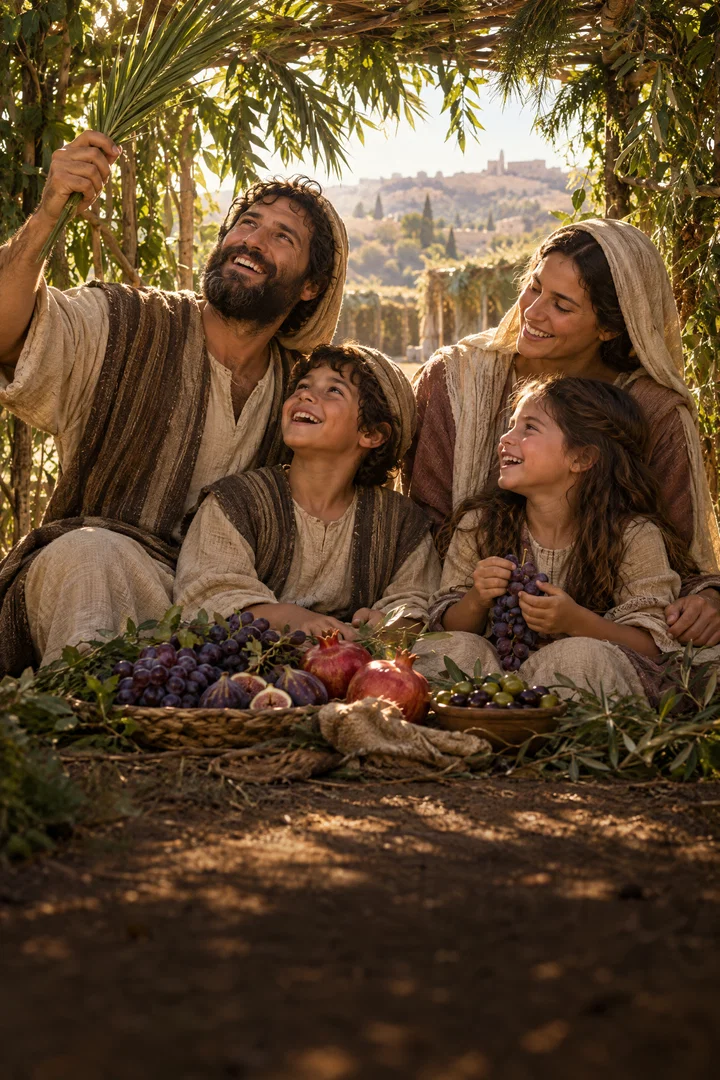
Ye shall dwell in booths seven days; all that are Israelites born shall dwell in booths:
Translations
You shall dwell in booths seven days; all that are Israelites born shall dwell in booths:
King James Version, KJV Cambridge Paragraph Bible
Ye shall dwell in booths seven days; all that are Israelites born shall dwell in booths:
Ye shall dwell in booths seven days: all that are Israelites born shall dwell in booths:
Ye shall dwell in booths seven days; all that are homeborn in Israel shall dwell in booths:
Ye shall dwell in booths seven days; all that are home-born in Israel shall dwell in booths;
'In booths ye dwell seven days; all who are natives in Israel dwell in booths,
In booths shall ye dwell seven days; all born in Israel shall dwell in booths;
In booths, shall ye dwell seven days;—All the home-born in Israel, shall dwell in booths:
Berean Standard Bible, Majority Standard Bible
You are to dwell in booths for seven days. All the native-born of Israel must dwell in booths,
You shall dwell in temporary shelters for seven days. All who are native-born in Israel shall dwell in temporary shelters,
For seven days you will be living in tents; all those who are Israelites by birth are to make tents their living-places:
Ye shall dwell in boothes seuen daies: all that are Israelites borne, shall dwel in boothes,
Douay-Rheims (Challoner revision)
And you shall dwell in bowers seven days: every one that is of the race of Israel, shall dwell in tabernacles:
Pictures
Cross-references 20 of 25
- Colossians 2:16-17
Let no man therefore judge you in meat, or in drink, or in respect of an holyday, or of the new moon, or of the sabbath days:
Calls the feasts a shadow whose substance belongs to Christ.
- Deuteronomy 16:13-15
Thou shalt observe the feast of tabernacles seven days, after that thou hast gathered in thy corn and thy wine:
Both describe the seven-day Feast of Tabernacles after harvest.
- Nehemiah 8:14-17
And they found written in the law which the LORD had commanded by Moses, that the children of Israel should dwell in booths in the feast of the seventh month:
The Israelites make and dwell in booths for the feast as commanded in the law.
- Exodus 23:14-17
Three times thou shalt keep a feast unto me in the year.
Lists Israel’s yearly feasts, including the Feast of Tabernacles.
- Zechariah 14:16-19
And it shall come to pass, that every one that is left of all the nations which came against Jerusalem shall even go up from year to year to worship the King, the LORD of hosts, and to keep the feast of tabernacles.
The nations keep the Feast of Tabernacles after Jerusalem’s enemies are defeated.
- Deuteronomy 16:16
Three times in a year shall all thy males appear before the LORD thy God in the place which he shall choose; in the feast of unleavened bread, and in the feast of weeks, and in the feast of tabernacles: and they shall not appear before the LORD empty:
Both require Israelites to observe the Feast of Tabernacles.
- Leviticus 23:36
Seven days ye shall offer an offering made by fire unto the LORD: on the eighth day shall be an holy convocation unto you; and ye shall offer an offering made by fire unto the LORD: it is a solemn assembly; and ye shall do no servile work therein.
Both describe observances associated with the seven-day Feast of Tabernacles and its eighth day.
- John 7:2
Now the Jews’ feast of tabernacles was at hand.
Identifies the Feast of Tabernacles during Jesus’ ministry.
- Numbers 29:12
And on the fifteenth day of the seventh month ye shall have an holy convocation; ye shall do no servile work, and ye shall keep a feast unto the LORD seven days:
Both texts describe the seven-day Feast of Tabernacles.
- John 7:37
In the last day, that great day of the feast, Jesus stood and cried, saying, If any man thirst, let him come unto me, and drink.
Jesus speaks publicly on the feast’s last day.
- Leviticus 23:38
Beside the sabbaths of the LORD, and beside your gifts, and beside all your vows, and beside all your freewill offerings, which ye give unto the LORD.
The yearly feasts are distinguished from the Lord’s Sabbaths.
- Colossians 2:17
Which are a shadow of things to come; but the body is of Christ.
The yearly observances are shadows fulfilled in Christ.
- Nehemiah 8:17
And all the congregation of them that were come again out of the captivity made booths, and sat under the booths: for since the days of Jeshua the son of Nun unto that day had not the children of Israel done so. And there was very great gladness.
Describes Israel keeping the feast in booths.
- Leviticus 23:34
Speak unto the children of Israel, saying, The fifteenth day of this seventh month shall be the feast of tabernacles for seven days unto the LORD.
Identifies the feast beginning on the fifteenth day of the seventh month.
- John 7:10-31
But when his brethren were gone up, then went he also up unto the feast, not openly, but as it were in secret.
describes the feast Jesus attended
- 1 Kings 12:32-33
And Jeroboam ordained a feast in the eighth month, on the fifteenth day of the month, like unto the feast that is in Judah, and he offered upon the altar. So did he in Beth-el, sacrificing unto the calves that he had made: and he placed in Beth-el the priests of the high places which he had made.
Jeroboam established a feast in the eighth month instead of the appointed seventh month.
- Deuteronomy 31:10-13
And Moses commanded them, saying, At the end of every seven years, in the solemnity of the year of release, in the feast of tabernacles,
The law was read to all Israel at the Feast of Tabernacles.
- Nehemiah 8:2
And Ezra the priest brought the law before the congregation both of men and women, and all that could hear with understanding, upon the first day of the seventh month.
sets its timing as month of feasts
- Exodus 12:42
It is a night to be much observed unto the LORD for bringing them out from the land of Egypt: this is that night of the LORD to be observed of all the children of Israel in their generations.
Israel’s deliverance from Egypt is commemorated as an observance for every generation.
- Exodus 12:37
And the children of Israel journeyed from Rameses to Succoth, about six hundred thousand on foot that were men, beside children.
Records Israel’s first encampment at Succoth after leaving Egypt.
Commentary
Each commentary is drawn from primary sources: the writings of Ellen G. White and Adventist pioneers and periodicals. Each commentary is separate. Its own words are not a quotation; follow the references to read the source passages.
Ellen G. White
18 sources
The verse commands all native-born Israelites to leave their houses and live in booths for seven days during the Feast of Tabernacles.PP 540.4–5LC1 89.21RED 89.3 The booths were leafy arbors made of branches of goodly trees, palms, pines, myrtles and willows, set up on rooftops, in streets and courtyards, in the courts of God, and on the hills and valleys around Jerusalem.PP 540.4–5LC1 89.2ST Sep 23, 1897PK 665.2 Dwelling in them commemorates Israel's pilgrim tent life in the wilderness, their deliverance from Egypt, and God's miraculous protecting care and guidance over them.PP 540.4–5LC1 89.21RED 89.3DA 448.1PP 540.6 Kept in the seventh month after the harvest ingathering and following the Day of Atonement, it was a harvest thanksgiving and a joyful time of rejoicing, sacred song and gratitude for God's goodness, mercy and peace with Heaven.ST Sep 23, 1897ST Sep 23, 1897PK 665.2DA 447.1–2PK 37.3 The week's encampment joined sacred remembrance with outdoor fellowship, reunion and generous hospitality to Levites, strangers and the poor, keeping God in the minds of the people and strengthening their ties to Him and to one another.ED 42.3–43.1ST Nov 2, 1915ST Sep 23, 1897MH 281.3–4PP 540.6
Observance and Setting
The command is to leave houses and dwell in booths for seven days during the Feast of Tabernacles, binding upon all who are native-born Israelites.LC1 89.21RED 89.3PK 665.2PK 37.3DA 448.3 The first day was observed as a holy convocation, and an eighth day was added to the seven and observed in the same manner.PP 540.4–5
The booths were arbors or leafy shelters made from green branches of goodly trees, palms, thick trees and brook willows.PP 540.4–5LC1 89.2 Pine or myrtle was included among the green branches used.LC1 89.21RED 89.3
They were set up on housetops and rooftops, in streets and courtyards, in the courts of the house of God, and outside the city in valleys and on hillsides.LC1 89.2PK 665.22SP 343.4 At Jerusalem this meant leafy shelters of branches erected in the streets, temple courts and housetops, as well as on the surrounding hills and valleys.LC1 89.2ST Sep 23, 1897
The feast took place in the seventh month after the harvest ingathering as the closing religious gathering of the year and lasted seven days.PP 540.4–5DA 447.1–2PK 37.3 It followed the Day of Atonement.DA 448.2
Commemoration and Purpose
Like the Passover, the Feast of Tabernacles was commemorative, and dwelling in booths for seven days commemorated Israel's pilgrim tent life during the wilderness journey and sojourn, when the Hebrews lived in tents.PP 540.4–5LC1 89.21RED 89.3DA 448.12SP 343.4 The booths of green boughs recalled that wilderness sojourn, and the feast included a ceremony commemorating that time.PP 540.4–5DA 448.1DA 448.3 The dwelling in booths recalled Israel's deliverance from Egypt and God's miraculous protecting care, guidance, and continued care over the people in the wilderness.DA 448.1PP 540.6
The feast was also a harvest festival and great thanksgiving service, the closing religious gathering of the year, meant to remind the people of God's goodness, mercy, guidance, continued care, and blessing and to prompt thanksgiving for the year's harvest.ST Sep 23, 1897DA 447.1–2ED 42.3–43.1ST Nov 2, 1915 The land had received His guidance and blessing, and its harvest, olives, oil, dates, and grapes had been gathered for future use, with offerings brought from orchard and field.ST Sep 23, 1897ST Nov 2, 1915 The week-long encampment in leafy booths therefore joined sacred memorial service with gratitude to God for crowning the year with goodness.ED 42.3–43.1ST Nov 2, 1915
It was a joyful time of rejoicing, sacred song, and thanksgiving, bringing great gladness as the people gathered in Jerusalem free to devote themselves to worship.ST Sep 23, 1897PK 665.2PK 37.3DA 448.2 The seven days were marked by rejoicing and thanksgiving for God's goodness, made warmer by welcoming strangers, Levites, and the poor, within a week of outdoor recreation and social life.ST Sep 23, 1897MH 281.3–4 Coming after the Day of Atonement, when the people confessed their sins and were declared at peace with Heaven, its joy expressed gratitude for God's goodness and enduring mercy.DA 448.2
That week's encampment joined sacred remembrance with outdoor recreation, social life, fellowship, reunions, and generous hospitality that welcomed the Levites of the sanctuary, strangers, and the poor.ED 42.3–43.1ST Nov 2, 1915MH 281.3–4 With the other feasts it gave the devout in Israel fully a month of every year free from care and labor, devoted almost wholly to education in gratitude, knowledge of God, fellowship with Him, likeness to Him in character imparted by parents to children, encouragement in His service, and strengthened ties to God and one another.ST Nov 2, 1915PP 540.6 As part of God's directions for Israel's annual religious gatherings to keep Him in the people's minds, the feast provides a biblical example of God's people assembling together to worship and a pattern for gratefully remembering how God brings His people out of the world and error into the light of His grace and truth.ST Sep 23, 1897PP 540.6Lt 8a, 1893, par. 4–5
Sources
Pioneers and periodicals
113 sources
The verse commands all native-born Israelites to dwell in booths for seven days during the Feast of Tabernacles, also called the Feast of Ingathering or Feast of Booths.RH Aug 4, 1874ST Jul 3, 1879ST May 7, 1912 The feast runs from the fifteenth to the twenty-second day of the seventh month in autumn after the harvest is gathered, with holy convocations on its first day and its eighth day, and the booths are temporary leafy shelters of boughs set up in streets, courts, housetops and surrounding hills.ST May 7, 1912RH Oct 31, 1912ST Nov 24, 1881RH Jun 11, 1857RH Jan 14, 1862 Leaving houses to live in branch shelters commemorates Israel's tent-life in the wilderness after God brought them out of Egypt, and it is a harvest thanksgiving for His goodness in giving field, orchard and vineyard with a full week of rejoicing and worship.ST May 7, 1912RH Oct 31, 1912RH Jan 15, 1914ST Nov 17, 1898ST Nov 17, 1881 It is both commemorative of the desert wanderings and typical, foreshadowing the final deliverance from sin and death and the gathering of the redeemed into the kingdom, joyfully celebrated after the assurance of pardon of the Day of Atonement.ST May 7, 1912RH Mar 31, 1868RH Oct 31, 1912RH Jun 11, 1857 These yearly feast sabbaths are distinct from the Lord's weekly seventh-day Sabbath, belonging to the ceremonial shadows pointing to Christ that expired and were abolished at His death.RH Dec 29, 1859RH Aug 31, 1905ST Jun 17, 1903RH May 3, 1860RH Dec 18, 1860 The autumn dwelling in booths gives the pattern for tented camp-meetings where believers rally yearly to live together on the ground and seek God free from life's cares.ST Oct 13, 1881ST Sep 16, 1875ST May 6, 1875
Wording and Observance Details
The command requires all native-born Israelites to live in booths for seven days during the Feast of Tabernacles, also called the Feast of Ingathering or Feast of Booths.RH Aug 4, 1874ST Jul 3, 1879ST May 7, 1912RH Oct 31, 1912RH Jan 15, 1914 The feast lasted a full week, included two Sabbaths, commemorated an important event in Israel's history, deepened devotion and gratitude for providential blessings, and was a time of rejoicing, thanksgiving and religious worship.RH Aug 4, 1874RH Oct 31, 1912RH Jan 15, 1914 The requirement belongs to the law for that feast and is identified with the annual sabbath on the fifteenth day of the seventh month, distinct from the weekly Sabbath because its date was fixed by the month rather than the day of the week.ST Jul 3, 1879RH Aug 3, 1916 The people gathered near the tabernacle and later went to Jerusalem and made booths from tree branches to keep it.ST May 7, 1912RH Aug 3, 1916
The feast runs from the fifteenth to the twenty-second day of the seventh month, Tisri, held in autumn at the year's end or revolution of the year, in the seventh month of the sacred year at the close of the civil year, after the land's fruit, harvest, orchards and vineyards are gathered.RH Oct 31, 1912ST Nov 24, 1881RH Jun 11, 1857RH Jan 14, 1862ST Nov 17, 1881 It begins on the fifteenth day counted from the new moon, with holy convocations on the first and eighth days, and those feast days are each called a sabbath as a day of restraint in the Levitical service, occurring but once a year and falling on different weekdays in different years.ST Nov 24, 1881RH Apr 29, 1873RH Mar 25, 1873 Its fifteenth day and twenty-second day are the sixth and seventh of seven annual ceremonial sabbaths.RH Apr 29, 1873RH Mar 25, 1873
Its first day and its eighth day are holy convocations and ceremonial sabbaths on which no servile work is done, reckoned beside the Sabbaths of the Lord and distinct from the weekly Sabbath.ST Nov 24, 1881RH Aug 12, 1858ST Sep 9, 1913RH Apr 29, 1873 The chapter prescribes the yearly feast with its two ceremonial sabbaths on the feast's first and eighth days.RH Aug 4, 1874RH Aug 12, 1858 With the Passover lasting seven days and Pentecost lasting seven days, the yearly feast days together make twenty-two days in an eight-day Tabernacles observance.RH Aug 4, 1874RH Nov 18, 1862
The booths are temporary leafy shelters of living twigs made of boughs of goodly trees, branches of palm trees, boughs of thick trees, willows of the brook, olive, myrtle, pine and fir, meant for temporary use.ST May 7, 1912RH Oct 31, 1912ST Mar 8, 1899ST Nov 17, 1881 They were set up in streets, open places, housetops, open courts of houses, courts, courts of the house of God, temple courts, and on surrounding hills and valleys.ST Sep 23, 1897ST Feb 2, 1882RH Oct 31, 1912ST Nov 17, 1881 Leaving houses to dwell in shelters of green boughs commemorated pilgrim tent-life in the wilderness.ST Feb 2, 1882RH Jan 15, 1914
The keeping includes carrying a citron in the left hand and in the right the lulab, a palm branch woven round with willow and myrtle.ST Nov 17, 1881 On each of the seven days priests went out with music and the choir of Levites amid shouts of vast multitudes to draw water in a golden vessel from the spring of Siloah to be poured as a libation on the west side of the great altar at the time of the morning offering amid great joy, singing and dancing.ST Nov 17, 1881 On the evening of the first day a grand illumination from huge candelabra shedding light over the city began in the Court of the Women with torch dances, music and songs until the Temple gates closed.ST Nov 17, 1881
It is one of three yearly gatherings and three great feasts every Jew was required to attend, when Israelite males appear before the Lord at His sanctuary in the place He chooses, Jerusalem.RH Aug 3, 1916ST Apr 23, 1912ST Jun 3, 1897ST Nov 17, 1881 It belongs to the setting of those sacred occasions and to the harvest ingathering around the middle of the seventh month.RH Aug 3, 1916RH Oct 2, 1913 Keeping it required journeys to Jerusalem to worship and receive blessing, preparation beyond the feast days, gathering boughs in the woods, erecting tents, bringing produce from land and labor with pledges, vows and freewill offerings.RH Oct 2, 1913RH Nov 18, 1862ST Aug 12, 1889ST Sep 16, 1875
Every seventh year the solemnity of the year of release came during the feast, when debtors were released from obligations and the entire Levitical law and book of the law was read in the hearing of men, women, children and even strangers, fixing the time when the people gathered to hear it.RH Oct 31, 1912ST Feb 13, 1893 Its fall timing after crops are harvested is consistent with Thanksgiving being observed in late November.RH Nov 26, 1901
When the returned exiles heard the command read from the law they promptly made booths and lived in them as God's word, and the feast was observed with great gladness.ST May 28, 1902ST Feb 12, 1885 Duty comes from God's written command rather than from whether earlier generations practiced it, though it had not been so kept since the days of Joshua.ST Feb 12, 1885 Jeroboam's feast in the eighth month changed the appointed seventh-month time and perverted the commanded occasion.ST Jun 29, 1904
The chapter's instruction about the yearly feasts parallels the instruction in Deuteronomy 16.ST Mar 18, 1913 The seven days in booths is cited as an example of the frequent biblical use of the number seven, described as remaining seven days in tents beginning on the seventh day of the seventh month after seven days of fasting. The seventh-month festivals including dwelling in booths have their observance repeatedly and particularly recorded, unlike the Day of Atonement though it came ten days before one and five days after the other.
Commemoration Thanksgiving and Worship
Leaving houses to live for seven days in booths made of tree branches commemorated Israel's pilgrim tent-life and dwelling in booths in the wilderness after God brought them out of Egypt.ST May 7, 1912RH Oct 31, 1912RH Jan 15, 1914RH Jun 11, 1857RH Jan 14, 1862 The encampment at Succoth belonged to that remembered journey, and the seven-day dwelling recalled the desert wanderings.ST May 7, 1912RH Oct 31, 1912RH Jun 11, 1857RH Jan 14, 1862ST Nov 17, 1898 It marked the passage from bondage to freedom, teaching that even temporary wilderness shelter was preferable to well-provided homes in Egypt.ST Oct 15, 1896
It was still more a harvest thanksgiving for God's guidance, blessing and goodness in giving the finished harvest for future use, including olives, oil, dates, grapes, orchard, field and vineyard.ST Sep 23, 1897ST Sep 23, 1897ST Nov 17, 1898ST Nov 17, 1881RH Nov 25, 1915 The Feast of Tabernacles as the ingathering celebration gathered the people with produce and livestock to give thanks to the Creator and Redeemer before enjoying the harvest blessings.RH Nov 25, 1915ST Nov 21, 1906 Leafy shelters erected in streets, open places, housetops, courts, temple courts, and on surrounding hills and valleys were the setting for rejoicing and thanksgiving for that goodness.ST Sep 23, 1897ST Nov 17, 1881
It lasted a full week as rejoicing, thanksgiving, religious worship, sacred recreation and devotion, deepening gratitude for providential blessings and reflection on God's mercy.ST Sep 23, 1897ST Sep 23, 1897RH Aug 4, 1874RH Oct 31, 1912RH Jan 14, 1862 Held after the harvest as the closing gathering of the year, it was a joyful celebration before the Lord at the beginning of the new year after assurance of pardon and deliverance from the bondage of sin.ST Sep 23, 1897RH Jan 14, 1862ST Sep 11, 1884 The first day and the eighth day were kept as ceremonial sabbaths within that week of worship.RH Aug 4, 1874RH Oct 31, 1912
All shared the feast with the poor, the stranger and the Levites through generous hospitality, offerings from field and orchard, social reunions and memorial service.ST Nov 2, 1915RH Oct 31, 1912 That hospitality uplifted all minds in gratitude to God for crowning the year with goodness and gave parents opportunity to educate children in knowledge of God.ST Nov 2, 1915ST Apr 2, 1902 With the other feasts it freed the devout from care and labor for fully about a month each year for fellowship with God in study and labor and likeness to Him in character.ST Nov 2, 1915 God defines the conditions of blessing, so refusing the appointed booth for the house forfeits the blessing, since one who stayed home on the ground that God could bless at home as well as in a booth would receive no blessing.ST Aug 12, 1889 The annual gatherings including dwelling in booths were intended to keep God in the people's minds.ST Sep 23, 1897
Type and Prophetic Fulfillment
The dwelling in booths for seven days was both commemorative and typical, looking backward to the desert wanderings and forward to the final deliverance of God's people from sin and death and their rejoicing after being gathered into the kingdom.ST May 7, 1912RH Oct 31, 1912RH Jan 14, 1862ST Jun 1, 1882 It remembered Israel's dwelling in booths in the wilderness sojourn after deliverance from Egypt, kept for seven days with the first day and the eighth day as ceremonial sabbaths in booths made of boughs of goodly trees, palm, thick trees and willows of the brook set up in streets, housetops, courts and courts of the house of God.ST May 7, 1912RH Oct 31, 1912RH Jan 14, 1862 It was held as the feast of ingathering at the year's end or revolution of the year in the seventh month of the sacred year in autumn, a period of rejoicing in which all shared with the poor, the stranger and the Levites, and every seventh year the solemnity of release came during it when debtors were released and the whole law was read to men, women, children and strangers.RH Oct 31, 1912 The autumn festivals of the chapter included types pointing to Christ's second advent, with the tenth day of the seventh month, the great Day of Atonement, marking the time when Christ as great High Priest comes to bless His waiting people with immortality, and like the Day of Atonement the Feast of Tabernacles is typical and follows after the third angel's message, pointing to a work before the Lord comes as described in Joel 1 and 2.RH Mar 31, 1868RH Sep 11, 1856
Its antitype is the great harvest of the earth, the gathering of the redeemed from the four winds of heaven by Christ's intervention and work for humanity, the Lord's final ingathering, the antitypical home-coming in the New Jerusalem and the saints' rest in the immortal state.ST May 27, 1908RH May 13, 1862RH Aug 12, 1858ST Jun 1, 1882RH May 13, 1862 The yearly feast with its two ceremonial sabbaths on its first and eighth days was a shadow whose antitype is that final ingathering of the harvest.RH May 13, 1862RH Aug 12, 1858 It commemorated the wilderness wanderings and gave thanks for the earth's harvest, and it typified God's future harvest home when weary pilgrims to Zion wander no more and the ingathering is complete, fulfilled in God's kingdom after all the saints are gathered to the New Jerusalem.ST Nov 17, 1898ST Jun 1, 1882
The feast is fulfilled in Christ and His priestly work, and its present observance is a consistent celebration of Christ by walking in newness of life, so that it need not be celebrated year by year before its complete fulfillment.ST May 27, 1908 The three annual festivals of appearing before the Lord at His sanctuary, of which this is part, were fully met in Christ's antitypical priestly service.ST May 27, 1908ST Apr 23, 1912 It follows the sanctuary-cleansing event in the yearly sequence from the fifteenth to the twenty-second day of the seventh month after the land's fruit was gathered, and that sequence relates the earthly sanctuary's cleansing to the heavenly cleansing of sin.RH Jun 11, 1857 Placed immediately after the Day of Atonement, it was a joyful celebration at the beginning of the new year commemorating deliverance from the bondage of sin after assurance of pardon, when those who afflicted their souls, confessed and put away sins stood clear before God while those who did not were cut off.ST Sep 11, 1884ST Jan 7, 1903
The spring types prove the timing principle, for Passover on the fourteenth of the first month, the sheaf of firstfruits on the sixteenth, and the Feast of Weeks on the fiftieth day from firstfruits were each fulfilled exactly on time in Christ sacrificed as Passover, raised as firstfruits, and the outpouring of the Holy Spirit as the antitype of Pentecost.RH Oct 30, 1855 Mere preliminary and circumstantial burnt offerings on those days did not prevent the grand event of the day from meeting its antitype on its very day, while the antitype beginning on that day may then extend far forward, so the antitype of the great work in the Most Holy Place must begin on the tenth day of the seventh month though it may continue long.RH Oct 30, 1855RH Dec 15, 1868 As the final typical feast after the Day of Atonement, lasting seven days with greater rejoicing than the feast of firstfruits, it typifies a work of the Holy Spirit in the latter part of the gospel age just before the harvest, the latter rain completing Joel's prophecy under the third angel's work, ripening the graces of the Spirit and perfecting God's people at the ripening time of the harvest of the earth.RH Sep 2, 1851ST Sep 15, 1881
One teaching holds that its typical work cannot belong to immortal saints but follows after the third angel's message before the Lord comes, while another places its antitypical observance after the thousand years when wanderings end and the inheritance is entered.RH Sep 11, 1856ST Jan 7, 1903 Its fulfillment is antitypical and not a re-institution of the former Levitical observance of Leviticus 23:34-43 in the age to come.RH Feb 16, 1860
Annual Sabbaths and Weekly Sabbath
Leviticus 23 lists the yearly feast days and sabbaths connected with Passover, Firstfruits, Trumpets, Atonement and Tabernacles, including the command to dwell in booths seven days, and these are kept beside or besides the Sabbaths of the Lord and are therefore distinct from the Lord's weekly seventh-day Sabbath.RH Dec 29, 1859ST Jun 17, 1903RH Aug 13, 1857ST Dec 18, 1893RH Aug 11, 1853 They are local and ceremonial annual feast-related sabbaths, holy convocations set apart from common days on which no servile work is done, shadowing forth Christ or some part of His work, whose cessation was predicted and fulfilled.RH Dec 29, 1859ST Dec 18, 1893ST Sep 9, 1913 The distinction is made by the very expression besides the Sabbaths of Jehovah and by the nature of the institutions themselves, for the weekly Sabbath is always the seventh day in constant succession while the yearly sabbaths might fall on any day of the week.ST Jun 17, 1903RH Aug 13, 1857RH Aug 11, 1853
The annual sabbaths fall on fixed month dates such as the fifteenth and twenty-second of the seventh month, counted from the new moon, beginning seven days of dwelling in booths with holy convocations on the first and eighth days, and they can fall on different weekdays in different years.ST Jul 3, 1879ST Nov 24, 1881ST Sep 9, 1880 The weekly Sabbath is always the seventh day of the week in constant succession, made when heaven and earth were made, with its claim lying altogether back of these ceremonials.ST Jun 17, 1903ST Nov 24, 1881 The annual sabbaths sometimes coincided with the weekly Sabbath but did not regularly do so, and changes in feast dates do not change which day is the seventh day of the week.ST Jul 17, 1879ST Sep 9, 1880
The weekly Sabbath is God's memorial of creation instituted in Eden before the fall and before sin entered, for all people, weekly, unchangeable, perpetual and binding, with nothing shadowy about it, pointing back to creation.RH Dec 18, 1860ST Oct 18, 1877ST Feb 25, 1875ST Jun 5, 1884ST Nov 10, 1914 The yearly sabbaths came after the fall in consequence of sin, are yearly, ceremonial, temporal, shadowy, typical, local, for one nation only, tied to movable institutions and Canaan, growing out of man's actions as a sinner, having to do with sin and its remedy and the putting away of sin.ST Jun 17, 1903RH Dec 18, 1860ST Feb 25, 1875ST Nov 10, 1914 Like all shadows, types, rites and ceremonies associated with meats and drinks, they pointed forward to Christ as Saviour who takes away sins, the body of the shadow, and were lost in Him as the shadow is lost in the substance, ceasing at the cross, while the seventh-day Sabbath remains.RH Dec 18, 1860ST Oct 18, 1877ST Jun 5, 1884ST Nov 10, 1914
The plural word sabbath days does not always mean the seventh day but can mean these ceremonial feast sabbaths, the yearly holy days and new moons kept beside the Sabbath of the Lord.ST Oct 18, 1877RH Nov 8, 1853RH Aug 13, 1857 They are the meats, drinks, holy days, new moons and sabbaths that are shadows whose body is Christ, identified with Colossians 2:16 and Romans 14, so that Christians are not to be judged for them.ST Dec 25, 1893ST Oct 18, 1877RH Aug 13, 1857RH May 16, 1854 Placed within the chapter containing ceremonial sabbaths associated with feasts, food and drink, they are called Israel's sabbaths and, with the law of Moses, were abolished at Christ's death and nailed to the cross and are no longer binding afterward.RH May 3, 1860ST Dec 25, 1893
Holding holy convocations with no servile work on days besides the seventh day does not make those days the rest-day or Sabbath, for meeting together for worship on a day does not make that day the rest-day.RH Mar 18, 1862RH Dec 17, 1857 Such assemblies on appointed days in addition to the weekly Sabbath did not cancel or violate the command to work six days and rest on the seventh.RH Mar 18, 1862RH Dec 17, 1857 The eighth day connected with dwelling in booths is the eighth day of the feast, not a day of the week, and there is nothing about reckoning the days of the week in the narrative, so to take the eighth day to mean Sunday is an unwarrantable assumption and any argument for Sunday-keeping built on it falls to the ground.RH Apr 19, 1870RH Jan 13, 1874 An eighth day fixed by a feast date could fall on different weekdays in different years, just as New Year's Day or the Fourth of July can, and never once is a day of the weekly cycle mentioned in connection with these feasts, for no weekday except the seventh is ever called the Sabbath, which is the Sabbath of all times and all places.RH Jan 13, 1874ST Sep 24, 1894 Yet it was also taught from the same record of annual sabbaths appointed by God that God could make any day of the week a Sabbath if He chose to make it one.RH Apr 24, 1879
Against this distinction it was held that the seventh-day Sabbath stands among the appointed feasts and holy convocations and was abolished together with them.RH Mar 8, 1864RH Oct 29, 1872 On that reckoning the holy day includes the yearly sabbaths and Sabbath days includes the weekly Sabbaths, the Sabbath is proved a type, and every moral distinction between weekly and annual sabbaths is removed so that the Sabbath stands in the category of merely positive typical institutions, since moral institutions are not typical nor typical institutions moral.RH Mar 8, 1864RH Oct 29, 1872 Another opposing lunar reckoning held that the sacred year waited for ripe barley, that Passover and following feasts shifted between March and April, and that the fifteenth of the first month served as the year's first weekly Sabbath from which sevens were counted, making weekly Sabbaths shift and sometimes form a double Sabbath.RH Feb 6, 1879 In that system the six different kinds of Jewish Sabbaths and feasts were regulated by the moon and by a sheaf of firstfruits of the barley harvest waved on the sixteenth day of the first month on the morrow after the Sabbath, the Jewish sacred year beginning not at a fixed solar date but irregularly, with Passover on the fourteenth and the feasts following, including dwelling in booths, belonging to that lunar order of holy days, new moons and Sabbath days that were a shadow of things to come whose body is Christ, in contrast to regular unvarying solar cycles of seventh-day Sabbaths.RH Feb 6, 1879
End of the Ceremonial System
The requirement to dwell in booths seven days belongs to the ceremonial law governing Israel's feast observances, to the system of types, carnal ordinances and shadows pointing forward to Christ.RH Aug 31, 1905ST Dec 13, 1905RH May 3, 1860ST Oct 31, 1900ST Feb 7, 1911 The yearly feast institutions arose because of sin and served as types and prophecies finding their fulfillment in Him, with the seven-day dwelling finding its fuller meaning in the sacrifice, life and work of Jesus Christ.ST Oct 31, 1900ST Feb 7, 1911ST Aug 18, 1909 When type met antitype and the substance was reached the shadow expired, and that whole feast-related system received its force from the ceremonial law and ceased when that law was abolished.RH Aug 31, 1905ST Dec 13, 1905RH May 3, 1860 It was blotted out, nailed to the cross, and abolished at Christ's death, so the ceremonial observances with the law of Moses were no longer binding afterward.RH May 3, 1860ST Mar 20, 1879RH May 5, 1874RH Oct 14, 1873 The annual sabbaths connected with it were distinct from the weekly Sabbath and formed part of the typical service connected with the sacrificial system, listed in the chapter with feasts, food and drink as Israel's sabbaths.ST Dec 13, 1905RH May 3, 1860ST Oct 31, 1900
That ceremonial system is wholly distinct from the Ten Commandments moral law spoken by God's voice and engraved in stone.ST Dec 13, 1905RH May 5, 1874ST Sep 16, 1875 The moral law is unchangeable and eternal, was not done away, and remains the rule of right, while the whole ceremonial system with its numerous sabbaths, new moons and feast days set forth in Leviticus 23:4-44 was abrogated and done away.ST Mar 20, 1879RH May 5, 1874ST Feb 13, 1896 The chapter's meats, drinks, feast days, new moons and yearly Sabbaths are a shadow of things to come, pointing directly to Christ and blotted out and abolished by the gospel at His coming, in contrast to the ten commandments.ST Dec 13, 1905ST Mar 20, 1879ST Feb 13, 1896 The weekly Sabbath belongs to that unchangeable moral law as a constant memorial and sign of Christ's power to create, uphold and sanctify, distinct from the yearly ceremonial days and sabbaths that were shadows pointing forward to Christ.ST Dec 13, 1905ST Jan 20, 1881ST Feb 13, 1896 The booth feast with its connected annual sabbaths fell on certain days of certain months like Christmas and New Years, was designed especially for dwellers in Canaan and was not kept till reaching Palestine, grew out of sin after the fall and showed forth the remedy for sin as a shadow and type, and as part of the middle wall of partition was against Gentiles and contrary to them as a yoke they could not bear, wholly distinct from the seventh-day Sabbath made at creation before the fall for the whole race as a memorial pointing back to creation and not a shadow, made for man and not against him, and which remains in the new earth when all types and shadows have vanished away.RH Oct 14, 1873RH Apr 9, 1872
Like Passover, baptism and the Lord's Supper, Tabernacles as a memorial began with the events it commemorates.RH Feb 3, 1852 Like those other Bible memorials, its institution dates from what it remembers, proving that a memorial does not start later than its event.RH Feb 3, 1852 This rule means the Sabbath, which commemorates Creation, was instituted at Creation and not in the wilderness of Sin.RH Feb 3, 1852 The Old Testament commemorative institutions were observed on days different from the days on which they were instituted, proving that the time of instituting an ordinance does not determine the time of observing it.RH Jun 17, 1873 The command for all Israelites born to dwell in booths seven days gives a specific statement of the time for instituting and observing the feasts, which is unlike the Lord's Supper, for which no such specific time of observance is stated.RH Jun 17, 1873
The feast sabbaths appointed as part of the Lord's solemn feasts are distinct from the Lord's Sabbath, with verse 38 explicitly listing these observances as additional to the Lord's Sabbaths.ST Nov 16, 1876ST Jun 8, 1915 These feast sabbaths could be judicially taken away from the wicked.ST Nov 16, 1876 They were intended as expressions of faith, but people misused them as works by which to earn God's favor and salvation.ST Jun 8, 1915 Unlike the weekly Sabbath, the ceremonial sabbaths were connected with Israel's inheritance in Canaan and were affected when the land was occupied by Gentiles and could no longer be kept.RH Aug 29, 1871 The annual sabbaths and sabbaths of the land connected with the three yearly feasts, with going up to Jerusalem three times a year with sacrifices, belong not to the Ten Commandments but to the middle wall of partition between Jews and Gentiles that was against us and contrary to us and a shadow of things to come, abolished at the cross as a yoke and burden Gentiles could not bear, distinct from the seventh-day Sabbath made at creation before the fall and made for man, and they could typify the seventh millennium in which the earth shall rest from the curse.RH Apr 9, 1872
The requirement for Israelites to dwell in booths seven days was a law for Israel as a nation and church, not legally binding on people today, though its underlying principles remain.RH Nov 12, 1908 It belongs to the system of the feasts and feast-days of the Jewish ritual, joined together as one whole with distinctions of meats and drinks, carnal ordinances and yearly sabbaths, left in the change to spiritual worship of Jesus.ST Sep 16, 1875 Its days are the days spoken of in Romans 14 where one man esteems one day above another and another esteems every day alike, and its observance was a matter of indifference so long as men did not seek justification through it and thus reject the sacrifice of the Saviour.ST Sep 16, 1875 Requiring the observance of the Feast of Tabernacles of Christians is erroneous, since it is in no way connected with the Sabbath, which belongs to an entirely different system spoken by God with His own voice and engraved on the tables of stone, where nothing about meats and drinks and feast-days was ever spoken or written.ST Sep 16, 1875RH Mar 10, 1903 Converted Jews could still regard such festival observances as morally binding.ST Oct 19, 1888
Scripture Connections and Present Application
The autumn dwelling in booths and groves gives the pattern for tented camp-meetings, conferences and convocations where believers rally yearly to worship the Creator while beholding nature's grandeur.ST Oct 13, 1881ST Sep 16, 1875ST Aug 2, 1883 The ancient annual gathering lasted three weeks in the autumn of each year, with all Israel coming to appear before God and erecting tents and dwelling in booths for seven days.ST Oct 13, 1881ST Sep 16, 1875ST May 6, 1875 The people of God set apart at least a brief period each year to seek the groves free from the perplexing cares of life, to live together on the ground in tents or booths and seek God.ST Oct 13, 1881ST Sep 15, 1881RH Jul 9, 1872 General gatherings of believers held in camp in tents are commanded by the booth requirement, so that fifteen camp gatherings held from the Atlantic to the Pacific are grand feasts of tabernacles and the annual conference is described as a feast of tabernacles.ST May 6, 1875RH May 9, 1865 Attendees accept camp-life lodging and plain fare, bring bedding and food with them, come prepared to labor for God, provide for themselves and their teams, and supply the temporal wants of man and beast.RH May 9, 1865ST Sep 15, 1881RH Oct 21, 1858RH Jul 9, 1872 The annual Feast of Tabernacles compared to camp meetings is an important gathering where people including children can be spiritually benefited.
Such gatherings are for worship, prayer, preaching, putting away idols, humbling the heart, and coming ready to support good works.RH Mar 20, 1879RH Oct 21, 1858RH Aug 8, 1871 All believers make special effort to come together and dwell together for the whole time until the close, to seek the influence of the power and Spirit of God to overcome tendencies to wrong-doing.ST Sep 15, 1881RH Aug 8, 1871RH Jul 9, 1872 The graces of the Spirit are thereby more fully matured to be in condition to be perfected by the latter rain soon to be poured out at the ripening time of the harvest of the earth.ST Sep 15, 1881 The feast was a joyful gathering of God's people for worship in a place prepared for them, with God's blessing sought and received and with renewed pledge to sacred work, giving a pattern for making a conference gathering a feast centered on dedicating a plain, substantial, commodious house of worship called The Tabernacle.RH Mar 20, 1879 Every able family brings its own tent and bedding to house themselves and as many friends as they can bring, while those who cannot bring a tent dwell in the large tent, with provision made on the ground.RH Jul 9, 1872
Adventist camp-meetings keeping this feast are places of holiness to the Lord where a great deal of meat is not needed and where cattle are not driven on to be killed and eaten by the campers.RH Aug 27, 1901 Gospel principles save from treating a slaughterhouse as a necessary adjunct to worship and put a distinction between Adventist camps and other camps, marking them by plain fare and gospel temperance rather than slaughter and excess meat.RH Aug 27, 1901
The ancient Jewish Feast of Ingathering commanded by Moses is the same as the American feast of Thanksgiving now proclaimed yearly by the President.ST Dec 9, 1897 Recalling this links America with Israel through which God revealed Himself to the world, lifts the day out of mere local or national limitations, and proves Americans too are children of Abraham in the high spiritual sense of the household of faith.ST Dec 9, 1897 Thanksgiving illumines and glorifies the Feast of Ingathering to make one of the old and the new and demonstrate the essential unity of God's purposes through all generations, just as Easter with divine light transfigures the Feast of the Passover.ST Dec 9, 1897 The Feast of Ingathering falls in the autumn after the crops have been harvested, consistent with Thanksgiving being observed in late November, and its institution among the children of Israel serves as the starting point for a history of Thanksgiving days.RH Nov 26, 1901RH Oct 29, 1908
Duty comes from God's written command, not from whether earlier generations practiced it, for when the returned exiles discovered the plainly written law that Israelites dwell in booths during the Feast of the Seventh Month, they made booths and kept the command despite its not having been observed in that way since the days of Joshua.ST Feb 12, 1885 Departure from even the least particular of the prescribed annual system of religious observances instituted to bring Israel nearer to God and make them a people of praise is blameworthy.ST Mar 24, 1887 The appointed feasts included occasions lasting several days when the people were not allowed to labor, illustrating appointed times of worship.RH Aug 21, 1860
The chapter's yearly feasts include several yearly ceremonial Sabbaths and fast days which are yearly observed and not weekly, distinct from the weekly Sabbath and the Sabbath of the land observed every seventh year.ST Sep 25, 1893ST Oct 10, 1906ST Sep 24, 1894 Never once is a day of the weekly cycle mentioned in connection with these feasts, for the yearly feast-day sabbaths are shadows of things to come while the weekly Sabbath is not shadowy, and the Sabbath stands as the only weekly feast among the Jews.ST Sep 25, 1893RH Feb 20, 1872ST Sep 24, 1894 No day of the week except the seventh is ever called the Sabbath, which is the Sabbath of all times and all places and the only Sabbath known to the Bible, even as Christ is the only Saviour.ST Sep 24, 1894
Sources