Numbers 19:6
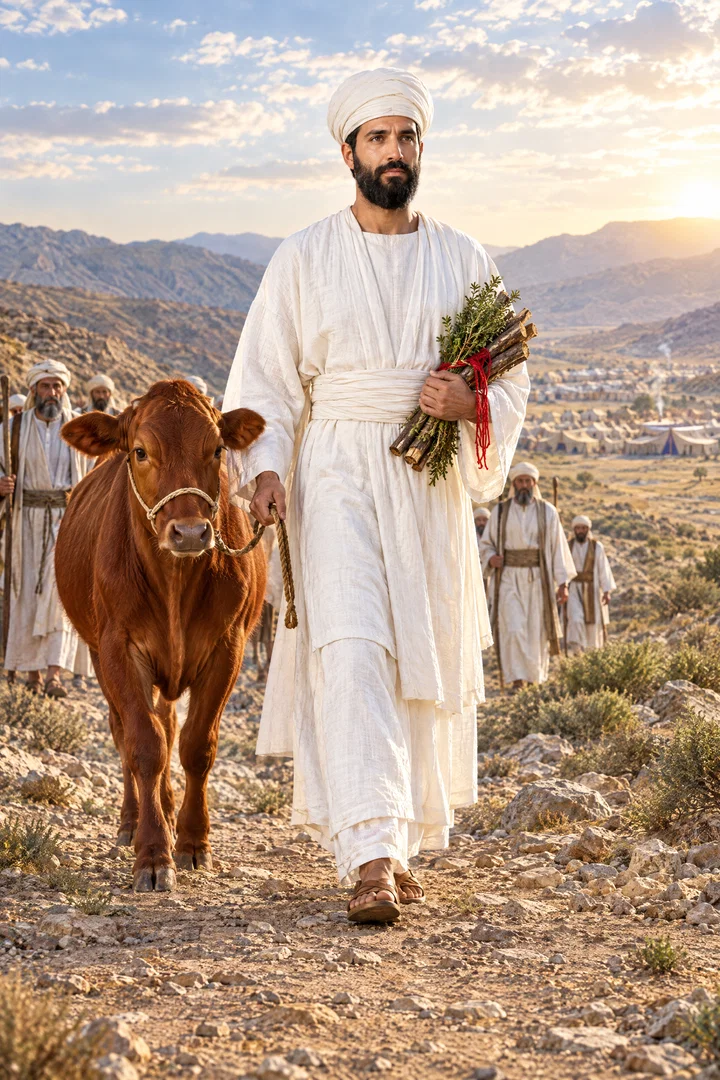
And the priest shall take cedar wood, and hyssop, and scarlet, and cast it into the midst of the burning of the heifer.
Translations
And the priest shall take cedar wood, and hyssop, and scarlet, and cast it into the middle of the burning of the heifer.
And the priest shall take cedar wood, and hyssop, and scarlet, and cast it into the midst of the burning of the heifer.
KJV Cambridge Paragraph Bible, Revised Version
and the priest shall take cedar wood, and hyssop, and scarlet, and cast it into the midst of the burning of the heifer.
And the priest shall take cedar-wood, and hyssop, and scarlet, and cast it into the midst of the burning of the heifer.
and the priest shall take cedar-wood, and hyssop, and scarlet, and cast it into the midst of the burning of the heifer.
and the priest hath taken cedar wood, and hyssop, and scarlet, and hath cast unto the midst of the burning of the cow;
And the priest shall take cedar-wood, and hyssop, and scarlet, and cast them into the midst of the burning of the heifer.
Then shall the priest take cedar-wood and hyssop and crimson,—and cast into the midst of the burning up of the heifer.
Berean Standard Bible, Majority Standard Bible
The priest is to take cedar wood, hyssop, and scarlet wool and throw them onto the burning heifer.
The priest shall take cedar wood, hyssop, and scarlet, and cast it into the middle of the burning of the heifer.
Then let the priest take cedar-wood and hyssop and red thread, and put them into the fire where the cow is burning.
Then shall the Priest take cedar wood, and hyssope and skarlet lace, and cast them in the mids of the fire where the kow burneth.
Douay-Rheims (Challoner revision)
The priest shall also take cedar wood, and hyssop, and scarlet twice dyed, and cast it into the flame, with which the cow is consumed.
Pictures
Cross-references
- Hebrews 9:13-14
For if the blood of bulls and of goats, and the ashes of an heifer sprinkling the unclean, sanctifieth to the purifying of the flesh:
Contrasts the heifer’s ashes cleansing the flesh with Christ’s blood cleansing the conscience.
- Hebrews 10:22
Let us draw near with a true heart in full assurance of faith, having our hearts sprinkled from an evil conscience, and our bodies washed with pure water.
The heifer’s purification ritual is linked to hearts and bodies cleansed for drawing near.
- Hebrews 13:11-12
For the bodies of those beasts, whose blood is brought into the sanctuary by the high priest for sin, are burned without the camp.
Jesus suffered outside the gate like the sin-offering beasts burned outside the camp.
- Hebrews 9:22
And almost all things are by the law purged with blood; and without shedding of blood is no remission.
The heifer’s purification rite illustrates that remission requires shedding blood.
- Numbers 19:10
And he that gathereth the ashes of the heifer shall wash his clothes, and be unclean until the even: and it shall be unto the children of Israel, and unto the stranger that sojourneth among them, for a statute for ever.
The red heifer offering benefits both Israel and the sojourning stranger.
- Psalms 51:7
Purge me with hyssop, and I shall be clean: wash me, and I shall be whiter than snow.
Uses hyssop as a symbol of cleansing.
- Deuteronomy 21:3-4
And it shall be, that the city which is next unto the slain man, even the elders of that city shall take an heifer, which hath not been wrought with, and which hath not drawn in the yoke;
Both rites use a heifer in a ritual addressing blood guilt.
Commentary
Each commentary is drawn from primary sources: the writings of Ellen G. White and Adventist pioneers and periodicals. Each commentary is separate. Its own words are not a quotation; follow the references to read the source passages.
Ellen G. White
2 sources
The cedar wood, hyssop, and scarlet belong to the appointed rite for purifying Israel from the ceremonial defilement contracted by contact with death, and that contact with death represented sin.4T 120.2–121.1 In that rite the cedar, hyssop, and scarlet were used with the cleansing water that was sprinkled upon the people and upon the tent.4T 121.2–122.1 The red heifer, together with the other offerings that were offered singly, pointed to Christ as the one great offering who voluntarily gave Himself to redeem the sinful world and to purify it through His suffering and His blood.4T 120.2–121.1 The purification signified by the ceremony is accomplished through Christ's blood and spotless righteousness, by which people are cleansed from sin.4T 121.2–122.1
Sources
Pioneers and periodicals
13 sources
After its blood was sprinkled seven times toward the front of the tent of meeting, the heifer was burned whole in the priest's sight with its skin, flesh, blood and dung, and cedar wood, hyssop and scarlet were cast into the midst of the burning.ST Jun 12, 1901 The service portrays Christ's sacrifice for sin, offered in the unblemished heifer slain and burned outside the camp as He suffered outside Jerusalem's gate.ST Apr 23, 1912ST Oct 29, 1912 The very tall cedar and the low-growing hyssop represent the highest and lowest degrees of His nature, in that the Son of God took human flesh and blood.RH Apr 11, 1871 The same blood and ashes both conveyed defilement to those who handled them and cleansed the unclean, showing that Christ on the cross was made sin and suffered as the vilest of sinners yet by His own pure life cleansed sinners at the same time.ST Jun 27, 1911 The sacrifice was performed once for all for the whole people, yet it did not give indiscriminate purification to all, but provided what each person must still individually appropriate to be freed from personal impurity.ST Jun 12, 1901
The Ceremony Described
After its blood had been sprinkled seven times toward the front of the tent of meeting, the heifer was burned whole in the sight of the priest.ST Jun 12, 1901 That burning included its skin and its flesh and its blood with its dung, leaving no part unconsumed.ST Jun 12, 1901 Into the midst of that burning were cast cedar wood and hyssop and scarlet.ST Jun 12, 1901 Every detail of the red-heifer rite was required exactly, and its color was a substantial part of the service rather than an incidental choice.ST Jan 1, 1885 To substitute a white heifer or a red bullock would therefore disobey the command.ST Jan 1, 1885
The ordinance of the red heifer continued in use even though it is not mentioned again after the Pentateuch.RH Aug 3, 1869 Its later absence from the record does not prove that the ordinance had ceased.RH Aug 3, 1869 Silence after the five books of Moses is no evidence of discontinuance.RH Aug 3, 1869
Christ Foreshadowed in It
The red-heifer service portrays Christ's sacrifice for sin.ST Oct 29, 1912 The cedar wood, hyssop, and scarlet were cast into the fire as the heifer burned.RH Apr 11, 1871 Cedar, a very tall tree, and hyssop, a low-growing grass, represent the highest and lowest degrees of Christ's nature, in that the Son of God took human flesh and blood.RH Apr 11, 1871 Two lives are represented in the sin-offering, the innocent life of the victim and the imputed sinful life of the offerer.ST Jun 27, 1911 The same blood and ashes both conveyed defilement and cleansed, so that the priest who sprinkled the heifer's blood, the clean person who gathered the ashes, and the one who sprinkled the ashes mingled with water all had to wash their clothes and were unclean until evening, while the unclean person was cleansed by those ashes.ST Jun 27, 1911 This shows that Christ on the cross was made sin and suffered as the vilest of sinners, yet by virtue of His own pure life He cleansed sinners at the same time, as when He cleansed the thief.ST Jun 27, 1911
The rite belongs to the offering of the unblemished heifer whose ashes were for purification from sin, and the heifer was slain and burned outside the camp, which was fulfilled when Christ suffered outside Jerusalem's gate.ST Apr 23, 1912 The heifer was led to a rough, uncultivated valley and its blood was sprinkled on rough stones, showing that Christ died even for the most worthless sinner and the outcast.ST Oct 29, 1912 The making of the ashes whose sprinkling did not take place in the second apartment of the earthly sanctuary shows, together with the blood of Christ, that Christ's ministry in the heavenly sanctuary is not limited to the most holy place but includes the general service of the sanctuary as a whole.RH Nov 11, 1909
Cleansing Applied and Completed
The casting of cedar wood, hyssop, and scarlet into the midst of the burning heifer stands as an exception to the usual rule that ceremonial things were purified by blood.ST Feb 17, 1890 Under this rite purification could take place without blood when no sin was involved.ST Feb 17, 1890 Such cases included sickness, accidents, and other physical defilement.ST Feb 17, 1890
The sacrifice was performed once for all for the whole people.ST Jun 12, 1901 That one performance did not by itself give indiscriminate purification to the whole house of Israel.ST Jun 12, 1901 It provided what single individuals might use to be freed from personal impurity.ST Jun 12, 1901 So although Christ tasted death for all men, each person must still individually appropriate what He did for all.ST Jun 12, 1901
The cedar wood, hyssop, and scarlet cast into the burning heifer represented the purification of vegetation.RH May 16, 1912 They signified the removal of every trace of sin from the earth through Christ's blood.RH May 16, 1912 The burning of the heifer together with these materials is a type of the earth being reserved for fire on the day of judgment.RH May 16, 1912 That final burning brings the destruction of the ungodly.RH May 16, 1912
Sources