Numbers 19:5
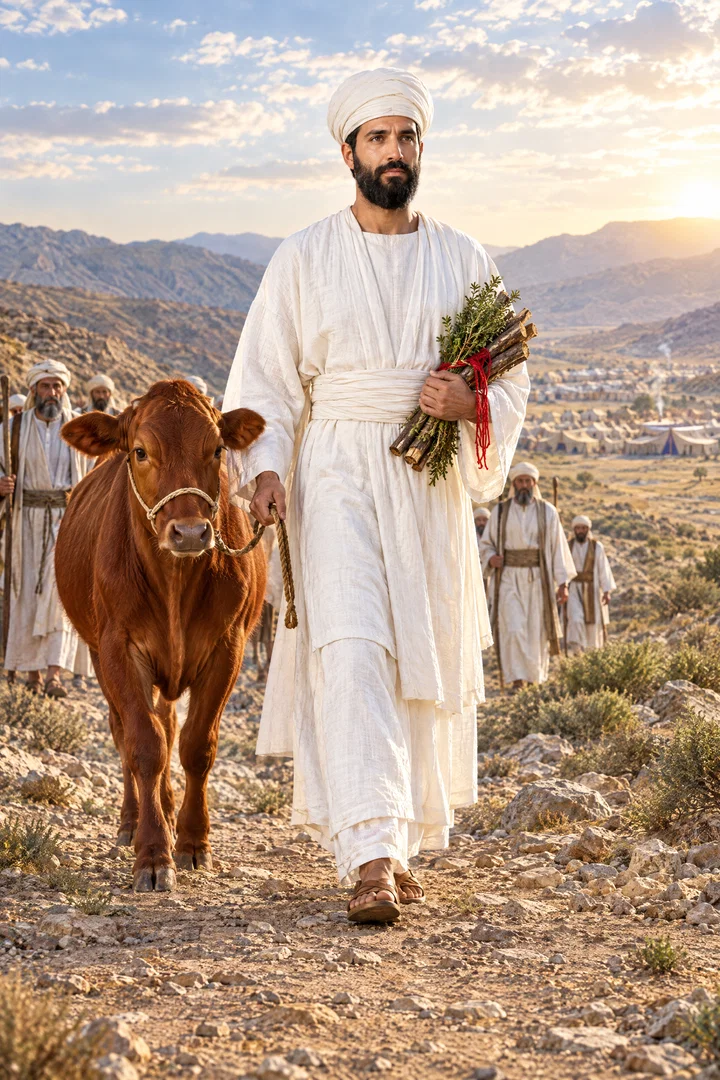
And one shall burn the heifer in his sight; her skin, and her flesh, and her blood, with her dung, shall he burn:
Translations
American King James Version, King James Version, Webster Bible, American Standard Version
And one shall burn the heifer in his sight; her skin, and her flesh, and her blood, with her dung, shall he burn:
KJV Cambridge Paragraph Bible, Revised Version
and one shall burn the heifer in his sight; her skin, and her flesh, and her blood, with her dung, shall he burn:
and [one] hath burnt the cow before his eyes; her skin, and her flesh, and her blood, besides her dung, he doth burn;
And one shall burn the heifer before his eyes; its skin and its flesh, and its blood, with its dung, shall he burn.
and the heifer shall be burned up before his eyes,—her skin, and her flesh, and her blood, with her dung shall be burned up.
Berean Standard Bible, Majority Standard Bible
Then the heifer must be burned in his sight. Its hide, its flesh, and its blood are to be burned, along with its dung.
One shall burn the heifer in his sight; her skin, and her meat, and her blood, with her dung, shall he burn.
And the cow is to be burned before him, her skin and her flesh and her blood and her waste are to be burned:
And cause the kow to be burnt in his sight: with her skinne, and her flesh, and her blood, and her doung shall he burne her.
Douay-Rheims (Challoner revision)
And shall burn her in the sight of all, delivering up to the fire her skin, and her flesh, and her blood, and her dung.
Pictures
Cross-references
- Hebrews 13:11-12
For the bodies of those beasts, whose blood is brought into the sanctuary by the high priest for sin, are burned without the camp.
The heifer was burned outside the camp, as Jesus suffered outside the gate.
- Hebrews 9:13
For if the blood of bulls and of goats, and the ashes of an heifer sprinkling the unclean, sanctifieth to the purifying of the flesh:
The heifer’s ashes are used for purification, pointing to Christ’s cleansing.
- Hebrews 10:22
Let us draw near with a true heart in full assurance of faith, having our hearts sprinkled from an evil conscience, and our bodies washed with pure water.
The heifer ritual’s purification connects with hearts cleansed through Christ.
- Hebrews 9:22
And almost all things are by the law purged with blood; and without shedding of blood is no remission.
The law’s general rule of purification by blood contrasts with the exception in Numbers 19.
- Leviticus 16:27
And the bullock for the sin offering, and the goat for the sin offering, whose blood was brought in to make atonement in the holy place, shall one carry forth without the camp; and they shall burn in the fire their skins, and their flesh, and their dung.
The bodies of sin offerings were burned outside the camp.
- Hebrews 9:14
How much more shall the blood of Christ, who through the eternal Spirit offered himself without spot to God, purge your conscience from dead works to serve the living God?
Christ's blood cleanses the conscience, beyond the flesh cleansing of the heifer.
- Leviticus 4:12
Even the whole bullock shall he carry forth without the camp unto a clean place, where the ashes are poured out, and burn him on the wood with fire: where the ashes are poured out shall he be burnt.
The sin offering is burned outside the camp.
- Leviticus 17:11
For the life of the flesh is in the blood: and I have given it to you upon the altar to make an atonement for your souls: for it is the blood that maketh an atonement for the soul.
Blood is given to make atonement because it represents life.
- Hebrews 9:12
Neither by the blood of goats and calves, but by his own blood he entered in once into the holy place, having obtained eternal redemption for us.
Contrasts the heifer’s complete burning with Christ entering by his own blood.
- Leviticus 4:21
And he shall carry forth the bullock without the camp, and burn him as he burned the first bullock: it is a sin offering for the congregation.
The sin offering was carried outside the camp and burned.
- Deuteronomy 12:23
Only be sure that thou eat not the blood: for the blood is the life; and thou mayest not eat the life with the flesh.
Blood is identified with life, explaining its atoning significance.
- 2 Corinthians 5:21
For he hath made him to be sin for us, who knew no sin; that we might be made the righteousness of God in him.
Christ was made sin for us through his sacrifice.
Commentary
Each commentary is drawn from primary sources: the writings of Ellen G. White and Adventist pioneers and periodicals. Each commentary is separate. Its own words are not a quotation; follow the references to read the source passages.
Ellen G. White
2 sources
The heifer was to be burned completely in the sight of the one officiating, with nothing withheld from the fire.4T 121.2–122.14T 120.2–121.1 Its skin and its flesh were to be consumed together with its blood and even its dung.4T 120.2–121.1 This total burning signified a full and complete sacrifice, ample in every part.4T 121.2–122.14T 120.2–121.1 The heifer and the offering of it represent Christ and the sacrifice He made.4T 121.2–122.14T 120.2–121.1
The burning produced ashes that were kept and used in the ceremony appointed for purification from sin.4T 121.2–122.1 In this Christ's suffering and the shedding of His blood are set forth as that which purifies sinners and redeems them from sin.4T 120.2–121.1
Sources
Pioneers and periodicals
13 sources
The heifer was burned whole in the priest's sight, with skin and flesh and blood with dung all consumed together after its blood had been sprinkled seven times toward the tent of meeting, with cedar wood and hyssop and scarlet cast into the midst of the burning.RH May 16, 1912ST Jun 12, 1901 The burning took place outside the camp and produced the ashes mingled with water for cleansing from the defilement of contact with the dead.RH May 16, 1912ST Apr 23, 1912RH Nov 11, 1909ST Oct 29, 1912 Its complete burning was a type of Christ's complete sacrifice, and its burning outside the camp typified His suffering outside Jerusalem's gate for sinners, even the most outcast.RH May 16, 1912RH Apr 11, 1871ST Apr 23, 1912ST Oct 29, 1912 As those who handled the offering were made unclean while the unclean sprinkled with its ashes was cleansed, so Christ on the cross was made sin and suffered as the vilest of sinners, yet by His own pure life cleanses sinners.ST Jun 27, 1911 The sacrifice was made once for all for the whole people, yet it did not cleanse indiscriminately, but required each defiled person singly to avail himself of the provision to be freed from personal impurity.ST Jun 12, 1901
The Ceremony Described
The heifer was burned whole in the priest's sight, with her skin and her flesh and her blood with her dung all consumed together.RH May 16, 1912ST Jun 12, 1901 Her blood had first been sprinkled seven times toward the front of the tent of meeting, toward the temple, and cedar wood and hyssop and scarlet were cast into the midst of the burning.RH May 16, 1912ST Jun 12, 1901 This burning was part of the ceremony for ceremonial purification.RH May 16, 1912
The burning took place outside the camp, outside the settled place in a rough valley.ST Apr 23, 1912ST Oct 29, 1912 There its blood was sprinkled on the valley's stones.ST Oct 29, 1912
The burning produced the ashes used for purification from sin and from the uncleanness caused by contact with the dead, sanctifying to the cleanness of the flesh.RH May 16, 1912ST Apr 23, 1912RH Nov 11, 1909 The offering of the red heifer in Numbers 19:1-10 is an exception to the other Levitical sacrifices described in the opening chapters of Leviticus, and Numbers 19 is an exception to the rule that purification in the typical law was by blood.ST Feb 17, 1890ST May 19, 1914 The exception is cited without explaining its details.ST Feb 17, 1890 Purification by this rite with water or oil concerned bodily and fleshly defilements such as misfortunes, sickness, and accidents, not sin, and does not contradict the need for blood to bring remission of sin, because sin's penalty is death and blood represents life given in atonement.ST Feb 17, 1890
Type of Christ's Sacrifice
The whole offering was a type of Christ, given for ceremonial purification from the uncleanness caused by contact with the dead, and its entire body including its blood was burned after its blood had been sprinkled toward the temple.RH May 16, 1912 That complete burning, consuming skin and flesh and blood with dung together, typifies His complete sacrifice and His ascension wholly to heaven, with not a bone of His body broken.RH May 16, 1912RH Apr 11, 1871 The heifer for purification was burned outside the camp, with its skin and flesh and blood and dung, and its ashes were for purification from sin.ST Apr 23, 1912 That burning outside the camp typified Christ suffering outside Jerusalem's gate, burned outside the settled place in a rough valley with its blood sprinkled on the valley's stones, teaching that He died for sinners, even the most worthless and outcast.ST Apr 23, 1912ST Oct 29, 1912
The same offering both conveyed defilement and brought cleansing, for two lives are represented in the sin-offering, the innocent life of the victim and the imputed sinful life of the offerer.ST Jun 27, 1911 The burning carries sin, so that even the priest who sprinkles her blood, and the clean person who gathers and sprinkles her ashes mingled with water, is made unclean and must wash his clothes and be unclean until evening, while the unclean person sprinkled is cleansed by those same ashes.ST Jun 27, 1911 The blood can thus defile the sanctuary and at the same time cleanse the sinner.ST Jun 27, 1911 This means Christ on the cross was made sin and suffered as the vilest of sinners, yet at the same time by virtue of His own pure life He cleansed sinners, as the thief on the cross.ST Jun 27, 1911 The complete burning of skin and flesh and blood with dung, together with the cedar wood and hyssop and scarlet, typifies the earth being reserved for the fire of judgment and the destruction of the ungodly.RH May 16, 1912
The burning produced the ashes that sanctified to the cleanness of the flesh, and the rite belonged to the general service of the earthly sanctuary, with the sprinkling of those ashes not taking place in the second apartment, the holy of holies.RH Nov 11, 1909 Its use as a type of the blood of Christ cleansing the conscience from dead works proves that Christ as High Priest of good things to come ministers through the greater and more perfect tabernacle as a whole, not in the most holy place alone.RH Nov 11, 1909
Personal Cleansing Required
The sacrifice was performed once for all and was for the whole people.ST Jun 12, 1901 It did not give indiscriminate purification to the whole house of Israel.ST Jun 12, 1901 It made a provision of which individuals had to avail themselves singly in order to be freed from personal impurity, so cleansing required personal application of what was done for all.ST Jun 12, 1901 The burning belongs to the prescribed service for making the water of separation.ST Jan 1, 1885 The red color of the heifer was a required part of the command and not an incidental detail, so that using a white heifer or a red bullock instead would violate the command and amount to will worship, and obedience required following the prescribed form.ST Jan 1, 1885
Sources