Proverbs 26:20
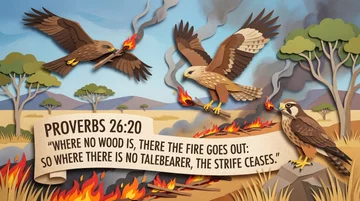
Where no wood is, there the fire goeth out: so where there is no talebearer, the strife ceaseth.
Translations
Where no wood is, there the fire goes out: so where there is no talebearer, the strife ceases.
Where no wood is, there the fire goeth out: so where there is no talebearer, the strife ceaseth.
Where no wood is, there the fire goeth out:
So where there is no talebearer, the strife ceaseth.Where no wood is, there the fire goeth out: so where there is no tale-bearer, the strife ceaseth.
For lack of wood the fire goeth out: and where there is no whisperer, contention ceaseth.
For lack of wood the fire goeth out;
And where there is no whisperer, contention ceaseth.Without wood is fire going out, And without a tale-bearer, contention ceaseth,
Where no wood is, the fire goeth out; and where there is no talebearer, the contention ceaseth.
Without wood a fire is quenched, and, where there is no tattler, strife is hushed.
Berean Standard Bible, Majority Standard Bible
Without wood, a fire goes out;
without gossip, a conflict ceases.For lack of wood a fire goes out.
Without gossip, a quarrel dies down.Without wood, the fire goes out; and where there is no secret talk, argument is ended.
Without wood the fire is quenched, and without a talebearer strife ceaseth.
Douay-Rheims (Challoner revision)
When the wood faileth, the fire shall go out: and when the talebearer is taken away, contentions shall cease.
Pictures
Cross-references
- Proverbs 16:28
A froward man soweth strife: and a whisperer separateth chief friends.
A whisperer sows strife and separates close friends.
- James 3:6
And the tongue is a fire, a world of iniquity: so is the tongue among our members, that it defileth the whole body, and setteth on fire the course of nature; and it is set on fire of hell.
Both compare harmful speech to a fire that kindles strife.
- Leviticus 19:16
Thou shalt not go up and down as a talebearer among thy people: neither shalt thou stand against the blood of thy neighbour: I am the LORD.
Both forbid talebearing among the people.
- Proverbs 11:13
A talebearer revealeth secrets: but he that is of a faithful spirit concealeth the matter.
Both teach that talebearing spreads strife, while its absence brings it to an end.
- Proverbs 18:8
The words of a talebearer are as wounds, and they go down into the innermost parts of the belly.
Says talebearers’ words wound others.
- Psalms 15:3
He that backbiteth not with his tongue, nor doeth evil to his neighbour, nor taketh up a reproach against his neighbour.
Refraining from backbiting marks the righteous.
- Psalms 101:5
Whoso privily slandereth his neighbour, him will I cut off: him that hath an high look and a proud heart will not I suffer.
Condemns secret slander of a neighbor.
- Proverbs 17:9
He that covereth a transgression seeketh love; but he that repeateth a matter separateth very friends.
Covering a transgression seeks love, while repeating a matter separates friends.
- Proverbs 10:18
He that hideth hatred with lying lips, and he that uttereth a slander, is a fool.
Both condemn slanderous speech.
- Proverbs 20:19
He that goeth about as a talebearer revealeth secrets: therefore meddle not with him that flattereth with his lips.
Warns against associating with a talebearer.
- James 4:11
Speak not evil one of another, brethren. He that speaketh evil of his brother, and judgeth his brother, speaketh evil of the law, and judgeth the law: but if thou judge the law, thou art not a doer of the law, but a judge.
Condemning others violates the law of love.
- Psalms 50:20
Thou sittest and speakest against thy brother; thou slanderest thine own mother’s son.
Both condemn speaking against a brother.
- Proverbs 25:23
The north wind driveth away rain: so doth an angry countenance a backbiting tongue.
A disapproving response drives away backbiting.
- 1 Peter 3:10-11
For he that will love life, and see good days, let him refrain his tongue from evil, and his lips that they speak no guile:
Refraining from harmful speech helps bring strife to an end and pursue peace.
Commentary
Each commentary is drawn from primary sources: the writings of Ellen G. White and Adventist pioneers and periodicals. Each commentary is separate. Its own words are not a quotation; follow the references to read the source passages.
Ellen G. White
2 sources
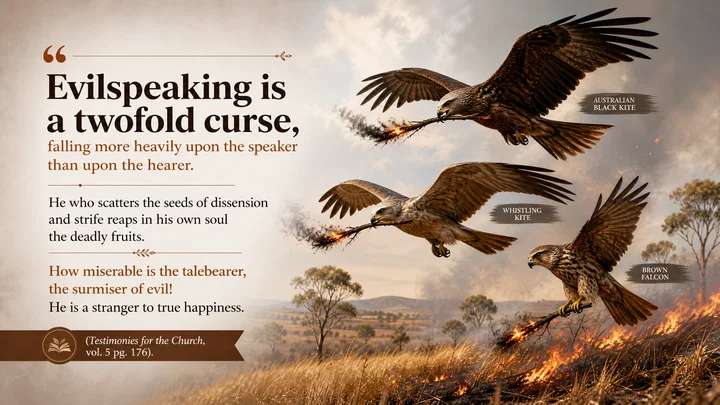
Quarreling is fueled the way fire is fueled by wood, so that when the talebearer is absent the strife dies down for lack of its fuel.5T 176.2 Hostile talk keeps a conflict burning only as long as people give it attention, while silence and a refusal to argue allow the trouble to die out.Ms 159, 1902, par. 10 Spreading dissension brings its deadly fruit back upon the one who spreads it, leaving that speaker miserable and a stranger to true happiness.5T 176.2 The evil talker is therefore to be left alone, with steady faithfulness to one's own work and a refusal to let criticism turn one aside from matters of eternal importance.Ms 159, 1902, par. 10
Sources
Pioneers and periodicals
26 sources
Strife lives on talebearing as fire lives on wood, and when there is no talebearer to feed it the quarrel dies out.RH May 29, 1913RH May 18, 1916RH Aug 29, 1912 The talebearer is a whisperer who carries secret and often unproved reports about others, planting distrust and separating friends and fellow believers.RH Jul 15, 1902 The remedy is to rule the tongue, attend to one's own affairs, refuse to spread slander and refuse to listen to it, for turning away from gossip helps silence detraction, guard another's good name, and stop conflict.RH May 29, 1913RH Aug 29, 1912ST Sep 24, 1912RH Jul 15, 1902ST Jan 22, 1885 Talebearing stains the one who practices it, breaks the law of love and shows the spirit of Satan rather than the Spirit of Christ, so it can have no place in God's peaceful kingdom.RH May 29, 1913RH Dec 4, 1913ST Sep 19, 1900RH Feb 11, 1873
Talebearing Fuels Strife
Strife is kept alive by talebearing in the same way fire is kept alive by wood, so when there is no talebearer to feed it the quarrel dies out for lack of fuel.RH May 29, 1913RH May 18, 1916RH Aug 29, 1912ST Sep 24, 1912RH Apr 20, 1905 When talebearing ends, the conflicts it kindled cease, just as a flame goes out when its fuel is gone.RH May 18, 1916RH Aug 29, 1912ST Sep 24, 1912RH Dec 4, 1913RH Apr 20, 1905 The talebearer is a whisperer who spreads secret, often unproved reports about others, planting doubt and separating friends and members of the church.RH Jul 15, 1902 Careless talk, gossip, and idle words twist facts and damage reputations and homes.ST Dec 11, 1884ST Nov 12, 1885 Checking speech keeps such conflict from growing, because talebearing sustains strife as fuel sustains a fire.ST Dec 11, 1884ST Nov 12, 1885
Carelessly repeating and misquoting the words of others acts as a firebrand stirring up strife, even when the speaker does not intend to lie.ST May 22, 1884ST May 22, 1884 When such gossip and careless repetition stop, the quarrel fueled by them dies down.ST May 22, 1884ST May 22, 1884 Calumny is like flying brands thrown off from a fire that quickly die out when no one fans them.RH Sep 19, 1871 False reports stir neighbors into anger and violence so that their common enemy can destroy them, and refusing to spread or act on such reports prevents discord.ST Nov 7, 1892 A quarrel needs participation from both sides to continue, so holding the tongue when conflict begins keeps a person outside the discord.RH Oct 21, 1873
Ending Strife in Practice
Strife ends when the tongue is restrained and each person attends to their own affairs, guards speech, and refuses to spread scandal, gossip, backbiting and slander, for as fire goes out without wood so quarreling dies when talebearing stops.RH May 29, 1913RH Aug 29, 1912ST Sep 24, 1912RH Apr 20, 1905RH Jan 17, 1865 Talebearing feeds and prolongs conflict as wood feeds flame, and stopping the spreading of tales and the stirring of others against one another removes its fuel.RH Aug 29, 1912ST Sep 24, 1912RH Apr 20, 1905RH Jan 17, 1865RH Jun 18, 1872 The stain left by indulging in backbiting and slander is removed when the talebearer restrains the tongue and will neither spread scandal nor encourage gossip.RH May 29, 1913RH Apr 20, 1905
Refusing to listen to secret and often unproved reports helps silence the detracting tongue, protects another's good name, and stops conflict from continuing, since the whisperer who plants doubt and separates friends and church members cannot keep strife alive without hearers.RH Jul 15, 1902ST Jan 22, 1885 The practical check against such reports is to require the slanderer to face the person attacked and verify the story, which exposes empty gossip and ends tale-bearing.RH Aug 29, 1912 The tongue must also be trained to act quickly to keep harmful speech from spreading like fire, and a well-stored mind should be used to turn gossiping conversation toward safer subjects.RH Apr 10, 1913
Reproaches against a neighbor are neither to be received nor passed along, for taking them up keeps strife alive while letting them drop lets it die.ST Dec 15, 1887 Feeding a flame and returning hatred with hatred only makes conflict burn more fiercely, so the flame must not be fed.ST Aug 1, 1911RH Jan 4, 1912 Those who spread reports of others' faults are to be remembered as likely to spread reports of the hearer's faults as well.RH Jun 13, 1865
In the church the fuel is removed when each member attends to personal spiritual life, works faithfully in private, and removes the weeds from the own heart rather than carrying tales about others.ST Jun 16, 1914 Listening to even one evil report can close doors for the gospel worker, damage trust, and require extensive repair before the work can go forward again, because gossip fuels conflict and harms good work.
Indulging in backbiting and slander stains the character of the talebearer, and spreading accusations and criticism acts against the law of love and displays the spirit of Satan rather than the Spirit of Christ.RH May 29, 1913ST Sep 19, 1900 Those who fan the quarrels of others may suffer the consequences themselves, as sparks fly back into the faces of those who stir the fire.RH Feb 11, 1873 In God's kingdom gossip and talebearing will be absent because they wound others and threaten the peace of the universe, so those who enter must overcome the tendency to gossip and criticize, lest they renew conflict there as accusers of others.RH Dec 4, 1913
By the same image, interest in a subject goes out without mental food upon it, so continued interest in Christian education requires feeding the mind with teaching about it, and every Christian should understand the gospel of education.RH Oct 7, 1902
Sources