Psalms 137:6
If I do not remember thee, let my tongue cleave to the roof of my mouth; if I prefer not Jerusalem above my chief joy.
Translations
If I do not remember you, let my tongue stick to the roof of my mouth; if I prefer not Jerusalem above my chief joy.
King James Version, Webster Bible
If I do not remember thee, let my tongue cleave to the roof of my mouth; if I prefer not Jerusalem above my chief joy.
If I do not remember thee,
Let my tongue cleave to the roof of my mouth;
If I prefer not Jerusalem above my chief joy.Let my tongue cleave to the roof of my mouth, if I remember thee not; if I prefer not Jerusalem above my chief joy.
Let my tongue cleave to the roof of my mouth,
If I remember thee not;
If I prefer not Jerusalem
Above my chief joy.My tongue doth cleave to my palate, If I do not remember thee, If I do not exalt Jerusalem above my chief joy.
If I do not remember thee, let my tongue cleave to my palate: if I prefer not Jerusalem above my chief joy.
Let my tongue cleave to the roof of my mouth, if I do not remember thee! if I do not lift up Jerusalem above the head of mine own gladness.
Berean Standard Bible, Majority Standard Bible
May my tongue cling to the roof of my mouth
if I do not remember you,
if I do not exalt Jerusalem
as my greatest joy!Let my tongue stick to the roof of my mouth if I don’t remember you,
if I don’t prefer Jerusalem above my chief joy.If I let you go out of my thoughts, and if I do not put Jerusalem before my greatest joy, let my tongue be fixed to the roof of my mouth.
If I do not remember thee, let my tongue cleaue to the roofe of my mouth: yea, if I preferre not Ierusalem to my chiefe ioy.
Douay-Rheims (Challoner revision)
Let my tongue cleave to my jaws, if I do not remember thee: If I make not Jerusalem the beginning of my joy.
Pictures
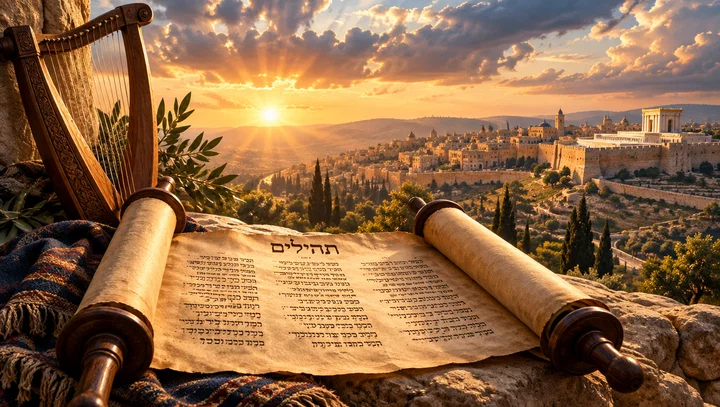
Cross-references
- Nehemiah 1:4
And it came to pass, when I heard these words, that I sat down and wept, and mourned certain days, and fasted, and prayed before the God of heaven,
Jerusalem’s ruined state grieves Nehemiah.
- Isaiah 44:26
That confirmeth the word of his servant, and performeth the counsel of his messengers; that saith to Jerusalem, Thou shalt be inhabited; and to the cities of Judah, Ye shall be built, and I will raise up the decayed places thereof:
God declares that Jerusalem will be inhabited and Judah’s cities rebuilt.
- Daniel 9:25
Know therefore and understand, that from the going forth of the commandment to restore and to build Jerusalem unto the Messiah the Prince shall be seven weeks, and threescore and two weeks: the street shall be built again, and the wall, even in troublous times.
Both concern Jerusalem and its restoration.
- Daniel 5:30-31
In that night was Belshazzar the king of the Chaldeans slain.
Babylon falls during Belshazzar’s feast, ending the exiles’ oppression.
- Ezra 7:13-20
I make a decree, that all they of the people of Israel, and of his priests and Levites, in my realm, which are minded of their own freewill to go up to Jerusalem, go with thee.
Artaxerxes’ decree enabled Israel’s return to Jerusalem and support for the temple.
Commentary
Each commentary is drawn from primary sources: the writings of Ellen G. White and Adventist pioneers and periodicals. Each commentary is separate. Its own words are not a quotation; follow the references to read the source passages.
Ellen G. White
1 source
The verse is a vow to accept the silencing of the tongue rather than use it against what is sacred.Lt 26, 1897, par. 12–13 Its spirit prefers loss of speech to speech that dishonors holy things.Lt 26, 1897, par. 12–13 Applied to councils and assemblies, when words spoken there oppose the principles of God's Word, remaining silent would be better than speaking.Lt 26, 1897, par. 12–13
Sources
Pioneers and periodicals
34 sources
The psalm grew out of the Babylonian exile as the grief of captives who remembered Zion, refused to settle contentedly in the enemy's land, and longed for home as for paradise.ST May 13, 1908ST Dec 10, 1912ST Aug 28, 1884 It is a solemn vow never to forget Jerusalem but to value it above every greatest joy, accepting loss of skill and speech if remembrance fails.RH May 27, 1858ST Apr 19, 1910RH Sep 11, 1860 To have the tongue cleave to the mouth is to lose the power to speak and sing in Jerusalem's praise.RH May 27, 1858ST May 25, 1904ST Sep 28, 1904 Jerusalem was the highest joy because God had chosen to dwell in its temple, and it stands for the church of the Redeemer and the home of God's people.RH Mar 8, 1870RH Nov 29, 1853RH Nov 13, 1856RH Dec 20, 1853ST Aug 15, 1878 That same devotion makes Zion, its cause and its people, the chief joy of the heart, and sets God and Jesus above every chiefest joy in home and heart, remembered and loved when all else is forgotten.RH Feb 21, 1871RH Feb 8, 1915RH May 3, 1864RH Jun 8, 1916RH Feb 8, 1915
Vow in Babylonian Exile
Psalm 137 is a song of the captives in Babylon that grew out of the exile.ST May 13, 1908ST Dec 10, 1912 It voices Hebrew exiles in Babylon longing for their homeland, grieving as they remembered Zion.ST Aug 28, 1884ST Mar 4, 1913 They did not want to be in the land of their enemy and longed for Jerusalem, and they could not sing the Lord's songs in a strange land.ST Aug 28, 1884 Their homesickness was like that of a distant soldier remembering home as paradise.ST Mar 4, 1913
That longing arose when some Israelites had made homes in Babylon but others yearned to return to their native land.ST Apr 19, 1910 They wept when they remembered Zion and longed for the city's restoration, a longing answered after Babylon fell with promise of deliverance, liberty and return.ST Apr 1, 1913RH Jan 23, 1855 It belonged especially to the later years under Belshazzar, when persecution and distress were greatest.RH Aug 31, 1916 Those captivity psalms mingle sorrow and affliction with encouragement and assurance of divine help and final deliverance.ST Apr 1, 1913RH Aug 31, 1916
The psalm was written after the Babylonian captivity, after a child of God had endured it and after the restoration.ST It is also a prophecy of the Babylonian captivity.RH Mar 12, 1861 It belongs among predictive psalms concerning tribulation on the enemies of God's church.RH Sep 11, 1860
The verse is a solemn vow never to forget Jerusalem or let any other joy take its place, valuing it above chief or greatest joy.RH May 27, 1858ST Apr 19, 1910RH Sep 11, 1860STST May 25, 1904 Forgetting Jerusalem would mean losing skill in the hand and speech in the tongue, with the speaker accepting that loss if remembrance fails.ST Apr 19, 1910RH Aug 6, 1872 The image of the tongue cleaving to the roof of the mouth means losing the ability to speak or sing.ST May 25, 1904ST Sep 28, 1904ST Sep 13, 1910 That includes losing the ability to play the harp in Jerusalem's praise.RH May 27, 1858
Jerusalem's Meaning and Hope
Jerusalem was the highest joy of devout Jews because God had chosen to dwell in its temple, and their deep attachment belonged to the place where his presence was manifested.RH Mar 8, 1870 That devotion is illustrated by attachment to the Lord's temple, where the speaker would rather lose the use of the tongue than forget Jerusalem or value anything above it.RH Dec 20, 1853 Such loyalty makes forgetting Jerusalem or failing to prize it above chief joy a profound failure of devotion.RH Nov 29, 1853ST Aug 15, 1878 In this sense Jerusalem stands for the church of the Redeemer, so that opposing a human religious institution does not mean being against the church of Christ or wishing to hinder its prosperity.RH Nov 29, 1853ST Aug 15, 1878 As the home and symbol of God's people it must be valued above the greatest personal joy, and this same temple devotion underscores the importance of the Sabbath to the life of Christian churches.RH Nov 13, 1856RH Dec 20, 1853
The psalm belongs among predictive psalms concerning tribulation on the enemies of God's church, and its declarations about Babylon describe retributive justice on God's enemies rather than calls to cruelty.RH Sep 11, 1860 The resolve to remember Jerusalem and value it above greatest joy grew from the grief and longing of captives living in a foreign land, whose sorrow at being asked to sing songs of Zion showed how deeply they cherished their home.ST Apr 1, 1913 They wept when they remembered Zion and longed for the city's restoration, especially in the later years under Belshazzar when persecution and distress were greatest.RH Aug 31, 1916RH Jan 23, 1855 These captivity psalms mingle sorrow and affliction with encouragement and assurance of divine help and final deliverance.RH Aug 31, 1916 After Babylon fell that longing was answered with promise of deliverance, liberty and return, and their exile is applied to a pilgrimage urging courage as the journey home nears.ST Apr 1, 1913RH Jan 23, 1855
Wholehearted devotion that remembers Jerusalem and prefers it above every chief joy has scriptural warrant and is not fanaticism but supreme heart-service.RH Jan 31, 1871 Loyalty of this kind makes grief over Zion's troubles right.RH Nov 13, 1856 That grief must not become despair or self-torment.RH Nov 13, 1856
Loyalty Applied to Christians
The same devotion that made Jerusalem the highest joy because the divine presence dwelt in its temple belongs also to places where that presence, glory, power and mercy are manifested among people gathered for worship.RH Mar 8, 1870 That loyalty gives words for deep attachment to a place bound up with work, hopes, prayers, sorrows and joys, as with the institutions at Battle Creek, where forgetting would mean losing the tongue's power of speech and preferring another joy would betray the vow.RH Mar 8, 1870RH Aug 6, 1872
To prefer Jerusalem above chief joy is to make Zion the chief joy of the heart, holding the cause of truth in a large place with care and toils and prayers while permitted to labor.RH Feb 21, 1871 It is to cherish hope of final deliverance because the prospects of the people are bright and victory will be glorious.RH Feb 21, 1871 To remember Zion is to remember fellow believers, offering them heart and hand and seeking divine help to fulfill vows made to them, under penalty of loss of speech if remembrance fails.RH May 3, 1864
The same words express unwavering resolve not to abandon the commandments for worldly gain.RH Feb 2, 1860 They underscore the importance of the Sabbath to the life of Christian churches, by a devotion that would rather lose use of the tongue than forget or value anything above what is loved.RH Dec 20, 1853 They express valuing the worship and teaching of the church and wanting children to grow up under the influence of the gospel, placing that above every other joy.RH May 7, 1857
God is to be the chiefest joy seen and felt in the home, which is to be kept near heaven and facing toward the Father's house, with the day begun and ended with him in acknowledged mercies and sought forgiveness and with his will as the absolute and sufficient reason in all that is done.RH Jun 8, 1916 Love for Jesus holds him above chief joy and remembers him when all else is forgotten.RH Feb 8, 1915 The new warm heart of flesh sets Jesus above its chiefest joy, having cast away every sin to embrace him, appreciating his matchless excellences, warming to him, finding music in his name, and giving his cause, his people and the interests of his kingdom the warmest place with the strongest and tenderest affections, with him abiding within as guest and master.RH Feb 8, 1915 Setting him above chiefest joy means loving him so fully as to leave mother, wife and children to follow him over life's roughest path, to part with a thousand worlds rather than part with him, and to leave a throne to stoop and tie and carry his shoes.RH Feb 8, 1915 Even when wife and children and every earthly memory fade and speech is gone in death, with the hand losing its skill and lying powerless and all that attracted the natural eye wrapped in mists, Jesus is still remembered as all salvation and all desire, his name the latest to utter, the latest thought to form, the last look on earth and the first in heaven.RH Feb 8, 1915
The form of the vow shows how serious it is to forget what is held precious, and it is echoed in vows to let the tongue become silent or cleave rather than do wrong.RH Oct 18, 1853 Forgetting the mercy seat would mean losing the ability to sing its praise, so the tongue is vowed to silence if it is forgotten.RH Oct 18, 1853 The tongue cleaving means staying silent rather than endorsing the saloon business in order to close some saloons.ST Jul 3, 1884 It means becoming mute rather than harming one of God's servants by gossip, criticism or schemes to drive a pastor from the field where he was planted even to gain more flowery preaching, fuller pews or a revival, and instead upholding and praying for the appointed minister and supporting him even when he is not extraordinary or perfect, leaving it to God to show him when his work in a place is done.RH It expresses willingness to suffer loss of skill and speech rather than harbor an unworthy thought about God or speak irreverently of his actions, while Jerusalem must remain above every chief joy.ST Feb 1, 1883 It expresses being unable to speak or sing when doing so would ignore that loyalty, as when indignation silences the voice at those who sing of freedom while enslaving and abusing others, for a song of jubilee cannot rightly be sung amid such oppression and slavery.ST Apr 29, 1875
Sources