Job 17:13
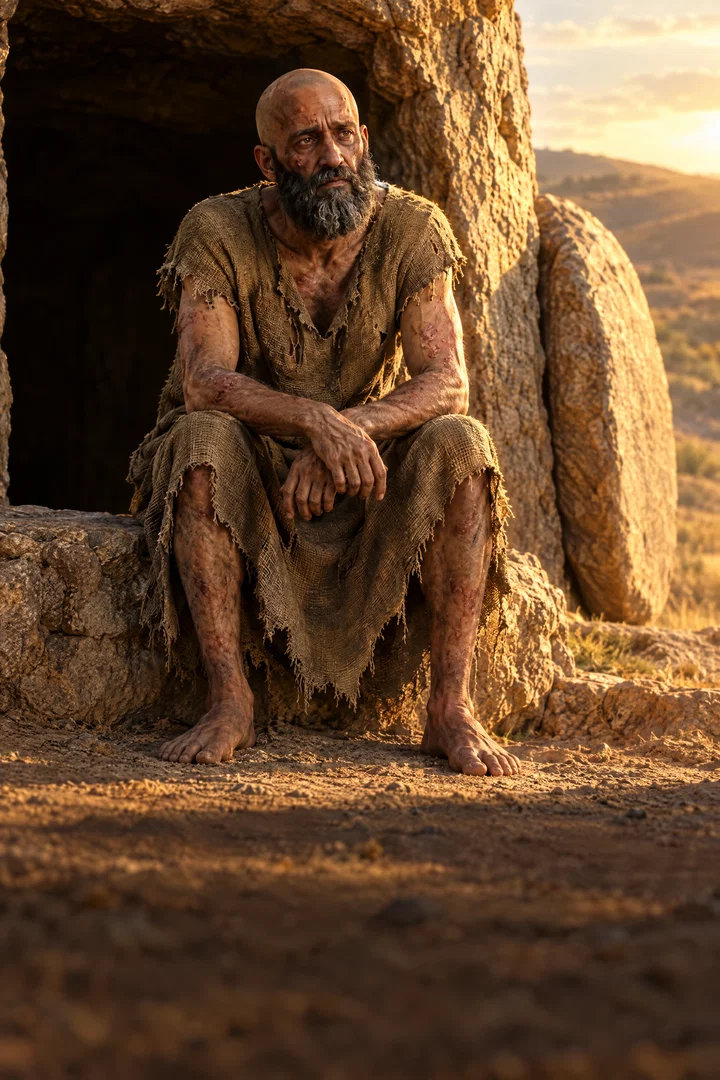
If I wait, the grave is mine house: I have made my bed in the darkness.
Translations
American King James Version, Webster Bible
If I wait, the grave is my house: I have made my bed in the darkness.
King James Version, KJV Cambridge Paragraph Bible
If I wait, the grave is mine house: I have made my bed in the darkness.
If I look for Sheol as mine house; if I have spread my couch in the darkness;
If I look for Sheol as my house;
If I have spread my couch in the darkness;If I wait — Sheol [is] my house, In darkness I have spread out my couch.
If I wait, Sheol is my house; I spread my bed in the darkness:
If I wait for hades as my house, in darkness, have spread out my couch;
Berean Standard Bible, Majority Standard Bible
If I look for Sheol as my home,
if I spread out my bed in darkness,If I look for Sheol as my house,
if I have spread my couch in the darkness,If I am waiting for the underworld as my house, if I have made my bed in the dark;
Though I hope, yet the graue shall bee mine house, and I shall make my bed in the darke.
Douay-Rheims (Challoner revision)
If I wait hell is my house, and I have made my bed in darkness.
Pictures
Cross-references 20 of 57
- Job 14:13-15
O that thou wouldest hide me in the grave, that thou wouldest keep me secret, until thy wrath be past, that thou wouldest appoint me a set time, and remember me!
Job waits in the grave for God to remember him and call him to a future change.
- Ecclesiastes 9:10
Whatsoever thy hand findeth to do, do it with thy might; for there is no work, nor device, nor knowledge, nor wisdom, in the grave, whither thou goest.
Both describe the grave as a place without work or knowledge.
- Job 19:25-27
For I know that my redeemer liveth, and that he shall stand at the latter day upon the earth:
Job’s confidence that he will see God in his flesh follows his words about the grave.
- Psalms 6:5
For in death there is no remembrance of thee: in the grave who shall give thee thanks?
Both describe the dead as unable to remember God or give thanks.
- Job 14:12
So man lieth down, and riseth not: till the heavens be no more, they shall not awake, nor be raised out of their sleep.
The dead lie in sleep without awakening until the heavens are no more.
- Psalms 115:17
The dead praise not the LORD, neither any that go down into silence.
Both describe the dead as silent and not praising the Lord.
- Ecclesiastes 9:5-6
For the living know that they shall die: but the dead know not any thing, neither have they any more a reward; for the memory of them is forgotten.
Both show that the dead know nothing and have no part in earthly affairs.
- Job 14:13
O that thou wouldest hide me in the grave, that thou wouldest keep me secret, until thy wrath be past, that thou wouldest appoint me a set time, and remember me!
Both describe Job waiting hidden in the grave until an appointed time.
- John 5:28-29
Marvel not at this: for the hour is coming, in the which all that are in the graves shall hear his voice,
The dead remain in their graves until they hear Christ’s voice and come forth.
- Psalms 88:10-12
Wilt thou shew wonders to the dead? shall the dead arise and praise thee? Selah.
Both describe Sheol as darkness and silence, the land of forgetfulness.
- Psalms 146:4
His breath goeth forth, he returneth to his earth; in that very day his thoughts perish.
Both describe the dead as returning to the earth, with their thoughts perishing.
- Genesis 37:35
And all his sons and all his daughters rose up to comfort him; but he refused to be comforted; and he said, For I will go down into the grave unto my son mourning. Thus his father wept for him.
Both speak of going down to Sheol, rendered “grave.”
- Isaiah 38:18
For the grave cannot praise thee, death can not celebrate thee: they that go down into the pit cannot hope for thy truth.
Both describe the grave as a place where the dead cannot praise God or hope in his truth.
- Job 3:11-19
Why died I not from the womb? why did I not give up the ghost when I came out of the belly?
Describes death as rest in the grave.
- Psalms 31:17
Let me not be ashamed, O LORD; for I have called upon thee: let the wicked be ashamed, and let them be silent in the grave.
Both describe the dead as silent in the grave.
- Isaiah 26:19
Thy dead men shall live, together with my dead body shall they arise. Awake and sing, ye that dwell in dust: for thy dew is as the dew of herbs, and the earth shall cast out the dead.
The dead dwell in dust until they rise.
- 1 Corinthians 15:55
O death, where is thy sting? O grave, where is thy victory?
The grave is the temporary home from which the dead are delivered at the resurrection.
- Psalms 89:48
What man is he that liveth, and shall not see death? shall he deliver his soul from the hand of the grave? Selah.
Asks who can escape death and the grave.
- Job 14:10
But man dieth, and wasteth away: yea, man giveth up the ghost, and where is he?
Both describe death and ask what becomes of a person afterward.
- Job 10:21-22
Before I go whence I shall not return, even to the land of darkness and the shadow of death;
Both describe the grave as a land of darkness.
Commentary
Each commentary is drawn from primary sources: the writings of Ellen G. White and Adventist pioneers and periodicals. Each commentary is separate. Its own words are not a quotation; follow the references to read the source passages.
Pioneers and periodicals
69 sources
If Job waits, the grave will be his house and he has prepared his bed in darkness for lying down in death.ST Mar 13, 1879RH Oct 31, 1854ST Aug 2, 1910ST Jun 23, 1881RH Jun 12, 1860 The word for the grave here means the sepulchre and state of the dead, the common receptacle of righteous and wicked alike, not a place of conscious torment.RH Oct 31, 1854ST Mar 6, 1879RH Jun 12, 1860ST Mar 20, 1879RH Jan 14, 1873 Death is an unconscious sleep of darkness, silence, rest and inactivity, with no knowledge, work, or converse with the living.ST Jul 29, 1875RH May 5, 1874RH Aug 27, 1872ST Aug 9, 1905ST Jan 6, 1909 The waiting is for the appointed time till the change comes, not a change at death but the change from mortality to immortality at the resurrection at the last trumpet when the Life-giver calls.RH Sep 22, 1859RH Oct 30, 1855ST Oct 13, 1881RH Sep 4, 1855ST Jul 1, 1875 Man is therefore naturally mortal with no immortal part living on elsewhere, and immortality will be given only to the righteous at the coming of Christ.RH Sep 5, 1854RH Oct 28, 1915RH Sep 4, 1855ST Feb 4, 1897
Language and Historical Setting
The Hebrew word behind the verse is sheol, meaning the grave, sepulchre, underworld, or state of the dead.RH Oct 31, 1854RH Jun 12, 1860ST Mar 20, 1879 In English it is translated sometimes as grave and sometimes as hell, and here it denotes the grave and the state of death, not a place of conscious torment.RH Oct 31, 1854RH Jun 16, 1874RH Mar 28, 1865 It is the place of the dead where Job expects to be hidden and to wait till the resurrection, with darkness as the bed he prepares there and corruption and worms as his companions beyond sight of hope.RH Oct 31, 1854RH Jun 16, 1874RH Mar 28, 1865 Sheol occurs sixty-five times in the Old Testament, rendered grave thirty-one times, pit three times, and hell thirty-one times, while its New Testament equivalent hades occurs eleven times, rendered hell ten times and grave once.ST Mar 15, 1877
The verse pictures the grave as a house and darkness as a bed that is made or prepared there for lying down in death.ST Mar 13, 1879ST Aug 2, 1910ST Jun 23, 1881ST Mar 20, 1879ST Jan 6, 1909 If he waits, death is what lies ahead, and the grave is his expected home and future home where he goes down into silence.ST Jan 6, 1909ST Jul 15, 1908ST Jun 23, 1909 It belongs to Job's reply in which he protests his innocence and expresses desire and expectation for death amid suffering.RH Dec 30, 1915ST Jul 15, 1908ST Mar 27, 1893 Job is a real, upright man enduring severe trial, whose patience instructs sufferers.ST Mar 27, 1893
The surrounding lines portray corruption as father and the worm as mother and sister, going down to the bars of the pit to rest together in the dust, where hope disappears from sight.RH Sep 22, 1859RH Nov 19, 1872RH May 5, 1874RH Aug 27, 1872ST Mar 15, 1877 The grave is thus a dark place of death marked by silence, secrecy, sleep, rest, darkness, corruption and worms, with no praise of God, no hope seen, and no knowledge.ST Aug 18, 1881RH May 5, 1874RH Aug 27, 1872ST Mar 15, 1877 The worm is literal, preying on the corruption of the dead body as it returns to dust and mingles with the clods of the valley.RH Sep 22, 1859RH Nov 19, 1872ST Aug 18, 1881
Death as Unconscious Sleep
The dead are not in heaven nor in hell but in the dust of the earth, with the grave for a house and a bed made in darkness, saying to corruption and the worm that they are kin and resting together in the dust mingled with the clods of the valley.RH Nov 19, 1872RH Feb 10, 1859RH Jun 12, 1860ST Aug 23, 1877 Death is burial in the grave rather than entrance into conscious experience elsewhere, and the dead rest there rather than living on in heaven.RH Feb 10, 1859ST Aug 7, 1901 This is the condition of the dead until the change comes, and that change is the resurrection; without a resurrection they would lie there forever.RH Nov 19, 1872ST Aug 7, 1901
Death is an unconscious sleep in sheol, the state and house of the dead, where man waits in darkness and lies awaiting his appointed change.ST Jul 29, 1875RH May 5, 1874RH Aug 27, 1872ST Mar 15, 1877RH Mar 28, 1865 It is a place of silence, secrecy, sleep, rest, darkness, corruption and worms, where corruption becomes as a father and the worm as mother and sister, and where the dead go down to the bars of sheol to rest together in the dust and remain there in that condition.ST Jul 29, 1875RH May 5, 1874RH Aug 27, 1872ST Mar 15, 1877RH Mar 28, 1865 There human hope disappears from sight and is out of sight until the dead are raised, with no praise of God, no hope, and no knowledge.ST Jul 29, 1875RH May 5, 1874RH Aug 27, 1872RH Mar 28, 1865 There is no work, knowledge, or wisdom there, and the dead are asleep and cannot converse or communicate with the living.ST May 27, 1880
Sheol, the grave, is the house and resting place awaiting a person after death, pictured as a bed in darkness, and it is the common receptacle and common destination of both the righteous and the wicked alike, with no separate place in it for the righteous.ST Mar 6, 1879ST Mar 15, 1877 The whole man, the soul, goes there at death and remains there all the days of the appointed waiting time until God calls and the dead answers.RH Jan 14, 1873 Those who go down to sheol must remain there till their resurrection, with all the righteous delivered from sheol at the coming of Christ, and being in the grave waiting means unconsciousness, for the dead there do not know what happens to the living.RH Jan 14, 1873ST Mar 15, 1877
The grave is Job's temporary house and resting place, where he would be hidden for a little while from life's troubles and hid in sheol to wait there until the resurrection and the final day of Jesus' coming, when the trumpet-call would bring immortality.ST Apr 16, 1912RH Dec 22, 1868 It is a dark prison-house where the dead are held as prisoners awaiting release, confining people rather than giving them conscious rest in another life.ST Feb 11, 1875 It is a place of darkness where the dead are at rest and do not hear the oppressor.ST Apr 16, 1912 Death is a lying down in the grave to remain there through the time of separation from the living, a going down into silence with the grave as future home and darkness as bed.ST Aug 9, 1905ST Jan 6, 1909 This spanning of the chasm of separation takes hold upon the hope of the great resurrection day.ST Aug 9, 1905
Waiting for Resurrection Change
The waiting spoken of is waiting in the grave for the appointed time till the change comes.RH Sep 22, 1859RH Oct 30, 1855RH Aug 18, 1863ST Feb 25, 1889ST Mar 1, 1899 That change is not a change at death, and not a conscious spirit leaving the body, but the change from mortality to immortality at the resurrection.RH Sep 4, 1855ST Feb 25, 1889ST Mar 1, 1899 It is the change awaited at the last trumpet, when the dead are raised incorruptible and the mortal puts on immortality, and until then the grave is the house, darkness the bed, corruption and worms the companions, and dust the resting place.RH Sep 22, 1859RH Sep 4, 1855RH Aug 18, 1863ST Mar 1, 1899 Hope is therefore not fulfilled at death and is not realized in dying; it is fulfilled in the resurrection, and is not seen while the dead lie in darkness.RH Oct 30, 1855ST Oct 13, 1881RH Sep 4, 1855ST Jul 1, 1875
In the dead state there is no reward to be seen, no promotion to heaven, and no living on in heaven.ST Oct 13, 1881ST Jul 1, 1875ST Apr 19, 1905 The dead wait in darkness until the Life-giver calls, until the voice of Christ is heard, and until the righteous are raised and rewarded at his coming.RH Aug 7, 1916RH Aug 7, 1916ST Aug 8, 1906ST Apr 19, 1905 That reward comes only when the Redeemer stands at the latter day upon the earth, when the sleeping one is resurrected and sees God in the flesh.ST Oct 13, 1881ST Jul 1, 1875ST Aug 8, 1906 After death a person waits in the grave pictured as a house and a bed in darkness for that coming call.RH Aug 7, 1916RH Aug 7, 1916ST Aug 8, 1906
While waiting, the dead expect to answer when God calls and to see God in the flesh with their own eyes when the Redeemer stands at the latter day upon the earth.ST Oct 13, 1881RH Jan 19, 1864RH Jun 8, 1869RH Sep 5, 1854 Though worms destroy the body and corruption consumes it in gloomy rest, the hope is not to live in heaven immediately after death but to rise from the grave at the Redeemer's coming.ST Oct 13, 1881RH Jan 19, 1864RH Jun 8, 1869 The question where hope is when faced with death is answered by this hope of seeing God in the flesh after the dead are raised, when the Lord calls and the sleeper answers.RH Jun 8, 1869RH Sep 5, 1854RH Jan 5, 1911ST Feb 20, 1879 Departing this life makes the grave the house where one waits in darkness until the change comes, which shows death is unconscious rest and not going immediately to be with Christ.RH Jan 5, 1911ST Feb 20, 1879
The grave is only a temporary resting place and not the final home, a hiding for a little while from life's troubles where the dead rest and do not hear the oppressor.RH Nov 19, 1872ST Aug 8, 1906ST Apr 16, 1912 Without a resurrection they would lie there forever mingled with the clods of the valley, sleeping in the dust with dissolved bodies until the heavens be no more, rising not, awaking not, and not raised out of sleep.RH Nov 19, 1872ST Nov 2, 1915RH Apr 21, 1874 They wait there all the days of the appointed time till the change come, when God will call and they will answer and God will have desire to the work of his hands.ST Aug 8, 1906ST Nov 2, 1915RH Apr 21, 1874 They wait until the final day of Jesus' coming, when the trumpet-call brings immortality and the voice of Christ awakes them to see God in their own flesh with their own eyes.ST Apr 16, 1912ST Nov 2, 1915RH Apr 21, 1874
The dead in Christ sleep in the grave in darkness as in sleep until Christ comes.ST Sep 30, 1930 At the first resurrection they hear the voice of the Son of God and come forth clothed in glory and immortality to be taken to the mansions above and to live and reign with Christ a thousand years.ST Sep 30, 1930 Then the righteous awake to immortality, while the wicked face the second death.ST Sep 30, 1930
Against Immortal Soul Teaching
The grave is the dead person's house and darkness his bed, where he waits in death and not in conscious life elsewhere until the resurrection.RH Sep 5, 1854RH Oct 28, 1915ST Mar 30, 1882 The body returns to corruption and hope goes down to the pit, where the dead rest together in the dust rather than living on through an immortal part that did not die.RH Sep 5, 1854RH Oct 28, 1915RH Dec 23, 1862 The appointed waiting ends in the grave, with hope not seen, and death is a state of waiting and not continued life in a conscious spirit, which God will later end by raising the dead by His power.RH Sep 4, 1855RH Dec 23, 1862RH Oct 16, 1855 The expected change is not a conscious spirit leaving the body at death, but the change from mortality to immortality at the resurrection.RH Sep 4, 1855
Sinful man does not possess a conscious immortal soul that survives death, for only God has immortality in Himself.ST Feb 4, 1897 Immortality is to be sought for and will be given only to the righteous at the coming of Christ and the resurrection.ST Feb 4, 1897 At death the grave becomes man's dwelling place, where he lies in darkness and waits without knowledge, activity, or communication with the living, and his only hope of life is the resurrection from the dead.ST Feb 4, 1897
Sheol or hades is the underground abode of the dead, the dead person's home, a place of darkness, silence, secrecy, corruption and death, where there is no work, device, knowledge, nor wisdom.ST May 27, 1880ST Oct 11, 1877 The dead there sleep in the dust and are asleep and unconscious, and cannot converse or communicate with the living.ST May 27, 1880ST Oct 11, 1877 Familiar spirits therefore are not the spirits of the dead, which condemns spiritualism.ST Oct 11, 1877ST Feb 4, 1897 Angels are not spirits of dead men but an entirely different and higher order of beings, because the dead do not dwell with God and behold His face in heaven but remain in the grave unconscious until they are raised when Christ comes, and only then see God's face.RH Apr 16, 1901
Death is a state of unconscious rest in the grave and not going immediately to be with Christ, entering conscious life and bliss at death, or conscious life in Paradise.RH Jan 5, 1911ST Dec 17, 1896RH Sep 26, 1854 The grave became Job's house when he departed this life, where he waits in darkness until his change comes, when the Lord will call and he will answer.RH Jan 5, 1911 Death is not itself promotion to heaven, nor a gate to endless life, for the dead wait in the grave pictured as home and bed in darkness until the time of their resurrection and promotion.RH May 3, 1860ST Apr 15, 1903RH Nov 18, 1858 His hope is for the future change when his Redeemer raises him and calls him to Himself, when called and raised by God he will see Him.ST Dec 17, 1896RH Sep 26, 1854
Scripture Links and Application
The waiting in the verse is the waiting all the days of the appointed time till the change comes spoken of in Job 14:14-15.RH Sep 22, 1859ST Aug 8, 1906ST Aug 8, 1906ST Nov 2, 1915 That change is the resurrection, when God will call and the dead will answer and God will have desire to the work of His hands.RH Sep 22, 1859ST Aug 8, 1906ST Aug 8, 1906ST Nov 2, 1915RH Jan 14, 1873 Man born of woman is of few days and full of trouble, then dies and wastes away and lies down and rises not, awakes not, and is not raised out of sleep till the heavens be no more.ST Nov 2, 1915RH Jan 14, 1873 In that interval the grave becomes his house and darkness his resting place, where he lies in darkness and returns to corruption and the worms, resting in the dust.RH Sep 22, 1859ST Nov 2, 1915RH Jan 14, 1873 The whole man goes there at death and remains there in unconsciousness, not knowing what happens to the living, seeing no reward while dead.ST Aug 8, 1906ST Aug 8, 1906RH Jan 14, 1873 It is a temporary resting place and not the final home, for the righteous wait there for their future reward when Christ comes and the dead are raised, when the Redeemer stands at the latter day upon the earth and though worms destroy the body yet in flesh the raised dead will see God.ST Aug 8, 1906ST Aug 8, 1906ST Nov 2, 1915
The lying down in the grave to remain there through the time of separation from the living is given to aid faith in spanning that chasm of separation.ST Aug 9, 1905 It is given to take hold upon the hope of a great resurrection day.ST Aug 9, 1905 Trusting in God through Christ for the world to come while counting the grave as house and making bed in darkness as touching this world means familiarizing prison, whipping, pillory, banishment, corruption and death to oneself.RH Jul 8, 1875 It means calling them home and family, so that none comes unawares or as a surprise.RH Jul 8, 1875 In that way suffering can be gone through with steadfast purpose without compromise and without fear of even the worst that can be done.RH Jul 8, 1875
Ambition ends in the grave.ST Mar 9, 1876 The grave will soon be a person's bed-chamber and the earth his pillow.ST Mar 9, 1876 Reading gravestones in a churchyard teaches this end of ambition and cures a fit of ambition.ST Mar 9, 1876
Sources