Ruth 3:9
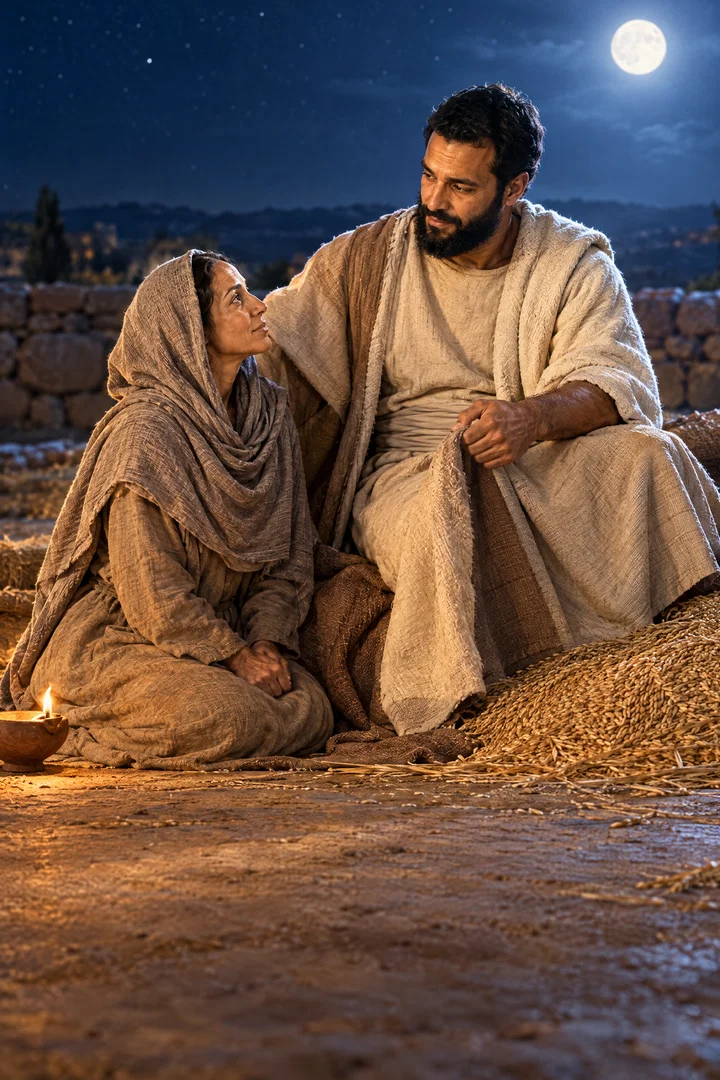
And he said, Who art thou? And she answered, I am Ruth thine handmaid: spread therefore thy skirt over thine handmaid; for thou art a near kinsman.
Translations
And he said, Who are you? And she answered, I am Ruth your handmaid: spread therefore your skirt over your handmaid; for you are a near kinsman.
King James Version, KJV Cambridge Paragraph Bible, Revised Version
And he said, Who art thou? And she answered, I am Ruth thine handmaid: spread therefore thy skirt over thine handmaid; for thou art a near kinsman.
Webster Bible, American Standard Version
And he said, Who art thou? And she answered, I am Ruth thy handmaid: spread therefore thy skirt over thy handmaid; for thou art a near kinsman.
And he saith, 'Who [art] thou?' and she saith, 'I [am] Ruth thy handmaid, and thou hast spread thy skirt over thy handmaid, for thou [art] a redeemer.'
And he said, Who art thou? And she answered, I am Ruth, thy handmaid: spread thy skirt over thy handmaid; for thou hast the right of redemption.
And he said, Who art, thou? And she said, I, am Ruth, thy handmaid, spread, therefore, thy wing over thy handmaid, for, a kinsman, thou art.
Berean Standard Bible, Majority Standard Bible
“ Who are you?” he asked.“ I am your servant Ruth,” she replied. “ Spread the corner of your garment over me, for you are a kinsman-redeemer.”
He said, “ Who are you?”She answered, “ I am Ruth your servant. Therefore spread the corner of your garment over your servant; for you are a near kinsman.”
And he said, Who are you? And she answering said, I am your servant Ruth: take your servant as wife, for you are a near relation.
Then he sayd, Who art thou? And she answered, I am Ruth thine handmayd: spread therefore the wing of thy garment ouer thine handmayd: for thou art the kinsman.
Douay-Rheims (Challoner revision)
And he said to her: Who art thou? And she answered: I am Ruth thy handmaid: spread thy coverlet over thy servant, for thou art a near kinsman.
Pictures
Cross-references
- Deuteronomy 25:5-6
If brethren dwell together, and one of them die, and have no child, the wife of the dead shall not marry without unto a stranger: her husband’s brother shall go in unto her, and take her to him to wife, and perform the duty of an husband’s brother unto her.
Sets out the duty to raise up offspring for a deceased kinsman.
- Ruth 2:20
And Naomi said unto her daughter in law, Blessed be he of the LORD, who hath not left off his kindness to the living and to the dead. And Naomi said unto her, The man is near of kin unto us, one of our next kinsmen.
Naomi identifies Boaz as a kinsman who may redeem the family.
- Deuteronomy 25:7-10
And if the man like not to take his brother’s wife, then let his brother’s wife go up to the gate unto the elders, and say, My husband’s brother refuseth to raise up unto his brother a name in Israel, he will not perform the duty of my husband’s brother.
Describes the reproach for refusing the family duty.
- Ruth 4:5-10
Then said Boaz, What day thou buyest the field of the hand of Naomi, thou must buy it also of Ruth the Moabitess, the wife of the dead, to raise up the name of the dead upon his inheritance.
Boaz fulfills the kinsman-redeemer duty after the nearer relative declines.
- Genesis 38:1-10
And it came to pass at that time, that Judah went down from his brethren, and turned in to a certain Adullamite, whose name was Hirah.
Provides another account of the duty and its consequences.
Commentary
Each commentary is drawn from primary sources: the writings of Ellen G. White and Adventist pioneers and periodicals. Each commentary is separate. Its own words are not a quotation; follow the references to read the source passages.
Pioneers and periodicals
4 sources
Ruth 3:9 belongs to the brief, beautiful pastoral story of Ruth from the time of the judges, whose ending brings out the ancestry of the Lord Jesus, into which Ruth the Moabite woman is brought.ST Mar 31, 1909 The Hebrew word for redeemer can also mean kinsman, because the redeemer had to belong to the family whose inheritance he preserved and whose name he perpetuated, and had to be a near kinsman. The family duty of a Goel could belong to a more distant relative and not only to a brother, and it included preserving the deceased kinsman's family and inheritance, and in the verse Ruth calls on Boaz as a near kinsman to fulfill that duty, and Boaz was willing to take on the obligation, although a closer relative had the prior right to do so.RH Mar 12, 1908
The near kinsman is a type of Christ, who cares for and redeems His people.ST Apr 8, 1913 Christ became humanity's Redeemer by becoming a near kinsman according to the flesh, taking human nature and becoming one with the human family as a brother to sinners, even the lowest among them.RH May 6, 1902 The hope of salvation from sin rests upon this manifestation of God in the flesh in the person of His Son, the coming of the Son of man as the seed of the woman.RH May 6, 1902
Sources