Zechariah 11:13
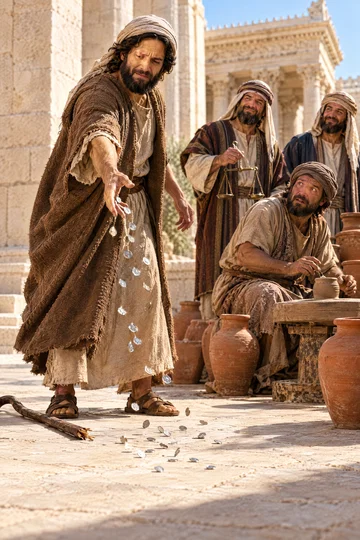
And the LORD said unto me, Cast it unto the potter: a goodly price that I was prised at of them. And I took the thirty pieces of silver, and cast them to the potter in the house of the LORD.
Translations
And the LORD said to me, Cast it to the potter: a goodly price that I was priced at of them. And I took the thirty pieces of silver, and cast them to the potter in the house of the LORD.
And the LORD said unto me, Cast it unto the potter: a goodly price that I was prised at of them. And I took the thirty pieces of silver, and cast them to the potter in the house of the LORD.
And the Lord said unto me, Cast it unto the potter: a goodly price that I was prised at of them. And I took the thirty pieces of silver, and cast them to the potter in the house of the Lord.
And the LORD said to me, Cast it to the potter: a goodly price that I was prized at by them. And I took the thirty pieces of silver, and cast them to the potter in the house of the LORD.
And the LORD said unto me, Cast it unto the potter, the goodly price that I was prised at of them. And I took the thirty pieces of silver, and cast them unto the potter, in the house of the LORD.
And Jehovah said unto me, Cast it unto the potter, the goodly price that I was prized at by them. And I took the thirty pieces of silver, and cast them unto the potter, in the house of Jehovah.
And Jehovah saith unto me, 'Cast it unto the potter;' the goodly price that I have been prized at by them, and I take the thirty silverlings, and cast them [to] the house of Jehovah, unto the potter.
And Jehovah said unto me, Cast it unto the potter: a goodly price that I was prized at by them. And I took the thirty silver-pieces, and cast them to the potter in the house of Jehovah.
Then said Yahweh unto me, Cast it into the treasury, the magnificent price at which I had been valued by them! So I took the thirty pieces of silver, and cast them, in the house of Yahweh, into the treasury.
Berean Standard Bible, Majority Standard Bible
And the LORD said to me, “ Throw it to the potter”— this magnificent price at which they valued me. So I took the thirty pieces of silver and threw them to the potter in the house of the LORD.
The LORD said to me, “ Throw it to the potter— the handsome price that I was valued at by them!” I took the thirty pieces of silver and threw them to the potter in the LORD’s house.
And the Lord said to me, Put it into the store-house, the price at which I was valued by them. And I took the thirty shekels of silver and put them into the store-house in the house of the Lord.
And the Lord said vnto me, Cast it vnto the potter: a goodly price, that I was valued at of them. And I tooke the thirtie pieces of siluer, and cast them to the potter in the house of the Lord.
Douay-Rheims (Challoner revision)
And the Lord said to me: Cast it to the statuary, a handsome price, that I was prized at by them. And I took the thirty pieces of silver, and I cast them into the house of the Lord to the statuary.
Pictures
Cross-references
- Matthew 27:9-10
Then was fulfilled that which was spoken by Jeremy the prophet, saying, And they took the thirty pieces of silver, the price of him that was valued, whom they of the children of Israel did value;
The thirty pieces of silver and the potter’s field fulfill the prophecy.
- Matthew 26:15
And said unto them, What will ye give me, and I will deliver him unto you? And they covenanted with him for thirty pieces of silver.
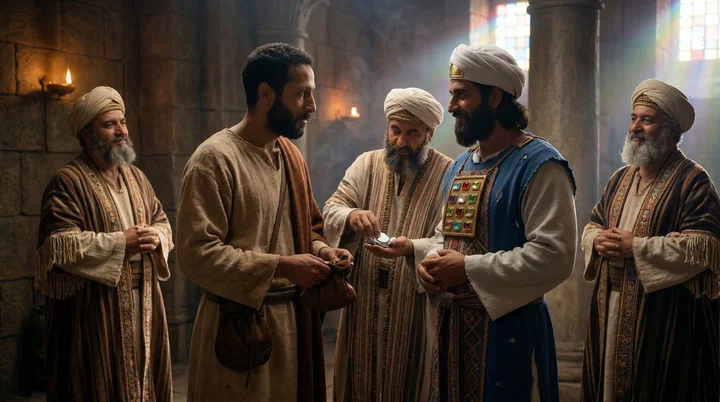
Judas agrees to betray Jesus for thirty pieces of silver.
- Matthew 27:5-7
And he cast down the pieces of silver in the temple, and departed, and went and hanged himself.
The silver is cast down and used to buy the potter’s field, fulfilling the prophecy.
- Luke 22:3-6
Then entered Satan into Judas surnamed Iscariot, being of the number of the twelve.
Judas arranges to betray Jesus for payment.
- Mark 14:10-11
And Judas Iscariot, one of the twelve, went unto the chief priests, to betray him unto them.
Judas offers to hand Jesus over for money.
- Matthew 27:4
Saying, I have sinned in that I have betrayed the innocent blood. And they said, What is that to us? see thou to that.
Judas confession proves Jesus innocent
- Exodus 21:32
If the ox shall push a manservant or a maidservant; he shall give unto their master thirty shekels of silver, and the ox shall be stoned.
thirty pieces was ordinary slave price
Commentary
Each commentary is drawn from primary sources: the writings of Ellen G. White and Adventist pioneers and periodicals. Each commentary is separate. Its own words are not a quotation; follow the references to read the source passages.
Ellen G. White
15 sources
The verse sets the worth of the rejected shepherd at thirty pieces of silver, the price of a slave, a contemptibly small and paltry sum ironically called a goodly price, which was the value placed upon the Lord of life and glory by those who rejected Him.Ms 23, 1898, par. 5–93SP 81.35RED 3.2COS 133.2 Its casting to the potter in the house of the Lord belongs to the breaking of the covenant through the failure of Israel's rulers to shepherd the people, and is fulfilled when Judas cast the betrayal money down before the priests.5RED 46.2–33SP 126.3ST Jun 27, 1878Ms 23, 1898, par. 5–9 Seen in prophetic vision looking down the ages to the trial of God's dear Son, it foretold His rejection and betrayal for thirty pieces of silver, after which the priests used the money to buy the potter's field for a burial place for strangers.5RED 46.2–33SP 126.3ST Jun 27, 1878ST Jun 27, 1878 Judas fulfilled it by cherishing selfishness and covetousness until he contracted with the priests and rulers to hand over his Master and Lord and deliver Him to death for thirty pieces of silver.3SP 81.35RED 3.2SLP 277.2 That direct fulfillment, with Judas's confession, testifies to and proves the innocence of Jesus and bears witness to His divine character, while the selling of the Lord of glory for such a price stands as a warning example of the ruinous result of one wrong act of sin.5RED 46.2–33SP 126.3ST Jun 27, 1878ED 150.2–4ST Nov 17, 1909
Price and Prophetic Fulfillment
The verse sets the value of the rejected shepherd at thirty pieces of silver, a contemptuously small and paltry price which is ironically called a goodly price.Ms 23, 1898, par. 5–93SP 81.35RED 3.2SLP 277.2DA 716 It was the paltry sum set upon the Lord of life and glory by those who rejected Him when He was betrayed for that amount.3SP 81.35RED 3.2SLP 277.2DA 716ST Jun 27, 1878 That sum of thirty pieces was the price of a slave.COS 133.2 The casting of the silver to the potter in the house of the Lord belongs to the breaking of the covenant and is bound up with the failure of Israel's rulers to care for the people as shepherds should.Ms 23, 1898, par. 5–9
The verse was seen in prophetic vision looking down the ages to the trial of God's dear Son.3SP 126.3 In that vision it foretells the rejection and betrayal of God's Son for thirty pieces of silver, describing the act of Judas and the price paid for Jesus as the value set upon Him by them.3SP 126.3ST Jun 27, 1878 The casting to the potter in the house of the Lord is Judas casting down the betrayal money before the priests in the temple.5RED 46.2–33SP 126.3ST Jun 27, 1878Ms 120, 1897, par. 20DA 716 After he threw the money down before them, the priests took the silver and used it to buy the potter's field as a burial place for strangers, completing the disposition of the money to a burial ground.5RED 46.2–3ST Jun 27, 1878DA 716ST Jun 27, 1878
Betrayal, Testimony, and Warning
Judas fulfilled the prophecy by contracting with the priests and rulers to hand Jesus over for thirty pieces of silver, a paltry price for the Lord of life and glory.3SP 81.35RED 3.2SLP 277.2 He sold his Master and Lord and delivered Him to death for that sum, betraying Him who had been valued as a rejected shepherd.5RED 3.2COS 132COS 133.2 The thirty pieces he received was the price of a slave, showing the contemptuous valuation placed upon Christ in His betrayal.COS 132COS 133.2 His selfishness and covetousness had been cherished until at last he sold his Lord.Lt 63a, 1893, par. 18–21
The direct fulfillment of the casting to the potter in the house of the Lord was Judas casting down the betrayal money before the priests.5RED 46.2–33SP 126.3ST Jun 27, 1878 After confessing the innocence of Jesus he cast the silver down, and the priests afterward used it to buy the potter's field as a burial place for strangers and burial ground.5RED 46.2–3ST Jun 27, 1878 This fulfillment, joined with the confession of Judas, gives testimony proving the innocence of Jesus.5RED 46.2–33SP 126.3Ms 120, 1897, par. 20 His betrayal for the thirty pieces paid and cast to the potter bore witness to the divine character of Christ.Ms 120, 1897, par. 20
The selling of the Lord of glory for thirty pieces of silver stands as an example of one wrong act whose consequences serve as a warning against sin.ED 150.2–4ST Nov 17, 1909 It shows the ruinous result of a wrong act.ED 150.2–4ST Nov 17, 1909
Sources
Pioneers and periodicals
29 sources
The thirty pieces of silver were the price at which the priests and people valued the promised Messiah who came to save them, called a goodly price in irony for its paltry worth.ST Sep 20, 1910ST Dec 10, 1902RH Nov 18, 1862ST Mar 25, 1897 It was the price of the meanest slave, paid in temple money and then cast to the potter in the house of the Lord.ST Jun 27, 1878ST Sep 20, 1910ST Dec 10, 1902RH Nov 18, 1862RH Mar 8, 1915 The prophecy pictured Christ as the shepherd of Israel, whose care was rejected, so that the breaking of the staff signified the withdrawal of His protection when the Jews refused Him as king.ST Nov 8, 1883ST Feb 11, 1897ST Jul 1, 1886ST Oct 21, 1930RH Apr 25, 1854 It was fulfilled literally at His first advent when Judas sold the Lord of glory for thirty pieces of silver and afterward in horror cast the money down before the priests.RH Jun 26, 1860RH Jun 24, 1858RH Dec 16, 1862ST Nov 22, 1910ST Oct 10, 1911 The priests then used that blood money to buy the potter's field for a burial place for strangers, as quoted in Matthew 27:9-10.ST Jun 27, 1878ST Sep 20, 1910ST Sep 16, 1913ST Dec 10, 1902RH Jun 26, 1860
Shepherd Valued and Rejected
The chapter personifies the ministry of Christ to the Jews, with the prophet acting as a shepherd, and it applies to Jerusalem at the time Christ rides into that city as the King of Israel.ST Nov 8, 1883 Shepherd means feeder, and feeding covers both leading and feeding, the two works belonging to a true shepherd.ST Jul 1, 1886 The shepherd picture exposes the utter unfitness of the teachers of Israel for feeding God's flock.ST Jul 1, 1886
The breaking of the staff Beauty signifies Christ withdrawing His protection from the Jews and giving them up to destruction.ST Nov 8, 1883 That withdrawal happened when the Jews refused to receive Christ as their King at His entrance into Jerusalem, withdrawing the promise of protection to Jerusalem conditioned on receiving Christ their King.ST Nov 8, 1883 Their rejection led God to break His covenant with them and refuse to bind them together, because they would not choose His way, despite His goodness and mercy toward them as the One who came to save them.ST Nov 8, 1883ST Feb 11, 1897
The thirty pieces of silver are the price at which the priests and Levites valued the promised Messiah, the Son of God.ST Dec 10, 1902 They are the price for which the people valued Christ, the One who came to save them.ST Feb 11, 1897ST Mar 25, 1897 It is described as a goodly price spoken in irony, a paltry sum foretelling Christ's betrayal for money and showing the low value placed on Him.ST Apr 10, 1907 The amount presents the price placed on the one being valued.ST Apr 10, 1907
Those thirty pieces were the price of an ordinary slave, even of the meanest slave.ST Sep 20, 1910RH Aug 21, 1913 They were temple money of the kind used to buy sacrifices, for the Lord was sold like a slave.ST Dec 24, 1894 The prophecy also names the disposition of that silver, that it was to be cast to the potter in the house of the Lord.RH Nov 18, 1862RH Mar 8, 1915
Betrayal Prophesied and Fulfilled
The verse is a prophecy concerning the suffering of the Messiah, part of the detailed prophetic picture by which God testified beforehand to Jesus as the Messiah, even to His cruel death.RH Jun 26, 1860RH Dec 16, 1862 It reveals the price of Christ's betrayal and stands listed as an Old Testament prediction fulfilled in the New Testament, with Matthew 26:7-9 given as its fulfillment.RH Jun 26, 1860RH Jun 24, 1858RH Dec 16, 1862 Though the prophecy is in Zechariah, Matthew is said to name Jeremiah, a difference that may reflect a general way of referring to the prophetic writings rather than a precise book reference.RH Jun 26, 1860 The thirty pieces of silver are a biblical event rather than a parable.RH Nov 16, 1911
The prophecy was fulfilled literally at Christ's first advent, in the events of His betrayal and crucifixion.ST Oct 21, 1930RH Apr 25, 1854ST Sep 13, 1905 What was foretold about the thirty pieces of silver paid for Jesus being cast to the potter came to pass in connection with His betrayal and death.ST Oct 21, 1930RH Apr 25, 1854ST Sep 13, 1905 It is therefore to be taken as genuine biblical prophecy fulfilled in Christ's betrayal, and as genuine biblical history rather than parable.ST Sep 13, 1905RH Nov 16, 1911
Judas agreed to deliver Jesus to the priests for thirty pieces of silver, selling his loyalty to Christ and selling the Lord of glory like a slave.ST Dec 24, 1894ST Nov 17, 1909ST Nov 22, 1910ST Oct 10, 1911 The sum was a paltry one, temple money of the kind used to buy sacrifices.ST Dec 24, 1894 He believed Jesus could save Himself and imagined the betrayal might bring about His public reign, while disclaiming responsibility if Jesus did not deliver Himself.ST Nov 22, 1910 His course stands as the ruinous result of a wrong act, in contrast to Christ, who could have offered more or used heaven's wealth to gain followers but chose self-denial instead.ST Nov 17, 1909ST Oct 10, 1911
After confessing Jesus' innocence, Judas in horror at his evil deed cast down the silver before the priests in the house of the Lord.ST Jun 27, 1878ST Jun 27, 1878ST Sep 20, 1910 The casting to the potter was thus fulfilled when he threw the money back to those who had bribed him.ST Jun 27, 1878ST Sep 20, 1910RH Nov 18, 1862 The thirty pieces were the price of an ordinary slave at which the priests and Levites and people valued the promised Messiah, the Son of God, and the money paid for the Saviour's blood was cast away and used in connection with the potter's field.ST Sep 20, 1910ST Dec 10, 1902RH Nov 18, 1862 The priests used it to buy the potter's field as a burial place for strangers, and it became known as the Field of Blood.ST Jun 27, 1878ST Jun 27, 1878ST Dec 10, 1902
Quotation Explained and Applied
The words about the thirty pieces of silver cast to the potter and given for the potter's field are quoted in Matthew 27:9-10, where the quotation is attributed to Jeremiah although it occurs in Zechariah and not in Jeremiah.ST Sep 16, 1913RH Jun 26, 1860ST Oct 26, 1882ST Nov 25, 1908RH Sep 11, 1860 The surrounding prophecy belongs in its general tenor to prediction of Christ's kingdom, the great day of the Lord, and the punishment of the wicked.ST Nov 25, 1908 The passage about the thirty pieces cast to the potter in the house of the Lord is identified as fulfilled in the events surrounding Jesus' betrayal.RH Sep 11, 1860
The difference may reflect a general way of referring to the prophetic writings rather than a precise book reference.RH Jun 26, 1860 It is also explained by the ancient division of the Old Testament into sections, with the section beginning with Jeremiah named after him and including Zechariah's writings.ST Oct 26, 1882 It is explained as well by possible confusion between abbreviated names in copying, omission of the prophet's name in some manuscripts, or an ancient convention of calling the prophetic section containing Zechariah by the name Jeremiah.RH Sep 11, 1860
The attribution may be explained if Jeremiah also spoke the prophecy in a writing that has not survived, or if Zechariah 9-14 originally formed part of Jeremiah's writings and was later placed under Zechariah's name.ST Sep 16, 1913ST Oct 25, 1910 The chapter may have belonged originally to Jeremiah and was later attached to Zechariah, but this does not change the verse's meaning, moral lesson, or inspiration.ST Sep 16, 1913ST Oct 25, 1910
The thirty pieces of silver present the price placed on the one being valued, and that amount is used as a figure for the price of perverting truth.ST Apr 10, 1907 Taking home money earned through corruption is like betraying Christ, especially when that wrongdoing harms the poor and weak. Like Judas, some would still sell him for that price, showing the low value placed on Christ as the price of a meanest slave.RH Aug 21, 1913 The thirty pieces were the price for which Judas sold his loyalty to Christ, yet Christ could have offered more or used heaven's wealth to gain followers, but chose self-denial instead.ST Oct 10, 1911 The money itself was not the betrayer in the betrayal of the Lord Jesus, but Judas was responsible for betraying him.ST Aug 30, 1905
Sources