Matthew 26:15
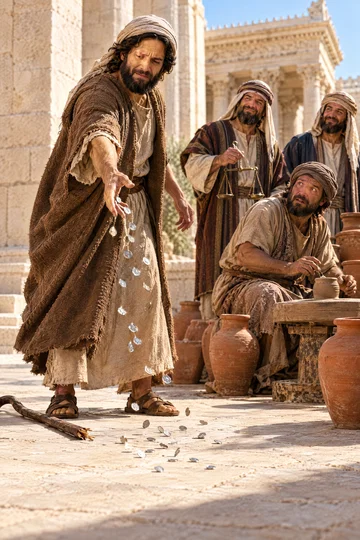
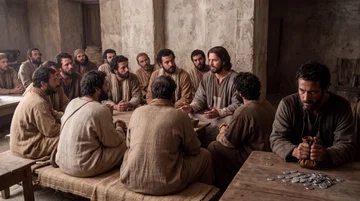
And said unto them, What will ye give me, and I will deliver him unto you? And they covenanted with him for thirty pieces of silver.
Translations
And said to them, What will you give me, and I will deliver him to you? And they covenanted with him for thirty pieces of silver.
And said unto them, What will ye give me, and I will deliver him unto you? And they covenanted with him for thirty pieces of silver.
and said unto them, What will ye give me, and I will deliver him unto you? And they covenanted with him for thirty pieces of silver.
And said, What will ye give me, and I will deliver him to you? And they covenanted with him for thirty pieces of silver.
Revised Version, American Standard Version
and said, What are ye willing to give me, and I will deliver him unto you? And they weighed unto him thirty pieces of silver.
'What are ye willing to give me, and I will deliver him up to you?' and they weighed out to him thirty silverlings,
and said, What are ye willing to give me, and I will deliver him up to you? And they appointed to him thirty pieces of silver.
and said—What are ye willing to give unto me? and, I, unto you, will deliver him up. And they appointed him thirty pieces of silver.
Berean Standard Bible, Majority Standard Bible
and asked, “ What are you willing to give me if I hand Him over to you?” And they set out for him thirty pieces of silver.
and said, “ What are you willing to give me if I deliver him to you?” So they weighed out for him thirty pieces of silver.
What will you give me, if I give him up to you? And the price was fixed at thirty bits of silver.
And said, What will ye giue me, and I will deliuer him vnto you? and they appoynted vnto him thirtie pieces of siluer.
Douay-Rheims (Challoner revision)
And said to them: What will you give me, and I will deliver him unto you? But they appointed him thirty pieces of silver.
Pictures


Cross-references 20 of 31
- John 12:4-6
Then saith one of his disciples, Judas Iscariot, Simon’s son, which should betray him,
Judas objects to the costly ointment while concealing his greed and theft.
- Luke 22:3-6
Then entered Satan into Judas surnamed Iscariot, being of the number of the twelve.
Parallel account of Judas arranging to hand Jesus over for money.
- Mark 14:10-11
And Judas Iscariot, one of the twelve, went unto the chief priests, to betray him unto them.
Judas agrees to betray Jesus, and the priests promise him money.
- Zechariah 11:12
And I said unto them, If ye think good, give me my price; and if not, forbear. So they weighed for my price thirty pieces of silver.
Foretells the thirty pieces of silver paid for the betrayal.
- Matthew 27:3-5
Then Judas, which had betrayed him, when he saw that he was condemned, repented himself, and brought again the thirty pieces of silver to the chief priests and elders,
Judas regrets betraying Jesus, returns the silver, and hangs himself.
- Genesis 37:28
Then there passed by Midianites merchantmen; and they drew and lifted up Joseph out of the pit, and sold Joseph to the Ishmeelites for twenty pieces of silver: and they brought Joseph into Egypt.
Joseph’s sale for silver foreshadows Jesus’ betrayal and sale.
- Matthew 26:47-49
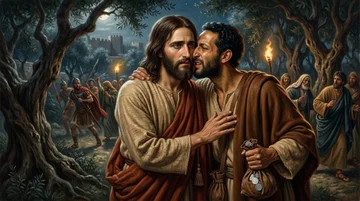
And while he yet spake, lo, Judas, one of the twelve, came, and with him a great multitude with swords and staves, from the chief priests and elders of the people.
Judas carries out his bargain by identifying Jesus to his captors with a kiss.
- John 13:2
And supper being ended, the devil having now put into the heart of Judas Iscariot, Simon’s son, to betray him;
Satan prompts Judas to betray Jesus.
- Exodus 21:32
If the ox shall push a manservant or a maidservant; he shall give unto their master thirty shekels of silver, and the ox shall be stoned.
The law sets thirty shekels as compensation for a slave, matching the price paid for Jesus.
- Acts 1:18-19
Now this man purchased a field with the reward of iniquity; and falling headlong, he burst asunder in the midst, and all his bowels gushed out.
Judas’s betrayal money purchased the field where his terrible end became known.
- John 13:27
And after the sop Satan entered into him. Then said Jesus unto him, That thou doest, do quickly.
Satan enters Judas as he carries out his betrayal of Jesus.
- Matthew 27:3-4
Then Judas, which had betrayed him, when he saw that he was condemned, repented himself, and brought again the thirty pieces of silver to the chief priests and elders,
Judas regrets the betrayal and confesses Jesus’ blood was innocent.
- Genesis 25:29-34
And Jacob sod pottage: and Esau came from the field, and he was faint:
Esau’s sale of his birthright parallels Judas’s bargain to betray Jesus.
- Matthew 27:9-10
Then was fulfilled that which was spoken by Jeremy the prophet, saying, And they took the thirty pieces of silver, the price of him that was valued, whom they of the children of Israel did value;
The silver paid for Jesus fulfills prophecy and is used to buy the potter’s field.
- John 18:2
And Judas also, which betrayed him, knew the place: for Jesus ofttimes resorted thither with his disciples.
Judas leads the arresting party to the place where Jesus often met with his disciples.
- Matthew 26:3-4
Then assembled together the chief priests, and the scribes, and the elders of the people, unto the palace of the high priest, who was called Caiaphas,
Religious leaders secretly plot to seize and kill Jesus.
- Acts 2:23
Him, being delivered by the determinate counsel and foreknowledge of God, ye have taken, and by wicked hands have crucified and slain:
Jesus’ death fulfilled God’s purpose through the guilty actions of his enemies.
- John 13:11
For he knew who should betray him; therefore said he, Ye are not all clean.
Jesus knew Judas would betray him and identified him as not clean.
- Zechariah 11:13
And the LORD said unto me, Cast it unto the potter: a goodly price that I was prised at of them. And I took the thirty pieces of silver, and cast them to the potter in the house of the LORD.
Continues the prophecy about the silver paid for Jesus.
- Luke 22:6
And he promised, and sought opportunity to betray him unto them in the absence of the multitude.
Judas seeks an opportunity to hand Jesus over.
Commentary
Each commentary is drawn from primary sources: the writings of Ellen G. White and Adventist pioneers and periodicals. Each commentary is separate. Its own words are not a quotation; follow the references to read the source passages.
Ellen G. White
74 sources
Judas, one of the twelve, went on his own to the chief priests and rulers and offered to hand his Master over to them in secret, asking what they would pay him for it, and they agreed with him for thirty pieces of silver, a trifling sum counted as the price of a slave.Ms 120, 1897, par. 1–25RED 3.2ST May 23, 18784RED 111.2 The bargain was to guide them to one of Jesus' quiet places of retirement for prayer where they could seize Him away from the multitude, for they feared the people who were His friends.Ms 120, 1897, par. 1–25RED 3.2ST May 23, 1878 The ruling motive was a fostered love of money that grew into avarice and covetousness until it overbalanced love for Christ and led him to sell his integrity and his Saviour for worldly gain, and by yielding to it he gave Satan direct access and became a fit agent for the tempter.Ms 120, 1897, par. 1–2DA 716.2–34T 41.1–42.1SG1 46.1ST Jun 27, 1878 He counted the trade as sharp and safe because he did not believe Jesus would allow Himself to be taken, but expected Him to escape as before and display divine power, leaving the priests cheated while he kept the money.5RED 45.2–46.1Ms 120a, 1901, par. 6–7Lt 40, 1901, par. 7–9 The same spirit of treachery is repeated whenever professed followers sacrifice principle for gain and betray Christ in the person of His saints, showing how one cherished sin of selfishness and covetousness can pervert a whole life and ruin an otherwise noble character.Ms 40, 1897, par. 30–33ED 150.2–4ST Nov 17, 1909ST Feb 19, 1902
Bargain and Setting
Judas, one of the twelve disciples, went of his own accord to the chief priests, elders and rulers and willingly offered to secretly deliver Jesus his Master into their hands.5RED 3.2ST May 23, 1878COS 133.1SG1 46.1EW 135.2 The rulers were seeking a secret way to seize Jesus, and they found in Judas one ready to betray Him for money, with Satan working directly through him in the plan.4RED 111.2COS 133.1SG1 46.1EW 135.2 He himself put the question to them what they would give him, and they covenanted with him for thirty pieces of silver.5RED 3.2ST May 23, 18783SP 81.34RED 111.2RH Aug 7, 1900 That sum was a paltry, trifling sum, the price of a slave, valuing Jesus at only a few pieces of silver.5RED 3.2ST May 23, 18783SP 81.3DA 716.2–3CET 172.2–173.1 It was for that paltry sum that greed for gain led him to sell his Master.5RED 3.2ST May 23, 18783SP 81.3DA 716.2–33SP 125.3
The contract was that he would lead them to one of Jesus' quiet resorts for prayer, meditation and retirement, a quiet place where they could seize Him without opposition from a multitude.Ms 120, 1897, par. 1–25RED 3.2ST May 23, 1878 He was to betray Him in the absence of the multitude, because the priests knew the people were Christ's friends.5RED 3.2ST May 23, 187820MR 147.1–2 The bargain was renewed on the second night before the Passover after the feast at the house of Simon, after he had time since that feast to reflect yet kept his purpose unchanged.Ms 120, 1897, par. 1–2 He went directly from the supper to the priests, and from then on sought an opportunity to hand Jesus over.4RED 111.2RH Aug 7, 1900
By this bargain the Lord of life and glory was sold by one of His own followers to His bitterest enemies, to ignominy, shame, humiliation and death.Ms 120, 1897, par. 1–25RED 3.2ST May 23, 18783SP 81.3DA 716.2–3 He sold his divine Master to shame and death and handed his Lord over to those enemies, thereby becoming an agent in the treatment Jesus suffered before His death.Ms 120, 1897, par. 1–23SP 81.33SP 125.3SG1 46.1
Judas Motives and Expectations
A natural strong love of money fostered into avarice and covetousness became the ruling motive of his life, overbalancing his love for Christ until love of mammon outweighed love for the Saviour.Ms 120, 1897, par. 1–2DA 716.2–3ST May 23, 1878 That unchecked love grew until it overcame the good he had received and led him to sell his integrity and his Saviour for money and worldly gain, selling the Lord of glory to shame and death for the price of a slave.Ms 120, 1897, par. 1–2DA 716.2–34T 41.1–42.13SP 82.3 He sold his divine Master for thirty pieces of silver, for a small sum, for a few pieces of silver, valuing at so little the One Mary had valued so highly by her costly gift.4T 41.1–42.13SP 82.3ST Jun 27, 1878 In this he represents professed Christians who use Christ's name to conceal devotion to self and money.ST May 23, 1878
That love of money perverted his nobler nature and made him a fit agent for Satan in the betrayal.ST Jun 27, 18783SP 125.2 He yielded to the tempter and gave Satan easy access to his mind, and Satan worked directly through him to hand his Lord over to his bitterest enemies.SG1 46.1ST Jun 27, 18783SP 125.2EW 135.2 By becoming the slave of one vice he gave himself to Satan to be driven to any length in sin, providing a picture of men who under Satan's influence betray the Lord by damaging His work.Ms 120, 1897, par. 1–2Lt 51, 1897, par. 17–20
Resentment, envy, unholy anger and revenge after Mary's costly offering and Christ's expressed or implied rebuke of his covetous spirit drove him to the bargain.4RED 111.2RH Aug 7, 1900ST Jun 27, 18783SP 125.2 Provoked by reproof before others, stung by known guilt and provoked to madness because his guilt was known, he refused repentance and instead planned revenge, rising from the table imbued with the spirit of Satan and acting like one bereft of reason.Lt 12a, 1888, par. 1420MR 147.1–2 He became angry when his faults were reproved, and like those disappointed in expected honor he responded with revenge, going directly from the supper to the chief priests and from then on seeking an opportunity to hand Jesus over.4RED 111.2RH Aug 7, 1900Lt 12a, 1888, par. 14 His greed and envy drove him to accept far less than the ointment he had begrudged Mary for giving Jesus, while the priests who had been offered salvation freely without money and without price refused that precious gift of more value than gold and silver and instead bought their Lord.DA 563.2–564.120MR 147.1–2
His course grew from cherished selfishness, ambition, love of worldly praise and a divided heart.Lt 40, 1901, par. 7–9Ms 2, 1883, par. 15–1620MR 104.5–105.1 Though blessed with opportunities, lessons and three years with Christ and throughout His public ministry, and though outwardly professing faith, connected with Jesus, entrusted with money and even given power to heal, he did not commit his eternal interests to Him or live out His religion.Lt 40, 1901, par. 7–920MR 104.5–105.1 He was a thief who stole from the money entrusted to him, a hearer and not a doer who refused to be molded, corrected and converted, and his supposed sufficiency led him to rely on himself instead of accepting counsel.RH Aug 7, 1900Ms 2, 1883, par. 15–16 He treasured hereditary and natural defects as precious treasure until they poisoned the whole man in principle, spirit, life and character, and his pride and stubbornness kept him from surrendering and confessing though Christ sought to soften his heart so He could pardon him.Ms 2, 1883, par. 15–1620MR 104.5–105.1 His concern for the poor was only an excuse to conceal selfish desire for money, for the money from Mary's ointment would not have helped the poor if it had gone into his hands, showing how covetous people can disguise selfishness as conscientious concern for others.RH Aug 7, 1900SG2 232.11T 192.1 The grace of Christ received into the heart would have converted his selfishness and worked wonderful changes in him as in John and Peter, but by not receiving Christ's words opposition to light arose in his heart.20MR 104.5–105.1
He counted the bargain as sharp and safe either way because he did not believe Jesus would permit Himself to be taken.ST Jun 27, 18783SP 125.2Ms 120, 1897, par. 10–11 He expected Jesus to escape as before, to display divine power, to deliver Himself and to have a new opportunity to give further evidence of divinity, leaving the priests cheated of their bribe while he kept and secured the money for his own use and purpose.5RED 45.2–46.1ST Jun 27, 18783SP 125.2 He reasoned that if Jesus was to be crucified the event had to happen and his betrayal would not change the result, while if Jesus was not to die the arrest would only force Him to deliver Himself from His enemies, so at all events he expected to gain something by his treachery and imagined the betrayal would lead only to a trial.Ms 120a, 1901, par. 6–7Ms 120, 1897, par. 10–11 It was a shrewd deal in his eyes, resting on a mistaken judgment of Jesus' purpose and willingness to be taken and on the wrongful expectation that Jesus would prevent His own arrest.Ms 120a, 1901, par. 6–7Lt 40, 1901, par. 7–9
Remorse After Betrayal
From the garden betrayal onward he did not leave but kept Jesus in sight and followed Him to the trial before the Jewish rulers, amazed that He suffered Himself to be bound and led away.3SP 125.3ST Jun 27, 1878Ms 120, 1897, par. 12 He watched every movement eagerly, expecting Him at any moment to surprise His enemies by appearing before them in the character of the Son of God and setting at naught all their plots and power.5RED 45.2–46.13SP 125.3ST Jun 27, 1878Ms 120, 1897, par. 12
When Jesus instead meekly submitted to abuse and let Himself be tried and condemned to death, his heart smote him and he realized the full guilt and extent of betraying his Master to shame and death.5RED 45.2–46.13SP 125.3ST Jun 27, 1878Ms 120, 1897, par. 12 Remembering how kind and considerate and tender Jesus had ever been to him, he was filled with remorse and anguish and despised the covetousness that had tempted him to sell the Saviour.3SP 125.3ST Jun 27, 1878Ms 120, 1897, par. 12 He did not realize what he was doing until it was too late to undo the fearful work, and his mourning afterward was only for the result of sin with no real sense of its grievous character, an example of worldly sorrow rather than godly sorrow which works repentance.ST Jun 27, 1878ST Feb 4, 1897 In despairing remorse he went out and hanged himself.ST Jun 27, 1878
Scripture Links and Foretelling
As Joseph was sold by his brothers for a small sum, so Jesus was sold to his enemies by one of his own disciples for thirty pieces of silver.1SP 157.2–158.2SG3 174.2–176.1PP 239.2–4 His enemies sought by betrayal and death to prevent him from becoming king and ruler, but God overruled their purpose for good so that through death he became Redeemer, Saviour, and ruler over the world.1SP 157.2–158.2SG3 174.2–176.1PP 239.2–4 That overruling did not lessen the guilt of those who betrayed and killed the innocent Jesus, whose crime remained grave.1SP 157.2–158.2SG3 174.2–176.1PP 239.2–4
The paltry price Judas accepted exposed his cold, calculating valuation of the life of the Son of God as worth only a few pieces of silver.DA 563.2–564.12SP 379.1–2ST Jul 22, 18864RED 112.1 It stands in contrast to Mary's costly gift, which showed how highly she prized and valued Jesus.DA 563.2–564.12SP 379.1–2ST Jul 22, 18864RED 112.1 Driven by greed, envy, covetousness and unholy anger, he combined revenge with gain and weighed his Lord against money, accepting far less than the ointment he had begrudged Mary for giving Jesus.DA 563.2–564.12SP 379.1–24RED 112.1 The priests who bought their Lord had been offered salvation freely and refused it.DA 563.2–564.1
His selfish, avaricious bargaining to get all he could for his own gain without regard to justice, mercy and the love of God was the same spirit that led Lot to choose Sodom as his home for its wealth, attractions and loveliness.Ms 25a, 1891, par. 10–11Lt 63a, 1893, par. 18–21 Lot's choice did not make him richer, for he went out empty-handed when fire consumed all his gains.Ms 25a, 1891, par. 10–11 The same plague-spot of selfishness and covetousness was touched when Christ told the rich young ruler to keep the commandments and to sell what he had, give to the poor, and follow him.Lt 63a, 1893, par. 18–21 Though numbered with the disciples, Judas was selfish, covetous and a thief, apparently righteous while neglecting his own soul and using his powers to accuse, criticize and condemn others, bracing his soul against truth and obedience and cherishing, cultivating and strengthening hereditary and natural traits until they led him to sell his Lord.Ms 25a, 1891, par. 10–11Lt 63a, 1893, par. 18–21 He firmly set himself not to be changed by the lessons and example of Christ, refusing to heed the light coming in every lesson and persisting in a course not in harmony with God's plans that will not stand the test of judgment, while Jesus refrained from exposing his hypocrisy and embezzlement to avoid giving him an excuse for his perfidy.4RED 110.2Ms 25a, 1891, par. 10–11
With prophetic eye Jesus discerned beforehand that this disciple who was with him, blessed with opportunities and receiving lesson upon lesson, line upon line and precept upon precept yet not transformed in character, would deliver him into the hands of sinners.Ms 56, 1894, par. 3–4 That delivering led to his being delivered by Pilate to be scourged and crucified, and his blood as Son of the Infinite God being mingled with the sacrifices of men as the perfect sacrifice for the sins of the whole world.Ms 56, 1894, par. 3–4 Jesus foretold this terrible work of betraying his Lord for thirty pieces of silver to his disciples in a portion of his parting address when he was about to leave them.Lt 56, 1907, par. 4–5 He spoke it before Judas left the presence of Christ to perform it and immediately before declaring that now the Son of man is glorified.Lt 56, 1907, par. 4–5
Doctrinal Teachings
Judas was united with Christ and the other disciples to receive education and training for character building, yet he was not converted because he did not receive Christ's words and improve.20MR 104.5–105.1Lt 73, 1896, par. 4–6 He cherished selfishness, ambition, and love of money as precious treasure and refused to correct his course despite the painstaking lessons of the divine Teacher.Ms 2, 1883, par. 15–1620MR 104.5–105.1Lt 73, 1896, par. 4–6 Grace received into the heart would have converted him from selfishness and worked wonderful changes in him, as it did in John and Peter, but by not receiving the words opposition to the light arose in his heart until his defects poisoned the whole man in principle, in spirit, in life, and in character, ending in selling his Lord for thirty pieces of silver for a trifling sum.20MR 104.5–105.1Lt 73, 1896, par. 4–6 His pride and stubbornness kept him from surrendering and confessing and ruined him, though Christ sought to soften his heart so He could pardon him, showing that forgiveness requires repentance.Ms 2, 1883, par. 15–16 This history stands as a warning that defects must be refined, changed, and overcome, for indulgence only feeds appetite and strengthens the passions.20MR 104.5–105.1Lt 73, 1896, par. 4–6
The bargain for thirty pieces of silver was an act of selfishness and covetousness done in uncontrollable passion and gives evidence that man in such fits cannot be trusted.Lt 20, 1901, par. 19–2114MR 144.2 The best religious culture and the highest advantages have no power to sanctify man or to preserve individuals or nations from falling into such degeneracy.Lt 20, 1901, par. 19–2114MR 144.2 The shame and guilt of that selfishness and covetousness belong to man alone.Lt 20, 1901, par. 19–2114MR 144.2 The sinfulness of members of God's church is not chargeable to any neglect on God's part, for God so loved the world that He gave His only begotten Son that believers should not perish but have everlasting life, and the Lord of heaven has bestowed abundant labor upon the human race.14MR 144.2
His presence as a covetous member of the church Christ formed on earth shows that the church can include unfaithful members without ceasing to be God's church.ST Oct 23, 1879 Though not perfect he was accepted as one of Christ's chosen disciples and even given power to heal the sick and cure diseases after betraying a sacred trust under great privilege, proving that having a name registered on the church books never makes anyone a Christian, and only doing the Word makes men sons and daughters of God.21MR 369.1–2 Because he failed to be converted daily into a sanctified and polished instrument for the Master's use, Satan was able to use his old hereditary and natural tendencies to dishonor Christ, imperil his own soul, and sell Him for money.21MR 369.1–2 Those in the church who know the truth without being sanctified by it will come to the same result, depart from the faith, work out wrong characters that do more harm because of their knowledge, confederate with apostates, and betray sacred trusts, while God calls for whole-sided, undivided consecration.21MR 369.1–2 His bargaining to deliver Christ for thirty pieces of silver was a disappointing result in the ministry in Christ's day that caused great sorrow and needed correction, yet the ministry retains its sacred, holy character and is not to be belittled or ignored because of such failures.14MR 165.1
Jesus knew Judas had betrayed Him for thirty pieces of silver, yet washed his feet, showing that humble service was not withheld even from His betrayer.Ms 8, 1897, par. 14 All people belong to Christ, who died for the poor and uneducated as well as the learned and those who consider themselves great, so no one is to receive special honor or service above others.Ms 8, 1897, par. 14 The setting teaches humility, impartiality, and service, and shows that God's ways and thoughts differ from ours.Ms 8, 1897, par. 14 Selling a meetinghouse devoted to His work would feel like selling the Saviour recalled in the sale.Lt 59, 1878, par. 4
Warnings for Believers Today
The question what will you give me expresses a spirit of treachery that is repeated whenever people reject Christ and turn from truth to falsehood and under deception choose another leader.Ms 40, 1897, par. 30–33 That same bargain is repeated today whenever principle is sacrificed for worldly gain, for those who do so betray their Lord and crucify Christ afresh and put Him to open shame, and Christ is betrayed again in the person of His saints.Ms 40, 1897, par. 30–33ST Feb 19, 1902 Judas had wonderful opportunities through three years with Christ, daily listening to His instruction and witnessing His marvelous works, yet covetousness grew stronger and stronger until he sold his Master for thirty pieces of silver because he loved gain and thought as a speculator to manage church finances to make money.ST Feb 19, 1902
Those who accuse and betray their fellow believers serve Satan just as Judas did when he asked what he would receive for delivering Jesus and agreed to thirty pieces of silver, even when they do so unknowingly or ignorantly, because their actions reveal his spirit.STB 474.1IRCUP 35.1GW92 443.4–444.2Ms 29, 1907, par. 70–71 To attack fellow believers by magnifying and distorting their faults is to act like Judas despite claiming to love and fear God.Lt 28, 1888, par. 37–38 Through harsh and uncourteous treatment that drives vulnerable souls into Satan's hands, spiritual caregivers follow the same example of betrayal for an agreed price.Ms 70, 1895, par. 3–4
Selling Christ for personal gain recurs when dishonest business practices and speculation for selfish gain sacrifice Christ, for Judas' bargain grew from selfish ambition, love of worldly praise and a divided heart while outward profession concealed failure to meet the Bible standard and a false expectation that Jesus would prevent His own arrest.Lt 40, 1901, par. 7–9 The same sin is still committed by professed disciples when they sell honor and sacrifice integrity to secure worldly advantage through pretense and sophistry, policy and underhand dealing, a kind of ingenious sinning common in health institutions, and by betraying sacred interests their unconsecrated lives become Satan's most effective argument against Christ and the truth.20MR 384.1–385.1 Selling the truth of Christ in business is done just as truly when those professing truth oppress a brother or neighbor, obscure what is due to Jesus Christ, and practice deception, fraud and robbery under fair names, as verily as Judas sold his King for thirty pieces of silver.Ms 26, 1899, par. 26–28 Corrupt dealing can lead people to betray their Lord often without realizing where their course will end, and professed disciples including physicians also betray Christ when they sacrifice honor and integrity for worldly advantage or use deceitful means even for worthy aims.Ms 11, 1895, par. 19–20Lt 22, 1890, par. 27–31 Selling Christ for personal gain betrays the Lord and His cause into the hands of its enemies and brings reproach on the truth, including betraying sacred trusts to ward off embarrassment or to take revenge and hurting and robbing God's cause.5MR 443.1–2
Judas' covetousness led him to value Jesus at only a few pieces of silver and agree to sell Him, and his bargain illustrates how selfishness can overtake one who professes loyalty so that professed followers trade generous principles for earthly gain.EW 228.2 Covetousness and unholy anger led him to combine revenge with greed and sell his Lord for a paltry sum, weighing the life of the Son of God against money in contrast to Mary's costly gift which showed how highly she valued Jesus.2SP 379.1–2ST Jul 22, 1886 Like Judas, selfish and covetous people will trade good principles and a generous character for a little gain and will be sifted out from God's people, for selfishness and love of money lead professed followers to abandon good principles and a generous spirit.CET 174.2SG1 181.1 The same cold, calculating spirit appears when people withhold or grudgingly give to His cause under plausible excuses such as claiming money should instead go to the poor, while true Christian faith is shown by works and by giving to the cause of truth.2SP 379.1–2ST Jul 22, 1886 His concern for the poor was a cover for selfish desire to possess the costly ointment, showing how covetous people disguise selfishness as conscientious concern for others by valuing Jesus so little as to hand Him to wicked men for a few pieces of silver.1T 192.1
He who for thirty pieces of silver sold the Lord of glory stands as a beacon of warning at the byways leading from the path of life, showing the result of even one wrong act and the peril of even one departure from right both to the wrongdoer and to all whom his influence reaches.ED 150.2–4ST Nov 17, 1909 A life otherwise virtuous, honorable and noble, in which one sin is fostered and one vice indulged, becomes the strongest bulwark of vice in the world and a powerful enticement to the soul struggling in secret against temptation on the verge of the precipice.ST Nov 17, 1909 He who wilfully transgresses one precept of God's holy law perverts noble gifts into a lure to sin, so that genius, talent, sympathy and even generous and kindly deeds become decoys to entice souls over the precipice of ruin, because indulgence feeds appetite and strengthens passion unless defects are refined and overcome.ST Nov 17, 1909
His selling of Jesus for thirty pieces of silver after becoming provoked by the Lord's reproof before others arose from a spirit of revenge and warns against letting hatred and revenge take possession of the heart.Lt 12a, 1888, par. 14 It is the fearful result of cherishing sin by rejecting light and instruction, becoming angry when faults are reproved, and betraying the One who sought his good, and it illustrates giving in to unbelief and rejecting light and evidence to sacrifice Christ for material gain or something else valued.4SP 44.1–45.1Ms 2, 1890, par. 15–16 The same betraying spirit is revealed in a course prompted over many years, such as instigating suit in controversy with Christ, showing what a person would do if permitted his own way and putting him in danger of making shipwreck of the faith through a wrong unfaithful course God's Word will not tolerate, while the One betrayed reads every motive and impulse.Lt 66, 1897, par. 13–14 Though connected with Jesus and given opportunity to learn from Him, Judas betrayed his Lord by relying on his own supposed sufficiency instead of accepting counsel, correction and instruction from Christ.GW92 232.2GW 414.1–2 Valuing the kingdom less, men barter eternal security and the soul for a mess of pottage, for temporal gain or for Satan's bribe of gain for worship, and by threatening, abusive and neglectful treatment of others they show the spirit of Judas in contrast to the spirit of Jesus, severing the last link to God and brethren.Lt 12a, 1888, par. 14Ms 2, 1890, par. 15–16
Sources
Pioneers and periodicals
141 sources
The verse records Judas Iscariot, one of the twelve apostles, asking the chief priests what they would give him to hand Jesus over to them, and their agreeing with him for thirty pieces of silver.ST Sep 20, 1899ST Dec 20, 1899ST Sep 20, 1899ST May 10, 1905RH Jan 18, 1912 The price was the common value of an ordinary slave, a paltry sum showing how cheaply he valued his Lord, in contrast to Mary's costly ointment worth three hundred pence.ST Mar 27, 1901RH Jan 6, 1910ST Oct 13, 1898ST Jan 10, 1911ST Apr 19, 1905 It was the price foretold for the Messiah, fulfilling Zechariah 11:12, which the priests fulfilled without knowing it.RH Nov 18, 1862RH Dec 10, 1867RH Jun 24, 1858ST Oct 21, 1930ST Jan 10, 1911 The ruling motive was cherished covetousness and love of money that outweighed love for the Saviour, joined with resentment after Christ rebuked his criticism of Mary's offering, until he sold his integrity and his Lord for earthly gain.RH Dec 28, 1911RH Jan 6, 1910ST Oct 25, 1910RH May 17, 1870 The same betrayal is repeated whenever anyone values money, possessions, status or personal advantage above Christ, and in selling Jesus for sordid gain he was selling his own soul, bartering eternal life for a disastrous bad bargain.RH Jan 6, 1910RH Jan 6, 1910STST Nov 9, 1915RH Mar 6, 1866
Words and Bargain
The question was put by Judas to the chief priests, rulers and elders, asking what they would give him if he would deliver Jesus to them, and they covenanted with him for thirty pieces of silver.ST Sep 20, 1899ST Dec 20, 1899ST Sep 20, 1899ST Dec 20, 1899RH Jun 24, 1858 It was a compact to betray Jesus in exchange for that sum, an offer to hand Him over for money, made after Judas had rebuked Jesus over Mary's anointing.ST Sep 20, 1899ST Mar 27, 1901ST Dec 20, 1899 The hardness of his heart was shown in that after this agreement he could still face Jesus and call Him Master.ST Dec 20, 1899
After making the agreement he sought opportunity to hand Jesus over, looking for a time to deliver Him to them.ST Sep 20, 1899ST Dec 20, 1899RH Dec 28, 1911ST Dec 20, 1899 Provoked by Christ's rebuke, he chose revenge, went directly from the supper to the priests, and then sought opportunity to hand Jesus over.RH Aug 7, 1900RH Dec 28, 1911 This followed his resentment over Mary's costly ointment and Jesus' rebuke of his covetousness.RH Dec 28, 1911
The bargain was a secret contract with the priests and rulers to deliver Jesus into their hands, to lead them to a quiet place where they could seize Him without a crowd opposing them.ST May 23, 1878ST Oct 13, 1898 He offered to guide them to the secluded place where Jesus could be found and seized for trial before morning, going by night from the supper in the upper chamber to the palace of the high priest.ST Oct 13, 1898ST Oct 13, 1898 He left Jesus right after the Last Supper at sunset on the night Jesus went with His disciples to Gethsemane, going alone with furtive haste through Jerusalem to the palace, where in utmost secrecy a plan to apprehend Jesus that very night to destroy Him had already been formed, a plan he had in some way learned.ST Oct 13, 1898RH Jan 6, 1910 The delivery was to be in Gethsemane during the Passover to an armed band, with the bargain put in writing to be paid when he delivered Him.ST Jan 10, 1911
In the negotiation he demanded first three hundred denarii, the value of the spikenard poured on Jesus at Simon's feast, then two hundred, from anger at being rebuked for protesting that waste.ST Jan 10, 1911 The priests refused and fixed the price at thirty pieces of silver, the price of a slave.ST Jan 10, 1911
The religious authorities share responsibility for the betrayal by soliciting the arrest, welcoming the base sale, and paying Judas for his part.RH Dec 12, 1912ST Feb 14, 1906 They welcomed it with jealous scorn, and that bargain led directly to Jesus writhing under the crown of thorns, hailed in mockery as King, and hung slain on the cross as the Lamb of God.RH Dec 12, 1912
The betrayer was Judas Iscariot, one of the twelve chosen apostles, an intimate disciple who had wrought miracles, professing to follow Jesus and to be His disciple while agreeing to betray his Master and divine Teacher.ST May 10, 1905RH Jan 18, 1912ST Feb 2, 1882RH Jun 10, 1875 Despite knowing His words and actions he betrayed Him for thirty pieces of silver, becoming an agent of evil in bringing about His death, and expressing the antichristian spirit at work within the early church.ST May 10, 1905RH Jan 18, 1912 His act was an example of one who once stood in God's favor falling away, of beginning in faith and then giving up, and it left the other disciples discouraged and feeling that all had forsaken Jesus.ST Feb 2, 1882RH Jun 10, 1875
Time Place and Price
The bargain was struck six days before the Passover after the feast at Simon's house, following resentment over Mary's costly ointment, and it was made before the Lord's Supper while Judas was still coming and mingling with the disciples.RH Dec 28, 1911RH Dec 7, 1916 After making the agreement he sought an opportunity to hand Jesus over, going directly from the supper to the chief priests and then looking for a time to deliver him.RH Aug 7, 1900RH Dec 28, 1911 He left alone right after the Last Supper at sunset on the night Jesus went to Gethsemane, going by night with furtive haste through Jerusalem from the upper chamber to the high priest's palace.ST Oct 13, 1898ST Oct 13, 1898 There a secret plan to seize Jesus that very night had already been formed in utmost secrecy, to guide the priests to a quiet secluded place where he could be seized without opposition for trial before morning.ST Oct 13, 1898ST Oct 13, 1898
The verse belongs to the Bethany account of Jesus' anointing, which may describe an event separate from the anointing in Luke 7:36-50, since similar events can stand in the same scriptural context at different times.ST Sep 20, 1899 The betrayal took place on Wednesday, the fourth day of the week.ST Oct 27, 1881ST Feb 24, 1887 The early church kept Wednesday as a voluntary festival in memory of that betrayal, honoring it with public religious assemblies but not with abstinence from ordinary labor, as it kept the sixth day for the crucifixion.ST Oct 27, 1881ST Feb 24, 1887 The Wednesday evening service of Passion Week, the Great Week that is the last week of the long fast before Easter, takes the betrayal by Judas as its theme alongside the death, burial and resurrection of Christ.ST Jul 29, 1908
The thirty pieces were the common price of an ordinary slave, given as $16.96 and here as seventeen dollars and as a few dollars, showing the low value at which Judas set his Lord, a mere pittance and paltry sum.RH Jan 6, 1910ST Oct 13, 1898ST May 11, 1915ST Oct 2, 1893 The silver was temple money set aside for buying sacrificial animals, so Jesus was sold like a slave with money for sacrifices, while silver itself could not redeem.ST Dec 24, 1894ST Dec 17, 1912ST Mar 25, 1897 The price is contrasted with Mary's costly ointment prized at three hundred pence: Judas condemned it as waste yet sold his Master for less than one-third of its value.ST Mar 27, 1901ST Jan 8, 1902 His thirty pieces are gone while her offering of perfume endures as a lasting example.ST Apr 19, 1905
After Judas in remorse returned the money, those who bribed him used it to buy the potter's field as a burial place for strangers, which Acts describes as Judas purchasing because it was bought with his money.ST Sep 20, 1910ST Dec 10, 1902 The payment in pieces of silver is real history, not a parable.RH Nov 16, 1911 The existence of such silver coins among the ruins of ancient cities is material evidence that the Bible's account is historically true.RH Aug 29, 1871 The thirty pieces received for betraying Jesus were put in the Lord's treasury, contrasting the betrayal with the costly comforts of a church claiming to honor Jesus.RH Apr 24, 1856
Prophecy Fulfilled
The sale for thirty pieces of silver was the price foretold for the Messiah.RH Nov 18, 1862RH Dec 10, 1867RH Jun 24, 1858 Judas agreed to hand Jesus over to his enemies in exchange for thirty pieces of silver, and this bargain fulfilled Zechariah 11:12, which foretold that thirty pieces of silver would be weighed out as the price.RH Nov 18, 1862RH Dec 10, 1867RH Jun 24, 1858 The betrayal was one of many prophecies fulfilled during the twenty-four hours of Jesus' crucifixion.ST Oct 21, 1930 The price had been spoken by the prophet centuries before, so the priests in fixing it fulfilled prophecy without knowing it.ST Oct 21, 1930ST Jan 10, 1911
Because Christ was literally sold for thirty pieces of silver in fulfillment of Scripture, his second coming and the setting up of his kingdom and his reign are also to be expected as literal.RH Aug 12, 1862 The priests valued Jesus at thirty pieces of silver, the price Judas accepted for betraying him, and the money was later used to buy the potter's field for burying strangers.ST Dec 10, 1902 This betrayal and rejection of the promised Messiah at that valuation marked Israel's rejection as God's chosen nation to represent him.ST Dec 10, 1902 Through Israel's fall salvation came to the Gentiles.ST Dec 10, 1902
Matthew 26 presents two classes of servants.RH Oct 14, 1858 The time when they began to excite public notice is the most probable starting point of the generation that will witness the close of Gentile history and the coming of Christ.RH Oct 14, 1858 The nearness of that coming can be known as certainly as summer is known when trees put forth leaves in spring.RH Oct 14, 1858
Motives of Judas
The ruling motive was cherished covetousness and love of money that grew unchecked until it outweighed love for the Saviour, eclipsed the worth of Christ and heaven, and led to selling integrity and Lord for worldly gain and temporal advantage.ST May 23, 1878RH Jan 6, 1910ST Oct 25, 1910RH May 17, 1870ST Nov 22, 1910 Greed made him willing to betray his Master for silver, caring more about money than loyalty, and offering the priests a way to seize Jesus whom they wanted to take.RH Jan 6, 1910ST Oct 25, 1910ST Nov 22, 1910 Unchecked covetousness joined with resentment at rebuke helped lead him on, showing how covetousness and sensitivity to reproof can lead to grave wrongdoing.ST Feb 14, 1906 It stands as a striking example of the deadly influence the world exerts over all who place affection upon it, with worship of mammon as opposed to worship of God as any pagan idol, money being one of the means by which the world ensnares from truth.RH May 17, 1870
He was already a thief who stole from the disciples' scanty funds entrusted to him, and his criticism of the anointing arose from covetousness after he had already yielded to temptation before the supper.STST Jun 11, 1896 Though he spoke as if he cared for the poor, he did not care for the poor and unfortunate, and money from Mary's ointment would not have helped the poor in his hands.RH Aug 7, 1900RH May 6, 1902 Capable enough to be chosen treasurer, his treachery toward the poor fitted him for and was a fitting preparation for the greater crime of betraying the Son of God.ST Jun 11, 1896RH May 6, 1902 Hoping to make up for money he failed to obtain from the costly ointment, he bargained before the Lord's Supper, stole from the funds, and finally chose sordid gain over his Lord.ST
Envy and resentment over the costly offering made to Jesus stirred him after Jesus' look exposed his hypocrisy, and provoked by Christ's rebuke of his criticism of Mary's costly offering he chose revenge.ST Oct 9, 1879RH Aug 7, 1900RH Dec 28, 1911 Resentment over Mary's ointment and rebuke of his covetousness followed the feast at Simon's house six days before the Passover, and hoping to reimburse himself for what he had lost in joining Jesus he went directly from the supper to the priests.RH Dec 28, 1911ST Oct 13, 1898 Long-nurtured, double-minded covetousness that had already led him to steal from the Lord's scanty store saw the bargain as a chance to recoup loss, while secretly imagining the crisis might advance his own standing in the coming kingdom.ST Oct 13, 1898RH Nov 20, 1913 Covetousness and resentment having taken hold, he went to the chief priests intending to hand Jesus over.RH Aug 7, 1900RH Nov 20, 1913
Selfishness and greed had become a settled habit, cultivated until it grew into covetousness and dishonesty under a profession of faith not carried out in life.ST Feb 4, 1897 Driven also by pride, he betrayed his best friend for thirty pieces, paltry beside the betrayal, yet he could not resist temptation and did not realize what he was doing until too late to undo the fearful work.ST Feb 4, 1897RH Dec 9, 1915 Respectable standing did not make this sin less deadly.ST Oct 7, 1930 His mourning afterward was only for the result of sin, with no real sense of its grievous character, an example of worldly sorrow rather than godly sorrow which works repentance.ST Feb 4, 1897
He judged success by a worldly standard that meant sure spiritual failure, deciding not to identify so fully with Christ and His cause that he could not easily get out if it did not succeed, and so opened the way to bargain for thirty pieces on the last night Christ spent with the disciples.RH Aug 2, 1906 He did not count the bargain very wicked, reasoning that Christ's saying He must go up to Jerusalem and die meant, if true, His work was a failure with no deliverance for Israel as foretold.RH Aug 2, 1906 If He really was Messiah, delivering Him would only give another opportunity to manifest divine power in escaping as He had often done, leaving the cause ahead by thirty pieces, with Judas safe and glorified whichever way it turned and the matter brought to decision.RH Aug 2, 1906ST Oct 13, 1898RH Nov 20, 1913 Holding that Jesus had mighty power to save Himself if He willed it, with no thought He would permit Himself to be taken, he thought the priests would be cheated of their bribe while he kept the money, the divine power so often seen delivering Him from Roman bars and chains.ST Jun 27, 1878ST Nov 22, 1910ST Oct 13, 1898 The bargain was meant to force the issue and hasten the day when, if true Messiah, He would reign gloriously at Jerusalem with Judas next to Him in honor, and if unable or obstinate to deliver Himself and so proved not Messiah, Judas put blame off himself.ST Nov 22, 1910
In yielding to the tempter after the implied rebuke of his covetous spirit at Mary's anointing, he gave Satan easy access to his mind, his nobler nature perverted by love of money.ST Jun 27, 1878 So made a fit agent for Satan in the betrayal, in betraying Christ he served Satan.ST Jun 27, 1878ST Dec 2, 1886 As spies were on Christ's track then and the same malicious spirit works now through false brethren, professed believers who act as accusers of the brethren serve Satan just as truly, though they may do it ignorantly, so that it is not safe now to put confidence in friend or brother.ST Dec 2, 1886
The compact reveals hardness of heart, since after agreeing the price and seeking opportunity he later faced Jesus and called Him Master, and exposes a mean, covetous disposition he refused to overcome by yielding his heart wholly to God through prayer, faith and consecration.ST Dec 20, 1899RH Dec 7, 1916 Though he might have been true and faithful and honored of God and approved through eternity, by clinging to sin he fills a place of infamy for all time and must meet the fate of the impenitent at last, those bargaining words and clinking silver convicting him as betrayer of innocent blood.RH Dec 7, 1916 Even one fostered sin and departure from right betrays the heart, darkens the mind, hardens the conscience, corrupts judgment and leads to greater and worse sins, choosing sordid gain and dishonor and death and selling his own soul.STST Jun 11, 1896 He stands as a beacon of warning at the byways from life, showing the peril of even one departure to doer and all reached by influence, how a life otherwise virtuous, honorable and noble with one sin fostered and one vice indulged becomes the strongest bulwark of vice and a powerful enticement to the soul struggling on the verge of the precipice, and how wilful transgression of one precept perverts noble gifts so that genius, talent, sympathy and even generous deeds become decoys enticing souls over ruin.ST Nov 17, 1909
He did this despite spending the entire three years of Christ's ministry with Him, daily listening to instruction and witnessing works, unselfish life and marvelous works giving unmistakable evidence of Messiahship.ST Feb 19, 1902RH Jan 21, 1909 As one of the apostles, a trusted companion and miracle-working man with the same opportunity as the other disciples and the light of heaven, he received Christ's teaching yet chose corrupt inclinations and Satan's influence rather than receiving lessons into his heart.RH Jun 10, 1875ST Oct 18, 1905ST Jan 22, 1894 Had he renounced selfishness the Lord would have used him to advance the kingdom, but loving gain he was a speculator thinking to manage church finances to make money.ST Feb 19, 1902 Close association did not save him because he rejected truth, teaching that even greatest opportunity and every effort to save do not lead to right if salvation is refused, which should not discourage those who did what they could.ST Oct 18, 1905RH Sep 17, 1901
When Jesus meekly submitted to abuse, trial and condemnation instead of displaying power, the eager watch for Him to appear as Son of God and set at nought plots and power failed, and Judas realized he had sold his divine Master to shame and death for a few pieces of silver.ST Jun 27, 1878RH Nov 20, 1913 Despising the covetousness that tempted him, he threw the money down, declared Jesus innocent and betrayed innocent blood, though having knowledge and motive to expose any wrong, and went out and hanged himself.ST Jun 27, 1878RH Jan 21, 1909RH Feb 8, 1915RH Oct 19, 1916 Driven by covetousness and disappointment that following Jesus brought no expected gain or honor, his confession testifies Jesus was blameless even as delivered to enemies.RH Feb 8, 1915 His despairing remorse and worldly sorrow over the result rather than godly repentance ended in suicide.ST Jun 27, 1878ST Feb 4, 1897RH Nov 20, 1913
He held the divinely appointed office of apostle and the prominent business of treasurer among the disciples, secretly joining the religious leaders to suppress Jesus.ST May 4, 1904ST Jun 4, 1912 The tall dark man from Kerioth of Judea went to his own home there on an awful errand with covetous feet, and even while standing at Bethany denouncing Mary's deed of love as wasteful extravagance was already meditating delivering Jesus for money.ST Jan 3, 1911 An intelligent capable man honored and trusted yet morally leprous, his outward place among followers did not reflect his heart, and office did not make him holy or faithful, for position in Christ's work without Christ cannot cleanse or save.ST Jun 4, 1912 While professing discipleship his agreement for thirty pieces expressed the antichristian spirit at work within the early church, and as traitorous professed friend acting from immoral principles while claiming love for the cause he brought reproach and stained his own character and gave enemies of truth something to feast upon, yet ruined only himself, for the cause of God remained in native purity unchanged and the Christian religion could not be overthrown.ST May 10, 1905ST Apr 7, 1881
He sold his divine Lord and Master for a few pieces of silver because he did not appreciate Him.ST Jan 1, 1885 This illustrates that to the unbeliever God's providence is a dark mystery, while to the Christian it is illuminated with divine rays giving courage, strength and great joy, in contrast to Peter seeing God's special providence in the net full of fishes.ST Jan 1, 1885
Witness to Christ
Jesus was sold by one of his own disciples for a paltry sum to ignominy, shame and death.ST May 23, 1878RH Sep 18, 1900ST Aug 7, 1893 The secret bargain to hand him over for thirty pieces of silver led directly to his writhing in keen pain under the crown of thorns, being hailed in mockery as King, and hanging slain on the cross as the Lamb of God.ST May 23, 1878RH Dec 12, 1912 That sale put the Lord to shame and stands as a warning against greediness.RH Sep 18, 1900
Even as he was delivered to his enemies, Jesus is shown to be blameless and innocent.RH Feb 8, 1915 Judas had been one of his intimate apostles, knew his words and actions, and was driven by covetousness and disappointment that following him brought no expected gain or honor. Yet Judas afterward confessed that he had betrayed innocent blood, and though he had both the knowledge and the motive to expose any wrong in Jesus, he could name none.RH Feb 8, 1915
Like Joseph, Christ suffered not for his own wrongdoing but so that others might be delivered, with Joseph as a type of Christ in this respect, though the two are not placed on the same level.ST Apr 20, 1888 His sufferings were caused by the sinner's sins, for whose sake he was betrayed.RH Apr 16, 1861 He takes the sinner's place, while joy, peace and righteousness come from him to the sinner, so that God accepts the sinner in Christ and the sinner receives sonship.RH Apr 16, 1861
The thirty pieces were the price men gave to drive Love away, linked with Christ's blood poured out for every lost soul.ST Oct 11, 1905 That silver was the price placed upon him, yet silver itself could not redeem.ST Mar 25, 1897ST Oct 11, 1905
Judas's sin contributed directly to Christ's sacrifice for the world's redemption, but that beneficial result does not make the betrayal good.RH Aug 28, 1900 Evil remains wicked in God's sight, and God overrules it without condoning it.RH Aug 28, 1900 He would have accomplished the good end by a better way if human self-will had not chosen evil.RH Aug 28, 1900
Jesus could have offered more to secure Judas's loyalty, but chose self-denial instead.ST Oct 10, 1911 The silver itself did not betray Jesus or bear moral guilt, for Judas was responsible for the betrayal.ST Aug 30, 1905 To say he acted from the purest motives is whitewashing, an attempt to touch up a dark life and reverse the verdict of history condemned by the moral sense of mankind.ST Aug 30, 1905ST Dec 2, 1880
Judas, though chosen as an apostle and long serving with Jesus, betrayed his Master for thirty pieces of silver, showing that one who once stood in God's favor may fall away.ST Feb 2, 1882 His departure came gradually, as the outcome of a turn he once would have rejected, before he agreed to hand Jesus over for silver. His treachery as a traitorous professed friend acting from immoral principles brought great reproach and gave enemies of the truth something to feast upon, yet it left the cause of God in its native purity and unchanged, and he ruined himself without overthrowing the Christian religion.ST Apr 7, 1881 His failure, like the denial by another disciple, does not make religion or a system of faith false and does not justify condemning it because some followers fail.ST Jul 29, 1886ST Apr 21, 1898 His presence as a covetous member of the church Christ formed on earth shows that the church can include unfaithful members without ceasing to be God's church.ST Oct 23, 1879
Selfish and covetous persons who sell their Lord for earthly gain trade good principles and a generous, noble disposition for material advantage.RH Nov 18, 1909RH Dec 31, 1914 Like Judas selling his Lord for a little of earth's gain, they fall out by the way.RH Nov 18, 1909RH Dec 31, 1914 They are sifted out from God's people in the sifting and mighty shaking before the closing work of the last message.RH Nov 18, 1909RH Dec 31, 1914
Links to Other Scriptures
Jesus was betrayed for thirty pieces of silver, while Joseph was sold for twenty pieces, two-thirds of that amount, making the brothers' sale a parallel to Christ's betrayal.RH Aug 23, 1864ST Apr 2, 1894 Israel at the end sold Jesus as the patriarchs at the beginning sold Joseph, with the beginning of Israel's history marked by envious hatred against the younger brother and the end characterized by most intensely bitter hatred even unto death against their Elder Brother.ST Oct 27, 1898 Joseph was the tender and most-beloved son of his father through whom the father desired communication with his children, and Jesus was the only-begotten Son of God through whom God emptied His heart of infinite love upon fallen sons of earth.ST Oct 27, 1898 Both deeds came from envious hatred against purity, against the beloved son and against the only-begotten Son.ST Oct 27, 1898 The sale of the Savior to be killed measures the cruelty and corruption involved in trafficking in human lives.RH Aug 23, 1864
Judas betrayed his Lord for thirty pieces of silver from miserly greed for gain, choosing money over Christ.RH Jan 8, 1875 His bargain belongs with Esau selling his birthright for a mess of pottage and with Gadara turning the great Redeemer out of the land for a few thousand swine, preferring earthly possessions to the Saviour.RH Jan 8, 1875 The verse means treating the saving of men as too costly and begrudging the loss of goods when Christ blesses and saves.RH Jan 8, 1875 The lesson is never to turn Christ away from town or home for fear of the cost, and never to take the penurious policy of crying Why this waste when Christ comes to bless and save.RH Jan 8, 1875
The betrayal of Christ by Judas is likened to Ahithophel's betrayal of David, since both betrayals came not from open enemies but from trusted associates.ST Aug 6, 1896 Judas going to the chief priests and the elders to offer to deliver Jesus enlisted them in his plot, and his work was the same kind of unrighteous work as the Jews who later came to the chief priests and elders to conspire to murder Paul.ST Apr 29, 1903 His bargaining with the chief priests for money in exchange for handing Jesus over made the betrayal a transaction for blood-money comparable to the conspirators' plan to have Paul murdered.ST Feb 12, 1885
Judas selling his Lord for money serves as an example of how greed can lead an apostate to betray the faith for cash, as with Balaam.RH Mar 9, 1869 Judas is likened to Absalom, with neither presented as admirable despite a poem that praises Judas.RH Aug 2, 1864 Christ being made a subject of bargain and sale supplies the image by which Nestorius is accused of dividing Christ's nature as though Christ were again being sold.ST Mar 19, 1885
Warning and Application
The bargain tests love and friendship, for Judas valued his Lord less than money and agreed to deliver him to his enemies for thirty pieces of silver, the common price of a slave given as $16.96.RH Jan 6, 1910RH Jan 6, 1910RH Mar 6, 1866 The same betrayal is repeated whenever anyone exchanges Christian hope for earthly possessions, status, appetite, fear, or personal advantage, holding in reserve any earthly desire or sordid purpose to the exclusion of God's blessing and counting it of more value than the things of God.STST Oct 13, 1898 Covetousness and desire for temporal advantage led him to offer the priests a way to seize Jesus, and in a Judas-like heart the desire for power and worldly wealth can make Christ's gain seem personal loss.RH Jan 6, 1910RH Mar 6, 1866ST
By placing such a price on Christ he showed the low value he placed on his own soul, for in betraying Jesus for sordid gain he was selling his own soul, bartering away eternal joy and forfeiting hope of eternal life.STST Nov 9, 1915RH May 5, 1903ST Jun 11, 1896RH Dec 9, 1909 Cherished covetousness had grown until he stole from the disciples' funds, objected to costly balm used for Jesus, and finally chose sordid gain over his Lord, mistakenly expecting Jesus to free himself by divine power while Judas profited.STST Jun 11, 1896 It was a disastrous bad bargain exchanging his Lord for what the world offers, bringing dishonor, death and everlasting destruction with a reward that cannot compensate loss of the soul, and he later returned the money, confessed, and in despair took his own life.STST Jul 3, 1884ST Jun 11, 1896RH Jul 22, 1873RH Dec 9, 1909
Against that false valuation Jesus is to be prized as chiefest among ten thousand and altogether lovely, more precious than gold, with his love the ruling passion of life.ST Oct 13, 1898 This comes by putting on the Lord Jesus Christ and making no provision for the lusts of the flesh through sanctification by the indwelling of his Spirit, because the value of Jesus is the value of a soul and the value of a soul is an eternity of joy in the presence of God, while betraying him in the market of carnal desire brings everlasting destruction.ST Oct 13, 1898 The verse warns against valuing worldly goods above Christ and heaven's treasure, choosing perishable wealth over what lasts and money above truth and love.RH May 17, 1870ST Apr 19, 1905RH Jul 22, 1873 Worship of mammon stands as much opposed to worship of God as worship of any pagan idol, with money as one of the means by which this world ensnares mankind away from truth, and selfish covetous persons trade good principles and a generous character and disposition for material advantage and a little worldly gain, to be sifted out from God's people.RH Nov 18, 1909RH May 17, 1870RH May 25, 1916RH Mar 25, 1915
Judas's thirty pieces are gone while Mary's offering of perfume endures as a lasting example, showing that choices made in the spirit of Christ reflect eternal life.ST Apr 19, 1905 The same sale is repeated when those convinced of truth keep silent for fear of losing this world's goods or a good name, valuing trifling things above heaven and proving heaven not counted as glorious as described, bringing the wages of being beaten with many stripes.RH Sep 30, 1852 It applies to giving up truth to please friends or gain worldly advantages, to those who would still sell Christ for a contemptible price, even for less than thirty pieces and fewer than twenty pieces of silver.RH Sep 30, 1852RH Apr 16, 1867RH Aug 21, 1913
The question what will ye give me is a pattern repeated whenever people reject Christ and choose another leader, and Christ is betrayed again in the person of his saints. Professed Christians repeat it when they use Christ's name to conceal devotion to self and money, when a church member cheats or defrauds others and weakens confidence in the Bible's integrity, when they sacrifice principle for gain and crucify Christ afresh, when they abandon truth and side with its enemies for fame and profit, and when they speak for temperance yet support liquor licenses for advantage.ST May 23, 1878ST Apr 2, 1896ST Jul 9, 1912ST Mar 5, 1894 Choosing against truth for gain contrasts Judas with the silver against the courage of those who stand by truth before it becomes popular, and his crouching with silver where the martyr stood marks compromise with sin and denial of faith, the choice of the coward who stands aside doubting till his Lord is crucified.ST Apr 2, 1896ST Jul 9, 1912ST Mar 5, 1894
Earning a family's bread through wrongdoing betrays morality and, by harming the poor and weak, betrays Christ, for those thirty pieces are wages of corruption that cannot rightly be brought home as family support whatever the excuse.ST Mar 6, 1884 Selling a harmful product for profit while knowing it wrong sells one's Master as directly as Judas did, and living for self and worldly gain rather than serving others belongs with his betrayal.RH Apr 24, 1866RH Nov 22, 1906 Taking sacred funds without contributing condemns those who would sell their Lord for even fewer pieces than Judas received.RH Aug 26, 1873 His treating Jesus as something to sell to the priests for money, wanting gold for himself, stands in contrast to Mary's costly gift, for he begrudged what was offered to Jesus and valued his Lord far less than she did.ST May 25, 1882ST Jul 22, 1886RH Nov 23, 1916
That contrast warns against grudging giving, for professed followers may use plausible excuses to withhold support from Christ's cause while showing a cold calculating spirit, whereas genuine faith is shown by works and by giving to the cause of truth.ST May 25, 1882ST Jul 22, 1886 His betrayal illustrates the danger of beginning in faith as an apostle and miracle-worker and then giving up, of cherished covetousness turning a person into a traitor, and of covetousness with resentment at rebuke for criticizing Mary's gift and sensitivity to reproof leading to grave wrongdoing.ST Feb 14, 1906RH Jun 10, 1875ST Jan 25, 1905 It is an example of knowingly doing wrong even amid sacred religious experiences.RH Oct 26, 1905
The thirty silver pieces also serve as a price for perverting truth.ST Apr 10, 1907 The religious rulers and ministers in Christ's day were his most bitter opposers in bargaining with Judas to deliver him up, and that same class now opposes the warning that the Saviour is nigh, quieting consciences by saying judgment is far off and putting man's word and ministers' sermons above God's word, so safety is in obeying God rather than man.RH Jul 25, 1854 As Jesus was watched by opponents but escaped until a disciple betrayed him, so America, which had resisted papal influence, is betrayed by the Protestantism it had protected.ST Feb 12, 1894
The name Judas has come down not for any great or good deed but for relation to One who was great, and is used as an insult and example of a sneaking betrayer of trust who may cause loss to believers, of apostasy within the church drawing away from truth, and of opposition to God's word remembered among its opponents.RH Mar 22, 1860RH Mar 5, 1857RH Feb 28, 1907ST Jul 15, 1908RH Apr 15, 1909 The betrayal is the depth of falling away after beginning to follow God, an unadvised act when earth's charms allure and Satan ensnares, which the new Christian in first love and zeal thinks absurd he could ever be drawn to do.RH Jun 12, 1860 It stands as an example of hatred and jealousy against the faithful, of painful misfortunes coming unexpectedly that cannot be met by advance worrying, and it left the other disciples discouraged feeling all had forsaken Jesus, a defection the apostles later looked back on with shame and sorrow.RH Sep 26, 1871ST Oct 20, 1914ST Nov 14, 1878
The scene of men accepting silver to do the high priest's bidding echoes the bargain, with promised payment bringing out greed and linking money with betrayal and violence.ST Dec 20, 1910 Judas crouching with silver on the morrow after the prophet stands shows compromise with sin that enslaves children's children, set against the cross standing ready with burning fagots and against chosen heroes who stand alone, suffer the stones of those they agonize for, and follow Christ's bleeding feet up new Calvaries with the cross that turns not back toward perfect justice.ST Apr 4, 1906 As humanity sweeps onward betrayal follows witness, and the hooting mob returns in silent awe to glean scattered ashes into history, calling for decision to side with suffering Truth rather than doubt aside till the Lord is crucified.ST Jul 9, 1912 A murderer willing to take human life for fewer pieces than Judas received highlights the enormity of the sum.ST Feb 10, 1914
Judas shows that even the greatest opportunity does not lead to right if salvation is refused, for despite being a trusted companion with extraordinary opportunity to learn, and with three years hearing instruction and witnessing marvelous works, he sold his Master because covetousness grew stronger and he loved gain as a speculator thinking to manage church finances for money.ST Feb 19, 1902ST Oct 18, 1905 His sad history teaches renunciation of selfishness, lest many today betray their Lord when sacrificing principle for worldly gain, crucifying Christ afresh and putting him to open shame.ST Feb 19, 1902 His failure, like another disciple's denial, does not condemn religion or justify using others' sins as excuse, for each must follow Christ.ST Jul 29, 1886 His sin was moral leprosy coming easily, insidiously, stealthily, pleasantly and surely, whose infection is everywhere and whose sure symptom is indifference and absence of hope and faith, covered or tolerated for a time while honored and trusted but certain to be disclosed ending in remorse crying unclean, unclean.ST Jul 7, 1909
Sources