1 Corinthians 10:25
Whatsoever is sold in the shambles, that eat, asking no question for conscience sake:
Translations
Whatever is sold in the shambles, that eat, asking no question for conscience sake:
King James Version, KJV Cambridge Paragraph Bible
Whatsoever is sold in the shambles, that eat, asking no question for conscience sake:
Whatever is sold in the provision market, that eat, asking no question for conscience' sake:
Whatsoever is sold in the shambles, eat, asking no question for conscience sake;
Whatsoever is sold in the shambles, eat, asking no question for conscience’ sake;
Whatever in the meat-market is sold eat ye, not inquiring, because of the conscience,
Everything sold in the shambles eat, making no inquiry for conscience sake.
Whatsoever, in the market, is sold, eat,—asking no question, for conscience sake;
Berean Standard Bible, Majority Standard Bible
Eat anything sold in the meat market without raising questions of conscience,
Whatever is sold in the butcher shop, eat, asking no question for the sake of conscience,
Whatever meat may be had at the public market, take as food without question of right or wrong;
Whatsoeuer is solde in the shambles, eate ye, and aske no question for conscience sake.
Douay-Rheims (Challoner revision)
Whatsoever is sold in the shambles, eat; asking no question for conscience’ sake.
Pictures
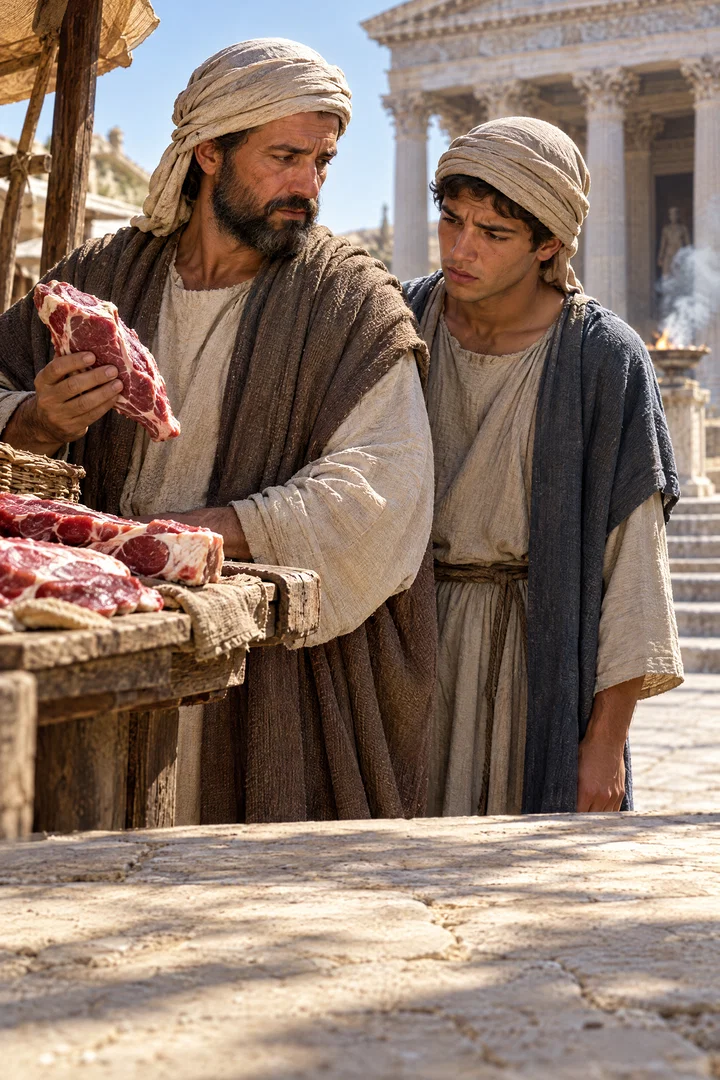
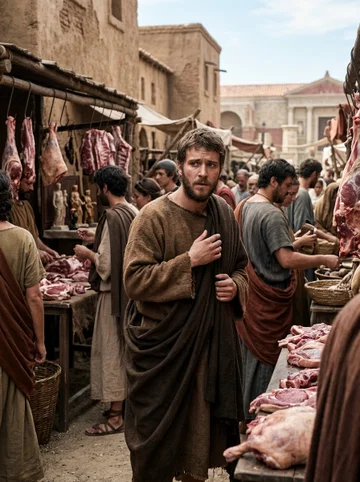
Cross-references
- 1 Corinthians 8:4
As concerning therefore the eating of those things that are offered in sacrifice unto idols, we know that an idol is nothing in the world, and that there is none other God but one.
An idol is nothing, so an offering to it cannot affect the meat.
- 1 Corinthians 10:31
Whether therefore ye eat, or drink, or whatsoever ye do, do all to the glory of God.
Eating what is sold is governed by doing all things to God’s glory.
- Romans 14:14-21
I know, and am persuaded by the Lord Jesus, that there is nothing unclean of itself: but to him that esteemeth any thing to be unclean, to him it is unclean.
Both address eating, conscience, and avoiding harm to another’s faith.
- 1 Timothy 4:4
For every creature of God is good, and nothing to be refused, if it be received with thanksgiving:
Both address liberty to eat all meats as clean.
- Leviticus 11:7-8
And the swine, though he divide the hoof, and be clovenfooted, yet he cheweth not the cud; he is unclean to you.
Swine remains unclean under the distinctions between clean and unclean meats.
- Acts 15:28-29
For it seemed good to the Holy Ghost, and to us, to lay upon you no greater burden than these necessary things;
The apostles’ instructions address food offered to idols and other restrictions for Gentile converts.
- Mark 7:15-19
There is nothing from without a man, that entering into him can defile him: but the things which come out of him, those are they that defile the man.
Jesus teaches that food entering a person does not defile him; defilement comes from within.
- Romans 14:2-3
For one believeth that he may eat all things: another, who is weak, eateth herbs.
Both address differing consciences about eating meat.
- 1 Corinthians 8:9
But take heed lest by any means this liberty of yours become a stumblingblock to them that are weak.
Freedom must not become a stumbling block to the weak.
- Matthew 15:11
Not that which goeth into the mouth defileth a man; but that which cometh out of the mouth, this defileth a man.
What enters the mouth does not defile, supporting eating without concern for conscience.
- Romans 14:14
I know, and am persuaded by the Lord Jesus, that there is nothing unclean of itself: but to him that esteemeth any thing to be unclean, to him it is unclean.
cited together as saying all meats are clean
- 1 Corinthians 8:13
Wherefore, if meat make my brother to offend, I will eat no flesh while the world standeth, lest I make my brother to offend.
Avoiding needless questions is balanced by care not to make a brother stumble.
- Exodus 34:15
Lest thou make a covenant with the inhabitants of the land, and they go a whoring after their gods, and do sacrifice unto their gods, and one call thee, and thou eat of his sacrifice;
The warning about eating sacrificial meat underlies Jewish scruples about market meat.
- 1 Timothy 4:5
For it is sanctified by the word of God and prayer.
limits every creature to food set apart
- 1 Timothy 4:3
Forbidding to marry, and commanding to abstain from meats, which God hath created to be received with thanksgiving of them which believe and know the truth.
Both texts concern food and reject abstaining from it as a matter of conscience.
- 1 Corinthians 10:32
Give none offence, neither to the Jews, nor to the Gentiles, nor to the church of God:
Eating without inquiry accompanies the rule against causing offense.
- Deuteronomy 14
Ye are the children of the LORD your God: ye shall not cut yourselves, nor make any baldness between your eyes for the dead.
gives God's list of clean and unclean
Commentary
Each commentary is drawn from primary sources: the writings of Ellen G. White and Adventist pioneers and periodicals. Each commentary is separate. Its own words are not a quotation; follow the references to read the source passages.
Ellen G. White
1 source
There is real common sense in diet reform in this counsel, and it calls for the subject to be studied broadly and deeply rather than narrowly enforced.MH 319.2 It is impossible to lay down one unvarying rule to regulate everyone's habits in eating.MH 319.2 No one is to make himself the standard for all, nor to criticize others because their practice is not in every respect like his own.MH 319.2
Not all can eat the same things, for what is palatable and wholesome to one person may be distasteful and even harmful to another.MH 319.2 This difference applies to milk, which some are unable to use while others thrive on it.MH 319.2 It applies also to peas and beans, which some cannot digest while others find them wholesome.MH 319.2 It applies likewise to the coarser grain preparations, which are good food for some while others cannot use them.MH 319.2
Sources
Pioneers and periodicals
23 sources
Paul answers whether believers may eat meat that may have been offered to idols, when in Corinth only part of sacrificial animals was offered and the rest was eaten or sold in the market like other meat.ST Aug 13, 1912ST Oct 19, 1888ST May 27, 1913 An idol is nothing, and offering food to gods that are no gods does not hurt or change the food itself, so whatever lawful and wholesome food is sold in the market may be bought and eaten without asking about its history for conscience' sake.ST Mar 19, 1894STST Apr 29, 1913 If the food is expressly pointed out as offered to an idol, it must not be eaten, abstaining for the sake of the other person's conscience lest eating be taken as approval of idol worship and wound those weak in conscience.ST Apr 29, 1913ST Dec 11, 1928ST Oct 19, 1888 This is not liberty to eat anything desired without limit, for it excludes what is evil in itself, filthy, unhealthful, unclean or expressly forbidden by God, and the distinction between clean and unclean animals made by God in Leviticus 11 and Deuteronomy 14 still stands.ST Sep 23, 1889ST Mar 19, 1894ST Apr 29, 1913ST Dec 11, 1928ST Aug 13, 1912 All eating and drinking is to be done to the glory of God, honoring the body as the temple of the Holy Spirit, exercising liberty with self-control and giving no occasion of stumbling to Jews or Greeks or the church of God.ST Sep 23, 1889ST Apr 29, 1913ST Dec 11, 1928
Words and Historical Setting
The word shambles means a market where meat was sold, a place where all kinds of provisions were kept for sale.STST May 27, 1913ST Dec 5, 1895 Swine's flesh and many other unwholesome foods were sold there.ST Dec 5, 1895 In Corinth all slaughter was done with reference to some god.ST May 27, 1913 In idol sacrifices only part of the animal was offered, while the remainder was eaten by the worshiper or sold in the market like other meat.ST Oct 19, 1888
The verse answers whether it is right to eat things that may have been offered to idols.ST Aug 13, 1912STST Apr 29, 1913ST May 27, 1913ST Dec 11, 1901 It does not decide whether the animal is clean or unclean under the law of God, nor whether foods are healthy or suitable for diet, nor between kinds of food such as beef or pork, venison or mutton, barley cakes or wheat bread.ST Aug 13, 1912ST May 27, 1913ST Dec 11, 1901ST Apr 5, 1905ST Dec 5, 1895 A buyer would buy only what he believed to be right, and the real question was not what kind of animal the meat came from but whether it had been offered to idols or not.ST Aug 13, 1912ST Gentile converts acted within the limited food restrictions given to them rather than the broader restrictions given to the Jews.ST Apr 5, 1905
The verse belongs to Paul's warning against falling into idolatry.RH Jul 21, 1868 Israel's wilderness experience is used there as an example and warning with spiritual lessons for later believers living in the last days, teaching beyond the facts of the narrative.ST Oct 24, 1878ST Jun 17, 1889 The bread and cup commemorate Christ's broken body, set in contrast to joining with Gentiles in eating bread offered to idols and drinking wine poured out or offered to demons.RH Jul 21, 1868 Christians cannot share in the Lord's table and the table of demons.RH Jul 21, 1868
Instruction for Conscience Sake
An idol is nothing to a well-instructed believer, and offering meat to gods that are no gods does not hurt, affect, or change the quality of the food itself.ST Mar 19, 1894STST Apr 29, 1913ST Dec 11, 1928ST May 27, 1913 The question is whether the meat had been offered to idols, not what kind of animal it came from, and those matters of clean and unclean are addressed elsewhere.STST May 27, 1913ST Dec 11, 1901 The offering does not change the food because the idol is nothing and has no significance to one who understands.ST Apr 29, 1913ST Dec 11, 1901ST Apr 5, 1905
Whatever proper, suitable, lawful, and wholesome food is sold in the market may be bought and eaten without asking about its history for conscience' sake.ST Sep 23, 1889ST Mar 19, 1894STST Dec 11, 1928ST May 27, 1913 The same rule applies to meat set before believers by an unbeliever.ST Dec 11, 1928 Eating it without knowing it was offered to an idol is permissible, and knowing it is permissible when no one objects.RH Jun 27, 1878 In idol sacrifices only part of the animal was offered while the remainder was eaten by the worshiper or sold in the market like other meat, and such meat is as lawful to eat as any other meat unless the exception below applies.ST Oct 19, 1888
This permission is not liberty to use anything indiscriminately or to eat and drink anything desired or without limit.ST Sep 23, 1889ST Dec 11, 1928 Food that is evil in itself, filthy, unhealthful, unclean, corrupt, vile, or expressly forbidden by command of God is excluded, and the verse does not make every kind of meat fit for food nor give liberty to eat every kind of meat.ST Dec 11, 1928ST Apr 5, 1905RH Jun 27, 1878ST Apr 30, 1896 The permission concerns food that is suitable and not evil in itself, with meat assumed to be proper food.ST Mar 19, 1894ST If there is reason to suspect that food is bad, it is right to ask.ST Mar 19, 1894 A Christian of himself may eat freely so far as the idol affecting the food is concerned, since the offering does not hurt the food.ST Apr 30, 1896
If the food is expressly pointed out as having been offered to an idol, the believer must not eat it.ST Apr 29, 1913ST Dec 11, 1928ST Oct 19, 1888ST May 27, 1913ST Apr 5, 1905 The abstaining is for the sake of the other person's conscience and scruples rather than his own.RH Jun 27, 1878 Eating then would be understood as giving countenance to idol worship.ST Oct 19, 1888 If the question of idol sacrifice is raised, the meat is not to be eaten.ST May 27, 1913 Believers should refrain if eating it troubles another person's conscience.ST Dec 11, 1901
The restraint protects those with weak conscience, especially converts from idolatry with strong memories and associations who thought eating acknowledged the idol and were defiled in conscience by the thought of eating to the honor of a deity.ST Mar 19, 1894ST Dec 11, 1928ST May 27, 1913 Asking about idol history could trouble those whose former idolatry makes them acutely conscientious about it.ST Apr 5, 1905 Eating could wound them, injure a weak conscience, cause a weak brother to stumble, confuse them, lead them toward apostasy, mislead them about what is right, or hinder the gospel when a heathen takes the act as approval of idol worship.ST Oct 19, 1888ST May 27, 1913 The limit is love for a fellow believer: if a brother feels eating makes the eater a partaker in idol worship, do not eat for his sake.ST Apr 30, 1896 Food itself does not commend a person to God, and eating does not bring salvation, so Paul would practice self-denial over disputed freedom rather than encourage another to act against conscience.ST Jun 8, 1915
The course is governed by doing all eating and drinking and everything else to the glory of God.ST Sep 23, 1889ST Apr 29, 1913ST Dec 11, 1928ST May 27, 1913ST Aug 25, 1909 All eating and drinking must honor the body as the temple of the Holy Spirit and keep fitness to serve Him.ST Apr 29, 1913ST Dec 11, 1928 Even lawful, wholesome things must be used with self-control and care not to become a stumbling block to others, remaining firm in principle and considerate of others' weaknesses.ST Sep 23, 1889 No occasion of stumbling is to be given to Jews or to Greeks or to the church of God.ST May 27, 1913ST Aug 25, 1909 Christian freedom should not become bondage, but is exercised alongside care to set a good example for those who are weak.ST Jun 8, 1915
Doctrine and Daily Application
The verse does not remove the division between clean and unclean animals, nor does it make unclean food clean or render every kind of meat fit for eating, although it is put forward to prove that all meats are clean and that pork may be eaten.ST Apr 29, 1913ST Aug 13, 1912ST Dec 5, 1895 That division remains because God made it and not man, with unclean animals unclean in their very nature and not good for human food nor to be used for sacrifice, as listed in Leviticus 11 and Deuteronomy 14.ST Aug 13, 1912 The market it speaks of was a place where all kinds of provisions were kept for sale, so swine's flesh and many other unwholesome foods were sold there, yet its direction to eat without asking questions for conscience' sake does not decide between kinds of food such as beef or pork, venison or mutton, barley cakes or wheat bread.ST Dec 5, 1895 The only question of conscience it sets aside is whether the food had been offered to an idol, since that fact makes no difference to the food itself, so market food is to be bought and eaten without inquiry on that point unless eating would cause a weaker brother to stumble, and food choices should serve God's glory and fitness to serve Him.ST Apr 29, 1913ST Dec 5, 1895 The verse belongs with what Jesus teaches in Matthew 15 and Mark 7 and Paul teaches in Romans 14 against making righteousness by washings and abstinences from meats and outward ceremonialism, teaching primarily and fundamentally that the heart must first be right before God and that if the heart is right all else will be right, for the kingdom of God is not meat and drink but righteousness and peace and joy in the Holy Ghost.ST Aug 13, 1912 It concerns meat that may have been offered to idols and not what kind of animal it came from, and therefore has little bearing on the present-day meat question, for although the Bible allowed certain clean flesh foods there are now reasons to discard some of them.ST
The verse carries the lesson of Israel's wilderness experience as a warning for later believers and applies it to the duty of caring for the body and obeying physical laws.ST Oct 24, 1878 Its instruction about eating food sold in the market is relevant to considering food choices and their effects on health, as in Daniel's choice of food.RH Feb 20, 1913 It does not permit eating or drinking without limit, but read alongside Paul's teaching that eating and drinking should glorify God it requires believers to govern their appetites and avoid choices that gratify fleshly desires.RH Mar 31, 1868 What people consume can affect their religious life, since liquor defiles and drunkenness excludes a person from God's kingdom.RH Mar 31, 1868
Those endeavoring to eat and drink to the glory of God for strength to do His work may eat what is set before them without raising questions for conscience' sake even when they must at times partake of food prepared by pork eaters that may contain lard or other swine products that cannot be entirely avoided, for God takes His children where they are and does not demand impossibilities but accepts those who live according to the best light they have.ST Mar 18, 1913 The same principle of keeping out for conscience' sake is applied to avoiding spirit circles, by which those who keep out are guarded from the deception of lying spirits.ST Apr 22, 1875
Sources