1 Kings 13:5
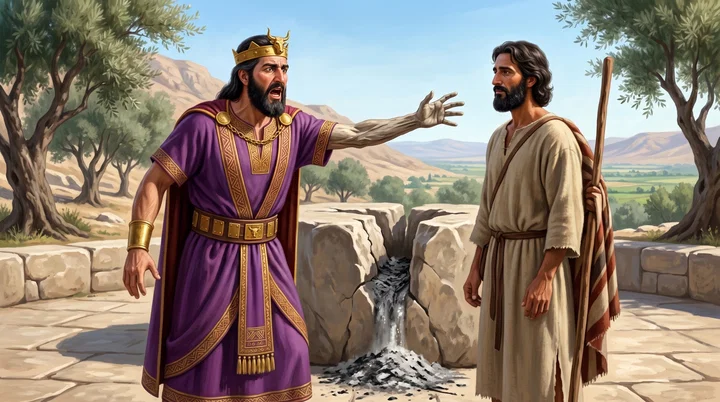
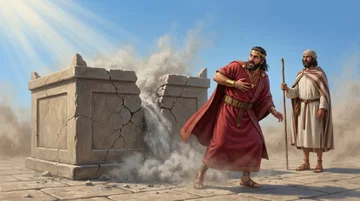
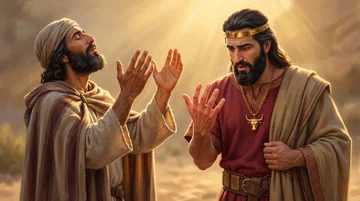
The altar also was rent, and the ashes poured out from the altar, according to the sign which the man of God had given by the word of the LORD.
Translations
American King James Version, King James Version, Webster Bible, Revised Version
The altar also was rent, and the ashes poured out from the altar, according to the sign which the man of God had given by the word of the LORD.
The altar also was rent, and the ashes poured out from the altar, according to the sign which the man of God had given by the word of the Lord.
The altar also was rent, and the ashes poured out from the altar, according to the sign which the man of God had given by the word of Jehovah.
and the altar is rent, and the ashes poured forth from the altar, according to the sign that the man of God had given by the word of Jehovah.
And the altar was rent, and the ashes poured out from the altar, according to the sign that the man of God had given by the word of Jehovah.
Moreover, the altar, was rent, and the ashes poured out from the altar,—according to the sign which the man of God had given, by the word of Yahweh.
Berean Standard Bible, Majority Standard Bible
And the altar was split apart, and the ashes poured out, according to the sign that the man of God had given by the word of the LORD.
The altar was also split apart, and the ashes poured out from the altar, according to the sign which the man of God had given by the LORD’s word.
And the altar was broken and the burned waste on it overturned; this was the sign which the man of God had given by the word of the Lord.
The altar also claue asunder, and the ashes fell out from the altar, according to the signe, which the man of God had giuen by the commandement of the Lord.
Douay-Rheims (Challoner revision)
The altar also was rent, and the ashes were poured out from the altar, according to the sign which the man of God had given before in the word of the Lord.
Pictures
Cross-references
- 1 Kings 13:21-24
And he cried unto the man of God that came from Judah, saying, Thus saith the LORD, Forasmuch as thou hast disobeyed the mouth of the LORD, and hast not kept the commandment which the LORD thy God commanded thee,
The man of God is deceived into disobeying the Lord’s command and is killed.
- 1 Kings 12:32-33
And Jeroboam ordained a feast in the eighth month, on the fifteenth day of the month, like unto the feast that is in Judah, and he offered upon the altar. So did he in Beth-el, sacrificing unto the calves that he had made: and he placed in Beth-el the priests of the high places which he had made.
Jeroboam’s altar and worship at Bethel are the setting for the sign.
- 2 Kings 23:15-16
Moreover the altar that was at Beth-el, and the high place which Jeroboam the son of Nebat, who made Israel to sin, had made, both that altar and the high place he brake down, and burned the high place, and stamped it small to powder, and burned the grove.
Josiah destroys and defiles Bethel’s altar, fulfilling the prophecy against it.
- 1 Kings 13:18
He said unto him, I am a prophet also as thou art; and an angel spake unto me by the word of the LORD, saying, Bring him back with thee into thine house, that he may eat bread and drink water. But he lied unto him.
The false prophet’s lie tempts the man of God to disobey.
- 1 Kings 12:28
Whereupon the king took counsel, and made two calves of gold, and said unto them, It is too much for you to go up to Jerusalem: behold thy gods, O Israel, which brought thee up out of the land of Egypt.
The altar stood before the calf image at Bethel.
- 1 Kings 13:33-34
After this thing Jeroboam returned not from his evil way, but made again of the lowest of the people priests of the high places: whosoever would, he consecrated him, and he became one of the priests of the high places.
Jeroboam persisted in appointing priests, bringing judgment on his house.
- 1 Kings 13:9
For so was it charged me by the word of the LORD, saying, Eat no bread, nor drink water, nor turn again by the same way that thou camest.
states the lodging command kept literally
- 1 Kings 12:27
If this people go up to do sacrifice in the house of the LORD at Jerusalem, then shall the heart of this people turn again unto their lord, even unto Rehoboam king of Judah, and they shall kill me, and go again to Rehoboam king of Judah.
Jeroboam sought to turn Israel away from Jerusalem’s sanctuary.
Commentary
Each commentary is drawn from primary sources: the writings of Ellen G. White and Adventist pioneers and periodicals. Each commentary is separate. Its own words are not a quotation; follow the references to read the source passages.
Ellen G. White
9 sources
The altar at Bethel was split apart immediately and its ashes poured out exactly as the man of God had announced, and this fulfilled the sign given by the word of the Lord.Ms 153, 1906Ms 1, 1912, par. 9–10PK 101.3–4RH Jul 24, 1913Ms 1, 1912, par. 17 The rent altar proved the message, prophecy, and warning concerning the altar true and confirmed that it had come by the word of the Lord.Ms 153, 1906Ms 1, 1912, par. 9–10PK 101.3–4RH Jul 24, 1913Ms 1, 1912, par. 17 The sign confirmed the prophet's message against Jeroboam's false worship.PK 102.3
The rent altar was a public sign of God's displeasure with Israel's idolatrous worship, false worship, apostasy, and sacrifices.PK 102.4Ms 153, 1906, par. 7–9PK 102.3PK 107.1 It rebuked that worship as an abomination to Him.Ms 153, 1906, par. 7–9 The sign was meant to interrupt the proceedings, awaken awe and repentance, and warn the king and the people where their apostasy would lead.PK 102.4Ms 153, 1906, par. 7–9 It warned what would happen to their supposedly sacred altars and warned Jeroboam against persisting in disobedience and continuing in wrongdoing.Ms 153, 1906, par. 7–9RH Jul 24, 1913PK 107.1
The king's attempt to seize the man of God was restrained when the altar was destroyed.Ms 153, 1906, par. 7–9 Even then some Israelites remained open to the Holy Spirit's influence.PK 102.4 Together with the king's stricken arm and the disobedient prophet's death, the sign should have led Jeroboam to repent, abandon the plans that were turning Israel away from worshiping God, and turn from his evil ways to serve the Lord.PK 102.3Ms 1, 1912, par. 17 But he hardened his heart and chose his own way.PK 102.3
Sources
Pioneers and periodicals
29 sources
The altar at Bethel split apart and its ashes spilled out exactly as the man of God from Judah had announced, confirming his condemnation of the king while Jeroboam was offering upon it as his own high priest.ST Dec 2, 1880RH May 25, 1916ST Sep 29, 1898ST Dec 7, 1882 Jeroboam had been given the ten tribes by God yet once enthroned set up golden calves at Bethel and Dan as a political device to keep the people from Jerusalem, still professing to honor Jehovah by them but making Israel to sin from that time forward.ST Dec 7, 1882ST Apr 26, 1910 The rending was a token of divine displeasure with that rival, unauthorized worship, proving the word true, humbling the king and warning him and the people against persisting in apostasy.RH Jul 17, 1913RH Jul 17, 1913RH Apr 7, 1910 The word spoken against the altar reached beyond that day and was fulfilled in the reign of Josiah about three hundred and forty years afterward just as the Lord had declared.ST May 10, 1910ST Jun 3, 1913ST May 20, 1913 God requires exact, unquestioning obedience to His explicit command until He Himself revokes it, so the messenger who after faithful delivery trusted a lying prophet, ate and drank where he was forbidden, and returned another way was justly visited and slain by a lion on his way home.RH May 13, 1875ST Mar 31, 1898ST Dec 7, 1882ST Mar 4, 1880ST Oct 23, 1884
Setting and Immediate Sign
The verse belongs to the wholly historical record of 1 Kings 3-21, grouped with chapters 13-15, and shares its character as a sad record full of important lessons.ST Apr 26, 1910 It stands in the period of general downward moral tendency from David onward with times of reviving, showing that whenever the people sought God He wrought for and through them abundantly.ST Apr 26, 1910 It shows the responsibility of leaders, since faithful kings and priests molded the people while unfaithful leaders caused the people to fail with them.ST Apr 26, 1910
The verse stands in the separation of the ten tribes of Israel from Judah and Benjamin and the election of Jeroboam as king of the ten tribes.ST Dec 7, 1882 Although Jehovah had given Jeroboam the kingdom, once firmly seated on his throne Jeroboam deliberately set at naught the commands of the God who had given him his empire, showing genius but a defect in reverence for God.ST Dec 7, 1882 He set up the calves as a purely political measure to hold the people from going up to Jerusalem to worship.ST Apr 26, 1910 He still believed in the great Jehovah, and the calves were meant as representatives of Jehovah to the people, but his reign in that worship was a curse to the ten tribes from that time forward, his act made Israel to sin, and that sin persisted notwithstanding warnings like this sign.ST Apr 26, 1910
The verse belongs to the account of the man of God sent from Judah to Bethel to cry against Jeroboam's sin of making two golden calves and setting one at Bethel and one at Dan for the people to worship.RH May 13, 1875 He had received clear directions from God and was responsible for obeying them.ST Dec 24, 1885 God charged him not to eat bread nor drink water nor lodge in that place nor return by the same way he came.ST Dec 24, 1885RH May 13, 1875 The account also shows that God gave him a strict command and that he later disobeyed it after trusting the word of another prophet.ST Oct 23, 1884
The verse records the immediate, exact, literal fulfillment of the sign the man of God had given by the word of the Lord.RH May 25, 1916RH Apr 6, 1905 The altar at Bethel was rent, split and broken apart, and its ashes poured and spilled out.ST Dec 2, 1880RH May 25, 1916ST Feb 7, 1911RH Dec 14, 1905 This confirmed the prediction spoken against the king, the altar, and Jeroboam's false worship, attesting his testimony as true and showing that his words came from the Lord.ST Dec 2, 1880ST Feb 7, 1911RH Apr 6, 1905RH Dec 14, 1905 The haughty king was humbled, and the prophet's prayer was heard.ST Dec 2, 1880
The rending of the altar and pouring out of its ashes occurred together with Jeroboam's attempt to seize the prophet and the paralysis of his arm.ST Sep 29, 1898 It stands with the withering and restoring of Jeroboam's hand as the miraculous sign given by the word of the Lord through the man of God from Judah.ST Dec 7, 1882 It confirmed his condemnation of Jeroboam's apostasy and sacrilege while the king was offering upon the altar at Bethel in his capacity as high priest.ST Dec 7, 1882 The event demonstrates that the Lord's word was literally accomplished.ST Sep 29, 1898
Prophecy Against False Worship
The chapter is God's prophecy against the altar at Bethel.ST May 20, 1913 The splitting of the altar and pouring out of its ashes was the sign given by the word of the Lord, and it came to pass exactly as announced against Jeroboam's altar.ST May 10, 1910ST Jun 3, 1913ST May 20, 1913ST Dec 7, 1882 The prophecy connected with this sign was fulfilled by Josiah, in Josiah's time and reign, about 340 years later, hundreds of years later, just as the Lord had declared.ST May 10, 1910ST Jun 3, 1913ST Dec 7, 1882
The immediate rending of the altar and spilling of its ashes confirmed the warning against unauthorized worship.RH Jul 17, 1913 It was a sign of God's displeasure with Israel's idolatrous worship and with setting up this altar as a rival to the true sanctuary altar at Jerusalem.RH Jul 17, 1913RH Apr 7, 1910 The rent altar was evidence that the prophecy was true, showing that the king's defiance did not go unchallenged.RH Jul 17, 1913RH Jul 24, 1913 It was a warning meant to check the people's apostasy and to warn Jeroboam against persisting in disobedience.RH Jul 17, 1913RH Jul 24, 1913
Obedience Tested by Deception
The rending of the altar with its ashes poured out was the fulfillment of the sign the man of God had given by the word of the Lord, and it shows that God's word was indeed spoken through him even though he became disobedient.ST Oct 1, 1894ST Dec 26, 1892 God visits His stated judgments in the manner laid down and for the cause assigned, and He remains steadfast in what He has said.ST Dec 7, 1882ST Dec 7, 1882 He insists upon exact obedience in every particular, requiring unquestioning obedience rather than obedience altered to suit human choice, including obedience to the prescribed time of His commands.ST Mar 31, 1898ST Dec 7, 1882ST Dec 7, 1882 His condemnation of the course of the man sent to Bethel and His visitation of wrath upon him for disobedience was just and reasonable, not harsh, unreasonable, or unjust, and the account stands as a lesson for believers to apply to their own lives.ST Mar 31, 1898ST Dec 7, 1882
The command not to eat bread, drink water, or lodge in that place was as explicit as words could make it.ST Dec 7, 1882 It was the business of the one commanded to carry it out to the letter until the same God who gave it revoked it with equal explicitness and emphasis.ST Dec 7, 1882 Safety lay in waiting for an explicit Thus saith the Lord from God Himself, not in listening to an irresponsible party whom God never commanded him to listen to and whom the devil controlled.ST Dec 7, 1882 Though the man was deceived by one who came to him claiming to be a prophet, men are sometimes responsible for having been deceived.ST Dec 7, 1882
The man was punished for believing that God had changed a command given even to one individual, which warns against treating a command from God as changeable through a claimed divine message.ST Dec 3, 1894 The breaking of the altar and the spilling of its ashes attested that his warning was true, yet a sign confirming God's command did not make it right to accept a later message that contradicted that command.RH Mar 11, 1873 While going home another way he was persuaded by an old lying, false prophet to return and eat bread and drink where the Lord forbade him, trusting the word of another prophet.RH May 13, 1875ST Mar 4, 1880ST Oct 23, 1884 He had received a strict charge not to eat bread nor drink water nor lodge in that place nor return by the same way he came, having been sent from Judah to cry against Jeroboam's sin of making two golden calves and setting one at Bethel and one at Dan for worship, and he was righteous and in favor with God when sent.RH May 13, 1875ST Oct 23, 1884
Because he ate and drank where the Lord forbade him, in violation of God's positive command, his carcass would not come to the sepulcher of his fathers.RH May 13, 1875 He consequently lost his life, being slain by a lion on his return, and he died in his sin.RH May 13, 1875ST Mar 4, 1880 Having violated God's command after being righteous, he fell from grace and must suffer the second death.RH May 13, 1875
Sources