1 Kings 19:3
And when he saw that, he arose, and went for his life, and came to Beer-sheba, which belongeth to Judah, and left his servant there.
Translations
And when he saw that, he arose, and went for his life, and came to Beersheba, which belongs to Judah, and left his servant there.
King James Version, KJV Cambridge Paragraph Bible, Webster Bible, Revised Version, American Standard Version
And when he saw that, he arose, and went for his life, and came to Beer-sheba, which belongeth to Judah, and left his servant there.
And he feareth, and riseth, and goeth for his life, and cometh in to Beer-Sheba, that [is] Judah's, and leaveth his young man there,
And when he saw [ that], he arose, and went for his life, and came to Beer-sheba, which belongs to Judah, and left his servant there.
And, when he saw [that], he arose, and went for his life, and came to Beer-sheba, which belongeth to Judah,—and left his servant there.
Berean Standard Bible, Majority Standard Bible
And Elijah was afraid and ran for his life. When he came to Beersheba in Judah, he left his servant there,
When he saw that, he arose and ran for his life, and came to Beersheba, which belongs to Judah, and left his servant there.
And he got up, fearing for his life, and went in flight, and came to Beer-sheba in Judah, parting there from his servant;
When he sawe that, he arose, and went for his life, and came to Beer-sheba, which is in Iudah, and left his seruant there.
Douay-Rheims (Challoner revision)
Then Elias was afraid, and rising up he went whithersoever he had a mind: and he came to Bersabee of Juda, and left his servant there,
Pictures
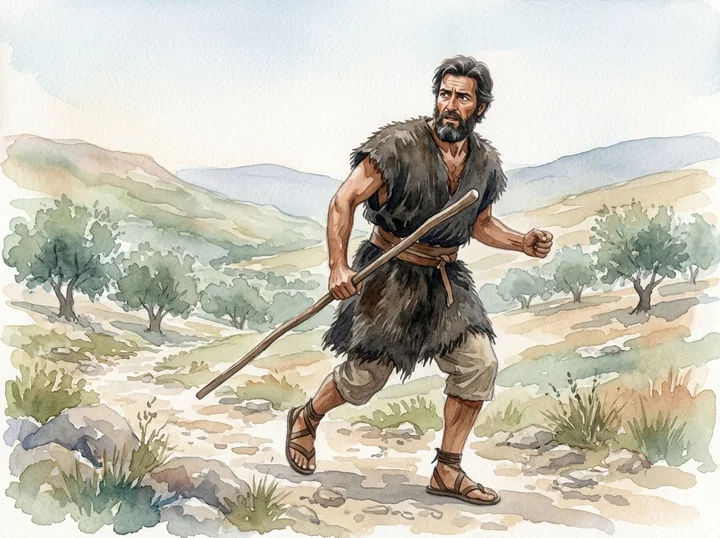
Cross-references 20 of 26
- 1 Kings 18:20-40
So Ahab sent unto all the children of Israel, and gathered the prophets together unto mount Carmel.
Elijah’s courageous victory over Baal’s prophets on Carmel precedes his flight.
- 1 Kings 17:3
Get thee hence, and turn thee eastward, and hide thyself by the brook Cherith, that is before Jordan.
contrasts God-sent stay at Cherith with flight
- 1 Kings 18:46
And the hand of the LORD was on Elijah; and he girded up his loins, and ran before Ahab to the entrance of Jezreel.
God gave Elijah strength to run before Ahab’s chariot, contrasting with his later flight.
- 1 Kings 19:9
And he came thither unto a cave, and lodged there; and, behold, the word of the LORD came to him, and he said unto him, What doest thou here, Elijah?
God asks Elijah why he is there after his flight.
- 2 Kings 2:11
And it came to pass, as they still went on, and talked, that, behold, there appeared a chariot of fire, and horses of fire, and parted them both asunder; and Elijah went up by a whirlwind into heaven.
Elijah fled for his life but was later taken to heaven without dying.
- James 5:17
Elias was a man subject to like passions as we are, and he prayed earnestly that it might not rain: and it rained not on the earth by the space of three years and six months.
Elijah’s fearful flight shows he shared ordinary human frailty.
- 1 Kings 18:40
And Elijah said unto them, Take the prophets of Baal; let not one of them escape. And they took them: and Elijah brought them down to the brook Kishon, and slew them there.
slaying priests provoked Jezebel's threat
- 1 Kings 18:17-18
And it came to pass, when Ahab saw Elijah, that Ahab said unto him, Art thou he that troubleth Israel?
Elijah boldly rebukes Ahab for forsaking God’s commandments, despite later fleeing in terror.
- 1 Kings 19:15-17
And the LORD said unto him, Go, return on thy way to the wilderness of Damascus: and when thou comest, anoint Hazael to be king over Syria:
God sends Elijah back to his work with a new charge, including judgment on Ahab’s house and Jezebel.
- 1 Kings 17:1
And Elijah the Tishbite, who was of the inhabitants of Gilead, said unto Ahab, As the LORD God of Israel liveth, before whom I stand, there shall not be dew nor rain these years, but according to my word.
Elijah’s earlier message to Ahab contrasts with his later flight from danger.
- 1 Kings 19:11-13
And he said, Go forth, and stand upon the mount before the LORD. And, behold, the LORD passed by, and a great and strong wind rent the mountains, and brake in pieces the rocks before the LORD; but the LORD was not in the wind: and after the wind an earthquake; but the LORD was not in the earthquake:
Elijah’s flight leads to a theophany at Horeb, where he communes with God.
- 1 Kings 17:8-9
And the word of the LORD came unto him, saying,
God directs Elijah to the widow of Sarepta.
- 1 Kings 19:8
And he arose, and did eat and drink, and went in the strength of that meat forty days and forty nights unto Horeb the mount of God.
Spirit-given strength sustains Elijah’s forty-day journey after his flight.
- 1 Kings 19:14
And he said, I have been very jealous for the LORD God of hosts: because the children of Israel have forsaken thy covenant, thrown down thine altars, and slain thy prophets with the sword; and I, even I only, am left; and they seek my life, to take it away.
The same word is listed as meaning life.
- 1 Kings 19:10
And he said, I have been very jealous for the LORD God of hosts: for the children of Israel have forsaken thy covenant, thrown down thine altars, and slain thy prophets with the sword; and I, even I only, am left; and they seek my life, to take it away.
The same word is listed as meaning life.
- 1 Kings 18:4
For it was so, when Jezebel cut off the prophets of the LORD, that Obadiah took an hundred prophets, and hid them by fifty in a cave, and fed them with bread and water.)
Jezebel persecuted and killed the Lord’s prophets.
- 2 Kings 1:9-14
Then the king sent unto him a captain of fifty with his fifty. And he went up to him: and, behold, he sat on the top of an hill. And he spake unto him, Thou man of God, the king hath said, Come down.
Later, bands sent to seize Elijah show how powerless his enemies were to harm him.
- Malachi 4:5
Behold, I will send you Elijah the prophet before the coming of the great and dreadful day of the LORD:
Promises an Elijah work before the day of the Lord.
- Romans 11:4
But what saith the answer of God unto him? I have reserved to myself seven thousand men, who have not bowed the knee to the image of Baal.
Paul recalls the seven thousand who remained faithful to God.
- 1 Kings 18:21
And Elijah came unto all the people, and said, How long halt ye between two opinions? if the LORD be God, follow him: but if Baal, then follow him. And the people answered him not a word.
Elijah challenges Israel to choose whom to serve.
Commentary
Each commentary is drawn from primary sources: the writings of Ellen G. White and Adventist pioneers and periodicals. Each commentary is separate. Its own words are not a quotation; follow the references to read the source passages.
Ellen G. White
30 sources
After Carmel and his run before Ahab's chariot to Jezreel, Ahab told Jezebel what had happened and she in fury for Baal sent word with an oath to make him as the slain prophets of Baal by the next day, so on seeing the danger he arose and fled for his life to Beer-sheba in Judah where he left his servant and went on alone into the desert.PK 155Ms 29, 1911, par. 41PK 159.1–3PK 173.1RH Oct 7, 1873 His flight was hasty and unsent, with no word from God telling him to flee and no clear errand or direction, leaving the work given him at Samaria, Cherith, Sarepta, Carmel and Jezreel with his voice silenced and himself wandering in sorrow and uncertainty.3T 289.1–2Ms 6, 1889, par. 53–54RH Oct 16, 19133T 290.1RH Oct 30, 1913 Worn and exhausted by long struggle through drought, famine and opposition, with strength failed and will weakened, he gave way to fear of death and bitter disappointment that Israel had not turned and Jezebel had not lost influence as he expected, until his life-work seemed defeated.RH Oct 7, 1873Ms 6, 1889, par. 53–54ED 151.1–2ST Nov 17, 1909PK 173.3 In that dark hour his faith and courage forsook him, he lost sight of God's care and forgot the God who had sent fire and rain and had before hidden him from hatred and search, running as though pursued without waiting for the Lord to speak or to tell him where to find refuge when he should have appealed to God and trusted for protection and another victory.3T 289.1–2RH Oct 7, 1873Lt 62, 1900, par. 3–6 Yet he was a man of like passions and not above human frailty, and his fall is faithfully recorded as warning against unbelief and encouragement to the desponding that God has not forgotten His threatened servant in trial, but cares for him, refines him through testing, and calls him back to duty to remain at his post and trust wholly in the Lord rather than fear when all looks dark.RH Oct 16, 1913RH Oct 30, 1913PK 159.1–3ST Nov 17, 1909RH Oct 7, 1873
Setting and Flight Details
The verse continues the same sequence after Carmel, following Elijah's run before Ahab's chariot to Jezreel.PK 155PK 173.1 It shows him fleeing for his life from the rage of an enraged woman, becoming a weary, travel-worn fugitive crushed by disappointment as his life-work seemed threatened with defeat.PK 173.1
After Ahab returned to the palace and told Jezebel what had taken place, she, being devoted to the service of Baal and jealous for the glory of her god, was roused to fury by his words.Ms 29, 1911, par. 41 She sent word with an oath that by the next day Elijah would be made as one of the slain prophets of Baal whom he had slain for slaying the idolatrous prophets.Ms 29, 1911, par. 41PK 159.1–3RH Oct 7, 1873 The verse thus illustrates the power and influence of one woman devoted to an evil work.Ms 29, 1911, par. 41
On receiving the oath to kill him, he saw the danger, arose and started up bewildered from sleep in night and pouring rain and darkness on every side, and fled rashly for his life as though pursued by the avenger of blood behind him.RH Oct 7, 1873PK 159.1–3RH Oct 7, 1873 He fled to Beer-sheba, which belongeth to Judah, traveling to Beersheba in Judah.3T 289.1–2RH Oct 7, 1873RH Oct 16, 1913 There he left his servant behind on the way, and went on alone a day's journey into the wilderness, until in the morning he was alone on a dreary desert far from men.3T 289.1–2RH Oct 7, 1873RH Oct 16, 1913PK 159.1–3RH Oct 7, 1873 His flight began when fear and discouragement made him lose his hold on God and lose sight of God's protection, despite undaunted courage on Carmel and many blessed evidences of God's loving care.RH Oct 16, 1913RH Oct 7, 1873PK 160.1–161.1
His flight was hasty and unsent, with no errand from God to do there and no clear direction or purpose for his steps, wandering in sorrow, confusion and uncertainty.Ms 6, 1889, par. 53–54RH Oct 30, 1913PK 168.1Ms 6, 1889, par. 55–56 God had not told him to flee at that time and had given no warning to flee nor word to speak telling him where to find asylum.RH Oct 7, 18733T 290.1 He had left the work God had commissioned him to do in carrying a message to Ahab in Samaria, in going to the brook Cherith, in going to the widow of Sarepta, in standing before the idolatrous priests on Carmel, and in guiding the king's chariot by God-given strength to the gate of Jezreel, so that his voice was silenced and he was not actively engaged in service.RH Oct 30, 1913PK 168.1
Causes of Elijah's Failure
After standing alone for God on Carmel through drought, famine and opposition, Elijah was overcome by weariness, weakness and exhaustion from his long struggle. ED 151.1–2ST Nov 17, 1909PK 173.3RH Oct 30, 1913 After the terrible day when idolatry was cast down and rain testified to blessing after three and a half years of famine, his strength failed, his will power weakened, and his faith ceased to repose in God. ST Nov 17, 1909DA 120.2RH Oct 30, 1913 Though he had stood undaunted before Ahab and faced the whole nation with the four hundred and fifty prophets of Baal at their head, that reaction when pressure was removed left him vulnerable to temptation. RH Oct 30, 1913
Fear of death overcame his faith in a moment of weariness, and fear and discouragement made him lose his hold on God. PK 173.3PK 160.1–161.1RH Oct 30, 1913 Bitter disappointment, discouragement and murmuring joined it, for Israel had failed to turn to God as he had expected. RH Oct 7, 1873Lt 62, 1900, par. 3–6Ms 6, 1889, par. 53–54 He had looked for the display of divine power to bring reformation and Israel's loyalty and Jezebel's loss of influence over Ahab, and when it did not his life-work seemed threatened with defeat until he saw nothing desirable in life. RH Oct 7, 1873Lt 62, 1900, par. 3–6RH Oct 30, 1913PK 173.1
In that dark hour his faith and courage forsook him and he lost sight of God's care and protection. 3T 289.1–2RH Oct 7, 1873Lt 62, 1900, par. 3–6RH Oct 16, 1913PK 159.1–3 He did not look by faith to God's promises or remember God's faithfulness in past emergencies. Lt 62, 1900, par. 3–6Ms 6, 1889, par. 53–54 He forgot that God was the same all-powerful and pitiful God who had granted fire from heaven and rain, and who three years before had directed his course to a place of refuge from Jezebel's hatred and Ahab's search. RH Oct 7, 1873PK 159.1–3
Instead he ran to save himself rashly, as though pursued by the avenger of blood, without waiting for the Lord to speak. 3T 289.1–2RH Oct 7, 1873PK 159.1–3RH Oct 7, 1873 He did not wait to be told to flee or where to find asylum, though God had before warned him when to flee. 3T 289.1–2RH Oct 7, 18733T 290.1 He should have remained at his post and met the threat with appeal to God for protection and trust in divine defense. 3T 289.1–2RH Oct 7, 1873Lt 62, 1900, par. 3–6RH Oct 16, 1913 Had he waited with faith and patience God would have shielded him and defended him, and would have given another signal victory and lasting reform in Israel in sending judgment upon Jezebel. RH Oct 7, 1873Lt 62, 1900, par. 3–6RH Oct 16, 19133T 290.1
He was not above the frailties of mankind but a man of like passions, subject to temptation and despondency despite blessed evidences of love and care. PK 159.1–3RH Oct 7, 1873 His strong spirit sank under temptation in fearful trial, proving it nothing strange for men of spiritual power in self-sacrificing labor to become discouraged and desponding when pressed beyond measure. RH Oct 30, 1913RH Oct 7, 1873 This shows Satan's policy of assailing with fiercest temptations in the time of greatest weakness, by which he gains victory over those who have stood long and valiantly for the right. DA 120.2RH Oct 30, 1913 He takes advantage of human weakness, attacks weak points of character, seeks to shake confidence in God, and tempts to distrust God and question His love whenever one is encompassed with clouds, perplexed by circumstances, or afflicted by poverty or distress.
By that one yielding to human weakness and letting go of faith he cut short his life-work, so that the work he had begun he was not to complete. ED 151.1–2ST Nov 17, 1909 He turned away from the greater victories opened by the triumph on Carmel into a weaker position, needing to learn to trust wholly in God. ST Nov 17, 1909PK 167.2 God bade him anoint another to be prophet in his stead. ED 151.1–2ST Nov 17, 1909 The episode also illustrates the power and influence of one woman devoted to an evil work, Jezebel being devoted to the service of Baal and jealous for her god's glory. Ms 29, 1911, par. 41
Encouragement and Duty Lessons
Even when the faithful servant is threatened and must flee for his life to Beer-sheba in Judah and leave his servant there, after Jezebel threatened him in danger, that danger does not mean he is forgotten but that he remains under care in severe trial.4SP 445.2–446.1Ms 6, 1889, par. 55–56GC 626.2–627.1GC88 626.1–3 Though shortly before he had acted with zeal and strength to call apostate Israel to choose between God and Baal, fear and disappointment over Israel's failure to turn could overwhelm trust in promises and past faithfulness, leaving him weak and wandering in uncertainty with no course directed by a particular word from the Lord, yet he was not forgotten.Ms 6, 1889, par. 55–56 He is thus an example of God's faithful people facing severe trials while remaining under God's care.GC88 626.1–3
God had marked faithful heart-service in the unpleasant work of reproving sin, when as a prophet walking with God he had to flee from place to place to save his life, hunted like wild beasts that men might destroy him.SG1 40.2 His flight from Jezebel's threats began a period of discouragement and solitude in the wilderness where weariness and weakness overcame faith and he prayed to die, and by that one yielding to human weakness and letting go of faith he cut short the work he had begun so that he was not to complete it and another was bidden to be anointed prophet in his stead.ED 151.1–2ST Nov 17, 1909 This came after standing alone for God on Carmel, where through faith idolatry was cast down and blessed rain testified to showers of blessing waiting for Israel after three and a half years of famine and faithful warning against national idolatry.ST Nov 17, 1909 Yet God did not leave him to perish in discouragement and solitude in the wilderness nor to descend to the tomb, but angels bore him in glory and triumph to heaven, giving him not descent to the tomb but ascent with angels to the presence of glory.ED 151.1–2ST Nov 17, 1909SG1 40.2
His fall is faithfully recorded with all its faults and follies to be a lesson to all following generations and a warning to avoid unbelief, showing that if he had been without foible he would have been more than human and sinful natures would despair of reaching such excellence.ST May 31, 1910 Seeing where this mighty prophet, weary and travel-worn as a fugitive before the rage of an infuriated woman with bitter disappointment crushing his spirits until he saw nothing desirable in life and asked that he might die, struggled and fell, and where he took heart again and conquered through grace and gained fresh vigor to rise above evil nature, encourages desponding hearts, stays the fainting heart with hope of mercy, and leads to renew the conflict, press on and surmount obstacles.RH Oct 30, 1913ST May 31, 1910 That men of spiritual power spending their lives in self-sacrificing labor become discouraged and desponding when pressed beyond measure under trying circumstances is nothing strange or new, even as people now strive, waver and fall into error when a strong spirit sinks under temptation in fearful trial despite being favored and entrusted with great responsibility.RH Oct 30, 1913ST May 31, 1910 His Horeb experience therefore brings hope and courage in assurance of watchful care, love and power to all tempted to give way to despondency and distrust, teaching that sin can bring only shame and loss and unbelief means failure, but mercy reaches to the deepest depths and faith lifts the repenting soul to share adoption as sons of God.RH Oct 30, 1913ST Nov 17, 1909
His experience offers help in difficulty and is to be studied anew when zeal for God's cause is misunderstood or unappreciated, counsels and reproofs slighted, efforts at reform repaid with hatred and opposition, and those from whom help and support should come add to the burden.RH Oct 30, 191313MR 362.1 Each person should keep to the way of duty, remain at the post, trust in the Lord rather than human wisdom, and wait patiently and prayerfully for defense and power instead of letting fear discourage them when everything looks dark.RH Oct 16, 191313MR 362.1RH Oct 30, 1913Ms 6, 1889, par. 57 He who had stood undaunted before Ahab and throughout the terrible day on Carmel as sole witness before the whole nation weakened in will-power and failed in faith in a moment of weariness when fear of death overcame faith, though he had recently seen God's power on Carmel and had earlier experienced God directing him to safety, losing sight of protection.RH Oct 16, 1913RH Oct 30, 1913 He should have remained and trusted God to protect him, for had he done so God would have shielded him and could have brought another victory and lasting reform; Satan's policy is to assail with fiercest temptations at the time of greatest weakness, when pressure is removed from those impelled to do a special work and despondency may shake the most heroic faith and weaken the most steadfast will, yet God understands and still pities and loves His servants and reads motives and purposes of the heart.RH Oct 16, 1913RH Oct 30, 1913 In the hour of greatest weakness when hope was gone and life-work seemed threatened with defeat he learned one of life's deepest lessons, the need and possibility of trusting God under the most forbidding circumstances, for the soul that feels its nothingness and relies wholly on God while maintaining integrity is really invincible and Heaven never forsakes him.RH Oct 30, 1913RH Oct 30, 1913
His hasty flight into the wilderness to Beer-sheba to escape danger was without an errand from God, turning him away from the greater victories opened by the triumph on Carmel into a weaker position that he needed to recognize while learning to trust wholly.PK 167.2PK 168.1 He had left the work commissioned to him in carrying a message to Ahab in Samaria, in going to the brook Cherith, in going to the widow of Sarepta, in standing before the idolatrous priests on Carmel, and in guiding the king's chariot by God-given strength to the gate of Jezreel, so that his voice was silenced and he was not actively engaged in service with no errand to do where he hid.RH Oct 30, 1913 God's question exposing his presence in the wilderness by asking who sent him calls every silenced and inactive one back to the commission to go into all the world and preach the gospel to prepare a people for the day of God.RH Oct 30, 1913 His trial also shows that testing brings hidden natural impulses, passions and impurity to the surface while what is fine and true endures as dross is consumed, for God uses trials to refine each person individually.Ms 6, 1889, par. 60
Sources
Pioneers and periodicals
68 sources
Elijah arose after Jezebel threatened to kill him for slaying Baal's prophets on Carmel and fled about seventy-five miles south to Beer-sheba on Judah's border, where he left his servant and went on alone into the wilderness toward Horeb.ST Sep 7, 1904RH Dec 6, 1864RH Dec 6, 1864 He went without being told by God to go, because wearied and disappointed after victory he took his eyes off God's protection and let fear take possession of him.RH Oct 7, 1873RH Oct 16, 1913ST Nov 17, 1909 His momentary failure of faith proves even the most eminent believers remain men of like passions, weak and subject to despondency and temptation in the reaction after a special work.RH Oct 7, 1873RH Oct 30, 1913ST Mar 10, 1887RH Mar 23, 1869 God did not forsake him or leave him to perish in discouragement, but watched over him in sleep and sent an angel to feed and strengthen him for the journey.ST Sep 7, 1904ST May 20, 1913ST Aug 7, 1901ST Aug 8, 1906 His flight into the wilderness is a type of God's commandment-keeping people who will be driven from cities into the wilderness in the time of trouble before Christ comes, when God will likewise send angels to provide for them, and it warns believers to maintain constant trust and vigilance immediately after victory.RH Dec 14, 1905RH Mar 31, 1868ST Aug 17, 1904ST Aug 8, 1906ST Apr 24, 1893
Words and Historical Setting
The flight came after the overthrow and slaying of the false prophets on Carmel, prayer for rain on the drought-smitten land, and a twenty-five-mile run ahead of Ahab's chariot from Carmel to Jezreel, where Elijah lay down wearily by the city gate discouraged at Israel's spiritual apathy before Jezebel's messenger threatened to make his life as one of the slain prophets by the next day. The Hebrew word translated "life" is nephesh, listed among Old Testament passages where that word is rendered "life" or "lives."ST Jun 6, 1878 Awakened bewildered from sleep in night and pouring rain and darkness, he arose and fled for his life about seventy-five miles south to Beer-sheba on the southern border of Judah, taking his servant with him.RH Oct 7, 1873RH Oct 7, 1873
At Beer-sheba he left his tired servant behind on the way and pressed on alone into the wilderness to die, so that in the morning he was alone in a dreary desert far from men.RH Oct 7, 1873ST Sep 7, 1904 His destination was Horeb, the mount of God, hastened to for communion to be fitted and strengthened.ST Dec 2, 1889ST Sep 10, 1902 The verse belongs to the wholly historical account in 1 Kings 3-21, to be read with chapters 19-21, a sad record showing the general downward moral tendency in Judah and Israel from David with times of reviving when the people sought God, God's abundant working for and through them, and the responsibility of leaders, since faithful kings and priests molded the people while failing leaders caused them to fail.ST Apr 26, 1910
The verse belongs to the record of Ahab as man and king: the seventh king of Israel, second ruler of the third Israelitish dynasty, reigning twenty-two years early in the ninth century before Christ, contemporary with Jehoshaphat of Judah and with Elijah the Tishbite.RH Nov 7, 1912 More is said of Ahab than of any other ancient monarch, and all recorded of him was written for the learning of later men and kings, showing divine solicitude in more than average opportunities.RH Nov 7, 1912 Civilly he was successful, clever, skilled and patriotic, but morally cowardly in selling himself to plural heathen worship and enforcing it on a monotheistic, semitheocratic people.RH Nov 7, 1912 Elijah's ascension took place about ten years after this flight and his experience at Mount Horeb, and a cave on Mount Carmel was traditionally identified as a place where he hid when his life was threatened.RH Dec 7, 1911ST
Why Elijah Fled
Elijah fled to save his life because Jezebel had sworn to kill him for slaying the prophets of Baal, after his work of reproving apostasy and calling the people back to God's law and commandments.RH Dec 6, 1864RH Dec 6, 1864ST Sep 8, 1898 His fear is understandable in view of her fierce, determined hatred and power as queen, and it shows the danger to a prophet who stood against the idolatry promoted by Ahab's court.RH Sep 9, 1862 He went as far as Beer-sheba in Judah and left his servant there.RH Dec 6, 1864
His failure began when he looked at the threat instead of keeping his eyes on God. After standing firm in faith on Mount Carmel, where through faith idolatry was cast down, he let go of faith in weakness and weariness and yielded once to human weakness and error.ST Nov 17, 1909 Fear and discouragement made him lose sight of God's protection, though he had recently seen God's power on Carmel and had earlier experienced God directing him to safety.RH Oct 16, 1913 He should have remained at his post and trusted God to protect him, and had he done so God would have shielded him and could have brought another victory, even signal judgment on Jezebel, and lasting reform.RH Oct 16, 1913
Though he had fearlessly faced the most dreaded dangers, defied wicked Ahab to his face, and stood undaunted before king, people, and the four hundred and fifty prophets of Baal at their head on the terrible day upon Carmel when the false prophets were slain and the people declared allegiance to God, his strength failed, his will-power weakened, and his faith ceased to repose in God.RH Oct 30, 1913 Wearied, worn and discouraged after the overthrow and slaying of the false prophets, after praying for rain on the drought-smitten land, and after running twenty-five miles ahead of Ahab's chariot from Carmel to Jezreel and lying down wearily by the city gate discouraged at Israel's spiritual apathy, fear took possession of him when Jezebel's messenger threatened to make his life as one of the slain prophets by the next day. In a moment of weariness fear of death overcame his faith.RH Oct 30, 1913
He was elated by the victory on Mount Carmel and came down expecting even haughty Jezebel to fear before the God of Israel, expecting the people's cry Jehovah, He is God to lead to a great revival in Israel, and hoping Ahab and his court would reform after witnessing God's power.ST Aug 17, 1904RH Mar 23, 1869RH Jul 6, 1869 Trusting momentarily in appearances, he was unprepared for the queen's daring resentment.ST Aug 17, 1904 Disappointment overwhelmed him, so that for a moment he forgot his strength in God and saw only his own weakness.RH Mar 23, 1869 God permitted this disappointment to show what was in his heart and to test whether it was really steadfast, proving disappointment to be the portion of those most eminent in service and showing God's cause needs men who can bear disappointment without failing.RH Jul 6, 1869
Having gained the battle he had laid off his armor and grown less active and alert, and the threat reached him in that unguarded moment when victory and prospective prosperity seemed secured.ST Aug 17, 1904ST Apr 24, 1893 Though he had known no fear in recognized adversity when hunted by the king's agents, weakness of human nature developed in him just then.ST Aug 17, 1904 Seized with terror and dismay he fled, because Satan quickly recovers from defeat and steps in at the unguarded moment to overcome with terror and confusion.ST Apr 24, 1893
Satan assails with the fiercest temptations in the time of greatest weakness, taking advantage of the weakness of humanity, attacking weak points of character, and seeking to shake confidence in God. By this policy he gains victory over those who have stood long and valiantly for the right, tempting them to distrust God and question His love whenever encompassed with clouds, perplexed by circumstances, or afflicted by poverty or distress, and by it he hoped to prevail even over the Son of God.RH Oct 30, 1913 The flight shows the reaction that comes when pressure is removed from those impelled by the Spirit of God to do a special work, when despondency may shake the most heroic faith and weaken the most steadfast will.RH Oct 30, 1913
Even the excitement and inspiration of that great day on Carmel did not prevent him from becoming panic-stricken. This was a rare failure of courage in his life, a humbling experience after triumph and great signs by which he demonstrated who was the true God.RH Mar 23, 1869ST Jun 29, 1904 It proves even the best and most eminent believers to be men of like passions with others, weak as other men and subject to temptation, despondency, discouragement, and imperfect faith mixed with unbelief, even to wishing to die and to failing through cowardice despite blessed evidences of God's love and care.RH Oct 7, 1873ST Aug 17, 1904ST Mar 10, 1887ST Apr 13, 1882ST Jun 29, 1904
He started up bewildered in night and pouring rain and fled rashly as though the avenger of blood were behind him.RH Oct 7, 1873 He moved without a warning from the Lord to flee at this time and without waiting for the Lord to speak or to tell him where to find asylum, as God had before warned him when to flee and where to find safety from Jezebel's hatred and Ahab's search.RH Oct 7, 1873RH Oct 7, 1873 Instead of appealing for protection to the God of Heaven who commissioned him, he lost sight of God.RH Oct 7, 1873 His fear led him to leave on his own initiative the work God had given him as a light to Israel rather than trust God to protect him as before.RH Oct 16, 1913RH Sep 16, 1909
By that one failure of faith he cut short his life-work, so that the work he had begun he was not to complete and God bade him anoint another to be prophet in his stead.ST Nov 17, 1909 He had left the commissions to carry a message to Ahab in Samaria, to go to the brook Cherith, to the widow of Sarepta, to stand before the idolatrous priests on Carmel, and to guide the king's chariot by God-given strength to the gate of Jezreel, and his voice was silenced and he was not actively engaged in service.RH Oct 30, 1913
His flight was a hasty flight he was not sent to make, with no errand to do in the wilderness.RH Oct 30, 1913 Yet his fear and flight did not mean the Spirit had left him, for he was still filled with the Spirit of God.RH Sep 25, 1913 His disappointment and despair after the triumph at Carmel did not mean his work had failed, and God had not forsaken him.ST May 13, 1908
God's Care for Elijah
God cared for His chosen fugitive, giving him sleep while angels watched over him, and sending an angel to nourish and encourage him when confidence failed and discouragement settled after the test between the true and the false prophets.ST Sep 7, 1904ST Aug 8, 1906 Pressed on every side by the wicked thirsting for his blood, weary and hungry and seeing no way of escape, he lay down praying that he might die, believing God's cause had utterly failed.ST Aug 8, 1906 He had thought after the Carmel victory that the conflict was over, but had not anticipated the enemy's desperate anger in a time of prosperity and opposition.ST Sep 7, 1904ST Aug 8, 1906 After the angel met him, he went on to the mount of God to commune with Him.ST Aug 8, 1906
The angel found him under a bush in the desert and first baked a cake to feed the hungry man before speaking a word to his discouraged heart.RH Aug 7, 1916RH Mar 30, 1916 In this, angel help meets physical need before bringing comfort to the heart.RH Aug 7, 1916 Angels are thus sent to bring physical deliverance and comfort to the heirs of salvation.RH Mar 30, 1916
In the wilderness under a juniper tree, ready to perish while fleeing the wrath of Jezebel, God sustained him by angelic feeding.ST Oct 22, 1902 After eating only two meals he was enabled to go in the strength of that food forty days.ST Oct 22, 1902 This proves the Lord is not limited in resources nor in ways and means for sustaining His people, giving His servants extraordinary signs to support human weakness.ST Oct 22, 1902ST Aug 7, 1901
That sustaining included a filling with the Spirit that gave a divine source of bodily energy and endurance beyond food, the same filling given to Christ in the wilderness and to Moses in the mount.RH Sep 25, 1913 It is the privilege of every converted man, woman, and child who asks and receives, bringing the health and endurance needed to carry God's message.RH Sep 25, 1913 It does not authorize needlessly abstaining from food for a week or a month or longer to save a food bill and avoid loss of time, for God has given food to be eaten with thankfulness.RH Sep 25, 1913
Though great and devoted and earnest, weary and discouraged even after he under God had slain the prophets of Baal and had prayed for rain and the Lord had answered, God had marked the heart-service of His servant and did not leave him to perish in discouragement and solitude in the wilderness.ST Nov 17, 1909ST May 20, 1913 He gave him not descent to the tomb but ascent with God's angels to the presence of His glory, and he was still translated.ST Nov 17, 1909ST May 20, 1913 By yielding once to human weakness and error in letting go of faith he cut short his life-work, so that the work he had begun he was not to complete and God bade him anoint another to be prophet in his stead.ST Nov 17, 1909 Sin can bring only shame and loss and unbelief means failure, but God's mercy reaches to the deepest depths and faith lifts up the repenting soul to share the adoption of the sons of God.ST Nov 17, 1909
God permitted the bitter disappointment after the mighty work at Carmel, when Elijah had hoped for the reformation of Ahab's court, to show what was in his heart and to test whether his heart was really steadfast with God.RH Jul 6, 1869 Disappointment is thus proved to be the portion of those most eminent in God's service, and God's cause needs men who can bear disappointment without failing.RH Jul 6, 1869 His strong spirit sinking under fearful temptation is faithfully recorded with all its faults and follies to be a lesson to all following generations and a warning to avoid unbelief.ST May 31, 1910 If he had been without foible he would have been more than human and sinful natures would despair of reaching such excellence, but seeing where he struggled and fell, where he took heart again and conquered through the grace of God and gained fresh vigor to rise above his evil nature, encourages desponding hearts, stays the fainting heart with hope of mercy, and leads them to renew the conflict, press on and surmount obstacles.ST May 31, 1910
His experience on Mount Horeb brings hope and courage in the assurance of God's watchful care, love, and power to all tempted to give way to despondency and distrust.RH Oct 30, 1913 That for men of spiritual power spending their lives in self-sacrificing labor to become discouraged and desponding when pressed beyond measure under trying circumstances is nothing strange or new, one of the mightiest of prophets having fled weary and travel-worn before the rage of an infuriated woman with bitter disappointment crushing his spirits until he saw nothing desirable in life and asked that he might die.RH Oct 30, 1913 When zeal for God's cause is misunderstood or unappreciated, counsels and reproofs slighted, efforts at reform repaid with hatred and opposition, and those from whom help and support should come add to the burden, his work and Horeb experience are to be studied anew.RH Oct 30, 1913 When hope was gone and his life-work seemed threatened with defeat, in the hour of greatest weakness he learned one of the deepest lessons of life, the need and the possibility of trusting God under the most forbidding circumstances, for Heaven never forsakes him while he maintains his integrity.RH Oct 30, 1913RH Oct 30, 1913 God understands and still pities and loves His servants and reads the motives and purposes of the heart, and the lesson is to wait patiently and trust when everything looks dark, for the soul that feels its nothingness and relies wholly on God is really invincible.RH Oct 30, 1913RH Oct 30, 1913
Prophetic Pattern for Last Days
Elijah's arising and going for his life to Beer-sheba and into the wilderness is a type of God's commandment-keeping people who will be persecuted and driven from cities and villages into the wilderness before Christ comes, and as God sent an angel to provide Elijah with food so He will send angels to feed His people in the time of trouble.RH Mar 31, 1868 After the test between the true and the false prophets, when the wicked pressed the righteous on every side thirsting for his blood, he lay down weary and hungry seeing no way of escape so that he prayed that he might die, and God cared for His chosen one by sending him sleep while angels watched him. That flight is part of the manner God set forth in Elijah of doing the preparatory work, to be repeated in the spirit and power of Elijah in the third message to prepare erring ones for the great day and to prepare a people for translation without seeing death, by cutting off hurtful things one by one and simplifying diet and desires in humble trust and obedience.
He was elated by the victory on Mount Carmel and came down expecting even haughty Jezebel to fear before the God of Israel and expecting the people's cry that Jehovah He is God to lead to a great revival, trusting momentarily in appearances and unprepared for the queen's daring resentment, though he had known no fear in recognized adversity when hunted by the king's agents.ST Aug 17, 1904 Weakness of human nature developed in him just when victory and prospective prosperity seemed secured, revealing him a man of like passions with all men.ST Aug 17, 1904 As a type of the church in the last days, his flight after thinking the conflict over warns that security does not lie in temporary or partial success but in faith that He who promised is able to perform no matter what appearances are, and the increased wrath of Satan because he knows he has but a short time does not limit the power of God.ST Aug 17, 1904
The account is a parallel to a future time when people who remain faithful to God's commandments will be blamed for the troubles around them.RH Dec 3, 1901 His faithful delivery of God's message brought bitter persecution after Jezebel's threat drove him to Beer-sheba where he left his servant, a pattern for those who proclaim God's commandments in the present age.ST Dec 12, 1916 His fleeing from Jezebel to save his life and go to Beer-sheba is a pattern for the true church fleeing from the false church's idolatrous persecution and remaining hidden in obscurity.RH Feb 21, 1865 That fleeing for life after a death threat illustrates the threatened death decree against those who refuse Sunday observance and remain faithful to the Lord's Sabbath.RH Dec 14, 1905
The accounts provide background for Elijah as a type of a reformatory, converting work first seen in John the Baptist and later carried on by those preparing for the Lord's coming.RH Jul 9, 1901 As an earlier example of a bold prophet who became discouraged, his experience serves as a prototype for John the Baptist's discouragement during imprisonment.ST Nov 19, 1894 His second compelled flight into the wilderness came after the priests of Baal were exposed, the true God was honored, and copious rain came with the king and people at first rejoicing and honoring Elijah and his God, but the spirit of Jezebel was unchanged and still sought his life so he was again compelled to flee.ST Aug 11, 1909 His fleeing for his life before pagan persecution for three and a half years proves that paganism persecutes true worshipers loyal to God and His law and therefore bears all the marks of the first division of the great apostate Babylonian system that compels false sun-worship.ST
Remnant and Jezebel Connections
1 Kings 19:3 belongs to a time when Israel had largely turned from the true God to worship Baal, and in that setting Elijah fled for his life to Beer-sheba and left his servant there after his stand before Ahab on Mount Carmel.RH Feb 21, 1865ST Jul 1, 1880 He felt alone in human support and, despite the great victory at Carmel, became discouraged and believed he was alone in following God, even asking to die.ST Jul 1, 1880ST Aug 7, 1901 That widespread, visible apostasy did not mean God's true church had been destroyed, for a faithful group remained though Elijah did not know of it.RH Feb 21, 1865 The verse belongs to the account of a great backsliding of the Israel of God in the days of Elijah, meaning the church went into apostasy by backsliding, while God found a faithful remnant who responded to the call of His prophet, giving the pattern that those who come out of apostasy are the remnant.
The verse is part of the account of Ahab's wife Jezebel, who killed the Lord's prophets, led Ahab into idolatry, supported the prophets of Baal, and promoted idolatry.RH Oct 16, 1856ST Jan 15, 1880 Her persecution of the Lord's prophets and promotion of idolatry make her a fitting figure for the papal abominations associated with the persecution of Christ's church and for the corrupting and persecuting papal power condemned in the message to Thyatira.RH Jun 17, 1862RH Feb 12, 1857RH Oct 16, 1856 Her history provides the figure for the Jezebel named in the message to Thyatira, with the churches of Pergamos and Thyatira in view.RH Aug 7, 1860
Elijah's going into the wilderness to escape Jezebel and fleeing for his life contrasts with Daniel's steady faith in the face of danger.RH Dec 29, 1859 Weary and disheartened he fled from the hate of Jezebel and hastened to the mount of God for communion with his Maker to be fitted and strengthened.ST Sep 10, 1902 Mountains were places of communion with God, as Moses communed with God in the mount before leading Israel and as Jesus went up into the mountains alone or with His disciples to pray to His Father, sometimes continuing all night in prayer to be strong for the next day's work.ST Sep 10, 1902 His flight when Jezebel raised persecution against him was forced by faithful refusal to seek wealth, luxury and display and to flatter effeminacy and sensuality, and any true preacher banished for that same refusal is like Elijah in his exile.RH Jan 10, 1871
Warning and Encouragement for Believers
Elijah's flight to save his life right after his signal victory on Carmel, where fire from heaven witnessed to his faith, illustrates the danger of spiritual reaction immediately after victory.ST Apr 24, 1893RH Jan 22, 1914 Having gained the battle he had laid off his armor and grown less active and alert, and Jezebel's threat to do to him as he had done to the prophets of Baal reached him in that unguarded moment when victory seemed secured and seized him with terror and dismay.ST Apr 24, 1893 Even in the flush of prosperity his confidence failed, he believed God's cause had utterly failed, he retreated to Beer-sheba and left his servant there, and going on into the wilderness he asked to die.ST Aug 8, 1906ST Aug 8, 1906 Satan quickly recovers from defeat and steps in at such an unguarded moment to overcome with terror and confusion, which manifests the weakness of human nature and teaches that eternal vigilance is the price of freedom from his power and constant trust in God the only source of strength and steadfastness.ST Apr 24, 1893
The flight illustrates human weakness and the need for constant watchfulness, because even a momentary failure of faith leaves a person weak despite great faith and courage shown in confronting Ahab and defeating Baal's prophets.ST Jul 7, 1898 Aroused bewildered from sleep amid night and pouring rain and darkness, he lost sight of God's protection, fled as though pursued, and moved rashly without a warning from the Lord to flee at this time and without waiting for the Lord to speak or to tell him where to find asylum as God had before warned him when to flee from Jezebel's hatred and Ahab's search.RH Oct 7, 1873RH Oct 16, 1913 He should have remained at his post, met the threat with appeal to God for protection, and trusted with faith and patience the same all-powerful and pitiful God who had granted his prayers for fire and rain after disappointed expectation that Israel would prove true and Jezebel lose influence.RH Oct 7, 1873RH Oct 16, 1913 Had he done so God would have shielded him and could have given another signal victory in Israel, sent judgment upon Jezebel, and brought lasting reform.RH Oct 7, 1873RH Oct 16, 1913
By yielding once to human weakness and error in weariness after standing alone for God, casting down idolatry, and seeing blessed rain testify to showers of blessing after three and a half years of famine and faithful warning, he let go of faith and by that one failure cut short his life-work so that the work he had begun he was not to complete and God bade him anoint another to be prophet in his stead.ST Nov 17, 1909 Yet God had marked the heart-service of His servant and did not leave him to perish in discouragement and solitude, giving him not descent to the tomb but ascent with angels to the presence of His glory.ST Nov 17, 1909 Sin can bring only shame and loss and unbelief means failure, but God's mercy reaches to the deepest depths and faith lifts up the repenting soul to share the adoption of the sons of God.ST Nov 17, 1909
One of the mightiest of prophets became a weary, travel-worn fugitive before the rage of an infuriated woman, with bitter disappointment crushing his spirits until he saw nothing desirable in life, which proves it nothing strange or new for men of spiritual power spending their lives in self-sacrificing labor to become discouraged and desponding when pressed beyond measure under trying circumstances.RH Oct 30, 1913 He who had stood undaunted before Ahab and before the whole nation as the sole witness to the true God weakened in will-power and failed in faith, showing the reaction that comes when pressure is removed from those impelled to do a special work, when despondency may shake the most heroic faith and weaken the most steadfast will, for Satan assails the soul with fiercest temptations at the time of greatest weakness by the policy with which he gained many victories and hoped to prevail even over the Son of God.RH Oct 30, 1913 His Horeb experience brings hope and courage in God's watchful care, love, and power to all tempted to despondency and distrust, for in the hour of greatest weakness when hope was gone and his life-work seemed defeated he learned the need and possibility of trusting God under the most forbidding circumstances, since Heaven never forsakes him while he maintains integrity and God understands, pities, loves His servants and reads motives and purposes of heart.RH Oct 30, 1913RH Oct 30, 1913 When zeal for God's cause is misunderstood or unappreciated, counsels and reproofs slighted, efforts at reform repaid with hatred and opposition, and those from whom help should come add to the burden, his work is to be studied anew, and the lesson is to wait patiently and trust when everything looks dark, for the soul that feels its nothingness and relies wholly on God is really invincible.RH Oct 30, 1913RH Oct 30, 1913
His hasty flight into hiding in the wilderness was one he was not sent to make and with no errand to do there, having left the work commissioned him in carrying a message to Ahab in Samaria, in going to the brook Cherith, in going to the widow of Sarepta, in standing before the idolatrous priests on Carmel, and in guiding the king's chariot by God-given strength to the gate of Jezreel, so that his voice was silenced and he was not actively engaged in service.RH Oct 30, 1913 God's question, What doest thou here, exposes that flight by asking who sent him, and the same question calls every silenced and inactive child of God back to the commission to go into all the world and preach the gospel to prepare a people for the day of God.RH Oct 30, 1913
Running away when overwhelmed is an example of yielding to despair and fleeing the heavenly Father when long-continued sickness, bereavement, or other great griefs crowd into home life, instead of running to Him with sorrow as Moses did.ST Sep 24, 1894 His longing to run away when wearied of life under strain and controversy, growing anxious-eyed with a furtive, hunted look even while trying to be fair and kind to all amid childish misunderstandings, stands as a like warning.RH Jul 7, 1910
His fleeing for his life and going to Beer-sheba, where he leaves his servant, is an example of the earthly trials endured by God's servants.ST Jun 17, 1886 It shows one under sentence of death facing danger and calamity, hiding from the king although he had spoken the truth, and fleeing because the truth he preached was unpopular and brought opposition.RH Jan 10, 1865RH Sep 5, 1865ST Jan 31, 1906
His standing fast in spite of Jezebel proves that a man can always live a Christian life in spite of any and all adverse circumstances, that no man need sin, and that repentance and godliness are never impossible to men.ST Jul 22, 1886
Fleeing south from Carmel to the wilderness from the fury of the wicked queen, his hope nearly gone with grief and fear weighing so deeply that he prayed for God to take his life, he was afraid and did not feel secure even in Judah so he went on to Beer-sheba.ST Mar 14, 1878ST May 24, 1905 Even after the great sign by which he demonstrated who was the true God he proved a man of like passions with others and subject to discouragement, even wishing that he might die.ST Jun 29, 1904
Sources