1 Kings 19:9
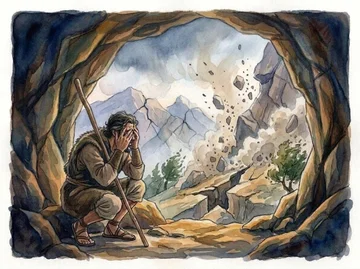
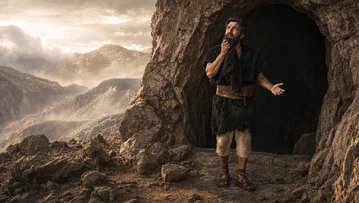
And he came thither unto a cave, and lodged there; and, behold, the word of the LORD came to him, and he said unto him, What doest thou here, Elijah?
Translations
And he came thither to a cave, and lodged there; and, behold, the word of the LORD came to him, and he said to him, What do you here, Elijah?
King James Version, Revised Version
And he came thither unto a cave, and lodged there; and, behold, the word of the LORD came to him, and he said unto him, What doest thou here, Elijah?
And he came thither unto a cave, and lodged there; and behold, the word of the Lord came to him, and he said unto him, What doest thou here, Elijah?
And he came thither to a cave, and lodged there; and behold, the word of the LORD came to him, and he said to him, What doest thou here, Elijah?
And he came thither unto a cave, and lodged there; and, behold, the word of Jehovah came to him, and he said unto him, What doest thou here, Elijah?
And he cometh in there, unto the cave, and lodgeth there, and lo, the word of Jehovah [is] unto him, and saith to him, 'What — to thee, here, Elijah?'
And there he went into a cave, and lodged there. And behold, the word of Jehovah [ came] to him, and he said to him, What doest thou here, Elijah?
And he entered, there, into a cave, and lodged there,—and lo! the word of Yahweh [came] unto him, and said to him, What doest thou here, Elijah?
Berean Standard Bible, Majority Standard Bible
There Elijah entered a cave and spent the night. And the word of the LORD came to him, saying, “ What are you doing here, Elijah?”
He came to a cave there, and camped there; and behold, the LORD’s word came to him, and he said to him, “ What are you doing here, Elijah?”
And there he went into a hole in the rock for the night; then the word of the Lord came to him, saying, What are you doing here, Elijah?
And there he entred into a caue, and lodged there: and beholde, the Lord spake to him, and said vnto him, What doest thou here, Eliiah?
Douay-Rheims (Challoner revision)
And when he was come thither, he abode in a cave: and behold the word of the Lord came unto him, and he said to him: What dost thou here, Elias?
Pictures

Cross-references 20 of 21
- 1 Kings 18:19-40
Now therefore send, and gather to me all Israel unto mount Carmel, and the prophets of Baal four hundred and fifty, and the prophets of the groves four hundred, which eat at Jezebel’s table.
Elijah’s victory over Baal’s prophets on Carmel precedes his flight and discouragement.
- 1 Kings 19:3
And when he saw that, he arose, and went for his life, and came to Beer-sheba, which belongeth to Judah, and left his servant there.
Jezebel’s threat prompts Elijah to flee.
- 1 Kings 17:3-4
Get thee hence, and turn thee eastward, and hide thyself by the brook Cherith, that is before Jordan.
God appointed Cherith as Elijah’s place of refuge, contrasting with his flight to the cave.
- 1 Kings 19:13
And it was so, when Elijah heard it, that he wrapped his face in his mantle, and went out, and stood in the entering in of the cave. And, behold, there came a voice unto him, and said, What doest thou here, Elijah?
The Lord repeats his question to Elijah after the still small voice.
- 2 Kings 2:11
And it came to pass, as they still went on, and talked, that, behold, there appeared a chariot of fire, and horses of fire, and parted them both asunder; and Elijah went up by a whirlwind into heaven.
Elijah’s life ends with his ascent to heaven rather than death.
- Romans 11:2-5
God hath not cast away his people which he foreknew. Wot ye not what the scripture saith of Elias? how he maketh intercession to God against Israel, saying,
Paul uses Elijah’s experience to show that a remnant remained.
- 1 Kings 19:16
And Jehu the son of Nimshi shalt thou anoint to be king over Israel: and Elisha the son of Shaphat of Abel-meholah shalt thou anoint to be prophet in thy room.
another anointed because work cut short
- 1 Kings 18:4
For it was so, when Jezebel cut off the prophets of the LORD, that Obadiah took an hundred prophets, and hid them by fifty in a cave, and fed them with bread and water.)
Jezebel sought to kill the Lord’s prophets, while Elijah sheltered in a cave.
- 1 Kings 19:4
But he himself went a day’s journey into the wilderness, and came and sat down under a juniper tree: and he requested for himself that he might die; and said, It is enough; now, O LORD, take away my life; for I am not better than my fathers.
Elijah’s despair leads him to ask God to take his life.
- James 5:17
Elias was a man subject to like passions as we are, and he prayed earnestly that it might not rain: and it rained not on the earth by the space of three years and six months.
Elijah is described as subject to human passions like other people.
- 1 Kings 18:46
And the hand of the LORD was on Elijah; and he girded up his loins, and ran before Ahab to the entrance of Jezreel.
God strengthened Elijah to run before Ahab, contrasting his courage with later discouragement.
- 1 Kings 18:1
And it came to pass after many days, that the word of the LORD came to Elijah in the third year, saying, Go, shew thyself unto Ahab; and I will send rain upon the earth.
God commissions Elijah to go to Ahab, contrasting with his flight into the wilderness.
- Malachi 4:5
Behold, I will send you Elijah the prophet before the coming of the great and dreadful day of the LORD:
Promises Elijah’s work before the day of the Lord.
- 1 Kings 18:42-45
So Ahab went up to eat and to drink. And Elijah went up to the top of Carmel; and he cast himself down upon the earth, and put his face between his knees,
Elijah prayed on Carmel, and God answered by sending rain.
- 1 Kings 19:18
Yet I have left me seven thousand in Israel, all the knees which have not bowed unto Baal, and every mouth which hath not kissed him.
God corrects Elijah’s belief that he alone remains faithful.
- 1 Kings 17:9
Arise, get thee to Zarephath, which belongeth to Zidon, and dwell there: behold, I have commanded a widow woman there to sustain thee.
God directs Elijah to dwell with the widow at Zarephath.
- Matthew 17:11
And Jesus answered and said unto them, Elias truly shall first come, and restore all things.
Elijah’s coming is linked with restoration.
- Romans 11:5
Even so then at this present time also there is a remnant according to the election of grace.
Paul applies the remnant in Elijah’s time to a remnant in his own day.
- Exodus 19:20
And the LORD came down upon mount Sinai, on the top of the mount: and the LORD called Moses up to the top of the mount; and Moses went up.
Israel brought to same mountain to learn
- 2 Kings 2:12
And Elisha saw it, and he cried, My father, my father, the chariot of Israel, and the horsemen thereof. And he saw him no more: and he took hold of his own clothes, and rent them in two pieces.
Elijah calls God his Father as his earthly work ends.
Commentary
Each commentary is drawn from primary sources: the writings of Ellen G. White and Adventist pioneers and periodicals. Each commentary is separate. Its own words are not a quotation; follow the references to read the source passages.
Ellen G. White
43 sources
Elijah fled Jezebel's threat through the wilderness to Mount Horeb, sustained forty days and nights by food and water brought by an angel, and lodged in a cave there for refuge from wild beasts.3T 289.1–2RH Oct 7, 1873PK 166.2PK 167.23T 291.2 Hidden from people in that retreat, he was met by God, and the word of the Lord came to him at the cave to inquire into his need and make plain His purpose.PK 167.13T 291.3–292.1RH Oct 7, 1873 The question, What doest thou here, Elijah, calls him to account for where he is and what he is doing, for his course was rash and self-directed with no word from the Lord directing him to flee.RH Oct 7, 1873Ms 42, 1890, par. 60Ms 6, 1889, par. 55–56PK 168.13T 291.3–292.1 He had fled in weariness, disappointment and discouragement after Carmel, forgetting God's power and feeling forsaken and alone, yet God had not forgotten him but loved him no less than when fire fell from heaven and cared for him in pitying love.RH Oct 7, 1873Lt 62, 1900, par. 3–6ED 151.1–2ST Nov 17, 1909RH Oct 7, 1873 The same question addresses every servant led away from his mission and idle in self-serving pursuits, calling him to examine where he stands, to come out of the cave and stand with God, and to return to the work God commissioned him to do.Lt 109, 1896, par. 4Ms 42, 1890, par. 60RH Oct 30, 1913PK 171.3Ms 40a, 1890, par. 50–52
Journey to the Cave
He came to Horeb, to Mount Horeb, after fleeing for his life from Jezebel's threat, traveling through the wilderness on a forty-day journey until he found refuge in a cave.3T 289.1–2PK 166.2PK 167.2ED 151.1–2RH Oct 16, 1913 His retreat was hidden from people, yet God still met him there.PK 167.2PK 167.1
He was sustained on that journey by food and water brought by an angel, and traveled in the strength of that provision forty days and forty nights.3T 289.1–2RH Oct 7, 18733T 291.2 He had toiled all day without food, and the exhausted, weary man was twice touched and fed to strengthen him for the way.3T 291.2RH Oct 7, 1873 He lodged in the cave at night for refuge and protection from wild animals and wild beasts.3T 289.1–23T 291.2RH Oct 7, 1873
The word of the Lord came to him there at the cave and at its entrance, speaking with him where he lodged.3T 289.1–23T 291.3–292.1Lt 154, 1894, par. 2 God met him through a mighty angel to inquire into his needs, to speak with him, and to make plain His purpose for Israel.PK 167.13T 291.3–292.1RH Oct 7, 1873
Meaning of the Question
The question puts Elijah on account for where he is and what he is doing there, challenging his long journey into the wilderness and pressing him over what purpose brought him to the cave and whether he stands where he was commissioned to stand.Ms 42, 1890, par. 60PK 168.13T 291.3–292.1 It is not mere information-seeking but a call to reckon with his errand, setting his present place against the places to which he had been sent.PK 168.1RH Oct 7, 1873
His being there was rash and self-directed, for no specific word had directed that course and the Lord had not at this time warned him to flee.RH Oct 7, 1873Ms 6, 1889, par. 55–56PK 168.1 This stands in contrast to his true sendings to carry a message to Ahab in Samaria, to go to the brook Cherith, to go to the widow of Sarepta, to return to Israel and stand against the idolatrous priests on Carmel, and to run with God-given strength before the king's chariot to the gate of Jezreel.PK 168.1RH Oct 30, 1913RH Oct 7, 1873 He had left his appointed work and fled without being sent, and the question sets that hasty flight against those commissions.PK 168.1RH Oct 30, 1913
The question confronts him with how weak and misplaced his present position is compared with the vantage ground God intended him to occupy.PK 167.2 He still needed to learn to trust wholly in God before he could finish his work among those drawn into Baal worship.PK 167.2 He should instead have waited with faith and patience, trusting the God who had before warned him when to flee and where to find asylum from Ahab's search and Jezebel's hatred, who would have shielded him and given him another signal victory in Israel in sending judgments upon Jezebel.RH Oct 7, 1873
The question draws out his answer that he has been very jealous for the Lord God of hosts, while Israel has forsaken the covenant, thrown down and destroyed the altars, and slain the prophets, leaving him alone with his life sought.Lt 62, 1900, par. 11–163T 291.3–292.1RH Oct 7, 1873PK 169.2 In that reply he describes Israel's unfaithfulness, his own isolation, and the threat to his life.3T 291.3–292.1PK 169.2
Elijah's Discouragement and Failure
After the signal display of God's power he had expected Israel to be true and faithful, Jezebel to lose influence over Ahab, and a general revolution to take place in the kingdom.RH Oct 7, 1873 When Jezebel's threatening message came he forgot that God was the same all-powerful and pitiful God who had granted his requests for fire from heaven and for rain.RH Oct 7, 1873Lt 62, 1900, par. 3–6 He lost courage and faith, and in disappointment, weariness, prostration, discouragement and murmuring felt that life was no longer desirable and that he was no better than his fathers.RH Oct 7, 1873Lt 62, 1900, par. 3–6
He had borne a heavy burden for Israel, giving faithful warnings against national idolatry, watching with deep solicitude through three years and a half of famine for some token of repentance, and standing alone for God on Carmel where idolatry was cast down and the blessed rain testified to showers of blessing waiting for Israel.ST Nov 17, 1909 Then in weakness and weariness he fled and lodged alone praying that he might die.ED 151.1–2ST Nov 17, 1909 After marked success he was pressed down by the reaction that follows elevation of faith, exalted to Pisgah's top then humiliated to the lowliest valley in faith and feeling, prostrated with discouragement and broken-hearted feeling forsaken of God and man.RH Oct 7, 1873
His answer reveals discouragement and the mistaken belief that he alone remains faithful, when Israel has forsaken the covenant, thrown down the altars, and slain the prophets, and his life is sought.Lt 62, 1900, par. 11–16 God later corrects that belief by telling him that seven thousand in Israel have not bowed to Baal.Lt 62, 1900, par. 11–16 By letting go of faith and yielding once to human weakness and error, his one failure of faith in exhaustion cut short the work he had begun so he was not to complete it, and God bade him anoint another to be prophet in his stead.ED 151.1–2ST Nov 17, 1909 Yet God marked his heart-service and valued his faithful service and did not leave him to perish in discouragement and solitude in the wilderness, for him there was not the descent to the tomb but the ascent with God's angels to the presence of His glory.ED 151.1–2ST Nov 17, 1909 His time of trial was one in which the natural impulses and passions of his character contended with spiritual life and God's grace, bringing the dross to the surface so it could be consumed while the fine gold in his character remains.Ms 6, 1889, par. 60
God's Care and Instruction
Elijah's exhaustion and sense of being forsaken in the cave did not mean God had abandoned him, for God had not forgotten him but worked for him even in frightened, uncertain flight, asking where he was and what he was doing there though no specific word from the Lord had directed that course.Ms 6, 1889, par. 55–56Ms 6, 1889, par. 57RH Oct 16, 1913 His eye was still upon His suffering servant, and He loved him no less in broken-heartedness than when fire flashed from heaven on Carmel in answer to prayer, knowing and reading the heart's sore anguish under temptation and severe conflict and caring for him in pitying love.RH Oct 7, 1873RH Oct 16, 1913 He had lodged in a cave in the wilderness on his way to Horeb after a forty-day-and-forty-night journey, using it at night for refuge and protection from wild beasts, having toiled all day without food.RH Oct 7, 1873RH Oct 16, 1913 After marked success he was pressed down by the reaction that follows elevation of faith, exalted to Pisgah's top then humiliated to the lowliest valley in faith and feeling, prostrated with discouragement and broken-hearted feeling forsaken of God and man, yet God did not forsake him because despondency and despair had seized him.RH Oct 7, 1873 In pitying love He sent His angel with food from heaven to sustain His faithful servant, twice touching and feeding the exhausted, weary man to strengthen him for the journey.RH Oct 7, 1873 Those who have not borne weighty responsibilities and have not been accustomed to feel very deeply cannot understand his feelings and be prepared to give him the tender sympathy he deserves.RH Oct 7, 1873
God met him in the cave at Horeb through an angel with the question calling him to account for his long journey and his errand there, showing he had not been sent into the wilderness by God unlike His sendings to the brook Cherith, to the widow of Sarepta, and to Samaria with a message to Ahab.RH Oct 7, 1873 The question drew out his bitter mourning that he had been very jealous for the Lord God of hosts while Israel had forsaken the covenant, thrown down altars, and slain prophets, leaving him alone with his life sought, and it led to God manifesting Himself to show that quiet trust and firm reliance upon Him will ever find Him a present help in time of need.RH Oct 7, 1873 That history belongs to his discouragement and flight after Jezebel's threat, and it teaches God's people facing difficulties to trust in the Lord rather than human wisdom, keep to the way of duty and not let fear discourage them.13MR 362.1Ms 6, 1889, par. 57 By waiting patiently and prayerfully with confidence in God they can see His power and rely on Him as their defense.13MR 362.1Ms 6, 1889, par. 57
God met and spoke with him at the cave entrance, showing that He meets those who trust His word and speaks with them.Lt 154, 1894, par. 2 Believers should therefore approach Him with childlike simplicity and rely on His promises rather than seek wisdom from worldly wise people.Lt 154, 1894, par. 2 The cave represents a place of withdrawal that he must leave, for he is urged to come out of the cave and stand with God and talk with Him rather than remain under sorrowful thoughts and brooding over sorrow that weaken him and hinder his witness for Christ.Lt 19, 1895, par. 29 That same call comes to those facing grief to turn from brooding over sorrow and seek God, who gives grace to meet shattered plans and trials.Lt 19, 1895, par. 11–12 God's voice calling him to come out of the cave and stand with God to hear what He will say requires coming under divine guidance, and obeying opens the heart to receive.14MR 174.2 Then the Comforter leads into all truth, the Holy Spirit taking the things of Christ as they fall from His lips and infusing them as living principles into the open heart, so that both the Father and the Son are known.14MR 174.2
The experience was given when hope was gone and his life-work seemed threatened with defeat, after he fled for his life from an infuriated woman and asked that he might die, and it gives hope and courage to self-sacrificing workers who become discouraged, desponding and weary under trying circumstances.RH Oct 30, 1913 It speaks to those whose zeal for God's cause is misunderstood or unappreciated, whose counsels and reproofs are slighted, whose reform work is repaid with hatred and opposition, and who are burdened by those from whom help was expected.RH Oct 30, 1913 In that hour of greatest weakness he learned one of life's deepest lessons of the need and the possibility of trusting God under the most forbidding circumstances, with assurance of God's watchful care, love and power, and that Heaven will never forsake him while he maintains his integrity.RH Oct 30, 1913 His history after bearing a heavy burden for Israel, giving faithful warnings against national idolatry, watching with deep solicitude through three years and a half of famine for some token of repentance, and standing alone for God upon Carmel where through the power of faith idolatry was cast down and the blessed rain testified to showers of blessing waiting for Israel, declares that sin can bring only shame and loss, that unbelief means failure, that God's mercy reaches to the deepest depths, and that faith lifts up the repenting soul to share the adoption of the sons of God.ST Nov 17, 1909 For in weakness and weariness he fled before the threats of Jezebel and lodged alone praying that he might die, and by letting go of faith and yielding once to human weakness and error his one failure of faith cut short the work he had begun so he was not to complete it, and God bade him anoint another to be prophet in his stead.ST Nov 17, 1909 Yet God had marked the heart-service of His servant, so he was not to perish in discouragement and solitude in the wilderness, and for him there was not the descent to the tomb but the ascent with God's angels to the presence of His glory.ST Nov 17, 1909
Call to Faithful Service
The same question that met Elijah in the cave meets every child of God who is not actively engaged in service and whose voice the enemy has silenced by any means or led away from the mission, asking why such a one is idle and who sent him there when God has commissioned him to go into all the world and preach the gospel and to prepare a people for the day of God.RH Oct 30, 1913PK 171.3 It is God's personal appeal calling a person to examine where he stands in relation to Him, and even one estranged from God and wasting time and opportunities, as Philip was, can still hear God speaking and respond.Lt 109, 1896, par. 4 It calls people absorbed in their own business to account, urging them to leave idleness and self-serving pursuits and labor for God.Ms 42, 1890, par. 60 Through God's Word it applies to people who remain idle instead of doing needed work, challenging professed servants of God who refuse available work because the wages offered do not meet their demands.Ms 2, 1897, par. 1
It is a question of reproof to believers who leave the churches where their help is needed and move together to a larger church, warning them to examine whether their move is God's direction or a self-serving impulse.Ms 2, 1888, par. 29–33 If they will not heed, God will make the danger clearer, for such moves can weaken small churches, discourage those left behind, and endanger souls.Ms 2, 1888, par. 29–33 It challenges a worker who has left the missionary field for a journey and business, asking why he is there and who sent him, prompting him to reconsider whether he should remain in that course, pray, or change his work.Lt 63, 1897, par. 1–3 It asks those at Battle Creek why they are where they are, challenging them to account for leaving their appointed work and becoming a hindrance rather than a help to the church.5T 185.4
It calls families to consider whether they are using their influence where it is needed, for families who know God's word and could serve where Christian ministry is lacking are called to leave familiar surroundings and move to spiritually dark places to work patiently, wisely and perseveringly for those without hope, even when answering requires self-sacrifice.PK 172.2RH Oct 30, 1913 It challenges one absorbed in family responsibilities instead of carrying out the work God called her and her husband to do, as Adelia was challenged, pressing her to examine whether her course is faithful when judgment is near and the world needs warning.Lt 51a, 1878, par. 13–14 It warns one to remain where God assigned him work and not leave for America, as Stephen Haskell was warned, calling him to consider whether his intended move fits his present service.Ms 199, 1898, par. 1
It calls one to examine whether his work is fitting and who commissioned him to do it, as Brother Michaels was called, for his morally harmful commercial work is clouding his judgment and lowering his abilities, and he is urged to leave it and work with books that teach truth.Ms 47, 1898, par. 4 It challenges a minister given a commission to serve as a watchman for God's people, calling him back to his work, warning that unbelief and darkness may be keeping him from it and that life's entanglements influence his ministry more than he realizes, for Christ's soldiers must remain faithful at their posts for as long as the conflict lasts.Lt 17, 1887, par. 3 Christians should not imitate Elijah's discouraged withdrawal into the cave and retreat from their work, but come forth and stand with God, letting their faith and good works shine openly and their light shine into the world's darkness.Ms 40a, 1890, par. 50–52Ms 40, 1890, par. 42–43
The question is a call for God's people to come out of the cave, stand with God and hear what He says, leaving division and self-sufficiency behind to seek the unity and love Christ prayed for.Lt 10, 1892, par. 18–21 It questions those who take on a mission or authority He has not given them, applying to self-appointed critics who judge and control God's messengers, deciding what they may teach and which words they may use, challenging their claim to act as judges and asking who sent or authorized them.Lt 7, 1896, par. 17–18
Sources
Pioneers and periodicals
52 sources
Elijah lodged in a cave at Horeb, the mount of God, after fleeing into the wilderness on the strength of the angel's food for forty days and nights.RH Oct 7, 1873ST Aug 20, 1885ST Aug 24, 1904 The word of the Lord came to him there asking what he was doing in that place, because he had fled on his own initiative without being sent, as he had been sent to Ahab, to Cherith, to Sarepta, to Carmel and to Jezreel.RH Oct 7, 1873RH Oct 23, 1913RH Oct 30, 1913RH Oct 7, 1873RH May 30, 1865 The question calls him to account for withdrawing from his appointed field of labor when much work remained, since past zeal does not excuse present neglect.ST Aug 24, 1904RH Sep 16, 1909ST Aug 24, 1904 Drawn out to complain that he alone remained while Israel had broken the covenant and sought his life, he is corrected by the revelation of seven thousand faithful who had not bowed to Baal and by the still small voice showing that God works quietly and not only in wind, earthquake and fire.RH Nov 30, 1869RH Feb 21, 1865RH May 30, 1865ST Aug 20, 1885 The coming of the word in the cave gives hope to self-sacrificing workers who grow weary and discouraged under opposition, teaching trust in God's watchful care and power in the hour of greatest weakness.RH Oct 30, 1913RH May 30, 1865
Journey and Setting at Horeb
The verse finds Elijah lodging in a cave at Horeb, the mount of God, also called Sinai, after his flight into the wilderness.ST Aug 20, 1885ST May 3, 1899ST Sep 8, 1898 He is there far from his work after the victory on Carmel, confronted in his withdrawal from the field of labor at a critical time when his work could bear fruit.ST Aug 24, 1904ST Aug 24, 1904 The question put to him there, what he is doing there, confronts him with how far he has withdrawn from the place of his recent victory and the revival for which he had prayed and worked. It also stands as a warning to heed when unbelief separates from God or worldly attractions draw toward pleasure resorts and questionable places of amusement. In one evocation the cave at Sinai is a refuge to which church, statesmen, philosophers and historians are driven by overwhelming social and political turmoil while storms rage beyond known law.ST May 3, 1899
He came there after Jezebel's death threat following the defeat and slaying of her false prophets, his prayer for rain on the drought-smitten land, and his twenty-five-mile run ahead of Ahab's chariot from Carmel to Jezreel. Weary and discouraged at Israel's spiritual apathy and thinking God's cause had failed, he fled for his life to the southern border of Judah where he left his servant.ST Aug 8, 1906 Under a desert broom tree, also called a juniper tree, he prayed for Jehovah to take his life because he was no better than his fathers. Having neither food nor water in the wilderness, he was twice visited by an angel who gave him baked cake and water and told him to eat because his journey was too great for him.ST Aug 20, 1885 In the strength of that food he went forty days and forty nights through rugged country, more than three hundred miles, to the mount of God to commune with God.RH Sep 25, 1913ST Aug 20, 1885ST Aug 24, 1904ST Aug 8, 1906
He arrived weary, afraid, hungry and discouraged, feeling forsaken, caught off guard through human passion and the reaction that follows exalted faith.RH Oct 7, 1873ST May 13, 1908 After marked success he was pressed down, exalted to Pisgah's top then humiliated to the lowliest valley in faith and feeling, prostrated, broken-hearted, and feeling forsaken of God and man.RH Oct 7, 1873 After bearing a heavy burden for Israel, warning against national idolatry, watching through three and a half years of famine for repentance, standing alone on Carmel where faith cast down idolatry and rain testified to waiting blessing, and praying for rain that God answered in a work Israel itself ought to have done, he in weakness and weariness fled before Jezebel's threat and lodged alone praying that he might die.ST Nov 17, 1909ST May 20, 1913 Yet he was not forsaken, for though hidden from people he was known to God, whose eye was still upon His suffering servant.RH Oct 23, 1913RH Oct 7, 1873RH Oct 16, 1913 God loved and cared for him no less in broken-heartedness than when fire flashed from heaven on Carmel in answer to prayer, and in pitying love twice touched and fed the exhausted man with food from heaven to strengthen him for the journey, a sore anguish under temptation and severe conflict that those who have not borne weighty responsibilities and felt deeply cannot understand or meet with tender sympathy.RH Oct 7, 1873RH Oct 16, 1913
Elijah the Tishbite, the greatest of the Hebrew prophets, was contemporary with Ahab king of Israel and Jehoshaphat of Judah.RH Nov 7, 1912 Ahab was the seventh king of Israel, the second ruler of the third Israelitish dynasty, reigning twenty-two years early in the ninth century before Christ when Judah and Israel reached the acme of power and prosperity.RH Nov 7, 1912 From a civil viewpoint he was outwardly a successful ruler, clever statesman, skilled general and patriot toward his people and country, but a moral coward who sold himself to the worship of a plurality of heathen deities and enforced it upon a people whose predominating character was devotion to monotheistic religion and a semitheocratic regime, and the verse belongs to what is recorded of him as man and king for the learning and profit of men and kings of later generations.RH Nov 7, 1912 The verse belongs to the account in which Elijah seemed to stand alone in human support when he confronted Ahab on Carmel.ST Jul 1, 1880 One tradition associates the verse with a cave on Mount Carmel identified as where Elijah hid while Jezebel pursued him.RH Dec 7, 1911
Meaning of the Divine Question
The word of the Lord came to Elijah in the cave at Horeb, hidden from men but known to God, and spoke through a mighty angel asking what he was doing there, Elijah.RH Oct 23, 1913RH Oct 7, 1873RH May 30, 1865ST May 2, 1906 The question drew out his answer that he had been very jealous for Jehovah the God of hosts while Israel had forsaken the covenant, thrown down the altars, broken the law and slain the prophets with the sword, leaving him alone with his life sought.RH Oct 23, 1913RH Oct 7, 1873RH May 30, 1865 It began the encounter in which he was called to stand before the Lord and receive instruction for his future work, with the Lord's voice coming after the wind and earthquake and fire in a still small voice.RH Oct 7, 1873ST May 2, 1906 Fear and discouragement had driven away his faith and courage and brought him to bitterness of mourning there.RH Oct 23, 1913RH Oct 7, 1873
The question means his presence in the wilderness was rash and self-directed, for he had fled without being sent and on his own initiative despite God's earlier deliverance and protection.RH Oct 7, 1873RH Oct 30, 1913RH Oct 7, 1873RH Sep 16, 1909 The Lord had not warned him to flee at this time and he had not waited for the Lord to speak, as he had been sent before with a message to Ahab in Samaria, to the brook Cherith, to the widow of Sarepta, to return to Israel to stand against the idolatrous priests on Carmel, and to run with God-given strength before the king's chariot to the gate of Jezreel.RH Oct 7, 1873RH Oct 30, 1913RH Oct 7, 1873 He should have trusted with faith and patience in the same all-powerful and pitiful God who had warned him when to flee and where to find asylum from the hatred of Jezebel and the search of Ahab, who had granted fire from heaven and rain, and who would have shielded him and given him another signal victory in Israel in sending judgments upon Jezebel.RH Oct 7, 1873RH Oct 30, 1913RH Sep 16, 1909 His flight came from weariness, prostration, discouragement and murmuring, feeling life no longer desirable and himself no better than his fathers, because after the signal display of God's power he had expected Israel to be true and faithful, Jezebel to lose influence over Ahab, and a general revolution in the kingdom, and when Jezebel's threatening message came he forgot God.RH Oct 7, 1873RH Sep 16, 1909
It calls him to account for leaving his appointed work and withdrawing from his field of labor at a critical time when much work remained and the way was opening for his labor to bear fruit, more than three hundred miles from his victory on Carmel.RH Oct 30, 1913ST Aug 24, 1904RH Sep 16, 1909ST Aug 24, 1904 He had abandoned responsibility as a light to Israel and left his post and his local community without a witness, and God places His people in different communities to serve as lights and standard-bearers and sends the fugitive back to his work, even directing him to anoint Hazael king over Syria.RH Oct 30, 1913RH Sep 16, 1909RH Sep 16, 1909 Past zeal, courage, or usefulness does not excuse present neglect, for each station and portion of time has its proper work, and the question tests whether a man is in the right place and doing his present duty.RH Sep 16, 1909ST Jan 15, 1885 The same question addresses every child of God not actively engaged in service whose voice the enemy of souls has silenced by any means, asking why such a one is idle and who sent him there when God commissioned him to go into all the world to preach the gospel and prepare a people for the day of God, and it challenges those who abandon their God-given place for greater convenience or an easier life with responsibilities neglected.RH Oct 30, 1913RH Sep 16, 1909
It confronts him with how far he has withdrawn from the place of his recent victory and the revival for which he had prayed and worked, for like others he is subject to human passions and was caught off guard.RH Aug 21, 1913 It exposes his hiding and plaintive prayer in the cave as a trembling soul perplexed with doubt and fear longing to flee away, cast down and fraught with grim despair amid gloom and hoary doubts though zealous for the Lord of glory and abiding within His care with his Helper near.RH Aug 21, 1913 It summons him forth to stand before his Maker with mantle wrapped round him because no soul can bear God's awful righteous gaze, amid spent fierce winds, quaking earth, and blazing fires, then calmed by God's still small voice answering with assurance that God is his defender and he is not left alone.RH Aug 21, 1913ST May 2, 1906
The same question serves as a warning for God's children to heed when unbelief has separated them from God or worldly attractions have drawn them aside.ST Nov 20, 1901 It bids each one examine where he goes and what he does, avoiding pleasure resorts, questionable places of amusement, and places and pleasures he would be ashamed to pursue under God's gaze.ST Nov 20, 1901
Complaint and Gracious Correction
Drawn out by the question in the cave, Elijah answers that he has been very jealous for Jehovah the God of hosts, while Israel has forsaken the covenant, thrown down the altars, slain the prophets with the sword and broken God's law, and they seek his life to take it away, leaving him alone.RH Oct 23, 1913RH May 30, 1865ST Aug 20, 1885 His plea follows his lodging at Horeb the mount of God after fleeing Jezebel's death threat, his weariness and discouragement, his flight to the southern border of Judah where he left his servant, his prayer under a desert broom tree or juniper tree to die because he was no better than his fathers, and his forty days and forty nights journey in strength of food twice given by God's angel of baked cake and water, who told him his journey was too great for him when he had neither food nor water.ST Aug 20, 1885 The question prompts his answer that he has been zealous for God while Israel has killed the prophets and forsaken God.RH Oct 23, 1913RH May 30, 1865
Believing he alone remained loyal and the cause lost, he is corrected by the revelation that God has preserved a hidden, faithful remnant of seven thousand who have not worshiped Baal and who responded to the prophet's call.RH Nov 30, 1869RH Feb 21, 1865RH Jul 9, 1867 Despite visible apostasy when Israel had largely turned to Baal, God had a true but hidden remnant that had not joined apostasy and that God will call forth, showing that as then God has a chosen remnant.RH Nov 30, 1869RH Feb 21, 1865 The account belongs to a time of great apostasy in which God found a faithful remnant.
God teaches him that great displays are not always God's work, for God was not in the windstorm, earthquake, or fire, but manifested His power quietly through a still, small voice.ST Sep 7, 1904ST May 2, 1906RH Aug 16, 1906 The wind, earthquake, and fire were a deceptive attempt by Satan, the prince of the power of the air, to bewilder Elijah.ST Sep 7, 1904 Called to stand before the Lord and receiving instruction for his future work, he hears the Lord's voice after the wind, earthquake, and fire in the still small voice, which still speaks to each soul calling people to seek and know God's will, a still small voice of love.ST May 2, 1906RH Aug 16, 1906
God's mercy meets undue sorrow by coming and setting to work, giving the blessed privilege of forgetting personal sorrows and disappointments in carrying forward the broader plans of God.ST Aug 19, 1889 Aroused and strengthened for his journey to Horeb after he cast himself down under the juniper tree and wished to die, Elijah is called to stand before the Lord in the cave, receives instruction for his future work, and is commissioned to go and anoint Hazael king over Syria and Jehu.ST Aug 19, 1889RH Sep 16, 1909 Though weary and afraid after fleeing in fear and discouragement from Jezebel's threat following triumph at Carmel, he is not forsaken but learns a lesson at Horeb and returns to do God's work, with Elisha joining him, sent back to his work after leaving the work God had given him and traveling on his own initiative despite earlier deliverance and protection.ST May 13, 1908RH Sep 16, 1909
Through this encounter at Mount Horeb Elijah learned that God was not merely a severe judge but a loving Father when he had become derelict in duty and was gently corrected.ST Jul 6, 1915 Meeting with God in the mountain stillness and grandeur, he was trained and prepared for his work.ST Apr 24, 1901 Manifested to show that quiet trust and firm reliance upon Him will ever find Him a present help in time of need, God met him through an angel asking what he did there, drawing out his bitter mourning over forsaken covenant, thrown-down altars, and slain prophets.RH Oct 7, 1873
After bearing a heavy burden for Israel, giving faithful warnings against national idolatry, watching with deep solicitude through three years and a half of famine for some token of repentance, and standing alone for God upon Mount Carmel where through the power of faith idolatry was cast down and the blessed rain testified to showers of blessing waiting for Israel, he in weakness and weariness fled before Jezebel's threats and lodged alone praying that he might die.ST Nov 17, 1909 His faith had failed by letting go of faith and yielding once to human weakness and error, so the work he had begun he was not to complete, and God bade him anoint another to be prophet in his stead, cutting short his life-work.ST Nov 17, 1909 Yet God had marked the heart-service of His servant, so Elijah was not to perish in discouragement and solitude in the wilderness, and for him there was not descent to the tomb but ascent with God's angels to the presence of His glory, declaring that sin can bring only shame and loss, that unbelief means failure, that God's mercy reaches to the deepest depths, and that faith lifts up the repenting soul to share the adoption of the sons of God.ST Nov 17, 1909
Prophecy Types and Parallels
The surrounding history behind the name Jezebel is that as Ahab's wife she killed the prophets of the Lord, led Ahab into idolatry, and fed the prophets of Baal, so that her name stands as a figure for the papal abominations described in Revelation.RH Feb 12, 1857RH Aug 7, 1860 The account in 1 Kings 18, 19, and 21 supplies that background for understanding the figure.RH Feb 12, 1857
The account is the biblical pattern for Elijah's prophetic work, with Elijah representing John the Baptist in type and, in later application, those who do a reformatory, converting work like Elijah and John.RH Jul 9, 1901 It is a parallel to the time when God's commandment-keeping people will be blamed for society's troubles and face persecution.RH Dec 3, 1901 Just before the coming of the Lord the new Jezebel swaying the power of government will seek their lives and they must flee as Elijah did, answering as he did that they have been very jealous for the Lord God of hosts because the covenant is forsaken and their life is sought to be taken away.ST Aug 20, 1885 The question What doest thou here, put to Elijah while fleeing for his life, will meet those who keep the commandments of God then, and it is asked now of each person to show whether he is very jealous for the Lord God of hosts and will jealously keep His commandments even at the expense of every earthly thing against all earthly powers.ST Aug 20, 1885 Cited together with the next verse as an instance of apostate Israel persecuting Elijah the prophet of God, it supports the principle that the wicked persecute the righteous.RH Jun 8, 1916
Elijah's hastening weary and disheartened from the hate of Jezebel to the mount of God for communion with his Maker proves that mountains are places of communion with God where strength for work is gained.ST Sep 10, 1902 There his eyes and heart were gladdened by vision from heaven, and he received extraordinary signs from God to support human weakness.ST Aug 7, 1901RH Nov 17, 1859ST Sep 8, 1898 Even so Moses was fitted by such communion to lead Israel from Egypt, and Jesus withdrew to the mountains alone or with His disciples to pray to His Father, sometimes continuing all night, to be strong for the next day's work.ST Sep 10, 1902 The deliverance belongs to the account in which an angel found Elijah discouraged under a bush in the desert and first baked a cake to feed the hungry man before speaking the word to his discouraged heart.RH Mar 30, 1916 That food strengthened him to travel forty days and nights through rugged country, illustrating that God can sustain the body and give it endurance by means beyond ordinary food.RH Sep 25, 1913RH Mar 30, 1916
Encouragement and Present Application
The word coming to Elijah in the cave on Horeb gives hope and courage to self-sacrificing workers who become discouraged, desponding and weary under trying circumstances.RH Oct 30, 1913 It meets those whose zeal for the cause is misunderstood or unappreciated, whose counsels and reproofs are slighted, whose reform work is repaid with hatred and opposition, and who are burdened by those from whom help was expected.RH Oct 30, 1913 It was given when hope was gone and the life-work seemed threatened with defeat, after flight for life and a prayer to die, and in that hour of greatest weakness it teaches the need and the possibility of trusting God under the most forbidding circumstances.RH Oct 30, 1913RH May 30, 1865 It assures such workers of watchful care, love and power, that heaven will never forsake one who maintains integrity, and it calls believers facing danger, sorrow or spiritual trial to trust the loving Savior, seek deliverance from above, and cherish the still, quiet voice of love heard amid turmoil and vain attractions while waiting for the Lord's coming.RH Oct 30, 1913RH May 30, 1865
Even a prophet who has witnessed a great answer to prayer can suffer human weakness and deep discouragement after victory, and communion with God can renew him for service.ST Aug 7, 1901 The solitary cave in the wilderness is a place to withdraw from others, be alone with God, examine conduct, and gain strength for renewed duty, with rest valued as a means to renewed duty and not as an end.ST Oct 16, 1884ST Aug 7, 1901 Such honest reckoning with conscience is what judgment is whenever it is made.ST Oct 16, 1884
The same question addresses every child of God not actively engaged in service whose voice the enemy has silenced, asking why he is idle and who sent him there when God commissioned him to go into all the world to preach the gospel and prepare a people for the day of God.RH Oct 30, 1913 It challenges those who abandon their God-given place for greater convenience or an easier life, leaving responsibilities neglected and the local community without a witness, for God places His people in different communities as lights and standard-bearers.RH Oct 30, 1913RH Sep 16, 1909 It calls families who could serve in places lacking ministry to leave familiar surroundings and work wisely and perseveringly among people in spiritual darkness even at self-sacrifice.RH Oct 30, 1913
Nourished and encouraged by the angel, Elijah went to the mount to commune with God and was strengthened for renewed service, showing that seeking God's will in communion fits workers for what follows.ST Aug 8, 1906ST Aug 8, 1906 That same still small voice speaks to each soul, calling people to seek and know God's will.RH Aug 16, 1906 The trembling, doubting soul longing to flee into hiding, though zealous and abiding within God's care with his Helper near, is exposed in hiding and summoned forth to stand before his Maker.RH Aug 21, 1913 Wrapped in his mantle before the awful gaze amid spent winds, quaking earth and blazing fires, he is then calmed by the still small voice answering with assurance that God is his defender and he is not left alone, so that if valiant in God's might no force of earth or hell can deter him and erelong God's chariots will take him to his mansion in the courts of light.RH Aug 21, 1913
Elijah had toiled all day without food and used the cave for protection at night from wild beasts.RH Oct 7, 1873 After marked success he was pressed down by the reaction that follows exalted faith, cast from Pisgah's top to the lowliest valley, prostrated and broken-hearted and feeling forsaken of God and man.RH Oct 7, 1873RH Oct 16, 1913 His exhaustion and sense of being forsaken did not mean he was forsaken, for the eye was still upon him and he was loved and cared for no less in broken-heartedness than when fire fell in answer to prayer.RH Oct 7, 1873RH Oct 16, 1913 God knows and reads the heart's sore anguish under temptation and severe conflict, and in pitying love sent His angel with food from heaven and twice touched and fed the exhausted man to sustain and strengthen him for the journey.RH Oct 7, 1873 Those who have not borne weighty responsibilities and felt deeply cannot understand his feelings or give him the tender sympathy he deserves.RH Oct 7, 1873
Sources